
People
· Important figures and stories that shaped Taiwan's development 250 articles Updated 2026-09-10In 1987, when tsmc-morris-chang established Taiwan Semiconductor Manufacturing Company (TSMC) in Hsinchu Science Park, every semiconductor company in the world designed and manufactured their own chips. No one believed a company that only did contract manufacturing could survive. Thirty-eight years later, TSMC's market value exceeds 90% of global enterprises, and the world's most advanced chips are all produced in Taiwan.
Featured
- Standard article2026-03
Edward Yang: Using the Coldest Logic of an Engineer to Film the Hottest Loneliness of the Human Heart
In the early 1980s, Edward Yang, who had just joined Central Motion Picture Corporation, wore a T-shirt printing "Herzog, Bresson, Yang," placing himself behind two masters. This man, who gave up his job as a US submarine engineer and returned to Taiwan in his early thirties to study filmmaking, later became the first Taiwanese to win Best Director at Cannes—yet his film *Yi Yi* was not screened in Taiwanese cinemas for seventeen years. He used the coldest methods to film the back of our heads, the part we dare not face.
92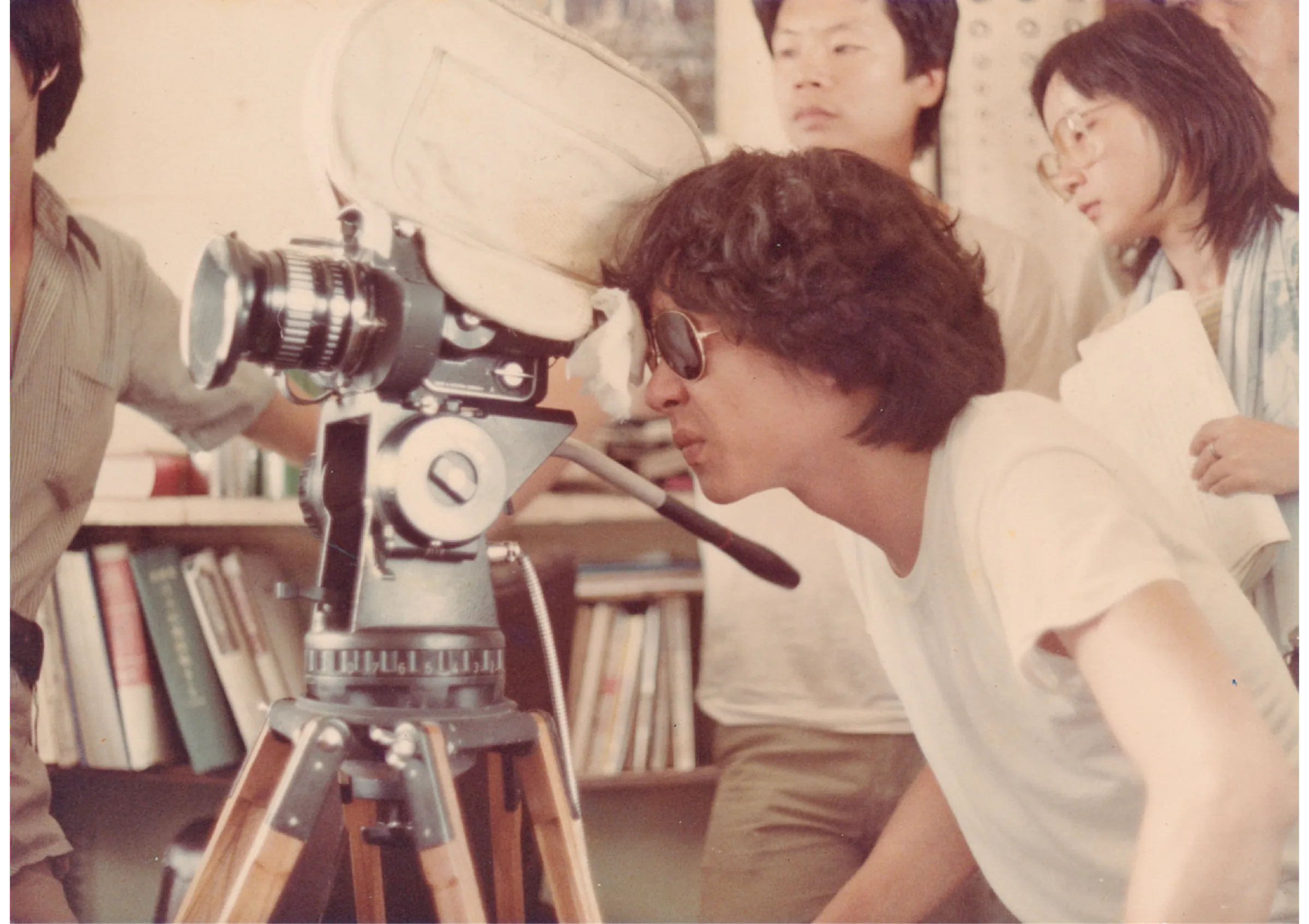
- Standard article2026-03
Stan Shih: From a Duck Egg Stall in Lukang to a Brand Called Taiwan
At a 1981 electronics show in San Francisco, a plastic-shell laptop that closed like a book drew 20 U.S. distributors circling it for agency rights—marking the first time many Taiwanese touched a 'computer made in Taiwan.' The man behind it lost his father to overwork at age three and was raised by a mother who sold duck eggs and patriotic bonds. He built Acer into a top-five global PC brand, drew the Smiling Curve that entered textbooks, and stands among Taiwan’s rare tech patriarchs willing to face the camera and say, 'I am the biggest loser.'
70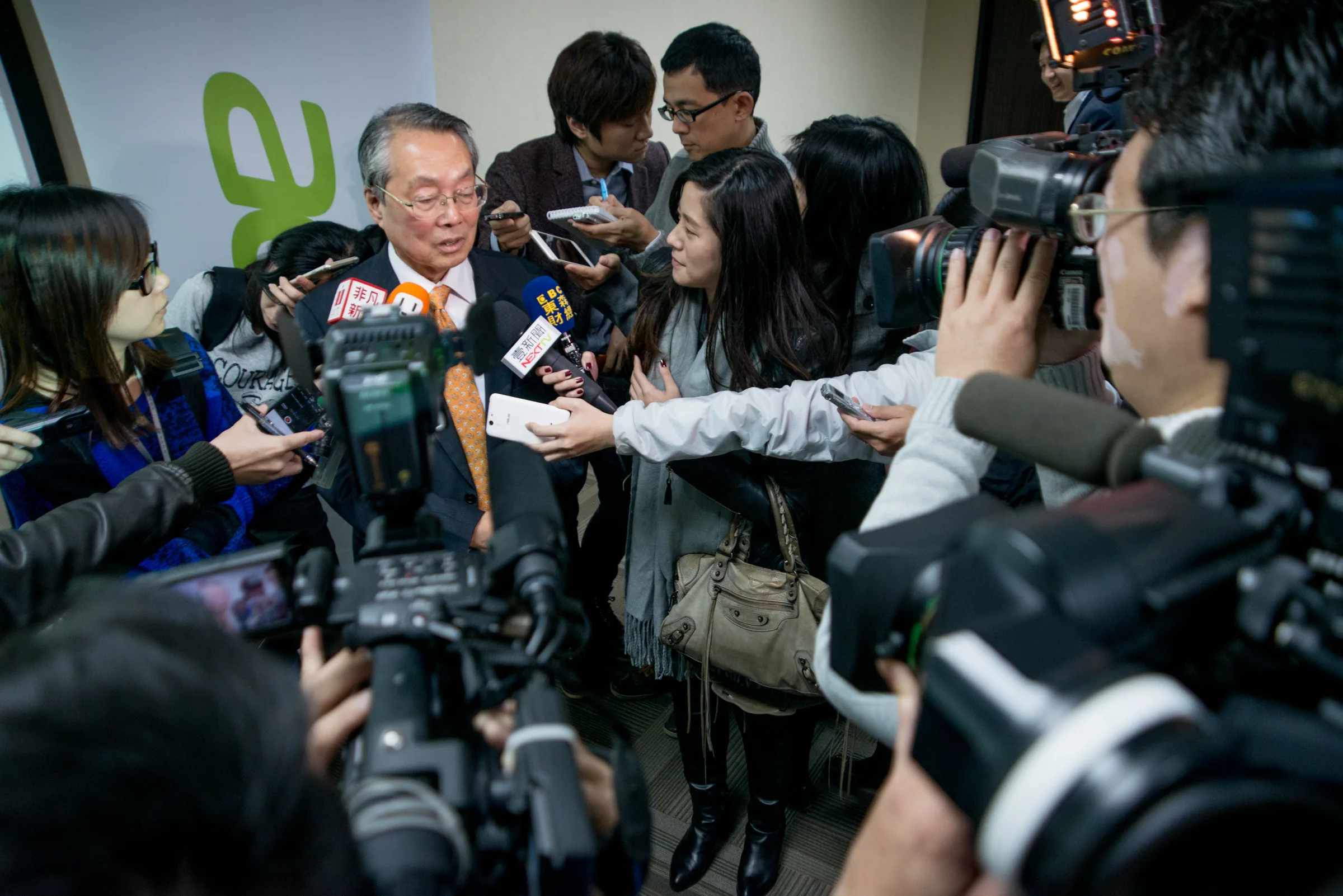
- Evolving · community2026-08
Audrey Tang: Every Famous Decision She Made Was a Refusal of the “Genius” Label
Kicked unconscious by classmates at eight, turning down a guaranteed place at Taipei Municipal Jianguo High School at fourteen, coming out as transgender at twenty-four while refusing to become its spokesperson, and making “no office” the first condition of joining the cabinet at thirty-five. On December 2, 2025, she accepted the Right Livelihood Award in Stockholm — and the word she stressed on stage was not “I,” but “we.”
44 ~22 min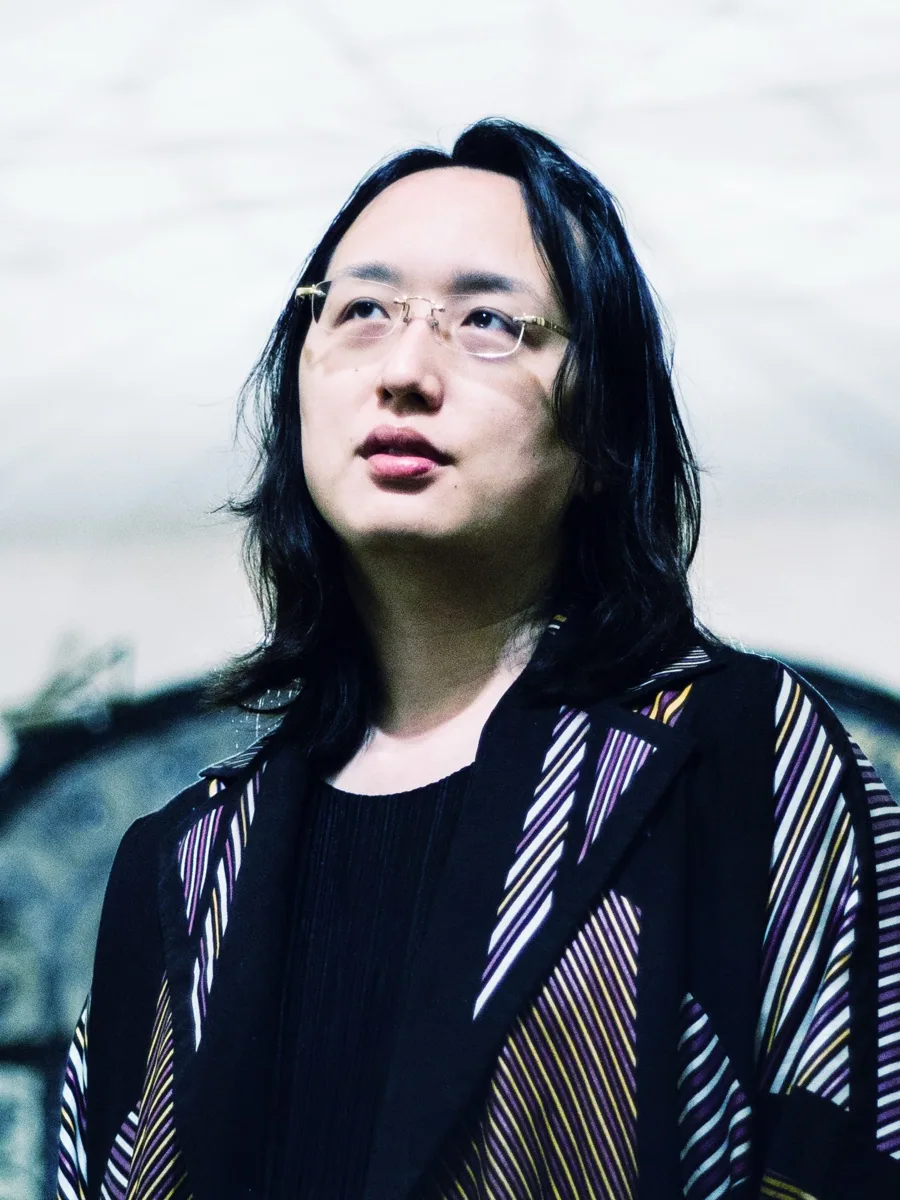
Music & Performance 22
- Standard article
Tzuyu
A Tainan girl who never talked politics. An 8-second flag on Korean TV. An election-eve apology video. And ten years later, she stood at the Dome and read from a handwritten letter: 'I didn't leave — not because I was obedient, but because I truly wanted and longed to stay.'
- Standard article
Whyte (壞特?te): The Honor Student Who Spent Nine Years in Medical School — and Pressed Pause
On August 21, 2021, Whyte stepped onto the stage at the 32nd Golden Melody Awards wearing a black hat and sunglasses. She looked into the camera and said: 'Please don't be afraid.' Her legal name is Lin Chih-yi. She is from Hsiangshan, Hsinchu. She attended Hsinchu Girls' Senior High School and spent nine years in the medical program at the National Defense Medical Center — including one year on leave during her third year and one additional year before graduation (her two-year internship took three years to complete because she missed shadowing rotations). She completed her internship training and earned her medical degree. At the time of the award, she was still working in operating rooms wearing a surgical mask. On the most academically competitive track in Taiwan, she pressed pause.
- Standard article
Hebe Tien: The Singer Who Shed the Idol System, One Layer at a Time
When Hebe Tien released her debut solo album To Hebe in September 2010, the poster read 'super newcomer after ten years in the industry' — by then S.H.E had already sold over ten million records. Eleven years later, she stood on the Golden Melody stage and called out to her mother: 'Mom, I didn't waste the water bill — I won a Golden Melody Award.' From a Hakka small town in Hsinchu to the Taipei Arena stage, the idol groomed by HIM International Music spent twenty-five years actively shedding endorsements, variety shows, the China market, and the 'literary queen' label — one by one.
- Standard article
Cicada: Sixteen Years of Field Recordings from Typhoon Morakot in 2009 to Cross-Hemispheric Glaciers in 2025
Founded in Taipei in 2009, Cicada is an all-instrumental, vocal-free independent band. Founding pianist Jesy Chiang (M.A. in Art History, Taipei National University of the Arts) wrote the first batch of pieces after seeing news coverage of Typhoon Morakot that year. Over the next sixteen years, they turned Taiwan’s disappearing coasts, marine ecology, mountain forests, and stream sources into a series of wordless albums, moving from the west coast (Coastland, 2013) to the Pacific off the east coast (Light Shining Through the Sea, 2015) and onward to the stream sources of the Central Mountain Range (Seeking the Sources of Streams, 2022, a 15-day, 120-kilometer expedition). They scored the Japanese film A Man and received the Japan Academy Film Prize for Outstanding Achievement in Music. In 2025, Gazing the Shades of White took their fieldwork beyond Taiwan for the first time, following glaciers through Greenland, Iceland, and New Zealand before returning to Xueshan to look for traces left by ancient glaciers.
- Standard article
Crowd Lu: The Triple Crown Champion Who Was Run Over by a Bus
In 2003, a boy from Tainan rode out for a late-night snack and had his leg crushed under a bus. Bedridden and bored, he picked up the guitar his cousin had given him. Twenty-two years later, he is the youngest Triple Crown winner in Taiwan's history — Golden Melody, Golden Bell, and Golden Horse — a road walked on a guitar and a pair of legs that once broke.
- Standard article
Enno Cheng: Writing the Most Honest Songs in the Most Unfamiliar Language — Seven Years from Coming Out in 2016 to Winning Two Taiwanese Awards at the 2023 Golden Melody Awards
Born in 1987, Enno Cheng (鄭宜農) is the daughter of New Cinema director Cheng Wen-tang. She debuted as an actress in 2007 with a Golden Horse nomination, came out on Facebook in January 2016 and divorced that same month, released her first all-Taiwanese-language album 'Mercury Retrograde' in 2022, and won both Best Taiwanese Female Singer and Best Taiwanese Album at the 34th Golden Melody Awards in July 2023. She said: 'I decided to use a language I was not that familiar with, to make things difficult for myself.'
- Standard article
Waa Wei: Twenty Years of Wanting to Be Heard, from Naturally Curly's "Wawa" to Two-Time Golden Melody Queen
Vocalist 'Wawa' of Naturally Curly in 2003, going solo as 'Waa Wei' after a vocal cord injury in 2006, and winning Best Mandarin Female Singer at the Golden Melody Awards in both 2020 and 2025. From the four-language elegy 'That Place' mourning Ellen Loo, to the female resistance of the children's-voice version of 'Ophelia', to the courage grown from pain in Pearl Punishment — twenty years on the most counter-intuitive path in Mandopop: making her voice more famous than her face, letting her work outlive her persona.
- Standard article
Abao (Aljenljeng Tjaluvie): The Future Pop Singer Who Sent the Paiwan Language to the Golden Melody Album of the Year
The 2020 Golden Melody 31 Album of the Year went to the all-Paiwan electronic album 'kinakaian — Mother Tongue.' Abao (Aljenljeng Tjaluvie, b. 1981, Jinfeng, Taitung) debuted as one half of the R&B duo Abao & Brandy, worked as a nurse for a decade, then in 2019 collaborated with Dizparity to make indigenous-language future pop — rewriting the equation that 'indigenous music = preservation.'
- Standard article
Chen Chien-chi: From Accounting Major to Three-Gold-Winning Producer, the Man Who Tore Down the 'Weird Voice' Red Line in Mandarin Pop Music
Born in 1973 and a graduate of Tamkang University's accounting department, Chen Chien-chi is a rare 'absent author' in the history of Mandarin pop music: you have heard the songs he produced for Waa Wei, Lala Hsu, Hebe Tien, and Julia Peng, but you probably do not know who he is. Winner of the 2021 32nd Golden Melody Award for Best Album Producer, the 2023 Golden Horse Award for Best Original Film Song, and the 2025 Golden Bell Award for Drama Original Song — a three-Gold-winning producer who walked into pop music from the theater piano bench.
- Standard article
No Party for Cao Dong: Twelve Years from Cao Dong Street on Yangmingshan to Two Golden Melody Best Band Wins
At the 28th Golden Melody Awards in 2017, a four-piece band that had self-funded a pressing of 2,000 CDs overwhelmingly defeated Mayday and won three awards. They disappeared for seven years, a period that spanned drummer Fanfan's death in a quarantine hotel in 2021 and two years of silence. In 2023 they returned with The Clod; at the 35th Golden Melody Awards in 2024 they won the triple crown of Album of the Year, Best Mandarin Album, and Best Band, with their manager accepting on their behalf: “No Party for Cao Dong has never been only the four people standing onstage.”
- Standard article
Constant and Change: Ten Years of 'A Band Doesn't Run on Persistence — If It's Not Fun, It Falls Apart'
A four-piece independent band formed in Taipei in 2013, whose name fuses the ancient Greek philosopher Heraclitus's 'panta rhei' with the changeup pitch in baseball. Lead vocalist ARNY was born in the Philippines, once played bass in Fire EX, and has 20 years in music; drummer Xiaomi has rheumatoid arthritis that left her thumb unable to bend, and still plays; bassist Jinmao says 'a band doesn't run on persistence — if it's not fun, it falls apart.' They went from playing Legacy to two audience members to 5,000 people at Taipei Music Center in 2023, with no viral moment and no breakout single — only ten years of steady evolution.
- Standard article
Ricky Hsiao: Twice Blind, Yet with His 'Eyes for No One' Humor He Fell His Way to a Golden Melody Award
Born in 1976, Taiwanese singer-songwriter Ricky Hsiao lost his sight twice due to congenital cataracts. He is not only a four-time Golden Melody Award winner for Best Taiwanese Male Singer, but was also a national judo bronze medalist at the Asian Para Games. He pioneered a professional path for visually impaired musicians by founding the Life Line Band, and in recent years has used self-deprecating 'dark humor' to flip the stereotyped images people project onto those with disabilities — becoming a legendary figure in the Mandopop world.
- Standard article
Huang Shao-yong: Dropping Out of a Biochemistry PhD to Bring Mother Tongue Music to the Golden Melody Album of the Year
Backstage at the 33rd Golden Melody Awards in 2022, Huang Shao-yong won Best Arranger and pulled a recorder from his jacket to play a passage. The son of Examination Yuan President Huang Jung-tsun, the producer who terminated his NTU biochemistry doctoral program around age 30 founded Dark Paradise Records a decade ago and co-produced Abao's *kinakaian 母親的舌頭*, which won the 2020 Golden Melody Album of the Year. His work has always been one thing: arranging a path to the mainstream for the most marginalized voices.
- Standard article
LaLa Hsu: From Nurse to Golden Melody Queen, the Singer Who Rewrote the Talent Show Script
In 2008, LaLa Hsu quit her nursing job and secretly entered the third season of Super Star Avenue, nearly buying a bus ticket back to Taichung. 'Riding the White Horse' brought Taiwanese opera singing onto the talent show stage, and 2018's Psychologist won her Best Mandarin Female Vocalist and Best Mandarin Album at the Golden Melody Awards. From Giving to 'We Cannot Be Together Without Breaking Up,' she gradually transformed a life of being graded into her own subject.
- Standard article
Our Shame (Ao and Mountain): Two Tech Workers Who Said in Synthesizers What They Couldn't Say at the Office
Our Shame (凹與山) is a Taiwanese folktronica duo. Members Estelle H (lead vocals, synthesizer, producer) and Isan (drums, pad) met in high school music club and, as an unplugged folk duo during college, won the Golden Reed Award's composition division in 2015. After graduation both entered the tech industry as full-time workers. In the winter of 2018 they renamed their project from 'Wei Xiao-ao' to 'Our Shame,' with Estelle picking up synthesizers and Isan switching to pads, pivoting toward folktronica. In 2022 Estelle's closest friend died and she quit her full-time job; the band released their debut album 'Modern Problem,' which received double nominations at the 13th Golden Indie Music Awards for Best Alternative Pop and Best New Artist. On August 4, 2025, they released their second album 'Hidden Album,' bringing in Grammy-winning British mixer Jay Reynolds, Grammy-winning American engineer Brian Elgin (credits include Dua Lipa and Lana Del Rey), Japan's ASOBOiSM, and other international collaborators. The album's themes shifted from 'tech anxiety' (Modern Problem) to 'human shadows concealed by technology' — self-harm, forbidden love, cryptocurrency scams, and female embodied experiences — including a track 'Miffy' in tribute to activist Chen Mei-hui.
- Standard article
Chang Yu-sheng: From Idol to Prophet, a Musical Experiment That Crossed Generations
In 1989, the son of an army entertainment troupe leader debuted with 'Miss You Every Day' selling 350,000 copies and became an idol; in 1994, he responded to the market with a 73-minute live band recording that sold dismally but was later called prophetic. Chang Yu-sheng spent nine years grinding between his idol identity and his creative conscience — four days after 'Mouth Says No, Heart Says Yes' went on sale, he crashed his car in the Tamsui pre-dawn hours and never woke up.
- Standard article
Dwagie: The Taiwanese Rap "Principal" Emerging from Tainan's Training Studio
Dwagie (real name Tseng Kuan-jung) is a Taiwanese rapper from Tainan and the founder of Renren Yougong Lian. From the Master U message boards and Rock Records' *Shé Càn Lián Huā*, to 〈Taiwan SONG〉, *Ren*, animal rights, *The Rap Era*, and hip-hop education in Tainan, he brings Taiwanese rap, local spaces, public issues, new generation empowerment, and Taiwanese identity together under a single microphone.
- Standard article
Hello Nico: Eight Years of Silence, Then 'I Missed the Stage'
A Taiwanese indie band that won the StreetVoice annual chart with 'Flower' in 2014 and received a Golden Melody Award nomination in 2016 — then went quiet for eight years. Chan Yu-ting said: 'The hardest thing about making music is fighting with yourself.' In 2024, they came back with Plan B.
- Standard article
Kuo Chin-fa: The Bass Soul Behind 'Roasted Rice Dumpling'
From a shoemaker's apprentice in Dadaocheng to the 'Island's Bass King,' Kuo Chin-fa used 'Roasted Rice Dumpling' to sing out the hardship and resilience of postwar Taiwanese common people — and burned up his last breath on stage.
- Standard article
Shen Wencheng: From Ching Chuan Kang Mechanic to Dual-Golden Singer
Shen Wencheng is a Taiwanese dual-Golden entertainer who has worked across music and television hosting. From aircraft mechanic in the final years of the Vietnam War to the island-wide hit 'Who Knows My Heart,' he inscribed his name in both the Golden Melody and Golden Bell Awards through sincerity and humor.
- Standard article
VH (Vast & Hazy): Fifteen Years of Directional Calibration for an 'Exit-System Band'
Formed at the Tamkang University Golden Bell Award in 2011, went on hiatus in 2014, returned as a duo in 2017, and was nominated three times for Golden Melody Best Vocal Group. In an era when the Taiwan indie scene favored noise, Vast & Hazy chose to be a shelter for nameless anxiety — and fans spontaneously named them an 'exit-system band.' In April 2026, after Yi-chi announced his move to behind-the-scenes work, Ka-ka carries the name forward.
- Standard article
Jay Chou
In 1997, a shy 18-year-old boy rewrote the history of Mandopop
Tech & Business 16
- Standard article
Stan Shih: From a Duck Egg Stall in Lukang to a Brand Called Taiwan
At a 1981 electronics show in San Francisco, a plastic-shell laptop that closed like a book drew 20 U.S. distributors circling it for agency rights—marking the first time many Taiwanese touched a 'computer made in Taiwan.' The man behind it lost his father to overwork at age three and was raised by a mother who sold duck eggs and patriotic bonds. He built Acer into a top-five global PC brand, drew the Smiling Curve that entered textbooks, and stands among Taiwan’s rare tech patriarchs willing to face the camera and say, 'I am the biggest loser.'
- Standard article
Morris Chang
The semiconductor godfather and founder of TSMC, a legendary entrepreneur who transformed the global technology industry with the foundry model.
- Standard article
Jensen Huang
From a Kentucky boarding school to a five-trillion-dollar empire: how a Tainan boy who cleaned toilets bet on a future that would not arrive for another decade
- Standard article
Morris Chang vs. Chang Hsin-cheng: From Semiconductor Tycoon to the "Eight-No Hermit" Defending Taiwan
In 1984, his proposal for foundry services was ignored; in 1995, he challenged TSMC with a joint-venture model. After failed expansion into China and the Hong Kong protests, this UMC founder donated NT$3 billion to national defense in 2022, completing a dramatic transformation from tech titan to anti-CCP vanguard.
- Standard article
Lin Chi-Wei: From an Internationally Awarded Physical Board Game Brand to a Software Platform for 200,000 Creators
Lin Chi-Wei (Chi-Wei Lin, commonly known online as CW) is a Taiwanese entrepreneur. In 2014, his educational board game defeated LEGO to win a silver medal at the U.S. Parents' Choice Awards; a decade later, his startup Portaly became Taiwan's largest creator commerce platform, with 200,000 users converting influence into income. Profitable since 2025 with zero paid marketing, it grew through organic PLG (product-led growth). From traditional industries to software, then to AI, he resets and relearns each time. He has always done the same thing: helping others transform one thing into another, and openly sharing the methodology.
- Standard article
Mark Liu: The Berkeley PhD Who Succeeded Morris Chang — Six Years of Decision-Making in the US-China Chip Crossfire
In June 2018, Morris Chang retired, and Mark Liu and C.C. Wei jointly took the helm of TSMC. This UC Berkeley electrical engineering doctorate steered the world's most important chipmaker with an engineer's precision, announcing the Arizona fab, navigating geopolitical crosscurrents amid six years of US-China tech competition, and handing the reins to C.C. Wei upon his retirement in June 2024 — leaving behind a final line: 'Buy TSMC.'
- Standard article
Yeh Kuo-yi: From Shilin Commercial High School to Building a Half-Century Manufacturing Empire
Born on April 21, 1941, Yeh Kuo-yi had no university degree. Starting from Shilin Commercial High School, he founded Inventec in Shilin in 1975. Beginning with electronic calculators, he led the company to become one of the world's leading server ODM manufacturers, supplying cloud computing capacity to Facebook, Microsoft, and Google. In 2023, he handed the chairmanship to his second son, Yeh Li-cheng, and stepped back as group chairman.
- Standard article
Terry Gou: Banqiao 1950, Hon Hai Plastics 1974, and the Founder of a Contract-Manufacturing Empire
Born in Banqiao, Taipei County, on 1950/10/18. Founded Hon Hai Plastics Enterprise in 1974 with NT$100,000 and 10 employees. Entered PC connectors in 1981; renamed the company Hon Hai Precision in 1982. Handed the chairmanship to Young Liu in 2019/6. In 2021, the Yonglin Foundation worked with TSMC and Hon Hai to donate BNT vaccines. In 2023, withdrew from an independent presidential bid three hours before registration. Hon Hai ranked No. 32 on the 2024 Fortune 500; Gou was Taiwan's richest person in 2026 with US$15.3 billion.
- Standard article
Xu Wen-long: Tainan 1928, Chi Mei Corporation 1959, and the Founder of the World's Largest Violin Collection Museum
Born 2/25/1928 in Tainan, passed away 11/18/2023 (age 95). Founded Chi Mei Corporation in October 1959 (capital of NT$2 million). Began acquiring violins in 1990, amassing a total of 1,362 (the world's largest private collection). Chimei Museum officially opened on 1/1/2025 in Tainan Metropolitan Park. A passionate violinist; Chimei Museum was initially open free of charge (current policy P0 pending confirmation).
- Standard article
C. C. Wei: From Texas Instruments Engineer to TSMC Chairman and CEO
From Texas Instruments engineer to Morris Chang’s successor, C. C. Wei steered TSMC into 2nm and global expansion, becoming Taiwan’s foremost semiconductor leader.
- Standard article
Lin Bai-li: Shanghai 1949, Founder of Quanta Computer and the Notebook ODM King Who Has Fought Cancer for Two Decades
Born April 24, 1949, in Shanghai. Co-founded Quanta Computer with Liang Ci-zhen and others in 1988. Diagnosed with lung adenocarcinoma in 2005 (has been fighting cancer for over 20 years). Quanta's 2025 revenue exceeded NT$2 trillion; a key NVIDIA server partner; listed on the Fortune 500. His son's succession has drawn attention. Still serving as chairman in 2026.
- Standard article
Steve Chang: A Fu Jen Catholic University Math Graduate Who Sold Antivirus Software to the World
Born in 1954, Steve Chang graduated from the Department of Mathematics at Fu Jen Catholic University, then went to the United States to earn a master's degree in computer science from Lehigh University. In 1988, at age 34, he co-founded Trend Micro with Eva Chen in Los Angeles. On August 18, 1998, Trend Micro listed on the Tokyo Stock Exchange (ticker: 4704) and on Nasdaq the same year, becoming the first Taiwanese software company to list in Japan. In 2007 he founded Social Ventures Taiwan, and in 2019 established the Ming-Yi Foundation, pivoting from information security to social enterprise.
- Standard article
Tzu-Hsien Tung: From Taipei Tech to Pegatron, Apple's Largest Manufacturing Partner
Born June 25, 1960, Tzu-Hsien Tung graduated from the Department of Electronics at Taipei Tech (now National Taipei University of Technology), not NTU Electrical Engineering. He joined ASUS in 1988, led the spin-off on January 1, 2008, and founded Pegatron Corporation, becoming a contract manufacturer for Apple, Sony, and Nintendo. He invested in Eslite Bookstore in 2019. In 2025, he continued to publicly advocate for a 'nuclear–renewables coexistence' energy policy.
- Standard article
Yung-ching Wang: From a Rice Shop to the Twenty-Year Battle for the Sixth Naphtha Cracker, and the Posthumous Family Inheritance War
Born on January 18, 1917, in Xindian, Taipei, Yung-ching Wang dropped out of school at 15 and borrowed money to open a rice shop. He founded Formosa Plastics in 1954. In 1973, he proposed the Sixth Naphtha Cracker (No. 6 Naphtha Cracker Complex) to the government, fighting for nearly two decades before it was finally approved, with full-scale production beginning in 1998 at Mailiao, Yunlin. He died on October 15, 2008, in the United States at the age of 92, leaving behind a family inheritance dispute that spanned over a decade.
- Standard article
Lee-Feng Chien: Before Google Came to Taiwan, He Was Already Searching for Taiwan
Before many Taiwanese graduate students encountered Google, the researcher behind their online thesis retrieval system was Lee-Feng Chien. From a pioneer of Chinese retrieval at Academia Sinica to Google Taiwan's employee number one, he transformed a one-person office into an R&D hub of over 2,000 people in fourteen years. After retiring in 2020, he became one of the most blunt critics of Taiwan's talent crisis: "Taiwan will find no talent within five years and no consumers within ten."
- Standard article
Tony Hsiao: From Game Product Manager to INSIDE Founder, the Mayor of Taiwan's Internet Scene
In 2009, six internet people launched a collaborative blog, and INSIDE — Taiwan's pioneering tech commentary media — was born. Tony Hsiao (fOx) simultaneously co-founded iCook, Taiwan's largest recipe platform. Both of Taiwan's most recognized internet properties became his work — and both sold to the same buyer.
Sports 16
- Standard article
Jeremy Lin: From Being Cut Twice in 15 Days to TPBL Double MVP — A Basketball Journey
State champion in high school with zero scholarship offers, undrafted, cut twice in 15 days — then he made the world know 'Linsanity'
- Standard article
Wang Chi-lin and Lee Yang (The Lin-Yang Duo)
From middle school classmates to Olympic gold: The Lin-Yang Duo defeated China in straight sets within 34 minutes, winning Taiwan's first-ever Olympic gold medal in badminton
- Standard article
Tai Tzu-ying
Record holder for 214 weeks as world number one, Taiwan's badminton queen — from Kaohsiung's Qianzhen District to an Olympic silver medal
- Standard article
Chou Tien-chen: Taiwan’s Badminton Pioneer and World No. 2 Veteran
Overcoming a 10-match losing streak, appendicitis, and cancer, Chou Tien-chen reached world No. 2, elevating Taiwanese badminton through unmatched rally discipline.
- Standard article
Kuo Hsing-chun: From the Injury of a 141-Kilogram Barbell to Three Olympic Weightlifting Podiums
Taiwanese weightlifter, three-time Olympic medalist (2016 bronze, 2021 gold, 2024 bronze), world-record holder in the 59 kg class, and descendant of the Amis Malan community
- Standard article
Chuang Chih-Yuan: Six Olympics, 2013 World Champion, and the Olympic Medal That Was One Step Away
Born April 2, 1981, Chuang Chih-Yuan is the longest-serving competitor in the history of table tennis in Taiwan. From Sydney 2000 to Paris 2024, he represented Taiwan at six consecutive Olympic Games. At the 2013 World Table Tennis Championships, he and Chen Chien-an won the men's doubles world title. An Olympic medal remained the one regret of his career — the closest he came was falling short in the bronze medal match at London 2012. After retiring, he became an associate professor of physical education at National Sun Yat-sen University.
- Standard article
Chi Cheng: Set 10 World Records, Still Running for Taiwan's Name 50 Years Later
Born in Hsinchu on March 15, 1944, Chi Cheng became the most outstanding female track and field athlete in Taiwan's history, known as the 'Flying Antelope.' At the 1968 Mexico City Olympics, she won bronze in the 80-meter hurdles with a time of 10.51 seconds—Taiwan's first-ever Olympic track and field medal for a woman. Over her career, she set 10 world records. After retiring, she devoted herself to promoting road running. Now in her eighties, she remains active on the front lines of the campaign to compete under the name 'Taiwan.'
- Standard article
Chien-Ming Wang: From Jianxing Junior High to the Sinker That Won the Yankees Two Seasons
Born in Tainan in 1980, Chien-Ming Wang is the most representative pitcher in the history of Taiwanese baseball players in the United States. He attended Jianxing Junior High School in Tainan and made his Major League debut in 2005. In 2006, he went 19-6 and tied Johan Santana for the American League wins title, becoming the first Asian pitcher to do so; in 2007, he posted another 19-7 season. After a baserunning injury in June 2008, his career trajectory changed. In 2018, the documentary _Late Life: The Chien-Ming Wang Story_ was released; in the 2023 WBC and the 2024 WBSC Premier12, he served as bullpen coach for the Chinese Taipei team.
- Standard article
Lu Yen-hsun: From Wimbledon Quarterfinals to Five Olympics, the Man Who Took Taiwanese Tennis the Farthest
At the 2010 Wimbledon Championships, Lu Yen-hsun defeated seventh seed Andy Roddick to become the first male player from Taiwan to reach a Grand Slam quarterfinal. From Athens 2004 to Tokyo 2021, he competed in five consecutive Olympic Games without missing a single edition—the farthest-traveling player in the history of modern Taiwanese tennis. After retiring, he founded a tennis academy, continuing to wait for a young Taiwanese player who might one day surpass his Wimbledon record.
- Standard article
Cheng Chao-tsun: 91.36 Meters on the Last Throw — The Day Asian Javelin Changed Forever
Born October 17, 1993 in Taichung, Cheng Chao-tsun is Taiwan's most accomplished javelin thrower in history. In the men's javelin final at the 2017 Taipei Summer Universiade, his last throw of 91.36 meters reversed the standings and won gold, setting the Asian record and making him the first Asian athlete to exceed 90 meters — ranked 12th all-time in the world at that point. He won gold at 86.72 meters at the 2019 Asian Athletics Championships and silver at 87.12 meters at the 2019 Diamond League Shanghai. He competed injured at the 2021 Tokyo Olympics but did not advance to the final. The world record is held by Czech athlete Jan Železný at 98.48 meters.
- Standard article
Hong-Chih Kuo: Taiwan's First MLB Home Run and All-Star, His Elbow Said No but He Kept Pitching
Born July 23, 1981, Hong-Chih Kuo was the fourth Taiwanese baseball player to reach MLB and the first Taiwanese player in history to hit a home run in the majors and the first to be selected for the MLB All-Star Game. He served as a key left-handed reliever for the Los Angeles Dodgers, posting an elite ERA of 1.20 in 2010, but injuries repeatedly forced his elbow to stop — and every time, he came back.
- Standard article
Hsieh Su-wei: Hsinchu 1986, Taiwan's First Grand Slam Champion and Seven Women's Doubles Titles
Born 1986/1/4 in Hsinchu. Father Hsieh Tzu-long (bus driver for Taiwan Motor Transport) passed away in 2023/10. Career-high WTA singles ranking: No. 23 (2013). Seven Grand Slam women's doubles titles (2013 Wimbledon / 2014 French Open / 2019 Wimbledon / 2021 Wimbledon / 2023 French Open / 2023 Wimbledon / 2024 Australian Open). First Taiwanese woman to reach a Grand Slam singles semifinal (2021 Australian Open). 2025/7 Wimbledon women's doubles runner-up.
- Standard article
Hsu Shu-ching: Lunbei 1991, Taiwan's First Double Olympic Gold Medalist in the 53 kg Weightlifting Category
Born May 9, 1991, into a Hakka family in Lunbei Township, Yunlin County; height 159 cm. At the 2012 London Olympics in the women's 53 kg category, she won silver with 219 kg (96 + 123). After gold medalist Zulfiya Chinshanlo (Kazakhstan) failed a retroactive doping test, Hsu was upgraded to gold in December 2020. At the 2016 Rio Olympics, she won gold outright with 212 kg (100 + 112). Taiwan's first double Olympic gold medalist. Retired June 3, 2018. In 2019, received a three-year ban for a 2017 doping violation (did not affect either Olympic gold).
- Standard article
Yang Dai-Kang: Taitung 1987, Amis Outfielder from Hokkaido Nippon-Ham's Decade of Gold Gloves to Yomiuri Giants via FA
Born 1987/1/17 in Taitung City, Amis, formerly known as Yang Zhong-shou. Graduated from the junior high school of National Taitung University Affiliated Sports High School, then went to Japan to attend Fukuoka Daiichi High School. In the 2005 NPB draft, both the Hokkaido Nippon-Ham Fighters and the Fukuoka SoftBank Hawks selected him with the first overall pick; the Fighters won the lottery. In 2012, he won the Pacific League Outfielder Gold Glove Award — the first Taiwanese fielder to do so. In 2016, he exercised his domestic FA rights and transferred to the Yomiuri Giants. His NPB career: 1,322 games, 105 home runs, 482 RBIs, .270 batting average. He left the Giants at the end of 2021 and moved to independent leagues.
- Evolving · community
Lin Yi-chieh
From a small boy rejected by the track team to an ultra-runner who made history walking across the Sahara Desert
- Standard article
Yani Tseng
109 weeks at World No. 1, 15 LPGA titles including 5 majors, became the youngest player in history to claim 5 major championship trophies at age 22 — surpassing Tiger Woods' record; in 2025, ended an 11-year title drought and claimed victory once again
Literature 15
- Standard article
Lin Liang: Shallow, Yes — But Shallow with Flavor
From the eldest son who lost his father on the banks of the Jiulong River in 1944, to the 95-year-old grandfather who passed away peacefully in his sleep in December 2019. Over 73 years, Lin Liang proved that children deserve to be treated as complete readers.
- Standard article
San Mao: The Person Who Wrote Escape as Freedom
Born Chen Ping in 1943 in Chongqing, she moved to Taiwan with her family in 1948. She dropped out of junior high after being publicly humiliated by a teacher, and resumed writing after seven years of self-imposed isolation. In 1973, she married José in Spanish Sahara; her essays became a hit, serving as a window for Taiwanese people in the Martial Law era to imagine the distant world. José died in a diving accident in 1979. In 1990, her screenplay for 'Red Dust' won eight Golden Horse Awards. On January 4, 1991, she hanged herself at Taipei Veterans General Hospital at the age of 47.
- Evolving · community
Chung Chao-cheng: A Man Who Never Finished a College Degree, Yet Wrote the Long River of the Taiwanese People
Born in Longtan, Taoyuan in 1925, Chung Chao-cheng had his studies in the Chinese Department of National Taiwan University interrupted by a Japanese-language education and illness, yet he went from elementary school teacher to novelist, editor, and Hakka activist. With _Lubinghua_ he wrote about rural Taiwan, and with two trilogies he preserved the historical memory of the Taiwanese people. His literature lives not only on the bookshelf but also in a life-and-literature park in Longtan.
- Evolving · community
Hong Ni: Three Names Sharing One Pen, From Fangyuan Library to HahaTai Streets
Hong Jie-ni (洪婕倪), born in Changhua Haixian and raised in Fangyuan, operates under the names "Jenny" for street interviews in HahaTai, and "Hong Ni" when organizing family life, migrant experiences, baking apprenticeship, and growth. Between short stories like *Is the Watermelon Sweet?* and *The Melon Seller*, lies an author's method of placing public work and intimate writing on the same life map.
- Standard article
Chen Yingzhen: The Pro-Unification Literary Conscience from Zhunan to Beijing
Chen Yingzhen (1937-2016), born Chen Yongshan, was born in Zhunan, Miaoli, and grew up in Yingge. In 1964, “The General’s Clan” made his name through the tragedy of a mainlander veteran and a young Taiwanese prostitute; in 1968, he was sentenced to 10 years in prison in the “Democratic Taiwan Alliance case” (he was released early under a special amnesty after Chiang Kai-shek’s death in 1975). In 1985, he founded Renjian magazine, pioneering reportage literature in Taiwan. In 1988, he founded the China Unification Alliance and served as its first chair. After suffering a stroke in 2006, he moved to Beijing, where he died in 2016. He was postwar Taiwan’s most controversial pro-unification writer, as well as a key theorist who intervened in the Nativist Literature debate under the pen name “Xu Nancun.”
- Evolving · community
Lung Ying-tai: Born in Daliao in 1952, the Public Intellectual from The Wild Fire to Taiwan's First Minister of Culture
Born on February 13, 1952, in Daliao Township, Kaohsiung County. She holds a master's degree in English and American literature from Kansas State University, though accounts of her doctoral degree differ (P0). The Wild Fire first appeared in December 1985, went through 24 reprints in 21 days, and surpassed 100,000 copies within four months. She served as Taiwan's first Minister of Culture from 2012 to 2014 (appointed by Ma Ying-jeou), and Big River, Big Sea — Untold Stories of 1949 was published in 2009.
- Standard article
Xi Murong
Author of "Qili Xiang" and "Youth Without Regret", the best-selling poet in the Chinese-language poetry scene, of Mongol ethnicity
- Standard article
Chu Tien-wen: 1956 Taipei, from *San San Journal* to *A City of Sadness* and the Golden Lion at Venice
Born in Taipei in 1956, daughter of novelist Chu Hsi-ning. In 1977, co-founded *San San Journal* with Hu Lan-cheng and others. Longtime screenwriter for Hou Hsiao-hsien; her landmark work *A City of Sadness* won the Golden Lion at the Venice Film Festival in 1989. In 1994, her novel *Notes of a Desolate Man* won the top prize in the novel category of the China Times Literary Award. Screenwriting credits include *Good Men, Good Women* and *Goodbye South, Goodbye*.
- Evolving · community
Huang Chun-ming: Born in Luodong in 1935, Chronicler of the Little People from “A Day by the Sea” to “The Sandwich Man”
Born February 13, 1935, in Luodong, Yilan, he wrote “A Day by the Sea” (1967) and “The Sandwich Man” (1969), embodying nativist literature’s core concern for the little people, and stood at the center of the 1977 nativist literature debate. He won the Wu San-lian Literary and Arts Award and the National Award for Arts; his second son, the writer Huang Kuo-chun, died by suicide on June 20, 2003. Hou Hsiao-hsien brought his work to the screen in 1983, and he is still living as of 2026.
- Standard article
Huang Chun-ming: Born in Luodong, 1935 — Chronicler of Small Figures from 'The Days of Watching the Sea' to 'The Sandwich Man'
Born February 13, 1935, in Luodong, Yilan. 'The Days of Watching the Sea' (1967) and 'The Sandwich Man' (1969) represent the core concern of Taiwan's nativist literature for ordinary people. The Nativist Literature Debate of 1977. Recipient of the Wu San-lien Literary Award and the National Award for Arts. His second son, Huang Kuo-chun (a writer), died by suicide on June 20, 2003. Hou Hsiao-hsien adapted his work for the screen in 1983. Still living as of 2026.
- Standard article
Huang Zhen-nan
Huang Zhen-nan is a Taiwanese cultural historian, book collector, and writer. Through his 'Huoshuilaifang' page, he shares Taiwan's history and old-book culture. He is the author of works such as *The Most Hilarious History of Taiwan*.
- Standard article
Li Ang: Lukang 1952, the Trailblazer Who Opened the Path of Taiwanese Feminist Literature with 'The Butcher's Wife'
Born in April 1952 in Lukang, Changhua, under the birth name Shih Shu-tuan. In 1983, 'The Butcher's Wife' was serialized in United Daily News, shocking the literary world with its subject matter of domestic violence. 'The Enchanted Garden' followed in 1991. In 2004, she was awarded the Chevalier de l'Ordre des Arts et des Lettres by France. Her works have been translated into English, French, German, Japanese, and other languages, making her one of the most internationally recognized female writers from Taiwan.
- Standard article
Pai Hsien-yung: Taipei People (1971) to the Youth Edition of the Peony Pavilion's 20-Year Tour
Born in 1937 in Guilin, Guangxi, son of Bai Chongxi. Entered the National Taiwan University Department of Foreign Languages and Literature in 1956; co-founded Modern Literature with Wang Wen-hsing and others. Published Taipei People, a collection of 14 short stories, in 1971. Published Crystal Boys in 1983. Launched the Youth Edition of the Peony Pavilion in 2003, with its premiere in April 2004, reaching its 20th anniversary in 2024. Received the National Award for Arts in 2003.
- Standard article
Zhong Lihe: Meinong 1915, the Writer Who Fell in a Pool of Blood
Born on December 15, 1915, into a Hakka family in Meinong, Kaohsiung. Went to Northeast China in 1938 and returned to Taiwan in 1946. Representative works: *Lishan Farm* (novel), *The Native* (short story, written in 1959), and *A Couple in Poverty*. Known as 'the writer who fell in a pool of blood,' often called the 'Father of Taiwanese Nativist Literature' (a title that is disputed). Died of hemoptysis on August 4, 1960, at the age of 44.
- Evolving · community
Hung Sing-fu: The Fallen Superstar of Nativist Literature
Born in 1949 to a poor farming family in Erlin, Changhua, Hung Sing-fu published his first short story at age 18. Before his untimely death from a car accident at age 33, he worked as an elementary school teacher and produced Nativist classics such as "Black-faced Ching-tzu," "My Soil," and "Playing in the Streets" in just 15 years, capturing Taiwan's rural transition from agriculture to industry.
Politics & Democracy 13
- Standard article
Lai Ching-te: The Public Health Physician from a Mining Family to the Presidential Office
Taiwan's 16th president and the first political figure in the constitutional history of the Republic of China to run for and win the presidency while serving as vice president
- Standard article
Zheng Nanrong: The Equation of a Mainlander's Son Who Traded His Life for Freedom of Speech
During the 228 Incident of 1947, his father Zheng Musen was hidden by Taiwanese neighbors to survive. Forty-one years later, the couple's eldest son, Zheng Nanrong, ignited gasoline in his own magazine office. He founded *Freedom Era Weekly* in 1984, holding 24 licenses and publishing despite 18 government bans. In 1988, he published Xu Shikai's 'Draft Constitution of the Republic of Taiwan.' On April 7, 1989, he set himself on fire. His wife Ye Julan subsequently entered politics, serving as a legislator, Minister of Transportation, Hakka Affairs Council chair, Vice Premier, and Secretary-General to the President. Zheng's choice remains controversial to this day: supporters regard it as martyrdom, while critics see it as an extreme personal act. The air of free speech in Taiwan is so commonplace now that many have forgotten it once required a life to obtain.
- Standard article
Ma Ying-jeou: The Harvard Doctor of Law Who Entered Chiang Ching-kuo's Office as an English Interpreter, Served Eight Years as a President Grounded in a 'Clean' Image, and Left Behind Cross-Strait Policy, the Sunflower Movement, and 22K
On November 7, 2015, at the Shangri-La in Singapore, he shook Xi Jinping's hand for 1 minute and 20 seconds: the first meeting between the top leaders on the two sides of the Taiwan Strait since 1949. Taiwan society still remembers the same photograph in two completely different ways: one side sees a historic breakthrough; the other sees a concession of subjectivity. His 'clean' image after eight years as president, cross-strait policy, 22K, and the Sunflower Movement, together with two post-presidency visits to China over the following decade and the 2026 family statement, remain unsettled to this day.
- Standard article
Tsai Ing-wen: From the Night of Defeat to 8.17 Million Votes, an Eight-Year Presidency of Quietude
On January 14, 2012, Tsai Ing-wen lost the presidential election by a margin of 797,561 votes; eight years later, she won with 8,170,231 votes, setting a record for the highest vote count in Taiwan's history of direct presidential elections. From an international trade law scholar to the first female president, she left behind achievements in indigenous apologies, same-sex marriage legislation, pension reform, and maintaining the status quo, while leaving unfinished questions regarding justice, housing, energy, and cross-Strait relations. These were eight years where quiet leadership became a system, and by which the system left its own gaps.
- Evolving · community
Lin Hsien-tang: Turning a Family Study into a Public Doorway for the Taiwanese People
Born in 1881 into the Wufeng Lin family, Lin Hsien-tang chose non-armed resistance and led the Taiwan Parliament Petition Movement (1921–1934). His 378-day world tour became a lesson in self-governance. What he left behind was not only a family name, but a method connecting education, culture, and autonomy.
- Standard article
Chen Chih-chung: Political Rise, Legal Battles, and Digital Reinvention
From first family heir to top Kaohsiung councilor, Chen Chih-chung weathered decade-long scandals and election bans before finding a second voice on social media.
- Standard article
Chen Chu
From death-row prisoner at Meilidao to the South's all-powerful 'Mama Mayor' — she is the most vivid witness to Taiwan's democratic transition.
- Standard article
Shih Ming-te: Twenty-Five Years Behind Bars, He Finally Raised a Flag Against His Own Party
After the 1979 Kaohsiung Incident, Shih Ming-te — charged as the mastermind — stood at his military tribunal and refused to plead guilty, refused to beg for mercy, and was sentenced to life imprisonment. He spent a cumulative twenty-five-plus years in prison, one of the most significant victims of Taiwan's democracy movement. But in 2006, the man who helped build the Democratic Progressive Party turned around and launched the anti-Chen Red Shirt Movement. On January 15, 2024 — his 83rd birthday — he died carrying that unresolved contradiction.
- Standard article
Fu Kun-chi: The Spiral of Power from the East Coast's 'Hualien King' to Legislative Caucus Convener
From the 1990s stock-market magnate known as 'Kai Ju Little Fu,' to entering the legislature in 2001 and taking control of Hualien in 2009, Fu Kun-chi built on Taiwan's east coast a two-decade 'Fu family dynasty' that even the central government found difficult to shake. From serving prison time while still holding office in a stock-manipulation case and staging a sham divorce to appoint his wife as deputy county magistrate, to returning to the Legislative Yuan in 2024 as Kuomintang caucus convener and leading a delegation to China, he has embodied one of the most extreme cases of resilience and controversy in Taiwanese politics.
- Standard article
Lin Yixiong: From Taiwan Provincial Councilor to the Moral Symbol of the Anti–Nuclear Four Movement
Lin Yixiong was born in 1941 in Yilan, graduated from the National Taiwan University Department of Law, and practiced as an attorney. He was elected to the Taiwan Provincial Council in 1979 and joined *Formosa Magazine* in 1979. On 2/28/1980, the Lin Family Murders occurred: his mother and twin infant daughters were killed, and the case remains unsolved to this day. After his release from prison in 1984, he earned an MPA from the Harvard Kennedy School of Government. On 6/7/1998, he was elected the eighth chairman of the Democratic Progressive Party (the first directly elected chairman). He left the DPP on 1/24/2006. In 2014, he undertook an indefinite hunger strike that led to the suspension and mothballing of the Fourth Nuclear Power Plant. He founded the Tzulin Education Foundation and is one of the most morally significant figures in Taiwan's democracy movement. As of 2026, he is 84 years old and living.
- Standard article
Chen Chien-jen: SARS Health Minister, Vice President, 31st Premier
Born June 6, 1951, in Qishan Township, Kaohsiung County, Chen Chien-jen is an internationally renowned epidemiologist. He took over as Minister of the Department of Health during the SARS crisis in 2003, served as the 14th Vice President from 2016 to 2020, became the 31st Premier on January 31, 2023, and stepped down on May 20, 2024, handing over to Cho Jung-tai.
- Standard article
Lee Teng-hui
The paradoxical life of an agricultural economist who became the first democratic leader in the Chinese-speaking world
- Evolving · community
Lu Hsiu-lien (呂秀蓮)
From Felon to Vice President: The legendary life of the first female Vice President in the Chinese-speaking world
Art & Design 13
- Standard article
Jimmy Liao: The Images Treated as Healing Were Brought Back from a Glass Tank by a Leukemia Survivor
In 1995, 37-year-old advertising art director Liao Fu-bin was diagnosed with acute myeloid leukemia and waved to friends through glass from a sterile room. After he was discharged, the “little people” he had once used to earn a living came alive, and he began drawing A Fish with a Smile, The Moon Forgets, Turn Left, Turn Right, and Sound of Colors. Behind what Taiwanese people remember as healing, youth-culture, and Jimmy Square in Luodong, Yilan, was a man who had gone through hell, translating death and loneliness into forms that could be read. Those works later grew into a domain spanning film, musicals, circus, and public art, with a 25th-anniversary special exhibition still being held in Hong Kong in 2026.
- Standard article
Aaron Nieh: Taiwan’s First AGI Member, from Golden Melody Album Packaging to National Identity Systems Across Two Decades
Aaron Nieh (born 1977) is the first Taiwanese designer admitted to Switzerland’s Alliance Graphique Internationale (AGI) and a three-time winner of the Golden Melody Award for Best Album Packaging. His design work spans pop-music covers (Jonathan Lee, Yoga Lin, Lu Wei), book publishing, civic movements (the 4 a.m. New York Times advertisement during the 2014 Sunflower Movement; the 2020 anti-Tedros “Taiwan Can Help” campaign that crowdfunded NT$10 million in eight hours), political campaigns (Tsai Ing-wen’s 2016 “Light Up Taiwan” campaign and the main visuals for two presidential inaugurations), state-owned enterprise identity systems (the Ministry of Economic Affairs, Tourism Administration, CPC, Taipower), and art spaces (Taichung Green Museumbrary, Taiwan Pavilion at the Venice Biennale). Aaron Nieh Workshop operates from Taipei and Kaohsiung’s Pier-2 warehouses; he studied in graduate programs in Belgium and London and completed none of three master’s programs; he has said of himself, “before he was designer Aaron Nieh, he was citizen Aaron Nieh.” Starting in 2024, he won four consecutive state-owned enterprise identity projects, and on the day Taipower’s new logo went online in 2026, a controversy erupted over alleged “political patronage.”
- Standard article
Wanwan: The Bald Figure Who Gave a Generation of Office Workers a Face, and Hu Chia-wei, Who Let It “Become a Historical Figure”
In the days when offices still relied on MSN to communicate, office workers who did not dare speak up to their bosses changed their profile pictures to a naked bald figure with one curled hair on its head, letting it shout “I want to get off work” for them. Hu Chia-wei, who drew it, went from a design assistant earning NT$9,000 a month to, by accident, the creator of Taiwan’s first blog to surpass 100 million views and the founding figure of illustrated online writing. The bald figure stays forever innocent and ageless, but the person who drew it grows up; so she let the character exit together with her and “become a historical figure.”
- Evolving · community
Tsai Jui-yueh: From a Green Island Cell to a Dance Studio That Could Not Be Burned Away
Born in Tainan in 1921, Tsai Jui-yueh left for Japan at sixteen to study dance, was imprisoned in 1949 after her husband Lei Shih-yu fell to political persecution, and kept teaching dance on Zhongshan North Road after her release. What she left behind was more than a set of steps: a studio that was rescued, burned, and still rehearses today, and the standing question of how Taiwan preserves the memory of the wounded.
- Standard article
Chen Chun-Liang: Design Poet and Modern Translator of Eastern Aesthetics
Chen Chun-Liang was born in Tainan in 1958 and founded Freeimage Design Co., Ltd. on his 29th birthday, earning the title 'Design Poet' in the industry. He reinterprets modern design language through calligraphy, negative space, and Eastern imagery, with work spanning publication design, corporate identity, and national celebrations. In 2005, his 'Heaven Round, Earth Square' state banquet tableware won the Grand Jury Award at the Macau Design Biennale. A long-time contributor to design education, he is one of the most influential graphic designers in Taiwan since the 1980s.
- Standard article
Fang Hsu-chung: From a Pingtung Military Dependents' Village to the Visual Director Behind Taiwan's Three Major Awards Ceremonies
Joe Fang Studio founder Fang Hsu-chung was born in 1978 in Gonghe New Village, Donggang, Pingtung. He studied in the art and design department at the private Fu-Hsin Trade and Arts School and later in the evening division of the metalwork group in the Department of Crafts and Design at National Taiwan University of Arts. In 2013, he founded Joe Fang Studio. Beginning in 2016, he successively directed the key visuals for the Golden Melody Awards, Golden Bell Awards, and Golden Horse Awards, Taiwan's three major awards ceremonies, and has been nominated seven times for the Golden Melody Award for Best Album Packaging. From the material textures of old objects in his military dependents' village childhood to the contemporary narratives of the three major awards ceremonies, he uses visual design to place Taiwan's memories alongside its times.
- Standard article
Stan Lai: The Cross-Strait Theater Bridge-Builder Behind Performance Workshop and the Wuzhen Theatre Festival
Stan Lai was born on 1954/10/25 in Washington, D.C.; his father Lai Chia-chiu was a diplomat. He earned a PhD in Dramatic Art from UC Berkeley in 1983. In 1984, he co-founded Performance Workshop with his wife Ding Nai-chu, Lee Li-chun, Lee Kuo-hsiu, and others. Secret Love in Peach Blossom Land premiered in 1986, and its 1992 film adaptation starred Brigitte Lin. In 2007, he received the 11th National Award for Arts, an honor he has received twice. In 2013/5, he co-founded the Wuzhen Theatre Festival with Chen Xianghong, Huang Lei, and Meng Jinghui; it is one of the most influential Chinese-language theater festivals across Taiwan and China. Theatre Above opened in Shanghai in 2015. The BBC has praised him as “the best Chinese-language playwright and director in the world.”
- Standard article
Xiao Qing-Yang
Grammy Award winner for Best Recording Package, nominated seven times before finally winning with a father-daughter collaboration, a representative figure of Taiwan design on the world stage
- Standard article
Fang-Yi Sheu: Yilan 1971, from Martha Graham Dance Company Principal to 2024 Golden Horse Film Festival Visual Dance Designer
Born in Yilan in 1971. Graduated from the Dance Department of Taipei National University of the Arts. Went to the United States in 1995, joined the Martha Graham Dance Company, and was promoted to principal dancer in 1999. Returned to Taiwan in 2007 to found LAFA (ended in 2010). Documentary 'Salute' released in 2020. Designed the visual dance for the 2024 Golden Horse Film Festival. Interviewed in 2025 on the topic of bodily aging.
- Standard article
Li Guoxiu
Founder of Ping-Feng Acting Troupe, Taiwan's King of Comedy, passed away from colorectal cancer on July 2, 2013, at the age of 58
- Standard article
Ming Hua Yuan: Founded in Tainan in 1929, the Four-Generation Chen Family's Taiwanese Opera Empire
Founded by Chen Ming-chi in Tainan in 1929, relocated to Chaozhou, Pingtung in 1962. The second generation, Chen Sheng-fu, introduced modern theater technology, bringing Taiwanese opera to the National Theater. Eight sub-troupes under the banners of Heaven, Earth, Xuan, Huang, Sun, Moon, Star, and Chen. In 2024, *San Xi* toured for the fourth time to mark the 95th anniversary.
- Standard article
Shen Sheng-Po
Trained in computer science, Shen Sheng-Po brought code into Taiwan’s contemporary art scene. In just 34 years, he left behind not only digital artworks, but also a way of treating programming as lived experience and free software as an artistic ethic.
- Standard article
Zhu Zong-qing
A percussion pioneer who returned from Vienna, transforming a niche art form into a people's music over 40 years
Digital & Media 12
- Standard article
Brian Tseng: He Can Calculate a Punchline, but Not Society
Born in 1990, Brian Tseng went from headphones on a desk at Taipei Municipal Jianguo High School to double majors in foreign languages and psychology at National Taiwan University, master's degrees in Brain and Mind Sciences at University College London and Integrative Biology at Pierre and Marie Curie University, and finally, on the eve of applying to PhD programs, turned toward stand-up comedy. He and Hauer Hsieh co-founded STR Network, moving Taiwanese talk shows from open mics at Comedy Club to a 13,000-person Taipei Arena show, while using the same neuroscientist's precision to miscalculate the social-emotional weight of a Cheng Nan-jung joke, a delivery-worker video, and an entertainment-tax lawsuit.
- Standard article
Howhow: The Person Who Laid Sponsored Content Out in the Sun, and the Increasingly Expensive Honesty He Sustains Alone
In 2015, a YouTuber with fewer than 100,000 followers was flown to New York by Samsung. He thought he was being hired as a photographer and saved the contact as "great benefactor." Chen Tzu-hao later turned the advertising that creators most want to hide into his signature with the line "straight into the sponsored-content topic!" Sustaining 1.54 million subscribers by writing, directing, acting, and editing alone, he nevertheless dislikes loneliness and has always wanted a team; the long-form videos he insists on making now sit precisely in the lane most heavily crushed by short-form video.
- Evolving · community
Cai Heipi: The Boy Who Grew Up Memorizing MRT Station Names, Packing Taiwan into 260,000 Subscribers
Born in 2002, Cai Jian-an started with "MRT Trivia" in high school; twelve years later, he stood on the stage of the Golden Road Awards, known as the "Oscars of the Transportation Industry." He changed his name, paused, and started again, handling research, maps, and editing himself—a model of long-termism for Taiwan's knowledge creators.
- Evolving · community
Pa Chiung: From Hualien Truku Youth to the 'Spy-Master' Wanted by the CCP for One Million Yuan
In November 2025, the Quanzhou Public Security Bureau in Fujian issued a wanted notice — targeting Taiwanese influencer Pa Chiung. This Truku youth from Xincheng Township, Hualien, who once won an award for his travel videos, transformed in just six years from a local creator into a figure Beijing calls a 'Taiwan independence thug' — and has continued exposing CCP united-front operations on the international stage.
- Standard article
Chang Chih-chi: The 'Information Curator' Seeking Dialogue in a Polarized Age — from Simpleinfo to Shasha77, Seven Years of Daily Updates
Known for seven years of daily updates and 1.65 million subscribers on 'Shasha77,' this information designer translates complex social issues into accessible explainers. He continues searching for the possibility of dialogue in a polarized Taiwanese society.
- Standard article
Huang Brothers: Behind the Fresh-Faced Label, the Reality and Tenderness Forced into the Open
Beginning with a prank video in 2017, the Huang Brothers broke through Taiwan's YouTube scene with a “fresh, positive” image. Yet a forced-outing report in 2020 pushed the brothers, then at the peak of one million subscribers, to dissect their privacy before the camera, while unexpectedly tracing one of Taiwanese society's gentlest collective responses to gender equality.
- Standard article
Potter King — From 'Pickup Lines' Entertainment to 'Pink Spy' Hunter: A Digital Sovereignty Gambler Caught Between Law and Principle
The career arc of Potter King (Chen Jia-Jin) documents a Taiwanese creator's transformation from harvester of cross-strait commercial profits to defender of digital sovereignty, while simultaneously exposing the legal, property rights, and financial complexities of a creator's long entanglement with a capital system.
- Standard article
Red Shin (Kouki): From Eleven-Year Daily Upload Machine to Million-Subscriber YouTuber Who Reclaimed His Life
On October 15, 2023, game streamer Red Shin (Kouki), with 3 million subscribers, uploaded his final scheduled video, formally ending 14 years of creative work. This creator who rose to fame through Minecraft and set the legendary record of 11 consecutive years of daily uploads chose to retire at the peak of his career, frankly stating he had been living like a machine — revealing the brutal struggle of a top creator between algorithm and personal life.
- Evolving · community
This Group: The Seven Who Became Famous Together, and How They Reached the Day They Had to Part
In 2011, Zhanrong, Zhanrui, and five partners brought their performance chemistry to YouTube. From "Super Blind Covers" to 3.57 million subscribers, they turned daily life into shared memories, transforming their channel into a small company requiring division of labor, profit-sharing, and management. After announcing a hiatus in 2023, issues of money, exhaustion, platform shifts, and personal development finally surfaced. This is a Taiwanese internet history story about how collaborative creation grows into a profession, and why it often requires re-partitioning.
- Standard article
Ray Du: From a Young Exchange Student Who Hated English to the 'Block Captain' of Taiwan's YouTube World
In 2020, YouTuber Ray Du launched the New York Times advertising crowdfunding campaign that showed the world Taiwan exists; in 2021 he openly shared his battle with depression, candidly facing a low point in life. From his English awakening in Singapore to founding a creators' association, Ray Du is not only a knowledge-based influencer but also a driving force behind Taiwan's new media ecosystem.
- Standard article
Chu Ke-liang
Icon of Taiwan's show culture, beloved national comedian, passed away in 2017
- Evolving · community
Ray (YouTuber)
Xu Chen-rui (Rayasianboy), a Taiwanese high school student born in 2005, went viral after saying "My name is Ray, I'm from Taiwan" during a school trip to Japan. With over 2.7 million Twitch followers and 1.43 million YouTube subscribers, he brought the Taiwan passport, beef noodles, and bubble tea into popular US GQ videos. After signing with Adidas to launch his personal brand RUEI, he later announced his retirement to invest in dental clinics, showcasing the possibilities for Taiwan's youth to the world.
Music 12
- Standard article
Jonathan Lee: After Writing Others' Innermost Thoughts in Plain Speech, Only in Hill Did He Finally Speak of Himself
Jonathan Lee, born in 1958 into a gas shop family in Beitou, feared going back to deliver gas, so he spent his life writing songs. In plain, everyday language, he wrote out the emotional lives and life obstacles of a generation of women singers including Sarah Chen, Winnie Hsin, and Sandy Lam, earning comparisons to Bai Juyi as a writer who could 'peer into people's hearts.' Yet this man who best understood others' private thoughts did not directly speak in song about his own middle age and his father until Hill at age 55 and A Newly Written Old Song at age 60. Meanwhile, even as he 'made a living off women's songs,' his real-life romantic choices also gave him a reputation as a 'scumbag man.'
- Standard article
David Wong: A Song Written in Two or Three Hours, and a Lifetime Spent Trying to Forget It
In a Honolulu arena in 1979, 15-year-old David Wong watched a heavy metal concert, went home, and taught himself on a guitar his teacher had given him. He spoke little Chinese; through lyricists Yao Ruo-long and Chen Chia-li, he translated his feelings into song, building a career from scratch in Mandopop with a raspy voice. “You Made Me Drunk” was written in two or three hours, yet he spent the rest of his life trying to forget it. He habitually called Chang Hsueh-liang “grandfather,” though by lineage he was in fact Chang's grand-nephew. He spent his life trying to escape being defined by family background and one divine hit, yet the world remembered him through those two things alone.
- Standard article
Lo Ta-yu: The Man Who Sang Taiwan's Rootlessness, Moved Nineteen Times, and Is Still Looking for the Road
In the 1970s, inside the gross anatomy room of a medical college in Taichung, a radiology student hid away to practice singing, because “the echo there was very good, and no one would know I was singing.” Later he wrote “Lukang, the Little Town,” “Orphan of Asia,” and “Pearl of the Orient,” asking “Who am I?” on behalf of an entire generation. Yet this man who sang so much rootlessness moved from Taipei to New York, Hong Kong, and Beijing, relocating nineteen times in twenty-nine years. At seventy, he said he was only a “remarkable survivor.”
- Standard article
Chen Chien-nien: The Golden Melody King in the Police Station, the Grandfather’s Songs the Grandson Turned into Ocean
Born on August 1, 1967, in the Nanwang community of the Puyuma people in Taitung. After graduating from the police academy in 1986, he was assigned to Guanshan, Taitung, and served in the police force for 30 years and 10 months. In 1999, at age 33, he released his first album of original songs, Ocean. At the 11th Golden Melody Awards in 2000, he defeated Jacky Cheung, Wang Leehom, David Tao, and Harlem Yu to win Best Mandarin Male Vocalist; at the same ceremony, “Myth” also won Best Composer. On the awards stage, he was still a police officer. In September that year, he requested a transfer to Lanyu to avoid the turmoil, and stayed there for 17 years until retirement. His maternal grandfather, Baliwakes Lu Sen-bao, wrote “Beautiful Rice Ears”; it took the grandson thirty years to take hold of that musical line.
- Standard article
Lim Giong: From the Platform of 'Moving Forward' to Cannes for The Assassin — Three Decades of a Hokkien Rock Defector
On December 7, 1990, 26-year-old Changhua native Lin Chih-feng turned Hokkien song from melancholy into rock with 'Moving Forward'; three years later he had almost stopped singing. From Goodbye South, Goodbye to The Assassin, four Golden Horses, a Cannes Soundtrack Award, and the 2018 National Award for Arts — over thirty years he folded up his superstar identity to become the man behind the synthesizer for Hou Hsiao-hsien and Jia Zhangke.
- Standard article
A-mei: Puyuma Singer, from 1996's *Sisters* to 2024 Taipei Dome Five Shows
Born August 9, 1972, in Taitung County's Beinan Township, A-mei is a Taiwanese Puyuma singer and one of the most successful female artists in Mandopop history. Her 1996 debut album *Sisters* sold 1.21 million copies in Taiwan and 4 million across Asia. In 2015, her 'Utopia' tour ran 10 consecutive shows at Taipei Arena. In December 2024, ASMeiR MAXXX at Taipei Dome spanned 5 shows with a production budget of NT$200 million and live hot-air balloon releases. Career cumulative sales exceed 50 million.
- Standard article
Bobby Chen: From Changhua, Debut Album in 1988, and Thirty Years of New Year's Eve as His Calling Card
Born on October 29, 1958, in Xizhou Township, Changhua County, Bobby Chen is one of Taiwan's most distinctive singer-songwriters in independent music. He released his debut solo album Crowded Paradise in 1988, began holding annual New Year's Eve concerts in 1994, and turned the final night of each year in Taiwan's music scene into an annual ritual. After oral cancer surgery in 2020, he returned to the stage; in 2025, his 31st New Year's Eve concert, Big Wave, still went on.
- Standard article
Deng Yuxian: Hakka 1906, Four Songs of the Four Months — Thirty-Nine Years of the Father of Taiwanese Ballads
Born July 21, 1906, into a Hakka family in Longtan, Taoyuan; original name Deng Bingyan. Graduated from normal school and was recruited by Columbia Records in 1933. His four masterworks — 'Four Seasons Red,' 'Moonlit Night Sorrow,' 'Longing for Spring Breeze,' and 'Flowers in the Rainy Night' — are still sung today. In 1939, he took a teaching position at Qionglin Public School in Hsinchu. He died June 11, 1944, at Zhudong Hospital, aged 39.
- Standard article
JJ Lin: Singapore 1981, the Mandopop King of Creation from 'River South' to JJ20
Born 1981/3/27 in Singapore. Began piano at age 4. 2003 debut album 'Music Voyager' (1.2 million copies in Asia). 2004 'River South'/'The Second Heaven' (1.8 million copies). 2024/4 heart condition requiring daily medication. JJ20 FINAL LAP World Tour (2024-25, 40 cities, 77 shows, 2.6 million attendees). 2024/11 biography 'Beyond the Notes: JJ Lin 20th Anniversary'.
- Evolving · community
Teng Yu-hsien: Hakka 1906, April Longing for Rain — Thirty-Nine Years of the Father of Taiwanese Songs
Born on July 21, 1906, to a Hakka family in Longtan, Taoyuan, under the birth name Teng Ping-yen, he graduated from a normal school and was recruited by Columbia Records in 1933. His four signature works, "April Longing for Rain" — "Four Seasons Red," "Moonlit Sorrow," "Longing for the Spring Breeze," and "Rainy Night Flower" — are still sung today. He taught at the public school in Qionglin, Hsinchu, from 1939 until his death at Zhudong Hospital on June 11, 1944, at the age of 39.
- Standard article
Wu Bai: From Garlic Village, Liujiao, Three Decades of Taiwanese Rock Without Discount
Born Wu Chun-lin in 1968 in Garlic Village, Liujiao Township, Chiayi County. Formed 'Wu Bai & China Blue' in 1992; 'Norwegian Wood' in 1995 established his Taiwanese rock identity. Released 'Nail Flower' in 2016, winning the Golden Melody Award for Best Taiwanese Album in 2017. Released new album 'Pure White Starting Point' in 2025, with the ROCK STAR 2 tour spanning both sides of the strait.
- Evolving · community
Jody Chiang: The Tâi-gí Diva Who Emerged from the Sulfur Mists of Beitou, and Her Nine-Year Secret War
From performing in Beitou tea houses at age 10 to becoming a multi-million selling diva, Jody Chiang redefined the status of Taiwanese folk culture, only to choose retirement at her peak due to a secret battle with cancer.
Historical Figures 9
- Evolving · community
Charles Le Gendre: The Treaty-Maker and the Traitor Were the Same Man
In 1867, the American merchant ship Rover wrecked off the Hengchun Peninsula, and 14 crew members were killed by the Paiwan people. U.S. Consul Le Gendre made eight trips to Taiwan, signing an agreement with indigenous chief Tauketok without the participation of the Qing government. He then took his encyclopedic knowledge of Formosa and defected to the Japanese government. Five years later, Japan used his intelligence to launch a military expedition against Taiwan.
- Standard article
Yoichi Hatta: From Hydraulic Legend to the "Biting Canal," the Colonial Imprint of a Technocrat
In the 1920s, Japanese engineer Yoichi Hatta built the Wushantou Reservoir and the Chianan Canal on Taiwan's Chianan Plain. While this world-class project brought agricultural abundance, its colonial-exploitative nature and heavy burdens on farmers also led some farmers to call it the “biting canal.” This article examines Hatta's achievements and faults, the two sides of his management philosophy, and the complex imprint this history left on Taiwanese society.
- Standard article
Wu Baifu (Momofuku Ando): From Puzi, Chiayi to Tables Worldwide, a Global Legend of Taiwanese Genes and Japanese Packaging
In 1961, Momofuku Ando purchased Chang Kuo-wen's patent application rights for instant noodles for 23 million yen. This was not merely a commercial transaction, but a transnational contest over the right to define an invention. This entrepreneur from Puzi, Chiayi transformed the spirit of Taiwan's traditional shredded-chicken noodles into a Japanese national food, and through Cup Noodles fundamentally changed eating habits around the world. This article examines in depth his entrepreneurial beginnings in Japanese-ruled Taiwan, the insights he gained from postwar imprisonment, and the entanglements of identity and family between Taiwan and Japan.
- Standard article
Shao You-lian: The Conservator in Liu Ming-chuan's Shadow, and the True Anchoring of Taipei as Provincial Capital
Was he the culprit whom history marked as having “ended the New Policies,” or the most pragmatic fiscal gatekeeper of Qing-era Taiwan? Taking over after Liu Ming-chuan's ambitious building program, Shao You-lian completed the railway from Taipei to Hsinchu amid extreme fiscal constraint, formally anchored Taiwan's provincial capital in Taipei, and left later generations with a difficult debate: is consolidation a step backward, or another form of governance closer to reality?
- Standard article
Liu Ming-chuan: Lighting Taiwan's First Electric Lamp, a Modernizing Pioneer Running Through Power and Controversy
From the son of a salt smuggler to Taiwan's first governor, Liu Ming-chuan spent six years in Taiwan not only promoting railways and postal services, but also lighting the Qing Empire's first electric lamp inside Taipei City. Yet his strategic decision to abandon Keelung and reinforce Huwei, along with his impatient policies toward Indigenous administration and land-tax reform, also left deep debates and shadows in the long course of history.
- Evolving · community
Tsai Pei-huo: The Man Who Made Taiwanese a Public Issue
Tsai Pei-huo was more than a Japanese-era figure who left behind a few books and songs. Starting from positions as teacher, student abroad, journalist, and social movement participant, he connected education, Taiwanese written language, cultural enlightenment, and self-governance demands into a single question: how can the people of Taiwan gain the ability to read, write, organize, and speak. This article uses verifiable archival materials, work databases, cultural associations, and the Taiwan Parliament Establishment Petition context to trace how a public intellectual found pathways to language and politics within and beyond the colonial system.
- Evolving · community
King Duck Zhu Yigui: Taiwan's First Insurgent Leader to Proclaim Himself King
An exploration of the 1721 Zhu Yigui Incident, tracing the legendary journey from a duck farmer to an independent king and its profound impact on Qing dynasty governance in Taiwan.
- Standard article
Koxinga
A half-Japanese pirate's son who spent sixteen years fighting the Qing, nine months conquering Taiwan, five months founding a kingdom—then died suddenly at thirty-seven. His name has been claimed by four regimes to this day.
- Evolving · community
Rather Burn Out Than Rust Out: Mackay and His Beloved Formosa
From extracting 20,000 teeth to founding girls' schools, how Canadian missionary George Leslie Mackay became a "true Taiwanese" and rewrote the history of medicine, education, and scientific exploration in northern Taiwan.
Political Figures 8
- Evolving · community
Bi-khim Hsiao
Born in Japan, schooled in Tainan, raised in New Jersey, and educated at Oberlin — how did this “Cat Warrior” become the most successful Representative to the United States in the history of Taiwan, and then take the vice president’s seat?
- Standard article
Han Kuo-yu
The first directly elected mayor in ROC constitutional history to be recalled, then became President of the Legislative Yuan four years later. What kind of political trajectory is this?
- Standard article
Puma Shen: He Studied China’s Cognitive Warfare. Then China Marked Him on a Satellite Map
In 2021, Puma Shen and strategic studies scholar Ho Cheng-hui co-founded Kuma Academy. Robert Tsao donated NT$600 million in support, with the goal of training three million civil defense volunteers in three years. In February 2024, Shen entered the legislature as a Democratic Progressive Party legislator-at-large. On October 28, 2025, he became the first elected Taiwanese politician placed under investigation by China for “splitting the state,” while CCTV paired the case with an “exposé” warning: “You could be next.” On New Year’s Day 2026, a Chinese Weibo account used commercial satellite imagery to publish the coordinates of his home and workplace in Taipei; on Valentine’s Day, he was on a plane to France. On May 13, the DPP formally drafted him to run for mayor of Taipei, the very city whose coordinates had been marked on a satellite map.
- Standard article
Lu Hsiu-yan: From 10,000 Bottles of Guguan Air to the 'Arms Procurement as Insurance' Doctrine — The Undefeated Queen
On 2018-12-25, she spent her own money to commission 10,000 glass jars of 'Guguan Air' and distributed them to citizens attending her inauguration, putting her campaign slogan into the hands of her readers. After 8 consecutive undefeated elections, two terms as Taichung mayor, and 6 terms as a legislator, Eric Chu publicly asked her to take over as KMT party chair in August 2025. She replied, 'The more difficult the times, the more Mom stays home.' But an April 2026 poll showed that her presumed frontrunner status for 2028 had been overtaken by Chiang Wan-an, 25% to 19.7%.
- Standard article
Cho Jung-tai: From Hsieh Chang-ting's Legislative Aide to the Premier Who Refused to Co-sign the Fiscal Revenue and Expenditure Act
The 31st Premier of the Republic of China. Starting in 1987 as Hsieh Chang-ting's legislative aide, he spent 38 years serving as someone else's secretary-general and deputy. After taking office as Lai Ching-te's first premier in 2024, he faced a minority government, Trump's tariffs, NT$1.25 trillion in arms procurement, and the total defeat of the Great Recall. In December 2025, he became the first premier in constitutional history to refuse to co-sign the Fiscal Revenue and Expenditure Act.
- Standard article
Hsu Chiao-hsin: From Breakfast Shop Daughter to the 'NT$800 Billion Arms Deal' Legislator's Youth-Driven Traffic
Legislator for Taipei City's Seventh Electoral District. Born in 1989 into a Taipei breakfast shop family, became the youngest-ever member of the KMT Central Standing Committee at age 24 in 2013, and defeated Hsu Shu-hua with 89,727 votes to enter the Legislative Yuan in 2024. In the 2025 recall vote, 62,000 yes votes met the legal threshold but the recall was rejected; in 2026, during arms procurement negotiations, she proposed an NT$800 billion version that clashed with the party headquarters' NT$380 billion+N, and Chi Lin-lien warned her by name 'not to do things that please the enemy and grieve your own.'
- Standard article
Ji Lin-lian: From a Chen Shui-bian–Favored General to the Vice Chairman Who Wanted Han Kuo-yu Expelled from the KMT
On the afternoon of April 29, 2026, at a KMT Central Standing Committee meeting, 78-year-old Vice Chairman Ji Lin-lian said before the media cameras: 'You can kill me, but I will never believe that Brother Guo-yu would do anything to betray the party for personal gain. If he did, Huang Fuxing would surely step forward to put righteousness above family and recommend expelling Brother Guo-yu from the party.' This remark prompted Chen Shui-bian to lament publicly, 'I had no idea he had changed so much,' because it was Ah-Bian himself who promoted Ji to two-star general 20 years ago.
- Standard article
Chiang Kai-shek
His bronze statues are being removed, but the foundations he laid — whether you call them construction or shackles — still support every road, every school, and every election on this island.
Film & Theater 8
- Standard article
Edward Yang: Using the Coldest Logic of an Engineer to Film the Hottest Loneliness of the Human Heart
In the early 1980s, Edward Yang, who had just joined Central Motion Picture Corporation, wore a T-shirt printing "Herzog, Bresson, Yang," placing himself behind two masters. This man, who gave up his job as a US submarine engineer and returned to Taiwan in his early thirties to study filmmaking, later became the first Taiwanese to win Best Director at Cannes—yet his film *Yi Yi* was not screened in Taiwanese cinemas for seventeen years. He used the coldest methods to film the back of our heads, the part we dare not face.
- Standard article
Ang Lee: Behind Two Oscars, the Son Who Never Properly Said Goodbye to His Father
On the Oscar stage in 2006, Ang Lee became the first Asian in history to win Best Director, yet in Mandarin he said, 'Thank you all for your concern.' The world remembers Taiwan's pride and his two golden statuettes, but what he spent a lifetime filming was repression, fear, and the father who had always opposed his filmmaking and suddenly died two years earlier. From an unemployed son-in-law who cooked at home for six years to a two-time Venice Golden Lion winner, his real opponent was never the film set. It was the self he could not get past.
- Standard article
Tsai Ming-liang
Golden Lion Award winner at Venice, Malaysian Chinese master of slow cinema aesthetics
- Standard article
Hou Hsiao-hsien
The film poet who rejected close-ups yet conquered the world: a visual revolutionary against cinematic grammar
- Standard article
Takeshi Kaneshiro: The Pan-Asian Screen Icon Who Mastered the Art of Disappearing
From a Taipei commercial actor at seventeen to Wong Kar-wai’s muse and Asia’s heartthrob, Takeshi Kaneshiro spent his career perfecting the art of disappearing.
- Standard article
Wei Te-sheng: Yongkang 1969, the Taiwanese Epic Filmmaker from Cape No. 7's Record-Breaking Box Office to the Venice Main Competition
Born August 16, 1969, in Yongkang Township, Tainan County (now Yongkang District, Tainan City). Graduated from the Department of Electrical Engineering at Far East Junior College (now Far East University of Science and Technology). In 2008, Cape No. 7 grossed approximately NT$530 million (a Taiwanese box office record). In 2011, Seediq Bala was selected for the main competition of the 68th Venice International Film Festival, competing for the Golden Lion, and won Best Feature Film at the 48th Golden Horse Awards. Currently preparing the Taiwan Trilogy epic project.
- Standard article
Chen Yu-hsun
Taiwanese comedy film director, creator of Tropical Fish, The Chef, the Actor, the Scoundrel, and My Missing Valentine
- Standard article
Sylvia Chang: From Chiayi to Director of *Love Education*
Born in Chiayi City in 1953, Sylvia Chang entered the entertainment industry at age 17 through the film *Dreams of the Heart*. *Childhood* (composed by Lo Ta-yu, 1981) is her song; *The Price of Love* (composed by Jonathan Lee, 1992) is one of her most widely known signature works. In 1986, *My Favorite* won her the Golden Horse Best Actress award; in 2017, *Love Education* was nominated for Golden Horse Best Director and Best Original Screenplay. Spanning the three roles of actor, director, and singer for over fifty years.
Popular Figures 7
- Evolving · community
Park Seong-eun (朴星垠)
From exchange guest to official Fubon Angels member, she has become a new generation representative of the "Five Korean Pillars" through rapid adaptation and stage stability.
- Evolving · community
Jin (金針菇)
By narrating her life in Taiwan, she has built a million-scale influence, transforming "Koreans in Taiwan" from news headlines into a sustainable content genre.
- Evolving · community
Lee Ah-young
One of the defining representatives of Korean cheer squad 'long-stay' performers in Taiwan, she converted high visibility into high stability within the Fubon system — becoming a dual core of both ballpark performance and commercial content.
- Evolving · community
Lee Da-hye (李多慧)
From KBO cheerleader to a leading figure in Taiwan professional baseball, she represents a new Hallyu model of turning "away-game popularity" into "long-term local development."
- Evolving · community
Lee Ju-eun (李珠珢)
From "AI Goddess" craze to a full-scale career in Taiwan, her path has redefined the vision of how Korean cheerleaders remain in the CPBL.
- Evolving · community
Park Min-seo
Joining the Wing Stars under the name "Mingo," she serves as both performance director and a Korean foreign player within the TSG Hung-Ying home system, representing an alternative path toward the "institutionalization of foreign players" in CPBL cheerleading.
- Evolving · community
Muscle Sansan (肌肉山山)
A Korean creator in Taiwan builds community influence through fitness and bilingual humor, bringing Korean flavors to Taiwan's convenience stores via a partnership with Hi-Life.
Science & Academia 7
- Standard article
Wu Ta-you: The Academia Sinica President Who Recommended Yang and Lee to the US, and His Eleven Years Laying Taiwan's Scientific Foundations
Theoretical physicist and president of Academia Sinica; mentor to Nobel laureates Yang Chen-ning and Lee Tsung-dao; the foundational figure who built Taiwan's scientific enterprise
- Standard article
Hsu Cho-yun: Ninety-Five Years of History, Written with Two Fingers—and Wang Leehom’s Maternal Granduncle
Born in Xiamen in 1930, Hsu Cho-yun came to Taiwan with the Nationalist government in 1949 and moved to Pittsburgh in 1970. Born with limb disabilities and a lifelong wheelchair user, the historian nevertheless typed nearly forty books with the only two fingers through which he could exert force. Winner of the sixth Tang Prize in Sinology in 2024, he donated the entire NT$50 million award to establish the Hsu-Sun Scholarship. He was Wang Leehom’s seventh maternal granduncle and Li Chien-fu’s uncle. Before his death in August 2025, he left one final declaration: “At the moment I draw my last breath, I will still be learning.”
- Standard article
Lin Chi-er: From Taipei to Low Earth Orbit, the Taiwan-Born Physician Who Played Bagpipes in Space
Born in Taipei in 1973, Lin Chi-er (Kjell N. Lindgren) is the first NASA astronaut born in Taiwan. After graduating from the Air Force Academy, a misdiagnosis of asthma derailed his pilot training. Eleven years later, a retest overturned the diagnosis. He was selected as one of nine astronauts in NASA's 20th class from 3,565 applicants, and has spent a cumulative 312 days in orbit. In April 2026, he returned to Taiwan under the 'Freedom 250' banner and told the Presidential Office: 'My NASA astronaut career began in Taiwan.'
- Standard article
Yang Wei-cher: From Calculus to the Mother Tongue, the Performing Artist of the Mathematics World
Yang Wei-cher, professor emeritus in National Taiwan University's Department of Mathematics, is known for teaching in shorts, riding a bicycle, and lecturing in Taiwanese. The son of renowned painter Yang Chi-tung, he once defied his father's wishes by abandoning medicine for mathematics, and in 1997 sparked a controversy over whether teaching in Taiwanese was 'unconstitutional.' He was not only a driving force behind the Mathematical Olympiad, but also a steadfast resister in the Chen Wen-chen Incident, practicing 'performance art' throughout his life between logic and cultural subjectivity.
- Standard article
Paul Ching-Wu Chu: Co-discoverer of High-Temperature Superconductivity at Tc=93K, Breaking Through the Liquid-Nitrogen Temperature in 1987
Born in Hunan in 1941, Paul Ching-Wu Chu is a Taiwanese American physicist. In January 1987, he and Maw-Kuen Wu jointly discovered yttrium barium copper oxide (YBCO) with Tc=93K, crossing the liquid-nitrogen temperature threshold and opening the era of high-temperature superconductivity. From 2001 to 2009 he served as president of the Hong Kong University of Science and Technology. In March 2026, he published a new Tc=151K breakthrough in PNAS and remains active in research at age 85.
- Standard article
Henry Lee
Built a forensic legend from a handful of bone fragments — yet a 'bloodstain' on a towel sent two men to prison for thirty wrongful years
- Evolving · community
Li Yuan-che
1986 Nobel Laureate in Chemistry who pioneered a new field in chemical kinetics with crossed molecular beam technology; Taiwan's first Nobel Prize winner in science.
Education & Society 6
- Evolving · community
Audrey Tang: Every Famous Decision She Made Was a Refusal of the “Genius” Label
Kicked unconscious by classmates at eight, turning down a guaranteed place at Taipei Municipal Jianguo High School at fourteen, coming out as transgender at twenty-four while refusing to become its spokesperson, and making “no office” the first condition of joining the cabinet at thirty-five. On December 2, 2025, she accepted the Right Livelihood Award in Stockholm — and the word she stressed on stage was not “I,” but “we.”
- Standard article
Liu An-ting
In 2008 she left Taichung Girls' Senior High School for Princeton. In 2013, at 23, she quit her New York consulting job to return to Taiwan and found TFT — Teach for Taiwan. In 2016 she asked a graduating class at National Cheng Kung University: 'What do you do with your luck?' That line became a collective mantra for an entire generation. But the other line she says most often is: 'Don't believe in me as an individual.' After TFT's tenth anniversary in 2024, she passed the chairmanship to Lin Yen-hsi and became a board director. Her best work is not TFT itself — it is making TFT able to exist without her.
- Standard article
Lu Kuan-wei: He Passed the Medical Licensing Exam but Never Put on a White Coat, Betting Instead on Something Harder to Prove Than Saving Lives
He passed the medical licensing exam but never put on a white coat. Instead, he took over the Junyi Academy platform founded by Fang Hsin-chou, hoping to use online self-directed learning to narrow Taiwan's educational divide. But global research points almost unanimously in the other direction: these tools help most the children who already have what they need. Twelve years later, there is still no independent evidence proving that his wager has paid off. How he faces that inability to prove success is more worth remembering than what he gave up.
- Standard article
Huang Guang-xiong: The Man Who Built a College of Education on a Chiayi Field
In 1996, Huang Guang-xiong traveled south from NTNU to Chiayi, founding the Graduate Institute of Education at National Chung Cheng University — which he later expanded into the College of Education. He spent half a century translating Western curriculum theory into Taiwan, co-translated a landmark qualitative research textbook, led the research and planning for the nine-year integrated curriculum guidelines, and coordinated a three-year interdisciplinary team to design a moral education program centered on 'respect and care.' He passed away in 2021 at age 84.
- Evolving · community
Yeh Bing-cheng
Professor of Electrical Engineering at NTU who created the PaGamO gamified learning platform to combat rote learning, winning a global education innovation award in 2014.
- Evolving · community
Huang Kuo-chen
Founder of Pin Xue Tang, promoting reading literacy education in Taiwan and dedicated to overcoming the educational dilemma of "being able to pass exams but unable to think"
Sports 5
- Standard article
Lee Yang
The young man who gritted his teeth through Division A, now gritting his teeth to fight institutional corruption in sports: two Olympic gold medals in men's doubles badminton, Taiwan's youngest-ever cabinet minister, NT$34.01 million in savings, NT$36.38 million in debt, and a NT$10 million bonus donated entirely to charity.
- Standard article
Yang Chuan-kwang: Taitung Tribal Community, Rome Silver Medal, and the Asian Iron Man Who Forced the IAAF to Rewrite Its Rules
Born July 10, 1933, in the Malan Amis tribal community of Taitung, Yang Chuan-kwang was Taiwan's first Olympic medalist. He won silver in the decathlon at the 1960 Rome Olympics with 8,334 points. In 1963 he broke the world record with 9,121 points, and his pole vault of 4.83 meters forced the International Amateur Athletic Federation (IAAF) to revise its scoring standards. He died of a stroke in California, United States, on January 27, 2007, at age 73. In April 2025, he was designated a national treasure by the Ministry of Culture.
- Standard article
Li Chih-kai
From 'Market Kai' in the documentary Tumbling Boys to an Olympic silver medal — sixteen years of tumbling through life for Taiwan's Pommel Horse Prince.
- Evolving · community
Wei-Yin Chen
The left-hander who signed Taiwan's highest sports contract but only received 47% of the money
- Standard article
Yang Yung-Wei
Taiwan judoka who won silver medal in men's 60kg at 2021 Tokyo Olympics, Taiwan's first Olympic judo medal
Music and Performance 4
- Standard article
Rainie Yang: From Weather-Girl Avatar to Self-Produced Ambiguous 2025
On September 9, 2025, on the exact 20th anniversary of the original release of "Ambiguous," Rainie Yang released a self-produced remake. This singer who debuted in 2000 with BMG virtual girl group 4 in Love, broke through in 2005 with "Ambiguous," hung upside down three meters above the Hong Kong Coliseum in 2012 until blood vessels burst across her face — spent twenty-five years negotiating on every stage who got to define her. Then she put her own name in the producer credit.
- Standard article
HUR+: From DD52 Runners-Up to Zepp New Taipei — A Nine-Member Girl Group That Never Stopped
In the 2020 idol competition finale, they lost by 2.5 points. Six years later, the champions have disbanded, and the runners-up are still here. The producer put in fifty million NT and said 'the less like a K-pop group, the better' — this is the story of a Taiwanese girl group that survived.
- Standard article
Lien Ying: Six Years from 'The Dance Standard a Girl Group Should Have' to a Solo EP
In 2020, a twenty-one-year-old girl from Taichung looked at Pan Wei-Po and said: 'I want everyone to know the standard of dance a girl group should have.' Six years later she has a solo EP, fans who crowdfunded a birthday stage in Dadaocheng, and simultaneous support campaigns in three countries. She is delivering on that promise.
- Standard article
Fish Stick: A Name Like a Street Snack, a Sound That Hits Like Post-Hardcore
On December 31, 2019, Fish Stick released their first full-length album Antidote on the last day of the year. Three classmates from Taipei Municipal Zhongzheng Senior High School, playing together from late 2011 to 2019, shrank from five members to three, placed fourth at the 2016 Ditu Spring Wave Awards, received an invitation to perform in Shanghai — and say they're 'not preachy,' yet every song they sing is more direct than any manifesto.
Film & Theater 3
- Standard article
Niu Cheng-Ze: Talent and Controversy in Taiwan Cinema
Niu Cheng-Ze is a renowned Taiwan director and actor, famous for films like 'Monga' and 'Paradise in Service.' From child star to acclaimed director, his works often addressed sensitive social issues with distinctive personal style. However, his career and legacy were overshadowed by a 2018 sexual assault conviction, making him a controversial figure in Taiwan's film industry.
- Standard article
Brigitte Lin: From Qiong Yao Romance Star to East Asia’s Cinema Legend
Discovered in Taipei at seventeen, Brigitte Lin defined Taiwanese romance cinema before reinventing herself as Hong Kong martial arts icon Dongfang Bubai.
- Standard article
Gwei Lun-Mei
From 'Secret' to international film festivals, a low-key method actress who represents Taiwan's new generation of cinema talent
Pop Culture 3
- Evolving · community
Ahn Ji-hyun
From Korean pro cheer to lead foreign performer of TSG Wing Stars—she brings cross-border performance experience to the Kaohsiung home park; the 2026 Taipei Dome series also became a public node for observing her injury adjustments and sideline role.
- Evolving · community
Byun Ha-yul
From a CTBC Brothers Korean cheer pillar to a cross-season regular—beyond high popularity, she has also spoken in public interviews about how family health affects her mood, showing the real pressure side of cheer work.
- Evolving · community
Nam Min-jung
A Korean member who stayed seasons with Fubon—turning "short-term heat" into "predictable appearances" as professional cheer.
Digital & Media 2
- Standard article
Daptoper: From "Dark Laptop" to One Million Subscribers — The Data Curator Who Defined the Roblox Generation
In 2023, YouTuber "Daptoper" (real name Chou Chih-Hsuan) hit one million YouTube subscribers. From early Minecraft streams to pioneering the Roblox blue ocean in Taiwan, this NTHU dropout turned a self-deprecating "always late" persona and obsessive data analysis into a digital community empire spanning published books and Discord.
- Evolving · community
He Feipeng (何飛鵬)
Founder of Cite Media Group and a key architect of Taiwan’s publishing industry—how He Feipeng guided print culture into the digital age
Historical Figures 2
- Standard article
Robert Swinhoe: When a Diplomat Became a Naturalist
In 1856, a 19-year-old British interpreter recorded the first bird he spotted on the western coast of Formosa. Four years later, 52 academic papers introduced the world to what lived on this island for the first time. He died in London at 41, but the species he named live on today in Taiwan's mountains and forests.
- Standard article
Mona Lodo: The Anti-Japanese Hero Minted on a 20 Dollar Coin, and the World Without China or Japan
In 2001, the Central Bank of Taiwan put the face of the anti-Japanese hero Mona Rudao on a 20 dollar coin. However, the mint could not find any photos in domestic historical records, so they eventually found one in a Japanese magazine. From the Wushe Athletic Meet in 1930 to a skeleton that served as an anthropological specimen for nearly forty years, three regimes needed him. The world he truly defended—the one with Rainbow Bridge, Wenmian, and Gaya—never had China or Japan.
Music 2
- Standard article
Teresa Teng: A White Headband in Happy Valley, a Plastic Bag of Kinmen Air, a Five-Minute Gap in Chiang Mai
On May 27, 1989 — eight days before the Tiananmen crackdown — Teresa Teng walked onto a Hong Kong racetrack stage wearing a white headband reading "Democracy Lives" and a hand-written placard reading "Oppose Military Rule." She sang a song she had never sung before. She never set foot on the Chinese mainland again. From a Yunlin military village to five frontline tours of Kinmen, from three consecutive Japan Cable Grand Prix titles to a Chiang Mai presidential suite, the woman the Chinese-speaking world called its "love-song queen" spent 42 years turning tenderness into a political stance.
- Evolving · community
Jolin Tsai (蔡依林): Taiwanese Pop Queen — Career, Age, and Rise to Stardom
Born 1980 in Taipei, Jolin Tsai debuted at 19 and became Asia's most spectacular live performer. From a dance instructor saying she had no talent to aerial rings 10 meters above the stage — her 25-year career proves discipline defeats genius. Full biography and discography.
Politics & Democracy 2
Politics and Democracy 2
- Standard article
Huang Yu-chiao: Democracy Elder
At the critical moment of the 1977 Zhongli Incident, she stood at the police station door urging the crowd not to act rashly — this 58-year-old pharmacist who had studied in Japan, later a four-term Provincial Assemblywoman and DPP founding member, has long been overlooked in historical narratives.
- Standard article
Chen Shui-bian
The 10th and 11th President of Taiwan, the architect of the 2000 first-party alternation. From son of a Tainan tenant farmer to the first DPP president, and finally the first former head of state to be imprisoned—his trajectory encapsulates the most complex tensions of Taiwan's democratic transition: inspirational, legislative foundation, storm, and division.
Science & Academia 2
- Standard article
Chi-Huey Wong: Pioneer of Glycoscience
World-renowned authority in carbohydrate chemistry, former president of Academia Sinica, and Nobel Prize candidate
- Standard article
Du Congming: Founder of Modern Medicine in Taiwan
Taiwan's first medical doctor and father of modern medicine in Taiwan
Literature & Poets 2
- Standard article
Ya Hsien: Ceasing Poetry After "The Abyss," Spending His Latter Life as a Pillar of Literary History in the United Daily News Supplement
In 1968, at age 36, Ya Hsien stopped writing after compiling ninety poems into his collection *The Abyss*. From 1977 to 1998, he served as editor-in-chief of the *United Daily News* (UDN) Supplement for 21 years, transforming the editorial desk into Taiwan's most important post-war literary public space. He passed away in Vancouver, Canada, on October 11, 2024, at age 92—his 56-year silence after ceasing publication proved longer than a thousand volumes of poetry; his refrain "Hallelujah, I am still alive" became an obscure, poetic symbol that evaded censorship during the Martial Law era.
- Standard article
Cheng Chou-yu: The Wanderer Who Wrote “Error” and Finally Registered His Household in Kinmen
In 1955, the 22-year-old Cheng Chou-yu wrote in On Dreamland, “My clattering horse’s hooves are a beautiful error,” and Taiwanese readers read it as a love poem for seventy years. In his later years, however, he clarified that it was an antiwar poem, depicting the scene of his mother in China’s interior during the War of Resistance, waiting in vain for his father to come home. In 2005, after retiring from Yale, he returned to Taiwan and moved his household registration into that of Cheng clan relatives in Kinmen County. At 4:44 a.m. on June 13, 2025, he died in the United States of heart failure at the age of 91.
Society & Public Good 2
- Standard article
Chang Chung-jen and Chang Chung-yi: Life Begins After the Body Is Separated
Born in Kaohsiung in 1976, Chang Chung-jen and Chang Chung-yi spent their first three years at Chung Shan Medical Hospital. In 1979, a 36-person team from National Taiwan University Hospital completed a 12-hour separation surgery. The true, long story began only after they left the operating table: pain, prosthetics, work, family, and media scrutiny transformed two names into distinct lives over 40 years, prompting Taiwan to reconsider the distance between medical breakthroughs and individual autonomy.
- Standard article
Yang You-ren
Founder of Step30 International Christian Care Association, Ten Outstanding Young Persons of Taiwan 2017, who collected 100,000 pairs of used shoes for East African children with a single poster
Art & Creation 2
Musicians 2
- Standard article
Kowen Ko: Growing Up Across the Sea, Singing Only for Those Willing to Sit Down
In 2013, a college student was pranked by classmates into entering a singing competition, winning first place with two self-accompanied Coldplay covers. With a voice described as "uncle-like" and a leisurely pace that refuses to rush, he carved out a small but deep niche in Taiwan's indie music scene. He grew up separated by the sea, wrote songs in Mumbai with a broken guitar, and sang to residents outside a century-old general store in Taichung. Chen Jianqi produced three albums for him over nine years without ever rushing him; in 2025, his rewritten and performed version of "God's Reply" for a Hakka TV drama won a Golden Bell Award.
- Standard article
Mavis Fan: From 'Health Song' Little Witch to 100% Band Frontwoman — Thirty Years of Refusing to Be Defined by Any Single Era
In 1996, 19-year-old Mavis Fan became everyone's Little Witch with 'Health Song.' In 1998 she shaved her head and released Darling to announce 'I'm making my own music'; in 2001 she turned to jazz with Cabaret; in 2007 she formed the 100% Band. In 2025 at 48, Visitor is her new album with the band after 16 years apart — across thirty years she has dismantled, piece by piece, 'the dream others gave her.'
Food & Artisans 2
- Standard article
André Chiang: He Never Waited for a Definition to Settle Before Turning Away
In 1997, a young French restaurant chef at the Western Hotel invited two French three-star chefs to Taiwan for a ten-day collaboration, then bought a ticket to follow them to France. From peeling potatoes in southern France for two years, to pushing his Singapore restaurant to the 14th spot on the world rankings before voluntarily closing it the following year, to opening Taipei’s most difficult-to-book RAW and turning away again in its tenth year—André Chiang’s most irreplaceable move is to turn off the lights and ask the next question whenever he is about to be defined by a title: What exactly is the taste of Taiwan?
- Standard article
Wu Pao-chun: A Promise to a Paiwan Child
A rural kid from Pingtung with only a junior high education and no French. He won the world’s first Master Baker gold medal in Paris with a lychee‑rose loaf—inside it held a promise made ten years earlier to an indigenous child.
Others 49
- Standard article
Huang Shan-liao: No One Looked at the World Champion’s Clothes, So He Started Selling 'One-Line Comfort'
In 2014, the son of a Kinmen snack shop owner walked the London Graduate Fashion Week runway in a military-inspired design called 'Kinmen 1969,' winning the international grand prize. Upon returning to Taiwan to seek employment, however, HR treated his resume as fake because 'there were no reports about it.' He angrily started his own media outlet, then pivoted to writing healing short sentences of no more than 28 characters, cumulatively selling over 300,000 copies. No one looked at the cabinet of clothes telling the history of the battlefields; he changed to selling 'one-line comfort.' Taiwan's attention economy buys sentences you can read in a glance, not things that are made.
- Standard article
Samuel Yin: The Science Prize He Built Is Worth More Than a Nobel
At 4:21 a.m. on May 26, 2026, Samuel Yin, chairman of the Ruentex Group, passed away at Taipei Veterans General Hospital at the age of 76. From a brawling teenager whose wounds were dressed by Wang Jin-pyng at Chin Teh Middle School, to the man who walked into a dust-covered Peking University in 1989 and funded the founding of the Guanghua School of Management, to the 2012 donation of a NT$3 billion trust fund to establish the Tang Prize — with each category carrying a prize of NT$50 million, exceeding the Nobel. A Taiwanese businessman who just left the world a prize more valuable than a Nobel.
- Standard article
Wu Ming-yi: Writing a Vanishing Taiwan Back into Existence Through Compound Eyes
From _Notes from the Annihilation of Butterflies_ to _The Stolen Bicycle_, from the vanished Zhonghua Commercial Building to the Booker Prize longlist—Professor Wu Ming-yi of National Dong Hwa University uses natural history and fiction to let the world simultaneously see an island’s insects, bicycles, and war memories. International translation and cross-media are the consequences of compound eyes growing; one does not find the trophy first and then fill in the island. The nationality line is only for thickness.
- Standard article
Che-Yu Wu: From Pinball Machines to the White Walls of Venice, a Clockmaker Approaching the Soul with 0 and 1
A Taiwan boy obsessed with systems, starting from pinball machines, Flash animations, and biological simulators, making his way to the Venice Biennale, Art Blocks, and a trilogy of solo exhibitions at Taipei 101. In between: NFTs worth hundreds of millions, FTX wiping everything to zero overnight, and a fresh departure through Camus's absurdism. He calls himself an 'ancient clockmaker,' insisting on designing the mechanisms by hand in an era of rampant AI generation, and devotes part of his time to writing Markdown — leaving a true SSOT for Taiwan in the AI age.
- Standard article
Cheng Li-wen
From the student activist who went on a hunger strike for 'Taiwan independence' at the NTU gate in 1988 to the KMT chairperson who told Xi Jinping in Beijing in 2026 that 'compatriots across the strait are all Chinese.' What happened along this trajectory?
- Standard article
Ed Chi: The Taiwanese Who Taught AI to 'Think Step by Step' Brought Cognitive Psychology into Machines
Ed Chi is the Research Vice President at Google DeepMind and co-author of the Chain of Thought paper that taught AI to 'reason step by step.' This Taiwanese who grew up in Tamsui turned the cognitive psychology concept of 'how humans learn' (Piaget's schema theory) into a method for teaching machines to reason. And this breakthrough that changed AI cost only about $5,000, because it was never a problem that computing power could solve.
- Standard article
Tanya Chua: Four-Time Golden Melody Queen—How a Singaporean Made Taiwan Her Home
From being told to shut up by a keyboardist in a Singapore bar in 1996 to winning four awards in one night at the 33rd Golden Melody Awards in 2022, Tanya Chua has spent 26 years as the only four-time winner in Mandopop. Though not born in Taiwan, her Golden Melody Awards, residence, collaborators, and most beloved songs are all rooted in Taiwan—a local identity forged by her 2006 decision to end her Warner contract, move to Taipei, and establish "Tianya Music Studio."
- Standard article
Ethan Tu (杜奕瑾)
Founder of PTT, former Microsoft AI lead, and creator of Taiwan AI Labs—an architect of Taiwan’s digital public sphere
- Standard article
Au Sow Yee: The Malaysian Curator Who Brought the "Archipelago" into Taiwan’s Art World
In 2003 she left Kuala Lumpur for Taipei to study at Taipei National University of the Arts, thinking she was only passing through; fourteen years later, in Taipei, she began replacing the Cold War name “Southeast Asia” with “Nusantara,” or “archipelago,” bringing the Malay world’s self-naming into Taiwan’s curatorial discourse. From the fictional-place trilogy The Mengkerang Project and The Kris Project entering the Singapore Art Museum collection, to her 2024 collaboration with Chen Yow-Ruu interviewing stateless children in Malaysia, she once said in an NML interview: “It is precisely because of my ‘absence’ that I could make this work.”
- Standard article
Monaneng: Two Kinds of Blindness, One Poetry Collection
Monaneng, the first Indigenous poet to publish a modern poetry collection in Chinese, became blind only in 1979; in 1989, Morning Star published The Beautiful Rice Stalks. The line in 'Come, Have a Drink' — 'The slogan of self-determination for eighteen million people / cannot hear our sighs' — wrote the question of 'who counts as Taiwanese' into thirty poems. Read thirty-seven years later, that question still has no answer.
- Standard article
Chiu Chi-hung: Rising from Web 2.0 Failure to Reshape Taiwan's Digital Advertising Ecosystem with an Engineer's Mindset
NCTU computer science PhD Nathan Chiu took lessons from the failure of his Web 2.0 platform funP and founded cacaFly in 2009. By applying an engineer's data-driven approach to advertising, he built Taiwan's leading digital ad agency for Facebook, Google, and other international platforms — while also engaging in politics as a Taiwan Statebuilding Party committee member and Taipei City mayoral advisor.
- Standard article
Stanley Yen: From the Mailroom to Taiwan's Godfather of Tourism — Then He Gave It All Up
High school diploma. Mailroom clerk at 23. General manager at 28. President of Asia's finest boutique hotel at 32 — where he invented a system that greeted every guest by name before they stepped out of the car. 600,000 copies of a bestseller. Then at 62, he quit to build schools in rural Taitung. Then cancer. Then an art center on the Pacific coast.
- Standard article
Stefanie Sun: Beat Jay Chou by One Vote, AI Cloned 1,000 Songs, She Said 'Being Yourself Is Enough'
On June 9, 2000, a Singaporean woman debuted in Taiwan with 'Rainy Day,' and her first album sold 330,000 copies to top the year's chart. The following year at the Golden Melody Awards, she beat Jay Chou for Best New Artist by a single vote; four years later, with Stefanie, she became the first artist in Golden Melody history to win both Best New Artist and Best Female Vocalist. In 2023, AI used her voice to sing over 1,000 songs. Her answer was: 'Being yourself is enough.'
- Standard article
Su Chiao-hui: Stitching New Taipei Together with Law and Detail — A Curator Working Under the Shadow of 'Charge Ahead'
From the daughter of a Formosa Incident defense attorney to a legislator rated Outstanding sixteen times, Su Chiao-hui has worked to shed the 'daddy's girl' label by using the Cancer Prevention Act and the Sports Industry Development Act to give legislation a human temperature — while on the local level, using MRT funds, water supply lines, and campus improvements to piece together her own political map.
- Standard article
Chun Wen-chi: 12 Years of Pushing Taiwan's Art Scene into the Malay Archipelago
In May 2017, Malaysian artist Okui Lala arrived in Taipei as the first resident for "No Man's Land," presenting a video of her and her mother-in-law praying in Teochew. This scene epitomizes Chun Wen-chi's 12-year journey with "No Man's Land"—accumulating 56 issues, 384 articles, and 10 volumes of the "Nusantara Archive," using "archipelago" to replace "Southeast Asia" and push Taiwan toward the Malay world.
- Standard article
Freddy Lim: From Shocking Headliner to the Legislative Yuan, Singing Taiwan’s History into the Public Sphere
Freddy Lim, frontman of Chthonic, embeds the 2/28 Incident, White Terror, Musha Incident, Taiwanese mythology, and Taiwanese-language metal into public memory, co-founding the Da Gang Open Air Concert as a southern cultural hub. Music, Taiwanese identity, cultural practice, institutional politics, family life experiences, and his post-office public role are interconnected in his life, forming a path from the stage to society, the legislature, and the international arena.
- Standard article
Chia Yung-chieh: The Taiwan Experiment of Converting Celebrity Social Capital into Public Mobilization Power, Again and Again
From her 2000 debut in a CTV prime-time drama, to raising NT$68.04 million in two days in 2021 to secure 252 HFNC units for frontline hospitals, to becoming the sixth chairperson of Taipei 101 in 2024, to the January 25, 2026 live global broadcast of Alex Honnold free-soloing the 508-meter Taipei 101—Chia Yung-chieh has walked a path with no precedent in Taiwan: a celebrity's social capital repeatedly converted across boundaries into public mobilization power, each step met with an equal measure of scrutiny, answered each time with an even larger mobilization.
- Standard article
Lai Ho: The 'Changhua Mazu' in a Native Shirt, and His Unyielding Steelyard
On the eve of Lunar New Year's Day 1943, the Changhua physician Lai Ho burned his poor patients' unpaid bills, as was his annual custom. This doctor celebrated as the 'Father of Taiwanese New Literature' wielded a scalpel to heal the sick and a pen to expose injustice under colonial repression; his story 'A Steelyard' remains to this day a cultural symbol of resistance against the violence of power.
- Standard article
Su Tseng-chang: From Formosa Incident Defense Lawyer to the 'Charge Ahead' Premier
In 1979, he defended political prisoners under the shadow of martial law; in 1997, he pulled off an upset victory thanks to Lu Hsiu-yi's legendary kneeling gesture. Su Tseng-chang's 'charge ahead' executive drive spanned Pingtung, Taipei County, and the Executive Yuan — from blocking African swine fever to putting air conditioning in every classroom. He led with forceful determination amid controversy, becoming one of the most representative 'electric fireballs' of Taiwan's democratic transition.
- Standard article
Jerry Yang: From Knowing Only One English Word to Launching the Portal Internet Era
In 1978, 10-year-old Jerry Yang immigrated to America knowing only the word 'shoe.' In 1994, hiding from his Stanford doctoral dissertation, he manually categorized websites in a trailer with his partner, accidentally creating Yahoo! — a company that once exceeded US$100 billion in market cap — and in 2005 made a 'crazy gamble' investing in Alibaba that rewrote the global internet landscape.
- Standard article
Yoga Lin: From a 25/25 'Creep,' to 17 Years Learning He Didn't Need to Be Perfect
On July 6, 2007, 20-year-old Yoga Lin scored a perfect 25 out of 25 from judges with Radiohead's 'Creep' to win the first season of 'Super Star Avenue.' He then failed three times to win the Golden Melody Best Male Vocalist award, and from 2018 was stopped by irritable bowel syndrome for six years. Not until 2024's 'Love, Lord' — on which he co-produced with three others — did he finally say: 'The old me was very demanding, always hoping to deliver the best performance.' It took 17 years to learn one thing: stop chasing perfection.
- Standard article
Du Pan Fang-ge: Three Languages, a Performance of Peace
A cross-linguistic generation Hakka female poet and relative of the 228 victims Chang Shih-lang. Her poem "Peace Performance" transforms a folk ritual into a record of survival under White Terror—for those whose language was seized by the regime, the harshest line in their mother tongue is written for their own people.
- Standard article
From Underground to the Presidential Office: Nymphia Wind and the History of Taiwan's Drag Queens' Self-Empowerment
How a Taiwanese boy who was bullied for his gender expression brought the drag art form — once considered a subculture — to the international stage, and used the banana as a symbol to show the world Taiwan's diversity and confidence.
- Standard article
Yin Hai-Guang: The Philosopher Who Planted Liberalism in Taiwan from a House on Wenzhou Street Lane 18
In 1949, a young man from Hubei named Yin Fu-Sheng arrived in Taipei from Nanjing, took the pen name Yin Hai-Guang, and became the sharpest editorial voice at Free China magazine and a philosophy professor at National Taiwan University. He used logical positivism to give students intellectual immunity, and used editorials to challenge Chiang Kai-shek's third-term bid. After being placed under house arrest on Wenzhou Street, he died of stomach cancer at 49 in 1969 — leaving behind the most complete spiritual prototype of Taiwanese liberalism.
- Standard article
A-Han: The Hualien Boy Who Performed an Entire Alley by Himself, Then Got Scolded Back by the People in It
Hualien-born Tseng Wen-han, a graduate of TNUA's Department of Animation, performed an entire Taiwanese alley by himself through Ruan Yuejiao, Liao Lifang, and Liao Lizhu. Then, in 2022, a Ghost Festival advertisement was pulled: the Vietnamese daughter-in-law he played was protested by actual Vietnamese daughters-in-law.
- Standard article
Fujui Wang: Thirty Years from 200 Photocopied Zines to a 12-Channel Speaker
In 1993, 24-year-old Fujui Wang used his salary as a programmer to run off 200 copies of the experimental music zine *NOISE* on his own photocopier, selling each copy for NT$15 to NT$30. Thirty years later (2020), he hung a polyhedral 12-channel omnidirectional speaker at Project Fulfill Art Space, and the work was the faint frequencies of an artificial blood vessel inside his body after a serious illness. From a one-person DIY label to a museum gallery, he spent thirty years turning the word "noise" from a codeword in the marginal zine underground into a legitimate term in the vocabulary of sound art in Taiwan.
- Standard article
Chao Tzu-chiang: The Undefeated Soul Behind the Grandma's Apron
In 1984, Chao Tzu-chiang joined the Lanling Theater Workshop after spotting a 'free all year' ad — launching a legendary career across theater, film, and children's art. As the 'Fruit Grandma,' he warmed the childhoods of countless kids, yet in real life he founded the 'If Theater for Children' carrying over ten million NT dollars in debt, and showed his iron will to 'never surrender' through COVID and financial crisis alike. This is a performer's thirty-year practice of guarding dreams for Taiwan's children.
- Standard article
Chen Shu-chu: A Taitung Vegetable Vendor's Charitable Life — Tens of Millions Donated From Fifty Years of Vegetable Money
A vegetable vendor from Taitung who donated tens of millions over fifty years of vegetable sales — and still calls herself 'just a vegetable seller.'
- Standard article
Chiang Wei-shui: The Physician Who Diagnosed a Colonial Society with a 'Clinical Report'
In 1921, physician Chiang Wei-shui published a 'Clinical Report' that personified Taiwan as 'a feeble-minded child of world civilization,' diagnosing the disease as malnutrition of the intellect. He founded the Taiwan Cultural Association and the first legal political party, the Taiwan People's Party; he was imprisoned over ten times in his lifetime; and between his clinic at Da'an Hospital and the Spring Breeze Teahouse, he wove a network of awakening — leaving behind the enduring practical legacy of 'Compatriots must unite; united we are truly powerful.'
- Standard article
Hsu Mei-hua: Ten Years of an Anonymous Civic Pseudonym, from Anti-Tsinghua Unigroup to the Great Recall
"Hsu Mei-hua" is not a real name but a pseudonym that appeared at two critical moments in Taiwan's civil society — in 2015 as one of the "Four Horsemen" who helped block China's Tsinghua Unigroup from acquiring Taiwan's semiconductor packaging giants, and in 2025 as the most counter-intuitive "funding hub" of the Great Recall wave: handling not a single cent herself, yet coordinating over twenty million New Taiwan dollars in civic donations.
- Standard article
Liao Hung-chi: The Ocean-Writing Fisherman Who Measured Taiwan Waters with His Life
Liao Hung-chi turned to life as a fisherman in 1992, founded the Kuroshio Ocean Education Foundation, and through the Kuroshio 101 Drift Project and the Sperm Whale Pi Project redefined how Taiwanese people view the ocean. He is a key figure in contemporary ocean literature and ecological conservation.
- Standard article
Steve Chen: From Leaving Taiwan at Eight to Returning with a Brain Tumor
He left Taiwan at eight, built a platform in America at twenty-seven, sold it for $1.65 billion after two decades, and then returned with his wife and children after being diagnosed with a brain tumor.
- Standard article
Tsai A-Ga: From Pioneering Influencer to Social Work Mission — The Man Who Used 18 Years of Traffic to Transform Lives
In 2022, Taiwan's first million-subscriber influencer Tsai A-Ga sold his house to establish the 'Home Sweet Home Social Welfare Association,' converting 18 years of accumulated influence into social mission. From a 2008 flag-burning video to his son Tsai Tao-gui setting a 'youngest million-subscriber' record in 2022, Tsai A-Ga has navigated traffic, controversy, and betrayal — while always holding onto the social worker soul that wants to light hope for disadvantaged children.
- Standard article
Sun Yun-suan: The Engineer-Premier Who Lit Up Taiwan from the Dark
From the five-month miracle of restoring electricity in postwar ruins, to the visionary bet on the semiconductor industry, Sun Yun-suan laid the foundations of modern Taiwan with engineering pragmatism and incorruptible character.
- Evolving · community
Huang Tu-shui: A Modern Taiwanese Sculpture That Returned from Disappearance
He learned Western sculpture in Tokyo, yet gradually found Taiwan through the gaze of a foreign land; a marble work missing for seven decades brought this chapter of art history back into view.
- Standard article
Zun: From a Middle School Room to Dual Million-Subscriber Channels, an Adulting Record
Zun started streaming games in the second year of middle school, became Taiwan's youngest millionaire YouTuber at 19, and later pushed his secondary channel past the million mark. Spanning fourteen calendar years, this record documents his process of growing up while facing creative burdens, family storms, and sponsorship missteps.
- Standard article
Barbie Hsu: From Quirky Teenage Girl to the Fierce Queen of 'Two Deaths, One Critical Injury'
Debuted in 1994 with S.O.S, rose to pan-Asian stardom in 2001 via Meteor Garden, established her beauty icon status with My Beauty Diary in 2005, passed away in February 2025 at age 48. She used the relentless pursuit of beauty to push back against a life that kept slipping out of control, and in the storm of her marriage left behind — through her declaration of 'two deaths and one critical injury' — the most incisive portrait of modern womanhood's predicament.
- Standard article
Chen Tzu-jian (Retina): Building a Palace of Mockery on the Ruins of State Media, Then Demolishing It at Its Peak
From the inspiration born watching CCTV's Xinwen Lianbo on a cross-strait exchange trip to Fujian, to becoming the youngest daytime news anchor in CTS history at age 23, to voluntarily discontinuing a channel with 1.21 million subscribers at its peak — Chen Tzu-jian, as "Retina," completed an eight-year anti-authoritarian deconstruction project. After 2023, he shifted to PTS children's programming, hosting Hello! Can I Ask You? (Golden Bell 59 nomination) and Detective Club at Chengren High School S1 and S2 (Golden Bell 60 youth program nomination). From 2026 he is living in Tokyo for a year with his dog Yuzi, sharing Retina News and daily life — including his extreme hatred of cilantro — on Instagram and his personal YouTube channel.
- Standard article
Chuang Chu Yu-nu: From Free Meals for Dock Workers to a Ten-Dollar Buffet That Sold Seven Houses
In 1951, Chuang Chu Yu-nu set up a stove by Kaohsiung Harbor to feed impoverished dock workers for free. Hailed as the "guardian of the poor," she ran an all-you-can-eat buffet at NT$10 for over fifty years, selling seven houses to keep it running and turning "letting people eat their fill" into a lifelong faith.
- Standard article
Yang Shen-Keng: The Education Philosopher Who Brought Two Oxygen Tanks to His Student's Dissertation Defense
On December 13, 2020, Yang Shen-Keng took leave from National Taiwan University Hospital, brought two oxygen tanks, and — accompanied throughout by his wife and son — traveled to NTNU to serve as oral examiner for a doctoral dissertation. Eight months later he passed away. This Athens University Doctor of Philosophy, Taiwan's first lifetime National Chair Professor in education, and Golden Tripod Award recipient built the academic foundations of Taiwanese educational philosophy over 44 years.
- Standard article
Kuo Cheng-kuang
He is a senior scientist at NASA's Johnson Space Center in Houston, specializing in what astronauts eat and drink — but in the records of his homeland Taiwan, he was once listed as a 'terrorist' on a government blacklist.
- Evolving · community
Lee Ho-jung
Returning to Fubon with high attendance and high recognition, she embodies Korean cheerleaders in Taiwan shifting from 'guest spot' to 'fixed roster.'
- Standard article
Su Beng: How a Dumpling Shop Sustained Four Decades of Taiwan's Revolution
Su Beng, whose birth name was Shih Chao-hui, once worked as an underground intelligence agent for the Chinese Communist Party in China. After witnessing the massacres of land‑reform campaigns, he became disillusioned, returned to Taiwan to plot the assassination of Chiang Kai-shek, and fled to Japan when the plot failed. In Tokyo’s Ikebukuro he opened a noodle shop called “Shin Chinmi,” selling dumplings by day and writing Taiwanese history by night. The shop’s income funded the Taiwan independence movement for forty years and produced the nation‑awakening work *Four Hundred Years of Taiwan History*.
- Evolving · community
Chang Wei-wen: The Taiwan Buffalo of the Taiwan Literary Movement
How did a mechanical engineering graduate become one of the most radical advocates for Taiwan's native language? From protesting Huang Chun-ming in 2011 to becoming a Vietnam studies expert, Chang Wei-wen embodies the belief that language is identity.
- Standard article
Chen Cheng-po
He conquered Tokyo's Imperial Art Exhibition with oil paintings, yet was shot dead in front of Chiayi Railway Station — and what made the world know him was often his death, not those paintings.
- Standard article
Chi Po-lin
How a government clerk who couldn't afford helicopters on his salary mortgaged his house to create Taiwan's most successful documentary
- Standard article
Jam Hsiao (蕭敬騰)
From challenger contestant to Golden Melody King, the Taiwanese voice behind the "Rain God" legend
- Standard article
Wang Shaudi: The Boys Over Flowers and Taiwan Television's Gentle Revolution
General's son turned rebel, rebel turned godmother of Taiwanese television — Wang Shaudi spent forty years proving that making television can be a social movement
- Standard article
Yu Yonghe
In 1697, a Hangzhou scholar volunteered to travel to the pestilential land of Taiwan to collect sulfur. He walked from Tainan all the way to Beitou, producing the earliest work of nonfiction literature about northern Taiwan.
Curatorial Reading
The same year, Taiwan lifted martial law that had lasted for thirty-eight years.
These two seemingly unrelated events share the same backdrop: an island long under compression that, once given space, grows things at an unexpected speed. Taiwan's human stories are this repeated dialectic of compression and release.
Film & Theater
When the first Taiwan New Cinema film premiered at Cannes, some audience members left because those fixed long shots were so different from the editing rhythms they were accustomed to. But those who stayed saw another possibility: cinema could be this slow, this still, this honest.
hou-hsiao-hsien and yang-dechang redefined the narrative syntax of Chinese-language cinema in the 1980s. Hou's "A City of Sadness" broke martial law-era historical taboos, becoming the first Taiwan film to win the Venice Golden Lion. Yang's "A Brighter Summer Day" dissected the spiritual state of Taiwan's urban middle class during the transition period with four hours of epic scope. ang-lee progressed from his father-son trilogy to Hollywood, with two Academy Awards for Best Director proving that Chinese directors could handle universal emotions. tsai-ming-liang's extreme art films hold a unique position in European art cinema circles, using static long shots to confront urban loneliness.
wei-te-sheng-taiwanese-epic-filmmaker's "Cape No. 7" helped Taiwan cinema regain audience confidence. 齊柏林 used aerial documentary "Beyond Beauty: Taiwan from Above" to awaken environmental consciousness, continuing to shoot for this island until his final moments.
ang-lee | hou-hsiao-hsien | yang-dechang | tsai-ming-liang | wei-te-sheng-taiwanese-epic-filmmaker | 齊柏林 | niu-cheng-ze-controversial-filmmaker-monga-director | chen-yu-hsun-taiwan-comedy-film-magician | brigitte-lin-legendary-actress | gwei-lun-mei-versatile-taiwanese-actress | sylvia-chang
Literature
Taiwan literature was never purely an aesthetic matter. When pai-hsien-yung-literary-master wrote "Taipei People," the displacement of the mainlander community in his stories corresponded to the rupture of entire modern Chinese history. When huang-chun-ming-taiwanese-literary-master wrote about Yilan countryside, the survival resilience of those small characters reflected Taiwan society's dramatic changes.
zhong-lihe-nativeland-eternal-seeker transitioned from Japanese to Chinese writing, remaining poor and ill throughout his life but never stopping his pen, called "the plowman who fell in a pool of blood." chen-yingzhen was imprisoned for seven years on political charges, later focusing on the underclass from a leftist perspective. li-ang's "The Butcher's Wife" shocked the literary world with female body politics. Chu T'ien-wen progressed from "A Small Town Called Hibiscus" to "Notes of a Desolate Man," her prose precise as clockwork mechanisms, while also serving as screenwriter partner for Hou Hsiao-hsien films, creating a unique landscape where literature and cinema converge.
wu-ming-yi's "The Stolen Bicycle" was longlisted for the Man Booker International Prize, exploring the relationship between humans and nature through ecological writing, translated into over twenty languages. lung-ying-tai's "Wild Fire" ignited social criticism in 1985. These voices prove that good literature is never disconnected from reality.
pai-hsien-yung-literary-master | wu-ming-yi | lung-ying-tai | ximurong | Chu T'ien-wen | li-ang | huang-chun-ming-taiwanese-literary-master | zhong-lihe-nativeland-eternal-seeker | chen-yingzhen | huang-zhen-nan-book-collector-historian
Music
In the 1930s, deng-yu-xian-taiwanese-song-composer's compositions "Longing for Spring Breeze" and "Rainy Night Flower" remain the deepest melodies in Taiwan's collective memory. These songs were given different meanings across different political eras; the fate of a song reflected the fate of an island.
teresa-teng's voice crossed the Cold War iron curtain. In an era when cross-strait exchanges had not yet begun, her cassettes flowed from Taiwan into mainland China. "Listen to old Deng during the day, young Deng at night" — her cultural penetration exceeded political propaganda. Lo Ta-yu and Jonathan Lee represent two extremes of Chinese creative music: Lo used "Lukang Town" and "Asian Orphan" to directly confront social contradictions; Jonathan Lee dissected middle-aged hearts with "Hill" and "Song for Myself."
In the 2000s, jay-chou redefined the sound of Chinese popular music, fusing R&B, hip-hop, and Chinese traditional elements. a-mei became a diva with her indigenous heritage and explosive vocals, later advocating for LGBTQ rights. mayday grew from underground band to Asia's largest Chinese rock group. wu-bai's Taiwanese rock injected raw vitality into local music.
deng-yu-xian-taiwanese-song-composer | teresa-teng | Lo Ta-yu | Jonathan Lee | jay-chou | a-mei | mayday | wu-bai | 蔡依林 | jj-lin-singaporean-mandopop-king | crowd-lu-indie-folk-treasure | jam-hsiao | bobby-chen-indie-music-pioneer
Arts & Design
lin-hwai-min founded Cloud Gate Dance Theatre in 1973, the first contemporary dance company in the Chinese-speaking world. Over forty-six years, Cloud Gate integrated tai chi, calligraphy, and Peking opera movements into contemporary dance, creating a unique Eastern dance vocabulary. Outdoor performances in Chihshang rice paddies transformed contemporary dance from elite art into public culture. Xu Fang-yi emerged from Cloud Gate to become a top dancer on New York's international stage, praised by The New York Times as "the embodiment of power and beauty."
stan-lai-theater-innovation-master's collective improvisation made "Secret Love in Peach Blossom Land" a Chinese theater classic, while "A Dream Like a Dream" challenges theatrical time limits with its eight-hour epic scope. Ju Tzong-ching transformed percussion from niche to mainstream, establishing teaching systems nationwide.
In visual design, Aaron Nieh defines 21st-century Taiwan design aesthetics with minimalist yet powerful visual language. xiao-qing-yang-grammy-designer received five Grammy nominations, helping the world recognize Taiwan culture through album covers. Fang Xu-zhong's design spans brand identity and curation. jimmy-liao's picture books cross the boundaries between children's and adult literature, translated into multiple languages.
In new media art, che-yu-wu creates digital life forms through algorithms, with works exhibited at Venice Biennale and Art Basel Miami, bringing over 20,000 students into the world of interactive art programming.
lin-hwai-min | jimmy-liao | Aaron Nieh | Fang Xu-zhong | che-yu-wu | Ju Tzong-ching | Xu Fang-yi | xiao-qing-yang-grammy-designer | Chen Jun-liang | stan-lai-theater-innovation-master | Lee Kuo-hsiu | Ming Hwa Yuan
Politics & Democracy
Cheng Nan-jung self-immolated for 100% freedom of speech, making April 7 "Freedom of Speech Day." shih-ming-te led the Kaohsiung Incident and was imprisoned for twenty-five years; the trial became an amplifier for the democracy movement. lin-yi-hsiung-democracy-advocate-tragedy-survivor suffered family tragedy after the Kaohsiung Incident, later using hunger strikes to promote nuclear referendum, demonstrating the power of non-violent resistance.
李登輝 completed Taiwan's "Quiet Revolution" over twelve years: abolishing martial law provisions, opening direct presidential elections, pushing for comprehensive congressional reform. Promoting democratic transition from within the authoritarian system is extremely rare in global political history. tsai-ing-wen is the first elected female national leader in the Chinese-speaking world, facing multiple challenges of pandemic, cross-strait relations, and international situation during her tenure. chen-shui-bian-controversial-president and ma-ying-jeou-cross-strait-reconciliation-leader achieved two peaceful power transitions, establishing Taiwan's democratic system stability.
These people used different sacrifices to push democratic experiments, making this small island the only democratic beacon in the Chinese-speaking world.
tsai-ing-wen | 李登輝 | shih-ming-te | Cheng Nan-jung | chen-shui-bian-controversial-president | ma-ying-jeou-cross-strait-reconciliation-leader | lai-ching-te | annette-lu | chen-chien-jen | lin-yi-hsiung-democracy-advocate-tragedy-survivor | 高俊明
💼 Technology & Business
Taiwan's miracle wasn't built on natural resources, but on a group of people finding irreplaceable positions in global division of labor.
tsmc-morris-chang invented the "dedicated foundry" model — not designing chips, only manufacturing — redefining global semiconductor division of labor. Today TSMC manufactures 90% of the world's advanced chips; Apple, NVIDIA, and AMD's cutting-edge products all depend on TSMC. terry-gou's Hon Hai Precision grew from a mold factory to the world's largest electronics manufacturing service provider, with annual revenue exceeding 6 trillion Taiwan dollars. 施振榮 proposed the "smiling curve" theory, influencing the transformation thinking of Taiwan's entire manufacturing industry.
yung-ching-wang-formosa-plastics-founder built a petrochemical empire from a rice shop, embodying Taiwan's economic miracle. jensen-huang, born in Tainan, immigrated to America and founded NVIDIA, now the core driver of the global AI computing revolution. He repeatedly emphasizes the strategic cooperation between TSMC and NVIDIA, securing Taiwan's irreplaceable position in the AI industry chain.
ethan-tu founded PTT, influencing Taiwan's internet culture, later working at Microsoft AI Research before returning to Taiwan to establish Taiwan AI Labs. These people prove that small islands can find key positions in the global innovation landscape.
tsmc-morris-chang | terry-gou | jensen-huang | 施振榮 | lin-bai-li | Barry Lam | steve-chang | mark-liu | cc-wei | yung-ching-wang-formosa-plastics-founder | Shi Wen-long | Ye Guo-yi | jamie-lin-ai-industry-pioneer | ethan-tu
🏃 Sports
At the 2021 Tokyo Olympics, Taiwan's delegation achieved historic best results. kuo-hsing-chun-olympic-weightlifting-champion won weightlifting gold with three Olympic records, journeying from rural Taitung to the world's peak. lin-yang-duo-taiwan-badminton-champions (Wang Chi-lin and Lee Yang) badminton men's doubles final shot's "holy grail" pose became a collective national memory. li-chih-kai won pommel horse silver with his signature Thomas flair — transforming from the little boy in documentary "Jump! Boys" to Olympic medalist over twenty years, this arc itself is a film.
tai-tzu-ying maintained badminton world ranking number one for 214 weeks. chien-ming-wang-mlb-sinker-ace's sinker left New York Yankees hitters helpless; the "Wang fever" had all Taiwan waking up at midnight to watch MLB broadcasts. su-wei-hsieh-wimbledon-champion won multiple Grand Slam titles in tennis doubles. C.K. Yang's 1960 Rome Olympics decathlon silver won early international sports visibility for Taiwan.
Behind every medal is the physical practice of "what a small island can achieve." These athletes used speed, strength, and skill to answer questions about limits.
kuo-hsing-chun-olympic-weightlifting-champion | tai-tzu-ying | chien-ming-wang-mlb-sinker-ace | lin-yang-duo-taiwan-badminton-champions | yang-yung-wei-judo-olympic-silver | li-chih-kai | su-wei-hsieh-wimbledon-champion | chen-wei-yin-mlb-pitcher | hong-chih-kuo-taiwanese-left-handed-pitcher | C.K. Yang | chi-cheng-flying-antelope | kevin-lin-ultramarathon-desert-pioneer | lu-yen-hsun-tennis-champion | chuang-chih-yuan-table-tennis-legend | hsu-shu-ching-olympic-weightlifting-champion | yang-dai-kang-taiwanese-baseball-star-in-japan | cheng-chao-tsun-javelin-asian-king | yani-tseng | jeremy-lin
Science & Academia
Yuan T. Lee won the 1986 Nobel Prize in Chemistry, the first Nobel laureate born in Taiwan. His crossed molecular beam technique in chemical reaction dynamics provided key tools for understanding reaction microscopic mechanisms. Wong Chi-huey invented "one-pot oligosaccharide synthesis" technology, considered the Taiwan scientist most likely to win a Nobel Prize in Chemistry.
Ta-You Wu is known as the "Father of Chinese Physics," training Nobel laureates Yang Chen-ning and Lee Tsung-dao, establishing Taiwan's physics research foundation. Paul C.W. Chu is a pioneer in high-temperature superconductor research. Tu Tsung-ming was Taiwan's first medical doctor, earning his doctorate from Kyoto Imperial University during Japanese rule, founding Kaohsiung Medical College. Xu Zhuo-yun writes about Chinese and world civilization from a historian's perspective, continuing to care about Taiwan and Chinese world destiny in his later years.
These scholars prove that investment in basic research will eventually bear fruit; academic reputation is a society's most precious soft power.
Yuan T. Lee | Wong Chi-huey | Ta-You Wu | Paul C.W. Chu | Tu Tsung-ming | Xu Zhuo-yun | Huang Guo-zhen
🎓 Education & Society
audrey-tang is the world's first transgender minister, symbolizing Taiwan's digital governance. Digital democracy platforms like vTaiwan and JOIN allow citizens to directly participate in policy discussions; pandemic tools like mask maps and contact registration demonstrated the possibilities of technology-governance integration.
Yen Chang-shou invests in remote area education, promoting educational experiments in Taitung, arguing that Taiwan education should cultivate complete personalities capable of thinking and creativity, not test-taking machines. Yeh Bing-cheng developed the PaGamO gamified learning platform, winning global teaching innovation awards. lu-guan-wei-junyiacademy-founder founded Junyi Academy, this "Taiwan Khan Academy" aims to give every child learning resources suited to their pace.
chen-shu-chu-vegetable-vendor-philanthropist donated over ten million Taiwan dollars from fifty years of vegetable selling income, selected by TIME magazine as one of the world's 100 most influential people in 2010. When reporters asked why she donated so much money, she simply said: "Money is useful only when given to those who need it."
audrey-tang | Yen Chang-shou | Yeh Bing-cheng | chen-shu-chu-vegetable-vendor-philanthropist | lu-guan-wei-junyiacademy-founder | Huang Guo-zhen
Digital & Media
ethan-tu founded PTT — Taiwan's largest online forum, still an important venue for public opinion. He later worked at Microsoft AI Research, returning to Taiwan to establish Taiwan AI Labs, promoting open-source AI technology. PTT and g0v communities represent Taiwan's civic technology culture, unique digital democracy assets of this island.
Ray became a representative author of Taiwan workplace novels with "The Bright Times of Post-Rookie." Rex How leads Cite Media Group, an important force in Taiwan's publishing industry. These creators and media figures record society and influence the public through new media formats, creating new areas of Taiwan's digital culture.
ethan-tu | Ray | Rex How | yang-you-ren-shoes-for-hope-taiwan-youth-hero | Chu Ge-liang
🍳 Cuisine & Craftsmanship
andre-chiang-taiwanese-culinary-innovator trained in French Michelin three-star restaurants, then opened Restaurant André in Singapore, selected among Asia's 50 Best Restaurants. In 2018 he returned his Michelin stars and came back to Taiwan to open RAW restaurant, redefining "Taiwan flavors" with local ingredients. His choice — abandoning international prestige to return to Taiwan — is itself a cultural statement: the best ingredients and deepest inspiration are on this island.
Jimmy Wu won the 2010 World Bread Championship with lychee rose bread, amazing the international baking world. From rural Pingtung to world champion, his story is a typical case of Taiwan craftsmanship spirit. After returning to Taiwan, he opened bakeries while continuing to participate in baking education, advancing Taiwan's baking industry technical standards.
andre-chiang-taiwanese-culinary-innovator | Jimmy Wu
These stories of people are not a list of "Taiwan's pride."
Among them, some bled and were imprisoned, some lived in poverty, some chose to abandon everything at their peak, some never stopped writing even in their lowest valleys. Their commonality is not "bringing glory to Taiwan" — that phrase is too light — but that they each, in different ways, answered the same question: On this small island surrounded by great powers, what can one person achieve?
The answers are written in their works, in court judgments, on medals, in donation receipts, and in those studios where lights still burn deep into the night.
Browse Options:
- Click categories above to view people by field
- Use search function to find specific individuals
- View complete list of people articles

Image source: Wikimedia Commons | CC BY 2.0 | Photographer: Gage Skidmore
