
Nature
· Rich ecosystems and environmental issues 38 articles Updated 2026-09-07In 2019, an international team of biologists arrived in Taiwan for a biodiversity survey. The team leader, a renowned ecologist fresh from the Amazon rainforest, expected a relaxed research stint on this "small island." Three months later, he published a groundbreaking paper with the title: "Taiwan: Earth's Most Impossible Ecological Miracle."
Featured
- Standard article2026-05
Taiwan’s Climate Crisis and Net-Zero Transition: On the Day the Maanshan Nuclear Plant Referendum Failed, the Choices Set by Physical Limits Had Only Just Begun
The August 23, 2025 referendum on extending the Maanshan Nuclear Power Plant: 4.34 million yes votes, 74% in favor, but turnout of 29.53% fell short of the threshold. The referendum failed; the next day Lai Ching-te set out three principles, and seven months later, on March 27, 2026, Taipower submitted its life-extension application to the Nuclear Safety Commission. With 98% of energy imported, NT$9 trillion for net zero, a geothermal target of 200 MW but only 7.4 MW built, the world’s seventh-largest installed offshore wind capacity, the Onkalo final repository, and TerraPower’s fourth-generation nuclear power, Taiwan’s energy question has never been a political question. It is a question of physical limits.
45 ~26 min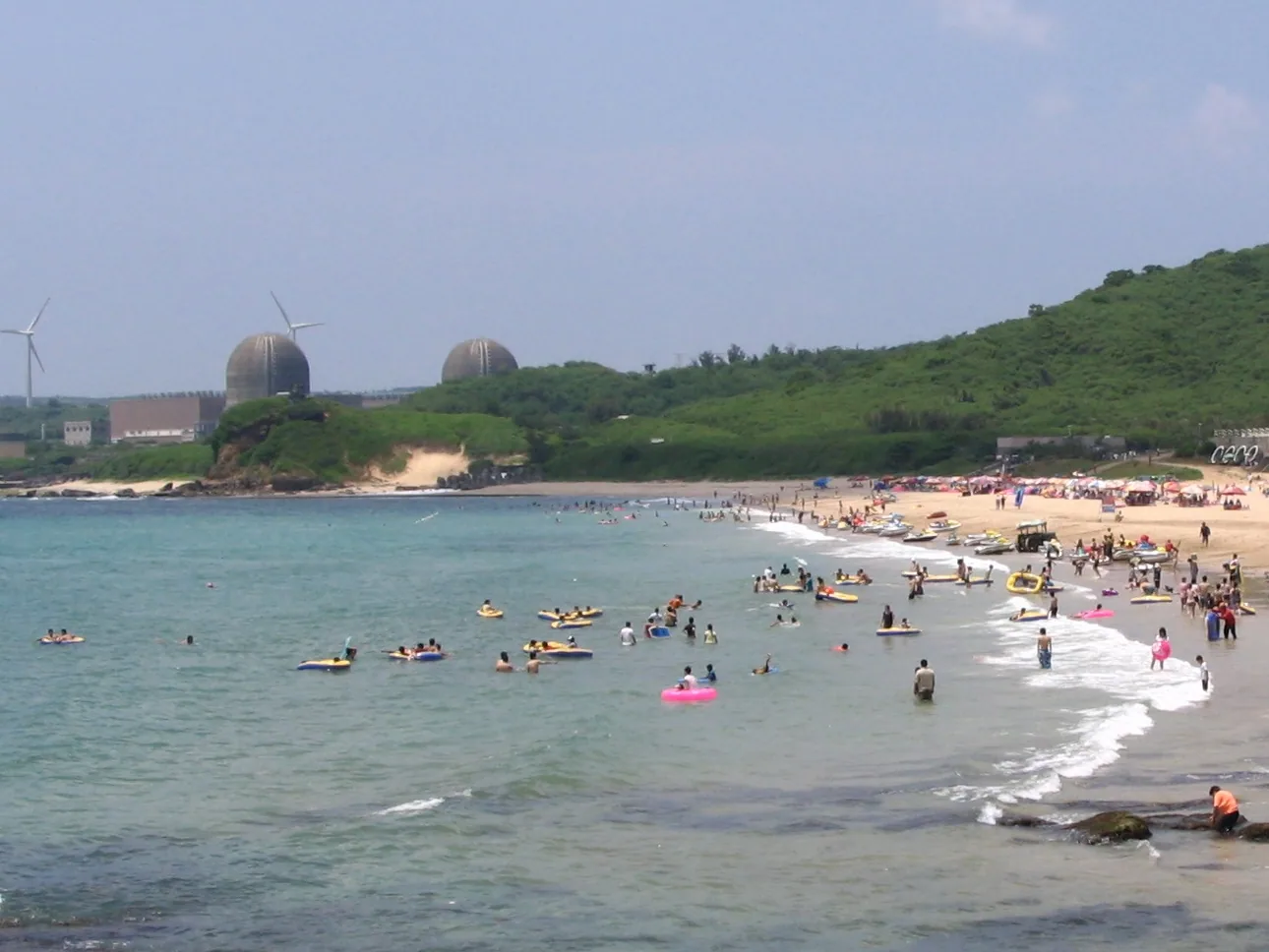
- Standard article2026-05
Taiwan's Marine Conservation: Why Couldn't a System Built over 30 Years Save Corals from One Bleaching Event?
In 2020, Taiwan's waters experienced the largest coral bleaching event in their recorded history. From Xiaoliuqiu to Dongsha Atoll, even corals inside protected areas died in the heat. What problems did this expose?
8 ~8 min - Standard article2026-07
The Daan River Heaven Sword: East Asia's Tallest Tree Hid for Seven Hundred Years in a Place We Could Not Reach
During the 2023 Lunar New Year, the Tree Finder team spent seven days tracing the Daan River upstream. In a deep valley near its headwaters, a place almost no one can reach, they lowered a tape measure from the crown of a Taiwania tree: 84.1 meters, the tallest tree in East Asia. It was 4.6 meters taller than LiDAR had predicted. On a country swept by typhoons every year, where slopes collapse and floods surge, life of this height should not, in theory, still exist. Yet precisely because it grew in a valley humans could not reach, it escaped the era of large-scale logging and survived for seven hundred years. The same inaccessibility that kept it alive also meant that only after scanning all of Taiwan with lasers did we see it for the first time that year.
63 ~15 min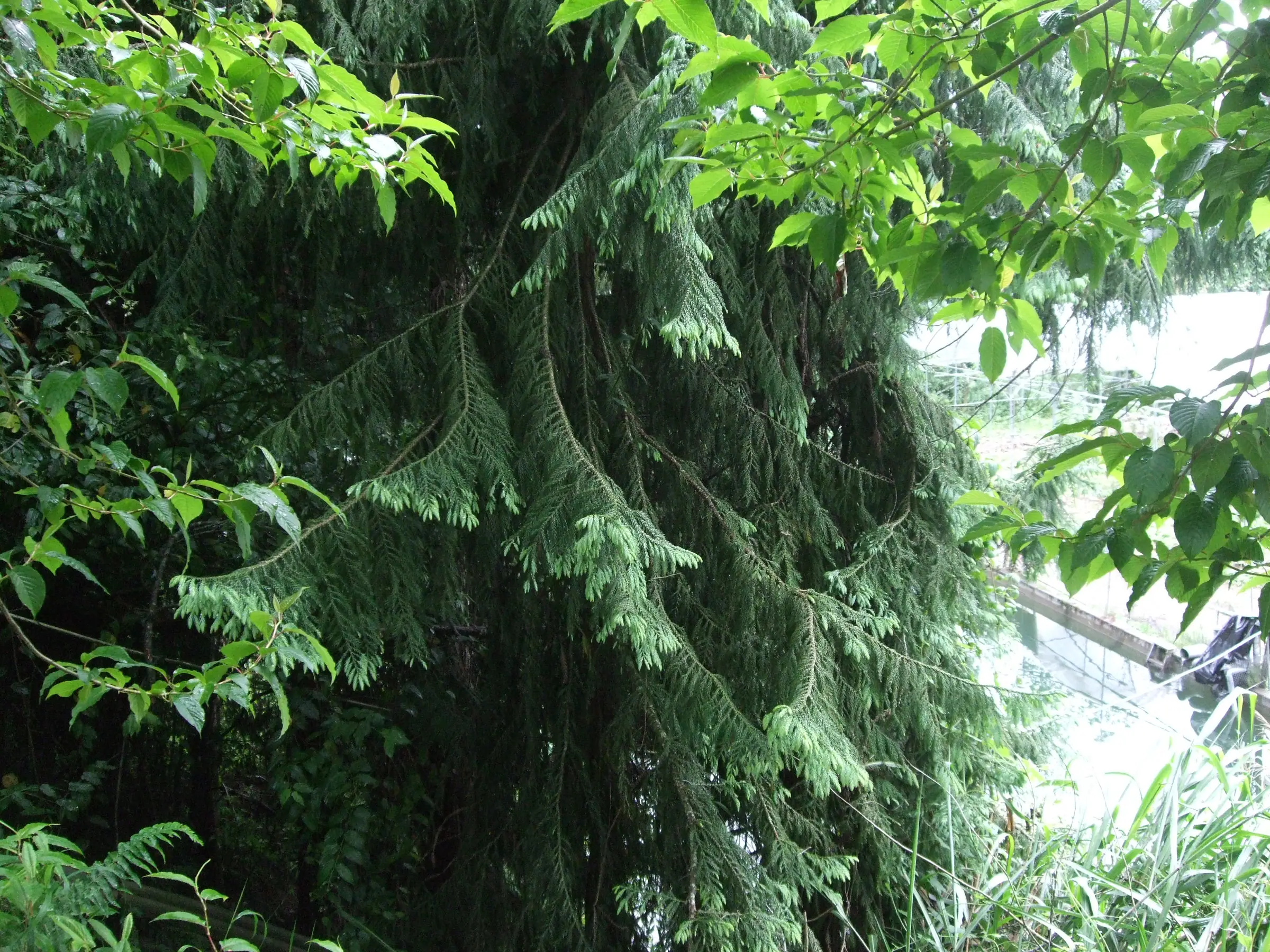
Conservation & Environment 5
- Standard article
Taiwan’s Climate Crisis and Net-Zero Transition: On the Day the Maanshan Nuclear Plant Referendum Failed, the Choices Set by Physical Limits Had Only Just Begun
The August 23, 2025 referendum on extending the Maanshan Nuclear Power Plant: 4.34 million yes votes, 74% in favor, but turnout of 29.53% fell short of the threshold. The referendum failed; the next day Lai Ching-te set out three principles, and seven months later, on March 27, 2026, Taipower submitted its life-extension application to the Nuclear Safety Commission. With 98% of energy imported, NT$9 trillion for net zero, a geothermal target of 200 MW but only 7.4 MW built, the world’s seventh-largest installed offshore wind capacity, the Onkalo final repository, and TerraPower’s fourth-generation nuclear power, Taiwan’s energy question has never been a political question. It is a question of physical limits.
- Standard article
Taiwan's Marine Pollution Governance and Conservation Challenges
Examining the current state, challenges, and innovative solutions for marine conservation in Taiwan amid marine debris, overfishing, and climate change
- Standard article
Meiyu: From the 1981 Deluge that Submerged Northern Taiwan to the Scientific Mission that Flew Americans to the Island
On the morning of May 28, 1981, a catastrophic Meiyu front erupted over the Taoyuan-Hsinchu-Miaoli region and greater Taipei, dumping over 140 mm of rain in a single hour near Gongguan, leaving 8 dead and thousands of homes damaged. Six years later, the TAMEX initiative was launched. Defying the shadows of broken diplomatic ties, over 125 American and Taiwanese scientists chased fronts using a NOAA P-3 aircraft, three research vessels, and three Doppler radars. Forty years later, this stationary front, arriving precisely every May and June, remains both the lifeblood of drinking water for 23 million people and a potential killer capable of submerging entire cities.
- Standard article
Taiwan's Eurasian Otters: Kinmen's Lonely Island Survival and the Silent Disappearance on the Main Island
Taiwan's main island has had no confirmed wild Eurasian otter records since the 1980s, and the population's current status is uncertain and deeply unpromising. The 'battlefield otters' surviving only on Kinmen face simultaneous threats from habitat fragmentation, roadkill, and microplastic pollution.
- Evolving · community
A History of Environmental Movements in Taiwan
The developmental trajectory of Taiwan's environmental movement, from 1980s anti-pollution protests to recent plastic reduction campaigns, witnessing the intersection of environmental awareness and democratization.
Wildlife 5
- Standard article
Tawny Fish Owl: One Pair per Six Kilometers of Stream, a Nocturnal Raptor in a 1,800-Meter Michelia Tree
In April 2026, National Pingtung University of Science and Technology assistant professor Hung Hsiao-yu located Taiwan's highest known Tawny Fish Owl nest in a tree hollow of a Michelia compressa with a diameter at breast height of about 1.5 meters beside Qijiawan Creek, at roughly 1,800 meters above sea level. Taiwan's largest owl was first recorded only in 1916 by the Japanese scholar Nagamichi Kuroda. Sun Yuan-hsun's laboratory at National Pingtung University of Science and Technology has followed it for thirty years; across 91 territories, each pair needs an average of 6.2 kilometers of stream. A stretch of stream not yet poured in concrete, a giant tree not yet fallen: the Tawny Fish Owl lives in the narrow space where two things in Taiwan's mountain forests have not yet disappeared.
- Standard article
Endemic Species
Taiwan's rich endemic species: a product of island geography, vertical climate zones, and long-term isolation-driven evolution, and an important field site for global biodiversity research
- Standard article
Taiwan Atlas Moth
With a wingspan reaching 25–30 cm, it is one of the longest-winged moths in the world — its wings spread open like an open book. It never eats in its entire adult life, flying only once.
- Standard article
Taiwan Pangolin
The most trafficked mammal in the world has found a safe home in Taiwan
- Evolving · community
Taiwan Bird Window Collision Issue: The Invisible Urban Killer
An in-depth exploration of the current state, scientific principles, seasonal impacts, and prevention cases of wild bird casualties from striking building glass in Taiwan, alongside an analysis of regulations for bird-friendly architecture.
National Parks & Trails 4
- Standard article
Taiwan's Marine Conservation: Why Couldn't a System Built over 30 Years Save Corals from One Bleaching Event?
In 2020, Taiwan's waters experienced the largest coral bleaching event in their recorded history. From Xiaoliuqiu to Dongsha Atoll, even corals inside protected areas died in the heat. What problems did this expose?
- Standard article
Island Summits and Seas: Ecology and Landscapes of Taiwan's National Parks
Explore the unique ecosystems and conservation value of Taiwan's nine national parks, spanning complete landscapes from subtropical coastlines to alpine snow lines
- Standard article
National Parks
36,197 square kilometers hold 9 national parks, an exceptionally high density and one of the world's leading conservation miracles
- Evolving · community
Taiwanese Black Bear
The white V on its chest is its signature, and its unfinished conservation battle
Wildlife 3
- Standard article
Taiwan Blue Magpie: The Blue Gang of the Urban Jungle and a Century-Long Battle for Genetic Purity
It claimed the national bird title with 180,000 votes in 2007, yet this mountain jewel is a ferociously social species known for mob attacks. From Robert Swinhoe's first specimens in 1862 to today's urban birds raiding cat food, they thrive through a cooperative breeding system with a 97% helper rate. This is an island story of survival, family cohesion, genetic defense, and human-wildlife coexistence.
- Standard article
Malayan Night Heron: A Birdwatcher's Dream Species, the Campus's Big Dumb Bird
In 4,000 bird records compiled by the Chinese Wild Bird Federation between 1985 and 1992, the Malayan Night Heron appeared in just 25 — listed as a rare resident in field guides. Three decades later, it can be seen every day on NTU's Royal Palm Boulevard and in Daan Forest Park. The popular explanation is that 'it became unafraid of people,' but Hsiao-Wei Yuan's ringing research at NTU since 2010 points to a different answer: Taiwan's densely forested campuses and unsprayed lawns happen to replicate the bird's original low-elevation forest niche. The bird didn't change. The land did.
- Standard article
Formosan Rock Macaque: Survival Games at NSYSU, Matrilineal Power, and the Truth About Taiwan's Ten-Thousand-Year Settlers
From the absurd daily routine at NSYSU — students collecting food deliveries while armed — to Robert Swinhoe's 1862 introduction of the island's primates to Western science, the Formosan Rock Macaque is often branded a "thug." Behind the label is a strict matrilineal society that settled on Mount Chai (柴山) tens of thousands of years ago, forced to evolve a survival culture under campus expansion and human feeding.
Ecosystems 2
- Evolving · community
Biodiversity
Taiwan accounts for only 0.025% of global land area but hosts over 50,000 recorded species and has a forest cover rate of 60.71%, ranking 33rd globally.
- Standard article
Taiwan's Forest Ecosystems
A vertical journey from sea level to the summit of Yushan, traversing the densest forest spectrum on Earth
Others 19
- Standard article
The Daan River Heaven Sword: East Asia's Tallest Tree Hid for Seven Hundred Years in a Place We Could Not Reach
During the 2023 Lunar New Year, the Tree Finder team spent seven days tracing the Daan River upstream. In a deep valley near its headwaters, a place almost no one can reach, they lowered a tape measure from the crown of a Taiwania tree: 84.1 meters, the tallest tree in East Asia. It was 4.6 meters taller than LiDAR had predicted. On a country swept by typhoons every year, where slopes collapse and floods surge, life of this height should not, in theory, still exist. Yet precisely because it grew in a valley humans could not reach, it escaped the era of large-scale logging and survived for seven hundred years. The same inaccessibility that kept it alive also meant that only after scanning all of Taiwan with lasers did we see it for the first time that year.
- Standard article
The Ornithology of Formosa: A British Vice-Consul, 201 Latin Names, and the Mountains He Never Entered
In 1861, a 24-year-old Robert Swinhoe became Britain's first vice-consul to Taiwan. Five years later he left behind a paper that, for the first time, wrote Formosa's birds into Latin. But his bird map was traced from the coastline — and in the blank spaces of the Central Mountain Range, indigenous peoples had been calling these birds by their own names for thousands of years.
- Standard article
Formosan Sambar Deer: From the Vanishing 'Mountain Spirit' to Low-Altitude Ecological Engineer
In 2025, hikers on the Nengao Cross-Ridge Trail can easily make eye contact with sambar deer — hard to imagine that thirty years ago, spotting one was like winning the lottery. This article explores how Taiwan's largest herbivore came back from the brink of extinction, and why they started stripping tree bark — a story that pulls together research on animal self-medication, the complex balance of Taiwan's alpine ecology, and the cultural memory of Indigenous peoples.
- Standard article
The Glacier's Smiling Messengers: Taiwan's Hynobiid Salamanders and a Century of Scientific Devotion
Five endemic salamander species hide in the cold headwaters of Taiwan's high mountains, each carrying memories of the Ice Age. They are indicators of alpine ecology — and the subjects of a century-long story of scientific exploration, misidentification, sacrifice, and, in 2025, a breakthrough in artificial incubation that offers new hope.
- Standard article
Can Forecast Wind and Rain, but Not Fate: Four Hundred Years of Taiwan and Typhoons
On the morning Morakot struck in 2009, 71-year-old Lo Pan Chun-mei stood on a second-floor balcony and watched Mt. Xiandu collapse, swallowing 462 loved ones in Xiaolin Village. Fifteen years later, Taiwan used six AI models to cut the 24-hour typhoon-track forecast error from 172 kilometers to 57 kilometers. But within those 57 kilometers, who will go out to work in the storm, and who will not receive the warning, still cannot be predicted.
- Standard article
Palakaw: The Three-Story Fish Apartment and Ecological Covenant of the Fataan Wetlands
In the Fataan Wetlands of Hualien, the Amis people use natural 'waste' to build a three-tiered habitat for fish and shrimp. Known as 'Palakaw,' this traditional fishing method does not rely on pursuit or hunting; instead, it exchanges 'giving' for nature's bounty, embodying a thousand-year legacy of ecological wisdom.
- Standard article
Black-faced Spoonbill: From 300 to 7,000 — A Cross-national Conservation Miracle Now Facing the Price of Success
The 2026 global census shows black-faced spoonbills have reached 7,746 individuals, with Taiwan recording a historic high of 4,719. These once-near-extinct 'black-faced dancers,' though downgraded in conservation status in 2025, now face new survival threats in their Taiwanese wintering grounds: solar farm development, botulism, and attacks from free-roaming dogs.
- Standard article
The Formosan Landlocked Salmon: A Glacial Relict's Journey Home — From the Brink of Extinction to Taiwan's Watershed Conservation Miracle
In 1917, Japanese scholar Oshima Masamitsu discovered the Formosan landlocked salmon, a glacial relict called 'Mnbang' by the Atayal people. After habitat destruction reduced the population to just 200-plus fish in 1995, more than two decades of effort combining dam removal, artificial breeding, and the innovative 'waterless transport' technique brought the population to a peak of 18,000 in 2023. Though slightly affected by natural disasters in recent years, numbers have stabilized above 15,000 — a successful model for Taiwan's watershed-integrated conservation.
- Standard article
Taiwan's Mountains and Hiking Culture
268 peaks above 3,000 meters are packed onto a single island, yet it took Taiwanese people half a century before they were allowed to freely climb their own mountains.
- Standard article
Cetaceans of Taiwan
A third of the world’s whales and dolphins pass these waters—how Taiwan moved from whaling to whale‑watching and why the “Mazu Fish” needs saving
- Standard article
Taiwanese Leopard Cat Conservation
The phantom feline with fewer than 500 individuals left—when Taiwan's last native cat species walks to the edge of extinction
- Standard article
Trail Culture and Civic Stewardship in Taiwan
From the Thousand Miles Trail Association to the iTrail platform, Taiwan’s hiking paths reveal a unique culture of civic science, volunteer care, and ecological ethics.
- Evolving · community
Lanyu Ecosystem: The Life Code of the Kuroshio Frontier
Lanyu does not belong to Taiwan—at least not biologically. This small island at the northernmost tip of the Philippine volcanic arc is filled with tropical life brought by the Kuroshio Current, finding a balance between nature and humanity through the millennia of ecological wisdom of the Tao people.
- Evolving · community
Natural History of Taiwan: A Dialogue of Life between Islands and the World
From Pleistocene land bridge migrations to the paper mulberry genes of Austronesian peoples, Taiwan is not only a biological refuge but also an evolutionary crossroads. Through the eyes of a naturalist, rediscover how this island engages in a dialogue of life with the world.
- Standard article
Taiwan Alpine Ecosystems and Glacial Relicts
Exploring the unique ecosystems of Taiwan's mountains above 3,000 meters, from Taiwan red cypress and Yushan rhododendron to precious biodiversity of glacial relict species
- Standard article
Taiwan Hot Springs and Geothermal Energy
From a failed geothermal plant to the world's only Hokutolite mineral: How one island turned underground fire into healing and green electricity
- Standard article
Taiwan Marine Ecology
Ancient Tao wisdom meets modern marine crisis: How traditional taboos once protected oceans now bleaching under rising temperatures and underwater noise
- Standard article
Taiwan's Marine Ecology and Coral Reef Conservation
Surrounded by sea on all sides, Taiwan is home to rich marine ecosystems. From the coral bleaching crisis to cetacean conservation, this piece explores the protective outcomes of marine national parks and the challenges ahead.
- Standard article
Taiwanese Indigenous Ecological Wisdom and Environmental Conservation
Exploring the traditional ecological knowledge accumulated by Taiwan's indigenous peoples over thousands of years, and its important value and practical applications in modern environmental conservation
Curatorial Reading
His bewilderment was justified. According to basic biogeographical laws, an island of merely 36,000 square kilometers shouldn't harbor over 59,000 species. It certainly shouldn't have 30% of them as unique endemics found nowhere else on Earth. This violated every theoretical prediction about island ecology.
The answer lies hidden in Taiwan's geological madness. Six million years ago, when the Eurasian and Philippine Sea plates began their collision, they created not just an island but a vertical universe. From sea level to 4,000 meters elevation, Taiwan compressed the equivalent of an equator-to-pole climate gradient into less than 100 kilometers of horizontal distance.
This extreme "vertical ecological differentiation" transformed Taiwan into evolution's ultimate laboratory. A single species might differentiate into distinct subspecies at different elevations; one mountain range could isolate independent evolutionary populations. Taiwan black bears evolved thicker fur than their Asian relatives to survive the high-altitude cold. Formosan landlocked salmon, trapped in mountain streams during the ice age, completely adapted to freshwater life, becoming the world's southernmost salmon.
But what truly astounded international biologists wasn't how many species Taiwan hosts, but how these species harmoniously coexist in such cramped quarters. Taiwan's ecosystem density is 100 times the global average, yet massive competitive exclusion hasn't occurred. Instead, Earth's most intricate "ecological division of labor" evolved here: every species found its unique survival strategy, every habitat maximized its utilization.
This is Taiwan nature's deepest secret: it's not an ordinary island but a condensed version of Earth's vital force. Here you can walk from tropical rainforest to boreal coniferous forest in a single day, observe living fossils surviving since the Paleozoic era, and witness ongoing speciation in real time. Taiwan uses limited space to showcase life's infinite possibilities.
When you realize this island carries not just Taiwan's natural heritage but Earth's evolutionary microcosm, you understand why protecting Taiwan's biodiversity isn't merely Taiwan's responsibility but humanity's obligation. Every species that goes extinct in Taiwan represents Earth losing a unique evolutionary experiment result that can never be recovered.
National Parks: Ecological Stairs of a Vertical World
Taiwan established nine national parks using less than 9% of its territory, creating a complete protected area network from mountains to oceans, from the main island to offshore islands. This isn't an area competition but pursuit of ecological integrity. Each national park functions like a three-dimensional ecological museum, protecting specific altitudinal biological communities.
Yushan National Park guards Northeast Asia's highest peak's complete alpine ecosystem. The ecological vertical zonation here is Earth's most dramatic: from 1,500-meter warm temperate broadleaf forests to 3,952-meter Mount Jade's alpine tundra, a mere 2,500 vertical meters compress complete vegetation belts from subtropical to polar conditions. Taiwan black bears, Mikado pheasants, and Swinhoe's pheasants each found their ecological niches in this vertical kingdom.
Taroko National Park, famous for marble gorges, holds ecological value far beyond geological spectacle. It protects Taiwan's eastern complete ecosystem from coast to mountains. The Liwu River's vertical cutting created countless microclimate environments, enabling species from different elevations to coexist within extremely short distances.
國家公園 | 玉山國家公園 | 太魯閣國家公園 | 雪霸國家公園 | 陽明山國家公園 | 墾丁國家公園
Marine Ecology: From Coral Reefs to Deep Sea Vertical Oceans
Taiwan's marine marvels rival its terrestrial ones. The geographic position surrounded by seas, plus complex seafloor topography, creates exceptionally rich marine biodiversity. From shallow coral reefs to 6,000-meter-deep trenches, Taiwan waters encompass nearly every marine ecosystem type on Earth.
Kenting's coral reefs rank among the North Pacific's most diverse coral regions, where over 150 coral species construct underwater gardens. More astounding is that Taiwan's east coast sits less than 10 kilometers from Pacific abyssal depths of several thousand meters—such dramatic shallow-to-deep transitions are globally rare.
Taiwan waters also serve as crucial marine life migration corridors. Twenty-three whale and dolphin species pass through Taiwan waters annually. Green sea turtles and hawksbill turtles nest on Taiwan beaches. The warm Kuroshio Current enables tropical fish species to survive in Taiwan's relatively high-latitude waters. This unique land-sea interface position makes Taiwan an important marine sanctuary.
台灣海洋生態 | 台灣海洋保育與挑戰 | 台灣的鯨豚 | 墾丁國家公園 | 東沙環礁國家公園
🐻 Endemic Species: Life Experiments of Island Evolution
Taiwan's endemic species tell Earth's evolutionary history's most spectacular chapters. When biological populations become isolated by oceans, they begin unique evolutionary journeys. Taiwan's endemics are remarkable not just in quantity but in demonstrating evolution's infinite creativity.
Taiwan black bears are the Formosan subspecies of Asian black bears. Through hundreds of thousands of years of island evolution, they developed more robust builds and thicker fur than their continental relatives, adapting to Taiwan's high-altitude frigid environments. The white V-shaped chest marking serves as their ID card—each bear's pattern is unique.
Formosan landlocked salmon represents evolutionary miracles at their finest. These fish, originally oceanic, became trapped in Taiwan's mountain streams during ice ages. Tens of thousands of years of isolated evolution enabled complete freshwater adaptation, making them the world's southernmost salmon and the only subtropical salmon.
Taiwan macaques are Taiwan's sole native primates. Their social structure complexity even exceeds many large apes. Recent genetic research discovered that Taiwan macaques diverged from mainland macaques earlier than previously expected, possibly representing an independent species rather than subspecies.
特有種 | 台灣黑熊 | 櫻花鉤吻鮭 | 台灣獼猴 | 台灣藍鵲 | 台灣穿山甲
Mountain Forests: Plant Kingdom from Subtropical to Polar
Taiwan's forests rank among globally highest plant diversity regions. Within less than 4,000 meters of vertical distance, Taiwan possesses complete vegetation belts from tropical rainforests to alpine tundra—such completeness is extremely rare in global mountain systems.
Low-elevation subtropical broadleaf forests preserve Taiwan's most ancient plant communities. Here lives Taiwan fir, "the giant panda of the plant kingdom," red cypress giants over 2,000 years old, and countless rare fern species. Taiwan's fern diversity ranks globally at the forefront, with over 600 fern species thriving on this small island.
Mid-elevation mixed coniferous-broadleaf forests represent Taiwan's forest essence. This zone hosts precious conifers like red cypress and Taiwan hinoki, while serving as primary habitat for Taiwan black bears, Reeves's muntjacs, and other medium-large mammals. This forest belt's biomass density and species diversity reach global forest ecosystem peak levels.
High-elevation Taiwan juniper forests demonstrate life's ultimate resilience limits. These twisted ancient trees survive thousands of years in wind and snow; their very existence proclaims victory over extreme environments. Above Taiwan junipers, alpine grasslands and Yushan rhododendrons compose Taiwan's highest life landscapes.
台灣森林生態系 | 台灣高山生態系與冰河孑遺 | 台灣山岳與登山文化 | 台灣步道文化與公民守護
Environmental Conservation: From Rescue to Ecosystem Management
Taiwan's environmental conservation underwent major transformation from passive protection to active management. Early conservation work primarily focused on rescuing endangered species; now it emphasizes entire ecosystem health and integrity. This conceptual shift reflects Taiwan's maturation in conservation philosophy.
Formosan landlocked salmon restoration represents Taiwan's conservation history's greatest success story. In the 1990s, this "national treasure fish" population dropped to just over 200 individuals. Through scientific artificial breeding, habitat restoration, and water quality improvement, the Formosan landlocked salmon population recovered to over 5,000 individuals, with conservation status downgraded from "critically endangered" to "endangered."
Taiwan's environmental movement features strong citizen participation characteristics. From 1980s anti-nuclear movements to recent Formosan rock macaque conservation, civil groups have consistently been important forces driving environmental policy. This "bottom-up" conservation model gives Taiwan's environmental protection deep social foundations.
Climate change brings unprecedented challenges to Taiwan's ecosystems. Alpine plants face the "nowhere to retreat" mountaintop effect, coral reefs suffer bleaching threats, and extreme climate events grow increasingly frequent. Taiwan is developing climate change adaptation strategies, including establishing climate refugia and developing assisted migration technologies.
台灣環境運動史 | 台灣氣候變遷與淨零轉型 | 台灣石虎保育 | 台灣原住民生態智慧與環境保育
Ecological Research and Conservation Innovation
Taiwan holds world-leading positions in ecological research and conservation technology. Academia Sinica's Biodiversity Research Center's Taiwan Biodiversity Network (TBN) integrates nationwide biological survey data, representing one of Asia's most comprehensive biodiversity databases.
Technology plays increasingly important roles in Taiwan's conservation work. Satellite tracking technology studies Taiwan black bear behavior patterns. Environmental DNA (eDNA) technology enables scientists to monitor rare species distribution without disturbing animals. Drones and AI technology facilitate large-scale ecological monitoring.
Taiwan's conservation experience provides valuable reference for international communities. Taiwan's developed "community conservation" model, combining indigenous traditional ecological knowledge with modern conservation science, was listed by the United Nations as a best practice case. Taiwan's wetland restoration techniques, coral reef rehabilitation methods, and endangered species breeding technologies receive widespread international attention.
生態多樣性 | 台灣的科學研究機構 | 台灣環境監測技術
Taiwan nature's greatness lies in density rather than scale. On this 36,000-square-kilometer island, Earth's life essence is condensed into the most moving symphony. Every species is a unique movement, every ecosystem an irreplaceable harmony, together performing life's hymn.