
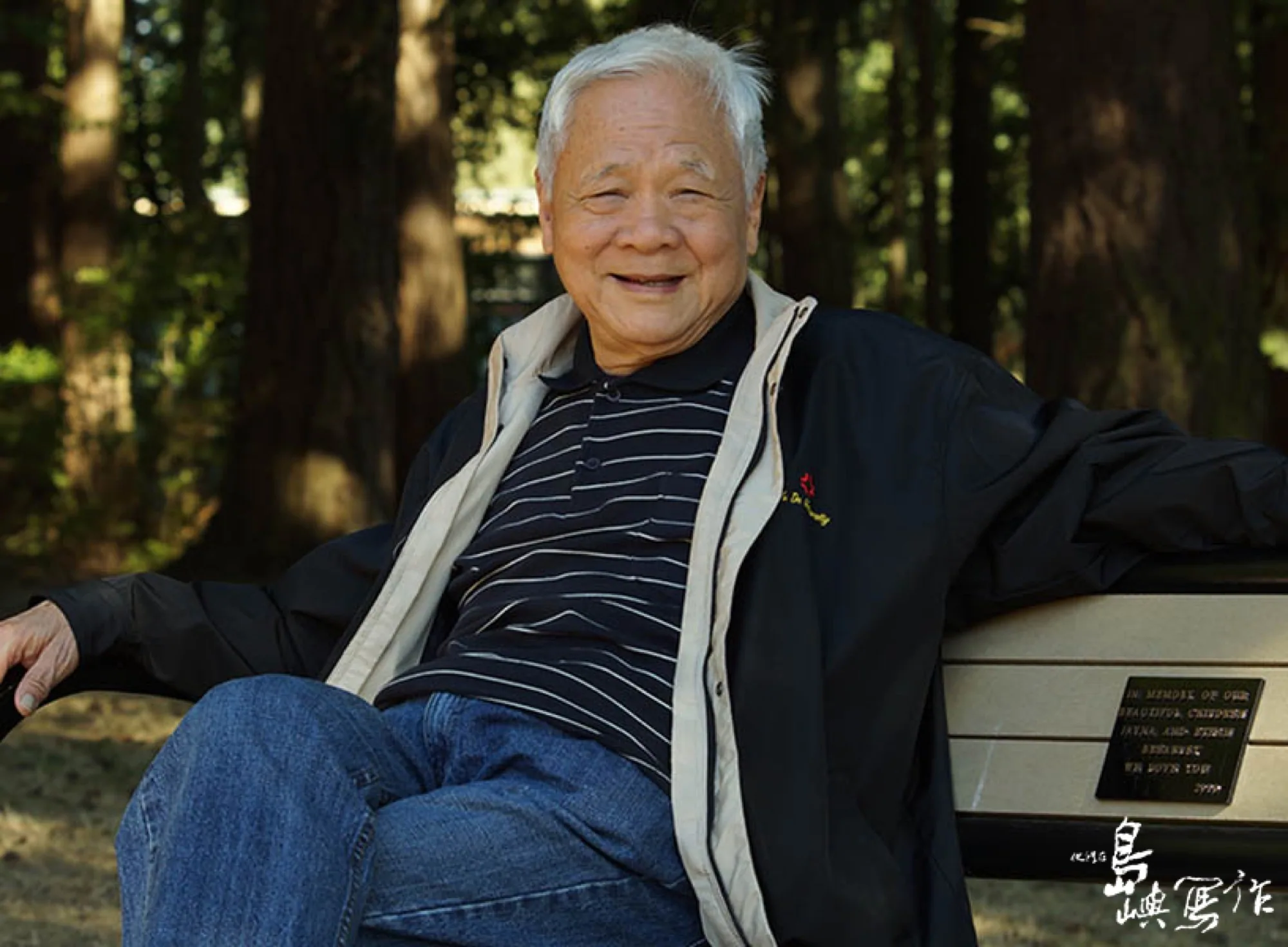
Ya Hsien: Ceasing Poetry After "The Abyss," Spending His Latter Life as a Pillar of Literary History in the UDN Supplement
30-Second Overview: Born August 29, 1932, in Nanyang County, Henan Province, his birth name was Wang Ching-lin. In 1949, he followed the National Army across the Taiwan Strait to Taiwan. While studying in the film department of the Political Warfare Officer School in 1953, he co-founded the Genesis Poetry Society (創世紀詩社) in Zuoying, Kaohsiung, alongside Chang Mo and Lo Fu, publishing the Genesis poetry journal; the three were known as the "Iron Triangle" of post-war Taiwanese modern poetry1. His poetic output was concentrated between 1953 and 1965; after publishing the collection The Abyss (深淵) in 1968, he almost entirely ceased writing, stopping his poetic career at age 36 and not releasing a new collection for 56 years. From 1977, he served as the director of the United Daily News (UDN) Supplement, acting as editor-in-chief for 21 years; after retiring in 1998, he moved to Vancouver, Canada. In 2012, he received the 2nd Global Chinese Literature Cloud Award Contribution Award2. He passed away in Vancouver on October 11, 2024, at age 92; in December of the same year, the Ministry of Culture, representing the President, issued a posthumous commendation3. Though The Abyss contains fewer than one hundred poems, it is sufficient to rank among the top five works in Taiwan's poetic history4.
The Last Poem of 1968, and 56 Years of Silence
The historical position of Ya Hsien's poetry possesses a peculiar shape: In 1953, at just twenty-one years old, he, along with Lo Fu and Chang Mo, established the Genesis poetry journal near the artillery barracks in Zuoying, Kaohsiung1. By 1968, at age thirty-six, he completed the collection The Abyss, compiling about ninety poems written over the previous fifteen years: then he stopped, never writing a new poem again4.
From 1968 to 2024—fifty-six years of silence.
This is extremely rare in the history of Taiwanese modern poetry. His contemporaries, Lo Fu and Chang Mo, wrote into their eighties; Yang Mu wrote until his death in 2020; Chou Meng-die continued running a book stall on Wuchang Street in Taipei well into his eighties5. Only Ya Hsien chose to cease writing at the height of his creative power, dedicating the strength of his latter half to the editorial desk.
📝 Curator's Note: There is a concept in the Taiwan literary scene called "one volume and done" (一冊不再), which refers almost exclusively to Ya Hsien: a poet who stops after just one collection, yet that single collection is enough to make him immortal. To readers, this is harder to grasp than "writing fifty books": why not continue? Ya Hsien never provided a complete answer himself. But when looking at the density of the ninety poems in The Abyss, and seeing how he later transformed the UDN Supplement into the most important literary public space in post-war Taiwan, his "ceasing to write" feels more like an intentional fulfillment of a choice.
"Hallelujah, I am still alive"—this is the recurring refrain in the poem 〈The Abyss〉 (〈深淵〉), and it remains the most recognizable phrase Ya Hsien left to Taiwan's poetic history6. Under the Martial Law system, this phrase was both a resistance against nihilism and a code against censorship. The fact that the entire The Abyss could be published smoothly in 1968 relied precisely on this kind of obscurity that bypassed the scrutiny of the Garrison Command.
After ceasing his writing, Ya Hsien did not pursue subtraction. He transformed from a person who wrote poetry into a person who enabled others to write it.
From Nanyang, Henan to the "Iron Triangle" of Genesis Poetry Society
On August 29, 1932, Ya Hsien was born in Nanyang County, Henan Province. His birth name was Wang Ching-lin2. In 1949, the year the Chinese Civil War ended, he was seventeen; he joined the Republic of China (ROC) National Army and followed his unit southward through Hunan, eventually crossing the sea to Taiwan7.
After arriving in Taiwan, he served in the military and entered the film department of the Political Warfare Officer School in 1953. That same year, he co-initiated the Genesis Poetry Society in Zuoying, Kaohsiung, with Chang Mo and Lo Fu1.
The origin traces back to August 1954 (slightly later than some records stating 1953); while browsing Zhang Xiuxia's prose collection Violets at the Daye Bookstore in Kaohsiung, Chang Mo fell in love with the name "Genesis" (創世紀). The next day, he contacted Lo Fu, who was with the Marine Corps in Fengshan, and they agreed to publish in October. Ya Hsien joined shortly thereafter, and the three were collectively known as the "Iron Triangle"1.
💡 Did You Know? The establishment of first-generation post-war Taiwanese poetry societies occurred in a very dense period. In 1953, Ji Xian founded the Modern Poetry quarterly in Taipei; in 1954, Qin Zihao, Yu Kwang-chung, and Xia Jing established the Blue Star Poetry Society; in October of that same year, Lo Fu, Chang Mo, and Ya Hsien founded the Genesis Poetry Society in Zuoying, Kaohsiung1. These three societies represented three distinct poetic trajectories: Ji Xian's Modernist school emphasized intellect and "horizontal transplantation"; Blue Star leaned toward lyricism and classicism; while Genesis moved toward a post-war sense of nihilism, blending surrealism and existentialism. The landscape of Taiwanese modern poetry was delineated within just two years, providing the framework for the subsequent thirty years of poetic debates, generational conflicts, and local movements.
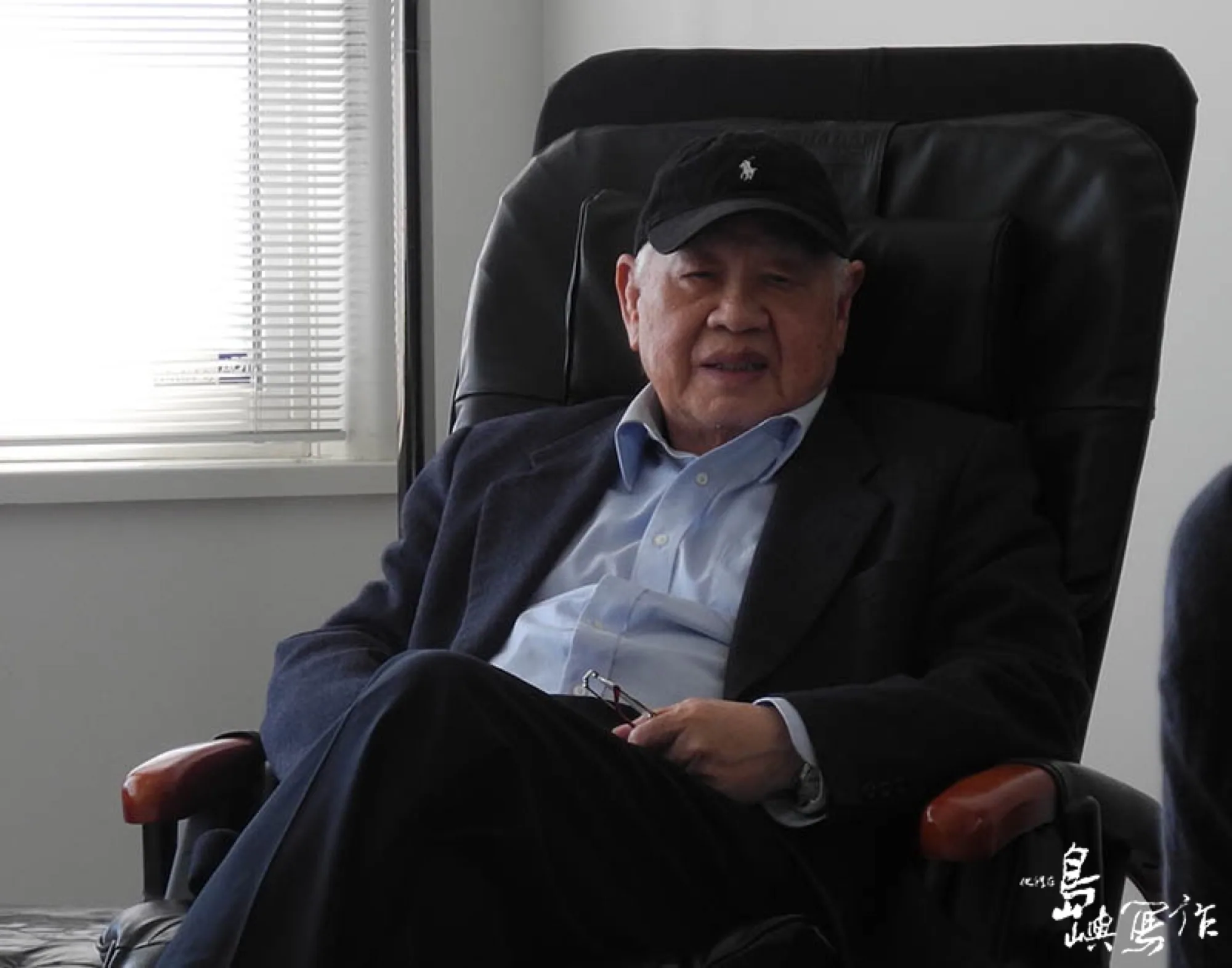
Lo Fu (1928–2018), one of the "Iron Triangle" of the Genesis Poetry Society; his masterpiece Death in a Stone Chamber stands alongside Ya Hsien's The Abyss as two peaks of 1960s Taiwanese surrealist poetics. Photo: Musu Media Co., Ltd., 2012-09-13, CC BY-SA 4.0 via Wikimedia Commons.
Ya Hsien's poetic stance belonged to the core of Genesis surrealism. He, Lo Fu, and Shang Qin are often grouped as the "Three Representatives of Taiwanese Surrealist Poetics"8. However, unlike the long, epic style of Lo Fu's Death in a Stone Chamber, Ya Hsien's poems were short, rhythmic, and colloquial, frequently using repetitive refrains. This style made his poems easier for general readers to memorize than those of his peers: 〈As a Song, an Andante〉 (〈如歌的行板〉)—"The necessity of tenderness / The necessity of affirmation / A little bit of wine and the necessity of osmanthus"—is almost one of the most frequently quoted lines in post-war Taiwan9.
His military career extended until 1966, when he retired with the rank of Major2. He was thirty-four that year, only two years away from stopping his poetry. After retiring, he taught in Taipei while serving as editor-in-chief of Young Lions Literature (《幼獅文藝》). This magazine was one of Taiwan's most important literary publications for youth during the 1950s and 1970s; here, Ya Hsien accumulated his first editorial experience and met colleagues who would later join the UDN. From Major to Editor-in-Chief, there was almost no gap in his professional transition: military discipline, editorial meticulousness, and a poet's vision merged within one person, which became the underlying character of the UDN Supplement for twenty-one years.
〈The Abyss〉 and "Hallelujah, I am still alive": Obscurity as Political Protest
The 1968 publication of The Abyss was the culmination of Ya Hsien's poetics, and also his endpoint.
The title poem, 〈The Abyss〉, uses the repetitive refrain "Hallelujah, I am still alive" to thread the work together. Following the refrain are various scenes: "Shoulders held high, holding existence and non-existence, holding a face wearing trousers"; "Working, walking, saluting bad men, smiling and immortality. Living to live, watching clouds to watch clouds, thick-skinned enough to occupy a part of the Earth"10.
On the surface, these lines represent existentialist nihilism: "living to live," "watching clouds to watch clouds," "thick-skinned." But placed within the context of 1968 Taiwan under Martial Law, the political implications become clear: images like "saluting bad men," "immortality," and "a face wearing trousers" are subtle satires of the authorities.
In his autobiography, Ya Hsien later stated explicitly: "Using symbolic forms to hide protest and grievance within an obscure artistic form, allowing the spirit of criticism to evade censorship and spread"11. He grouped The Abyss with Lo Fu's 〈Death in a Stone Chamber〉 and Shang Qin's 〈Song of a Single Day Night〉 (which hinted at the situation in Kinmen) by saying: "Both utilized the fact that censorship agencies could not understand them to slip through; there was no other way"11.
⚠️ Controversial Viewpoint: Reading Ya Hsien as a purely surrealist poet has been the mainstream interpretation in literary criticism since the 1 990s. However, Ya Hsien's own late-life accounts repositioned this generation of poets within a "broad sense of the Left"—his actual words were that "a poet should be a leftist in the broad sense," acting as "the cry of an aggrieved crow"11. This self-positioning differs significantly from the stereotype in the post-war literary world that Genesis was "escaping reality and moving toward obscurity." When reading 〈The Abyss〉, readers must decide which Ya Hsien to believe—the pure artist described by critics, or the political poet he revealed in his later years, who used obscurity to evade censorship.
In 〈The Abyss〉, the line "When some faces change color like lizards, how can the torrent create images for reflections? When their eyeballs are stuck to the darkest pages of history"11 becomes a concrete accusation when read from this perspective: a clear identification of the political atmosphere in 1960s Taiwan.
The refrain "Hallelujah, I am still alive," declaring one's existence amidst the oppressive atmosphere of Martial Law, is itself a small act of disobedience. Ya Hsien wrote these words in the tone of a psalm but placed them within a context of nihilism and absurdity, bringing the reader closer to the truth with every reading of the refrain.
〈As a Song, an Andante〉, 〈Salt〉, 〈Red Corn〉: The Microcosm of Ninety Poems
Although The Abyss contains fewer than one hundred poems, each constitutes its own world4.
〈As a Song, an/an Andante〉 is Ya Hsien's most widely circulated work. The entire poem uses the phrase "the necessity of" (之必要) as a metronome, juxtaposing the mundane with the absurd9:
The necessity of tenderness
The necessity of affirmation
A little bit of wine and the necessity of osmanthus
The necessity of watching a woman walk by with proper decorum
The necessity that you, not Hemingway, recognize this
The necessity of the European war, rain, cannons, weather, and the Red Cross
The necessity of walking
The necessity of walking the dog
The necessity of mint tea
By the final stanza—"And since it is regarded as a river, it must continue to flow / The world is always like this: — / Guanyin on a distant mountain / Poppies in the poppy fields"9—the preceding trivial "necessities" suddenly gain weight. This is the essence of life: the juxtaposition of tenderness and assassination, mint tea and cannons, Guanyin and poppies; all are necessary.
A reading of 〈As a Song, an Andante〉. The structure using "the necessity of" as a metronome ensures this poem remains one of Taiwan's most frequently quoted modern poems nearly sixty years later.
〈Salt〉 (〈鹽〉) is another style. The poem consists of only three stanzas, telling of a blind old woman named Er-momo (二嬤嬤) who repeatedly calls out in the spring, "Salt, oh salt, give me a handful of salt"12. The poem ends as follows:
In 1911, the revolutionaries arrived in Wuchang. But Er-motto, from the footcloth used for binding her feet hanging on an elm tree, walked into the breath of wild dogs, into the wings of vultures; and many voices perished in the wind: Salt, oh salt, give me a handful of salt! That year the peas had almost fully bloomed with white flowers. Dostoevsky never even saw Er-momo.
Er-momo is a figure from the bottom of society, forgotten by history. When the Wuchang Uprising established the Republic of China in 1911, she was in another world, committing suicide by hanging herself with her footcloth; even Dostoevsky, the Russian writer most skilled at depicting the poor, did not know of her13. Ya Hsien has "the angels laughing as they shake snow upon her" and "the angels singing on the elm tree"12; this transcendent existence adopts a posture of mockery and indifference toward human suffering, which is sharper than direct protest.
A reading of 〈Red Corn〉, 〈Salt〉, and 〈The Colonel〉. 〈Salt〉 uses three stanzas to depict a blind old woman forgotten by history; the refrain "Salt, oh salt" is one of the most infectious cries in Taiwanese modern poetry history.
〈Red Corn〉 (〈紅玉米〉) depicts childhood memories of his hometown in Henan: Ya Hsien himself noted that after coming to Taiwan, he never returned to mainland China, but the recurring red corn, events from the Xuantong era, and the northern snow serve as the theme of nostalgia for this generation of "mainlander" poets. 〈The Colonel〉 (〈上校〉) uses the story of a veteran who lost a leg to a shell and later sold breakfast in Taiwan to condense war and livelihood into a short poem14.
Ninety poems, none of them repetitive. Ya Hsien's syntax is minimalist, yet the density of his imagery is immense: this was the microcosm he completed before ceasing his writing.
21 Years as Editor-in-Chief of the UDN Supplement: Continuing to Write via the Editorial Desk
In 1976, ten years after retiring from the military, Ya Hsien went to the United States for further studies; in 1977, he returned to Taiwan to take over as director of the UDN Supplement2. From that year until his retirement in 1998, he held this position for exactly twenty-one years.
The UDN Supplement was the most important literary space in Taiwan during the 1980s and 1990s. It published not only novels, essays, and poetry but also organized literary awards, produced special features, and placed the youngest writers of the time on the newspaper for all of Taiwan to see. Ya Hsien's editorial eye was recognized as being of "literary giant" caliber—the list of protégés he supported during his tenure includes several writers, such as Li Yuan (known as Ono), who later became the Minister of Culture15.
📝 Curator's Note: The 1980s and 19 $\text{9}$0s were the golden age of Taiwan's supplement culture. At that time, the editors-in-chief of the two major newspapers—United Daily News and China Times—acted as the "Editors-in-Chief" of the literary world; Ya Hsien led the UDN Supplement, while Kao Hsin-chiang led the Humanity Supplement. Writers introduced by these two would immediately become topics of conversation across Taiwan. A fee for a short story could equal half a month's salary for an office worker. After the internet era, this power structure was completely dismantled as supplements became optional sections of newspapers, but the writers who gained fame in the 1980s—Chu T'ien-wen, Chu T'ien-hsin, Lo Yi-chun, Chang Chun, and Wu-ho—were all promoted through the supplements of that era. Ya Hsien remained within this structure for twenty-one years.
In 1984, Ya Hsien concurrently served as the president and editor-in-chief of the newly launched United Literature (《聯合文學》) magazine2. This magazine complemented the UDN Supplement: the supplement was the literary section of a daily newspaper, while the magazine provided in-depth monthly features. By managing both platforms simultaneously, it was as if he were writing two poems at once through the editorial desk.
Poet Lin Wan-yu, recalling her first meeting with Ya Hsien in 2014, wrote: "The eighty-two-year-old Mr. Ya Hsien, with silver hair and full of spirit, wearing a plaid long scarf," and "He stood there as a manifestation of the poetic spirit"16. She asked him to write a recommendation for her poetry collection; "He sent a letter posing fifteen questions to me," and eventually "faxed an eight or nine-thousand-word recommendation"16. An editor who would write eight or nine thousand words just to recommend a junior is something that seems like another era, given the decline of supplement culture today.
And this was not a one-time occurrence. Lin Wan-yu recalled: "Every two or three months, I would receive a call from Mr. Ya Hsien from Canada." He would ask about her recent life and family; "The short messages or cards sent from Canada always ended with an extremely thorough: 'Give my regards to you and Tai-cheng and Chih-lin'"16.
Ya Hsien no longer wrote new poetry. But through the editorial desk, via fax, and through cards sent from Canada, he continued to write in another way.
Retirement in 1998 and the Final Farewell in Vancouver
In 1998, Ya Hsien retired from the UDN Supplement and moved to Vancouver, Canada2. He had been active in the Taiwan literary scene for over forty years (from founding Genesis in 1953, to finishing The Abyss in 1968, to taking charge of the UDN Supplement in 1977, to leaving the newspaper in 1998); by then, he was sixty-six.
After retiring, he did not completely leave literature. In 1999, he accepted an invitation from National Donghua University to serve as a writer-in-residence in Hualien for one year2. In 2012, he received the 2nd Global Chinese Literature Cloud Award Contribution Award, his most significant official recognition during his lifetime2.
However, in Vancouver, Ya Hsien's primary identity was that of a reader and an elder. He wrote prose memoirs, but no new poetry.
✦
On October 11, 2024, Ya Hsiente passed away in Vancouver at the age of 923. In his farewell on social media, he used a line from his very first formal poem: "I am a spoonful of beautiful little flowers"11—bringing his entire poetic career full circle in a single image.
The legend of "one volume and done" was thus completed.
In December of the same year, representing the President, the Ministry of Culture issued a posthumous commendation3. A poet who stopped writing at thirty-six received the nation's highest literary posthumous honor upon his death. The significance of this commendation lies not in political endorsement, but in institutional confirmation—Taiwan's official literary history finally placed Ya Hsien in that rare position where one "does not need to write for a lifetime to be considered a classic."
It had been exactly fifty-six years since the publication of The Abyss in 1968—nearly four times longer than the fifteen years he spent writing poetry. Yet, these fifty-six years were not a blank: his twenty-one years at the UDN Supplement and fourteen years at United Literature influenced several generations of Taiwanese writers.
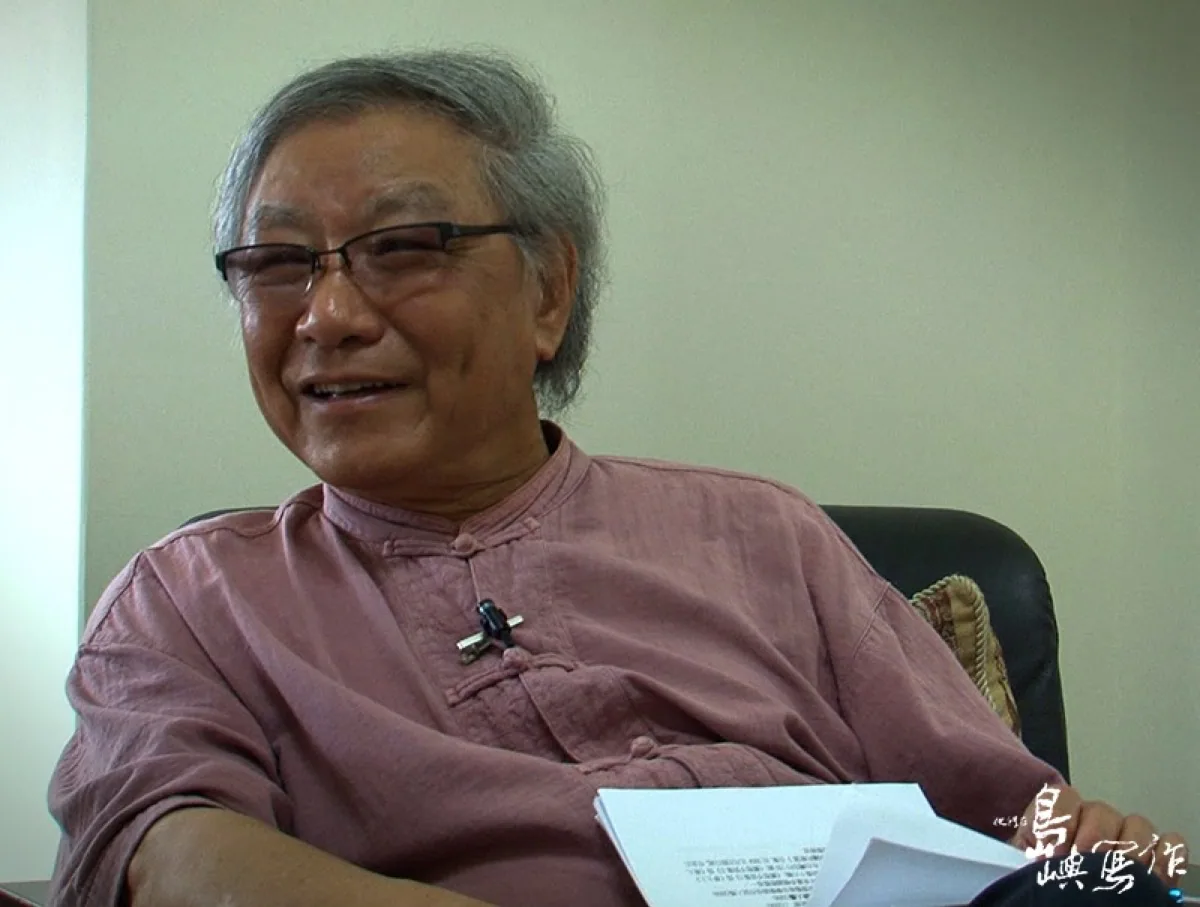
Cheng Chou-yu (1933–2025), a first-generation post-war poet, known for 〈Mistake〉: "My Dadaist horsebeats are beautiful mistakes / I am not a returnee, but a passerby." Passed away in June 202 $\text{5}$. His death came only eight months after Ya Hsien's passing in October 2024. Photo: Musu Media Co., Ltd., 2017-11-16, CC BY-SA 4.0 via Wikimedia Commons.
I walk through the lands of Jiangnan
That face waiting in the seasons is like the blooming and fading of a lotus flower
—This is from 〈Mistake〉 by his contemporary, Cheng Chou-yu; Cheng also passed away in June 202517. Lo Fu, of the Genesis "Iron Triangle," left in 2018, and Cheng Chou-yu followed in 2025; with Ya Hsien's departure in 2024, the physical presence of the first generation of post-war poets has almost all been returned to time.
Only Chang Mo remains, born in 1931, ninety-five years old this year18—one member of the Iron Triangle still stands, a lonely witness to the exit of this generation of poets. As Taiwanese modern poetry enters its seventh decade, the nostalgic themes of the first generation (for the Yangtze, for Nanyang, Henan, and the Beijing hutongs) are entering history along with their physical bodies. The next generation of poets no longer shares that same nostalgia, but the poetic tools left by Ya Hsien' $\text{s}$ generation (the repetition of refrains, obscurity as political protest, the fusion of surrealism and existentialism) can still be seen in the works of contemporary young poets.
Ya Hsien left behind ninety poems. In the preface to The Abyss, he quoted the poet Yu Kwang-chung's evaluation of him: "Achieving immortal poetic fame with only one collection"11. Looking back from 2024, this statement is even more accurate—after fifty-six years of silence, a place among the top five in Taiwan's poetic history remains firmly reserved for him.
"Hallelujah, I am still alive." In Vancouver in 2024, this phrase took on its final meaning: after writing ninety poems, a poet chose silence, and that silence became another way of continuing to write.
Further Reading:
- Cheng Chou-yu: The wanderer who wrote 〈Mistake〉, finally settled in Kinmen — Contemporary of the Genesis Poetry Society, passed away in June 2025
- Martial Law Era — Historical context of literary censorship, the Garrison Command, and obscurity as political protest
- Taiwanese Media and Press Freedom — The historical context of the dominance of the UDN and China Times supplements in the Taiwan literary scene during the 1950s–1990s
Image Sources
This article uses 3 CC BY-SA licensed images, all cached in public/article-images/people/ to avoid hotlinking from source servers:
- Ya Hsien.tif — hero. Photo: Musu Media Co., Ltd., 2012-09-13, CC BY-SA 4.0, verified by Wikimedia Foundation VRT ticket 2017112310007121
- Lo Fu.tif — inline. Photo: Musu Media Co., Ltd., 2012, CC BY-SA 4.0
- Cheng Chou-yu.tif — inline. Photo: Musu Media Co., Ltd., 2017-11-16, CC BY-SA 4.0
References
- Genesis Poetry Society - Wikipedia — Founded in October 1954 by Lo Fu and Chang Mo in Zuoying, Kaohsiung; Ya Hsien joined later; the three were known as the "Iron Triangle" of post-war Taiwanese modern poetry.↩2345
- Ya Hsien - Wikipedia — Birth name Wang Ching-lin; born August 29, 1932, in Nanyang, Henan; joined the National Army in 1949 and moved to Taiwan; entered the film department of the Political Warfare Officer School in 1953 and co-founded Genesis Poetry Society that same year; retired with the rank of Major in 1966; served as editor-in-chief of the UDN Supplement for 21 years starting in 1977; concurrently served as president and editor-in-chief of United Literature in 1984; moved to Canada after retiring in 1998; received the Global Chinese Literature Cloud Award Contribution Award in 2012.↩2345678
- Ministry of Culture issues posthumous commendation: Poet Ya Hsien passes away in Vancouver at age 92 - CNA — Passed away in Vancouver, Canada, on October 11, 2024, at age 92; in December of the same year, the Ministry of Culture, representing the President, issued a posthumous commendation.↩23
- Ya Hsien's Poetry Collection - Taiwan Literature Dictionary Database — The 1968 publication The Abyss collects works created by Ya Hsien between 1953–1968; later compiled with A Night in Ku Ling-lin and Ya Hsien's Poetry Notes into The Collected Poems of Ya Hsien; the complete works contain fewer than one hundred poems; a classic of Taiwanese modern poetry archived by the National Museum of Taiwan Literature.↩23
- Chou Meng-die - Wikipedia — Ran a book stall under the eaves of the Star Coffee House on Wuchang Street, Taipei, for 21 years starting in 1959; closed the stall in 1 $\text{9}$80 due to gastric illness; the only poet in the Taiwan literary scene to turn his lifestyle itself into poetry.↩
- A Preview of Ya Hsien's 〈The Abyss〉 - tsxsv.exblog.jp — Detailed analysis of the variations of the refrain "Hallelujah! I am still alive" across different stanzas, and the poem's status in Taiwanese modern poetry history.↩
- Ya Hsien - Wikipedia (English) — English Wikipedia entry; cross-reference source for his life (1932–2024), the Genesis journal, editor-in-chief of UDN Supplement, and death in Vancouver in 2024.↩
- Lo Fu - Wikipedia — 1928–2018; co-founder of Genesis Poetry Society; masterpiece Death in a Stone Chamber; one of the three representatives of Taiwanese surrealist poetics alongside Ya Hsien and Shang Qin.↩
- As a Song, an Andante by Ya Hsien - chinesewritersna.com — Full text of 〈As a Song, an Andante〉, published in 1964; "The necessity of tenderness / The necessity of affirmation" is one of the most recognizable openings in Taiwanese modern poetry history.↩23
- 〈The Abyss〉 by Ya Hsien - Ya Hsien's Poetry Garden — A dedicated page for Ya Hsien's works at National Donghua University; includes full stanzas such as "Hallelujah! I am still alive. Shoulders held high, holding existence and non-existence, holding a face wearing trousers" and "Working, walking, saluting bad men, smiling and immortality"; Donghua University was his host institution during his 1999 residency, making this a relatively authoritative academic source.↩
- Achieving immortal poetic fame with only one collection: Ya Hsien's "The Abyss" used clever tactics to evade Martial Law censorship - UDN News — Ya Hsien's autobiography reveals that Genesis Poetry Society "used symbolic forms to hide protest and grievance within an obscure artistic form"; 〈The Abyss〉 is compared to Lo Fu's anti-war 〈Death in a Stone Chamber〉 and Shang Qin's 〈Song of a Single Day Night〉 (which hinted at the situation in Kinmen), stating they "utilized the fact that censorship agencies could not understand them to slip through; there was no other way"; Ya Hsien quoted his first poem, "I am a spoonful of beautiful little flowers," when announcing his passing on social media.↩23456
- Salt - National Museum of Taiwan Literature — Full text of 〈Salt〉, published in 1958; archived by the National Museum of Taiwan Literature as a classic of Taiwanese modern poetry.↩2
- The Evil of Angels and the Sin of Humanity—A Review of Ya Hsien's 〈Salt〉 - Medium — Detailed analysis of the character Er-momo in 〈Salt〉 as a figure from the forgotten lower class, and the metaphorical structure of angels adopting a mocking and indifferent attitude toward human suffering.↩
- Reading versions of Ya Hsien's 〈Red Corn〉, 〈Salt〉, and 〈The Colonel〉 - We Read on the Island Official YouTube — The literary documentary series They Write on the Island includes reading versions of three representative poems by Ya Hsien; 〈Red Corn〉 depicts childhood memories of his hometown in Henan, while 〈The Colonel〉 condenses war and livelihood.↩
- Li Yuan (Writer) - Wikipedia — Pen name Ono; served as Minister of Culture of the ROC from 2024; published works in the UDN Supplement starting in the 1970s; one of the protégés supported during Ya Hsien's tenure.↩
- The Mr. Ya Hsien I Knew - Lin Wan-yu / Musu Media Medium — Poet Lin Wan-yu recalls specific scenes of meeting Ya Hsien, including their first meeting in 2014, him writing an eight or nine-thousand-word recommendation for her collection, and receiving calls from him in Canada every two or three months to check in.↩23
- Cheng Chou-yu - Wikipedia — Contemporary of the Genesis Poetry Society; passed away in the United States on June 13, 202 $\text{5}$, at age 91; his masterpiece 〈Mistake〉 ("My Dadaist horsebeats are beautiful mistakes") is one of the most widely circulated lines in Taiwanese modern poetry history.↩
- Chang Mo (Poet) - Wikipedia — Born 1931; co-founder and long-time editor of Genesis Poetry Society; hailed as the "locomotive of the Taiwan New Poetry Movement"; still living as of 2026, the sole remaining member of the Iron Triangle.↩