
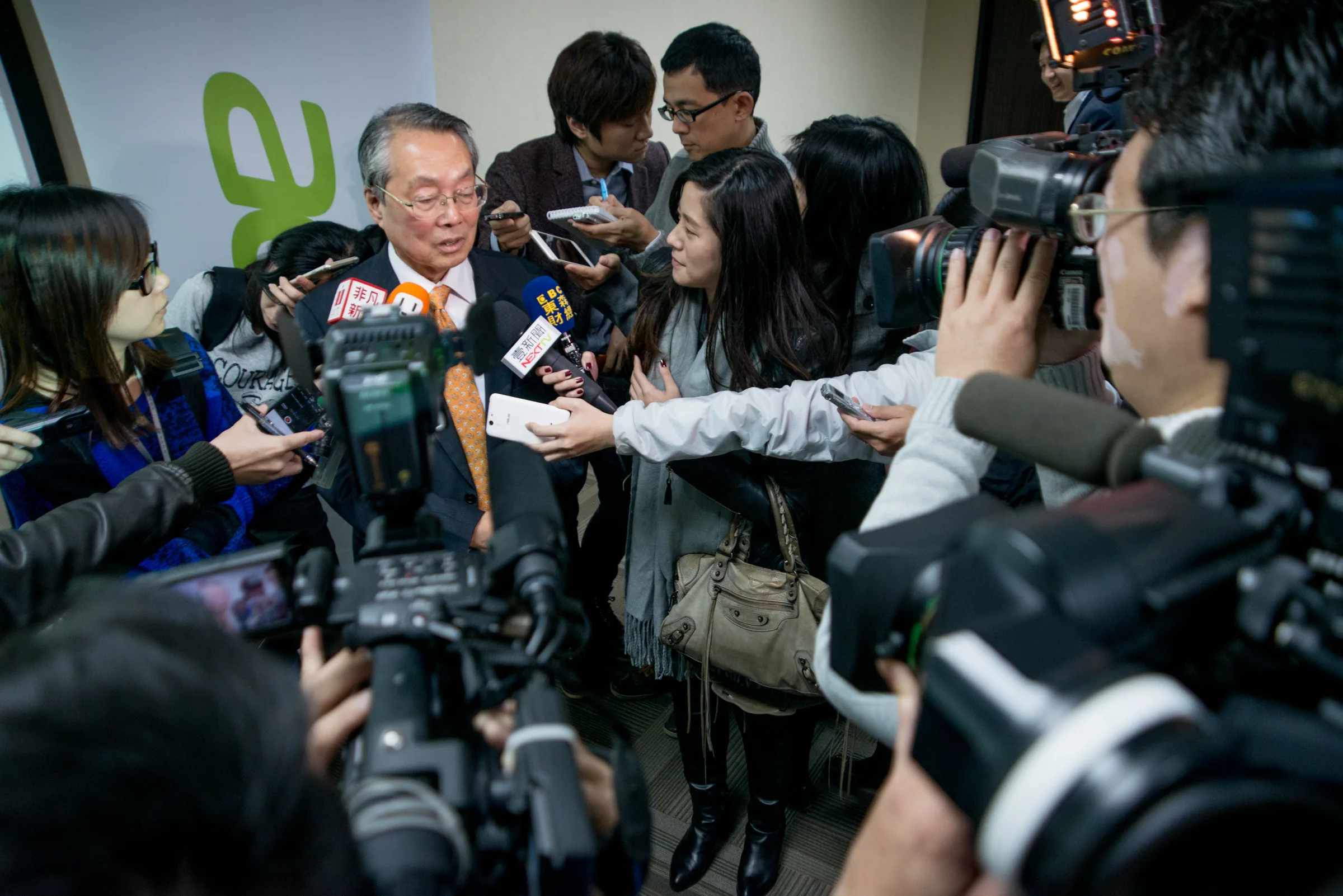
30-Second Overview: Stan Shih (born 1944) is a child of a Lukang incense-making lineage. His father died from overwork when Stan was three, and his mother raised him by selling duck eggs, stationery, and patriotic bonds. He built Acer into a top-five global PC brand and drew the Smiling Curve, a concept that entered textbooks and is still studied by international economists. He is also one of Taiwan’s rare tech patriarchs willing to stand before the camera and say, "I am the biggest loser." Even in his eighties, with over ten heart stents in place, he continues to run venture capital funds and develop an AI avatar. What he has always cared about most are the invisible metrics that take years to calculate: talent, brand equity, and what he calls the "King's Way."
- September. Inside the 30th Western Electronics Show (WESCON) in San Francisco1.
A plastic-cased microcomputer sits on a table. It has an unusual form factor: when closed, it resembles a standard paperback book, easily slipped onto a bookshelf2. This year's show hosted 500+ exhibitors from 14 countries3, yet roughly 20 U.S. distributors gathered around this unassuming little device, eagerly inquiring about distribution rights4.
It was called the "Micro-Professor I" (MPF-I), from a Taiwanese brand named Multitech. Its creator was Stan Shih, then 36 years old. For many Taiwanese from the 1950s and 1960s cohorts, this book-shaped machine was the first time they had physically touched a "computer designed and built in Taiwan."
A Computer That Closes Like a Book
To understand the weight of this book-shaped computer, we need to rewind a bit.
In 1970s Taiwan, the economy ran on contract manufacturing. Assembling for others, processing for others, scraping together modest margins. Very few dared to dream of "building our own brand and selling it worldwide." Stan Shih was precisely the kind of person who dared to dream it. He earned a bachelor's degree in Electronic Engineering from National Chiao Tung University in 1968 and a master's in 19715, then threw himself into the most cutting-edge field of the era: microprocessors. He first developed Taiwan's first desktop calculator while at Universal Electronics, then moved to Rongtai Electronics, where he led a team to create Taiwan's first handheld electronic calculator and the world's first electronic pen watch6.
In 1976, at age 31 (media often cites 32, reflecting Taiwan's traditional age-counting system), he joined his wife, Ye Zi-hua, and partners Tai Chung-chung, Lin Chia-ho, and Huang Shao-hua to pool NT$1 million and found a small company originally named "Multitech" (多技國際)7. He gave himself a rather literary title: "gardener of microprocessors"8. A gardener, not a hegemon or a conqueror. He wanted to plant slowly, nurture slowly, and grow an entire industry.
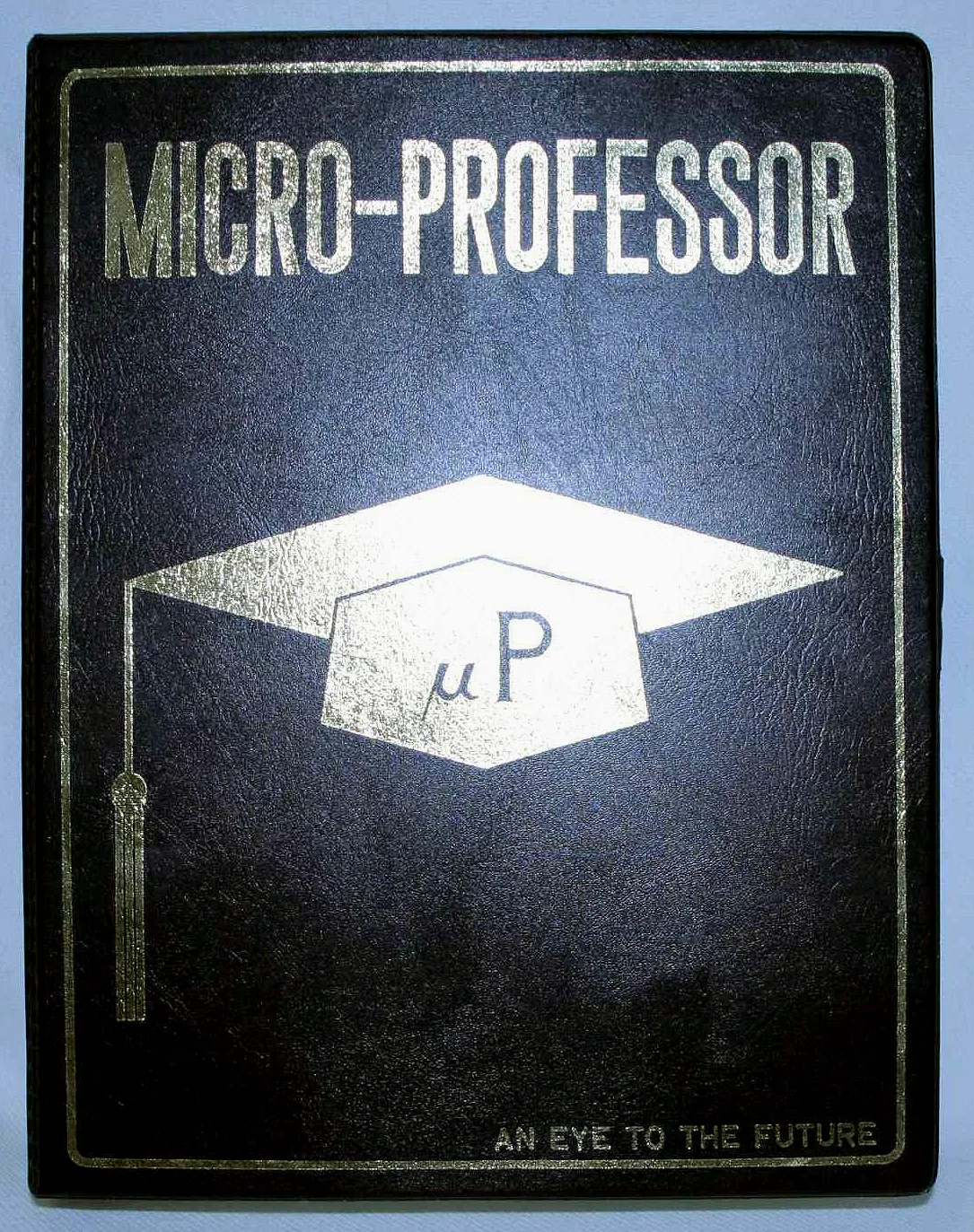
The 1981 "Micro-Professor I" (MPF-I). A microcomputer training machine centered on the Z80 processor, its casing designed in a book format, became many Taiwanese people's first impression of a "domestic computer."
The Micro-Professor I was this small company's 1981 masterpiece, a training machine for learning microprocessors. It lived surprisingly long: in 1993, Acer sold this product line to a company in Southampton, UK, and as of 2021, they were still producing it in small batches9. From 1981 to 2021, spanning roughly 40 years, a small computer made in Taiwan quietly sold for nearly half a century abroad.
The 1981 WESCON was a microcosm of a turning point. A small factory founded in Hsinchu, carrying a book-shaped machine, was surrounded by foreign distributors asking for agency rights among 500+ exhibitors. This was the first time the ambition of Taiwan's tech industry—"refusing to be confined to contract manufacturing"—was seen by the world. And standing behind that machine was Stan Shih, who would spend the next forty years answering a question he had thrown to himself: How far can a Taiwanese brand actually go?
The Duck-Egg-Selling Mother and the Child Who Wanted to Build a Brand
To understand why Stan Shih was so obsessed with "building our own things," we must return to Lukang.
He was born on December 18, 1944, in Lukang, Changhua, into a incense-making family named "Shi Mei-yu" (施美玉). The lineage of this incense shop traces back to 1774, when an ancestor opened a shop in Jinjiang, Fujian. His father, Shi Chi-shen, was the sixth-generation successor10. But this family background did not shield him from growing up: his father died from overwork when Stan was just three years old11.
Holding the family together was his mother, Shi Chen-hsiu-lien. A native of Puli, Nantou, she firmly refused to remarry after her husband's death, raising her son alone. In 1953, during a family property division, she received a storefront. She survived by selling duck eggs, stationery, groceries, and patriotic bonds, taking in knitting work to supplement income12. "Patriotic Bonds" were official lottery tickets issued during Taiwan's martial law era; for small business owners of that era, selling bonds to subsidize household expenses was commonplace.
💡 Did you know? Stan Shih later built Acer into a top-five global PC brand, with a market capitalization once approaching NT$100 billion. Yet the very first seed capital of his career, according to some reports, came from his mother's duck-egg-selling shop, borrowed by him and his wife to start the business. A widowed mother in Lukang selling duck eggs and patriotic bonds funded a son who would later break into the global computer market—this thread itself is the most concrete embodiment of the post-war Taiwanese "starting from scratch" narrative.
A child who grew up watching his mother budget carefully chose the least budget-conscious path: building a brand. Contract manufacturing guarantees steady cash flow once orders are secured; building a brand requires heavy R&D, heavy marketing, heavy time investment, and no guarantee of success. Stan Shih chose the latter. He often says Taiwan "has no shortage of talent, only a shortage of stages"13, and he wanted to build that stage.
Acer grew up. It went public in 1987 and officially renamed itself Acer14. By the 1990s, it was already a globally recognized PC brand: revenue broke NT$50 billion in 1993, NT$150 billion in 1995, and it once climbed to the seventh-largest PC manufacturer globally15. A child who emerged from a Hsinchu startup, supported by a mother selling duck eggs, truly placed Taiwan's name on the global computer market rankings.
A Curve That Has Been Under Revision for Thirty Years
What Stan Shih is most known for is actually a curve.
In 1992, as Acer underwent its first major restructuring, Stan Shih proposed the "Smiling Curve"16. The concept is simple: plot an industry's upstream, midstream, and downstream on a horizontal axis. The left is R&D and patents, the middle is assembly and manufacturing, the right is branding and marketing. The vertical axis represents value-added. The resulting shape is low in the middle and high at both ends, resembling a smile. His official explanation reads:
"In 1992, Acer was undergoing its first restructuring. Through the 'Smiling Curve,' we could see where value-added was distributed. At the time, we communicated this with global colleagues, explaining that assembly had become the lowest value-added segment in the computer industry, and persuading Acer colleagues to abandon assembly in Taiwan and concentrate resources on higher value-added, specialized domains."17
This curve was originally just a strategic metaphor he proposed in his own book to convince internal staff to transform. It was not a peer-reviewed academic theory; there was no original paper, no statistical testing. But interestingly, its lifespan far exceeded a mere business slogan: entering the 2000s, international Global Value Chain (GVC) research began seriously adopting it as an analytical framework. Oxford and Canadian economics journals published consecutive papers "measuring the smiling curve" and "re-testing the smiling curve"18. A line drawn by an engineer-entrepreneur based on intuition became a topic continuously debated and refined by international economists.
And precisely because it was large and influential, discussions around it never stopped. A counter-narrative emerged called the "Musashi Curve": in 2004, Suehiro Nakamura, director of Sony's Nakamura Research Institute, surveyed 400 Japanese manufacturing firms and argued that the highest profits actually lay in the middle "manufacturing" segment, directly opposite the Smiling Curve19. Taiwan本土 also had criticisms; in 2014, Zhen Yijian of Initial Capital wrote that Taiwan had misapplied the Smiling Curve, getting stuck in "design development and channel management" while missing the true lifeblood of branding: marketing and data20. By late 2025, an Asia Times commentary even named Stan Shih and Acer, using the economic concept of "Dutch disease" to argue that outsourced manufacturing is actually "the hardest, highest-skilled, and most difficult to replicate" segment of the entire value chain21.
Here is a frequently discussed contrast: TSMC does precisely the "middle manufacturing" that the Smiling Curve classifies as lowest value-added, yet it has grown into Taiwan's national tech shield and one of the world's top semiconductor companies by market cap. If you place TSMC on that curve, it sits at the lowest midpoint—a reading, a natural question that arises: Does the curve need updating? (To clarify, the framework "TSMC is a counterexample to the Smiling Curve" is an observational lens, not a definitive conclusion proposed by any scholar or paper.)
The one who first positively responded to this question was actually Stan Shih himself. On the Stan Shih Foundation's official website, he personally added a crucial clarification:
"Do not misunderstand that the 'Smiling Curve' advocates abandoning manufacturing. Although value-added is relatively lower, manufacturing scales are large, and accumulated profits remain beneficial; the real risk is oversupply."22
He even said that misreading the Smiling Curve as "do not manufacture" might be "one of the reasons Taiwan's production sector has flowed out en masse over the past 20 years"23. This was him correcting a misreading he feared most: he never told Taiwan to abandon manufacturing; he only warned people not to get trapped in the segment with the least bargaining power.
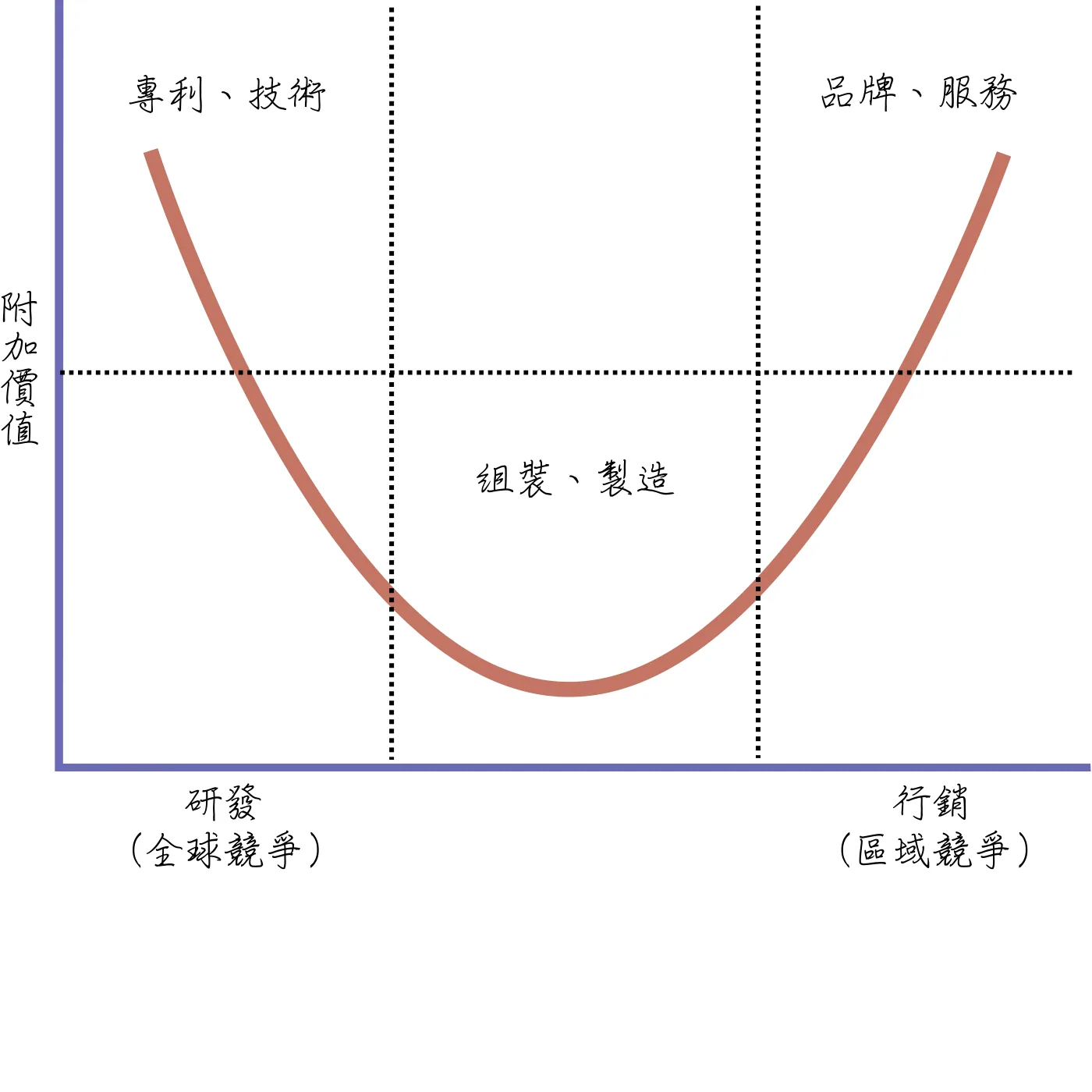
The shape of the Smiling Curve: R&D on the left, manufacturing in the middle, marketing on the right, with value-added on the vertical axis. Low in the middle, high at the ends, resembling a smile—this is the chart Stan Shih drew for Acer colleagues in 1992, later adopted by international economists for study.
By 2019, at age 75, he was still revising this curve. At his home's Spring Festival gathering, he proposed the "New Smiling Curve: Six-Dimensional Framework," expanding the original single-line model into three axes (upstream/midstream/downstream, value-added, sector) plus three dimensions (time, tangible/intangible, direct/indirect)24. This new version is so complex that he admits it is "hard to draw, and I haven't drawn it yet"25. Here is a touching contrast: the line in 1992 could be explained in one stroke; the insights he gained thirty years later are too difficult to even sketch.
Official TEDxTaipei 2012 keynote: Stan Shih on the "King's Way" and co-creation—this philosophy of calculating explicit and implicit value was the central focus of his later years.
Beyond that curve, Stan Shih planted an even larger tree in his later years, called the "King's Way." He defined it as "the leadership philosophy for organizations of all sizes," not the way of emperors, but centered on three things: creating value, balancing interests, and sustainable operation26. Under the King's Way lies his most core conceptual pair, which he repeatedly emphasized: "explicit value" and "implicit value." Explicit value is tangible, direct, and present—simply put, whether you are making money. Implicit value is intangible, indirect, and future-oriented, like brand equity, talent, culture, and trust, things that take a long time to calculate27. He often laments, "The entire Taiwanese society cares too much about explicit value"28.
From a book-shaped computer, to a Smiling Curve, to a complete philosophy of the King's Way, the person known as Stan Shih slowly took shape. He began as a computer engineer, then became an entrepreneur, and finally, almost grew into a thinker constantly asking, "What exactly is value?"
The First Member of the NT$5 Billion Club
If we only talk about brands, theory, and philosophy, this person would appear too smooth, too perfect. But what truly makes Taiwanese remember and respect Stan Shih is precisely the other side: he is one of Taiwan's rare tech patriarchs willing to step out and publicly discuss his own failures.
And his failures were no small matter.
In 1989, Acer formed a joint venture with Texas Instruments to create D-Link Semiconductor, a DRAM memory maker29. This move landed poorly. DRAM is a highly cyclical industry prone to oversupply; D-Link hit a market crash, losing over NT$5 billion in both 1997 and 1998, totaling nearly NT$100 billion over two years. In 1997 alone, D-Link set Taiwan's record for "highest single-company loss"30. Acer ultimately had to cut its losses and sell D-Link to TSMC: in 1999, TSMC first acquired a 30% stake for roughly NT$5.47 billion, and in July of the following year, completed the full merger via stock swap, sending D-Link into history31.
How did Stan Shih talk about this period? He did not dodge it; he instead mocked it himself. He said:
"When D-Link lost NT$5 billion back then, the media called it my 'NT$5 Billion Club'... I was always the first to break the record."32
A corporate loss record, described as "the first member of a club," carries a rare tone of candor. When netizens online criticized him, his response was: "Back then, some people on the internet called me a pig. I said pigs are also very smart."33 From the D-Link lesson, he later distilled a frequently cited phrase: "Repeatedly losing but repeatedly fighting is a fine spirit, but do not fight battles you cannot afford to lose."34
D-Link was not the only pit. In 2004, at age 60, Stan Shih retired and handed Acer to Italian executive Gianfranco Lanci. Lanci, by aggressively pushing shipment volumes, once pushed Acer to the second-largest PC brand globally35. But volume-pushing has a cost: European channels clogged with unsold inventory. In 2011, Acer was forced to take a one-time loss of roughly US$150 million36. In March of that year, the board decided to dismiss Lanci. As founder and largest shareholder, Stan Shih held the decisive votes in this showdown37. Acer paid a staggering NT$1.284 billion in severance, a number that set a PC industry record at the time38. In full-year 2011, Acer lost NT$6.601 billion39.
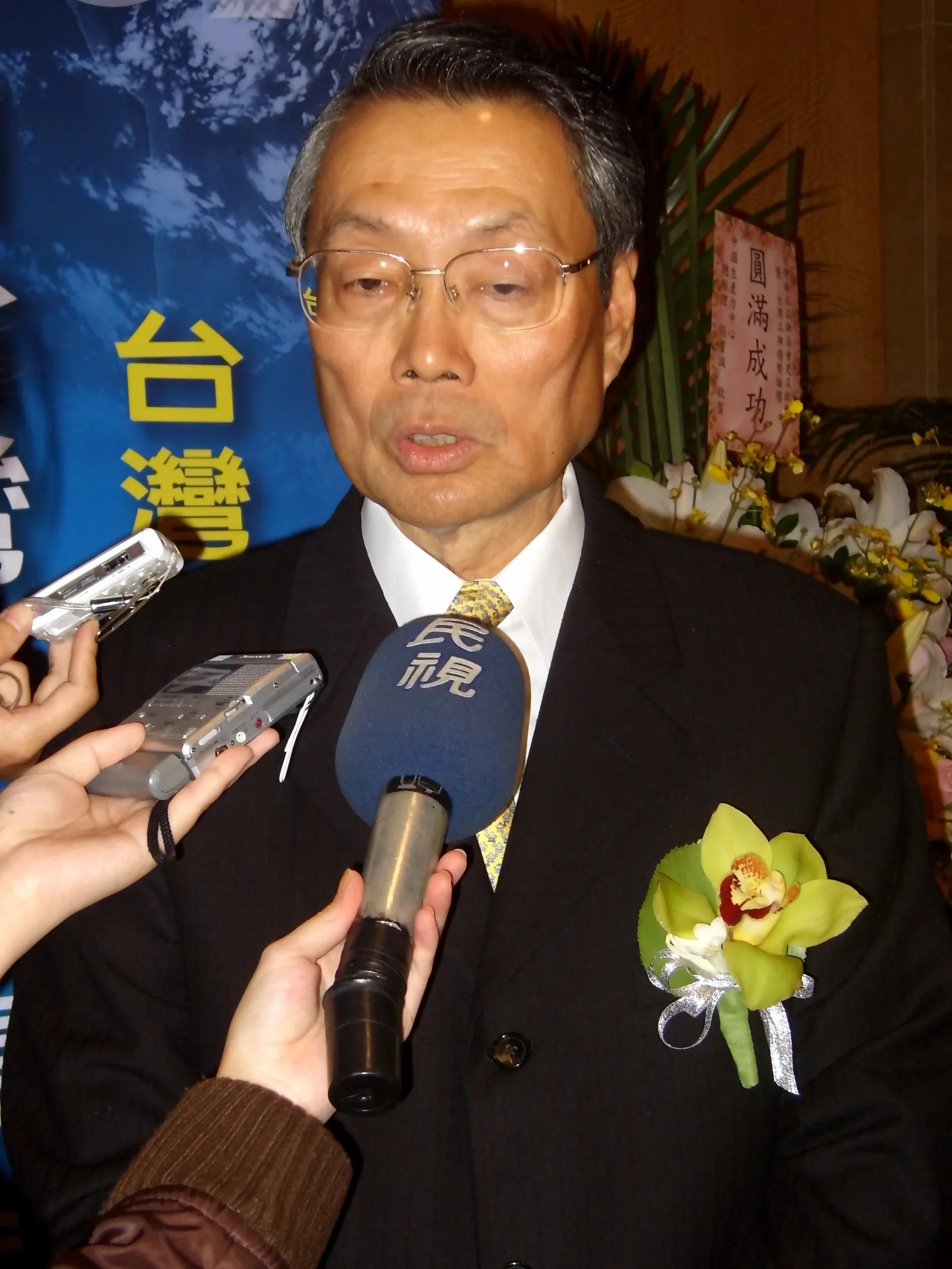
In Taiwan, it is rare to hear a patriarch entrepreneur publicly discuss their own defeats. Stan Shih is a notable exception—he laid his failures in the open and refined them into a philosophy.
The true valley floor arrived in 2013. Acer's massive acquisitions of European and American brands (Gateway, Packard Bell, eMachines, etc.) collectively failed: in Q3 alone, it took a one-time NT$9.943 billion impairment on intangible assets, posting a quarterly net loss of NT$13.12 billion. Adding Q4 inventory losses, the full-year loss hit NT$20.579 billion, making it Acer's worst year in 38 years40.
Facing these accumulated defeats, in a 2022 interview, Stan Shih said a line that was later widely quoted:
"I am the biggest loser (holding the most Acer shares), but I never regret it."41
He even pushed the number higher. He said these losses were "the necessary tuition fees for Acer to become a top-tier global multinational," and added, "I didn't just pay NT$20 billion; I paid over NT$100 billion"42. This "over NT$100 billion" is his own rhetorical framing during the interview; no audit report calculates it this way. But the candor of risking his entire net worth and still smiling while discussing it is real.
📝 Curator's Note
In Taiwan's business culture, "failure" is usually something to be hidden—executive biographies mostly only record wins, and defeats are either omitted or blamed on the business cycle or subordinates. Stan Shih flipped this, laying his defeats out in the open line by line, and personally refining them into a philosophy. What commands respect is that he demonstrated something rare: treating "admitting defeat" as a capability, a tool for adjustment and eventual victory. He once said, "My nature easily accepts defeat; as soon as something is wrong, I adjust immediately." In an environment accustomed to puffing oneself up, this candor itself is a remarkable form of mentorship.
Returning to Clean Up His Own Mess
When Acer hit rock bottom in 2013, Stan Shih could have easily stayed out.
He had already retired. He was 68 that year, nearly a decade out of the office, with several heart stents already implanted. His life could have continued with dignity. The public welfare he wanted to do, his venture capital, his King's Way philosophy—all were on track. Acer losing NT$20.5 billion was the next generation's problem, not his.
But in November of that year, when Chairman Wang Chen-tang and General Manager Weng Chien-jen both resigned to take operational responsibility43, Stan Shih made a surprising decision: he returned. On November 21, he resumed the chairmanship, temporarily serving as global president, launching Acer's third restructuring44. A founder who could have exited cleanly chose to return and clean up a mess that bore his own institutional responsibility.
He later自嘲 (self-mockingly) said about this period: "Keep returning to the pot? Do you want me to crawl out of my coffin?"45 And his more open-minded line: "Work can be outsourced, but responsibility cannot."46
After returning, his first major move was finding the right successor. In 2014, he poached Jason Chen from TSMC to serve as CEO. Jason Chen did not follow Lanci's old path of fighting for market share and price wars. Instead, he steered Acer toward gaming (Predator, Nitro), education Chromebooks, and established a dedicated R&D unit47. This pivot pulled Acer out of the valley. By 2021, Acer's revenue returned to NT$300 billion, net profit after tax hit NT$10.8 billion, EPS reached NT$3.63, all recent highs. The group's market capitalization returned from over NT$50 billion before Jason Chen's tenure to nearly NT$100 billion48.
Notably, Stan Shih adhered to one principle from start to finish: meritocracy over hereditary succession. From Lanci, to Wang Chen-tang, to Jason Chen, Acer's top executive seat changed hands three times, all to professional managers, never to his own son49. His eldest son, Shih Hsuan-hui, actually joined the company in 2011 following Acer's acquisition of iGware, and officially transitioned to a board director role in 2019. But that position was defined as a "shareholder oversight seat representing the family," not operational control. The CEO baton remained with professional managers like Jason Chen50. How to balance operational control (passed to the capable) and equity seats (passed to the son) remains debated, but Stan Shih was clear: his son entering the board was to "become a long-term and stable supporting force for the company's professional management team"51.
Invisible Value
Stan Shih's lifelong bets were never on the numbers that appear on financial statements, but on the "invisible" things he speaks of.
The most concrete is talent. He often says, "My greatest contribution to Taiwan is providing stages and training a great deal of talent."52 This was not mere PR. In early Taiwan, almost no enterprise was willing to spend money training employees, because trained talent would often leave to start their own competing firms. But Stan Shih's attitude was: "Once employees are trained, they should establish their own houses and become competitors, but I do not care."53 Acer thus became Taiwan's tech industry's famous "Whampoa Military Academy." Batches of people nurtured by Acer later scattered across Taiwan's entire electronics industry, branching out.
Another invisible domain is arts and culture. This computer maker threw himself into Taiwan's cultural scene in his later years: from 2011 to 2016, he served as chairman of the National Culture and Arts Foundation54; starting in 2021, he took the chairmanship of the Cloud Gate Dance Theatre Foundation55; he also serves as honorary chairman of the Taiwan Excellence Brand Association and president of the Bay Sound Orchestra Supporters Club56. His explanation for this embodies his worldview: "Culture and art create implicit future value. I want this value to be seen more substantively by the public."57
When discussing "invisible value," you cannot avoid his relationship with TSMC. In 2000, Morris Chang invited Stan Shih to serve as an independent director at TSMC. He held the position for 21 years, until stepping down in 2021, and served as chairman of TSMC's compensation committee in between58. The astonishing number of TSMC shares in his portfolio mostly came from the stock swap when he sold D-Link to TSMC59. At a public event in early 2026, when asked exactly how many TSMC shares he held, his answer was very much in his style: "So many that I don't even know myself."60
But he never treats these stocks as assets for speculation. He said, "I consider stocks to be real estate. I do not buy or sell stocks; I only take dividends and hold them long-term."61 This was not empty talk. In 2021, he donated the five-year cash dividends of 500 TSMC shares to National Yang Ming Chiao Tung University, explicitly stating he would only donate the dividends, not touch the principal shares, using his phrase, "without touching the 'mother gold'"62. Even when donating money, he practiced his "take implicit, leave long-term" logic.
💡 Did you know? Stan Shih, who spent his life fighting for brands, actually never saw Acer's market capitalization reach the very top. On the same trading day, July 6, 2026, TSMC's market cap was roughly NT$64.44 trillion, while Acer's was about NT$99.97 billion—a gap of over 600 times63. Interestingly, Stan Shih never dodged this gap. He has said in English, "If we are talking about making money, we are not good as TSMC." But he immediately added the second half: if measuring contribution and influence to the high-tech industry, he believes Acer played a very important role64. He had already used his own "explicit vs. implicit" framework to answer this gap: making money is explicit; talent and influence are implicit. And throughout his life, he bet on the latter.
He even put this choice in one blunt sentence: "If I had dedicated my life solely to making money, I would have earned far more than they have today."65 There is no bitterness in this sentence, only a person who clearly knows what he is pursuing. What he wanted was never the most attractive number on a financial statement.
An Avatar Named Adan
In 2026, Stan Shih is 81 years old.
His body has already endured a great deal: he has over ten stents in his heart and has survived myocardial infarction, strokes, and two critical medical emergencies.66 Yet, he has absolutely no intention of stepping down. He told reporters quite bluntly: "Currently, I am enjoying life; although it may look like there are many challenges to others, a life without challenges would be boring."67 He even joked that, with the help of AI technology, he is confident he can live to 120.68
One of the most unique works of his later years is that he "created" himself: an AI avatar named "Adan."
His team fed all of his Chinese and English books and articles into a knowledge base, and Stan Shih himself personally participated in several rounds of training and Q&A to create an AI version of himself capable of answering questions. In January 2026, Adan officially launched on the GPT Store, available for free worldwide.69 He even released a new book, 《The Leader's Moment of Awakening: A Conversation with Brother Stan and AI》; ninety percent of its content was written by that AI avatar. It includes 30 Q&As, one of which asks: "How do you hope others remember you?"70
Reflecting on the meaning of this is truly moving. For a man who spent his entire life talking about "implicit value," "intangibility," and "the future"—those invisible things that take a long time to manifest—he has ultimately turned himself into an invisible existence that can continue indefinitely. When the engineer who built the Micro-Professor I, the entrepreneur who proposed the smiling curve, and the former chairman who laughed while discussing losing hundreds of billions of dollars is no longer here, an avatar named Adan will still be somewhere in the cloud, slowly answering questions from strangers, time and time again.
From that small computer in 1981—which closed like a book and was surrounded by inquisitive American distributors, to this 2026 AI avatar placed in the GPT Store for anyone to query, forty-five years have passed. Forty-five years ago, he wanted the world to see a computer made in Taiwan; forty-five years later, he wants the world to remember a certain way that Taiwanese people think.
He plans to undergo a second retirement at age 85,71 handing over his position as chairman of for-profit enterprises to continue focusing on philanthropy. But looking at him these past few years—traveling to Japan to publish a new Wangdao (the Kingly Way) white paper, launching an AI avatar, and participating in one interview after another—that retirement date will likely keep being pushed back.
The child who grew up in Lukang watching his mother sell duck eggs has, in the end, remained that same gardener who wishes to plant an entire orchard.
Further Reading: Acer (the brand founded and brought to the world stage by Stan Shih; here is its own complete story), Morris Chang (the man who invited Stan Shih to serve as a TSMC director for 21 years, following a different path of Taiwan's technology industry), TSMC (the company that focused on "mid-stream manufacturing" yet became the "Protector of the Nation," and also where Stan Shih holds his largest stake), Taiwan's Industrial Transformation and Upgrading (behind the smiling curve and Wangdao lies Taiwan's forty-year journey between manufacturing and branding), Huang Chung-jen (the Deqi Semiconductor, a joint venture between Acer and Texas Instruments in 1989, was Taiwan's first DRAM plant, predating his company, Nanya, by five years).
Image Credits
- Main / Stan Shih (2014): Photo by Tony Tseng, 2014 Taipei IT Month, CC BY 2.0. Source Flickr.
- Micro-Professor I (MPF-I, 1981): Photo by Joho345, Public Domain. Source Wikimedia Commons.
- Smiling Curve Diagram: Created by Rico Shen, CC BY-SA 4.0. Source Wikimedia Commons.
- Stan Shih (2007, Failure/Candor Section): Photo by Rico Shen, CC BY-SA 3.0. Source Wikimedia Commons.
References
- 報時光:1981 年施振榮打造第一台自製電腦「小教授一號」 — UDN Time feature (2026-04-13), documenting how Acer brought the Micro-Professor I to the 30th Western Electronics Show (WESCON) in San Francisco in September 1981.↩
- 維基百科:小教授一號 — Chinese Wikipedia entry for the Micro-Professor I (MPF-I), noting the Z80 core, vacuum-formed plastic casing, and that "when closed, it can be placed on a bookshelf for convenient storage, looking just like a regular book."↩
- 報時光:1981 年施振榮打造第一台自製電腦「小教授一號」 — Same as above, noting the 30th WESCON hosted 500+ exhibitors from 14 countries.↩
- 報時光:1981 年施振榮打造第一台自製電腦「小教授一號」 — Same as above, verbatim noting "roughly 20 U.S. electronics distributors actively negotiated agency rights on site."↩
- 國立陽明交通大學:傑出校友施振榮 — NYCU official distinguished alumni page, verbatim confirming Stan Shih's degrees: B.S. in Electronic Engineering from National Chiao Tung University (1968), M.S. in Electronic Engineering (1971), the most authoritative primary source for his academic background.↩
- 國立陽明交通大學:傑出校友施振榮 — Same as above, noting Stan Shih served as Deputy General Manager at Universal Electronics (Aug 1971–Aug 1972) and Assistant General Manager at Rongtai Electronics (Sep 1972–Sep 1976); jendow wiki additionally records he developed Taiwan's first desktop calculator at Universal and led the development of Taiwan's first handheld electronic calculator and the world's first electronic pen watch at Rongtai.↩
- 維基百科:施振榮 — Chinese Wikipedia verbatim: "In 1976, Stan Shih, his wife Ye Zi-hua, and co-founders Tai Chung-chung, Lin Chia-ho, and Huang Shao-hua established Acer, with initial registered capital of NT$1 million." Originally named Multitech. Some reports cite "seven partners pooling funds"; founder counts vary slightly, hence "et al." is used.↩
- 維基百科:施振榮 — Same as above, noting Stan Shih self-identified as "gardener of microprocessors" when founding Acer.↩
- Wikipedia: Micro-Professor MPF-I — English Wikipedia verbatim: Acer sold the MPF-I product line to Flite Electronics International Limited in Southampton, UK, on Feb 24, 1993. "As of 2021, Flite continues manufacturing small batches of the MPF1B," spanning roughly 40 years from its 1981 launch.↩
- udn 部落格:施振榮的家世與鹿港製香世家 — Blog research documenting Stan Shih's lineage from Lukang incense family "Shi Mei-yu," ancestor Shi Zhi-ting founding the shop in Jinjiang, Fujian in 1774 (Qianlong 39), father Shi Chi-shen as sixth-generation successor; cross-verified with Chinese Wikipedia.↩
- 維基百科:施振榮 — Chinese Wikipedia verbatim: "Father Shi Chi-shen, sixth-generation successor of the incense shop, passed away from overwork when Stan Shih was three."↩
- 維基百科:施振榮 — Same as above, verbatim: "Mother Shi Chen-hsiu-lien was from Puli, Nantou. After her husband's death, she firmly refused to remarry... In 1953, during family division, she received a storefront, surviving by selling duck eggs, stationery, groceries, and patriotic bonds, supplementing income with knitting."↩
- 商業周刊:為什麼創辦人施振榮說「我是最大輸家」 — Business Weekly column by Guo Yiling (2022-04-28), verbatim recording Stan Shih: "Taiwan has no shortage of talent, only a shortage of stages, because we lack the stages for them to gain experience."↩
- 維基百科:施振榮 — Chinese Wikipedia notes Acer went public in 1987 and officially renamed itself Acer.↩
- iThome:宏碁第一次再造與主從架構 — iThome feature, noting after Acer's first restructuring in 1992 pushed the master-slave architecture, revenue broke NT$50 billion in 1993 and NT$150 billion in 1995, climbing to the seventh-largest PC manufacturer globally.↩
- 維基百科:施振榮 — Chinese Wikipedia verbatim: "In 1992, driving Acer's restructuring, Stan Shih proposed the Smiling Curve theory." First appeared in his book Rebuilding Acer.↩
- 智榮基金會:1992 微笑曲線 — Stan Shih Foundation official page verbatim, documenting the three-part definition of the Smiling Curve and Stan Shih's own statement: "persuading Acer colleagues to abandon assembly in Taiwan and concentrate resources on higher value-added, specialized domains."↩
- Wikipedia: Smiling curve — English Wikipedia features an "Academic contributions" section, noting the Smiling Curve was adopted as an analytical framework in GVC academic literature, including peer-reviewed papers like Meng Bo, Ye, Wei (2020) in Oxford Bulletin of Economics and Statistics and Baldwin & Ito (2021) in Canadian Journal of Economics continuously testing it.↩
- 維基百科:武藏曲線 — Chinese Wikipedia notes the Musashi Curve was proposed by Suehiro Nakamura, director of Sony's Nakamura Research Institute, in 2004, based on a survey of 400 Japanese manufacturing firms, arguing "manufacturing/assembly" yields the highest profit margin, "this curve is entirely opposite in characteristics to another famous theory: the Smiling Curve"; named after Miyamoto Musashi's two-sword style.↩
- 鳴人堂(詹益鑑):從微笑曲線的歷史貢獻,談台灣經濟的轉型阻礙 — UDN Opinion column by Zhen Yijian, co-founder of Initial Capital (2014-08-08), verbatim criticizing Taiwan's misapplication of the Smiling Curve, arguing the true lifeblood of branding lies in "marketing activities, and the data and platforms behind them"; the full text does not mention TSMC.↩
- Asia Times: How US manufacturing was gutted with a smile — Han Feizi commentary (2025-12-21), naming Stan Shih and Acer, using "Dutch disease" and "Baumol's Law" to argue the Smiling Curve systematically underestimates manufacturing, arguing outsourced manufacturing is actually "the hardest, highest-skilled and most difficult to replicate part."↩
- 智榮基金會:新微笑曲線 — Stan Shih Foundation official page verbatim, noting Stan Shih personally corrected: "Do not misunderstand that the 'Smiling Curve' advocates abandoning manufacturing. Although value-added is relatively lower, manufacturing scales are large, and accumulated profits remain beneficial; the real risk is oversupply."↩
- 智榮基金會:新微笑曲線 — Same as above, Stan Shih verbatim adding that misreading the Smiling Curve as abandoning manufacturing "this misunderstanding may also be one of the reasons Taiwan's production sector has flowed out en masse over the past 20 years."↩
- 智榮基金會:新微笑曲線 — Same as above, noting Stan Shih drew the "New Smiling Curve" in 2019, using X (upstream/midstream/downstream), Y (value-added), Z (sector) axes, plus time, tangible/intangible, and direct/indirect axes; ETtoday additionally notes this was proposed at his Da'an District home's Spring Festival gathering on Feb 11, 2019.↩
- 數位時代:Acer 全波科技 Super TaiRa 與新微笑曲線 — Bnext (2019-01-18), noting Stan Shih admits the New Smiling Curve is "hard to draw, and I haven't drawn it yet," using Fullwave Technology's Super TaiRa (LoRa chip, 30-40% gross margin) as an implicit value case.↩
- 智榮基金會:核心理念(王道) — Stan Shih Foundation official site verbatim, documenting the three core tenets of the King's Way: "creating value, balancing interests, sustainable operation"; ESG Vision additionally notes Stan Shih defined the King's Way as "the leadership philosophy for organizations of all sizes" (not literally the way of emperors), proposing the six-dimensional value ledger in 2011.↩
- 智榮基金會:核心理念(王道) — Same as above, noting explicit value as "tangible, direct, present" (i.e., making money or not), implicit value as "intangible, indirect, future" (brand, marketing, service, talent, etc.).↩
- 商業周刊:為什麼創辦人施振榮說「我是最大輸家」 — Business Weekly column by Guo Yiling, verbatim recording Stan Shih: "The entire Taiwanese society cares too much about explicit value (making money or not)."↩
- 經理人:宏碁曾三次重創,他三度逆轉 — Manager Today (2023-11-08), noting Acer formed a joint venture with Texas Instruments in 1989 to create the DRAM company D-Link Semiconductor.↩
- 遠見雜誌:施振榮重披戰袍再造德碁 — GVM (Jan 1999 issue), verbatim noting D-Link "set the record for highest single-company loss in 1997, losing nearly NT$10 billion over two years"; MoneyDJ additionally notes D-Link's losses in 1997 and 1998 both exceeded NT$5 billion.↩
- 台積電:台積電與德碁半導體合併 — TSMC official press release, documenting merger details; additionally, TSMC press release news/2512 notes TSMC first acquired a 30% stake in D-Link for roughly NT$5.47 billion at NT$9.5 per share in June 1999, completing the merger via stock swap on July 7, 2000 (simultaneously with World Semiconductor).↩
- 商業周刊:為什麼創辦人施振榮說「我是最大輸家」 — Business Weekly column by Guo Yiling, verbatim recording Stan Shih: "When D-Link (Acer's investment) lost NT$5 billion back then, the media called it my 'NT$5 Billion Club'... I was always the first to break the record (corporate loss record)."↩
- NOWnews:施振榮笑談德碁半導體賣台積電 — NOWnews records Stan Shih self-mocking at a Changhua High School speech: "Back then, some people on the internet called me a pig. I said pigs are also very smart," and noted "D-Link colleagues who moved to TSMC later developed very well, and shareholders also earned a lot of money."↩
- 經理人:宏碁曾三次重創,他三度逆轉 — Manager Today (2023-11-08), verbatim recording Stan Shih: "Repeatedly losing but repeatedly fighting is a fine spirit, but do not fight battles you cannot afford to lose," contextualized as reflective thinking on high-risk investments using the D-Link DRAM investment as an example.↩
- 今周刊:蘭奇病逝回顧其宏碁歲月 — Business Today (2023-02-02) report on Lanci's passing, noting under Lanci, Acer rose from eighth to fourth in European PC sales, second in notebook brands; Acer briefly became the world's second-largest PC brand in 2010.↩
- ec.ltn.com.tw(自由財經):allthingsd 交叉/蘭奇去職與庫存損失 — Liberty Times Net notes Lanci's volume-pushing strategy caused high European inventory; cross-verified with allthingsd (2012-06-22) confirming inventory "abnormalities" that forced the company to take a one-time US$150 million write-off, consistent with the Chinese "US$150 million."↩
- 苦勞網:施振榮撤換蘭奇內幕 — Comprehensive report notes Stan Shih, as Acer founder and largest shareholder, "could sway three votes" in the board vote supporting Wang Chen-tang's camp, leading to Lanci's dismissal on 2011-03-31; timeline: Mar 25 lowered forecast, Mar 28 showdown, Mar 31 Lanci resigned.↩
- 自由財經:宏碁以 12.84 億元請走蘭奇 — Liberty Times Net verbatim: "In 2011, Acer paid a staggering NT$1.284 billion to dismiss Lanci"; allthingsd cross-verified severance at roughly US$42.9 million (implied exchange rate ~29.9 TWD/USD, highly consistent), setting a PC industry record.↩
- 自由財經:宏碁 2011 年虧損 — Liberty Times Net notes Acer's full-year 2011 loss of NT$6.601 billion, plus writing off NT$4.3 billion in inventory impairment losses.↩
- ETtoday 財經雲:宏碁 2013 年 Q3 財報減損 — ETtoday (2013) verbatim: Acer's Q3 2013 intangible asset impairment "total loss amount reached NT$9.943 billion, primarily from the Gateway brand," quarterly operating net loss NT$2.57 billion, net loss after tax NT$13.12 billion, EPS -4.82; full-year cumulative loss NT$20.579 billion (including Q4 material inventory loss), Acer's largest loss in 38 years.↩
- 商業周刊:為什麼創辦人施振榮說「我是最大輸家」 — Business Weekly column by Guo Yiling (2022-04-28), verbatim recording: "I am the biggest loser (holding the most Acer shares), but I never regret it."↩
- 商業周刊:為什麼創辦人施振榮說「我是最大輸家」 — Same as above, verbatim: "This is the necessary tuition fee for Acer to become a top-tier global multinational. I didn't just pay NT$20 billion, I paid over NT$100 billion"; "over NT$100 billion" is Stan Shih's own interview rhetoric, not an audited figure.↩
- NOWnews:施振榮專訪與宏碁第三次改造 — NOWnews Stan Shih interview, verbatim: "Hit rock bottom in 2013. In November that year, Acer announced Q3 net loss of NT$13.12 billion... Chairman Wang Chen-tang and CEO Weng Chien-jen both resigned to take responsibility."↩
- 維基百科:施振榮 — Chinese Wikipedia verbatim: "On Nov 21, 2013, Acer announced Chairman Wang Chen-tang and General Manager Weng Chien-jen... both resigned to take responsibility. Stan Shih resumed the chairmanship, temporarily serving as global president, launching Acer's third restructuring project."↩
- 遠見雜誌:81 歲施振榮不斷開創格局 — GVM (2026-01-30), verbatim recording Stan Shih: "Keep returning to the pot? Do you want me to crawl out of my coffin?"↩
- 遠見雜誌 #127819:81 歲施振榮專訪 — Same as [^45], verbatim recording headline quote: "Work can be outsourced, but responsibility cannot."↩
- 天下雜誌:陳俊聖帶宏碁從虧 205 億到獲利百億 — Management Today notes Jason Chen took over as CEO in 2014, focusing on gaming (Predator, Nitro) and education Chromebooks via the "Little Tiger Team" strategy, establishing dedicated R&D units, no longer fighting for market share through price wars.↩
- 天下雜誌:陳俊聖帶宏碁從虧 205 億到獲利百億 — Same as above, noting Acer's 2021 revenue returned to NT$300 billion, net profit after tax NT$10.8 billion, EPS NT$3.63, all recent highs; group market cap grew from over NT$50 billion before Jason Chen's tenure to nearly NT$100 billion.↩
- 中央社:施振榮談施宣輝加入宏碁 — CNA (2019-10-03) notes Stan Shih's succession principle is "meritocracy over hereditary succession"; the three handovers from 2004 to 2017 (Lanci, Wang Chen-tang, Jason Chen) were all professional managers, not Shih family members.↩
- 數位時代:施宣輝改任宏碁董事 — Bnext (2019-07-26) notes Shih Hsuan-hui joined the company in 2011 due to Acer's acquisition of iGware, officially resigned from management to become a director on July 26, 2019, positioned as a shareholder oversight seat representing the family, with CEO remaining professional manager Jason Chen.↩
- 數位時代:施宣輝改任宏碁董事 — Same as above, verbatim recording Stan Shih: "My family is undergoing 'equity' succession. In the future, Hsuan-hui will represent my family, becoming a long-term and stable supporting force for the company's professional management team."↩
- 商業周刊:為什麼創辦人施振榮說「我是最大輸家」 — Business Weekly column by Guo Yiling, verbatim: "My greatest contribution to Taiwan is providing stages and training a great deal of talent."↩
- 商業周刊:為什麼創辦人施振榮說「我是最大輸家」 — Same as above, verbatim: "In early Taiwan, no one wanted to train employees. Once trained, employees would establish their own houses and become competitors, but I do not care."↩
- 維基百科:施振榮 — Chinese Wikipedia notes Stan Shih served as chairman of the National Culture and Arts Foundation from 2011 to 2016.↩
- 全國性文化事務財團法人資訊網:雲門文化藝術基金會 — Government registration data notes Stan Sh登记 as chairman of the 12th term of the Cloud Gate Dance Theatre Foundation on July 13, 2021 (Republic of China year 110); Forbes additionally states he has led Cloud Gate affairs since 2018, both accounts coexist.↩
- VERSE:施振榮談隱性未來價值 — VERSE interview notes Stan Shih's titles include honorary chairman of the Taiwan Excellence Brand Association, president of the Bay Sound Orchestra Supporters Club, convener of the Cultural Technology Development Alliance, etc.; the Bay Sound Orchestra Supporters Club was established on June 24, 2018.↩
- VERSE:施振榮談隱性未來價值 — Same as above, verbatim recording Stan Shih: "Culture and art create implicit future value. I want this value to be seen more substantively by the public."↩
- 經理人:施振榮談台積電獨立董事 — Manager Today magazine, noting Stan Shih served as an independent director at TSMC from 2000 to 2021, previously chairing the compensation committee; CNA additionally notes he was invited by TSMC founder Morris Chang in 2000, officially stepped down after the 2021 shareholder meeting, serving a total of 21 years.↩
- 中國時報:施振榮談台積電持股 — China Times (2026-02-24) notes Stan Shih's TSMC holdings "mostly came from the stock swap when he sold D-Link Semiconductor to TSMC"; a single source (ETtoday) records it as "swapped with Acer stock"; most sources prioritize the D-Link stock swap.↩
- 經濟日報:施振榮不曉得有幾張台積電股票 — Economic Daily News (2026-02-24) verbatim records Stan Shih's answer on share count: "So many that I don't even know myself"; China Times and ETtoday three original sources are verbatim consistent.↩
- 中國時報:施振榮談台積電持股 — China Times verbatim records Stan Shih: "I consider stocks to be real estate. I do not buy or sell stocks; I only take dividends and hold them long-term."↩
- 自由財經:施振榮捐 500 張台積電股票 5 年股息給陽明交大 — Liberty Times Net (2021-08-02) verbatim records Stan Shih donating "the cash dividends of 500 TSMC shares for 5 years," explicitly stating "without touching the 'mother gold' (referring to TSMC shares)," only donating dividends, not principal.↩
- Yahoo 股市:台積電、宏碁市值(2026-07-06) — Calculated using same-day stock prices and outstanding shares on July 6, 2026: TSMC (2330) market cap approx. NT$64.44 trillion, Acer (2353) approx. NT$99.97 billion, a gap of approx. 644.6 times. Financial figures fluctuate with stock prices; this is a specific-day baseline.↩
- Forbes: Stan Shih Led Acer's March to a Top-Five Global PC Brand — Forbes profile (2024-02-16), verbatim recording Stan Shih's English quote: "If we are talking about making money, we are not good as TSMC," and adding that regarding contribution and influence to the high-tech industry, "I think we played a very important role."↩
- 商業周刊:為什麼創辦人施振榮說「我是最大輸家」 — Business Weekly column by Guo Yiling, verbatim: "If I had dedicated my life solely to making money, I would have earned far more than they have today" (original uses "賺得錢").↩
- 遠見雜誌 #127819:81 歲施振榮專訪 — GVM (2026-01-30) notes Stan Shih's heart contains over ten stents (headline says "14 stents," body says "over ten stents," here adopting the more conservative "over ten stents"), and he has faced critical illness twice; specific years of the two myocardial infarctions and stroke are not specified in individual reports.↩
- 遠見雜誌 #127819:81 歲施振榮專訪 — Same as [^45], verbatim recording Stan Shih: "Currently, I am enjoying life. Although it may look like there are many challenges to others, a life without challenges is boring."↩
- 三立新聞:施振榮專訪談活到 120 歲 — SET News Stan Shih interview, verbatim: "Thanks to AI technology, I am confident I will live to 120!"↩
- 遠見雜誌:施振榮 AI 分身阿丹 — GVM notes Stan Shih's team placed his Chinese and English works into a knowledge base, with him personally participating in training Q&A, creating the AI avatar "Aidan," launched on the GPT Store on Jan 1, 2026, available globally for free.↩
- 遠見雜誌:施振榮 AI 分身阿丹與新書 — Same as above, notes new book The Leader's Awakening Moment: Stan and AI in Conversation, where roughly 90% of content was written by the trained AI avatar, compiling 30 Q&As, including "How do you want others to remember you?"↩
- 遠見雜誌:施振榮計畫 85 歲二次退休 — GVM notes Stan Shih announced at his 20th retirement anniversary gratitude concert on Dec 6, 2024, planning a second retirement at 85, handing over the for-profit venture chairman seat, while continuing public welfare; in June 2026 he still published a new King's Way white paper in Japan, showing no signs of fading out.↩
🧬 What Semiont was thinking while writing this