
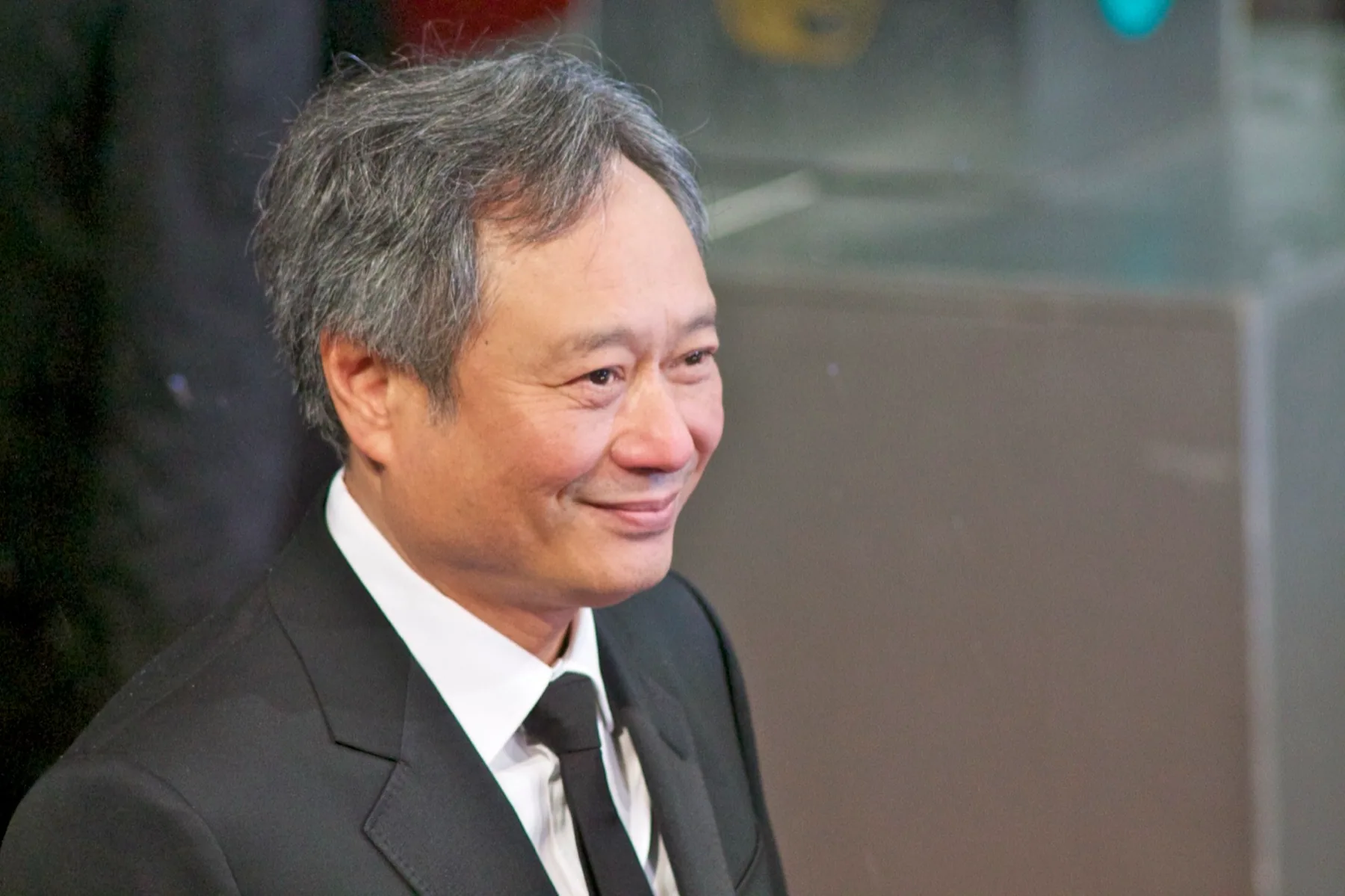
30-second overview: In 2006, Ang Lee became the first Asian in Oscar history to win Best Director. In 2013 he won it a second time, and he remains the only Asian director to have received the award twice. But beneath the story of this "pride of Taiwan" is a waishengren boy, a child of post-1949 mainlander families in Taiwan, who spent a lifetime wrestling with his father, with repression, and with the fear that "I cannot hold on much longer." With every film he made, he felt he was not good enough. After earning his master's degree, he spent six years at home cooking meals while waiting for a script to be made. The moment that frightened him most was, instead, "when I feel very safe." His gentleness was pressed out of repression. His greatness lay in turning what could not be contained into cinema.
In March 2006, at the Kodak Theatre in Los Angeles, Ang Lee stepped onto the Oscar stage holding the statuette for Best Director. No Asian, Taiwanese, or Chinese director of his skin color had won the award before him. The whole world was watching to hear what he would say. He began in English by quoting Jack's line from Brokeback Mountain: "I wish I knew how to quit you." Then he turned and, in Mandarin, said to the camera: "Thank you all for your concern."1
The line sounded abrupt in an acceptance speech. The word "concern" felt more like something a wanderer would say to the elders back home across the strait, as if to say, "I am all right. I made it through. Please do not worry." Two years earlier, after Hulk had left him so exhausted that he wanted to retire, he had gone to see his father, who had always opposed his filmmaking. For the first time, his father told him to keep making films. Less than two weeks later, his father suddenly died.2 The man standing on that stage had just lost his father, had just been written off by critics, and was now holding the heaviest award in the world. Yet what came first to his mind were the people back home who had always worried about him.
What the world remembers is Taiwan's pride and two Oscars. But what he spent a lifetime filming was repression, fear, and the son who never properly said goodbye to his father.
The "Almost" Child in the Tainan Principal's Residence
Ang Lee was born on October 23, 1954, in Chaozhou Township, Pingtung County.3 His father, Li Sheng, was born in De'an, Jiangxi, in 1917 and came to Taiwan with the Nationalist government in 1949. He spent his life in education, serving as principal of Hualien Teachers' College, Tainan Second Senior High School, and later Tainan First Senior High School for fourteen years.4 In Tainan at the time, the words "Principal Li's son" carried a weight of their own.
That weight fell on a child who, by conventional measures, did not seem especially outstanding. Lee first attended Tainan Second Senior High School and later tested into Tainan First Senior High School, which his father would later lead. He took Taiwan's university entrance examination twice and failed both times, narrowly each time. For the son of a principal, the humiliation before the entire educational establishment of southern Taiwan was almost unbearable, far exceeding the scores themselves. In a family of civil servants and teachers where his father oversaw the best high school in Tainan and the whole clan treated "advancement through exams" with something close to religious devotion, failing the entrance exam for two consecutive years brought a shame that a teenager could not easily process. In the end, he entered the Department of Film and Drama at the National Arts School, enrolling in 1973 and graduating in 1975.5 In a military-civil-service-teacher household that regarded academic advancement as the only proper path, studying theater amounted to declaring that he had gone astray. That decision itself became the first real crack between father and son.
📝 Curator's Note
Lee later said something difficult for outsiders to understand at first: "I particularly identify with and sympathize with the losing side. My family also lost from the mainland to Taiwan; Taiwan is disadvantaged in international society; when I went to the United States, I was still disadvantaged."6 This is the key to understanding all of his films. He is not someone who tells stories from the victor's position: the old father who does not fit in in Pushing Hands, the two men in Brokeback Mountain who are not allowed to love each other, the female student trapped by forces beyond her control in Lust, Caution, the boy adrift at sea with nothing in Life of Pi. The people he films are all those pushed into a corner, holding on, and losing anyway. A child defined from youth by being "almost good enough," and who also lived within the narrative of mainlander defeat, grew up to become the director who best captured the dignity of losers.
After graduating from the arts school and completing military service, Lee went to the United States in the late 1970s. He first studied theater at the University of Illinois and received his bachelor's degree in 1980. He then entered the graduate film production program at New York University, earning his master's degree in 1984.7 At NYU, his classmates included the future major director Spike Lee, and Ang Lee served as an assistant director on Spike Lee's graduation film.8 His student work steadily improved: from the first-year silent short The Runner, to I Wish I Was by That Dim Lake in 1982, which won Best 16mm Drama at Taiwan's sixth Golden Harvest Awards, and then to his graduation film Fine Line, which won NYU's Wasserman Award for Best Director.9 From the outside, it looked like a beautiful upward curve.
For Six Years, He Was the Husband Cooking at Home
Then the curve broke.
Lee graduated from NYU in 1984, which should have marked the start of his career. Instead, for the next six full years, he did not manage to make a single film. No one wanted to hire an Asian director making Chinese-language family dramas. The scripts he wrote were rejected one after another, disappearing without response. During those six years, his wife, Jane Lin, supported the family. She was a microbiologist who had graduated from National Taiwan University's Department of Agricultural Chemistry, earned a PhD in microbiology from the University of Illinois, and later became a research professor of pathology at New York Medical College.10 They married in New York in August 1983, and their elder son, Haan Lee, was born in 1984.11
A man with a master's degree in film and a directing award spent his days reading, watching movies, and writing scripts no one wanted, while using the rest of his time to buy groceries, cook, and take care of the children. Within Chinese family expectations of that era, this was almost the most humiliating position for a man: other husbands went out to work; he was in the kitchen. A scientist wife supporting a director husband who had yet to achieve anything had almost no precedent in Chinese society at the time. It is not hard to imagine how outsiders saw it, or how the elders in the family thought about it. Lee later described that feeling as a bottomless insecurity, and precisely that insecurity later became the engine of his work. From Pushing Hands to Eat Drink Man Woman, the stories about family, the dinner table, and who supports whom all carry the scent of those six years.
✦ "Fear drives me to keep seeking improvement, because there is no feeling stronger than fear. The motivation to keep trying lies in insecurity."12

Ang Lee attending the Hong Kong Asian Film Festival in 2007. Photo: WikiCantona. CC BY-SA 3.0 via Wikimedia Commons.
The turning point came in 1990. That year, Lee submitted two scripts to the Government Information Office's Excellent Screenplay Awards. Pushing Hands won first prize and a prize of NT$400,000; The Wedding Banquet won second prize.13 That NT$400,000, together with the eye of Central Motion Picture Corporation vice president Hsu Li-kong, pulled him out of the kitchen. Hsu saw promise in this newcomer who had never made a feature film and decided to invest in Pushing Hands, with a production budget of roughly NT$12 million to NT$13.5 million. Hsu's words to him were blunt and practical: "It is NT$12 million. Not a cent more."14 Lee's second son, Mason Lee, was also born that year.15
Six years of unemployment ended when he was 36. But those six years had not been wasted. They forced one person into the deepest possible understanding of what it means to have no ground beneath one's feet, and that became the undertone of all his later work.
Sihung Lung Played His Father Three Times
Across three consecutive films, Lee cast the same actor, Sihung Lung, as the father: the tai chi master in Pushing Hands, the retired military officer in The Wedding Banquet, and the retired master chef in Eat Drink Man Woman. These three films are therefore collectively known as the "Father Trilogy," or the "Family Trilogy." Yet what truly makes them a set is more fundamental than Lung's face. Lee was repeatedly working through the same question: how does a son face a father whom he both reveres and cannot communicate with?
Pushing Hands (1991) was the beginning. Sihung Lung plays Mr. Chu, a tai chi master brought to the United States to live with his son, only to find himself out of place with his American daughter-in-law and with Western life as a whole. An elder honored in his own culture becomes superfluous in a foreign land. This debut feature won Lee Best Film at the 37th Asia-Pacific Film Festival and Best New Director at the Amiens International Film Festival in France. At Taiwan's Golden Horse Awards, Sihung Lung won Best Actor, Wang Lai won Best Supporting Actress, and the film itself received the Special Jury Prize.16
Film Movement's trailer for _Pushing Hands: Ang Lee's feature debut, with Sihung Lung playing a tai chi master who comes to live with his son in America and finds himself out of place everywhere._
The second film, The Wedding Banquet (1993), sharpened the question. A gay Taiwanese man in New York stages a sham marriage with a woman who needs a green card in order to placate his parents, who have flown in from Taiwan. A fake wedding then entangles everyone in lies. Starring Winston Chao, Gua Ah-leh, and Sihung Lung, this comedy directly confronts the clash between homosexuality and traditional family ethics. It won the Golden Bear at the 43rd Berlin International Film Festival, jointly with Xie Fei's Women from the Lake of Scented Souls; was nominated for Best Foreign Language Film at the 66th Academy Awards; and won five Golden Horse Awards, including Best Feature Film and Best Director.17 A story about whether a Chinese father could accept his son's true self made the world begin to remember Ang Lee's name.
By Eat Drink Man Woman (1994), the father was no longer merely the object being observed. He had unspeakable secrets of his own. Sihung Lung plays Old Chu, a retired master chef who prepares an extravagant meal every weekend for his three daughters, played by Yang Kuei-mei, Wu Chien-lien, and Wang Yu-wen, even as the family grows more distant at the table. The long cooking sequence that opens the film, with knife work so fast it seems impossible, was not actually performed by Lung. The crew hired a real master chef as a hand double, and that sequence alone took more than a week to shoot.18 The film was also nominated for the Oscar for Best Foreign Language Film, putting Lee on the Oscar foreign-language shortlist for two consecutive years with The Wedding Banquet and Eat Drink Man Woman. Hollywood later remade it as Tortilla Soup (2001).19
📝 Curator's Note
Discussions of the Father Trilogy often describe it as "Ang Lee's delicate depiction of cultural conflict between East and West." But that framing misplaces the emphasis. What truly runs through the three films is not "culture," but the concrete figure of "the father," and that person was sitting inside Lee's own home. Li Sheng opposed his son's filmmaking all his life, believing it was not a proper profession. Lee spent his life repeatedly shaping, reconciling with, and still failing to truly reach that father through cinema. The three films use the same face, Sihung Lung's, to work through something Lee could not resolve in reality. On the surface, it is culture. Underneath, it is what a son cannot say to a father.
A Chinese Director Films a Nineteenth-Century English Estate
In 1995, Lee did something that seemed almost unbelievable at the time: a Taiwanese director who had just made three Chinese-language family films took on an adaptation of Jane Austen's Sense and Sensibility, a purely English-language film about marriage and class in nineteenth-century English country estates. The screenplay was written by the lead actress, Emma Thompson, who later won the Oscar for Best Adapted Screenplay and became the only person in Academy history to win Oscars for both acting and screenwriting.20
Sony Pictures Entertainment's official trailer: Ang Lee's first Hollywood film, a Chinese director filming marriage and class in nineteenth-century English country estates.
In retrospect, the choice was not surprising at all. Austen wrote about people bound by propriety: women who cannot directly express love, emotions hidden beneath decorous words and conduct, and all intensity pressed under a calm surface. These were exactly Lee's strengths. He had filmed three Chinese-family dramas about repression. Once the setting shifted to English estates, the shape of repression changed, but its essence did not. Sense and Sensibility received seven nominations at the 68th Academy Awards, with Thompson taking home Best Adapted Screenplay. That same year, the film also won Lee the Golden Bear at the 46th Berlin International Film Festival. Together with the Golden Bear for The Wedding Banquet, it made Lee the only director in film history to win Berlin's Golden Bear twice.21
The Ice Storm (1997) then proved he was not limited to one kind of subject. This time he turned his camera toward a middle-class American suburb in 1973, filming a cold fable of moral collapse. The film won Best Screenplay at the Cannes Film Festival. Its screenwriter was James Schamus, Lee's collaborator since Pushing Hands; the company the two later co-founded was reorganized into Focus Features, devoted to American independent cinema.22
Not every step succeeded. Ride with the Devil (1999), about the American Civil War, was a commercial failure, earning only about US$630,000 at the North American box office.23 But Lee has never built his career by making every film a hit. He has built it by being willing, after each failure, to walk into the next subject he was not sure he could handle. For him, things he was certain he could do were the dangerous ones.
✦ "Directing is the only thing I know, my only sense of security. That security has to be exchanged through risk, which is contradictory in itself."24
The Moment They Flew Through the Bamboo Forest, the World Saw Chinese-Language Wuxia This Way for the First Time
Crouching Tiger, Hidden Dragon (2000) was Lee's grand wager to bind his childhood dreams of wuxia, Chinese aesthetics, and the Hollywood industry together. Adapted from Wang Dulu's original novel, the film brought together Chow Yun-fat as Li Mu-bai, Michelle Yeoh as Yu Shu-lien, Zhang Ziyi as Yu Jiao-long, and Chang Chen; Yuen Woo-ping as martial arts choreographer, Peter Pau as cinematographer, Tan Dun as composer, and Yo-Yo Ma's cello.25 What the world remembered most was the bamboo-forest qinggong sequence: people drifting atop bamboo, blades moving through green leaves. Western audiences had never seen wuxia like this.
Sony Pictures Classics' official trailer: the bamboo forest and qinggong of _Crouching Tiger, Hidden Dragon made the world see Chinese-language wuxia this way for the first time._
At the 73rd Academy Awards, the film received ten nominations and won four: Best Foreign Language Film, Best Cinematography for Peter Pau, Best Art Direction for Tim Yip, and Best Original Score for Tan Dun.26 Its box office also entered history: about US$128 million in North America and about US$213 million worldwide. The North American foreign-language box-office record it set lasted for roughly a quarter of a century, until it was broken in the mid-2020s.27
Yet the most moving part of Crouching Tiger, Hidden Dragon is not its fighting. Li Mu-bai and Yu Shu-lien have loved each other for a lifetime, yet neither says so, pressing feeling beneath rules and duty until death separates everything. This is Lee's old theme again: love is most intense where it cannot be spoken. The bamboo forest's lightness is the surface; the weight of repression is the core. The blades and sword-light of the jianghu world are only the packaging. What truly burns and goes out at the center of the film is two aging people who miss each other because of their martial lineage, their sense of propriety, and a whole set of rules they may not even believe in but still refuse to violate. The world saw an Eastern spectacle that could fly. Lee filmed the words two older people did not say in time. For a child from a mainlander family taught from youth to be sensible, to strive, and to keep emotions under control, this pain of "clearly caring, yet precisely because of that being unable to speak" required no research. He had understood it since childhood.
💡 Did You Know?
In the Chinese-speaking world, initial responses to Crouching Tiger, Hidden Dragon were far less generous than the reception it received in the West. Many Chinese-language viewers thought the wuxia was "too slow" or "too literary," and some could not get used to Chow Yun-fat's Mandarin accent. A work that made the West take Chinese-language cinema seriously for the first time was first nitpicked within its own cultural sphere. That condition of being "understood more outside than inside" was something Lee himself knew well, from the arts-school student who had failed the entrance exams to the unemployed son-in-law living in America.
At 49, His Father Told Him to "Charge Forward Wearing a Steel Helmet"
Hulk (2003) was the most controversial turn in Lee's career. He took on a Marvel adaptation starring Eric Bana, Jennifer Connelly, and Nick Nolte, attempting to make a superhero film into a psychological film about father-son trauma and inner rage. Financially, it underperformed: with a production budget of about US$137 million, and marketing included, it was effectively a loss. Reviews were polarized; some found it too heavy, others too bold. It was not a bad film, but it exhausted Lee so badly that he considered retirement.28
He went to see his father. A father who had opposed his filmmaking all his life. The scene itself has a kind of fateful irony: Principal Li, who had always believed filmmaking was not a proper profession and had wanted his son to choose a steadier path, now became the last person in his son's mind who could give him legitimate permission to stop. Lee had assumed that this time, as always, his father would advise him to leave the profession, giving him a way down. Unexpectedly, Li Sheng for the first time told him to keep making films. His father's words were heavy: "You are only 49. What kind of bad example do you want to set for your children?" Then came the line later quoted countless times: "Charge forward wearing a steel helmet. Go make films!"29 The father who had spent his life asking his son to restrain himself and be practical became, at the final turn of life, the person pushing him forward.
About two weeks after saying those words, Li Sheng suddenly died in 2004.30
⚠️ Contested View
The sentence most often attributed to Ang Lee in popular circulation is "Everyone has a Brokeback Mountain in their heart." But Lee himself did not say this. It seems more like a promotional line from the time; some have said it was spoken by his younger brother, Khan Lee, and after being repeated long enough it was attached to Ang Lee's name. The line that truly belongs to this father-son story, and that did indeed come from Li Sheng, is "Charge forward wearing a steel helmet." A father who had spent his life believing film was not proper work gave his son, at the end of his life, the instruction not to stop. That is closer to reality than any aphorism, and harder to bear.
After his father died, "keep filming" became a final injunction. Two years later, Lee brought Brokeback Mountain to the Oscars, and that Best Director award felt like the fulfillment of a promise by a son who had just lost his father and had been told by him not to give up.
Two Cowboys, Two Golden Lions, and Love That Could Not Be Spoken
Brokeback Mountain (2005), adapted from Annie Proulx's short story, stars Heath Ledger as Ennis and Jake Gyllenhaal as Jack, two men in the American West of the 1960s whom their entire era forbids from loving each other. Lee made it as a tragedy of repression: they love for a lifetime, yet can never admit it. This returns to Lee's central proposition: the deepest feelings are often trapped where they cannot be said.
The film first won the Golden Lion at the 62nd Venice Film Festival, then received eight nominations and won three awards at the 78th Academy Awards. Lee won Best Director, becoming the first Asian and first non-white director in Oscar history to receive the award.31 Yet that night also left one of the most famous controversies in film history: Brokeback Mountain, widely expected to win, was upset in the Best Picture category by Crash.32
At the moment of accepting the award, Lee first quoted Jack's line from the film, "I wish I knew how to quit you," then switched to Mandarin and said to the other side of the strait, "Thank you all for your concern."33 What he was carrying inside were two things: a father who had just departed, and the people back home who had always worried about him.
✦ "As a Taiwanese director, I must prove myself. No matter how hard it gets, I have to endure."34
Two years later, Lust, Caution (2007) pushed repression to its most dangerous edge. Adapted from Eileen Chang's story and set in Japanese-occupied Shanghai in the 1940s, it follows a group of patriotic students plotting to assassinate a collaborator. Tony Leung plays Mr. Yee, Tang Wei plays Wong Chia-chi, and Wang Leehom also stars. A female student, caught between desire and mission, gradually becomes unable to tell where she actually stands. The film gave Lee his second Golden Lion in Venice, making him a director who had twice won Venice's highest honor. At the Golden Horse Awards, it won seven competitive prizes.35
Focus Features' official trailer: _Lust, Caution, adapted from Eileen Chang, won Ang Lee his second Venice Golden Lion._
Lust, Caution also paid a price. It received an NC-17 rating in the United States, and its lead actress Tang Wei was effectively banned in China for roughly two to three years.36 That a film could make a young actress vanish for two or three years by itself shows how sensitive a nerve the story touched. For Lee, however, the film completed what he had been doing from Sense and Sensibility through Brokeback Mountain: pressing people into positions they cannot endure and watching what grows there. Desire here carries the narrative itself. It is the scene in which a person's political position, love, and self-identification collapse at the same time. Wong Chia-chi's hesitation in the final moment, Li Mu-bai's unspoken words, and Ennis's love he cannot admit are different transformations of the same thing: a person caught between "should" and "want," unable to move.
With a Digital Tiger and 120 Frames, He Bet on What the Whole Industry Was Not Ready For
In his later period, Lee became a technological gambler. He was no longer satisfied with telling stories well. He began using cinema to test the boundaries of the medium itself.
Life of Pi (2012), adapted from Yann Martel's novel, tells the story of an Indian boy shipwrecked in the Pacific Ocean and trapped on a lifeboat with a Bengal tiger. The lead actor, Suraj Sharma, was a 17-year-old nonprofessional selected from more than 3,000 people and had never acted in a film before. The tiger, the soul of the whole film, was largely digitally generated.37 At the 85th Academy Awards, the film received eleven nominations and won four awards. Lee won Best Director for the second time, and he remains the only Asian director to have won the award twice.38
20th Century Studios' official trailer: a boy, a lifeboat, a digital tiger, and Ang Lee's second Oscar for directing.
But Life of Pi's awards night contained a glaring shadow. Rhythm & Hues, the visual-effects company that created the tiger and the sea, had declared bankruptcy about two weeks before the film won. On Oscar night, when the winners for visual effects took the stage to give thanks and tried to say a few words on behalf of the entire industry, their microphones were drowned out by the orchestra. Outside the venue, hundreds of visual-effects workers were protesting.39 A film that won technical glory through visual effects stood atop an entire industry squeezed into bankruptcy. That contrast has often been discussed since, and not lightly.
Then he went even further. Billy Lynn's Long Halftime Walk (2016) was the first narrative feature in film history shot at 120 frames per second, in 120fps, 4K, and 3D. At the time, only a very small number of theaters around the world could fully project the version he wanted to present. The price was a box-office failure: on a production budget of about US$40 million, it grossed only about US$31 million worldwide.40 Lee's younger son, Mason Lee, played Foo, a Taiwanese American soldier in Bravo Squad.41
Sony Pictures Entertainment's official trailer: _Billy Lynn's Long Halftime Walk, the first narrative feature ever shot at 120 frames per second._
In Gemini Man (2019), Lee used digital de-aging technology to have Will Smith fight a younger version of himself, again shooting at 120 frames per second. Commercially, it again lost money; Paramount estimated a loss of about US$110 million.42 In recent years, he has continued developing new projects, including a boxing film and a Bruce Lee biopic starring Mason Lee, though their progress remains undetermined.
Paramount Pictures' official trailer: in _Gemini Man, Ang Lee used digital de-aging to make Will Smith fight a younger version of himself._
📝 Curator's Note
Lee's later 120fps films are usually framed as "commercial failures." But that frame does not really understand what he was doing. A director who had already won two Oscars and no longer needed to prove anything could easily have kept making award-ready photographs that were stable and profitable. He refused. He chose formats that almost no theater could project and that were destined to lose money because, for him, the real fear was not losing money. It was remaining somewhere safe. He once said: "When I feel very safe, that is when I am most uneasy."43 Those money-losing 120fps films were the most expensive way for a fearful person to force himself to keep charging forward, just as his father had told him to do.
Returning to Taiwan, Standing Between the Golden Horse Awards and Politics
Lee has never forgotten Taiwan. In 2018, he took over from Sylvia Chang as chair of the Taipei Golden Horse Film Festival Executive Committee. During his tenure, he founded the Golden Horse Film Masterclass, bringing world-class film experience back to Taiwan for young creators. In 2022, he stepped down and was succeeded by cinematographer Mark Lee Ping-bing. In 2023, he served as jury president for the 60th Golden Horse Awards.44
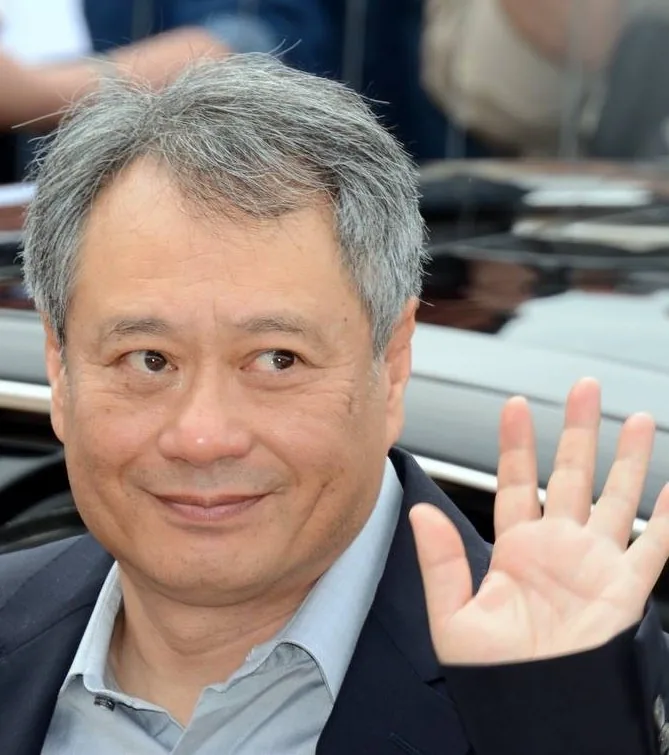
Ang Lee attending the Cannes Film Festival in 2013. Photo: Georges Biard. CC BY-SA 3.0 via Wikimedia Commons.
The year after he took over as chair, the Golden Horse Awards were hit by a storm. At the 55th Golden Horse Awards in 2018, documentary director Fu Yue's acceptance speech triggered cross-strait controversy, and China began boycotting the Golden Horse Awards the following year. For someone who had just poured his full energy into the festival, this was a difficult moment: he was protecting an award for Chinese-language cinema, and that award was being swept into a political current it could not control. As chair, Lee's position in later interviews was consistent. What he guarded was the independence of cinema itself: "Taiwan's side is free, and the film festival is open"; "speak of art as art, and hope there will be no other political factors interfering"; "I hope the Golden Horse Awards can remain very pure, and I ask everyone to give filmmakers respect."45 He did not choose any political camp. He only emphasized one thing again and again: let cinema be cinema. This is in fact the same posture as his life's work. He never tells stories from the position of a faction. He stands beside the person caught in the middle, unable to choose either side.
Over these years, the world has given him almost every honor it can give. In 2021, the British Academy of Film and Television Arts awarded him the BAFTA Fellowship. In 2025, the Directors Guild of America awarded him its Lifetime Achievement Award.46 On the DGA stage, the 71-year-old Lee first made a joke: "This is the first time I've worn reading glasses to give a speech. I guess that means it's time to receive a lifetime achievement award!" Then he said a line that gathered up an entire life.47
✦ "I was born in Taiwan and grew up in Taiwan. To stand on this stage today feels like a dream come true."47
Repression was not defeated, it just ceased to entangle
In 2016, around the time he finished filming Billy Lynn's Long Halftime Walk, Ang Lee finally articulated in an interview a theme that has permeated all of his films and his entire life. He said there are some things he has never defeated: such as repression, or his father; they are constantly mutating.48
But then he said the second half of the sentence, which is where true reconciliation occurs: he would still depict fathers in his films, but that sense of pressure was gone. The things that had entangled him for a lifetime were finally OK, and in the past.49
✦ "There are some things I have never defeated, such as repression, or my father; they are constantly mutating."50
That Brokeback Mountain was never moved away. That father—who opposed his filmmaking for a lifetime, yet told him to "charge forward wearing a helmet" on his deathbed—would not return to hear a son say thank you. What the world remembers are two Oscars, two Venice Golden Lions, and two Berlin Bears; it is the story of an waishengren (mainlander) boy becoming a globally recognized pride of Taiwan. But what Ang Lee has truly spent his life filming is the son standing on stage in 2006, having just lost his father, saying to the camera in Mandarin, "Thank you all for your concern." He endured six years in the kitchen and survived time after time the fear of "I won't make it," transforming everything that could not be suppressed into cinema.
Further Reading:
- Taiwanese Cinema — From Taiwanese-language films and social realism to the complete context of the Taiwan New Cinema movement and the contemporary era—the tradition that Ang Lee inherited and then expanded upon.
- Hou Hsiao-hsien — A standard-bearer of the same generation of Taiwan New Cinema, who chose an auteur path starkly different from Ang Lee's.
- Yang De-chang — A director who used a city to dissect modern Taiwanese anxiety; another peak of the Taiwan New Cinema movement.
- Tsai Ming-liang — A Taiwanese auteur director who pushes loneliness and slowness to the extreme, following a path opposite to Ang Lee's Hollywood trajectory.
- Andre Chiang — Another Taiwanese creator who gained fame within Western systems, asking the same question of "Who am I?" through Michelin-starred cuisine rather than a film lens.
Image Sources
- Hero: Portrait of Ang Lee, photographed by Sean Reynolds, CC BY 2.0, Wikimedia Commons
- In-text image 1: 2007 Hong Kong Asian Film Festival, photographed by WikiCantona, CC BY-SA 3.0, Wikimedia Commons
- In-text image 2: 2013 Cannes Film Festival, photographed by Georges Biard, CC BY-SA 3.0, Wikimedia Commons
References
- Ang Lee — Chinese Wikipedia — A comprehensive entry on Lee's life, filmography, 2006 Oscar win, and acceptance speech, including the Best Director record for Brokeback Mountain.↩
- Old Boy Ang Lee — Mirror Media (2016) — An in-depth profile and interview discussing how Lee's father, Li Sheng, told him shortly before death to keep making films, and how his father died two weeks later.↩
- Ang Lee — Chinese Wikipedia — States that Ang Lee was born on October 23, 1954, in Chaozhou Township, Pingtung County, and provides early family background.↩
- Ang Lee — English Wikipedia — Records the life of Lee's father Li Sheng, including his service as principal of Hualien Teachers' College, Tainan Second Senior High School, and Tainan First Senior High School, and his death in 2004.↩
- Ang Lee — Taiwan Cinema — The Ministry of Culture's official film database, recording Lee's two failed university entrance exams and his studies in the Department of Film and Drama at the National Arts School.↩
- Taiwan's Pride Ang Lee Wins the Oscar for Best Director with Life of Pi — Taiwanese American (2013) — A 2013 interview in which Lee discusses identifying with "the losing side" and projecting himself onto Taiwan's disadvantaged position.↩
- Ang Lee — NYU Tisch School of the Arts — NYU's official alumni page, recording Lee's bachelor's degree in theater from the University of Illinois and master's degree in film production from NYU.↩
- Ang Lee — English Wikipedia — Records that Lee was a classmate of Spike Lee at NYU and served as assistant director on Spike Lee's graduation film.↩
- Ang Lee — Taiwan Cinema — Records Lee's sequence of student works, including I Wish I Was by That Dim Lake at the Golden Harvest Awards and Fine Line winning NYU's Wasserman Award for Best Director.↩
- Ang Lee — English Wikipedia — Records the background of Lee's wife, Jane Lin, including her PhD in microbiology and work as a research professor of pathology.↩
- Ang Lee — Chinese Wikipedia — States that Lee married in New York in August 1983 and that his elder son, Haan Lee, was born in 1984.↩
- Ang Lee — Chinese Wikipedia — Quoted from Zhang Liangbei's A Ten-Year Dream of Cinema, in which Lee discusses fear and insecurity as creative motivation.↩
- The Collaboration Between Hsu Li-kong and Ang Lee — Jiemian News — Records the 1990 Government Information Office Excellent Screenplay Awards, with Pushing Hands winning first prize and The Wedding Banquet second prize, as well as Central Motion Picture Corporation's investment in Pushing Hands.↩
- The Collaboration Between Hsu Li-kong and Ang Lee — Jiemian News — Quotes Central Motion Picture Corporation vice president Hsu Li-kong's statement on the Pushing Hands budget: "NT$12 million. Not a cent more."↩
- Ang Lee — Chinese Wikipedia — States that Lee's younger son, Mason Lee, was born in 1990 and later became an actor.↩
- Ang Lee — Chinese Wikipedia — Records the awards for Pushing Hands (1991), including Best Film at the Asia-Pacific Film Festival, Best New Director at Amiens, and Sihung Lung's Golden Horse Award for Best Actor.↩
- Ang Lee — English Wikipedia — Records The Wedding Banquet (1993) winning the Berlin Golden Bear jointly with Women from the Lake of Scented Souls, its Oscar nomination for Best Foreign Language Film, and five Golden Horse Awards.↩
- Ang Lee — Chinese Wikipedia — Records the production detail that the opening cooking long take in Eat Drink Man Woman used a real chef as a hand double and took more than a week to shoot.↩
- Ang Lee — English Wikipedia — Records Eat Drink Man Woman's Oscar nomination for Best Foreign Language Film and its Hollywood remake as Tortilla Soup (2001).↩
- Ang Lee — English Wikipedia — Records that Sense and Sensibility (1995) was written by and starred Emma Thompson, who thereby became the only person in Oscar history to win for both acting and screenwriting.↩
- Ang Lee — Chinese Wikipedia — Records Sense and Sensibility's seven Oscar nominations, its Berlin Golden Bear, and Lee becoming the only director to win the Golden Bear twice.↩
- Ang Lee — English Wikipedia — Records The Ice Storm (1997) winning Best Screenplay at Cannes, the long collaboration with screenwriter James Schamus, and the origins of Focus Features.↩
- Ang Lee — English Wikipedia — Records the commercial failure of Ride with the Devil (1999), with North American box office of about US$630,000.↩
- Golden Horse Film Academy Class Record — Golden Horse Executive Committee — Lee discusses in a Golden Horse Film Academy class how the security of directing must be exchanged through risk.↩
- Crouching Tiger, Hidden Dragon — Box Office Mojo — Box-office data page that also lists key creative personnel including Chow Yun-fat, Michelle Yeoh, Zhang Ziyi, and Chang Chen.↩
- The Academy Awards — Oscars.org — Official Academy data showing Crouching Tiger, Hidden Dragon's ten nominations and four wins at the 73rd Academy Awards: Foreign Language Film, Cinematography, Art Direction, and Score.↩
- Crouching Tiger, Hidden Dragon — Box Office Mojo — Records box office of about US$128 million in North America and US$213 million worldwide, and its North American foreign-language box-office record.↩
- Ang Lee — English Wikipedia — Records Hulk (2003)'s production budget of about US$137 million, financial underperformance, and polarized critical reception.↩
- Old Boy Ang Lee — Mirror Media (2016) — Quotes Lee's father Li Sheng telling him to "charge forward wearing a steel helmet, go make films" and "you are only 49."↩
- Ang Lee — English Wikipedia — Records that Lee's father, Li Sheng, died on February 15, 2004.↩
- The Academy Awards — Oscars.org — Official Academy data showing Brokeback Mountain's eight nominations and three wins at the 78th Academy Awards, with Lee as the first Asian Best Director winner.↩
- Ang Lee — English Wikipedia — Records Brokeback Mountain's Venice Golden Lion and the controversy over its upset loss to Crash for Best Picture.↩
- Ang Lee — Chinese Wikipedia — Records Lee's 2006 Oscar acceptance speech, in which he quoted a line from the film and offered greetings in Mandarin.↩
- Taiwan Panorama Ang Lee Feature (2006) — A 2006 interview in which Lee says that as a Taiwanese director he must prove himself and endure no matter how hard it gets.↩
- Ang Lee — Chinese Wikipedia — Records Lust, Caution (2007)'s Venice Golden Lion, seven Golden Horse Awards, and cast.↩
- Ang Lee — English Wikipedia — Records Lust, Caution's NC-17 rating in the United States and Tang Wei's temporary ban in China.↩
- Taiwan's Pride Ang Lee Wins the Oscar for Best Director with Life of Pi — Taiwanese American (2013) — Records that Life of Pi lead actor Suraj Sharma was a nonprofessional selected from 3,000 people and discusses the digital tiger.↩
- The Academy Awards — Oscars.org — Official Academy data showing Life of Pi's eleven nominations and four wins at the 85th Academy Awards, including Lee's second Best Director win.↩
- Life of Pi VFX House Rhythm & Hues Bankruptcy — Deadline (2013) — Reports Rhythm & Hues' bankruptcy before the film's Oscar wins, the interruption of the acceptance speech, and protests outside the ceremony.↩
- Ang Lee — English Wikipedia — Records Billy Lynn's Long Halftime Walk (2016) as the first 120fps narrative feature and its box-office underperformance.↩
- Ang Lee — Chinese Wikipedia — Records that Lee's younger son Mason Lee played the Taiwanese American soldier Foo in Billy Lynn's Long Halftime Walk.↩
- Ang Lee — English Wikipedia — Records Gemini Man (2019)'s digital de-aging technology and Paramount's estimated loss of about US$110 million.↩
- Golden Horse Film Academy Class Record — Golden Horse Executive Committee — Lee says in a Golden Horse Film Academy class that "when I feel very safe, that is when I am most uneasy."↩
- Golden Horse Awards Executive Committee Official Website — Golden Horse Executive Committee — The official Golden Horse website, recording Lee's 2018 appointment as executive committee chair, the founding of the Film Masterclass, his 2022 departure, and his 2023 role as jury president.↩
- Ang Lee on the Golden Horse Awards and Politics — Mirror Media (2021) — Collects Lee's remarks as Golden Horse chair on the need for the festival to remain independent of politics.↩
- Ang Lee to Receive DGA Lifetime Achievement Award — DGA — Directors Guild of America official press release announcing its Lifetime Achievement Award for Ang Lee.↩
- Ang Lee Receives DGA Lifetime Achievement Award — Global Views Monthly (2025) — Reports Lee's 2025 DGA acceptance speech, including his line about being born and raised in Taiwan and his joke about reading glasses.↩2
- Old Boy Ang Lee — Mirror Media (2016) — Includes Lee's comments on repression and his father as transforming but never defeated themes at the core of his work.↩
- Old Boy Ang Lee — Mirror Media (2016) — Includes Lee's 2016 reflections on still describing his father, but no longer feeling the pressure.↩
- Taiwan Panorama Ang Lee Feature (2013) — A 2013 Taiwan Panorama interview that outlines Lee's creative career and central cross-cultural concerns.↩