
Culture
· The fusion of diverse ethnic cultures and local characteristics 112 articles Updated 2026-09-05In 2023, Stanford anthropologist Jennifer Clark arrived in Taiwan with an ambitious research project: to spend three years identifying the "core features" of Taiwanese culture. She attended temple festivals in Taipei, documented puppetry performances in Chiayi, delved deep into tribal ceremonies in Hualien, and compiled twelve thick volumes of field notes. Three years later, she published a groundbreaking paper in the American Journal of Anthropology that shocked the academic world: "The Feature of No Features: Taiwan's Cultural Paradox."
Featured
- Standard article2026-04
Taiwan's Religious Beliefs: An Empire of Faith Grown from Fear
The island with the highest density of temples in the world and ranked second in Asia for religious freedom: the historical origins of its two largest faiths—King Ye (Wangye) and Mazu—are both tied to plague and death. From 17th-century military immigrants carrying deity statues across the Black Water Gap to a score of 94 in the 2025 Freedom Report; from the 1953 ban on I-Kuan Tao to its legalization as the first faith after the 1987 lifting of martial law, to the Four Great Buddhist Mountains and the Presbyterian Church each taking their own path in church-state relations—Taiwan's faith is not in scriptures, but in the incense at the corner.
45 ~22 min - Standard article2026-07
Taiwanese Childhood English Names: Mary, Kevin, and the Naming Authority of Cram-School Teachers
From turning pages in a cram school to passport romanization to the Starbucks counter, that name was never one you chose. A history of naming that runs from Hess in 1983 and Sesame Street English's 1987 slogan, "NO CHINESE, ENGLISH PLEASE," through the Legislative Yuan's 2024 amendment allowing Indigenous names to appear alone, bringing the question back to that 30-second pause.
38 ~18 min - Standard article2026-07
Archipelago Thinking: Placing Taiwan Back on the Map of the Malay World
Taiwan is not only an isolated island on the margins of China; it is also the northeastern edge of the Malay world, the homeland of Austronesian languages, and the starting point of Pacific dispersal. Rotate the map 30 degrees southward, and you will see another coordinate system that is entirely valid yet long overlooked.
26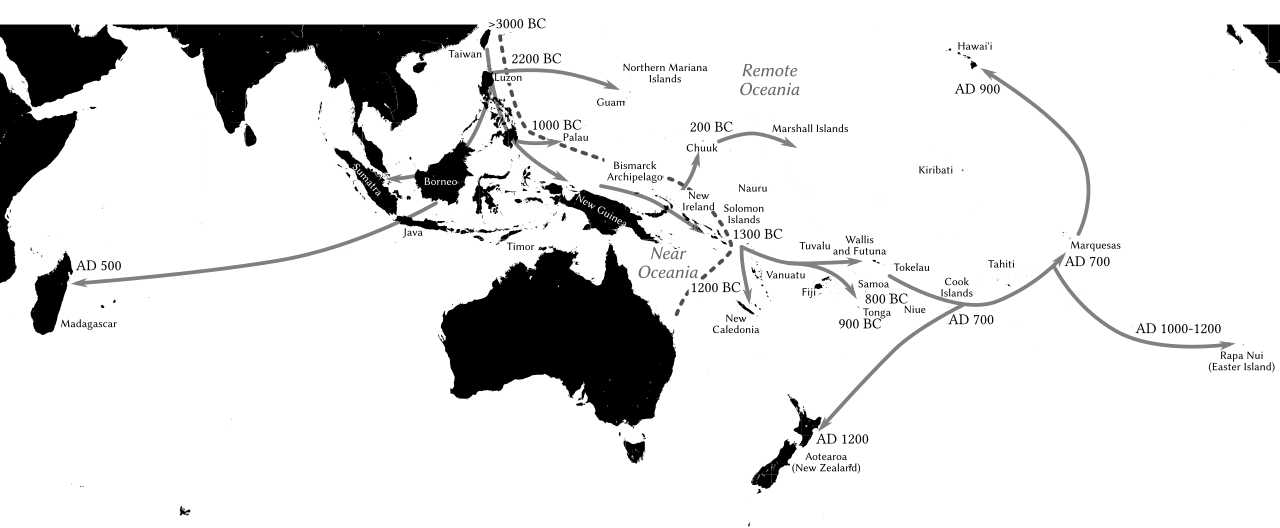
Ethnic Cultures 13
- Standard article
Linguistic Diversity and Mother-Tongue Culture
From Taiwanese Hokkien to Hakka and Indigenous languages, how Taiwan preserves and develops mother-tongue cultures in a multilingual society
- Evolving · community
The Tatara Is Not Just a Boat: Lanyu’s Technology of Writing Forest and Sea Together
The Lanyu outrigger canoe is not a craft artifact that can be isolated from tribal culture. It integrates tree species identification, plank joining, fishing group organization, the flying fish season, rituals, kinship identity, and maritime navigation into a single system of knowledge. This article traces the materials and structure of the Tatara, the training of canoe builders, launch rituals, and the protection of traditional intellectual property, extending to the 2026 "Lanyu–Batan 300-Year First Voyage," to explain how the outrigger canoe continues to be used and reinterpreted amidst tourism, cultural heritage, rights claims, and cross-national Austronesian exchange.
- Evolving · community
Taiwan Indigenous Weaving Culture: Weaving Family Memory Back onto the Body
From Atayal ramie and Saisiyat century-old garments to Paiwan interlocking-weave techniques, this article explores how Taiwan Indigenous weaving connects women’s lives, family patterns, ethnic identity, ritual order, and contemporary cultural revitalization, while also examining the responsibilities and limitations of museum collections, tribal transmission, and cultural heritage systems in preserving traditional crafts.
- Evolving · community
Indigenous Names: From Personal Names to "Dou" and "Feng," How Names Record Relationships
Indigenous names are not composed solely of personal names; they may also include patronymics/matronymics, clan names, house names, and titles that change with life stages. Rare Han surnames among the Saisiyat, such as "Dou" and "Feng," preserve clues where clan names, historical registration, and family memory intersect.
- Standard article
Hakka Culture and Language
In 1988, a group of people marched with a photo of Sun Yat-sen wearing a mask, fighting for the right to speak their mother tongue — they won, but the language is still disappearing
- Evolving · community
The Pangcah (Amis) Age-Set System: A Tribal Institution That Names Eras
From joint training in cohorts of three to five years old to age-sets named after "computers," the "Republic of China" era, and local events, the Pangcah entrust public work, ritual order, and historical memory to a system that rewrites itself with each generation. As this institution moves into urban centers, its transmission faces tests of language loss and performative commodification.
- Evolving · community
The Rukai Lily: A Flower as Identity, Not Decoration
In Wutai, Pingtung, the lily was not a flower everyone could wear: men earned warrior status through hunting, while women obtained wearing rights through virtue, marriage, or authorization rituals. From noble authorization and gift exchanges of millet and pork to the seven villages reinterpreting the ceremony, this flower preserves not purity, but who has the right to be seen by the tribe.
- Evolving · community
After Facial Tattoos Were Banned: How Weaving Brought gaga Back to the Tribe
Facial tattoos were once the mark of adulthood for the Atayal people, but were banned in the early 20th century; from the root-seeking journey of Yu-Ma Da-Lu and tribal weavers, we see how culture grows back into daily life on the edge of extinction.
- Standard article
Bunun Millet Seasonal Rituals: When Millet Returns to the Fields, Time Returns to the Village
The Bunun millet rituals are not performances staged after harvest, but a lifecycle of time—from sowing and weeding to storage—that moves with the crop. As millet returns to the fields, the fragmented memory of continuity begins to reconnect.
- Evolving · community
Hla'alua: From "Southern Tsou" to Their Own Name, What the Sacred Shell Festival Preserves
On June 26, 2014, the Hla'alua became Taiwan's 15th officially recognized indigenous group. This was not a severing of ties with the Tsou, but a reclamation of a name once merged into another, returning it to those who use it, through the Four Villages of Taoyuan, the Sacred Shell Festival, and an endangered language.
- Evolving · community
The Kavalan: Banana Fiber and a Name Called Back
From the river-sea settlements of the Lanyang Plain, the 1878 Kalawan War, to the 2002 official recognition, the Kavalan have woven their erased name back into family, community, and public memory through language, rituals, coastal life, and banana fiber weaving. This article distinguishes between official recognition, ethnic identity, and cultural revitalization, highlighting that the issues of identity and heritage persist even after the name was restored.
- Standard article
The Tsou Mayasvi: The Fire of Kuba, Not a Reenactment of War
Every year between Dapan and Tebuina on Alishan, the Tsou people use Mayasvi to welcome spirits, sing, and circle the sacred house, transforming war memories into the order of communal life. The festival is not a tourist spectacle: its true core lies in the kuba, a lodge still maintained, used, and regulated by the tribe.
- Standard article
Taiwan Floral Fabric
From a Japanese-era factory product to a symbol of local culture: the identity journey of Taiwan floral fabric
Craft & Aesthetics 12
- Standard article
Taiwan Tea Ceremony and Aesthetic Living
A bug's bite producing honey fragrance, a democratic movement held in a Japanese wooden house, a pearl milk tea conquering global markets — how Taiwan used 150 years to transform tea from colonial export to a complete philosophy of living
- Standard article
Taiwan Soundscape: Garbage Trucks Playing Classical Music, MRT Birdsongs, and an Island Often Heard but Rarely Listened To
In the same year, Taipei Metro invited Summer Lei and CinCin Lee to turn arrival music into art, while removing the melody from its door-closing warning tone and changing it back to birdsong. Sound was aestheticized and functionalized at once. The sounds Taiwan seeks to eliminate through the Noise Control Act are, in fact, the landmarks by which we recognize that 'this is home.' A question from a master’s student in soundscape studies: understanding Taiwan can begin by asking, 'What sounds have we become accustomed to ignoring?'
- Evolving · community
The Taiwan Rice Cooker: How a Single Switch Cooked Up Half a Century of Daily Life
Introduced by Crown in 1958 and the Tatung TAC-6 in 1960, the rice cooker evolved from Japanese technology into a distinct Taiwanese artifact shaped by limited power, local rice varieties, and steaming habits. From 5–10 amp household meters and 230°C heating settings to the red pots of dowries, it became a versatile tool for cooking rice and steaming dishes, redistributing family time and following Taiwanese people overseas.
- Standard article
Taiwanese Shadow Puppetry: From Mituo, the 'Shadow Puppet Cradle,' to Kominka's Saru-Kani Gassen
The roots of Taiwanese shadow puppetry are in Mituo, Kaohsiung — legend says that Master A-wan, who came with Koxinga 300 years ago, left the craft in this small town. In 1937, the Kominka movement forced masters to perform Saru-Kani Gassen in Japanese, and the troupe was selected as the 'First Service Corps' and survived to this day. The Donghua Shadow Puppet Troupe, six generations strong, is the oldest family puppet theater still performing in Taiwan.
- Evolving · community
Taiwan Lacquerware: Polishing the Everyday, Layer by Layer
Lacquerware was once a staple in Taiwanese households as tea trays, cake stands, and gift items, and served as an export industry to Japan in the 1970s. After plastics replaced it, what truly disappeared was not just the objects, but an entire body of life knowledge connecting lacquer trees, lacquer refining, application, and repair. From Penglai lacquer to Puli natural lacquer, this craft, once close to daily life, is now re-engaging with material autonomy and the transmission of skills.
- Standard article
Taiwanese Iron Window Grilles: How a Security Grill Wields a Household's Autobiography
From the 1950s to the 1970s, iron window grilles spread alongside Taiwan's residential and steel supply. Originally for theft prevention, they later left the owner's profession, faith, travels, and family memories on the street facade. From the 1958 Legislative Yuan's 48-panel grille, to the residential grids of Beitun, Taichung, and the neighborhood contexts of Lukang and Anping, these iron pieces reveal how old houses simultaneously protect life and display it to the street and subsequent readers, illuminating the tension between preservation and use.
- Standard article
Taiwanese Glove Puppetry (Budaixi): From Temple-Square Bans to the Palm-Held Universe of Thunderbolt Fantasy
On March 2, 1970, Huang Jun-hsiung's Shih Yen-wen brought Taiwan's factories to a halt and emptied classrooms, scoring a 97% TV rating; four years later the government banned it on grounds of 'disrupting normal work schedules.' This palm-held art, having endured Kominka suppression, TV bans, and the videotape revolution, finally cracked open the global anime market with Thunderbolt Fantasy.
- Evolving · community
Blue-and-White Slippers: How a Military Rubber Sandal Became Part of Daily Life in Taiwan
In the 1950s, the Joint Logistics General Department Rubber Factory converted military technology into civilian slippers; later, the private sector popularized them through low-cost materials and mechanized production. The blue-and-white slipper is not just a symbol of Taiwanese flavor; it also wears the post-war material scarcity, industrial transformation, and cultural reinterpretation on a single pair of shoes.
- Evolving · community
Taiwanese Stamps: How a Small Piece of Paper Records Regime Change and Island Memory
In 1888, Liu Ming-chuan established the official postal headquarters in Taipei; from then on, stamps did more than pay for letters—they captured images of the island’s regimes, wars, industries, and local lives. From the Large Dragon stamps to Taiwan Post Office covers, and from flora and fauna to indigenous cultural stamps, the small space preserves not the complete truth, but the Taiwan each era chose to make visible.
- Evolving · community
The Qiezhai Bag: From Houpi Shiku to Paris, How a Commoner’s Tote Was Recognized by the World
The 500 Qiezhai bag gift packs for the 2024 Paris Cultural Olympiad were distributed within an hour. Originating from the bulrushes of Houpi, Tainan, and Shiku, and evolving through nylon mesh and design translation, what was truly brought to the international stage was not whitewashed nostalgia, but a recognizable history of civilian labor.
- Evolving · community
A Century of Clouds in the Palm: The Evolution of Glove Puppetry from Huang Hai-dai's Wuchou Yuan to the TV Phenomenon of *Thunderbolt Fantasy*
From traditional glove puppet troupes on the streets of Huwei, Yunlin, to the mass-phenomenon television series *The Great Confucian Scholar of Yunzhou*, and its cross-media rebirth through modern special effects and digital puppetry, how did the Huang Hai-dai family use their skilled hands to sustain Taiwan's popular entertainment and cultural memory for decades?
- Standard article
Taiwan Incense-Making Culture and the Hometown of Xiangjiao
From the century-old xiangjiao craft of Yunxiao Community in Chiayi to the island-wide incense-making industry—an ancient trade rooted in devotion, handcraft, and perseverance
Internet Culture 11
- Standard article
Wretch: Picked‑up Computers, Sold‑off Youth, and a Disappearance No One Mourned
In 1999 at NCTU dorms, six computer‑science students cobbled together a BBS called “Wretch” from the department’s discarded equipment. It grew into Taiwan’s largest blog platform and the cradle of the first generation of creators; in March 2008 it even topped Yahoo to become the top site in Taiwan. Then Yahoo bought it, and on the night of 26 December 2013 it was deleted along with a generation’s photo albums; today most people can only retrieve empty, unopenable albums. It is remembered as youth, yet that youth was from the start stored on a server whose power could be turned off by someone else.
- Evolving · community
Taiwan VTubers: Beyond the "V-Skin," Who is Bringing Virtual Idols into Reality?
Since Yahoo TV launched Huni in 2017, Taiwan's VTuber scene has grown from corporate content experiments to over 3,000 debuts by 2025. It allows figures like Miss Lin from Kaohsiung to conduct political live streams without showing her face, and enables public broadcasters to integrate characters into education; meanwhile, local creators navigate the space between established Japanese industry chains and Taiwanese audience interaction habits.
- Standard article
Culinary Class Wars in Taiwan: A Netflix Korean Variety Show Subjecting Seven Consumer Industries to Taste Stress Tests within 16 Months
In September 2024, the premiere week of Netflix's "Culinary Class Wars" captured the top viewership in Taiwan. Over the following 16 months, nine Korean chefs from the show extended their reach into seven seemingly unrelated consumer industries—including convenience store ready-to-eat meals, bubble tea, fast food chains, five-star hotel buffets, delivery platforms, Korean food chains, and even the Galaxy Z foldable phone—through collaborations, guest appearances, and endorsements. Notably, the bubble tea brand "Shi-Sheng" (十盛), endorsed by Kim Tae-seong, closed on 2025-12-26 after 20 months, serving as Taiwan's first reverse test of "Korean variety show chef endorsements."
- Evolving · community
Taiwan Schoolyard Rhymes: Cross-Generational Humor from "ABC Dog Bites Pig" to "Alibaba Farts"
Exploring decades of oral culture in Taiwan's schools, from the language-blending "ABC Dog Bites Pig" to the surreal chain rhymes of "Grandma's Underwear" and "Alibaba," analyzing how these nursery rhymes carry children's collective memory and rebellious spirit.
- Standard article
Taiwan’s YouTuber Industry and Culture: From Tsai A-ga to Chi Hsuan, the Digital Cultural Evolution of an Island
How did a creator who began with magic become Taiwan's first YouTuber with ten million subscribers? Behind this milestone lies the full story of Taiwan's online video culture evolving from local entertainment into international cultural export
- Evolving · community
PIXNET: How a Platform Preserves Taiwanese Daily Life into Public Memory
From a National Chiao Tung University photo album to a Taiwan lifestyle content platform, how does PIXNET continuously negotiate between creator freedom, commercialization, community governance, and digital memory preservation?
- Evolving · community
Taiwan Bar: From a Seventh-Grader's Animation Dream to the Second Half of Digital Education
On September 1, 2014, the first episode of "Animated History of Taiwan" went live, triggering a nationwide historical craze led by a drunken black bear. From viral success and 20 million TWD in debt to transforming into "Great Catch Academy," Taiwan Bar has spent ten years redefining the commercial boundaries of "knowledge translation" and cultural sovereignty amidst the rift between entertainment and education.
- Evolving · community
Taiwan Memes: Thirty Years of Cultural Evolution from PTT Users to a Social Safety Valve
Taiwanese memes are more than just internet jokes; they are a collective creative experiment spanning thirty years, transforming social trauma and political anxiety into shared cultural symbols.
- Evolving · community
Ah Gui Animation: How a Flash Character Entered Taiwan’s Computer Classes, Records, and Public Health Campaigns
In 1999, Chang Jung-kuei and Chunshuitang created Ah Gui, a round-faced character with a distinctive voice, using Flash. From forwarded short videos, Ah Gui expanded into records, films, Japanese websites, and SARS public health campaigns. The question Ah Gui leaves us is: when a website stops updating, what keeps an online character alive in Taiwan’s memory?
- Standard article
Taiwan Anime & Manga Culture
'Doraemon,' 'Slam Dunk,' and 'Sailor Moon' were the shared language of Taiwanese teens in the 1980s and '90s; Fancy Frontier has held over 40 editions since 1999, drawing over 100,000 attendees per event; doujinshi and cosplay nurtured the creators of 'Detention' and 'Devotion'—Taiwan's anime and manga culture is not an imitation of imported entertainment, but the shared memory and creative soil of two generations.
- Evolving · community
The 8 O'Clock Drama: A Matchstick Ignites the Cult and Nostalgia of Taiwan's Living Rooms
From the melodramatic suffering of 1990s Qiong Yao to the "Pili Fire" memes of the 2000s, 8 o'clock dramas are not just background noise for Taiwanese people, but an industrial miracle of "filming and broadcasting simultaneously" that syncs with reality.
Festivals & Rites 9
- Standard article
Taiwanese Weddings, Funerals, and Life Ceremonies
From the Twelve Betrothal Gifts to the culture of outdoor banquet feasts, explore how Taiwanese life ceremonies find balance between tradition and modernity
- Standard article
Sky Lanterns: A Signal of Peace in 1820, 326 Kilograms of Mountain Waste in 2019 — The Same Pingxi People Carrying Two Identities
In the 1820s, the Hu family released the first sky lantern in Shifenliao as a signal of peace. Two hundred years later, on the Lantern Festival of 2019, American volunteers collected 326 kilograms of sky lantern debris along the Pingxi railway in just two hours. Earning, paying, cleaning — the chairman of the Sky Lantern Association is surnamed Hu, and the victim whose house burned down is also surnamed Hu. Eighty-eight-year-old Mama Cai, a vendor on the Old Street, and Chen Chien-chih of the Keelung River Guardian Alliance drink from the same river. In 2025, the autonomous ordinance was passed on its third reading. The people of Pingxi are now trying a fourth path of festival transformation.
- Standard article
Siù-á: A Sweet Plate of Lunar New Year Treats, and the Blessing That Doesn’t Require Everything to Be Delicious
From the Shengren tang (peanut brittle) passed down since the Xianfeng era of the Qing Dynasty, to the date-less cunzao, to the sesame malt treats on the altar for the Jade Emperor’s birthday on the first day of the first lunar month, Taiwan’s Lunar New Year snacks embed homophonic blessings into peanuts, glutinous rice, and sugar frost. Today, the candy box faces individual taste preferences, calorie counts, and food safety concerns. What tradition leaves behind is not a mandatory checklist of must-eats, but a table that allows family members to continue sharing, selecting, and discussing.
- Evolving · community
Full Moon Customs: From "Calling the Eagle" to Celebration Gifts, a Century of Evolution in Taiwan's Childrearing Culture
In 2026 Taiwan, full moon gifts have evolved into exquisite French cakes and charitable cookies, yet they hide a dramatic cultural history of "snatching babies from eagles." From head-shaving rituals and "strengthening the courage" to the mysterious Hakka "Calling the Eagle," this is the story of Taiwan's transition from family-oriented to social-oriented parenting.
- Evolving · community
The Taiwan Lantern Festival: A National-Level Festival Stage That Moves
Starting from Taipei's Lantern Festival on the Lantern Festival in 1990, the Taiwan Lantern Festival has evolved through rotating host cities, local creativity, and the integration of digital technology into a national-level festival combining folklore, art, tourism, and public governance. It does more than light up a main lantern in the night; it brings the landscapes, industries, transportation, and collective imagination of each city to the entire island, leaving behind governance challenges on how large-scale cultural events negotiate with daily life.
- Standard article
Common Taiwanese Names
Shout 'Shu-Fen' or 'Jia-Hao' on a Taiwanese street and watch how many heads turn. These names are a cross-section of Taiwanese society, recording each generation's collective imagination of what a good life looks like.
- Evolving · community
Fireworks, Soy Sauce, and the Full Moon: The Evolution and Collective Memory of Taiwan's Mid-Autumn BBQ Tradition
Many believe Taiwan's Mid-Autumn BBQ tradition was caused by a soy sauce commercial; however, newspaper archives from the 1980s reveal that a slump in barbecue grill exports from Hsinchu in 1982 actually ignited the trend.
- Standard article
Dragon Boat Festival: A Toolkit Ancient People Used to Fight Death, Which Taiwanese Turned into an Annual Reunion
In the 2025 Comprehensive Assessment Program for Junior High School Students, one question asked fifteen-year-old students to design an experiment refuting the superstition of “balancing an egg at Dragon Boat Festival.” That scene condensed the secret of the entire holiday: mugwort, realgar wine, noon water, and the upright egg were all originally tools ancient people used to fight plague and death. Science has punctured their medicinal claims one by one, but Dragon Boat Festival in Taiwan is more alive than ever. The medicine has expired, yet Taiwanese still take it every year.
- Evolving · community
Taiwan's Homophonic Taboo Culture: Why Does "Four" Cause Society to Skip Floors?
From the absence of the 4th floor in hospitals to the astronomical bidding for license plate "8888," Taiwan's sensitivity to homophones is among the highest in the world.
Publishing & Media 6
- Standard article
Taiwanese Magazines: From Free China to Benesse Kids, a Reading History of Pages Turned and Swiped Past
In 1960, Lei Chen was imprisoned for ten years because of Free China; in 2024, Benesse Kids, which had accompanied 1.83 million families for 35 years, ended print subscriptions; in 2025, the Chinese edition of Reader's Digest closed after 60 years in print. What Taiwanese readers once turned page by page is now swiped past one page at a time.
- Evolving · community
National Central Library: How a Library Preserves an Island’s Publications as National Memory
The National Central Library is more than a quiet reading room; it is a public infrastructure for Taiwan’s publications, covering issuance, legal deposit, cataloging, preservation, and digital reuse. This article explains how a national library transforms seemingly ephemeral daily publishing acts into verifiable collective memory, addressing the tensions between preservation, access, copyright, and digital formats.
- Evolving · community
Taiwan's Independent Bookstore Culture: How a Book Becomes a Neighborhood's Living Room
From the history of Chongqing South Road, Wenluotin, and Tangshan Bookstore to the micro-bookstores of Guanshan, Pinglin, Changbin, and Penghu, this article explores how Taiwan's independent bookstores have reorganized curation, local memory, migrant reading, gender issues, Indigenous culture, and community relations into public spaces amidst discount wars, digital reading, and rent pressures, while examining the real costs of subsidies, logistics, labor, and local revitalization.
- Evolving · community
Half a Century of Writing Taiwan for the World: From _Guanghua Pictorial_ to Taiwan Panorama Online
From its 1976 founding and renaming to cross-language publishing, the digital database, and multilingual website, _Taiwan Panorama_ has continuously used images, reports, and translation to explain Taiwan to the world while preserving materials for Taiwan to reflect on its own era.
- Standard article
Taiwanese Variety Shows: From *Group Star Meeting* to *Kangxi Lai Le*—A Social Stage
In 1962, *Group Star Meeting* brought the cabaret into the living room; Taiwanese variety shows subsequently not only entertained but also began creating stars and manufacturing catchphrases, providing a shared topic for the family living room. It expanded to become a model for the Chinese-speaking world during the cable TV era before being forced to rewrite itself from a studio show to a new language on mass platforms in the streaming and short video era.
- Standard article
Renjian Magazine
47 issues, four years, a quiet revolution launched through photography and writing: the starting point of Taiwanese reportage literature
Religion & Folk Customs 5
- Evolving · community
The Dajia Matsu Procession: A Million-Person Moving Religious Spectacle and Civic Society Experiment
The annual Dajia Matsu pilgrimage, which sweeps across Taiwan in the third lunar month, is not only a folk festival hailed by Discovery as one of the world's top three religious events, but also a contemporary sociological phenomenon intertwining historical power, ethnic memory, and a robust network of civic mutual aid.
- Evolving · community
Yanshui Beehive Fireworks: How a City of Fireworks Preserves the Memory of Plague on Yanshui Streets
Yanshui Beehive Fireworks are not merely a spectacular lantern festival display, but a folk tradition sustained by the worship of Guan Di, the craftsmanship of firework structures, local collaboration, and public safety protocols.
- Standard article
Taiwan Temple Festivals and Performance Troupe Culture: The Dual Movement of Religious Density and Local Innovation
Taiwan's 12,000 temples form the world's highest density of religious sites. The Dajia Mazu pilgrimage covers about 340 kilometers over nine days and eight nights, while Baishatun Mazu's route is decided by the palanquin itself; the Eight Generals were affected by the temple-reorganization measures of the Kominka imperialization movement in the late Japanese colonial period, beginning in 1937, then revived after the war and spread across Taiwan; Techno Prince Nezha reshaped divine imagery through modern electronic dance music in the early 2000s. The tension within performance troupe culture: the Xinzhuang system of Guanjiang Shou and the Tainan system of the Eight Generals coexist, while the four major folk customs (Dajia Mazu/Baishatun Mazu/Donggang King Boat Festival/Yanshui Beehive Fireworks/Toucheng Ghost Grappling/Keelung Ghost Festival) each have distinctive local features. Temple-festival density is not only a religious phenomenon, but also the most concrete expression of Taiwan's local identity.
- Evolving · community
Bwa-Chiao: Hearing the Voice of the Gods Behind a 50% Probability
From the dedication of Chiayi's *zhutou-chiao* (bamboo block) artisan Huang Yi-hsun to the 3-million-dollar legend of 20 consecutive "sacred" results at Pingtung's Citian Temple, exploring the probability and warmth of communication between Taiwan and the divine.
- Evolving · community
The Legend of Mazu and Da Dao Gong: Taiwan's Most Romantic Weather Forecast
"Da Dao Gong's wind, Mazu's rain" is more than a weather proverb; it hides a tale of love and resentment between deities.
Language & Script 5
- Standard article
Zhuyin Phonetic Symbols: Taiwan's Unique Textual Code
The only phonetic system still used daily worldwide—how Zhuyin evolved from a century-old ancient character simplification scheme into a shared code for 23 million people
- Standard article
Taiwanese Spoken Code: From "Excuse Me" to "Pronouncing D as 'Zhu'", How Four Everyday Expressions Shape Identity
In Taiwan, "Excuse me" can precede a real apology; "Huh?" may seem like a lack of understanding but is a cross-linguistic dialogue repair mechanism; @ is called "Little Mouse," and D is pronounced "Zhu/Chu" when swapping exam papers. These four expressions embed politeness, misunderstanding, email syntax, and Taiwanese phonology into daily life, reminding us that a "Taiwanese accent" is not just a set of pronunciations, but a recognition method left by people living together.
- Evolving · community
Banana Patua: A Single Phrase of Syllables Hiding the Memories of Southern Taiwan's Tribes
Around 1930, Senai Keirun recorded Taiwanese Hokkien and Qiongjiao Patua on the same record; in 2014, elders in Sichongxi still used it for private conversations. Banana Patua is not about writing simpler articles, but rather a way for different tribes in southern Taiwan to transform Hokkien and Taivoan into a code that outsiders cannot understand but insiders can recognize; its true origins remain caught between anti-Japanese legends, cross-village interactions, and the memories of elders.
- Standard article
Taiwan's Indigenous Language Revitalization Movement
The Thao people of Taiwan have only 4 remaining fluent speakers, yet Taiwan has become one of the world's most intensive language revitalization laboratories. From the 2017 Indigenous Languages Development Act to digital language platforms, a quiet rescue operation is accelerating.
- Standard article
The Evolution of Taiwan Mandarin — Four Hundred Years of Linguistic Stratigraphy
How many layers of history are hidden in a single bento? Follow the journey of this word and explore the language that has naturally grown on this island over four centuries.
Arts Spaces & Districts 4
- Evolving · community
National Taiwan Museum: From Imperial Showcase to Community Co-Creation, Who Has the Right to Display Taiwan?
Established in 1908 to commemorate the completion of the Taiwan Railway’s trunk line and completed in 1915, the National Taiwan Museum once curated Taiwan into a specimen for colonial observation. A century later, it preserves natural history, camphor, financial, and railway memories across four heritage sites, while beginning to co-curate with Indigenous source communities. What this museum truly preserves is not merely objects, but Taiwan’s reclamation of the right to tell its own story.
- Standard article
National Palace Museum
It is the heaviest 'baggage' on this island, and also the most ethereal 'digital dreamscape.' From wooden crates amid the flames of war to pixels under AI computing power, the museum is trying to define what 'Taiwan's Palace Museum' means — between Taipei's Waishuangxi and Chiayi's Taibao.
- Standard article
Taiwan Street Art and Graffiti Culture
From underground graffiti to legal murals, how city walls became a creative stage for Taiwanese artists
- Standard article
Development of Cultural and Creative Parks in Taiwan
From old-building revitalization to creative clusters: the development trajectory and innovative models of Taiwan's cultural and creative parks
Festivals and Customs 2
- Standard article
Lunar July: From Collective Dread of 'The Gates of Hell Opening' to the Gentle Reconciliation of an Island
In the midsummer of 2026, long tables are still set up on Taiwan streets. From the firelight in Wanghai Lane to the sweat on the lonely scaffold, from the 'Tiger Gate Opening' at Xinzhu City God Temple to the might of Minxiong Fire Cremation Shrine—Lunar July is more than a matter of taboo; it is a narrative of coexistence, memory, and an island crossing the boundary between Yin and Yang.
- Standard article
The Ghost Festival: From the Fear of Solitary Souls to a Collective Reconciliation on an Island
In Taiwan, the Ghost Festival is more than just reverence for spirits; it is a survival record of colonization, conflict, and ethnic integration. From the bloody reconciliation in Keelung to the extreme 'Ghost Seizing' (Qianggu) in Toudeng, this festival reveals how Taiwanese people transformed fear into a social treaty of peace.
Regional Specialties 2
- Standard article
Taiwanese Sensibility: Taiwanese Aesthetics Through Korean Eyes
Two Kaohsiung natives spent ten years photographing two thousand types of decorative iron window grilles; Koreans spent five years turning them into a cultural phenomenon. How did “대만감성” make Taiwan's everyday streetscapes into one of Asia's most captivating aesthetic symbols?
- Evolving · community
Pinball: From Sausage Stalls to Mechanical Memory
Starting from the wooden bead tables next to sausage stalls in the 1960s, this article traces how Taiwan’s night markets combined food, probability, and tactile feel into a single slanted board, while contrasting the Western pinball’s evolution from gambling suspicions and mechanical innovation to museum preservation.
Internet & Digital Culture 2
- Standard article
Bahamut: Taiwan Gaming and Anime Community
The birth, survival, and staying power of Taiwan's largest ACG community — and why it keeps growing in an era when Facebook and TikTok have swept everything else away.
- Standard article
Dcard
A website built by a kid from Tainan in a National Taiwan University dormitory to make it easier to make friends — it became Taiwan's most influential social platform for young people, and has been growing up while simultaneously facing the question of whether Dcard is dying.
Sports Culture 2
- Standard article
Taiwan Baseball Culture
From the Legend of the Red Leaf Little League to the Tears and Sweat of the CPBL — How Baseball Became Taiwan's "National Sport"
- Evolving · community
Tchoukball: Taiwan's Invisible 43-Year World Champion
In 1977, a Taiwanese professor brought back a net from the UK, unexpectedly planting the seeds of "Tchoukball" in Taiwan's schools. Over 40 years later, while Taiwan remains world number one and the International Federation is based in Kaohsiung, it remains an obscure sport to most Taiwanese people.
Others 39
- Standard article
Taiwan's Religious Beliefs: An Empire of Faith Grown from Fear
The island with the highest density of temples in the world and ranked second in Asia for religious freedom: the historical origins of its two largest faiths—King Ye (Wangye) and Mazu—are both tied to plague and death. From 17th-century military immigrants carrying deity statues across the Black Water Gap to a score of 94 in the 2025 Freedom Report; from the 1953 ban on I-Kuan Tao to its legalization as the first faith after the 1987 lifting of martial law, to the Four Great Buddhist Mountains and the Presbyterian Church each taking their own path in church-state relations—Taiwan's faith is not in scriptures, but in the incense at the corner.
- Standard article
Taiwanese Childhood English Names: Mary, Kevin, and the Naming Authority of Cram-School Teachers
From turning pages in a cram school to passport romanization to the Starbucks counter, that name was never one you chose. A history of naming that runs from Hess in 1983 and Sesame Street English's 1987 slogan, "NO CHINESE, ENGLISH PLEASE," through the Legislative Yuan's 2024 amendment allowing Indigenous names to appear alone, bringing the question back to that 30-second pause.
- Standard article
Archipelago Thinking: Placing Taiwan Back on the Map of the Malay World
Taiwan is not only an isolated island on the margins of China; it is also the northeastern edge of the Malay world, the homeland of Austronesian languages, and the starting point of Pacific dispersal. Rotate the map 30 degrees southward, and you will see another coordinate system that is entirely valid yet long overlooked.
- Standard article
Urban Character and Regional Culture
From Taipei's international metropolis to Tainan's ancient capital charm, how cities across Taiwan shape unique local identities
- Evolving · community
Echoes of a Golden Age: The Evolution and Craft of Taiwanese Tea
In the 1930s, global powers signed a tea restriction pact and left Taiwan out. Taiwan's tea exports exploded. Ninety years later, the island opens a new bubble tea shop every 12 hours.
- Standard article
When Plague Became Fireworks: The Accidental Evolution of Taiwan's Festival Culture
A small town ritual of setting off firecrackers against plague 140 years ago became one of the world's most dangerous folk festivals
- Standard article
Taiwan Advertising History: The Product Is Forgotten, But We Still Hum the Jingle
In 1968, the Tatung electric cooker's jingle sounded on television. Half a century later, people in Taiwan can still continue with 'Tatung, Tatung, domestic goods are good,' yet almost no one remembers that the melody was originally Sanyo's. From the print advertisements of the Japanese colonial-era Taiwan Nichinichi Shinpō, to the martial-law decades when only three television stations bound the whole country's attention to the same channels, and then to 2016, when digital advertising spending surpassed television, Taiwan's most remembered advertisements often leave the products they sold forgotten, while preserving the sound of an entire era.
- Standard article
Indigo Dyeing: Two Centuries Later, Cultivating the Same Strobilanthes cusia
In August 1999, Chen Ching-lin guided the Sanxia Dye Workshop in producing the first blue scarf in over seventy years. From a major Qing-era export to just ten remaining households by 1940, this craft requiring patience for living bacteria now yields distinct answers in Sanxia, Miaoli, Taiping, and Chingliao: Is the goal of revival to restore a living vat of color, or to build a sellable brand?
- Standard article
The Bamboo Hat: A Couple Next to Longdu Junior High Weave Sixty Years of Curved Bamboo into One Hat
In 2017, Lin Rong-chun, in his eighties, was still splitting bamboo strips in Meinong, Kaohsiung; in 2014, Grandma Chen Lien-chin in Lung-chi, Tainan, made one hat an hour at age eighty-six; in 2016, Hsü Kuei-chu in Fuli, Hualian, sold one for only 150 NTD; in the 2022 Hakka TV documentary 'Chuan, Chuan', Wu Chin-yun and Hsu Pao-mei in Miaoli had been making them for fifty years. In its heyday, every household in Xianglin, Hsinchu, piled up curved bamboo; in Lung-chi, Taoyuan, thirty households produced a hundred hats a day—today, most masters who can make rough-work bamboo hats are over seventy, and after the 2024 increase in compensation for prohibiting logging on Indigenous reserved lands to 60,000 NTD per hectare, even the supply chain for harvesting curved bamboo is breaking. The bamboo hat hasn't disappeared from the fields; what has disappeared are the hands that could tuck bamboo leaves into the bamboo strip skeleton and secure them circle by circle with cotton thread.
- Standard article
Traditional Craftsmanship and Intangible Cultural Heritage in Taiwan: The System Is Recognizing It, But the Apprentices Are Gone
In December 2022, the Ministry of Culture designated 87-year-old Su Qingliang of Kaohsiung as a "Living Treasure" for his earthwork skills; he passed away six months later. Taiwan only codified "Important Traditional Craftsmanship Preservers" into the Cultural Assets Preservation Act in 2005, 50 years after Japan and 43 years after South Korea. By the time the system was in place, the apprenticeship model had already collapsed during the industrialization of the 1970s–80s—among over 600 traditional artisans, those under 50 are "only a minority." As the list of recognized masters grows, the number of people who can teach shrinks.
- Standard article
Shopping Design: A Magazine That Teaches You to Curate Design, Ultimately Asking You to Judge Itself
Launched in 2006 with a white-themed first issue, Shopping Design has spent two decades turning 'design' from an exhibition-bound noun into a daily verb for browsing and selecting goods. What it truly taught Taiwan is that 'discernment' can be cultivated as a skill—and it expanded this skill into an annual Top 100 list, a quarterly magazine, a carnival, and even onto its parent company's single 'magazine publishing + advertising services' license. Thus, this magazine that teaches you to discern ultimately asks you to discern itself.
- Evolving · community
Eslite Bookstore: A 24-Hour Reading Landmark and the Evolution of Taiwan’s Cultural Subjectivity
Eslite Bookstore is not only Taiwan’s most representative chain bookstore but also a significant symbol of contemporary Taiwanese lifestyle aesthetics and cultural subjectivity. Since Mr. Wu Ching-yau founded the first humanistic and artistic bookstore in 1989, Eslite has successfully transformed physical bookstores from mere commercial spaces into urban landmarks that nurture the soul, through its "24-hour non-stop" operating model. This article explores Eslite’s founding philosophy, the social impact of 24-hour reading culture, its composite business model, and how this cultural coordinate is redefining the future of reading through omnichannel transformation amidst digital waves and closure challenges. It details the era shifts from the Dun Nan store to the Xinyi and Songshan stores, analyzing its unique position in cultural diplomacy and the creative industry.
- Standard article
Christianity in Taiwan: From 'Eye-Gouging' Rumors to a Declaration for a New and Independent Nation
In June 1865, Scottish doctor James Laidlaw Maxwell rented a house on Kansi Street in Tainan to open a clinic — and was forced to close after just 23 days when 'eye-gouging' rumors swept the city. This history — from medical misunderstanding and 21,000 pulled teeth, through conflicts with Japanese-era Shinto shrines, to the US-aid 'flour church' years — records how Christianity transformed from a foreign 'red barbarian' religion into a pivotal force behind Taiwan's own democratic movement.
- Standard article
Taiwan's Funeral Culture and Views on Death
From the wailing of professional mourners to the garden of Yongli Cemetery — Taiwan spent fifty years moving from burial to cremation, then another ten moving from columbaria to a spot beneath a tree.
- Standard article
National Theater and Concert Hall: From Authoritarian Symbol to People's Cultural Palace
When it opened in 1987, the National Theater and Concert Hall was a palace-style building memorializing Chiang Kai-shek, with iron gates keeping citizens out. In 2003 Ju Tzong-ching tore down those gates; in 2004 it became Taiwan's first administrative juridical person. The 4,172 pipes of the Dutch Flentrop organ are buried behind the wall. Artistic Director Liu Yi-ru says cultural venues must see the 'invisible barriers.'
- Standard article
Taiwan's New Idol Generation
In 2020, someone bet NT$130 million on manufacturing idols in Taiwan. Four shows won four Golden Bell Awards, more than fifty people debuted — then the champion group's popularity plummeted. The hardest thing about Taiwan's idol industry has always been: what happens after you debut?
- Evolving · community
Hsinchu City God Temple: The Center of a Zhaqiang City Where Deities Preceded Government Offices
The Hsinchu City God Temple, completed in 1748, predates the Tamsui Magistrate's Office; it not only preserves an ancient monument but also layers government administration, festivals, crafts, and the urban memory of the people of Hsinchu onto one temple precinct.
- Standard article
Islam in Taiwan: From Quanzhou Guo-clan Ancestors to the Faith Mosaic of 300,000 Migrant Workers
In 2025, Taiwan's Muslim population surpassed 300,000. The island's Islamic imprint spans four centuries. From the ancestral-sacrifice taboos of the Lukang Guo family clan, to the Eid al-Fitr celebrations filling Taipei Main Station's black-and-white checkered hall, Taiwan is experiencing a faith reconstruction — from 'concealing ancestral origins' to 'a foreign home.'
- Standard article
Pescadores' Folk Culture: The Rituals of Penghu Islands
On the fifteenth day of the first lunar month, over two hundred temples in Penghu simultaneously toss divination blocks and offer rice cakes weighing forty-seven kilograms—this archipelago, blown by the northeast monsoon for four centuries, exchanges sailors for turtles, traps retreating fish with tidal racks, and sings through the winter's loneliness.
- Standard article
Taiwan's Old Streets: Culture and Commercial Districts
From Qing Dynasty port prosperity to Japanese colonial Baroque mansions, Taiwan's old streets are a commoner's history written in bricks and tiles.
- Standard article
The Divine Pig Festival: A Century of Tension Between Taiwanese Faith and Animal Welfare
The divine pig (shen-zhu) tradition is a sacrificial ritual unique to Taiwan's Hokkien and Hakka communities, centered on offering an enormous pig to the gods. Rooted in the Yimin (Righteous People) faith of the Qing dynasty, it shifted toward competitive weight contests during Japan's colonial promotion of animal husbandry. In the modern era, the practice of confining pigs and force-feeding them has drawn intense animal welfare criticism. Festivals across Taiwan are now attempting transitions to 'eco-friendly divine pigs' or naturally raised animals, seeking a balance between faith and respect for life.
- Evolving · community
Kaohsiung Port: How a Harbor Connected Dagou, Hamaxing, and an Industrial City
The Dagou harbor construction project, which began in 1908, was not a linear engineering effort simply to bring ships in. It simultaneously drove the cross-Strait railway, the export of sugar and bananas, customs and port authorities, the reclaimed Hamaxing district, and post-war plans to rewrite the city's scale with containers and heavy industry. As the banana sheds and port history museum of the old port area are viewed anew today, the questions left by Kaohsiung Port become clear: How does a port that expanded to send goods to the world allow those living on the shore to truly see their own city?
- Standard article
Elder Greeting Images: The Digital Tenderness and Information Battlefield Behind Lotus Flowers and Buddha Statues
Elder greeting images (長輩圖) are not only proof that Taiwan's silver generation crossed the digital divide — they are carriers of emotional exchange on social media. Yet their unique form has also become fertile ground for the spread of misinformation, and among younger generations they have evolved into a distinctive meme culture.
- Evolving · community
Furry Fandom Culture in Taiwan: Moving from Online Communities to Public Spaces
How Taiwanese furries established their public presence through character creation, fursuiting, organizations, and charity, moving from 2000s online communities into venues like the Kaohsiung Library and international conferences.
- Standard article
Taiwan Church News: A Newspaper That Has Lived 140 Years, and the Day It Was Confiscated
In 1885, the British Presbyterian missionary Thomas Barclay printed Taiwan's first newspaper in Tainan, using Romanized vernacular script. It was suspended by the Japanese government, banned from using its mother tongue by the Kuomintang, and in 1987 had an entire press run seized by the Garrison Command for reporting on the 228 Incident. Every time it was suppressed, it came back. In 2025, it turned 140 years old — and its supplement was running columns on generative AI.
- Standard article
Taiwan Paper Umbrellas: From Rain Gear to Art, Holding Up a Century of Hakka Cultural Splendor
In Meinong, Kaohsiung, a seemingly ordinary paper umbrella carries not only the Hakka blessings of 'early birth of precious children' and 'wholeness,' but also survived a period of industrial decline — through the perseverance of artisan Lin Hsiang-lin and a feature in ECHO magazine — to transform from an everyday rain tool into an internationally celebrated art object. This is the hundred-year story of how Taiwanese traditional craft was reborn from adversity and found a new place in modern society.
- Evolving · community
Taiwan Sign Language: From a Community Language in Schools for the Deaf to a Legally Recognized National Language
Taiwan Sign Language is not a gestural translation of spoken language, but a natural language used by the Deaf community in the visual-gestural channel. It developed distinct northern and southern dialects during the Japanese colonial period in Tainan and Taipei, and was subsequently shaped by post-war interactions with Chinese Sign Language, educational systems, and the Deaf community itself. The 2019 National Language Development Act recognized its status as a national language, but the law is only the starting point: the true challenge lies in integrating the language into families, classrooms, healthcare, justice, digital tools, and public culture.
- Standard article
Ethnic Groups (Minnan, Hakka, Indigenous, Mainlanders, New Immigrants)
An apology ceremony, a march of ten thousand, 570,000 new families — Taiwan's ethnic story is far more complicated than 'multicultural harmony' suggests.
- Evolving · community
Paiwan Qata: One Bead, One Tribe’s Responsibility
In 1976, Umas Zingrur in Sandimen, Pingtung, spent five years experimenting to recreate Paiwan glass beads. From the rainbow patterns worn by chiefs and heirlooms exchanged at weddings to the establishment of Qingting Yazhu in 1983, qata has always answered the same question: when a system of non-written knowledge is on the verge of being lost, who can pass it on to the next generation?
- Evolving · community
Taiwan's Letterpress Culture: How Movable Type Pressed Public Language onto Paper
Tracing Taiwan's letterpress history—from the Church News, Japanese-era newspapers, the Wanhua printing cluster, post-war Shanghai typefaces, and Ri Xing Type Foundry—to understand how movable type enabled the stable reproduction of vernacular Taiwanese, news, textbooks, government documents, and commercial information. It explores how lead type, fonts, artisan labor, and digital archives constitute a production technology for public language, and considers how preserving old machinery must also preserve the craft process and embodied knowledge.
- Evolving · community
The Truku: Regaining Their Name in 2004, Yet Still Walking Back to Three Hundred Old Villages
The 1914 Truku War reshaped villages, land, and mountain paths; in 2004, the Truku were formally recognized by the state. Starting from Deluowan, Truku, Tgdaya, Toda, and the Liwu River, this article explores name recognition, traditional territories, galang/alang, gaya, tminun weaving, facial tattooing, hunting, dwellings, agriculture, xylophones, jaw harps, ancestor spirit festivals, and contemporary governance—understanding how a name reconnects a people who are still living, still striving for autonomy, and continue to define themselves.
- Evolving · community
Kapo: How a Cat That Isn't Quite a Cat Became Taiwan's Chat Language
From the original sticker launched in 2014 to comics, games, exhibitions, and Kapo House, how Yala made a character that is both cat and bug inhabit Taiwan's daily conversations.
- Standard article
Plurk: Taiwan Microblog
Plurk, a microblogging platform launched in 2008, used a horizontal-scrolling 'river' timeline and zero-algorithm feeds to survive the decade when Facebook and Twitter swept the globe. After being blocked by Google's ad network in 2016, it turned profitable through a 'Plurk Coins' paid membership model — Taiwanese users voted with New Taiwan Dollars to keep this algorithm-free river flowing.
- Standard article
Taiwan Indigenous Mythology: Oral Epics from the Flood to the Creation
Taiwan's indigenous mythology is not merely ancient story — it is a living fossil of ethnic memory and cultural transmission, carrying the wisdom and worldview of peoples living in harmony with nature.
- Standard article
Guan Sheng Di Jun: How a Defeated General Became Taiwan's God of Everything
Three Kingdoms warrior Guan Yu died a prisoner, his head taken by an enemy. Seventeen centuries later, he commands the most-visited temple in Taiwan — one that banned incense. How a Chinese general became a uniquely Taiwanese deity.
- Standard article
Jiutian Xuannu: The War Goddess Who Became a Patron of Teenage Dropouts
A temple troupe leader with only a high school diploma spent 11 years earning a PhD — because government reviewers kept telling him that teaching dropout kids to drum was not art. Behind him stood a goddess who taught the Yellow Emperor how to win a war.
- Standard article
Loanwords and Language Contact in Taiwan
From Bento to Video: The island's linguistic contact history reveals how Taiwan became the world's most successful experiment in foreign language integration
- Standard article
Taiwan's 16 Indigenous Peoples: A Cultural Map
Explore the distribution, languages, ceremonial traditions, and contemporary artistic developments of Taiwan's 16 officially recognized indigenous peoples, revealing the diverse cultural landscape of Taiwan's First Nations
- Evolving · community
Taiwan's Guai Guai Culture: How Green Snacks Became the Guardian Deity of the Tech Industry
From graduate students' computers to semiconductor manufacturing equipment, why do people in Taiwan believe green Guai Guai can keep machines running smoothly?
Curatorial Reading
Her conclusion overturned traditional assumptions in cultural studies: "Taiwan culture's greatest characteristic is having no fixed characteristics. It is a cultural 'frequency converter' capable of simultaneously receiving, transforming, and transmitting multiple cultural signals without ever malfunctioning due to frequency conflicts."
This discovery was more profound than it initially appeared. Most cultural research seeks to find "what is the essence of this culture," but the essence of Taiwanese culture lies precisely in its fluidity—the absence of a fixed essence. Over four centuries, Taiwan has embraced Austronesian, Hoklo, Hakka, Mainlander, and New Immigrant cultures, yet it has never been completely defined by any single culture, nor has it ever rejected the existence of any culture. The result? Not a chaotic mishmash, but a cultural innovation laboratory.
The most remarkable example is Taiwan's night markets. In the same night market, you can buy indigenous millet wine, Hakka ban tiao noodles, Hoklo oyster omelets, Sichuan spicy hot pot, Thai milk tea, and Korean fried chicken. There are no cultural conflicts between vendors, and customers don't find it jarring. This phenomenon of "cultural seamlessness" is rarely seen elsewhere in the world.
More intriguingly, these cultures don't merely coexist passively in Taiwan—they actively merge and innovate. Bubble tea combines Chinese tea culture with Southeast Asian tapioca pearls; salt-and-pepper chicken fuses Hoklo frying techniques with Southeast Asian spices; beef noodles were created by Mainlander immigrants using Taiwan beef and local seasonings. Taiwanese people possess an almost instinctive cultural intuition for recombining elements from different sources, creating something both familiar and novel.
Jennifer Clark made an important observation in her paper: "Taiwan culture's innovative power comes from its complete abandonment of 'purity.' While cultures elsewhere protect their boundaries, Taiwanese culture chose to eliminate boundaries. This 'boundaryless culture' generates creativity far exceeding any single culture's imagination."
This is why Taiwanese culture is so worthy of deep exploration. It's not a fixed treasure waiting to be discovered, but a living experiment constantly in flux. Each new cultural encounter might produce unexpected chemical reactions; each generation's growth adds new pieces to the cultural puzzle. When you try to understand Taiwanese culture, you're understanding not just past history, but future possibilities.
Roots and Memory: The Eternal Resonance of Indigenous Culture
For six thousand years, Taiwan's most ancient voices have never been silenced.
When the Bunun eight-part harmony resonates at the foot of Yushan, it's not just singing—it's the most primitive cosmology of the Austronesian peoples resonating. Each note connects to land, ancestral spirits, and seasonal cycles; each harmony tells of ancient wisdom about human-nature symbiosis. This "unity of heaven and humanity" worldview is particularly precious amid modern environmental crises—indigenous peoples have long known ways of life that the UN now calls "sustainable development exemplars."
taiwan-indigenous-cultures is not museum display material but a modern force living in the present. From Hu Defu's "Formosa" to A-Mei's heavenly voice, from Cloud Gate Dance Theatre's "Legacy" to Indigenous Television programming, indigenous culture speaks to the world in innovative ways. More importantly, the cultural revitalization movements of sixteen tribes prove that tradition and modernity aren't opposing forces—you can work in cities while maintaining tribal cultural identity; you can use technology while inheriting ancestral wisdom.
Taiwan's 16 Indigenous Tribes Cultural Map | Taiwan Indigenous Language Revitalization Movement
The Ocean's Character: Hoklo Culture's Grassroots Vitality
If you want to understand Taiwanese character, visiting a traditional market is more effective than visiting a museum.
The vegetable vendor auntie shouting in vibrant Taiwanese "Fresh vegetables and fruits!" carries the blood of ancestors who risked crossing the treacherous strait three centuries ago. They brought not just Hoklo language and traditional crafts, but an oceanic character of "three parts destiny, seven parts hard work": directness, resilience, informality, yet full of tolerance and adaptability. This grassroots cultural vitality is everywhere in Taiwan's folk life.
Night markets are the most vivid showcase of Hoklo culture. Here, culture isn't lofty artwork but the steaming aroma of oyster omelets, the chewy texture of bubble tea, and the bustling din of crowds. taiwan-night-market-culture-and-street-food shows us how Taiwanese people have turned daily life into a never-ending carnival. This ability to "festivalize" everyday life is Hoklo culture's deepest influence on Taiwan.
Temple festival culture embodies the concentrated essence of Hoklo spirit. taiwan-religion-and-temple-culture | Taiwan Temple Festivals and Folk Performance Culture | Legends of Mazu and Baosheng Dadi
The Mountain's Persistence: Hakka Culture's Scholarly-Martial Balance
Hakka people often call themselves "hard-necked," but this stubbornness isn't obstinacy—it's an elegant persistence.
In Meinong's Hakka villages, you can still see the "farming and reading family tradition" philosophy in practice: sweating in the fields by day, studying by lamplight at night. This scholarly-martial tradition has enabled Hakka people to excel in all fields in Taiwan—from early doctors and teachers to today's tech entrepreneurs and political leaders. More importantly, Hakka culture's emphasis on education became a crucial driving force for Taiwan society's upward mobility.
客家文化與語言 holds a special position in Taiwan. Though Hakka population percentage isn't high, their influence runs deep. From Deng Yuxian's "Rain Night Flower" to Lo Tayu's nostalgic sentiments, from Lin Hwai-min's dance aesthetics to Hou Hsiao-hsien's cinematic poetry, Hakka literati have infused Taiwan culture with depth and substance. Hakka cuisine's "salty, fatty, fragrant" trinity has long been integrated into Taiwanese taste memory. taiwan-floral-fabric's bold red and green floral patterns have become classic symbols of Taiwan aesthetics.
Taiwan Tea Ceremony and Living Aesthetics | Golden Age Echoes: The Evolution and Craft of Taiwan Tea Culture
Memory of an Era: Mainlander Culture and Military Dependents' Village Days
In 1949, two million people brought the entire treasure trove of Chinese culture to Taiwan, creating humanity's largest cultural transplantation experiment.
Military dependents' villages were the most brilliant crystallization of this experiment. In narrow alleys, Sichuan's spice, Shandong's boldness, Hunan's heat, and Guangdong's refinement were recombined into unique military village culture. This cultural mixing produced amazing creativity: from Pai Hsien-yung's "Taipei People" to Li Guoxiu's "Beijing Opera Revelation," from Teresa Teng's voice to Mayday's rock, military village culture cultivated countless cultural creators for Taiwan.
More importantly, the educational traditions and cultural diversity brought by Mainlander immigrants profoundly changed Taiwan's cultural DNA. Ethnic Groups (Hoklo, Hakka, Indigenous, Mainlander, New Immigrant) reveals the truth of Taiwan's ethnic integration: after three generations of intermarriage, pure ethnic boundaries have blurred, leaving more "mixed-blood Taiwanese" who say "I can't even tell what I am." This mixed heritage advantage is a crucial source of Taiwan culture's innovative power.
Zhuyin Symbols | Taiwan Loanwords and Language Contact
New Voices: New Immigrant Culture's Southeast Asian Chapter
If 1949 was Taiwan culture's first great fusion, then the New Immigrant wave since the 1980s is the second great fusion.
This time, Taiwan opened its arms to Southeast Asia. The fresh aroma of Vietnamese pho, the richness of Thai milk tea, the caramelized fragrance of Indonesian satay are redefining Taiwanese taste maps. New immigrants bring not just exotic cuisines but entirely new cultural perspectives and lifestyles. Their children speak their mothers' native languages at home, fluent Mandarin at school, and might even pop out Taiwanese on the street—this natural multilingual ability makes them important bridges for Taiwan's internationalization.
In the development of Taiwan YouTuber Industry and Culture, second-generation new immigrants play important roles. They use fluent Mandarin to introduce Southeast Asian cultures and package Southeast Asian customs with Taiwanese humor, creating entirely new cultural content. This cross-cultural creative energy foreshadows Taiwan culture's future appearance: more open, more diverse, more internationally minded.
🎋 Religious Landscape: The Flourishing Garden of Faiths
Taiwan holds a world record: 0.76 temples per square kilometer, the world's highest density. But even more miraculous is these temples' "compatibility."
In Taiwan's traditional temples, Taoist deities, Buddhist bodhisattvas, folk Earth Gods, and Confucian Confucius often harmoniously coexist in the same space. This "pantheon alliance" phenomenon embodies Taiwan culture's most precious trait: inclusiveness. No religious wars, no sectarian conflicts—people of different faiths can pray for blessings in the same temple and participate in each other's religious festivals.
taiwan-religion-and-temple-culture demonstrates Taiwan religion's modern vitality. From Dajia Mazu Pilgrimage's 2 million participants to Tzu Chi's global charity network, from Fo Guang Shan's educational endeavors to Presbyterian Church's social concern, religion in Taiwan isn't an escapist refuge but an active force engaging society. traditional-festivals-and-celebrations are important carriers of Taiwan cultural transmission—each festival is a collective review of cultural memory.
taiwan-new-religious-movements-and-spiritual-culture | Taiwan Wedding, Funeral, and Life Ceremony Customs | Taiwan Incense Making Culture and Incense Stick Origins
Living Aesthetics: Contemporary Culture's Innovation Wave
Taiwan culture's most charming aspect lies in its seamless fusion of tradition and modernity, local and international, highbrow and popular.
taiwan-street-art-and-graffiti-culture transforms urban walls into artistic canvases, taiwan-comics-and-animation-culture reinterprets modern stories with Eastern aesthetics, and Taiwan Cultural and Creative Park Development breathes new creative life into old spaces. More interestingly, Taiwanese people's unique "homophone culture" creates distinctive language games: Taiwan Homophone Taboo Culture and Taiwan Kuai Kuai Culture—these seemingly lighthearted cultural phenomena actually reflect Taiwanese talent for linguistic creativity.
Taiwan Sensibility identifies a deep quality of Taiwan culture: a unique aesthetic mixing island experience, historical memory, and modern urban sensibility. This "Taiwan sensibility" appears not only in artistic works but in every detail of daily life: from convenience store thoughtful service to taxi driver warmth, from night market queueing culture to netizen humor and creativity.
The Journalist Magazine | taiwan-baseball-culture | Taiwan Old Street Culture and Commercial Districts | Language Diversity and Mother Tongue Culture
Taiwan culture is just as Jennifer Clark described: "It is a cultural frequency converter, always receiving, transforming, and transmitting new signals." When you think you understand Taiwan culture, it surprises you again. This perpetually "on the road" cultural state might be Taiwan's most precious cultural asset.
Here, culture isn't museum collections but street-corner daily scenery. New stories unfold every day, each generation adds new possibilities to this cultural experiment.