
Art
· Creative energy from traditional crafts to contemporary art 44 articles Updated 2026-09-07March 25, 1947. The sunlight over Chiayi train station remained brilliant as always. For twenty years before this moment, painter Chen Cheng-po had stood in this very plaza countless mornings, capturing how light transformed the architecture, painting his hometown's warmth into oil pigments. Now his blood was staining this land he had devoted his life to depicting.
Featured
- Standard article2026-03
The Taiwanese Film: The Speaker Beside the Screen and a Film History That Died and Came Back to Life
In 1930, a辩士 (benshi) stood beside the screen in a theater, improvising Mandarin and Taiwanese commentary for silent films; ninety years later, Cape No. 7 brought five languages back to the screen together. The Taiwanese-language film industry was once the world's third-largest producer of feature films, yet it was strangled to death. In the years when the New Taiwanese Cinema won the Golden Lion in Venice, the box office share of local films in theaters dropped to just 0.36%. Local cinema is not a straight line from bad to good; it is a history repeatedly declared dead, only to come back to life.
72 ~18 min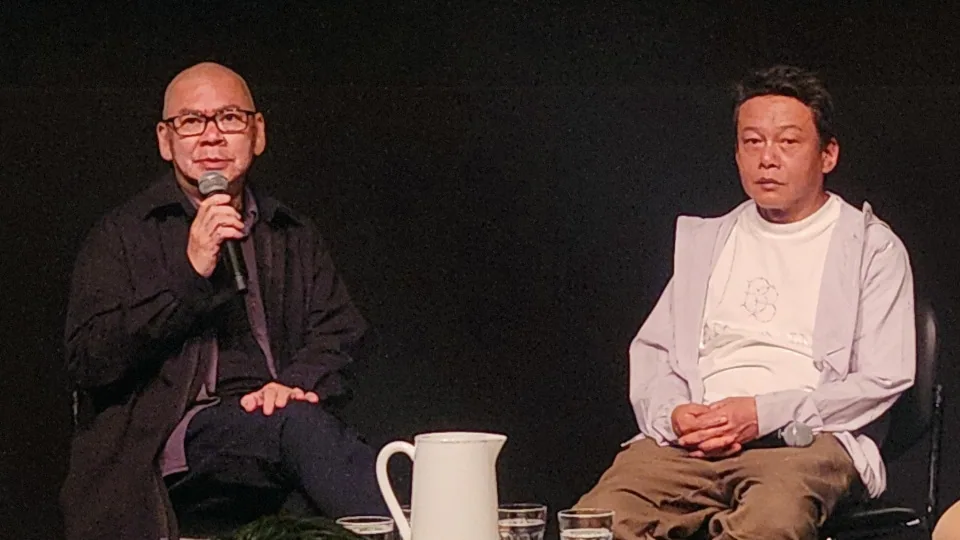
- Standard article2026-07
The Li Poetry Society: A Group Forced to Forget Japanese Sustained Taiwan’s Longest-Running Chinese Poetry Journal
In 1958, a 36-year-old Taiwanese former Japanese soldier published his first post-war Chinese poem under the pen name 'Huan Fu,' eleven years after he stopped writing in Japanese. Six years later, he and eleven others met in a living room in central Taiwan to transform this generation's experience of linguistic loss into a poetry society called 'Li'—a journal that has never ceased publication for 60 years, bringing local poetics from the margins into junior high school textbooks.
62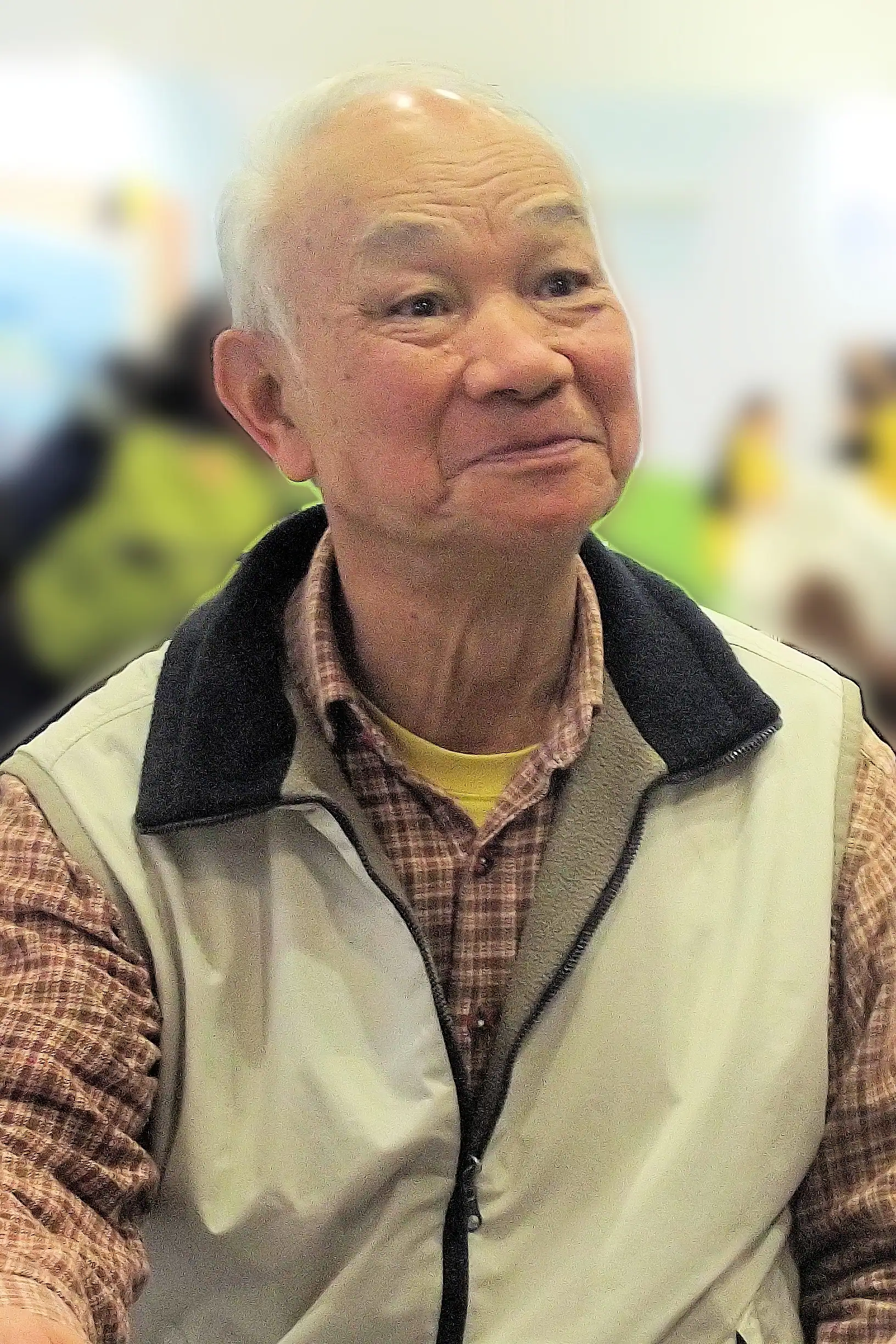
- Standard article2026-07
Mountain Makers: A Century's Gamble — A Taiwanese Semiconductor Epic That Had to Sand One Word Off Its Title Before It Could Be Spoken
Released on June 13, 2025, the documentary A Chip Odyssey tells the irreplaceable epic of Taiwan's semiconductor industry. But its original title was Silicon Shield. Hsiao Chu-chen spent five years and interviewed more than 80 people to capture this industry's story of being "born of adversity," only to sand the sharpest word off the title: when this country boasts of its strongest strategic card, it first has to weigh how the other side will hear it.
49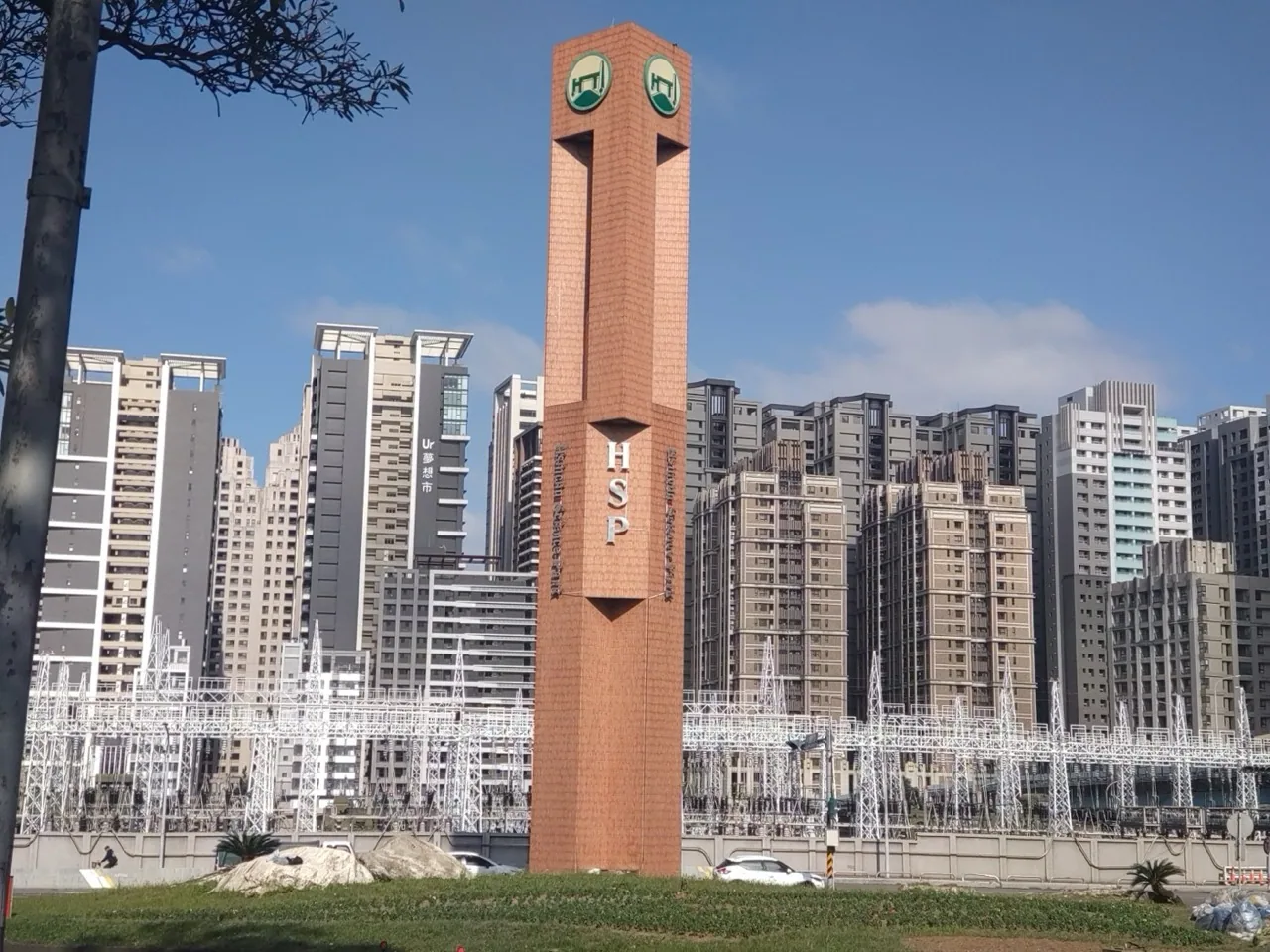
Literature 6
- Standard article
The Li Poetry Society: A Group Forced to Forget Japanese Sustained Taiwan’s Longest-Running Chinese Poetry Journal
In 1958, a 36-year-old Taiwanese former Japanese soldier published his first post-war Chinese poem under the pen name 'Huan Fu,' eleven years after he stopped writing in Japanese. Six years later, he and eleven others met in a living room in central Taiwan to transform this generation's experience of linguistic loss into a poetry society called 'Li'—a journal that has never ceased publication for 60 years, bringing local poetics from the margins into junior high school textbooks.
- Standard article
Postwar Taiwanese Literature: Learning to Speak the Unspeakable (1945–1987)
In August 1945, Yeh Shih-tao was twenty years old, freshly discharged from the Japanese Imperial Army, back in Tainan, staring at a blank sheet of paper — unable to write a single character of Chinese. That blank page would wait forty-two years. In between: aphasia, imprisonment, polemic, and the slow mastery of indirection. In February 1987, he published a 232-page book whose title contained only two words: 'Taiwan.'
- Standard article
Taiwanese Prose
From mainlander nostalgia to local identity, from male literati to a literary landscape dominated by women. How has the literary form closest to everyday life — yet the hardest to define — become the vessel of Taiwanese emotional memory over the past half-century?
- Standard article
Taiwanese Literature during Japanese Rule
The development of Taiwanese literature during Japanese rule from 1895 to 1945, from classical Chinese prose to the New Literature movement, examining cultural identity and national awakening in a colonial context.
- Standard article
Post-Martial-Law Taiwanese Literature
Thirty-eight years of repression lifted in a single night, and literature erupted — but freedom is not the same as liberation from constraint, and new challenges quietly arrived
- Evolving · community
Modern Taiwanese Poetry
How modernist experiments from three studies unexpectedly birthed a native poetic revolution
Visual Arts 5
- Standard article
Development of Contemporary Taiwanese Sculpture
From Yuyu Yang and Ju Ming to the new generation, exploring the evolving trajectory and creative spirit of sculpture art in Taiwan
- Standard article
Taiwan Street Graffiti: From Late-Night Outlaws to Ximending's Urban Light
In 1989, Lü Hsueh-yuan sprayed the first line on Minsheng East Road, opening the underground history of graffiti in Taiwan. From the urban legend of Horumon Baby to Candy Bird's social critique, this thirty-year chase with the Department of Environmental Protection is redefining Taiwan's urban aesthetics.
- Standard article
Taiwanese Comics
From Liu Hsing-chin and Ao Yu-hsiang of the 1970s “Kingdom of Comics,” to Chen Uen’s conquest of Japan in 1991 as an “Asian Treasure,” Tsai Chih-chung’s comic adaptation of classical philosophy in Zhuangzi Speaks, and then the 2010 Golden Comic Awards and the 2017 Creative Comic Collection, Taiwanese comics have passed through a downturn under the pressure of Japanese manga and are now recovering their own original voice.
- Standard article
Taiwanese Photography
From Chang Chao-tang's 1965 pioneering of the modern photography revolution to Juan I-Jung's *People and Land* defining documentary aesthetics, Taiwanese photography records the island's stories through light and shadow.
- Standard article
A Century of Change in Taiwanese Watercolor Painting: A Hundred Years of Accumulation from Ishikawa Kinichiro to Chien Chung-wei
In 1907, Ishikawa Kinichiro came to Taiwan to teach, planting the roots of a century of Taiwanese watercolor. His student Lan Yin-ting was admitted to the Royal Watercolour Society in 1929; in 1934, local artists organized the Taiyang Art Association on their own; after the war, Ma Pai-sui fused ink painting and watercolor, while Shiy De-jinn documented Taiwan's old architecture. In the 1990s, three major associations stood side by side and connected with the international IWS watercolor network. Today, Chien Chung-wei has won international renown as a signature member of both AWS and NWS. This century-long path from colonial normal-school education to the main stage of international competitions links the plein-air tradition, the normal-school system, and the global watercolor community; the vitality of Taiwanese watercolor lies precisely in the tension accumulated through the parallel development of official and independent, local and external, traditional and competitive forces.
Contemporary Art 4
- Standard article
Taiwanese Curators and the Construction of Art Culture
From institutional beginnings in the early 1990s to today's international platforms, how Taiwanese curators have constructed local art discourse amidst globalization and found their voice within the international biennial system. A 30-year evolution of cultural identity and professional institution-building.
- Standard article
Tehching Hsieh: A Taiwanese Artist Who Turned 14 Years of Illegal Status into Performance Art
In 1978, Tribeca, New York, he voluntarily walked into a wooden cage he had built himself and stayed there for an entire year — no speaking, no reading, no writing. Over the following five years, he transformed time into artworks through punching a time clock, a rope, and living on the streets; then for 13 years he made art but never showed it publicly. Tehching Hsieh left Nanzhoupu, Pingtung, and in 1974 jumped ship to become an undocumented immigrant in New York for exactly 14 years. When other artists painted freedom, he chose imprisonment to prove that time itself is art.
- Standard article
Taiwan Contemporary Art
From the Taipei Fine Arts Museum to the Taiwan Pavilion at the Venice Biennale, the unique position of Taiwanese contemporary art on the global stage
- Standard article
Contemporary Indigenous Art in Taiwan
From traditional crafts to contemporary creation, exploring how Taiwan's Indigenous artists speak on the global art stage and redefine the dialogue between Indigenous identity and contemporary art
Curation & Education 4
- Standard article
Art Education and Institutional Development in Taiwan
From the normal-school system to specialized arts universities, the institutional transformation and talent cultivation of art education in Taiwan
- Standard article
Yingge Ceramics Museum: A Century of Kiln Heritage in Fair-Faced Concrete
In November 2000, Taiwan's first ceramics-specialized museum opened in Yingge District, New Taipei City, designed by architect Chien Hsueh-yi around the four elements of 'earth, water, fire, and wind.' This fair-faced concrete building repositioned Yingge from a small kiln-industry town to a temple of ceramic art, and the Taiwan International Biennial of Ceramics, launched in 2004, connected local craft to the global stage.
- Evolving · community
New Taipei City Museum of Fine Arts: Reeds by the Dahan River and an "Unfinished" Urban Aesthetic
On April 25, 2025, the New Taipei City Museum of Fine Arts officially opened in Yingge. Designed by Kris Yao with a budget of nearly NT$3 billion, the building uses the imagery of a "museum within a reed thicket," attempting to plant seeds of art on the urban fringe. However, from construction delays and budget increases to post-opening criticisms of being a "mosquito museum," it serves not only as a temple of art but also as a microcosm of Taiwan's public construction and cultural vision.
- Standard article
The Golden Horse Hotel Contemporary Art Museum: From Farewell Station to Artistic Paradise
A Cold War military station that witnessed farewells and reunions, awakened after twenty years of slumber by a father and daughter, and is now a top recommendation from Lonely Planet in Kaohsiung.
Film 3
- Standard article
The Taiwanese Film: The Speaker Beside the Screen and a Film History That Died and Came Back to Life
In 1930, a辩士 (benshi) stood beside the screen in a theater, improvising Mandarin and Taiwanese commentary for silent films; ninety years later, Cape No. 7 brought five languages back to the screen together. The Taiwanese-language film industry was once the world's third-largest producer of feature films, yet it was strangled to death. In the years when the New Taiwanese Cinema won the Golden Lion in Venice, the box office share of local films in theaters dropped to just 0.36%. Local cinema is not a straight line from bad to good; it is a history repeatedly declared dead, only to come back to life.
- Standard article
First Image Creative: From Kuo Tai-chiang's Animation Dream to Pigsy in Tainan's Alleyways
First Image Creative, once funded by Kuo Tai-chiang, opened a dawn for Taiwan's original animation, only to pivot under market realities; studio2, which grew in symbiosis with it, persisted in Tainan for twenty years and ultimately won a Golden Horse Award with Pigsy, writing a hard-earned history of Taiwan animation's move from subcontracting to originality.
- Standard article
Q Series: How a Laptop Maker Planted the Seeds of Taiwan's TV Drama Revival
In 2016, tech industry magnate Tzu-Hsien Tung put up the funds for Wang Shaudi to lead Taiwan's most accomplished directors in doing something that defied commercial logic: no blockbusters, only new talent.
Literature 2
- Standard article
A History of Taiwanese Literature
From the colonial challenge of 'Does Taiwan have literature?' to Yang Kui's first Japanese literary prize, from linguistic suppression to polyphonic revival — a 400-year epic of voices finding words, words finding home
- Standard article
Contemporary Taiwanese Literature: Wu Ming-yi, Lin Yi-han, and a Quiet Reading Crisis
In 2018, Wu Ming-yi was longlisted for the Man Booker International Prize with _The Stolen Bicycle_ — the nationality field clearly read 'Taiwan.' Yet in that same era, first-print runs for serious Taiwanese literary fiction had already dropped below 3,000 copies. From Shih Shu-ching's epic trilogy spanning the Qing dynasty to the Japanese colonial period, to Lin Yi-han using a single book to drive legislative change — contemporary Taiwanese literature is touching the most universal questions in the most local voices. The audience, however, keeps shrinking.
Architecture 2
- Standard article
Taiwanese Architecture
From slate houses to skyscrapers: an island's architectural journey through time
- Evolving · community
National Taichung Theater: Toyo Ito's "Sound Cave" and the Structural Revolution of Column-Free Curved Walls
Designed by Pritzker Prize winner Toyo Ito and hailed as "the world's most difficult building to construct," the National Taichung Theater redefines Taiwan's modern architectural history and aesthetic imagination through its column-free curved walls and cave-like spatial aesthetics.
Documentary 2
- Standard article
Mountain Makers: A Century's Gamble — A Taiwanese Semiconductor Epic That Had to Sand One Word Off Its Title Before It Could Be Spoken
Released on June 13, 2025, the documentary A Chip Odyssey tells the irreplaceable epic of Taiwan's semiconductor industry. But its original title was Silicon Shield. Hsiao Chu-chen spent five years and interviewed more than 80 people to capture this industry's story of being "born of adversity," only to sand the sharpest word off the title: when this country boasts of its strongest strategic card, it first has to weigh how the other side will hear it.
- Standard article
Invisible Nation: An American Director Spent Seven Years Pressing the Shutter, Filming a Taiwan the World Decided Not to See
In Taiwan theaters in June 2025, a documentary made by an American grossed more than NT$37 million and became the third-highest-grossing documentary in Taiwan's film history. Vanessa Hope spent seven years and conducted five close-range interviews with Tsai Ing-wen, pushing before the camera a Taiwan removed from the United Nations, whose diplomatic allies fell from 22 to 12, and which can compete in the Olympics only as "Chinese Taipei." But the sharpest question about this film, made to let Taiwan "be seen," is whom it itself leaves outside the frame: seeing has never been a status, but an act.
Sound & New Media Art 2
- Standard article
Yeh Ting-Hao: The Audiovisual Artist Who Forced Accidents Out of 'Incorrect' Uses of Technology, Leaving Behind an Entire Ecosystem at 43
Born in Taoyuan in 1981, trained in computer animation at Fu Jen Catholic University's Department of Applied Arts and in technological art at Taipei National University of the Arts, Yeh Ting-Hao was known to friends as PUTA. From helping found Lacking Sound Festival in 2007, forming the audiovisual duo HH with Yao Chung-Han in 2013, co-running TouchDesignerTW in 2017, and taking over Fluid Noise in 2018, he was always doing one thing: taking tools apart so more people could use them. He died prematurely on November 12, 2024, at the age of 43. What he left behind was not a list of personal works, but the entire ecosystem of Taiwanese audiovisual art.
- Standard article
Wang Lien-Cheng (Shrimp Dad): The Taiwanese Sound Installation Artist Who Made 23 Machines Simultaneously Read the Analects
Born in Taipei in 1985, with a CS degree from Dong Hwa University and an MFA in Arts and Technology from TNUA. In 2017 his work *Reading Plan* — 23 automated page-turning machines simultaneously reciting the Analects — won the Lumen Prize Sculpture Award in London, and the following year he won the top prize at the Taipei Art Award. He is a member of Taiwanese sound art collective i/O Lab, co-director of Lacking Sound Festival 2009–2010, one of six artists in FAB DAO's Hundred Peaks Project, and currently an assistant professor of New Media Arts at TNUA. From the five autonomous-operation installations in *Beyond Consciousness* at the Taipei Fine Arts Museum in 2022, to *Beyond the Machine* at the Kuandu Museum of Fine Arts in 2025 — using automated platforms featuring Buddhist, Christian, and Taoist icons to interrogate AI ethics — Wang Lien-Cheng is the Taiwanese creator who has written algorithm, mechanism, and sound as a single line through contemporary sound art history.
Performing Arts 2
- Standard article
Taiwanese Traditional Arts: A Miracle Counterattack from Local Theater to Cultural Empire
Piexie's billion-dollar empire—how Taiwanese traditional arts transformed from local temple performances into global cultural soft power?
- Standard article
Paper Windmill Theater: The Don Quixote That Set Taiwan’s Dreams in Motion, an Artistic Long March Spanning Three Decades
From its theatrical reverie in 1992 to a “New Cultural Movement” that traveled across 368 townships and districts, Paper Windmill Theater has embodied the spirit of “moving when there is wind, and making its own wind when there is none,” lighting the first mile of art for Taiwan’s children. After the Bali fire and the devastation of the pandemic, founder Lee Yong-feng led the troupe through depression and debt toward rebirth, weaving Taiwan’s collective memory through the giant Rain Horse and local stories.
Others 12
- Standard article
Paul Chiang: After Forty-Five Years Away from Taiwan, Only After Coming Home Could He Paint the Best Work of His Life
In the winter of 1967, twenty-five-year-old Paul Chiang rushed to Paris to find Giacometti, only to discover that his idol had died the previous year. Over the next forty-five years, he sealed off the windows of his New York SoHo studio to search for the light within; in 1975, his Lamagna Gallery exhibition failed to sell a single painting. In the year his father fell in the 1990s, he returned to the incense smoke of Longshan Temple and painted the “Centennial Temple” series. He settled in Jinzun, Taitung in 2008 at the age of sixty-five; by the time the Paul Chiang Art Center opened in 2025, he was eighty-three.
- Standard article
Taiwan Travelogue: A Book 'Translated by Her Younger Sister,' from SpringHill to the London Prize Stage
On the day her younger sister Yang Jo-hui died in June 2015, Yang Jo-tzu opened the account books she had left behind and began keeping records, taking three days to decipher the code of check marks and circles. Five years later, SpringHill Publishing released Taiwan Travelogue under the byline 'written by Chizuko Aoyama, translated by Yang Shuang-zi' - the translator's name was that of her deceased sister. From the 2024 National Book Awards in New York to the 2026 Booker Prize in London, she translated a nonexistent book in her sister's name.
- Standard article
Taiwan New Media Art
Sixteen key artists and forty years of digital art revolution — from 1980s video art pioneers to a Venice VR Grand Prize. How Taiwan wrote poetry in code and carved its name into the international art map.
- Standard article
Pohao Chi: From Economics into Sound, Using Algorithms to Ask One Question: Are You Actually Listening?
Pohao Chi, born in 1989, is a sound artist, composer, and curator. A graduate of the Department of Economics at National Taiwan University, he later earned a master's degree in music from Goldsmiths, University of London; in 2021, while completing his master's at MIT Art, Culture and Technology, he won first prize in visual arts at the Harold and Arlene Schnitzer Prize. In 2014, he was simultaneously shortlisted for the Taipei Arts Awards, received National Taiwan Museum of Fine Arts support for a residency at V2_ in Rotterdam, and was selected for Cloud Gate's Wanderer Project; in 2015, he traveled more than a thousand kilometers along the Hexi Corridor, and in 2017 he founded Zone Sound Creative. In 2025, he presented Reciter(s) 2.0 at C-LAB DIVERSONICS and was selected for the Ars Electronica 2025 Polyphony Taiwan Pavilion with Cybernetics of Waterscape; in March 2026, he participated in the IRCAM Forum Workshops in Paris, and in April of the same year Life in Motion was exhibited at The Music Center in Los Angeles. He uses algorithms, GPS, and AI-synthesized voices to measure the world, yet he keeps asking the same question: whether the act of 'listening' still has a will of its own.
- Standard article
Digital Wasteland: How an Online Art-Criticism Platform with No Business Model Survived for 12 Years
In November 2011, Cheng Wen-chi launched an online writing project at an old-media institution in Taipei called ET@T. It had no print edition, no advertising, and no subscription fee. Twelve years later, it had accumulated 56 themed issues, 384 articles, 31 podcast episodes, and 10 volumes of the Nusantara Archive. Among Chinese-language art-criticism platforms of the same period with the same three conditions, no print-media parent body, no physical space, and driven by an individual editor-in-chief, there is no comparable case that survived across the same period. It endured through the precise layering of three forms of quiet infrastructure: an institutional parent body absorbing basic costs, public-sector projects filling issue-based content, and the editor's own 12 years of labor covering the remaining gap.
- Standard article
Wang Hsin-jen (Aluan): The Generative Artist Who Codes Landscapes and Writes Philanthropy Into Smart Contracts
Born in 1982 in Taichung, MFA in New Media Arts from Taipei National University of the Arts. On August 22, 2021, his work Good Vibrations made him the first Taiwanese artist on Art Blocks — 1,024 NFTs sold out in one hour. The following year he joined FAB DAO's Project % with five others, creating Asia's first NFT revenue-sharing structure with philanthropy written directly into a smart contract. His work spans Art Blocks, Verse.works, fxhash, and Tezos; he has exhibited Chaos Culture at Art Basel Hong Kong, collaborated with C-LAB on the immersive sonic work Hao Dou, had the Polypaths series collected by the National Taiwan Museum, and in 2026 developed inkField with Claude Code — leaving human hesitation and pauses embedded in the generative system.
- Standard article
New Ecological Art Environment: The Seven Years Before the Subsidy Structure, in a 400-Ping Old House on Yongfu Road in 1992
In June 1992, Du Zhao-xian opened the 'New Ecological Art Environment' in a 400-plus ping old building on Yongfu Road, Tainan. The National Cultural and Artistic Foundation had not yet been established, the National Taiwan University of Arts had not yet opened, and the MOCA's 'Reuse of Idle Spaces' policy was not yet online. It survived for seven years; when it closed its doors in 1999, the institutional nervous system of Taiwan's contemporary art was just beginning to grow. It ran ahead of all subsidy structures; by the time subsidies finally entered, such self-operated spaces instead began to exit.
- Standard article
Lin Ching-Yao: From Tai Chi Cloud Hands to Algorithms, Answering with the Perceptible but Invisible
Born in Kaohsiung, Lin Ching-Yao (Jinya Lin) holds a bachelor's in music composition and a master's in new media arts from Taipei National University of the Arts, a doctorate in computer science and information engineering from National Taiwan University, and a postdoctoral fellowship at the École nationale supérieure des beaux-arts de Paris. He has taught at National Tsing Hua University and Tainan National University of the Arts, served as director of the C-LAB Taiwan Sound Lab (2019), and currently holds a project assistant professorship in the Innovation and Leadership bachelor's program at NTU's D-School. In 2022, his work Metaphysics was released on Art Blocks (200 editions) and Mythologic was exhibited for live minting at Art Basel Hong Kong. He is the generative artist behind the Mirage (秘境) series in FAB DAO's Centennial Mountains Project (百岳計畫). His creative core question has not changed in fifteen years: 'Many things in the world are perceptible but not visible.'
- Standard article
Indigenous Literature of Taiwan
From wordless songs to written works - a thousand-year literary evolution
- Standard article
Taiwan Theater and Performing Arts
How a 26-year-old literature student created the Chinese-speaking world's first contemporary dance company, and how Peking opera performers made Shakespeare speak Chinese
- Evolving · community
Taiwan's Digital Imaging and Animation Industry
From a global powerhouse of animation outsourcing to a new force in original content: the half-century transformation of Taiwan's digital imaging industry.
- Evolving · community
The Donation Perpetual Motion Machine: FAB DAO and the 100 Peaks Project's Social Experiment
How a resigned physician used a "string-art national flag" to open a new imagination for Taiwan's Web3 philanthropy. FAB DAO and the 100 Peaks Project redefined the essence of donation: collecting is donating, art is social action.
Curatorial Reading
That instant defined the essence of Taiwan art: it was never ivory tower aestheticism, but proof of survival entangled with history, politics, and mortality. When bullets pierced Chen Cheng-po's body, they also shattered Taiwan art's innocence. From that moment forward, every generation of Taiwan artists had to answer anew from the rubble: why does beauty deserve to exist?
The answer to that question is scattered across every turning point in Taiwan art's hundred-year history: Ishikawa Kinichiro brought Western watercolor techniques, letting Taiwanese see local landscapes through "foreign eyes" for the first time. Huang Tu-shui's "Sweet Dew" earned Taiwan art recognition at the Imperial Exhibition during Japanese rule. The Fifth Moon and Eastern painting groups sought a "third modernity" within martial law's constraints. Post-martial law Taiwan New Cinema made international film festivals recognize Asia's narrative possibilities. Video installations at the Venice Biennale proved Taiwan contemporary art no longer needs anyone's translation.
Taiwan art's true power lies not in magnitude but in density. On this 36,000-square-kilometer island, there's one art museum per 480,000 people, every street corner might harbor a story that changed Chinese-language culture, and each generation of creators forges infinite possibilities within finite space. When Hou Hsiao-hsien's long takes won the Golden Lion at Venice, when Ju Ming's Taichi sculptures stand in museums worldwide, when Lin Hwai-min's Cloud Gate Dance Theatre earned the New York Times' praise as "Asia's most important modern dance company," the world began to understand: this island doesn't just manufacture semiconductors—it manufactures aesthetics.
But Taiwan art's most moving quality is its "impurity." It refuses to become any ideology's perfect specimen, refuses complete absorption by any theory. It's the mixed blood of indigenous myths and Japanese aesthetics, the hybrid of Chinese literati tradition and Western modernism, the fusion of local rural sentiment and international artistic language. This "mongrel nature" once made it mockingly dismissed as neither fish nor fowl; now it's become its most precious asset—in an increasingly homogenized world, Taiwan art proves that "mixing" itself is a form of power.
Taiwan art, rising from pools of blood, finally found its answer: beauty exists not because it distances itself from reality, but because it dares to face reality's cruelty and create transcendent possibilities from within. This was Chen Cheng-po's final lesson to Taiwan, taught with his life: true beauty always carries the temperature of wounds.
Cinema: Island Soul in Long Takes
- When "A City of Sadness" won the Golden Lion at Venice, Hou Hsiao-hsien used four hours of long takes to achieve Taiwan cinema's most important breakthrough: directly confronting 228's historical trauma on an international stage for the first time. This wasn't merely an award but Taiwan cinema's declaration of aesthetic independence to the world.
Taiwan cinema's power comes from "gaze"—Hou Hsiao-hsien's long takes gaze at history's wounds, Edward Yang's urban observations gaze at modernization's alienation, Tsai Ming-liang's minimalist aesthetics gaze at body and desire's solitude. These three directors, plus Ang Lee's cross-cultural narratives, left deep impressions at Cannes, Venice, and Berlin, proving that a small island can possess world-class film language.
Taiwan cinema's unique contribution was inventing "temporal aesthetics." While Hollywood pursued rhythmic thrills, Taiwan directors chose to create poetry through time's precipitation. Hou Hsiao-hsien could film one shot for five minutes, where audiences weren't waiting for plot development but experiencing time's own texture. This "slow cinema" influenced global art film creation, making "Taiwan rhythm" a specialized term in international film circles.
台灣電影 | 侯孝賢 | 楊德昌 | 蔡明亮 | 金馬獎
Literature: The Island's Polyphonic Symphony
Taiwan literature is the Chinese-speaking world's freest laboratory. While mainland Chinese literature faces censorship constraints and Hong Kong literature withers with colonial history's end, Taiwan literature displayed astonishing creative vitality after martial law's lifting, becoming the Chinese literary world's final utopia.
The Nativist Literature Debate marked Taiwan literature's watershed. 1970s writers like Huang Chun-ming, Chen Ying-chen, and Wang Chen-ho used novels to advocate for common people, returning literature from modernist abstract experiments to social reality. This debate wasn't merely aesthetic dispute but value choice about "whom Taiwan literature should write for." The result was Taiwan literature's double victory: preserving modernism's creative freedom while shouldering social criticism's moral responsibility.
Indigenous literature's rise injected entirely new voices into Taiwan literature. Syaman Rapongan wrote from Tao oceanic perspectives, Tian Ya-ge created from Bunun mountain-forest wisdom, letting Taiwan literature reimagine this island from indigenous subject positions for the first time. These voices remind us: Taiwan isn't merely Han culture's extension but a shared homeland of diverse ethnicities.
台灣文學史 | 原住民文學 | 台灣現代詩 | 台灣散文
Contemporary Visual Art: From Oil Painting to Algorithms
Taiwan contemporary art's most successful strategy is "technical translation": converting this island's most advanced technological capabilities into artistic media. When you possess the world's most advanced semiconductor manufacturing technology, when your young people grow up immersed in programming languages, digital art isn't a choice but inevitability.
Yuan Goang-Ming's video installations explore surveillance and gaze's power relationships. Wang Fujui's sound art redefines boundaries between music and noise. Wu Che-yu's algorithmic works at Venice Biennale and Art Basel Miami gave generative art a Taiwanese accent. These artists aren't using technology but co-creating with technology, making cold code grow warm humanity.
But Taiwan contemporary art's most moving aspect may be its insistence on "failure aesthetics." Lee Mingwei's relational art pieces are often "imperfect"—participants might not cooperate, works might not develop as expected—but this uncontrollability is exactly what Taiwan artists want. In an over-controlled world, allowing failure is the greatest freedom.
台灣實驗與新媒體藝術 | 台灣新媒體藝術 | 台灣攝影 | 台灣建築
Traditional and Innovative Art Forms
Taiwan traditional art's vitality lies in its "living" state. Gezai opera isn't a museum exhibit but a continuously evolving performance form. Ming Hwa Yuan brought traditional opera into arenas, repackaging ancient stories with modern lighting and sound, creating new "technological opera" genres.
Lin Hwai-min's Cloud Gate Dance Theatre created new paradigms for Eastern body aesthetics. From "Legacy" to "Pine Smoke," Cloud Gate integrated tai chi guidance, calligraphy aesthetics, and Chinese philosophy into modern dance vocabulary, letting Western audiences see possibilities for "Eastern modernity" for the first time. The New York Times called Cloud Gate "Asia's most important modern dance company," not because it imitated the West but because it created its own modernity.
Ju Tzong-ching Percussion Group transformed niche percussion into mainstream performance, giving "Taiwan music" recognition in international musical circles. While concert halls worldwide perform European classical music, Ju Tzong-ching used percussion to prove that music's universal language doesn't have just one accent.
台灣劇場與表演藝術 | 台灣傳統藝術 | 朱宗慶打擊樂團 | 明華園
🏗️ Architecture: Era's Memory in Space
Taiwan architecture is a compressed modern history. Japanese colonial baroque streethouses (Dihua Street, Sanxia Old Street) witness colonialism's modernization contradictions. Post-war modernist architecture (Wang Da-hong's Dr. Sun Yat-Sen Memorial Hall, I.M. Pei's Tunghai University Luce Chapel) represents Free China's cultural ideals. Twenty-first-century international architecture (Toyo Ito's Taichung National Theater, Kris Yao's Lanyang Museum) demonstrates Taiwan architects' ability to dialogue internationally.
Taiwan architecture's most precious asset is "hybridity." One street might simultaneously feature Japanese wooden houses, Chinese courtyard homes, modernist boxes, and postmodernist curved buildings. This spatio-temporal compressed landscape is rarely seen elsewhere worldwide. It's not planning's result but historical coincidence's product, yet unexpectedly created Taiwan's unique urban aesthetics.
Recent "reductive architecture" has become Taiwan architecture's new trend. The reconstruction of Wang Da-hong Architecture Research Center, restoration of Qidong Poetry House, revitalization of Songshan Cultural and Creative Park all demonstrate Taiwan architects' philosophy of "reusing" rather than "rebuilding" historical architecture. This attitude reflects Taiwan society's cherishing of historical memory while displaying wisdom born from an island's limited resources.
台灣建築 | 王大閎 | 伊東豊雄台中國家歌劇院 | 歷史建築保存
Photography: Multiple Gazes on the Island
Taiwan photography inherited "documentary photography's" powerful tradition. Three generations of photographers—Deng Nan-guang, Lee Ming-diao, and Zhang Zhao-tang—used cameras to record Taiwan society's massive transformation from agricultural to industrial society. Their lenses captured not just images but an era's spiritual state.
Zhang Zhao-tang's "Journey Through Time" series might be Taiwan photography history's most important work. He used black-and-white photography to record 1970s Taiwan countryside's final landscapes—three-section compounds, water buffaloes, and rice paddies about to disappear. When rapid modernization devoured traditional landscapes, Zhang Zhao-tang's camera became history's witness.
Contemporary Taiwan photography focuses more on identity's complexity. Indigenous photographers use lenses to reinterpret tribal culture, female photographers challenge male gaze authority, new immigrant photographers document transnational migration's complex experiences. Taiwan photography no longer has just one voice but represents diverse ethnicities, genders, and classes in chorus.
台灣攝影 | 張照堂 | 鄧南光 | 當代攝影創作
Taiwan art's most moving quality lies in its refusal of purity. It's the mixed blood of indigenous myths and Japanese aesthetics, the hybrid of Chinese literati tradition and Western modernism, the fusion of local sentiment and international language. In an increasingly homogenized world, Taiwan art uses "mixing" to prove beauty's possibilities.