
History
· The complete timeline of Taiwan's history from prehistoric times to the present 54 articles Updated 2026-09-10On July 15, 1987, when Chiang Ching-kuo announced the lifting of martial law from the Presidential Office in Taipei, no one in the world believed Taiwan could complete democratic transition within thirteen years. How could an island under authoritarian rule for thirty-eight years peacefully transfer power? Yet with the first direct presidential election in 1996 and the first peaceful change of ruling party in 2000, Taiwan set the fastest democratic transition record in human political history—without bloodshed, coups, or even large-scale protests. International scholars called it the "Taiwan Miracle," but the roots of this miracle lie buried in much deeper historical contexts.
Featured
- Standard article2026-05
The Great Recall: The Largest Recall Wave in Taiwan’s History, Measuring Every Tick of Democracy
On the night of July 26, 2025, one-third of Taiwan’s electoral districts held simultaneous vote counts. All 25 recall cases failed. From the Bluebird Movement to claims of over 1.3 million signature supporters, and three waves of voting resulting in zero recalls, this largest recall wave in Taiwan’s history did not remove a single official, yet for the first time, it measured the mobilization energy, the height of the threshold, and the cost of polarization simultaneously.
53 ~22 min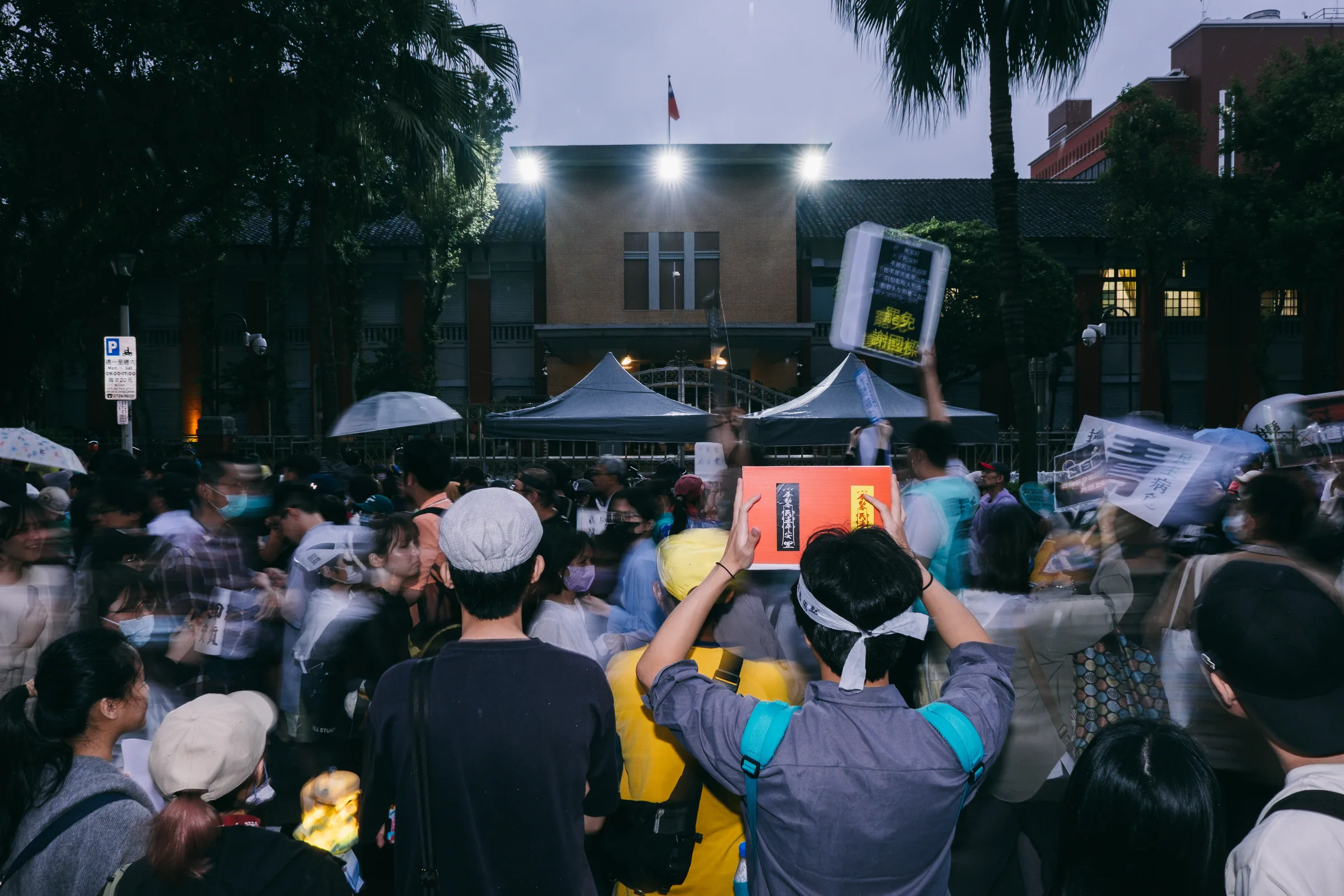
- Standard article2026-07
National Human Rights Museum: The Names Not Written on the Tearful Monument
On International Human Rights Day in 1999, Lee Teng-hui personally unveiled the Tearful Monument on Green Island. Bo Yang wrote 28 characters that captured all mothers' long nights of weeping, yet did not write a single perpetrator's name. Six years of preparation, an unveiling in 2018, and a frozen budget in 2025. A museum built by the state itself to commemorate what the state itself had done. In the 39 years since martial law was lifted, not one perpetrator has faced judicial trial.
40 ~16 min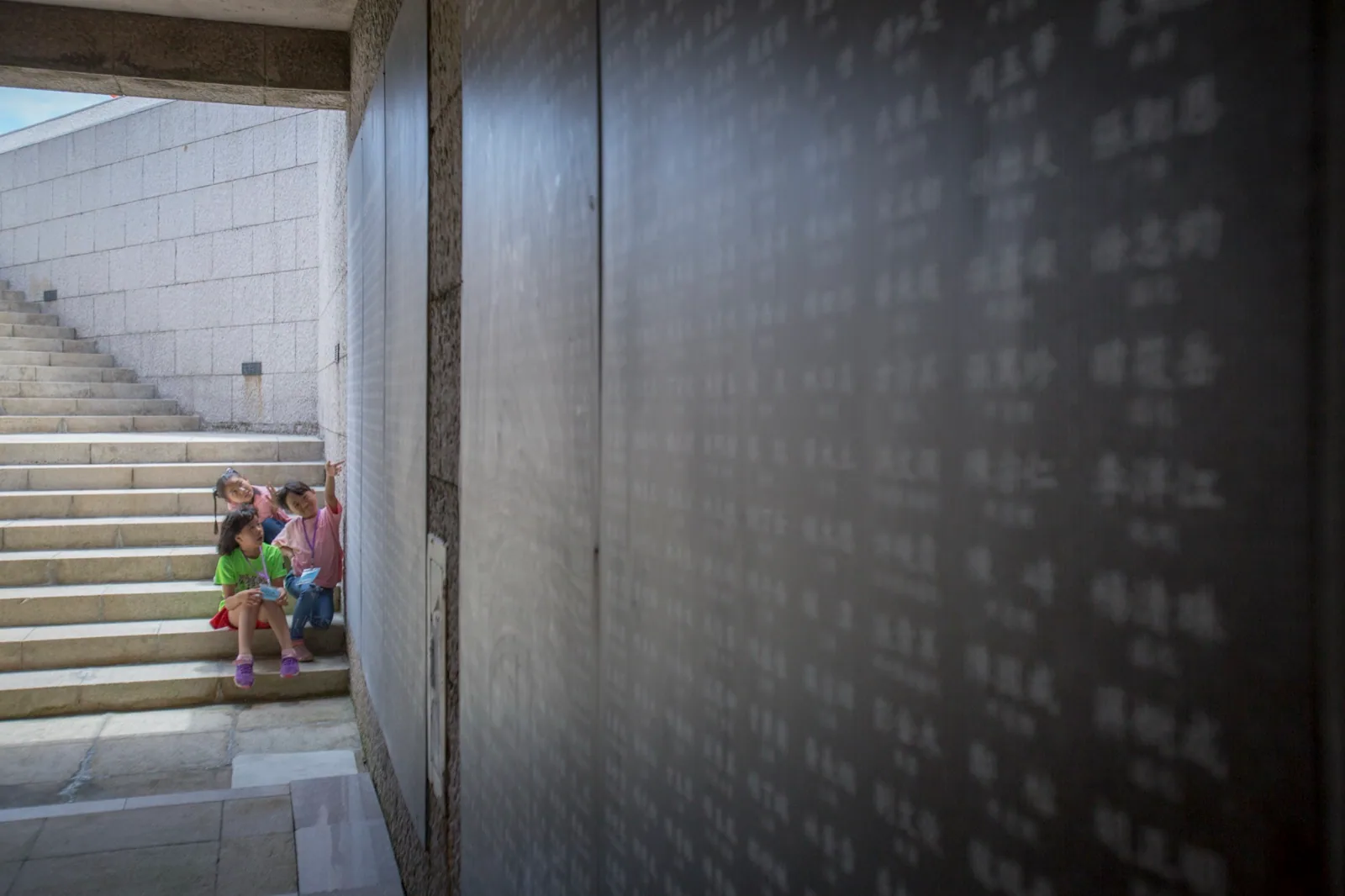
- Standard article2026-05
The Sino-French War in Taiwan: Eight Months at Keelung and Tamsui
In the autumn of 1884, the French fleet shelled Keelung harbor and 2,000 marines landed, seizing the port. But they spent the next seven months unable to fight their way out of the hills surrounding Keelung. That same week, 600 French sailors landed at Tamsui — and were driven back to sea within two hours. When the war ended, France took Vietnam and relinquished Taiwan. The Qing dynasty nearly lost everything, yet as a result Taiwan went from a dependency to a province.
26
Colonialism & Empire 12
- Standard article
The Sino-French War in Taiwan: Eight Months at Keelung and Tamsui
In the autumn of 1884, the French fleet shelled Keelung harbor and 2,000 marines landed, seizing the port. But they spent the next seven months unable to fight their way out of the hills surrounding Keelung. That same week, 600 French sailors landed at Tamsui — and were driven back to sea within two hours. When the war ended, France took Vietnam and relinquished Taiwan. The Qing dynasty nearly lost everything, yet as a result Taiwan went from a dependency to a province.
- Standard article
The 1895 Taiwan Resistance War: 148 Days of the Republic of Formosa
In 1895, the Qing court ceded Taiwan to Japan. Officials on the island declared the establishment of Asia's first republic, but the president fled within ten days and the poet within four. Those who truly stayed to fight were a 19-year-old Hakka youth who scattered his family fortune to raise militia fighters. 148 days later, the republic vanished and Japanese rule began.
- Standard article
Formosa: How Westerners 'Discovered' an Island That Was Already Inhabited
In 1704, a Frenchman who had never been to Asia stood before the Royal Society in London and, using a script and religion he had invented himself, convinced an entire room of scholars that he was a 'Formosan.' The deception lasted ten years. But the larger question is this: when Europeans spoke of 'discovering Formosa,' Austronesian peoples had already lived on the island for six thousand years. Whose narrative is 'discovery'?
- Standard article
Japanese Colonial Era
Japan ruled Taiwan for 50 years from 1895 to 1945, bringing comprehensive modernization and institutional management while implementing assimilation policies that profoundly shaped Taiwan's social development
- Standard article
The 19th-Century Camphor War: The Scent the World Craved was Hidden in Indigenous Mountains
In 1864, Swinton wrote three numbers in Tamsui: 6, 16, and 28. A load of camphor traveled from its source to Hong Kong, its price increasing nearly fivefold. The difference went into the Daotai's pocket—and the mountains of the Indigenous peoples.
- Evolving · community
The Wu Feng Legend: How a Local Story Became an Imperial Textbook
The 1855 "Haiyin Shi" contains the earliest written record of Wu Feng, yet he was not yet the perfect righteous figure found in later textbooks. During the Japanese colonial period, the Governor-General's Office rewrote the Chiayi foothills legend, erected a stele, and incorporated it into textbooks, making Wu Feng a cross-regional moral hero; as the story was amplified, the Tsou people were simultaneously fixed as the "other" awaiting civilization.
- Standard article
The Rover Incident: A Battle 181 Soldiers Couldn't Win, Settled by Tauketok in 45 Minutes
In 1867, 181 US soldiers were repelled in the jungles of the Hengchun Peninsula and their commanding officer was killed. Three months later, Tauketok — paramount chief of the Eighteen Paiwan Tribes of Liangqiao — sat down and negotiated the Treaty of South Cape in 45 minutes. The agreement temporarily protected his people from annihilation — but the other party, Charles Le Gendre (李仙得), took the same intelligence to the Japanese Empire seven years later, helping plan the 1874 expedition.
- Evolving · community
Pulai Rice: How a Single Grain Rewrote Taiwan's Century of Agriculture and Dining Landscapes
From the breeding journey of Iso Eikichi and Suenaga Hitoshi during the Japanese colonial period to the widespread adoption of Taichung 65, Pulai rice not only resolved food crises but profoundly shaped Taiwan's socio-economic and cultural identity.
- Standard article
Tamkang High School: How One Campus Concentrates Taiwan's Modern Education History
What is most worth writing about Tamkang High School is not that it is old enough, but that it packed the tensions between missionary education, women's education, and colonial governance all into the same campus.
- Standard article
The Dutch, Spanish, and Ming-Zheng Period
From the Dutch establishment of Fort Zeelandia in Tainan in 1624 to Shi Lang's landing in Penghu in 1683: sixty years in which Taiwan was written into the map of world trade, and the story of four successive regimes
- Standard article
Qing Dynasty Rule
From 1683 to 1895, the Qing dynasty ruled Taiwan for approximately 212 years, transitioning from passive governance to active development, laying the foundation for modern Taiwan's administrative divisions and Han Chinese society.
- Evolving · community
A History of Forest Development in Taiwan: A Century-Long Shift from Resource Extraction to National Land Security
From the camphor smoke of the Qing dynasty to the ringing rails of the Japanese colonial era and the era of massive logging that shook the mountains after the war. This article traces the global geopolitical logic behind Taiwan's forest development policies and uses data to clarify the true history of a century of forestry.
Postwar & Authoritarian Era 9
- Standard article
National Human Rights Museum: The Names Not Written on the Tearful Monument
On International Human Rights Day in 1999, Lee Teng-hui personally unveiled the Tearful Monument on Green Island. Bo Yang wrote 28 characters that captured all mothers' long nights of weeping, yet did not write a single perpetrator's name. Six years of preparation, an unveiling in 2018, and a frozen budget in 2025. A museum built by the state itself to commemorate what the state itself had done. In the 39 years since martial law was lifted, not one perpetrator has faced judicial trial.
- Standard article
The KMT Government's Relocation to Taiwan and Postwar Reconstruction
Yen Chia-kan came from Fujian and witnessed the history of the KMT government's 1949 relocation to Taiwan. 1.2 million soldiers and civilians, 38 years of martial law, land reform: how did this history reshape Taiwan?
- Standard article
Taiwan's White Terror
The 38-year martial law was not maintained by a few thousand secret police officers — it was maintained by a 'joint guarantee' system under which two million families across Taiwan had to vouch for one another in order to hold a job, enroll in school, or get married. Chen Chih-hsiung, Shih Shui-huan, Uyongu Yatauyungana (Kao I-sheng), and Bo Yang — four names, four reasons for arrest, one shared machine.
- Standard article
The Martial Law Era
On May 19, 1949, Chen Cheng promulgated the Taiwan Provincial Martial Law. 38 years later, on July 15, 1987, Chiang Ching-kuo announced the lifting of martial law. The Kinmen and Matsu regions did not see the end of martial law until 1992. What did they endure during these five years?
- Standard article
Democratization
On March 18, 1980, in a Kaohsiung military courtroom, Shih Ming-teh discarded his sixty-thousand-word defense statement and instead demanded the judge sentence him to death. In the same trial, the young lawyers defending the accused — Chen Shui-bian, Frank Hsieh, Su Tseng-chang — all became presidents or premiers within twenty years. A show trial intended to make an example ended up accidentally producing Taiwan's next generation of political leaders.
- Standard article
Taiwan Elections and Party Politics
From the flames of the Zhongli Incident to 8.17 million votes, how Taiwan spent half a century turning voting from a martial law tool into a civic faith
- Standard article
Green Island Prison: Layered Memories from Political Black Jail to the Homeland of Big Brothers
Green Island, a solitary island in the Pacific, was once a purgatory for political prisoners during the White Terror era and the final resting place for underworld 'big brothers.' From the New Life Training Center to Chongde New Village, how does the history of Green Island Prison reflect the contradictions and memories of Taiwanese society?
- Standard article
Taiwan's Women's Movement: From a Magazine Published During Martial Law to Laws That Reshaped Families and Schools
In 1971, Hsiu-lien Lü proposed "New Feminism"; in 1982, Yuan-chen Lee and others founded *Women's New Knowledge*; and after the 1996 murder of Wan-jui Peng, a night march was launched. All these milestones culminated in the Gender Equality Education Act, the Domestic Violence Prevention Act, and the Employment Equality Act. The history of Taiwan's women's movement is not merely about securing quotas for women, but about transforming harms, caregiving, and labor—originally dismissed as mere "household chores"—into public issues, thereby equipping women with institutional language for recourse in the workplace, family, and schools.
- Standard article
Alishan: The Empire's Forest and Uong'e Yata'uyungana's Mountain
On April 17, 1954, Tsou intellectual Uong'e Yata'uyungana was executed by firing squad at the Anken execution ground. Alishan, celebrated as a scenic destination, is in truth a mountain of memory rewritten by two empires in succession.
Social & Everyday History 8
- Evolving · community
Disney and Taiwan: A Fantastic Journey from Hung Kwang Outsourcing and the Yue Mei Regret to IP Localization
In the 1980s, Xindian's Hung Kwang Cartoon handled nearly one-third of the world's animation production, earning the title "the Disney of the East." Taiwan twice missed opportunities with Disneyland, including the 1990s Yue Mei project in Taichung due to land development and HSR station rights; even early scripts for *Toy Story 3* featured a malfunctioning Buzz Lightyear being sent back to his "place of origin," Taiwan, for repairs. From the golden age of outsourcing to Stitch riding a scooter, this connection runs deeper than imagined.
- Evolving · community
Yingge Ceramic Old Street: From Chimneys to MRT, the Transformation and Rebirth of Two Centuries of Ceramic Art
Yingge, once known as "Taiwan's Jingdezhen" for its forest of chimneys, has undergone industrial transformation and a wave of commercialization, welcoming the opening of the New Taipei Museum of Art and the opening of the MRT San-Xing Line. A new generation of ceramic artists is seeking sustainable development paths between tradition and innovation, and tourism and industry, through activities like "Open Factory Days."
- Standard article
The Eight Immortals Dust Explosion: The Taiwan Wound Burned Into That Night’s Color Party
On June 27, 2015, a color party at Formosa Fun Coast triggered an internationally shocking dust-explosion disaster after colored powder flash-ignited. The incident, Taiwan’s deadliest mass-casualty event since the 921 earthquake, left 499 people with burn injuries and 15 dead, fundamentally reshaped Taiwan’s emergency medical system, and drove reforms to safety regulations for large-scale events.
- Evolving · community
Sanxia Old Street: Power Struggles Beneath Red Brick Arcades and an Unfinished Heritage Experiment
Recognized by FIABCI with the Global Excellence in Construction Award in 2007, Sanxia Old Street served as Taiwan's first large-scale "restoration project" pilot. From the Qing Dynasty's "Sanjiaoyong" indigo dyeing trade to the 2016 tragedy of the flagstone road's removal, this red-brick street records Taiwan's intense struggle between heritage preservation and tourism development.
- Standard article
Vanished Amusement Parks: From the “First Park” to Ghost Legends, the Childhoods Confiscated by Urban Planning
In 1972, Taiwan’s first theme park, Datong Water Park, opened in Banqiao, inaugurating Taiwan’s two-decade “great amusement park era.” From the crowds that had Chen Zhaobing personally serving dishes, to the broken-track rumors surrounding Carton King-style Katori Amusement Park, the collective disappearance of these parks was not simply the result of aging facilities, but a microcosm of Taiwan’s urban expansion and the transformation of its leisure industry.
- Evolving · community
From the "Island of Dog Killing" to Zero Euthanasia: Taiwan's Forty-Year Path to Animal Protection Redemption
In the 1990s, Taiwan was known internationally as the "Island of Dog Killing" due to the cruel treatment of stray dogs, with even Japanese airports displaying billboards calling for tourism boycotts. From the enactment of the Animal Protection Act in 1998 to the implementation of zero euthanasia in 2017, this is a social movement about the redefinition of the value of life.
- Standard article
Taiwan Railway History: The "Lung Disease" Railway, the "Black-Headed Ones," and the Line That Lost Its Foreign Names
A road the Japanese called "lung disease" that became a high-speed artery carrying 200,000 people daily over a century. Engineer Becker was scrapped by the Japanese; Hasegawa’s trunk line was renamed post-war; every generation pushed the previous records to footnotes. Foreign names faded, leaving Taiwanese slang like "black-headed ones" and political slogans like "Juguang" and "Ziqiang," until the Puyuma and Taroko era finally laid indigenous place names back onto the tracks.
- Standard article
The 19 Cattle of Qingtiangang: From Yuan Xing Cattle to Tainan Beef Soup, an Island's Beef Industry Breakthrough
Taiwan's beef self-sufficiency rate is only 4.6%, yet in 2024 the nation's first privately bred and officially certified cattle breed was born. The story of Yuan Xing cattle is an industry breakthrough scripted by a 94-year-old man, 19 wild black cattle, and a bowl of freshly slaughtered beef soup served before dawn.
Prehistory & Indigenous Peoples 3
- Standard article
Prehistoric Era and Indigenous Peoples: From Changbin 20,000–30,000 Years Ago to the Austronesian Dispersal Origin
Earliest human activity in Taiwan: Changbin Culture approximately 20,000–30,000 years ago (Paleolithic era, Baxian Cave site). 16 officially recognized indigenous peoples. One possible origin of the Austronesian language family (9 of 10 major Austronesian branches found in Taiwan). 2024 latest research: dispersal from Taiwan accounts for approximately 20%, with an additional dispersal route from Indonesia, pending academic consensus. 17th-century Kingdom of Middag as a cross-tribal alliance; Shihsanhang Culture in the Iron Age.
- Evolving · community
The Penglou Peoples: From "Administrative Formatting" to the Siraya's Century-Long Rebirth as the 17th Tribe
On July 30, 2026, the Executive Yuan officially recognized the Siraya as the 17th statutory indigenous people, ending the Penglou community's century-long "administrative disappearance." From 40,000 people in Dutch-era household registers to collective invisibility caused by omissions in the 1950s Nationalist government records, and now with 8 tribes still waiting for recognition, this naming movement opens a new chapter in Taiwan's multicultural historical narrative.
- Evolving · community
The Maritime Trade History of Taiwan
Taiwan during the Age of Discovery: The rise and fall of a legend, from an international trade hub to a kingdom of pirates
Democracy & Governance 3
- Standard article
Taiwan’s Democratic Transition: The Grave Dug by Authoritarianism
Every crackdown breeds more resistance. From the February 28 Incident to the Sunflower Movement, how an island allowed a dictatorial regime to cultivate the very forces that buried it.
- Standard article
Withdrawal from the United Nations: The 17 Minutes in 1971 When Taiwan Went from “China” to International Orphan
On October 25, 1971, the moment Chou Shu-kai stepped down from the podium in the UN General Assembly hall, the Republic of China went from a founding member of the United Nations to an observer still kept outside its doors. Half a century later, that decision, framed as “the Han and the bandits cannot coexist,” continues to reverberate: in 2025, the United States passed legislation reaffirming that Resolution 2758 never addressed Taiwan’s representation.
- Standard article
Taiwan Strait Crises and Cross-Strait Relations
From a Kinmen grandmother's memories of shelling to the 'Buddha-like' daily life of young people in Taipei, how seven decades of Taiwan Strait crises have shaped the collective psychology of the Taiwanese people
Military History 3
- Standard article
The February 28 Incident
How a widow's private cigarette stall ignited thirty-eight years of silence—the ten days in 1947 that changed Taiwan's destiny, and the wounds still healing seventy-eight years later.
- Evolving · community
Black Bat Squadron: Unnamed Heroes of the Dark Night and a Lonely Flight Across the Strait
Established in 1952, the Air Force 34th Squadron performed high-risk low-altitude reconnaissance missions amidst the fog of the Cold War. Working with the CIA, they traded the lives of 148 members for critical intelligence, remaining anonymous for decades until the easing of Cross-Strait relations in the 1990s allowed families to finally bring their fallen loved ones home.
- Evolving · community
The Two Faces of Shengli Road: From Armored Corps Coup to the "Great Parking Lot" Memories of Hukou
On Shengli Road in Hukou, Hsinchu, one side of the military camp wall holds tanks and political storms, while the other holds residences, cooperatives, and vanished cinemas. This is a local history of neighborhood, accident, and social justice.
Democracy and Governance 2
- Standard article
The Great Recall: The Largest Recall Wave in Taiwan’s History, Measuring Every Tick of Democracy
On the night of July 26, 2025, one-third of Taiwan’s electoral districts held simultaneous vote counts. All 25 recall cases failed. From the Bluebird Movement to claims of over 1.3 million signature supporters, and three waves of voting resulting in zero recalls, this largest recall wave in Taiwan’s history did not remove a single official, yet for the first time, it measured the mobilization energy, the height of the threshold, and the cost of polarization simultaneously.
- Standard article
Taiwan and North Korea: From Fourth Largest Export Destination to a Gray Zone Confrontation
Taiwan was once North Korea's fourth-largest export destination, with Acer computers and HCG sanitary ware visible in Pyongyang offices. This history—from robust trade to comprehensive embargoes—is interwoven with secret agricultural aid, maritime smuggling, and deep geopolitical intelligence struggles.
Others 14
- Standard article
Island Historiography of Taiwan: How a Repeatedly Governed Island Invented Its Own Subjectivity
The "Taiwanese Island Historiography" (臺灣島史觀) reclaims Taiwan from the timelines of external regimes, asking instead how people on this island lived, migrated, were governed, survived, and reconstructed their memories. It does not portray Taiwan as a uniquely special island by birth, but reminds us that identity grows out of shared living, shared suffering, and shared burdens; the protagonists of Taiwanese history should not always be merely the regimes that passed through.
- Standard article
Taiwan's Military Dependents Villages
From Burma's Lost Army to bamboo fence kingdoms: how 1.2 million refugees redefined 'home'
- Standard article
Four Measures Beyond Blue and Green: From a Plot of Land to a National Health Insurance Card, the Taiwan Policies That Outlived Their Own Politics
A reader, tired of blue-green bickering at the dinner table, wanted to remember the things that truly helped Taiwan. So we found eleven policies from the past seventy years, from land reform that coercively expropriated farmland under authoritarian rule, the lifting of martial law, and National Health Insurance, to same-sex marriage and the Forward-looking Infrastructure Development Program, both still contested. We deliberately set aside the blue-green yardstick and used four measures instead: livelihood, democracy, civil rights, and sovereignty. The conclusion is a little counterintuitive: policies that outlive their own partisan origins are often the ones that were most fiercely contested on the day they were born.
- Standard article
Taiwan's History of Going Abroad: An Island People's Cross-Border Narrative from "Police Headquarters Approval" to "Worldwide Access"
On New Year's Day 1979, Taiwan issued its first tourist passport. This was more than the release of a piece of paper — it was a turning point from martial-law isolation to citizen diplomacy, documenting how Taiwanese people transformed from 'foreign-exchange-wasting' sinners into world travelers.
- Standard article
Resolution on Taiwan's Future: The Two Words “Currently” Sustained for Twenty‑Seven Years
In 1999, Lin Cho-shui added the two characters “currently” before the “Republic of China” state name, displeasing the Chen Shui‑bian faction. Those two words simultaneously appeased pro‑independence supporters and centrist voters, opening the door to the first party‑rotation in 2000. Twenty‑seven years later, Taiwan’s youth consider “Taiwan has always been independent” common sense, yet they do not know that this common sense stems from a deliberately ambiguous document.
- Standard article
The Ten Major Construction Projects: A NT$200 Billion Gamble Backed by US$1 Billion in Foreign Reserves
In 1973, Taiwan held just US$1 billion in foreign exchange reserves, yet Chiang Ching-kuo announced an investment of approximately NT$300 billion in the Ten Major Construction Projects. This was not merely an economic pivot in response to the oil crisis and diplomatic isolation, but also a political narrative that repackaged blueprints inherited from Japanese colonial rule and transformed them into a source of national identity.
- Standard article
The Formosa Incident
A military trial that was supposed to completely collapse the opposition movement unexpectedly became the most powerful propaganda film for Taiwan's democracy due to its broadcast.
- Standard article
Taiwan's Transitional Justice
Taiwan has revoked nearly six thousand convictions from the authoritarian era, yet almost no perpetrator has been held accountable—a gap that is harder to explain than the White Terror itself.
- Standard article
Chiang Kai-shek Memorial Hall
It is the most colossal political totem at the heart of Taipei — and the most democratic dance practice space. From authoritarian sanctuary to the storm's eye of transitional justice, this building records the most violent tremors in Taiwan's soul.
- Standard article
Social Movements During Japanese Rule in Taiwan
Hidden within the Imperial Police's surveillance documents lies a map of how Taiwanese people resisted. In the 1920s, three currents ignited simultaneously — parliamentary petitions, peasant unions, and an underground party — yet burned toward each other.
- Standard article
Psychological Warfare: From Kinmen's Broadcasting Walls to the Paradigm Shift of AI Cognitive Operations
From the 1960s' Deng Lijun appeals and 'surrender food' dropped by balloons on Kinmen to the 2026 digital era's information penetration and AI cognitive manipulation, cross-strait psychological warfare has evolved from physical material incentives to digital semantic offense and defense. This article thoroughly梳理s the historical context of Taiwan's psychological warfare against China, specific material lists, and contrasts the challenges of the current AI industrialization stage.
- Standard article
Three Foreigners Witness 1895 Taiwan: A Photographer's Album, a Reporter's Notes, a Pastor's Diary
In the Yi-Wei War of 1895 (乙未之役), three foreigners left behind the most important foreign-language eyewitness documents of that conflict — Japanese photographer Endo Makoto's victory album, American journalist James W. Davidson's embedded notes, and Japanese pastor Hosokawa Ryu's diary from Taiwan. The question is not what they saw, but for whom they were watching.
- Standard article
The Mudan Incident: A Clash of Civilizations and the Awakening of Sovereignty in the Stone Ridge Gorge
In 1874, a military action triggered by a maritime disaster made the Stone Ridge Gorge in southern Taiwan the focal point of modern East Asian affairs. This was not only a test case for the expansion of the Japanese Empire but also a turning point for the Qing court, shifting from peripheral defense to active governance.
- Standard article
Indigenous Peoples' History and Naming Rights Movement
From 'barbarians' to 'Indigenous peoples' - a centuries-long struggle for identity recognition and dignity
Curatorial Reading
Taiwan has experienced the world's most frequent regime changes. Over four centuries, eight different powers have ruled this island: the Dutch East India Company, Spanish Empire, Zheng Dynasty, Qing Empire, Japanese Empire, and Republic of China. On average, the ruling power changes every fifty years—an extremely rare phenomenon in world history. Even rarer is that each regime change brought completely different languages, legal systems, religions, education systems, and even time zones (changed three times). Taiwanese people were forced to learn new identities and adapt to new ruling logics repeatedly.
This "professional experience of being ruled" cultivated a unique Taiwanese resilience: the ability to deeply adapt while maintaining distance, never fully assimilating nor completely resisting. Both the Japanese assimilation policies and the KMT's Sinicization education attempted to reshape Taiwanese souls, yet Taiwanese always preserved part of themselves in the cracks. This survival wisdom of navigating between different rulers may be the key to Taiwan's peaceful transition—because Taiwanese people are so accustomed to regime changes that they never regard any regime as eternal.
Even more remarkable is Taiwan's historical density. From the Austronesian maritime civilization established 6,000 years ago, to the first modern regime established by the Dutch in 1624, to today's democratic Taiwan, this island carries an exceptionally dense concentration of historical events. In Europe, the Roman Empire ruled for a thousand years; in China, dynasties averaged two hundred years. But in Taiwan, each ruling regime averaged only fifty years, meaning historical change occurred four times faster than elsewhere in the world.
If history is humanity's collective memory, then Taiwan is one of the richest repositories of human memory. Here, you can see Qing dynasty gates, Japanese shrines, Chinese paifang, and American McDonald's on the same street. Taiwanese DNA carries Austronesian oceanic genes, Han agricultural wisdom, Japanese modernization experience, and American democratic values. This isn't a cultural potpourri, but a concentrated essence of human civilization.
🏺 Ancient Roots and Colonial First Contact
Six thousand years ago, when humans elsewhere were still learning agriculture, Taiwan was already the cradle of Austronesian civilization. These brave oceanic peoples set forth from Taiwan in outrigger canoes to conquer the entire Pacific, establishing the most geographically dispersed language family empire from Easter Island to Madagascar. Taiwan was not the world's periphery, but the launching point of humanity's greatest maritime adventure. However, when European powers of the Age of Exploration arrived, Taiwan's indigenous peoples faced their first civilizational shock. Dutch, Spanish, and Ming loyalist forces competed here, each trying to redefine this island according to their own logic. This was Taiwan's first lesson in "multi-rule adaptation."
prehistoric-era-and-indigenous-peoples | History of Taiwan's Indigenous Peoples and Name Recognition Movement | Dutch-Spanish-Ming Loyalist Period | Qing Period
⚔️ Imperial Ambitions and Modernization Experiments
In 1895, the Treaty of Shimonoseki transformed Taiwan from Qing's "outer territory" into the Japanese Empire's "model colony." The following fifty years marked Taiwan's most contradictory golden age. The Japanese conducted Asia's largest-scale modernization experiment in Taiwan: building the island-spanning railway, establishing modern healthcare systems, creating the Imperial University, and implementing compulsory education. When Alishan's cypress logs rolled down the mountain, they carried not just timber, but the dreams of an agricultural society's transformation into an industrial one. The price was cultural suppression and war mobilization. The Kominka movement attempted to transform Taiwanese into Japanese, yet paradoxically birthed modern Taiwanese consciousness. This history teaches us that modernization and colonialism can coexist, but modernized people won't remain silent forever.
Japanese Colonial Period | taiwan-railway-history
🔇 Authoritarian Curtains and Traumatic Memories
On February 27, 1947, a gunshot on Taipei's streets opened Taiwan's darkest postwar chapter. The February 28 Incident was the first direct confrontation between Taiwanese and the KMT government, marking the beginning of Taiwan's modern political trauma. The following thirty-eight years of martial law saw Taiwan endure political repression under the glow of economic miracle. White Terror gunshots echoed on Green Island, military dependents' villages nursed homesickness during Lunar New Year, yet democratic seeds quietly sprouted in the most unlikely places. Authoritarian rule's contradiction lies in needing to cultivate modern citizens to support a modern state, yet modern citizens inevitably question authoritarian legitimacy. Taiwan's democratic transition wasn't a gift from heaven, but an inevitable result growing in authoritarian cracks.
february-28-incident-and-white-terror-taiwan-authoritarian-rule-trauma-and-memory | White Terror in Taiwan | Martial Law Period | KMT Retreat to Taiwan and Postwar Reconstruction | Military Dependents' Village History
Quiet Revolution and Political Breakthrough
On September 28, 1986, the Democratic Progressive Party was founded at the Grand Hotel Taipei—the first organization to openly challenge KMT one-party rule during martial law. From that moment, Taiwan's politics entered an irreversible democratization process. Lifting of martial law in 1987, direct presidential elections in 1996, and party alternation in 2000—Taiwan completed in fourteen years what might take other countries decades. More importantly, this revolution was so quiet that many forgot how incredible it once seemed. The night Chiang Ching-kuo announced he wouldn't seek re-election, there were no military mutinies, political assassinations, or even large demonstrations. Taiwanese seemed to already know democracy would come, patiently waiting for it to happen naturally. Where did this political maturity come from? Perhaps precisely because Taiwanese had witnessed too many regime changes to take any political promises too seriously.
democratization | Taiwan Democracy Movement | taiwan-elections-and-party-politics
Economic Leap and Geopolitical Games
Postwar Taiwan's greatest mystery isn't political transition, but economic miracle. How did a small island lacking natural resources, densely populated, and politically turbulent leap from agricultural society to industrial powerhouse within thirty years? The answer lies in Taiwanese oceanic genes. From being a 17th-century international trade hub to developing a 20th-century export-oriented economy, Taiwanese inherently knew how to do business with the world. Even during the most isolated martial law years, Taiwan's economic tentacles extended to every corner of the globe. Yet economic achievements cannot escape geopolitical realities. Taiwan Strait crises, cross-strait division, and international isolation are structural challenges Taiwan must face. Taiwan's history teaches us that small nations' survival depends not on resisting great powers, but on creating their own irreplaceability.
economic-miracle | taiwan-maritime-trade-history | taiwan-strait-crises-and-cross-strait-relations

Source: Wikimedia Commons | CC BY-SA 3.0 | Photo: Andreas Krebs

Further Reading
Trauma and Reconciliation
february-28-incident-and-white-terror-taiwan-authoritarian-rule-trauma-and-memory — In-depth exploration of political persecution during the authoritarian period and transitional justice
Cross-Era Topics
A complete Taiwan historical narrative requires understanding how different eras influenced contemporary Taiwan. Each historical period left indelible cultural genes that constitute today's complex and rich civilizational foundation of Taiwan.
History is not merely a record of the past, but the foundation for understanding the present and imagining the future. Taiwan's four centuries of regime changes and civilizational collisions serve as precious teaching material for all humanity about resilience, adaptation, and innovation.