
Society
· In-depth exploration of social changes and contemporary issues 95 articles Updated 2026-08-21July 15, 1987, afternoon. When Chiang Ching-kuo announced the "lifting of martial law" at the Presidential Office, political scientists worldwide held their breath. According to prevailing theories, East Asian authoritarian states typically required bloody revolutions, economic collapse, or foreign military intervention to achieve democratic transition. No one believed a ruler would voluntarily relinquish autocratic power, much less that such transition could complete within a single generation.
Featured
- Standard article2026-07
The Reporter: Ten Years of Turning Investigative Journalism from a Line of Business into a Public Good
From 4 recurring donors to 8,000 each month, from the Blood-Stained Fishing Grounds trilogy to the 2026 united-front special report, the costs The Reporter has burned through over a decade--eight months undercover, reporting across three countries, comparing years of violation records--are exactly the things people least want to pay to read in the algorithmic age. Taiwan's civil society, through monthly deductions from strangers' accounts, has rescued investigative journalism from a line of business in commercial media and turned it into a public good that is constantly being sustained, even as it burns through resources ever faster.
60
- Standard article2026-04
Taiwan’s Diplomatic Allies and International Diplomacy: 12 Allies, 113 Overseas Offices, Visa-Free Access to 177 Countries (2026)
On January 15, 2024, 48 hours after Lai Ching-te was elected president, Nauru announced the severance of diplomatic relations, reducing Taiwan’s diplomatic allies from 13 to 12. Yet that same year, Taiwan had 113 overseas offices, its passport provided access to 177 countries, TSMC produced 90% of the world’s advanced chips, and the European Parliament passed a resolution by 432:60:71 opposing China’s distortion of UN General Assembly Resolution 2758. Recognition on paper is shrinking, the shadow network is expanding, and the interpretive battle over international law is turning.
42 ~16 min - Standard article2026-05
Regenerative Medicine Dual Laws × 30 Years of mRNA: How the State Regulates Two Kinds of Life-Saving Medicine
On the day Karikó and Weissman won the Nobel Prize in 2023, exactly 28 years had passed since she was demoted at the University of Pennsylvania. At the moment the first 930,000 doses of BNT landed at Taoyuan Airport on September 2, 2021, 24 years had passed since she and Weissman ran into each other by the photocopier in 1997. This article places the “Regenerative Medicine Dual Laws 2024” alongside “30 difficult years of mRNA,” moving from a Hungarian immigrant woman scientist's teddy bear to cleanrooms in Taoyuan Science Park to examine how the state regulates two entirely different kinds of life-saving medicine: cells and molecules.
29 ~22 min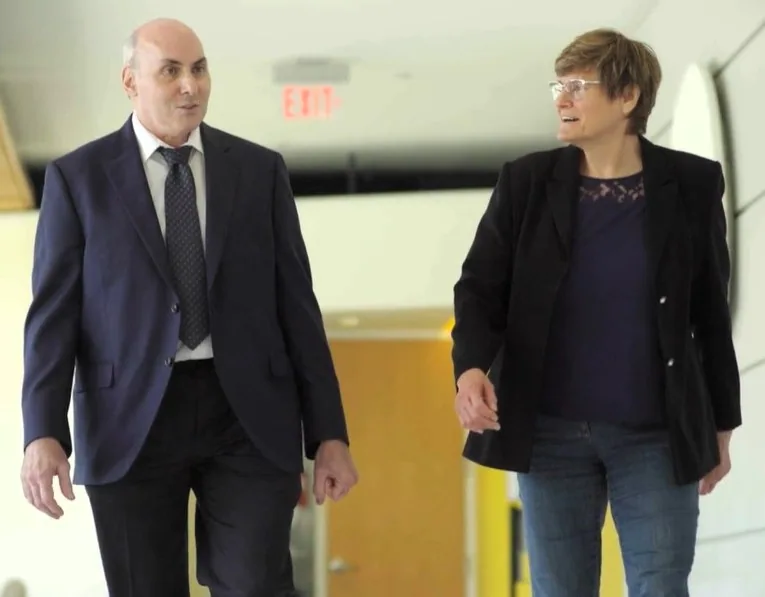
Education 11
- Standard article
The Remote Area Schools Education Development Act: NT$17.5 Billion Spent, and Demographic Gravity Still Wins
On November 21, 2016, the Legislative Yuan passed the Remote Area Schools Education Development Act — 21 articles that amounted to the state's formal admission of its own institutional failures. Eight years later, the government has poured NT$17.5 billion into rural school infrastructure, yet 2024–25 saw 18 primary schools close — the most in Taiwan's educational history. The law rescued the legal framework, but couldn't stop demographic gravity.
- Standard article
Becoming a Teacher: Forty Years of Reform and Collapse in Taiwan's Teacher Training System
In February 1994, the Legislative Yuan passed the Teacher Education Act, transforming the monopoly of normal schools into an open, pluralistic system — hailed at the time as a milestone in Taiwan's educational history. Thirty years later, the numbers are sobering: the original nine education universities were merged down to just three; in the 2020 academic year, enrollment shortfalls across teacher training institutions hit an all-time high; the teacher certification pass rate dropped to 52% in recent years; nearly half of teacher candidates treat teacher training as a backup plan; and 42% quit before obtaining their teaching certificates.
- Standard article
Education System and College Entrance Culture
From the joint college entrance examination to the twelve-year national education system, how Taiwan's education seeks balance between competition and diversity.
- Standard article
The Expansion and Withdrawal of Higher Education in Taiwan: From 58 to 148 Universities, Then the Closings Began
In 1994, the April 10 March called for the widespread establishment of colleges and universities. In less than twenty years, the number of institutions ballooned from 58 to 148, with net enrollment rates soaring past 70%. Then came the wall of a declining birthrate: student numbers peaked in 2012, yet withdrawal regulations were not enacted until 2022. As Gaofeng, Yongda, and Dijiang closed their doors one by one, nearly one-third of students placed at Yongda failed to graduate, and the success rate for transitioned teachers was only 14%. This was an experiment designed only for opening; the rules for closing arrived ten years late, while the dividends were real but diluted, and the bill fell upon those with the fewest options.
- Standard article
Teach For Taiwan: How a Princeton Graduate Came Home and Convinced 400 Young People to Enter Remote Classrooms
In 2014, Liu An-ting started with NT$2,000 and nine people. Eleven years later, more than 400 TFT teachers have entered Taiwan's most remote elementary schools, accompanying over 7,000 children forgotten by the system. This is not an inspirational charity story — it is an ongoing debate about who should be responsible for inequality.
- Evolving · community
The 2026 Advanced Subjects Test Controversy: A Structural Crisis of Educational Integrity
In July 2026, the Advanced Subjects Test was delayed for the first time due to Super Typhoon Bavi; following the release of results, 149 exam appeals were filed, all of which were rejected by the CEEC. With identical options in Biology and histogram errors in Geography, official responses merely claimed "no impact on performance." Legislators, parents, and a civic petition are demanding verifiable evidence rather than mere conclusions.
- Standard article
Where Did Taiwan's Moral Education Go: A Cancelled Class and Two Decades of Unclaimed Responsibility
Before 1993, every elementary school student in Taiwan took 'Morality and Health' each week, and every junior high student took 'Citizenship and Morality.' The Nine-Year Integrated Curriculum abolished both subjects, 'infusing' moral education into seven major learning areas. The result: in nearly 60 pages of social studies curriculum guidelines, the word 'morality' barely appeared; 78% of teachers said moral education was what most needed strengthening, yet no subject teacher felt it was their responsibility.
- Standard article
Taiwan's Teacher Discipline Dilemma: Twenty Years from the Disappearance of the Cane to Afraid to Open Their Mouths
In 2006, Taiwan legislated to ban corporal punishment in schools, becoming the 109th country in the world to achieve a zero-corporal-punishment status. But when the law was passed, 'corporal punishment' had no clear legal definition, and there was no accompanying disciplinary alternative plan. The result: the cane disappeared from the lectern, and teachers' confidence in discipline disappeared with it. At one end, students with ADHD were strapped to chairs with plastic zip ties; at the other, teachers chose to manage nothing at all.
- Standard article
Taiwan's Youth Career Confusion: Sixteen Years of School, and the Most Common Sentence After Graduation Is 'I Don't Know What I Want to Do'
A 2006 Youth Affairs Council survey found that the three capabilities employers valued most were work attitude, stress resilience, and communication skills — but Taiwan's universities teach professional knowledge and technical skills. The Ministry of Education spent twenty years building platforms, revising indicators, and running programs; the definition of 'employability' went through four versions; and university students were still asking the same question on graduation day. The problem may never have been with the students.
- Standard article
The Past and Present of School Counseling in Taiwan: From 'Only People with Problems Go There' to 'Everyone Needs It but There Is Not Enough'
In 2014 Taiwan passed the Student Guidance Act, requiring schools at all levels to staff professional counseling personnel. Ten years on, the staffing shortage for dedicated counselors has never been filled; visiting psychologists rotate across schools and cannot provide continuous care; students fear stigma from entering the counseling room. A teacher who once won the 'Super Teacher' award became a counseling client herself — because of the child she could not save. Taiwan's school counseling system stands at a crossroads that America took sixty years to reach.
- Standard article
Taiwan's Rural Education: What Children Lack Is Not Inspirational Stories, But an Unbroken Support System
Rural education is not simply 'schools in the mountains are farther away.' From teacher turnover and multi-age teaching to transportation, housing, family support, community connections, and society's singular imagination of success, the real difficulty is that the entire support system often unravels layer by layer once a child leaves the classroom.
International Relations 7
- Standard article
Taiwan’s Diplomatic Allies and International Diplomacy: 12 Allies, 113 Overseas Offices, Visa-Free Access to 177 Countries (2026)
On January 15, 2024, 48 hours after Lai Ching-te was elected president, Nauru announced the severance of diplomatic relations, reducing Taiwan’s diplomatic allies from 13 to 12. Yet that same year, Taiwan had 113 overseas offices, its passport provided access to 177 countries, TSMC produced 90% of the world’s advanced chips, and the European Parliament passed a resolution by 432:60:71 opposing China’s distortion of UN General Assembly Resolution 2758. Recognition on paper is shrinking, the shadow network is expanding, and the interpretive battle over international law is turning.
- Standard article
Taiwan and Eswatini: Africa's Last Diplomatic Lifeline Hangs on One Person
At 9 a.m. on May 2, 2026, Lai Ching-te landed in Mbabane aboard an A340 special aircraft loaned by the king of Eswatini. It was the first time a Taiwanese president's flight permits had been revoked under Chinese pressure, with the king of a diplomatic ally ultimately sending a plane to Taipei to receive him. From the establishment of diplomatic relations on the same day as Eswatini's independence in 1968 to Taiwan's last remaining ally in Africa; from an absolute monarch whose birth year completely overlaps with the history of those diplomatic ties to the 46 lives lost in his own country's 2021 crackdown; from red-fleshed guavas entering SUPERSPAR to China's zero-tariff treatment for 53 African countries deliberately skipping Eswatini. These 58 years of relations between Taiwan and Eswatini are the most concrete textbook on what it means to be a 'sovereign state' and also an unanswered question.
- Standard article
Paraguay and Taiwan: South America's Only Diplomatic Ally, a Sixty-Nine-Year Pragmatic Partnership
Diplomatic relations established in 1957, remained with Taipei after the 1989 coup, signed an ECA in 2017, and co-founded the Taiwan-Paraguay Polytechnic University in 2018. Paraguay is Taiwan's only diplomatic ally in South America and the largest by area among its current allies; this relationship is sustained by pork, beef, education, and technology cooperation delivering tangible mutual benefit.
- Standard article
Chinese Taipei: The Ticket That Lets Taiwan Compete but Can’t Print Its Own Name
At the 1960 Rome Olympics, the Taiwan delegation entered the opening ceremony holding a white banner reading “UNDER PROTEST,” the only opening‑ceremony protest in Olympic history. From Chiang Ching‑kuo’s refusal of the IOC‑offered “Taiwan,” to Hsu Heng‑ko’s legal victory and the Lausanne Agreement that secured the plum‑blossom flag and anthem, to the 2018 athletes’ referendum that rejected a name change—this name has not changed in forty years, yet the athletes who must rely on it to step onto the podium are caught in a dilemma, not the politicians arguing over the name.
- Standard article
Taiwanese Overseas: From Exiled Students to Silicon Valley Engineers, a Diaspora Map of Two Million
Taiwan still has no absentee voting. Two million overseas citizens must fly home to their household registration address for every election. From the politically exiled students of the 1960s to the FAPA lobbying organization founded in Los Angeles in 1982, to the homeward pull of Silicon Valley engineers — this is a story of identity and civic capacity in diaspora.
- Standard article
Taiwan and Lithuania: A Partnership Negotiating Between Democratic Values and Geopolitical Realities
From the breakthrough of establishing a representative office in 2021 to the Lithuanian new government's 2026 reflection on a "strategic mistake," Taiwan–Lithuania relations have shifted from a warm value-based alliance to pragmatic interest-based negotiation. A "disunity between the presidency and the cabinet" has emerged in Lithuania over the renaming dispute, while Taiwan, through deepening semiconductor and laser cooperation, seeks to sustain this landmark international friendship amid political pressure and economic commitments.
- Standard article
Taiwan's Labeling in International Standards
From ISO Codes to Open-Source Software — How Taiwan's Name Is Written, Contested, and Corrected in Global Digital Infrastructure
Democracy & Politics 6
- Standard article
Sunflower Movement—Twelve Years After Those Thirty Seconds
A legislator lay on the floor and read a thirty‑second statement with a lapel microphone, triggering a twenty‑four‑day occupation of the Legislative Yuan, a generation’s political awakening, and the turning point of Taiwan’s economy away from China. Twelve years later, the law the students demanded has not been passed, but they won a war they didn’t even know they were fighting.
- Standard article
Social Movements and Civic Engagement
From the White Lily to the Sunflower, how Taiwan has practiced democracy and driven social progress through social movements
- Evolving · community
The Public Policy Online Participation Platform: A Digital Democracy Gym Starting from "Submit Ideas"
Launched in 2015, the JOIN platform, modeled after the White House petition site, established a "5,000 signatures" threshold, allowing cancer patients and high school students alike to directly influence government decision-making, becoming Taiwan’s flagship experiment in digital democracy.
- Standard article
The Democratic System: From the 1987 Lifting of Martial Law to Lai Ching-te in 2024 — Coordinates of Taiwan's 37 Years of Democracy
Taiwan endured 38 years of authoritarian rule under martial law beginning in 1949. Martial law was lifted on July 15, 1987, and the first direct presidential election was held in 1996 (Lee Teng-hui). The first party rotation occurred in 2000 (Chen Shui-bian). On May 17, 2019, Taiwan became the first region in Asia to legalize same-sex marriage. On January 13, 2024, Lai Ching-te was elected the 16th president with 40.05% of the vote (5.58 million votes), marking the first time the Democratic Progressive Party won three consecutive presidential elections; the Kuomintang reclaimed its position as the largest party in the Legislative Yuan (52 seats), with the DPP at 51 seats and the Taiwan People's Party at 8 seats — no party held a majority.
- Standard article
Taiwan's Political Landscape and Electoral System
From the constitutional framework, central and local electoral mechanisms, to the deeper party-political culture, a comprehensive analysis of how Taiwan maintains a vibrant and institutionally rigorous democratic society amid complex geopolitics
- Standard article
Wild Lily Student Movement
A group of university students sat in at Chiang Kai-shek Memorial Hall for seven days and ultimately forced a political system that had dragged on for more than forty years to begin loosening. What the Wild Lily movement truly changed was not just the National Affairs Conference — it was the first time Taiwanese people clearly saw that students could directly rewrite the timeline of constitutional reform.
Human Rights & Equality 5
- Standard article
Regenerative Medicine Dual Laws × 30 Years of mRNA: How the State Regulates Two Kinds of Life-Saving Medicine
On the day Karikó and Weissman won the Nobel Prize in 2023, exactly 28 years had passed since she was demoted at the University of Pennsylvania. At the moment the first 930,000 doses of BNT landed at Taoyuan Airport on September 2, 2021, 24 years had passed since she and Weissman ran into each other by the photocopier in 1997. This article places the “Regenerative Medicine Dual Laws 2024” alongside “30 difficult years of mRNA,” moving from a Hungarian immigrant woman scientist's teddy bear to cleanrooms in Taoyuan Science Park to examine how the state regulates two entirely different kinds of life-saving medicine: cells and molecules.
- Standard article
National Housing and Housing Justice: The Cheap Homes Built by the Government, and Whose Asset Escalator They Ultimately Created
In 1985, Chenggong National Housing cost NT$67,000 per ping and still had no buyers; an old borough chief scraped together a NT$400,000 down payment and bought a unit. Forty years later, the same address is nearing NT$1 million per ping. National Housing was supposed to be a tool to help people afford homes, but it was never fitted with a gate to recapture appreciation. Public subsidy ultimately became private assets for early buyers. In 2026, Taoyuan put that gate back in, effectively admitting National Housing’s mistake.
- Standard article
International Migrant Workers: The "Great Living Room" of 870,000 People and the Cross-Ocean Struggle for Survival
As of March 2026, migrant workers in Taiwan have reached 873,000; including those who have gone missing, the total approaches one million, accounting for over 5% of Taiwan's resident population. This article provides an in-depth analysis of the labor characteristics of Indonesia, Vietnam, the Philippines, and Thailand, explores the demands of the Migrant Workers' Grand March for "abolishing the work-year limit," and balances the public anxiety, opposition party oversight, and the government's "conditional" stance behind the 2026 Indian migrant worker introduction plan.
- Standard article
Human Rights and Gender Equality
Taiwan's progress in human rights protection and gender equality, from human rights violations under authoritarian rule to becoming a pioneer in human rights across Asia
- Standard article
Social Housing and Housing Justice
How Taiwan Seeks to Realize Housing Justice through Social Housing Policy, Ensuring Everyone Has a Place to Live with Security and Dignity
Education 4
- Standard article
Taiwan Indigenous Education and Language Revival: Elementary Schools Hold the Line, Middle Schools Fail to Catch
In 2012, Paiwan teacher Camake Valaule at Taimali Elementary School in Pingtung used a voice recorder to collect ancient songs from elders and led children to the Golden Melody Awards. In 2017, the Indigenous Peoples Language Development Act elevated indigenous languages to national language status. In 2019, the Indigenous Peoples Education Act inscribed a ten-year target for teacher ratio requirements. The number of indigenous experimental schools at the elementary level grew from 25 to 38. But once students reach middle school, the entire system collapses: there are only 6 indigenous experimental middle schools across Taiwan, the gross enrollment rate for indigenous college students is 56.3%, 35.3 percentage points below the general population. Camake passed away in 2021 at age 42. Elementary schools hold the line; middle schools fail to catch. The gap remains.
- Standard article
Learning Poverty: Sitting in the Classroom Without Learning Anything
In 2019, the World Bank introduced the term 'Learning Poverty' to describe something harder to see than being out of school: a 10-year-old child who arrives at school on time every day, sits quietly, and hands in all their assignments — yet cannot read a simple age-appropriate story. The World Bank's February 2023 update maintained the global learning poverty rate at 70%. Taiwan ranked in the global top five in PISA 2022, and the math scores of the most disadvantaged 20% of students caught up with the OECD average — on the surface, a major turnaround. But the same PISA report shows urban students scoring 571 versus rural students at 517, a gap of 54 points; a 2019 survey by the Boyo Foundation across 13 rural middle schools found that in 6 of them, 70% of students scored C in English, and in 5 of them, 70% scored C in math. Taiwan's version of learning poverty hides in this gap, still unmeasured.
- Standard article
Za School: Free Exhibition Founded with Blown Savings, Vice President Opens It 11 Years Later
On May 9-10, 2015, Su Yang-chih used 1.5 million TWD in profit from his design company to host the 'Not So Obedient Education Festival,' ultimately losing 7 million TWD. Eleven years later, Za School moved into the Taipei Flower Expo Park to co-host IDEC, and rebranded as 'EDit' to move into the Taoyuan Convention and Exhibition Center. This is a Taiwanese case study of an exhibition that started as a free rebellion and grew into Asia's largest education expo. The most interesting aspect is not that it grew large, but whether the 'not so obedient' spirit remained intact after that growth.
- Standard article
Taiwan's Cram School Culture: The Rise and Fall of One Street, and an Entire Society's Anxiety Bill
In 1981, over 100,000 college retake students and 48 cram schools crowded into Nanyangstreet in Taipei. Forty years later only three remained, with fewer than 2,500 students, and the ground-floor storefronts had all become bubble tea shops. But cram schools didn't disappear — they moved into neighborhood alleys across the island, growing from 18,000 locations to more than there are convenience stores. Education reform promised to loosen things up; instead, the number of cram schools tripled.
Community & Daily Life 4
- Standard article
Taiwan’s Stray Animal Culture: From Twelve Nights to the Death of a Leopard Cat, the Trolley Problem of Animal Protection and Wildlife Conservation
In 2013, Twelve Nights moved the entire island to tears; in February 2017, Taiwan became East Asia's first zero-culling country. Eight years later, at six o'clock on the evening of May 11, 2023, a young leopard cat died in the jaws of a free-ranging cat. The Ministry of Agriculture's 2022 survey counted 159,697 free-ranging dogs nationwide, and automatic cameras operated by the Leopard Cat Association of Taiwan found dogs at 91% of leopard cat activity sites. Animal protection and wildlife conservation are not opposites. The issue is that this island still has more than a million lives with no one to take responsibility for them. This article does not take sides; it examines a question Taiwan has not yet finished answering.
- Standard article
The Breakfast Shop Auntie and the Community Intelligence Network
I seriously thought all aunties ever did was call everyone 'handsome.' This piece is about how breakfast shop aunties become the intelligence hub of their entire community.
- Evolving · community
Betel Nut: From Sacred Fruit to Carcinogen—A Microcosm of Class and Land within a Single Seed
In 1976, a betel nut stall in Caotun, Nantou, ushered in the era of the "Betel Nut Beauties." Once a sacred offering for Indigenous peoples and a "miasma-cleansing pill" for Han settlers, this green fruit has become a microcosm of Taiwan's social class and land conflicts due to health and environmental controversies.
- Evolving · community
The Mysterious Visual Estimation and Calculation Skills of Buffet Aunties
Taiwan's first buffet restaurant in 1962 lasted only two years, but the visual pricing techniques it left behind remain a human skill that is hardest for AI to replicate.
Media & Free Speech 3
- Standard article
Public Television: From the NT$900 Million Golden Headband to Expulsion from the Legislative Chamber, Twenty-Eight Years of Independence Still Unfinished
When PTS went on air in 1998, the Public Television Act required government-donated funding to decrease year by year and eventually froze it at NT$900 million annually. That provision bound PTS for 23 years. In the meantime, it nurtured five flagship Taiwanese dramas that shook society: The World Between Us, Gold Leaf, The Teenage Psychic, Wake Up, and A Touch of Green. In May 2023, legal amendments lifted the golden headband, and the budget more than doubled to NT$2.3 billion. But 19 months later, 1% of the budget was cut and 25% frozen; another year later, in May 2026, Chairperson Hu Yuan-hui was asked to leave the Legislative Yuan chamber. What PTS has proved over 28 years is this: removing the golden headband does not mean independence has been built.
- Standard article
Media and Press Freedom in Taiwan
From Party-State Control to the Media Warring States Era: Taiwan's Democratization of Press Freedom and the Challenges of Digital Transformation
- Standard article
PanSci: From the Black Hole of Science News to the Knowledge Industry Inside the Algorithm
In 2011, Cheng Kuo-wei and Hsu Ting-yao turned a canceled project into PanSci. Later academic research would treat it as an important node in the democratization of science communication in Taiwan; but its real problem has been that public scientific discussion must first survive through advertising, courses, video, and algorithms.
Social Resilience 3
- Standard article
Earthquakes in Taiwan: An Island's Memory of Dancing with the Earth Dragon
Why are foreigners terrified while Taiwanese people only worry about whether their instant noodles have gone soggy? From the Qing-era legend of 'earth grows hair' to the 102 seconds of the 921 earthquake, see how this island has internalized disaster into daily life.
- Standard article
The Shovel Supermen and Island Synchronicity: How Taiwan's Disaster Volunteer Culture Shapes National Identity
Starting with the "Shovel Supermen" of the 2025 Matawan floods, this article reflects on the disaster volunteer culture accumulated in Taiwan since the 1999 Jiji earthquake, the flood creation myths and community resilience of the Matawan tribe, the complexities of the Tzu Chi model versus fragmented command centers, and how Chen Chien-nian's "We are Compatriots" became a concrete action during this flood.
- Evolving · community
Taiwan's Volunteer Firefighters: After Work They Put On the Uniform, Giving Localities a Second Fire Brigade
Called volunteers, yet they have statutory organization, professional training, operational command, and disaster insurance. From the Japanese-era fire-fighting associations to today's mountain search and rescue, this local force fills the time gap in the fire protection system while exposing challenges in recruitment, training, safety equipment, family support, and long-term retention.
Community and Daily Life 2
- Standard article
Taipei's Rat Problem: From the 1896 Governor-General's Plague Order to the 2026 Dax'an Hantavirus Case
In January 2026, a septuagenarian man in Dax'an District died of hantavirus, marking Taiwan's first fatality in 25 years. But the story's true turning point was the 'ban on household kitchen waste for pig feeding' implemented that same month—when pigs stopped eating kitchen waste, rats began eating Taipei.
- Standard article
The Mingjian Incinerator Battle: When 300,000 Tons of 'Garbage Debt' Collides with a Billion-Dollar Tea Country's Survival
Nantou County's accumulated garbage surpassed 310,000 tons by late 2024, triggering a 'garbage siege' crisis. County Chief Hsu Shu-hua plans to build a 500-ton-per-day incinerator in Xinmin Village, Mingjian Township, sparking a resistance coalition of over 250 scholars. This is a battle for survival involving a designated agricultural zone, a Chinese stripe-necked turtle habitat, and the supply chain for Taiwan's largest hand-shaken tea market.
Population & Generations 2
- Standard article
The Island's Last Song: Even the Dragon Year Couldn't Save 0.695
2024 was the Year of the Dragon, when Taiwanese were supposed to rush to have children for good luck. Yet that year saw 715 fewer babies than the previous one, marking the first time in 48 years that the 'magic' of the Dragon Year failed. The following year, the fertility rate collapsed to 0.695. But the real key has never been that Taiwanese people don't have children (over 70% of married couples have two or more); it's that they don't marry. The government has spent ten years throwing money at 'fear of having children,' yet no country in the world has ever bought back its fertility rate.
- Standard article
Mainlanders in Taiwan: From Kidnapped Youths to Taiwanese Identified with the Land Beneath Their Feet
In 1949, more than one million people carrying trauma and homesickness crossed the sea to Taiwan. They were both a high-risk group for being treated as “political prisoners” by an authoritarian government that distrusted them, and “war refugees” who had been forcibly seized and cut off from their homelands. This article reveals how the mainlander community, through four psychological traumas, completed a spiritual migration from “exiles” to “settlers.”
Animals & Ethics 2
- Standard article
Zoo and Exhibition Animal Ethics
From an Elephant in an Iron Cage to Xpark's Jellyfish Wall: Taiwan Is Redefining the Relationship Between Humans and Animals on Display
- Standard article
What Zoos are in Taiwan: The Oldest isn't in Wuzhi, and the Largest is More Than Just a Zoo
From Yuan Zai to overnight stays at the Aquarium, Taiwan's zoos are not just a list of family attractions, but an island-wide route where urban life, tourism, and marine education grow together.
Media & Journalism 2
- Standard article
The Reporter: Ten Years of Turning Investigative Journalism from a Line of Business into a Public Good
From 4 recurring donors to 8,000 each month, from the Blood-Stained Fishing Grounds trilogy to the 2026 united-front special report, the costs The Reporter has burned through over a decade--eight months undercover, reporting across three countries, comparing years of violation records--are exactly the things people least want to pay to read in the algorithmic age. Taiwan's civil society, through monthly deductions from strangers' accounts, has rescued investigative journalism from a line of business in commercial media and turned it into a public good that is constantly being sustained, even as it burns through resources ever faster.
- Standard article
CommonWealth Magazine: Four Decades of Defining Taiwan's "Success," Standing Closest to Capital
In June 1981, a business magazine called CommonWealth launched on a martial-law island, selling out its first print run of 10,000 copies in two days. Founded by economist Kao Hsi-chun, its editorial soul was Diane Ying — a former UPI, New York Times, and Asian Wall Street Journal reporter. Forty years later it became one of Taiwan's most trusted media outlets, and the maker of rankings — the Top 2000, Top 50, Happiest Cities — that quietly define what "success" means. Its credibility and its power to rank others draw from the same distance.
Religion & Faith 2
- Standard article
Taiwan's Matchmaker Gods: A Map of Deities for Every Dating Need
Many people don't realize that Taiwan's matchmaker deity Yue Lao isn't just one god. In Tainan, the Four Great Yue Lao divide responsibilities: seeking love, seeking stability, cutting romantic entanglements, and seeking reconciliation. Taichung's Le Cheng Gong, established in 1753, is famous for its effectiveness in reconciliation. New Taipei's Weiming Tang's Rabbit God specializes in same-sex matchmaking, while Xi'an, Longshan Temple, and Lukang Tianhou Gong each have their own specialties. The more detailed your matchmaking criteria, the better — because leaving things blank gives Yue Lao room to exploit loopholes.
- Standard article
Falun Gong: From the Yangmingshan Flower Clock to Zhongnanhai and Taipei 101 — A Cross-Strait Prism
In 1995, the first Falun Gong practice site in Taiwan quietly formed beside the Yangmingshan flower clock. Over the next thirty years, this group — branded as a 'cult' in China and subjected to extreme persecution — developed in Taiwan into a practice phenomenon led by NTU professors and registered as a 'social organization juridical person.' Falun Gong's quiet existence in Taiwan is not just the spread of a qigong practice, but the front line of constitutional religious freedom.
Law & Institutions 2
- Standard article
Medical Care Act: Forty Years of Institutional Regulation and Market Tug-of-War
The Medical Care Act was promulgated in 1986, the 2017 amendment redefined physician criminal liability, and in May 2026, the three-shift nurse-to-patient ratio became law. The law can dictate "how many beds a nurse can manage at most," but it cannot dictate "whether there is a nurse available." Out of 320,000 nursing licenses, only 190,000 hands remain in clinical practice. This is not the Health Insurance Act or the Medical Practitioners Act; it is the foundational law governing how "hospitals" as institutions exist in Taiwan, and the unresolved tug-of-war between medical public welfare and market mechanisms over the past four decades.
- Standard article
The Delivery-Specific Law: The Legal Floor Is Laid, But Above It Still Rules the Algorithm
At 12:00 AM on July 21, 2026, Taiwan's first delivery-specific law took effect: a minimum of NT$45 per order. On that day, one rider received two orders—one 4.4 km and another 8.6 km—both paying only NT$90. From the deaths of two riders during the National Day holiday in 2019 to these 28 articles took six years. The law deliberately avoids answering whether they are employees and does not touch the dispatch algorithm that truly determines income; even a week after implementation, there was no answer on how many local inspectors were deployed or if fines would be issued.
Others 40
- Standard article
National Museum of Taiwan History: The Eighth Gallery Is Called "You, Too, Are Someone Who Writes History"
The National Museum of Taiwan History, which opened in 2011, calls the eighth gallery of its permanent exhibition "You, Too, Are Someone Who Writes History." This national third-level agency has released 140,000 collection items under the Open Government Data License, version 1.0, while Director Chang Lung-chih has publicly positioned the museum as a project of "co-writing and co-creation by all." When this national museum meets a community-driven open-source knowledge base in the age of AI, collective memory gains a second curatorial form.
- Standard article
The 2026 Cheng-Xi Meeting: Ten Minutes Between KMT and CCP Leaders After a Decade Apart
On April 10, 2026, Cheng Li-wun met Xi Jinping in Beijing, becoming the first major political party leader of the Republic of China to meet the CCP General Secretary in ten years. The meeting lasted ten minutes. Meanwhile, 100 PLA vessels were in the Taiwan Strait. What exactly was this 'peace mission' touring?
- Standard article
Environmental Awakening and the Net‑Zero Transition
How Taiwan moved from pollution‑first industrialization to a civic‑driven sustainability model—shaped by grassroots activism, circular economy policy, corporate ESG, and a 2050 net‑zero roadmap
- Standard article
Taiwan's Marriage Revolution: How One Man's 33-Year Fight Rewrote Love's Definition
From martial law prison to Asia's first same-sex marriage law—the extraordinary story of Taiwan becoming Asia's rainbow capital
- Standard article
Cognitive Warfare: The AI Industrialization Phase of Taiwan's Information Battlefield
In December 2024, the 'China United Front Documentary' surpassed 2 million views. In Q4 2025, 1,076 CCP state media accounts on Douyin published 560,000 videos, using facial recognition to identify 57 Taiwanese individuals. In October 2025, Shen Pei-yang was formally investigated by the Chongqing Public Security Bureau for the 'crime of splitting the country.' Cognitive warfare has entered a new phase of AI industrialization and 'using Taiwan to criticize Taiwan,' but the term 'cognitive warfare' itself is also facing internal tensions regarding its potential for abuse in Taiwan.
- Standard article
Poisoned Potatoes: Beyond 200 ppm, There Are 30 ppm, 14 Days, and 15 Years of Food Safety Scars
On April 29, 2026, Chen Bin-hua, spokesperson for the Taiwan Affairs Office of the PRC, criticized the Lai Ching-te administration for 'once again making public health a tribute to curry favor with the US' using the term 'poisoned potatoes.' The core of the controversy spans three layers: the 150-fold gap between the EU's 0.2 ppm and Taiwan's 30 ppm CIPC residue limits; how 85 border staff can 'check every single potato' out of 300 million; and the 15-year food safety scars accumulated since the 2011 plasticizer scandal—the foundation this narrative precisely steps on.
- Standard article
Taiwan's Sports Development and the Olympics: A Team Called “Chinese Taipei”
In Montreal in 1976, Canada demanded a name change to “Taiwan,” and Chiang Ching-kuo treated it as a national humiliation and withdrew the team. In Paris in 2024, on the night the “Lee-Yang” pair defended their men’s doubles title, the whole arena sang the National Flag Anthem lyrics beneath the plum blossom flag. From the “Taiwan” that could not enter to a world beginning to call the team Taiwan, every generation of gold medalists has carried the weight of this cap called “Chinese Taipei.”
- Standard article
Taiwan and the Nuclear Debate: Anti-Nuclear Politics Was Once the Shared Language of the Democracy Movement, but the Climate Crisis Has Reshuffled Every Side
In August 2025, 4.34 million people voted yes on “restarting Maanshan Nuclear Power Plant,” winning 74 percent of the vote, yet the proposal failed because turnout did not pass the threshold. Across four decades and three referendums, Taiwan moved from an anti-nuclear consensus to a nuclear-free homeland, then within three months personally pushed a reactor it had shut down toward restart. This debate has long since exceeded the yes-or-no question of “whether nuclear power is good.” It is about how a society decides an issue whose time pressures run in opposite directions: nuclear waste must remain stable for 100,000 years, carbon reduction must be achieved within a decade, and power shortages are immediate.
- Standard article
National Holidays: A History of Taiwan Written in Days Off Work
The Republic of China's first statutory national holiday was not Double Ten, not New Year's Day, but 228 in 1997. From the Japanese colonial government's June 17 “commemoration of shameful rule” to the 2025 Legislative Yuan uproar over “retrocession vs. war's end,” every red-letter day on the calendar is a regime's answer to what Taiwan should commemorate and to whom it belongs. But holidays have never been only a question of nationhood; they are also about whether workers should be allowed to rest.
- Standard article
Taipei Smoking Room: The Glass Box That Breathes in a Smoke-Free City
2026 May 7, a transparent box was erected next to Exit 6 of Ximen MRT Station, Taiwan's first outdoor negative-pressure smoking booth; when the door opens, wind blows in but does not escape. Taipei aims to be a smoke-free city, yet it first built a glass house for smoking on the street. From the 1984 case where a strict path removed a lung lobe, to indoor secondhand smoke dropping to 3.2% while nearly half remains outdoors, this box holds a legal cigarette and a city's unfinished public-space contract.
- Standard article
Taiwan Design Research Institute: The Agency That Sneaks Design into Health Centers and Ballot Papers
In 2022, after the renovation of the ticketing area at Zhongshan Station on the Taipei MRT, someone commented, "Well done, don't do it again." An institution that survives on the Golden Pin Awards, a design exhibition attended by millions, and an international ranking places its biggest gamble where you "don't feel"—the waiting area of a health center in Xizhi, the font on your ballot paper. From "Made in Taiwan is synonymous with counterfeit" to "Design power is national power," the Taiwan Design Research Institute aims to prove that this manufacturing island can decide what things look like, including how the government meets its people.
- Standard article
Complex Life Festival: Two Medical Students' 'Unsuccessful People's Forum' and a Generation's Five-Year Refusal to Say They Are Good Enough
In May 2016, Hsu Hao-ning posted a string of 'eighth-generation' (born 1981-1990) 'people who make life exhausting' on Facebook, and together with classmate Huang Tou-ni (Huang Yen-lin), organized the first 'Unsuccessful People's Forum'. A TCM practitioner and a Western medicine doctor who later went to Harvard rewrote the previous generation's commercially co-opted 'simplicity' into 'complexity', allowing only talk of growth, not success. Five years later, Hsu Hao-ning's soul remained in Taichung to run a bookstore and ran for city councilor, losing the election; his assistant looked back and called it 'Hao-ning's masterpiece, sealed here': Is 'unsuccessful' a humble term, or a self-expectation of a generation that is always just a little bit short?
- Standard article
'Kuma Academy: A Civil Defense School That Hopes One Day It Will No Longer Need to Exist'
In 2021, five volunteers talked for five hours in a cafe and decided to teach Taiwanese people how to face war. After holding only a few events, they were NT$210,000 in debt. The next year, Russia invaded Ukraine, Robert Tsao donated NT$600 million, and the call went out to train three million Kuma Warriors in three years. The academy teaches tourniquets, evacuation, and fraud prevention, and states plainly that it is 'absolutely not training militia.' The more seriously it teaches, the more China puts it on Taiwan independence lists and the more it becomes a political football inside Taiwan. A school born because of war, yet hoping one day it will never be needed.
- Standard article
Taiwan's Animal Drug Controversy: Where an Island Treats Pets as Family but Pet Medicines as Commodities
On July 1, 2026, a new Taiwan regulation on human drugs used for companion animals is set to take effect. Of 701 approved drugs, only 144 have been registered. Medical oxygen: zero. 100,000+ pet owners have signed a petition to delay it. This is a ten-year legal gap traced back to a 2012 counterfeit drug case, a Pandora's box opened in 2022 by a legislator, and a first-ever conviction in 2024.
- Standard article
Thinking Taiwan Forum: 14 Years from a Post-Election Loss Touchstone to a Cross-Party Democratic Dialogue Container
On May 2, 2026, former People First Party Chairman James Soong, Taiwan Statebuilding Party Chair Wang Yu-ther, Social Democratic Party legislator Miao Poya, and veterinarian/founder of Fresh Milk Farm Gong Jianjia all appeared on the contributor list for "30 Years, 30 People, 30 Perspectives." This online forum, founded by Tsai Ing-wen after her 2012 presidential election defeat, has accumulated nearly 5,800 articles over 14 years, survived the firewall moment when Jian Chih-chung took over as chairman, and endured nine years of near-stasis during the Tsai administration. In 2026, it is still answering the question that has hung over it since day one: Can a platform called the "Tsai Ing-wen Education Foundation" sustain cross-party democratic dialogue?
- Standard article
Ma Ying-jeou Memes: How Internet Culture Reshaped a President's Public Image
From the 'Death Grip' that went viral on PTT in 2012 to the gaffe about deer antler velvet, and all the way to the self-deprecating 'Mabrella Jellyfish,' a string of internet memes surrounding former President Ma Ying-jeou's words and actions profoundly altered public perception of him. These phenomena reflect Taiwan's distinctive political culture and illuminate how memes in the digital age deconstruct and reconstruct the public image of political figures.
- Standard article
Taiwan's Fifth to Ninth Grade Cohorts: The 'Strawberry' Insult Has Swapped Three Generations, While the Escalator Beneath Their Feet Has Slanted
When the term 'Strawberry Generation' first appeared in print in 1993, it was criticizing the Fifth Grade cohort (born 1961–1970), who are now the nostalgic yogurt-drinkers of today. Over thirty years, the people being criticized have changed several times, but the label has remained unchanged. What has actually moved between these five cohorts is the 'escalator' of 'hard work pays off': it slowed down around 2002, its entrance was raised by housing prices, and then it split into two. The path relying solely on salaries has nearly stopped, while the path relying on parental capital continues to move.
- Standard article
TikTok in Taiwan
From 15-second joy to invisible cognitive warfare: how TikTok, through hyper-personalized recommendation and the 'sea of content' tactic, quietly reshapes Taiwanese youth's worldview and political identity.
- Standard article
I Am a Person from [City]: The 'Local' Fan Pages with an AI Prompt Left in the Back-end
In February 2026, a local fan page claiming to be 'a person from Taipei' left behind an unedited AI prompt: 'Remove sensitive terms, enhance Taiwan local dialect.' Following this trail leads to a corporate entity in Neihu, Taipei, which uses AI to rewrite news from CTi News and CTWANT into the vernacular of locals, distributing them across fan pages disguised as residents of various cities. It doesn't fabricate news; it reposts real news. The problem lies in the untraceable origin and funding—while those best at identifying cognitive warfare in Taiwan are urging: 'Don't rush to label things.'
- Standard article
Taiwan Defense and Military Modernization
In October 2025, Lai Ching-te presided over the activation of an M1A2T tank battalion in Hukou. That same month, former Chief of the General Staff Lee Hsi-ming said with a wry smile: "If even tanks can be asymmetric weapons, then what is not an asymmetric weapon?" This is the story of an island pulled between two logics of national defense.
- Standard article
United Front Tour Groups: Cognitive Contest in Soft Rain — From Discount Tours to Influencer Traffic
In June 2024, Potter King exposed the CCP's plan to invite 10 Taiwanese influencer groups to China, triggering Taiwanese society's deeper anxiety about new-generation 'united front' operations. From cheap turnkey-hospitality trips to influencer trips paid for by the millions, the core of this cross-strait cognitive contest was never to make Taiwanese believe China is good — it was to make Taiwan break its own ranks.
- Standard article
The Independence-Unification Spectrum: Four Stances Plus One Status Quo, An Identity Map Quietly Redrawn Over Thirty Years
In May 2026, within seven days after the Trump-Xi meeting, Lai Ching-te publicly reaffirmed Taiwan's sovereignty twice, using three different names: "Republic of China," "Republic of China Taiwan," and "Taiwan." For a president to compress these three names into a single statement of "sovereign independence" is the very epitome of contemporary independence-unification debates. From 9.8% in 1994 to 33.2% in 2023, the "maintain status quo" stance has grown significantly; over thirty years, the binary framework no longer describes Taiwan.
- Standard article
Taiwan's Tin Shed Houses: A Skyline Propped Up by 716,000 Illegal Structures
In August 2024, a fire at a farm machinery shop in Liujia, Tainan, trapped a family of five on the third-floor tin-roof addition; none survived. As of July 2023, Taiwan had 716,372 illegal structures, with New Taipei City adding 32,000 per year. The government announces demolitions every year—and every year another 10,000 structures appear. That layer of orange and silver metal is simultaneously Taiwan's ugliest streetscape and the most-cited legend of public safety.
- Standard article
Typhoon Day: Whose Day Off, Whose Shift
In 2001, the death of a teacher in Changhua while on duty helped give rise to Taiwan's typhoon-day system. More than two decades later, 81% of workers still report to work as usual in wind and rain, and 37.7% receive no pay at all. Every summer, a single work-suspension announcement cuts precisely along Taiwan society's class lines: white-collar workers stay home scrolling on their phones, while workers in wholesale and retail, agriculture, fishing, and livestock head out into the same typhoon.
- Standard article
Taiwan Judicial Reform and Preventive Detention
From its introduction in 1997 to its expanded application in April 2026 to include drunk driving and child sexual exploitation, preventive detention has been part of Taiwan's legal system for 29 years. While expanding protections for victims, the baseline of the presumption of innocence has been retreating — is this progress, or a form of structural compromise?
- Standard article
From Golden Horse Awards to Hanwha Exercises: The Collective Rite of Passage and Survival Drill for Taiwanese Men
From 1945 onward, Taiwan's military service has shifted from a three-year term to four months, and then back to a one-year system in 2024. This collective memory, involving millions of people, is more than just the command phrase 'one two three four five six seven eight nine zero'; it represents the island's survival tension within a gray zone.
- Standard article
Taiwan's Rainbow Road: Love and Equality from Street Protests to the 'Wei-Meng Planet'
The 2017 Constitutional Court Interpretation No. 748 opened the path to marriage equality in Taiwan. From Chi Chia-wei's decades of solitary advocacy, to Yeh Yung-chih's lesson in gender education, to 'Wei & Meng's' everyday sweetness — how has Taiwan's LGBTQ+ community written a new chapter of equality in Asia through love and resilience?
- Standard article
Encyclopedia of Taiwan: A NT$500-Million National Knowledge Dream
In 2004, Taiwan launched its largest-ever knowledge engineering project — the Encyclopedia of Taiwan. From Wang Jung-wen's original NT$1.4-billion grand blueprint to the actual NT$520-million execution, the project went through three system iterations and evolving licensing regimes before the standalone website closed in 2014. This is not only a history of technological transition but a profound paradigm shift in which the state moved from being the authoritative definer of knowledge to an open-data provider.
- Standard article
The Gatekeepers Behind the Screen: The Evolution of Taiwan Content Rating — From Film Censorship to Five-Tier Classification
Taiwan's rating system is a historical microcosm of the transition from martial-law-era 'content censorship' to the democratic era's 'child and youth protection.' From abolishing the Film Inspection Law in 1983 to Jurassic Park catalyzing the protected rating in 1993, to the comprehensive adoption of a five-tier system in 2026, this is the record of a long evolution concerning viewing rights and social responsibility.
- Standard article
Sport Stacking: Taiwan's 43-Gold Rise from Viral Cup Fad
Taiwan won 43 golds and set 7 world records at the 2025 Dalian Asian Cup. A once-mocked cup game became elite sport, rehab tool, and inclusive classroom.
- Standard article
Taiwan's Public Health and Epidemic Response System
In 2003, a botched hospital lockdown at Hoping Hospital killed 30 people. Seventeen years later, when COVID-19 swept the globe, Taiwan drew on that trauma to hold zero community transmission for 18 months. How a national wound became an island's immune memory.
- Evolving · community
All-Age Inclusive Tourism and Living Culture in Taiwan: When Renqingwei Becomes the Strongest Accessibility Feature
An observation from a family perspective on how Taiwanese society, through _renqingwei_ (human warmth) and inclusive facilities, is redefining the meaning of "traveling as a family" on the path toward a super-aged society.
- Standard article
Indigenous Land Justice and Traditional Territories in Taiwan
Exploring the historical context, legal developments, territorial demarcation controversies, and achievements of Taiwan's Indigenous Transitional Justice Commission in restoring indigenous land rights
- Standard article
Taiwan Environmental Justice and NIMBY Conflicts
Explores the uneven distribution of environmental burdens in Taiwan, from incinerators and nuclear waste to petrochemical industry NIMBY conflicts, analyzing environmental inequality and social justice issues.
- Standard article
Taiwan’s Neighborhood and Li (里) Culture
From the grassroots of democracy to community‑building movements, Taiwan’s li system shows how civic life is practiced on the street level.
- Standard article
Taiwan's Provincial Tensions
Provincial tensions are not the story of two groups of people disliking each other — they are a power struggle over who has the right to define a 'Taiwanese.' They die and come back to life in the ballot box, quietly evaporate in the demolition of military dependents' villages, and yet have never truly ended.
- Standard article
Taiwan's Slash Generation — Survival and Choice in a Multi-Job Economy
When a master's degree only buys a Taipei studio apartment's rent, slash employment is not a choice; it's a math problem for survival
- Standard article
Taiwan's Urban Development and the Rural-Urban Divide
70 years transformed Taiwan from agricultural island to urban island: The light and shadow of six special municipalities concentrating 70% of the population
- Standard article
The Development of Taiwan’s Long‑Term Care System
From Long‑Term Care 1.0 to 2.0, Taiwan’s response to rapid aging through community‑based care
- Evolving · community
Volunteering and Civic Charity in Taiwan
From Tzu Chi’s relief network to neighborhood mutual aid—how Taiwan built one of Asia’s most active volunteer cultures
Curatorial Reading
But Taiwan accomplished it. From that day forward, Taiwan used less than forty years to transform from global history's longest martial law period into a mature democratic society ranking 12th globally and 1st in Asia on the Economist Democracy Index. This transition's speed and quality made Taiwan a classic case study in political science textbooks and prompted countless developing nations to send officials to study the "Taiwan Model."
More astonishing still, Taiwan didn't just establish democratic institutions but surpassed many established democracies in human rights protection. In 2019, Taiwan became Asia's first same-sex marriage legalization jurisdiction. Female parliamentary representation reaches 41.6% (9th globally), with gender equality ranking 6th worldwide. During the COVID-19 pandemic, Taiwan redefined democratic governance possibilities through digital technology, showing the world "digital democracy" Taiwan-style innovation.
But Taiwan society's most moving quality isn't these dazzling statistics—it's Taiwan's insistence on "impossibility." When the world told this island "you can't simultaneously have economic development and environmental protection," Taiwan invented the green miracle. When the world said "Confucian cultural zones aren't suitable for democracy," Taiwan proved cultural determinism's absurdity. When the world claimed "small countries lack international influence," Taiwan earned global respect through soft power.
This is Taiwan society's core code: it refuses to accept any predetermined limits about "impossibility." From authoritarianism to democracy, from conservative to progressive, from closed to open, Taiwan society repeatedly proved that change isn't just possible—it can be beautiful, peaceful, and inclusive. When night falls and Taiwan's night markets illuminate with people of different ethnicities, ages, and backgrounds gathering to enjoy food together, you witness this "impossible" experiment's most beautiful result: a society that's diverse yet harmonious, free yet orderly, progressive yet inclusive.
Democratic System: From Silence to Cacophonous Miracle
Martial law's lifting was merely Taiwan's democratization starting point, not endpoint. The real challenge was building mature democratic institutions and culture in a society lacking democratic tradition. When 20 million Taiwanese entered voting booths for the first presidential direct election in 1996, Taiwan officially joined the democratic nations club. But more important was 2000's peaceful power transition—the KMT, after 55 years in power, transferred authority to the DPP without military coups or social unrest, only a mature society's quiet revolution.
Taiwan democracy's most precious quality is "active civil society." From 1990's Wild Lily Movement to 2014's Sunflower Movement, Taiwan's civil movements demonstrated rational, peaceful, diverse characteristics. These movements didn't just promote political reform but cultivated Taiwanese civic consciousness. When students occupied the Legislative Yuan for 23 days without any violent incidents, the entire world witnessed Taiwan-style democracy's unique quality.
Even more amazing is Taiwan's innovation in "digital democracy." The vTaiwan platform enables direct citizen participation in policymaking. G0v (gov-zero) uses code to transform society. Mask rationing system's rapid implementation demonstrated digital governance power. Audrey Tang's appointment made Taiwan the world's first country with a digital minister, proving technology and democracy's perfect integration.
民主制度 | 太陽花學運 | 台灣政治環境與選舉制度 | g0v零時政府 | 數位民主創新
Human Rights Equality: Asia's Lighthouse Progressive Experiment
May 17, 2019. When Taiwan's same-sex marriage officially legalized, rainbow community cheers echoed through Taipei streets. This wasn't merely legal text change but profound transformation of Taiwan social values. From 1980s feminist movement emergence to today's female legislator proportion ranking 9th globally, Taiwan completed massive gender equality progress in less than half a century.
Taiwan's LGBTQ+ rights achievements represent Asian paradigms. Taiwan Pride each October attracts over 200,000 participants, Asia's largest LGBTQ+ rights event. But truly precious isn't these numbers but Taiwan society's tolerance for diverse values—when same-sex couples can marry in traditional temples, when rainbow flags flutter freely in conservative communities, you understand Taiwan's social progress runs deep, not superficial.
Indigenous rights protection equally leads Asia. Sixteen indigenous groups each have autonomous territories and cultural protection measures. The Indigenous Languages Development Act provides legal foundation for mother tongue revitalization. This respect for multicultural diversity reflects Taiwan society's maturity: true strength isn't homogenization but creating harmony within difference.
台灣同婚與性別平權 | 人權與性別平等 | 台灣原住民族土地正義與傳統領域 | 多元社會的包容與尊重
Civic Participation: World's Highest Density NGO Ecosystem
Taiwan's NGO density leads Asia, averaging 2.4 nonprofits per thousand people. This figure reflects not just organizational quantity but Taiwanese enthusiasm for public affairs participation. From Tzu Chi Foundation's global humanitarian rescue to Homemakers United Foundation's environmental protection movement, from Garden of Hope Foundation's gender equality advocacy to Wilderness Society Taiwan's ecological conservation work, Taiwan NGOs encompass every aspect of social life.
Volunteer culture is another Taiwan society highlight. Whether 921 earthquake or Morakot typhoon major disaster relief work, or daily community service and environmental maintenance, Taiwan volunteers demonstrate admirable dedication spirit. This altruistic cultural tradition enables Taiwan society to display powerful cohesion when facing challenges.
Most moving is "community building" movement's deep roots. From Beitou Community College's lifelong learning experiments to Meinong People's Association's rural regeneration, Taiwan's community building extends democracy from politics to life, expanding civic participation from voting to daily activities. This "life democratization" practice represents Taiwan's important contribution to global civil society development.
台灣志工文化與公益參與 | 社會運動與公民參與 | 台灣社區與里文化 | 早餐店阿姨與社區情報網
Environmental Justice: Small Island's Global Responsibility
Taiwan's environmental protection achievements far exceed its geographic scale. From 1980s anti-nuclear movement emergence to recent energy transition experiments, Taiwan proved economic development and environmental protection can coexist. When most countries still debated climate change reality, Taiwan already legislated commitment to 2050 net-zero emissions.
Environmental justice movement is Taiwan social progress's important indicator. From anti-Sixth Naphtha Cracker struggles against petrochemical pollution to anti-Fourth Nuclear Power Plant movements insisting nuclear safety, Taiwan's environmental movements demonstrated civil society's power to monitor government and corporations. These movements didn't just protect environment but established "environmental democracy" paradigms: major environmental policies must undergo citizen participation and social discussion.
More precious is Taiwan's innovative solutions to "NIMBY effect" problems. When toxic waste treatment plants and nuclear waste storage facilities in other countries trigger fierce protests, Taiwan developed "participatory decision-making" and "compensation and feedback mechanisms" among other innovations, proving environmental justice and economic development balance is possible.
台灣環境正義與鄰避爭議 | 台灣氣候變遷與淨零轉型 | 台灣環境運動史 | 綠色經濟轉型
Community Culture: Democracy's Most Detailed Laboratory
Taiwan's community culture represents democracy's deepest foundation. Among Taiwan's 7,755 villages and neighborhoods, each serves as a micro democracy laboratory. Village chief direct election systems extend democratic participation to grassroots levels. Village assemblies give every resident voice. This "grassroots democracy" practice cultivates Taiwanese democratic literacy.
Breakfast shop aunties represent Taiwan community culture's unique phenomenon. They don't just sell breakfast but serve as community information network core nodes. From which family's child got into university to which road needs construction, breakfast shop aunties' information density even exceeds formal media. This "weak ties" social network creates Taiwan's unique community cohesion.
Temple culture plays important roles in Taiwan communities. Taiwan's 12,000 temples aren't just religious venues but community activity centers, disaster relief stations, and cultural heritage sites. From Mazu pilgrimage's universal participation to Tudigong temple community identity, religious culture becomes Taiwan society's warmest cohesive force.
台灣社區與里文化 | 早餐店阿姨與社區情報網 | 自助餐阿姨的謎之目測精算能力 | 宗教與社區認同
Taiwan society's most moving aspect lies in its constant challenge to "impossibility." From authoritarianism to democracy, from conservative to progressive, from confrontation to reconciliation, Taiwan proved through practice that change isn't just possible—it can be beautiful, peaceful, and inclusive.