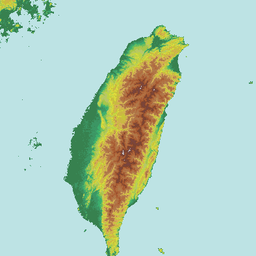
30-second overview: A clerk at Taiwan's Ministry of Transportation used his NT$3 million savings plus a NT$6 million mortgage to buy NT$30 million worth of aerial photography equipment and created "Beyond Beauty—Taiwan from Above," earning NT$220 million at the box office. He accumulated over 1,600 hours of helicopter flight time and shot over 300,000 aerial photographs. On June 10, 2017, while location scouting for "Beyond Beauty—Taiwan from Above II," he crashed and died at age 52.
How does a government clerk who cannot afford helicopters on his salary mortgage his house to create Taiwan's most successful documentary?
From Highway Engineering to Sky Dreams
Born on December 27, 1964, in Taipei, Chi Po-lin was named by his father, Chi Wei-xin, based on stroke count—coincidentally matching the airship Zeppelin, though this was pure chance.
His early life was unremarkable, hardly resembling someone who would later produce a NT$220 million box office documentary. He graduated from Dunxu Industrial and Commercial High School's Architecture Department and attended but did not complete the Industrial Management program at Lung Hwa University of Science and Technology. In 1990, he joined the National Freeway Bureau of the Ministry of Transportation as an administrative staff member, responsible for documenting the construction of National Freeway No. 3—a stable, secure government position.
The turning point came in 1991. Chi Po-lin suggested to then National Freeway Bureau director Ou Jin-de, "Construction photographs should be taken from high-altitude bird's-eye view to show scale." Ou adopted this idea and began renting helicopters for Chi Po-lin to conduct aerial photography. When the helicopter climbed to 500 feet, Taiwan looked completely different—winding coastlines, layered mountain ranges, and scars invisible from ground level.
"That moment I truly 'saw' Taiwan."
However, the bureau only budgeted 20 hours of helicopter rental annually. Helicopter rental cost over NT$100,000 per hour, far beyond a civil servant's salary. So Chi Po-lin began "catching rides"—he would fly with weather bureau staff when they switched shifts on remote islands and high mountains; fly with the Forestry Bureau when they conducted aerial pesticide spraying; fly with Taiwan Power Company during their equipment-hoisting operations. Helicopter pilot friends would proactively notify him. Huang Mu-shou, board chairman of Yiji Construction, once needed to take a helicopter to Jade Mountain to supervise a project and multiple times allowed Chi Po-lin to board, even sponsoring chartered flights for aerial photography.
When National Freeway No. 2 was nearing completion, Chi Po-lin again suggested to new National Freeway Bureau director Zheng Wen-long, "Aerial photography should integrate the relationship between highways and land." This proposal led to the book "Northern Freeway II Imagery: Deep Affection Embracing the Earth." He described the aerial view of the national freeway as "winding white jade ribbons draped across verdant land."
From this point forward, Chi Po-lin embarked on a 20-plus-year aerial photography career, accumulating flight hours exceeding 1,600 and aerial photographs exceeding 300,000.
A Job Between Life and Death
Aerial photography is never romantic work.
Chi Po-lin once encountered falling winds in the Dawu Mountain area of Pingtung, with the helicopter blown by strong winds to Taimali seaside, nearly losing control. Near Jade Mountain's main peak, at nearly 4,000 meters altitude, the intense cold turned his hands purple; strong air currents caused the helicopter to shake continuously, frightening everyone. Chi Po-lin maintained composure, "supporting my body with one hand while raising the camera with the other, capturing the moment when high-altitude air currents traversed the main peak. When I returned, I was exhausted for two full days." The downdrafts in the hills near Taipei's suburbs also nearly caused the helicopter to crash, though unexpectedly captured footage of a herd of cattle panicking and fleeing from low-altitude passes.
Former National Freeway Bureau director Zheng Wen-long described Chi Po-lin's aerial photography as "terrifying"—his entire body half-suspended outside the helicopter, causing cold sweat. Chi Po-lin himself said that since helicopter rental cost over NT$100,000 per hour, aerial photography required seizing every moment and complete concentration: "At that time, there was simply no time to feel fear."
He even said that when approaching the brink of life and death, he only feared the camera falling, not personal danger. The reason he was willing to risk his life for years of aerial photography was because "the more I see its 'sad' side, the more I want to protect it."
The equipment costs were also staggering. Each mission required at least six professional cameras worth over a million yen. Equipment frequently needed servicing due to salt corrosion from shooting coastal scenes and water condensation from extreme temperature fluctuations. To adapt to high-altitude cold, Chi Po-lin specially designed heated gloves that allowed flexible camera operation in low-temperature environments. However, he emphasized that on the return flight, clothing must be removed quickly: "The helicopter descends rapidly on return, with temperature rising from zero degrees to thirty or forty degrees Celsius—if you remove your clothes too slowly, you are guaranteed to suffer heatstroke."
What hurt him more was the landscape before him. Dense illegal construction, pockmarked mountains, polluted rivers. He once photographed unscrupulous operators dumping truck after truck of waste on the seaside.
"You know? Only places with no human presence are truly beautiful."
"In the airplane, my sighs never stopped! Photography speed cannot keep up with development speed."
The Preciousness of One Photograph
In August 1999, Chi Po-lin captured aerial photographs of the just-completed Wufeng Lin Family Garden for Geographic Magazine. One month later, the 921 earthquake destroyed the Lin family garden. Those photographs became the final complete record of this century-old heritage site.
Chi Po-lin said that reader feedback was the greatest comfort after aerial photography. A woman from Qingdao, Shandong, who had married into Taiwan and lived on the Qijin seaside in Kaohsiung, saw Chi Po-lin's aerial photograph of the Qijin coast that happened to capture her home. She purchased that photograph from Chi Po-lin, enlarged it into dozens of prints, and sent them back to Shandong to tell her family: "This is where I live!"
The NT$9 Million Gamble
In 2009, the devastation following Typhoon Morakot determined Chi Po-lin's resolve: still photographs were insufficient to let people feel the crisis facing Taiwan's land; he wanted to produce Taiwan's first aerial documentary.
The inspiration came from the documentary "Home," directed by Luc Besson in collaboration with Yann Arthus-Bertrand. However, when Chi Po-lin first proposed this concept in 2008, everyone rejected it: "No male or female leads, just aerial footage—impossible."
Typhoon Morakot removed his hesitation. He withdrew his nearly NT$3 million in savings and mortgaged his house to borrow NT$6 million from the bank, purchasing nearly NT$30 million in professional aerial equipment—"CINEFLEX." This equipment was installed at the helicopter's nose, operated by Chi Po-lin from his seat in the cabin. His wife, Jiang Shuang-jie, complained that he spent all their savings on "this hobby with no future"; his son, Chi Ting-yuan, once wondered whether his father could still support his studies.
In November 2009, he established Taiwan Above Cinema (Above Taiwan), with "Above" corresponding to the sound of "Above," symbolizing his longing for the sky.
Filming "Beyond Beauty—Taiwan from Above" lasted three years and cost NT$90 million, accumulating 400 hours of helicopter flight time. Chi Po-lin insisted on directing many shots toward scenes of environmental destruction. "Images speak; no need for words—anyone watching will understand the danger. Life is precious; there is no need to do these things for profit and gain."
Hou Hsiao-hsien served as executive producer. Wu Nian-zhen was moved by Chi Po-lin's spirit, breaking his long-standing tradition of only narrating works for himself or close friends to volunteer his voice-over services. The score was composed by Ho Guo-jie, who won the Best Original Music at the Golden Horse Awards for "Seediq Bale," working with the Prague Symphony Orchestra in Prague to complete the composition.
The NT$220 Million Miracle
On October 30, 2013, "Beyond Beauty—Taiwan from Above" held an outdoor premiere at Taipei's Freedom Square. This was the first time in Taiwan film history a film premiere was funded through crowdfunding (via the Flying V platform). Directors Chi Po-lin, Wu Nian-zhen, and Wei Te-sheng appeared together on stage.
Official release: November 1. No one anticipated what would happen next.
Opening weekend three-day box office: NT$11 million, breaking Taiwan's documentary opening weekend record. Ten days after release: NT$35 million, surpassing "The Guardians" to become Taiwan's highest-grossing documentary. Twenty-nine days after release: over NT$100 million, becoming the third Taiwanese film to break NT$100 million in 2013. January 5, 2014: sixty-six days after release, box office surpassed NT$200 million. Finally reaching NT$220 million.
After its 2014 release in Singapore, it became Singapore film history's best-selling Mandarin documentary. When released in Japan, it used the title "天空からの招待状" (An Invitation from the Sky).
"Beyond Beauty—Taiwan from Above" won the 50th Golden Horse Awards Best Documentary, as well as the Special Jury Prize and Photography Gold Medal for Feature-Length Documentary at the 47th Houston International Film Festival, and the Gold Sun Award at the 21st International Green Film Festival. The film's soundtrack received a nomination for Best Album in the Instrumental Music category at the 25th Golden Melody Awards.
The Shaking Island
The impact of "Beyond Beauty—Taiwan from Above" far exceeded the cinema.
The film exposed Advanced Semiconductor Engineering's discharge of carcinogenic wastewater into Kaohsiung's Houjing Creek. Under media coverage, Kaohsiung's Environmental Protection Bureau intervened in investigation. Chi Po-lin's aerial shots also captured Cingjing Farm's large-scale illegal guesthouses and Asia Cement's marble quarrying in Taroko's Xincheng Mountain in Hualien. The shocking sight of a vast mountainside hollowed out caused alarm.
The Executive Yuan established a "National Land Conservation Special Task Force" in November 2013. In February 2014, Executive Yuan President Jiang Yi-hua ordered: the government would not open new high-mountain roads in the future, and already-opened roads would not easily be widened.
But success brought not only praise. Numerous enterprises and businesses faced investigations and backlash; threatening comments toward Chi Po-lin's personal safety appeared online.
In May 2017, Chi Po-lin flew over Asia Cement's Xincheng Mountain quarry again, photographed the site, and sent the image to a friend, lamenting in writing: "It has been dug deeper than when I filmed 'Beyond Beauty—Taiwan from Above' five years ago." This photograph became public after his death.
Within three days, online petitions launched by the Citizen of the Earth Taiwan Foundation to revoke Asia Cement's mining permit extension surged from 42,000 to breaking 200,000 signatures. On June 25, over 20 civil organizations launched a "Witness Asia Cement, Rescue Taroko" march, with over 8,000 people marching down Ketagalan Boulevard in formation displaying the "Beyond Beauty—Taiwan from Above" image.
July 2019: Taipei High Administrative Court revoked Asia Cement's already-extended mining permit, setting a precedent for indigenous consultation and consent rights victory. September 2021: The Supreme Administrative Court maintained this decision, with judgment finalized. Chi Po-lin's photograph ultimately changed the law.
The Final Flight
On June 8, 2017, Chi Po-lin held the opening ceremony press conference for "Beyond Beauty—Taiwan from Above II." He hoped to expand his vision beyond Taiwan—to mainland China, Japan, Malaysia, and New Zealand—tracing Taiwan's indigenous peoples' Austronesian origins and awakening the sleeping "adventure DNA" in Taiwanese blood.
"Your blood must carry adventure factors!" he said at the press conference.
Two days later, on the morning of June 10, Chi Po-lin boarded Bell 206 helicopter registration B-31118 from Lingtian Aviation, taking off from Hualien for the third aerial reconnaissance mission. The aircraft carried his newly purchased 6K professional camera equipment for the new film.
Around 11:56 AM, the helicopter crashed in the mountains near Changhong Bridge in Fengbin Township, Hualien. All three people aboard were killed: Chi Po-lin, assistant Chen Guan-qi, and pilot Zhang Zhi-guang. The Aviation Safety Council investigation report identified multiple causal factors: pilot Zhang Zhi-guang's use of antihistamine medication affecting response time, fatigue from executing three flight missions the previous day, and strong localized wind shear.
When Chi Po-lin's body was discovered, million-dollar camera equipment was scattered around him.
A Legacy Transcending Life
Chi Po-lin's death shocked Taiwanese society.
The Ministry of Defense dispatched two C-130 transport aircraft from Hualien to transport the remains back to Taipei Songshan Airport, with lineup and salute honors. Chi Po-lin had previously assisted the Air Force in recording documentaries multiple times, including the 2015 Air Force Rescue Team 60th Anniversary micro-documentary "Witness Taiwan—Mercy Flight Angels."
On June 24, President Tsai Ing-wen personally presented a presidential citation at the "Witness Chi Po-lin" memorial exhibition: "Through aerial perspectives presenting Taiwan's landscape beauty, revealing pollution from wastewater discharge and rampant reclamation, disclosing environmental developmental changes, awakening public national land conservation awareness."
He left behind a legacy transcending the boundaries of life:
- Asteroid 281068 named after him
- Chi Po-lin's New Sharp-Fronted Crab (Neorhynchoplax chipolini) and Chi Po-lin's Gill Polychaete (Dendronereis chipolini), named by Professor Xue Pan-wen of National Chung Hsing University
- Formosat-8 satellite constellation's first satellite named the "Chi Po-lin Satellite"
- 2018: Witness·Chi Po-lin Foundation established, inheriting 600,000 aerial photographs and nearly 1,000 hours of dynamic recording
- 2019: Chi Po-lin Space established in Tamsui (No. 316-1 Zhongzheng Road, Tamsui District, New Taipei City)
- "Berlin Trail" established in Dongpu Elementary School campus in Xinyi Township, Nantou
- Chi Po-lin Memorial Monument set up at Jinbaoshan Cemetery, alongside Deng Lijun, Hu Jinquan, and Li Tian-lu
Works and Image Productions
| Year | Work | Type |
|---|---|---|
| 1997 | Northern Freeway II Imagery: Deep Affection Embracing the Earth | Photo Collection |
| 2004 | Flying and Viewing Taiwan: Our Land Stories | Photo Collection |
| 2012 | Seeing Taiwan from the Sky: Chi Po-lin Aerial Photography Collection (2nd Edition) | Photo Collection |
| 2012 | Taiwan Bird's Eye View (with narration by Liu Ke-xiang, music by Chen Ming-zhang) | Documentary |
| 2013 | Flying and Viewing Taiwan's National Parks | Documentary |
| 2013 | My Heart, My Eyes, Witness Taiwan | Book |
| 2013 | Beyond Beauty—Taiwan from Above (with Wu Nian-zhen narration, Hou Hsiao-hsien as executive producer) | Documentary |
| 2015 | Island Sonata: Chi Po-lin Aerial Photography Collection | Photo Collection |
From a civil servant's NT$3 million savings to NT$220 million box office; from an annual budget of 20 helicopter hours to accumulated 1,600 hours of sky flights; from a single aerial photograph of Wufeng Lin family garden to a court decision that changed Asia Cement's mining rights. Chi Po-lin spent 26 years doing one thing: letting Taiwan people see their island from the sky.
He once said: "Taiwan was truly very beautiful! However, over these past decades, in pursuing economic development, we have inadvertently harmed her."
After the farewell ceremony on July 14, Chi Po-lin rests eternally in Jinbaoshan Cemetery in Jinshan, New Taipei City.
✦ "Taiwan is so beautiful, it deserves to be recorded with my life."
References
- Chi Po-lin (Taiwan) - Wikipedia
- Beyond Beauty—Taiwan from Above - Wikipedia
- 2017 Lingtian Aviation Helicopter Accident - Wikipedia
- Witness·Chi Po-lin Foundation
- 50th Golden Horse Awards - Wikipedia
- Chi Po-lin Helicopter Crash Investigation Report - Aviation Safety Council
- Anti-Asia Cement Movement and Indigenous Consultation and Consent Rights Judgment - The News Lens
- Chi Po-lin Written by Ou Jin-de
- Civil Life News, May 12, 2003, "Chi Po-lin Aerial Photography of Treasure Island"
- Taiwan Daily News, September 25, 2004, "Chi Po-lin Uses High-Altitude Photography to Love Taiwan"