
30-Second Overview: Wu Ming-yi (1971–) is a professor in the Department of Chinese Literature at National Dong Hwa University and a novelist who writes Taiwan’s nature writing, urban memory, and war legacies into the same pair of eyes. Through butterflies, bicycles, the vanished Zhonghua Commercial Building, and the Pacific Garbage Island, he allows the world to read an island’s ecology and history simultaneously. The Stolen Bicycle was first published by麦田 (Maitian) in 2015; its English translation was shortlisted for the International Booker Prize longlist in 2018. What the world sees first is that pair of "compound eyes," not the ranking of the award.
The Eyes That Stood Up on the Overpass
In the 1980s, the Zhonghua Commercial Building still existed. 1 Eight connected buildings named for the virtues of Loyalty, Filial Piety, Benevolence, Love, Faithfulness, and Peace stood side by side; shoeboxes were stacked to the eaves in the arcades, and a child’s light leaked through the wooden slats of the public toilet doors. The youngest son of a leather shoe shop grew up between the overpass and the arcade. He later wrote this commercial building into a novel, and then watched the Public Television Service (PTS) reconstruct it in Xizhi. 2 Those eyes, which first learned to find their way through a maze, would later focus simultaneously on butterfly wing veins, bicycle chains, the Pacific Garbage Island, and a line of nationality on the Booker website.
In the public narrative of Taiwan literature, Wu Ming-yi is often described as a string of awards: Good Books Open Volume, United Daily News Literary Award, and the Booker Prize longlist. The common narrative flows smoothly: he is "one of the most well-known Taiwanese writers internationally." This statement is not incorrect, but it reverses cause and effect. The international and cross-media presence are consequences that grew later. What grew earlier was a method of seeing: using many eyes to look at an island simultaneously. The compound eyes of insects, the chains of bicycles, the corridors of the demolished commercial building, the metal and ghosts left by war, and the mountains of plastic drifting at sea are all within the same field of vision.
This article tells the story of how those eyes grew. The path passes through butterflies, novels, Ximending, and Hualien, as well as Chinese-language pages and English-language book markets. Awards appear, but they are the afterwaves produced by compound eyes. If readers only remember the trophies, they will miss what he truly left for Taiwan literature: a vision capable of refocusing on what has vanished.
📝 Curator’s Note
The common "award-winning narrative" likes to arrange writers on a national honor roll. When reading Wu Ming-yi, a more useful question is: What did he see simultaneously in the same book? Compound eyes are a creative method. Only by focusing on multiple facets simultaneously can vanishing things have the chance to be written back.
At Twenty-Nine, He First Wrote Butterflies into Books
On June 20, 1971, Wu Ming-yi was born in Taipei. His ancestral home is Taoyuan, but his growing-up memories are bound to the Zhonghua Commercial Building and Yonghe. 3 His parents came from the countryside to open a leather shoe shop in the commercial building; the storefront was less than three ping, with cooking and bathing in the arcade, and shoeboxes filling the attic. He had four older sisters and two older brothers; he was the youngest. 4 The roof of Yonghe once housed over ten cages of birds. One day, his father released all the birds. He later said this was "the first time our relationship broke." 5 A merchant’s family taught him to speak and argue; his mother also left a sentence for him to chew over repeatedly: "One must deceive to survive." School taught him not to lie; home taught him the other arithmetic of survival. 4
In college, he studied Advertising in the Department of Mass Communication at Fu Jen Catholic University (1991–1994). 6 Advertising training taught him how to tell stories and how to make lies sound real. After his military service, he transferred to the Master’s Program in Chinese Literature at National Central University, completing his doctoral dissertation A Study of Contemporary Taiwanese Nature Writing between 1999 and 2003. 6 This path later explained why he could be both a creator and a scholar: first draw the map, then set out. His eldest sister gave him a Nikon F-801; images and text came in together. 4 While working at the Hyatt Department Store, he moved potted plants, raised exhibition butterflies, and the docent taught him to make specimens, telling him to "walk toward the mountains." 4 The tactile sense of natural history arrived earlier than the fame of novels.
Liang Hsin-yu wrote in her 2016 interview narrative about the deadline he set for himself: after transferring to the Chinese Literature Master’s program, he sought two more years, "if I can’t achieve results by age 30, I’ll give up." 7 Fortunately, in his twenty-ninth year, Notes from the Annihilation of Butterflies was published. 7 This 2000 nature essay pushed Taiwan’s nature writing from accusation and sentimental affection toward "aesthetics plus empiricism." Then came The Way of Butterflies (2003), Home Is as Close to the Water as It Can Be (2007). Butterflies, water’s edge, and field paths became his first set of compound-eye faces. During his doctoral studies, he lived in a small room on a field path for seven thousand per semester; his neighbors were foreign workers, and he could hear frog sounds at night. 4 Those sounds later entered his books.
If I can’t achieve results by age 30, I’ll give up
Source: NDHU Faculty Page, The Reporter Interview, Bibliography
During the same period, he expanded his doctoral research into a three-volume discourse, the "Liberating Nature through Writing" genealogy: literary history maps, writer studies, and finally ecocriticism. 8 He wrote a stance in his books: ecocriticism requires scientific and value support, "yet it is not a rash moral judgment." 8 This sentence is important. He first built Taiwan’s nature writing into a system that could be studied, then used fiction to practice "seeing from multiple facets simultaneously." The academic map came first; the international novel halo came later. Nature writing grew into a named path in Taiwan after the 1980s; he was both a writer on that path and the person who drew coordinates for that path—two identities sharing the same discipline of "seeing clearly before judging."
His NDHU teaching position began around 2000 (Chinese Department, later Department of Chinese Literature); he became Associate Professor in 2010 and Professor in 2012, teaching nature writing and novel creation. 9 Around 2006, he prepared lessons until dawn and once considered resigning: "But there’s no time to write." 5 The dean suggested a research leave, and only then did he finish Sleep’s Route. The academic map, butterfly specimens, classrooms, and the coast are different focal lengths of the same pair of eyes.
The framework of nature writing later led him to shift. Non-fiction can write species and habitats accurately, but it is difficult to simultaneously contain the metal of war, the ghosts of the commercial building, and the massive, absurd modernity of the garbage island striking the east coast. He needed fiction, so that compound eyes could stretch from the field into the depth of time. Early Taiwan nature writing was often criticized for stopping at sentimental affection and lacking ideological depth. When he entered the discourse field himself, he was drawing a map that could be debated. Writing and research share the same compound eye on him: one hand holds a net to capture the veins of butterfly wings; the other hand nails the coordinates of literary history into the land writing of Taiwan after 1980. If readers only look at the medals on the novel’s dust jacket, they easily forget he was once the one who drew the map.
The Zhonghua Commercial Building Was Demolished; He Wrote It Back
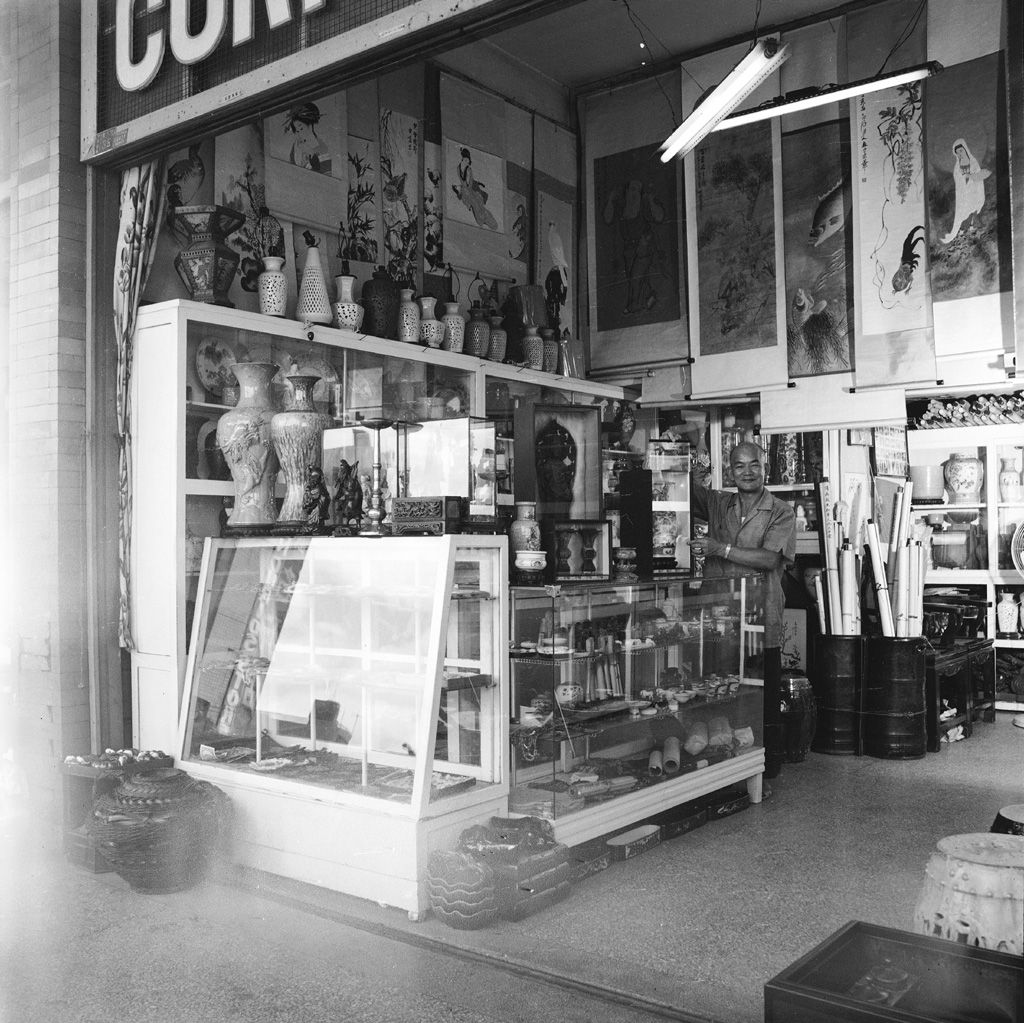
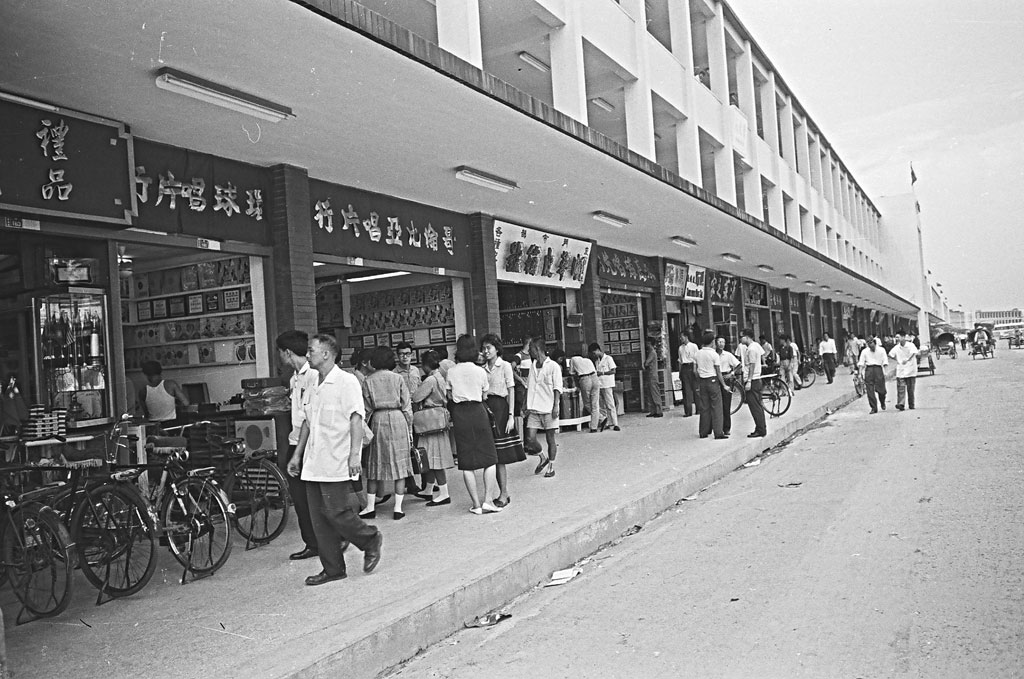
Zhonghua Commercial Building, 1965. Photographed by the Bureau of Information, Executive Yuan. This connected commercial building, opened in 1961 and demolished in 1992, is the spatial prototype for Wu Ming-yi’s childhood shoe shop and _The Magician on the Bridge. Public Domain._
The Zhonghua Commercial Building was opened on April 22, 1961, and demolished building-by-building in October 1992, with reasons including the underground railway, the MRT, and the Zhonghua Road tree-lined avenue plan. 1 For the middle generation who walked through Ximending, that place was the smell of arcades and the shadow of the overpass, a maze one would钻 into after school, not an architectural history entry. After the commercial building disappeared, memory remained only in photos and oral accounts. Until 2011, The Magician on the Bridge wrote the 1980s Zhonghua Commercial Building back onto paper. 2
In the novel, there is the mysterious magician on the overpass, the glowing zebra crossing, and the little boy from the shoe shop, Xiao Bu Dian (Little Dot). Wu Ming-yi told OKAPI: "The Zhonghua Commercial Building was truly a bizarre place; all the magic was within it!" 4 Magic here performs structural work. The commercial building itself has already vanished; magic allows the vanishing space to be walked again. The first social application of compound eyes to "vanishing" falls on urban memory: who still remembers the families who cooked in the arcades, who can still point out the order of the Loyalty, Filial Piety, Benevolence, and Love buildings.
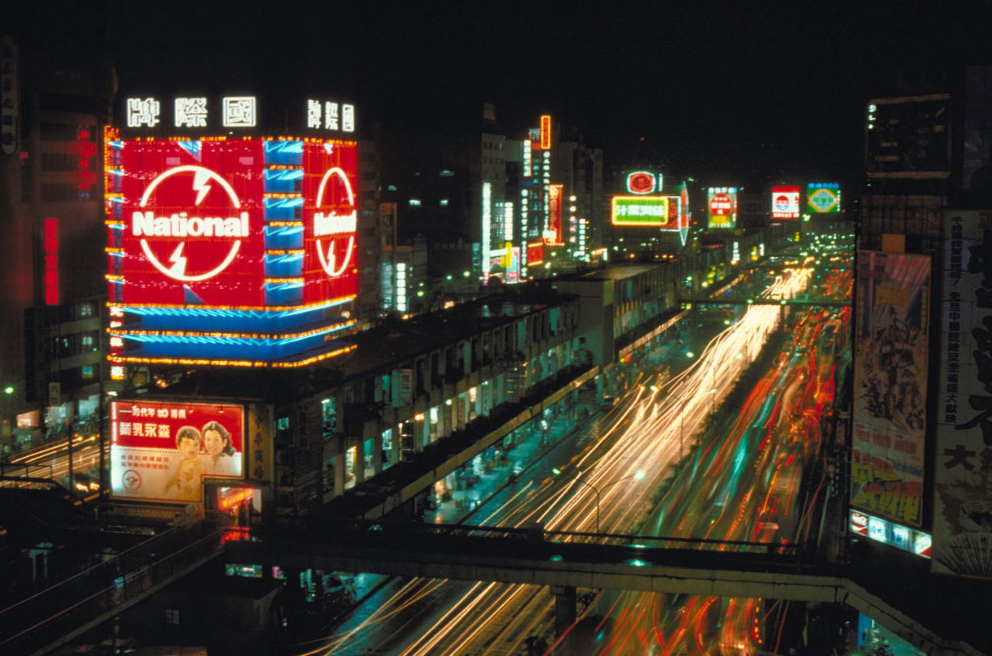
Zhonghua Commercial Building night view (historical image). The neon and arcades before demolition are visual memories repeatedly returned to in the novel and the PTS drama. Photo via Wikimedia Commons, CC BY 3.0.
On February 20, 2021, the PTS drama The Magician on the Bridge premiered, directed by Yang Ya-che. 10 The Xizhi set was approximately two to two and a half hectares; reports stated the set construction budget was about eighty million NTD, reconstructing nearly fifty storefronts. The media called the total production cost about two hundred million NTD; the program department orally stated the budget per episode was about twenty million NTD. These three numbers are at different levels and cannot be mixed into "investing two hundred million to build the set." 11 After wrap, that fake commercial building would be demolished again: the real demolition was in 1992, the virtual demolition around 2020; the two vanishings overlapped on the same corridor. Reports also mentioned the railway tracks and car sheds were built to full capacity, corresponding to the line of memory from Hou Hsiao-hsien’s _ Dust in the Wind_. 11 The sound of set workers removing signs was like ending an already ended era once more.
Source: Liberty Times Entertainment / Taiwan News / Tamkang University Activity Records; the three numbers cannot be written together
Wu Ming-yi said during the drama’s teaser period: he hoped people who experienced the commercial building era would watch this drama not just to summon memories, but as if living through a parallel timeline again. "Just as we can now use digital technology to create Mars, allowing everyone to virtually land on the planet. I hope the younger generation of viewers will discover: the Zhonghua Commercial Building is like the Mars they first stepped on." 12
The Zhonghua Commercial Building is like the Mars they first stepped on
💡 Did You Know?
When the Zhonghua Commercial Building was demolished, it was done building-by-building in the order "Loyalty → Filial Piety/Benevolence → Love/Faithfulness → Peace/Righteousness," taking about ten days in total. The novel and drama later turned this non-existent connected maze into a memory entrance shared across generations.
Once urban memory is written back, readers will ask a bigger question: What else has vanished that is worth retrieving with the same effort? The commercial building is childhood, shoeboxes and arcades, performances on the overpass that are unclear whether they are magic or scams. War and bicycles pull the scale from the neighborhood to the family and island history. The same pair of eyes begins to focus simultaneously on short-term street life and long-term trauma.
The Fighter Jet in the Father’s Drawer, and a Missing Bicycle
In 2007, Sleep’s Route was published. 13 One trigger was a photo in the locked drawer of his father: his father, about thirteen years old, going to Japan to manufacture fighter jets. 5 The war in family memory suddenly shrank from the distant view of history textbooks into the metallic smell of the drawer and silence. The same year also saw Home Is as Close to the Water as It Can Be. The water’s edge of nature writing and the war route in the novel began to share the timeline of the same pair of eyes. Sleep, routes, metal parts, and stories unspeakable at night allowed the depth of island history to enter his long-form narrative for the first time completely.
The missing bicycle pulls the story into the next scale. In July 2015, Maitian published the first edition of The Stolen Bicycle (2016 was the revised edition adding Wang De-wei’s recommendation preface, and cannot be treated as the first publication year). 14 A long-form novel about a missing bicycle, family trauma, and war legacies, it won the Golden Classic Award for Long Fiction at the Taiwan Literature Awards in the same year; the Good Books Open Volume list reached its sixth time since The Way of Butterflies. 15 More importantly, one should remember the method: compound eyes also see how metal, ghosts, and stolen objects connect island history. 16
The novel does not pile up epic scale with war scenes. It lets readers follow the clues of a bike, a chain, and a name, and the weight of war presses in from the side. Every facet in the compound eye is partial; together they form the panorama. The bicycle is a touchable object; war is the endless line behind the object. Some people enter old streets and old archives to find the bike; some people encounter the disappearance of an entire era in parts and numbers. This line stretches from the father’s drawer to the Pacific, paving the way for the next larger ecological imagination: when the garbage island strikes the east coast, compound eyes must see myth, coast, and plastic simultaneously.
Source: NMTL / Booker / PTS / Openbook / Taipei Times (Synthesized Research Report)
A missing bicycle thus becomes a handle readers can remember. You grab the handle, and the island’s war legacies, family silence, and street memories are all lifted together. This is the efficiency of the compound-eye method: no need for encyclopedic listing, only one object capable of rotating the panorama. Readers may not remember every award year, but it is hard to forget the blank space where that bike was missing. The blank space itself becomes the narrative engine, forcing you to see how the taken-away things once organized the daily life of an island.
The Eyes the World Reads
In 2011, The Man with the Compound Eyes was published by Summer Publishing. 17 The core plot can be stated very briefly: the Pacific Garbage Vortex forms a garbage island, striking Taiwan’s east coast. The second son of Waiou Waiou Island, Ate Lie, is exiled to sea, drifting to that lifeless plastic mountain. 17 "Compound Eyes" here is both the book title and the method. Multi-species, multi-island, multi-trauma focused simultaneously. On the east coast shore, people wait for the photographic and tourist posture of "watching disaster happen"; the massive material object at the moment of impact is colder than any slogan.
The international path happened earlier than "winning awards." In 2011 at the London Book Fair, agent Tan Guang-lei (Tan Kwong Lui) recommended this novel in person to editor Rebecca Carter at Harvill Secker. Translator Darryl Sterk first translated excerpts; Tan then wrote a chapter outline of about twenty pages, and the world English rights were sold. 18 After reading the excerpts, Carter offered quickly; the US edition later went to Pantheon (under the same Penguin Random House umbrella). The English translation The Man with the Compound Eyes was published by Harvill Secker in 2013, and Pantheon in the US in 2014. The French translation was translated by Gwennaël Gaffric and published by Stock, winning the Ouessant Prix du livre insulaire novel award in the same year. 19 The agent claimed translation rights were sold to over twenty languages; Dutch, Spanish, Portuguese, and Nordic language rights can be checked in the Grayhawk catalog. 19
The industry circle and translators often describe this transaction as: an important precedent where a Taiwanese long-form novel was operated by an international literary agent and sold into Anglo-American mainstream trade publishers. The tradition of English translation in academia and independent publishers existed earlier; it is inappropriate to write "the first Taiwanese novel ever sold abroad." 20 Copyright trading is a commercial path. The translation phase still had Ministry of Culture system subsidies; it cannot be written as "completely without government support." 18 Darryl Sterk once compared the novel to Life of Pi on the spectrum of wilderness and the meaning of life; that is the translator’s reading coordinate, inappropriate to miswrite as the agent’s marketing slogan. 18
Source: Darryl Sterk Interview, Taipei Times Interview with Tan Guang-lei, Grayhawk Catalog
Ursula K. Le Guin wrote an endorsement for the English translation: this is a way of telling new realities, "beautiful, entertaining, frightening, preposterous, true." 21 Tash Aw in The Guardian wrote that hard-edged realism meets wild fantasy, ecological care and Taiwan identity coexist. Jason Sheehan at NPR said it is "achingly sad" yet like coming home. 22 What the world reads is the product produced by compound eyes. Marketing labels follow behind; the book is in front.
Darryl Sterk later also translated The Stolen Bicycle into English (Text Publishing, Melbourne, 2017). 14 He talked about the compromises necessary when translating Wu Ming-yi’s "uncompromising localism"; that is another layer of compound eyes between translator and author. 20 On March 12, 2018, the book was selected for the Man Booker International Prize Longlist. On April 12 of the same year, the shortlist was announced; the book did not enter the shortlist, and the official website book page still marks Longlisted. 23 Wu Ming-yi became the first Taiwanese writer to enter the longlist of that award. "Shortlisted" here only refers to the longlist, not including the final six, and does not equal winning the award. 23 In 2026, Yang Shuang-zi’s Taiwan Wanderer (English translation by Lin King) became the first to win the International Booker Prize for a Taiwanese writer. The two events do not cancel each other out: one is the 2018 longlist threshold, the other is the 2026 final trophy. 24
Source: thebookerprizes.com Book Page and 2026 Award Press Release
After the longlist was announced, the organizing committee’s website once changed the nationality from Taiwan to Taiwan, China. Wu Ming-yi publicly stated the new label "did not conform" to his personal stance; the Taiwan diplomatic system took note, and on April 4, 2018, the organizers announced the change back, with Wu to be marked as Taiwan. 25 He once said: although it is only the first stage of the longlist, "the nationality written behind is 'Taiwan'." 26 This line of text is for thickness; the length should be short. How literary figures are named in international contexts, a neutral record suffices. There is no evidence that the nationality controversy "caused" the failure to enter the shortlist. Temporal proximity cannot be written as causality. 25
Source: Guardian / Liberty Times / Sentinel reprinted official draft / Key Comment
The Sea Breeze in the Hualien Bookstore, and Clouds at Two Thousand Meters
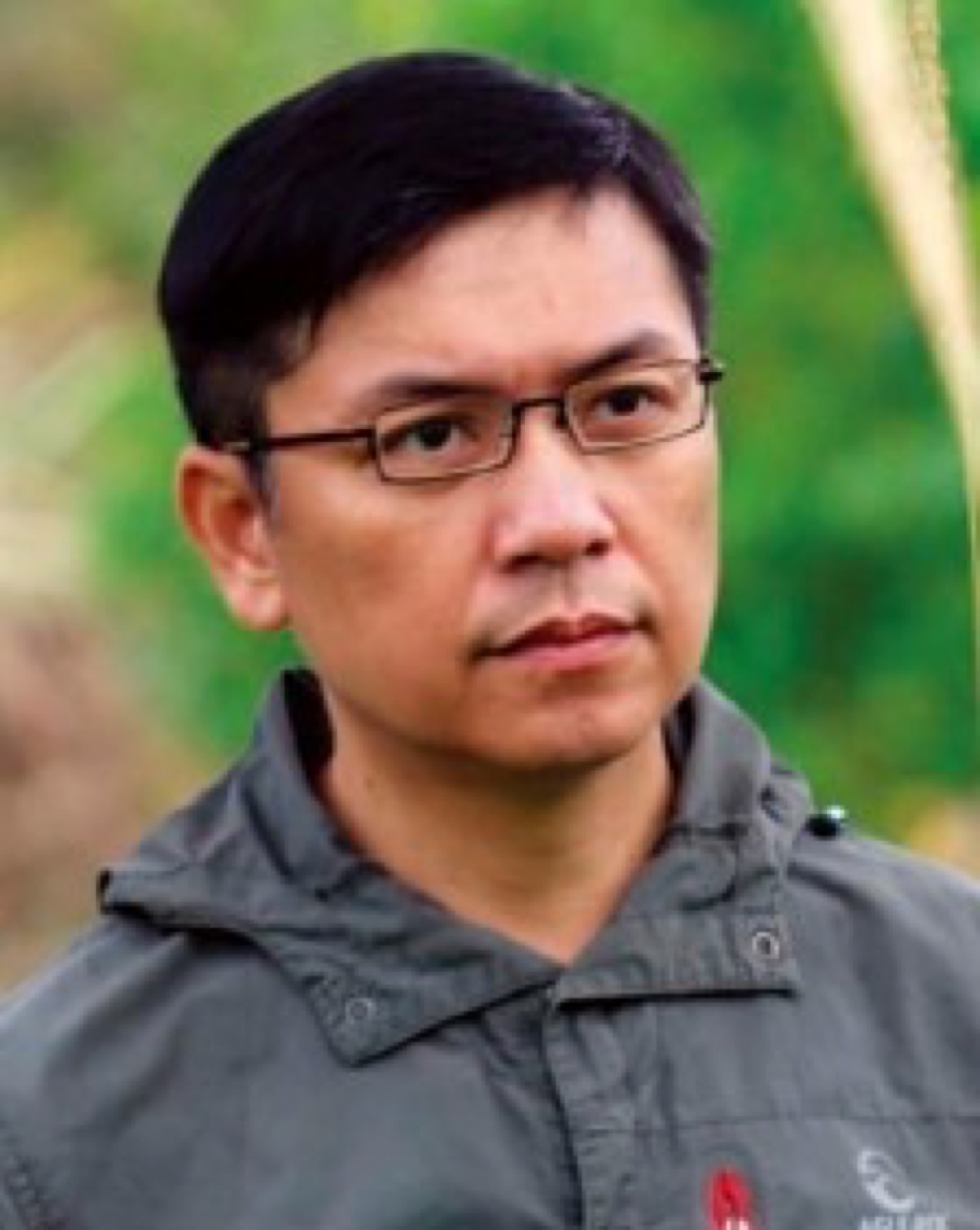
Wu Ming-yi. Professor at the Department of Chinese Literature, National Dong Hwa University, teaching and writing in Hualien for a long time. Photo: National Dong Hwa University / Attribution.
After awards and translations, compound eyes have a second life: cross-media and locality. Floating Light (2014) is a photography essay; the publisher, New Classic, pulled image writing from the side branch of nature essays into independent experimentation. 27 In 2019, the short story collection Land of Bitter Rain was published, including Clouds at Two Thousand Meters, which writes about a lawyer searching for an unfinished novel file and memories of Taiwan clouded leopard skins after his wife’s death. 28 In 2025, Chen Hsin-yi turned this into VR Clouds at Two Thousand Meters (The Clouds Are Two Thousand Meters Up), winning the Grand Prize (Immersive Section Grand Prize) at the 82nd Venice Film Festival’s Venice Immersive section. 29 A literary short story becomes a height one can walk into. After removing the helmet, the audience still stays between the clouded leopard skin and the unfinished file. The National Museum of Prehistory also used this VR as the core for an immersive exhibition, connecting mountain forests and clouded leopard memories back to the bodies of urban audiences.
In 2023, Hotel Sea Breeze was published by Xiao Xie (Small Write), winning the Openbook Good Book Award for Annual Chinese Creation. 30 The novel pulls the gaze to the east coast tribal geography near Xiulin, Heping Village, and the cement plant area (place names in the book rewritten as "Haifeng" etc.), writing about Taroko land, giant myths, and who tells the story. 31 The animal protagonist is finally a three-legged crab-eating mongoose. He read extensively on Taroko materials, referenced field papers, and obtained consent. 31 The distribution strategy itself is also an industry event: sold only in independent bookstores and events, 56 days, 86 events, from Hualien Time Second-hand Bookstore all the way to Wugu, New Taipei. 30 The author’s habit of running independent bookstores for years was magnified into a nationwide tour this year. When the first print was stacked into a small mountain by the window of a Hualien bookstore, Taroko language place names and cement plant chimneys were already juxtaposed on the same novel map.
Source: Openbook p-68257; Black Tide Foundation Scholarship Page
At the Golden Classic Award judging, some judges felt certain character portrayals in the book were stereotypical, thus did not vote for it. This is aesthetic divergence and public debate within the judging panel, inappropriate to upgrade into a unified event of "the Indigenous community formally rejecting the novel." 32 A Han author writing the representation politics of Taroko cement resistance should naturally be discussed sharply. Thickness should be preserved; conviction narratives are unnecessary.
Environmental practice does not stop on paper. He has long served as a standing director of the Ecological Care Association and a director of the Black Tide Ocean Cultural Foundation. Since 2013, he has established the Black Tide Scholarship in his mother’s name, approximately 100,000 NTD annually, encouraging science fairs, research, conservation, and artistic creation with the sea as the theme. 33 By the mid-2020s, this scholarship had reached the thirteenth iteration, accumulating dozens of recipients over ten years. 33 The Reporter noted his participation in beach cleanups at the mouth of the Hualien River; the classroom and the tide line are not so far apart. 7 The cloud sea of the NDHU campus in Hualien, the classroom of the Black Tide coast, the bookstore counter, and the VR cloud layer are several facets of compound eyes in the contemporary era. Teaching, locality, and cross-media turn simultaneously.
Compound eyes have here grown into observation training in the classroom, industry choices in bookstore tours, scholarships on the Black Tide coast, and clouds at two thousand meters in the helmet. He talked about "Literature Rooted in the Earth" at TEDxTaipei: what students practice in class is how to focus simultaneously on a species, a street, a war legacy, without splitting them into unrelated essay topics.
⚠️ Controversial Viewpoint
The "stereotype" discussion ignited by Hotel Sea Breeze at the Golden Classic Award reminds readers of one thing: when writing about east coast cement and tribal memories across ethnicities, representation itself is politics. Wu Ming-yi chose to walk into this risk zone; sharpness in the commentary field does not automatically equal work failure, nor does it equal a unified judgment of the Indigenous community.
Compound Eyes Still Turn
After the neon of the Xizhi set is turned off, the temporary Zhonghua Commercial Building will be demolished again. The memory of the real demolition in 1992 and the second vanishing of the fake building around 2020 overlap on the same corridor. If readers walk through that arcade in the PTS drama, it is equivalent to using someone else’s eyes to live through a space that no longer exists.
On the Booker website, the 2018 The Stolen Bicycle still marks Longlisted; the line of the author’s nationality, after being changed and changed back, writes Taiwan. 2325 That line is only for thickness. What is still turning is the commercial building neon, the rust on the chain, the waves of Pacific plastic, and the book stack by the window of the Hualien bookstore—all still seen simultaneously in the same pair of eyes.
Compound eyes still turn. Vanishing things, as long as someone looks at them this way, still have the chance to be written back.
Image Sources
- Hero: 1965 Zhonghua Commercial Building Architecture — Bureau of Information, Executive Yuan, Public Domain via Wikimedia Commons
- In-text: Night View of Zhonghua Commercial Building, Taipei City — Bureau of Information, Executive Yuan, CC BY 3.0 via Wikimedia Commons
- In-text: View of the First Floor of the 'Xin' (Faithfulness) Building of Zhonghua Commercial Building — Bureau of Information, Executive Yuan, Public Domain via Wikimedia Commons
- Portrait: Wu Ming-yi — Department of Chinese Literature, National Dong Hwa University, Attribution Used via Wikimedia Commons
- Video: TEDxTaipei Literature Rooted in the Earth 2013 (Official Channel)
- Video: PTS Drama The Magician on the Bridge Official Teaser Trailer
Further Reading
- Ximending — The neighborhood where the Zhonghua Commercial Building once grew, understanding the urban coordinates of The Magician on the Bridge
- History of Taiwan Literature — Placing Wu Ming-yi back into the longer island writing genealogy
- Post-War Taiwan Literature — How the post-war generation writes land, war, and daily life
- Contemporary Taiwan Literature — Coordinates of the same generation for novels and international translation after 2000
- Indigenous Literature — Contrast vision when reading the representation politics of Hotel Sea Breeze
- Post-Lifting of Martial Law Taiwan Literature — Institutional and social background of the rise of nature writing and urban memory
References
- Zhonghua Commercial Building (Chinese Wikipedia) — Opened 1961-04-22, demolished building-by-building in 1992-10. Connected public comprehensive commercial building and railway undergroundization / MRT context, basic entry for urban space history.↩2
- The Magician on the Bridge (Drama Wikipedia) — PTS premiere 2021-02-20, director Yang Ya-che. Novel 2011 Summer Publishing and drama adaptation timeline cross-check entry.↩2
- Wu Ming-yi (Chinese Wikipedia) — Born 1971-06-20 in Taipei, etc. Public biography. Should be cross-referenced with e-essay, Booker author page; Taoyuan as ancestral home narrative should not be written as the only expression of birthplace.↩
- OKAPI: Zhonghua Commercial Building and Growing-Up Memory Interview — Shoe shop, commercial building magic, "Zhonghua Commercial Building was truly a bizarre place," mother's "deception" sentence, Nikon and Hyatt work experience, etc. First-hand nearby interview texture.↩23456
- National Cultural Arts Foundation / Hao Ni-hui Interview with Wu Ming-yi — Preparing lessons until dawn, resignation letter, father releasing birds "first time our relationship broke," fighter jet photo triggering Sleep’s Route, etc. Direct quote sources.↩23
- NDHU Chinese Department Faculty Page: Wu Ming-yi — Fu Jen Mass Communication Advertising Group 1991–1994, Central Chinese Doctorate 1999–2003, Associate Professor / Professor promotion timeline, official agency first-hand login.↩2
- The Reporter: Liang Hsin-yu Interview with Wu Ming-yi: I Thought I Had Walked Far Away! — "If I can’t achieve results by age 30, I’ll give up" narrative citation and Notes from the Annihilation of Butterflies age-29 publication timeline. 2016-08-08.↩23
- Nature’s Heart etc. "Liberating Nature through Writing" Three-Volume Bibliography — Ecocriticism "not a rash moral judgment" stance and academic three-volume division. Can be cross-referenced with PCC Bookstore / Eslite Bibliography.↩2
- Wu Ming-yi (Chinese Wikipedia) Teaching and Courses — Creative writing, nature writing, etc. course narratives. Assistant Professor starting year 2000 mainstream narrative and NCAF age narrative should be stated together; NDHU official website experience prevails.↩
- PTS Drama Premiere Data — 2021-02-20 PTS Main Channel and MyVideo. Director and broadcast platform hard data.↩
- Liberty Times Entertainment: Bridge Drama Set Budget and Production Report — Total project approx. 200 million NTD media narrative. Set construction approx. 80 million NTD see Taiwan News. Per episode approx. 20 million NTD see Tamkang University Activity Records at Bei Hua oral account.↩2
- Marie Claire: Wu Ming-yi on PTS The Bridge "Mars" Metaphor — "Zhonghua Commercial Building is like the Mars they first stepped on" full paragraph verbatim. Can be cross-referenced with Liberty Times Entertainment same sentence.↩
- PCC Bookstore: Sleep’s Route — 2007 Er Yu First Edition book level, war and family memory long-form publication year.↩
- CNA Weekly Good Book Reading: The Stolen Bicycle — 2015/07/02 Maitian First Edition. English translation Text Publishing 2017, Darryl Sterk see Booker book page and ANZ LitLovers.↩2
- Taiwan Literature Golden Classic Award: 2015 The Stolen Bicycle — Long Fiction Golden Classic. Good Books Open Volume six-time list see Showwe News and United Daily News Foundation winner introduction cross-reference.↩
- United Daily News Literary Award Third Edition Record — 2016 Third Edition, recent three years works mainly The Stolen Bicycle and also The Bridge Home Is as Close to the Water.↩
- CNA Weekly Good Book Reading: The Man with the Compound Eyes — 2011/01/28 Summer. Garbage vortex and east coast strike narrative entry. Plot English statement see en.wikipedia Wu Ming-yi.↩2
- Taipei Times: Dan Bloom Interview with Tan Guang-lei (2013-04-29) — 2011 London Book Fair recommendation to Rebecca Carter, 20-page outline, Taiwan Literature Translation Bureau subsidy, etc. First-hand nearby narrative.↩23
- Lettres de Taiwan: French Translation Island Literature Award 2014 — Prix du livre insulaire Novel Category, Ouessant. English / US publication years see Grayhawk Catalog and Amazon.↩2
- Darryl Sterk 2020 Translator Interview — "first Taiwanese novel to a trade publisher" industry circle statement scope. Academic English translation tradition existed earlier; main text must add mainstream / agent limitation.↩2
- Grayhawk blog: Le Guin Endorsement Compound Eyes — "We haven't read anything like this novel. Ever." etc. blurb full text public.↩
- Tash Aw, The Guardian (2013-09-28) — English translation mainstream book review. Also see NPR Jason Sheehan (2014-05-25).↩
- The Booker Prizes: The Stolen Bicycle Book Page — Longlisted only. 2018 International Year Page can verify shortlist six books do not include this book.↩23
- Booker Official Announcement: Yang Shuang-zi / Lin King 2026 Award — First Taiwanese writer to win / First Chinese original work to win. With Wu 2018 longlist "first shortlisted" semantic boundary.↩
- The Guardian: Booker Nationality Label Controversy (2018-04-03) — Taiwan → Taiwan, China timeline. Change back see Sentinel reprinted official draft and Liberty Times 2018-04-04.↩23
- Key Comment Network Retransmitting Wu Ming-yi FB (2018) — "Although it is only shortlisted for the first stage longlist... the nationality written behind is 'Taiwan'." Can be cross-referenced with Taiwan Today / Guardian English translation.↩
- OKAPI: Floating Light New Classic 2014 — Photography essay publication context, easily misleading when listed with nature essays; should mark image writing experimentation.↩
- PCC Bookstore: Land of Bitter Rain — 2019/01/04. Clouds at Two Thousand Meters in-book table of contents wording uses "Two Thousand Meters" as standard.↩
- Taipei Times: Venice Immersive Grand Prize 2025 — Chen Hsin-yi Clouds at Two Thousand Meters 82nd Venice Immersive Grand Prize. Chinese reports can be cross-referenced with ARTouch.↩
- Openbook: Hotel Sea Breeze Independent Bookstore Tour — 56 days, 86 events, price 420. Annual Chinese Creation award page.↩2
- OKAPI: Hotel Sea Breeze Creation Interview — Taroko materials, giant myths, three-legged crab-eating mongoose, and Xiulin / cement geography rewrite explanation.↩2
- Zhu You-xun: Golden Classic Award "Stereotype" Controversy Structure — Judging panel aesthetic divergence and public debate framework. Author / Society statement see Xiao Xie Publishing.↩
- Black Tide: Wu Zheng Xiu-yu女士 Scholarship — Since 2013 approx. 100,000 NTD annually, four major categories with sea as theme. NDHU official website can cross-reference Ecological Care Association standing director etc. positions.↩2