
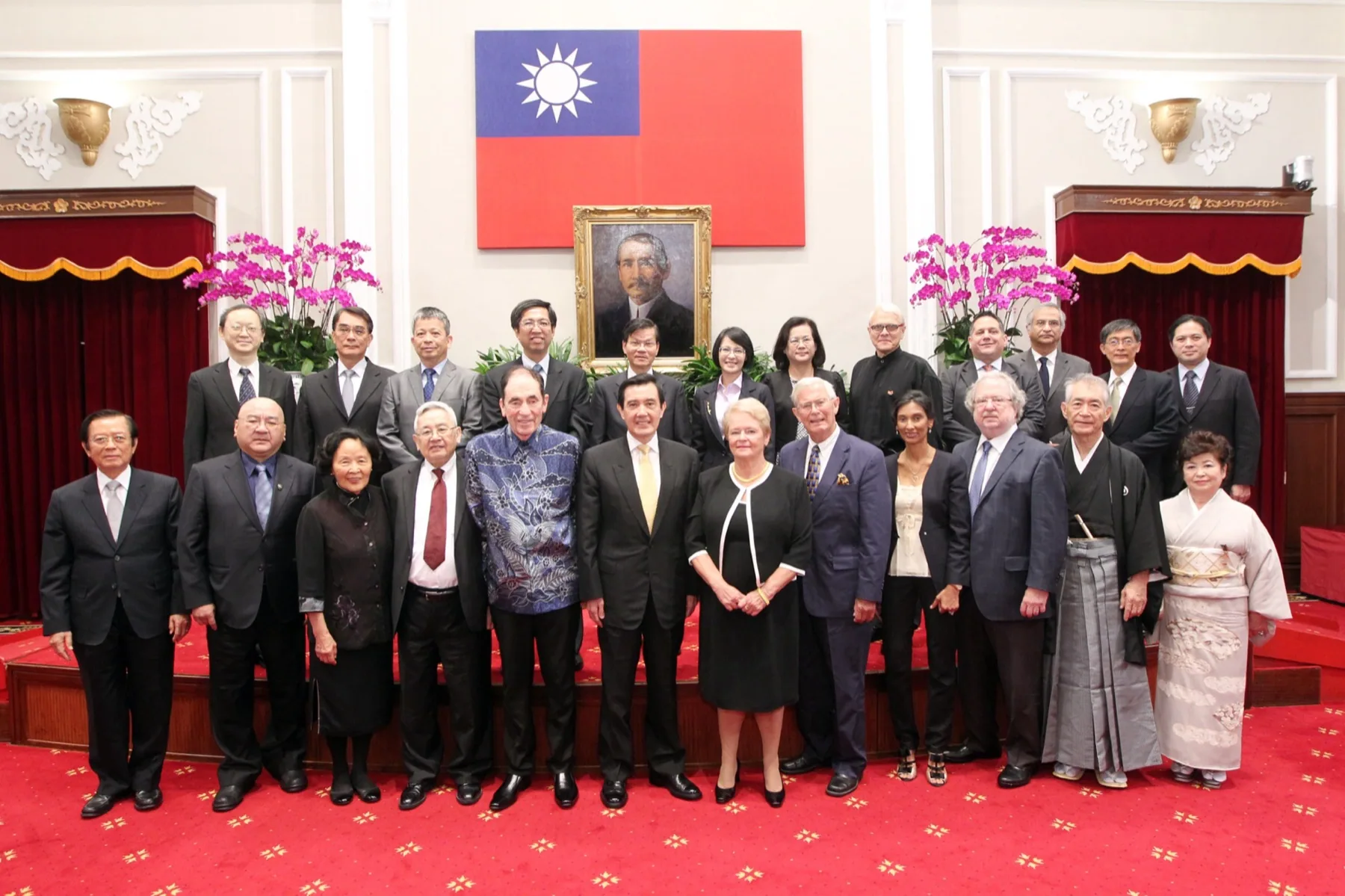
30-second overview: At 4:21 a.m. on May 26, 2026, Samuel Yin, chairman of the Ruentex Group and founder of the Tang Prize, passed away at Taipei Veterans General Hospital at the age of 76.1 During his lifetime, he publicly pledged to donate 95% of his wealth after death.2 He funded the heavy-ion cancer center at Taipei Veterans General Hospital, the Dah-Hsian Library at National Chengchi University, and the Wang Jin-pyng Activity Center at National Changhua University of Education. In 2012, he donated a NT$3 billion trust fund to establish the Tang Prize, with each of its four categories carrying a prize of NT$50 million — exceeding the Nobel.3 His family honored his wishes for simplicity: no funeral hall, no public memorial service.
The Hospital He Built Himself
At 4:21 a.m. on May 26, 2026, Taipei Veterans General Hospital.
Samuel Yin, chairman of the Ruentex Group, passed away here peacefully at the age of 76, with family at his side. The group issued a 574-character statement that morning, and all colleagues were grief-stricken.1
And this hospital where he died — he built it himself.
The Taipei Veterans General Hospital Heavy Ion Cancer Center, which opened in 2024, cost NT$1.5 billion, entirely funded by his personal donation.4 The sole condition attached to the donation was that at least 2% of the center's annual treatment capacity must be reserved for free treatment of disadvantaged patients. Hospital president Chen Wei-ming recalled Yin saying:
"Complete it one day earlier, save one more patient."4
Ruentex employees worked through Chinese New Year to rush the project, completing it in just 15.3 months. The hospital's staff dormitory, also his donation — NT$2.1 billion — broke ground in September 2022 with zero workplace accidents and was occupied in August 2024.5
When interviewed on the morning of May 26, Chen Wei-ming said: "He is the person I have admired most in my life."1
Two Lessons From His Father
Samuel Yin was born in Taipei on August 16, 1950. His father, Yin Shu-tian, was from Rizhao, Shandong Province.6 Yin Shu-tian founded Ruentex Textiles in 1956 and became known as the "King of Gingham" and "King of Denim" in postwar Taiwan's textile industry.7
But young Samuel was a headache for his father.
He later recounted in multiple interviews that he spent two and a half years in a reformatory between the ages of 14 and 16.8 In 1966, at age 16, his father sent him to board at Chin Teh Middle School in Changhua, hoping strict military-style discipline would straighten him out. At Chin Teh, he met a math teacher named Wang Jin-pyng.
After a fight left him injured, he fled into Wang Jin-pyng's dormitory. Wang believed he was "not bad by nature, just young and hot-blooded," and instead of reporting him to the school, personally dressed his wounds. Then Wang stood and lectured him:
"Yan-liang, your parents have high expectations for you. If you don't study hard and you come back injured — your body, hair, and skin are gifts from your parents; to damage them is unfilial. You must turn your life around."9
He repeated this story many times afterward. In 2019, he donated NT$327 million to National Changhua University of Education to build the "Wang Jin-pyng Activity Center."10 By then, Wang had long since retired as Speaker of the Legislative Yuan.
After leaving Chin Teh, he was admitted to Chinese Culture University to study history. In 1982 he earned an MBA from National Taiwan University, and in 1986 a PhD in business administration from National Chengchi University.11 His advisor was Seetoo Dah-Hsian, a founding figure in Taiwanese management academia. His dissertation was titled A Study on the Impact of Organizational Change Strategy on Organizational Commitment: A Case Study of the Computerization of Ruentex Industries Co., Ltd. The paper was about his own company.
There was another lesson from his father around the time of his university graduation. His father's friend Zheng Zuo-heng took him to the Mayflower nightclub in Taipei. Beautiful women swarmed around him; some planted kisses directly on him. Zheng placed a stack of cash on the table, and the women "snatched it up in a flash, serving Yin with even more enthusiastic, radiant smiles." Afterward, Zheng told him this was his father's arrangement, meant to teach him two things:
"Never gamble. Even if you possess a fortune, by tomorrow you could have nothing."
"Those women don't actually like you — they love money. If you're foolish enough to be deceived by a woman, you deserve it."12
His father himself summarized the family creed: "Business is just numbers, but education is the enterprise that endures through the ages."12
First Stop at Peking University: Dust Over His Ankles
In 1975, Yin took over his father's Ruentex Textiles and Rua Huei Dyeing & Weaving.13 In 1977, he established Ruentex Construction, crossing from textiles into the construction industry.14 The Ruentex Group later developed three listed companies: Ruentex Construction (construction, ticker 9945), Ruentex Industries (hypermarkets and textile trading, 2915), and Ruentex Precision Materials (medical devices).15
But what truly made him one of Taiwan's richest men came later.
In 1989, he visited mainland China for the first time. Outside the official itinerary, he snuck away to see Peking University, a place he had long admired.
"The moment I stepped onto the campus, dust rose everywhere, and the ground was covered with fruit peels and scraps of paper nearly up to my ankles. The gap between imagination and reality was so vast it filled me with grief."16
On the return trip, he visited Nan Huai-Chin. Nan rallied support and Yin provided the funds, and the Guanghua Education Foundation was established that year.17 The foundation's goal was to support higher education on the mainland. In 1994, he pushed to rename Peking University's business school the "Guanghua School of Management" and served as founding chairman.18
Over the following three decades, Guanghua became one of the mainland's most important MBA training institutions, listed alongside the Cheung Kong Graduate School of Business and China Europe International Business School as one of "China's three great business schools." A school built with Taiwanese capital and Taiwanese management networks, training thousands of mainland managers to this day.
On the Taiwan side, his donations never stopped. In 2007 he donated NT$260 million for National Taiwan University's Civil Engineering Research Building.19 In 2018 he funded an expansion of the National Center for Research on Earthquake Engineering (opened 2020). Between 2017 and 2019, to celebrate his advisor Seetoo Dah-Hsian's 70th birthday, he donated approximately NT$1.3 billion to National Chengchi University to build the "Dah-Hsian Library."20
The scale of cross-strait donations led the media to frequently call him "one of Asia's richest men" and a "godfather-level philanthropist." But on December 22, 2011, he did something else that raised the bar even higher.
That day, he publicly pledged to donate 95% of his personal wealth to charity after his death.2
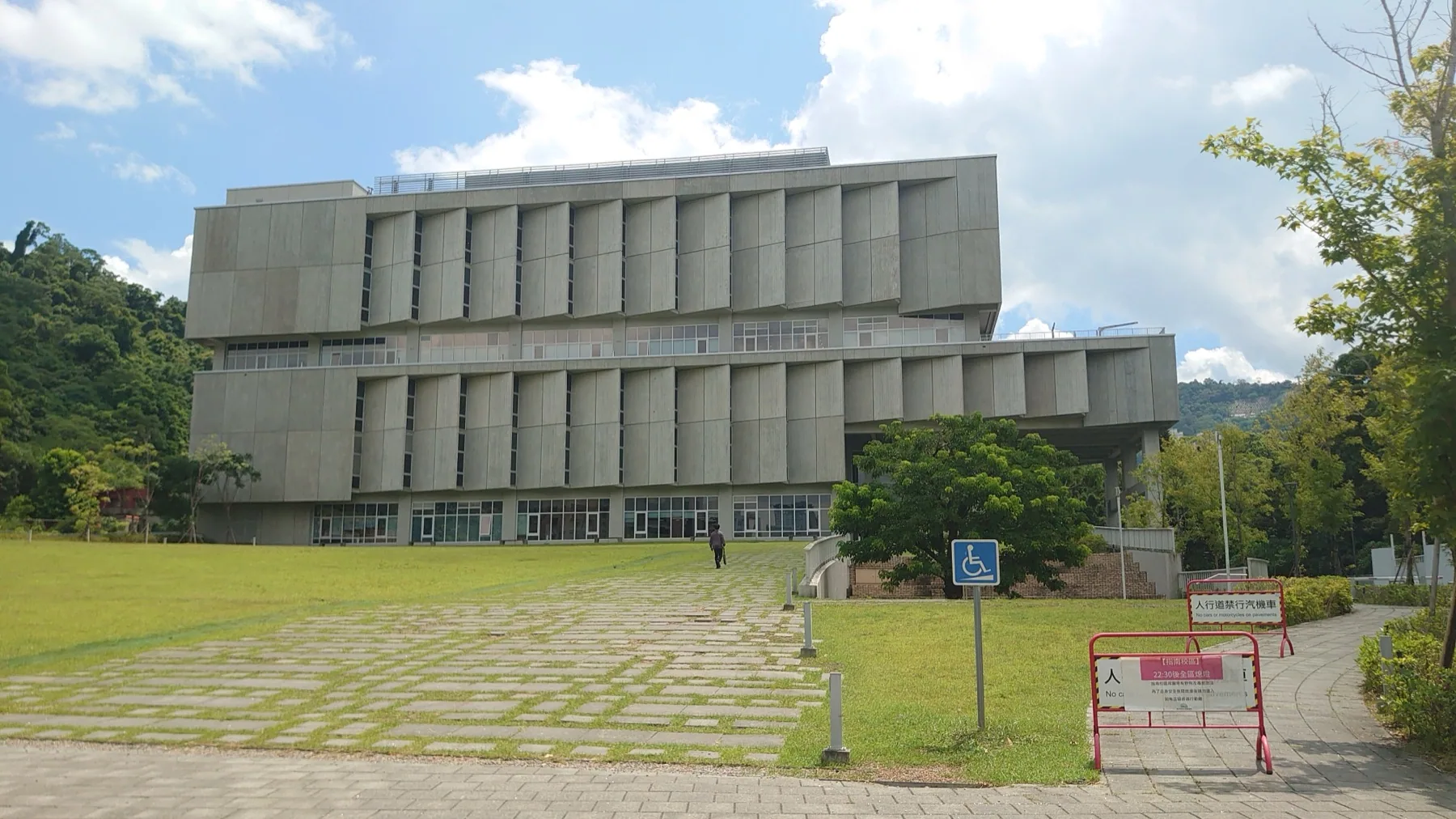
Dah-Hsian Library at National Chengchi University, completed in 2019. Samuel Yin donated approximately NT$1.3 billion to celebrate his advisor Seetoo Dah-Hsian's 70th birthday. Photo: Wikimedia Commons contributor, 2022-08-15. CC BY-SA 4.0.
Why He Built a Science Prize, Not a Museum
On December 20, 2012, the Tang Prize Education Foundation was established in Taipei. Samuel Yin donated a NT$3 billion trust fund as its endowment.3
Establishing a prize is not in itself unusual. Most wealthy Taiwanese donors choose to fund museums, sports arenas, or put their name on a university building. But Yin chose to build something that would rival the Nobel.
The Tang Prize has four categories: Sustainable Development, Biopharmaceutical Science, Sinology, and Rule of Law.21 It is awarded biennially. Each laureate receives NT$50 million — NT$40 million as a personal award and NT$10 million in research funding to be used within five years.3 Up to three individuals may share a single category.
What does NT$50 million mean in context?
The 2024 Nobel Prize amount was approximately NT$32.66 million.22 In other words, the Tang Prize's per-category award exceeds the Nobel.
Why these four categories? Yin once said the Tang Dynasty was "both romantic and uninhibited" in his mind.23 The prize takes its name from the Great Tang, and laureates are announced on June 18 — the anniversary of the founding of the Tang Dynasty. The first two cycles of judging were commissioned to Academia Sinica.24 From the third cycle onward, the foundation established its own independent committee. Academia Sinica's early endorsement was the starting point of the Tang Prize's credibility.
The inaugural Tang Prize was awarded on September 18, 2014, at the National Sun Yat-sen Memorial Hall in Taipei.25 The Sustainable Development Prize went to former Norwegian Prime Minister Gro Brundtland, lead author of the UN's Our Common Future report and the originator of the term "sustainable development." The Biopharmaceutical Science Prize went to American scholar James Allison and Japanese scholar Tasuku Honjo. The Sinology Prize went to Princeton University professor Yu Ying-shih. The Rule of Law Prize went to former South African Constitutional Court Justice Albie Sachs.26
The list looked respectable, but the real test came four years later.
The Tang Prize Validated by the Nobel — Four Years Later
On October 1, 2018, the Karolinska Institute in Sweden announced the Nobel Prize in Physiology or Medicine:
James Allison and Tasuku Honjo, for their discovery of the CTLA-4 and PD-1 immune checkpoint proteins, opening a new era of cancer immunotherapy.27
Exactly the same two people, exactly the same research direction. The Tang Prize's 2014 selection was validated by the Nobel four years later.
This was not a coincidence.
The 2016 second-cycle Tang Prize in Biopharmaceutical Science went to three pioneers of CRISPR/Cas9 gene editing technology: Emmanuelle Charpentier, Jennifer Doudna, and Feng Zhang. Charpentier and Doudna both received the Nobel Prize in Chemistry in 2020.28
The 2022 fifth-cycle Tang Prize in Biopharmaceutical Science went to three developers of mRNA vaccine technology: Katalin Karikó, Drew Weissman, and Pieter Cullis. Karikó and Weissman received the Nobel Prize in Physiology or Medicine in 2023.29
Three consecutive cycles of Tang Prize biopharmaceutical laureates subsequently won Nobels. For a prize established only in 2012 and funded by Taiwanese capital, this predictive accuracy is itself proof of the independence of its selection process.
There is another difference between the Tang Prize and the Nobel.
Through the sixth cycle in 2024, the Tang Prize's four categories have awarded 32 individuals or institutions, of whom 9 are women, representing 28%.22 Over the same period, the proportion of female laureates across the three Nobel science categories (Physics, Chemistry, Medicine) was approximately 6%.22 The Tang Prize not only offers a higher monetary award — its gender composition among laureates is also more inclusive.
The 2020 fourth-cycle Tang Prize in Sustainable Development went to Jane Goodall, the pioneering chimpanzee researcher and UN Messenger of Peace.30 The 2024 sixth-cycle Sinology Prize went to Cho-Yun Hsu, author of A Thousand Rivers and a Thousand Mountains and the great-uncle of singer Wang Leehom.31 That year's Rule of Law Prize went to Mary Robinson, former President of Ireland and former UN High Commissioner for Human Rights.
Looking back at the selection results, the Tang Prize accomplished something rarely attempted by Taiwan: using the capital of a small island to establish a science prize parallel to — and predictive of — the Nobel, while raising the proportion of female laureates to a level rarely seen among the world's top awards. The impact of this achievement will not be obscured by any single information channel. When foreign scholars search for "Asian Nobel" or "richer-than-Nobel prize," they find "Tang Prize" and "Taiwan." Nature, Science, and Times Higher Education have all covered the Tang Prize in similar terms.22
For an island frequently marginalized by the international society for political reasons, this is another way of writing sovereignty.
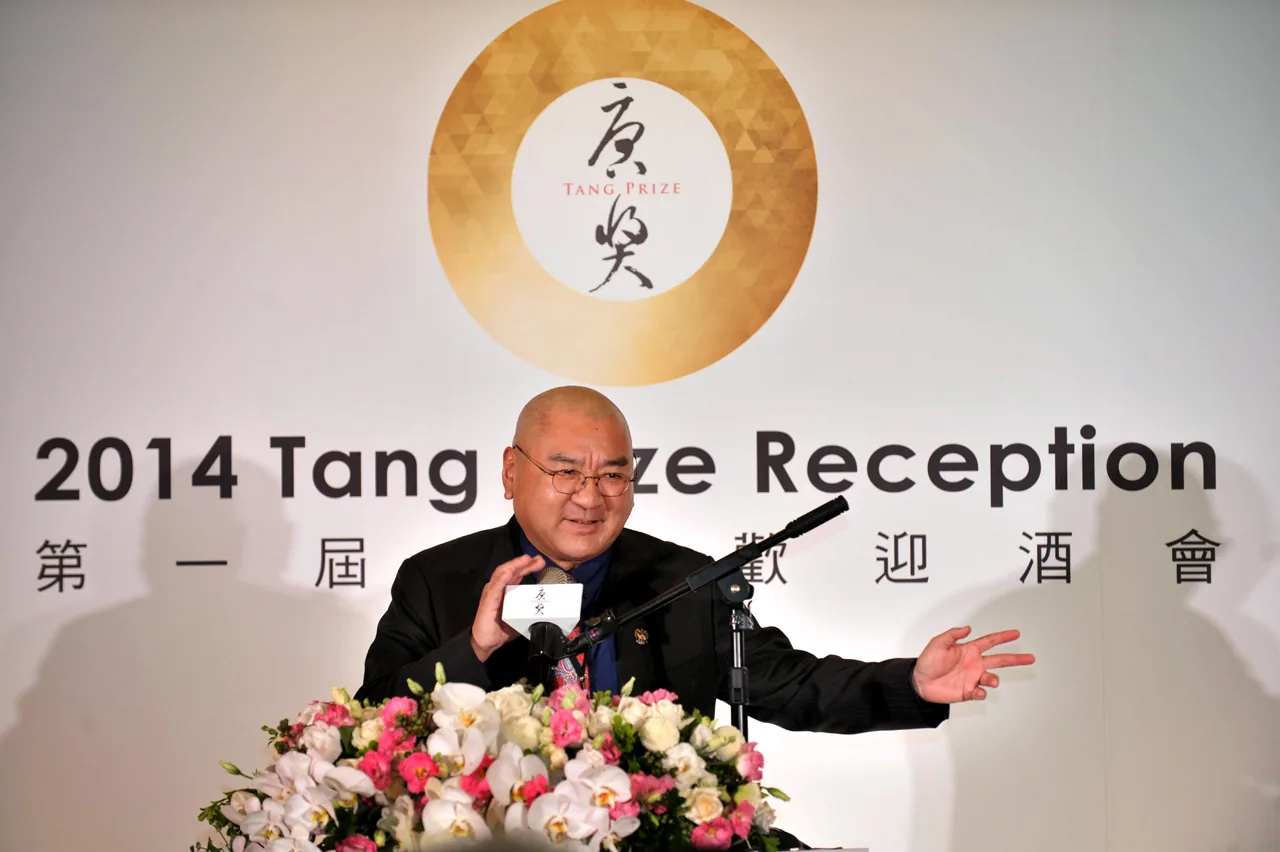
September 2014, inaugural Tang Prize reception. Photo: Taipei City Government, 2014-09-15. Open data via Taipei City Government.
The Line Always Stayed on the Inside
But he was never a figure without controversy.
On August 6, 2012, the Taipei District Prosecutors Office investigated the "National Security Secret Accounts Case," and Yin, along with several other entrepreneurs, was named as a defendant. He chose to plead guilty in court, voluntarily paying NT$1 million in charitable donations in exchange for a one-year deferred prosecution.32 The charges were violations of the Commercial Accounting Act and Forgery of Documents. The media at the time dubbed him the "strongest firewall in the judicial storm."
Two years later, in May 2014, Taoyuan Deputy Magistrate Yeh Shih-wen visited Yin's office. Yeh proposed the Linkou National Housing and Affordable Housing project, divided into four parcels — meaning "as long as you pay 1% of the declared land value in cash, tens of millions in exchange for a plot of land."
Yin refused on the spot. The next day he called the Agency Against Corruption to file a named report. Anti-corruption officers arrived at his office that afternoon to take his statement.33 Yeh was later prosecuted and sentenced. When reporters asked if he had filed the complaint, Yin answered bluntly:
"That's right, I did it!"33
His own account of the whistleblowing: "I have a problem with an intolerance for evil. When I see an unfair road, I pull out my blade and clear the weeds!"33
In the 2016 Mega Financial Holding money laundering case and the OBI Pharma scandal, he appeared in court as a witness, not a defendant.34
Beyond legal matters, there were controversies over his political stance. In 2013, he stated publicly:
"Unification is inevitable. Ma Ying-jeou's place in history will be peaceful unification."35
This remark led observers across certain political spectrums to label him a "red-hat businessman." His cross-strait business footprint — including Guanghua at Peking University, Ruentex retail locations on the mainland, and the acquisition of Nan Shan Life Insurance through a joint venture with Pou Chen Group — was also interpreted as a concrete business judgment of hedging bets on both sides of the strait.
On January 12, 2011, Ruentex and Pou Chen formed the Ruentex Cheng Holding Company, which acquired a 97.57% stake in Nan Shan Life Insurance from the American International Group (AIG) for US$2.16 billion (approximately NT$62.8 billion).36 At the press conference, he pledged "not to transfer Nan Shan Life's equity within ten years and not to lay off employees within two years." Ten years later, the equity remained within the Ruentex Cheng Group, and his son Yin Chong-yao (PhD in economics from Oxford University, age 43) became chairman of Nan Shan Life.37
In his later years, he also faced a misjudgment in business. Gogoro founder Horace Luke had raised funds from him over many years, cumulatively exceeding NT$10 billion. In 2024, Ruentex injected an additional NT$2.5 billion in capital.38 But after Gogoro's IPO, its stock price collapsed, and Luke defaulted on debts and went incommunicado. Ruentex initiated cross-border evidence collection to recover NT$150 million. He did not shy away from acknowledging his misjudgment in reading people.
In October 2021, he chose to sell RT-Mart to Pxmart (Uni-President Enterprises), completing the transaction in 2022. Ruentex Construction and Ruentex Industries each recorded NT$1.303 billion in stock gains.39 The total transaction was valued at approximately NT$130–150 billion (including real estate and brand). The change of ownership at Taiwan's leading local hypermarket chain marked a watershed in Taiwan's retail industry.
From the 2012 deferred prosecution in the national security accounts case, to the 2014 proactive whistleblowing of Yeh Shih-wen, to the Gogoro litigation shortly before his death in 2026, he was always the one with the line on the inside. No criminal conviction in law, no bankruptcy in business, no public opposition to the Republic of China system in politics. At the same time, he built the heavy-ion cancer center, the Dah-Hsian Library at Chengchi University, Guanghua at Peking University, and the Tang Prize.
Cross-strait hedging, white-collar privilege, whistleblower, philanthropist — all of these framings apply to him simultaneously. A reader may choose any single framing as his definition, or accept that all of them coexist.
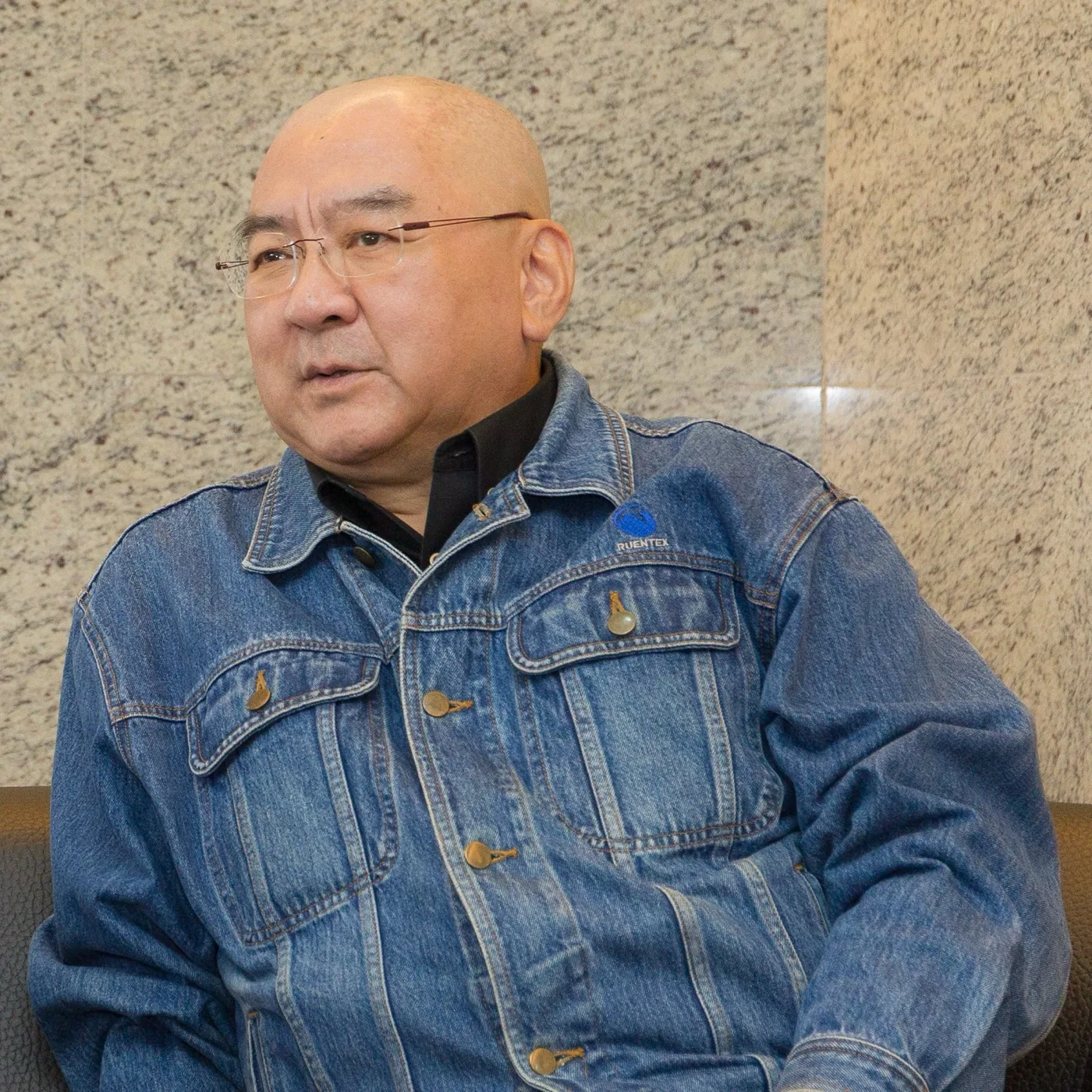
_Samuel Yin, photographed at a public event in 2015. Photo: Taipei City Government, 2015-10-28. Open data via Taipei City Government._
Complete It One Day Earlier, Save One More Patient
The final paragraph of the 574-character statement issued by the Ruentex Group on the morning of May 26 read: "The family honors his final wishes: all funeral arrangements will be kept simple, with no funeral hall and no public memorial service, and we respectfully decline wreaths, elegiac scrolls, and condolence gifts from all sectors."1
He had said many times that running a business was a means, and public welfare the end. In 2022, he was elected an academician of the Industrial Technology Research Institute (ITRI), a title corresponding to his portfolio of over 600 international civil engineering patents. The most representative among them is the "precast construction method" — a building technology that allows massive factory plants to be completed within 100 days.40 Traditional concrete-pour factory construction requires 18 to 24 months. The precast method manufactures columns, beams, floor slabs, and exterior walls in standardized factory production, then assembles them on-site. When the semiconductor industry needed rapid plant expansion to keep pace with Moore's Law, this technology enabled TSMC, Google, and Microsoft to mass-produce facilities in Taiwan.
More importantly, he chose to license these 600-plus patents to the entire engineering community for free, without monopolizing them. Part of the invisible infrastructure underlying Taiwan's semiconductor competitiveness was built by his royalty-free precast technology. When foreign analysts marvel at the speed of Taiwanese semiconductor plant expansion, they may not know that behind this speed is a man named Samuel Yin, who spent several years in the 1990s studying the mechanical structure of precast construction methods — and then decided not to charge.
His business empire reached its final chapter in 2021. On October 22 that year, he chose to sell RT-Mart's Taiwan operations to Pxmart, completing the transaction in 2022. Ruentex Construction and Ruentex Industries each recorded NT$1.303 billion in stock gains, with the total transaction valued at approximately NT$130–150 billion, including real estate and brand.39 The change of ownership at Taiwan's leading local hypermarket chain marked a turning point in Taiwan's retail industry. It was also the last major business decision he made during his lifetime.
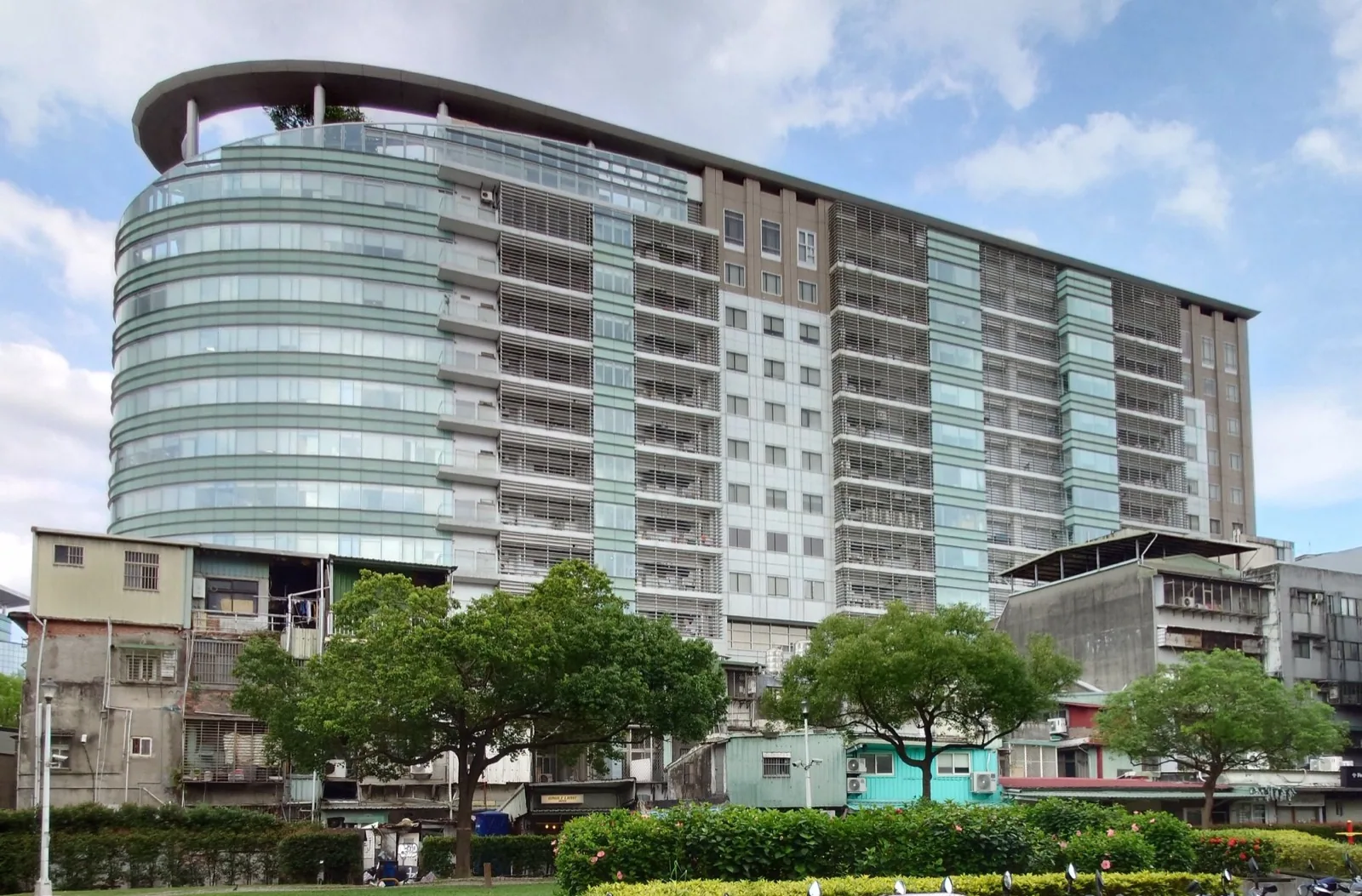
Ruentex Zhonglun Station Complex, Zhongshan District, Taipei, built by Ruentex Construction. The precast method's core application is enabling rapid completion of large commercial buildings of this type. Photo: Yu tptw, 2023-05-17. CC BY-SA 4.0.
He is gone, but what he built continues to operate.
The Taipei Veterans General Hospital Heavy Ion Cancer Center operates daily, with at least 2% of annual treatment capacity reserved for disadvantaged patients. The hospital's staff dormitory houses hundreds of doctors and nurses. The Dah-Hsian Library at Chengchi University serves as students' exam hall and study room. The Wang Jin-pyng Activity Center at Changhua University of Education hosts physical education classes every day.
NTU's Earthquake Engineering Research Center and Civil Engineering Research Building conduct earthquake engineering research. The Guanghua School of Management at Peking University's class of 2026 has already started the school year.
The 2026 Tang Prize selection process is ongoing, with the next award ceremony in 2028. The foundation, the selection committee, the laureate lists, and the NT$50 million prize continue to operate according to the rules he designed fourteen years ago.
The next Tang Prize laureate's research may be validated by the Nobel once again. The next science prize from Taiwan will continue to appear in the pages of Nature, Science, and Times Higher Education.
When foreign scholars search for "Asian Nobel," they will continue to see Taiwan.
A child taught by his father to "never gamble." A boy whose wounds were dressed by Wang Jin-pyng, who later built a building and gave it back to Wang. A young man who walked into a dust-covered Peking University and decided to restore a school. A middle-aged man who told the Agency Against Corruption, "That's right, I did it!" An elderly man who told the president of Taipei Veterans General Hospital, "Complete it one day earlier, save one more patient."
At 4:21 a.m. on May 26, 2026, Taipei Veterans General Hospital.
He walked the last mile in the hospital he built himself.
He was 76 years old.
Where this story traveled
Further Reading:
- Cho-Yun Hsu: Writing the Long River of Chinese History With Two Fingers — 2024 sixth-cycle Tang Prize Sinology laureate, donated the full NT$50 million to establish the "Hsu-Sun Scholarship"
- Morris Chang — A peer-generation Taiwanese industry leader, ITRI academician, founder of TSMC
- Stan Shih — A peer-generation entrepreneur-turned-philanthropist, founder of Acer
- Wang Yung-ching — The previous generation's Taiwanese industry leader, founder of Formosa Plastics and Chang Gung Memorial Hospital, an early model of comparable donation scale
- Taiwan's Defense and Military Modernization — Another axis of Taiwan's sovereignty preservation
Image Credits
This article uses 5 CC BY-licensed or government open data images, all cached in public/article-images/people/ to avoid hotlinking source servers:
- President Ma Ying-jeou meets the first Tang Prize laureates — Photo: Office of the President, Republic of China (Taiwan), 2014-09-18, CC BY 2.0 Generic, original Flickr. Hero image (inaugural Tang Prize laureate group photo, including Allison, Honjo, Yu Ying-shih, Sachs, Brundtland, and others).
- Dah Hsian Seetoo Library front — Photo: Wikimedia Commons contributor, 2022-08-15, CC BY-SA 4.0. Inline 1 (exterior of Dah-Hsian Library at National Chengchi University, built with a donation of approximately NT$1.3 billion from Samuel Yin to celebrate his advisor Seetoo Dah-Hsian's 70th birthday).
- Samuel Yin in 2014 Tang Prize Reception — Photo: Taipei City Government, 2014-09-15, Attribution (government website open data declaration). Inline 2 (inaugural Tang Prize reception).
- Samuel Yin 2015 (cropped) — Photo: Taipei City Government, 2015-10-28, Attribution (government website open data declaration), original 4896×3264 cropped to 2000×2000 portrait. Inline 3 (Samuel Yin portrait at a public event).
- Ruentex Zhonglun Station Complex — Photo: Yu tptw, 2023-05-17, CC BY-SA 4.0. Inline 4 (Ruentex Zhonglun Station Complex, Zhongshan District, Taipei, a signature application of the precast construction method).
References
- Samuel Yin passes away at 76; Taipei Veterans General Hospital president Chen Wei-ming mourns: "The person I admired most in my life" — United Daily News, May 26, 2026, reporting time of death at 04:21 at Taipei Veterans General Hospital, the hospital president's public remarks, and the Ruentex Group's 574-character statement.↩234
- Samuel Yin publicly pledges to donate 95% of his wealth to charity after death — ETtoday Finance, March 20, 2013, documenting the public pledge made on December 22, 2011, which became the starting point for a series of major subsequent donations.↩2
- Tang Prize — Wikipedia entry, documenting the establishment of the Tang Prize Education Foundation on December 20, 2012, the NT$3 billion trust fund endowment, the four categories, and the prize structure of NT$40 million personal award + NT$10 million research funding per category.↩23
- Samuel Yin passes away! Taipei Veterans General Hospital president Chen Wei-ming mourns "the person I admired most in my life" — UDN, May 26, 2026, interview documenting the NT$1.5 billion donation for the Heavy Ion Cancer Center, the "at least 2% free treatment for disadvantaged patients" condition, the quote "Complete it one day earlier, save one more patient," and the 15.3-month rush construction record.↩2
- Samuel Yin donates NT$2.1 billion for Taipei Veterans General Hospital staff dormitory — UDN, May 26, 2026, same-source report documenting the NT$2.1 billion dormitory donation, groundbreaking on September 15, 2022, zero workplace accidents, and occupancy in August 2024.↩
- Samuel Yin — Wikipedia entry, documenting birth on August 16, 1950, in Taipei, and father Yin Shu-tian's family origins in Rizhao, Shandong.↩
- Samuel Yin column article — Business Weekly column, documenting Yin Shu-tian (1918–1991) from Rizhao, Shandong, the "King of Gingham" and "King of Denim" titles in the textile industry, and the founding of Ruentex Textiles in 1956.↩
- Samuel Yin's reformatory years — People News special article, documenting his two and a half years in a reformatory between ages 14 and 16.5, the prelude to his self-described "young and hot-blooded" turning point.↩
- Samuel Yin and Wang Jin-pyng at Chin Teh Middle School, 1966 — UDN, May 26, 2026, remembrance article documenting the 1966 boarding school scene at Chin Teh Middle School in Changhua, where math teacher Wang Jin-pyng personally dressed his wounds and delivered the lecture.↩
- Samuel Yin donates NT$327 million to National Changhua University of Education for Wang Jin-pyng Activity Center — Business Weekly, 2019 report, documenting the NT$327 million donation for the "Wang Jin-pyng Activity Center" at National Changhua University of Education.↩
- Samuel Yin — National Chengchi University Memory Network — National Chengchi University official memory network entry, documenting the complete academic record: Chinese Culture University (History) → 1982 NTU MBA → 1986 NCCU PhD in Business Administration, advised by Seetoo Dah-Hsian, with dissertation title.↩
- The life lessons my father gave me — Business Today special feature "The life lessons my father gave me," documenting the scene where Zheng Zuo-heng took Yin to the Mayflower nightclub after his university graduation, the two paternal admonitions, and the family creed "Business is just numbers, but education is the enterprise that endures through the ages."↩2
- Ruentex Group 60-year chronology — BusinessNext, May 26, 2026, commemorative article documenting Yin taking over Ruentex Textiles and Rua Huei Dyeing & Weaving in 1975 as the starting point of succession.↩
- Ruentex Construction founded in 1977 — HouseFeel real estate column, documenting the founding year of Ruentex Construction and the group's entry into the construction industry.↩
- Ruentex Group structure: Ruentex Construction / Ruentex Industries / Ruentex Precision Materials — Same HouseFeel real estate analysis, documenting the business divisions of the three listed companies (9945, 2915, Ruentex Precision).↩
- Samuel Yin's first visit to Peking University, 1989 — Commonwealth Magazine profile, documenting his sneaking away from the official delegation and the scene of his first visit to Peking University with "dust rising everywhere, the ground covered with fruit peels and scraps of paper."↩
- Samuel Yin and Nan Huai-Chin — Guanghua Education Foundation — Wikipedia documenting the 1989 founding of the Guanghua Education Foundation, initiated by Nan Huai-Chin and funded by Samuel Yin, as the starting point of the Guanghua donation series at Peking University.↩
- Peking University Guanghua School of Management renamed in 1994/95 — Economic Daily News, May 26, 2026, documenting the 1994 renaming push, formal establishment in 1995, and Yin's role as founding chairman.↩
- Samuel Yin donates NT$260 million for NTU Civil Engineering Research Building — Newtalk News, May 26, 2026, compilation documenting the 2007 NT$260 million donation for the NTU Civil Engineering Research Building and the 2018 donation for the National Center for Research on Earthquake Engineering expansion.↩
- National Chengchi University Dah-Hsian Library construction record — Liberty Times Finance report, documenting the 2017–2019 construction process of the Dah-Hsian Library at NCCU, built to celebrate advisor Seetoo Dah-Hsian's 70th birthday with a donation of approximately NT$1.3 billion.↩
- Tang Prize four categories — Tang Prize Education Foundation official awards page, listing the four categories of Sustainable Development, Biopharmaceutical Science, Sinology, and Rule of Law, and the biennial selection cycle.↩
- Tang Prize prize structure and international comparison — Times Higher Education 2024 feature, comparing the Tang Prize's NT$50 million with the Nobel's NT$32.66 million, the female laureate ratio (Tang 28% vs. Nobel 6%), and the "Asian Nobel" international positioning.↩234
- Tang Prize named after "the Tang Dynasty was a romantic and uninhibited era" — TVBS Culture report, documenting Yin's explanation that the Tang Prize takes its name from the Great Tang and that laureates are announced on June 18 (the anniversary of the founding of the Tang Dynasty).↩
- First two cycles of Tang Prize judging commissioned to Academia Sinica — Wikipedia Tang Prize entry, documenting that the first two judging cycles were commissioned to Academia Sinica, with the third cycle onward transitioning to an independent committee established by the foundation.↩
- Inaugural Tang Prize awarded on September 18, 2014, at National Sun Yat-sen Memorial Hall — Same Wikipedia entry, documenting the timeline of the first Tang Prize laureates announced on June 18, 2014, and awarded on September 18, 2014, at the National Sun Yat-sen Memorial Hall in Taipei.↩
- Tang Prize laureates by year — English Wikipedia Tang Prize entry, listing the complete first-cycle 2014 laureate roster across all four categories: Sustainable Development — Gro Brundtland / Biopharmaceutical Science — James Allison + Tasuku Honjo / Sinology — Yu Ying-shih / Rule of Law — Albie Sachs.↩
- Allison and Honjo win 2018 Nobel Prize in Medicine — Liberty Times, October 1, 2018, breaking news documenting James Allison and Tasuku Honjo jointly receiving the 2018 Nobel Prize in Physiology or Medicine, with the official citation for CTLA-4 and PD-1 immune checkpoint protein research.↩
- 2016 Tang Prize CRISPR trio followed by 2020 Nobel in Chemistry — English Wikipedia Tang Prize entry, documenting the 2016 Biopharmaceutical Science Prize awarded to three CRISPR/Cas9 pioneers (Charpentier, Doudna, Zhang), with Charpentier and Doudna both receiving the Nobel Prize in Chemistry in 2020.↩
- 2022 Tang Prize mRNA trio followed by Weissman's 2023 Nobel in Medicine — Same English Wikipedia entry, documenting the 2022 fifth-cycle Biopharmaceutical Science Prize awarded to three mRNA vaccine developers (Karikó, Weissman, Cullis), with Weissman and Karikó receiving the Nobel Prize in Physiology or Medicine in 2023.↩
- 2020 Tang Prize — Jane Goodall wins Sustainable Development Prize — Global Biotech & Medicine Monthly, 2020 report, documenting fourth-cycle Tang Prize Sustainable Development laureate Jane Goodall's research contributions and award background.↩
- 2024 Tang Prize Sinology laureate Cho-Yun Hsu — Tang Prize Education Foundation official sixth-cycle Sinology laureate page, documenting Cho-Yun Hsu's academic contributions and award rationale; see corresponding in-depth article at Cho-Yun Hsu: Writing the Long River of Chinese History With Two Fingers.↩
- 2012 National Security Secret Accounts Case — one-year deferred prosecution, NT$1 million paid — ETtoday, August 6, 2012, reporting Yin pleading guilty in court, voluntarily paying NT$1 million to the public treasury, and receiving a one-year deferred prosecution, with charges of violating the Commercial Accounting Act and Forgery of Documents.↩
- Samuel Yin reports Yeh Shih-wen bribery case — Business Today, May 26, 2026, remembrance article documenting the 2014 scene of Yeh Shih-wen soliciting a bribe, the Linkou National Housing / Affordable Housing four-parcel proposal, the named report to the Agency Against Corruption the next day, and the responses "That's right, I did it!" and "When I see an unfair road, I pull out my blade and clear the weeds!"↩23
- Samuel Yin appeared as witness, not defendant, in Mega Financial Holding and OBI Pharma cases — China Times, 2016 report, documenting that in the 2016 Mega Financial Holding money laundering case and the OBI Pharma scandal, Yin appeared in court as a witness, not a defendant.↩
- Samuel Yin's 2013 cross-strait remarks — China Times, May 26, 2026, remembrance article quoting the full context of his 2013 public statement: "Unification is inevitable. Ma Ying-jeou's place in history will be peaceful unification."↩
- Ruentex Cheng Holding acquires Nan Shan Life for US$2.16 billion — PTS News, August 2, 2011, reporting that on January 12, 2011, Ruentex Cheng Holding (a joint venture of Ruentex and Pou Chen) acquired a 97.57% stake in Nan Shan Life Insurance from AIG for US$2.16 billion (approximately NT$62.8 billion), with pledges of no equity transfer within ten years and no layoffs within two years.↩
- Samuel Yin family succession structure — Mirror Media, May 26, 2026, reporting that wife Wang Qi-fan serves as chair of Ruentex Industries, eldest son Yin Chong-yao (Oxford economics PhD, age 43) became chairman of Nan Shan Life, and eldest daughter Yin Chong-en joined Ruentex Precision Materials, documenting the family succession structure.↩
- Gogoro investment cumulatively exceeds NT$10 billion — Mirror Media, May 26, 2026, financial report documenting Horace Luke's long-term fundraising from Yin exceeding NT$10 billion, an additional NT$2.5 billion capital injection in 2024, the post-IPO stock price collapse, and Luke's default and disappearance.↩
- Pxmart acquires RT-Mart for approximately NT$130 billion — BusinessNext, October 22, 2021, reporting Pxmart's announcement of the RT-Mart acquisition (Ruentex Construction and Ruentex Industries each recording NT$1.303 billion in gains, total transaction valued at NT$130–150 billion including real estate and brand), documenting the merger and acquisition process.↩2
- Samuel Yin elected 2022 ITRI academician with 600+ international patents — Industrial Technology Research Institute academician page, documenting Yin's election as an ITRI academician in 2022, over 600 international civil engineering patents, the precast construction method's "100-day plant completion" record, and the business track record of TSMC, Google, and Microsoft adopting his technology.↩