
The Republic of China's first statutory national holiday was not Double Ten, not New Year's Day, and not the victory in any battle.
It was 228. And it did not become a day off until 1997.1
Before that, every holiday people in Taiwan took depended only on executive orders. There was no black-letter legal guarantee. If the Executive Yuan wanted to remove one, it could remove it in the next fiscal year. On February 25, 1997, an amendment was passed and promulgated the same day, turning February 28 each year from a day that was “commemorated but not a holiday” into a true red-letter day when people did not have to work. It was the first time the state used the act of “giving a day off” to acknowledge that it had killed the wrong people in 1947.2
Looking back from that day, the red-letter days on Taiwan's calendar suddenly looked different. They were no longer just days of traffic jams, barbecue, make-up workdays, and post-holiday blues. Each one had been colored red by a particular regime, in a particular era, to answer one question: What should this land commemorate? To whom does it belong?
30-second overview: Taiwan's holiday calendar looks like a technical question of administration and labor costs. At its core, it is a history of national identity written in red letters. In 2025, the Legislative Yuan passed the Act on the Implementation of Commemoration Days and Holidays on its third reading, elevating holiday rules from executive orders into law. In the process, Retrocession Day, Constitution Day, and Teachers' Day were restored, and October 25 was renamed “Taiwan Retrocession and the Victory at Kinmen's Guningtou Commemoration Day,” an act that set off a historiographical battle over “retrocession” versus “the end of the war.”3 But the same calendar is also pulled along another axis: the “one fixed day off and one flexible rest day” reform cut seven holidays for workers, while the days restored in 2025 are mostly national commemorations. Taiwan's roughly 220,000 domestic migrant workers are not even covered by the Labor Standards Act; they are the people the red letters reach least.4 This article is about how Taiwan has spent a century arguing over “who we are” through the question of “which days do we not have to work?”
One Calendar, Four Kinds of Red Letters, and Those Left at the Bottom
The Act passed on its third reading on May 9, 2025, organizes holidays previously scattered across executive orders into a layered structure. Understanding that structure is the key to understanding every dispute that follows.5
At the top are “commemoration days on which there is a holiday,” of which there are only six: Founding Day (January 1), Peace Memorial Day (February 28), Confucius's Birthday (September 28), National Day (October 10), Taiwan Retrocession and the Victory at Kinmen's Guningtou Commemoration Day (October 25), and Constitution Day (December 25). These six are holidays for all citizens, the least disputed core of the system.6
One layer down are fourteen commemoration days that are “commemorated but not holidays.” This layer is the most revealing, because it lays bare the political calculations behind the law: Freedom of Speech Day (April 7, commemorating Cheng Nan-jung), Martial Law Lifting Commemoration Day (July 15), War's End Commemoration Day (August 15), Indigenous Peoples' Day (August 1), and Taiwan United Nations Day (October 24) are all crowded into this tier.7 Note that August 15, “war's end,” and October 25, “retrocession,” coexist side by side in the same law. The fact that two such opposed terms can appear in the same frame is the product of a negotiated compromise between two historical viewpoints. We will return to this in detail.
Next come “festival holidays”: Lunar New Year's Eve and the Lunar New Year together provide five days off, while Children's Day, Tomb-Sweeping Day, Labor Day, Dragon Boat Festival, Teachers' Day, and Mid-Autumn Festival each provide one day.8
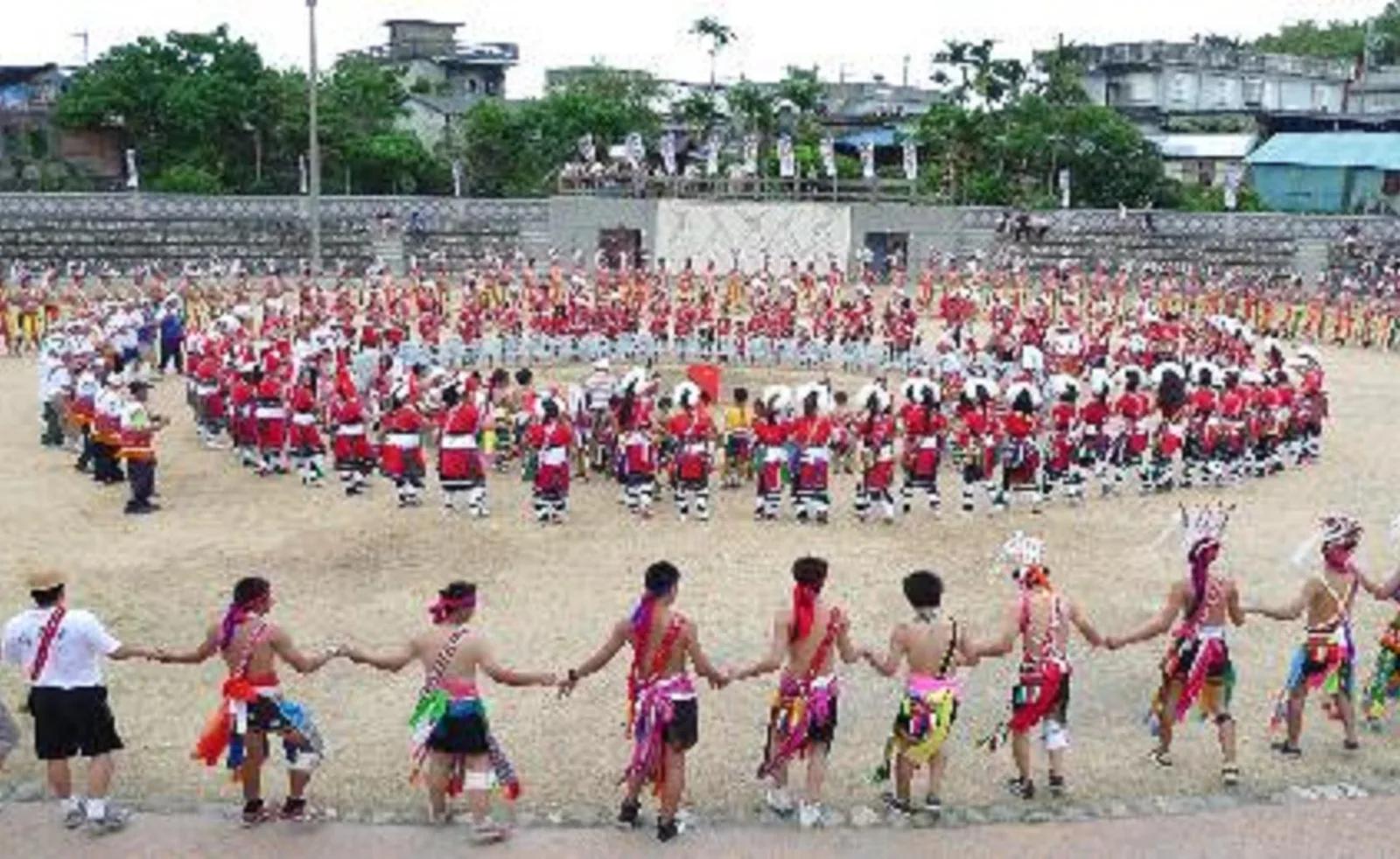
At the very bottom is a red-letter day that arrived very late. People with Indigenous status may designate three days off for Indigenous annual rituals. This number was hard-won: when the holiday was first included in 2010, only one day was granted; it was not expanded to three days until 2025. During the Legislative Yuan debate, Kao Chin Su-mei put it plainly: “Let our tribal members working in cities return home to participate in important ceremonies.”9 But this is a holiday only for people with a specific status, not for everyone.
Source: Act on the Implementation of Commemoration Days and Holidays, Articles 3, 4, 5, and 6, 2025
These four layers themselves form a political map. Who is placed in the highest tier of “holidays for all,” who is pushed into “commemoration only,” and who must depend on legal status to take a day off: every position is the result of a vote, a compromise, and a struggle over “whether it should be done, and whether it is worth it.”
“Glorious October”: How Authoritarian Rule Used Holidays to Write Myth
To understand how much emotion was contained in the 2025 “lost and restored” battle, we first have to return to the time before those red-letter days were “lost.”
On Taiwan's calendar during the martial-law era, October was almost an expanse of red. National Day on October 10, Retrocession Day on October 25, and Chiang Kai-shek's Birthday on October 31 formed three major holidays in what the state called “Glorious October.” School flag-raising ceremonies, parades, and speech contests all operated within a ritual system built around the national myth of the Republic of China.10
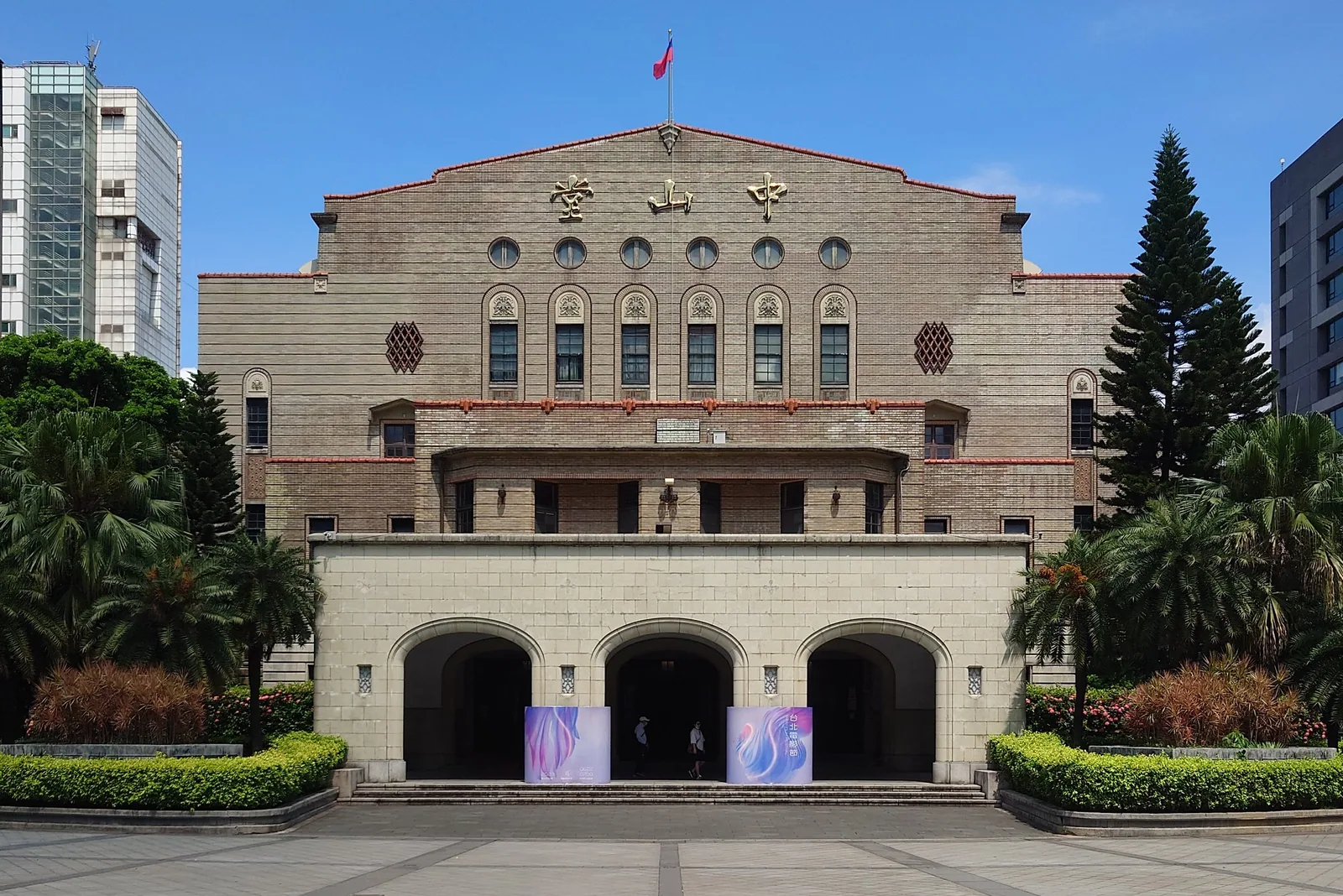
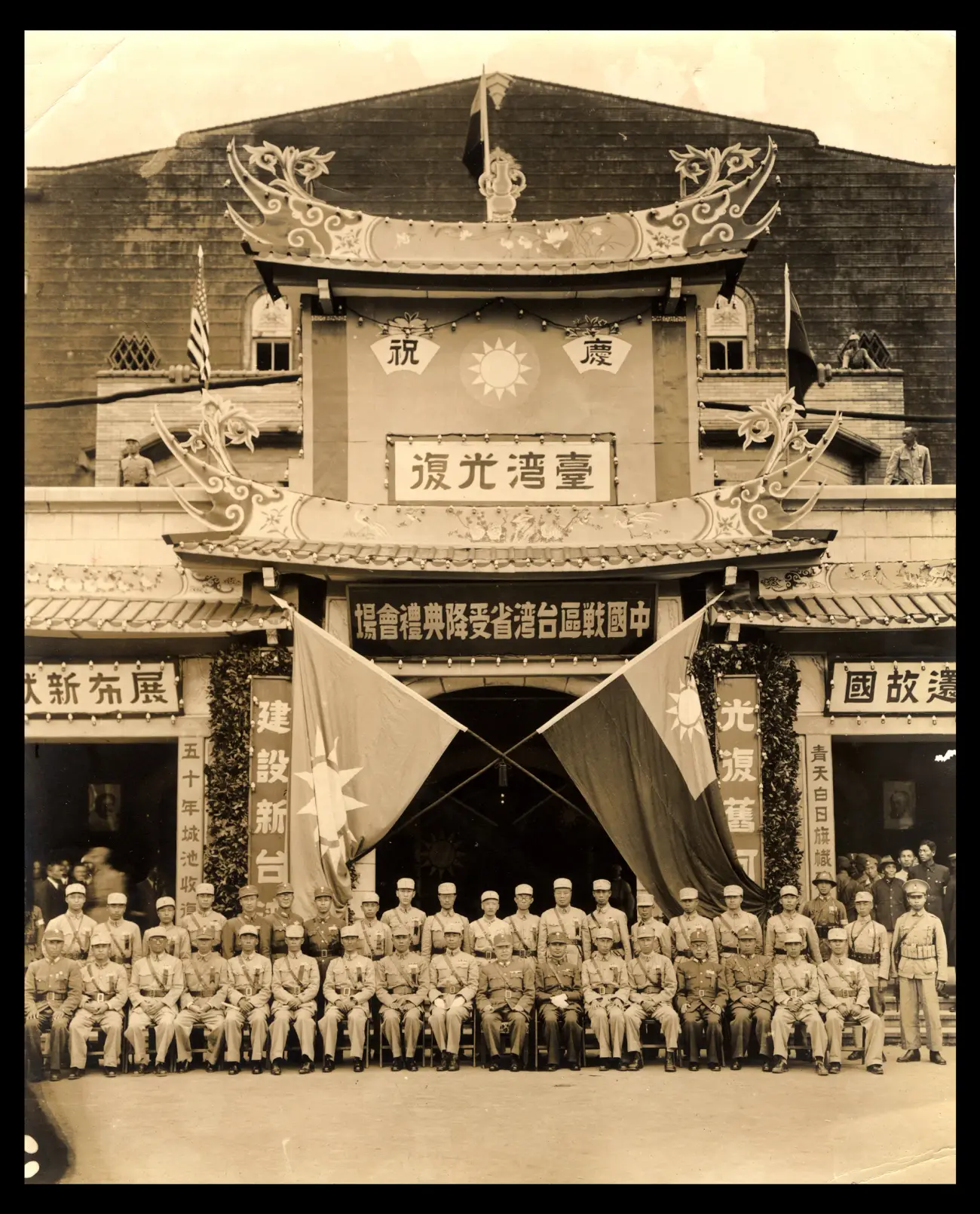
The origin of Retrocession Day begins in 1945. On October 25 that year, a surrender ceremony was held at Taipei Public Hall. The official name at the time was the “Surrender Ceremony of Taiwan Province in the China Theater.”11 The following year, the Taiwan Provincial Administrative Executive Office announced that the day would be a holiday. It remained one from 1946 to 2000, for more than half a century.12 Constitution Day was arranged with even more deliberation: the constitution was adopted on December 25, 1946, intentionally chosen to coincide with Christmas, binding the constitution to Christian imagery of freedom. According to a broadcast at the time, Chiang Kai-shek said he wanted to “give the personal dignity and freedom of Christian doctrine to all compatriots nationwide.” The broadcast text survives only in second-hand accounts, but the fact that the date was deliberately chosen already says enough.13
Tomb-Sweeping Day carried two layers of meaning. In 1972, it first became the National Tomb-Sweeping Festival, a holiday; on April 5, 1975, Chiang Kai-shek happened to die on Tomb-Sweeping Day. The government immediately promulgated the Regulations for the Permanent Commemoration of President Chiang, making Tomb-Sweeping Day also the “Commemoration Day of President Chiang's Death.” A day for visiting graves was overlaid with the death anniversary of a leader.14
📝 Curator's note: When authoritarian systems color calendar dates red, it is never for the sake of rest. Glorious October, the pairing of Christmas with the constitution, and the layering of Chiang Kai-shek's death anniversary onto Tomb-Sweeping Day were all ways of writing the answer to “who should be commemorated” into everyone's daily schedule. Year after year, people followed along without needing to think. Holidays are the gentlest form of indoctrination: they do not force you to believe anything. They simply turn “the Republic of China” into the self-evident red on your calendar.
Overnight, Seven Red Letters Turned Black
In 2000, Taiwan saw its first change in ruling party. The following year, one corner of the “Glorious October” myth collapsed.
On December 30, 2000, the Chen Shui-bian administration amended the Regulations for the Implementation of Commemoration Days and Holidays to coordinate with the full implementation of the two-day weekend for civil servants. In one move, it removed seven national holidays: January 2, Youth Day on March 29, Teachers' Day on September 28, Retrocession Day on October 25, Chiang Kai-shek's Birthday on October 31, Sun Yat-sen's Birthday on November 12, and Constitution Day on December 25.15 Civil servants' national holidays were cut from nineteen days to twelve.
Here is a key point that is often conflated: the “nineteen cut to twelve” was actually cut in two stages. In 2001, the cut applied to civil servants. Workers had to wait until 2016, when the Tsai Ing-wen administration promoted the “one fixed day off and one flexible rest day” reform and used Article 23 of the Enforcement Rules of the Labor Standards Act to cut private-sector workers' national holidays from nineteen days to twelve as well. The exact same seven days were cut, but fifteen years apart.16 During those fifteen years, civil servants and workers had different numbers of holidays, a strange dual-track period in Taiwan's labor history.
For the generation born after the lifting of martial law, these days “were never holidays to begin with.” Retrocession Day? They had never taken it off. Constitution Day? They had never heard of it as a day off. In their memory, national holiday reform meant “fewer holidays,” not “more holidays.”
Chen Shui-bian later made the historical viewpoint behind the move explicit. On the sixtieth anniversary of Retrocession Day in 2005, he said: “If we equate ‘retrocession’ with ‘return,’ and turn ‘the retrocession of Taiwan’ into ‘return to China’... that is the greatest tragedy of ‘Taiwan Retrocession.’”17 Cutting Retrocession Day saved one day off. More importantly, it rejected the previous regime's entire interpretation of October 25.
Source: Ministry of Labor, Directorate-General of Personnel Administration, legislative records of the Act on the Implementation of Commemoration Days and Holidays
The Same Argument, Ninety Years Earlier
Pull the camera back ninety years, and something unsettling appears: the 2025 dispute over “retrocession or war's end” had already been argued by people in Taiwan in an almost identical version in 1930.
During Japanese rule, the colonial government had its own red-letter days. On June 17, 1895, the first governor-general of Taiwan, Kabayama Sukenori, held the “Ceremony Marking the Beginning of Administration” in Taipei, declaring the start of Japanese rule over Taiwan. The day was designated “Administration Beginning Commemoration Day” and celebrated every year. Alongside the Taiwan Shrine festival, it was one of the colony's two major official holidays.18
But the Taiwanese people being ruled refused to celebrate along. On June 13, 1930, the standing committee of the Taiwanese People's Party passed a resolution renaming June 17 “Taiwanese National Catastrophic Defeat Commemoration Day” and “Commemoration Day of Shameful Rule,” calling for the abolition of all celebratory activities.19 Even earlier, in 1924, the Shanghai Taiwanese Youth Association had distributed leaflets stating: “Taiwanese people, ruled by the Japanese, have fallen into the status of a conquered people; this is truly the greatest humiliation.”20
Do you see it? In 1930, the Taiwanese People's Party said of June 17, “This is not benevolence, but humiliation; we do not commemorate it.” In 2025, Democratic Progressive Party Secretary-General Hsu Kuo-yung said of October 25, “There is no such thing as Taiwan Retrocession Day.” Ninety-five years apart, the political posture is the same: the ruled refuse to accept the ruler's assignment of what they should commemorate. The only difference is that the people in 1930 had no parliamentary seats with which to change the law; the people in 2025 did. And precisely because they did, the Legislative Yuan descended into the dispute it did.
Source: National Cultural Memory Bank (records by Chuang Yung-ming), CNA 2025
💡 Did you know: Disputes over holidays cross regimes and languages, but the core question has never changed. The Japanese, the Kuomintang, and the Democratic Progressive Party have each taken turns sitting in the position of “the maker,” and each time they have had to answer the same question: should this day be commemorated? And Taiwanese people, sitting in the position of “those being assigned,” have retained every time the right to say, “I do not commemorate this.” Ninety years, three regimes, and one exam question with no standard answer.
In the Same Law, Two National Memories Sit Side by Side
The trigger for the 2025 dispute was one sentence.
On September 16, 2025, DPP Secretary-General Hsu Kuo-yung cited historical documents on a party livestream: in 1945, Allied commander Douglas MacArthur issued an order directing Chiang Kai-shek to receive Taiwan on behalf of the Allies, and therefore “there is no such thing as Taiwan Retrocession Day; don't talk nonsense.”21 That sentence stepped directly onto one of the deepest fault lines in Taiwanese society.
Kuomintang Chairman Eric Chu shot back the next day, asking whether, by Hsu's logic, Taiwan had still not been retroceded and remained a colony. He denounced the claim as “utterly absurd” and said the public would never accept it.22 On October 25, former president Ma Ying-jeou criticized Hsu for “Japan-pandering remarks that completely distort historical facts” and for having “failed the Taiwanese forebears and martyrs who sacrificed themselves in the resistance against Japan.”23 The Mainland Affairs Council, which handles Cross-Strait affairs, chose an evasive position. Deputy Minister Liang Wen-chieh said: “There are different viewpoints in historical interpretation.”24 Hsu himself later softened his position: “Since the law has passed, we can just follow the rules and implement it according to law.”
The core problem is that the terms “retrocession,” “war's end,” and “takeover” each carry an entire position. In an interview with The Reporter, Academia Historica President Chen Yi-shen stated the academic tendency clearly: “The literal meaning of ‘war's end’ is simply that the war ended. It is a neutral term.” He put it even more sharply: “Taiwanese people were pieces in the war. We were not the players. What standing do we have to talk about victory or defeat?”25
The most thought-provoking part is how the Act itself handles the question. Article 4 designates October 25 as the holiday “Taiwan Retrocession and the Victory at Kinmen's Guningtou Commemoration Day,” while Article 3 simultaneously adds August 15, a non-holiday “War's End Commemoration Day.”26 In one law, the two terms “retrocession” and “war's end,” opposed almost to the point of irreconcilability, sit side by side. Freedom of Speech Day commemorating Cheng Nan-jung, Indigenous Peoples' Day, and Indigenous Resistance Day also entered the law at the same time. No side won a total victory. This is a hybrid product assembled at the negotiating table after the blue, white, and green camps each inserted the commemorative days they cared about.
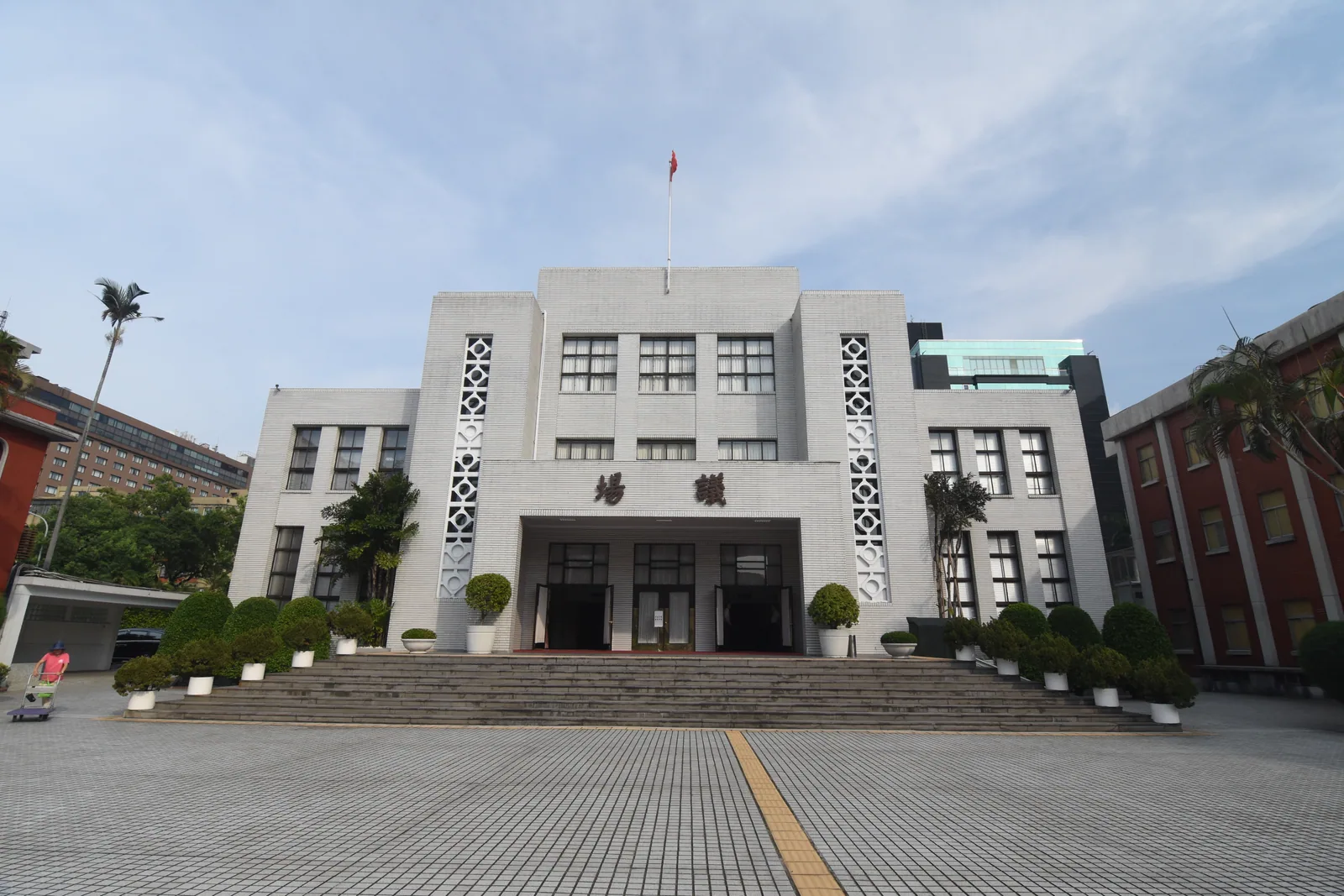
⚠️ Contested view: Renaming October 25 “Taiwan Retrocession and the Victory at Kinmen's Guningtou Commemoration Day” binds the 1945 surrender ceremony to the 1949 Battle of Guningtou on the same date. Kuomintang legislator Chen Yu-jen, who led the naming effort, said it “finally lets the sacrifices of Kinmen residents receive the respect of the Republic of China.”27 Critics, however, argue that it uses a 1949 civil-war victory to reinforce a deeply contested 1945 narrative of “retrocession.” On the same date, in the same red letter, is the day commemorating “liberation from colonial rule” or “the beginning of another outside regime's takeover”? This debate did not end in 2025. It was merely written into law for the first time.
The Calendar's Other Axis: Who Is Entitled to Rest
At this point, the story might seem ready to be wrapped up as a “blue-green war of historical viewpoints.” But that would be a severely simplified version.
Holidays have always been pulled between two reasons. One is “commemorating something,” the logic of nationhood. The other is “workers should rest,” the logic of labor rights. The same calendar is pulled by both axes at once. Once this becomes clear, the contrast between 2016 and 2025 emerges: the one fixed day off and one flexible rest day reform cut seven holidays for workers; the holidays restored in 2025 are mostly national commemorations.
The 2016 holiday cut triggered strong backlash from labor groups. “Return our seven holidays” and the “123 Alliance” took to the streets, with 3,000 people marching.28 Labor groups accused the DPP government of breaking its promise. Here, however, one must be careful: no primary source has been found for the exact wording of a Tsai Ing-wen pledge “not to cut holidays.” Wikipedia instead shows that on May 8, 2015, she said “Taiwanese workers do indeed have too many holidays.” So the accurate formulation is “labor groups accused the government of breaking its promise,” not treating “a promise was made and then broken” as an ironclad fact.29 Ho Cheng-chia of the Workers' Struggle movement stated labor's position fully: “Since the 2016 amendment for one fixed day off and one flexible rest day, we have continuously appealed to the government... workers should be given more time to rest.”30
How did business view the added holidays in 2025? Business associations of course had objections. One commonly cited figure requires clarification: online claims say “each additional holiday increases business costs by NT$11.9 billion.” The original link for this figure is dead, and no corroboration can be found across the web, so it should not be cited as fact. What can be said is that business groups generally estimated that an increase in holidays would raise overtime and staffing costs, and they asked the government for subsidies, tax cuts, and looser working-hour rules.31 On the day of the third reading, Ho Yu of the Chinese National Federation of Industries captured the business community's resigned attitude vividly: “Everyone is happy when the whole country gets a holiday. There is nothing to be done; industry can only comply.”32 The pressure on service industries was even more direct. Hsu Shu-po, chair of the General Chamber of Commerce, said he “understands the public's expectation for balancing work and life,” but that this “will inevitably bring increased wage costs and disruptions to scheduling.”33
And within this entire tug-of-war between nationhood and labor rights, there is one group of people whom the calendar's red letters reach least of all.
Taiwan has roughly 220,000 home care workers. They are not covered by the Labor Standards Act. The Ministry of Labor states it plainly: “‘Home-based care workers’ are not workers covered by the Labor Standards Act; their wages are handled according to agreements between employers and employees.”34 In plain language: legally mandated national holidays do not exist for them. The Taiwan International Workers' Association (TIWA) notes: “Taiwan has roughly 220,000 home care workers... more than half of foreign care workers have not taken a single day off during three years in Taiwan.”35 While the Legislative Yuan was in uproar over “retrocession or war's end,” these 220,000 people were still outside the door of even the most basic “one day off.” For Muslim migrant workers, Eid al-Fitr is not even a statutory holiday. The most the Ministry of Labor can do is issue letters “urging employers” to agree to time off. That is advocacy, not compulsion.
📝 Curator's note: Reading the story of holidays only as a “blue-green dispute over historical viewpoints” misses the quietest square on the calendar. Arguments over national commemoration are the loudest because they touch identity. But the question of labor and rest affects the most people because it touches everyone who exchanges work for money. And in the darkest place where these two logics intersect stand 220,000 people who are not even covered by the Labor Standards Act. No matter how full the calendar becomes with red letters, the places it does not reach remain unreached. Putting the people who most need rest in the position with the least protection is the design of the whole system. It cannot be counted only against any one party.
Every Country Fights This Battle on Its Calendar
Finally, we have to answer a question often thrown around: is this level of conflict over holidays a political illness unique to Taiwan? Is it because this country's identity remains unsettled that even holidays get dragged into unification-versus-independence disputes?
The answer is no. Every mature democracy has fought, or is fighting, the same battle over national memory on its own calendar. Taiwan is not an outlier. Taiwan is the local version.
Germany is the most direct case. May 8 is the day the European theater of World War II ended, and Germans are still arguing over whether it is “Liberation Day” (liberation from the Nazis) or “Surrender Day” (defeat). This naming dispute has lasted eighty years. Berlin designated a one-off public holiday only in 2025.36 It is almost the same question as Taiwan's “retrocession vs. war's end,” in a different language.
Japan's National Foundation Day is even more convoluted. The day commemorating the “founding of the nation by Emperor Jimmu” was abolished after the war in 1948 because of its deep connection to militarism. It was revived in 1966 under the deliberately ambiguous name “National Foundation Day,” and the Japanese Communist Party still opposes it.37 Another example is Shōwa Day (April 29, originally Emperor Shōwa's birthday). Its name was changed from “Greenery Day” to “Shōwa Day,” and critics argue that the renaming evades responsibility for the war.38
The United States is the same. In recent years, Columbus Day has been changed in many states to Indigenous Peoples' Day, because Columbus symbolizes the colonization and killing of Indigenous peoples.39 In 2021, the United States established Juneteenth, commemorating the emancipation of enslaved people, as its first new federal holiday since Martin Luther King Jr. Day in 1983. A small number of Republicans opposed it at the time.40
💡 Did you know: Australia's national day, Australia Day on January 26, is “Invasion Day” in the eyes of Indigenous peoples, because it marks the 1788 landing of the British fleet. Polling in 2026 showed that more than 60 percent of people still opposed changing the date. From Germany's May 8, Japan's National Foundation Day, and America's Columbus Day to Australia's national day, all countries marked by the wounds of immigration, colonization, defeat, or revolution repeatedly confront the question of “what should we commemorate” on their calendars. What Taiwan's Legislative Yuan did in 2025 is, in essence, the same thing being done in Berlin, Tokyo, Washington, and Canberra.
As for anxieties such as “Taiwan has fewer holidays than Japan,” the categories must first be separated. If the comparison is “statutory public holidays” (excluding weekends and annual leave), Taiwan has 16 days after the 2025 amendment, the same as Japan's 16; South Korea has 15; China has 13; Hong Kong has 17 general holidays (statutory holidays under the Employment Ordinance are 14 and are being gradually increased to 17); the United States has 11 federal holidays (the private sector has no law mandating time off at all); Germany has 9 to 13 depending on the state; and England has only 8.41 In other words, after the amendment, Taiwan's statutory public holidays are already among the highest in the Asia-Pacific region, tied with Japan.
Source: Official calendars of each country (Cabinet Office / OPM / gov.uk, etc.), statutory public holiday basis, excluding weekends and annual leave
As for the often-heard claim that “Japan has 26 days off and South Korea has 30,” those figures combine “statutory public holidays” with “paid annual leave.” They are a different category from the figures above and cannot be mixed. Taiwan's annual leave does indeed start relatively low (three days only after six months of work; Japan grants ten days after six months), but that is another story and not the same as the number of statutory public holidays.42
The Calendar's Next Chapter Is Not Yet Written
The most far-reaching change made by the 2025 law actually has little to do with how many days off there are. It lies in legal hierarchy.
In the past, holiday rules were written in the Regulations for the Implementation of Commemoration Days and Holidays. Those were executive orders. If the Executive Yuan wanted to change them, it could do so with one order: the 2001 cut to civil servants' holidays and the 2016 cut to workers' holidays both relied on that mechanism. But the 2025 Act on the Implementation of Commemoration Days and Holidays is a law passed by the Legislative Yuan. From now on, changing any red-letter day requires passing the threshold of a legislative majority.43 The power to amend the calendar has moved from the Executive Yuan to the legislature.
That means the story is not over. It has only moved to a new battlefield.
The commemorative days that nearly entered the calendar in 2025 but were ultimately deleted are still standing outside the door. In its press release on the day of the third reading, the Ministry of the Interior listed their names: Presidential Direct Election Commemoration Day (March 23), White Terror Remembrance Day (May 19, already approved administratively by the Tsai administration but not written into law), and Marriage Equality Commemoration Day (May 24). The ministry expressed regret that these commemorative days “highlighting democratic pluralist values and uniting Taiwanese society” failed to enter the law.44 Direct presidential elections, the White Terror, and marriage equality, three dates that most clearly represent the road Taiwan has traveled over the past thirty years, were all kept outside the door in this round.
And since amendment power now lies in the Legislative Yuan, the next shift in Taiwan's political map could put these red-letter days back on the negotiating table. Not long after the bill passed, Ker Chien-ming, the DPP legislative caucus whip, hinted that if recall results changed the structure of the legislature, the question of commemorative days could be revisited.45 Who writes the next chapter of the calendar, and whose names get written into it, will depend on the next election, the next vote, and the next time someone sits in the position of “the maker.”
So the next time you tear a page from a calendar and reach a red-letter day, pause for a second. That red square did not fall from the sky. It was colored in by a particular regime, in a particular era, to answer “what should Taiwan commemorate, and to whom does it belong.” It may also be colored black again by another regime for the same reason.
But it is never only a national question. It is also a simpler one: on that day, who gets to rest, and who still has to work? For 220,000 domestic migrant workers, that square is still black.
This is a history of Taiwan written through “which days do we not have to work.” It has been written for a century, from the June 17 dispute over shameful rule to the October 25 debate over retrocession. Its newest chapter began only in 2025. The ink is not yet dry.
Further Reading:
- The 228 Incident — The 1947 massacre and how it became Taiwan's first statutory national holiday in 1997
- The Martial-Law Period — “Glorious October” and the authoritarian calendar behind Chiang Kai-shek's Birthday holiday
- Transitional Justice in Taiwan — Why White Terror Remembrance Day still cannot enter the calendar
- Taiwan's Unification-Independence Spectrum — The identity map behind the three historical viewpoints of “retrocession / war's end / takeover”
- Chinese Taipei — Another side of the dispute over the same “Republic of China,” Double Ten National Day, and Taiwan National Day
- Typhoon Days — Another version of “whose holiday, whose shift”: the people who still work through wind and rain
- Dragon Boat Festival — How a folk festival became an institutionalized “one day off” on the calendar
- Taiwan's Political Environment and Electoral System — How the blue-white-green seat structure in the Legislative Yuan determines the red letters on the calendar
Image Sources
- 1945 Taiwan Province surrender ceremony, the origin of Retrocession Day. Wikimedia Commons, public domain — Public domain
- Taipei Zhongshan Hall (formerly Taipei Public Hall), photographed by Yu tptw, Wikimedia Commons, CC BY-SA 4.0 — CC BY-SA 4.0
- Hsinchu City 228 Peace Memorial, photographed by Yuriy kosygin, Wikimedia Commons, CC BY-SA 3.0 — CC BY-SA 3.0
- Legislative Yuan chamber, photographed by Lin Kao-chih, Wikimedia Commons, CC BY-SA 4.0 — CC BY-SA 4.0
- 2015 Taiwan Labor Day Parade, photographed by Chung-tsen Fan-chiang (Flickr), Wikimedia Commons, CC BY-SA 2.0 — CC BY-SA 2.0
- Amis Fakong community ilisin harvest festival, Hualien County Cultural Affairs Bureau, Wikimedia Commons, CC BY 4.0 — CC BY 4.0
References
- Act on the Implementation of Commemoration Days and Holidays — Laws and Regulations Database of the Republic of China, PCode D0020095. The current law, passed on its third reading by the Legislative Yuan on May 9, 2025, and promulgated and implemented on May 28, 2025, replaced the long-standing Regulations for the Implementation of Commemoration Days and Holidays. Peace Memorial Day (2/28) is one of the six commemoration days with a holiday explicitly stipulated in Article 4.↩
- Wikipedia: Peace Memorial Day — Records that the 1995 February 28 Incident Disposition and Compensation Act first designated 2/28 as a Peace Memorial Day “without a holiday,” and that the February 25, 1997 amendment changed it into a holiday and was promulgated the same day, making it the Republic of China's first statutory national holiday established through the legislative process. The legislative rationale and voting process are also recorded in this entry.↩
- Memory fractures at the 80th anniversary of the war's end as Retrocession Day returns — An in-depth report by The Reporter, fully presenting the multi-voiced spectrum of the three historical viewpoints of “retrocession / war's end / takeover,” including first-hand accounts from blue-green academics and interviewees across three generations. The historiographical section of this article curates and references the report's plural structure without taking sides.↩
- Drifting and human rights: the situation of domestic migrant workers — Long-term advocacy materials from the Taiwan International Workers' Association (TIWA), recording the situation of Taiwan's roughly 220,000 home care workers, who are not covered by the Labor Standards Act, and noting that more than half have not had a single day off in three years.↩
- Legislative Yuan passes the Act on the Implementation of Commemoration Days and Holidays on third reading, adding five national holidays — Lawbank news report recording the third-reading passage on May 9, 2025, and the legislative battle led by the blue-white camp (Kuomintang plus Taiwan People's Party) against opposition from the Democratic Progressive Party and the Executive Yuan.↩
- Act on the Implementation of Commemoration Days and Holidays, Article 4 — Text from the Laws and Regulations Database of the Republic of China. Article 4 explicitly stipulates six commemoration days with holidays: Founding Day, Peace Memorial Day, Confucius's Birthday, National Day, Taiwan Retrocession and the Victory at Kinmen's Guningtou Commemoration Day, and Constitution Day.↩
- Act on the Implementation of Commemoration Days and Holidays, Article 3 — Article 3 lists twenty commemoration days that are commemorated but not holidays, including Freedom of Speech Day (4/7), Martial Law Lifting Commemoration Day (7/15), War's End Commemoration Day (8/15), Indigenous Peoples' Day (8/1), and Taiwan United Nations Day (10/24). The verbatim text is also available in the Laws and Regulations Database, D0020095.↩
- Act on the Implementation of Commemoration Days and Holidays, Articles 5 and 6 — Article 6 provides festival holidays: Lunar New Year's Eve and Lunar New Year are holidays for five days; Children's Day, Tomb-Sweeping Day, Labor Day, Dragon Boat Festival, Teachers' Day, and Mid-Autumn Festival are each holidays for one day; people with Indigenous status designate three days for Indigenous annual rituals.↩
- Holiday mechanism for Indigenous annual rituals — Indigenous Television report including Kao Chin Su-mei's statement about “letting tribal members working in cities return home to participate in ceremonies,” and the Council of Indigenous Peoples official Tseng Hsing-chung's remarks on the effect on “tribal members' competitiveness in the job market.” Annual ritual holidays were first included as one day off in 2010 and expanded to three days in 2025.↩
- Why September 28 can be a holiday — CommonWealth Magazine's summary of the historical context of martial-law-era “Glorious October” (October 10 National Day, October 25 Retrocession Day, October 31 Chiang Kai-shek's Birthday) as the framework of a national myth.↩
- Wikipedia: Taiwan Retrocession Day — Records the October 25, 1945 “Surrender Ceremony of Taiwan Province in the China Theater” at Taipei Public Hall, the origin of the Administrative Executive Office's 1946 holiday announcement, and scholarly debates over the interpretation of “retrocession / military takeover.”↩
- Wikipedia: Taiwan Retrocession Day (holiday history) — Records that the Taiwan Provincial Administrative Executive Office announced October 25 as a holiday in 1946, that it was observed from 1946 to 2000, and that it was canceled in 2001 because of the two-day weekend.↩
- The origin of Constitution Day — The News Lens summary of the context in which the December 25, 1946 adoption of the constitution was deliberately linked to Christmas, and the Executive Yuan designated it a national holiday in 1963. Chiang Kai-shek's broadcast linking the constitution to Christian imagery of freedom survives as a second-hand account; this article treats it as “according to a broadcast at the time.”↩
- Wikipedia: Qingming Festival (National Tomb-Sweeping Festival) — Records that the National Tomb-Sweeping Festival was designated in 1935 without a holiday, became a holiday in 1972, and after Chiang Kai-shek died on Tomb-Sweeping Day, April 5, 1975, the Regulations for the Permanent Commemoration of President Chiang overlaid the day as “Commemoration Day of President Chiang's Death,” before the name was removed during de-Chiangification in 2007.↩
- National holidays adjusted from 19 days to 12 days — Ministry of Labor announcement listing the seven national holidays removed in 2001 in coordination with the two-day weekend for civil servants: 1/2, 3/29, 9/28, 10/25, 10/31, 11/12, and 12/25.↩
- TaiSugar Monthly: Adjustment of workers' national holidays — Records that in 2016, the one fixed day off and one flexible rest day reform used Article 23 of the Enforcement Rules of the Labor Standards Act to cut private-sector workers' national holidays from 19 to 12 days; the seven removed days were the same as those removed for civil servants in 2001. The 2001 civil-servant cut and 2016 worker cut were two separate events fifteen years apart.↩
- Office of the President: President Chen Shui-bian attends the 60th anniversary event for Taiwan Retrocession Day — First-hand presidential news release containing Chen Shui-bian's 2005 statement: “If we equate ‘retrocession’ with ‘return,’ and turn ‘the retrocession of Taiwan’ into ‘return to China’... that is the greatest tragedy of ‘Taiwan Retrocession.’”↩
- Taiwan Memory: Administration Beginning Commemoration Day — Records the colonial celebration background of the June 17, 1895 “Ceremony Marking the Beginning of Administration” held in Taipei by Taiwan's first governor-general Kabayama Sukenori, and the designation of June 17 as Administration Beginning Commemoration Day.↩
- National Cultural Memory Bank: Taiwanese People's Party “Commemoration Day of Shameful Rule” — Historical materials recording the June 13, 1930 resolution by the standing committee of the Taiwanese People's Party identifying Administration Beginning Commemoration Day as “Taiwanese National Catastrophic Defeat Commemoration Day” and “Commemoration Day of Shameful Rule,” and calling for celebrations to be abolished. Chuang Yung-ming also recorded it.↩
- Chuang Yung-ming: 1924 Shanghai Taiwanese Youth Association leaflet — Chuang Yung-ming's blog records the original text of a 1924 Shanghai Taiwanese Youth Association leaflet: “Taiwanese people, ruled by the Japanese, have fallen into the status of a conquered people; this is truly the greatest humiliation,” as well as the full text of the 1930 party resolution.↩
- Hsu Kuo-yung says there is no Retrocession Day; MAC says historical views differ — CNA report recording DPP Secretary-General Hsu Kuo-yung's September 16, 2025 original statement: “MacArthur ordered Chiang Kai-shek to receive Taiwan on behalf of the Allies, so there is no such thing as Taiwan Retrocession Day; don't talk nonsense,” and the subsequent responses.↩
- Eric Chu responds to Hsu Kuo-yung's Retrocession Day controversy — CNA report recording Kuomintang Chairman Eric Chu's response: “Could it be that Taiwan still has not been retroceded and is still a colony? This is utterly absurd.”↩
- Ma Ying-jeou criticizes Hsu Kuo-yung for Japan-pandering and distorting history — Newtalk report recording former president Ma Ying-jeou's October 25, 2025 criticism of Hsu Kuo-yung's “Japan-pandering remarks that completely distort historical facts” and “fail the martyrs who resisted Japan.”↩
- MAC: There are different viewpoints in historical interpretation — CNA report recording Deputy Minister of the Mainland Affairs Council Liang Wen-chieh's evasive position that “there are different viewpoints in historical interpretation” and “the Republic of China and the People's Republic of China are not subordinate to each other.”↩
- Chen Yi-shen on war's end and retrocession — Interview by The Reporter, containing Academia Historica President Chen Yi-shen's verbatim remarks: “The literal meaning of ‘war's end’ is simply that the war ended. It is a neutral term,” and “Taiwanese people were pieces in the war... what standing do we have to talk about victory or defeat?”↩
- Comparison of Articles 3 and 4 of the Act on the Implementation of Commemoration Days and Holidays — Article 4 designates the holiday “Taiwan Retrocession and the Victory at Kinmen's Guningtou Commemoration Day” (10/25), while Article 3 simultaneously adds the non-holiday “War's End Commemoration Day” (8/15), allowing two opposing historical viewpoints to coexist in the same law.↩
- Chen Yu-jen leads the merger of October 25 with Guningtou in the holiday name — Liberty Times report recording Kuomintang legislator Chen Yu-jen's role in merging October 25 (the 1945 surrender ceremony) with the October 25, 1949 Battle of Guningtou in the name, and her statement that this “finally lets the sacrifices of Kinmen residents receive the respect of the Republic of China.”↩
- Wikipedia: One fixed day off and one flexible rest day — Records the 2016 reduction of workers' national holidays from 19 to 12 days, the “return our seven holidays” and “123 Alliance” march of 3,000 people, and Tsai Ing-wen's May 8, 2015 statement that “Taiwanese workers do indeed have too many holidays.”↩
- Wikipedia: One fixed day off and one flexible rest day (Tsai Ing-wen's related remarks) — Same entry. No primary source has been found for the exact wording of a “promise not to cut holidays”; Wikipedia shows that Tsai said in 2015 that “workers have too many holidays.” This article uses the attributed formulation “labor groups accused the government of breaking its promise,” rather than treating “a promise was made and then broken” as an established fact.↩
- Ho Cheng-chia of Workers' Struggle on holiday-cut demands — ETtoday report recording Workers' Struggle member Ho Cheng-chia's verbatim remarks: “Since the 2016 amendment for one fixed day off and one flexible rest day, we have continuously appealed to the government... workers should be given more time to rest.”↩
- Business groups' cost demands regarding additional national holidays — ETtoday report. The Chinese National Federation of Industries, Chinese National Association of Industry and Commerce, and General Chamber of Commerce generally expressed concern that added national holidays in 2025 would create overtime and staffing cost pressures, and requested government subsidies, tax cuts, looser working-hour rules, and expanded migrant-worker quotas. The online figure of “NT$11.9 billion per day” has a dead original link and no corroboration across the web, so this article does not use a specific number.↩
- Ho Yu of the Chinese National Federation of Industries: industry can only comply — ETtoday report recording Ho Yu's May 9, 2025 verbatim statement: “Everyone is happy when the whole country gets a holiday. There is nothing to be done; industry can only comply.”↩
- Hsu Shu-po of the General Chamber of Commerce on service-sector costs — ETtoday report recording General Chamber of Commerce chair Hsu Shu-po's statement that he “understands the public's expectation for balancing work and life,” but that for service industries this “will inevitably bring increased wage costs and disruptions to scheduling.”↩
- Ministry of Labor: home-based care workers are not covered by the Labor Standards Act — Ministry of Labor explanation that home-based care workers are not workers covered by the Labor Standards Act, and that wages are handled according to agreements between employers and employees; therefore, they have no statutory national-holiday protections.↩
- TIWA: the rest-day predicament of 220,000 domestic migrant workers — Taiwan International Workers' Association document, with the verbatim statement: “Taiwan has roughly 220,000 home care workers... more than half of foreign care workers have not taken a single day off during three years in Taiwan.”↩
- Germany's May 8 “Liberation Day vs. Surrender Day” dispute — Berlin city government news release recording the 2025 one-off public holiday in Berlin commemorating the end of World War II in Europe, and the eighty-year naming dispute after President Richard von Weizsäcker first characterized the day as “Liberation Day” in 1985.↩
- National Foundation Day (Japan) — English Wikipedia entry recording the history of Japan's Kigensetsu / National Foundation Day, abolished in 1948 because of its association with militarism, restored in 1966 under an ambiguous name, and opposed by the Japanese Communist Party.↩
- Shōwa Day — English Wikipedia entry recording that April 29 (Emperor Shōwa's birthday) was renamed “Greenery Day” in 1989 and “Shōwa Day” in 2007, and that the naming has been criticized for evading responsibility for the war.↩
- Columbus Day to Indigenous Peoples' Day — Pew Research Center, recording the progress of multiple U.S. states replacing or adding Indigenous Peoples' Day to Columbus Day, and President Biden's 2021 proclamation without a change to federal law.↩
- Juneteenth becomes federal holiday — CNBC report recording Juneteenth becoming the United States' 11th federal holiday in 2021, the first newly established one since Martin Luther King Jr. Day in 1983, with opposition from a small number of Republicans.↩
- Comparison of statutory public holidays in selected countries — U.S. Library of Congress law blog article comparing statutory public holidays in Asian countries and clarifying the difference between “public holidays” and “annual leave.” Figures for Japan 16 (Cabinet Office), the United States 11 (OPM), England 8 (gov.uk), and Hong Kong 17/12 (China Briefing) are based on each country's official sources.↩
- Labor Standards Act, Article 38 (annual paid leave) — Laws and Regulations Database of the Republic of China. Taiwan's annual leave scale: 3 days after 6 months, 7 days after 1 year, and an additional day each year from 10 years of service up to 30 days. The starting number is lower than Japan's (10 days after six months), but this belongs to the category of “annual leave,” not “statutory public holidays.”↩
- From regulation to law: the legalization of commemoration days — Liberty Times commentary by “Plain Law” explaining that the old Regulations for the Implementation of Commemoration Days and Holidays were executive orders that the Executive Yuan could amend directly, while the new Act on the Implementation of Commemoration Days and Holidays is a law requiring a Legislative Yuan majority, and the constitutional significance of that elevation.↩
- Ministry of the Interior regrets that commemorative days for democratic pluralist values failed to enter law — Ministry of the Interior press release on May 9, 2025, listing commemorative days discussed in committee but deleted before the third reading: Presidential Direct Election Commemoration Day (3/23), White Terror Remembrance Day (5/19), and Marriage Equality Commemoration Day (5/24), and expressing regret that they failed to enter the law.↩
- Ker Chien-ming on recalls and revising commemoration-day law — CNA report recording DPP legislative caucus whip Ker Chien-ming's criticism that the Kuomintang was “using holidays to induce the public not to recall legislators,” and his suggestion that if the structure of the legislature changed, commemoration-day amendments could be revisited.↩