
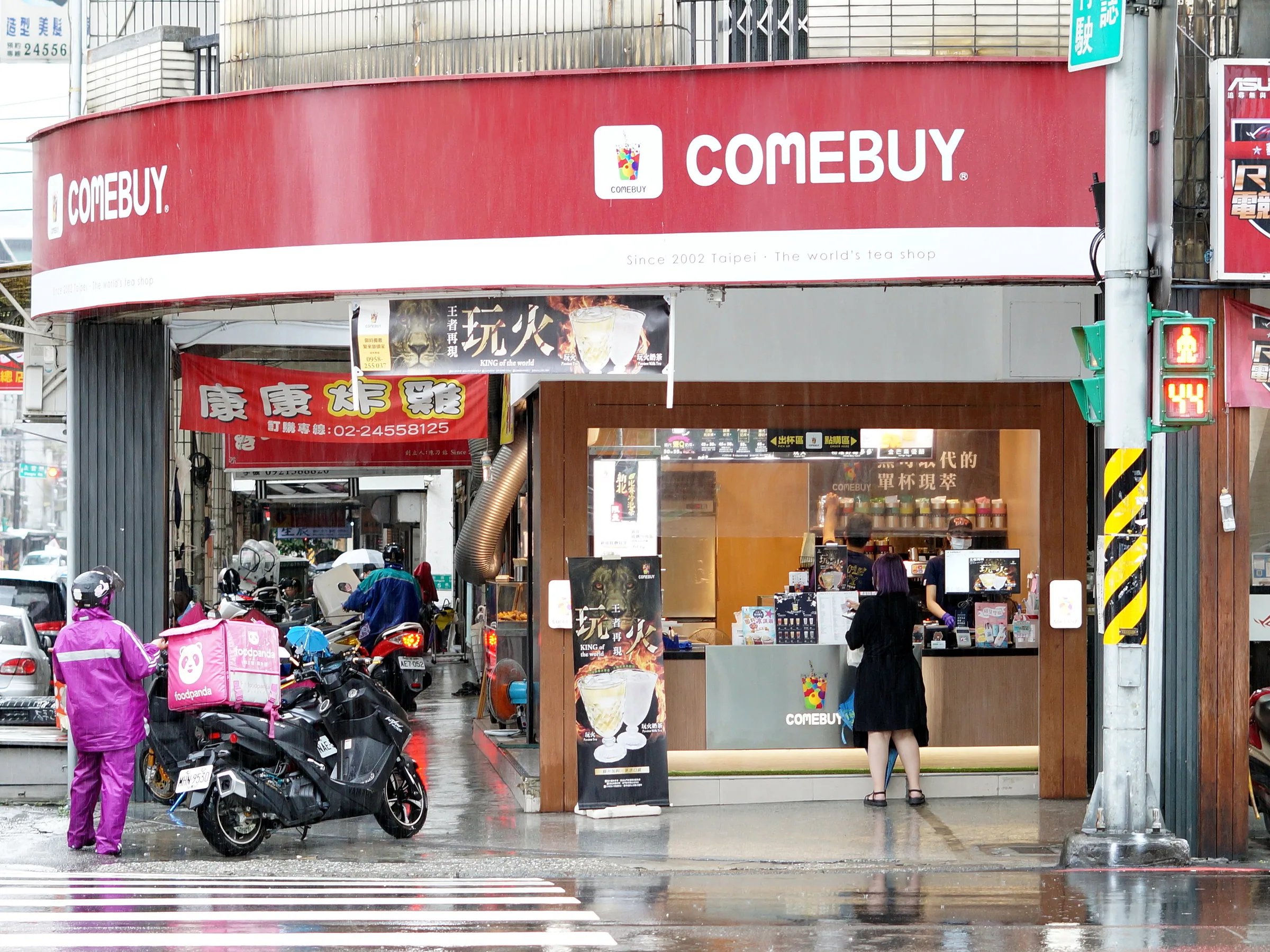
A few hours after 12:00 AM on July 21, 2026, an Uber Eats rider took a screenshot of their phone and posted it to a community group. On the screen were two combined orders: one estimated at 4.4 km in 19 minutes for NT$90; another stretched to 8.6 km in 26 minutes, still paying only NT$90. Next to it they wrote: "Congratulations, the 'add-on of NT$24' is confirmed nonexistent." 1
At midnight that day, the Delivery Rider Rights Protection and Delivery Platform Management Act came into effect. Spanning all 28 articles, this marks Taiwan's first industry-specific law for food delivery. 2 The line most remembered from it appears in Article 5: "The basic remuneration paid by platforms to riders per order shall not be less than one point twenty-five times the minimum hourly wage calculated proportionally based on the duration of the delivery service, and under no circumstances shall it fall below a guaranteed amount of NT$45." 3
NT$45. This is the first time Taiwan has set a price floor for a single delivery order. Yet in the eyes of those who received these two orders, it also represents a ceiling.
30-Second Overview: The law began with the deaths of two riders during the National Day holiday weekend in 2019, took six years to develop, and was passed on its third reading in January 2026 before taking effect at midnight on July 21, 2026. It does one clear thing: every order pays at least NT$45 (equivalent to no less than NT$245 per hour), with provisions for insurance, grievance mechanisms, and the right to go offline; penalties require justification. Yet it leaves two questions unanswered—whether riders are employees (Article 1, Paragraph 2 preserves the path of "employment relationship" by referring back to the Labor Standards Act without making a determination itself) and the dispatch algorithm that truly determines income (the law requires platforms to retain records of unfavorable decisions made via algorithms for two years but does not mandate public disclosure). In its first week after implementation, there was still no answer on how many local inspectors were deployed or if the first fine would be issued.
At Midnight on July 21st: Every Order Pays at Least NT$45
The calculation behind this line is slightly more nuanced than simply "NT$45." Article 5 sets two floors, taking whichever yields a higher amount for each order: an absolute minimum of NT$45, or 1.25 times the hourly minimum wage calculated proportionally based on the delivery service duration for that specific order. In 2026, the hourly minimum wage is NT$196; multiplied by 1.25, this equals NT$245. 4 For long-running orders, the time-based calculation will exceed NT$45; for fast short-distance trips, the absolute floor of NT$45 applies first.
Source: National Law Database (pcode=N0020024), Ministry of Labor, Taipei Times
"Per order" refers to one pickup plus one delivery; therefore, three stacked orders must be priced separately. Su Po-hao, spokesperson for the Taiwan Delivery Industry Rights Promotion Alliance, stated plainly on the day of the third reading: "The specific law does not prohibit stacking orders and explicitly guarantees a minimum of NT$45 per order. The purpose is to prevent scenarios where taking three orders yields only NT$45 total—effectively just NT$15 per order." 5
Other protections also took effect simultaneously. Remuneration must be paid in full directly, with disbursements occurring at least twice monthly. 6 If an order is not completed due to reasons beyond the rider's control, platforms must still compensate based on actual time invested. 7 Platforms are required to purchase group accident insurance and liability insurance for riders; no one may go online before this coverage is secured (Article 10). Platforms cannot mandate specific working hours or treat unfavorably those who refuse orders or choose to log off for rest (Article 11). Suspension of service or termination of contracts must be justified, with an appeal channel available. The independent committee handling contract termination disputes must comprise at least three members, including at least one union representative (Article 9). 3
The Ministry of Labor summarized these points into four phrases: clearer remuneration, accessible grievance channels, more transparent dispatching, and a system for compensation. Minister Hung Shen-han framed the premise of this legislation: "Platforms use digital algorithms to conduct labor scheduling and control; riders cannot autonomously manage order allocation, differing significantly from general contracting models, thus placing them in a relatively disadvantaged position." 8
The same number yields two interpretations. The official reading sees it as finally established floor—a legal mandate that nothing can go lower than this for the first time in six years. Riders receiving orders see something else: both 4.4 km and 8.6 km trips are valued at NT$90; while the floor establishes a minimum per order, it flattens out what would have been additional compensation based on distance.
This is the provision riders feel most directly upon implementation—the easiest to translate into concrete numbers. Why did drawing such a specific line take six years?
Two National Day Holiday Deaths Sparked Six Years of Legislation
Late night on October 10, 2019, in Taoyuan: A 29-year-old male foodpanda rider collided with a small truck and died. Three days later, on October 13th in Shilin: A yellow-shirted Uber Eats rider was rear-ended by a car and succumbed to injuries at the hospital. 9 After that National Day holiday weekend, Taiwanese society asked for the first time seriously: "If something happens to the person delivering food to me, who is responsible?"
On October 14th, the Ministry of Labor provided an answer. A labor inspection determined that both platforms and their riders had a relationship of "fake contracting but actual employment." Chief Tsou Tzu-lien of the Occupational Safety Administration listed reasons based on contract details: "Because the contractual content between these two companies includes requirements such as reporting to the company within 24 hours if unable to provide service during selected time slots, wearing uniforms during service periods, using standardized brand-logo insulated boxes, and affixing vehicle body stickers with brand logos." 10
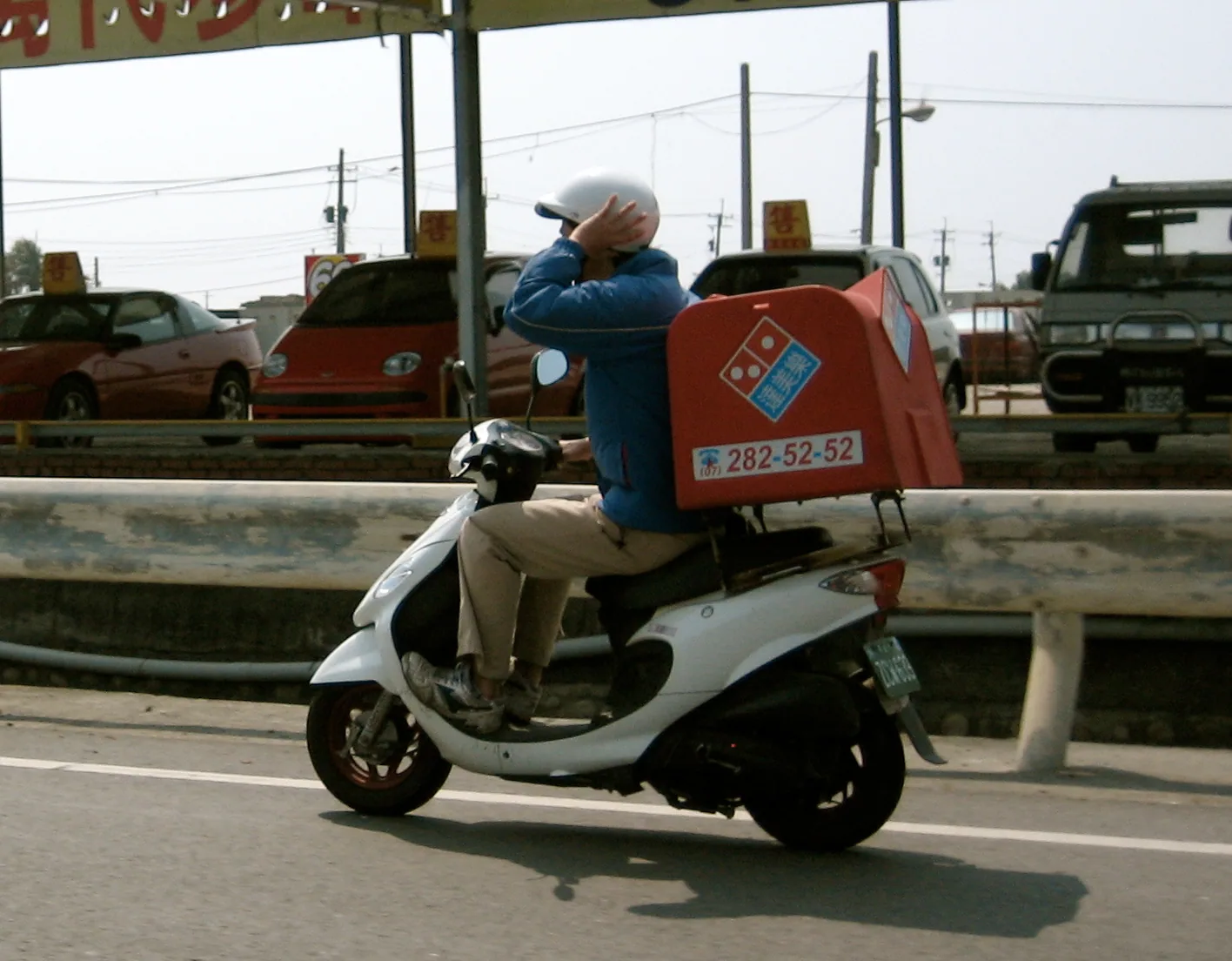
Street scene in Kaohsiung in 2007. Before the platform era, deliveries were handled by store employees using their own vehicles; employment relationships were never an issue. Photo: Joe Lewis, CC BY-SA 2.0
That determination left behind a set of unflattering numbers as well. The deceased rider from Taoyuan had only been employed for one day prior to the incident—actually working just two days—with no agreed salary. Based on the minimum wage of NT$23,100, the Labor Insurance Bureau calculated penalties: four times the labor insurance premium and ten times the employment security fund contribution; the maximum fine that could be imposed against platforms was only NT$542. 11
The scale in another scenario differs vastly. If a platform refuses to cooperate with providing data, the Ministry of Labor can impose fines under Articles 7, 23(2), and 30(5) of the Labor Standards Act respectively: maximums of NT$300,000, NT$1 million, and NT$450,000—totaling NT$1.75 million across all three provisions. This is not a single fine but an aggregate sum of statutory maximums for separate violations. 10 Not insuring a rider who died after just two days on the job resulted in a penalty of NT$542; refusing to hand over investigation materials could incur up to NT$1.75 million. While these penalties stem from different violation categories and legal provisions—making them incomparable within a single case—the disparity is stark: approximately 3,229 times difference when viewed side by side. The cost of failing to insure one person was far lower than the cost of non-cooperation with investigations. This height became the starting point for building up that NT$45 floor six years later.
And this answer did not conclude the case. foodpanda publicly stated at the time they rejected the employment classification and pursued administrative remedies, modifying their internal Delivery Rider Code of Conduct to strengthen claims of "lack of subordination." 12 Six years later upon review, no news reports could be found detailing a final judgment on this case. During the same period, Tainan City Government fined foodpanda NT$100,000 three times under local autonomy regulations for failing to purchase mandatory insurance for riders; these fines were subsequently revoked by courts because insurance provisions fall under central legislative authority rather than local autonomous matters. 13 Individual case determinations could not be sustained, and local autonomy ordinances also failed to hold firm.
Over these six years, the number of delivery riders tripled. But how many exactly remains contested even in official figures: The Occupational Safety Administration's version cites 45,000 people in 2019 rising to 145,000 by 2022. 14 Another combined figure from the OSA and Highway Bureau puts it at 45,129 people in 2019 reaching 185,347 by year-end 2022. 15
Both are official numbers yet differ by 40,000 people with no explanation from either party for this gap. The only figure providing precise timing and platform counts comes from the Auditing Department: As of late January in Republic Year 111 (2022), there were 155,986 delivery riders registered across six food delivery platforms. 16
Source: OSA, Highway Bureau, Auditing Department Central Government General Budget Audit Report; these three sources use different statistical scopes and timings—this article presents all without selecting one.
Even harder to answer is another question: How many riders were injured or died over these six years? Taiwan lacks this specific classification in statistics. The OSA's occupational disaster reports categorize by industry and occupation, with most delivery riders classified under "self-employed operators" rather than a dedicated category for "delivery." Even the verbatim transcript from November 2025 hearings on draft legislation held by the Legislative Yuan Health and Welfare Committee contains no such table. 17
The only official figures that can be attributed annually to delivery riders come from the Auditing Department, though they measure traffic violations and accidents rather than occupational disasters. Traffic accident cases involving riders increased from 9,339 in 2020 to 11,799 in 2021; violation cases rose from 49,721 to 51,703 over the same period. 16 An earlier report showed that among over 100,000 riders registered with two major platforms, accidents where delivery riders bore responsibility increased from 30.95% in 2017 to 61.09% by 2020. 18 Both tracking efforts stop at 2021 data.
📝 Curator's Note
The only agency providing annual figures is the Auditing Department, whose role involves auditing budgets. In its General Budget Audit Report, it conveniently recorded delivery rider traffic accidents and violation counts; thus to answer "what happened on roads over these six years," Taiwan must rely on a fiscal oversight report—which measures traffic incidents rather than occupational disasters, making them non-interchangeable metrics. A nation's level of concern for a group can be seen from which statistical categories it creates for that population.
The legislative process itself moved both slowly and urgently. According to the Taiwan Delivery Industry Rights Promotion Alliance: "The struggle for delivery rider rights has exceeded six and a half years; since formal advocacy began, five years have passed spanning three governments and Legislative Yuan terms, with multiple instances of strong resistance from platforms, public misunderstanding, and political realities." 19 On October 22, 2025, Hung Shen-han promised to propose the executive branch's version within three months. By November 6th, the Health and Welfare Committee held hearings for two competing draft versions. December 4th saw initial approval pass; at 2:00 PM on December 31st, cross-party negotiations finalized the bill name, with presiding committee member Liao Wei-hsiang stating they would expedite submission to plenary session for second and third readings. 20 Six days later, January 6th, 2026: third reading passed.
PTS News Official Report: On November 6, 2025, the Legislative Yuan Health and Welfare Committee held hearings on draft legislation for delivery platform-specific laws with various stakeholders presenting opinions.
On January 21st, the President promulgated it. In Presidential Gazette No. 7838's table of contents that day, this law was one of seven enacted; flanking it were amendments to the Youth Basic Law and Public Official Election Recall Act. 21 Article 28 states "This law shall take effect six months after promulgation"—six months later being midnight on July 21st.
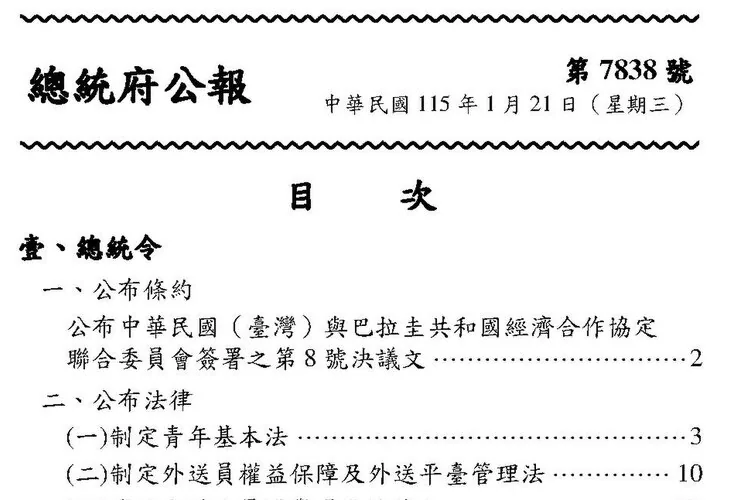
Table of contents for Presidential Gazette No. 7838, dated January 21, Republic Year 115 (January 21, 2026). "Enactment of Delivery Rider Rights Protection and Delivery Platform Management Act" was the second item promulgated that day. Public Domain
Source: National Law Database, Ministry of Labor, Legislative Yuan, Ministry of Transportation
The Law Does Not Say They Are Not Employees
Around the time this law took effect, one summary circulating online most frequently was "de-identification, focus on rights": rather than determining whether riders are employees or contractors, it directly writes protections into legislation. Wikipedia's article states this; commercial publications echo it too; some even extend it to claim Taiwan created a "third category of workers." 22 This phrasing is convenient, yet it misrepresents what the law did not do as if it had done it.
Open Article 1. Paragraph 1 states legislative purpose: "To protect rights and interests of delivery riders, consumers, partner merchants, and manage delivery platform operators in order to balance rights and obligations among all parties, this Act is hereby enacted."
Paragraph 2 continues with the sentence most easily overlooked yet crucial for understanding this law. 3
However, where an employment relationship exists between a delivery platform operator and its riders... their rights protection and penalty matters shall be handled in accordance with the Labor Standards Act and other relevant laws.
That "however" introduces an entire track left open for future use. The law explicitly contemplates scenarios where an employment relationship exists, directing such cases back to the Labor Standards Act.
The official draft's general explanation provides even more completeness: when explaining Article 1 article-by-article, it addresses both situations simultaneously: "For those without an employment relationship between platform operators and riders, rights protection matters shall be handled per this Act... For those with an existing employment relationship... remaining rights protection matters should follow the Labor Standards Act, Occupational Safety and Health Law, and other relevant legal provisions." 23
Article 26, Paragraph 2 also directly references back to that same proviso when addressing situations where platforms outsource business: "Where a third party mentioned in preceding paragraph has an employment relationship with delivery riders, it shall be handled according to the proviso of Article 1, Paragraph 2." 3 A law would not accidentally write the same situation twice.
Therefore this law never declared that riders are not employees; nor did it establish any new criteria for determining employment relationships. Whether individual cases qualify as employment still reverts to existing labor law's subordination standards—the same yardstick used in 2019 during that labor inspection. What this law does is lay an additional floor regardless of the determination outcome, operating outside that binary judgment.
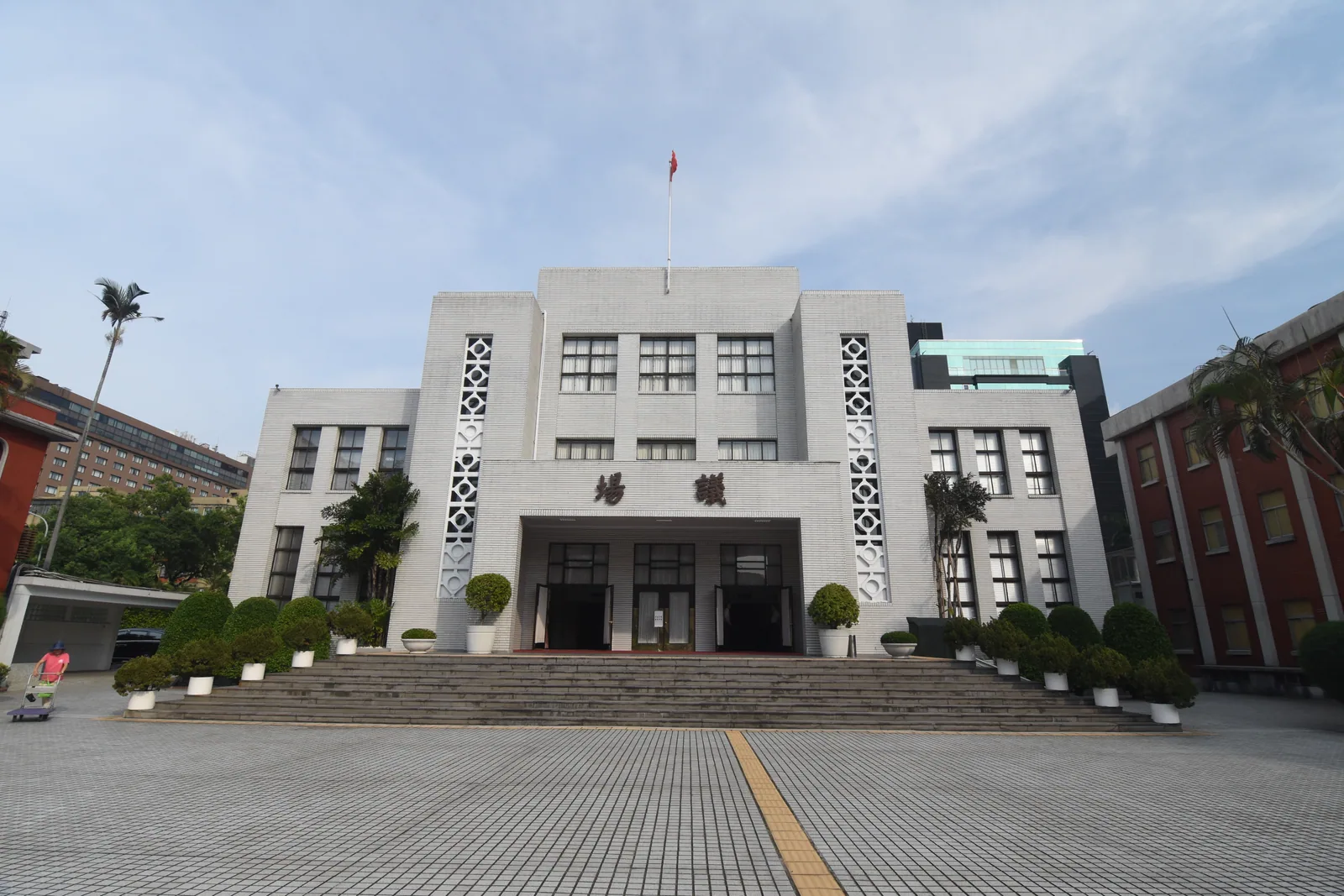
The Legislative Yuan chamber. On January 6th, 2026, the Delivery Rider Rights Protection and Delivery Platform Management Act (all 28 articles) passed its third reading here—just six days after cross-party negotiations finalized the bill name. Photo: Lin Gao-chih, CC BY-SA 4.0
Before this path was finalized, some argued against circumventing it this way. Professor Li Chien-hung of National Taiwan University's Department of Labor and Human Resources stated in a July 2023 PTS interview that unions at the time demanded exclusion from Labor Standards Act application with contracting relationships handled separately; he noted "enacting specific legislation offers very limited protection for labor rights." He advocated following Spain and California, returning delivery rider employment relations to formal employee classification. 24
The timing of this statement matters significantly. It evaluates "taking the path of enacting a specific law" rather than critiquing the final 28 articles after passage—this was said two and a half years before third reading.
In that same report, Chen Yu-an, chairman of the National Delivery Industry Union, offered another consideration: "Regarding wage concerns, current local autonomy ordinances cannot effectively address these issues. We want specific legislation because it somewhat resembles the taxi model where platforms, government, and unions jointly establish minimum thresholds." 24 Scholars sought identity status; union leaders sought operational floors. The final passed version provided floors while leaving identity status unchanged.
📝 Curator's Note
One thing can be confirmed: this "non-answer" is intentional design, not oversight. When the official draft explained Article 1 article-by-article in its general explanation, it listed both scenarios—"without employment relationship" and "with existing employment relationship"—side by side; Article 26 references that same proviso again—a law would never accidentally write one situation twice.What remains uncertain is why designed this way. A pragmatic interpretation: identity determination requires case-by-case litigation; after resolving disputes with one platform, contracts are rewritten differently (as happened in the 2019 labor inspection which ultimately stalled), so first secure people's basic protections while leaving qualification questions for gradual accumulation through cases. Another reading suggests a favorable ambiguous state benefiting platforms has been stabilized by legislation itself. Both interpretations use identical articles; the difference lies in whether you believe future litigation will continue on those individual cases.This article concludes former interpretation is more plausible but cannot determine latter, nor does it choose sides for readers.
This was the first unanswered question. The second proves even harder, and its real-world impact becomes visible from the law's first week of implementation.
Fast Runners and Slow Runners Received Opposite Outcomes
On day three after implementation, TVBS interviewed a rider surnamed Lu who stated: "Started taking orders at 7:30 AM; by over 10 o'clock had earned only NT$475—less than NT$200 per hour despite completing roughly six to seven orders." He added: "Monday earnings totaled NT$2,500; Tuesday regulations took effect; Wednesday earnings dropped to just NT$1,400." 25 This is a single case study, not statistical data.
In the same report, reporters conducted their own test order from Honghui Plaza in Xinzhuang to Ximending: delivery fee approximately NT$55 (discounted to NT$35 via reporter's account), total charge around NT$202; rider Lu estimated earning about NT$300 for this trip. Long-distance orders still exist, just fewer of them.
Another report from the same day featured a foodpanda veteran with nearly ten years' tenure providing opposite numerical direction: "Running 30 orders daily earns roughly an additional NT$200 to NT$300." His dissatisfaction concerned another matter: if platforms begin charging "matching fees," then "the extra NT$200-NT$300 disappears again"; moreover, "I'm already earning very little; now being charged more makes no sense even after the law takes effect—this is unreasonable." 26
Both are real experiences. This disparity's most direct manifestation isn't between labor and capital but within labor itself—but a caveat: who gets elevated or flattened by distribution rules depends on platform algorithms, not rider choices themselves. Running high volume versus long distances aren't game designs riders control. The floor raises the minimum per order, not price per kilometer. For those running 30 orders daily with short trips, each order receives a slight boost adding up to hundreds of yuan. Those specializing in long-distance runs relying on distance-based premiums see both 4.4 km and 8.6 km trips valued identically at NT$90. The same line lifts low-positioned riders while flattening those who were previously higher earners.
Source: SETN News two reports dated July 21, 2026; TVBS report dated July 23, 2026; all single cases cannot be generalized to entire population.
Community sentiment focuses on the latter scenario. During days following implementation, delivery community groups began circulating the term "NT$22K Delivery Version," referring to how minimum standards could become ceilings for platforms instead. Some wrote: "Hourly guarantee of NT$245? Then give me orders!" Others posted: "Hurting full-time workers while burying those who run few orders daily." 27 These are anonymous posts republished by media; authors' identities cannot be traced, yet the shared concern is concrete: a floor doesn't automatically become income—orders must exist first.
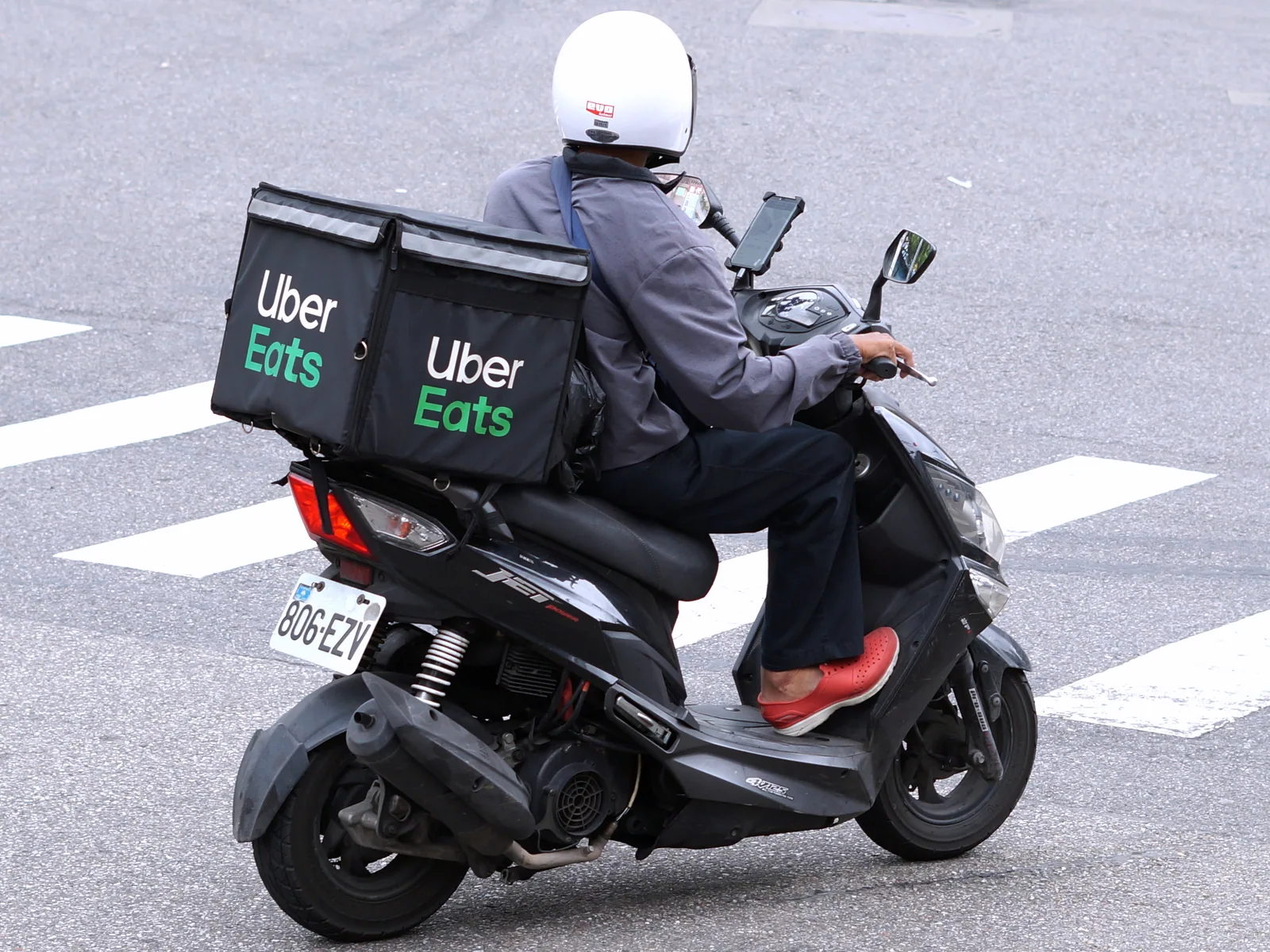
Uber Eats rider's scooter and insulation box. The same container holds two completely different order-taking strategies: seeking volume versus pursuing distance. Photo: Solomon203, CC BY-SA 4.0
This divergence spans full-time and part-time workers alike. Those opening delivery apps after work to supplement income (Taiwan Slash Generation) inherently run fewer orders; the NT$45 floor represents pure bonus for them. For those treating delivery as primary employment relying on efficiency to raise per-order prices, they're effectively required to change their approach entirely. The specific law makes no distinction between these two groups: Article 5 protects "per order" regardless of who takes it.
As for what determines income direction—the answer lies outside this legislation itself.
Above the Floor, Everything Is Decided by Algorithms
Wang Ming-hong, a full-time delivery rider writing in The News Lens, provided perhaps the most precise description after implementation: "Delivery-specific law protects only the floor. But determining actual rider income is everything above that floor—trip bonuses, stacking structures, dispatch logic, distance calculations, subsidy adjustment mechanisms. No single legal provision touches this space; it's entirely algorithmically determined." He added a shorter observation: "The most critical gap lies in algorithm transparency and third-party oversight—completely absent from legislative vision." 28
Source: Ministry of Labor's four protection explanations; Wang Ming-hong, *The News Lens*, 2026.
This statement can be verified against specific articles—and upon verification reveals it only partially corrects the record. Article 20 requires platforms to retain seven categories of records related to riders for at least two years; item four explicitly states: "Suspension from service, termination of delivery service contracts per Article 7 provisions, and unfavorable decisions made via algorithms or other means." The final sentence adds that relevant authorities may request access to aforementioned records; platforms cannot refuse. Violations incur fines between NT$30,000 and NT$150,000 under Article 24, Paragraph 4. 3
Thus algorithms are not "completely absent from legislative vision"—they entered the framework. Legislators knew an algorithm exists making unfavorable decisions against riders; they know these decisions warrant retention for two years with mandatory access by supervisory authorities when requested. The true breakpoint lies in what happens next: while law mandates record-keeping, it does not mandate public disclosure nor require any third party to review them. Records kept available for authority inspection differ fundamentally from enabling riders to understand why they received no orders today. This is harder to explain than mere oversight—it's closer to a deliberate choice.
Disclosure provisions prove even thinner than media reports suggest. Article 6 contains only one sentence: "When providing orders to delivery riders, platform operators must clearly inform them of estimated remuneration, pickup and drop-off locations, and other relevant important information." 3 Details familiar to the public (driving routes, estimated mileage, completion time estimates, separation of base pay from bonuses rather than displaying totals only) appear in implementing rules specifying "other relevant important information," not within the parent law's text.
Suspension provisions are more detailed. Platforms must provide specific factual reasons; investigation periods cannot exceed three days; evidence sufficient for rider self-review and appeal channels must exist; suspension grounds and durations must comply with principles of clarity, accountability, fairness, and proportionality. 29 Thresholds for independent committees handling contract termination disputes were also established: minimum three members including at least one union representative, others being external experts/scholars possessing labor law expertise or industry practical knowledge without conflicts of interest regarding platforms. 3 How frequently these committees convene, who bears expenses, and how union representatives are selected remain unfindable in public records.
These gaps weren't identified only after implementation began. On December 4th during initial approval passage, the National Delivery Industry Union's statement criticized the Ministry of Labor's revised remuneration formula as "appearing to embed protections into drafts but actually digging a huge hole out of riders' substantive earnings," warning it could reduce specific legislation to merely a "platform interest protection act" rather than rider rights safeguarding law. 30 On third reading day, Chairman Chen Yu-an shifted tone toward affirmation while maintaining reservations: "Third reading passage is not the endpoint but true beginning for delivery industry reform... unions will transition from advocacy roles into institutional supervisors continuously monitoring implementation to prevent dilution or undermining of protections." 19
One week before implementation began, that concern about being diluted found concrete targets. At a symposium hosted by Taiwan Digital Platform Economy Association (members include two major platforms), invited scholar Zhu Hao, director of the Institute for Business Development and Strategy, suggested "should consider researching reasonable platform access fees (matching charges) charged to riders." Association Chairman Liu Yu-hsun stated the association "respects and supports sound balanced rider protection systems" but noted costs and delivery efficiency require recalculation post-implementation. 31 This suggestion came from an invited scholar—not official platform stance.
Union responses included Chen Yu-an's statement: platforms are not charging matching fees but rather "gacha-style work entry fees"—fees for job opportunities charged to workers. Li Jian-ming, chairman of Taichung City Delivery Platform Service Industry Union used even more direct language calling it an illegal method where platforms forcibly "cut leeks" from delivery partners. 32 This represents advocacy group positions—not neutral third-party determinations. However in this debate's landscape, the position happens to be that side being charged fees.
Language within union circles isn't monolithic either: "This specific law can be said as achievements piled layer by layer through riders' blood and tears," stated Su Po-hao spokesperson for Taiwan Delivery Industry Rights Promotion Alliance. Multiple organizations responded on third reading day beyond just this alliance: the National Delivery Industry Union, plus delivery rider professional unions from Taipei City, Taichung City, Changhua County, and Taoyuan City respectively. 19 Gratitude-based language versus supervision-oriented language comes from different groups within same camp; both hold validity.
No one in this camp can claim to represent everyone either. Taiwan's earliest delivery rider union (Taipei City Network Platform Delivery Rider Professional Union) formed November 2019; Taichung and national-level unions emerged only in 2021; among three most visible organizations, two show no official membership numbers available for verification. 33
The space above the floor remains unmanaged. The next question becomes: who has strength to monitor it?
Two Other Parties Wait For An Answer No One Will Enforce
Article 1 lists four parties together but at sub-regulation level, each receives different specifications diverging significantly.
Riders have Ministry of Labor's "Matters Required and Prohibited in Standardized Contracts"; consumers have Transportation Department's similarly named list. Merchants received a July 21st release from the Ministry of Economic Affairs: Delivery Cooperation Contract Template explicitly stating platforms bear responsibilities for information disclosure, order matching, and dispute resolution—"risks cannot be improperly transferred to partner merchants." 34 This remains merely a template.
Regarding merchant concerns about commission rate caps, Commercial Bureau stated they won't set limits: "Explicitly regulating maximums could create anchoring effects affecting current market prices; different merchant types and channel conditions vary greatly making single standards difficult to apply universally." 35
Source: Sub-regulations and templates from three ministries (Labor, Transport, Economic Affairs), July 2026.
Merchant voices were least present throughout the entire debate—and almost entirely anonymous. Those affected by platform fee structures are mostly small-scale businesses like noodle shops, snack stalls, bubble tea stores—the very line of night market culture representing grassroots dining; these possess weakest bargaining power too.
On day three after implementation, a noodle shop owner Ms. Chen told TTV: "(Previously) around ten orders daily in mornings... recently only four to five or even one to two." In the same report another snack stall operator stated "orders currently dropped about 10-20%," not planning contract termination yet because "market response still shows demand exists." 36
Media headlines read: "Orders Dropped by 70%". That was merchant self-estimation—the most extreme among interviewed respondents.
TTV News Official Report: On day three after implementation, reporters interviewed riders, partner merchants, and frequent delivery users—each group offered different perspectives.
Within this article's verification scope, this represents the most named merchant statement available. Among four parties: riders have union chairmen and alliance spokespeople speaking repeatedly; platforms have industry association chairman representing them; consumers have Consumer Foundation Taiwan (CFT); merchants lack equivalent organizational representation standing up publicly. Even an industry column specifically discussing how restaurants should reprice post-law failed to quote any single merchant—named or anonymous included. 37
Why this silence remains unexplained. At least two plausible explanations exist: fear of platform delisting discouraging public criticism, or media resources simply not invested in this corner. The former lacks supporting cases or contract clause evidence. Therefore only the silence itself is recorded here without attributing motives to it.
Consumer Portion Did Not Exist On Implementation Day
The only concrete change already occurring on consumer side with precise figures: Uber One monthly fee increased from NT$120 to NT$199—a 66% hike—with official Uber Eats stating this adjustment unrelated to delivery law reflecting membership benefit upgrades. 38 Merchant-side fees represent separate matter: starting July 21st, Uber Eats raised service fees for partner merchants by adding 2.5 percentage points for food delivery and 3 percentage points for fresh groceries (PX Mart type grocery retail channels also on this line); maximum fee rate remains at 35%. foodpanda stated "based on preliminary assessment, cost per order may increase approximately 30% to 50%"—this represents platform self-estimated range not yet realized figures. 39
No institution has conducted actual testing of how much extra consumers pay per order currently. Existing largest dataset comes from Fair Trade Commission's pre-study model estimates rather than field verification. 40
Source: Fair Trade Commission substitutability study + Taiwan Digital Platform Economy Association estimates. No institution has conducted consumer-side payment verification since implementation began.
Xu Ze-yu, executive director of Consumer Foundation Taiwan stated during draft stage (January 16th, 2026): "You can choose not to use delivery services—opt for takeout or dine-in—but prerequisite is clear information; cannot obscurely make consumers bear costs unknowingly." 41
The statutory consumer list did not exist on implementation day. On July 20th the Transportation Department issued last-minute drafts: Matters Required and Prohibited in Standardized Contracts for Delivery Platform Services and Delivery Rider Traffic Safety Management Rules. First-time subscription members may cancel within seven days; automatic renewals require explicit consumer consent; platforms must establish renewal reminders and refund mechanisms. 42
As of July 25th, both remain draft stages pending finalization. Official target for traffic safety management rules is earliest August end; standardized contracts still awaiting Executive Yuan approval. 43 Media extensively reported many new consumer regulations currently lack binding force.
The End Without Numbers
The enforcement side possesses even fewer numbers.
Central government division of responsibilities actually written quite clearly: Ministry of Labor manages contracts, suspensions, remuneration, grievances, occupational safety, insurance and record retention; transportation authorities handle basic fare approval, consumer protection and road traffic safety; economic affairs ministry oversees cooperation contracts and fee disputes; health welfare authority handles food hygiene safety; local governments execute jointly with central agencies. 8
Problems arise after this division of labor is established. How many inspection personnel do local labor bureaus have? How frequently are spot checks conducted? Is there a dedicated task force? How many fines issued since implementation began—answers to these four questions remain unfindable in public records.
Source: Public records within this article's verification scope (Ministry of Labor and various local labor bureaus). All four items represent negative findings—not "zero figures" but simply unfindable data.
On day three after implementation, Hung Shen-han adopted unusually firm tone stating "administrative agencies' responsibility is to implement enforcement," emphasizing "once settlement periods expire revealing violations by operators we will not tolerate them and definitely impose fines according to law." 44 During same week some riders reported platform-calculated remuneration fell below statutory standards; Ministry of Labor officials relayed platforms stated they would make up differences within two weeks. 45
📝 Curator's Note
Article 1 lists delivery riders, consumers, partner merchants together plus managed platforms—officially termed "four-party balance." But at sub-regulation level each receives different specifications: riders and consumers each have statutory "required & prohibited matters" documents; merchants receive a contract template without commission caps. Most crucial end—the local inspections meant to verify compliance lacks even basic personnel numbers. How many parties a law lists is one matter; what tools prepared for each party represents another entirely.
Some are already demanding concrete actions. One day before implementation, People First Party caucus deputy spokesperson Wang An-hsiang proposed five demands including three substantive policies: Ministry of Labor should clearly define "platform operating costs" and prohibit platforms from creating fees under names like "matching charges"; Transportation Department must expedite completion of consumer standardized contract sub-regulations; Executive Yuan should establish a cross-ministry "Delivery Law Effectiveness Monitoring Group" comprising Labor, Transport, Digital Development Ministries plus Fair Trade Commission. 46
As for most vocal disputes occurring elsewhere: some Green camp supporters demanded Blue and White legislators take responsibility for riders' plight; other commentators stated "ultimately no party is true winner." 4748 The loudest positions happen to be exactly where this law failed to provide answers.
Same Road, Different Paths Taken Elsewhere
Other jurisdictions made different choices on identical questions—and none have reached final conclusions yet either.
The EU pursued opposite philosophy: Platform Work Directive (EU) 2024/2831 Article 5 directly presumes employment relationships; whenever evidence of direction and control exists between platforms and workers, they "shall be legally presumed to be an employment relationship," with burden of proof shifting onto platforms to overturn this presumption. 49 Conversion deadline set for December 2nd, 2026; as of July 1st, 2026 eighteen out of twenty-seven member states had not yet begun incorporating it into domestic law. 50
The same directive contains another provision filling Taiwan's gap: Article 10(5) stipulates decisions restricting service suspension or termination/account closures causing equivalent unfavorable outcomes "shall be taken by a human being"—must involve actual person making decision. 49 Taiwan's Article 20 requires platforms retain algorithmic unfavorable decisions for two years; EU provision mandates such decisions cannot initially go through algorithms: one manages post-event accountability, the other governs pre-event authority over who presses buttons.
South Korea presents split picture with opposing halves. Legislative half stalled: six versions of "presumption of worker status" shifting burden to employers remain pending in parliament; May 1st Labor Day eve saw bill review committee shelving them pushing target dates past June local elections. 51
Judicial half moved forward independently instead. July 3rd Seoul High Court ruled for the first time that delivery riders possess employee status (case number 2024나2037832), reasoning riders cannot solicit customers themselves, remuneration calculation and payment methods predetermined by company beforehand, dispatch system lacks complete decision-making authority. That was eighteen days before Taiwan's specific law implementation began. 51
Spain's 2021 Riders Law similarly adopted presumption approach forcing three corporate responses: Just Eat converted all riders to employees signing collective agreements; Deliveroo withdrew entirely; Glovo fought until June 2025 completing conversion of 14,000 riders to employee status. 52 Labeling this "proven failure" inaccurate—it took four years achieved through successive enforcement pressures.
UK experience deserves Taiwan's attention as one of few countries truly using intermediate statuses long-term. The 1996 Employment Rights Act established "worker" category positioned between employees and self-employed; Supreme Court used it in 2021 to rule Uber drivers won their case.
But after thirty years usage, UK current reform direction consolidates three tiers into two: merging employee and worker categories creating single status eliminating intermediate tier entirely. This proposal remains at promise stage; Employment Rights Act passed in 2025 contains no provisions on status determination; related consultations remain unproposed as of now. 53
Actually longer usage than UK exists in Ontario, Canada: "Dependent contractors" incorporated into labor relations law since 1975; Labour Relations Board ruled in 2020 that Foodora delivery riders qualify for dependent contractor status eligible to unionize. This represents rare intermediate-status precedent directly applicable to delivery contexts—yet barely mentioned in Taiwan's public discourse. 54
Japan pursued third path structurally most similar among six examples: Freelancer Act implemented November 2024 regulates only transaction aspects (contract clarity, payment deadlines, advance termination notice); official documents explicitly state "if substantially determined as labor standard law workers... this act does not apply"—no new status created nor presumption made leaving qualification questions entirely within existing binary framework. 55 Taiwan similarly creates no new statuses directing classification back to existing subordination standards; difference lies in Japan limiting protections strictly to transaction conditions while Taiwan directly established remuneration floors without determining status first.
Only price regulation path taken by Seattle for two years: PayUp rules effective January 2024 set per-minute and per-mile minimums for delivery work; Carnegie Mellon University Heinz College official press release concluded per-order pay indeed increased but "increases were partially offset by substantial reduction in average tips," combined with reduced order volume among high-frequency riders resulting overall monthly income showing "no change." 56 This represents closest experience to Taiwan: floors manage unit prices not order volumes. And who controls those volumes was already answered earlier.
| Region | Path Taken So Far | Current Status |
|---|---|---|
| EU | Employment presumption + burden reversal | Directive 2024/2831 effective; conversion deadline Dec 2, 2026; eighteen of twenty-seven states not yet started implementation. |
| South Korea | Employment presumption (legislation stalled) | Six versions still stuck in parliament shelved May; courts moved first—Seoul High Court ruled riders employees July 3, 2026. |
| Spain | Employment presumption (delivery-specific only) | Three platforms three fates: Glovo fought until June 2025 converting 14,000 riders to employee status. |
| UK | Third category status | Worker classification used thirty years; current reform direction merges employees and workers into single status; consultations unproposed yet. |
| Japan | Transaction fairness | Regulates only transaction behaviors explicitly excluding those already determined as labor law workers under existing framework. |
| Seattle | Minimum remuneration formula | Unit price up, tips down, order volume down—monthly total income unchanged. |
Placing these together reveals a question more worthy than "which path is correct": who proposed this particular path?
Third-category legislations in various US states emerged after heavy lobbying by platforms; think tank EPI (explicitly pro-labor stance) characterizes them as writing workers' "non-employee second-class status" into law representing wealth transfer. 57 Taiwan's origin differs fundamentally—emerging from two National Day holiday deaths, six years of union advocacy and cross-term legislative proposals. This represents structural difference not predictive judgment on execution effectiveness.
One more honest point deserves stating: in Taiwan public discourse no one characterized this legislation as "compromise"; multiple keyword searches found even progressive English media like New Bloom adopting positive framing for it. 58 Most concentrated criticism came from market liberalism circles—lawyer Lin Chih-chun argued after implementation consumers, riders, merchants and platforms all lose while legislators win; this viewpoint repeatedly republished across different outlets before/after law took effect. 59 But that represents same individual repeating identical stance—not diverse critical aggregation. Dissatisfaction within labor rights camp falls entirely on execution issues—sufficiency or risk of being undermined—they haven't debated whether the law should exist at all.
Above The Floor, No One Has Walked Yet There
Every midnight after 12:00 AM July 21st orders still appear. 4.4 km for NT$90; 8.6 km also NT$90. The floor exists—law says it cannot go lower.
What needs monitoring above the floor can be listed as concrete checklist items.
Source: Transportation Department and Ministry of Labor public information plus this article's verification scope; all five items represent unresolved status as of July 25, 2026.
On day four after implementation the National Delivery Industry Union asked precisely about final item on that list: "Enacting specific law but not enforcing penalties through fines—was it enacted for display? Watching from sidelines? Will Ministry of Labor continue helping platforms drag out delays?" 60 Six years, two lives exchanged resulted in one visible floor. As for entire space above—the realm determining how much they earn today and whether they can go online tomorrow—law hasn't walked there yet nor designated who should ascend it.
Further Reading
- Taiwan Slash Generation — The generation opening delivery apps after work, plus why one salary isn't enough
- Overview of Taiwanese Cuisine — Other end of orders on delivery platforms: panoramic view of Taiwan's food landscape
- Night Market Culture — Before platforms how grassroots dining operated and priced itself in Taiwan
- Taiwan Bubble Tea Culture — Street-side shops becoming global brands also representing other end of platform commissions
- PX Mart Supermarket Chain — Local retail channel on fresh grocery delivery line
- Benzo[a]pyrene Food Safety Incident — Same month law took effect, bento boxes delivered to doors represented downstream of this food safety storm
Image Sources
Five images used in this article (one public domain, four Creative Commons licensed) all cached to public/article-images/society/ avoiding hotlinks; plus two embedded official channel videos (PTS News TTV News), both lacking extractable subtitles therefore no direct quotes from video interviewees appear in body text.
- COMEBUY store and foodpanda rider scooter in rainy Qidu, Keelung — Photo: Solomon203 September 13th, 2020 CC BY-SA 4.0 (hero image)
- Domino's Pizza delivery scooter on southern Taiwan streets in 2007 — Photo: Joe Lewis February 20th, 2007 CC BY-SA 2.0
- Presidential Gazette No. 7838 (Republic Year 115 January 21st) — Office of the President January 21st, 2026 Public Domain (first page table cropped horizontally)
- Legislative Yuan chamber interior — Photo: Lin Gao-chih October 3rd, 2017 CC BY-SA 4.0
- Uber Eats delivery scooter and insulation box — Photo: Solomon203 October 10th, 2020 CC BY-SA 4.0
- Videos: PTS News "Delivery Riders Urge Legislation for Rights Protection | Ministry of Labor: Executive Version to Be Submitted Soon|PTS Noon News November 6th, 2025" (official YouTube channel); TTV News "Day Three After Delivery Law Implementation Reveals Three Different Emotions Among Riders Merchants and Users" (official YouTube channel)
References
- UberEats double orders: 4.4 km and 8.6 km both pay NT$90 (SETN News) — Report on July 21st implementation day featuring screenshot of rider's order screen showing two combined orders estimated at 4.4km/19min and 8.6km/26min both paying NT$90, including rider's exact quote "Congratulations confirmed addition of NT$24 is now nonexistent."↩
- Delivery-specific law takes effect July 21st midnight (Ministry of Labor) — Ministry press release dated July 20th, 2026 verbatim declaring "will officially take effect at midnight on this (Republic Year 115) July 21st," explaining core principle of balancing four-party relationships via cross-ministry joint implementation model completing seven supporting regulations over nearly half year.↩
- Delivery Rider Rights Protection and Delivery Platform Management Act (National Law Database) — Official full text source containing all 28 articles. Quoted provisions include Article 1 (legislative purpose plus employment relationship proviso), Article 5 (minimum remuneration floor), Article 6 (order information disclosure requirements), Article 9 (grievance channels and independent handling committee), Article 10 (insurance mandates), Article 11 (right to go offline), Article 20 (record retention including algorithmic unfavorable decisions), Article 24(4) (refusal of inspection fines NT$30k-NT$150k), Article 26 (outsourcing reiterating proviso), and Article 28 (implementation date)—all verbatim extracted from this page.↩234567
- Taiwan's food delivery law takes effect — English report dated July 21st, 2026 verbatim stating minimum NT$45 per order plus no less than 1.25 times the statutory hourly wage; provides background figure of statutory minimum wage at NT$196/hour for fiscal year 2026.↩
- Su Po-hao discusses stacked orders and guaranteed minimums (UDN News) — Report after third reading verbatim recording Taiwan Delivery Industry Rights Promotion Alliance spokesperson Su Po-hao's explanation on order stacking pricing including exact quote "specific law does not prohibit stacked orders and explicitly guarantees minimum NT$45 per order."↩
- Legislative Yuan passes delivery-specific law (CNA) — CNA report dated January 6th, 2026 covering third reading including key points: twenty-eight articles total minimum NT$45 per order base remuneration full direct payment at least twice monthly definition of "per order" as one pickup plus one delivery.↩
- Compensation for abandoned orders based on time invested and minute calculation rules (Cnyes) — May 2026 sub-regulation draft stage report explaining minimum remuneration floor when order not completed due to reasons beyond rider's control plus delivery service period calculated in minutes with less than thirty seconds ignored.↩
- Delivery-specific law implementation and four-ministry responsibilities (UDN News) — Four-ministry division of labor detailed in(July 21st, 2026 report fully listing Labor Ministry, Transportation Economic Affairs Health Welfare ministries' respective jurisdictions plus local government joint execution framework; entire article uses institutional language "Ministry of Labor stated" without minister's named quotes). Hung Shen-han's position found in Mirror Media November 25th, 2025 report: "He pointed out platforms use digital algorithms for labor scheduling and control riders cannot autonomously manage dispatch differing greatly from general contracting models placing them in relatively disadvantaged position thus necessary to strengthen protections through new regulations." Special correction during verification: Initial draft incorrectly quoted reporter's narrative as minister's direct quote; after line-by-line comparison confirmed original text contained no quotation marks—changed to indirect statement.↩2
- Death of food delivery riders (The Reporter) — Investigative report by The Reporter most detailed primary record of two 2019 National Day holiday rider deaths including October 10th Taoyuan case involving 29-year-old male foodpanda rider and October 13th Shilin Uber Eats incident with subsequent institutional controversies.↩
- Ministry determines fake contracting true employment maximum fine NT$1.75 million (CNA) — October 14th, 2019 report verbatim recording Occupational Safety Administration Chief Tsou Tzu-lien listing contractual control facts (reporting within 24 hours uniforms standardized boxes vehicle stickers), breaking down NT$1.75 million as aggregate sum of statutory maximums under Labor Standards Act Articles 7(300k) + 23(2)(1M) + 30(5)(450k).↩2
- foodpanda Taoyuan rider case only fined NT$542 (ETtoday) — November 2019 report verbatim explaining deceased had worked just two days no agreed salary Labor Insurance Bureau calculated based on minimum wage NT$23,100 imposing four times labor insurance plus ten times employment security fund resulting penalty amount of NT$542.↩
- foodpanda rejects Ministry's employment classification (INSIDE) — 2019 report recording foodpanda public stance insisting on contracting relationship pursuing administrative remedies modifying internal Delivery Rider Code of Conduct strengthening "lack of subordination" claims. Verification found no reports detailing final judgment outcome for this case.↩
- Tainan fines against foodpanda revoked by court (UDN News) — Report on Tainan City Government fining foodpanda NT$100,000 three times under local autonomy regulations for failing to purchase mandatory insurance subsequently revoked by courts reasoning insurance provisions fall under central legislative authority not local autonomous matters. This case differs from 2019 nationwide classification ruling.↩
- Rider numbers grew from 45k to 145k (Business Weekly) — Citing Occupational Safety Administration statistics recording national delivery rider count growth curve: approximately 45,000 in 2019 rising to about 145,000 by 2022.↩
- Delivery platform workforce increased 140k over four years (Taiwan News) — Citing joint statistics from Occupational Safety Administration and Transportation Department Highway Bureau recording 45,129 people in 2019 reaching 185,347 by year-end 2022. This version differs approximately 40k from OSA single-agency figure (145k); no official explanation found for this discrepancy between口径s.↩
- Auditing Department: Delivery rider traffic violations and accidents both rising (Liberty Times) — Verbatim excerpt from Auditing Department 2021 Central Government General Budget Audit Report including accident cases increasing from 9,339 to 11,799 (+26.34%) traffic violations rising from 49,721 to 51,703 (+3.99%), plus precise registration figure "as of late January Republic Year 111 total 155,986 delivery riders registered across six food delivery service providers." This represents traffic statistics not occupational disaster data.↩2
- Delivery platform specific law draft hearing report (Legislative Yuan) — Official verbatim transcript from November 17th, 2025 hearing by Legislative Yuan's Social Welfare and Health Environment Committee听取 opinions on two competing draft versions. Full transcript contains extensive qualitative testimony but no official annual statistics table for delivery rider occupational disaster casualties/deaths across years. Verification confirmed OSA website and Ministry of Labor's dedicated page also lack this classification statistic.↩
- Auditing Department compares accident responsibility ratios (United Daily News) — Citing Auditing Department 2020 General Budget Audit Report comparing Uber Eats and foodpanda registered riders' vehicle traffic accident data showing proportion of accidents where delivery rider bore responsibility rose from 888 cases (30.95%) in 2017 to 4,019 cases (61.09%) in 2020 listing violation type distributions.↩
- Two reports published on the day of the third reading. Union response to passage of the delivery-worker law (UDN News 9247129) — Verbatim records the Taiwan Delivery Industry Rights Promotion Alliance saying that its struggle for delivery workers' rights had lasted more than six and a half years and that advocacy for a dedicated law had spanned five years, three administrations, and three legislative terms. It also records National Delivery Industry Union chair Chen Yu-an saying that passage was not the end but the true beginning of delivery-industry reform, alongside responses from occupational-union chairs in Taipei, Taichung, Changhua, and Taoyuan. The phrase "built layer by layer from delivery workers' blood and tears" is not in that report; it appears in UDN News 9248266, which quotes alliance spokesperson Su Po-hao. Verification for this article corrected two points: (1) an early draft attributed the six-and-a-half-year account to the national union, but it came from the promotion alliance; and (2) the "blood and tears" quote was initially attributed to report 9247129, but direct inspection confirmed that it appears in report 9248266.↩23
- Cross-party negotiations finalize delivery-specific law name (CNA) — Records December 31st, 2025 at 2:00 PM cross-party negotiation finalizing bill name legislative intent Health and Welfare Committee presiding member Liao Wei-hsiang stating expedite submission to plenary session for second/third readings Labor Minister Hung Shen-han present. Six days until third reading.↩
- Presidential Gazette No. 7838 (Office of the President) — Republic Year 115 January 21st Presidential Gazette table of contents page verbatim confirming official law name "Delivery Rider Rights Protection and Delivery Platform Management Act" promulgation date plus this law being second among seven laws enacted that day.↩
- Specific law follows "de-identification focus on rights" third path (Business Weekly) — Commentary article forming alongside Wikipedia entry creating common framework of "de-identification focus on rights" and "third category workers." Verification confirmed this framework originates from secondary commentary absent in law text or official legislative rationale; Article 1 Paragraph 2 actually adopts dual-track design.↩
- Draft general explanation and articles for Delivery Rider Rights Protection Act (Ministry of Labor) — Official draft general explanation with article-by-article PDF where first article explains simultaneously handling both "without employment relationship" and "with existing employment relationship" scenarios—official primary basis for law not making determination on status classification.↩
- Scholar: Specific legislation offers limited labor rights protection (PTS News) — July 6th, 2023 report verbatim recording NTU Labor and Human Resources Professor Li Chien-hung's pre-commentary on specific law path plus National Delivery Industry Union Chairman Chen Yu-an's 2023 statement advocating "following taxi model three-party joint minimum threshold establishment." Both statements precede third reading by two-and-a-half years.↩2
- Delivery-specific law implementation income verification (TVBS) — July 23rd, 2026 report by reporter Chen Hsuan-chen verbatim recording rider surnamed Lu "started taking orders at 7:30 AM until over 10 o'clock earned only NT$475" plus "Monday earnings totaled NT$2,500... Wednesday only earned NT$1,400," including reporter's own test order from Xinzhuang to Ximending with estimated fees and rider earning approximately NT$300 for that trip.↩
- Veteran delivery rider: 30 orders daily earn extra NT$200-NT$300 (SETN News) — July 21st, 2026 report verbatim recording near-decade veteran foodpanda rider's income changes and reaction to "matching fees"—contrasting case with opposite direction from declining-income anecdote.↩
- Delivery riders angrily denounce "NT$22K Delivery Version" (Liberty Times) — July 23rd, 2026 report verbatim quoting anonymous delivery community and Threads posts including hourly guarantee NT$245? Then give me orders! Hurting full-time workers while burying those who run few orders daily plus circulation of "NT$22K Delivery Version" term within communities. Post authors are anonymous accounts identities untraceable.↩
- Delivery-specific law protects only the floor (The News Lens) — Full-time delivery rider Wang Ming-hong's first-person commentary verbatim proposing "delivery-specific law protects only floor but determining actual rider income is entire space above floor" plus most critical gap lies in algorithm transparency third-party oversight completely absent from legislative vision and after law passed orders still terrible—three-part argument forming core imagery source for this article.↩
- Suspension requires evidence sufficient for self-review (United Daily News) — June 26th, 2026 sub-regulation release day report verbatim recording platforms must provide specific factual reasons when suspending or terminating contracts investigation periods cannot exceed three days evidence sufficient for rider self-review plus suspension grounds/durations must comply with clarity accountability fairness proportionality principles. Article numbers not cited in public reports.↩
- Union criticizes remuneration formula as "digging huge hole" (Economic Daily via CNA) — December 4th, 2025 initial approval day report verbatim recording National Delivery Industry Union statement appearing to embed protections into drafts actually digging huge hole out of riders' substantive earnings potentially reducing specific law to "platform interest protection act" plus several local unions expressing milder but still reserved positions.↩
- Platform association symposium and matching fee suggestion (CNA) — July 14th, 2026 report verbatim recording Taiwan Digital Platform Economy Association Chairman Liu Yu-hsun's statement on specific law plus invited scholar Zhu Hao director of Institute for Business Development and Strategy suggesting "should consider researching reasonable platform access fees (matching charges)" charged to riders. This suggestion not official platform stance.↩
- Union criticizes matching fee as "gacha work entry fee" (UDN News) — July 14th, 2026 report verbatim recording National Delivery Industry Union Chairman Chen Yu-an calling matching fees "gacha work entry fees" fundamentally charging workers for job opportunities plus Taichung City Delivery Platform Service Industry Union Chairman Li Jian-ming criticizing as illegal method of forcibly cutting leeks from delivery partners.↩
- Taiwan's first delivery rider professional union established (Economic Daily) — November 25th, 2019 report on Taipei City Network Platform Delivery Rider Professional Union formation including Chairman Cheng Li-chia membership fees gift of group accident insurance details. This union established earlier than Taichung City Delivery Platform Service Industry Union (April 2021) and National Delivery Industry Union (October 2021). Verification confirmed among three most visible organizations two show no official member numbers available.↩
- Economic Affairs Ministry releases delivery cooperation contract template (CNA) — July 21st, 2026 report verbatim recording contract template requiring platforms bear responsibilities for information disclosure order matching dispute resolution "risks cannot be improperly transferred to partner merchants" plus establishing reasonable dispute mechanisms documenting contract change procedures.↩
- Commercial Bureau: No commission cap regulation (UDN News) — July 21st, 2026 report verbatim recording Economic Affairs Ministry's complete reasoning for not setting commission caps including potential anchoring effects different merchant types/channel conditions vary greatly making single standards difficult to apply universally.↩
- Delivery-specific law day three merchants complain orders dropped 70% (FTV Finance via Yahoo) — Reporters Ye Wei-hsiang Huang Yen-cheng July 23rd, 2026 report verbatim recording noodle shop owner Ms. Chen's order change description plus another snack stall operator stating "orders currently dropped about 10-20%". Same article shows extreme disparity between two operators' claimed drops headline figure represents most extreme case among interviewed respondents.↩
- How restaurants should reprice after delivery-specific law implementation (Digital Times) — Industry commentary article specifically discussing merchant pricing strategies. Verification confirmed entire piece contains no named or anonymous merchant direct interview quotes only general industry structural analysis—direct evidence of "merchant voices systematically absent from media."↩
- Uber Eats adjusts fees and Uber One monthly cost (ETtoday) — July 21st, 2026 report recording Uber Eats raising partner merchant service fees plus Uber One membership fee adjustment from NT$120 to NT$199 including platform clarification that membership fee adjustment unrelated to delivery-specific law reflecting member benefit upgrades.↩
- foodpanda estimates per-order cost increase 30-50% (Liberty Times Finance) — Pre-implementation report verbatim recording foodpanda response "based on preliminary assessment each order's cost may increase approximately 30%-50% but actual impact depends on subsequent platform operations..." This represents self-estimated range not realized cost increases.↩
- Platform costs and Fair Trade Commission substitutability study figures (Business Weekly) — July 15th, 2026 report recording Fair Trade Commission "Consumer and Restaurant Merchant Substitutability Opinions on Food Delivery Platforms" research estimates: if two major platforms simultaneously raise prices by 5% for consumers 34.1% will stop using delivery services Taiwan Digital Platform Economy Association extrapolates potential annual loss of 145 million orders evaporating approximately NT$46 billion in value. This represents hypothetical model prediction not post-implementation verification.↩
- Consumer Foundation discusses consumer costs under delivery-specific law (Food Next) — January 16th, 2026 draft review stage interview verbatim recording Consumer Foundation Executive Director Xu Ze-yu complete statement "you can choose not to use delivery services opt for takeout or dine-in but prerequisite is clear information." Statement timing during draft phase not post-implementation.↩
- Transportation Department last-minute announcement of consumer standardized contract drafts (UDN News) — July 21st, 2026 report recording Transportation Department's previous day release of Matters Required and Prohibited in Standardized Contracts for Delivery Platform Services draft content including first-time subscription members may cancel within seven days automatic renewals require explicit consumer consent renewal reminders refund mechanisms plus violation penalties under Consumer Protection Act Article 51-1 ranging NT$30k-NT$300k.↩
- Transportation Department two sub-regulations still in draft stage (CTS News) — July 20th, 2026 report recording Transportation Department's two sub-regulation timelines and procedures: rider traffic safety management rules fourteen-day public comment period official target earliest August end implementation; delivery platform standardized contracts require completed public comment revisions before submission to Executive Yuan for approval longer timeline. As of July 25th both not yet formally effective.↩
- Hung Shen-han: No tolerance will definitely impose fines according to law (SETN News) — July 24th, 2026 report verbatim recording Labor Minister Hung Shen-han complete statement "delivery-specific law passed by Legislative Yuan administrative agencies' responsibility is implementing enforcement" plus "once settlement periods expire revealing violations we will not tolerate them definitely impose fines according to law."↩
- Remuneration below standard platforms claim two weeks to make up difference (China Times) — July 23rd, 2026 report recording some riders reporting platform-calculated remuneration below statutory standards. Verification confirmed "make up within two weeks" represents reporter's paraphrase of Ministry official statements not verbatim statement released by platforms—article therefore uses reported speech format.↩
- People First Party caucus proposes five demands for delivery-specific law (SETN News) — July 20th, 2026 report one day before implementation verbatim listing People First Party Deputy Spokesperson Wang An-hsiang's five demands including clearly defining platform operating costs prohibiting artificial fee creation Transportation Department expediting completion of standardized contract sub-regulations establishing cross-ministry "delivery-specific law effectiveness monitoring group" plus other substantive policy contents.↩
- Green camp supporters and union exchange fire (ETtoday) — July 23rd, 2026 report verbatim presenting Green camp supporter demands for Blue-White legislators taking responsibility plus National Delivery Industry Union emphasizing this law represents cross-party multi-term legislative efforts.↩
- Commentator: No party is true winner (Next Apple News) — July 24th, 2026 report verbatim recording commentator Huang Shih-tsung's argument on cost transfer chain and "ultimately no party is true winner." This represents individual commentator position not neutral research conclusion.↩
- Directive (EU) 2024/2831 on platform work — Official EU Platform Work Directive legal text. Article 5(1) establishes employment relationship presumption with burden reversal (platforms must prove non-employment); Article 10(5) requires restriction/suspension/termination decisions made by natural persons; Article 29(1) sets conversion deadline December 2nd, 2026.↩2
- Platform Work Directive implementation progress tracker — Industry compliance service provider tracking summary recording as of July 1st, 2026 no EU country completed implementation four countries already had existing platform work employment presumption domestic laws five drafting eighteen not yet started. This represents commercial consultant website secondary compilation not official EU statistics.↩
- The two halves of the South Korean case have separate sources. Court half: Seoul High Court recognizes a delivery rider as a worker for the first time (Kyunghyang Shinmun) — A July 2026 report quoting the reasoning of the Seoul High Court's July 3, 2026 judgment (case 2024나2037832): riders could not independently solicit customers, the company determined remuneration standards and payment methods in advance, and riders could not be considered to have full control over order acceptance. The case number was cross-checked in Pressian and other Korean media; the reasoning is a media excerpt, not the full judgment. Legislative half: "You work, yet you're not a worker"—worker-presumption bill misses Labor Day and Hankyung Business report of April 29, 2026 — The National Assembly's Climate, Energy, Environment and Labor Committee bill-review subcommittee deferred deliberation, so legislation did not pass before Labor Day and was pushed until after the June local elections; six Labor Standards Act amendments remained pending. Verification for this article corrected an earlier research claim that the presumption system had taken effect on May 1, 2026: Korean-language primary reporting showed that it remained unenacted at publication.↩2
- Inside Spain's plan to fix the gig economy — In-depth report interviewing multiple Spanish riders and union representatives recording differentiated platform responses after Riders Law implementation: Just Eat converted all riders to employees signing collective agreements Deliveroo withdrew (officially stated Spain represents less than 2% of global revenue uncertainty); Glovo fought until June 2025 completing conversion of 14,000 riders to employee status—facts cross-confirmed via EUobserver and The Local Spain.↩
- Gig economy worker rights UK guide — and UK Employment Law Reforms 2026 — British practicing law firms and international labor law alliance legal guides. UK current reform direction simplifies employee/worker/self-employed three-tier system into two by merging "employee" and "worker" categories rather than abolishing worker category entirely; Employment Rights Act passed 2025 does not touch status determination related consultations unproposed as of April 2026. All represent private legal guides not government official announcements.Special correction during verification: Initial draft incorrectly stated "government considering abolishing worker citing platform exploitation of gray area"; after line-by-line comparison confirmed causal narrative absent from cited sources direction opposite actual reform proposal↩
- Gig workers in Canada — and Ontario courts continue to recognize intermediate category of worker — Ontario 1975 Labour Relations Act amendment incorporated "dependent contractors" into employee definition twenty-one years before UK worker status; 2020 Ontario Labour Relations Board ruled Foodora delivery riders qualify as dependent contractors eligible to unionize. Spain's 2007 TRADE (Ley 20/2007) also represents long-standing intermediate category.Special correction during verification: Initial draft incorrectly stated UK "only" country using intermediate status long-term; after verification confirmed clear counterexamples changed to "few countries" plus added Canadian example directly applicable to delivery context↩
- Freelancer-Business Transaction Appropriateness Law Pamphlet (Fair Trade Commission, Ministry of Health Labour and Welfare, Small Enterprise Agency) — Official joint pamphlet from three Japanese agencies explaining seven obligations under Freelancers Act implemented November 1st, 2024: contract terms clarity payment deadlines prohibited acts recruitment information accuracy childcare/caregiving consideration harassment prevention systems advance notice of termination thirty days prior plus explicit statement that those substantially determined as labor law workers do not apply this act instead governed by labor relationship laws.↩
- Seattle minimum pay study — CMU Heinz College official press release explaining research methodology (comparing Seattle Washington state other areas delivery rider income/order volume changes) and directional conclusion: per-order pay indeed increased but partially offset by substantial tip reduction combined with reduced order volumes among high-frequency riders resulting overall monthly income showing no change.↩
- State misclassification of workers — July 2026 report verbatim stating that when enforcement of existing law or pressure to extend minimum-pay protections increases, companies such as Uber and Lyft instead advocate creating a "third category" of worker status; such legislation writes non-employee second-class status into law. EPI explicitly pro-labor stance criticizing US third-category legislations driven by platform lobbying.↩
- Taiwan passes food delivery worker legislation — January 2026 report. Article used multiple keyword searches to verify whether Taiwan Chinese and English discourse contains framing characterizing this law as "compromise"—result found none; even progressive English media reports adopt positive framework serving as one supporting negative finding evidence.↩
- Lawyer criticizes: all four categories lose only legislators win — July 23rd, 2026 report verbatim recording lawyer Lin Chih-chun's criticism on delivery-specific law citing Spain Seattle cases. Original text represents reporter third-person paraphrase ("Lawyer Lin Chih-chun believes after implementation consumers riders merchants platforms all lose only legislators win") not Lin himself quoted directly—Special correction during verification: Initial draft incorrectly framed this as direct quote changed to indirect statement; same individual repeating identical stance across multiple outlets before/after law took effect represents most concentrated criticism source early days article does not count exact number of republishing.↩
- Union accuses Labor Ministry of not imposing fines — July 24th, 2026 report day four after implementation verbatim recording National Delivery Industry Union collective statement "enacting specific law but not enforcing penalties through fines—was it enacted for display? Watching from sidelines? Will Ministry of Labor continue helping platforms drag out delays?"↩
🧬 What Semiont was thinking while writing this