
30-second overview: On August 23, 2025, Taiwan held a referendum asking whether Maanshan Nuclear Power Plant should be restarted. Some 4.34 million people voted yes, 74 percent supported the proposal, yet it failed because turnout was only 29.53 percent and the yes votes did not clear the five-million-vote threshold. This was Taiwan’s third nuclear referendum in forty years: the 2018 “nuclear power for a green future” referendum passed, the 2021 referendum on commercial operation of the Fourth Nuclear Power Plant failed, and the 2025 Maanshan restart referendum was stopped by the threshold. Each result was different, yet conditions on the ground barely moved with the votes. More paradoxically, the government now pushing toward restart a reactor that had been shut down only three months earlier is one whose party platform enshrines a “nuclear-free homeland” and whose president publicly voted no. Anti-nuclear politics was once the shared language of Taiwan’s democracy movement. After the climate crisis arrived, every side of this debate was reshuffled, and Taiwan still has no consensus.
On the evening of August 23, 2025, the Central Election Commission’s count froze at these numbers: in the referendum on extending Maanshan Nuclear Power Plant’s operation, 4,341,432 people voted yes and 1,511,693 voted no1. The yes votes were nearly three times the no votes; 74.17 percent of voters said “yes”2.
By most people’s democratic intuition, the winner of the debate should have been obvious. But it lost.
That was because the Referendum Act requires yes votes to exceed one quarter of all eligible voters nationwide. This time the threshold was 5,000,523 votes. Turnout that day was only 29.53 percent, and the yes votes did not even touch the threshold1. After the count, petitioner and Taiwan People’s Party chair Huang Kuo-chang said the yes votes in this referendum “far exceeded the no votes by nearly three times”3. Tsui Su-hsin, spokesperson for the National Nuclear Abolition Action Platform, pointed out: “Even though the yes votes were higher than the no votes, the referendum ultimately did not pass and has no legal effect”4. The two statements describe the same set of numbers, yet reach opposite conclusions.
It won the debate and lost the system. This paradox from the summer of 2025 is the entry point for understanding Taiwan’s entire nuclear debate: on the surface, it asks whether nuclear power is good; underneath, the argument is about something else.
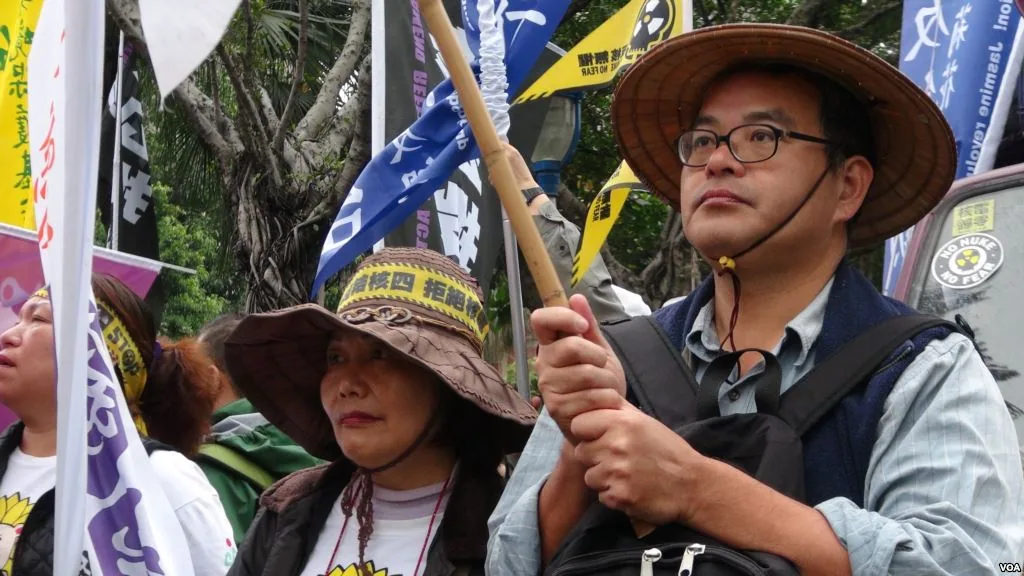
Image credit:2013 年 4 月,反核民間團體包圍立法院。Voice of America,Public Domain · Public Domain · Original source
The Yellow Flag That Said “I Am Human, I Am Anti-Nuclear”
To understand why this debate is so difficult, one must first return to a time when it was not yet an “energy debate.” In January 2013, a group of figures from Taiwan’s arts and cultural circles launched a petition and designed a yellow flag with red characters reading “I am human, I am anti-nuclear”5. On March 9 that year, roughly 220,000 people across Taiwan took to the streets: 120,000 in Taipei, 30,000 in Taichung, 70,000 in Tainan, and two to three thousand in Taitung. It was the largest march in the history of Taiwan’s anti-nuclear movement6. The yellow flag appeared outside bookstores, hung in cafe windows, and was pinned to young people’s backpacks. It became a visual birthmark for a generation.
But the roots of that flag reached far deeper than 2013, and at first had little to do with nuclear power. In 1986, residents of Lukang heard that the American company DuPont planned to build a titanium dioxide plant there. Local teacher Lee Tung-liang initiated a petition, led people into the streets, and shouted the slogan “I love Lukang, no DuPont”7. In March the following year, DuPont announced it would cancel the plant; in August that same year, the Environmental Protection Administration was established8. Lukang’s anti-DuPont campaign was an anti-pollution movement, not an anti-nuclear movement as such. But it was the seed of Taiwan’s postwar street-based environmental movement. The same energy quickly flowed toward another target: the Fourth Nuclear Power Plant.
In 1988, residents of Gongliao formed the Yenliao Anti-Nuclear Self-Help Association9. The plant later known as Lungmen, or the Fourth Nuclear Power Plant, had been under construction for more than thirty years from its proposed siting in Yenliao in 1980, yet it generated exactly zero electricity for commercial operation10. The most tragic page in between was the 1991 “Gongliao 1003 incident”: during the protest, a resident driving a car struck and killed security police officer Yang Chao-ching, sending the movement into a low point9. In 1994, Gongliao held its own local referendum, in which 96.13 percent of voters opposed the Fourth Nuclear Power Plant. Since the Referendum Act had not yet passed, however, the vote had no legal effect11.
📝 Curator’s note
The conventional account says, “Anti-nuclear politics is a progressive value, therefore progressives oppose nuclear power.” But the causality is actually reversed. What made Taiwan’s anti-nuclear movement distinctive was that it grew out of the crack opened by the loosening of the martial-law system. Sociologist Ho Ming-sho put it directly in his Cambridge University research: “The rise of anti-nuclear voices was closely related to democratic opening”12. In other words, when Taiwanese people took to the streets against nuclear power in the 1980s and 1990s, what they were truly confronting was an authoritarian government that did not let people speak; the Fourth Nuclear Power Plant was merely one of the few concrete targets around which people could mobilize at the time. Anti-nuclear politics therefore inherited the full legitimacy of the democracy movement. This also planted the premise for what would happen thirty years later: when nuclear power became a “climate question,” the moral framework bound up with democracy could no longer hold the new problem.
What pushed this origin story to its highest point was one person’s body.
On the morning of April 22, 2014, former Democratic Progressive Party chair Lin Yi-hsiung walked into Gikong Presbyterian Church in Taipei and began an indefinite fast, demanding that construction of the Fourth Nuclear Power Plant be halted13. The church itself was a wound. On February 28, 1980, Lin’s mother and twin daughters were stabbed to death in the old house on that site, in what became known as the Lin family murders, a case that remains unsolved14. Lin was a dangwai victim of political persecution in the Kaohsiung Incident and one of the first elected chairs of the DPP; his fast joined anti-nuclear politics to the bloodline of Taiwan’s democracy movement.
Nine days later, the fast ended. On April 27, the Ma Ying-jeou government, then in power, reached a consensus with the Kuomintang: after safety inspections, the Fourth Nuclear Power Plant’s Unit 1 would be sealed and Unit 2 construction would be halted. On April 28, the Executive Yuan formally announced the sealing of the plant. On April 30, Lin ended his fast13.
What should be remembered is this: the party that pressed pause on the Fourth Nuclear Power Plant was not the anti-nuclear DPP, but the KMT government then in office. That detail foreshadowed the most chaotic part of the debate that followed. No side’s position was as stable as you might have thought.
Three Votes in Seven Years, Yet the Ground Barely Moved
The year after Lin Yi-hsiung’s fast, the Fukushima nuclear disaster that occurred in 2011 had already overturned nuclear politics around the world10. In these years, Taiwanese society also learned to use a new tool to handle the question: the referendum.
But the answers this tool produced were different all three times.
On November 24, 2018, the “nuclear power for a green future” referendum, Referendum Case No. 16, passed. It sought to repeal the statutory deadline in the Electricity Act requiring “nuclear power generation facilities to cease operation entirely by 2025”: there were 5,895,560 yes votes, with turnout at 54.83 percent15. On the surface, this was a major victory for the pro-nuclear camp.
On December 18, 2021, the referendum on commercial operation of the Fourth Nuclear Power Plant, Referendum Case No. 17, failed. There were 3,804,689 yes votes and 4,262,517 no votes; turnout was 41.09 percent, and the proposal did not clear the threshold16. The Fourth Nuclear Power Plant, which had been built for thirty years without generating a single unit of electricity, was formally sentenced to death by the public.
August 23, 2025 was the opening scene of this article: the referendum on extending Maanshan Nuclear Power Plant’s operation, Referendum Case No. 21, received 74 percent support but was stopped by the threshold1.
Source: Central Election Commission official certified results for the three referendums (yes vote share %)
Three votes in seven years: the yes share fell from 59 percent to 47 percent, then rebounded to 74 percent, while the outcomes were passed, failed, and stopped by the threshold, like three dice landing differently each time. Direct democracy can handle an arithmetic question such as “by how many dollars should electricity prices rise,” but it cannot resolve a hard problem in which scientific judgment and value ranking are entangled.
Even harder was the paradox left by “nuclear power for a green future.” The 2018 vote plainly repealed the legal article setting the 2025 nuclear-free deadline, but subsequent DPP governments chose on their own not to extend operations, and Taiwan still moved step by step toward going nuclear-free by 202517. For that reason, the online claim that the “nuclear-free homeland” had already expired was ruled false information by the Taiwan FactCheck Center: only the Electricity Act’s timetable had been repealed; the goal of a “nuclear-free homeland” stated in Article 23 of the Basic Environment Act remained valid17. The law had been dismantled halfway, but policy did not let go. This is the most typical shape of Taiwan’s nuclear debate: every “win” comes with an unresolved tail.
A Government That Shut Down a Reactor, Then Wanted to Restart It
In May 2025, Taiwan’s power grid passed a historic moment.
On the evening of May 17, Maanshan Nuclear Power Plant’s Unit 2 in Hengchun, Pingtung, began lowering output, disconnected from the grid at 10 p.m., and formally shut down in the early hours of May 1818. This was the first time Taiwan’s power grid had no nuclear power at all. Some media described Taiwan as becoming the “first in Asia and second in the world” nuclear-free homeland, though that phrasing needs caution: Italy had already shut down domestic nuclear power in 199019.
According to the script of a “nuclear-free homeland,” the story should have ended there. But what happened over the next few months tore up the script.
Just four days before the shutdown, on May 13, 2025, the Legislative Yuan passed at third reading an amendment to Article 6 of the Nuclear Reactor Facilities Regulation Act by 61 votes to 50. It added a clause allowing operators to apply for life extension after a license expires, extending operation to a maximum of 40 plus 20 years, or 60 years total20. Maanshan Unit 2’s license expired exactly on May 17. The amendment passed four days before expiration.
On November 27, the Ministry of Economic Affairs approved the evaluation results: Chinshan Nuclear Power Plant could not be restarted because equipment had already been dismantled and because it was the same reactor type as Fukushima; Kuosheng and Maanshan had restart feasibility, subject to 1.5 to 2 years of self-conducted safety inspections21. In March 2026, the Lai Ching-te government announced that Kuosheng and Maanshan met restart conditions, and Taiwan Power Company submitted applications to the Nuclear Safety Commission. Maanshan could restart as early as 202822.
Thus this picture emerged: a government whose party platform enshrines a “nuclear-free homeland” personally shut down the final reactor on Taiwan, then three months later personally pushed it toward restart.
Caught in the middle, Lai Ching-te offered a position described as “pragmatic.” He proposed three principles: “no nuclear safety concerns, a solution for nuclear waste, and social consensus,” stressing that “none of these three principles can be missing,” plus two requirements: the Nuclear Safety Commission must set rules, and Taipower must complete its own safety inspections23. Yet on August 13, 2025, ten days before the referendum, he publicly stated: “I will vote in the August 23 referendum. Let us vote no together”24.
⚠️ Contested view
How one reads a government publicly opposing a referendum to “restart a power plant it manages” depends on where one stands.
The pro-nuclear camp saw contradiction and evasion of responsibility: if you are going to submit documents to restart it, why tell the public to vote no? KMT chair Eric Chu argued that the government should “rebuild energy security and resilience” and “pragmatically adjust mistaken energy policy”25.
The Lai Ching-te government’s explanation was the distinction between procedure and authorization: the referendum was proposed by opposition parties and bound to “immediate continued operation,” whereas the government’s position of “only discussing restart after Nuclear Safety Commission review and Taipower self-inspection” was a different path. Voting no meant opposing “immediate restart that skips safety procedures,” not opposing nuclear power itself. Premier Cho Jung-tai put this pragmatism more bluntly: “electricity is computing power, computing power is national power,” and “anti-nuclear politics is not a sacred tablet”26.
Both readings are defensible, depending on whether one emphasizes the “outcome” of whether Taiwan should have nuclear power or the “procedure” of how the decision is made. This is precisely the miniature version of why Taiwan’s nuclear debate has no resolution: even the same act by the same government can honestly be read as two opposite things.
The Loudest Pro-Nuclear Standard-Bearer Is a Laptop Executive
If the anti-nuclear politics of the martial-law generation was a moral movement, the most surprising aspect of the recent return of pro-nuclear voices is its loudest spokesperson: the person standing at the front line with the most weight is a notebook computer entrepreneur.
Pegatron chair Tung Tzu-hsien has become the loudest voice in Taiwan’s pro-nuclear discourse in recent years. His words are direct and leave little room: “Not only Taiwan but the whole world: if you do not rely on nuclear power and instead want to rely on solar plus wind power to save the Earth, there is no hope”27. He argues that nuclear electricity costs about NT$1.42 per kilowatt-hour, criticizes RE100, the 100 percent renewable-energy goal pursued by many major international firms, as “a good ideal but somewhat a castle in the air,” and says that CFE, 24/7 carbon-free energy that includes nuclear power, “can better achieve carbon-neutrality goals”28.
This is the most important change after Taiwan’s nuclear debate was reshuffled by the climate crisis: pro-nuclear discourse became de-ideologized. Its starting point shifted from “nuclear power is very safe” to industrial realities such as “there is no choice on carbon reduction,” “data centers consume power,” and “energy cannot be interrupted.”
The pro-nuclear camp can roughly be divided into three subgroups, each with a different emphasis. The popular-science group is represented by Huang Shih-hsiu, founder of Nuclear Mythbusters, and focuses on cost: “nuclear power costs NT$1.5 per kilowatt-hour; renewable energy costs NT$5.5”29. The academic group is represented by National Tsing Hua University’s Yeh Tsung-kuang and focuses on technical clarification; for example, he emphasizes that “the Hengchun fault one kilometer from Maanshan Nuclear Power Plant is different from the ‘fault shear zone’ beneath the plant site, and outsiders often confuse the two”30. The industrial group is the cohort of entrepreneurs represented by Tung Tzu-hsien.
Even Jensen Huang, CEO of AI chip giant NVIDIA, weighed in from Taipei on August 22, 2025, the day before the referendum, saying nuclear power “is an excellent option”31.
💡 Did you know?
Huang Shih-hsiu also has an even more forceful line that has circulated widely: “Anti-nuclear means anti-American; anti-nuclear means selling out Taiwan; anti-nuclear means licking up to the Chinese Communist Party”29. This statement directly connects energy choice to national identity, and is one of the most aggressive arguments in the pro-nuclear camp. Taiwan.md presents it here verbatim in order to convey the temperature of the debate, not to endorse it. When nuclear power is tied into geopolitics and the independence-unification axis, engineering and cost questions that could originally have been discussed rationally can easily become a loyalty test over whether one “loves Taiwan.” Both anti-nuclear and pro-nuclear sides have contributed to this escalation; the higher the temperature rises, the farther consensus recedes.
But one common misreading must be avoided: one cannot say “the DPP has already flipped to being pro-nuclear” simply because industry and young people have become pro-nuclear.
The DPP platform has not changed, and the “nuclear-free homeland” remains. The government has opened only a narrow door for “advanced nuclear energy” and “restart after safety inspections.” More crucially, even the DPP’s own supporters are split. According to an October 2024 poll by Global Views Monthly and the Taiwan Institute for Sustainable Energy, 45.2 percent of DPP supporters opposed nuclear power and 44.3 percent supported it, almost an even split32.
The Younger, the More Pro-Nuclear: A Generation Without Fukushima Memory
The clearest place to see that crack is age.
The same Global Views poll showed that 63.1 percent of the public overall supported nuclear power. Among the youngest generation, ages 18 to 29, the pro-nuclear share reached 70.8 percent, a full 20 percentage points higher than the 50.2 percent among people over seventy32. The younger the respondent, the more pro-nuclear.
Source: Global Views x Taiwan Institute for Sustainable Energy poll, October 2024 (pro-nuclear share %)
This is almost the reverse of the anti-nuclear tendency of the martial-law generation. The reason is not hard to understand: those who took to the streets back then carried memories of Chernobyl, Fukushima, and the fears of Gongliao and Orchid Island. Today’s climate generation grew up with nuclear disasters as historical terms in textbooks. Their present anxieties are warming, air pollution, power shortages, and whether Taiwan’s industries will leave. The same progressive value of “doing what is good for the next generation” has produced opposite answers in two generations: the former believes anti-nuclear politics protects descendants from disaster; the latter believes carbon reduction is how one leaves the Earth to descendants.
Most of the climate generation no longer hangs the yellow flag from 2013. Still, youth support for nuclear power is better understood as a tendency and individual choice shown in polling. Taiwan has not seen an organized, leader-led “youth pro-nuclear alliance” equivalent to the earlier nuclear abolition platform. To write it as an organized movement would mislead readers.
One Hundred Thousand Years on a Fault
Reshuffling aside, the place where this debate truly gets stuck, where no one can convince anyone else, lies in two physical facts that no one can avoid: earthquakes and nuclear waste.
Start with earthquakes. One of the anti-nuclear camp’s core scientific arguments concerns Maanshan Nuclear Power Plant’s location. Geologist Chen Wen-shan stated that “the Hengchun fault passes through Maanshan’s gate, about 900 meters from the reactor,” and emphasized that “the fault is inside the plant site; this is a certain fact”33. The Green Party’s Kan Chung-wei was more specific: “The turbine generator building of Maanshan Unit 1 is built directly on the shear zone of the Hengchun fault”34. Geologist Lee Hsi-ti, citing evaluation data, questioned Maanshan’s safety mechanism under a maximum earthquake: “peak ground acceleration reached as high as 1.384G, more than three times the design value used at the time”35.
The pro-nuclear camp does not deny that the fault exists, but frames the matter differently. Yeh Tsung-kuang, mentioned above, argues that outsiders often conflate “the Hengchun fault near the plant site” with “the shear zone beneath the plant site,” and that they are not the same thing30.
📝 Curator’s note
Here is a detail worth noticing: in the seismic-resilience controversy, the anti-nuclear and pro-nuclear sides are actually using the same set of numbers produced by Taipower itself. The original design value of 0.4G, the reinforced value of 0.72G, and the 1.384G estimated if the fault truly slips all come from Taipower’s own reports. The difference is not in the data, but in the frame. The anti-nuclear side says, “the evaluated value is several times the design value, too dangerous.” The pro-nuclear side says, “the building has been reinforced, and the shear zone is not the same fault, so there is no problem.” One set of numbers, two stories. This is exactly why the nuclear debate cannot end simply by “laying out the scientific evidence”: when the evidence itself can be interpreted in two legitimate ways, the disagreement is not at the factual level but at the value level. How much earthquake risk are you willing to bear for carbon reduction? There is no objective answer to that question.
If earthquakes are a probability question of “will it happen,” nuclear waste is a problem that must certainly be faced, and on a timescale so long it exceeds imagination.
Taiwan has already accumulated more than 19,000 assemblies of high-level nuclear waste and 210,000 barrels of low-level nuclear waste, yet does not have a single statutory final disposal site. These are figures repeatedly emphasized by anti-nuclear groups such as the Green Citizens’ Action Alliance36. As of May 2026, the three nuclear power plants had a combined 21,527 assemblies of spent nuclear fuel, which is high-level waste37. Former minister without portfolio Lin Tze-luen captured the ethical core clearly: “Using nuclear power means transferring the costs, risks, and responsibilities of handling nuclear waste to the next generation”38.
The scale of the problem appears most startling in an investigation by the Control Yuan. Its report stated that “Taiwan proper basically cannot find a final disposal site for high-level radioactive waste,” and warned that even “a storage cavern buried 500 meters deep would be exposed at the surface after 50,000 years” because Taiwan lies in an active orogenic belt, with crustal displacement of more than one centimeter per year, while high-level nuclear waste must be isolated on the scale of millions of years39. Control Yuan member Tien Chiu-chin’s two questions almost serve as the annotation for the whole matter: “Will spending NT$60 billion really find a final disposal site?” “The back-end fund is the coffin money for nuclear power plants”40.
The entire final disposal plan for high-level nuclear waste has five stages, is projected to run from 2005 to 2055, and has a total budget of about NT$60 billion, of which about NT$36.2 billion has already been spent41. In other words, by 2055, if everything goes smoothly, Taiwan will only just have “built” the disposal site, while the material it is supposed to watch over must survive the next several hundred thousand years of crustal movement.
Nuclear waste needs a piece of land that will remain stable for at least 100,000 years. Taiwan stands on a faulted landmass that keeps moving. This is the deepest groove in the debate: it forces an island with less-than-ideal geological conditions to answer whether it wants to, and can, take responsibility for an energy source that leaves a legacy lasting tens of thousands of years. There is no winner to be argued out of this question. What remains is whether one is willing to bear it.
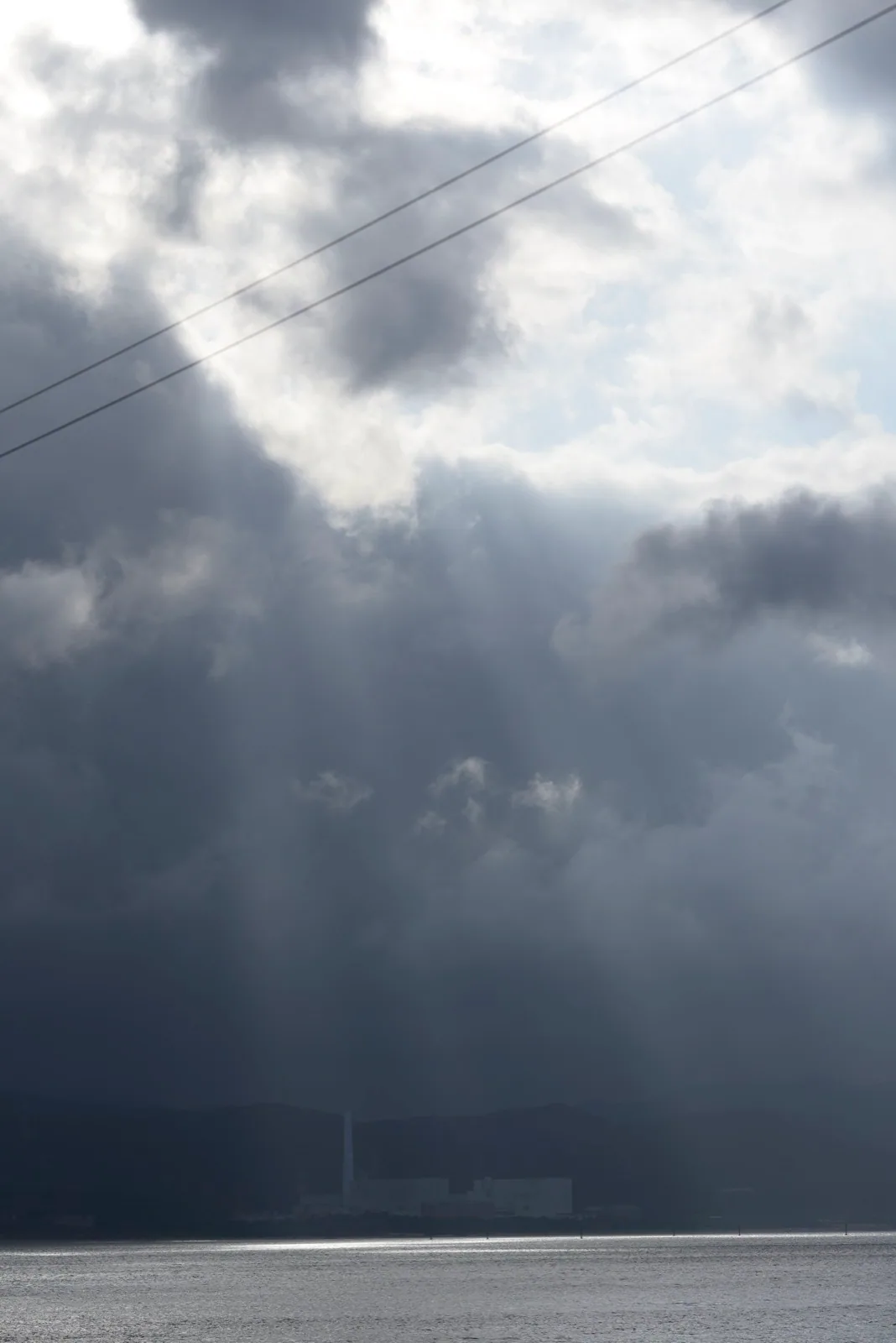
Orchid Island’s “Canned Food Factory”
When we argue about nuclear power in Taipei, in the Legislative Yuan, and before referendum ballot boxes, one group of people is never at the center of the debate, yet has borne its costs for more than forty years.
Orchid Island.
In 1974, the government decided to place a low-level nuclear waste storage facility on this island, the ancestral home of the Tao, also known as the Yami people, without informing the island’s residents. Construction began in 1978, and the facility opened in 1982. At the time, the public was told that what was being built was a “canned food factory”42. To this day, the facility stores 97,672 barrels of low-level radioactive waste from the Chinshan, Kuosheng, and Maanshan nuclear power plants. It stopped accepting additional waste after reaching capacity in 199642.
Tao resistance has continued for decades: the 1988 “drive out evil spirits” action, and the 1995 “one person, one stone to fill the harbor” action, which sought to block the dock used to transport waste42. On August 1, 2016, President Tsai Ing-wen apologized to Indigenous peoples on behalf of the state, and Orchid Island’s nuclear waste was one of the items included43.
But what best explains the island’s mood was the refusal in 2019.
In November that year, the government announced a retroactive compensation plan: a one-time payment of NT$2.55 billion, followed by NT$220 million every three years44. The Tao refused. Orchid Island elder Lin Hsin-yu spoke categorically: “As long as nuclear waste is not removed from Orchid Island, this death, this genocide, will continue.” “I solemnly declare: we will not take a single cent!”44 What they wanted was not money, but the removal of the waste. The promised removal deadline from the 1990s, originally set for 2002, has been missed to this day42.
✦ Orchid Island’s sentence, “we will not take a single cent,” is the voice in the entire nuclear debate that most deserves to be heard and is most often skipped over. It reminds us that the cost of nuclear power has never been written only on electricity bills. When both sides of the debate calculate “how many dollars per kilowatt-hour” and “how many tons of carbon reduced,” there is another kind of cost: one paid silently over forty years in land and dignity by people who had no seat at the decision-making table.
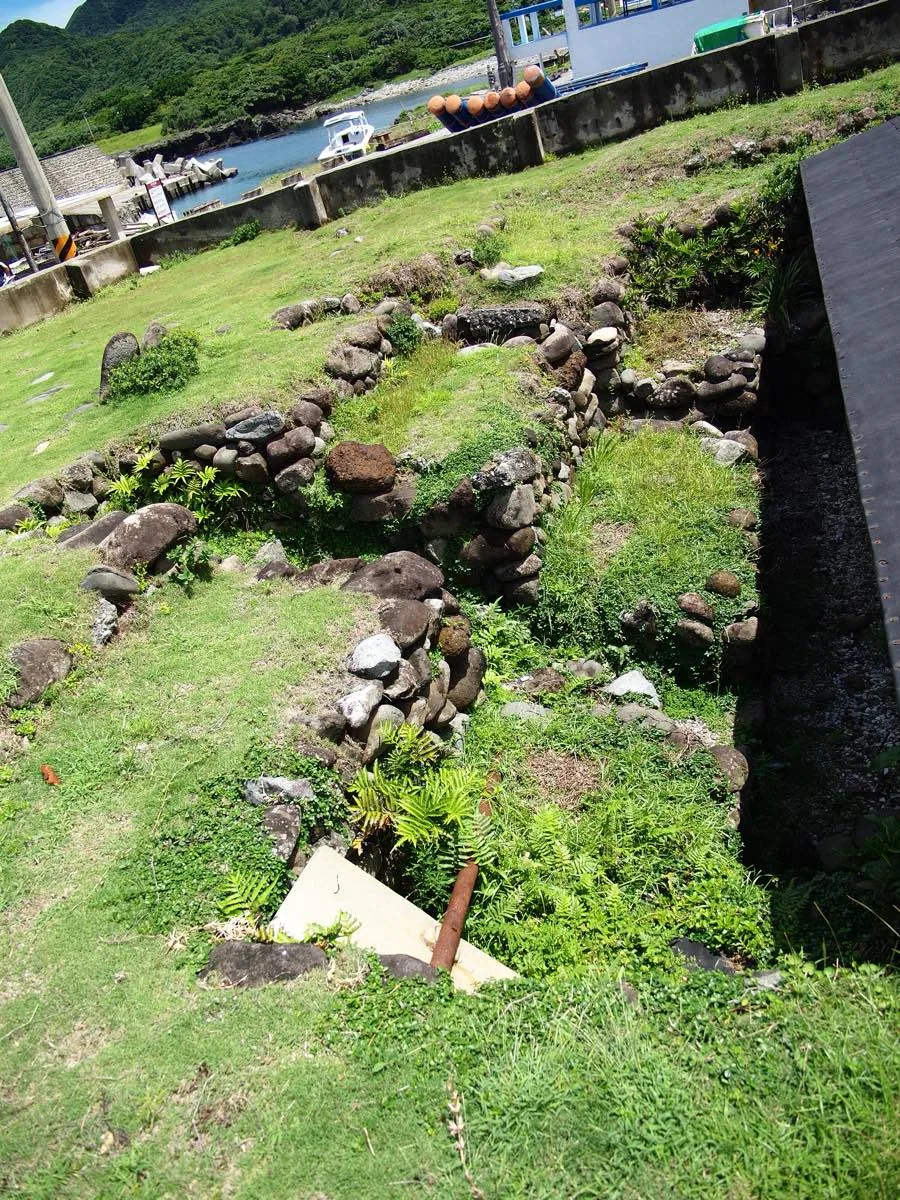
Gas for Ten Days, Uranium for Eighteen Months
What has rapidly revived pro-nuclear discourse in recent years is not only climate, but an even sharper word: war.
Taiwan’s energy import dependence reached 95.8 percent in 2024; nearly all of its energy relies on imports45. The legally required safety stockpile for natural gas is about 11 days, for coal about 41 days, while one batch of nuclear fuel can be used for roughly 18 months46. The pro-nuclear camp therefore advances an “energy security” argument: if the Taiwan Strait is blockaded and ships carrying natural gas cannot enter, supplies will not last long; but the fuel rods inside nuclear power plants are already enough to run for a year and a half.
Source: Energy Administration, Central News Agency (this is the pro-nuclear camp's energy-security argument)
This argument is not shouted from nowhere. In an August 2025 wargame, the U.S. think tank Center for Strategic and International Studies, or CSIS, stated that “energy is the most fragile part of Taiwan’s resilience,” estimated that under a blockade natural gas would last about ten days and electricity would collapse to 20 percent of normal supply, and therefore recommended extending nuclear power operations47. Minister of Economic Affairs Kuo Jyh-huei also told the Legislative Yuan that energy security is “a national security issue; we cannot discuss it in too much detail”48.
But the anti-nuclear camp has two rebuttals to the inference that “nuclear power is safer.”
The first is Ukraine’s Zaporizhzhia nuclear power plant, which has repeatedly been shelled during the war and has become a live teaching example for anti-nuclear advocates: a wartime nuclear power plant may turn from a fortress into a bomb that could be detonated at any moment49. The second argument is that distributed energy is more resistant to attack: concentrating power generation in a few large reactors may make the system easier to disable in one blow than distributing it across solar and wind installations around the country. Former Energy Administration deputy minister Tseng Wen-sheng responded to the same anxiety from another angle, arguing in effect that Taiwan has more dispatchable options in hand than people imagine, and need not bet everything on nuclear power48.
The same phrase, “energy security,” is read by the pro-nuclear side as “therefore we need nuclear power even more,” and by the anti-nuclear side as “therefore nuclear power is even more dangerous.” Once again, the same premise leads to two opposite conclusions.
Both Sides Say They Stand on the Side of the Future
Pull the camera back, and it becomes clear that the whole world is reshuffling this deck, while every side in Taiwan can find international examples to endorse its own position.
Germany completed its nuclear phase-out in April 2023. The anti-nuclear side cites it to prove that “advanced countries can also do without nuclear power,” while the pro-nuclear side cites opposition leader Friedrich Merz’s criticism that the phase-out was a “gigantic mistake.” Robert Habeck, the Green Party politician who promoted the phase-out, countered that after the exit, electricity prices still fell and carbon emissions also declined50. After the Fukushima accident, Japan once shut down all reactors; it has now restarted 15 units, nuclear power accounted for about 8.3 percent of electricity in 2024, and the target for 2040 is 20 percent. South Korea, under Yoon Suk Yeol, reversed its nuclear phase-out line and set a goal of 34.6 percent nuclear power by 203651.
The example most often cited by both sides at once is Finland’s Onkalo, a final disposal repository for high-level nuclear waste excavated 430 meters deep into 1.9-billion-year-old granite. The pro-nuclear side says, “Look, there is a solution for nuclear waste.” The anti-nuclear side says, “That is Finland’s stable, ancient bedrock; Taiwan is an orogenic belt moving every day, and cannot copy it.” It should be added that Onkalo remains in the licensing review stage; outsiders often mistakenly believe it is already formally operating52.
📝 Curator’s note
Placing these international cases side by side reveals something interesting: every case is evidence for both sides at once. The same Germany, the same Finland, the same set of numbers can be used by anti-nuclear and pro-nuclear advocates to prove themselves right. No one is lying. The two sides in this debate are in fact answering two different questions. The pro-nuclear side asks: “At this moment of warming and possible energy cutoff, what options can provide stable electricity and reduce carbon?” The anti-nuclear side asks: “Are we qualified to produce a kind of waste that must be guarded for 100,000 years, when we have not even found a site for fifty years from now?” One question concerns “energy security right now”; the other concerns “permanent intergenerational responsibility.” Both questions are real, and neither should be crushed by the other. The reason Taiwan has had no consensus for forty years is not that one side is more foolish or more malicious, but that the two sides each fear a different existential risk: one fears nuclear disaster and nuclear waste lasting ten thousand years; the other fears power shortages, energy cutoff, and warming. When the things you fear are different, you will never agree with the other side’s priorities.
So this debate probably will not “end.”
It will continue to return, round after round, in the form of referendums, legal amendments, applications, and street protests. The 4.34 million yes votes in 2025 that failed to cross the threshold, and Orchid Island’s sentence “we will not take a single cent,” will both remain in the memory of this country, with neither side able to convince the other.
The next time someone asks whether Taiwan supports nuclear power, perhaps the most honest answer is: whether Taiwan supports nuclear power depends on which Taiwan you ask. Is it the technology boss who fears power shortages so much he cannot sleep? The anti-nuclear generation that remembers Fukushima and Gongliao? The young people with no memory of nuclear disaster who fear only a warming planet? Or the small island that has guarded nuclear waste for the whole country for forty years without ever being asked whether it was willing? After forty years and three referendums, the ground has barely moved. Because this question never had a standard answer. It asks how a society can decide together on something whose three clocks run at completely different speeds: nuclear waste must remain stable for 100,000 years, carbon reduction must be achieved within a decade, and power shortages are happening now.
And both sides say they stand on the side of the future.
Further Reading
- Taiwan’s Climate Crisis and Net-Zero Transition — The other side of the same energy question: approaching it through physical limits, electricity supply and demand, and the carbon-reduction timetable; a companion piece to this article
- A History of Taiwan’s Environmental Movement — Anti-nuclear politics as part of Taiwan’s postwar environmental movement, from the Lukang anti-DuPont campaign to the full context of Gongliao
- Environmental Justice and NIMBY Controversies in Taiwan — The NIMBY structure behind nuclear waste and Orchid Island: why risk always falls on places with the least voice
- Social Movements and Civic Participation — How anti-nuclear politics shared a language and energy with Taiwan’s democracy movement
- The Sunflower Movement — Civic mobilization from the same generation, useful for understanding the atmosphere of the years around Lin Yi-hsiung’s fast
Public Data
The following government open data lets you verify, or overturn, the arguments in this article yourself. Links point to data.gov.tw or query systems maintained by competent authorities. Readers working with AI can also query the same datasets through Taiwan’s open-data MCP gateway, Twinkle Hub.
- Taiwan Power Company’s nuclear power generation performance and carbon-reduction benefits over the past 10 years (Taiwan Power Company, updated annually) — The curve in this article showing nuclear power moving from peak share to zero and then toward restart can be redrawn from the table’s annual generation and capacity-factor fields
- Locations and unit equipment of Taiwan Power Company nuclear power plants (Taiwan Power Company, updated irregularly) — Raw data on the specifications and locations of each unit from Chinshan to Maanshan, for comparison with the decommissioning timeline and fault controversy in this article
- Guidelines for radioactive waste storage and feedback before completion of nuclear power plant decommissioning under the Nuclear Backend Fund (Taiwan Power Company, updated irregularly) — The original feedback rules for the NT$60 billion back-end fund that the Control Yuan questioned as “gone once spent”
Image Sources
- Hero / 2013 anti-nuclear encirclement of the Legislative Yuan: Anti-nuclear protest, Legislative Yuan (VOA), produced and provided by Voice of America, Public Domain. (The Wikimedia file name follows the uploader’s naming; the actual content is an image from the April 2013 anti-nuclear march.)
- Fourth Nuclear Power Plant (Lungmen): 2023 Longmen Nuclear Power Plant, photograph by Taiwankengo, CC BY-SA 4.0.
- Maanshan Nuclear Power Plant, Nanwan: Maanshan Nuclear Power Plant, Nanwan, photograph by M. Weitzel, CC BY-SA 3.0.
- Traditional Tao underground house on Orchid Island: Entrance of a traditional underground house of Tao people on Orchid Island, photograph by othree, CC BY 2.0. The image shows a Tao underground-house settlement and is used to present the environmental-justice context of Orchid Island; it is not the low-level nuclear waste storage facility itself.
References
- Central News Agency: Maanshan extension referendum result — CNA’s August 23, 2025 vote-count report records 4,341,432 yes votes, 1,511,693 no votes, turnout of 29.53 percent, and failure to pass because the yes votes did not reach the one-quarter threshold of 5,000,523 votes.↩23
- Wikipedia: Maanshan extension referendum — Records the full vote count, 74.17 percent yes share, and threshold calculation for 2025 Referendum Case No. 21, consistent with the Central Election Commission’s certified result.↩
- Central News Agency: Huang Kuo-chang on the Maanshan referendum result — CNA’s August 23, 2025 report records Taiwan People’s Party chair and referendum petitioner Huang Kuo-chang saying after the vote count that “the yes votes in this referendum were three times the no votes.”↩
- The Reporter: Maanshan extension referendum result and aftermath — The Reporter’s 2025 in-depth article includes a verbatim comment from National Nuclear Abolition Action Platform secretary-general Tsui Su-hsin that yes votes exceeded no votes but the referendum did not pass and has no legal effect, as well as the anti-nuclear camp’s position on procedure and follow-up.↩
- Environmental Information Center: “I am human, I am anti-nuclear” petition from arts and cultural figures — Environmental Information Center’s January 2013 report records the origin of the “I am human, I am anti-nuclear” petition and the yellow-background, red-character logo launched by arts and cultural figures.↩
- PTS Our Island: March 9 Nuclear Abolition March — PTS recorded the March 9, 2013 island-wide nuclear abolition march, including organizer estimates of roughly 220,000 participants across northern, central, southern, and eastern Taiwan.↩
- Changhua Cultural Heritage: Lukang anti-DuPont incident — Records the anti-pollution movement launched in 1986 by Lukang residents, including Lee Tung-liang, under the slogan “I love Lukang, no DuPont,” an important starting point for Taiwan’s postwar environmental movement.↩
- Ministry of Environment Chemical Knowledge Map: establishment of the Environmental Protection Administration — Ministry of Environment official information recording the historical background of the Executive Yuan Environmental Protection Administration’s establishment on August 22, 1987.↩
- Wikipedia: Gongliao 1003 incident — Records the founding of the Yenliao Anti-Nuclear Self-Help Association in 1988 and the events of October 3, 1991, when security police officer Yang Chao-ching was struck and killed during protests against the Fourth Nuclear Power Plant.↩2
- Nuclear Safety Commission: Lungmen Nuclear Power Plant historical chronology — Nuclear Safety Commission official chronology PDF recording key nodes of the Fourth Nuclear Power Plant, or Lungmen, from the 1980 proposal and 1999 start of construction to the 2014 sealing and 2020 expiration of the construction permit; a primary historical source.↩2
- Liberty Times: Gongliao local referendum 27 years earlier — Liberty Times report recording the May 1994 Gongliao local referendum, in which 96.13 percent of voters opposed the Fourth Nuclear Power Plant. The Referendum Act had not yet passed, so the vote had no legal effect.↩
- Cambridge — The Politics of Anti-Nuclear Protest in Taiwan — An academic paper by sociologist Ho Ming-sho in Modern Asian Studies, arguing that the rise of Taiwan’s anti-nuclear voices was closely related to democratic opening.↩
- Wikipedia: Lin Yi-hsiung’s anti-Fourth Nuclear Power Plant fast — Records the full chronology of Lin Yi-hsiung beginning his fast at Gikong Presbyterian Church on April 22, 2014, the April 27 cross-party consensus, the Executive Yuan’s April 28 announcement that the Fourth Nuclear Power Plant would be sealed, and the end of the fast on April 30.↩2
- Wikipedia: Lin family murders — Records the historical event of February 28, 1980, when Lin Yi-hsiung’s mother and twin daughters were stabbed to death in their Taipei residence, later rebuilt as Gikong Presbyterian Church; the case remains unsolved.↩
- Central Election Commission: 2018 Referendum Case No. 16 result (PDF) — CEC official certified document recording that the “nuclear power for a green future” referendum passed with 5,895,560 yes votes, 4,014,215 no votes, and 54.83 percent turnout.↩
- Central Election Commission: 2021 Referendum Case No. 17 result (PDF) — CEC official certified document recording that the Fourth Nuclear Power Plant commercial operation referendum had 3,804,689 yes votes, 4,262,517 no votes, turnout of 41.09 percent, a threshold of 4,956,367 votes, and did not pass.↩
- Taiwan FactCheck Center: whether the nuclear-free homeland has expired — Fact-check report clarifying that 2018 Referendum Case No. 16 only repealed the 2025 nuclear-free timetable in the Electricity Act, while the nuclear-free homeland goal in Article 23 of the Basic Environment Act remained valid; the claim that the “nuclear-free homeland has expired” was false information.↩2
- Central News Agency: Maanshan Unit 2 shutdown — CNA’s May 2025 report records that Maanshan Nuclear Power Plant Unit 2 lowered output on May 17, disconnected from the grid that night, and shut down in the early hours of May 18, making Taiwan’s power grid completely nuclear-free for the first time.↩
- Global Views Monthly: Taiwan moves toward a nuclear-free homeland — Global Views framed Taiwan as the “first in Asia, second in the world” nuclear-free homeland. This article identifies that as a media framing and notes that Italy had stopped domestic nuclear power as early as 1990.↩
- Central News Agency: Nuclear regulation act passes third reading — CNA’s May 13, 2025 report records that the Legislative Yuan passed at third reading an amendment to Article 6 of the Nuclear Reactor Facilities Regulation Act by 61 votes to 50, adding the possibility of applying for life extension after license expiration, up to 40+20 years.↩
- Environmental Information Center: Ministry of Economic Affairs nuclear restart evaluation — Environmental Information Center report recording the Ministry of Economic Affairs’ November 27, 2025 approval of evaluation results: Chinshan was not feasible, while Kuosheng and Maanshan had restart feasibility, subject to 1.5-2 years of self-conducted safety inspections.↩
- Central News Agency: Kuosheng and Maanshan meet restart conditions — CNA’s March 2026 report records the Lai Ching-te government’s announcement that Kuosheng and Maanshan met restart conditions, Taipower’s submission to the Nuclear Safety Commission, and Maanshan’s possible restart as early as 2028.↩
- Lai Ching-te Threads: three nuclear principles — President Lai Ching-te’s personal Threads post, a primary source, proposing the three preconditions of “no nuclear safety concerns, a solution for nuclear waste, and social consensus,” and emphasizing that none can be missing.↩
- Central News Agency: Lai Ching-te states on August 13 that he will vote no — CNA’s August 13, 2025 report records Lai Ching-te publicly saying, “I will vote in the August 23 referendum. Let us vote no together,” as well as his two required conditions.↩
- Central News Agency: Eric Chu on energy policy — CNA’s August 2025 report records KMT chair Eric Chu arguing for “rebuilding energy security and resilience” and “pragmatically adjusting mistaken energy policy.”↩
- Business Today: Cho Jung-tai on electricity and computing power — Business Today’s February 2026 report records Premier Cho Jung-tai’s statement that “electricity is computing power, computing power is national power”; his phrase “anti-nuclear politics is not a sacred tablet” appears in Newtalk’s March 24, 2026 report.↩
- Business Today: Tung Tzu-hsien on nuclear power and saving the Earth — Business Today’s March 2025 report includes Pegatron chair Tung Tzu-hsien’s verbatim statement: “Not only Taiwan but the whole world: if you do not rely on nuclear power and instead want to rely on solar plus wind power to save the Earth, there is no hope.”↩
- United Daily News: Tung Tzu-hsien says RE100 is like a castle in the air and may be replaced by CFE — UDN’s August 2024 report includes Tung Tzu-hsien’s criticism of RE100 as “aiming too high, like a castle in the air,” and his argument that CFE carbon-free energy including nuclear power, including SMRs, can better achieve carbon neutrality. His claim that nuclear power costs about NT$1.42 per kilowatt-hour is also found in CNA’s Legislative Yuan public hearing report.↩
- ETtoday: Huang Shih-hsiu on nuclear power costs — ETtoday’s August 2025 report records Nuclear Mythbusters founder Huang Shih-hsiu’s claims that “nuclear power costs NT$1.5 per kilowatt-hour, renewable energy NT$5.5,” and the heated rhetoric that “anti-nuclear means anti-American, selling out Taiwan, and licking up to the Chinese Communist Party.”↩2
- Newtalk: Yeh Tsung-kuang on the Hengchun fault and shear zone — Newtalk report, republished, records the pro-nuclear technical argument by National Tsing Hua University’s Yeh Tsung-kuang that the Hengchun fault near the plant site and the “fault shear zone” beneath the plant are different, and that outsiders often confuse the two.↩2
- IEEE Spectrum: Taiwan’s Maanshan nuclear plant and industry statements — IEEE Spectrum report including NVIDIA CEO Jensen Huang’s public statement that Taiwan should invest in nuclear power and that nuclear power “is an excellent option.” His related statement in Taipei on the eve of the referendum, August 22, 2025, is also covered in Bloomberg’s report.↩
- Global Views Monthly: energy poll and pro-nuclear share among ages 18-29 — October 2024 poll by Global Views and the Taiwan Institute for Sustainable Energy, recording 63.1 percent overall support for nuclear power, 70.8 percent among ages 18-29, 50.2 percent among those over 70, and among DPP supporters 45.2 percent anti-nuclear and 44.3 percent pro-nuclear.↩2
- Taiwan FactCheck Center: Maanshan referendum and Hengchun fault key issues — Taiwan FactCheck Center’s summary of key issues in the Maanshan extension referendum includes geologist Chen Wen-shan’s verbatim statements that “the Hengchun fault passes through Maanshan’s gate, about 900 meters from the reactor” and that “the fault is inside the plant site; this is a certain fact.”↩
- The Reporter: seven key issues in the Maanshan restart referendum — The Reporter’s in-depth pre-referendum article includes Green Party member Kan Chung-wei’s anti-nuclear argument that “the turbine generator building of Maanshan Unit 1 is built directly on the shear zone of the Hengchun fault.”↩
- Environmental Information Center: Maanshan seismic resistance and fault evaluation — Environmental Information Center report including geologist Lee Hsi-ti’s questioning of Maanshan’s safe-shutdown earthquake peak ground acceleration, which “reached as high as 1.384G, more than three times the design value.”↩
- Green Citizens’ Action Alliance: current state of Taiwan’s nuclear waste — Anti-nuclear group’s official page recording that Taiwan has produced more than 19,000 assemblies of high-level nuclear waste and 210,000 barrels of low-level nuclear waste, yet has no statutory disposal site.↩
- Nuclear Safety Commission: nuclear power plant spent fuel pool storage table — Nuclear Safety Commission official statistics, a primary source, recording that as of May 18, 2026, the three nuclear power plants had a combined 21,527 assemblies of spent nuclear fuel.↩
- The Reporter: seven key issues in the Maanshan restart referendum — The Reporter’s in-depth pre-referendum article includes former minister without portfolio Lin Tze-luen’s verbatim comment that “using nuclear power means transferring the costs, risks, and responsibilities of handling nuclear waste to the next generation.”↩
- Control Yuan: investigation of final disposal of high-level nuclear waste — Control Yuan investigation report, a primary source, stating that Taiwan proper basically cannot find a final disposal site for high-level radioactive waste, and warning that a “storage cavern buried 500 meters deep would be exposed at the surface after 50,000 years” due to Taiwan’s active orogenic belt and crustal displacement of more than one centimeter per year.↩
- Control Yuan: questions over the high-level nuclear waste back-end fund and disposal site — Control Yuan Financial and Economic Affairs Committee press release, a primary source, including Control Yuan member Tien Chiu-chin’s questions: “Will spending NT$60 billion really find a final disposal site?” and “The back-end fund is the coffin money for nuclear power plants; once spent, it is gone.”↩
- Nuclear Safety Commission: final disposal of high-level radioactive waste — Nuclear Safety Commission official Q&A, a primary source, recording that the final disposal plan for high-level nuclear waste has five stages, is projected to run from 2005 to 2055, and has a total budget of about NT$60 billion.↩
- Wikipedia: Orchid Island Storage Site — Records the full history of the Orchid Island low-level nuclear waste storage site: the 1974 decision made without informing the Tao people, the 1982 opening, the storage of 97,672 barrels of low-level waste, the 1996 saturation point, and the Tao people’s protests and unmet removal promises.↩234
- Office of the President: president apologizes to Indigenous peoples — On August 1, 2016, President Tsai Ing-wen apologized to Indigenous peoples as head of state; the disposal of nuclear waste on Orchid Island was one of the historical injustices named.↩
- Environmental Information Center: Tao people reject NT$2.55 billion compensation — Environmental Information Center’s 2019 report records the government’s announcement of a retroactive compensation plan of NT$2.55 billion plus NT$220 million every three years, the Tao people’s refusal, and elder Lin Hsin-yu’s declaration that “we will not take a single cent” and that they seek removal, not compensation.↩2
- Energy Administration, Ministry of Economic Affairs: energy supply overview — Energy Administration official statistics recording Taiwan’s 2024 energy import dependence at about 95.8 percent, with earlier primary-energy measures around 97-98 percent.↩
- Central News Agency: natural gas safety stockpile and blockade risks — CNA’s October 2024 report records the statutory safety stockpile of natural gas at about 11 days, coal at about 41 days, one nuclear fuel loading at about 18 months, and the Ministry of Economic Affairs’ explanations regarding energy security.↩
- CSIS — Lights Out: Wargaming a Blockade of Taiwan — Wargame report by the U.S. think tank Center for Strategic and International Studies, stating that energy is the most fragile part of Taiwan’s resilience, estimating that natural gas would last about ten days and electricity would collapse to 20 percent under a blockade, and recommending extension of nuclear power operations.↩
- Central News Agency: Kuo Jyh-huei on energy security — CNA report including Minister of Economic Affairs Kuo Jyh-huei’s statement that it is “a national security issue and cannot be discussed in too much detail,” as well as related discussion of energy dispatch.↩2
- Greenpeace: distributed energy and wartime nuclear safety risks — Greenpeace Taiwan material presenting the anti-nuclear camp’s argument that the wartime shelling of Ukraine’s Zaporizhzhia nuclear power plant shows high wartime nuclear risk and that distributed renewable energy is more resilient.↩
- Clean Energy Wire — Germany’s nuclear exit one year after — German energy information Q&A recording falling electricity prices and declining carbon emissions after Germany completed its nuclear exit in April 2023, as well as both sides of the controversy including opposition leader Friedrich Merz’s description of the exit as a “gigantic mistake.”↩
- NEI Magazine — South Korea to increase nuclear share to over 34% by 2036 — Nuclear Engineering International report recording the Yoon Suk Yeol government’s reversal of South Korea’s nuclear phase-out and its target of 34.6 percent nuclear power by 2036; this can be compared with Japan’s restart of 15 units and its 2040 target of 20 percent.↩
- American Nuclear Society — Finland’s Onkalo licensing — American Nuclear Society report recording that Finland’s Onkalo high-level nuclear waste final repository, 430 meters deep in 1.9-billion-year-old granite, remains in the licensing review stage, though outsiders often mistakenly believe it is already formally operating.↩