
Resumen en 30 segundos: El 23 de agosto de 2025, un referendo en Taiwán preguntó si debía permitirse el reinicio de la central nuclear Nº 3. Votaron a favor 4,34 millones de personas, el 74%, pero la propuesta perdió porque la participación fue de apenas 29,53% y no alcanzó el umbral de cinco millones de votos. Fue el tercer referendo nuclear de Taiwán en cuarenta años: en 2018 se aprobó “usar lo nuclear para alimentar lo verde”, en 2021 se rechazó la operación comercial de la central nuclear Nº 4 y en 2025 la extensión de la central Nº 3 quedó bloqueada por el umbral. Cada resultado fue distinto, pero sobre el terreno casi nada siguió el movimiento de las urnas. Lo más paradójico es que el reactor que acababa de cerrar tres meses antes fue empujado hacia el reinicio por un gobierno cuyo partido había escrito la “patria sin energía nuclear” en su programa y cuyo presidente votó públicamente en contra. El antinuclearismo fue un lenguaje común del movimiento democrático taiwanés; tras la llegada de la crisis climática, todos los lados de este debate fueron barajados de nuevo, y Taiwán sigue sin consenso.
La tarde del 23 de agosto de 2025, las cifras de escrutinio de la Comisión Electoral Central quedaron fijadas: en el referendo sobre la extensión de la central nuclear Nº 3 hubo 4.341.432 votos a favor y 1.511.693 en contra1. Los votos favorables fueron casi tres veces los contrarios: 74,17% dijo “sí”2.
Según la intuición democrática habitual, el ganador de este debate debería estar claro. Pero perdió.
La razón es que la Ley de Referendos exige que los votos favorables superen una cuarta parte del electorado nacional. Esta vez, el umbral era de 5.000.523 votos; la participación ese día fue de apenas 29,53%, y los votos afirmativos ni siquiera rozaron el umbral1. Tras el escrutinio, Huang Kuo-chang, proponente del referendo y presidente del Partido Popular de Taiwán, dijo que los votos favorables “superaron por casi tres veces” a los contrarios3. Tsui Su-hsin, vocera de la Plataforma Nacional de Acción para la Abolición Nuclear, del campo antinuclear, señaló en cambio: “Aunque los votos favorables fueron más que los contrarios, el resultado final del referendo no fue aprobado y no tiene efecto legal”4. Las dos frases hablan del mismo conjunto de cifras, pero llegan a conclusiones opuestas.
Ganó el debate y perdió ante el sistema. Esta paradoja del verano de 2025 es la entrada para entender toda la discusión nuclear en Taiwán: en la superficie pregunta si “la energía nuclear es buena o mala”, pero debajo se discute otra cosa.
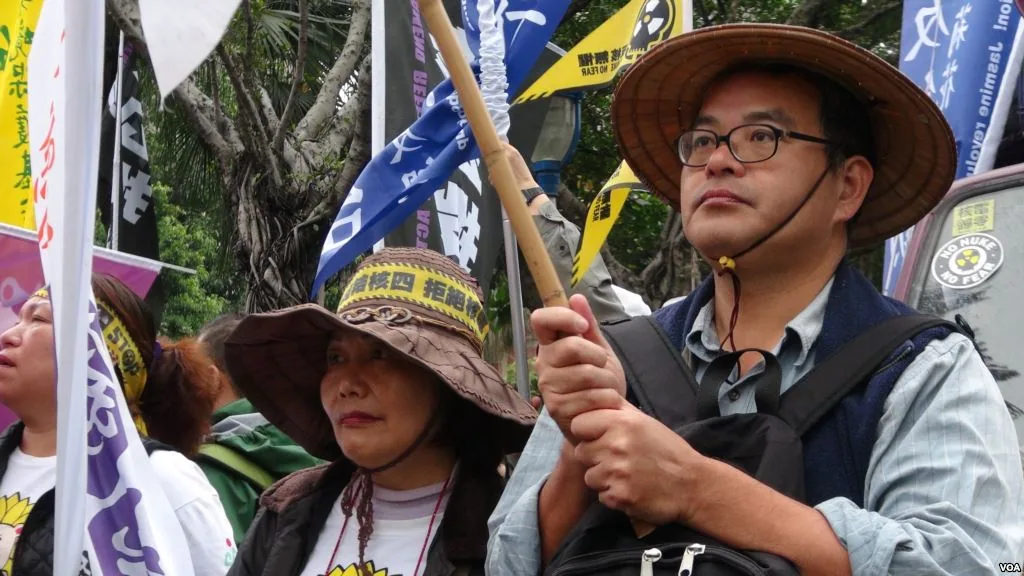
Crédito de la imagen:2013 年 4 月,反核民間團體包圍立法院。Voice of America,Public Domain · Public Domain · Fuente original
La bandera amarilla de “Soy humano, soy antinuclear”
Para entender por qué este debate es tan difícil, hay que volver a la época en que todavía no era, en su origen, un “debate energético”. En enero de 2013, un grupo de figuras del mundo artístico y cultural lanzó una campaña de firmas y diseñó una bandera amarilla con caracteres rojos que decía: “Soy humano, soy antinuclear”5. El 9 de marzo de ese año, unas 220.000 personas salieron a la calle en todo Taiwán: 120.000 en Taipéi, 30.000 en Taichung, 70.000 en Tainan y entre dos y tres mil en Taitung. Fue la mayor marcha en la historia del movimiento antinuclear taiwanés6. Esa bandera amarilla apareció frente a librerías, colgada en las ventanas de cafés, pegada en las mochilas de jóvenes, y se convirtió en una marca visual de una generación.
Pero las raíces de esa bandera se hunden mucho más atrás que 2013, y al principio tenían poco que ver con la energía nuclear. En 1986, los habitantes de Lukang supieron que la empresa estadounidense DuPont quería instalar allí una planta de dióxido de titanio. El maestro local Lee Tung-liang impulsó una petición y salió a marchar bajo el lema “Amo Lukang, no quiero DuPont”7. En marzo del año siguiente, DuPont anunció la cancelación de la planta; en agosto de ese mismo año se creó la Administración de Protección Ambiental8. La oposición de Lukang a DuPont fue un movimiento contra la contaminación, no antinuclear en sí mismo, pero fue la semilla del movimiento ambiental callejero de posguerra en Taiwán. Esa misma energía pronto se dirigió hacia otro objetivo: la central nuclear Nº 4.
En 1988, residentes de Kungliao fundaron la Asociación de Autoayuda Antinuclear de Yenliao9. Esa central nuclear Nº 4, que luego se llamó “Longmen”, llevaba más de treinta años en construcción desde que en 1980 se propuso ubicarla en Yenliao, y jamás generó un solo kilovatio-hora comercial10. La página más trágica de esa historia fue el “incidente de Kungliao 1003” de 1991: durante una protesta, un residente atropelló y mató al policía antidisturbios Yang Chao-ching, y el movimiento cayó en un punto bajo9. En 1994, Kungliao organizó por su cuenta un referendo local: 96,13% de los votantes se opuso a la central nuclear Nº 4. Como la Ley de Referendos aún no había sido aprobada, esa votación no tuvo efecto legal11.
📝 Nota curatorial
La explicación habitual dice: “El antinuclearismo es un valor progresista, por eso el campo progresista se opone a la energía nuclear”. Pero la causalidad, en realidad, funciona al revés. Lo particular del movimiento antinuclear taiwanés es que creció en la grieta abierta por el aflojamiento del régimen de ley marcial. El sociólogo Ho Ming-sho lo escribió de forma directa en su investigación publicada por Cambridge: “El surgimiento de voces antinucleares estuvo estrechamente vinculado con la apertura democrática”12. En otras palabras, cuando los taiwaneses de las décadas de 1980 y 1990 salieron a la calle contra la energía nuclear, chocaban en realidad con un gobierno autoritario que no dejaba hablar al pueblo; la central nuclear Nº 4 era apenas uno de los pocos blancos concretos capaces de congregar a la gente en aquella época. Por eso el antinuclearismo heredó toda la legitimidad del movimiento democrático. Allí quedó sembrada también la premisa de tres décadas después: cuando la energía nuclear se convirtió en un “tema climático”, ese marco moral atado a la democracia ya no pudo contener el nuevo problema.
Quien llevó ese origen a su punto más alto fue el cuerpo de una persona.
La mañana del 22 de abril de 2014, Lin Yi-hsiung, expresidente del Partido Democrático Progresista, entró en la Iglesia Gikong de Taipéi e inició un ayuno indefinido para exigir la suspensión de la construcción de la central nuclear Nº 413. El propio lugar era una herida: el 28 de febrero de 1980, la madre de Lin Yi-hsiung y sus dos hijas gemelas fueron asesinadas a puñaladas en la antigua casa ubicada allí, en lo que se conoce como el “caso de la familia Lin”, aún sin resolver14. Lin Yi-hsiung fue un damnificado tangwai del incidente de Kaohsiung y uno de los primeros presidentes electos del Partido Democrático Progresista; su ayuno unió el antinuclearismo y la sangre del movimiento democrático taiwanés en una misma línea.
Nueve días después, el ayuno terminó. El 27 de abril, el gobierno de Ma Ying-jeou, entonces en el poder, y el Kuomintang alcanzaron un consenso: el reactor Nº 1 de la central nuclear Nº 4 sería sellado tras la inspección de seguridad, y las obras del reactor Nº 2 se suspenderían. El 28 de abril, el Yuan Ejecutivo anunció formalmente el sellado; el 30 de abril, Lin Yi-hsiung puso fin al ayuno13.
Conviene recordarlo: quien pulsó el botón de pausa de la central nuclear Nº 4 no fue el Partido Democrático Progresista antinuclear, sino el gobierno del Kuomintang en el poder. Ese detalle anticipó la parte más confusa de todo el debate posterior: ninguna postura era tan estable como parecía.
Tres votaciones en siete años, pero el terreno casi no se movió
Al año siguiente del ayuno de Lin Yi-hsiung, el desastre nuclear de Fukushima de 2011 ya había dado vuelta la política nuclear global10. En esos años, la sociedad taiwanesa también aprendió a usar una herramienta nueva para procesar este tema: el referendo.
Pero esa herramienta dio tres respuestas distintas.
El 24 de noviembre de 2018 se aprobó el referendo “usar lo nuclear para alimentar lo verde” (propuesta Nº 16). Buscaba derogar la fecha límite legal incluida en la Ley de Electricidad, según la cual “todos los equipos de generación nuclear deberán dejar de operar antes de 2025”: hubo 5.895.560 votos a favor y una participación de 54,83%15. En apariencia, fue una gran victoria del campo pronuclear.
El 18 de diciembre de 2021 fue rechazado el referendo sobre la “operación comercial de la central nuclear Nº 4” (propuesta Nº 17). Hubo 3.804.689 votos a favor, 4.262.517 en contra, una participación de 41,09%, y no se alcanzó el umbral16. La central nuclear Nº 4, construida durante treinta años sin generar electricidad, recibió formalmente una sentencia de muerte por parte del pueblo.
El 23 de agosto de 2025 ocurrió el caso inicial: el referendo sobre la extensión de la central nuclear Nº 3 (propuesta Nº 21) tuvo 74% de apoyo, pero quedó detenido por el umbral1.
Fuente: resultados oficiales certificados por la Comisión Electoral Central en los tres referendos (porcentaje de votos favorables)
Tres votaciones en siete años: el porcentaje favorable cayó de 59% a 47% y luego rebotó a 74%, pero los resultados fueron aprobación, rechazo y bloqueo por umbral, como tres dados que muestran un número distinto en cada tirada. La democracia directa puede resolver un problema aritmético como “cuántos dólares debe subir la tarifa eléctrica”, pero no puede resolver con facilidad una cuestión difícil donde se enredan juicio científico y jerarquía de valores.
Más difícil aún es la paradoja dejada por “usar lo nuclear para alimentar lo verde”. Aquella votación de 2018 derogó claramente la disposición legal que fijaba el límite no nuclear de 2025, pero el posterior gobierno del Partido Democrático Progresista optó por no extender las licencias por decisión propia, y Taiwán avanzó paso a paso hacia la ausencia de energía nuclear en 202517. Por eso, cuando en internet circuló la afirmación de que la “patria sin energía nuclear ya había perdido vigencia”, el Centro de Verificación de Datos de Taiwán la calificó como información falsa: lo derogado fue solo el calendario incluido en la Ley de Electricidad; el objetivo de una patria sin energía nuclear establecido en el artículo 23 de la Ley Básica Ambiental seguía vigente17. La ley fue desmontada a medias, pero la política no aflojó. Esa es la forma más típica del debate nuclear taiwanés: cada “victoria” viene con una cola sin resolver.
Un gobierno que apagó un reactor y luego quiso reiniciarlo
En mayo de 2025, la red eléctrica de Taiwán vivió un momento histórico.
La tarde del 17 de mayo, el reactor Nº 2 de la central nuclear Nº 3, en Hengchun, Pingtung, empezó a reducir carga; a las diez de la noche fue desconectado de la red y en la madrugada del 18 de mayo quedó formalmente detenido18. Fue la primera vez que la red eléctrica taiwanesa funcionó sin energía nuclear. Algunos medios describieron a Taiwán como la “primera en Asia y segunda en el mundo” patria sin energía nuclear, pero esa fórmula requiere cautela: Italia ya había apagado toda su energía nuclear nacional en 199019.
Según el guion de la “patria sin energía nuclear”, la historia debía terminar allí. Pero lo que ocurrió en los meses siguientes rompió el guion.
Cuatro días antes del cierre, el 13 de mayo de 2025, el Yuan Legislativo aprobó en tercera lectura una enmienda al artículo 6 de la Ley de Regulación de Instalaciones de Reactores Nucleares. La votación fue de 61 votos a favor y 50 en contra, y añadió una cláusula que permite solicitar una extensión después del vencimiento de la licencia, con una vida operativa máxima de 40 más 20 años, es decir, 60 años20. La licencia del reactor Nº 2 de la central nuclear Nº 3 vencía precisamente el 17 de mayo: la reforma fue aprobada cuatro días antes.
El 27 de noviembre, el Ministerio de Asuntos Económicos aprobó los resultados de la evaluación: la central nuclear Nº 1 no era viable porque parte de sus equipos ya había sido desmantelada y porque era del mismo tipo que Fukushima; las centrales Nº 2 y Nº 3, en cambio, sí tenían viabilidad de reinicio, siempre que pasaran entre 1,5 y 2 años de autoinspecciones de seguridad21. En marzo de 2026, el gobierno de Lai Ching-te anunció que las centrales Nº 2 y Nº 3 cumplían las condiciones para reiniciarse; Taipower presentó la solicitud ante el Consejo de Seguridad Nuclear, y la central Nº 3 podría reiniciar como pronto en 202822.
Así apareció esta escena: un gobierno cuyo partido había inscrito la “patria sin energía nuclear” en su programa cerró con sus propias manos el último reactor de la isla y, tres meses después, lo empujó también con sus propias manos hacia el reinicio.
Lai Ching-te, atrapado en el medio, ofreció una posición descrita como “pragmática”. Planteó tres principios: “seguridad nuclear sin dudas, solución para los residuos nucleares y consenso social”, y subrayó que “ninguno de estos tres principios puede faltar”, además de dos requisitos: que el Consejo de Seguridad Nuclear establezca los procedimientos y que Taipower complete sus autoinspecciones de seguridad23. Pero el 13 de agosto de 2025, diez días antes del referendo, declaró públicamente: “Iré a votar en el referendo del 23 de agosto; votemos juntos en contra”24.
⚠️ Punto controvertido
Cómo interpretar que un gobierno se oponga públicamente a un referendo para “reiniciar una central que él mismo administra” depende de dónde estés parado.
El campo pronuclear ve contradicción y evasión de responsabilidades: si vas a presentar la solicitud de reinicio, ¿por qué pides al pueblo que vote en contra? Eric Chu, presidente del Kuomintang, sostuvo que el gobierno debía “reconstruir la seguridad y resiliencia energética” y “ajustar de forma pragmática una política energética equivocada”25.
La explicación del gobierno de Lai Ching-te distingue procedimiento y autorización: la propuesta de referendo fue presentada por la oposición y amarraba el tema a una “continuación inmediata de operaciones”, mientras que la postura gubernamental habla de “decidir solo después del control del Consejo de Seguridad Nuclear y de las autoinspecciones de Taipower”; votar en contra significaba oponerse a “reiniciar de inmediato saltándose el procedimiento de seguridad”, no oponerse a la energía nuclear en sí. El primer ministro Cho Jung-tai expresó este pragmatismo con más claridad: “La electricidad es poder de cómputo; el poder de cómputo es poder nacional”; “el antinuclearismo no es una tablilla sagrada”26.
Ambas lecturas se sostienen, según si pones el énfasis en el “resultado” (si debe haber energía nuclear) o en el “procedimiento” (cómo se decide). Esa es precisamente la miniatura de por qué el debate nuclear taiwanés no tiene solución: incluso una misma acción de un mismo gobierno puede leerse honestamente como dos cosas opuestas.
El portaestandarte pronuclear más estridente es un empresario de computadoras portátiles
Si el antinuclearismo de la generación de la ley marcial fue un movimiento moral, lo más inesperado del repunte pronuclear de estos años es su vocero de mayor volumen: quien se puso en primera línea, y con más peso, fue un empresario que fabrica computadoras portátiles.
Tung Tzu-hsien, presidente de Pegatron, se ha convertido en los últimos años en la voz más sonora del discurso pronuclear en Taiwán. Sus palabras son directas y tajantes: “No solo Taiwán, sino el mundo entero: si no dependes de la energía nuclear y quieres depender de la solar más la eólica para salvar el planeta, no hay esperanza”27. Sostiene que el costo de la electricidad nuclear es de aproximadamente 1,42 dólares taiwaneses por kWh y critica que el RE100 buscado por muchas multinacionales, es decir, el objetivo de 100% de energías renovables, sea “un buen ideal, pero algo así como castillos en el aire”; considera que el CFE, electricidad libre de carbono las 24 horas, que incluye la energía nuclear, “puede alcanzar mejor la meta de neutralidad de carbono”28.
Este es el cambio más clave después de que la crisis climática barajara de nuevo el debate nuclear taiwanés: el discurso pronuclear se desideologizó. Su punto de partida dejó de ser “la energía nuclear es muy segura” y pasó a ser “no hay opción si queremos reducir carbono”, “los centros de datos consumen electricidad” y “la energía no puede cortarse”: realidades industriales.
El campo pronuclear puede dividirse, a grandes rasgos, en tres subgrupos, cada uno con un énfasis propio. El sector de divulgación científica, representado por Huang Shih-hsiu, fundador de Nuclear Mythbusters, se centra en costos: “La electricidad nuclear cuesta 1,5 dólares por kWh; las renovables, 5,5”29. El sector académico, representado por Yeh Tsung-kuang, de la Universidad Nacional Tsing Hua, insiste en la clarificación técnica; por ejemplo, subraya que “la falla de Hengchun, situada a un kilómetro de la central nuclear Nº 3, es distinta de la ‘zona de cizalla de falla’ bajo el predio de la planta, y el público suele confundirlas”30. El sector industrial es el grupo de empresarios encabezado por Tung Tzu-hsien.
Incluso Jensen Huang, director ejecutivo del gigante de chips de IA Nvidia, intervino desde Taipéi el 22 de agosto de 2025, un día antes del referendo, diciendo que la energía nuclear “is an excellent option” (“es una excelente opción”)31.
💡 ¿Sabías que…?
Huang Shih-hsiu tiene otra frase, aún más intensa, que circuló ampliamente: “Ser antinuclear es ser antiestadounidense; ser antinuclear es vender Taiwán; ser antinuclear es lamerle las botas al Partido Comunista Chino”29. La frase conecta directamente la elección energética con la identidad nacional y es uno de los discursos más agresivos dentro del campo pronuclear. Taiwan.md la reproduce aquí literalmente para mostrar con fidelidad la temperatura del debate, no para avalarla: cuando la energía nuclear queda atada a la geopolítica y al eje independencia-unificación, los problemas de ingeniería y costos que podrían discutirse racionalmente se vuelven muy fácilmente una prueba de lealtad sobre “si amas o no a Taiwán”. Esa escalada existe tanto del lado antinuclear como del pronuclear; y cuanto más sube la temperatura, más lejos queda el consenso.
Pero hay que tener cuidado con una mala lectura frecuente: que haya sectores industriales y jóvenes pronucleares no significa que “el Partido Democrático Progresista ya se haya convertido en pronuclear”.
El programa del Partido Democrático Progresista no cambió y la “patria sin energía nuclear” sigue allí; el gobierno solo abrió una puerta estrecha a “energía nuclear avanzada y reinicio después de inspecciones de seguridad”. Más decisivo aún: incluso los propios simpatizantes del Partido Democrático Progresista están divididos. Según una encuesta de Global Views Monthly y la Fundación de Taiwán para la Energía Sostenible realizada en octubre de 2024, entre los simpatizantes del Partido Democrático Progresista 45,2% era antinuclear y 44,3% pronuclear: prácticamente mitad y mitad32.
Cuanto más jóvenes, más pronucleares: una generación sin memoria de Fukushima
La grieta se ve con mayor claridad en la edad.
La misma encuesta de Global Views mostró que 63,1% de la población general apoyaba la energía nuclear; entre las personas de 18 a 29 años, la generación más joven, el apoyo llegaba a 70,8%, veinte puntos porcentuales por encima del 50,2% registrado entre mayores de setenta años32. Cuanto más joven, más pronuclear.
Fuente: encuesta de Global Views × Fundación de Taiwán para la Energía Sostenible, octubre de 2024 (porcentaje pronuclear)
Es casi una inversión de la tendencia antinuclear de la generación de la ley marcial. La razón no es difícil de entender: quienes salieron a la calle entonces tenían en su memoria Chernóbil, Fukushima y los miedos de Kungliao e Isla de las Orquídeas; la generación climática actual creció con los desastres nucleares como términos históricos en los libros de texto, mientras sus ansiedades presentes son el calentamiento, la contaminación del aire y si la escasez eléctrica expulsará o no a la industria taiwanesa. El mismo valor progresista de “hacer lo correcto para la próxima generación” produce respuestas opuestas en dos generaciones: la primera siente que oponerse a lo nuclear es proteger a los descendientes de una catástrofe; la segunda siente que reducir carbono es dejarles un planeta.
La bandera amarilla de 2013 ya no suele colgarse entre la generación climática. Aun así, el apoyo juvenil a la energía nuclear es más bien una tendencia reflejada en encuestas y decisiones individuales; en Taiwán no apareció una “gran alianza juvenil pronuclear” organizada, con liderazgo y movilización, equivalente a la plataforma antinuclear de aquellos años. Describirlo como un movimiento organizado induciría a error.
Cien mil años sobre una falla
Rebarajado o no, el punto donde este debate verdaderamente se atasca y nadie puede convencer a nadie son dos hechos físicos ineludibles: los terremotos y los residuos nucleares.
Primero, los terremotos. Uno de los argumentos científicos centrales del campo antinuclear es la ubicación de la central nuclear Nº 3. El geólogo Chen Wen-shan señaló: “La falla de Hengchun pasa por la entrada de la central nuclear Nº 3, a unos 900 metros del reactor”, y subrayó que “es un hecho establecido que la falla está dentro del predio de la planta”33. Kan Chung-wei, del Partido Verde, fue más específico: “El edificio de la turbina de vapor y el generador del reactor Nº 1 de la central nuclear Nº 3 está construido directamente sobre la zona de cizalla de la falla de Hengchun”34. El geólogo Lee Hsi-ti, citando datos de evaluación, cuestionó que bajo el terremoto máximo los mecanismos de seguridad de la central Nº 3 enfrentarían “una aceleración del suelo de hasta 1,384G, más de tres veces el valor de diseño usado en ese momento”35.
El campo pronuclear no niega la existencia de la falla, pero la enmarca de otro modo. Yeh Tsung-kuang, mencionado antes, sostiene que el público suele mezclar “la falla de Hengchun cercana al predio” con “la zona de cizalla bajo el predio”, cuando no son la misma cosa30.
📝 Nota curatorial
Aquí hay un detalle muy importante: en la controversia sísmica, los campos antinuclear y pronuclear usan en realidad el mismo conjunto de cifras producido por Taipower: el valor de diseño original de 0,4G, el valor de 0,72G tras los refuerzos y el 1,384G evaluado si la falla se desplazara de verdad; todos provienen de informes de la propia Taipower. La diferencia no está en los datos, sino en el marco. El campo antinuclear dice: “el valor evaluado es varias veces el de diseño, demasiado peligroso”. El campo pronuclear dice: “los edificios ya fueron reforzados y la zona de cizalla no es la misma falla, no hay problema”. Un mismo conjunto de cifras, dos relatos. Por eso el debate nuclear no puede cerrarse simplemente “poniendo sobre la mesa la evidencia científica”: cuando la evidencia misma puede interpretarse de dos formas legítimas, la divergencia no está en el nivel de los hechos, sino en el de los valores. ¿Cuánto riesgo sísmico estás dispuesto a aceptar para reducir carbono? Esa pregunta no tiene una respuesta objetiva.
Si los terremotos son una pregunta probabilística sobre “si ocurrirán o no”, los residuos nucleares son un problema seguro, inevitable, y con una escala temporal que supera la imaginación.
Taiwán ya acumuló más de 19.000 conjuntos de residuos nucleares de alta actividad y 210.000 barriles de residuos de baja actividad, pero no tiene ni un solo depósito final legalmente establecido. Esa es la cifra que grupos antinucleares como la Fundación Ciudadanos de la Tierra han subrayado una y otra vez36. Al 18 de mayo de 2026, las tres centrales nucleares acumulaban en total 21.527 conjuntos de combustible nuclear usado, es decir, residuos de alta actividad37. Lin Tze-luen, exministro sin cartera, resumió con claridad el núcleo ético del asunto: “Usar energía nuclear es transferir a la próxima generación los costos, riesgos y responsabilidades del tratamiento de los residuos nucleares”38.
La magnitud del problema se ve de forma más estremecedora en una investigación del Yuan de Control. Su informe señaló que “en la isla principal de Taiwán básicamente no puede encontrarse un depósito final para residuos de alta radiactividad”, y advirtió que incluso “una cavidad de almacenamiento enterrada a 500 metros de profundidad quedaría expuesta en la superficie después de 50.000 años”, porque Taiwán está en una faja orogénica activa, con desplazamientos de la corteza superiores a un centímetro por año, mientras los residuos nucleares de alta actividad requieren aislamiento durante escalas de millones de años39. Dos preguntas de la contralora Tien Chiu-chin funcionan casi como nota al pie de todo este tema: “¿De verdad se encontrará un sitio de disposición final después de gastar 60.000 millones de dólares taiwaneses?”; “El fondo de etapa final es el dinero del ataúd de las centrales nucleares”40.
Todo el plan de disposición final de residuos de alta actividad se divide en cinco etapas, prevé completarse entre 2005 y 2055 y tiene un presupuesto total de unos 60.000 millones de dólares taiwaneses, de los cuales ya se gastaron unos 36.200 millones41. Es decir: en 2055, si todo sale bien, Taiwán apenas habrá “construido” el depósito, mientras aquello que debe custodiar tendrá que resistir los cambios de la corteza durante cientos de miles de años.
Los residuos nucleares necesitan un terreno estable durante cien mil años; Taiwán está parado sobre fallas que no dejan de moverse. Esa es la hendidura más profunda de este debate: obliga a una isla con condiciones geológicas poco ideales a responder si quiere y si puede hacerse responsable de una energía que deja una herencia de diez milenios. Esa pregunta no produce ganadores; lo que queda es si se está dispuesto a cargar con ella.
La “fábrica de conservas” de Isla de las Orquídeas
Mientras discutimos sobre energía nuclear en Taipéi, en el Yuan Legislativo o frente a las urnas de referendo, hay un grupo de personas que nunca ha estado en el centro de este debate, pero que ya cargó sus costos durante más de cuarenta años.
Isla de las Orquídeas.
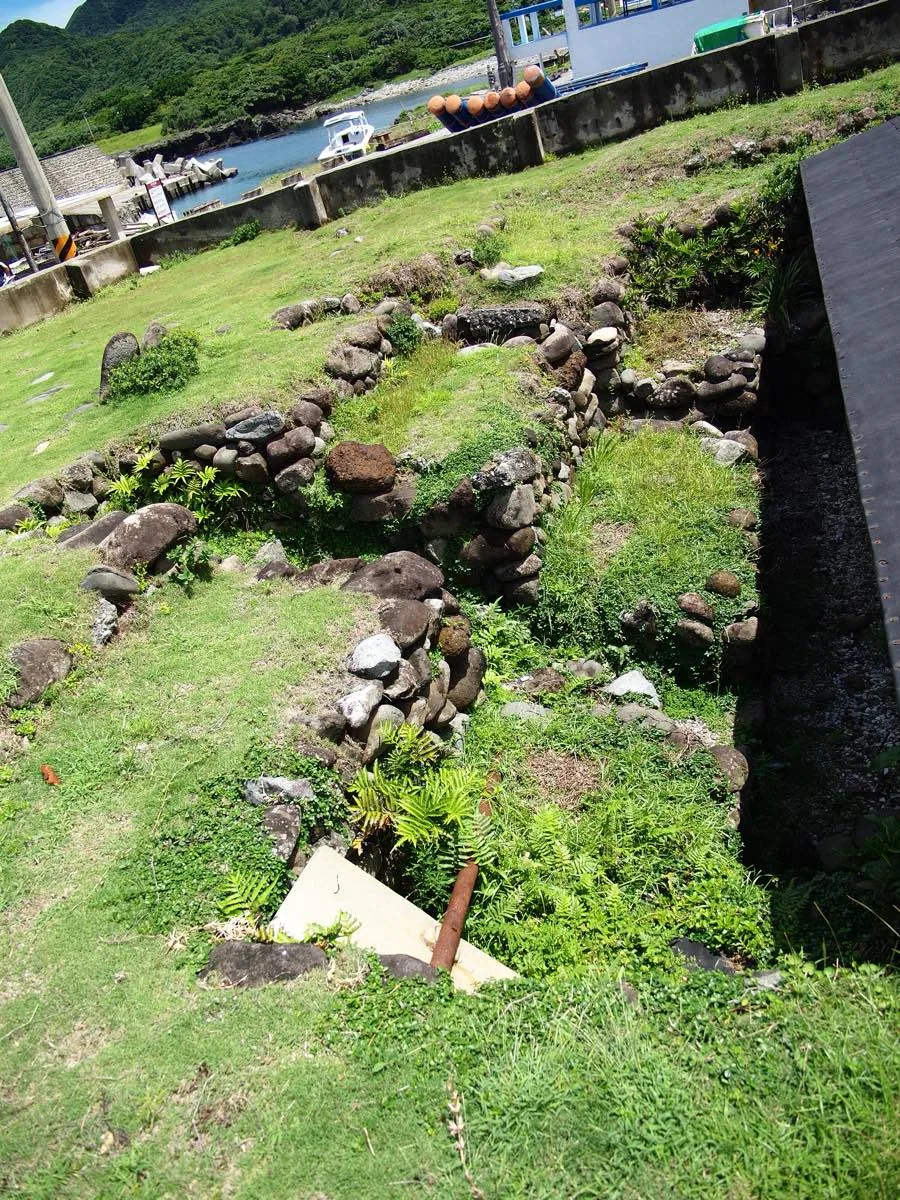
En 1974, el gobierno decidió ubicar un depósito de residuos nucleares de baja actividad en esta pequeña isla donde vive desde hace generaciones el pueblo Tao (también llamado Yami), sin informar a sus habitantes. Las obras empezaron en 1978 y el sitio entró en operación en 1982; públicamente se dijo que se estaba construyendo una “fábrica de conservas”42. Hasta hoy, el depósito almacena 97.672 barriles de residuos nucleares de baja actividad procedentes de las centrales Nº 1, Nº 2 y Nº 3; dejó de recibirlos en 1996, cuando alcanzó la saturación42.
La resistencia Tao se ha prolongado durante décadas: la acción de 1988 para “expulsar los malos espíritus” y la campaña de 1995 “una persona, una piedra para llenar el puerto”, con la que buscaban bloquear el muelle usado para transportar residuos42. El 1 de agosto de 2016, Tsai Ing-wen, en calidad de presidenta, pidió disculpas a los pueblos indígenas; los residuos nucleares de Isla de las Orquídeas fueron parte de esa lista43.
Pero lo que mejor explica el estado de ánimo de esa isla fue el rechazo de 2019.
En noviembre de ese año, el gobierno anunció un plan de compensación retroactiva: 2.550 millones de dólares taiwaneses en un pago único y luego 220 millones cada tres años44. El pueblo Tao lo rechazó. Lin Hsin-yu, anciano de Isla de las Orquídeas, lo dijo sin titubeos: “Mientras los residuos nucleares no sean retirados de Isla de las Orquídeas, esta muerte, este exterminio, continuará”. “Declaro solemnemente: no aceptaremos ni un centavo”44. Lo que querían no era dinero, sino que se llevaran los residuos; y el plazo de retirada prometido en la década de 1990, originalmente fijado para 2002, sigue incumplido hasta hoy42.
✦ La frase de Isla de las Orquídeas, “no aceptaremos ni un centavo”, es una de las voces que más debería escucharse en todo el debate nuclear, y una de las más omitidas. Nos recuerda que el costo de la electricidad nuclear nunca aparece solo en la factura. Mientras ambos lados del debate calculan “cuánto cuesta un kWh” o “cuántas toneladas de carbono se reducen”, hay un costo que un grupo sin asiento en la mesa de decisiones pagó silenciosamente durante cuarenta años con su tierra y su dignidad.
Aire para diez días, uranio para dieciocho meses
Además del clima, lo que hizo que el discurso pronuclear recuperara popularidad rápidamente en estos años fue una palabra más punzante: guerra.
En 2024, la dependencia de Taiwán de la energía importada llegó a 95,8%: casi toda la energía depende de importaciones45. Dentro de ese cuadro, las reservas legales de seguridad de gas natural rondan los 11 días y las de carbón unos 41 días, mientras una carga de combustible nuclear puede usarse durante alrededor de 18 meses46. Por eso el campo pronuclear plantea un argumento de “seguridad energética”: si el estrecho de Taiwán fuera bloqueado y los buques de gas natural no pudieran entrar, no habría mucho margen; en cambio, las barras de combustible dentro de una central nuclear ya alcanzan para un año y medio.
Fuente: Administración de Energía, Agencia Central de Noticias (argumento de seguridad energética del campo pronuclear)
Este argumento no surge de la nada. Un ejercicio de guerra realizado en agosto de 2025 por el Centro de Estudios Estratégicos e Internacionales (CSIS), un centro de estudios estadounidense, señaló que “la energía es el eslabón más frágil de la resiliencia de Taiwán”; estimó que, bajo un escenario de bloqueo, el gas natural alcanzaría para unos diez días y la electricidad caería a solo 20% del suministro, por lo que recomendó extender la vida de las centrales nucleares47. El ministro de Asuntos Económicos, Kuo Jyh-huei, también dijo en el Yuan Legislativo que la seguridad energética es “un asunto de seguridad nacional, no se puede hablar con demasiado detalle”48.
Pero el campo antinuclear tiene dos respuestas a la inferencia de que “la energía nuclear es más segura”.
La primera es la central nuclear de Zaporiyia, en Ucrania, que fue bombardeada en varias ocasiones durante la guerra y se convirtió en un ejemplo pedagógico para los antinucleares: en tiempos de guerra, una central nuclear puede pasar de ser una fortaleza a convertirse en una bomba que podría detonar en cualquier momento49. El segundo argumento es que la energía distribuida resiste mejor los ataques: concentrar la generación en unos pocos reactores grandes puede ser más fácil de paralizar de un solo golpe que una red dispersa de solar y eólica. Tseng Wen-sheng, exviceministro de la Administración de Energía, respondió a esta ansiedad desde otro ángulo: Taiwán tiene más cartas gestionables de lo que se imagina, y no necesita apostarlo todo a la energía nuclear48.
El mismo concepto de “seguridad energética” es leído por el campo pronuclear como “por eso necesitamos más energía nuclear” y por el antinuclear como “por eso la energía nuclear es más peligrosa”. Una vez más, una misma premisa produce dos conclusiones opuestas.
Ambos lados dicen estar del lado del futuro
Al alejar la cámara, se ve que el mundo entero está barajando de nuevo estas cartas, y cada lado taiwanés puede encontrar ejemplos internacionales que lo respalden.
Alemania completó su salida nuclear en abril de 2023: el campo antinuclear la usa para demostrar que “también los países avanzados pueden prescindir de la energía nuclear”, mientras el campo pronuclear cita la crítica del líder opositor Friedrich Merz, quien calificó la salida como un “enorme error”. Robert Habeck, político del Partido Verde que impulsó la salida nuclear, respondió que después del abandono nuclear los precios de la electricidad igualmente bajaron y las emisiones de carbono también disminuyeron50. Japón, tras el accidente de Fukushima, llegó a detener todos sus reactores; hoy ya reinició 15 unidades, y en 2024 la energía nuclear representó cerca de 8,3%, con el objetivo de llevarla a 20% en 2040. Corea del Sur, por su parte, revirtió durante el gobierno de Yoon Suk-yeol la línea de salida nuclear y planteó elevar la participación nuclear a 34,6% en 203651.
El caso citado con más frecuencia por ambos lados es Onkalo, en Finlandia: un depósito final de residuos nucleares de alta actividad excavado en granito de 1.900 millones de años, a 430 metros de profundidad. El campo pronuclear dice: “Miren, los residuos nucleares tienen solución”; el antinuclear responde: “Eso es el antiguo y estable suelo finlandés; Taiwán es una faja orogénica en movimiento diario, no se puede copiar”. Hay que añadir que Onkalo sigue en fase de revisión de licencia, aunque fuera de Finlandia suele creerse erróneamente que ya opera formalmente52.
📝 Nota curatorial
Al colocar estos casos internacionales juntos, aparece algo muy interesante: cada caso es al mismo tiempo prueba para ambos lados. La misma Alemania, la misma Finlandia, los mismos datos pueden ser usados por antinucleares y pronucleares para demostrar que tienen razón. Nadie está mintiendo: las dos partes de este debate, en realidad, responden dos preguntas distintas. El campo pronuclear pregunta: “En este momento de calentamiento y riesgo de interrupción energética, ¿qué opciones tenemos para suministrar electricidad estable y reducir carbono?”. El campo antinuclear pregunta: “¿Tenemos derecho a producir un residuo que debe custodiarse cien mil años cuando ni siquiera hemos encontrado un sitio para dentro de cincuenta?”. Una pregunta trata de la “seguridad energética del presente”; la otra, de la “responsabilidad generacional eterna”. Ambas son reales y ninguna debería aplastar a la otra. Que Taiwán no haya alcanzado consenso en cuarenta años no tiene que ver con que un lado sea más tonto o más malvado, sino con que cada lado teme un riesgo de naufragio distinto: unos temen el desastre nuclear y los residuos de diez milenios; otros temen la escasez eléctrica, la interrupción del gas y el calentamiento. Cuando lo que temes no es lo mismo, nunca aceptarás las prioridades del otro.
Por eso este debate probablemente no “terminará”.
Volverá una y otra vez en forma de referendos, reformas legales, solicitudes administrativas y protestas callejeras. Los 4,34 millones de votos afirmativos de 2025 que no lograron cruzar el umbral y la frase de Isla de las Orquídeas, “no aceptaremos ni un centavo”, permanecerán al mismo tiempo en la memoria de esta isla, sin que nadie logre convencer a nadie.
La próxima vez que alguien te pregunte si “Taiwán apoya o no la energía nuclear”, tal vez la respuesta más honesta sea: depende de a cuál Taiwán le preguntes. Al dueño de una empresa tecnológica que no puede dormir por miedo a la escasez eléctrica; a la generación antinuclear que recuerda Fukushima y Kungliao; a los jóvenes que no tienen memoria de desastres nucleares y solo temen que el planeta se caliente; o a la pequeña isla que custodió durante cuarenta años los residuos nucleares de todo el país sin que nadie le preguntara nunca si estaba dispuesta. Tras cuarenta años y tres referendos, el terreno casi no se movió. Porque esta pregunta nunca tuvo una respuesta estándar. Pregunta cómo una sociedad puede decidir junta algo cuyos tres relojes avanzan a velocidades completamente distintas: los residuos nucleares deben permanecer seguros cien mil años, la reducción de carbono debe completarse en una década y la escasez eléctrica existe ahora.
Y ambos lados dicen estar del lado del futuro.
Lecturas complementarias
- La crisis climática y la transición hacia cero emisiones netas en Taiwán — La otra cara del mismo tema energético: límites físicos, oferta y demanda eléctrica, y calendario de reducción de carbono, como artículo hermano de este texto
- Historia del movimiento ambiental en Taiwán — El antinuclearismo como parte del movimiento ambiental taiwanés de posguerra, desde la oposición de Lukang a DuPont hasta el contexto completo de Kungliao
- Justicia ambiental y controversias NIMBY en Taiwán — La estructura NIMBY detrás de los residuos nucleares e Isla de las Orquídeas: por qué el riesgo cae siempre sobre los lugares con menos voz
- Movimientos sociales y participación ciudadana — Cómo el antinuclearismo compartió con el movimiento democrático taiwanés el mismo lenguaje y la misma energía
- Movimiento Estudiantil Girasol — Otra movilización cívica de una misma generación, útil para entender el clima de época de los años del ayuno de Lin Yi-hsiung
Datos abiertos
Los siguientes datos gubernamentales abiertos te permiten verificar, o refutar, los argumentos de este artículo. Los enlaces apuntan a data.gov.tw o a sistemas de consulta de las autoridades competentes; quienes trabajan con IA también pueden consultar los mismos conjuntos de datos mediante la pasarela taiwanesa de datos abiertos MCP Twinkle Hub.
- Desempeño de generación nuclear y beneficios de reducción de carbono de Taipower en los últimos 10 años (Taipower, actualización anual) — La curva de este artículo, desde el pico de participación nuclear hasta llegar a cero y luego ser empujada hacia el reinicio, puede redibujarse con las columnas de generación anual y factor de capacidad de esta tabla
- Ubicación y equipos de las centrales nucleares de Taipower (Taipower, actualización irregular) — Datos originales sobre especificaciones y ubicación de cada unidad de las centrales Nº 1 a Nº 3, para contrastar con la cronología de desmantelamiento y las controversias sobre fallas mencionadas en el texto
- Pautas de compensación del Fondo de Operación de Etapa Final de Generación Nuclear para almacenamiento de residuos radiactivos y antes de completar el desmantelamiento de centrales nucleares (Taipower, actualización irregular) — El texto original de las reglas de compensación del fondo de etapa final de 60.000 millones de dólares taiwaneses que el Yuan de Control cuestionó como dinero que, “una vez gastado, se acaba”
Fuentes de imágenes
- Hero / protesta antinuclear de 2013 alrededor del Yuan Legislativo: Anti-nuclear protest, Legislative Yuan (VOA), producido y proporcionado por Voice of America, Public Domain. (El nombre del archivo de Wikimedia sigue el nombre dado por quien lo subió; el contenido real muestra una marcha antinuclear de abril de 2013.)
- Central nuclear Nº 4 (Longmen): 2023 Longmen Nuclear Power Plant, fotografía de Taiwankengo, CC BY-SA 4.0.
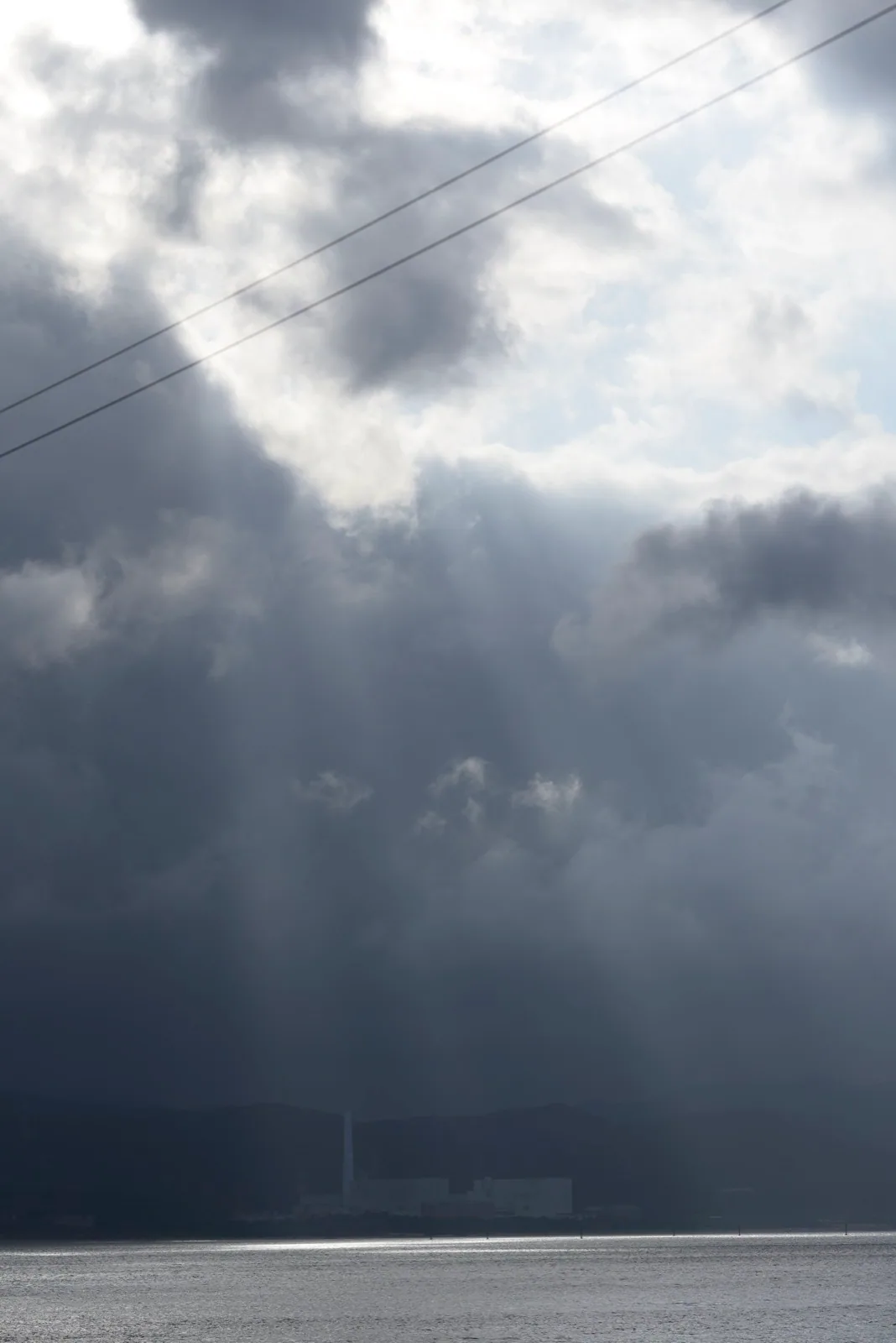
- Central nuclear Nº 3 (Maanshan), Nanwan: Maanshan Nuclear Power Plant, Nanwan, fotografía de M. Weitzel, CC BY-SA 3.0.
- Casa subterránea tradicional Tao en Isla de las Orquídeas: Entrance of a traditional underground house of Tao people on Orchid Island, fotografía de othree, CC BY 2.0. La imagen muestra una aldea de casas subterráneas Tao y se usa para presentar el contexto de justicia ambiental de Isla de las Orquídeas; no es el depósito de residuos nucleares de baja actividad.
Referencias
- Agencia Central de Noticias: resultados del referendo sobre la extensión de la central nuclear Nº 3 — Reporte de escrutinio de la CNA del 23 de agosto de 2025, que registra 4.341.432 votos a favor, 1.511.693 en contra, participación de 29,53% y no aprobación por no alcanzar el umbral de una cuarta parte del electorado favorable, fijado en 5.000.523 votos.↩23
- Wikipedia: referendo sobre la extensión de la central nuclear Nº 3 — Recoge el conteo completo de la propuesta de referendo Nº 21 de 2025, el porcentaje favorable de 74,17% y el cálculo del umbral, en concordancia con los resultados certificados por la Comisión Electoral Central.↩
- Agencia Central de Noticias: Huang Kuo-chang habla sobre el resultado del referendo de la central nuclear Nº 3 — Reporte de la CNA del 23 de agosto de 2025 que registra la declaración de Huang Kuo-chang, presidente del Partido Popular de Taiwán y proponente del referendo, según la cual “los votos favorables de este referendo fueron tres veces los votos contrarios”.↩
- The Reporter: resultados y secuelas del referendo sobre la extensión de la central nuclear Nº 3 — Reportaje en profundidad de The Reporter de 2025, que recoge el comentario textual de Tsui Su-hsin, secretaria general de la Plataforma Nacional de Acción para la Abolición Nuclear, sobre el resultado: “los votos favorables superaron a los contrarios, pero no se aprobó y no tiene efecto legal”, además de la postura del campo antinuclear sobre el procedimiento y los pasos posteriores.↩
- Centro de Información Ambiental: campaña cultural “Soy humano, soy antinuclear” — Reporte del Centro de Información Ambiental de enero de 2013 que documenta el origen de la campaña de firmas “Soy humano, soy antinuclear” impulsada por el mundo artístico y cultural, así como del emblema amarillo con caracteres rojos.↩
- PTS Nuestro Mundo: gran marcha antinuclear del 9 de marzo — Registro de PTS sobre la marcha antinuclear nacional del 9 de marzo de 2013, con la estimación de los organizadores de unas 220.000 personas participantes en el norte, centro, sur y este de Taiwán.↩
- Patrimonio cultural de Changhua: incidente antiduPont de Lukang — Registra el proceso del movimiento contra la contaminación iniciado en 1986 por residentes de Lukang, entre ellos Lee Tung-liang, bajo el lema “Amo Lukang, no quiero DuPont”; fue un punto de partida importante del movimiento ambiental taiwanés de posguerra.↩
- Mapa de conocimientos químicos del Ministerio de Ambiente: creación de la Administración de Protección Ambiental — Material oficial del Ministerio de Ambiente que registra el contexto histórico de la creación de la Administración de Protección Ambiental del Yuan Ejecutivo el 22 de agosto de 1987.↩
- Wikipedia: incidente de Kungliao 1003 — Recoge la fundación en 1988 de la Asociación de Autoayuda Antinuclear de Yenliao y el desarrollo de los hechos del 3 de octubre de 1991, cuando el policía antidisturbios Yang Chao-ching murió atropellado durante las protestas contra la central nuclear Nº 4.↩2
- Consejo de Seguridad Nuclear: cronología histórica de la central nuclear de Longmen — Cronología oficial en PDF del Consejo de Seguridad Nuclear que registra, punto por punto, los hitos de la central nuclear Nº 4 (Longmen), desde la propuesta de 1980, el inicio de obras en 1999, el sellado de 2014 y la caducidad del permiso de construcción en 2020; es una fuente primaria.↩2
- Liberty Times: referendo local de Kungliao de hace 27 años — Reportaje de Liberty Times que registra el referendo local de Kungliao de mayo de 1994, en el que 96,13% de votantes se opuso a la central nuclear Nº 4, aunque sin efecto legal porque la Ley de Referendos aún no había sido aprobada.↩
- Cambridge — The Politics of Anti-Nuclear Protest in Taiwan — Artículo académico del sociólogo Ho Ming-sho publicado en Modern Asian Studies, que argumenta que el surgimiento de las voces antinucleares en Taiwán estuvo estrechamente relacionado con la apertura democrática.↩
- Wikipedia: ayuno de Lin Yi-hsiung contra la central nuclear Nº 4 — Recoge la cronología completa: inicio del ayuno de Lin Yi-hsiung en la Iglesia Gikong el 22 de abril de 2014, consenso entre gobierno y oposición el 27 de abril, anuncio del Yuan Ejecutivo del sellado de la central Nº 4 el 28 de abril y fin del ayuno el 30 de abril.↩2
- Wikipedia: caso de la familia Lin — Registra el hecho histórico del 28 de febrero de 1980, cuando la madre de Lin Yi-hsiung y sus hijas gemelas fueron asesinadas en su vivienda de Taipéi, luego convertida en la Iglesia Gikong; el caso sigue sin resolverse.↩
- Comisión Electoral Central: resultados del referendo Nº 16 de 2018 (PDF) — Documento oficial certificado de la Comisión Electoral Central que registra la aprobación del referendo “usar lo nuclear para alimentar lo verde” con 5.895.560 votos a favor, 4.014.215 en contra y participación de 54,83%.↩
- Comisión Electoral Central: resultados del referendo Nº 17 de 2021 (PDF) — Documento oficial certificado de la Comisión Electoral Central que registra el referendo sobre operación comercial de la central nuclear Nº 4: 3.804.689 votos a favor, 4.262.517 en contra, participación de 41,09%, umbral de 4.956.367 votos y no aprobación.↩
- Centro de Verificación de Datos de Taiwán: si la patria sin energía nuclear perdió vigencia — Informe de verificación que aclara que la propuesta Nº 16 de 2018 solo derogó el calendario no nuclear de 2025 en la Ley de Electricidad; el objetivo de patria sin energía nuclear del artículo 23 de la Ley Básica Ambiental siguió vigente, por lo que la afirmación “la patria sin energía nuclear ya perdió vigencia” es información falsa.↩2
- Agencia Central de Noticias: parada del reactor Nº 2 de la central nuclear Nº 3 — Reporte de la CNA de mayo de 2025 que registra que el reactor Nº 2 de la central nuclear Nº 3 redujo carga el 17 de mayo, se desconectó de la red por la noche y se detuvo en la madrugada del 18 de mayo, dejando por primera vez a la red eléctrica taiwanesa sin energía nuclear.↩
- Global Views Monthly: Taiwán avanza hacia la patria sin energía nuclear — El marco del reportaje de Global Views describe a Taiwán como “primera en Asia y segunda en el mundo” patria sin energía nuclear; este texto señala que se trata de una formulación mediática, pues Italia ya había detenido toda su energía nuclear interna en 1990.↩
- Agencia Central de Noticias: tercera lectura de la Ley de Regulación Nuclear — Reporte de la CNA del 13 de mayo de 2025 que registra la aprobación en tercera lectura, por 61 votos a favor y 50 en contra, de la enmienda al artículo 6 de la Ley de Regulación de Instalaciones de Reactores Nucleares, que permite solicitar una extensión tras el vencimiento de la licencia por un máximo de 40+20 años.↩
- Centro de Información Ambiental: evaluación del Ministerio de Asuntos Económicos sobre reinicio nuclear — Reporte del Centro de Información Ambiental que registra los resultados aprobados por el Ministerio de Asuntos Económicos el 27 de noviembre de 2025: la central Nº 1 no es viable, mientras las Nº 2 y Nº 3 tienen viabilidad de reinicio, sujeta a autoinspecciones de seguridad de 1,5 a 2 años.↩
- Agencia Central de Noticias: centrales nucleares Nº 2 y Nº 3 cumplen condiciones de reinicio — Reporte de la CNA de marzo de 2026 que registra el anuncio del gobierno de Lai Ching-te de que las centrales Nº 2 y Nº 3 cumplen las condiciones para reiniciar, que Taipower presentó la solicitud al Consejo de Seguridad Nuclear y que la central Nº 3 podría reiniciar como pronto en 2028.↩
- Threads de Lai Ching-te: tres principios sobre energía nuclear — Publicación personal del presidente Lai Ching-te en Threads, fuente primaria, donde plantea las tres condiciones de “seguridad nuclear sin dudas, solución para los residuos nucleares y consenso social”, y subraya que “ninguna puede faltar”.↩
- Agencia Central de Noticias: Lai Ching-te declara el 13/8 que votará en contra — Reporte de la CNA del 13 de agosto de 2025 que registra la declaración pública de Lai Ching-te: “Iré a votar en el referendo del 23 de agosto; votemos juntos en contra”, así como dos condiciones necesarias.↩
- Agencia Central de Noticias: Eric Chu habla sobre política energética — Reporte de la CNA de agosto de 2025 que registra la postura del presidente del Kuomintang, Eric Chu, sobre “reconstruir la seguridad y resiliencia energética” y “ajustar de forma pragmática una política energética equivocada”.↩
- Business Today: Cho Jung-tai habla sobre electricidad y poder de cómputo — Reporte de Business Today de febrero de 2026 que registra el argumento del primer ministro Cho Jung-tai: “la electricidad es poder de cómputo; el poder de cómputo es poder nacional”; su frase “el antinuclearismo no es una tablilla sagrada” aparece en Newtalk, reporte del 24 de marzo de 2026.↩
- Business Today: Tung Tzu-hsien habla sobre energía nuclear y salvar el planeta — Reporte de Business Today de marzo de 2025 que recoge la declaración textual del presidente de Pegatron, Tung Tzu-hsien: “No solo Taiwán, sino el mundo entero: si no dependes de la energía nuclear y quieres depender de la solar más la eólica para salvar el planeta, no hay esperanza”.↩
- United Daily News: Tung Tzu-hsien dice que RE100 es como castillos en el aire y podría ser reemplazado por CFE — Reporte de UDN de agosto de 2024 que recoge la crítica de Tung Tzu-hsien a RE100 como “demasiado idealista, como castillos en el aire”, y su argumento de que CFE, energía libre de carbono que incluye nuclear y SMR, puede alcanzar mejor la neutralidad de carbono; su afirmación de que la electricidad nuclear cuesta aproximadamente 1,42 dólares taiwaneses por kWh aparece también en reporte de la CNA sobre la audiencia pública legislativa.↩
- ETtoday: Huang Shih-hsiu habla sobre costos nucleares — Reporte de ETtoday de agosto de 2025 que registra la afirmación de Huang Shih-hsiu, fundador de Nuclear Mythbusters, según la cual “la electricidad nuclear cuesta 1,5 dólares por kWh y las renovables 5,5”, así como su retórica intensa de que “ser antinuclear es ser antiestadounidense, vender Taiwán y lamerle las botas al Partido Comunista Chino”.↩2
- Newtalk: Yeh Tsung-kuang habla sobre la falla de Hengchun y la zona de cizalla — Reporte de Newtalk, republicado, que registra el argumento técnico pronuclear de Yeh Tsung-kuang, de la Universidad Nacional Tsing Hua: la falla de Hengchun cercana al predio y la “zona de cizalla de falla” bajo el predio son distintas y el público suele confundirlas.↩2
- IEEE Spectrum: central nuclear de Maanshan en Taiwán y posición del sector industrial — Reporte de IEEE Spectrum que recoge la declaración pública del CEO de Nvidia, Jensen Huang, según la cual Taiwán debería invertir en energía nuclear y esta “is an excellent option”; su postura en Taipéi la víspera del referendo, el 22 de agosto de 2025, también aparece en reporte de Bloomberg.↩
- Global Views Monthly: encuesta energética y apoyo nuclear entre personas de 18 a 29 años — Encuesta de octubre de 2024 de Global Views y la Fundación de Taiwán para la Energía Sostenible, que registra un apoyo nuclear general de 63,1%, 70,8% entre personas de 18 a 29 años, 50,2% entre mayores de 70, y entre simpatizantes del Partido Democrático Progresista 45,2% antinuclear y 44,3% pronuclear.↩2
- Centro de Verificación de Datos de Taiwán: referendo de la central nuclear Nº 3 y puntos clave sobre la falla de Hengchun — El Centro de Verificación resume los puntos clave del referendo sobre la extensión de la central Nº 3 y recoge declaraciones textuales del geólogo Chen Wen-shan: “la falla de Hengchun pasa por la entrada de la central nuclear Nº 3, a unos 900 metros del reactor” y “es un hecho establecido que la falla está dentro del predio”.↩
- The Reporter: siete puntos clave del referendo sobre el reinicio de la central nuclear Nº 3 — Reportaje en profundidad previo al referendo de The Reporter que recoge el argumento antinuclear de Kan Chung-wei, del Partido Verde: “el edificio de la turbina de vapor y generador del reactor Nº 1 de la central nuclear Nº 3 está construido directamente sobre la zona de cizalla de la falla de Hengchun”.↩
- Centro de Información Ambiental: resistencia sísmica y evaluación de fallas en la central nuclear Nº 3 — Reporte del Centro de Información Ambiental que recoge las dudas del geólogo Lee Hsi-ti sobre la aceleración del suelo para parada segura de la central Nº 3, “hasta 1,384G, más de tres veces el valor de diseño”.↩
- Fundación Ciudadanos de la Tierra: situación actual de los residuos nucleares en Taiwán — Página oficial de una organización antinuclear que registra los datos actuales: Taiwán ha producido más de 19.000 conjuntos de residuos nucleares de alta actividad y 210.000 barriles de baja actividad, pero no cuenta con ningún depósito legal.↩
- Consejo de Seguridad Nuclear: tabla de almacenamiento de combustible nuclear usado en centrales nucleares — Estadística oficial del Consejo de Seguridad Nuclear, fuente primaria, que registra al 18 de mayo de 2026 un total de 21.527 conjuntos de combustible nuclear usado en las tres centrales nucleares.↩
- The Reporter: siete puntos clave del referendo sobre el reinicio de la central nuclear Nº 3 — Reportaje en profundidad previo al referendo de The Reporter que recoge el comentario textual del exministro sin cartera Lin Tze-luen: “usar energía nuclear es transferir a la próxima generación los costos, riesgos y responsabilidades del tratamiento de los residuos nucleares”.↩
- Yuan de Control: investigación sobre la disposición final de residuos nucleares de alta actividad — Informe de investigación del Yuan de Control, fuente primaria, que señala que en la isla principal de Taiwán básicamente no puede encontrarse un depósito final para residuos de alta actividad, y advierte que “una cavidad de almacenamiento enterrada a 500 metros de profundidad quedaría expuesta en la superficie después de 50.000 años” debido a que Taiwán está en una faja orogénica activa con desplazamientos corticales anuales superiores a un centímetro.↩
- Yuan de Control: dudas sobre el fondo de etapa final y el depósito para residuos nucleares de alta actividad — Comunicado de prensa de la Comisión de Finanzas y Economía del Yuan de Control, fuente primaria, que recoge las preguntas de la contralora Tien Chiu-chin: “¿De verdad se encontrará un sitio de disposición final después de gastar 60.000 millones de dólares taiwaneses?” y “el fondo de etapa final es el dinero del ataúd de las centrales nucleares; una vez gastado, se acaba”.↩
- Consejo de Seguridad Nuclear: disposición final de residuos radiactivos de alta actividad — Preguntas y respuestas oficiales del Consejo de Seguridad Nuclear, fuente primaria, que registran que el plan de disposición final de residuos nucleares de alta actividad se divide en cinco etapas, prevé completarse entre 2005 y 2055 y tiene un presupuesto total de unos 60.000 millones de dólares taiwaneses.↩
- Wikipedia: depósito de Isla de las Orquídeas — Recoge la trayectoria completa del depósito de residuos nucleares de baja actividad de Isla de las Orquídeas: decisión de 1974 sin informar al pueblo Tao, entrada en operación en 1982, almacenamiento de 97.672 barriles de residuos de baja actividad, saturación en 1996, protestas Tao durante años e incumplimiento de la promesa de retirada.↩234
- Oficina Presidencial: la presidenta pide disculpas a los pueblos indígenas — El 1 de agosto de 2016, la presidenta Tsai Ing-wen pidió disculpas a los pueblos indígenas como jefa de Estado; la disposición de residuos nucleares en Isla de las Orquídeas fue una de las injusticias históricas mencionadas.↩
- Centro de Información Ambiental: el pueblo Tao rechaza compensación de 2.550 millones — Reporte del Centro de Información Ambiental de 2019 que registra el plan gubernamental de compensación retroactiva de 2.550 millones de dólares taiwaneses más 220 millones cada tres años, el rechazo del pueblo Tao y la declaración del anciano Lin Hsin-yu: “no aceptaremos ni un centavo”; lo que exigían era retirada, no compensación.↩2
- Administración de Energía del Ministerio de Asuntos Económicos: panorama del suministro energético — Estadísticas oficiales de la Administración de Energía que registran que la dependencia de Taiwán de la energía importada en 2024 fue de aproximadamente 95,8% (en años anteriores, según la métrica de energía primaria, alrededor de 97-98%).↩
- Agencia Central de Noticias: reservas de seguridad de gas natural y riesgo de bloqueo — Reporte de la CNA de octubre de 2024 que registra reservas legales de seguridad de gas natural de unos 11 días, de carbón de unos 41 días, una carga de combustible nuclear de unos 18 meses, y explicaciones del Ministerio de Asuntos Económicos sobre seguridad energética.↩
- CSIS — Lights Out: Wargaming a Blockade of Taiwan — Informe de ejercicio de guerra del Centro de Estudios Estratégicos e Internacionales de Estados Unidos, que señala la energía como el eslabón más frágil de la resiliencia taiwanesa; en un escenario de bloqueo, estima que el gas natural aguantaría unos diez días y la electricidad caería a 20%, y recomienda extender la vida de las centrales nucleares.↩
- Agencia Central de Noticias: Kuo Jyh-huei habla sobre seguridad energética — Reporte de la CNA que recoge la afirmación del ministro de Asuntos Económicos Kuo Jyh-huei de que se trata de “un asunto de seguridad nacional que no se puede explicar con demasiado detalle”, además de discusiones relacionadas con la gestión energética.↩2
- Greenpeace: energía distribuida y riesgos de seguridad nuclear en tiempos de guerra — Material de Greenpeace Taiwán que presenta el argumento antinuclear basado en los bombardeos a la central nuclear de Zaporiyia, en Ucrania, y sostiene que las centrales nucleares tienen alto riesgo en guerra y que las renovables distribuidas son más resilientes.↩
- Clean Energy Wire — Germany's nuclear exit one year after — Preguntas y respuestas del sitio alemán de información energética que registran que, tras completar la salida nuclear en abril de 2023, Alemania vio caer precios eléctricos y emisiones de carbono, además de recoger las posiciones enfrentadas, incluida la crítica del líder opositor Friedrich Merz, quien calificó la salida como un “enorme error”.↩
- NEI Magazine — South Korea to increase nuclear share to over 34% by 2036 — Reporte de Nuclear Engineering International que registra la reversión de la política de salida nuclear del gobierno de Yoon Suk-yeol en Corea del Sur y el objetivo de elevar la participación nuclear a 34,6% en 2036; puede contrastarse con el reinicio de 15 unidades en Japón y su objetivo de 20% para 2040.↩
- American Nuclear Society — Finland's Onkalo licensing — Reporte de la American Nuclear Society que registra que el depósito final finlandés Onkalo para residuos nucleares de alta actividad, a 430 metros de profundidad en granito de 1.900 millones de años, sigue en fase de revisión de licencia, aunque fuera de Finlandia a menudo se cree erróneamente que ya opera formalmente.↩