30-Second Overview: On August 23, 2025, Taiwan held a referendum asking "whether to restart Nuclear Plant No. 3." 4.34 million people voted in favor, with 74% support, but because the voter turnout was only 29.53%, failing to meet the threshold of 5 million votes, it was considered a loss. This was Taiwan's third nuclear referendum in forty years—the 2018 "Nuclear Power for Green" passed, the 2021 Nuclear Plant No. 4 commercial operation was rejected, and the 2025 Nuclear Plant No. 3 extension hit the threshold wall—yet the ground barely moved in line with the votes. More paradoxically, the reactor that was just shut down three months prior is being pushed toward restart by a government that has written "Nuclear-Free Homeland" into its party platform and whose president publicly cast a "no" vote. Anti-nuclear was once the common language of Taiwan's democratic movement; after the climate crisis arrived, every side in this debate has been reshuffled, and Taiwan remains without consensus.
On the evening of August 23, 2025, the Central Election Commission's vote count froze: the Nuclear Plant No. 3 extension referendum had 4,341,432 votes in favor and 1,511,693 votes against1. The number of "yes" votes was nearly three times that of "no" votes, with 74.17% of people saying "yes"2.
By the common intuition of democracy, the outcome of this debate should have been clear. But it lost.
Because the Referendum Act stipulates that the number of "yes" votes must exceed one-quarter of all eligible voters nationwide, the threshold for this vote was 5,000,523 votes; the voter turnout that day was only 29.53%, and the "yes" votes did not even touch the threshold1. Huang Kuo-chang, the proposer of the referendum and chairman of the People First Party, said after the vote count that the "yes" votes in this referendum "far exceeded the 'no' votes by nearly three times"3. Cui Suxin, spokesperson for the National Action Platform for Abolishing Nuclear Energy, pointed out: "Even though the 'yes' votes are higher than the 'no' votes, the final referendum result did not pass and has no legal effect."4 These two sentences describe the same set of numbers but lead to opposite conclusions.
Won the debate, lost the system. This paradox of the summer of 2025 is the entry point to understanding the entire Taiwan nuclear energy debate: on the surface, it asks "whether nuclear energy is good," but underneath, it argues about something else.

The Yellow Flag That Shouted "I Am Human, I Am Anti-Nuclear"
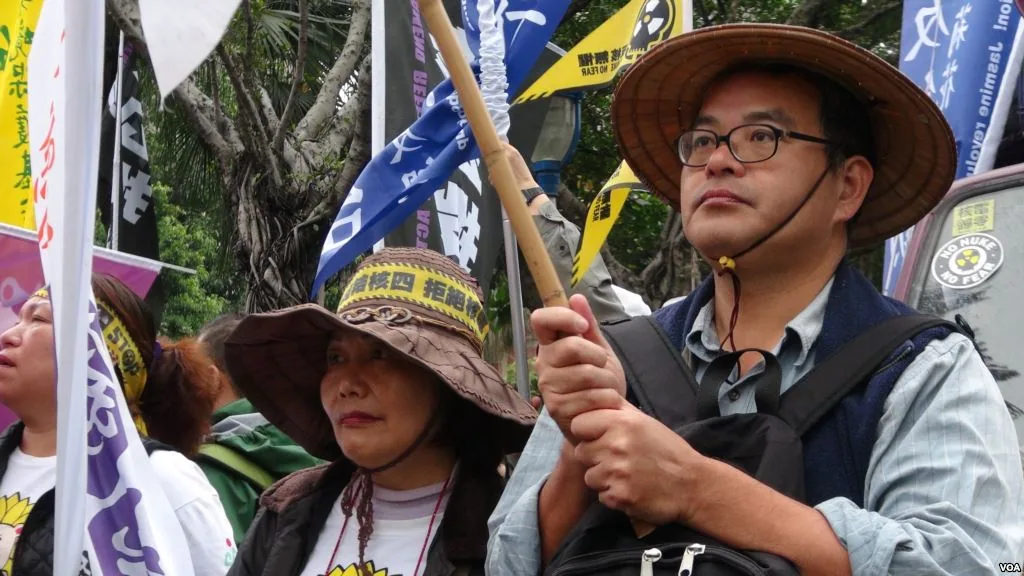
To understand why this debate is so difficult, we must go back to when it was not originally an "energy debate." In January 2013, a group of artists and cultural figures initiated a petition and designed a yellow flag with red text that read "I Am Human, I Am Anti-Nuclear"5. On March 9 of that year, approximately 220,000 people across Taiwan took to the streets—120,000 in Taipei, 30,000 in Taichung, 70,000 in Tainan, and 2,000–3,000 in Taitung—making it the largest march in the history of Taiwan's anti-nuclear movement6. This yellow flag was planted at the doors of bookstores, hung in the windows of cafes, and stuck on young people's backpacks, becoming a visual birthmark for a generation.
But the roots of this flag go much deeper than 2013, and it had nothing to do with nuclear energy at first. In 1986, residents of Lugang heard that the American company DuPont was coming to set up a titanium dioxide plant. Local teacher Li Dongliang initiated a petition and marched on the streets, shouting "I Love Lugang, Not DuPont"7. The following March, DuPont announced the cancellation of the plant; in August of the same year, the Environmental Protection Bureau was established8. The Lugang anti-DuPont movement was an anti-pollution movement, not inherently anti-nuclear—but it was the seed of Taiwan's post-war street environmental movement. That same energy quickly flowed toward another target: Nuclear Plant No. 4.
In 1988, residents of Gongliao established the Yanliao Anti-Nuclear Self-Help Association9. This plant, later named "Longmen," has been in the proposal stage for site selection in Yanliao since 1980; after thirty-plus years of construction, it has generated zero commercial electricity10. The most tragic page in between was the "Gongliao 1003 Incident" of 1991: during the protest, a resident drove a car and killed security police officer Yang Chaojing, causing the movement to hit a low point9. In 1994, Gongliao held a local referendum, with 96.13% of voters opposing Nuclear Plant No. 4—although the Referendum Act had not yet been passed at the time, this vote had no legal effect11.
📝 Curator's Note
The common narrative is "anti-nuclear is a progressive value, so the progressive camp is anti-nuclear." But this causality is actually reversed. Taiwan's anti-nuclear movement is special because it grew in the crack where the authoritarian regime was loosening. Sociologist Ho Ming-hsiu writes directly in his research at Cambridge University: "The rise of anti-nuclear voices is closely related to democratic opening."12 In other words, in the 1980s and 90s, Taiwanese people took to the streets to oppose nuclear energy, truly clashing with an authoritarian government that did not allow people to speak; Nuclear Plant No. 4 was just one of the few concrete targets that could unite people in that era. Anti-nuclear thus inherited all the legitimacy of the democratic movement. This also laid the groundwork for thirty years later: when nuclear energy became a "climate issue," this moral framework, bound up with democracy, could no longer handle the new questions.
Pushing this origin to its highest point was one person's body.
On the morning of April 22, 2014, former DPP Chairman Lin Yi-hsiung entered the Yiguang Church in Taipei and began an indefinite fast, demanding the halt of Nuclear Plant No. 4 construction13. The location of Yiguang Church itself is a wound—on February 28, 1980, Lin Yi-hsiung's mother and a pair of twin daughters were stabbed to death in the old house here, an event known as the "Lin Family Tragedy," which remains unsolved to this day14. Lin Yi-hsiung is a victim of the Formosa Incident outside the DPP, one of the first democratically elected DPP chairmen; his fast connected the anti-nuclear movement with the bloodline of Taiwan's democratic movement into one single thread.
Nine days later, this fast ended. On April 27, the ruling Ma Ying-jeou government and the Kuomintang reached a consensus: Nuclear Plant No. 4 Unit 1 would be sealed after inspection, and Unit 2 would be halted; on April 28, the Executive Yuan officially announced the sealing; on April 30, Lin Yi-hsiung stopped fasting13.
It is worth remembering: the government that pressed the pause button on Nuclear Plant No. 4 was not the anti-nuclear DPP, but the ruling Kuomintang government. This detail foreshadows the most chaotic part of the subsequent debate—every side's stance is not as stable as you think.
Seven Years, Three Votes, The Ground Barely Moved
The year after Lin Yi-hsiung's fast, the Fukushima nuclear disaster in 2011 had already flipped global nuclear politics10. Taiwanese society also learned, in these years, to use a new tool to handle this question: referendums.
But the answers this tool gave were different three times.
On November 24, 2018, the "Nuclear Power for Green" referendum (Case No. 16) passed. It sought to abolish the statutory deadline in the Electric Power Industry Act stating that "nuclear power generation facilities should cease operation before 2025"—5,895,560 votes in favor, with a voter turnout of 54.83%15. On the surface, this was a major victory for pro-nuclear forces.
On December 18, 2021, the "Nuclear Plant No. 4 Commercial Operation" referendum (Case No. 17) was rejected. 3,804,689 votes in favor, 4,262,517 against, with a voter turnout of 41.09%, failing to meet the threshold16. Nuclear Plant No. 4, which had been built for thirty years without generating a single kilowatt-hour of electricity, was formally sentenced to death by the people.
On August 23, 2025, it was the opening one: the Nuclear Plant No. 3 extension referendum (Case No. 21), with 74% in favor but hitting the threshold wall1.
Three votes in seven years, with "yes" proportions dropping from 59% to 47% and then bouncing back to 74%, yet the results were Pass, Reject, Hit Threshold—like three dice, each time showing different numbers. Direct democracy can handle an arithmetic problem like "how much should electricity prices rise," but it cannot handle a difficult problem where scientific judgment and value sorting are intertwined.
Even more difficult is the paradox left by "Nuclear Power for Green." The vote in 2018 clearly abolished the legal text of the 2025 nuclear-free deadline, but the subsequent DPP government chose to voluntarily not extend the service life, and Taiwan continued to move step by step toward nuclear-free by 202517. Therefore, the saying "the Nuclear-Free Homeland has already become invalid" circulated on the internet, which Fact-Checking Center Taiwan determined to be misinformation: what was abolished was only the timeline in the Electric Power Industry Act; the "Nuclear-Free Homeland" goal revealed in Article 23 of the Basic Environmental Act remains effective17. The law was torn in half, but the policy did not loosen its grip—this is the most typical shape of Taiwan's nuclear energy discussion: every "win" comes with an unresolved tail.
A Government That Shut Down a Reactor and Then Pushed to Restart It
In May 2025, Taiwan's power grid experienced a historic moment.
On the evening of May 17, Nuclear Plant No. 3 Unit 2 in Hengchun, Pingtung began to reduce load, disconnected at night, and officially shut down on the early morning of May 1818. This was the first time Taiwan's power grid had completely no nuclear power. Some media described Taiwan as becoming the "Asia's First, World's Second" nuclear-free homeland—but this claim needs caution, as Italy had already stopped domestic nuclear power as early as 199019.
According to the "Nuclear-Free Homeland" script, the story should have ended here. But what happened in the following months tore up the script.
Just four days before the shutdown, on May 13, 2025, the Legislative Yuan passed the third reading of the Amendment to Article 6 of the Nuclear Reactor Facility Control Act, with 61 votes in favor and 50 against, adding a clause that "licenses can be applied for extension after expiration," with the operating life extended to a maximum of 40 plus 20, totaling 60 years20. Nuclear Plant No. 3 Unit 2's license exactly expired on May 17—the amendment was passed four days before expiration.
By November 27, the Ministry of Economic Affairs determined the evaluation results: Nuclear Plant No. 1 is infeasible due to equipment demolition and being the same type as Fukushima; Nuclear Plants No. 2 and No. 3 have restart feasibility, requiring 1.5 to 2 years of self-inspection21. In March 2026, the Lai Ching-te government announced that Nuclear Plants No. 2 and No. 3 meet the restart conditions, and Taipower submitted the application to the Nuclear and Fusion Energy Commission; Nuclear Plant No. 3 may restart as early as 202822.
Thus appeared this scene: a government that wrote "Nuclear-Free Homeland" into its party platform, personally shut down the last reactor on the island, and then three months later personally pushed it toward restart.
In the middle stands Lai Ching-te, who offered a stance called "pragmatic." He proposed three principles: "Nuclear safety without worry, nuclear waste with a solution, social consensus," and emphasized "these three principles are indispensable," plus two musts—the Nuclear and Fusion Energy Commission must formulate measures, and Taipower must complete self-inspection23. But on August 13, 2025, ten days before the referendum, he publicly stated: "For the 8/23 referendum, I will go vote, let us together cast a 'no' vote."24
⚠️ Controversial Viewpoint
How to read a government publicly opposing a referendum on "restarting a power plant it manages" depends on which side you stand on.
Pro-nuclear forces see contradiction and buck-passing: If you are sending the application for restart, why are you asking people to vote "no"? Kuomintang Chairman Chu Hsiu-luen advocates that the government should "rebuild energy security and resilience" and "pragmatically adjust erroneous energy policies"25.
The Lai Ching-te government's explanation is about procedure and authorization: The referendum case was proposed by the opposition parties and is bound to "immediate continuation," which is a different path from the government's主张 of "Nuclear and Fusion Energy Commission把关, Taipower self-inspection before discussion"; voting "no" is opposing "skipping safety procedures to restart immediately," not opposing nuclear energy itself. Premier Chao Rong-tai explained this pragmatism more plainly: "Electricity is computing power, computing power is national power," "Anti-nuclear is not a sacred tablet"26.
Both readings hold up, depending on whether you focus on the "outcome (whether to have nuclear power)" or the "procedure (how to decide)." This is the epitome of why Taiwan's nuclear energy discussion is unsolvable—even the same action of the same government can be honestly read as two opposite things.
The Loudest Pro-Nuclear Banner-Bearer Is a Laptop Boss
If the anti-nuclear movement of the martial law era was a moral movement, then the most surprising aspect of the recent resurgence of pro-nuclear voices is its highest-decibel spokesperson: standing on the front line, carrying the heaviest weight, is a laptop manufacturer.
Tong Tzu-hsien, Chairman of Hon Hai Precision Industry (Foxconn), has become the highest-decibel voice in Taiwan's pro-nuclear discourse in recent years. His words are direct and leave no room for ambiguity: "Not just Taiwan, including globally, if you do not rely on nuclear energy, if you rely on solar plus wind power to save the earth, there is no hope."27 He advocates that nuclear power costs about 1.42 NTD per kilowatt-hour, and criticizes many international large companies pursuing RE100 (100% renewable energy) as "ideal but somewhat like a castle in the sky," believing that CFE (24-hour zero-carbon electricity) including nuclear energy "can better achieve carbon neutrality goals"28.
This is the most critical change in Taiwan's nuclear energy debate after being reshuffled by the climate crisis: the pro-nuclear discourse has been de-ideologized. Its starting point has shifted from "nuclear energy is safe" to "carbon reduction is non-negotiable," "data centers consume electricity," "energy cannot be interrupted"—these are industrial realities.
The pro-nuclear camp can roughly be divided into three sub-groups, each with different focuses. The science-popularization camp, represented by Huang Shih-hsiu, founder of "Nuclear Energy Rumors Terminator," focuses on cost: "Nuclear power costs 1.5 NTD per kilowatt-hour, renewable energy 5.5 NTD."29 The academic camp, represented by Ye Zong-guang of National Tsing Hua University, focuses on technical clarification, for example, he emphasizes that "the Hengchun Fault near Nuclear Plant No. 3 and the 'fault fracture zone' below the plant area are different, and the outside world often confuses the two"30. The industry camp is exactly this group of entrepreneurs, like Tong Tzu-hsien.
Even NVIDIA CEO Jensen Huang backed them up on August 22, 2025, the day before the referendum, saying nuclear energy "is an excellent option"31.
💡 Did You Know
Huang Shih-hsiu also has a more intense rhetoric that has circulated widely: "Anti-nuclear is anti-American; anti-nuclear is selling out Taiwan; anti-nuclear is licking the Communists."29 This sentence directly connects energy choices with national identity, making it one of the most aggressive discourses in the pro-nuclear camp. Taiwan.md places it here verbatim, not to endorse it, but to truthfully present the temperature of this debate—when nuclear energy is bound into geopolitical and unification-independence coordinates, originally rational discussions of engineering and cost easily turn into a loyalty test of "whether you love Taiwan." This heating up is shared by both anti-nuclear and pro-nuclear sides; the higher it goes, the further consensus becomes.
But be careful of a common misreading: you cannot say "the DPP has already flipped to pro-nuclear" just because the industry supports nuclear power and young people support nuclear power.
The DPP's party platform has not changed; "Nuclear-Free Homeland" remains; the government has only opened a narrow door for "advanced nuclear power, restart after safety inspection." More importantly, even the DPP's own supporters have split. According to a poll by GVM and the Taiwan Foundation for Sustainable Development in October 2024, among DPP supporters, 45.2% are anti-nuclear and 44.3% are pro-nuclear, almost a dead heat32.
The Younger, The More Pro-Nuclear—A Generation Without Fukushima Memory
The clearest place for this crack is age.
The same GVM poll shows that 63.1% of the overall population supports nuclear power; for the youngest generation, aged 18 to 29, the pro-nuclear proportion is as high as 70.8%, 20 percentage points higher than the 50.2% for those over 70 years old32. The younger, the more pro-nuclear.
This is almost the reverse of the anti-nuclear tendency of the martial law generation. The reason is not hard to understand: people who took to the streets back then had memories of Chernobyl, Fukushima, and the fear of Gongliao and Lanyu; while today's climate generation grew up with nuclear disasters as historical terms in textbooks, and their current anxiety is whether warming, air pollution, and power shortages will cause Taiwan's industries to flee. The same progressive value of "for the sake of the next generation," two generations read opposite answers—the former feel that anti-nuclear is protecting the next generation from disasters, the latter feel that carbon reduction is leaving the earth for the next generation.
Most of the climate generation no longer hangs that 2013 yellow flag. However, young people supporting nuclear power is more like polling trends and individual choices; Taiwan has not seen an organized "Youth Pro-Nuclear Grand Alliance" equivalent to the Anti-Nuclear Platform of that year mobilizing. Writing it as an organized movement would mislead readers.
Ten Thousand Years on the Fault Line
Reshuffle as it may, the place where this debate truly gets stuck, where no one can convince the other, is two physical facts that no one can avoid: earthquakes, and nuclear waste.
First, earthquakes. One of the core scientific arguments of the anti-nuclear camp is the location of Nuclear Plant No. 3. Geologist Chen Wen-shan points out: "The Hengchun Fault passes through the front gate of Nuclear Plant No. 3, about 900 meters from the reactor," and emphasizes that "the fault being inside the plant area is a definite fact"33. Gan Chong-wei of the Green Party is more specific: "The turbine generator building of Nuclear Plant No. 3 Unit 1 is built directly on the Hengchun Fault's fracture zone."34 Geologist Li Xi-di cites evaluation data, questioning Nuclear Plant No. 3's safety mechanisms under the maximum earthquake, where "ground motion acceleration reached as high as 1.384G, which is more than three times the design value adopted at the time"35.
The pro-nuclear camp does not deny the existence of the fault, but their framing is different. Ye Zong-guang, mentioned earlier, argues that the outside world often confuses the "Hengchun Fault near the plant area" with the "fault fracture zone below the plant area," and they are not the same thing30.
📝 Curator's Note
Here is a very noteworthy detail: in the seismic resistance controversy, both the anti-nuclear and pro-nuclear sides actually use the same set of numbers made by Taipower itself—the original design value of 0.4G, the reinforced 0.72G, and the evaluated 1.384G when the fault actually moves, all from Taipower's own reports. The difference is not in the data, but in the framework. The anti-nuclear side says "the evaluated value is several times the design value, too dangerous"; the pro-nuclear side says "the plant building has been reinforced, the fracture zone is not the same fault, it's fine." The same set of numbers, two stories. This is why the nuclear energy discussion cannot end by "laying out scientific evidence"—when evidence itself can be interpreted in two legitimate ways, the divergence is not at the factual level, but at the value level: how much earthquake risk are you willing to bear for carbon reduction? This question has no objective answer.
If earthquakes are a probability question of "whether it will happen," then nuclear waste is a problem that is certain to face and has a time scale longer than imaginable.
Taiwan has already accumulated over 19,000 bundles of high-level nuclear waste and 210,000 barrels of low-level nuclear waste, yet has not even one statutory final disposal site—this is the number repeatedly emphasized by anti-nuclear groups like the Earth公民 Foundation36. As of May 2026, the spent nuclear fuel (high-level waste) from the three nuclear power plants totals 21,527 bundles37. Former State Councilor Lin Tzu-lun explains the ethical core of this matter clearly: "Using nuclear power is transferring the cost, risk, and responsibility of nuclear waste disposal to the next generation."38
The scale of the problem is most startlingly seen in the Control Yuan's investigation. The Control Yuan's report points out: "Basically, there is no final disposal site for high-level radioactive waste on the Taiwan island," and warns that even "storage caves buried 500 meters deep will emerge on the surface in 50,000 years"—because Taiwan is located in an active orogenic belt, with crustal displacement exceeding one centimeter per year, while high-level nuclear waste requires isolation for a million-year level39. Control Yuanist Tian Qiujin's two questions of doubt are almost the footnote for this entire matter: "After spending 60 billion NTD, will we really find a final disposal site?" "The backend fund is the coffin capital of nuclear power plants; once spent, it's gone."40
The entire high-level nuclear waste final disposal plan is divided into five stages, expected to be completed from 2005 to 2055, with total costs of approximately 60 billion NTD (about 36.2 billion NTD already spent)41. That is to say, by 2055—if everything goes smoothly—Taiwan will have just "built" the disposal site, and the thing it needs to securely guard must withstand tens of thousands of years of crustal movement.
Nuclear waste needs a land stable for 10,000 years; Taiwan stands on a constantly moving fault line. This is the deepest scar in this debate—it forces an island with not-so-ideal geological conditions to answer whether it wants to, and can, take responsibility for an energy that will leave a ten-thousand-year legacy. This question cannot produce a winner; what remains is willingness to bear.

The "Canned Food Factory" on Lanyu
When we argue about nuclear energy in Taipei, in the Legislative Yuan, before the referendum ballot boxes, there is a group of people who have never been in the center of this debate, yet have already borne its cost for over forty years.
Lanyu.
In 1974, the government decided to set up a low-level nuclear waste storage site on this small island inhabited by the Tao (Yami) people, without informing the residents on the island; construction began in 1978, and it was put into use in 1982, with the outside world being told it was building a "canned food factory"42. To this day, this storage site holds 97,672 barrels of low-radioactive nuclear waste—respectively from Nuclear Plants No. 1, No. 2, and No. 3—stopping storage after reaching saturation in 199642.
The Tao people's resistance lasted for decades: the "Exorcise Evil Spirits" action in 1988, the "One Person One Stone to Fill the Port" in 1995, aiming to block the port where waste was transported42. On August 1, 2016, Tsai Ing-wen, in her capacity as President, apologized to the indigenous peoples; Lanyu nuclear waste was one of the items43.
But what best illustrates the mood of this island is the rejection in 2019.
In November of that year, the government announced a retroactive compensation plan: a one-time compensation of 2.55 billion NTD, followed by 220 million NTD every three years44. The Tao people rejected it. Elder Lin Xin-yu of Lanyu said decisively: "As long as nuclear waste is not moved out of Lanyu, such death, such extinction of the tribe will continue. 'I solemnly declare, we will not take a single penny!'"44 What they wanted was not money, but to move the waste away—the deadline for removal promised in the 1990s (originally 2002) has been delayed to this day42.
✦ The Lanyu phrase "we will not take a single penny" is the voice that should be heard most in the entire nuclear energy discussion, yet is most often overlooked. It reminds us: the cost of nuclear power is never just written on the electricity bill. When both sides of the debate are calculating "how many NTD per kilowatt-hour," "how many tons of carbon reduced," there is a cost that a group of people with no seat at the decision table has silently paid with forty years of land and dignity.

Power That Can Last Ten Days, Uranium That Can Last Eighteen Months
What has allowed the pro-nuclear discourse to quickly regain popularity in recent years, besides climate, is another sharper word: war.
Taiwan's energy import dependency in 2024 was as high as 95.8%—almost all energy relies on imports45. Among them, the statutory safety stock for natural gas is about 11 days, coal about 41 days, while a batch of nuclear fuel can be used for about 18 months at a time46. The pro-nuclear camp thus proposes an "energy security" argument: if the Taiwan Strait is blockaded, ships carrying natural gas cannot enter, and it won't last long; but the fuel rods in the nuclear power plant are already enough to burn for a year and a half.
This point is not shouted out of thin air. A wargame exercise by the US think tank Center for Strategic and International Studies (CSIS) in August 2025 pointed out that "energy is the most vulnerable link in Taiwan's resilience," estimating that under a blockade scenario, natural gas would only last about ten days, and electricity would collapse to 20%, thus recommending extending the service life of nuclear power47. Minister of Economic Affairs Guo Zhi-hui also said in the Legislative Yuan that energy security is a "national security issue, cannot be discussed too detailedly"48.
But the anti-nuclear camp has two rebuttals to the inference that "nuclear power is safer."
The first is Ukraine's Zaporizhzhia Nuclear Power Plant—it has been shelled multiple times during the war, becoming a living textbook for the anti-nuclear side: nuclear power plants during war may turn from a fortress into a bomb that can be detonated at any time49. The second point is that distributed energy is more resilient: concentrating power generation in a few large reactors is easier to be paralyzed at once than solar and wind distributed across various locations. Former Deputy Minister of the Ministry of Economic Affairs, Tseng Wen-sheng, responds to this anxiety from another angle, meaning that the cards Taiwan holds in hand are actually more than imagined, and there is no need to bet all on nuclear power48.
The same "energy security," the pro-nuclear side reads as "so we need nuclear power more," the anti-nuclear side reads as "so nuclear power is more dangerous." Once again, the same premise, two opposite conclusions.
Both Sides Say They Stand on the Side of the Future
Pulling the lens wide, you will find that the whole world is reshuffling this deck, and every side in Taiwan can find examples internationally to back themselves up.
Germany completed its nuclear phase-out in April 2023: the anti-nuclear side uses it to prove "advanced countries can also do without nuclear power," while the pro-nuclear side cites criticism from opposition leader Friedrich Merz, calling the phase-out a "huge mistake"—while Robert Habeck, the Green Party politician who pushed for phase-out, counters that after phasing out nuclear power, electricity prices still fell, and carbon emissions also decreased50. After Japan's Fukushima accident, it was once completely shut down; now it has restarted 15 units, with nuclear power accounting for about 8.3% in 2024, targeting 20% by 2040; South Korea reversed its nuclear phase-out route under Yoon Suk-yeol, calling for nuclear power to account for 34.6% by 203651.
The most frequently cited by both sides is Finland's Onkalo—a high-level nuclear waste final disposal repository dug into 1.9-billion-year-old granite, 430 meters deep. The pro-nuclear side says "look, nuclear waste has a solution"; the anti-nuclear side says "that is Finland's stable ancient landmass, Taiwan is an orogenic belt moving every day, cannot learn from it." To supplement, Onkalo is still in the license review stage; the outside world often mistakenly believes it is already officially operating52.
📝 Curator's Note
Putting these international cases together, you see something interesting: every case is simultaneously evidence for both sides. The same Germany, the same Finland, the same set of numbers, both anti-nuclear and pro-nuclear can use them to prove themselves right. No one is lying—both sides of this debate are actually answering two different questions. The pro-nuclear side asks: "In the present moment of warming and gas cuts, what options do we have to stabilize power supply and reduce carbon?" The anti-nuclear side asks: "Do we have the right to create a waste that needs guarding for 10,000 years, while we haven't even found a site for the next fifty years?" One is "present energy security," the other is "eternal intergenerational responsibility." Both questions are true, and neither should be suppressed by the other. Taiwan has had no consensus for forty years, not because one side is stupider or worse, but because both sides fear a different kind of drowning risk—one side fears nuclear disasters and ten-thousand-year nuclear waste, the other side fears power shortages, gas cuts, and warming. When what you fear is different, you will never agree on the other's priority.
So this debate probably will not "end."
It will continue to return, round by round, in the forms of referendums, law amendments, submissions, and street movements. The 4.34 million "yes" votes in 2025 that failed to cross the threshold, and Lanyu's phrase "we will not take a single penny," will remain together in this island's memory, neither able to convince the other.
Next time someone asks you "does Taiwan support nuclear power," perhaps the most honest answer is: whether Taiwan supports nuclear power depends on which Taiwan you ask—is it the tech industry boss who is so afraid of power shortages that he can't sleep, the anti-nuclear generation that remembers Fukushima and Gongliao, the young people with no nuclear disaster memory who only fear the earth getting hotter, or the small island that has guarded nuclear waste for the whole island for forty years, yet was never asked if it was willing? Forty years and three referendums cast, the ground barely moved. Because this question never had a standard answer. It asks: how does a society collectively decide on an issue—nuclear waste must be secured for 100,000 years, carbon reduction must be rushed within ten years, power shortages are right now—three clocks moving at completely different speeds.
And both sides say they stand on the side of the future.
Further Reading
- Taiwan's Climate Crisis and Net Zero Transition — The other side of the same energy question: starting from physical limits, power supply and demand, and carbon reduction timelines, it is a sister piece to this article.
- History of Taiwan's Environmental Movement — Anti-nuclear as part of Taiwan's post-war environmental movement, from the Lugang anti-DuPont to Gongliao's complete context.
- Taiwan's Environmental Justice and NIMBY Controversies — The NIMBY structure behind nuclear waste and Lanyu: why risks always fall on those with the least voice.
- Social Movements and Civic Participation — How anti-nuclear shares the same language and energy with Taiwan's democratic movement.
- Sunflower Student Movement — Civic mobilization of the same generation, understanding the era atmosphere of Lin Yi-hsiung's fast in those years.
Image Sources
- Hero / 2013 Anti-Nuclear Surrounding Legislative Yuan: Anti-nuclear protest, Legislative Yuan (VOA), provided by Voice of America, Public Domain. (Wikimedia filename follows the uploader's naming; actual content is the April 2013 anti-nuclear march scene.)
- Nuclear Plant No. 4 (Longmen): 2023 Longmen Nuclear Power Plant, photography by Taiwankengo, CC BY-SA 4.0.
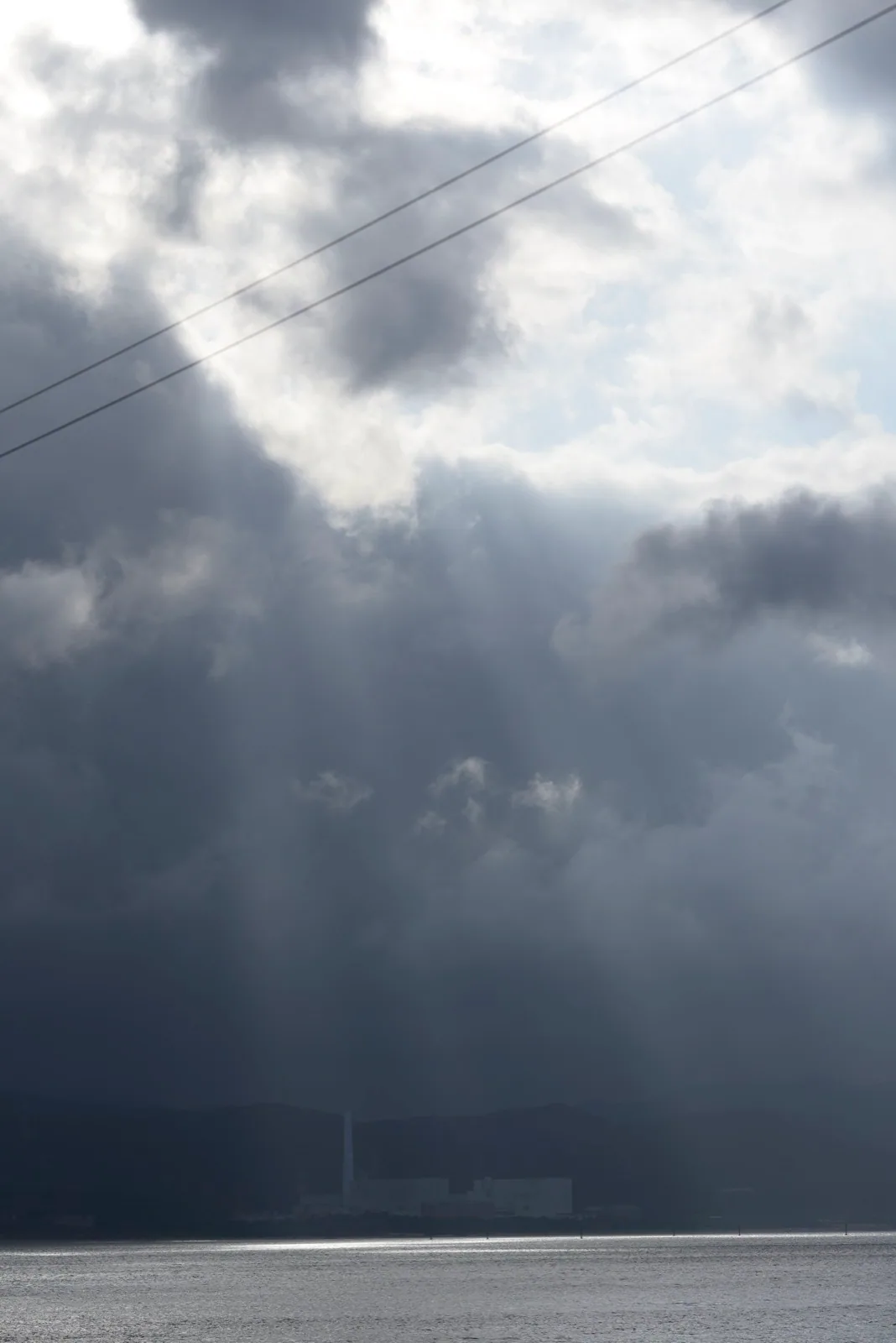
- Nuclear Plant No. 3 (Maanshan) Nanwan: Maanshan Nuclear Power Plant, Nanwan, photography by M. Weitzel, CC BY-SA 3.0.
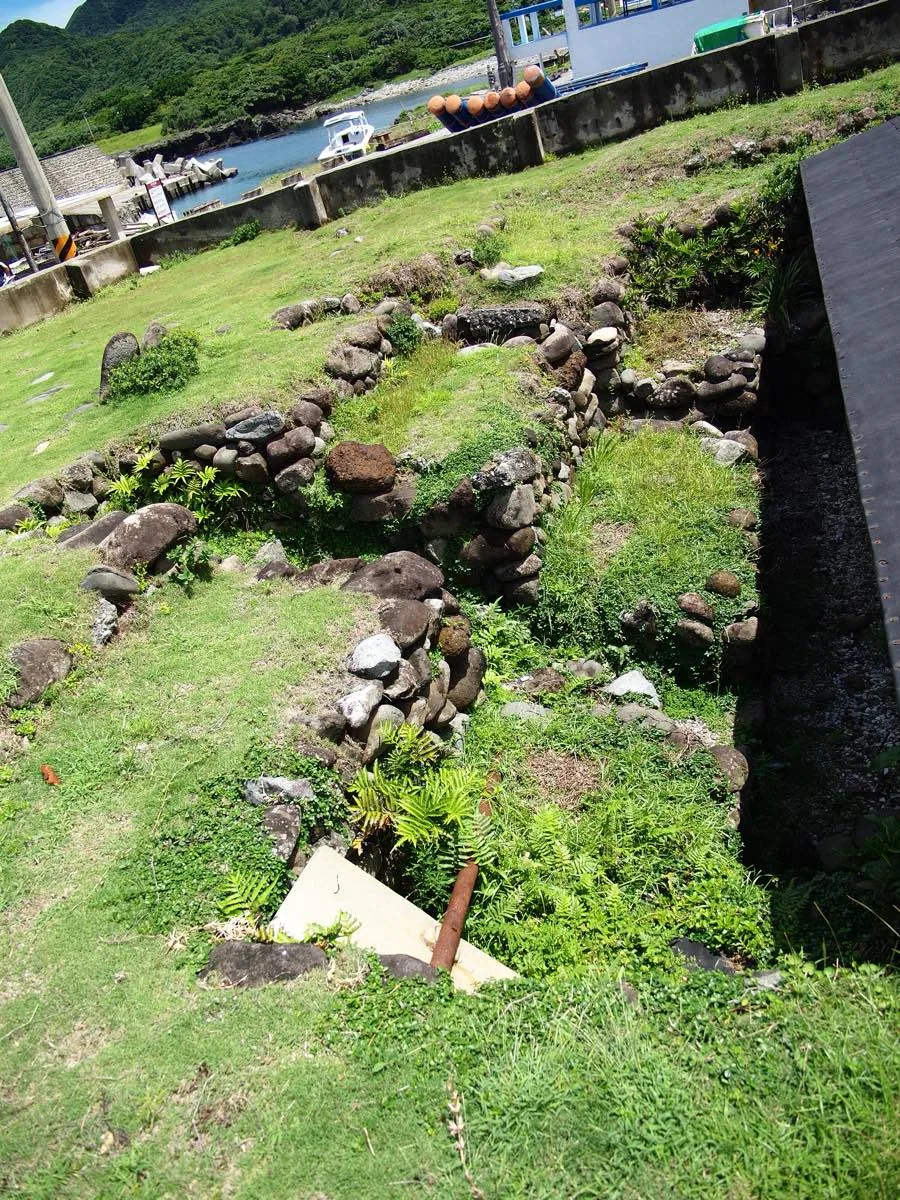
- Traditional Tao Underground Houses on Lanyu: Entrance of a traditional underground house of Tao people on Orchid Island, photography by othree, CC BY 2.0. The image shows Tao underground house settlements, used to present Lanyu's environmental justice context, not the low-level nuclear waste storage site itself.
References
- CNA: Nuclear Plant No. 3 Extension Referendum Results — CNA August 23, 2025 election night report, recording 4,341,432 votes in favor, 1,511,693 against, voter turnout 29.53%, failing to meet the one-quarter threshold of 5,000,523 votes and thus not passing.↩
- Wikipedia: Nuclear Plant No. 3 Extension Referendum — Records the complete vote count for the 2025 Case No. 21 referendum, 74.17% "yes" proportion, and threshold calculation, consistent with the Central Election Commission's certified results.↩
- CNA: Huang Kuo-chang Discusses Nuclear Plant No. 3 Referendum Results — CNA August 23, 2025 report, recording People First Party Chairman and referendum proposer Huang Kuo-chang stating after the vote count that "the 'yes' votes in this referendum are three times the 'no' votes."↩
- The Reporter: Nuclear Plant No. 3 Extension Referendum Results and Aftermath — The Reporter 2025 in-depth report, recording National Action Platform for Abolishing Nuclear Energy Secretary General Cui Suxin's verbatim comment on the referendum result "yes higher than no but did not pass, no legal effect," and the anti-nuclear camp's stance on procedure and subsequent actions.↩
- Environmental Information Center: "I Am Human, I Am Anti-Nuclear" Arts Community Petition — Environmental Information Center January 2013 report, recording the arts community initiating the "I Am Human, I Am Anti-Nuclear" petition and the origin of the yellow flag with red text logo.↩
- PTS Our Island: 309 Anti-Nuclear Grand March — PTS records the March 9, 2013 nationwide anti-nuclear grand march, recording the organizer's estimated number of participants at about 220,000 in four locations: North, Central, South, and East.↩
- Changhua Cultural Assets: Lugang Anti-DuPont Incident — Records the 1986 Lugang residents' anti-pollution movement initiated by Li Dongliang and others, shouting "I Love Lugang, Not DuPont," an important starting point for Taiwan's post-war environmental movement.↩
- Ministry of Environment Chemical Knowledge Map: Establishment of the Environmental Protection Bureau — Ministry of Environment official data, recording the historical background of the establishment of the Executive Yuan Environmental Protection Bureau on August 22, 1987.↩
- Wikipedia: Gongliao 1003 Incident — Records the establishment of the Yanliao Anti-Nuclear Self-Help Association in 1988, and the October 3, 1991 incident in the anti-Nuclear Plant No. 4 protest where security police officer Yang Chaojing was hit and killed.↩
- Nuclear and Fusion Energy Commission: Longmen Nuclear Power Plant Historical Timeline — Nuclear and Fusion Energy Commission official timeline PDF, recording key nodes of Nuclear Plant No. 4 (Longmen) from the 1980 proposal, 1999 construction start, 2014 sealing, to 2020 construction license expiration, serving as primary historical material.↩
- Liberty Times: 27 Years Ago Gongliao Local Referendum — Liberty Times report, recording the May 1994 Gongliao local referendum where 96.13% of voters opposed Nuclear Plant No. 4 (the Referendum Act had not yet been passed at the time, no legal effect).↩
- Cambridge — The Politics of Anti-Nuclear Protest in Taiwan — Academic paper by sociologist Ho Ming-hsiu published in Modern Asian Studies, arguing that the rise of Taiwan's anti-nuclear voices is closely related to democratic opening.↩
- Wikipedia: Lin Yi-hsiung Anti-Nuclear Plant No. 4 Fast — Records Lin Yi-hsiung fasting at Yiguang Church starting April 22, 2014, cross-party consensus on April 27, Executive Yuan announcing Nuclear Plant No. 4 sealing on April 28, and stopping fasting on April 30.↩
- Wikipedia: Lin Family Tragedy — Records the February 28, 1980 incident where Lin Yi-hsiung's mother and twin daughters were stabbed to death in their Taipei residence (later rebuilt into Yiguang Church), an unsolved historical event.↩
- Central Election Commission: 2018 Case No. 16 Referendum Results (PDF) — Central Election Commission official certification document, recording "Nuclear Power for Green" referendum 5,895,560 votes in favor, 4,014,215 against, voter turnout 54.83%, passed.↩
- Central Election Commission: 2021 Case No. 17 Referendum Results (PDF) — Central Election Commission official certification document, recording Nuclear Plant No. 4 commercial operation referendum 3,804,689 votes in favor, 4,262,517 against, voter turnout 41.09%, threshold 4,956,367 votes, not passed.↩
- Taiwan Fact-Checking Center: Has the Nuclear-Free Homeland Already Become Invalid? — Fact-checking report, clarifying that Case No. 16 in 2018 only abolished the 2025 nuclear-free timeline in the Electric Power Industry Act; the Nuclear-Free Homeland goal in Article 23 of the Basic Environmental Act remains effective; "Nuclear-Free Homeland has already become invalid" is misinformation.↩
- CNA: Nuclear Plant No. 3 Unit 2 Shutdown — CNA May 2025 report, recording Nuclear Plant No. 3 Unit 2 reducing load on May 17, disconnecting at night, and shutting down on the early morning of May 18, the first time Taiwan's power grid had completely no nuclear power.↩
- GVM: Taiwan Moves Toward Nuclear-Free Homeland — GVM report framework calls Taiwan "Asia's First, World's Second" nuclear-free homeland; this article notes this is a media claim, Italy had already stopped domestic nuclear power as early as 1990.↩
- CNA: Nuclear Reactor Facility Control Act Third Reading — CNA May 13, 2025 report, recording the Legislative Yuan passing the Amendment to Article 6 of the Nuclear Reactor Facility Control Act with 61 votes in favor and 50 against, adding that licenses can be applied for extension after expiration, longest 40+20 years.↩
- Environmental Information Center: Ministry of Economic Affairs Nuclear Power Restart Evaluation — Environmental Information Center report, recording the Ministry of Economic Affairs' November 27, 2025 determination that Nuclear Plant No. 1 is infeasible, Nuclear Plants No. 2 and No. 3 have restart feasibility (requiring 1.5–2 years of self-inspection).↩
- CNA: Nuclear Plants No. 2 and No. 3 Meet Restart Conditions — CNA March 2026 report, recording the Lai Ching-te government announcing Nuclear Plants No. 2 and No. 3 meet restart conditions, Taipower submitting to the Nuclear and Fusion Energy Commission, Nuclear Plant No. 3 may restart as early as 2028.↩
- Lai Ching-te Threads: Three Principles on Nuclear Energy — President Lai Ching-te's personal Threads post (primary source), proposing three prerequisites: "Nuclear safety without worry, nuclear waste with a solution, social consensus" and emphasizing "indispensable."↩
- CNA: Lai Ching-te States on August 13 to Vote Against — CNA August 13, 2025 report, recording Lai Ching-te publicly stating "For the 8/23 referendum, I will go vote, let us together cast a 'no' vote" and two necessary conditions.↩
- CNA: Chu Hsiu-luen Discusses Energy Policy — CNA August 2025 report, recording Kuomintang Chairman Chu Hsiu-luen advocating "rebuild energy security and resilience" and "pragmatically adjust erroneous energy policies."↩
- Business Today: Chao Rong-tai Discusses Electricity and Computing Power — Business Today February 2026 report, recording Premier Chao Rong-tai's discourse "Electricity is computing power, computing power is national power"; his "anti-nuclear is not a sacred tablet" phrase is seen in Newtalk March 24, 2026 Report.↩
- Business Today: Tong Tzu-hsien Discusses Nuclear Energy and Saving the Earth — Business Today March 2025 report, recording Foxconn Chairman Tong Tzu-hsien's verbatim statement "Not just Taiwan, including globally, if you do not rely on nuclear energy, if you rely on solar plus wind power to save the earth, there is no hope."↩
- UDN News Network: Tong Tzu-hsien Says RE100 Is Like a Castle in the Sky, May Be Replaced by CFE — UDN News Network August 2024 report, recording Tong Tzu-hsien criticizing RE100 as "overreaching, like a castle in the sky," advocating CFE zero-carbon energy including nuclear power (including SMR) can better achieve carbon neutrality goals; his statement that nuclear power costs about 1.42 NTD per kilowatt-hour is seen in CNA Legislative Yuan Hearing Report.↩
- ETtoday: Huang Shih-hsiu Discusses Nuclear Power Cost — ETtoday August 2025 report, recording "Nuclear Energy Rumors Terminator" founder Huang Shih-hsui's "nuclear power costs 1.5 NTD per kilowatt-hour, renewable energy 5.5 NTD" and the intense rhetoric "anti-nuclear is anti-American, selling out Taiwan, licking the Communists."↩
- Newtalk: Ye Zong-guang Discusses Hengchun Fault and Fracture Zone — Newtalk report (reprint), recording National Tsing Hua University's Ye Zong-guang arguing that the Hengchun Fault near the plant area and the "fault fracture zone" below the plant area are different, and the outside world often confuses the two pro-nuclear technical points.↩
- IEEE Spectrum: Taiwan Maanshan Nuclear Power and Industry Stance — IEEE Spectrum report, recording NVIDIA CEO Jensen Huang publicly stating Taiwan should invest in nuclear power, and nuclear energy "is an excellent option"; his related stance in Taipei on the eve of the referendum (2025-08-22) is seen in Bloomberg Report.↩
- GVM: Energy Poll 18-29 Years Old Pro-Nuclear Proportion — GVM and Taiwan Foundation for Sustainable Development October 2024 poll, recording overall 63.1% pro-nuclear, 18–29 years old 70.8%, 70+ years old 50.2%, and DPP supporters 45.2% anti-nuclear, 44.3% pro-nuclear.↩
- Taiwan Fact-Checking Center: Nuclear Plant No. 3 Referendum and Hengchun Fault Dispute — Fact-Checking Center organizes key disputes for Nuclear Plant No. 3 extension referendum, recording geologist Chen Wen-shan's verbatim statement "Hengchun Fault passes through Nuclear Plant No. 3's front gate, about 900 meters from the reactor," "fault being inside the plant area is a definite fact."↩
- The Reporter: Seven Key Disputes for Restarting Nuclear Plant No. 3 Referendum — The Reporter pre-referendum in-depth report, recording Green Party's Gan Chong-wei's anti-nuclear point "Nuclear Plant No. 3 Unit 1's turbine generator building is built directly on the Hengchun Fault's fracture zone."↩
- Environmental Information Center: Nuclear Plant No. 3 Seismic Resistance and Fault Evaluation — Environmental Information Center report, recording geologist Li Xi-di's questioning of Nuclear Plant No. 3's safety shutdown earthquake ground motion acceleration "reaching as high as 1.384G, more than three times the design value."↩
- Earth Citizen Foundation: Taiwan Nuclear Waste Status — Anti-nuclear group official page, recording Taiwan has produced over 19,000 bundles of high-level nuclear waste and 210,000 barrels of low-level nuclear waste, yet has no statutory disposal site status data.↩
- Nuclear and Fusion Energy Commission: Spent Nuclear Fuel Storage Table for Nuclear Power Plants — Nuclear and Fusion Energy Commission official statistics (primary source), recording the total of 21,527 bundles of spent nuclear fuel from three nuclear power plants as of May 18, 2026.↩
- The Reporter: Seven Key Disputes for Restarting Nuclear Plant No. 3 Referendum — The Reporter pre-referendum in-depth report, recording former State Councilor Lin Tzu-lun's verbatim comment "Using nuclear power is transferring the cost, risk, and responsibility of nuclear waste disposal to the next generation."↩
- Control Yuan: High-Level Radioactive Waste Final Disposal Investigation — Control Yuan investigation report (primary source), pointing out that basically there is no final disposal site for high-level radioactive waste on the Taiwan island, and warning that "storage caves buried 500 meters deep will emerge on the surface in 50,000 years" (active orogenic belt, crustal annual displacement over 1 cm).↩
- Control Yuan: High-Level Radioactive Waste Backend Fund and Disposal Site Doubts — Control Yuan Fiscal and Economic Committee press release (primary source), recording Control Yuanist Tian Qiujin's doubts "After spending 60 billion NTD, will we really find a final disposal site?" "The backend fund is the coffin capital of nuclear power plants, once spent, it's gone."↩
- Nuclear and Fusion Energy Commission: High-Level Radioactive Waste Final Disposal — Nuclear and Fusion Energy Commission official Q&A (primary source), recording the high-level nuclear waste final disposal plan divided into five stages, expected to be completed from 2005–2055, total cost about 60 billion NTD.↩
- Wikipedia: Lanyu Storage Site — Records Lanyu low-level nuclear waste storage site 1974 decision not informing the Tao people, 1982 put into use, storing 97,672 barrels of low-level waste, 1996 saturation, and the Tao people's annual resistance and delayed removal commitment complete process.↩
- Presidential Office: President Apologizes to Indigenous Peoples — August 1, 2016 President Tsai Ing-wen, in her capacity as head of state, apologized to indigenous peoples; Lanyu nuclear waste disposal is one of the historical injustices.↩
- Environmental Information Center: Tao People Reject 2.55 Billion Compensation — Environmental Information Center 2019 report, recording the government announcing 2.55 billion retroactive compensation plus 220 million every three years plan, Tao people reject, elder Lin Xin-yu declares "we will not take a single penny," wanting removal not compensation.↩
- Ministry of Economic Affairs Energy Supply Overview — Energy Administration official statistics, recording Taiwan's 2024 energy import dependency about 95.8% (early primary energy caliber about 97–98%).↩
- CNA: Natural Gas Safety Stock and Blockade Risk — CNA October 2024 report, recording natural gas statutory safety stock about 11 days, coal about 41 days, nuclear fuel one-time loading about 18 months, and Ministry of Economic Affairs' explanation on energy security.↩
- CSIS — Lights Out: Wargaming a Blockade of Taiwan — US think tank Center for Strategic and International Studies wargame report, pointing out energy is Taiwan's most vulnerable link in resilience, natural gas would only last about ten days under blockade scenario, electricity collapses to 20%, and recommends extending nuclear power service life.↩
- CNA: Guo Zhi-hui Discusses Energy Security — CNA report, recording Economic Minister Guo Zhi-hui's statement "national security issue cannot be discussed too detailedly," and related discussions on energy dispatch.↩
- Greenpeace: Distributed Energy and Wartime Nuclear Safety Risk — Greenpeace Taiwan branch data, presenting the anti-nuclear camp using Ukraine's Zaporizhzhia Nuclear Power Plant wartime shelling as an example, arguing wartime nuclear power risk is high, distributed renewable energy is more resilient.↩
- Clean Energy Wire — Germany's nuclear exit one year after — German Energy Information Network Q&A, recording Germany's 2023 April completion of nuclear phase-out after electricity prices fell, carbon emissions decreased, and opposition leader Merz calling phase-out a "huge mistake" controversy between both sides.↩
- NEI Magazine — South Korea to increase nuclear share to over 34% by 2036 — Nuclear Engineering International Magazine report, recording South Korea's Yoon Suk-yeol government reversing nuclear phase-out, targeting 34.6% nuclear power share by 2036, and can be compared with Japan's restart of 15 units, 2040 target 20% policy direction.↩
- American Nuclear Society — Finland's Onkalo licensing — American Nuclear Society report, recording Finland's Onkalo high-level nuclear waste final disposal repository (deep 430 meters, 1.9-billion-year granite) is still in the license review stage, the outside world often mistakenly believes it is already officially operating.↩