
30-Second Overview: André Chiang is Taiwan’s first chef to win Michelin stars on the international stage, but he is perhaps even more remembered for voluntarily leaving at the peak of his career three times. The year after Singapore’s Restaurant André climbed to the 14th spot on the world rankings, he turned off the lights on Valentine’s Day; in the tenth year of Taipei’s RAW, which was “harder to book than Taiwan Railways tickets during long holidays,” he announced he was closing it to teach. This piece explores why he always turns away before finishing the journey: asking from “Who am I?” to “What is the taste of Taiwan?”—a question he himself has not yet decided to answer.
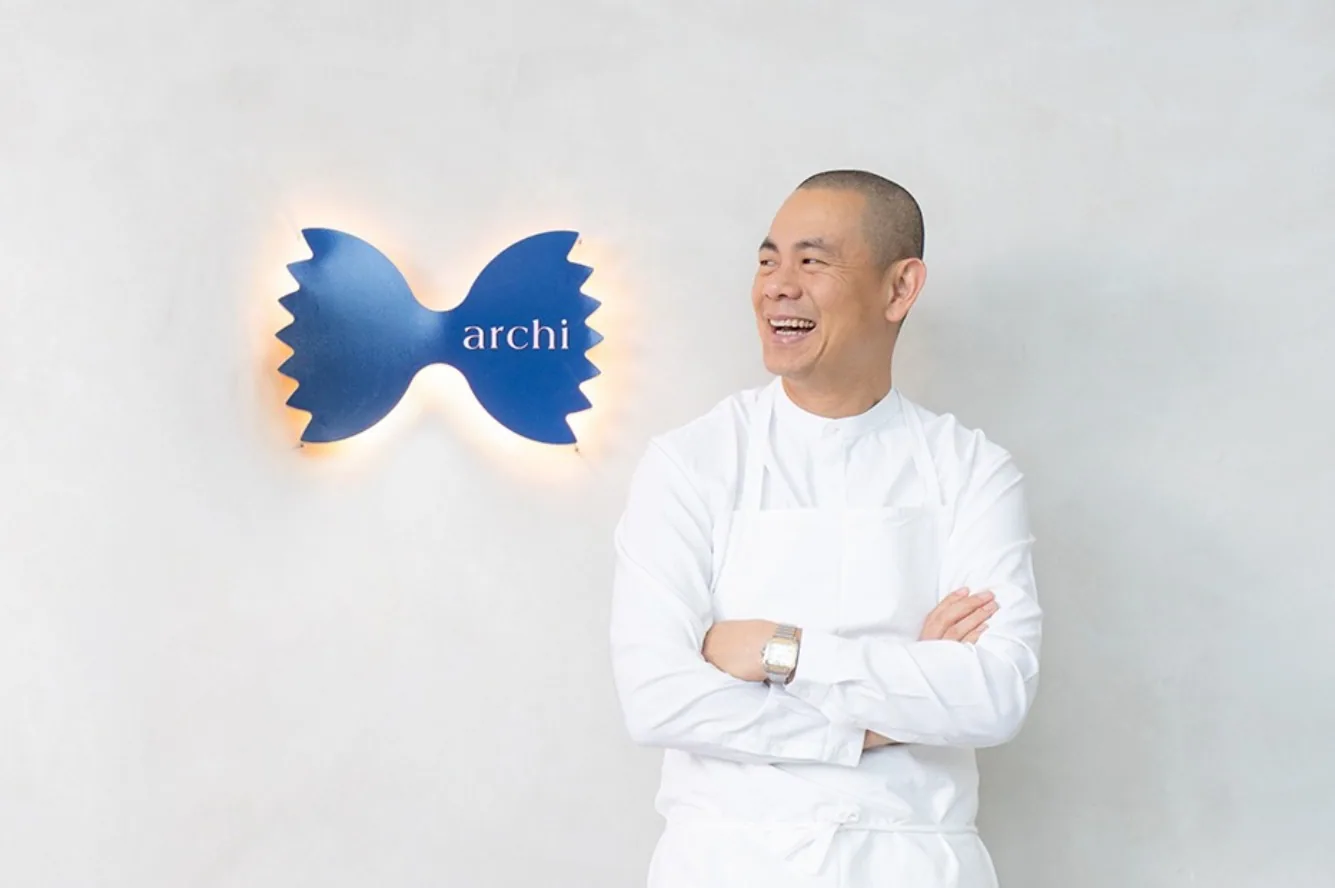
André Chiang currently serves as the Culinary Creative Director of archi in Toucheung, Yilan. Provided by archi / Kaohsiung Plaza Hotel, cited here under fair use for editorial commentary.
Ten Days Later, He Bought a Ticket to a Language He Didn’t Speak
In 1997, a twenty-something André Chiang was already the head chef of a French restaurant at The Sherwood Taipei, the youngest French restaurant chef in Taiwan’s history1. That year, he proactively invited the renowned twin-star chefs Jacques and Laurent Pourcel from the three-star Michelin restaurant Le Jardin des Sens (Garden of Senses) in southern France to Taiwan for a guest chef demonstration. The two worked together in the kitchen for ten days1.
He entered the kitchen largely through the story of a bento box. Born in Shipei, Beitou District, Taipei in 1976, he grew up in Shilin2. His mother was an outstanding cook who had worked in a Chinese restaurant in Japan for ten years. Other people’s bento boxes were steamed in the morning; his were not. “Thirty minutes before mealtime, she would stir-fry them at home and ride her motorcycle to the school gate,” The Newsweek recorded in a 2007 interview1. A mother who demanded “freshly stir-fried, just right, no compromises” in even the most everyday meals had already set his standards for taste very high.
During those ten days, language was almost useless. André Chiang did not speak a word of French, and the Pourcel brothers did not speak a word of English; they had to rely on a translator to converse1. But what truly convinced the brothers was something beyond translation: how he chopped, how he fried, how he plated and finished the dishes. After ten days, they asked André Chiang, “Are you going to France?” He said yes1.
So he bought a ticket. It is worth pausing here: a twenty-something person, with no language skills, no prestigious degree, and no guarantee for the future, decided to fly to the other side of the Earth based on a ten-day encounter. He did not figure it all out before leaving; he left first, then went on to understand what it was like there. Later people added many inspirational footnotes to this story, but stripped to its core, it is actually a very simple, yet difficult, action: taking that first step when you cannot yet see clearly what lies ahead. This is the prototype of his decision-making for the rest of his life. Every subsequent turn at the peak of his career is an amplification of those ten days.
Ten days is not long, but it is just enough for a person to make up their mind. What awaited him next was fifteen long years in a foreign land. And he still did not know how to order a cup of coffee.
Over the Indian Ocean, Asking Again “Who Am I”
In the kitchen of Le Jardin des Sens in Montpellier, southern France, language was the first wall. He did not speak a word of French, and all instructions, scoldings, and chats in the kitchen had to be guessed with his eyes and body. André Chiang was not treated with special respect simply because he was “the person invited by the Pourcel brothers.” He started from the very bottom, peeling potatoes for two whole years. “At that time, I didn’t speak a word of French and couldn’t make any friends,” he later recalled. “The only thing I could converse with was probably the potatoes.”3 Two years, just to do the most insignificant thing flawlessly. This patience to return to the bottom and retrain himself would repeatedly appear in every turn he made later. In the days that followed, he climbed up, taking nine years to become the executive chef (chef de cuisine) of the entire restaurant, managing the kitchen of this three-star establishment4.
He fell in love with that world. “I fell in love with French culture, history, and emotion,” he later recalled to The South China Morning Post. “The emotion a chef feels when creating a dish was something I had never experienced at that age. A person cooking for another person is such an intimate relationship. It was at that time that I decided to continue down this path.”5 He achieved technical precision to the finest degree. But something strange happened near the peak: the more mature his skills became, the more he felt he was disappearing within someone else’s system. He was making the most authentic French cuisine, but whose cuisine was it, really?
The true turn happened over the Indian Ocean. He left the European continent and went to a resort on a small island in the Seychelles to work as a head chef. According to reports from Taiwanese media, Time magazine described his dishes twice around 2007 as “the greatest cuisine in the Indian Ocean”1. But more critical than the external title was that on that island, he first seriously asked himself: removing France, removing the Michelin framework, “what is my own cuisine.”
The answer was a thinking framework later called “Octaphilosophy”: eight elements, ranging from the most basic “salt” to the most abstract “memory” and “terroir”4. This philosophy sought to answer a more fundamental question than “does it taste good”: why does a dish exist. Interestingly, the order of these eight words varies across different publications6. Even his own philosophy has no fixed order, corresponding precisely to his creative belief: no fixed menu, rethinking every day based on the ingredients of the day.
One dish, however, was set in stone. In 1997, he created “Memory,” a warm foie gras jelly served with a black truffle coulis4. This dish has the year directly written into its name and has remained almost unchanged for over twenty years.
✦ A person who spends a lifetime “changing the question” hides the only fixed answer in a dish called “Memory.”
Memory was his first dish that was completely his own, with no template to copy. The reason this “never changed” fact is moving is that everything around it—restaurants, cities, titles, identities—later all changed. He had finally found an answer that belonged to him. But this answer was soon to be tested on a higher stake.
On the Night at the Peak, He Turned Off the Lights First
In 2008, André Chiang opened Jaan par André at the Swissôtel The Stamford in Singapore. Eighteen months after opening, it climbed to the 39th spot on the World’s 50 Best Restaurants list4. Two years later, on October 10, 2010, he hung his own name on the sign. Restaurant André opened in a three-story historic old house at 41 Bukit Pasut Road in Singapore, with only 30 seats7.
What followed was a beautiful upward curve. On the Asia’s 50 Best Restaurants list, Restaurant André went from the 5th spot in the inaugural 2013 list, slid only once to the 6th in 2014, and then climbed all the way to the 2nd in 2017. On the World’s 50 Best, it jumped from the 32nd spot to the 14th in just one year, advancing 18 spots at once, marking the highest position for a Singaporean restaurant on this global list that year8.
This was not a straight-line story of climbing to the top. The drop to the 6th spot in 2014 reminded everyone that this path was not taken for granted; but for the next three years, he climbed step by step, pushing a small restaurant with only 30 seats to a place where gourmets around the world were willing to buy tickets to fly in specifically to eat. At this height, most people think about how to hold on to it. He was thinking about something else.
In the very year his rankings reached their career peak, he chose to get off the bus.
On October 10, 2017, exactly seven years after the opening of Restaurant André, after closing, André Chiang gathered more than twenty employees from around the world, took out a written white paper, and read it out sentence by sentence in English. His wife was in tears nearby. The employees knew about this only one hour earlier than the outside world9. According to reports at the time, this thought had been planted half a year ago: he looked around the restaurant and found that “in every corner, I could not say which thing needed adjustment, nothing at all.” Precisely because he could not pick out anything to change, he decided to stop9.
In the statement, he wrote: “I am a perfectionist. In my past 30 years of professional life, I have been constantly pursuing that non-existent ‘perfection’... Only now do I realize that this moment is the most perfect.” The ending sentence, later quoted repeatedly, was: “I have always pursued perfection. This moment is perfection.”10 In the same statement, he did something even rarer: he proactively asked Michelin to exclude him from the evaluation. “I will return the Michelin two stars, and simultaneously remind the 2018 new edition of the Singapore Michelin Guide to exclude Restaurant ANDRE from consideration.”10 On February 14, 2018, Valentine’s Day night, the 30 seats were filled for the last time, and he personally turned off the lights. “Now, I am going home,” he said10.
There is a detail many people get wrong. The public often says André Chiang “abandoned the Michelin three stars,” which sounds like a more tragic sacrifice. But his first Michelin in Singapore was two stars, not three; he returned two stars, and the true action was exiting the entire evaluation system, not rejecting all recognition10. On March 27 of the same year, he received a Lifetime Achievement Award in Macau. The official name was the “Diners Club Lifetime Achievement Award” hosted by Asia’s 50 Best Restaurants, completely unrelated to Michelin, so do not remember it as a Michelin award9.
📝 Curator’s Note
The misconception of “returning the three stars” itself demonstrates how much people want to read André Chiang’s turn as a more dramatic sacrifice—as if the more he gives up, the more moving the story becomes. But what he truly did was quieter and more resolute: not a dignified exit after being defeated, but a person standing at the peak refusing to let that peak define who he is. His freedom is simple: not to be trapped by any title.
The two years around the time he turned off the lights were filmed by Singaporean director Josiah Ng into the documentary André & His Olive Tree, which aired on Netflix in 202011.
Netflix Official Trailer: The documentary André & His Olive Tree follows André Chiang on the eve of turning off the lights, recording his psychological journey during the period when he decided to close Restaurant André.
If you spread his thirty years on a line, you will find that this night of turning off the lights was not the first time, nor would it be the last; the same posture repeated again and again.
Source: World’s 50 Best Restaurants official lists, Raffles Hotel official data, and annual media reports
“This moment is perfection” held this step in place. But perfection was never his true endpoint—in the same period of exiting, he had actually already been asking the next question in his heart.
RAW Asks a Different Question
First, break a common chronological misunderstanding: Taipei’s RAW was not a fallback for him to return to Taiwan after turning off the lights, but the other half of his dual-city advancement. As early as 2014, when Restaurant André was still shining in Singapore, he had already opened RAW in Taipei, operating both places simultaneously.
On December 9, 2014, RAW opened in the Linqun 3rd Road area (Dazhizhou commercial district) of Zhongshan District, Taipei. The chef returning in glory exchanged for a difficult-to-get position. News at the time wrote, “RAW reservations are harder to get than Taiwan Railways tickets during long holidays.” Within less than two weeks of opening, reservations for subsequent dates were snatched up on the same day12. How difficult was it to book? Australian food blogger Lorraine Elliott wrote after visiting in person in 2015: getting a seat at RAW was “a matter of planning and luck”: the 56 seats had to be snatched online in advance, and the 20 bar seats where you could watch the chef cook up close had to be booked by phone another two months in advance13. This dual-track difficulty itself is a microcosm of fine dining: the closer you are to the chef, the higher the threshold.
But what RAW truly asked was a different question. In Singapore, André Chiang asked “Who am I”; back in Taipei, the question changed to “What is the taste of Taiwan.” In early 2022, he opened the “Institute of Taiwanese Taste” on Dihua Street in Taipei14. The object he drew inspiration from was Sichuan cuisine—“Sichuan cuisine has a taste spectrum, with 24 representative flavors,” he said in an interview, so Sichuan cuisine can cover so much ground15. What about Taiwan? He wanted to organize a similar spectrum for the flavors of Taiwan. And what exactly is the taste of Taiwan, he described: “I cannot decide what the taste of Taiwan is with one sentence or one flavor; it is a formula of constant addition, subtraction, multiplication, and division.”14
In fact, long before the Taste Spectrum Institute, RAW had tried another answer. At the end of 2016, at RAW’s two-year anniversary press conference, he announced he would spend a year compiling a “Taiwanese Food Dictionary,” organizing the ingredients of the entire island into a system based on the twenty-four solar terms. The cause was his worry that Taiwan’s ingredients were losing their sense of season: chickens injected with growth hormones shortened from 125 days to 40 days before slaughter; carrots that could originally grow 18 varieties now only had two left on the market16. This dictionary was never officially published, and the scale of the plan was delayed again and again; but that ambition to clarify the flavors of Taiwan, from solar terms to taste spectra, never broke.
Notably, he never said he held the standard answer for the taste of Taiwan. Quite the opposite, he left it as an open question: “The taste of Taiwan is not just the taste of grandmas or moms; what is the taste of Taiwan that belongs to me? What will the taste of Taiwan for the next generation be?”14 There is no stamp in this sentence, only a series of question marks.
📝 Curator’s Note
A person who started with French training, international rankings, and Michelin certification talking about “the taste of Taiwan” inevitably raises the question: who defines those stalls and home kitchens that do not have an international resume but truly cook the taste of Taiwan every day? André Chiang’s own answer is honest: he presents the “Taiwanese Taste Spectrum” as his personal question, not an official certification. And this question still hangs in the air today: the “Taiwanese Food Dictionary” project, centered on the twenty-four solar terms, has never been officially published, and the Taste Spectrum Institute has no publicly accessible complete output. The definition of the taste of Taiwan was never meant to be decided by one person; this is the blank space he left himself.
RAW later received Michelin stars in Taipei: one star in 2018, and two stars continuously for five years starting from 201917. And in the tenth year of RAW, when it was nearly legendary how difficult it was to book, he still turned off the lights first, handing the answer to an academy he had not yet finished writing.
What does this posture look like when applied to a kitchen that demands people to be on time to the minute?
The 45-Degree Chair, Punctured by a Strawberry
During the heyday of Restaurant André in Singapore, André Chiang’s kitchen was known for near-neurotic precision: every chair was placed at an exact 45-degree angle to the table, every table was precisely two finger-widths away from the wall, and he and the front-of-house manager went through the reservation list every day, agonizing over who ought to sit where6. This obsession with detail was later brought into Taipei’s RAW. In such a kitchen, whether a newcomer could survive often depended not on their past credentials, but on their ability to keep up with the chef’s uncompromising standard line in a very short time. This precision produced extremely high-level cuisine, but also left an environment with almost no room for error—this is the other cost of “refusing to be defined.”
To be honest about the industry background: the Taiwanese dining industry has long had structural problems of low wages and overwork; any plan to “cultivate the next generation of chefs” cannot bypass this realistic context. Precision and cruelty, in the entire high-pressure dining industry, often separate by only a thin line.
The sharpest irony came from a plate of strawberries. In 2020, food critic Michael Fei questioned in an independent review that RAW’s spring menu that year “did not form a coherent set of ideas,” and pointed out directly: why was there an unripe strawberry on the spring menu?18 Know that strawberries are actually a winter fruit in Taiwan. If a restaurant claiming “seasonal eating” serves out-of-season strawberries in spring, then the philosophy itself ran into itself.
📝 Curator’s Note
Even his most proud “seasonal eating” was caught out by a strawberry out of season. A person who lives the “undecided” as a life posture will occasionally be counter-attacked by his own perfectionism—because when you demand precision in everything, any detail that is not aligned will be magnified into a question against the entire philosophy. This does not unintentionally negate him: his high standards are real, his occasional slips are also real; the coexistence of the two makes a living chef, not a statue without cracks.
The restaurant that was hard to book for ten years and had a strawberry picked on it, the Michelin official channel once filmed a video for it, recording his quality control.
MICHELIN Guide Official Channel: André Chiang personally explains how the RAW kitchen uses near-neurotic standards to control every dish.
And this person, famous for “zero errors,” had the softest time cooking in his life precisely for “allowing errors.” This requires looking at where he is now.
Now, He Is Still Turning
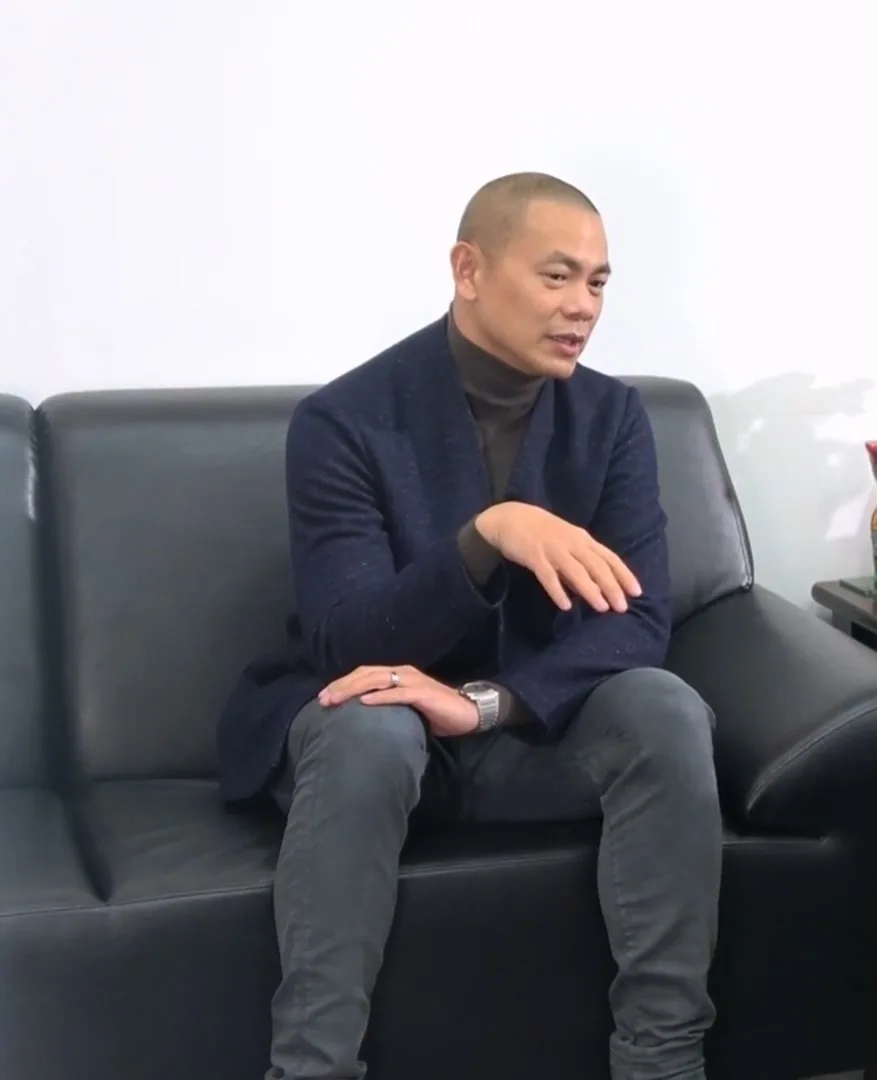
In 2021, André Chiang visited the Public Digital Innovation Space (PDIS). Photo: PDIS / Wikimedia Commons, CC BY 3.0.
In September 2020, André Chiang collaborated with the Hongdao Foundation for the Aged on a pop-up restaurant named “Ah! It’s Okay!”—the front-of-house servers were all elderly people with dementia, and serving the wrong dishes or forgetting orders were the norm19. This menu was not his most technically complex, but it might have been his most emotionally dense. The reason is personal: “My grandmother was also a person with dementia. In her last few years, I had already returned to Taiwan and had much contact with her...” he said. “Grandma would forget some things, forget she had eaten, forget who I was... She was just a lovely old child in the family, so we relaxed and got along with her.”20 The child who was raised by his grandmother since childhood, in this restaurant that deliberately allowed mistakes, put aside his most skilled precision and learned to let go; in that event, his mother also helped make potato salad in the back kitchen19.
Now he has put the center of his life back in Taiwan. In recent years, he has moved to Yilan with his Thai wife Pam, slowing down the pace of life21. He is listed as the Culinary Creative Director of archi at the Kaohsiung Plaza Hotel in the local area, one of the few projects he can manage without crossing the sea22. His wife is a former fashion magazine editor-in-chief23; in a 2018 interview, he joked that the house had two refrigerators, “one for my wife to use, one for my mom to use,” and outside there was a garden of herbs planted by Pam, which he jokingly called the “Tom Yum Garden”24. A person at the world’s peak returns home, competing with his mom and wife for a kitchen; a few steps out the door, there is a restaurant he is listed as managing.
He is not idle. Starting in 2024, he took on the role of Culinary Curator for Belmond’s “The Asian Express,” using the logic of “one dish paired with one spice” (cloves, cinnamon, galangal), allowing passengers to travel the history of terroir on their taste buds25. Around the same time, he founded the high-end hot pot brand Bon Broth, currently planning to expand to overseas cities25. That same year, he also took on the role of culinary consultant for the four restaurants of “S·S·A·W” under the Yuimom Group, overseeing the comprehensive renovation of spaces and menus26. As for earlier bases, Chengdu’s The Bridge opened at the end of 2017, and Macau’s Sichuan Moon had already closed in 202327. The map is always moving; some grow, some close, this is originally his norm.
He called the closing of RAW in 2024 “retirement.” But this word in his mouth has never meant leaving the stage. “Providing better education and continuously creating new opportunities and solutions for our dining industry and the next generation has become extremely important to me, more important than operating a successful restaurant,” he said when announcing his retirement28. From chef to teacher, he took this step earlier than anyone else, thinking about how to hand over the method of winning while he could still win. The original site of RAW is to become an international culinary academy, but this has not yet landed: as of now, the academy’s website still only displays “COMING SOON,” with no official opening yet29. Announced for nearly two years, the image is still stuck there.
In April 2026, the month he turned fifty, 1887 by André opened at Raffles Hotel in Singapore, with the concept of “Taste of Time,” a meal of nearly sixty dishes spanning 139 years of the hotel’s history30. Daily cooking was handed to two young people from RAW, and he retreated to the background. Handing over cooking to young people is, for a chef known for control, another form of letting go. “My role has evolved from creating restaurants to establishing a platform for education and guidance,” he said. “I hope it can stand for the next 30 years, 50 years, or even 100 years.”22 He described what he is doing now as “more Timeless things,” because he no longer needs to work to sustain a business, “I can just purely do what I like”25.
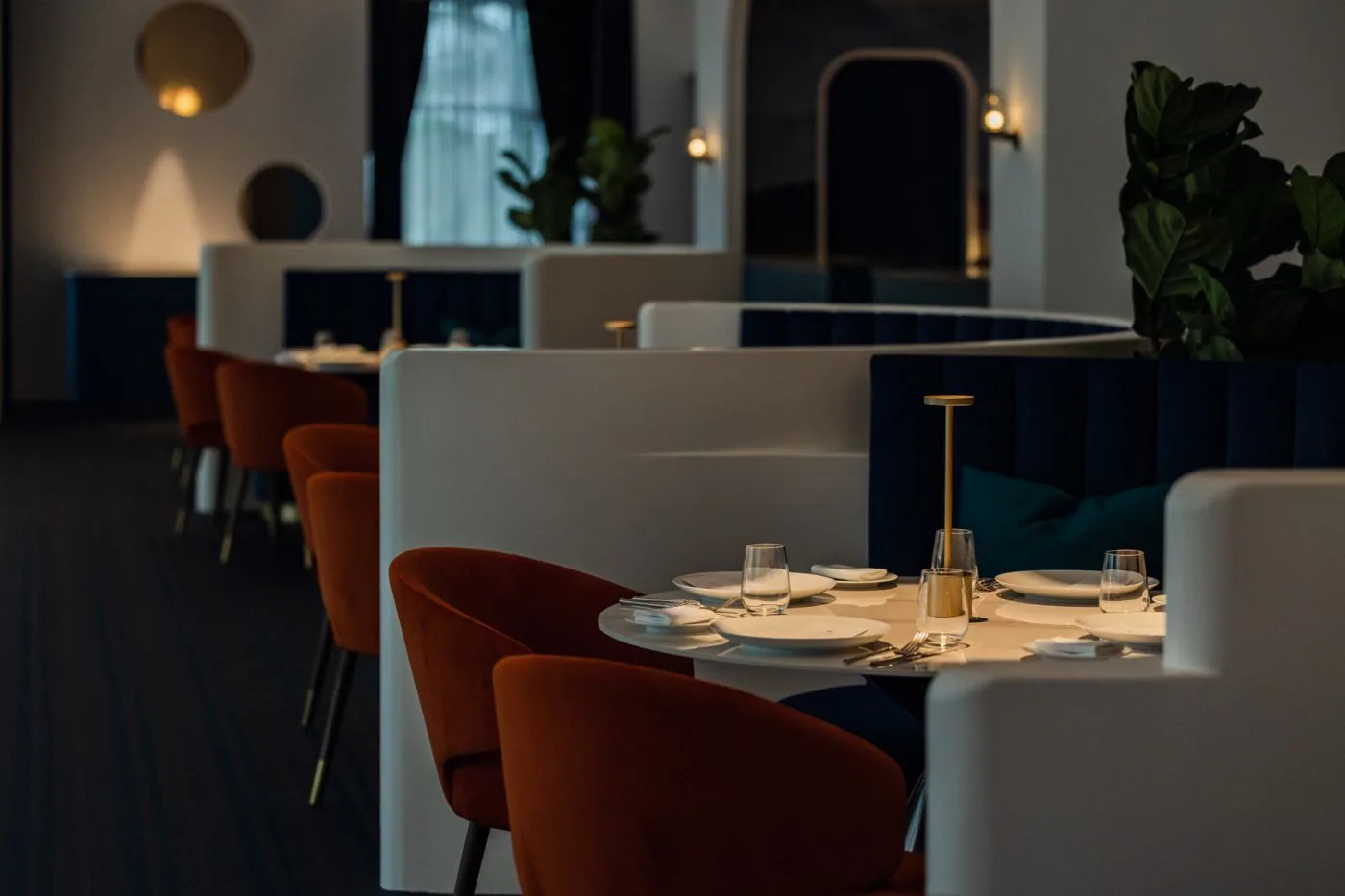
The dining space of archi created by André Chiang for the Kaohsiung Plaza Hotel in Yilan. Provided by archi / Kaohsiung Plaza Hotel, cited here under fair use for editorial commentary.
In Singapore, there is a new restaurant spanning 139 years; in Taipei, there is an academy that has not yet opened; in Yilan, there is a kitchen shared by three people. Whether the academy will truly open is no one can guarantee; it might just be a delay in progress, not some deep meaning. But he is once again standing in this moment without an answer. At twenty-something, he bought a ticket without knowing French; this time, he knows where he is going, just hasn’t arrived yet. A chef’s last dish is always tomorrow.
Further Reading:
- Yung-Chen Nieh — Another name that brought Taiwan to the international stage, using graphic design rather than cuisine to make the world see Taiwan’s visibility
- Ang Lee — Similarly telling Eastern stories within Western systems, exploring the creator’s “Who am I” and “Where do I come from”
- Jensen Huang — Similarly of Taiwanese background, reaching the peak of the international industry, but taking a completely different path: staying in the core of the system, making himself irreplaceable
- Bao-Chun Wu — Similarly a craftsman conquering French judges with Taiwanese ingredients and materials, two paths of bread and fine dining
- Shan-Liao Huang — Similarly a young Taiwanese on the world stage, turning from the fashion runway to the desk, with writing replacing his original craft
Image Sources
- First image and archi dining space: Provided by archi / Kaohsiung Plaza Hotel, cited here under fair use for editorial commentary. Source: archi Official Page.
- André Chiang visiting PDIS in 2021: Photo: PDIS, CC BY 3.0. Source: Wikimedia Commons.
References
- Six-Star Hotel Head Chef André Chiang: Passion Without Setbacks Has No Value — The Newsweek July 2007 profile interview original reprint page; records details such as “became head chef of The Sherwood Taipei’s French restaurant at age twenty, the youngest French restaurant chef in Taiwan’s history,” “André Chiang tried every means to invite the Pourcel brothers to Taiwan,” “worked together for ten days,” “Are you going to France?” “Mother stir-fried bento boxes and rode motorcycle to school gate,” “once reported twice by Time magazine as ‘the greatest cuisine in the Indian Ocean’.” This is the deep report closest in time to the event (1997), with higher credibility than the other 2010 Cheers report on the same page about “sous-chef” and “assigned as chief assistant” secondary narratives. This article adopts the higher-credibility Newsweek version. The original Newsweek page is inaccessible due to 403 errors; this reprint page clearly marks the source and date, serving as a proxy for primary source.↩23456
- André Chiang — Chinese Wikipedia entry, recording “born April 27, 1976... in Shipei, Beitou District, Taipei; grew up in Shilin District, Taipei,” corroborating with Newsweek 2007 report “age thirty-one this year” (推算 birth year 1976).↩
- Returning to the Origin to Fight Every Battle Well — La Vie December 18, 2014 interview, André Chiang’s own words: “At that time, I didn’t speak a word of French and couldn’t make any friends. The only thing I could converse with was probably the potatoes.” The article confirms handling potatoes “for two whole years”; ages for going to France vary across media as 19/20/21/23 years old; this article adopts the vague expression “twenty-something.”↩
- André Chiang — English Wikipedia entry, recording France “fifteen years,” “nine years to reach chef de cuisine,” Octaphilosophy eight elements (pure, salt, artisan, south, texture, unique, memory, terroir), this dish “created it in 1997,” “warmed foie gras jelly served with a black truffle coulis,” and verbatim “In 2008, Chef André Chiang opened Jaan par André at the Swissôtel The Stamford in Singapore, and after 18 months at the restaurant it was placed at the 39th spot in the overall list of The World’s 50 Best Restaurants” (this ranking is the 2010 published list). Old text “coordinated eight overseas branches in 2001” has no independent source; this article weakens it to “tempered for nearly ten years.”↩234
- Chef André Chiang of Restaurant André Singapore comes into his own — The South China Morning Post Style 2015 interview, André Chiang’s own words recalling why he fell in love with this culture and emotion in France.↩
- The chef who wants to be forgotten: André Chiang — Rolling Pin/KTCHNrebel 2019 English interview, written by Lucas Palm, recording mother’s Japanese restaurant experience, Octaphilosophy (order different from Wikipedia, representing no single official order), the adolescent mindset turn of “if you want to reach the highest level, you must go to France,” and verbatim record of Singapore’s Restaurant André at its peak “every chair was placed at an exact 45-degree angle to the table, and each table was precisely two finger-widths away from the wall” “Chiang and his restaurant manager went through the reservation list each day and practically agonized over who ought to sit where.”↩2
- Restaurant André — English Wikipedia entry, recording opening October 10, 2010, address 41 Bukit Pasut Road, Singapore, 30 seats, 2016 Michelin Two Stars. Building is a three-story historic old house, exact construction year varies (senatus.net only says “century-old,” other secondary sources point to 1926); this article does not force a precise year.↩
- Restaurant André climbs 18 spots to 14th on World's 50 Best — iconsingapore.com 2017 report, confirming World’s 50 Best jumped from 32nd in 2016 to 14th in 2017. Asia’s 50 Best annual rankings (2013 5th/2014 6th/2015 5th/2016 3rd/2017 2nd) taken from theworlds50best.com official past list pages.↩
- Scene of Announcement Night and Half-Year Brewing — Marie Claire report, recording employees standing in a circle after closing, André Chiang reading with white paper, wife in tears, employees knowing only one hour earlier, and psychological trigger “in every corner, I could not say which thing needed adjustment.” 2018 Lifetime Achievement Award official name is “Diners Club Lifetime Achievement Award” hosted by Asia’s 50 Best Restaurants (World's 50 Best Official Report), awarded March 27, 2018 in Macau, not a Michelin award.↩23
- Full Text of André Chiang’s Statement on Closing Restaurant ANDRE — La Vie reprint of October 10, 2017 official closure statement Chinese version, verbatim recording “I am a perfectionist,” “I have always pursued perfection, this moment is perfection,” “I will return Michelin two stars... please exclude Restaurant ANDRE from consideration.” “Now, I am going home” is from ETtoday Travel Cloud, last night service day February 14, 2018 (Valentine’s Day).↩234
- ANDRÉ & HIS OLIVE TREE LANDS ON NETFLIX — Netflix official press release, confirming André & His Olive Tree is the Chinese and English title of the same film, directed by Singaporean director Josiah Ng, filming from February 2018 on the eve of turning off lights, aired 2020.↩
- RAW Restaurant Officially Opens on the 9th, Reservations Harder Than Taiwan Railways Tickets During Long Holidays — ETtoday Travel Cloud December 9, 2014 opening day report, confirming opening in Linqun 3rd Road area (Dazhizhou commercial district), Taipei; reservations full within less than two weeks of opening.↩
- RAW Taipei, Taiwan: André Chiang — Australian (Sydney) food blogger Lorraine Elliott (Not Quite Nigella) 2015 personal dining record, original text “A reservation at the 56 seater restaurant RAW Taipei is a matter of planning and luck” — 56 seats total, of which 20 chef bar/chef table seats need to be booked by phone another two months in advance. Old text “British media 2015 report” has no factual basis; only 2015 booking difficulty report comes from this Australian blogger.↩
- André Chiang Interview: Taiwanese Taste Spectrum — VERSE 2023 interview, André Chiang’s own words: “In early 2022, we opened the ‘Taiwanese Taste Spectrum Institute’ on Dihua Street,” “I cannot decide what the taste of Taiwan is with one sentence or one flavor; it is a formula of constant addition, subtraction, multiplication, and division” (“it” refers to the taste of Taiwan itself, not the Taste Spectrum project), and “The taste of Taiwan is not just the taste of grandmas or moms; what is the taste of Taiwan that belongs to me? What will the taste of Taiwan for the next generation be?”↩23
- André Chiang Talks Taiwanese Taste Spectrum and Sichuan Taste Types — CNA 2024 interview, André Chiang using Chinese Sichuan cuisine’s “24 representative flavors” (taste types) as the object of reference: “Sichuan cuisine has a taste spectrum, with 24 representative flavors.” This is the existing other case he analogizes to, different from the “twenty-four solar terms” concept, not to be mixed.↩
- André Chiang Takes Root Downward to Let Taiwan Food Education Bloom Upward — GQ Magazine March 27, 2017 report, recording André Chiang announcing at RAW’s two-year anniversary press conference he would compile a Taiwanese Food Dictionary, motivated by worry that ingredients were losing their sense of season: chickens injected with growth hormones shortened from 125 days to 40 days before slaughter; carrots that could originally grow 18 varieties now only had two left on the market. Note: same report says André Chiang “led operation” of Burnt Ends; this detail contradicts Burnt Ends official “About” page (founding chef is Dave Pynt); this article does not adopt it, only citing the Food Dictionary section.↩
- List of Taiwan Michelin Restaurants — English Wikipedia list, confirming RAW 2018 one star, 2019 to 2023 continuous five years two stars, 2024 not evaluated due to closure.↩
- It Is Not What It Is: RAW by André Chiang — Michael Fei June 30, 2020 independent dining review blog, questioning RAW’s 2020 spring menu “does not express a coherent set of ideas,” and pointing out directly “Why start the spring menu with an unripe strawberry?”, pointing out strawberries are winter fruit in Taiwan (season approx. Nov to next April, peak 1-3 months), a specific irony against the core philosophy of “seasonal eating.”↩
- “Ah! It’s Okay!” Dementia Pop-Up Restaurant — Liberty Times Net September 13, 2020 report, André Chiang collaborating with Hongdao Foundation for the Aged, elderly people with dementia serving as front-of-house servers pop-up restaurant, held several sessions in September 2020, location Taichung “Ageless Dream No. 125”; André Chiang personally designed menu, visited site to observe process beforehand, his mother also helped make potato salad in the activity.↩2
- André Chiang Talks Grandmother’s Dementia and Dementia Restaurant — Social Enterprise Flow (originally from Silver Enjoy Global, author Yang Ningyin) report, André Chiang’s own words: “My grandmother was also a person with dementia, in her last few years I had already returned to Taiwan, had much contact with her, so the situation of getting along with elderly people with dementia is quite acceptable and understandable,” “Grandma would forget some things... she is just a lovely old child in the family, so we relaxed and got along with her,” and self-reports “I actually grew up around elders.”↩
- Exclusive / André Chiang Takes Off Chef Halo, Accompanies Mom and Sister for 2-Hour Meal Then Returns to Yilan — Times Weekly CTWANT June 16, 2026 report, verbatim “International celebrity chef André Chiang in recent years moved to Yilan with wife Pam, gradually slowing pace, living a restorative life”; recording May 16 after ending Taipei Nangang lecture, had meal with mother and sister in Dazhizhou for approx. two hours, after meal alone took car back to Yilan.↩
- André Chiang MINGCHU Interview: From Chef to Platform — MINGCHU Celebrity Chef 2026 interview, André Chiang’s own words: “My role has evolved from creating restaurants to establishing a platform for education and guidance,” “I am no longer so interested in scale itself, but more focused on creating something with purpose, continuity, and that can be passed down,” “I hope it can stand for the next 30 years, 50 years, or even 100 years.” Yilan archi official store name and “Culinary Creative Director” title see Kaohsiung Plaza Hotel Official Website.↩2
- Six-Star Hotel Head Chef André Chiang: Passion Without Setbacks Has No Value — China Times “Wang Vision” March 12, 2018 report, verbatim “Pam, dressed very fashionably, learned ballet when young, worked as model, ‘once served as editor-in-chief of Thai fashion magazine’.”↩
- André Chiang’s Family Life and Yilan Food Private List — Taster Food Plus (author Gao Qinwen) 2018 personal interview report, verbatim “We have two refrigerators in our house, one for my wife to use, one for my mom to use,” outdoor herb garden jokingly called “Tom Yum Garden.” This is a 2018 old interview, used for specific details of family life; 2026 current status positioning see CTWANT report ([^22]).↩
- André Chiang 500th Episode Interview: Timeless, Asian Express, and Bon Broth — 500 February 2026 interview, recording André Chiang taking on Belmond “Asian Express” culinary curator role starting 2024 (one dish paired with one spice), founding high-end hot pot brand Bon Broth, and verbatim “What I want to do is more Timeless things,” “I can just purely do what I like.” Bon Broth international expansion cities vary by source; this article only writes “planning to cross overseas” without naming cities.↩23
- André Chiang Upgrades 4 Restaurants! Seizing High-End Dining Map, Coffee French Restaurant Bar One-Stop Satisfaction — ETtoday April 16, 2025 report, verbatim “Yuimom Group’s dining brand ‘S·S·A·W’ hired international celebrity chef André Chiang as culinary consultant last April, to renovate its 4 restaurants,” four restaurants are Spring (bar) Summer (dessert) Autumn (French) Winter (coffee), location Kaohsiung; André Chiang’s role is culinary consultant (not creative director or head chef).↩
- Macau's Wynn Palace shuffle: André Chiang closed Sichuan Moon — SCMP Post Magazine deep report, verbatim “Chiang closed Sichuan Moon in the summer and shifted roles to become Wynn's culinary ambassador,” confirming Macau’s Sichuan Moon ended in summer 2023, original site taken over by Chef Tan Kwok Fung. Chengdu’s The Bridge exact opening day is December 29, 2017 (tastytrip and taster.life dual source cross-check).↩
- André Chiang Announces Retirement: Education More Important Than Operating Restaurant — GQ Magazine July 29, 2024 report, André Chiang’s own words: “Providing better education and continuously creating new opportunities and solutions for our dining industry and the next generation has become extremely important to me, more important than operating a successful restaurant.”↩
- RAW Official Website — RAW official website current status (verification now), page divided into talent recruitment, corporate custom booking, and section marked “COMING SOON” for “RAW International Culinary Academy,” no course details, opening date, or admission info yet; since announcing transformation to educational institution in July 2024, public information still stuck in preparation stage.↩
- Culinary maestro André Chiang — Singapore Raffles Hotel official magazine interview, verbatim “In April 2026 he returned to his beloved Singapore as Chef Patron of 1887 by André,” “As I turned 50 in April this year,” only marking month not exact date; menu design spans hotel 139 years history (“139 years of the hotel's archival references”). “Nearly sixty dishes” menu scale cross-confirmed by CNA Luxury, wallpaper.com, delicious.com.au and other independent dining media as nearly 60 dishes.↩
🧬 What Semiont was thinking while writing this