
In 1982, Yuan-chen Lee, Ai-lan Tsao, Chih-hui Cheng, Shu-hsiu Liu, and Mei-nu Yu established the Women's New Knowledge magazine in Taipei, while martial law was still in effect. On January 10, 1987, Women's New Knowledge joined forces with Indigenous, human rights, and church groups to launch a march on Huaxi Street, opposing human trafficking and advocating for child prostitutes. On November 30, 1996, women's rights activist Wan-jui Peng was murdered in Kaohsiung. A month later, women's groups organized a night march, demanding that women's public safety no longer be treated as a risk individuals must bear alone.1
30-Second Overview: Taiwan's women's movement, tracing the trajectory of Women's New Knowledge publications, street actions on Huaxi Street, the working rights struggle of female attendants at the Sun Yat-sen Memorial Hall, and safety advocacy following the Peng Wan-jui incident, gradually reached an institutional turning point with the Gender Equality Education Act and the Domestic Violence Prevention Act. It progressively transformed experiences in the family, workplace, and schools—once deemed private matters—into public issues subject to recourse, investigation, and legislative amendment.
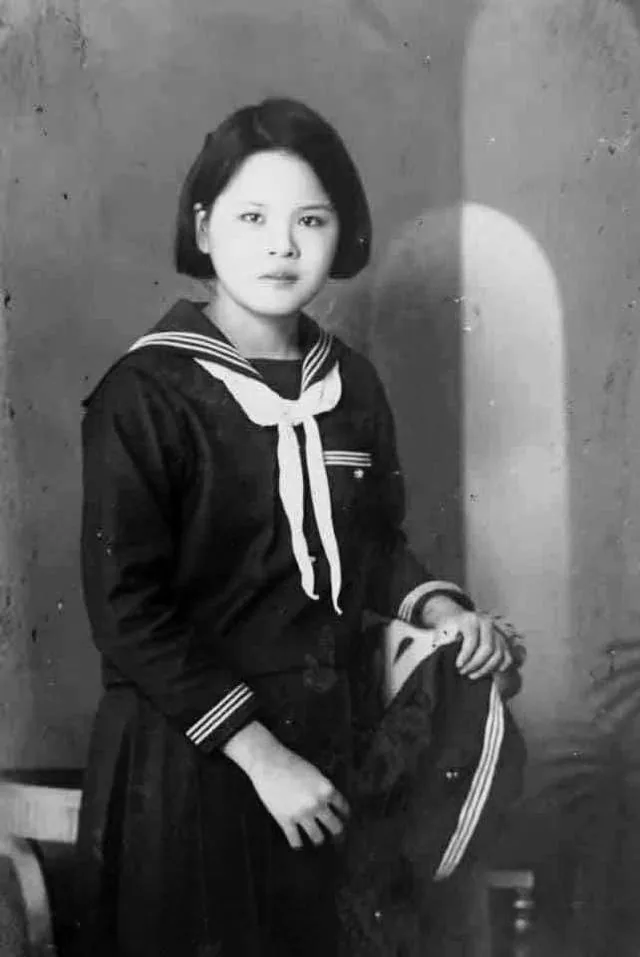
Image: Taiwanese female students during the Japanese colonial period. Author unknown, Wikimedia Commons public domain, see 2.
These three dates do not form a smooth timeline of progress. Rather, they resemble three actions of pushing open a door: first using publications to give names to women's experiences, then bringing the exploitation hidden in the dark alleys of red-light districts into the streets, and finally turning "I am afraid to walk alone at night" into a public safety issue the state must address. The most significant change in Taiwan's women's movement lies in redefining which experiences can become public issues, thereby gradually exposing the institutional barriers women face in politics.
Curator's Note: The Constitution has long stipulated legal equality between men and women, but the true women's movement is what brought this principle into homes, schools, and offices.
Why Equality on Paper Is Still Not Enough
After the Nationalist government relocated to Taiwan in 1949, Article 7 of the Constitution provided formal guarantees for legal equality between men and women. However, a wide gap existed between legal text and daily life. Issues such as residence, surname, property, and child custody within marriage; marriage-related resignation and pregnancy-related dismissal at work; and violence and caregiving in the family were still treated as arrangements in the private sphere rather than rights issues requiring state intervention. In her 2000 lecture notes on the women's movement, Yuan-chen Lee placed this discrepancy at the core of the movement's emergence.3
In 1971, Hsiu-lien Lü proposed "New Feminism," calling on women to leave the kitchen and participate in society. She originally intended to form the Modern Women's Association but was constrained by regulations on people's organizations during the martial law period,转而 turning to the Pioneer Publishing House to publish books on women's issues and organize lectures and events. After the 1979 Formosa Incident, Hsiu-lien Lü was imprisoned, and the New Women's Movement was consequently interrupted. This rupture illustrates that the women's movement and democratization were never parallel lines; political repression directly determined whether women could organize, publish, and speak out.4
The 1982 Women's New Knowledge magazine picked up this broken thread. The magazine placed abortion, marital property, sexual harassment, the social participation of housewives, and the conditions of female workers on the same agenda.

Image: Gao Jin-hua, circa 1935. Wikimedia Commons public domain, see 5.

Image: Group photo of Taiwanese women in the 1930s. Author unknown, Wikimedia Commons public domain, see 6.
This combination of issues sparked controversy at the time. Some argued that gender equality was merely the complaint of middle-class women, while others interpreted women's rights advocacy as wives fighting for power against husbands. The magazine's work was to enable experiences once borne individually to recognize each other, and then organize these experiences into discussable public issues.7

Image: Chen Hsin-chen, 1935. Wikimedia Commons public domain, see 8.
How a Magazine Reached Huaxi Street
On January 10, 1987, Women's New Knowledge, the Rainbow Project, the Taiwan Association for Human Rights, Indigenous groups, and church groups launched a march on Huaxi Street titled "Protest Human Trafficking—Care for Child Prostitutes." This was the first time Taiwan's women's movement brought women's issues to the streets on a large scale. The following year, on January 9, the Women's Aid Foundation, New Knowledge, and the Rainbow Project again marched into Huaxi Street in the winter rain. The procession moved from the Guilin Police Station into the alleys, delivering rescue phone numbers to girls trapped in the sex industry.9
The historical significance of this action cannot be summarized merely as "successfully raising social awareness." The march simultaneously connected the women's movement with Indigenous peoples, human rights, child trafficking, and church rescue work. It also exposed the limitations of policy at the time: although the government, through the "Correcting Customs Project," apprehended a large number of underage prostitutes, problems of police collusion, overly light penalties, and insufficient shelter did not disappear. Women's groups thus shifted from protest to shelter, volunteer training, legal advocacy, and long-term accompaniment.
In November 1987, the Women's New Knowledge magazine was reorganized into the Women's New Knowledge Foundation. The change in organizational name did not mean the movement left the streets, but rather that it began using three tools simultaneously: magazines and research to build discourse, marches and petitions to generate public pressure, and legal drafts and lobbying to send that pressure into the system. This combination of "publication, street, and bill" later became a recurring working method for Taiwan's women's movement.
Curator's Note: After entering the system, the women's movement still brought the language of the streets into bills, then returned to daily life to check whether the laws were truly effective.
From a Paper Contract, Asking Who Can Stay in the Workplace
In 1987, female attendants at the Sun Yat-sen Memorial Hall were forced to resign upon turning 30, getting married, or becoming pregnant, according to contract provisions. During the support process, Women's New Knowledge discovered that the Labor Standards Act, Factory Act, and Civil Code at the time could not directly address such gendered contracts. This event exposed a legal blank space: women could work, but they might not be able to continue working after marriage or childbirth.10
Following this event, Women's New Knowledge proposed a draft for a Gender Equality in Employment Act in 1990. The business sector pushed back, and the bill stagnated for years. In 1999, women's groups used petitions and hotlines for reporting pregnancy discrimination and sexual harassment to expand public pressure. In 2001, the bill was finally passed in its third reading. The law prohibits employers from treating job applicants and employees differently based on gender, requires employers to establish sexual harassment prevention measures, and provides for parental leave without loss of employment, family care leave, and childcare measures.11
In 2025, when the Sun Yat-sen Memorial Hall revisited this history through symposiums and documentaries, Li-chun Yang, a key figure from that time, remained central to the story. She had been forced to resign due to marriage and fought for her rights regarding unpaid severance pay. Lawyer Cheng-fen Pan discussed her involvement in drafting the Gender Equality in Employment Act. These names remind us that the Employment Equality Act stems from the cumulative efforts of female attendants, female section chiefs, lawyers, and women's groups. They transformed harms once viewed as "company rules" into legal issues.12
Marriage Is Not a Safe Haven for the Law
In the 1990s, women's groups translated personal experiences into demands for amending the Family Law of the Civil Code. Although the Civil Code Family Law, enacted in 1928, used modern legal language of gender equality, it retained the power configuration of the patrilineal family. After the first amendment in 1985, the women's movement from the late 1980s to the 1990s began more explicitly demanding that the mother's surname, marital property, residence, and child custody no longer prioritize the father.
In 1994, Judicial Yuan Interpretation No. 365 declared the provision in Article 1089 of the Civil Code, which established "paternal supremacy," unconstitutional. Through drafts, public hearings, petitions, and Legislative Yuan lobbying, Women's New Knowledge, the Late晴 Association (Late晴 refers to widows/survivors), and legal workers transformed the question of "who decides for the child" from an internal family dispute into a constitutional equality issue. After the 1996 amendment, judgments on child custody and parental rights during divorce no longer prioritized the father. The 2007 amendment allowed children to choose the mother's surname.13
The counter-intuitive aspect of this legislative path is that the women's movement demanded the law recognize power relations within the family. When a family's residence, surname, property, and custody are all prioritized by the male side, the family is not a naturally equal private space. Women's groups dissected the "home," allowing the law to address inequalities within it.
Deng Ru-wen and "Law Entering the Home"
The 1993 Deng Ru-wen murder case brought long-term marital violence to the surface. She had suffered long-term physical and sexual violence from her husband before killing him. The case sparked discussion among women's groups, lawyers, and the public about marital violence, challenging the saying "Even an upright official finds it hard to settle family matters." The historical evolution of the New Taipei City Government Domestic Violence and Sexual Assault Prevention Center links this case to the formation of the subsequent Domestic Violence Prevention Act.14
After the murder of Peng Wan-jui in 1996, women's personal safety became another issue the state had to address. On December 21, 1996, women's groups launched the "Women's Rights Fire, Illuminating the Night Road" night march, demanding the government prioritize women's nighttime mobility and public safety. In 1997, the Sexual Assault Crime Prevention Act was passed, the Ministry of Education established the Gender Equality Education Committee, and the Executive Yuan established the Committee on Women's Rights Promotion. In 1998, the Domestic Violence Prevention Act was passed, formally bringing domestic violence into the statutory protection, reporting, and administrative service system.15
"Law entering the home" marks a turn in institutional concepts. Before this, violence occurring in the home was often considered inappropriate for outsiders to intervene in. With the establishment of the legal system, protection orders, reporting, police, medical care, social workers, and the judiciary began to form an intervention network. Institutions do not eliminate violence immediately upon the passage of laws, but victims at least gain a new language: a harm that can be reported, protected, and held accountable, which should not be归结 to her marital failure.
Curator's Note: The deepest transformation of the women's movement is rewriting "family matters" as "things the state cannot pretend not to see."
After Ye Yong-zhi, Gender Enters the Textbook
On April 20, 2000, Ye Yong-zhi, a student at Gao-Shu Junior High School in Pingtung, died. The incident sparked discussion in Taiwan society regarding gender traits, school safety, and the educational system. The Ministry of Education later designated April 20 of each year as Gender Equality Education Day, reviewing how the Ye Yong-zhi incident prompted schools to rethink respect for students with different gender traits.16
The legalization of gender equality education was not driven by a single event. In 1988, Women's New Knowledge began examining gender discrimination in elementary and junior high school textbooks. In 1993, the Society for Women's Studies was established, continuing to critique gender divisions in education and academia. In 1997, the Ministry of Education established the Gender Equality Education Committee. In 2000, the Ministry of Education commissioned Mei-chen Shen, Chian-ling Su, Hsiao-chin Hsieh, and Hui-hsin Chen to draft the Gender Equality Education Act. The Ye Yong-zhi incident prompted the draft to more clearly include issues of gender traits and sexual orientation.17
From 2002, the draft revision小组 underwent public hearings and multiple meetings. On June 4, 2004, the Legislative Yuan passed the Gender Equality Education Act in its third reading, which was promulgated and implemented on June 23. Hui-hsin Chen chaired the relevant research group and has long engaged in gender and legal research. This history transformed "whether education should teach gender equality" into an institutional obligation: schools must provide a safe learning environment, curricula and materials must not reproduce gender discrimination, and victims must have channels for application, investigation, and relief.18
The implementation of the bill relies not only on central mandates but also on whether local education authorities, school gender equality committees, and teachers are willing to turn recourse procedures into support that students can truly use. For victimized students, the existence of the system is only the first step; next comes confidentiality after reporting, the professionalism of investigators, coordination between parents and schools, and whether the campus can avoid pushing the complainant back into isolation. Gender equality education thus extends from curriculum content to school governance, and the women's movement moves from demanding legal recognition of issues to further requiring agencies to establish trustworthy handling procedures. These details determine whether the system functions in daily life.
From Protecting Women to Gender Quotas
The institutions of women's political participation also underwent conceptual shifts. Early women's guaranteed quotas allowed women to enter the electoral system, but by the 1990s, women's groups began to question whether fixed quotas would become a ceiling for women's political participation. Thus, advocacy gradually shifted from "one-quarter women's guaranteed quota" to the "one-third gender proportion principle," arguing that this system addresses both female underrepresentation and unequal distribution of political power.19
In 2000, the commitment to a female cabinet comprising one-quarter of the members was proposed and implemented. During the 2004 constitutional amendment, in the party-list proportional representation ballots for legislators, women must constitute no less than one-half. This system simultaneously changed how political parties and state agencies understand representation, ensuring women are no longer merely passive additions: they are a demographic that democratic institutions must normally reflect.
This system has always been controversial. Guaranteed quotas may be seen as a ceiling, or they may serve as necessary stepping stones within male-dominated nomination systems. Taiwan's women's movement strategy involves re-examining institutional effects after using guaranteed quotas, then proposing next steps for gender proportion, co-governance, and gender mainstreaming.20

Image: Tien Ying-mei, before 1932. Wikimedia Commons public domain, see 21.

Image: Chen Mei's "Moonlit Clear Tour — Qingtong Gathering Play," depicting women hanging needles for Qixi. Wikimedia Commons public domain, see 22.
Differences in Organizations Are Also the Movement's Strength
Taiwan's women's movement has never been the story of a single group. Women's New Knowledge has primarily relied on policy advocacy, legal drafts, and cross-party lobbying. The Housewives' Alliance, starting from housewives and community life, connects environment, consumption, food safety, and caregiving. Analysis from the Taiwan Research Hub at the University of Nottingham, UK, indicates that the two organizations adopt top-down policy advocacy and bottom-up community mobilization, respectively, yet both influence institutions and daily life through education, alliance-building, and long-term organizational work.23
This also explains why "women's movement" cannot be written merely as a list of bill names. Laws require research, lobbying, and voting, but for bills to enter life, community mothers, school clubs, support systems for abused women, the Women's Bookstore, volunteers, and local workers are needed. Different groups' approaches are not necessarily consistent; conflicts may even arise regarding prostitution, sex work, lesbians, and class issues. These disputes allow the women's movement to see class, ethnicity, sexual orientation, and identity differences within "women."
From Street Advocacy to State Agencies
In 1997, the Ministry of Education established the Gender Equality Education Committee, and the Executive Yuan established the Committee on Women's Rights Promotion. The establishment of these two agencies allowed women's movement activists to begin addressing education, labor, personal safety, and political participation issues from within the state. Women's groups did not thereby lose their street position; instead, they learned to move back and forth between committees, legislative amendment meetings, public hearings, and communities. Some draft texts, some explain bills to affected people, and some bring cases of institutional failure back into public discussion.19
After the 2000 party alternation, a large number of women's movement scholars and group members were invited into policy mechanisms such as the Committee on Women's Rights Promotion. This cooperation secured administrative resources for gender mainstreaming but also raised new questions: when the movement enters the state, who can still represent women who have not entered the conference room? The organizational experience of Women's New Knowledge and the Housewives' Alliance shows that policy advocacy and community mobilization each have strengths and blind spots. Relying solely on law easily ignores the implementation site, while relying solely on local action does not necessarily change national rules.23
Institutionalization added a new type of work: translating legal language into procedures usable by local agencies, schools, enterprises, and families. The fact that the Committee on Women's Rights Promotion can propose policy recommendations does not mean every county and city can provide the same services. After the passage of the Gender Equality Education Act, the quality of investigations by school committees, teacher training, complainant confidentiality, and cross-agency referrals all became sites the women's movement must continue to monitor. This means the effectiveness of the women's movement cannot be measured only by the number of bills, but also by whether a person facing discrimination or violence can truly find an entry point.17
Class issues within the women's movement also became clearer at this stage. Early organizations were often driven by women with higher education who could write and participate in meetings; the experiences of factory female workers, rural women, Indigenous women, new immigrant women, and women with disabilities may not have entered the agenda equally. This does not mean early advocacy lacked value, but rather reminds later movements to continuously ask: who defines the problem in an apparently universal women's policy, and who bears the cost of reform?7
From Hsiu-lien Lü proposing New Feminism in 1971, to the founding of Women's New Knowledge in 1982, to the Sexual Assault Crime Prevention Act in 1997, the Domestic Violence Prevention Act in 1998, the Gender Equality in Employment Act in 2001, and the Gender Equality Education Act in 2004, Taiwan's women's movement has indeed changed laws and public institutions. But every institution leaves the next question: Can protection orders truly reach abused women? Can the Employment Equality Act resist the asymmetry of caregiving responsibilities? Can gender equality education be understood in schools rather than merely fulfilling hour requirements? Can gender proportion be implemented in the core of decision-making?
The history of Taiwan's women's movement therefore cannot be concluded with a single phrase "from backward to progressive." It is more like a set of experiences constantly being renamed: domestic violence from household chore to crime, marriage-related resignation from company rule to discrimination, gender roles in textbooks from common sense to checkable content, and women's political participation from guaranteed quotas to co-governance systems. Each renaming represents someone first bearing the problem in life, then finding a way to make society listen. This is also the reason the women's movement continues to exist and still needs to be recorded and discussed.
Curator's Note: What the women's movement leaves behind is a method for translating silent experiences into public language, not a completed checklist.
References
All sources for this article are specific articles, research, or government detail pages; media homepages or search pages are not used as footnotes.
Image Sources
- Taiwanese female student during the Japanese colonial era: Author unknown, Wikimedia Commons public domain. Hero image cached in
public/article-images/history/to avoid hotlinking to the source server. - The fashined ladies of Taiwan 1930s: Author unknown, Wikimedia Commons public domain. Article uses the raw file hotlink provided by Wikimedia Commons, no image download.
- Women at the Qixi Festival: Chen Mei work, Wikimedia Commons public domain. Article uses the raw file hotlink provided by Wikimedia Commons, no image download.
- Gao Jin Hua: Author unknown, Wikimedia Commons public domain. Article uses the raw file hotlink provided by Wikimedia Commons, no image download.
- Chen Shen Zhen 1935: Author unknown, National Taiwan History Museum Archive provides file info, Wikimedia Commons public domain. Article uses raw file hotlink, no image download.
- Chhan Eng-mui: Taiwan Automobile Society, Wikimedia Commons public domain. Article uses raw file hotlink, no image download.
Further Reading
- The Voice Leading the Women's Movement—Women's New Knowledge Foundation (1982–) — National Taiwan History Museum organizes the founding of Women's New Knowledge, the 1987 Huaxi Street march, post-martial law reorganization, and 1990s legal achievements.↩
- Taiwanese female student during the Japanese colonial era — Wikimedia Commons file page indicates the photo was taken before 1945, author unknown, listed as public domain according to Taiwan, Japan, and US term rules.↩
- Taiwan's Women's Movement and Its Political Implications / Yuan-chen Lee — Yuan-chen Lee's 2000 volunteer training lecture notes, explaining the gap between constitutional formal equality and the reality of family and workplace.↩
- Chronology — National Taiwan History Museum organizes timeline nodes such as Hsiu-lien Lü's New Feminism in 1971, the Formosa Incident in 1979, and the founding of Women's New Knowledge in 1982.↩
- Gao Jin Hua — Wikimedia Commons file page records Taiwanese pianist Gao Jin-hua's portrait and biographical data circa 1935, author unknown, page marked as public domain.↩
- The fashined ladies of Taiwan 1930s — Wikimedia Commons file page records 1930s Taiwanese women photos, author unknown, page marked as public domain with source description.↩
- The Entangled Histories of Taiwan’s Women’s Movements — Taiwan Insight compares the organizational strategies, educational work, and policy advocacy of Women's New Knowledge and the Housewives' Alliance in a research article.↩2
- Chen Shen Zhen 1935 — Wikimedia Commons file page records piano educator Chen Hsin-chen's 1935 portrait, biography, and female music education work, author unknown, page marked as public domain.↩
- January 9, 1988: Rescue Child Prostitutes March on Huaxi Street — National Taiwan History Museum preserves details on the march site, organizational cooperation, the Correcting Customs Project, and subsequent juvenile sex trade prevention legislation.↩
- Towards an Equal Workplace—Gender Equality in Employment Act — National Taiwan History Museum records the Sun Yat-sen Memorial Hall female attendants' age and marriage/childbirth resignation clauses, and the advocacy and legislative background of the Gender Equality in Employment Act.↩
- Taiwan's Women's Movement and Its Political Implications / Yuan-chen Lee — Women's New Knowledge Foundation's saved lecture notes by Yuan-chen Lee, recording the 1989 draft, 1990 submission, business pushback, and subsequent Employment Equality Act advocacy.↩
- Sun Yat-sen Memorial Hall Cross-boundary Symposium: Reminiscing Taiwan's Professional Women's Gender Equality History — Sun Yat-sen Memorial Hall 2025 press release, reviewing Li-chun Yang's Ten-Credit marriage severance pay lawsuit, Lawyer Cheng-fen Pan, and the Sun Yat-sen Memorial Hall female attendants' working rights struggle.↩
- Breaking Patriarchalism Towards Legal Systems of Gender Equality—Promoting Amendments to the Civil Code Family Law — National Taiwan History Museum explains the 1928 Civil Code Family Law, 1985 amendments, 1990s women's movement advocacy, and the 2007 mother's surname system.↩
- Historical Evolution — New Taipei City Government Domestic Violence and Sexual Assault Prevention Center organizes the official evolution linking the Deng Ru-wen case, Peng Wan-jui case, and the formation of the domestic violence prevention system.↩
- History of Women's Rights Development — Committee on Women's Rights Promotion Development Foundation records the Peng Wan-jui case, the December 21 night march, the 1998 Domestic Violence Prevention Act, and the historical position of the Women's Bookstore.↩
- Ministry of Education Designates April 20 of Each Year as Gender Equality Education Day — Ministry of Education explains the institutional connection between the Ye Yong-zhi incident, Gender Equality Education Day, school safety, and the Gender Equality Education Act.↩
- Promoting Gender Equality Education and the Gender Equality Education Act — National Taiwan History Museum organizes 1988 textbook examination, 1997 Ministry of Education committee, 2000 draft research, and 2004 legislation.↩2
- Chen Hui-hsin — National Taiwan History Museum biography, recording Chen Hui-hsin chairing the Gender Equality Education Act draft research group, and her role in gender and legal research.↩
- Pursuing Gender Equality Co-governance—Gender Proportion Principle — National Taiwan History Museum explains the shift from women's guaranteed quotas to the gender proportion principle, female cabinet proportion, and the 2004 constitutional amendment.↩2
- Chronology — National Taiwan History Museum's women's history timeline, providing institutional nodes such as the 1992 women's guaranteed quotas, 1997 Committee on Women's Rights Promotion, and 2004 Gender Equality Education Act.↩
- Chhan Eng-mui — Wikimedia Commons file page records Hsinchu woman Tien Ying-mei's portrait before 1932, file marks author as Taiwan Automobile Society, page marked as public domain.↩
- Women at the Qixi Festival — Wikimedia Commons file page records Chen Mei's Qixi Festival乞巧 painting made between approximately 1654 and 1722, page marked as public domain.↩
- The Entangled Histories of Taiwan’s Women’s Movements — Taiwan Insight research article comparing top-down and bottom-up strategies of Women's New Knowledge and the Housewives' Alliance, discussing organizational mobilization limits and diversity.↩2


