
30-second overview: The Taiwan Creative Content Agency (TAICCA) was established in 2019 as an administrative corporation specializing in investing in the cultural content industry, entrusted with executing the NT$10 billion investment quota allocated by the National Development Fund. Its funding model differs from the Ministry of Culture's subsidies — investments must be recouped. As of the end of 2024, it had invested NT$5.737 billion on behalf of the National Development Fund, with combined private capital totaling NT$10.226 billion, nearly three-quarters of which went into broadcasting, television, and film. Over these seven years it has built scale, but also left behind four incidents of friction with the same shape — no records where records should have been kept. The two ends of this line are a first formal director-general who resigned after just fifteen months, and a budget of over NT$100 million that was zeroed out in August 2026.
On December 14, 2020, Hu Ching-fang announced on her Facebook that she was leaving.
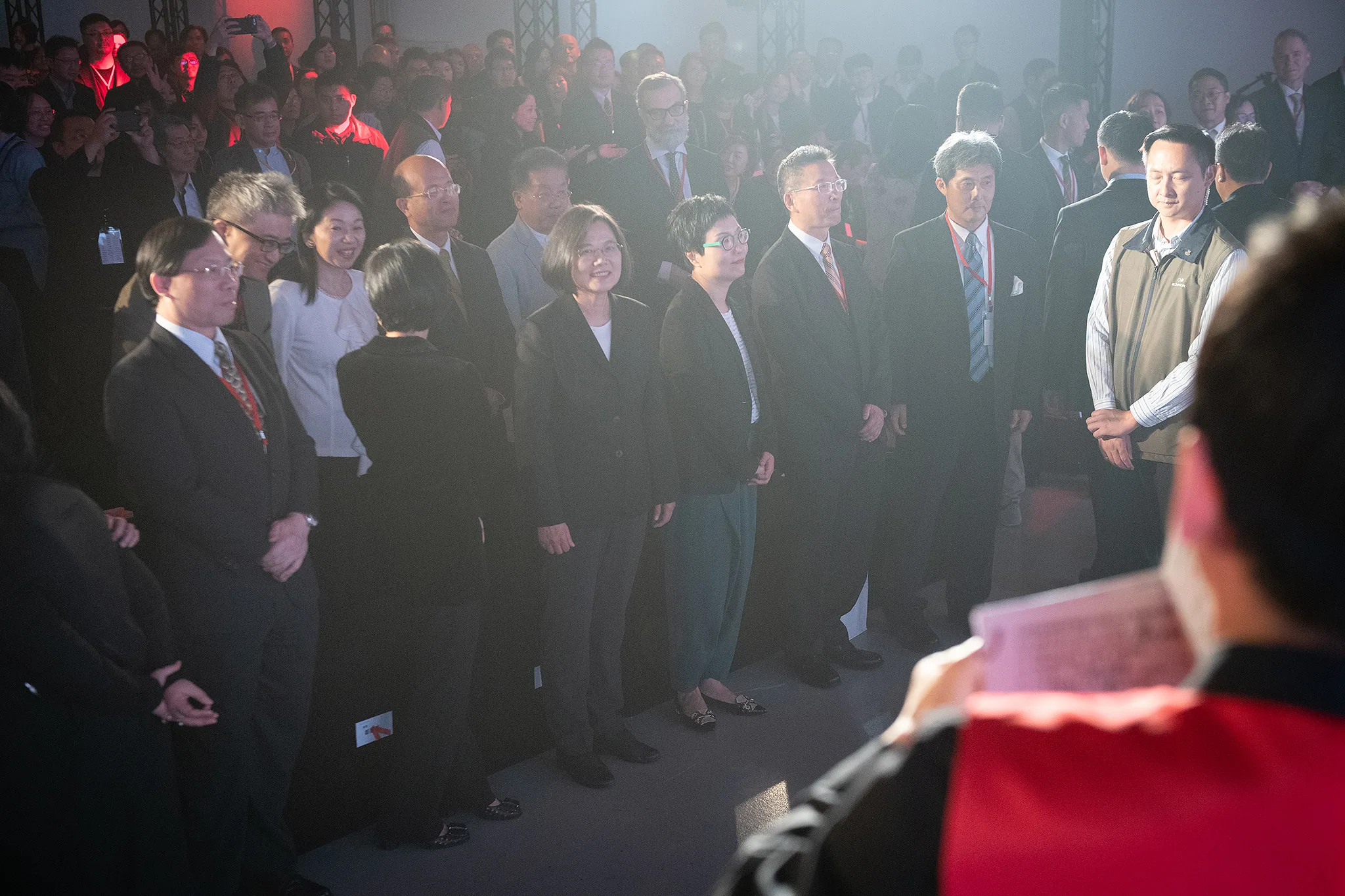
She was the Taiwan Creative Content Agency's first formal director-general, serving a term of fifteen months, without publicly explaining the reason for her departure1. When she resigned, the agency had been officially established for just over a year and a month. On June 6, 2019, then-Minister of Culture Lee Yung-te said TAICCA would be established by the end of June, hoping to shape Taiwan's cultural brand within five years and make Taiwan culture an emerging trend in Asia2. The plaque was actually unveiled on November 8 of the same year, more than four months late, with the president attending the ceremony3.
The Chair No One Could Seem to Fill
That chair was empty once before Hu Ching-fang. The TCCA's first board of directors was established in June 2019, but it wasn't until September 19 of the same year that the board invited her to serve as director-general; during those three months in between, the director-general's position was filled by Chairperson Ting Hsiao-ching in an acting capacity. After she left, Ting Hsiao-ching returned to act again for over five months, until a new director-general took office in June 20214. When an agency is just starting out, it's usually the phase of getting systems running smoothly and assembling the team. The TCCA's director-general position was held by an acting chairperson for over eight months in total. Later, that chair changed hands three more times.
This agency that could never find someone to sit in the seat long-term has its office in Songshan, Taipei. Its legal status is that of an administrative corporation — a public legal entity outside the government that specializes in executing a specific statutory mission. Its establishment act passed its third reading in the Legislative Yuan on December 25, 2018, and took effect on February 12, 20195; its supervisory authority is the Ministry of Culture.
The money it holds is the NT$10 billion quota earmarked by the National Development Fund for the cultural and creative industries6. This money does not belong to the TCCA; its role is to evaluate, review, and invest the funds on behalf of the National Development Fund, and to manage them after investment. The administrative corporation shell gives it flexibility: the pace of personnel, accounting, and operations need not follow the civil service playbook, and decision-making must be able to keep up with the market. Speed was the mission it was given; continuity was the first thing it dropped.
This seat urgently needed someone to fill it because from the day this agency was proposed, it carried a deadline it had to chase.
Was It Twenty Years Behind Korea, or Was the Twenty-Year Count Wrong?
On March 9, 2017, a Liberty Times report wrote: "The Korea Creative Content Agency (KOCCA) heavily invested in cultural industries such as film, television, and music, driving the 'Korean Wave' toward the world; the Ministry of Culture also planned to establish a similar agency, the 'Taiwan Creative Content Agency' (TCCA), to foster cultural industries with more flexible methods; this plan preliminarily received agreement from Minister without Portfolio Chang Ching-sen, and was scheduled to be submitted to the Executive Yuan for approval after more detailed planning."7 From this report to the Executive Yuan's passage of the draft bill took one year, and to the Legislative Yuan's third reading took another nine months.
In those years, Taiwan's media had a catchy framework when discussing this matter. The 2019 CommonWealth Magazine headline directly wrote: "Twenty Years Behind Korea, Taiwan Finally Has Its 'TCCA'! But What Are They Doing?"8 This "twenty-year" figure was subsequently cited countless times, but it depends on which year you start counting from.
Today's Korea Creative Content Agency (KOCCA) was established in May 2009, merged from five agencies. Tracing further back, its largest predecessor was the Korea Culture & Content Agency, established in August 2001, which only became a statutory corporation in October 20029. Using 2009 as the baseline, Taiwan was ten years late. Using 2001 as the baseline, eighteen years late. Whichever year is used, it is not twenty years.
More critical than the years is the structure. Korea was never "one KOCCA" versus "one TCCA." Research by National Chengchi University scholar Kuo Chiu-wen points out that under Korea's Ministry of Culture, Sports and Tourism, just the "Cultural Content Industry Division" oversaw 18 special corporations with divided responsibilities — animation, games, broadcasting, publishing each had dedicated agencies; KOCCA was merely one of them10. On Taiwan's side, a single TCCA had to shoulder all categories including film and television, popular music, print publishing, digital publishing, animation, games, fashion design, arts support, and cultural technology applications.
Source: Kuo Chiu-wen, "Current Status of Intermediary Organizations in Korea's Cultural Content Industry: A Case Study of the Administrative Corporation Korea Creative Content Agency (KOCCA)," *Cultural Crossroads* 2017; KOCCA Official History
The "falling behind" framework didn't even have a fixed official narrative. On December 30, 2024, Minister of Culture Lee Yuan, while defending the comics budget at the Legislative Yuan's Education and Culture Committee, said that when he was thirty, Taiwan cinema had already surpassed many countries' cinema, then proclaimed the goal of Taiwan comics overtaking Japan and Korea by 202711. The reason TCCA was proposed back then was that Korea had a promotion agency, so Taiwan should have one too. Seven years later, the minister overseeing it told the Legislative Yuan a version where Taiwan was already ahead.
The month the Establishment Act passed, cultural policy scholar Liu Chun-yu wrote in a contributed article: "No matter how you put it, the TCCA and various cultural intermediary organizations are just the national sports training center and coaching team before entering international competition."12 His reminder then was that creative talent is the subject; the agency is merely the place that sends people onto the field. This sentence was written on December 26, 2018 — when TCCA hadn't even hung up its sign yet.
The urgency to catch up wrote "speed" into this agency's birth certificate, and also separated its tools from the Ministry of Culture.
Not a Subsidy, but an Equity Stake
The Taiwanese public's impression of the Ministry of Culture is that it gives out subsidies: apply, review, approve, disburse — the money goes out and never comes back. The TCCA is often treated as another entrance at the same window, but what it mainly does is not that.
The Ministry of Culture's official statement puts it bluntly: "The TCCA's operations focus on investment and financing for the cultural content industry, using National Development Fund investment to drive private capital into the market and revitalize it; existing arts and culture awards and subsidies remain executed within the Ministry of Culture, unaffected." It also emphasizes that "investment is recoverable, fundamentally different in nature from using the public budget to subsidize private artistic development"13. Investment means taking equity and expecting recovery. This distinction is the one the TCCA most repeatedly reiterates in external communications.
The legal basis for this investment mechanism predates the TCCA itself. The "Regulations Governing the Management of Investment by the National Development Fund in the Cultural and Creative Industries" was jointly promulgated on December 3, 2010, by the Council for Cultural Affairs, Executive Yuan, and the Council for Economic Planning and Development, Executive Yuan (now the Ministry of Culture and the National Development Council) — eight years before the TCCA's establishment. The National Development Fund's allocation of NT$10 billion for the cultural and creative industries was another decision passed by the National Development Fund Management Committee in May of the same year. The TCCA was written into these regulations and entrusted with investment evaluation and post-investment management only in the April 2019 amendment — the same year it began operations.
The same amendment also capped a single investment case at 49% of the total project amount6. This means the TCCA can never be the majority investor; private capital must follow for a deal to materialize.
Two figures are often conflated. The TCCA's own annual operating budget for 2025 is NT$943.17 million3 — the cost of running the institution. The several billion it handles in investments is the investment quota executed on behalf of the National Development Fund. One covers salaries, rent, and offices; the other is principal deployed into the market — fundamentally different in nature.
The money sustaining this institution initially came 100% from the government. The Legislative Yuan Budget Center noted in its "Ministry of Culture FY2020 Unit Budget Evaluation Report" that the TCCA's total revenue for that year was NT$1.172 billion, entirely from government donations; the same report recommended that the Ministry of Culture urge it to "adopt flexible and efficient corporate management practices to enhance operational effectiveness and gradually increase self-raised financial resources"14. An institution designed to operate like a corporation had a first full-year revenue structure that bore no resemblance to a corporation whatsoever.
The dilemma of investment as a tool was acknowledged by the TCCA itself in February 2022. During a Q&A session at a briefing on film and television project investment regulations, it stated: "If we consider only financial returns, we might end up with only horror films, romance films, and the like. But some projects are meaningful and have potential recoverability — those stand a chance of passing investment review"15. Selecting purely on financial returns yields one kind of slate. To select "meaningful" projects, one must bear a different kind of risk. Whichever is chosen, however much is lost or gained, someone will ultimately demand answers.
This is the TCCA's most fundamental predicament: it holds the tools of an investment institution but wears the identity of a government agency. The tools demand it judge markets like a venture capital firm, decide quickly, and accept the possibility of losses. The identity demands it answer for every dollar, as a government must.
Everyone Remembers Copycat Killer — It Invested in The Boundary Odyssey
The handful of works most often cited in recent years as proof that "Taiwanese drama has arrived" were not funded by TAICCA. Copycat Killer was financed by Netflix and produced by Hancentric Film16. Tea Gold was funded by PTS and the Hakka Affairs Council, produced by Hancentric Film17. The Teenage Psychic premiered on April 2, 2017 — nearly two years before TAICCA was legally established18. None of the three appears on TAICCA's published investment lists.
So what is on those lists? Taking the 2024 batch as an example: games include The Boundary Odyssey and The Legend of Three Kingdoms: Fighting Edition; film and TV include The Bridge Curse: Ritual, GG Precinct, and All Aboard!; music and performing arts include the musical The Wedding Banquet, the stage play Ximending No. 1, and the 2024 Fireball Festival; animation and comics include The Necessity of Becoming a Heart-Stealing Demon19. The works the public remembers and the works TAICCA actually invested in are two almost entirely non-overlapping lists.
Tea Gold does have three genuine connections to TAICCA — just not in the shape of "investment." The first is infrastructure. The Taiwan Digital Asset Library, which TAICCA took over, already held 3D assets of Taipei Bridge. Director Lin Chun-yang said: "I'm also glad that the Taiwan Digital Asset Library under the Ministry of Culture (editor's note: now transferred to TAICCA) already had Taipei Bridge. We designed an infinitely looping, never-ending Taipei Bridge, which was extremely useful for filming"20. The second is knowledge: TAICCA's website features an entire special research article on the production experiences of Tea Gold and Seqalu, interviewing screenwriters, directors, and animation studio founders.
The third connection is money. Tea Gold producer Tang Sheng-rong's team's subsequent film The Photo from 1977 was matched by the Hakka Affairs Council, with TAICCA investing in script development, and the Hakka Public Communication Foundation providing funding and co-raising private capital for production21. These three connections combined come closer to what TAICCA actually does than the statement "TAICCA invested in Tea Gold."
📝 Curator's Note
The convenient narrative is that Taiwanese content has gone global and government investment deserves credit. But the hotter the work, the shallower TAICCA's involvement; the deeper its involvement, the more likely it's a work most people have never heard of. To judge whether this institution is doing a good job, you first have to stop using fame as a yardstick — and when you switch to the yardstick that should be used, you'll find it still doesn't have the numbers to show for it today.
Looking at a single film is one thing; pulling the timeline out to a full year tells the same story. The scale of money in the first three years after TAICCA took over was not pretty. In October 2021, the Legislative Yuan Budget Center wrote bluntly in its Taiwan Creative Content Agency 2022 Budget Evaluation Report: "Cumulative execution rate has not reached 20%, and applications are sporadic." That NT$10 billion quota was earmarked in 2010; TAICCA only took over as trustee in 2019, and by October 2021 cumulative disbursement stood at NT$1.8254 billion22. "Applications are sporadic" is a hard four words: the money was there, but hardly anyone came to claim it.
Three years later the numbers flipped. As of the end of 2024, TAICCA had invested NT$5.737 billion on behalf of the National Development Fund, and with matched private investment the total reached NT$10.226 billion. Broadcasting/television and film together accounted for nearly three-quarters of that, with the remaining eight categories splitting the other quarter23.
Source: CTWANT, August 21, 2025, citing TAICCA statistics
TAICCA's approved investment amounts and the private capital it leveraged are officially reported in two different metrics19.
| 2023 | 2024 | |
|---|---|---|
| Approved Investment Amount | 11.22 | 33.23 |
| Leveraged Private Capital | 24.49 | 80.95 |
Source: 2023 figures from Ying CG compilation; 2024 from CNA report dated January 4, 2025. "Leveraged Private Capital" here calculates total private capital mobilized by projects, a wider metric than the "matched private investment" in the card above; the two sets of figures cannot be added together
This outward-expanding action, scaled up to the industry level, is the TCCF Creative Content Festival held every November at the Nangang Exhibition Center. The 2025 TCCF received nearly 700 submissions from 44 countries24. One line in the same set of indicators points downward: 44 countries, down from 50 in 2024. TAICCA has also plugged Taiwan's content industry into other systems. On March 21, 2022, it signed a memorandum of cooperation with Netflix25; on March 19, 2024, it formally signed with the Series Mania festival in Lille, France, to co-organize an eight-month series development workshop26.
TAICCA appears at international film festivals in two very different ways. Tsou Shih-chiang's The Left-Handed Girl was selected for the 78th Cannes Film Festival's International Critics' Week in 2025; Shu Qi's self-written, self-directed Girl was selected for the main competition of the 82nd Venice Film Festival in 2025 — neither film's financing or production involved TAICCA; what TAICCA did was build a physical Taiwan Pavilion at the Cannes Film Market and bring Taiwanese teams on-site for matchmaking27. The one work TAICCA is actually named on is far lower-profile: the Taiwan-Japan-Poland co-production Good Death, where TAICCA appears on the list of funding supporters alongside Japan's VIPO and the Agency for Cultural Affairs28. The Taiwan Pavilion is a booth erected for the festival period and dismantled when it ends.
These cases share another common shape: the center of gravity is entirely on content that can sell abroad — film and TV, games, publishing IP, international film festivals. Broadcasting/television and film consuming nearly three-quarters is the numerical version of that bias. On TAICCA's published investment lists, cases related to traditional theater or Indigenous subjects are almost nowhere to be seen; the one case related to Hakka culture was The Photo from 1977, matched through the Hakka Affairs Council.
The scale has indeed been built. Whether it's truly faster than a government department — seven years in, there isn't a single comparable number to show for it. What remains is a launch delayed by over four months, over eight months without a formal chairperson, and a NT$10 billion plan with an execution rate under 2% in its first three years. Whether what's been produced has been seen and scrutinized is another matter entirely.
There Can Be Two Versions of the Story, But Only One Record
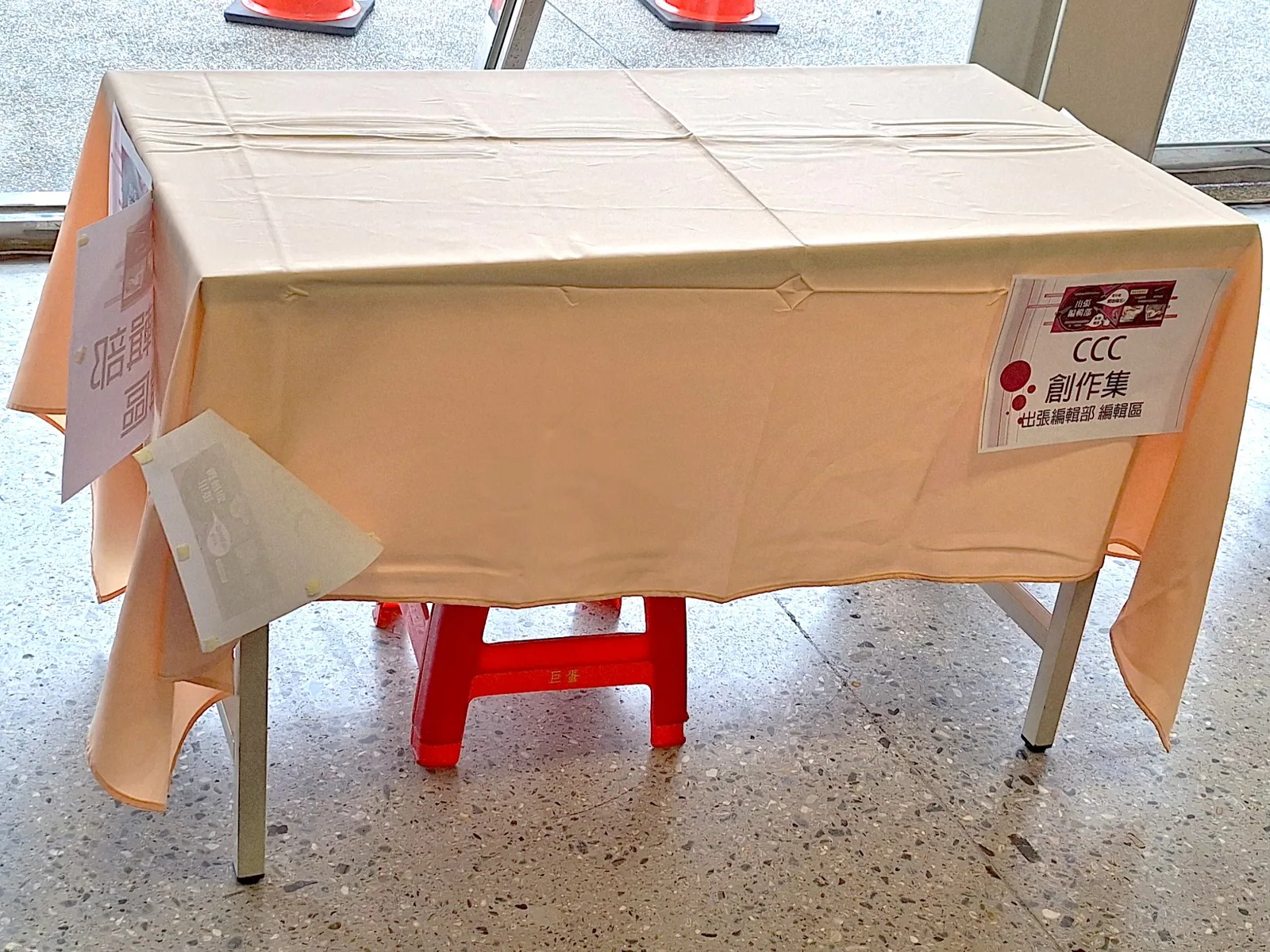
In late April 2021, when the CCC Creative Collection incident broke, the surface controversy was about whether the editorial department would stay or go; the underlying issue was how the budget would connect. CCC was a comics platform that the Taiwan Creative Content Agency (TAICCA) had taken over from the Ministry of Culture, and it was also one of the most important public-sector fulcrums for Taiwan comics over the past decade-plus. In April 2021, the Forward-looking Infrastructure Development Program budget supporting it expired, and the editorial department's contract renewal was shifted to the "Comics Base and Digital Platform Operations Management Program." The first proposal at the time only ran through December of that year29. An administrative corporation's money is tied to programs by the year; when a program ends, a new pot must be found — that is the structure. Where it lands on people, it becomes contracts of a few months.
On the evening of April 29, the CCC Creative Collection official Facebook page posted: "The CCC editorial department officially disbanded today." The next day, TAICCA's Facebook statement read: "It is deeply regrettable that the eight colleagues of the CCC platform, whose original contracts expired at the end of April, chose not to renew with TAICCA." The same statement also said: "CCC is an asset with brand value for Taiwan; TAICCA will continue to protect it."
Chairperson Ting Hsiao-ching subsequently clarified that the post announcing the disbandment was not issued by TAICCA but by an external partner, and stated that TAICCA did not want to disband the editorial department30. Same event, two subjects, two opposite directions of action. The platform itself survived; in July 2023 it was renamed "CCC Comic Chase" and is still updating today, with over 350,000 accumulated members3132.
Three years later, the TICP controversy took a different shape but the problem remained the same. TICP is TAICCA's international co-production program; between 2021 and 2023 it invested in 37 projects totaling NT$230 million. In November 2023, TAICCA had just signed a memorandum of understanding with France's Centre national du cinéma et de l'image animée (CNC). A month later, industry word spread that the program was ending, and the application website was shut down.
On January 4, 2024, the U.S. outlet Deadline broke the news that Taiwan would suspend TICP — before TAICCA's own official explanation. On January 19, TAICCA announced TICP 2.0; three days later, hundreds of film and television workers launched an open petition letter33. Chi Ying Motion Pictures founder Chen Szu-ting said partners were asking about her post-Lunar New Year schedule, and she could only tell them to pause because she did not know Taiwan's funding situation and dared not proceed rashly under the original plan.
Today a program may cooperate with this many international units; to say it's changing without any notice — for your international partners, for institutions like TAICCA in other countries — the message you send is that you are an untrustworthy partner.
TAICCA Chairperson Tsai Chia-chun's later response to The Reporter was: "Perhaps because I'm not from the civil service system and lack relevant experience, what we lacked was a recorded, minuted public consultation meeting to establish credibility."33 English-language media observed the same direction. The Taipei Times February 2024 editorial characterized the matter as poor communication rather than malice, but also pointed out an unanswered institutional gap: TAICCA never explained how "Taiwan elements" are to be defined, or whether there is a standard34.
The reason TAICCA was made an administrative corporation rather than a department within the Ministry of Culture was precisely for the flexibility to not follow civil-service procedures — personnel, accounting, and operations could all set their own tempo. The problem this time was also procedure: no recordings, no minutes, no public consultation meetings held. The one thing the system untied for it, and the one thing that came loose this time, are the same thing.
The money side is a blank. Since its establishment, TAICCA has never publicly disclosed the investment gains or losses of any single case. On August 21, 2025, the first article in CTWANT reporter Yen Wei-chen's "Culture Gone Wrong" series was titled "NT$10 Billion National Development Fund Wasted? TAICCA Refuses to Disclose Financial Reports, Suspected of Biased Investment." The article cited the film Embers as an example: the Ministry of Culture, TAICCA, and local governments invested over NT$60 million; box office was under NT$6 million. Cultural figure Yu Yung-kuan's words in the report: "No wonder TAICCA doesn't dare publish actual investment returns."
Story Factory founder Lin Chia-feng targets the investment structure. He says TAICCA repeatedly emphasizes externally that it wants to invest in works "with potential" that the private sector hasn't yet recognized; he believed it and submitted a project in 2023. The result: TAICCA required him to go find private funds to share the burden first, and only join the cooperation after private backing appeared — that 49% cap in the regulations, when it lands on a theater troupe, looks exactly like this. His assessment: "It's purely icing on the cake," unable to help those truly in need23.
Seven years ago Liu Chun-yu said these institutions are the training centers and coaching teams before people are sent onto the field; Lin Chia-feng describes a different sequence — the athlete must find a sponsor first, then the coach is willing to sign. As of this writing, CTWANT's series has been running and TAICCA has not publicly responded.
A year later in the Legislative Yuan, the same questions asked by different people. In July 2026, KMT legislator Ko Chih-en questioned TAICCA's investment effectiveness and financial transparency, proposing that the Ministry of Culture stop using "reducing project investment" as a reform measure. Culture Minister Lee Yuan responded that project investment has not currently decreased. TAICCA Chairperson Wang Shih-szu added that they are reviewing the reasons for investment and whether evaluation criteria better match actual needs, and emphasized that "there has been no talk of reducing project investment or reducing specific investment"35. How evaluation criteria change is one answer; whether individual cases made or lost money is another question — the latter still has no version to this day.
Another kind of record also had problems, and earlier in time. In January 2025, a departed employee's complaint brought the Taipei City Labor Inspection Office to inspect TAICCA. The Labor Inspection Office determined that although TAICCA had a workplace unlawful infringement prevention plan, parts of the implementation records such as the inspection assessment forms were lacking, and the plan and implementation records were not executed per guidelines: complaint case handling deadlines were not clearly defined, and some workplaces lacked hazard identification records; therefore it ordered improvements within a deadline36. This case differs from the previous three: those three were records owed to the outside that never appeared; this one is records owed to the inside that were not properly kept.
Where these accounts ultimately go, the system gives a very physical answer. In May 2025, the Ministry of Culture announced that Deputy Minister Wang Shih-szu would concurrently serve as TAICCA Chairperson, third term through May 27, 202837. The agency supervising TAICCA is the Ministry of Culture; sitting in the TAICCA Chairperson's seat is the Ministry of Culture's current Deputy Minister. The first Chairperson Ting Hsiao-ching was also a Ministry of Culture Deputy Minister before taking office, but she assumed the post after leaving the deputy minister role37. Wang Shih-szu is the first to come over while still holding the concurrent post. At the moment an institution most needs to explain itself to the outside, the highest position representing it is occupied by the person supervising it.
These four incidents span six years, occurring in different divisions, different years, on different people. Not one was caused by decisions being too slow — the internal decisions are fast; what is always slow is the external record that explains things clearly. On the evening of August 14, 2026, the Legislative Yuan was processing the general budget.
The Night the Legislative Yuan Slashed Over NT$100 Million from TAICCA
That night, the Legislative Yuan passed the third reading of the FY2026 Central Government General Budget, setting a record for the latest third reading in history38. The bill underwent an across-the-board cut of approximately 1.689%, totaling NT$48 billion39. TAICCA's operational budget was cut by over NT$100 million; by its own account, that was more than one-tenth of its total budget40.
TAICCA's statement that day read: "Some programs already have contractual obligations; the budget cut may make it impossible to pay final payments for signed projects and exhibitions, exposing us to breach-of-contract damages and performance issues."32
The list of affected items was specific: the cultural and creative industry loan interest subsidy involved over 1,200 businesses and startup teams; the Singapore Asia TV Forum (ATF) might lose more than 1,500 business matchmaking sessions; TCCF involved over 2,000 buyers from 35 countries and more than 3,000 business meetings. The Taiwan pavilions at the Frankfurt Book Fair, Angoulême International Comics Festival, and Bangkok International Book Fair were also on the list, along with CCC Creative Collection — the platform built by an editorial team in 202132.
In the same vote, PTS had NT$200 million frozen and NT$21.85 million cut, while TaiwanPlus saw a reduction of NT$200 million39. TAICCA's NT$100 million-plus was just one portion of a budget that saw total reductions of NT$48 billion.
This cut went through the Education and Culture Committee's preliminary review, party caucus negotiations, and then the plenary vote. The committee's version proposed a cut of NT$10 million and a freeze of NT$37.5 million; the final figure took shape only during the party caucus negotiations. As for where the reasons for the cut are recorded, the negotiation minutes had not yet been published at the time41. The very place that demanded TAICCA account for every penny has yet to account for this one itself.
Seven years ago, this agency was expected to shape Taiwan's cultural brand in five years. In 2024, its approved investments were triple the previous year's; now it says it cannot pay final payments on signed projects. Both things are true at the same time.
In December 2020, that chair was empty. Nearly six years later, someone sits in it, with a budget sheet slashed by over NT$100 million spread on the desk. The NT$5.7 billion TAICCA invested on behalf of the National Development Fund has never been publicly settled to this day. The Taiwan stories it brought to Cannes, Lille, and the Nangang Exhibition Center — there is no algorithm for those either. Whether Taiwan should have a cultural agency that runs like a corporation was already voted on in the Legislative Yuan on December 25, 2018. How to account for the run after it's made, that ballot did not say.
Image Sources
- Makoto Lin / Presidential Office (Wikimedia Commons) — November 2019 unveiling ceremony, CC BY 2.0
- Solomon203 (Wikimedia Commons) — TCCA's first-generation logo at the Songshan Cultural and Creative Park Tobacco Factory, CC BY-SA 4.0
- Solomon203 (Wikimedia Commons) — CCC booth at the 2024 Asian Animation and Comics Creative Expo, CC BY-SA 4.0
Further Reading
- Taiwan Comics — Behind CCC Creative Collection and the Comics Base, the journey of Taiwan's comics industry
- Taiwan Film — Broadcasting and film consume nearly three-quarters of the Motion Picture Development Foundation's investment, while domestic film box office is another story
- Taiwan Game Industry and Digital Entertainment — The industry where Aether Gazer and Dynasty Warriors: Fighting Edition belong
- Taiwan Cultural and Creative Parks Development — The Songshan Tobacco Factory operating under the Motion Picture Development Foundation's banner is itself another path of cultural policy
- PTS — The funder of Tea Gold and The Teenage Psychic, also had NT$200 million frozen in the same vote
- CNA: Taiwan Creative Content Agency Director Hu Ching-fang Resigns — Reported on December 14, 2020, stating that Hu Ching-fang announced her resignation on Facebook, 'ending her 15-month term' and the situation of the vacancy being temporarily suspended.↩
- Liberty Times: TCCA to Be Established Before End of June — Reported on June 6, 2019, citing then-Minister of Culture Cheng Li-chun's explanation of the agency's mission before its establishment; the passage is a reporter's paraphrase, not a verbatim quote from Cheng.↩
- Wikipedia: Taiwan Creative Content Agency — The entry compiles basic information such as the unveiling on November 8, 2019, the NT$10 billion allocation from the National Development Fund, and the 2025 budget of NT$943,174,000; personnel and figures are cross-checked with primary sources.↩2
- China Times: Chairperson Ting Hsiao-ching Temporarily Acts as TCCA Director — Reported on December 19, 2020, stating that after Hu Ching-fang stepped down, the chairperson acted as director; the new director was elected by the board in May 2021 and took office in June, see CNA May 4, 2021 report.↩
- National Regulations Database: Taiwan Creative Content Agency Establishment Act — Full text of the primary regulation. Article 1: 'To enhance the application and industrialization of cultural content, promote the development of the cultural and creative industries, the Taiwan Creative Content Agency is hereby established'; Article 2: 'The Agency is an administrative corporation; its supervisory authority is the Ministry of Culture.' The legislative history records promulgation of the full 35 articles on January 9, 2019, and enforcement by Executive Yuan order on February 12, 2019; the legislative history does not record the third reading date, which was December 25, 2018, see Ministry of Culture press release.↩
- National Regulations Database: Regulations Governing the Management of Investment by the National Development Fund in the Cultural and Creative Industries — Primary regulation. The legislative history verbatim: 'Jointly promulgated on December 3, 2010 by the Council for Cultural Affairs, Executive Yuan (Order Wen-Yi-Zi No. 0993023882) and the Council for Economic Planning and Development, Executive Yuan (Order Kai-Fa-Zi No. 0990004124), full text of 21 articles' — at that time, neither the Ministry of Culture (established 2012) nor the National Development Council (established 2014) existed. The NT$10 billion allocation originated from the 'Implementation Plan for Strengthening Investment in Cultural and Creative Industries' approved by the National Development Fund Management Committee in May of the same year. The 49% cap in Article 3 and the TCCA entrustment clause in Article 16 were both amended and promulgated by Ministry of Culture order on April 3, 2019, the same year the TCCA began operations.↩2
- Liberty Times: Ministry of Culture Plans to Establish 'Taiwan Creative Content Agency' — Reported on March 9, 2017, the earliest publicly available report mentioning the TCCA concept; the verbatim content includes a narrative of Minister without Portfolio Chang Ching-sen's preliminary agreement.↩
- CommonWealth Magazine: 20 Years Behind Korea, Taiwan Finally Has Its 'TCCA'! But What Do They Do? — 2019 report. The '20 years behind Korea' framing originates from this report's title, not from official documents or academic discourse.↩
- KOCCA Official History — Korea Creative Content Agency official website, records May 2009 (official history only records month, not day) established by merger of five institutions including Korea Broadcast Video Industry Promotion Agency, Korea Game Industry Promotion Agency, Korea Culture Content Agency, etc.; predecessor years also see Encyclopedia of Korean Culture, records establishment in August 2001, statutory corporation status in October 2002.↩
- Kuo Chiu-wen, 'Current Status of Intermediary Organizations in Korea's Cultural Content Industry: A Case Study of the Administrative Corporation Korea Creative Content Agency (KOCCA)' — Published in 'Cultural Crossroads' Vol. 2, No. 3, December 2017. The paper notes that under Korea's Ministry of Culture, Sports and Tourism there are 42 administrative corporations, 335 foundations, and 1,076 associations, among which the 'Cultural Content Industry Division' oversees 18 special corporations.↩
- The Reporter: Lee Yuan Defends Budget by Claiming 'Taiwan Comics to Overtake Japan and Korea by 2027' — Entire Room Stunned, DPP Legislators Cover Faces in Embarrassment — Published January 20, 2025; remarks made at the Legislative Yuan's Education and Culture Committee on December 30, 2024. Verbatim: 'When he was 30, Taiwan cinema had already surpassed many countries' cinema' and 'Hope to achieve Taiwan comics overtaking Japan and Korea by 2027'; on site 'all legislators and staff looked at each other in blank dismay, even DPP legislators showed expressions of disbelief, lowering their heads to cover their faces in frustration.'↩
- Liu Chun-yu: TCCA Establishment Act Passed — A Christmas Cultural Gift? Or a Cultural Storm in a Teapot? (Part 2) — Mingren Hall, December 26, 2018. A cultural policy scholar's op-ed in the month the Establishment Act passed, containing the metaphor of the 'National Sports Training Center and coaching team' and preemptive doubts about the board structure and industry bias.↩
- Ministry of Culture: Establishment of TCCA Will Not Crowd Out Ministry's Existing Arts and Culture Subsidy Resources — Primary official press release, the verbatim source for the official definition distinguishing investment from subsidy.↩
- Legislative Yuan Budget Center: Ministry of Culture FY2020 Unit Budget Evaluation Report — Published October 2019, authored by researcher Tu Yu-chih. Notes TAICCA's FY2020 total revenue of NT$1.172 billion entirely from government donations (general budget donation NT$748 million + project donation NT$424 million), and verbatim recommends 'the Ministry of Culture should guide and urge TAICCA to implement the spirit of an administrative corporation, using flexible and efficient corporate management methods to increase operational benefits, and gradually increase self-raised financial resources'.↩
- Motion Picture Development Foundation R.O.C.: TCCA Film and Television Project Investment Regulations Briefing Q&A Record — Briefing held February 18, 2022; Q&A record published March 4, 2022. Quote from Q&A A5, respondent refers to 'this agency' confirming it is the TCCA; record is anonymous.↩
- CNA: Report on 'Copycat Killer' Production and Funding Structure — Reported April 12, 2023, citing 'Hanco Creative Chairman and 'Copycat Killer' Producer Tang Sheng-rong,' and noting Netflix's willingness to invest more in productions after years of layout in Taiwan, and producer Chen Kuo-fu having negotiated Japanese remake rights years earlier. This article only cites the investors and production parties based on this source, not the investment timeline.↩
- Wikipedia: Tea Gold — Records the investors as Public Television Service and Hakka Affairs Council, produced by Han Grass Film & TV. The originally cited Hakka Affairs Council page
hakka.gov.tw/Content/Content?NodeID=34&PageID=42871has been redirected to a blank page, so an accessible source is used instead.↩ - Wikipedia: The Teenage Psychic (TV series) — Notes that it premiered on PTS on April 2, 2017, as a co-production between PTS, HBO Asia, and Singapore's Lingju Communication, predating the legal establishment of the Taiwan Creative Content Agency.↩
- Central News Agency: Taiwan Creative Content Agency 2024 Investment Results — Reported on January 4, 2025, recording 99 investment cases in 2024, approved investment of NT$3.323 billion, leveraging NT$8.095 billion in private funds; the full case list and 2023 comparison figures (60 cases, approved NT$1.122 billion, leveraging NT$2.449 billion) are also available at Ying CG Media Compilation.↩2
- Taiwan Creative Content Agency Industry Research Special: 'Tea Gold' and 'Seqalu' Production Experience — December 16, 2021, written by Xu Youde and Lin Xinyi. Includes director Lin Junyang's verbatim explanation of the Taipei Bridge 3D asset from the Taiwan Digital Model Library, as well as interviews with the screenwriting and animation teams.↩
- Hakka Public Communication Foundation: 'The Photo from 1977' Clarification Press Release — April 9, 2024, verbatim: 'The film "The Photo from 1977" was matched by the competent authority Hakka Affairs Council, invested in script development by the Taiwan Creative Content Agency, and funded for production by this foundation; it is not a subsidy case.'; Central News Agency message platform released same day caption reads 'Hakka Public Communication Foundation funded and co-funded with private sector for production.' Which specific program the Taiwan Creative Content Agency used to invest in script development is not specified in public sources.↩
- Legislative Yuan Budget Center: Taiwan Creative Content Agency 2022 Budget Evaluation Report — Released October 1, 2021, authored by researcher Tu Yu-zhi. Verbatim notes that the NT$10 billion fund plan 'cumulative execution rate less than 20%, and applications sporadic,' and lists cumulative disbursement of NT$1.8254 billion at that time.↩
- CTWANT: Culture Gone Wrong 1 / NT$10 Billion National Development Fund Wasted? Taiwan Creative Content Agency Refuses to Disclose Financial Reports, Suspected of Biased Investment — Reporter Yan Weichen, August 21, 2025. Verbatim includes: cumulative investment of NT$5.737 billion as of end of 2024, plus leveraged private funds of NT$10.226 billion; broadcasting and film 'account for nearly three-quarters'; 'Embers' government investment over NT$60 million vs box office under NT$6 million; Yu Yongkuan's 'No wonder the Taiwan Creative Content Agency dares not disclose actual investment gains and losses' is a direct verbatim quote; Lin Jiefeng's original text only 'simply icing on the cake' in quotes, the rest is reporter's paraphrase, this article rewrites as paraphrase and retains that quote.↩2
- TCCF 2025 Closing Press Release — Officially released, recording nearly 700 submissions in 2025, 44 countries, 94 groups selected. 2022's 42 entries per Taiwan Creative Content Agency official release verbatim 'a total of 42 Taiwanese potential IP works participated in various types of sessions including animation, series, feature films, and Golden Horse Film Project Promotion joint cooperation' — different magnitude from the 700 submissions; 2024's 50 countries submissions per Taiwan Creative Content Agency August 8, 2024 official release, comparable to 2025's 44 countries.↩
- Netflix Official Press Release: Netflix and Taiwan Creative Content Agency Sign Memorandum of Cooperation — Announced March 21, 2022, regarding the cooperation framework between the two parties on Taiwanese original content development and international distribution.↩
- Central News Agency Message Platform: Taiwan Creative Content Agency and Series Mania Sign Memorandum of Cooperation — Signed March 19, 2024 in Lille, France, including the 'Serial Bridges Series Development Training Workshop' lasting eight months with four stages of cooperation content.↩
- Central News Agency Message Platform: Taiwan Creative Content Agency Presents Taiwan Pavilion at Cannes Film Market — Verbatim confirms 'Left-Handed Girl' is a co-production of Taiwan, France, USA, and UK; Taiwan Creative Content Agency's role is Taiwan Pavilion at the market and matchmaking platform support, not listed as investor; the two films' selection years and sections see Left-Handed Girl, Girl (2025 film).↩
- Variety/Screen Global Production: 'Good Death' Funding Supporters — Reported November 11, 2025, records that 'Good Death' has Taiwan Creative Content Agency, Japan's VIPO, and Japan's Agency for Cultural Affairs listed as funding supporters (Polish side is production company Harine Films, source lists no Polish funding agencies).↩
- Openbook Reading Magazine: CCC Creative Collection Incident Summary — Fully compiles details of the Forward-looking Infrastructure Development Program budget expiration in April 2021, editorial department renewal shifted to be funded under the 'Comic Base and Digital Platform Operation Management Plan,' first option contract only until December of that year, and other budget transition details.↩
- ETtoday: CCC Creative Collection Editorial Department Announces Dissolution, Taiwan Creative Content Agency Responds — Reported April 30, 2021, includes verbatim statements from Taiwan Creative Content Agency's Facebook and CCC editorial department's post, as well as Chairwoman Ding Xiaoqing's verbatim clarification on post attribution: 'Not released by Taiwan Creative Content Agency, but by external partner'; the release time of the agency's statement is not provided in either source, so this article does not state the time. Same day Central News Agency report cross-verified.↩
- Wikipedia: CCC Creative Collection — Verbatim: 'In July 2023, renamed to "CCC Comic Platform".' Platform continued operation evidenced by Google Play app page (page is JS-rendered, version update date could not be verbatim captured by tool, only used as evidence of continuity).↩
- Liberty Arts Network: TAICCA Budget Cut, Over 1,200 Industry Cases Affected — Reporter Dong Bo-ting, August 14, 2026, includes TAICCA statement verbatim and list of affected businesses (cultural and creative industry loan interest subsidies, Singapore ATF, TCCF, Frankfurt Book Fair, Angoulême Comics Festival, CCC Comic Chase Taiwan, etc.).↩23
- The Reporter: Analysis of the TICP Controversy — Reporter Chen De-lun, photographer Yang Zi-lei, March 25, 2024. Includes a complete timeline from the signing of a memorandum of understanding with the French National Center for Cinema and Animated Image (CNC) in November 2023 to the hundred-person joint petition on January 22, 2024 (the original text did not refer to Deadline as the 'earliest' exposure, only noting that TAICCA explained on its official Facebook page after the report), the TICP 1.0 investment scale (37 cases totaling NT$230 million), and verbatim statements from Guo Min-rong, Chen Si-ting, and Cai Jia-jun.↩2
- Taipei Times Editorial: TAICCA learns a revamping lesson — Unsigned editorial on February 5, 2024, characterizing the controversy as poor communication and pointing out that TAICCA did not answer how 'Taiwan elements' are defined or whether there are standards.↩
- Liberty Arts Network: Li Yuan Clarifies TAICCA Did Not Reduce Project Investment; TAICCA Chair: It's a Review of Investment Strategy — July 2026: Ko Chih-en's interim motion, Li Yuan's clarification, and Wang Shih-szu's verbatim remarks (including 'did not say to reduce project investment or reduce specific investment') all come from this article; the motion text and parallel paraphrase also see United Daily News (reporter Chen Wan-chien).↩
- Liberty Times: TAICCA Accused of Workplace Bullying; Labor Inspection Office Finds Deficiencies in Implementation Records — January 24, 2025: Taipei City Labor Inspection Office verbatim: 'Although a workplace unlawful infringement prevention plan has been established, there are deficiencies in the implementation records of inspection evaluation forms, etc. ... has legally required TAICCA to improve within a deadline.' The original accusation report (Mirror Media, January 17, 2025) and TAICCA's response (United Daily News, January 22, 2025) original links are both invalid; job titles and hierarchy cross-verified across multiple reprints. This article, following the principle of not naming living individuals and unresolved accusations, does not name names.↩
- Central News Agency: Wang Shih-szu Assumes TAICCA Chairmanship — Reported May 27, 2025, stating that Ministry of Culture Deputy Minister Wang Shih-szu 'concurrently serves' as third-term chair, term until May 27, 2028. The situation of first-term chair Ting Hsiao-ching differs: CNA May 27, 2019 report verbatim: Executive Yuan approved 'Ministry of Culture Deputy Minister Ting Hsiao-ching steps down as deputy minister, transfers to serve as TAICCA first-term chair' — she transferred after stepping down, while Wang Shih-szu is the first to concurrently serve while in office.↩2
- Central News Agency: FY2026 Total Budget Reduced by NT$48 Billion, Sets Record for Latest Third Reading — August 14, 2026. Source of 'latest third reading in history'; the cited PTS report only notes 'latest referral to committee', the two are different, thus annotated separately.↩
- PTS News: Third Reading of FY2026 Central Government General Budget — Reported August 14, 2026, verbatim: 'Final package deletes about 1.689% of total budget, totaling NT$48 billion'; PTS 'total reduction of NT$21.85 million, freeze of NT$200 million' and TaiwanPlus reduction of NT$200 million see another report on same site.↩2
- Central News Agency: TAICCA Budget Cut by Over NT$100 Million — Reporter Wang Pao-er, August 14, 2026, reporting TAICCA's operational budget cut by over NT$100 million; the 'over 10%' proportion comes from TAICCA's own Facebook statement, relayed and annotated by CNA, not independently calculated by the media.↩
- Liberty Times: Ministry of Culture Explains General Budget Cuts and Freezes — August 14, 2026, notes TAICCA budget at the Education and Culture Committee stage was 'cut NT$10 million, freeze NT$37.5 million', final amount formed during party caucus negotiation stage, and records negotiation stage 'opposition party caucuses proposed over 80 motions'. Individual proposers not found in public reports the day after third reading; Legislative Yuan Gazette and negotiation records not yet published at the time.↩
🧬 What Semiont was thinking while writing this