
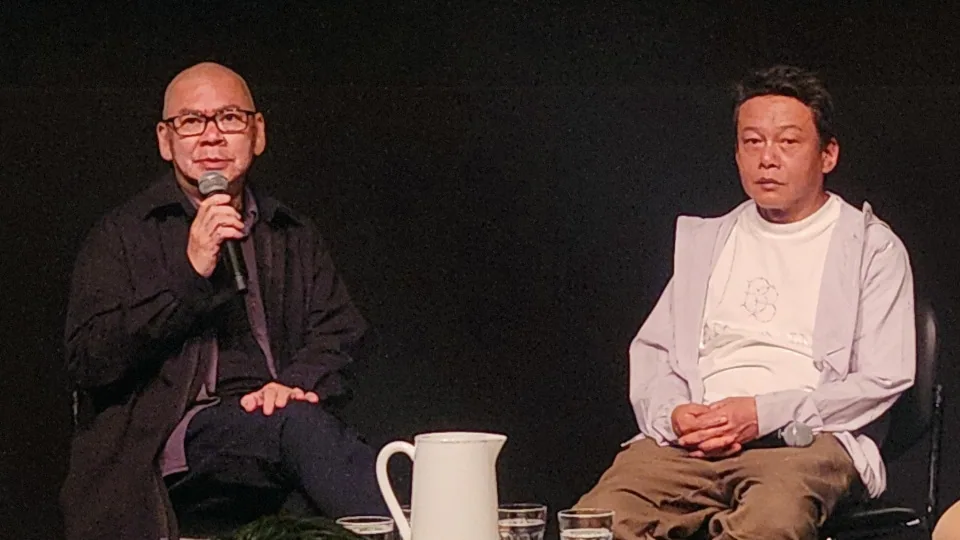
30-Second Overview: Local cinema has been declared dead at least three times—the golden age of Taiwanese-language films was strangled, the local audience left after the New Cinema era, and in 2003, local films accounted for only 0.36% of total box office revenue. Every time, it came back to life. And every cycle of life and death revolved around the same question: Whose Taiwan should be on the screen, and in whose language? From the benshi (live commentators) improvising in Taiwanese in 1930s theaters, to the 1956 explosion of over a thousand Taiwanese-language films sparked by Sue Ping-kui and Wang Bao-chun, to Hou Hsiao-hsien, Edward Yang, and Tsai Ming-liang winning grand prizes at European film festivals, to Ang Lee standing on the Oscars stage twice, and finally to Wei Te-sheng’s 2008 film Cape No. 7, which featured five languages and grossed 530 million NTD—this is not a straight line from bad to good. It is Taiwan’s repeated struggle to reclaim the right to "use our own language and portray our own faces."
In 1930, in Taiwanese theaters, the people on the screen could not speak, but the person beside the screen could.
He was a benshi (live commentator). Halfway through the film, he stood by the curtain, improvising line by line for the audience below, using Taiwanese to narrate the plot of the silent film, reveal the characters' inner thoughts, and even share his own views on the political situation. That year, there were about sixty benshi across the island: forty-one were Japanese, and nineteen were Taiwanese. Each had to pass an examination by the police department to practice1. The most famous, Zhan Tianma, performed 鞍馬天狗 (Kurama Tengu) in Dadaocheng, filling the theater with people; Lu Bingding of the Cultural Association explained 北極探險 (Arctic Exploration) in Chiayi, but his commentary included political criticism, leading to his immediate interruption by Japanese police2.
That was the earliest sound of Taiwanese cinema, not on the film reel, but on the lips of a living person. And that sound was in Taiwanese.
The story of the film reel itself was never fully owned by Taiwanese people from the start. In 1925, Liu Xiyang led the Taiwan Film Research Society to produce Who is to Blame?, considered the first feature film produced by Taiwanese people3. But by 1943, the colonial government’s The Bell of Sayon featured the popular Li Xianglan (Lan Ma) as the lead, turning a true story of a Atayal girl drowning into a propaganda piece calling on indigenous youth to serve Japan4. From live commentary to colonial propaganda, for the first forty years of Taiwanese cinema, what was on the screen and who spoke for it was almost never decided by the people on the island.
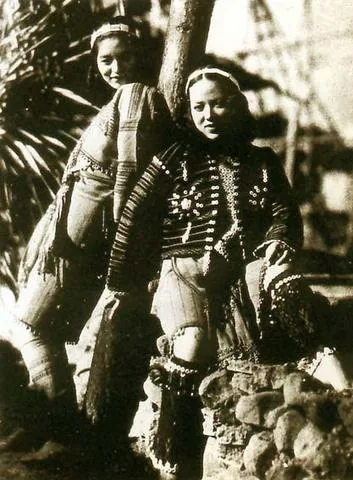
The 1943 film The Bell of Sayon, starring the famous actress Li Xianglan, is a representative of the colonial government's "皇民化" (Japanization) films. From the benshi beside the moving pictures to the colonial government's propaganda films, the starting point of Taiwanese cinema was almost entirely decided by others. Photo: Shochiku / Manchukuo (Public Domain).
Ninety years later on the same island, a film called Cape No. 7 made five languages speak simultaneously in the theater: Mandarin, Taiwanese, Japanese, English, and Paiwan5. In those intervening ninety years, Taiwanese cinema was declared dead several times, only to come back to life several times. Each cycle of life and death, on the surface, was about box office, censorship, and the market. But at its core, it was always the same question: Whose Taiwan should be on the screen, in whose language, and who gets to appear on the screen?
This article does not aim to tell the story of "how local cinema went from bad to good." That is too smooth, and too fake a straight line. The true version is a history repeatedly strangled to death, only to come back to life.
Over a Thousand Films, No One Remembers
Let’s start with a fact many Taiwanese people do not know: Taiwan was once the world's third-largest producer of feature films, second only to Japan and India6.
That was the era of Taiwanese-language films. In January 1956, a gezaixi (opera) film Sue Ping-kui and Wang Bao-chun premiered in Taipei. Directed by He Jiming and produced by Chen Chengsan, head of the Maoliong Gongle Society opera troupe, it was Taiwan's first 35mm gezaixi Taiwanese-language film. With a low budget, it grossed about 1.2 million NTD, more than three times its cost7. One film proved that "Taiwanese people making Taiwanese-language films for Taiwanese people to watch" was a viable market, igniting a craze.
In the following decade, Taiwanese-language films grew like weeds. In 1958, production peaked at 76 films, marking the first peak8. Director Xin Qi alone made 12 films in 1969 alone9. In Yingge, Lin Boqiu built his own Hushan Studio and founded Yufeng Film, aiming to industrialize Taiwanese-language films into a standardized industry10. The genres were diverse: gezaixi, melodramatic literary films, comedies like Wang Ge and Liu Ge Tour Taiwan, spy films following the 007 craze like Number One Character Tian, and children's fantasy films like The Great Hero Plum Deer11.
How many were made exactly? This question itself is a microcosm of the Taiwanese-language film's fate: No one can give a precise number. The National Film and Audiovisual Center's (NFAC/TFAI) education network says "over a thousand," the Taipei Times reported an estimate of "1,200 to 1,500," and academic research even suggests "over 2,000"^[10]. Why such a huge difference? Because the start and end years for calculation differ, whether Amoy-language films are included, and whether submission for censorship or actual screening counts, there is no consensus. More fundamentally, most copies have been lost. The 1,238 items preserved by TFAI represent "the number currently preserved," not the total production at the time; the museum itself states that what remains is less than one-fifth of the original output12.
An industry that was once the world's third-largest producer of feature films, most of whose works no longer exist as films, and whose total number cannot even be counted. This is not just a problem of film reels decaying.
The common narrative is that Taiwanese-language films were "crudely made," so they were naturally eliminated by the market and forgotten by history. This narrative is smooth, but it reverses cause and effect. Historian Su Zhiheng, in The Reluctant Film History, offers a different version: Taiwanese-language films did not die of old age; they were strangled to death13.
The one who strangled them was policy, not the audience. In 1957, the Film Negative Import Taxation Method was amended, excluding Taiwanese-language films from tax exemptions. In other words, making Taiwanese-language films meant paying higher costs for negatives than others14. Starting in 1959, the government restricted Taiwanese-language benshi; in 1962, the launch of Taiwan Television moved the audience for gezaixi and Taiwanese stories into living rooms; Mandarin films received subsidies, but Taiwanese-language films did not15. Su Zhiheng’s argument is sharper: The government, by controlling the import of film negatives, actively constructed the stereotype of "Taiwanese = Black and White = Vulgar." When Mandarin films could use color and wide screens, Taiwanese-language films were stuck in black and white, making "cheap" a manufactured label rather than an inherent quality of Taiwanese-language films13.
📝 Curator's Note: The impression we have today that "Taiwanese-language films are rough" may itself be the result of previous policies. An industry stripped of the conditions for upgrading (color, funding, talent flow) is then judged by its cheapness as the reason for its elimination—a perfect closed loop. So the real point of "Over a thousand films, no one remembers" is "why did it become forgotten?" Being forgotten is sometimes a decision, not a natural result of time.
In 1969, the output of Mandarin films surpassed that of Taiwanese-language films for the first time16. The last Taiwanese-language film was Chen San Wu Niang starring Yang Lihua in 198117. By the 1990s, researchers began to salvage this history; it was not until 2017 that King's College London held the first English-language academic symposium dedicated to Taiwanese-language films18. A world's third-largest producer of feature films had to wait thirty years after its death, across half the globe, for someone to finally treat it as history seriously.
Healthy, Realistic, and Untouchable
As Taiwanese-language films exited the stage, another language took over the screen.
In September 1954, the Agricultural Education Company and the Taiwan Film Company merged to form the Central Motion Picture Corporation (CMPC), using equipment from US aid19. Mandarin films now had an industrial foundation, and its direction was determined by policy. In 1963, Gong Hong became the general manager of CMPC and launched a line called "Healthy Realism." He gave a precise definition: "Healthy is for education, Realism is for the countryside"20.
These six words are worth pausing for. They mean: Films should be realistic, but only realistic in a clean, educational way about the countryside, not the dark side of society or true conflicts. The Oyster Girls (1964) is the representative work of this line. It was CMPC's first self-produced color wide-screen film (note: not "Taiwan's first color film"), co-directed by Li Jia and Li Xing, and won Best Feature Film at the 11th Asian Film Festival21. The following year, Raising Ducklings continued on the same path.
Outside of Healthy Realism, three other forces were operating simultaneously in Mandarin films during the 1960s and 70s.
One was Qiong Yao's literary films. Starting with Li Xing's Wan Jun's Cousin in 1965, about twenty-five films were made in five years, launching a batch of stars22. The most famous were the "Two Qins and Two Lins": Qin Han, Qin Xianglin, Lin Qingxia, and Lin Fengjiao. Lin Qingxia debuted in 1973 with Outside the Window and later became a legend in the Chinese-speaking film industry; Lin Fengjiao won the Golden Horse Award for Best Actress in 197923. Qiong Yao's tears were the shared youth for many people of that era.
Source: National Film and Audiovisual Center (TFAI), official records of various film festivals
The second force was wuxia (martial arts). In 1967, King Hu's Dragon Gate Inn became Taiwan's annual box office champion, launching a decade-long wuxia craze24. King Hu was not just a box office draw; he turned wuxia into an aesthetic. In 1975, his Suspended Masquerade won the Grand Prize of the Technical Committee at the 28th Cannes Film Festival, the second Chinese-language film to win at Cannes after Li Han-hsiang's The King's Consort in 196225. A detail that illustrates the situation of Taiwanese cinema at the time: Suspended Masquerade was invited by French critics to exhibit under the name of "Hong Kong," not recommended by the Taiwanese government25. King Hu's wuxia language of bamboo forests, negative space, and rhythm later influenced Tsui Hark and Ang Lee; the bamboo forest scene in Crouching Tiger, Hidden Dragon is a tribute to him26.
The third force was political propaganda and patriotic films. In 1971, the Republic of China withdrew from the United Nations, causing public unrest. One of the government's responses, according to TFAI, was to make films "to stabilize public sentiment and promote government achievements"27. The Thousand Autumns of the Heroes (1974), promoted by Wang Sheng of the Political Warfare Department, directed by Ding Shanxi, and starring Ke Junxiong, was followed by The 800 Heroes (1976) and The Heroes of Jianqiao (1977)28. These films are often remembered in people's minds as being linked to "schools booking the entire theater to watch"; however, it must be honestly stated that there is no primary source evidence for "schools forcing students to watch," and it is only certain that they were often rebroadcast on television during holidays29.
📝 Curator's Note: From Taiwanese-language films to Healthy Realism to patriotic films, if we view "what is spoken on the screen, what can be spoken" as a main thread, we find that the history of local cinema has always been answering the same question—the answers were written by policy, not by the audience or creators. The problem with Taiwanese-language films was "not allowed to use this language to make films well"; the problem with Healthy Realism was "only allowed to depict this one kind of reality"; the problem with patriotic films was "what are films for?" Language, subject matter, and purpose: three gates, opening and closing in turn.
It is worth mentioning the origin of the name "Golden Horse." In 1957, the public held one edition of a Taiwanese-language film festival under the name "Golden Horse Award," but it was only held once30. In 1962, the Department of Information established the official Golden Horse Awards, nominally only for Mandarin films, and the ceremony was deliberately scheduled around Chiang Ching-kuo's birthday30. The same name first belonged to Taiwanese-language films, then was absorbed by Mandarin films. This itself is a small footnote to the language politics of that era.
The Apple That Was Sliced
In 1982, CMPC made a decision that seemed insignificant at the time but changed everything in hindsight: letting a group of unknown young directors make films.
Story of a Yellow Flower (1982) consisted of four segments, directed by Tao Dechen, Edward Yang, Ke Yizheng, and Zhang Yi31. The following year, The Son's Doll (1983), adapted from Huang Chun-ming's novel, had three segments directed by Hou Hsiao-hsien, Zeng Zhuangxiang, and Wan Ren32. The New Taiwanese Cinema began with these two films.
But the New Cinema hit the old gate immediately. Wan Ren's segment The Taste of Apples in The Son's Doll, because it depicted the true face of life at the bottom of society, was intervened by the Kuomintang (KMT) Cultural and Art Association, which demanded it be trimmed. This became the famous "Apple Slicing Incident"33. Finally, under public pressure, that apple was saved. A small pair of scissors nearly sliced off the ability of Taiwanese cinema to tell the truth well, which had just begun to grow. On January 24, 1987, the Declaration of the New Taiwanese Cinema, drafted by Zhan Hongzhi, was published in the Human Supplement of the China Times, effectively serving as a formal confession for this movement34.
The three names of the New Cinema later became world-class directors.
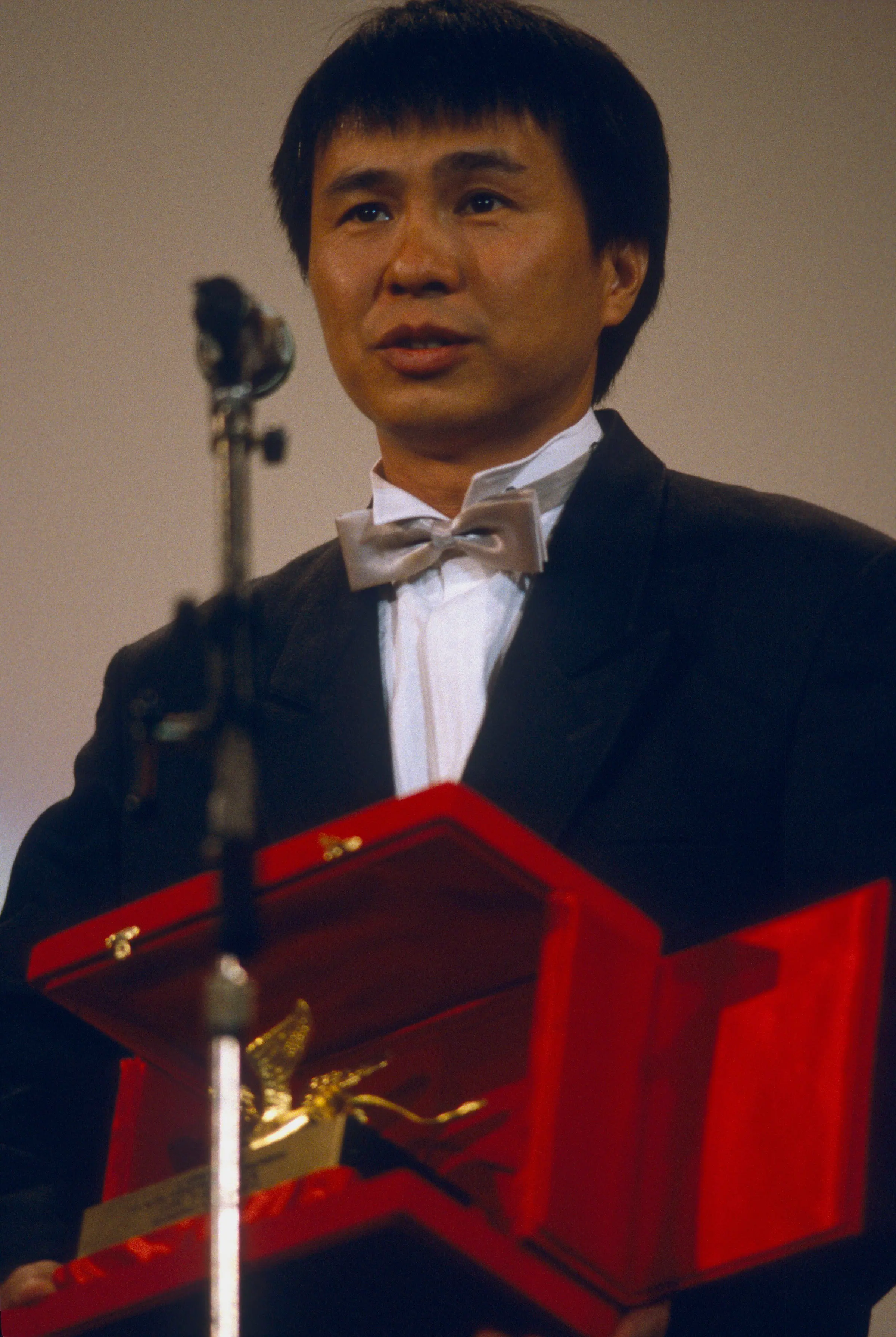
In 1989, Hou Hsiao-hsien won the Venice Golden Lion for A City of Sadness, putting Taiwanese cinema at the top of the world's three major film festivals for the first time. Photo: Gorup de Besanez, CC BY-SA 4.0.
Hou Hsiao-hsien filmed from The People from the Funchien Village to _ Dust in the Wind_ to _ A Time to Love and a Time to Die_, turning Taiwan's local soil, memory, and time into a very long, slow visual language35. On September 15, 1989, his A City of Sadness won the Golden Lion at the 46th Venice Film Festival, marking the first time a Taiwanese film won the highest award in the world's three major film festivals (Cannes, Venice, Berlin)36. More remarkably, this film directly confronted the then-sensitive subject of the February 28 Incident, using the rise and fall of one family to side-write that history36. How highly is Hou Hsiao-hsien's long-take aesthetic valued internationally? Iranian director Abbas Kiarostami supported his _ The Puppetmaster_; Akira Kurosawa reportedly watched _ The Puppetmaster_ four times and admitted he could not make it; Hirokazu Kore-eda was also deeply influenced by him37.
The 4K Digital Restoration Trailer for A City of Sadness. In 1989, it won the Golden Lion in Venice, bringing the February 28 Incident seriously to the big screen for the first time—and in Taiwanese theaters that same year, local films were losing their audience.
Edward Yang took a different path. He filmed cities, the alienation and violence of urbanites. After _ Beach Days with Frankie and Anne_ and _ The Terrorizers_, his 1991 _ A Brighter Summer Day_ was originally 237 minutes long, adapted from a true story of a juvenile murder case in 196138. In 2000, his _ Yi Yi_ won the Best Director award at the 53rd Cannes Film Festival (note: Best Director, not the Palme d'Or)39. On June 29, 2007, he died of colon cancer at the age of 5940. His films influenced Hirokazu Kore-eda41 and Ryusuke Hamaguchi42.
The 4K Restoration Trailer for Yi Yi (Janus Films). Best Director at Cannes in 2000, later entered the Sight & Sound Top 100 Greatest Films of All Time at No. 90.
The third is Tsai Ming-liang. Starting with _ Rebels of the Neon God_ in 1992, he turned the lens toward loneliness, desire, and time so slow it seemed to stop43. In 1994, his _ Vive L'Amour_ won the Golden Lion at the 51st Venice Film Festival, tied with _ Before the Rain_; the jury president was David Lynch44. Here, a widely circulated error must be corrected: _ Vive L'Amour_ won the Golden Lion, not the "FIPRESCI Prize"44. Later, his _ The River_ and _ Striding into the Wind_ continued to win awards at film festivals; his 2009 film _ Face_ became the first film collected by the Louvre45.
Regarding the position of these three directors in film history, there is another commonly misstated version that needs correction. The circulated claim is that "three Taiwanese films are in the Top 100 Films of All Time in the French Cahiers du Cinéma," which is false. Checking the 2008 Cahiers du Cinéma Top 100 list, there is not a single Taiwanese film46. What actually wrote Taiwanese films into history is the British Sight & Sound 2022 Top 100 Greatest Films of All Time: Edward Yang's _ A Brighter Summer Day_ ranked No. 78, and _ Yi Yi_ ranked No. 9047.
Won Awards, No One Watched
Here is the most counter-intuitive turning point in the history of local cinema, and also the part most easily turned into a toxic chicken soup (cynical moralizing).
The New Cinema won the Golden Lion and Best Director in Europe; Taiwanese cinema was seen by the world for the first time. But during the same period, in Taiwanese theaters, local films were dying. Starting in 1996, the annual output of local films dropped to 15–20, and the market share was only 1–2%48. The bottom was in 2003: that year, only about 15 local films were made across the island, with a total box office of about 15 million NTD, accounting for only 0.36% of the total box office in Taiwan, less than one percent49.
Source: Taiwan Panorama, TFAI statistics (Local film market share %)
0.36%. Say this number out loud: Out of one hundred Taiwanese people entering a theater, less than one was there to watch a local film. And in those same years, the names of Hou Hsiao-hsien, Edward Yang, and Tsai Ming-liang were shining in Cannes and Venice. A film of an island bloomed outside the walls, withered inside the walls.
A saying grew in the public sphere, and it was told smoothly: "It's the New Cinema's fault. Those art films were boring and incomprehensible, driving the audience away, which is why local films died."
This saying deserves serious attention because behind it is real resentment; many people really went to the theater, didn't understand, fell asleep, and never went to watch local films again. But blaming the entire downturn of local films on the New Cinema simplifies a multi-causal collapse into a scapegoat.
The New Cinema did create a distance between some audiences and the viewing habits of mainstream commercial films; this need not be avoided. But the collapse of local films in the 1990s and 2000s had more structural reasons acting simultaneously: Hollywood blockbusters were fully conquering the Taiwanese market; after Taiwan joined the WTO, quotas for foreign film imports were relaxed; videotapes and the fourth channel (cable TV) changed the way people watched films; local capital withdrew massively from the film industry; and theater channels were monopolized by imported films50. An industry was crushed by this entire set of things, not driven away by a few award-winning art films.
📝 Curator's Note: The saying "The New Cinema killed local films" is charming because it turns a complex market collapse into a story with faces—a villain (the incomprehensible director), a victim (the incomprehensible audience). But the truth usually has no face. Making Hou Hsiao-hsien, Edward Yang, and Tsai Ming-liang the culprits of local cinema's decline is equivalent to demanding a group of creators take responsibility for the collapse of the entire industry ecosystem. Their actual cost was different: they won world-class awards but could not exchange them for local audiences—glory and the market were completely disconnected in those ten years.
This is the second death of local cinema. The Taiwanese-language films were strangled by policy; this time, it was drowned by the market. The difference is: the method of death is different, and the mechanism of resurrection will also be different. The Taiwanese-language films never came back, but this time, someone was waiting for a way to bring the audience back to the theater.
To Get on the World Screen, You Must First Leave Your Own Island
In those ten years of withering inside the walls, a Taiwanese director chose another path, going outside the walls, and going the furthest.
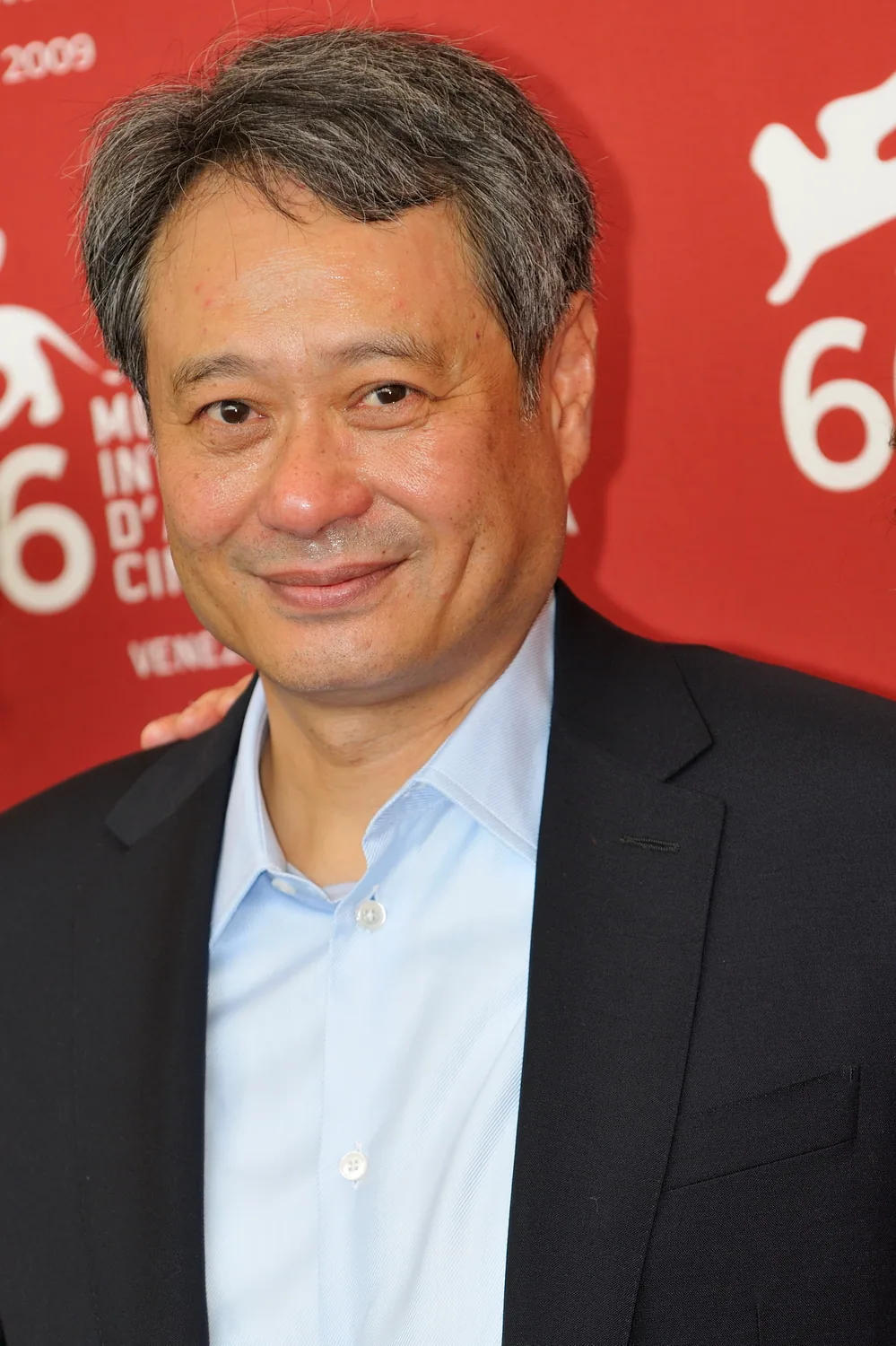
Ang Lee photographed at the 2009 Venice Film Festival. While local theaters could hardly see local films, this Taiwanese director was winning twice at the highest hall of Hollywood. Photo: nicolas genin, CC BY-SA 2.0.
Ang Lee. His "Father Trilogy"—_ Pushing Hands_, _ The Wedding Banquet_, and _ Eat Drink Man Woman_—was filmed from 1991 to 1994. _ The Wedding Banquet_ won the Golden Bear at the 43rd Berlin Film Festival in 199351. Then he moved west to Hollywood: _ Crouching Tiger, Hidden Dragon_ (2001) won four Oscars at the 73rd Academy Awards, including Best Foreign Language Film, and became the first non-English film in US history to gross over $100 million, selling $213.5 million globally52. In 2006, _ Brokeback Mountain_ made him the first Asian director to win the Oscar for Best Director; in 2013, _ Life of Pi_ made him the first Asian director to win this award twice53.
Ang Lee's existence complicates the term "local film history." When local theaters could hardly see Taiwanese films, a Taiwanese director was on the highest stage of Hollywood, telling the world's stories in English, in Mandarin, and in various languages. He is the pride of Taiwanese cinema, but his success was, in a sense, precisely because he left the dying local market. This is another answer to the question "getting on the screen": Sometimes, to get on the world screen, you must first leave your own island.
Five Languages Return to the Screen Together
On August 22, 2008, a film called Cape No. 7 was released. No one predicted what would happen next.
Director Wei Te-sheng was not a big star at the time. To raise the 50 million NTD budget for this film, he mortgaged his house and borrowed 30 million NTD54. Then this film grossed 530 million NTD across the island, with 230 million in Taipei and 300 million outside Taipei55. It was the box office champion for eight consecutive weeks. The market share of local films jumped from the 0.36% bottom in 2003 to 12.09% in 2008, multiplying by over thirty times in between56.
But the most important thing about Cape No. 7 was not the box office numbers, but what it brought back to the screen.
In this film, five languages spoke simultaneously: Mandarin, Taiwanese, Japanese, English, and Paiwan5. A failed band leader spoke Mandarin mixed with Taiwanese; the town representatives spoke authentic Taiwanese; a love letter spanning sixty years was written in Japanese; and there was the indigenous Paiwan language. This was neither a "Mandarin film" nor a "Taiwanese-language film"; it was simply what Taiwan originally looked like, with various languages mixed together, none suppressing the others.
Pull the lens back to the beginning. The benshi in the 1930 theater used Taiwanese to dub the silent screen that could not speak. In between, nearly eighty years passed: Taiwanese-language films were strangled, the Mandarin policy dominated, and the New Cinema quietly brought dialects back into art films. By 2008's Cape No. 7, the screen could finally righteously speak five languages at once, and all of Taiwan queued up to watch. The third resurrection of local cinema was essentially a restoration of language: Taiwanese people heard their own everyday speaking voices on the big screen again.
The Official Trailer for Cape No. 7. Five languages—Mandarin, Taiwanese, Japanese, English, and Paiwan—shared the screen, bringing Taiwanese people back to the theater in the summer of 2008.
📝 Curator's Note: Cape No. 7 is often questioned by elites as "commercially successful, but artistically inferior to the masters of the New Cinema." This question is correct, but it asks the wrong question. Cape No. 7 was never trying to solve "how deep to shoot"; it was trying to solve "are Taiwanese people willing to spend money to go to the theater to watch their own stories"—something the New Cinema failed to solve for those ten years. Its historical significance is not how good it is, but that it proved one thing: a film using Taiwan's own language, telling the stories of Taiwanese people, can be both critically acclaimed and commercially successful. Half a century after the Taiwanese-language films were deprived of that thing—using their own language to make films well and still selling—the Cape No. 7 fought for it back.
Wei Te-sheng did not stop. In 2011, he made Warlords of the Pacific (Sedek Baklai), produced by John Woo, based on the 1930 Wushe Incident, telling that history of resisting Japan from the indigenous perspective. The film cost about 720 million NTD; the two parts, Sunrise Flag and Rainbow Bridge, grossed a total of about 810 million NTD across the island57. It represented Taiwan in the race for the Oscar for Best Foreign Language Film, making the top nine, but ultimately did not make the top five58. That year, the local film market share surged to 17.46%, setting a historical high at the time56. In 2014, he produced KANO, directed by Ma Chih-hsiang, telling the story of the 1931 Kainan Agricultural School baseball team making it to the Koshien Stadium59.
The wave ignited by Cape No. 7 was far more than just Wei Te-sheng; it was the return of the entire genre. In 2010, Ni Zhenze's _ Monga_ and in 2011, Nine Calls's _ You Are the Apple of My Eye_ (which grossed 425 million NTD, becoming one of the most successful Chinese-language films in Hong Kong history); in 2015, _ My Girl_ grossed 410 million NTD60. Taiwanese people got used to "going to the theater to watch local films" again. Local cinema came back to life, and this time, it learned how to speak to the audience.
The Decade When Local Films Were Box Office Poison, and Its Reverse
Let's rewind the timeline to see clearly what Cape No. 7 saved.
"Local Films = Box Office Poison" was the six-character phrase that represented the true collective impression of local films in Taiwanese society from the 1990s to 200761. Producers dared not invest, theaters dared not screen, and audiences did not want to watch, forming a dead loop that no one could turn. It was an era when you would be laughed at if you told your friends, "I'm going to watch a local film."
But this decade's "poison" label and the Taiwanese-language film era's "crudely made" stigma are actually two versions of the same mechanism: an industry, after losing its conditions, was defined in reverse by its results. The Taiwanese-language films had their negatives and funding stripped; the local films after the New Cinema had their market and channels stripped. The difference is that the latter eventually waited for the cure of Cape No. 7, while the former did not.
This is why understanding local film history cannot just look at those award-winning masters. A complete local film history is the Taiwanese-language film industry, the Healthy Realism policy, the genres of wuxia and patriotic films, the art of the New Cinema, the poison of the low period, and the revival after Cape No. 7—all of these added together make up what Taiwanese cinema truly is. Picking out only the four world-class names of Hou, Yang, Tsai, and Li is equivalent to seeing only the brightest spots in a larger history.
Contemporary: Awards, Box Office, and the Politics of an Award
After Cape No. 7, Taiwanese cinema entered a more mature and complex stage.
On the auteur film side, Chung Meng-hung's _ Sunlight After the Rain_ (2019) won Best Feature Film at the 56th Golden Horse Awards, representing Taiwan in the race for the Oscar, making the top 15 preliminary selections, but not making the final five62. Huang Hsin-yao's _ The Great Buddha+_ (2017) won five awards at the 54th Golden Horse Awards in one go; in the same ceremony, Yang Ya-che's _ Soul_ won Best Feature Film63.
The Official Trailer for The Great Buddha+. Huang Hsin-yao used black-and-white visuals, Taiwanese voiceovers, and dashcam perspectives to turn the absurdity of the social underclass into the biggest winner of the 2017 Golden Horse Awards.
On the genre film side, evolution was also happening: In 2019, Hsu Han-chiang's _ Detention_, adapted from the game by Red Candle Games, used the White Terror subject matter to make a horror film, grossing 259 million NTD, becoming the local film box office champion that year64; in 2023, _ A Boy and a Girl_ grossed 363 million NTD and reached No. 7 on the Netflix Global Non-English Film Chart65.
The 4K Trailer for Detention. Turning the White Terror into a video game, then into a commercially successful horror film—contemporary Taiwanese cinema began using the shell of genre films to hold historical subjects that were previously untouchable.
There is one more special film to mention: _ The Pig, the Snake and the Pigeon_ (2023), directed by Huang Ching-fu. In Taiwan, it only grossed 47 million NTD, hardly a blockbuster; but in 2024, after its release in China, it exploded in popularity, grossing 665 million RMB66. A Taiwanese film was mediocre in its own market but became a phenomenon on the other side of the strait. This itself illustrates how subtle the cross-strait cultural tension is in contemporary Taiwanese cinema.
And the theaters themselves are facing another crisis. The total box office of Taiwanese cinemas dropped from about 10.1 billion NTD in 2019 to about 6 billion NTD in 2024, evaporating 40%; at the same time, Netflix's streaming market share in Taiwan surged to 83%67. Audiences are not not watching films; they have turned their living rooms back into theaters, repeating the same script as when Taiwan Television launched in 1962, moving gezaixi audiences from theaters into their homes. Streaming platforms are also investing heavily in Taiwanese film and television content; series like _ The Light_ (Hua Deng Chu Shang), _ Tea Gold_ (Cha Jin), _ The Magicians of the Sky Bridge_ (Tian Qiao Shang de Mo Shu Shi), and _ Sakurado_ are drawing resources from the big screen to the small screen68.
Finally, we return to the award called the Golden Horse.
In November 2018, at the 55th Golden Horse Awards, director Fu Yu's documentary _ Our Youth, in Taiwan_ won Best Documentary. In her acceptance speech, she said: "I hope that one day, our country can be regarded as a truly independent entity. This is my greatest wish as a Taiwanese person."69 This remark sparked huge controversy across the strait. Ang Lee, who hosted the ceremony that night, later told reporters: "Taiwan is free and the film festival is open. You can say whatever you want to say."70 The following year, on August 7, 2019, China's State Administration of Film announced the suspension of mainland Chinese films and personnel participating in the Golden Horse Awards; China's Golden Rooster Awards deliberately scheduled its ceremony on the same day as the Golden Horse71.
How to view this matter, everyone has their own judgment. Taiwan.md is only responsible for recording the facts clearly here: An award originally regarded as a neutral hall for Chinese-language cinema was drawn into the political struggle between the two sides of the strait because of an acceptance speech. And you will find that the core of this controversy is actually the same as the core of the entire local film history: On the screen, on the stage, who should speak, in what identity, and about what kind of Taiwan.
Conclusion: They Have Been Shouting This for Seventy Years
Returning to the benshi standing beside the screen at the beginning.
The image of him dubbing the silent film in Taiwanese, and the five languages echoing together in the theater in 2008's Cape No. 7, are separated by nearly eighty years. In those eighty years, Taiwanese cinema was declared dead at least three times: The Taiwanese-language films were strangled by policy, the post-New Cinema films were drowned by the market, and the ten-year low period was called "box office poison." But it came back to life again and again, and every resurrection was Taiwan reclaiming one thing: Using our own language, portraying our own faces, and putting our own stories on the screen.
So the next time you see a headline in the news saying "Local films are dead again," you will probably remember: They have been shouting this for seventy years.
References
- National Film and Audiovisual Center (TFAI) Digital Museum and Taiwan Film History Education Network — Primary data on Taiwanese-language film filmography, Healthy Realism, political propaganda films: tfai.openmuseum.tw, edumovie-tfai.org.tw
- Su Zhiheng's The Reluctant Film History: The Fate of Taiwanese-language Films — Key argument on how Taiwanese-language films were suppressed by policy and how the stereotype of "Black and White = Vulgar" was manufactured
- Wikipedia entries for "Taiwan Cinema," "Taiwanese-language Cinema," "New Taiwanese Cinema," "Golden Horse Awards," and individual film entries — Years, award editions, box office numbers index (cross-checked with official sources)
- Sight & Sound (BFI) 2022 Top 100, Cahiers du Cinéma 2008 Top 100 — Film history status verification: bfi.org.uk/sight-and-sound
- Taiwan Panorama, Variety, Business Today, The Reporter — Local market share annual numbers, Golden Horse political events, industry data
Image Sources
This article uses 4 images, all cached in public/article-images/art/ to avoid hotlinking to source servers:
- Tsai Ming-liang and Lee Kang-sheng (Days) — Photo: hinnk, CC BY-SA 3.0 (hero)
- Still from _The Bell of Sayon_ — Shochiku / Manchukuo, Public domain
- Hou Hsiao-hsien 1989 Venice Golden Lion Award Ceremony — Photo: Gorup de Besanez, CC BY-SA 4.0
- Ang Lee 2009 Venice Film Festival — Photo: nicolas genin, CC BY-SA 2.0
Further Reading
- Hou Hsiao-hsien: The long-take master who won the Venice Golden Lion and brought the February 28 Incident to the screen
- Edward Yang: The urban observer whose two works entered the Sight & Sound Top 100
- Tsai Ming-liang: Venice Golden Lion winner who brought slow cinema into the Louvre
- Ang Lee: From Taiwan to Hollywood, winning the Oscar for Best Director twice
- Wei Te-sheng: The man who made Cape No. 7 with five languages, bringing local cinema back to life
- The Invisible Country: Another way of being seen in Taiwan, in Ge Jingwen's documentary
- Taiwanese Sensibility: Do We Need Koreans to Like Us First Before We Dare to Say Our Old Houses Are Beautiful?: The 1989 Venice Golden Lion for A City of Sadness and the Taipei box office happened in the same year; international recognition and local resonance are not necessarily a binary choice
- Benshi - Wikipedia — In 1930, there were 41 Japanese benshi and 19 Taiwanese benshi in Taiwan, totaling about 60. Practice required a license obtained by passing the provincial police department examination.↩
- Li Zhengliang: Benshi, the Cultural Association, and Colonial Film Enlightenment - Udnn Opinion — Zhan Tianma and Wang Yunfeng were the most famous benshi in Dadaocheng; Lu Bingding, a benshi for the Cultural Association's film screening team, was interrupted by Japanese police for including political commentary in his explanation.↩
- History of Taiwanese Cinema (Japanese Colonial Period) - Wikipedia — In 1925, the Taiwan Film Research Society led by Liu Xiyang produced Who is to Blame?, considered the first feature film produced by Taiwanese people (distinguished from the 1922 Japanese director Tanaka Kinji's The Pupil of the Great Buddha, which had Taiwanese actors).↩
- The Bell of Sayon - Wikipedia — The Bell of Sayon (1943) was directed by Shimizu Hiro, starring Li Xianglan, co-produced by Shochiku, Manchukuo, and the Taiwan Governor-General's Office, turning the 1938 drowning incident of the Atayal girl Sayon into Japanization propaganda.↩
- Cape No. 7 - Wikipedia — The film uses five languages: Mandarin, Taiwanese, Japanese, English, and Paiwan. The Wikipedia entry lists them verbatim.↩2
- Review of Su Zhiheng's The Reluctant Film History — During the peak of Taiwanese-language films, Taiwan was recognized as the world's third-largest producer of feature films, after Japan and India.↩
- Sue Ping-kui and Wang Bao-chun - TFAI Digital Museum — Released in January 1956, directed by He Jiming, produced by Chen Chengsan (Maoliang Gongle Society). Taiwan's first 35mm gezaixi Taiwanese-language film. Box office was about 1.2 million, more than three times the cost.↩
- Taiwanese-language Cinema - Wikipedia — First peak in 1958 with 76 films; dropped to 35 in 1959 due to changes in the negative method and the Bazhuo Flood.↩
- Xin Qi - The News Lens — Xin Qi (1924–2010) was an important director during the Taiwanese-language film era, completing 12 films in 1969 alone.↩
- Lin Boqiu and Yufeng Film - ARTouch Collection — Lin Boqiu founded Yufeng Film in 1957 and completed the Hushan Studio in Yingge in 1958, attempting to industrialize Taiwanese-language films.↩
- The Great Hero Plum Deer / Number One Character Tian - TFAI Digital Restoration Filmography — Diverse Taiwanese-language film genres: gezaixi, melodramatic literature, comedy Wang Ge and Liu Ge Tour Taiwan (1964, Zhang Ying), spy film Number One Character Tian (1964, Zhang Ying), children's fantasy The Great Hero Plum Deer (1961, Zhang Ying).↩
- Taiwanese-language Film Filmography Description - TFAI openmuseum — The 1,238 items collected by TFAI are the currently preserved quantity (defined 1955–1981), not the total output at the time; the museum admits that what remains is less than one-fifth of the original output.↩
- Argument in Su Zhiheng's The Reluctant Film History — The government actively constructed the stereotype of "Taiwanese = Black and White = Vulgar" by controlling the import of film negatives. The decline of Taiwanese-language films was a result of policy suppression, not simple market elimination.↩2
- Policy Factors in the Decline of Taiwanese-language Films - Fanggezi vocus — The Film Negative Import Taxation Method was amended in 1957, excluding Taiwanese-language films from tax exemptions, relatively increasing production costs.↩
- Taiwanese-language Films and Mandarin Policy - Thinking Taiwan — Restrictions on Taiwanese-language benshi starting in 1959; Taiwan Television's launch in 1962 diverted audiences; Mandarin films received subsidies while Taiwanese-language films did not, squeezed by multiple factors.↩
- Taiwanese-language Cinema - Wikipedia — In 1969, the output of Mandarin films surpassed that of Taiwanese-language films for the first time.↩
- Last Works of Taiwanese-language Cinema - Wikipedia — The last Taiwanese-language film was Chen San Wu Niang starring Yang Lihua in 1981.↩
- Salvaging and Researching Taiwanese-language Films - The News Lens / KCL — Taiwanese-language films were long regarded as a "tributary" in mainstream film history; researchers began salvaging in the 1990s, and the first English-language academic symposium was held at King's College London in 2017.↩
- Central Motion Picture Corporation - Wikipedia — On September 1, 1954, the Agricultural Education Company and the Taiwan Film Company merged to form CMPC, using US aid equipment.↩
- Gong Hong and Healthy Realism - TFAI openmuseum — Gong Hong became CMPC general manager in 1963 and launched the Healthy Realism line, defining "Healthy is for education, Realism is for the countryside."↩
- The Oyster Girls - TFAI openmuseum — The Oyster Girls (1964) was CMPC's first self-produced color wide-screen film, co-directed by Li Jia and Li Xing, winning Best Feature Film at the 11th Asian Film Festival.↩
- Qiong Yao Films - Wikipedia — The first Qiong Yao adapted film was Li Xing's Wan Jun's Cousin (1965); about 25 films in five years from 1965–69.↩
- Two Qins and Two Lins - Wikipedia — Qin Han, Qin Xianglin, Lin Qingxia, Lin Fengjiao; Lin Qingxia debuted in 1973 with Outside the Window, Lin Fengjiao won Golden Horse Best Actress in 1979.↩
- Dragon Gate Inn - Wikipedia — King Hu's Dragon Gate Inn (1967) was Taiwan's annual box office champion, launching a decade-long wuxia craze.↩
- Suspended Masquerade - Wikipedia / Cannes Film Festival — Suspended Masquerade won the Grand Prize of the Technical Committee at the 28th Cannes (1975), the second Chinese-language film to win at Cannes (the first was Li Han-hsiang's The King's Consort 1962). Exhibited under the name of "Hong Kong," invited by French critics.↩2
- Influence of King Hu's Wuxia Aesthetics - BIOS Monthly — King Hu's wuxia aesthetics influenced Tsui Hark and Ang Lee; the bamboo forest scene in Crouching Tiger, Hidden Dragon is a tribute to him.↩
- Political Propaganda Patriotic Films - TFAI Taiwan Film History Education Network — After withdrawing from the UN in 1971, the government made patriotic films "to stabilize public sentiment and promote government achievements."↩
- The Thousand Autumns of the Heroes / The 800 Heroes - Wikipedia — The Thousand Autumns of the Heroes (1974, promoted by Wang Sheng, directed by Ding Shanxi, starring Ke Junxiong), The 800 Heroes (1976), The Heroes of Jianqiao (1977) are representative political propaganda patriotic films.↩
- Political Propaganda Patriotic Films - TFAI Taiwan Film History Education Network — Patriotic films were often rebroadcast on television during holidays; "schools forcing students to watch" has no primary source evidence and cannot be asserted.↩
- Golden Horse Awards - Wikipedia — In 1957, the public held one edition of a Taiwanese-language film festival under the name "Golden Horse Award"; in 1962, the Department of Information established the official Golden Horse Awards, nominally limited to Mandarin films, with the ceremony scheduled around Chiang Ching-kuo's birthday.↩2
- Story of a Yellow Flower - Wikipedia — Story of a Yellow Flower (1982) had four segments directed by Tao Dechen, Edward Yang, Ke Yizheng, and Zhang Yi, regarded as the starting point of the New Taiwanese Cinema.↩
- The Son's Doll - Wikipedia — The Son's Doll (1983) adapted from Huang Chun-ming, with three segments directed by Hou Hsiao-hsien, Zeng Zhuangxiang, and Wan Ren.↩
- The Apple Slicing Incident - Wikipedia — Wan Ren's segment The Taste of Apples was required to be trimmed by the KMT Cultural and Art Association, known as the "Apple Slicing Incident," saved under public pressure.↩
- Declaration of the New Taiwanese Cinema - Wikipedia — The Declaration of the New Taiwanese Cinema was published in the Human Supplement of the China Times on January 24, 1987, drafted by Zhan Hongzhi.↩
- Hou Hsiao-hsien - Wikipedia — Hou Hsiao-hsien's early representative works The People from the Funchien Village, Dust in the Wind, A Time to Love and a Time to Die are known for long takes and local memory.↩
- A City of Sadness - Wikipedia / Venice Film Festival — A City of Sadness won the Golden Lion at the 46th Venice Film Festival (1989-09-15), Taiwan's first highest award in the world's three major film festivals, handling the February 28 Incident from a family history perspective.↩2
- Hou Hsiao-hsien's International Influence - BIOS Monthly — Abbas Kiarostami supported The Puppetmaster; Akira Kurosawa reportedly watched The Puppetmaster four times and admitted he could not make it; Hirokazu Kore-eda was deeply influenced by Hou Hsiao-hsien (reported).↩
- A Brighter Summer Day - Wikipedia — Edward Yang's A Brighter Summer Day (1991) was originally 237 minutes long, adapted from a true story of a juvenile murder case in 1961.↩
- Yi Yi - Wikipedia / Cannes Film Festival — Edward Yang's Yi Yi won the Best Director award at the 53rd Cannes Film Festival (2000) (not the Palme d'Or).↩
- Edward Yang - Wikipedia — Edward Yang died of colon cancer on June 29, 2007, at the age of 59.↩
- Hirokazu Kore-eda: I Want to Make My Own A City of Sadness - The Reporter — 2020 Golden Horse Festival interview, Kore-eda stated that the scene in Shoplifters where they look at a flashlight in a closet pays tribute to A Brighter Summer Day, and reviewed the origins of his 1993 trip to Taiwan to shoot documentaries on Hou Hsiao-hsien and Edward Yang.↩
- Ryusuke Hamaguchi on Edward Yang - Openbook Reading Magazine — At the 2023 "Yi Yi Reconstructed: Edward Yang" retrospective press conference, Ryusuke Hamaguchi stated that after turning 30, looking back at A Brighter Summer Day, "it is a film beyond films, as if letting me see the whole world."↩
- Tsai Ming-liang - Wikipedia — Tsai Ming-liang started with Rebels of the Neon God in 1992, focusing on loneliness and desire with a slow cinema aesthetic.↩
- Vive L'Amour - Wikipedia / 51st Venice Film Festival — Vive L'Amour won the Golden Lion at the 51st Venice Film Festival (1994), tied with Before the Rain; the jury president was David Lynch. The old claim of "Venice International Critics' Prize" is incorrect; the Golden Lion is correct.↩2
- Face (Film) - Wikipedia — Tsai Ming-liang's The River and Striding into the Wind continued to win awards at film festivals; Face (2009) was the first film collected by the Louvre.↩
- Verification of Cahiers du Cinéma 2008 Top 100 List — There were no Taiwanese films in the 2008 Cahiers du Cinéma Top 100 list; the circulated claim that "three Taiwanese films are in the Cahiers du Cinéma Top 100" is false.↩
- Sight & Sound 2022 Greatest Films of All Time — Sight & Sound (BFI) 2022 Top 100 included Edward Yang's A Brighter Summer Day at No. 78 and Yi Yi at No. 90.↩
- History of Taiwanese Cinema - Wikipedia — Starting in 1996, the annual output of local films dropped to 15–20, with a market share of only 1–2%.↩
- Bottom of Local Film Market Share - Academic Paper Citation / Taiwan Film History Wiki — 2003 was the historical low, with only about 15 local films, total box office about 15 million, accounting for 0.36% of the total box office in Taiwan.↩
- Structural Reasons for the Downturn of Local Films - The Reporter / Academic Review — The collapse of local films in the 1990s–2000s was multi-causal: Hollywood blockbusters occupied the market, post-WTO foreign film quotas were relaxed, videotapes and the fourth channel changed viewing habits, local capital withdrew, and theater channels were monopolized by imported films.↩
- Ang Lee - Wikipedia / Berlin Film Festival — Ang Lee's "Father Trilogy" Pushing Hands, The Wedding Banquet, Eat Drink Man Woman (1991–1994); The Wedding Banquet won the Golden Bear at the 43rd Berlin Film Festival (1993).↩
- Crouching Tiger, Hidden Dragon - Box Office Mojo / Wikipedia — Crouching Tiger, Hidden Dragon won four Oscars at the 73rd (including Best Foreign Language Film), was the first non-English film in US history to gross over $100 million, with a global box office of $213.5 million.↩
- Ang Lee Oscar Records - Wikipedia / Official Oscars — Brokeback Mountain (78th, 2006) made Ang Lee the first Asian director to win the Oscar for Best Director; Life of Pi (85th, 2013) made him the first Asian director to win this award twice.↩
- Cape No. 7 - Wikipedia — Wei Te-sheng "mortgaged his house and borrowed 30 million"; the total cost of Cape No. 7 was about 50 million.↩
- Cape No. 7 Box Office - Wikipedia / Box Office Statistics — Total box office 530 million (Taipei 230 million, outside Taipei 300 million), released on 2008-08-22, box office champion for eight consecutive weeks.↩
- Annual Local Film Market Share - Taiwan Panorama (Primary Source) — Local market share: 0.36% in 2003, 12.09% in 2008, 17.46% in 2011 (Warlords of the Pacific year, historical high at the time); recent (2024) about 10%.↩2
- Warlords of the Pacific - Wikipedia — Wei Te-sheng's Warlords of the Pacific (2011), produced by John Woo, cost about 720 million (including marketing). Part 1 Sunrise Flag 472 million, Part 2 Rainbow Bridge 318 million, total box office about 810 million.↩
- Warlords of the Pacific and the Oscars - Wikipedia — Warlords of the Pacific represented Taiwan in the race for the Oscar for Best Foreign Language Film, making the top nine, but did not make the final five.↩
- KANO - Wikipedia — KANO (2014), directed by Ma Chih-hsiang, produced by Wei Te-sheng, tells the story of the 1931 Kainan Agricultural School baseball team making it to the Koshien Stadium.↩
- Those Years / My Girl Box Office - Wikipedia — Those Years, We Chased Girls Together (2011, Nine Calls) grossed 425 million, one of the most successful Chinese-language films in Hong Kong history; Monga (2010), My Girl (2015) grossed 410 million.↩
- "Local Films = Box Office Poison" Impression - The Reporter / Voicettank — From the 1990s to 2007, "Local Films = Box Office Poison" became the common collective impression of local films in Taiwanese society.↩
- Sunlight After the Rain - Wikipedia / Golden Horse Awards — Chung Meng-hung's Sunlight After the Rain (2019) won Best Feature Film at the 56th Golden Horse Awards, represented Taiwan in the race for the Oscar, making the top 15 preliminary selections, but not the final five.↩
- The Great Buddha+ / Soul - Wikipedia / 54th Golden Horse Awards — Huang Hsin-yao's The Great Buddha+ (2017) won 5 awards at the 54th Golden Horse; in the same ceremony, Yang Ya-che's Soul won Best Feature Film.↩
- Detention (Film) - Wikipedia — Hsu Han-chiang's Detention (2019), adapted from Red Candle Games, used the White Terror subject matter, grossed 259 million, and was the local film box office champion that year.↩
- A Boy and a Girl - Wikipedia — A Boy and a Girl (2023) grossed 363 million and reached No. 7 on the Netflix Global Non-English Film Chart.↩
- The Pig, the Snake and the Pigeon - Wikipedia / Box Office Reports — Huang Ching-fu's The Pig, the Snake and the Pigeon (2023) grossed about 47 million in Taiwan; after its release in China in 2024, it grossed 665 million RMB.↩
- Taiwan Cinema Box Office and Streaming Market Share - Industry Report — Taiwan cinema total box office dropped from about 10.1 billion in 2019 to about 6 billion in 2024 (evaporating about 40%); during the same period, Netflix Taiwan streaming market share was about 83%.↩
- Streaming Investment in Taiwanese Film and TV Content - Industry Report — Netflix, Disney+ invested in Taiwanese series like The Light (Hua Deng Chu Shang), Tea Gold (Cha Jin), The Magicians of the Sky Bridge (Tian Qiao Shang de Mo Shu Shi), Sakurado, drawing resources from the big screen to streaming.↩
- Fu Yu 2018 Golden Horse Speech - Business Today / ETtoday — Fu Yu won Best Documentary at the 55th Golden Horse (2018-11) with Our Youth, in Taiwan. Speech verbatim: "I hope that one day, our country can be regarded as a truly independent entity. This is my greatest wish as a Taiwanese person."↩
- Ang Lee Responds to Fu Yu's Speech - Variety — Ang Lee hosted live, later told reporters verbatim: "Taiwan is free and the film festival is open. You can say whatever you want to say."↩
- China Boycotts Golden Horse Awards - CNA / International Reports — On August 7, 2019, China's State Administration of Film announced the suspension of mainland Chinese films and personnel participating in the Golden Horse Awards; China's Golden Rooster Awards deliberately scheduled its ceremony on the same day as the Golden Horse.↩