
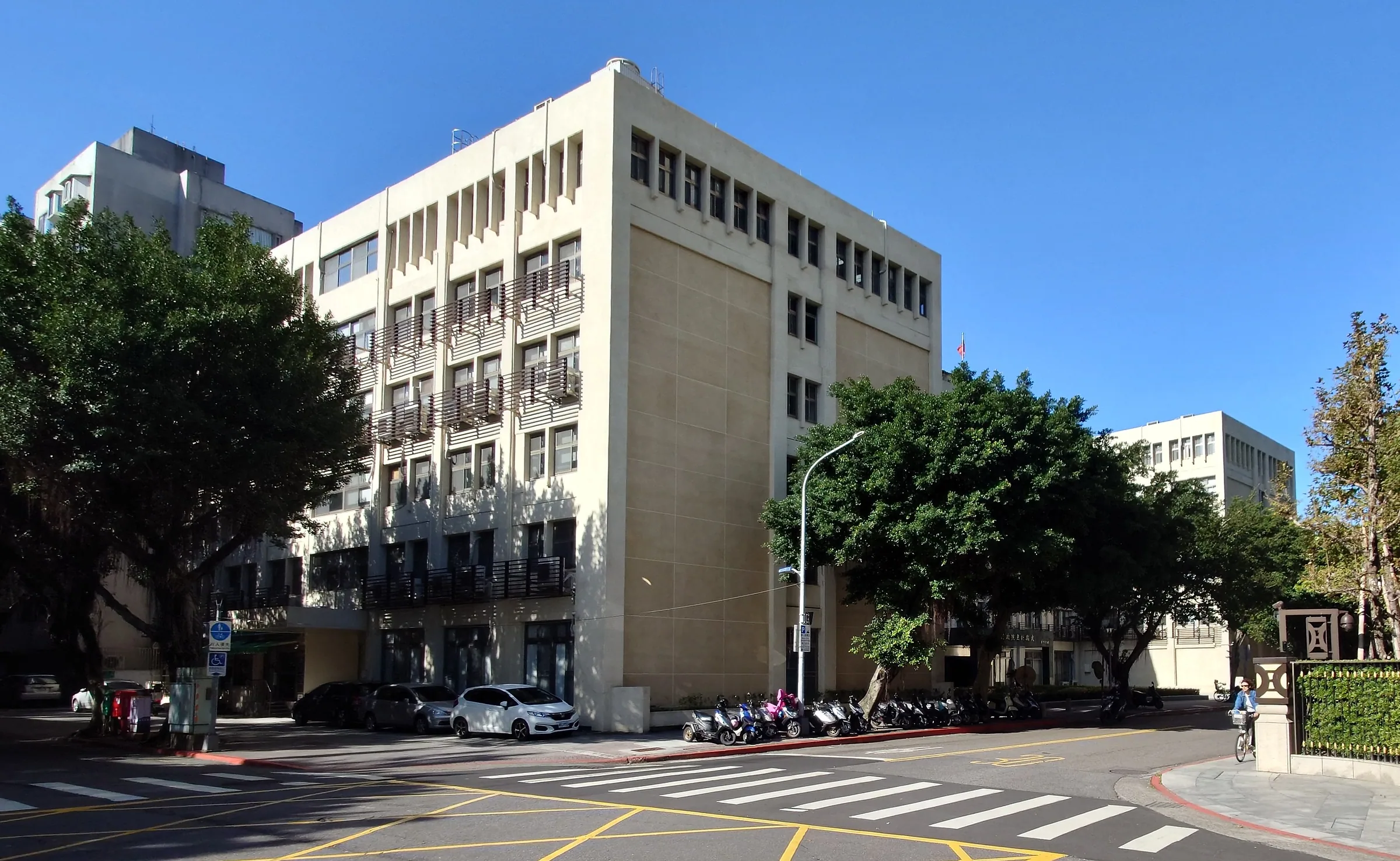
Who Counts as Low-Wage: The Minimum Wage Held the Base Salary, Low Wages Moved to the Year-End Bonus Line
There's a woman named Lee who has been working for six years. When she first entered the workforce, she worked as a planner at a public relations firm. After her probationary period ended, she earned 28,000 yuan per month. After deducting labor and health insurance, that worked out to 160 yuan per hour—worse than a part-time student worker. Over these six years, prices have climbed steadily. A takoyaki that used to cost 45 yuan now costs 70 yuan, and adding a bubble tea means one meal equals an hour of her wages.1
Over the same six years, the minimum wage has risen year after year. The figure she earned six years ago is now below the minimum wage. She says that after the minimum salary broke through 30,000 yuan, the company should have given her a raise; otherwise, she's become part of the minimum-wage workforce.1
30-Second Overview: Taiwan's minimum wage has risen for ten consecutive years and stands at 29,500 yuan this year—already above the international standard for the low-wage threshold. So the Directorate-General of Budget, Accounting and Statistics says that by monthly salary, no one in Taiwan earns low wages. When calculated by total money received over an entire year, 1.26 million people earn low wages. The difference lies in the year-end bonus line: base salary is protected by law, but year-end bonuses are decided by the company. Low wages haven't disappeared; they've moved into industries without bonuses.
Takoyaki Prices Hit 70 Dollars, Her Salary Is Being Caught Up by the Minimum Wage
A rising minimum wage is supposed to be good news. Workers earning the minimum wage saw their January paychecks automatically increase by over 900 dollars this year, and the Ministry of Labor estimates that 2.47 million workers benefited from the increase.2 But when the floor catches up to someone six years into their career, the good news becomes something else: six years of seniority, on the base salary line, puts her on the same level as a new hire just joining the company. What she's saying is that the company should raise salaries accordingly.
President Lai Ching-te said at the National Model Workers Commendation Dinner in August that the minimum wage "only needs one more increase to exceed 30,000 dollars."3 His point was that as long as the company is making money, workers should get raises. Breaking through 30,000 is a raise for minimum-wage earners, but for those whose base salary isn't far from the floor, it means being caught up. The same sentence, heard from different positions on the paycheck, means two different things.
In the same report, two other people stand at the line: twenty-four-year-old Ms. Qiu's monthly salary is exactly 30,000 dollars. Living at home, "she can't avoid paying something," sending 15,000 dollars a month for rent, utilities, gas, and management fees. She says her salary can't keep up with prices, and life is pretty tough.1 Twenty-something Ms. Lin earns 32,000 dollars a month, rents in New Taipei and commutes to Taipei for work. After deducting labor and health insurance, she still has to pay student loans and rent, and often buys discounted food at convenience stores after work. Their base salaries are not far above the floor; when the floor rises again next year, they move one step closer to the line.
On September 14, the Directorate-General of Budget, Accounting and Statistics released July salary statistics. Someone on Threads posted "Sorry, it's me dragging down the average again," citing the monthly average total salary for all employed workers—over 70,000 dollars. The poster said they were far below that; over 300,000 people saw the post.4 So does Taiwan actually have a low-wage problem? The Directorate-General of Budget, Accounting and Statistics gave an answer that day.
DGBAS Says Zero People—It's Measuring the Base Salary Column
That afternoon at four o'clock, the Directorate-General of Budget, Accounting and Statistics (DGBAS) released statistics.5 Deputy Director of the Census and Household Registration Department Tan Wen-ling said at a press conference: "The low-wage threshold is NT$27,598. Anyone earning below that figure is a low-wage worker. Our full-time domestic employees are protected by the minimum wage of NT$29,500, so in terms of monthly salary, Taiwan has no low-wage situation."6 Taiwan has no statutory definition of low wages; she borrowed the OECD's measure: rank all full-time workers' salaries in a line, and two-thirds of the median person's salary is the low-wage line.7
Using this measure on July's monthly salary this year, the line falls just above NT$27,000. The Minimum Wage Act stipulates that wages agreed between employer and employee cannot fall below the minimum wage.8 The floor is nearly two thousand higher than the line, so people standing below the line should legally be zero. Zero is how this measurement comes out—arithmetically, there's no error.
At the same press conference, she also provided another figure. The Central News Agency reported her statement: looking at monthly salary, because of minimum wage protection, in principle there should be no domestic full-time employed workers falling below the OECD low-wage line. Calculated from annual total salary, 1.26 million people meet the low-wage definition.9 Converting to money received over a whole year, one in six people falls below the line. The next day, the opposition heard the first figure, and the Taiwan People's Party issued a statement saying the DGBAS data "should not redefine what 'low wages' means in order to whitewash the situation."10
Zero and 1.26 million are actually talking about the same group of people—the difference is only which column of the payslip is being measured. The monthly salary measure uses base salary; the annual salary measure includes year-end bonuses, performance bonuses, and overtime pay. If someone's base salary passes the line but receives no bonuses over the whole year, their annual salary drops below the line.9 The people who fall through the gap live in the second column.
That post about "dragging down the average," it was actually criticizing a different figure. In the first-half statistics DGBAS released in August, seventy percent of all employed workers earned below the average—a proportion that has been rising for six consecutive years, and this year crossed seventy percent for the first time. It gets cited every time data is released.11 Tan Wen-ling's response was "earning below average does not equal low wages." The average is pulled up by a small number of high earners on the right side of the distribution; most people fall below average, which is normal for any salary distribution.12 Average, median, and two-thirds line—three measures applied to the same group of people, with only the last one asking who counts as low-wage.
Source: DGBAS July 2026 Salary Statistics Press Release, 2024 Employed Workers Annual Total Salary Median Statistics Press Release, Central News Agency report of September 14, 2026
The Year-End Column Has No Law Behind It
Taiwanese people's memory of their salary is divided into two columns. The base salary column records numbers: 22K, ten consecutive increases, breaking 30,000. The 22K figure is a leftover from a 2009 subsidy program that later became synonymous with an entire generation's starting wage.13 The year-end column records scenes: whether the company pays before Lunar New Year, how many months it pays, what the boss decides. The law only reaches the first column.
The base salary column is governed by the Minimum Wage Act: Article 4 divides the minimum wage into monthly and hourly rates, uniform nationwide, with no distinction by industry or company size. Article 5 states that wages agreed between employer and employee must not fall below it.8 The year-end column has no corresponding statute. Article 29 of the Labor Standards Act only says that if the company has surplus, it should distribute bonuses or dividends. The Taipei City Government Labor Bureau's FAQ puts it more plainly: "Year-end bonuses paid by employers according to custom are employee welfare; the conditions and standards for payment may be agreed upon by employer and employee in the employment contract, or established by the employer in work rules."14 According to custom. One column is law, one is custom; one is pushed by the Legislative Yuan and review committees, one is decided by the boss.
A person earning 30,000 monthly makes 360,000 over twelve months. With no year-end bonus, they stay at 360,000 for the entire year, below the 390,000 line. The same person earning one extra month at year-end reaches exactly 390,000, crossing the line. One month's bonus determines whether that same person counts as low-wage. The law protects the 30,000 figure, but cannot reach that one month.
The width of this column is determined by industry: the Directorate-General of Budget, Accounting and Statistics has explained that the gap between annual and monthly salary comes mainly from year-end bonuses, performance bonuses, and overtime pay.15 Using the DGBAS figures for January through July this year by industry, over 40 percent of what financial and insurance workers take home sits in this column. In accommodation, food service, beauty, and hair industries, only just over 10 percent does.5 The same term "annual salary" means two entirely different things across industries.
Source: DGBAS January–July 2026 salary statistics, average regular and total salary by industry; percentages are estimates and include year-end bonuses paid in January–February
The industry with the widest second column also has the highest base salary. Finance and insurance had a median monthly salary just over 60,000 in January–July, the highest among service industries. The industry with the narrowest second column is precisely the one where base salary sits closest to the floor. The lowest median monthly salaries in January–July are in other services and accommodation and food service, both around 31,000–32,000.5 Base salary at the floor, no second column at year-end—people in this situation take home money that falls below the 390,000 line for the entire year.
📝 Curator's Note
The common argument goes: the minimum wage already exceeds the OECD low-wage line, so Taiwan has no low-wage problem. The order of that argument is backwards. The line is calculated from the median; the floor is pushed up by law. When the floor passes the line, it proves the law protected the base salary column—it does not prove that Taiwanese workers' annual income crosses the line. Using the same measure for a full year's income, 1.26 million people stand below the line. The measure hasn't changed; it has simply measured the column the law cannot reach. The opposition and the DGBAS each hold one number; both numbers are correct. What they're really arguing about is the top and bottom halves of the same pay stub.
Year-End at the Hair Salon, and Year-End at the Bank
The Directorate-General of Budget, Accounting and Statistics' 2024 annual salary table, broken down by industry and age, shows who is closest to falling off the line. If you have a friend working as an assistant at a hair salon, open her pay stub: the base salary column has the law watching over it, but the year-end bonus column depends on the boss. In the 2024 annual salary statistics, beauty and hair services are grouped together with equipment maintenance and repair under "Other Service Industries," and the median person in this category earns 385,000 annually—the only industry where the median itself falls below the 390,000 low-wage threshold.16 More than half the people in this line of work stand below that line.
Your friend's name isn't on the table, but her annual salary is in it. Whether the boss pays a year-end bonus at all, and how many months' worth, the statistics table can't tell you—her bank account can. The bank on the same street, classified under Financial and Insurance Services, has a base salary median more than 90 percent higher than the hair salon industry, and the width of the year-end column is a different story altogether.5
Those below the line cluster in a few places: pre-school education and related education sectors, arts and entertainment, accommodation and food service—the bottom quarter of all workers in these industries earn below 390,000 annually.16 By age, it's the two ends: people under 25 and people 65 and older still working. Those fresh out of school and those past retirement age still on the job are closest to the line for the entire year's earnings.
Source: Directorate-General of Budget, Accounting and Statistics 2024 Employed Workers Annual Total Salary Median Statistics Press Release, Table 6, Full-time Employed Workers with ROC Nationality
Outside the ruler, there is another group of people who don't even have a base salary column. After graduating from Chaoyang University of Science and Technology's Silver Industry Management program, Chang Yung-shun worked three years on the front lines as a long-term care worker. In March 2025, CommonWealth Magazine profiled him: when he first entered the field doing home care services, in three months he never earned more than 25,000 in any single month. Home care workers and facilities use a revenue-sharing system—how many cases you get and how much you collect per case are both variables. He said: "You almost need perfect timing, location, and luck to make more money."17
Three months later he gave up home care and moved to a residential long-term care facility with stable pay. In the same article, a long-term care operator ran a recruitment ad saying "Congratulations to home care workers earning 100,000 monthly," which works out to over 200 hours a month, providing services even on national holidays.17
Beyond revenue-sharing home care workers, there are part-time workers (the Taiwan gig generation), self-employed workers without employers, and family caregivers not covered by the Labor Standards Act—these three groups alone add up to nearly two million. They're not on the ruler measuring zero, and they're not on the ruler measuring 1.26 million.18 Self-employed workers alone number 1.26 million, exactly matching the number of people below the line, yet they are two completely different groups. For them, year-end doesn't even allow the question "is there a second column?"
Part-time workers have a median monthly salary of 16,000, with an average hourly wage of 231 yuan, slightly above the minimum wage. The OECD ruler only measures full-time workers; hourly wage earners have no low-wage line of their own.5 Migrant workers in factories do fall under the minimum wage, with base salary following the floor, except their second column is called overtime pay—the bonuses they receive in a year don't add up to a few months of overtime.19
Snack Shop Owner Says 196 Yuan Can't Find Anyone
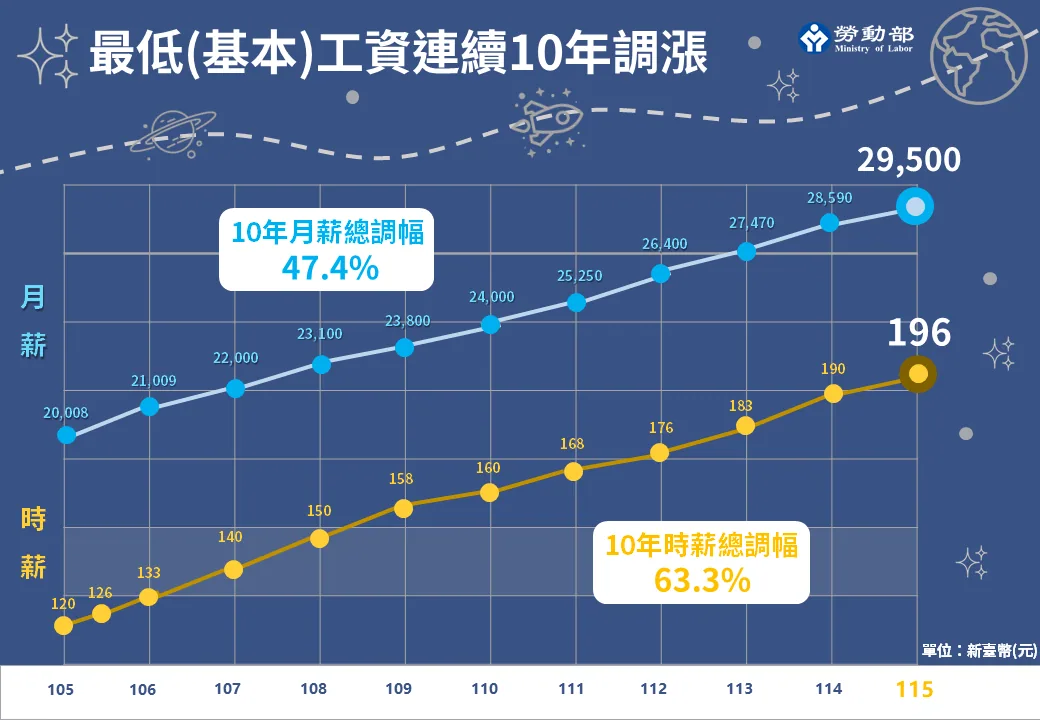
Chart: Ministry of Labor press release, OGDL-Taiwan-1.0
This line didn't move for nearly a decade from 1997 to 2007—the same number printed on the Ministry of Labor's table for ten years. Starting in 2016, it rose ten times in a row, accumulating a 47 percent increase over the decade.20 The people pushing it sit in the Legislative Yuan and review committees; the people paying for it work in shops.
A snack shop owner surnamed Yu told TVBS in September that the restaurant industry is too crowded now, competition in the labor market is fierce, and an hourly wage of 196 yuan simply can't find workers—in reality you have to offer 220 to 230 yuan.21 Some applicants don't have the skills but want to price themselves according to market rates. Snack shops operate on thin margins and high volume; he said if the minimum wage rises again, the shop either absorbs it and makes less profit, or adjusts prices by five or ten yuan.21 For him, the floor is already below market rates. When the minimum wage rises again, what actually moves in the shop is those five or ten yuan on the menu.
On the day of the review committee meeting last September, He Yu, a business representative and standing director of the Taiwan Federation of Industries, was very direct about who actually hires people at the minimum wage. Semiconductor, ICT, electronic components, and computer industries don't hire at the basic wage. The ones who do are mostly small and medium enterprises, sole proprietors, and traditional industries.22 Hair salons and snack shops weren't mentioned by name, but they're mostly these kinds of sole proprietorships and microenterprises.21
Before this year's review committee meeting, the business side changed direction. Taiwan Chamber of Commerce chairman Xu Shubo's position was "rather than raising the minimum monthly wage across the board, consider raising the hourly wage for part-time workers," arguing that each monthly wage increase mostly benefits migrant workers, increasing the burden on enterprises.2324 The 3-3 Society on the large-enterprise side said a 3 percent increase would be more reasonable, since when the minimum wage rises, labor insurance and health insurance rise with it, accounting for about 20 percent of personnel costs.25
On the labor side, Yang Shuwei, secretary-general of the Taiwan Labor Front, responded that the minimum wage only solves part of the low-wage problem, not widespread low wages, and it creates "wage compression"—the minimum wage increase gradually catches up with middle-income salaried workers' wage growth.26 On the decoupling of hourly and monthly wages, he said they've already decoupled to some degree, and the gap shouldn't widen further. If enterprises increasingly favor the flexibility of hourly-wage workers, that's essentially shifting operational risks—order fluctuations, insufficient hours—onto workers.23
The numbers he cited for "catching up" look like this: from 2016 to 2024, the minimum wage rose 37 percent, while the median annual salary of all employed workers rose 18 percent over the same period.27 The floor is rising twice as fast as the middle person's wage growth. What employers and unions are arguing about is how fast and how high the floor should rise. From start to finish, nobody at the table is talking about the second column.
| 2016 | 2024 | |
|---|---|---|
| Minimum wage | 100 | 137 |
| Median annual salary | 100 | 118 |
Source: Ministry of Labor historical minimum wage table (20,008 → 27,470 yuan), Directorate-General of Budget, Accounting and Statistics median annual total salary for all employed workers (462,000 → 546,000 yuan)
September 24: The Floor Rises Again
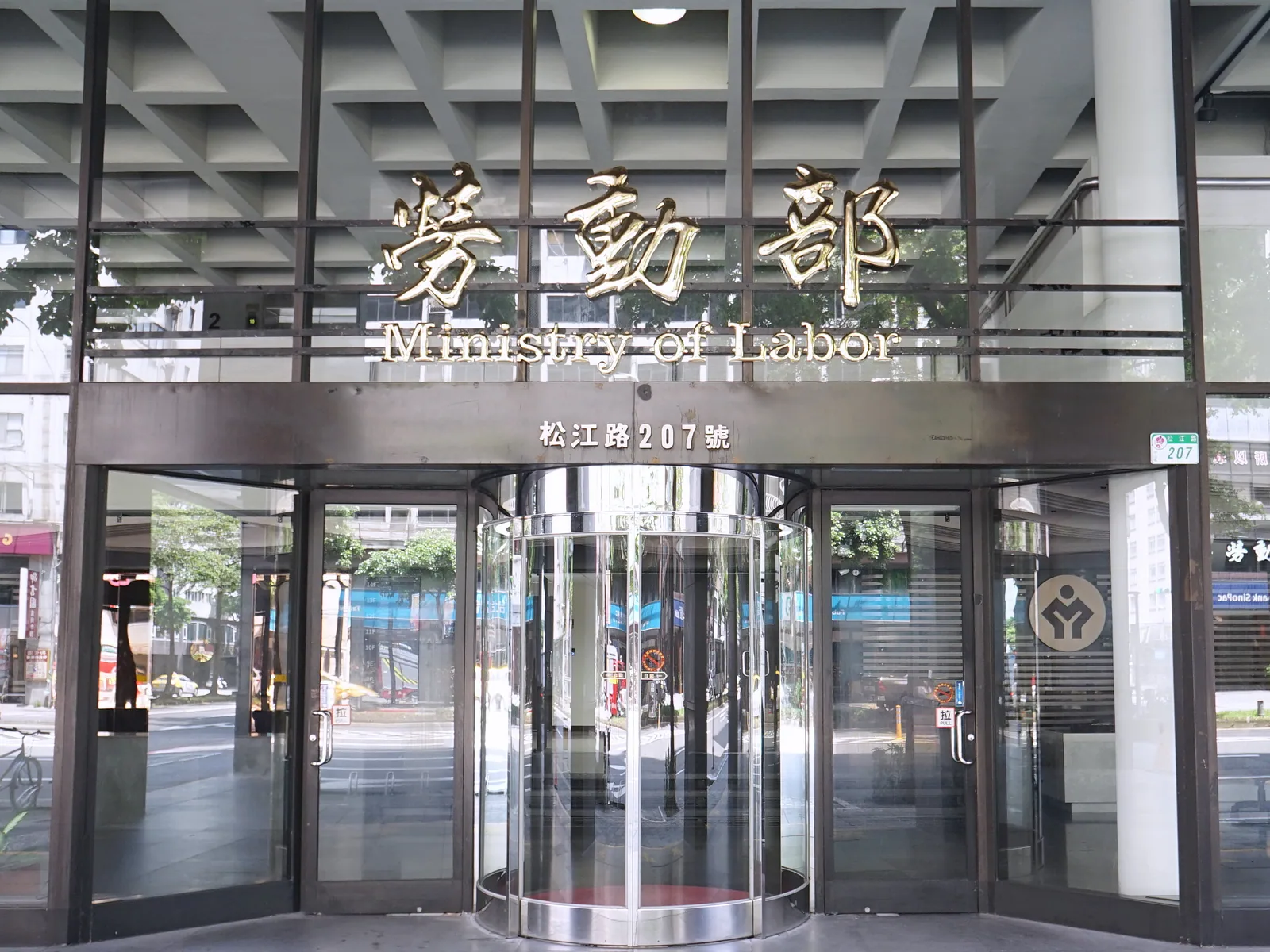
Photo: Solomon203, Wikimedia Commons, CC BY-SA 4.0
On September 24, the day before the Mid-Autumn Festival, the Minimum Wage Review Committee met at the Ministry of Labor. Twenty-one people sat down: seven labor representatives, seven business representatives, four academics, and three government officials.8 They had only two columns to decide: the monthly and hourly minimum wage for the coming year. On the table was data from the Directorate-General of Budget, Accounting and Statistics showing an economic growth rate approaching 10 percent and price increases below 2 percent. Outside predictions exceeded 30,000.28 The law requires the committee to reference price increases; labor productivity, average wage growth, and minimum living costs can be considered.8 There was no third column on the table. The year-end bonus line had never been within the committee's scope—the law gave it no seat.
The meeting ran from 10 a.m. to 5:30 p.m. The decision: starting January, a monthly minimum wage of 30,900 yuan and hourly minimum of 205 yuan, a 4.745 percent increase, the eleventh consecutive year of adjustment, pending Executive Yuan approval and announcement.29
At last year's meeting, labor and business had reached consensus in the morning that price increases should be fully reflected. Business argued that economic growth was driven by semiconductors and high-tech industries, while traditional manufacturing and services remained in difficulty, and advocated for modest adjustment. Labor said price increases hit lower-income people harder, and academic representatives believed the adjustment should at least match inflation. In the afternoon, academics proposed a compromise; Labor Minister Hung Hsuan-tsan mediated, and the figure was set at 3.18 percent.2 All 2.47 million people who benefited were in the first column. The second column was not in that conference room.
This time, labor committee members raised youth starting salaries and non-standard workers, calling for a fair share of economic growth. Business committee members said they supported reasonable, appropriate adjustment, but needed complete data.28 Both sides wanted different things but the same columns: youth starting salary is the first column, hourly wage is the first column, data is first-column data. The Directorate-General of Budget, Accounting and Statistics runs a website called the "Salary Information Platform." Enter your total annual salary, and it tells you where you stand across Taiwan.30 Whether you're among those 1.26 million depends on the full-year figure. Push the first column up, and the second column still waits until year-end.
On September 24, the minimum wage rose again. Monthly salary crossed 30,000 for the first time. The committee decided Taiwan's first column. That Ms. Lee, six years into her career, earned 28,000 six years ago—already below the floor. Come January, the floor rises one notch higher. If her company adjusts, her base salary column returns to the line. The year-end column—the law has no opinion. It depends on the boss, and the boss looks at whether the company made money that year. The first column is pushed up by twenty-one people and one law. The second column is decided by the company. She said it clearly herself: the company should adjust salaries accordingly, or she becomes part of the low-wage workforce.1 Come January, the base salary floor will move again. The year-end column—she won't know until just before Lunar New Year.
Who counts as low-wage? The answer is in the second column of the payslip. Today, takoyaki costs seventy yuan, plus a bubble tea drink—still her hourly wage.
Further Reading
- Delivery Platform Labor Law — Another legal floor: minimum compensation per delivery order, with market forces above the floor
- Air Conditioning and Energy Poverty — Poverty measured another way: converting income into electricity costs, whether families can afford air conditioning in summer
- Learning Poverty — Another definitional question: how children sitting in classrooms but learning nothing are counted
- Taiwan's Gig-Work Generation — The side jobs people take after hours because base salary isn't enough, mostly falling outside the metrics discussed here
Image Sources
- Directorate-General of Budget, Accounting and Statistics Guangbo Building (hero): Guangbo Building 20230306, photograph by Yu_tptw, March 6, 2023, Wikimedia Commons, CC BY-SA 4.0
- Minimum (Basic) Wage Consecutive Ten-Year Increase Line Chart: Ministry of Labor September 26, 2025 Press Release 《Minimum Wage Rises for Tenth Consecutive Year》 Attached Figure 3, Ministry of Labor, Government Open Data License Declaration (OGDL-Taiwan-1.0)
- Ministry of Labor Main Entrance: ROC-MOL main entrance 20230812, photograph by Solomon203, August 12, 2023, Wikimedia Commons, CC BY-SA 4.0
References
- Minimum Wage Hike Calls: Middle-Income Salaried Workers Feel 'Disguised Pay Cut' — United Daily News, September 12, 2026, six-reporter joint coverage. The starting salary, hourly wage conversion, and takoyaki price increase of the employee surnamed Li are reporter paraphrasing; the original text contains no direct quotations.↩234
- Ministry of Labor Press Release: Minimum Wage Rises for Tenth Consecutive Year! Review Committee Decides Adjustment Effective January 1, 2026 — Ministry of Labor press release from September 26, 2025, documenting both labor and management positions at the review committee, the minister's coordination process, and the 3.18% adjustment rate; Figure 3 shows the ten-year consecutive increase trend line.↩2
- Lai Ching-te: Minimum Wage Only Needs One More Increase to Exceed 30,000 — Storm Media, August 8, 2026 report documenting Lai Ching-te's remarks on minimum wage at the National Model Workers Commendation Banquet.↩
- @_yummy_tw: Sorry, It's Me Dragging Down the Average Again — Threads post published on the day the Directorate-General of Budget, Accounting and Statistics released July salary statistics; the page displays only relative time. The 71,165 yuan cited in the post is the average total salary for all employees in July, including bonuses and overtime pay. As of September 19, 2026, the post had approximately 8,000 likes and 245 comments.↩
- DGBAS July 2026 Industrial and Service Sector Salary Statistics Press Release — DGBAS press release PDF containing average regular and total salaries by industry for January–July, and median regular salaries. Non-regular salary proportions are calculated from these figures and include year-end bonuses distributed in January–February of the following year.↩2345
- DGBAS Claims Taiwan Has No Low-Wage Problem! Pai Attacks 'Redefining Low Wages' — TVBS News, September 15, 2026 report documenting Tan Wen-ling's remarks on low-wage thresholds and minimum wage at a September 14 press conference. The original text uses 'pointed out' without quotation marks; the sentences themselves are conversational in tone.↩
- OECD, Incidence of Low and High Pay — OECD indicator page defining low-wage incidence as the proportion of full-time workers earning below two-thirds of the median wage; the page does not specify whether countries use monthly or annual salaries or whether bonuses are included.↩
- Minimum Wage Act — National Laws and Regulations Database. Article 4 specifies two types of minimum wage—monthly and hourly. Article 5 stipulates that agreed wages must not fall below the minimum wage. Article 7 provides that the review committee comprises 21 members from labor, management, academics, and government representatives.↩234
- DGBAS: No Low Wages by Monthly Salary; 1.26 Million Below Threshold by Annual Salary — Central News Agency, September 14, 2026 report documenting Tan Wen-ling's explanation of monthly versus annual salary calculations. The figures of 1.26 million people and 16.8% are rough estimates from the press conference.↩2
- Same TVBS Report: Taiwan People's Party Statement, September 15 — The latter half of the same TVBS News article, verbatim reproduction of the Taiwan People's Party's full statement in response to the DGBAS remarks.↩
- DGBAS June 2026 Industrial and Service Sector Salary Statistics Press Release — DGBAS press release PDF. For the first half of 2026, the proportion of domestic full-time employees with regular salaries below the average was 70.30%; for all employees, 70.03%.↩
- DGBAS: Below Average Does Not Equal Low Wage — NOWnews, September 14, 2026 report verbatim recording Tan Wen-ling's explanation of 'seventy percent earning below average salary'.↩
- Where Did 22K Come From: University Graduate Internship Program at Enterprises — Report Time, November 5, 2025 retrospective. In 2009, the Ministry of Education's program subsidized enterprises 22,000 yuan per month in base salary for each intern; '22K' subsequently became synonymous with entry-level salary.↩
- Taipei City Government Labor Bureau FAQ: Must Year-End Bonuses Always Be Paid? — Taipei City Labor Bureau official FAQ. Year-end bonuses are employee benefits determined by employment contracts or work rules; bonuses and dividends under Labor Standards Act Article 29 are discretionary in nature.↩
- DGBAS Official Explains Difference Between Annual and Monthly Salaries — Liberty Times Finance Section, September 15, 2026 report. DGBAS official explains that the difference between annual and monthly salaries stems primarily from year-end bonuses, performance bonuses, and overtime pay.↩
- DGBAS 2024 Industrial and Service Sector Full-Year Total Salary Median and Distribution Statistics Press Release — DGBAS press release PDF. Table 6 lists quartiles of domestic full-time employees' 2024 full-year total salaries by industry and age; the median for other service industries is 385,000 yuan.↩2
- Can Long-Term Care Work Earn Monthly Income of 100,000 Yuan? A Passionate Young Care Worker's Confession — CommonWealth Magazine report from March 24, 2025, sourcing Zhang Yongshun's home care experience, revenue-sharing arrangements, and hourly wage calculations from a 100,000 yuan monthly salary recruitment advertisement; full text is behind a paywall.↩2
- Directorate-General of Budget, Accounting and Statistics July 2026 Human Resources Survey Statistical Results — Directorate-General of Budget, Accounting and Statistics PDF Table 9: 1.265 million self-employed workers as of July 2026; 426,000 part-time employees from the same month's salary statistics press release; 209,000 domestic care workers from the Ministry of Labor's January 2026 migrant worker statistics—the three figures use different methodologies and time points.↩
- Ministry of Labor 2025 Migrant Worker Management and Utilization Survey Statistical Results — Ministry of Labor survey showing that as of June 2025, business units' migrant workers earned average regular salary of 30,000 yuan with 5,100 yuan in overtime pay, and 15,000 yuan in other non-regular annual compensation; foreign domestic care workers not covered by the Labor Standards Act earned average regular salary of 21,000 yuan.↩
- Ministry of Labor: Historical Minimum Wage/Basic Wage Adjustments — Ministry of Labor official historical table showing minimum wage from 15,840 yuan as of October 16, 1997, adjusted to 17,280 yuan on July 1, 2007, rising to 20,008 yuan in 2016 and 29,500 yuan in 2026.↩
- Basic Wage Expected to Rise for 11th Consecutive Year! Monthly Salary Exceeds 30,000 Yuan, Hourly Wage Reaches 200 Yuan; Small Restaurant Owners Cry Foul — TVBS News report from September 12, 2026, paraphrasing a restaurant owner surnamed Yu's remarks on hourly wage market rates and price adjustments.↩23
- Minimum Wage Review Committee Meeting Convenes; Business Sector Points to Asymmetric Industry Development, Calls for 'Wage Freeze' — United Daily News report from September 26, 2025, paraphrasing remarks by He Yu, standing director of the Taiwan Employers' Union, made before the review committee; original text not in quotation marks.↩
- Minimum Wage Increase...Business Federation Proposes Adjusting Hourly Wage First; Labor Groups Oppose — United Daily News report from September 12, 2026, paraphrasing Xu Shubo's position with quotation marks and labor leader Yang Shuwei's opposition to decoupling hourly wages.↩2
- Will Basic Wage Rise Again? Business Federation's Xu Shubo: After All the Adjustments, It All Goes to Foreign Workers — Taiboard report from August 13, 2026 (reposted on LINE TODAY), verbatim recording of Xu Shubo's remarks on monthly wage increases and migrant workers.↩
- Minimum Wage Review Committee to Convene; Lin Bofen of the 3-3 Society: A 3% Basic Wage Increase Is More Reasonable — Economic Daily report from September 16, 2026, documenting Lin Bofen's remarks on adjustment rates, tax reduction, and labor insurance costs.↩
- Same United Daily Report: Yang Shuwei Discusses Wage Compression — United Daily News report from September 12, 2026, labor union section of the same article; Yang Shuwei's remarks on 'wage compression' are paraphrased by the reporter, with only the four characters 'wage compression' appearing in quotation marks in the original.↩
- Directorate-General of Budget, Accounting and Statistics 2024 Employed Workers Annual Total Salary Median Statistics Press Release: Historical Median Series — Historical table from the same Directorate-General of Budget, Accounting and Statistics PDF showing all employed workers' annual total salary median of 462,000 yuan in 2016 and 546,000 yuan in 2024; minimum wage for the same period from 20,008 yuan to 27,470 yuan per Ministry of Labor historical table, with growth rate calculated by dividing the two figures.↩
- Minimum Wage Review Committee Convenes September 24; Outside Predictions Exceed 30,000 Yuan — United Daily News report from September 11, 2026, including market predictions for 2027 minimum wage and pre-meeting demands from both labor and management committee members.↩2
- Next Year's Minimum Wage Settled After Nearly 8 Hours of Negotiations; Monthly Salary 30,900 Yuan, 4.745% Increase; Hourly Wage 205 Yuan — Liberty Times report from September 24, 2026, documenting the minimum wage review committee's decision to adjust the monthly wage from 29,500 yuan to 30,900 yuan and hourly wage from 196 yuan to 205 yuan effective January 1, 2027, pending Executive Yuan approval and announcement.↩
- Directorate-General of Budget, Accounting and Statistics Salary Information Platform: Personal Salary Comparison Tool — Interactive webpage from the Directorate-General of Budget, Accounting and Statistics where users can input annual total salary to see their position in the salary distribution.↩
🧬 What Semiont was thinking while writing this