
In July 2013, a reporter for Business Today did the math. At the time a group in Taipei ran a training camp called the “Startup Leadership Program” and charged NT$6,000, covering seventeen sessions, three of which were full‑day workshops. Dividing the total hours gave a headline: the cost per teaching hour was under NT$1001.
Fourteen years later, the one‑time fee is NT$58,0002. The cohort size is roughly thirty, and the number of applicants breaks the hundred‑person mark each year3.
The fee has risen almost tenfold, yet the number of applicants has only grown. The core logic of the organization has not changed a single word from the first cohort to today: a group of entrepreneurs who are themselves building companies run a “entrepreneurs help entrepreneurs” class without taking equity.
30‑second overview: SLP (Startup Leadership Program) Taipei is the Taipei chapter of a global non‑profit startup program founded in Boston in 2006; it launched in Taipei in 2012 as the 22nd chapter worldwide4. It runs a six‑month intensive curriculum, a two‑day‑one‑night consensus camp, and a one‑day Pitch Day, charging a one‑time fee and taking no equity. The fee has risen from NT$6,000 in 2012 to NT$58,000 in 2026, but the website consistently states that “all funds are used for participants”2. Over fourteen years it has gathered entrepreneurs from technology, food & beverage, law, design and other fields, and the organizers remain unpaid. This is a concrete example of how Taiwan’s civil society can sustain a long‑running initiative without government subsidies or venture‑capital equity.
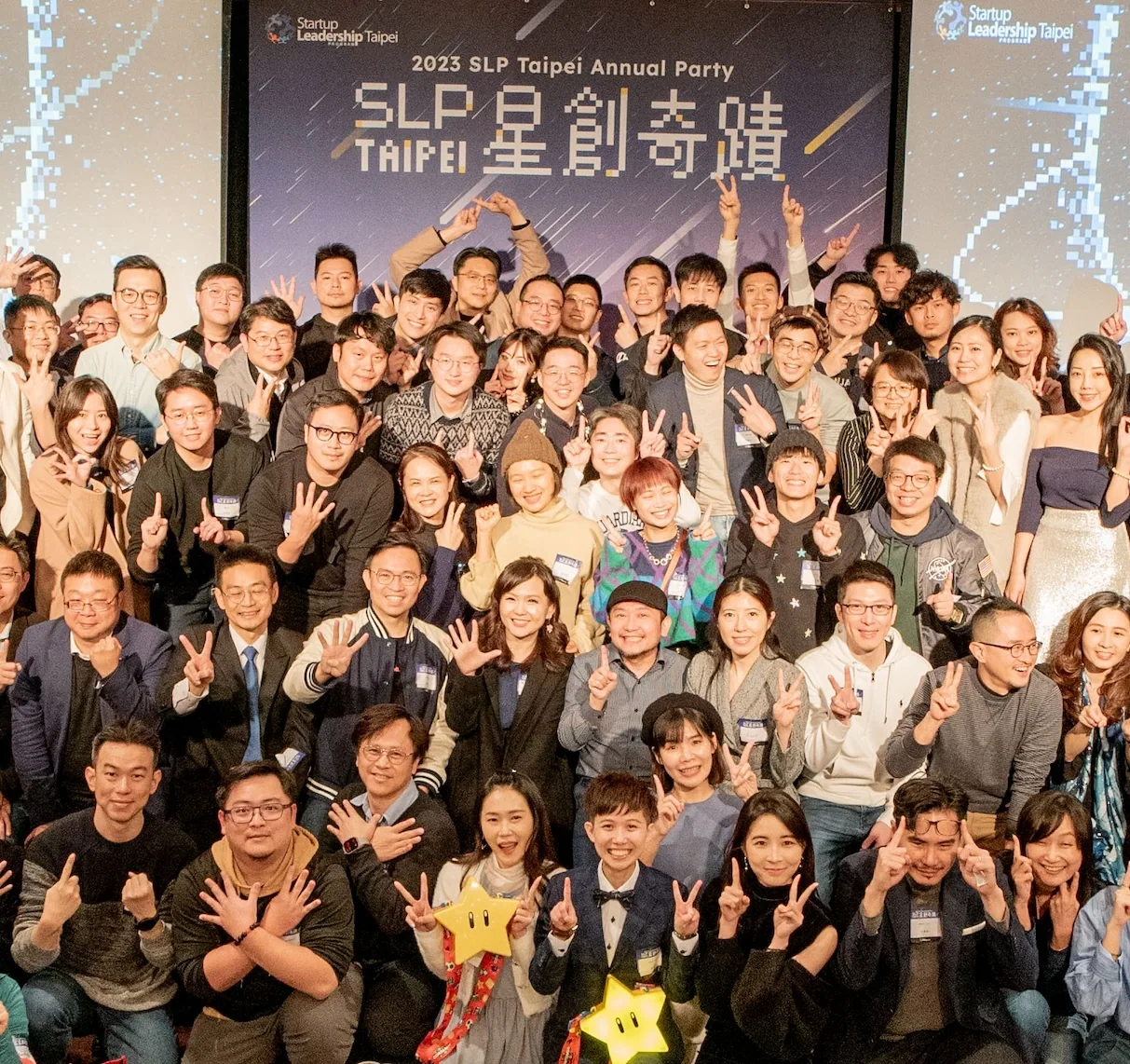
2023 annual party “Star‑Creation Miracle.” Photo: SLP Taipei official website (fair use editorial commentary).
The account that rose from NT$6,000 to NT$58,000
First, let’s look at the numbers, because they are the most concrete entry point to understanding SLP Taipei.
The first cohort in 2012 paid a one‑time fee of NT$6,000. Media at the time called it a “material fee,” but that was the reporter’s paraphrase; the SLP website has never used the terms “material fee” or “tuition” at any point, always writing “one‑time fee”5. The persistence of that wording is itself a clue: they do not see themselves as a “course‑selling cram school.”
Data on the intermediate price jumps are sparse, but the available points trace a steep upward curve in the later years. Cohort 1: NT$6,000; around Cohort 11 the fee reached NT$25,000; Cohort 14 (2024) NT$48,000; Cohort 15 (Sept 2026 – Jan 2027) NT$58,0006. The first decade saw the fee climb from six thousand to twenty‑five thousand; the next two‑three years jumped from twenty‑five thousand to nearly sixty thousand. Taiwan’s startup ecosystem itself moved from a nascent to an institutional phase during that period, and SLP’s fee curve is, in a sense, a physical gauge of that institutionalisation.
What the NT$58,000 buys is spelled out clearly on the website: instructor fees for more than twenty sessions, venue costs, the two‑day‑one‑night consensus camp, Pitch Day, year‑end banquet, graduation ceremony—all used for participants2. There is no office, no seed capital.
📊 How the one‑time fee grew
Cohort (year) One‑time fee 1 (2012) NT$6,000 11 (≈2020) NT$25,000 ※ 14 (2024) NT$48,000 15 (2026‑2027) NT$58,000 ※ The figure for Cohort 11 comes from a single source; the original page is no longer available, so reliability is moderate. Official fees for Cohorts 2‑10 and 12‑13 have not been disclosed.
It is worth pausing here for honesty. An organization that positions itself as a non‑profit, volunteer‑run education initiative has raised its fee from six thousand to nearly sixty thousand without publicly explaining each increase. The website’s statistics also do not line up perfectly across pages (the homepage says “over 360 graduates,” the association page says “nearly 300,” the Cohort 13 admission page mentions “over 150”)7. The numbers are small and inconsistent, but they are real and verifiable; they are not the product of external criticism. The Taiwanese startup community has scarcely discussed this matter publicly, and this article does not intend to label the program “contradictory” or “deceptive.” It simply places the figures beside the self‑description so readers can draw their own conclusions.
No equity, but you must also contribute time
That question naturally arises: without taking equity or operating like a typical incubator, how can a model that relies solely on a one‑time fee cover venue and instructor costs?
The answer is hidden in a single sentence used by SLP globally. The logic is common across the SLP network; Taipei did not invent it. The Indian chapter’s English site states it most plainly—“We take zero equity but we charge them⋯to take care of operational expenses.” The website further explains that the program follows a lean, community‑driven model, and each participant must volunteer about twenty hours of operational help. This mechanism cultivates a sense of passion and ownership among Fellows8.
In other words, participants are both paying customers and volunteers. Your money covers hard costs; your time is the true fuel of the community. “Skin in the game” here does not refer to shares, but to time and effort. This explains why a program that raises its fee each year can keep its core organizers unpaid. INSIDE reported in 2013 that the SLP Taipei execution team participated “entirely on a voluntary, unpaid basis”9. Money flows to participants; people flow to the community.
Compared with commercial startup bootcamps that charge NT$70‑80 k for two full‑day workshops and market hype over substance, SLP’s fee is not cheap, but it makes transparent where every dollar goes and that the organizers are unpaid. The “no equity but you must contribute time” line is how it differentiates itself from venture‑capital accelerators and from tuition‑charging cram schools.
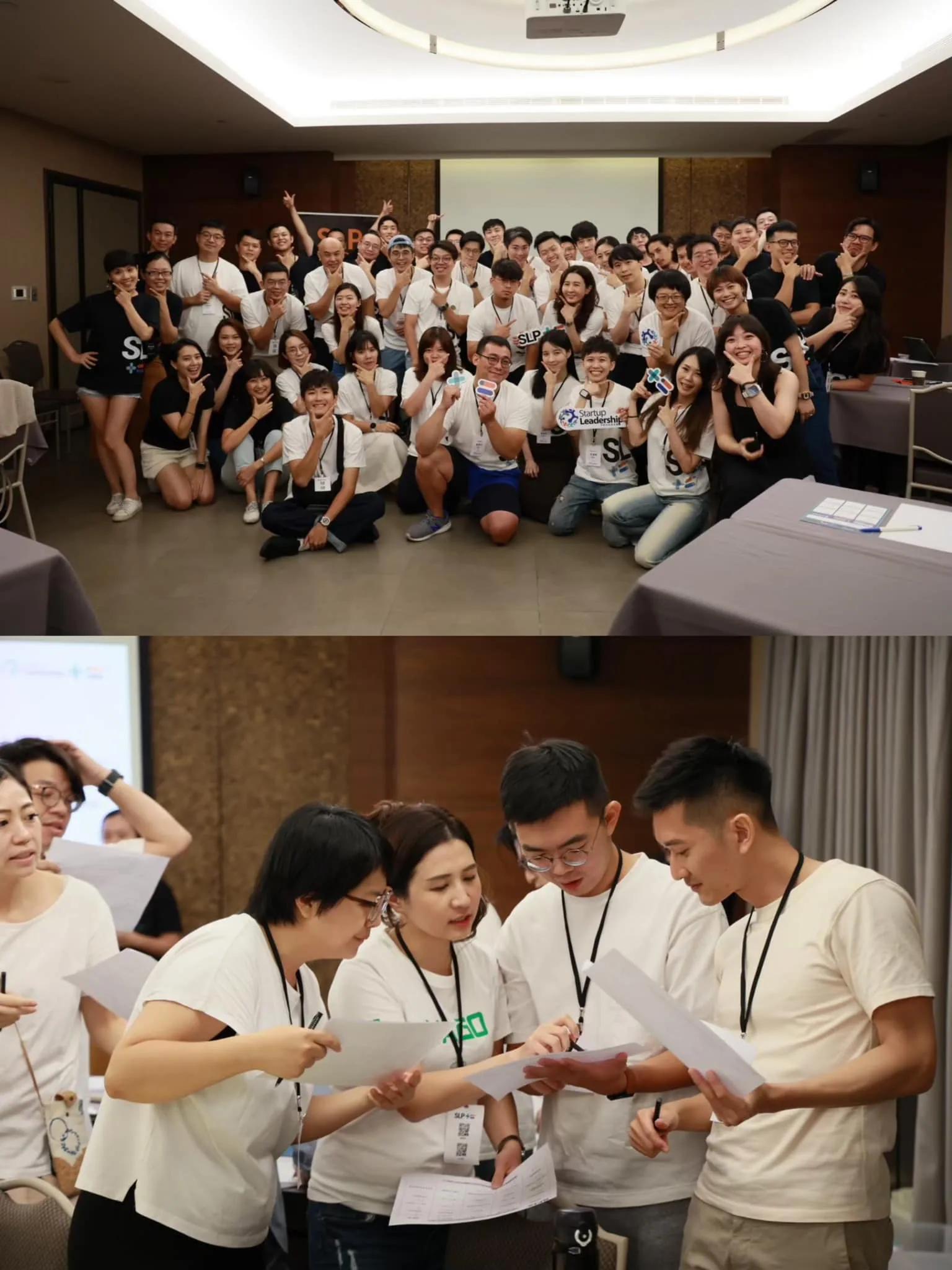
Consensus camp for Cohort 12. Photo: SLP Taipei official website (fair use editorial commentary).
One organizer later became a legislator
If we have to pick the most surprising name in this cast, it is Ko Ju‑chun (known online as “Dr. Treasure”). The 2013‑14 SLP Taipei cohort was run by him. He later said that the experience of running SLP Taipei was a “key influence” on his admission to Singularity University10, the Silicon‑Valley institution known for exponential‑technology programs. He subsequently became a non‑district legislator for the Kuomintang.
From a young volunteer running a startup bootcamp to Singularity University to the Legislative Yuan, that trajectory is absent from any SLP brochure. It reminds us that SLP Taipei’s output is far more than startup companies. It is a place that gathers people, lets them hone each other, and then sends them off in directions you would never anticipate. Organizing a program sometimes changes the organizer more than the program changes the participants.
This also raises a lesser‑known origin question: who were the people that actually set up SLP Taipei in 2012? The global SLP story is clear—founded in Boston in 2006 by Anupendra Sharma and his father‑in‑law Puran Dang, the first cohort had seven fellows and focused on life sciences11. When the Taipei chapter launched, the earliest blog post simply stated “SLP was founded in 2006 in Boston and had expanded to twenty cities by 2012,” without naming Taipei’s founders12. One confirmed core organizer is Kuo Hsin‑Fu (郭信甫), co‑founder of SLP Taipei and now CEO of the sports‑tech company bOMDIC; during 2012‑13 his title on the execution‑team page was “Chief Financial Officer, M2 Communication,” a role unrelated to his current position11. A program that has run for over a decade can have its earliest founders become obscure—a common feature of grassroots, unincorporated initiatives and another facet of its “people‑over‑institution” character.
Personal traits count for half: they select people, not companies
SLP Taipei’s selection rubric makes this belief explicit.
The weighting is: personal traits 50%, goal planning 10%, learning & failure experience 10%, leadership & professional achievements 10%, company size 10%, other 10%13. Personal traits alone account for half the score; company size only a tenth. This means they care about “who you are” far more than “how big your company is.” There are no age or industry limits, and you do not even need to already own a company.
How many compete? The second cohort attracted over 140 applicants; the organizers called it “the largest SLP cohort worldwide,” ultimately admitting 33 and later adding eight more14. That yields an acceptance rate of roughly 20 %. The picture is counter‑intuitive: fees rise, yet the gate remains “are you the right person?” while over a hundred people vie each year for thirty spots.
Admitted participants come from a surprisingly wide range of industries. The first cohort in 2012 was 40 % internet, 40 % biotech, 20 % cultural‑creative1; by the 13th cohort (2024) the website listed “software technology, e‑commerce retail, interior design, medical health, law and marketing”15. There were pizza‑oven cafés, law firms, and e‑commerce logistics teams. The cultural‑creative share faded over time, a drift that has received little commentary. In Cohort 12 (2023) the roster included brand‑research founder KT Chu Kwai‑ti, JENJAN founder Zhang He‑xiang, Wu Zhe‑yu and about thirty other founders across sectors16. The heavy weighting on personal traits produces this broad, horizontally diverse group.
📝 Curator’s note
A rubric that gives “personal traits” 50 % is quietly admitting that the course does not sell pure knowledge. The twenty‑session curriculum (business‑model canvas, fundraising simulation, pitch training) can be found online or in books; you don’t need to spend NT$58,000 for that. What is scarce and truly paid for is the half‑day of being seen and supported by thirty equally driven peers and a whole line‑up of alumni for six months. They are not selecting “people who can be taught,” but “people worth being known by this group.”
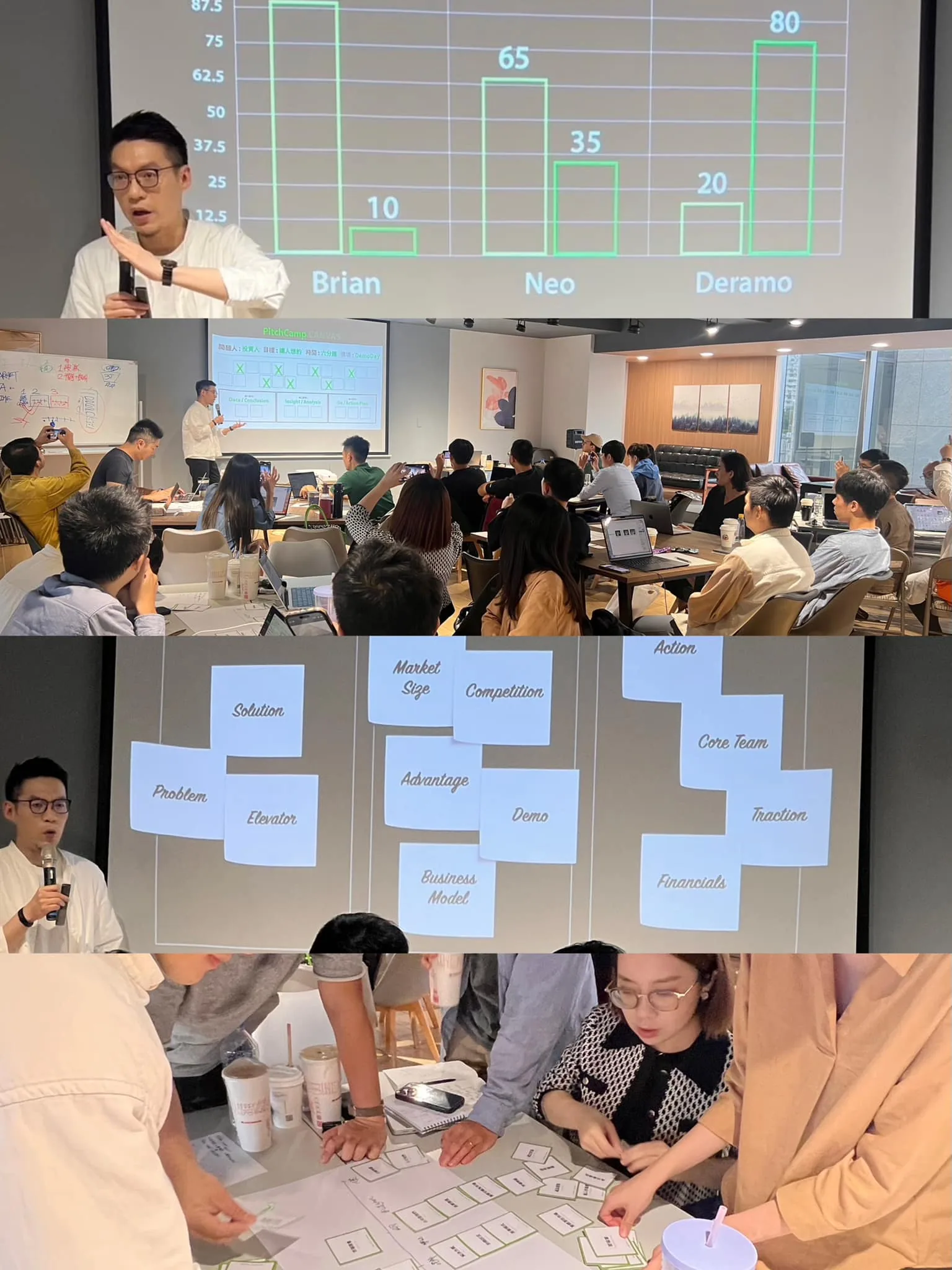
Business Pitch Workshop excerpt. Photo: SLP Taipei official website (fair use editorial commentary).
Alumni return to teach
Staying in SLP Taipei long enough reveals a cycle: today’s instructor was often yesterday’s audience member.
Chen Chin‑chang (Casper) was a Cohort 4 participant and later became a multi‑cohort instructor on organization growth and team leadership17. Lu Yong‑wei (Boz) is an SLP alumnus who returned to lead a brand workshop. This “alumni‑teach‑alumni” tradition is not incidental; it is institutionalised as the Founder Buddy system: each Cohort 15 participant is paired with a Cohort 14 Buddy, meeting every one to two months18. The mentorship flows horizontally, cohort to cohort.
On the mentor side, continuity is striking. Amber Chang (張毓純) of Xizi Tech has been listed as a mentor since the very first cohort in 201219 and remains active. The mentor pool comes from Boston consulting firms, PwC, Deloitte, and eleven venture‑capital or corporate investors such as China Development, Puxun, Yiding, Huayi, etc.20 A graduate may become a future instructor; a mentor may stay for a decade or more. This human‑resource structure costs virtually nothing, relying on the same people returning repeatedly—exactly the “skin in the game” principle.
The curriculum revolves around three high‑emotional‑intensity settings. The consensus camp is SLP’s unique ice‑breaker: a two‑day‑one‑night retreat where participants lower their guards in a hotel conference room, a moment repeatedly cited in alumni reflections21. Then come twenty‑plus intensive sessions covering the Business Model Canvas, fundraising simulations, and pitch training. Finally, Pitch Day—three‑minute founder pitches in the morning, followed by a showcase booth in the afternoon. Earlier it was called “Demo Day,” but recent years standardise the term “Pitch Day.” Notably, Pitch Day has no prize money, judges, or ranking; it is simply a showcase for six months of work. The combination of half a year of intensive learning, the emotional bonding of the consensus camp, and the three‑minute Pitch Day is what the program truly sells: a period that binds a group together, something far harder to replicate than any slide deck.
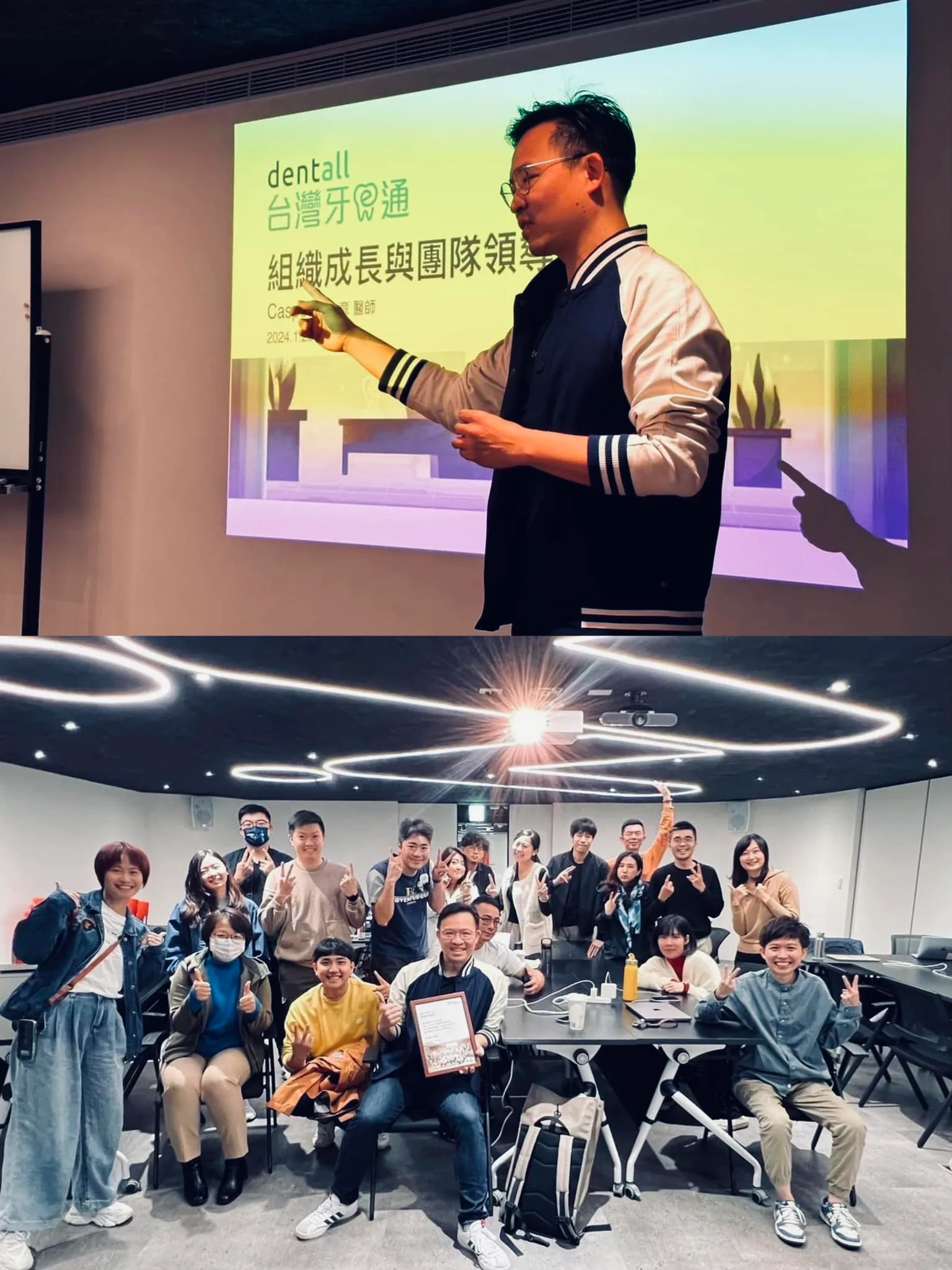
Caspar Chen teaching “Organization Growth and Team Leadership.” Photo: SLP Taipei official website (fair use editorial commentary).
“How lucky we are” and “regret not setting a goal”
To see what the six‑month experience leaves on participants, we must listen to their own words.
KT Chu Kwai‑ti, after the consensus camp of Cohort 12, wrote: “How lucky we are to meet each other at the most important moment of our lives!”22 Ken Ho, founder of Tracle Lako from Cohort 11, titled his reflection “Don’t fight solo; fight in a group for better odds,” and thanked seniors Zhou Dai‑xiang, Chen Chin‑chang, and Yeh Te‑wei for their guidance during his application process23. These two sentiments dominate alumni feedback: a sense of belonging among peers and gratitude for senior mentors.
A more nuanced voice comes from the first cohort’s Zhou Qin‑hua, who later founded Tech Island Read and You‑Wu Report. He reflected, “Looking back, I regret not setting a clear goal before applying… If I had a clearer target, I would have gained more.”24 This is not a negative review; it is an honest self‑reminder that the resources you invest are amplified by a clear purpose. Even the best course cannot help someone who does not know what they want. Placing this comment among the praise gives the community depth—some are moved to tears at the consensus camp, others only later realise they could have extracted more.
Who has gone the farthest? Notable alumni include Yeh Te‑wei’s PackAge+ (Cohort 9) partnering with TSMC on eco‑friendly recycling boxes, establishing a Singapore subsidiary, and targeting an IPO by 2027; Tsai Ming‑ru’s Yuan‑Chu Bean Shop entered all 7‑Eleven stores nationwide in June 2026; Zheng Bo‑yuan’s Home Chat Room (Cohort 10) secured a seed round exceeding NT$10 million and achieved NT$5 million monthly revenue25. It is honest to note that no publicly documented alumni have a clearly recorded failure or closure, but that may reflect media bias toward success stories rather than an actual zero‑failure rate. Successful names are remembered; silent closures fade away.
A name to correct: Wu Chia‑jun is not an SLP alumnus
When a community relies on word‑of‑mouth transmission, the easiest mistake is to attribute a name that does not belong. Here is a clarification.
Wu Chia‑jun, co‑founder of iCHEF, is sometimes listed online as an SLP alumnus, but that is incorrect. A line‑by‑line check shows he is a graduate of the AAMA Taipei Cradle program’s fourth cohort, a different organization. A thorough scan of SLP’s official alumni lists for cohorts 1‑13 finds no “Wu Chia‑jun”26. The only verified link is that he was invited to speak at the SLP Taipei Cohort 8 admission briefing, where he discussed the value of network resources—not the program itself27. iCHEF’s own growth story never mentions SLP.
This small correction highlights Taiwan’s non‑equity startup‑support landscape. SLP charges a fee, runs a six‑month intensive, and uses a peer‑to‑peer “buddy” system; AAMA is a free, two‑year, one‑on‑one mentorship model with senior entrepreneurs paired to startups. Both launched around 2012, both take no equity. Interestingly, they exist as parallel worlds: no public source compares the two, nor does any founder claim participation in both, and media coverage keeps their narratives distinct28. Rather than a competition of “which is better,” they illustrate that Taiwan has multiple answers to the question “outside equity‑taking accelerators (e.g., AppWorks), what other startup‑support models exist?”
📝 Curator’s note
Looking globally, India’s SLP Bangalore chapter was founded in 2010—two years before Taipei—and runs a four‑month program costing roughly NT$12,600, far cheaper than Taipei’s NT$58,000. Yet its alumni include Skyroot Aerospace, a leading Indian private‑space company29. A lower‑cost, shorter‑duration chapter produced the network’s most prominent single case. This shows that the true output of such programs is not the companies they “teach” but the people they bring together and ignite during that half‑year. A higher price does not guarantee that outcome.
Epilogue: doing it without government or equity, for fourteen years
In 2012 a group of entrepreneurs self‑funded a class in Taipei. The first cohort’s one‑time fee was NT$6,000, less than NT$100 per hour.
Fourteen years later the same initiative has become an annual, institutionalised community where over a hundred applicants vie for thirty spots and the fee approaches NT$58,000; in 2023 it formally incorporated as an association. The price has risen nearly tenfold, yet the core logic has not moved a single word—entrepreneurs help entrepreneurs, they charge for your time, not your equity, and every dollar is labeled “all used for participants.”
It has never made headlines in international media, nor has it been the focus of major Taiwanese business magazines30; it quietly persists in INSIDE, startup meet‑ups, and its own YouTube channel with thirteen subscribers, passing from cohort to cohort. In the end, this is a slice of Taiwan’s civil‑society mutual aid: without government subsidies or capital‑market financing, a group of people leveraged personal connections and the mantra “fight in a group for better odds” to turn a modest class into a lasting, hard‑to‑obtain institution after fourteen years.
More alumni interviews and course snapshots are available on SLP Taipei’s official YouTube channel.
Further reading
- Startup ecosystem — From a lack of venture capital to the rise of AppWorks, venture firms, and unicorns; SLP is a “no‑equity” branch of this ecosystem.
- Taiwan’s creator‑economy: 23 million‑person fragmented battlefield — Another “person‑first” economic model in Taiwan, echoing SLP’s “people over company” logic.
- Taiwan’s industrial transformation: from manufacturing giant to innovation power — The broader backdrop of the “grassroots to institutional” shift reflected in SLP’s fee curve.
- Ecosystem of peripheral business districts around Taiwan’s science parks — Another manifestation of entrepreneurial energy forming physical clusters.
Image sources
All four images are cached in public/article-images/economy/ to avoid hot‑linking:
- SLP Taipei 2023 annual party “Star‑Creation Miracle” — SLP Taipei official website, fair use editorial commentary
- SLP Cohort 12 consensus camp group photo — SLP Taipei official website, fair use editorial commentary
- Business Pitch Workshop excerpt — SLP Taipei official website, fair use editorial commentary
- “Organization Growth and Team Leadership” excerpt — SLP Taipei official website, fair use editorial commentary
References
- Business Today: “Less than NT$100 per hour, an international‑standard startup class” (30 July 2013) — Reports the inaugural 2012 cohort (28 participants, 40 % internet, 40 % biotech, 20 % cultural‑creative), one‑time fee NT$6,000, seventeen sessions including three full‑day workshops, and notes that SLP does not provide office space nor require equity. “Material fee” is the reporter’s paraphrase, not SLP’s official language.↩
- SLP Taipei official page for Cohort 15 — Lists the 2026‑2027 schedule, one‑time fee NT$58,000 “all used for participants,” covering 20+ sessions, consensus camp, Pitch Day, year‑end banquet, graduation, and Founder Buddy pairing. The site consistently uses “one‑time fee” rather than “tuition” or “material fee.”↩
- ACCUPASS: SLP Cohort 14 admission event page — Confirms roughly 30 spots per cohort and high applicant volume.↩
- Startup Leadership Program global site: Chapter 22 (Taipei) — Verifies Taipei as the 22nd global chapter, co‑founder HsinFu Kuo as Co‑PL and co‑founder; lists global numbers (3,900+ fellows, 2,500+ startups, US$4.6 B+ raised).↩
- SLP Taipei homepage — Shows the tagline “Experience 12 years,” “Alumni background spans ten industries,” “Over 28 chapters worldwide,” and uses “one‑time fee” consistently.↩
- Digital Age / Meet Startup Meet‑up: SLP Taipei report — Provides fee data for Cohort 14 (NT$48,000) and notes the single source for Cohort 11 (NT$25,000) with moderate reliability; original page no longer accessible.↩
- SLP Taipei association page — States the 2023 incorporation as “SLP Taiwan Startup Leadership Association,” “nearly 300” alumni, while the homepage says “over 360,” and the Cohort 13 admission page mentions “over 150.”↩
- Startup Leadership Program India chapter: About us — English description of the global “skin in the game” philosophy: “We take zero equity but we charge them…to take care of operational expenses,” and the 20‑hour volunteer requirement.↩
- INSIDE: SLP Taipei report — Documents that the execution team was “entirely unpaid, voluntary” during the founding period.↩
- YouWu Report: Ko Ju‑chun (Dr. Treasure) and Singularity University — Ko states that running SLP Taipei 2013‑2014 was a “key influence” on his admission to Singularity University.↩
- Golden Wiki: Startup Leadership Program entry — Details the 2006 Boston founding by Anupendra Sharma and Puran Dang, first cohort of seven fellows focused on life sciences; confirms Kuo Hsin‑Fu’s early title as “M2 Communication CFO.”↩
- SLP Taipei 2012 original WordPress blog: About SLP — Notes the 2006 Boston founding and 2012 expansion to 20 cities, without naming Taipei founders.↩
- SLP Taipei plan page: selection criteria — Lists the weighting: personal traits 50%, goal planning 10%, learning & failure 10%, leadership & professional achievements 10%, company size 10%, other 10%.↩
- SLP Taipei alumni and cohort records — Shows that Cohort 2 had over 140 applicants, labeled the largest worldwide, with 33 admitted plus 8 additional spots, indicating roughly a 20 % acceptance rate.↩
- SLP Taipei Cohort 13 admission page — Enumerates industry categories: software technology, e‑commerce retail, interior design, medical health, law and marketing; includes 1997 oven‑baked pizza and a law firm.↩
- SLP Taipei alumni lists (Cohorts 10‑13) — Provides full names and companies for Cohort 12, including KT Chu Kwai‑ti (founder of Essence Research Brand), JENJAN founder Zhang He‑xiang, Wu Zhe‑yu, etc.↩
- SLP Taipei course snapshots / mentor and instructor introductions — Confirms Chen Chin‑chang (Casper) as a fourth‑cohort alumnus who later taught multiple sessions on organization growth and team leadership.↩
- SLP Taipei Founder Buddy system — Describes the pairing of each Cohort 15 participant with a Cohort 14 Buddy, meeting every 1‑2 months for peer mentorship.↩
- SlideShare: SLP Taipei 2013‑2014 admission deck — Shows Amber Chang (張毓純) listed as a mentor since the first cohort and continuing to the present.↩
- POWER FOR PITCH: SLP Cohort 8 report — Lists mentor firms: Boston consulting, PwC, Deloitte, and eleven venture‑capital or corporate investment firms such as China Development, Puxun, Yiding, Huayi.↩
- SLP Taipei Cohort 12 consensus camp record — Explains the consensus camp as a unique ice‑breaker two‑day‑one‑night activity, with participant testimonies.↩
- SLP Taipei Cohort 12 consensus camp participant reflections — Direct quote from KT Chu Kwai‑ti: “How lucky we are to meet each other at the most important moment of our lives!”↩
- Medium: “We joined SLP!” (Ken Ho, Tracle Lako, Cohort 11) — Ken Ho’s first‑person account, including the quote “Don’t fight solo; fight in a group for better odds” and thanks to seniors Zhou Dai‑xiang, Chen Chin‑chang, Yeh Te‑wei.↩
- Business Today: SLP Taipei founding‑phase interview (Zhou Qin‑hua excerpt) — Zhou reflects on regretting not setting a clear goal before applying.↩
- SLP Taipei alumni news — Highlights named alumni: Yeh Te‑wei’s PackAge+ (Cohort 9) collaborating with TSMC, establishing a Singapore subsidiary, targeting a 2027 IPO; Tsai Ming‑ru’s Yuan‑Chu Bean Shop entering all 7‑Eleven stores in June 2026; Zheng Bo‑yuan’s Home Chat Room (Cohort 10) securing a seed round over NT$10 million and achieving NT$5 million monthly revenue.↩
- AAMA Taipei Cradle program: Wu Chia‑jun profile — Lists Wu as a “fourth‑cohort entrepreneur” of AAMA; cross‑checking SLP’s alumni lists (cohorts 1‑13) finds no Wu Chia‑jun.↩
- POWER FOR PITCH: SLP Cohort 8 admission briefing panel — Quotes Wu Chia‑jun (iCHEF co‑founder) discussing the value of early network resources; he was a guest speaker, not an alumnus.↩
- AAMA Taipei Cradle program overview — Describes the free, two‑year, one‑on‑one mentorship model with senior entrepreneurs, contrasting with SLP’s fee‑based six‑month intensive; no public source compares the two, nor do founders claim participation in both.↩
- Startup Leadership Program India chapter — Confirms the Bangalore chapter founded in 2010 (two years before Taipei), four‑month duration, fee ≈ US$400 (NT$12,600), and alumni include Skyroot Aerospace, the most prominent single alumni in the global SLP network.↩
- Wikipedia: Startup accelerator (definition index) — Defines accelerators as fixed‑term, cohort‑based programs with mentors and education that may exchange capital for equity; used here to contrast SLP and AAMA’s “no‑equity” models. Current media exposure of SLP Taipei is limited to Chinese‑language startup outlets (INSIDE, startup meet‑ups, POWER FOR PITCH), with no coverage in major business magazines.↩