
30-Second Overview: Launched in 2006, Shopping Design (Design Curation Magazine) has spent two decades turning "design" from a specialized term confined to exhibition halls into a daily practice for browsing stores and selecting objects. What it truly taught Taiwan is that "discernment" can be cultivated as a skill: recognizing the difference between this shade of white and that, and articulating why. It expanded the act of "discerning for you" from a single magazine into an annual Top 100 list, a quarterly publication, and a design carnival; it also expanded it onto its parent company's single "magazine publishing + advertising services" license. Thus, this magazine that teaches you to discern ultimately asks you to discern itself.
Two White Covers, Eleven Years Apart
In December 2006, a magazine called Shopping Design launched on Taiwan's bookstore shelves. Its first issue focused on white design. Eleven years later, in March 2017, it reached its 100th issue. The cover returned to white, but this time with two additional characters: "Procuring White Design" 1.
The same white, separated by eleven years, now carries the word "procuring." These two words may appear like marketing jargon, but they conceal the magazine's true core. Whiteness itself carries no inherent value. A white wall, a blank sheet of paper, a white shirt—the difference does not lie in the color itself, but in whether you can see where one shade diverges from another, and why one deserves to be taken home. "Procuring" transforms an abstract concept—taste—into a concrete action: discernment.
This is precisely what the magazine has been doing for two decades, yet rarely articulated outright. Its name, "Shopping Design," sounds as though it will teach you how to buy things. But what it truly sells is never a specific chair or a particular café; it sells the ability to discern: to perceive distinctions and articulate their reasons. Once you have trained yourself alongside it for twenty years, you will realize that the very object requiring the sharpest discernment is, in fact, the magazine itself.
Hold that thought. First, let's trace where this craft of "discernment" originally took root, and in whose hands it grew.
Two Ad-Industry Veterans, Teaching You How to Look
The man who founded it is Huang Wei-jung. He was not yet forty. He was not formally trained in design; his background was advertising. "My first job was as a copywriter at an ad agency. That was the golden age of Taiwan's advertising industry," he recalled in an interview 2. The agency was Ideology Advertising, and his direct supervisor was creative director Hsu Shun-ying. "My first direct supervisor was Ms. Hsu Shun-ying, creative director at Ideology Advertising," he said years later, noting that this experience continues to shape him profoundly 2. Ideology Advertising was the premier narrative-driven agency of 1990s Taiwan. A copywriter there honed a specific skill: articulating why the ordinary is extraordinary.
In autumn 1998, he and four close friends—Ma Shih-fang, Yao Rui-zhong, Hsu Yun-pin, and Chen Kuang-da—co-authored One Hundred Reasons to Survive in Taipei, published by Big Block Culture. The book re-examined and re-described the most mundane urban corners: alleyways, signage, street food, buses. "Romantic endeavors like this only happen once in a lifetime," he later wrote about the collaboration 3. This book introduced him to many, transforming him from an ad copywriter into an editor who organizes images and text to help readers see the world anew. He divides his thirty-year creative career into three phases: first, ad copywriting and publishing; second, magazine editing and visual-text integration; third, hybrid creative services 2. Shopping Design sits precisely at the starting point of the second phase.
Thus, his decision to launch a design magazine in 2006 followed a natural trajectory. Yet the magazine's birth required more than ideology; it required commerce. Years later, he revealed that the true catalyst that summer came from a convenience store channel: "Hard magazines are finding it increasingly difficult to push sales upward. Why not try a 'soft' topic?" 4 "Soft" refers to light, aesthetically pleasing subjects like lifestyle, travel, and design. He cited La Vie and PPAPER, launched around 2004, as the "vanguard of soft magazines," with Shopping Design arriving in their wake 4. A magazine teaching discernment in design was, from day one, both an ideological pursuit and a commercially viable product. This dual lineage would eventually crystallize into the article's central question.
To understand how it earned the right to teach discernment, we must examine what an editor actually does daily. Editing boils down to three actions: placing a cluster of items side by side for comparison, naming their differences, and arranging them on the page so the reader can comprehend them. For a café issue, it juxtaposes pour-over vs. espresso, heritage buildings vs. minimalist white, solitary drinking vs. communal conversation. It points out how each type of quiet or bustle serves different people, deconstructing the word "café" into multiple distinct ways of living. An inn issue, a white issue, a "filter" issue—each selects a theme, lays out an entire category, points and says, "This is worth it, because...", and arranges it page by page.
As you flip through, you think you are admiring beautiful images, but you are actually being trained, page by page, to see. Over time, you will notice that you begin to apply this same gaze while shopping: facing two seemingly identical items, you pause, perceive their differences, and articulate why one moves you. This capacity for discernment is cultivated and transmitted page by page. This is what the magazine truly sells you, yet charges nothing for.
The clearest articulation of this comes from Li Hui-chen, who succeeded Huang Wei-jung as editor-in-chief. She took over in 2011 and stepped down in 2017 5. Notably, she also transitioned from advertising: "I am deeply grateful to Editor-in-Chief Hsu Li-wen for helping me grow from a deserter of the ad world into a confident planner" 6. She translated Huang's implicit editorial craft into a direct, audible principle: magazines should remind readers to live "consciously"—to choose consciously, to consume consciously. "Conscious" in plain terms means discernment: perceiving distinctions and questioning their causes. She even quoted Chan Hung-chih: "When you read a certain book, you may become a lonely person..." 6—the more you know, the less you can return to the self that accepts everything without question. In 2016, she and Shopping Design jointly received the Editor Award for the Magazine Category at the 40th Golden Pinwheel Awards 7. The following year, for the 100th issue, she chose the theme of returning to that opening white, adding the two characters "procuring."
📝 Curator's Note
The two editors-in-chief who successively helmed this magazine actually intersect at the same deep point in their resumes: both fled the advertising industry, and both worked under the same Big Block Culture editor-in-chief, Liao Li-wen 6. This need not be over-interpreted as a direct mentorship, but it reveals one thing: Taiwan's wave of "soft magazines" teaching people to look at design originated with a group trained in advertising, skilled at finding narratives for the ordinary. They took that craft away from selling things and redirected it toward teaching people to discern things. The craft of discernment inherently shares the same muscle memory as the craft of salesmanship.
An editor's eye, cultivated page by page, could originally only hold a single magazine. Over the next two decades, what Shopping Design did was to expand this "discerning for you" action, circle by circle.
One Magazine Is Not Enough: Lists, Quarters, Carnivals
A monthly can only discern one theme at a time. So it began to stretch that same action into other forms.
First, the print rhythm changed. In late 2019, Shopping Design shifted from monthly to quarterly. The first quarterly issue after the revamp was Vol. 134, published in March 2020 89. The shift to quarterly was a deliberate division of labor: the website handles speed, tracking daily news and exhibitions in the design world; the print magazine handles slowness, spending three months per quarter to fully think through a single theme. The editorial department explained this pivot: "The environment is changing, and so are readers. If it is to remain necessary, we hope to endow it with more value," making it "useful, interesting, and meaningful" 10.
| Print Quarterly | Official Website |
|---|---|
| Slow craft, one complete proposition per quarter | Fast hands, tracking fresh design news |
| A magazine spending three months to think through one issue | Multiple updates daily across exhibitions and brands |
| Discerning a question to its very end | Helping you see what is currently unfolding |
| Source: Shopping Design Editorial, OKAPI Revamp Interview (2019) |
The slowed-down print edition means each quarter becomes a complete thematic proposition. In 2023, it published The Ideal Dweller, questioning the relationship between a person and their living space 11. In 2024, it published We Collect Design Like This, asking why people want to keep certain objects close 11. Each issue takes an unspoken question of daily life for an entire demographic, discerns it thoroughly, and names it clearly. This is an enlarged version of the founding craft, merely shifting the subject from an object to a way of living.
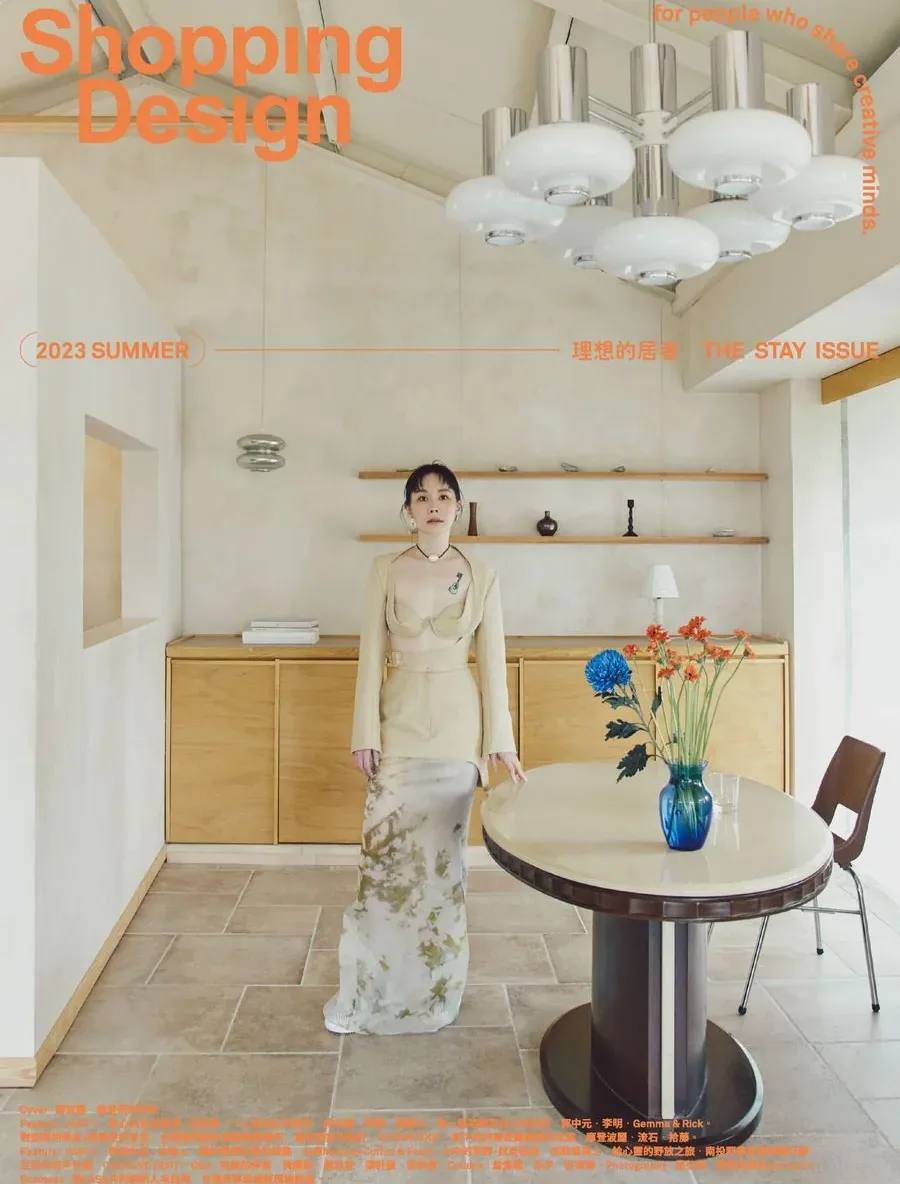
Vol.147 The Ideal Dweller. After shifting to quarterly, the print edition dedicates each quarter to thinking through a single question. (Fair use, editorial commentary)
Discerning for a demographic is not enough; it next discerns for an entire year. Starting in 2012, Shopping Design annually publishes the Taiwan Design Top 100, selecting one hundred people, events, and objects from that year's Taiwanese design to form an annual list 12. This list serves to name and archive a year of Taiwanese design: what deserves remembrance, what defines the year. The 2019 edition, themed "Keywords of Design Power," divided the one hundred entries into nine categories: Annual Figures, Annual Design Events, Hundred Scenic Humanities, etc. 13. It performed for an entire industry what the founding issue did for a white cover: compare, select, and name. Over a decade of accumulation, this stack of selected items became Taiwan's design closest to a "public history" index—without government endorsement, yet silently treated by the entire circle as an annual coordinate.
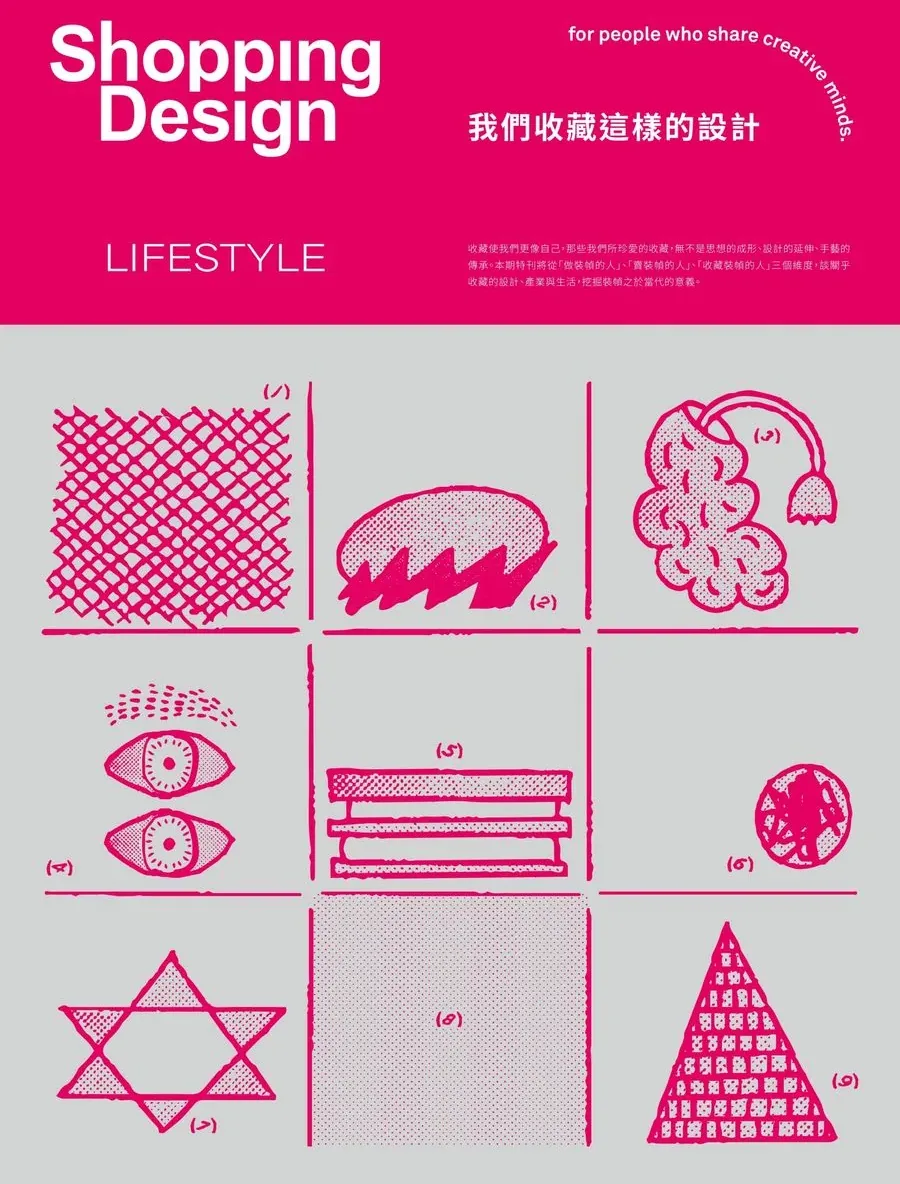
Vol.150 We Collect Design Like This. Lists and special issues serve to discern an entire year of Taiwanese design. (Fair use, editorial commentary)
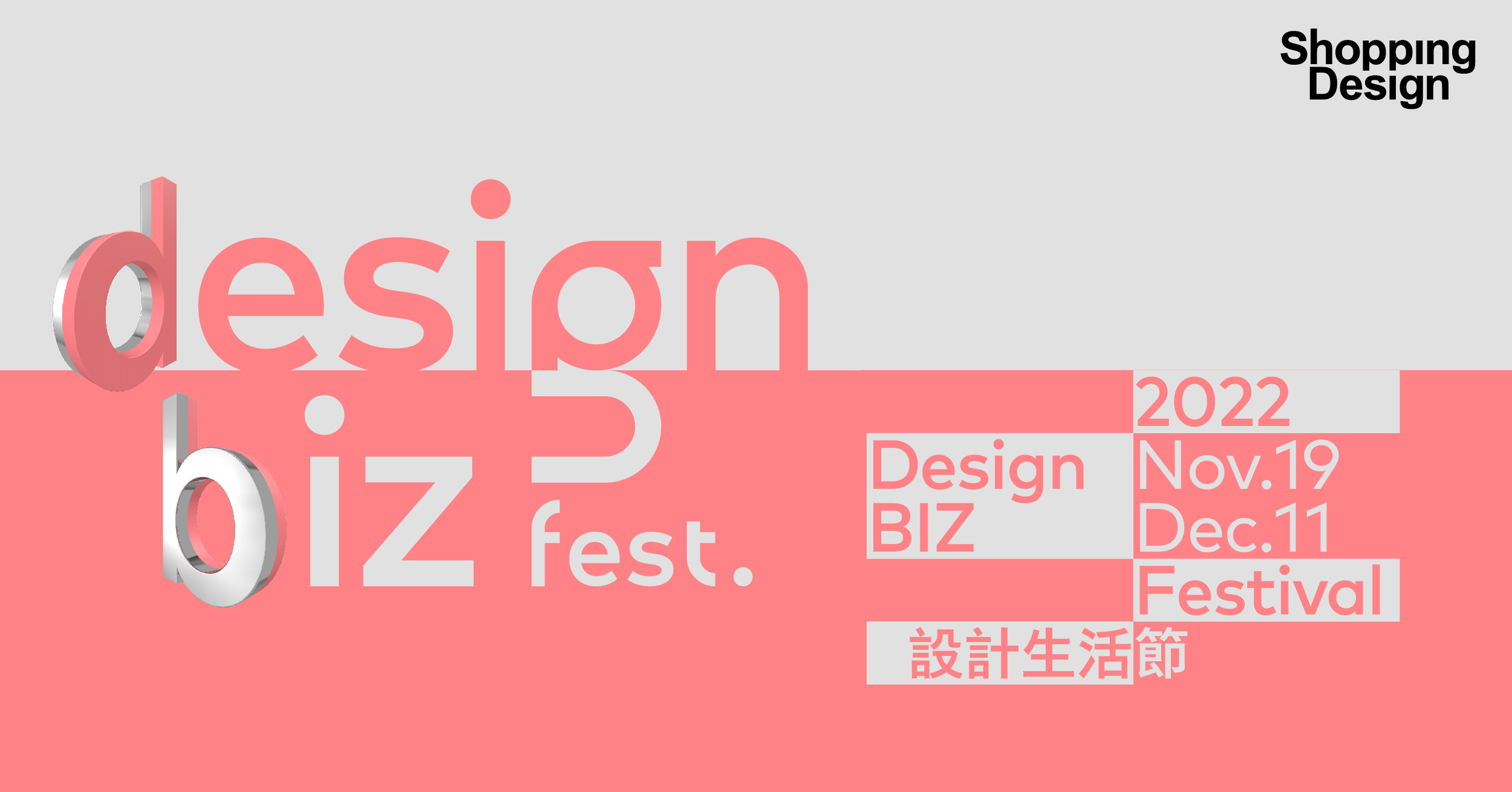
Ultimately, it even moved the act of discernment off the page. Starting in 2013, it hosted "Design Gatherings," transforming page-based comparisons and naming into live lectures and dialogues; in 2016, it founded the Style Economy Academy, beginning to translate aesthetics into teachable commercial language 8. In 2022, this lineage grew into the first DesignBIZ Fest, a carnival centered on "New Design Business" 14. The official definition for the event is a string of parallel clauses: "Design is creativity, design is marketing power, design is cultural power, design is planning power, design is integration power—design is, vitality." 14 The stage hosts a lineup of brand executives, from co-working spaces and electric scooters to chain restaurants 15. Its reach also extends to audio, using podcasts to bring designers' careers, brands, and local revitalization into the ear 16. The same "seeing for you, selecting for you" action has now grown from a single page into a complete, ticketed, audiable, and sponsorable commercial language.

2022 DesignBIZ Fest Speaker Stage. Discernment moved from paper to stage, and from aesthetics to commerce. (Fair use, editorial commentary)
| Same "Discerning for You" Action, Expanded Circle by Circle Over Twenty Years |
|---|
| 2006 | Magazine Launch | December launch, initially monthly, discerning life propositions for readers |
| 2012 | Annual Top 100 List | Taiwan Design Top 100, naming and archiving a year of Taiwanese design |
| 2013 | Lectures Ground into Gatherings | Design+ Launch, moving page-based discernment into live dialogue |
| 2016 | Commercial Courses Open | Style Economy Academy founded, translating aesthetics into teachable business language |
| 2019 | Print Shifts to Quarterly | Late-year revamp, print takes slow propositions, website takes fast news, dual-track division |
| 2022 | Expands into Industry Carnival | First DesignBIZ Fest, bringing a full lineup of brand executives to discuss new design business |
| 2026 | Print Still Publishing | April reaches Vol. 156, not replaced by the internet |
| Source: Shopping Design Official "Forward Trajectory" (Wayback 2019-12-29 archived), official magazine list, DesignBIZ Fest official page |
One magazine, one list, one carnival: on the surface, three different things; in essence, the same action scaled across three levels: discerning for you, discerning for a year, discerning for an industry. Once the scale expands this far, a question originally hidden beneath the editorial layout surfaces: when "discerning for you" becomes such a large business, can the hand that discerns for you still be separated from the hand that sells for brands?
The Hand That Selects for You Also Sells for Brands
First, examine the least romantic document: the company registry. Shopping Design's parent company is Business Next Media Corp. (巨思文化股份有限公司), Unified Number 16780474, Chairman Chen Su-lan 17. Flipping through its government-registered "Business Scope" reveals two parallel lines: one reads "Magazine (Periodical) Publishing Industry," and nearby, another reads "General Advertising Services Industry" 18. These words on a registry document, in black and white, constitute its legal business scope. The same company, the same license, one side publishing content that discerns design for you, the other operating advertising sales; its official site also publicly lists ad placement rates, with single placements ranging from 100,000 to 280,000 NTD, and a 10% discount for annual packages 19. No polished brand manifesto is as hard as these two registered lines: content and advertising inherently share the same corporate foundation.
This fact is stated more bluntly by insiders. In 2017, Shopping Design's deputy editor-in-chief Pao Shu-ping engaged in a public dialogue with Eric, editor-in-chief of another lifestyle media outlet, discussing "advertorials"—content that reads like journalism but is actually advertising. "Advertorials mean that whether you like it or not, you have to make it compelling to read," Pao stated 20. This remark lacks any veil: sponsored content is an industry reality; the media's skill lies in writing it so readers are willing to consume it. He added a remark that serves as a footnote to the entire print era: "Magazines have been hard to sell these past two years. Many media outlets will not publish print editions this year, yet SD still exists." 20
Advertorials mean that whether you like it or not, you have to make it compelling to read
In the same dialogue, Eric explained how they navigate this: "In the first paragraph or headline, we will bluntly tell you this is an advertisement," pursuing a "win-win-win" for readers, clients, and writers 20. This is a posture of honesty, clearly marking what is advertising and returning the choice to the reader. But a honest posture does not erase the boundary. An advertorial marked "advertisement" lets readers know it is sponsored; yet a magazine's overall taste, the "good design" it curates for you, often lacks that very line of disclosure. The blurriest boundaries often hide within content that appears most pure, yet shares the same license as the advertising department.
In that same era, Shopping Design's official site used a whiskey sponsored post to praise "Editor-in-Chief Huang Wei-jung at the founding" as a "discerning patron of life," packaging his editorial image into a brand story for a bottle of liquor 21. To be precise, those phrases about "opening the five senses, knowing how to appreciate" were not spoken by Huang himself, but were third-person introductions written by the editorial team for the sponsored post. A magazine that teaches you to discern uses the image it itself constructed of its founder to endorse a consumer brand. This is precisely the closest manifestation of "discerning for you" and "selling for brands" converging.
📝 Curator's Note
It is important not to frame this as a problem unique to Shopping Design. The same model of "media covering an industry while also hosting awards for it" applies to another soft magazine, La Vie, which has hosted the "Taiwan Creativity Power 100" since 2014 22. Tracing one layer further is even more revealing: La Vie's parent group, CityMedia, was convened by Chan Hung-chih in 1996; Shopping Design's parent company, Business Next Media, was also co-founded with Chan's participation in 1999 23. Taiwan's two major lifestyle media families intersect at the same media figure at their source. This is not a conspiracy, but a structural portrait of Taiwan's highly concentrated publishing industry. "Hosting a list for an industry" is a common practice across this sector; each uses it to accumulate brand authority and extend commercial collaboration space. No one is an exception.
It is important to clarify that no public report explicitly criticizes Shopping Design's sponsored content or awards. What follows are not yet "established controversies," but rather structural questions that have always been present, waiting to be asked. Yet this question circulates in social discourse, often tagged as "artsy magazines," implying a certain performance of consumption and superiority of taste. Interestingly, even Huang Wei-jung himself publicly rejected this label: "I truly believe there are no such things as artsy magazines in Taiwan." 4 His act of rejection precisely proves that the suspicion has always existed. Since the suspicion persists, someone must ultimately discern. And that someone can only be the reader.
The Final Lesson: Discerning Itself
In December 2025, Shopping Design published Vol. 155, titled Design Wanted 24. It borrows the most vernacular visual language: the "Wanted" recruitment posters pasted on utility poles and shop doors. Blunt, direct, posted openly. A magazine that spent twenty years teaching Taiwan how to choose, how to look, how to discern, ultimately pasted itself as a recruitment poster: Design, Wanted.
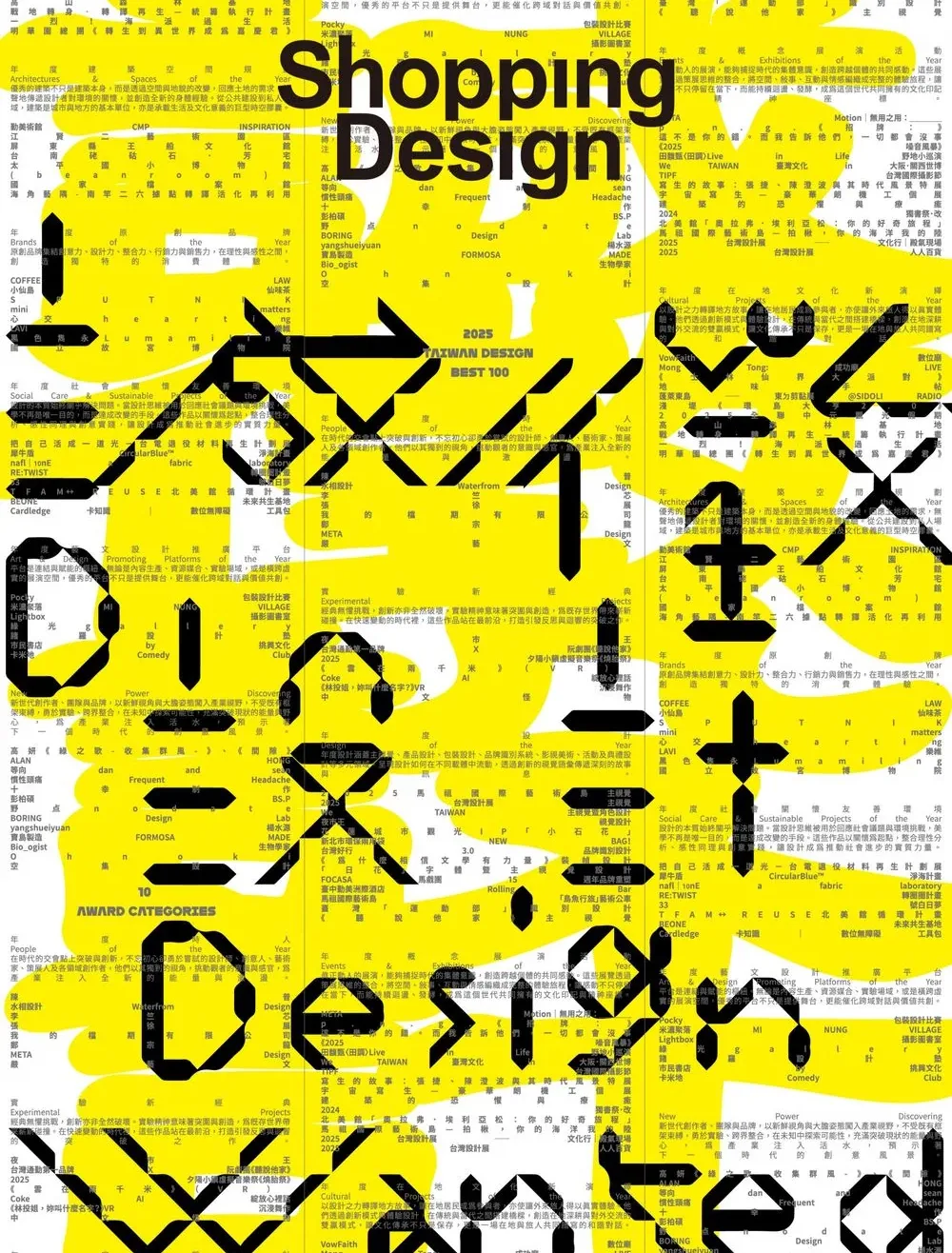
Vol.155 Design Wanted. The magazine that teaches you to discern ultimately pastes itself as an exam paper. (credit: Business Next Media Group, Fair use editorial commentary)
This ending actually aligns with a society's long preparation. Taiwan published the Media Literacy Education Policy White Paper as early as 2002, and high schools incorporated media literacy into the curriculum starting in the 2017 academic year 25. "Readers must have the ability to distinguish sponsored content from editorial content" has long been a consensus at the level of educational policy. In other words, a media outlet ultimately returning the responsibility of discernment to the reader is precisely what this society already decided to teach everyone. Nothing particularly novel. The difference lies only in that the object to be discerned this time has shifted to the very person who spent twenty years teaching you how to discern.
So where does Shopping Design stand now? It has not been replaced by the internet. As of April 2026, the print edition is still publishing Vol. 156 11. Placed within the same wave of soft magazines, this is already remarkable: some changed hands, some stopped at their latest issue in late 2025 with no new issues since, while Shopping Design remains one of the few cases to maintain the same brand and trajectory to the present. Yet it is quietly narrowing. The "About Us" page on its official site was taken down in recent years; the title from 2006 to 2017 was "Editor-in-Chief," but the highest title visible in 2024 public reports has already been downgraded to "Editor Yixin, Deputy Editor Yajun" 26. A magazine that teaches you to discern, and teaches you to追问 "who selected this for me," has ironically made its own information about editorial structure and lineage harder to trace than before. You must first learn the very discernment it taught you in order to go back and discern who it actually is, and who it works for. And it is precisely shrinking those latter clues, year by year. This itself is an exercise it never explicitly states, yet leaves to the reader.
This is precisely the final lesson it returns to the reader. From the white of the founding issue to the recruitment poster of Vol. 155, lies a complete craft of "discerning for you," expanded circle by circle into lists, quarters, and carnivals, and step by step closer to the business of selling for brands. What this magazine taught Taiwan runs far deeper than which chair looks good or which inn is worth staying in. It taught that "discernment" itself can be cultivated as a skill. And the wider and larger it expands this skill, the more the object you ultimately need to discern is itself.
Thus, the Design Wanted cover is, in fact, also an exam paper. What it seeks to recruit is actually a reader who can understand, and can ask, "who selected this for me." Twenty years ago, it taught you to procure white; twenty years later, it returns to your hands the power of discernment, along with the necessity of discerning itself. Knowing how to appreciate and knowing how to doubt have always coexisted in the same pair of eyes. And those eyes were precisely what it spent twenty years, page by page, training for you.
Further Reading
- Magazines — A century of evolution in Taiwan's magazine industry; Shopping Design is the representative case of the "soft magazine" lineage
- Human Magazine — Another soul of Taiwan's magazines, using documentary photography to discern and name the underclass; the flip side of the design curation magazine
- History of Advertising in Taiwan — The cultivation source of Huang Wei-jung and Li Hui-chen; understanding how the "Ideology Advertising" generation brought storytelling craft into magazines
- Tea Ceremony and Aesthetics of Life in Taiwan — How aesthetics of life grew in Taiwan into a discussable, purchasable daily practice
- Yung-Chen Nieh — Another name pushing design into the public eye within the same Taiwanese design context
Image Credits
- Hero | DesignBIZ Fest 2022 Main Visual: Shopping Design/DesignBIZ Fest, Source https://designbiz.shoppingdesign.com.tw/2022/. Fair use (editorial commentary).
- Vol.147 The Ideal Dweller Cover: Shopping Design (Business Next Media Group), Source Official Magazine List https://www.shoppingdesign.com.tw/magazine/. Fair use (editorial commentary).
- Vol.150 We Collect Design Like This Cover: Shopping Design (Business Next Media Group), Source Official Magazine List https://www.shoppingdesign.com.tw/magazine/. Fair use (editorial commentary).
- DesignBIZ Fest 2022 Speaker Stage: Shopping Design/DesignBIZ Fest, Source https://designbiz.shoppingdesign.com.tw/2022/. Fair use (editorial commentary).
- Vol.155 Design Wanted Cover: Business Next Media Group, Source https://www.shoppingdesign.com.tw/magazine/view/130050. Fair use (editorial commentary).
References
- Magazines Must Remind Readers to Live Consciously: Shopping Design Editor-in-Chief Li Hui-chen — BIOS monthly 2017 February interview, recording Li Hui-chen's sixth year as editor-in-chief, and the 100th issue echoing the founding issue's "white design" with "procuring white design."↩
- Cross-disciplinary Editor Huang Wei-jung: As a Creative, the Ordinary is the Greatest Sin — 500 Times 2020 interview, Huang Wei-jung recounts his ad copywriting starting point, Ideology Advertising and Hsu Shun-ying, and the three-phase thirty-year career of "ad copywriting and publishing → magazine editing and visual-text integration → creative service hybrid projects."↩23
- Romantic Acts Like This Only Happen Once in a Lifetime — One Hundred Reasons to Survive in Taipei — Huang Wei-jung's own 2017 column, recalling the 1998 collaboration with Ma Shih-fang, Yao Rui-zhong, Hsu Yun-pin, Chen Kuang-da, published by Big Block Culture.↩
- The So-Called "Artsy Magazine" is Actually Caused by Several Misunderstandings... — Huang Wei-jung's 2013 publication on Independent Commentary@TheSky, containing Shopping Design's 2006 convenience store "soft topic" origin, positioning La Vie and PPAPER (2004) as the "vanguard of soft magazines," and his rejection of the "artsy magazine" label.↩23
- Planning Power That Reverses Life! Interview with Unicorn Project Founder aka. Former Shopping Design Editor-in-Chief — Shopping Design official Podcast, confirming Li Hui-chen as former editor-in-chief, founding "Unicorn Project" after stepping down in 2017.↩
- Freelancer Li Hui-chen: Disbelieving in Fate, Everything Depends on Human Effort — 500 Times interview, recording Li Hui-chen's Yilan military village upbringing, publishing industry tenure, 2011–2017 tenure as Shopping Design editor-in-chief, her quoting Chan Hung-chih's "When you read a certain book, you may become a lonely person," and the hidden thread that she and Huang Wei-jung both worked under Big Block Culture editor-in-chief Liao Li-wen.↩23
- Golden Pinwheel Awards 1–49th Edition Winners List — Ministry of Culture open data. Official per-edition master list finalized: 2016 40th Edition "Magazine Category - Individual Award - Editor Award" winner is Li Hui-chen / Shopping Design Design Curation Magazine / Business Next Media Corp.↩
- Shopping Design Official "About Us" (Wayback Machine 2019-12-29 archived) — Official "Forward Trajectory" timeline verbatim record: 2006/12 launch (monthly), 2012/12 BEST100, 2013/12 Design Gatherings launch, 2015/12 website online, 2016/10 Style Economy Academy founded, 2019/12 revamp to quarterly.↩2
- Shopping Design Revamp, Shifting to Quarterly Publication This Year — Mol Times Breaking News 2020 March 29 report, corroborating the first quarterly issue post-revamp (Vol. 134) published in March 2020.↩
- Shopping Design Quarterly Revamp Interview — OKAPI records editorial explanation of revamp logic: website tracks fresh speed, print forms propositions at a slower pace, and self-positioning as "useful, interesting, and meaningful."↩
- Shopping Design Official Magazine List — Official product list, verifiable Vol.147 The Ideal Dweller (2023), Vol.150 We Collect Design Like This (2024), Vol.155 Design Wanted (2025-12), Vol.156 (2026-04) themes and publication dates.↩23
- 2022 Taiwan Design Best100 Selections — Independent design media "Fun Design" report, third-party verification that BEST100 is hosted by Shopping Design editorial since 2012, selecting 100 Taiwanese design people/events annually, a media award not a government official prize.↩
- 2019 Taiwan Design 100 CNA Culture+ Biweekly Selections — CNA independent report, verbatim recording 2019 BEST100 "selected 100 design people/events themed 'Keywords of Design Power', awards divided into 9 categories."↩
- DesignBIZ Fest 2022 Official Event Page — Official page confirms "Starting 2022, Shopping Design hosts the first DesignBIZ Fest," and verbatim lists the parallel definition: "Design is creativity, design is marketing power, design is cultural power, design is planning power, design is integration power—design is, vitality."↩2
- DesignBIZ Fest 2022 Speaker List — Official page speaker titles (as of 2022): Chen Yun-zhu (Plan b Co-founder), Chen Bing-liang (Orange Group Brand Center Director), Ye Quan-feng (Gogoro Brand & Marketing Deputy General Manager), Zhan Xun-zhi (Zhanji Spicy Hotpot Deputy General Manager), etc., a full lineup of brand and startup executives.↩
- Shopping Design Podcast Design Keywords — Official program page, extending Shopping Design content into audio media through design current affairs, creative people stories, brands, and local revitalization topics.↩
- Business Next Media Corp. Company Registry — Company registry query, confirming Chinese name "Business Next Media Corp.", English name "BUSINESS NEXT MEDIA CORP.", Unified No. 16780474, Chairman Chen Su-lan.↩
- Business Next Media Corp. Government Open Data — Government publicly registered data, "Business Scope" item lists both "Magazine (Periodical) Publishing Industry" and "General Advertising Services Industry," hard evidence that content publishing and advertising services share the same license.↩
- Shopping Design Ad Placement Page — Official ad placement price list, single placement price range 100,000 to 280,000 NTD, 10% discount for annual packages.↩
- Eric and Pao Shu-ping Dialogue: The Shape of a Media — EVERYDAY OBJECT Editor-in-Chief Eric and Shopping Design Deputy Editor-in-Chief Pao Shu-ping 2017 December dialogue, verbatim discussing advertorial ethics ("Advertorials mean that whether you like it or not, you have to make it compelling to read", "Bluntly tell you this is an advertisement", "Create win-win-win") and print industry困境 ("Magazines have been hard to sell these past two years, many media outlets will not publish print this year, SD still exists").↩23
- Living Well Requires First Learning to Appreciate Differences, Discerning Patrons of Life - Huang Wei-jung — Shopping Design official site 2020 content, confirmed via source code as
is_ads:truewhiskey brand sponsored post; phrases like "opening the five senses, knowing how to appreciate" are third-person introductions written by the editorial team for the sponsored post, not direct quotes from Huang Wei-jung himself.↩ - 2025 Taiwan Creativity Power 100 Master List Revealed — La Vie official page, recording its biennial selection "Taiwan Creativity Power 100" hosted since 2014, forming a parallel model of "media-hosted annual/biennial lists" with Shopping Design BEST100.↩
- Business Next Media Group — Wikipedia index, recording Business Next Media Group co-founded in 1999 by Chan Hung-chih, Ho Fei-peng, Chen Su-lan,旗下含 Digital Times, Manager Magazine, Shopping Design; Chan Hung-chih additionally convened CityMedia (La Vie parent group) in 1996.↩
- Shopping Design Vol.155 Design Wanted — Official magazine page, December 2025 publication, cover borrows vernacular "Wanted" recruitment ad visual language, content focuses on 100 works/teams, Gen Z, and Taiwanese sensibility.↩
- Media Literacy — Wikipedia index, recording Taiwan's 2002 publication of Media Literacy Education Policy White Paper, high schools incorporating media literacy into curriculum starting 2017 academic year policy background.↩
- 2024 We Collect Design Like This Lecture Review — Shopping Design official August 2024 report, verbatim appearing "Shopping Design Editor Yixin, Deputy Editor Yajun", the highest verifiable editorial title in recent years (downgraded from Editor-in-Chief to Editor).↩