
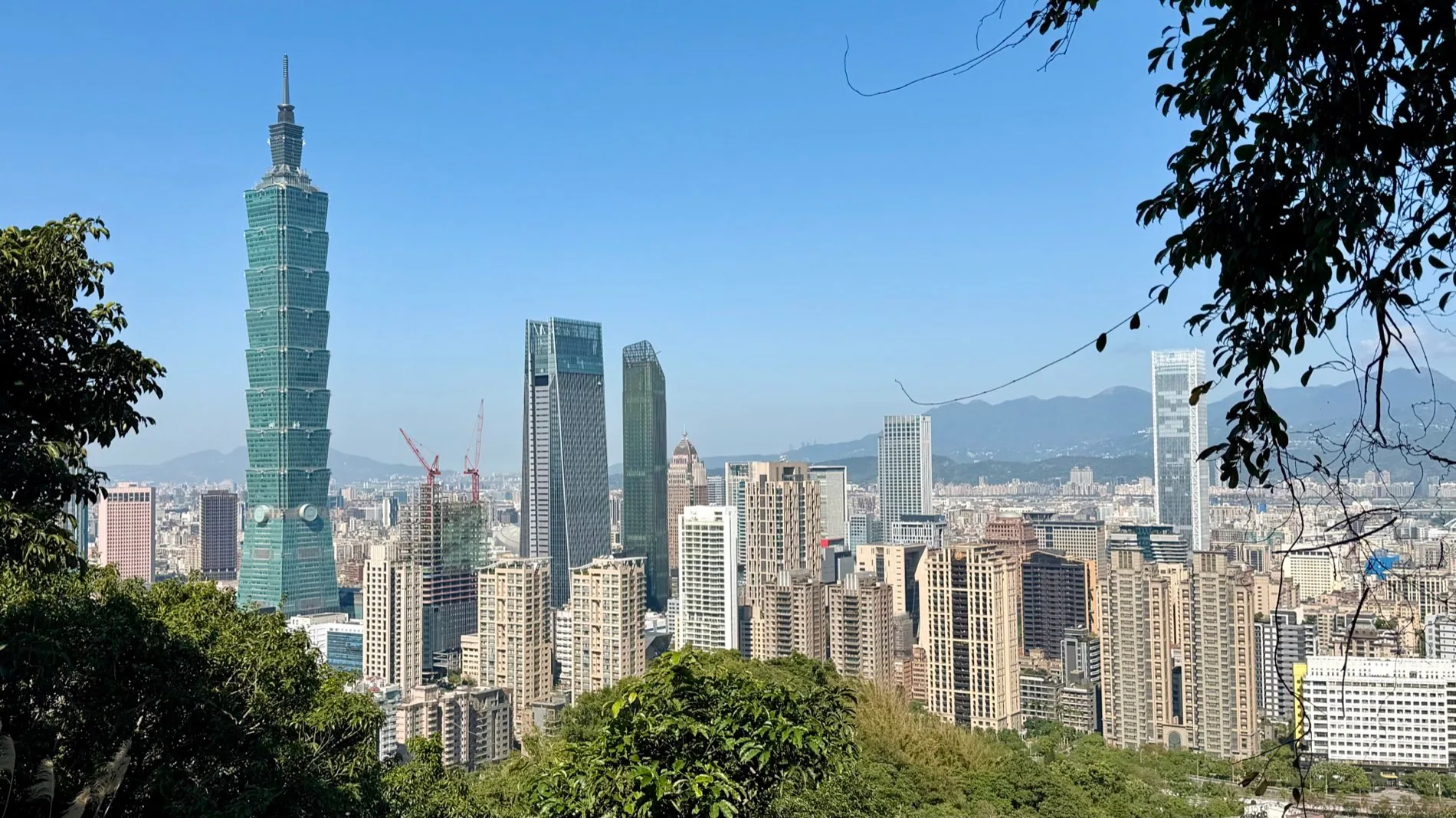
National Housing and Housing Justice: Whose Asset Ladder Did the Government's Affordable Housing Build?
On Section 2 of Fuxing South Road in Taipei's Da'an District, there is a housing complex called "Chenggong National Housing." When it was first completed in 1985, no one wanted to buy it. 1
The government's asking price was between NT$67,000 and NT$71,000 per ping, which was not considered cheap at the time. Due to slow sales, the price eventually dropped to NT$67,000 per ping, combined with a four-year interest-free loan arrangement before the units were finally sold out. Shi Chung-sheng, a former local neighborhood chief, later recalled that he and his wife had to scrape together their entire life savings to reach an NT$400,000 down payment just to purchase one of the units. 1
Forty years later, at the same address, the average transaction price on real estate platforms over the past year is approximately NT$870,000 per ping, with the highest-priced unit approaching NT$980,000. 2 From 67,000 to 870,000 represents an increase of roughly twelve to fourteen times. The down payment that once required emptying one's life savings can now not even purchase a single ping.
30-Second Overview: National Housing refers to the affordable housing built by the government to sell to the people under legislation passed in 1975; its original intent was to help those who could not afford homes enter the property market. The problem is that it never installed a "value-appreciation recovery" gate from beginning to end. In 2002, the government even dismantled the only existing anti-speculation mechanism, allowing national housing to be sold to anyone. Consequently, houses built with public subsidies eventually became the private assets of early buyers; today, national housing in several prime Taipei districts approaches or even exceeds NT$1 million per ping. In 2015, the government abolished the National Housing Act and shifted toward "social housing" based on a "rent-only, no-sale" model. However, in May 2026, Taoyuan passed the "Affordable Housing" bill through its third reading, reviving the "built by the government to sell" path while deliberately reinstalling the gate that was missing decades ago: resale prices cannot exceed the original purchase price. The Ministry of the Interior disagrees, advocating a return to "rent-only, no-sale." Whether it is "helping you afford to buy" or "helping you afford to rent," Taiwan has been debating these two paths to housing justice for fifty years without reaching a conclusion.
Source: Executive Yuan (Explanation on the abolition of the National Housing Act) + Laws & Regulations Database of the Republic of China (Evolution of 2002 amendments) + Liberty Times (2015 abolition) + United Daily News (2026 Taoyuan third reading) 3456
This article discusses the fifty years sandwiched between these two price points. How did a government's good intention—spending money to build affordable housing to help people get on the property ladder—evolve into today's reality, where the next generation stands at the top of the ladder, unable to afford to buy and unable to rent stably?
The Generation of Homes the Government Built to Sell
Taiwan’s earliest approach to the problem of “people cannot afford homes” was to lend people money to build them. Under the Act Governing Loans for the Construction of National Housing, enacted in 1957, the government’s role was more like that of a bank, helping finance people to build homes themselves. What truly brought the government into direct construction was the National Housing Act, promulgated on July 12, 1975. On the same day, the old loan act was abolished.3
At its core, the 1975 act was a promise of housing justice. The original Article 3 was clear: National Housing was “for sale or rent to lower-income families and families of military personnel, civil servants, and teachers.”7 In other words, these homes were to be sold to lower-income people and public-sector households, not built for whoever in the market had money to buy them.
Even more crucial was Article 12. Reselling a National Housing unit required approval from the competent authority, and the transferee also had to meet National Housing purchase eligibility requirements.7 This clause is the hinge of the entire story. It effectively built a wall around National Housing: the government used subsidies to sell homes cheaply to eligible people, and if those people later wanted to sell, they could sell only to the next eligible person. Homes could change hands, but they would always circulate within the circle of “people who need help.” The discount would not leak outward, and the subsidy could not be cashed out once and carried away by any one person.
📝 Curator’s Note
This wall is the most underestimated, and earliest forgotten, design feature of National Housing. Later criticism that National Housing “enriched early buyers” is not really criticism of the 1975 version. That version had a closed loop, and the subsidy could not escape. What truly drained the subsidy was the later moment when someone manually dismantled this wall. Any article on National Housing that sees only “homes appreciated, buyers profited” misses the most important moment: when, by whom, and why the closed loop was dismantled.
In 1982, the act underwent a major revision, expanding from just over a dozen articles to 45. This amendment added a lock against short-term flipping: after buying National Housing, the owner had to “live there for two full years” before selling.8 But it is important to note that the core wall still remained. The transferee still had to meet National Housing eligibility requirements. The two-year occupancy rule was merely to prevent immediate resale; the boundary of the circle was untouched.
If anything truly changed the character of the system in 1982, it was that the door was opened to another group at the same time. To promote sales, National Housing became available for purchase by military personnel, civil servants, and teachers. This produced an ironic turn: the “lower-income families” explicitly named in the original statute as the people to be cared for were pushed back in actual allocation, while public-sector workers with more stable incomes and greater ability to pay down payments became the main buyers. The entrance to cheap housing quietly shifted away from those who needed it most and toward those who were doing reasonably well.
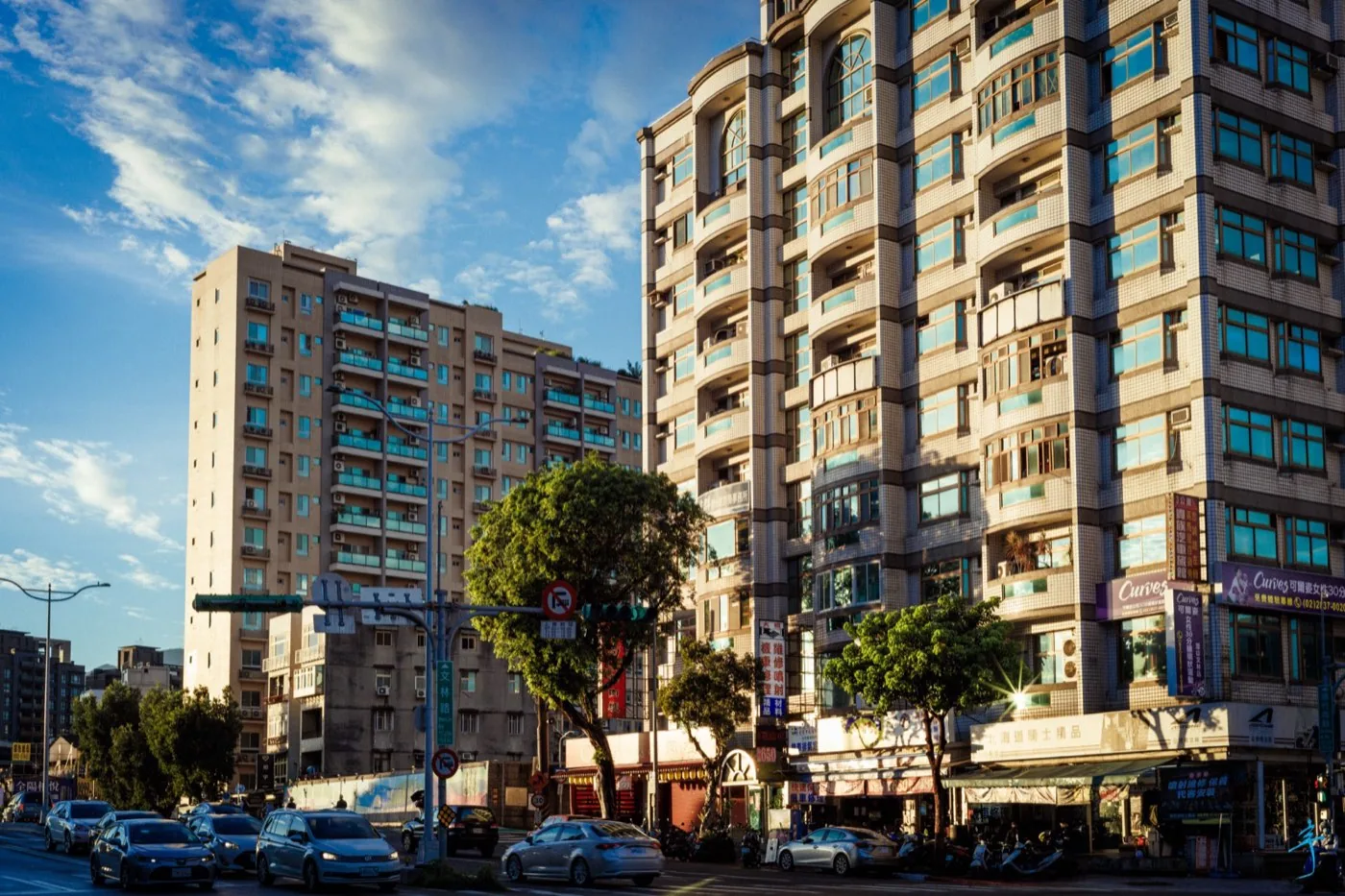
Taipei’s dense residential fabric. The homes built during the National Housing era were often embedded in blocks like these, and later rose in value along with their locations. Photo: 迷惘的人生, CC BY-SA 2.0 via Wikimedia Commons.
Why, then, were people still so eager to win the right to buy a National Housing unit? Because the allocation price was already below market price. Winning a unit was almost like winning the lottery: the moment you got the keys, you held a unit priced roughly 30 percent below market value, and resale could turn that spread into cash.9 This atmosphere of “winning a unit is like winning the lottery” was not itself wrong. It was exactly what housing justice should look like: people who could not afford homes could still, through luck and eligibility, get onto the property ladder.
What went wrong was that the vehicle later forgot to close its door.
In 2002, That Wall Was Dismantled
Many people assume National Housing became a target of speculation the moment military personnel, civil servants, and teachers were allowed to buy it in 1982. The year that truly removed the gate was actually a less discussed one: 2002.
On December 11 that year, the Legislative Yuan amended Article 19 of the National Housing Act. It changed two things. Each looked minor on its own, but together they overturned the fate of National Housing. First, the required occupancy period was shortened from two years to one. Second, and fatally, the restriction that “the transferee must meet National Housing eligibility requirements” was removed.4
The wall that had surrounded National Housing since 1975 was pushed down at that moment.
From then on, after living in a National Housing unit for one year, the owner could sell it to anyone. The buyer did not have to be a lower-income household, did not have to be a military member, civil servant, or teacher, and did not have to meet any eligibility requirements. A home that had originally circulated only among “people who need help” was formally placed into the free market. From that point on, it was no different from the privately purchased apartment next door.
A home with a market value of NT$30 million becomes a home worth NT$60 million to NT$70 million... robbing the poor to help the rich, with the state paying to renovate homes for wealthy people
Here it is necessary to pin down a detail that is often misstated, because it is precisely the key to understanding this gate. The National Housing Act did indeed contain a pricing formula for “the original purchase price minus depreciation” in Article 21, which sounds like an anti-speculation lock limiting resale to cost. But it was not. That formula was the method for calculating how much the government should compensate the original resident when forcibly taking back a violating unit. It had nothing to do with how much an owner could sell the home for on the market.8 The accurate statement, therefore, is this: the only anti-speculation device National Housing ever had was the closed loop of “buyer eligibility restrictions,” and that was dismantled in 2002. It was not that some “original-price buyback mechanism was loosened.” The difference matters, because it determines whether the criticism is aimed at the right target.
Once the closed loop was dismantled, the rest was left to time and location.
The land under Chenggong National Housing later gained MRT access, its commercial district matured, and housing prices across Da’an District rose. The National Housing units themselves did not change. They were still the homes built in 1985. But the value of the prime Taipei land beneath them multiplied more than tenfold over three decades. Those who could not scrape together a NT$400,000 down payment back then could not get in. Those who could get in watched the homes in their hands grow into unexpected wealth. Housing built with public subsidy ultimately had all of its appreciation accrue to individuals. That appreciation could have remained in public hands, at least in part, if the wall had still been there.
📝 Curator’s Note
To be fair, the main reason National Housing soared in value was location, not the status of being National Housing itself. Any home in prime Taipei would have risen over thirty years. Away from urban cores, many National Housing complexes are ordinary older homes, or even unsold white elephants. So the real question in this article is not “why should National Housing appreciate?” Of course homes appreciate. The question is: when the government used public money to build housing and subsidize the price gap, why did it not also install a gate so that at least part of the appreciation created by public investment would return to public hands? Hong Kong has an answer. Britain has a lesson. Taiwan left the question blank for fifty full years.
Three Major National Housing Complexes Grew From Cheap Homes Into Luxury Assets
To see the cost of that missing gate, one has to walk into several Taipei addresses. First, one easily misunderstood point: the astonishingly valuable National Housing complexes in prime Taipei districts are not a dramatic story of “low- and middle-income resettlement housing turning overnight into luxury homes.” Their origins were military dependents’ village redevelopment plus allocation to ordinary citizens.
Take Da’an National Housing as an example. Of its 1,296 units, 628 were allocated back to the military, about 48 percent; 186 went to police officers, about 14 percent; and the remaining 479, about 37 percent, were sold to ordinary citizens.2 Chenggong National Housing was formerly “Chenggong New Village.” In 1980, then-Army Commander-in-Chief Hau Pei-tsun and Taipei Mayor Lee Teng-hui signed an agreement to redevelop it. Original military dependents’ households numbered about 515, roughly 20 percent, and the remaining 80 percent were publicly sold externally.10 So the more accurate phrasing is: these were “public housing units sold with government subsidy.” The subsidy flowed to original military dependents and ordinary allocated buyers, rather than low-income resettlement households. But the earlier point still stands: after 1982, the program opened to military personnel, civil servants, and teachers for sales promotion, and genuine low-income households were instead squeezed out. The benefit of cheap housing was not precisely targeted at those who needed it most from the beginning.
Once the origins are clarified, the numbers can land where they should.
Chenggong National Housing cost NT$67,000 per ping during its sluggish sales period in 1985. Today, its average transaction price over the past year on brokerage platforms is about NT$870,000 per ping, making it the only one of Taipei’s three major National Housing complexes that has not yet broken NT$1 million.2 Its neighbor, Da’an National Housing, has averaged about NT$960,000 per ping over the past year on brokerage platforms, with some individual units already exceeding NT$1 million. One transaction in November 2025 reached NT$1.05 million per ping.2
The most extreme case is Zhengyi National Housing. It originally housed about 175 military dependents and was located on Section 3 of Zhongxiao East Road, next to SOGO, one of Taipei’s prime commercial areas. After a full 26 years of integration and urban renewal, it became the luxury development “Taipei Star,” with November 2024 transaction prices of NT$2.04 million to NT$2.4 million per ping.2 A public housing site that began by housing military dependents ultimately became one of Taipei’s top-tier luxury residences.
There is also Xinlong National Housing next to Chiang Kai-shek Memorial Hall. In 1986, its original price was NT$47,000 per ping. By 2022, it was listed on brokerage platforms at about NT$1.058 million per ping,11 roughly twenty-two times higher.
📊 National Housing Values: From Allocation Price to Today
Complex Starting point (year/original price) Today (brokerage platforms) Chenggong National Housing 1985 / NT$67,000 per ping About NT$870,000 average over the past year Da’an National Housing — About NT$960,000 over the past year; individual units above NT$1 million Xinlong National Housing 1986 / NT$47,000 per ping About NT$1.058 million in 2022 Zhengyi National Housing Housed 175 military dependents NT$2.04 million to NT$2.4 million after urban renewal (2024/11) (Housing prices are drawn from brokerage-platform transaction information, not official statistics.)
Once these numbers are laid out, the remark made by lawyer Lin Chih-chun in 2025, when criticizing a proposal for “state-funded urban renewal of Chenggong National Housing,” becomes especially sharp. He said it was equivalent to turning “a home with a market value of NT$30 million into a home worth NT$60 million to NT$70 million,” calling it “robbing the poor to help the rich, with the state paying to renovate homes for wealthy people.”12 Scholars have been colder still: researchers writing at Streetcorner Sociology pointed out that the government’s earlier National Housing was “primarily for sale,” and that housing policy had long aimed to boost homeownership. In the end, housing in Taiwan “has indeed become a tool for accumulating wealth.”13
This is the bill presented fifty years later by the gate that was never installed. The cheap homes built by the government did not become an escalator that kept catching the next person who could not afford a home. They became an elevator that caught only the earliest group to board; once they went up, they pulled the ladder away behind them.
That Gate: In Hong Kong, It's Called "Premium Payment"; In the UK, It's a Lesson
A natural question arises here: Is it actually possible for a government to build affordable housing for its people without allowing them to sell it for profit?
It is. Our neighbor, Hong Kong, installed exactly this gate—one that Taiwan has never implemented.
The Hong Kong government promotes "Home Ownership Scheme" (HOS) flats with a logic very similar to National Housing: selling homes to low-to-middle-income households at 60% to 70% of market value. However, it includes an additional mechanism called "premium payment." If a homeowner later wishes to sell their HOS flat on the open market, they must first pay a land premium to the government based on the original discount ratio. This effectively returns the portion of profit the government conceded years ago, along with a portion of the capital appreciation, back to the public coffers. 14 Capital appreciation does not belong entirely to the individual; a part must be returned to the public. Taiwan's National Housing has never had this "premium payment" hurdle. Once you buy it cheaply, you can sell it at full market price after meeting the minimum residency requirement, and the resulting price gap and appreciation go straight into your own pocket.
Source: Hong Kong Housing Authority official explanation on "Premium Payment Arrangement" + Laws & Regulations Database of the Republic of China (Evolution of resale restrictions for Taiwan National Housing) 414
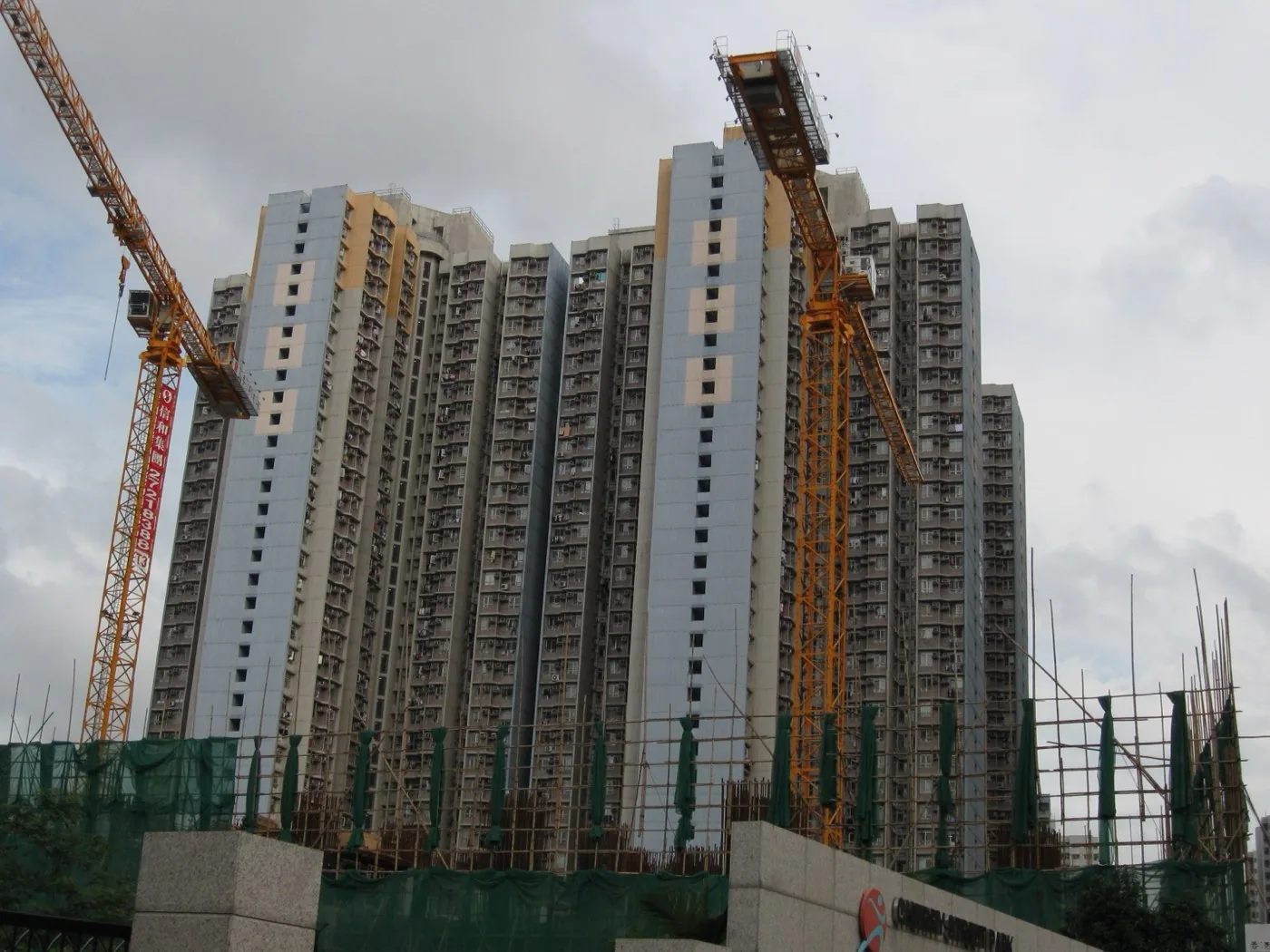
Hoi Fu Court, a Hong Kong "HOS" (Home Ownership Scheme) estate. The Hong Kong government sells HOS flats to low-to-middle-income households at 60–70% of market value, but has installed a gate that Taiwan's National Housing lacks: premium payment. Photo: Thomasman, CC BY-SA 3.0 via Wikimedia Commons.
If Hong Kong is the homework Taiwan should have copied but didn't, then the UK is an even more brutal mirror.
In 1980, the Thatcher government introduced the "Right to Buy," allowing public housing tenants to purchase their homes at significant discounts. The policy was immensely popular, resulting in the sale of approximately 1.9 million public housing units. But what was the cost? The proportion of social housing in the UK plummeted from 31% in 1980 to just 16% in 2023. 15 Once public stock is sold to individuals, it does not come back. The think tank Common Wealth calculated that the value of the equity surrendered through those "discounts" alone amounted to £194 billion—roughly NT$7.8 trillion. They stated:
✦ "The equity given away through the discount is worth £194 billion…" — Think tank Common Wealth
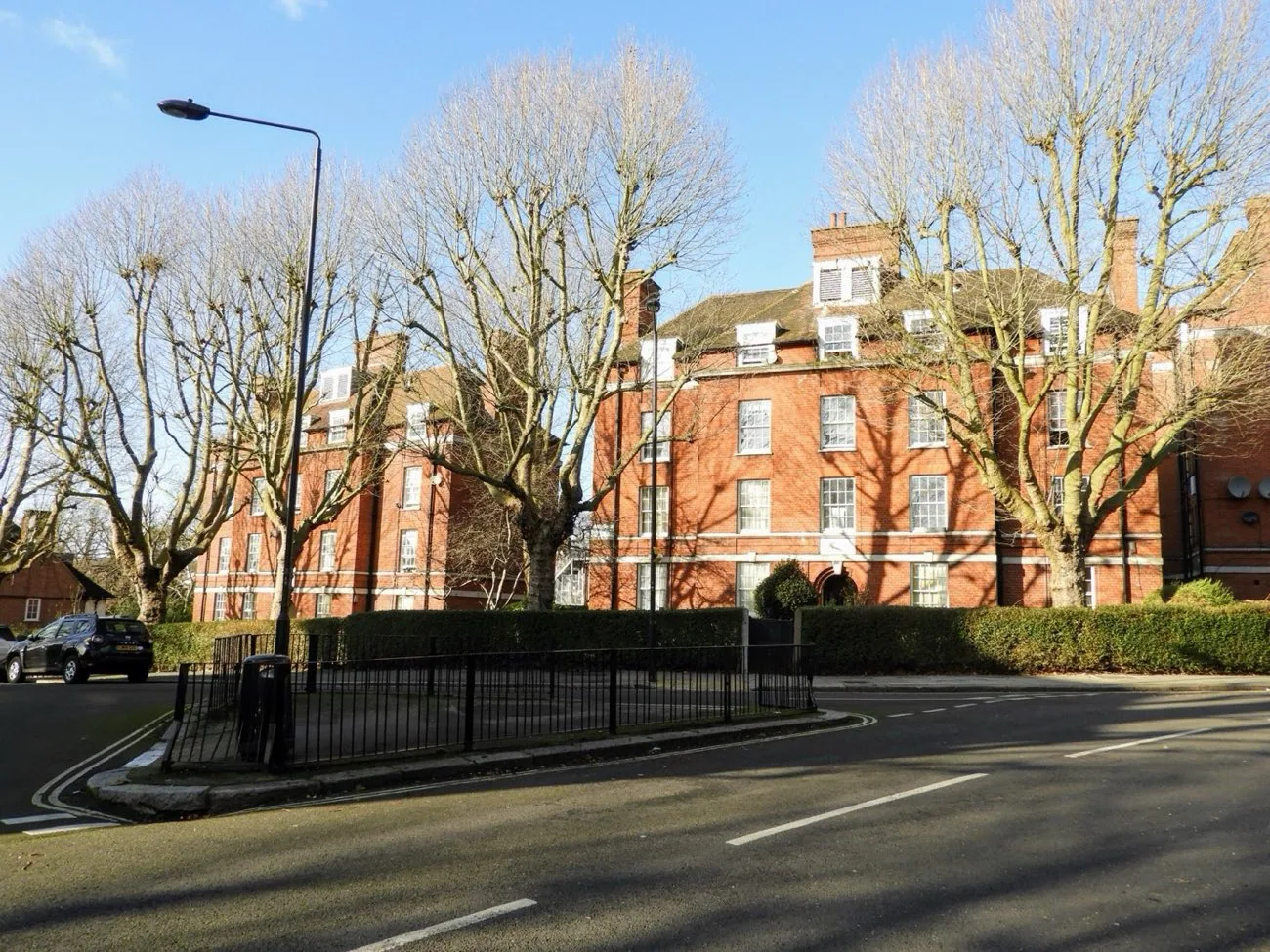
_Council housing in London. In 1980, Thatcher's "Right to Buy" allowed tenants to purchase these types of public homes at a discount; forty years later, the proportion of social housing in the UK has been halved to 16%. Photo: Reading Tom, CC BY 2.0 via Wikimedia Commons._
Even more ironic is the aftermath: of the public housing units sold back then, 41% have now become higher-rent private rentals. 15 The government sells houses to tenants at a discount, and those tenants (or the next owners) rent them back to others at even higher rents. The public subsidy goes in a full circle, ultimately driving up prices in the rental market. Taiwan's National Housing "elevator that pulls up the ladder" is a version magnified a million times over in the UK.
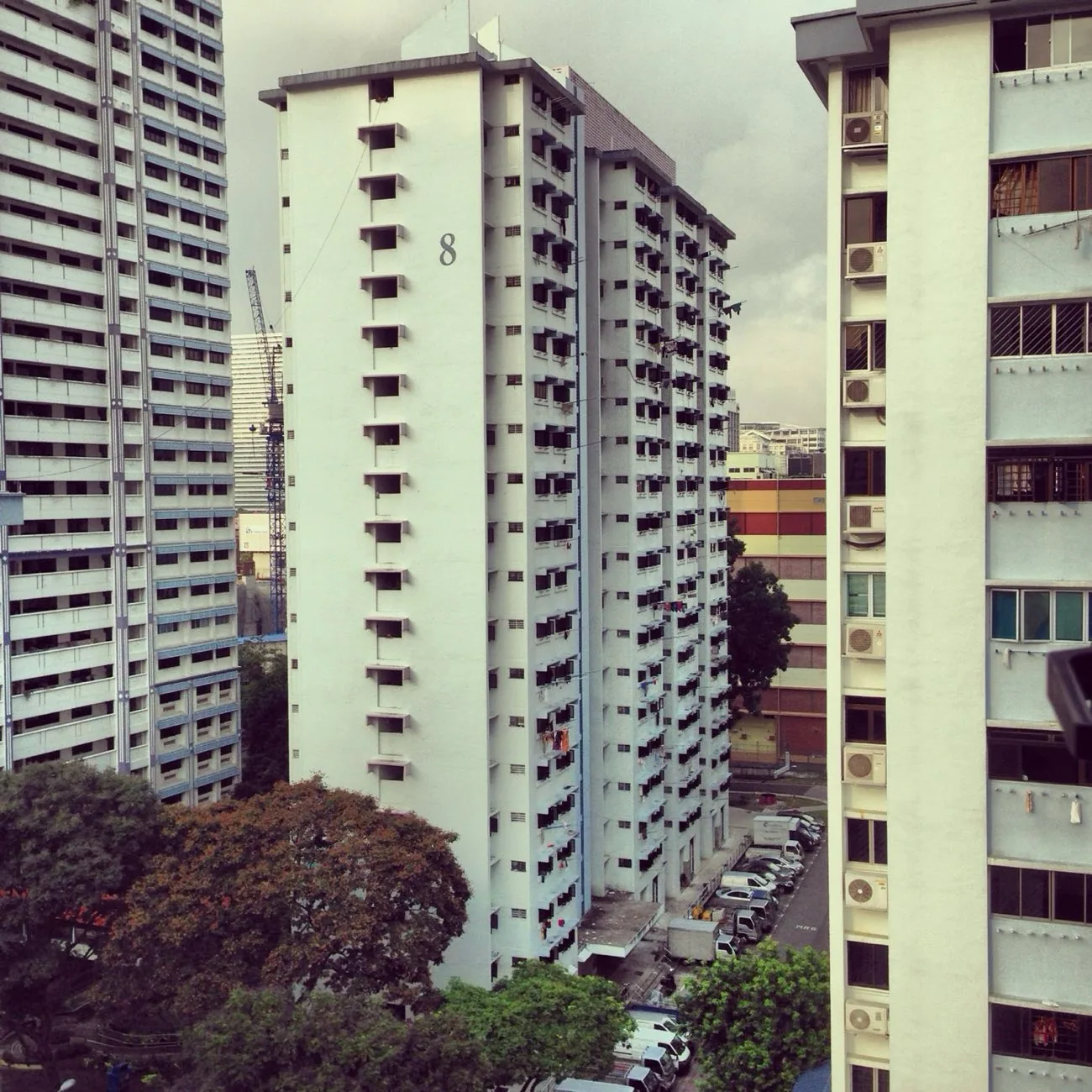
Singapore's HDB flats, where approximately 80% of citizens reside. The government builds them to "sell" with 99-year leases; even with minimum residency requirements, they cannot stop the privatization of HDB appreciation. Photo: Martinpasquier, CC BY-SA 4.0 via Wikimedia Commons.
Even Singapore, often used as a model of success, cannot stop this phenomenon. The Singapore government builds HDB (Housing & Development Board) flats to "sell" to the people with 99-year leases; with about 80% of citizens living in them, it looks like a model for "home ownership for all." Yet, even with minimum residency requirements and resale surcharges, it cannot suppress the privatization of HDB appreciation. Scholar Chua Beng Huat has pointed out that this system of public subsidies, originally intended to level inequalities, actually deepens the wealth gap between generations: those who bought early accumulate assets through HDB appreciation, while later generations must pay much higher prices to afford them. Locals have a vivid way of describing this cycle of buying and selling HDB flats: "two bites of the cherry." 16
📝 Curator's Note
Looking at Hong Kong, the UK, and Singapore together reveals one thing: as long as a government chooses to "build to sell," the privatization of appreciation is an almost inescapable shadow. The only difference lies in whether you have installed a gate, and how tight that gate is. Hong Kong installed premium payments and retained at least a portion; Singapore set thresholds but still has leaks; the UK simply gave it all away, resulting in the total loss of public stock. Taiwan's National Housing is at the most undefended end of this spectrum, lacking even Hong Kong's premium payment system. This is why, fifty years later, Taiwan finds itself at a crossroads: either learn from Hong Kong and install the gate, or follow the other path entirely—don't sell at all.
A Pretty 85 Percent Figure, and the Next Generation That Cannot Afford to Buy
By the end of 1999, the National Housing path had already become unsustainable.
The problem was not simply that units could not be sold. National Housing had long been priced too high and located too remotely, with each completed batch becoming another sluggish-selling batch. At the same time, civil society began protesting that the government was “abusing social resources” by building these unsold homes. Under pressure from both sides, the government stopped launching new National Housing projects at the end of 1999.3 This costly, distant, unsellable machine shut down.
After shutting down, National Housing remained on the books for more than a decade until it was formally unplugged in 2015. The Executive Yuan approved the abolition bill on March 14, 2013; the Legislative Yuan passed it in December 2014; and on January 7, 2015, the National Housing Act was formally abolished.5 The official rationale was attractive: Taiwan’s homeownership rate had already reached 85 percent, so the mission of “helping people buy homes” was complete, and the next step would be social housing for rent only, not for sale.5
That 85 percent figure is the part of the whole story most worth pausing over.
✦ The homeownership rate is 84.4 percent, but hidden inside that number is a large inflated share of people “living with parents,” as well as an entire generation of young people who cannot truly buy homes of their own.
On paper, Taiwan’s homeownership rate is indeed as high as 84.4 percent.17 The problem is that this figure includes many people “living with parents”: the home belongs to the parents, but young people living inside it are counted as “having owner-occupied housing.” Shift the lens away from that pretty aggregate number and toward the generation that must actually buy its first home independently, and the picture looks completely different.
Nationwide, the house-price-to-income ratio was 8.41 in 2014. By 2024, it had risen to 10.76, an increase of about 28 percent over ten years.18 By the World Bank’s standard, anything above 5.1 is “severely unaffordable.” Taipei City’s peak in the third quarter of 2024 was 16.60, meaning a Taipei household would have to go more than sixteen years without eating or spending to afford one home.18
Source: Ministry of the Interior Real Estate Information Platform; NCCU Center for Real Estate Research
Mortgage pressure worsened at the same time. Nationwide, the mortgage-burden ratio was about 36 percent in 2014 and rose to about 47 percent in 2024; Taipei’s latest quarterly figure was about 64 percent.18 In other words, if a Taipei household grits its teeth and buys a home, nearly two-thirds of its monthly income goes to mortgage payments. The rental market has not become a safe harbor either: in 2024, the rent index rose 2.45 percent year on year, a new high in 28 years.19 The age of first-time buyers has aged by a full five years over the past decade, shifting from 30 to 35 toward 35 to 40.18
CTS News official report: in July 2023, civic groups marched on Ketagalan Boulevard calling for “housing justice.” The generational anxiety of being unable to buy and unable to rent stably is the long tail left by the gate that National Housing never installed.
When these two images are overlaid, cracks appear in the official rationale of 85 percent. At the same moment when the government said “the homeownership rate is 85 percent, mission accomplished,” Chenggong National Housing was approaching NT$1 million per ping, and young people needed more than a decade of income without eating or spending to buy a first home. Eighty-five percent was the previous generation’s stock. A 10.76 price-to-income ratio was the next generation’s admission ticket. A policy declared victory using the former, but left the latter for the next generation to shoulder. The National Housing elevator that pulled away the ladder ultimately trapped precisely the young people standing at the door, unable to buy and unable to rent securely.
In 2016, the Route Changed: The Government Stopped Selling and Switched to Renting
After National Housing was unplugged, Taiwan’s housing justice took a completely different path: the government would no longer build homes to sell to you; it would build homes to rent to you.
The legal foundation of this path was the Housing Act, enacted in 2011 and implemented at the end of 2012. Article 3, Subparagraph 2 defines social housing very rigidly: “social housing” means housing and necessary ancillary facilities “established by the government or established by the private sector with government incentives, exclusively for rental use.”20 The four words “exclusively for rental use” placed a central-government legal stamp on the “for rent only, not for sale” route. Sale, as an action, was excluded from social housing.
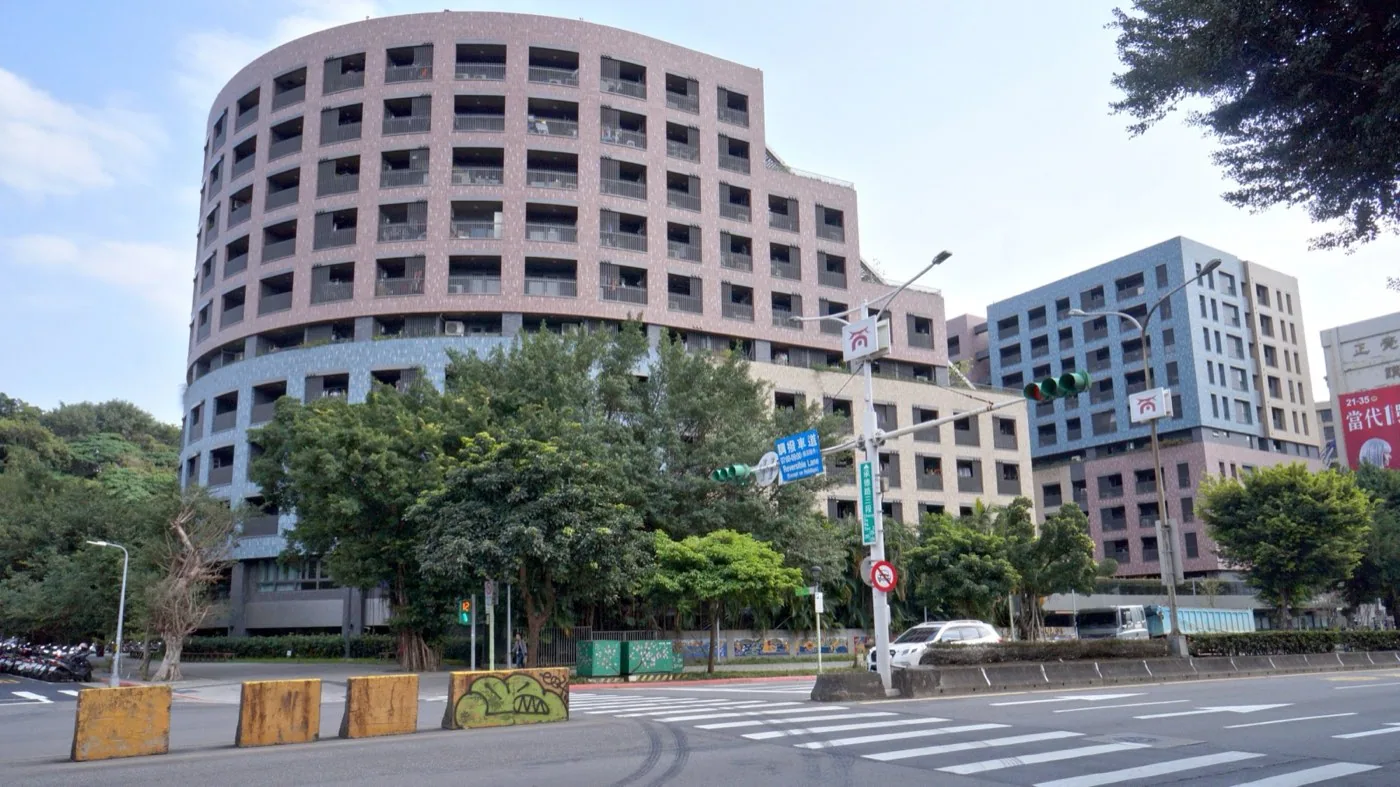
Taipei’s Minglun Social Housing. After 2016, the main instrument of housing justice in Taiwan shifted to this kind of “for rent only, not for sale” social housing: government-owned and rented out, no longer sold outright to residents. Photo: Solomon203, CC BY-SA 4.0 via Wikimedia Commons.
When the new government took office in 2016, it turned this route into a flagship policy: 200,000 social housing units in eight years, combining direct construction with a two-track rental intermediation and management program. The later story of how those 200,000 units were built, how rental intermediation and management operated, and how mixed-residence design sought to prevent social housing from being stigmatized is the topic of another article. This article needs only one point: National Housing exited in 2015, social housing took over in 2016, and the main melody of Taiwan’s housing justice shifted from “helping you afford to buy” to “helping you afford to rent.” For how the “for rent only, not for sale” route proceeded and how it performed, see the sister article “Social Housing and Housing Justice.”
After Lai Ching-te took office, he made the slogan bigger: “one million renter households.” Broken down, this meant 130,000 newly added directly built units, accumulating to 250,000 units; 250,000 rental-intermediation and management units; and 500,000 rental-subsidy households.21
⚠️ Three Kinds of “Social Housing” Cannot Be Added Together
“Direct construction,” “rental intermediation and management,” and “rental subsidies” are three different things, with vastly different effects. They cannot be added together and presented externally as “social housing results.” Liao Ting-hui of the Organization of Urban Re-s, or OURs, put it directly: “The budget for subsidizing one rental-intermediation and management unit can, on average, subsidize more than two rental-subsidy households.”22 The same money, used through different tools, can serve more than twice as many households. Adding the three together to report an attractive total is a talking point both central and local governments like to use.
Moreover, this large figure later shrank on its own. In December 2025, the National Land Management Agency reduced the original promise of 130,000 directly built units to 40,000.23 Officials called this a pragmatic adjustment; civic groups called it a broken promise. As of September 2025, officials said there were 222,000 social housing units nationwide, but this number was assembled from “121,000 directly built units, including those under construction and already awarded,” plus “101,000 active rental-intermediation and management contracts.”21 The actual newly awarded units that year from the National Housing and Urban Regeneration Center in 2025 totaled 1,662.21
Here, the government also deserves a fair word. A common claim says “Lai Ching-te has not built a single social housing unit.” That is political exaggeration: the National Housing and Urban Regeneration Center did have 1,662 units awarded and underway in 2025.21 But it is also true that progress has fallen far behind the original promise, and that the new plan remains stuck because the Executive Yuan has not yet approved it. Both central and local governments have their own talking points. This article presents both sides and endorses neither.
In 2026, Taoyuan Brought Sale Back and Put the Gate Back In
After “for rent only, not for sale” had been the main melody for ten years, someone in 2026 picked up the abolished path of “government-built for sale” once again. That someone was Taoyuan.
On May 29, 2026, the Taoyuan City Council passed the Taoyuan City Affordable Housing Construction and Management Self-Government Ordinance on third reading across party lines, sending it to the Executive Yuan in June for approval.6 This “affordable housing” is structurally a reincarnated version of National Housing: the government builds homes and sells them to people at about 50 to 60 percent of market price, with prices in the NT$200,000s per ping, targeting married or child-rearing families aged 25 to 44 who have been registered residents for at least one year and own no home. The first batch will include about 107 units around the Airport MRT A18 and A20 stations, with a goal of building 3,000 units in three to four years.6
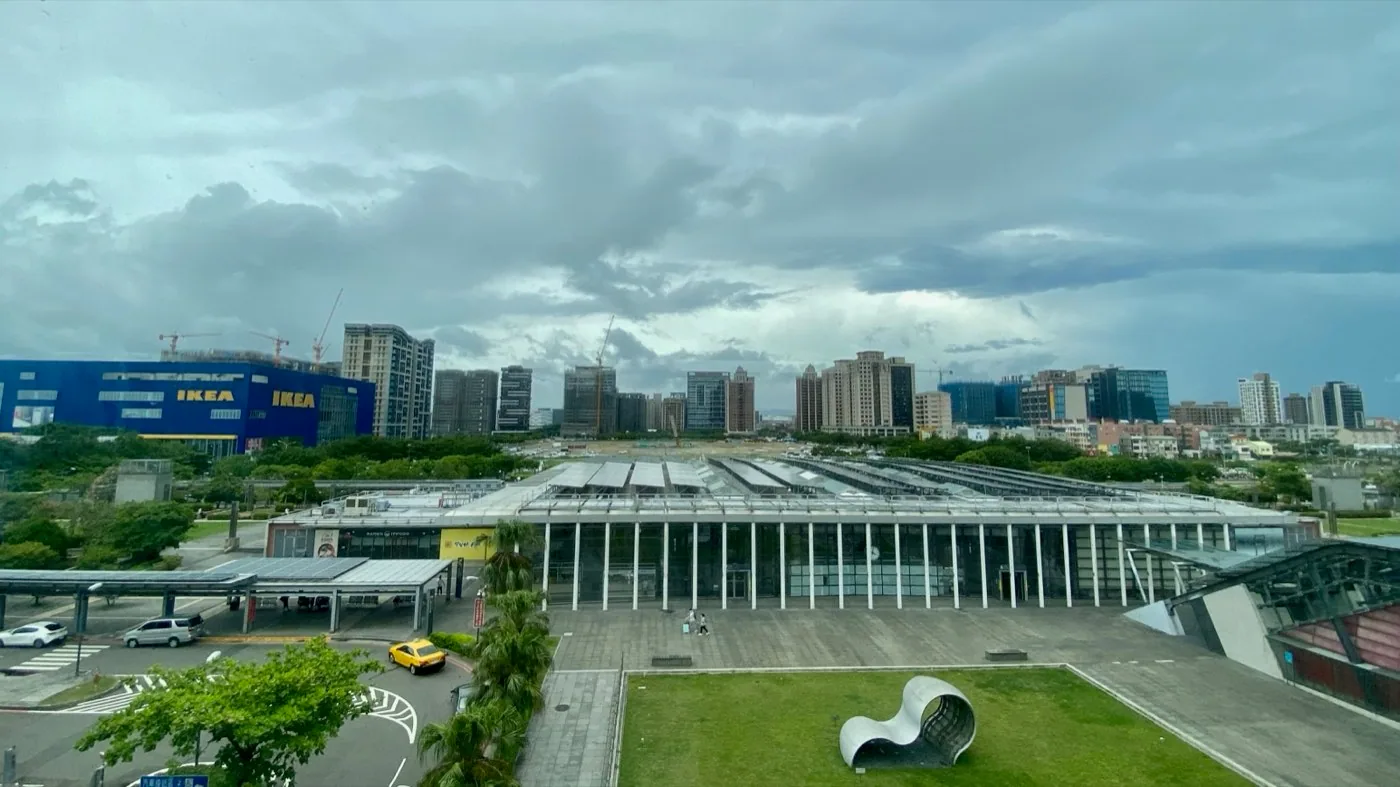
Taoyuan’s Qingpu Special District, an emerging rezoned area around Airport MRT A18 and A20. Taoyuan’s first batch of affordable housing will be located around these station areas. Photo: Heeheemalu, CC BY-SA 4.0 via Wikimedia Commons.
But this time, Taoyuan did something National Housing never did in fifty years. It put the gate back in.
The affordable housing ordinance clearly sets out three anti-speculation locks: the resale price may not exceed the original purchase price; transactions must go through the government matching platform; and private resale is prohibited.6 This is almost exactly the wall dismantled in 2002, rebuilt fifty years later, and built even higher. The old National Housing closed loop only restricted “who you could sell to.” Taoyuan’s version also locks “how much you can sell for.” If you buy cheaply, you can later sell only at the original price, through the government platform, to the next eligible person. Appreciation stays within this circle and cannot be cashed out in one stroke by any one person.
📝 Curator’s Note
Taoyuan’s gate fills in the page of homework that National Housing missed fifty years ago. The biggest breach in National Housing was “buy cheaply, sell at full price, and keep the appreciation in between.” This time, Taoyuan wrote “resale may not exceed the original purchase price” directly into the law, effectively saying to history: that wall should not have been dismantled. From this angle, affordable housing is a reincarnation of National Housing, and also an admission of National Housing’s error: using a legal clause to acknowledge that the elevator should not have pulled away the ladder.
Yet as soon as this path emerged, it collided with the central government.
Affordable to Buy or Affordable to Rent: The Remote Clash Between Central and Local Governments
The Ministry of the Interior's stance was clear: selling is inherently problematic. Deputy Minister Tung Chien-hung directly questioned this direction, stating, "When affordable housing is provided as saleable housing, relatively fewer people can be accommodated," and that "the process of free resale will cause disputes over property rights and subsequent administrative management issues."24 He advocated for returning to the spirit of the Housing Act, which dictates that social housing should be "rent-only, not for sale." In plain terms, the Ministry of the Interior's position is that once a house is sold, it represents a one-time loss of public stock; rather than trying to figure out "what to do after it is sold," it is better not to sell it at all, keeping it in government hands to be rented indefinitely.
The two sides are, in fact, discussing two different versions of housing justice.
Taoyuan's response was an attempt to break this "either-or" binary. Jiang Nan-chih, Director of the Taoyuan City Urban Development Bureau, said: "The promotion of housing justice should not fall into a single 'one or the other' logic."25 Mayor Chang San-cheng personally visited the Executive Yuan on June 4, 2026, to lobby for including Taoyuan's affordable housing within central government policy. According to media reports, he described affordable housing and social housing as the "two wings" of housing policy—complementary rather than competitive: some people want to buy, while others can only rent; both needs should be met separately without forcing a choice between the two.26
Official program from _Commonwealth Magazine: Why the Lai administration's promise of 130,000 social housing units has shrunk significantly, looking at one side of the precarious state of housing justice in Taiwan._
The Executive Yuan did not issue an outright rejection this time. Premier Cho Jung-tai's attitude showed visible softening; he did not negate Taoyuan's approach, but merely hoped that "central and local policies can be aligned."27 A policy direction that had been abolished for eleven years—with the official reason already written as "the 85% homeownership rate task has been completed"—has actually managed to knock on the central government's door again, thanks to a local government.
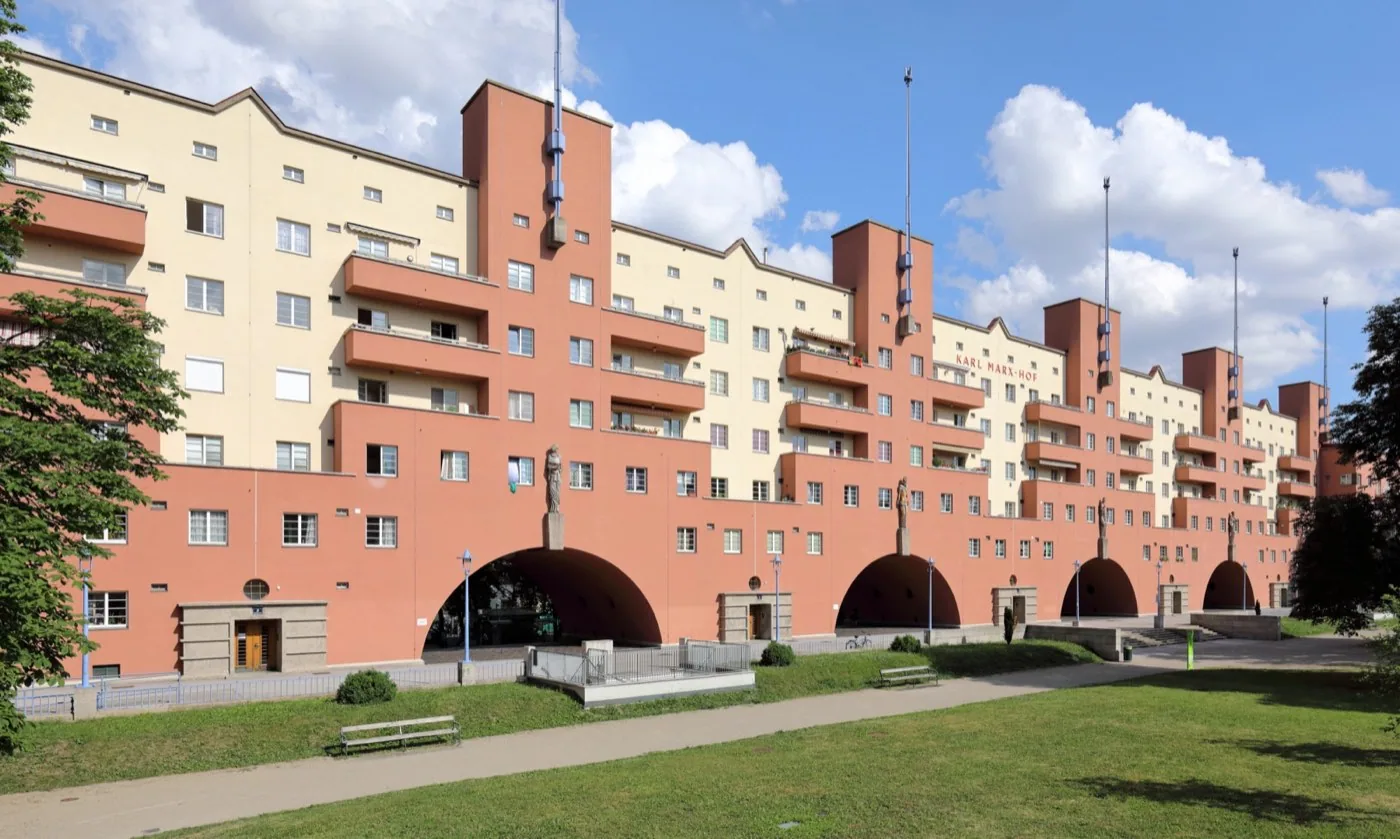
_Vienna's Karl-Marx-Hof, completed in 1933 and still held by the city government for rent-only use. By not selling for a hundred years, the stock remains in public hands. Photo: C.Stadler/Bwag, CC BY-SA 4.0 via Wikimedia Commons._
This collision between central and local governments is essentially arguing over a question that should have been answered fifty years ago but has been constantly bypassed: Should the government help people "afford to buy," or help them "afford to rent"?
Fifty Years Later, Taiwan Finally Learned to Install That Gate
Return to the address of Chenggong National Housing.
In 1985, longtime borough chief Shih Chung-sheng and his wife emptied their savings to scrape together a NT$400,000 down payment and buy a home priced at NT$67,000 per ping. At that moment, National Housing was a complete promise of housing justice: the government built cheap homes to help those who could not afford housing get onto the property ladder. Its only oversight was forgetting to install a gate at the exit: nobody specified how the appreciation later generated by public subsidy and location should be divided. Forty years later, the same address is approaching NT$1 million per ping, the original down payment would not buy even one ping, and the ladder was quietly pulled away beneath the feet of the earliest group to board.
Hong Kong calls that gate a premium payment. Britain learned, at the cost of NT$8 trillion in transferred equity, that it cannot be omitted. Singapore installed thresholds and still leaked value. Taiwan circled around the issue for a full fifty years, even personally dismantling the only half-wall it had in 2002. Only in 2026 did a local government finally write the words “resale may not exceed the original purchase price” into an ordinance called “affordable housing.” That is exactly the gate National Housing failed to install, the one Hong Kong calls a premium payment.
So the real question in this story has never been “can the government afford to build homes?” National Housing proved that the government can build them, and Taoyuan is preparing to build again. The real question is: after “helping you afford to buy,” who should receive the appreciation? The earliest person to board, or the next generation still waiting at the door?
The people who pressed the voting buttons on the day the Taoyuan City Council passed the ordinance on third reading may not have realized that they were also filling in the final brick of a wall dismantled fifty years ago. Whether that brick can become an escalator that no longer pulls away the ladder, or whether it will again be trapped in a central-local struggle that cannot align, will be recorded for us by the next address price at Chenggong National Housing.
Where this story traveled
Further Reading:
- Social Housing and Housing Justice — The “for rent only, not for sale” social housing route after 2016: 200,000 units in eight years, the two-track model of direct construction and rental intermediation and management, and how mixed-residence design seeks to prevent social housing from being stigmatized. This is the sister article to this piece, continuing the story after National Housing exited in 2015.
- Taiwan’s Low Birthrate Crisis — Unaffordable housing and the inability to have children are two ends of the same structural fracture, another facet of generational justice.
- Sheet-Metal Rooftop Additions — When people cannot afford to buy and cannot rent stably, how Taiwanese people use the most makeshift methods to add a place of shelter for themselves.
- Taiwan’s Environmental Justice and NIMBY Disputes — Where social housing and unpopular facilities should be built, and the boundary between housing justice and spatial justice.
Open Data
The following government open datasets let you verify, or refute, the arguments in this article yourself. Links point to data.gov.tw or to query systems run by competent authorities. Readers working with AI can also query the same datasets through Taiwan’s open-data MCP gateway, Twinkle Hub.
- Ministry of the Interior Actual-Price Real Estate Transaction Query Service, nationwide actual-price registration(Department of Land Administration, Ministry of the Interior; batch updated every three months; Twinkle Hub dataset code
lvr-trades)— This article uses one Chenggong National Housing address to discuss forty years of change. Here you can look up the contemporary transaction price of any National Housing community and verify the slope of that “asset escalator” yourself. - Taipei City National Housing Allocation and Rental Status(Taipei City Government Department of Urban Development; updated irregularly)— Official records for the allocation and rental of the “cheap homes sold by the government” in the three major National Housing complexes discussed in this article.
- Taipei City Government Social Housing Rental Intermediation and Management Matching Statistics(Taipei City Government Department of Urban Development; updated annually)— Implementation-side numbers for the new route described in “In 2016, the Route Changed: The Government Stopped Selling and Switched to Renting.”
Image Sources
This article uses eight Creative Commons-licensed images, all cached under public/article-images/society/ to avoid hotlinking source servers, and embeds two official-channel videos, from CTS News and CommonWealth Magazine.
- Taipei residential skyline, Xiangshan view — Photo: Heeheemalu, 2026, CC BY-SA 4.0(hero)
- Taipei Shilin District apartment streetscape — Photo: 迷惘的人生, 2022, CC BY-SA 2.0
- Hoi Fu Court, To Kwa Wan, Hong Kong, HOS — Photo: Thomasman, 2008, CC BY-SA 3.0
- Brookfield Estate council housing, London — Photo: Reading Tom, CC BY 2.0
- HDB flats in Singapore’s Lavender district — Photo: Martinpasquier, 2014, CC BY-SA 4.0
- Minglun Social Housing, Taipei — Photo: Solomon203, 2023, CC BY-SA 4.0
- Taoyuan Qingpu HSR Special District skyline — Photo: Heeheemalu, 2023, CC BY-SA 4.0
- Karl-Marx-Hof social housing, Vienna — Photo: C.Stadler/Bwag, CC BY-SA 4.0
- Videos: CTS News “716 Ketagalan Boulevard march chants ‘housing justice’” (official YouTube channel), CommonWealth Magazine “Why social housing policy turned,” Understand CommonWealth in 8 Minutes Ep.74 (official YouTube channel)
References
- Chenggong National Housing had no buyers back then(Yahoo 好宅報報) — Reports that Chenggong National Housing was initially difficult to sell after completion in 1985, that it sold out only after price cuts and a four-year interest-free loan, and that longtime borough chief Shih Chung-sheng recalled how he and his wife scraped together a NT$400,000 down payment to buy a home.↩2
- Values of three major National Housing complexes in Da’an District soar(ETtoday 房產雲) — Brokerage-platform statistics on average transaction prices over the past year for Da’an, Chenggong, Zhengyi, and other National Housing complexes in prime Taipei districts, including Da’an National Housing breaking NT$1 million per ping with a November 2025 transaction at NT$1.05 million per ping, Zhengyi National Housing reaching NT$2.04 million to NT$2.4 million after urban renewal, and the household composition of military dependents’ village redevelopment and ordinary allocation in each complex.↩2345
- Executive Yuan press release on abolition of the National Housing Act(Executive Yuan) — Official explanation of the National Housing Act’s 1975 promulgation, its 1957 predecessor loan act, the 1999 halt to new projects because of sluggish sales and public protest, and broad figures at abolition showing that since ROC year 65 the program had handled more than 390,000 units and assisted about 1.58 million people.↩23
- Legislative history of the National Housing Act(Laws & Regulations Database of the Republic of China) — Official primary source for the complete amendment history of the National Housing Act, recording the December 11, 2002 amendment to Article 19, which shortened the occupancy requirement from two years to one year and removed the requirement that transferees meet National Housing eligibility.↩23
- Abolition of the National Housing Act(Liberty Times) — Reports the abolition process for the National Housing Act, including Executive Yuan approval of the abolition bill on March 14, 2013, Legislative Yuan passage in December 2014, formal promulgation of abolition on January 7, 2015, and the official rationale that the homeownership rate had reached 85 percent and policy would shift to social housing for rent only, not for sale.↩23
- Taoyuan affordable housing passes third reading(United Daily News) — Reports that the Taoyuan City Council passed the Taoyuan City Affordable Housing Construction and Management Self-Government Ordinance on May 29, 2026, including sale at 50 to 60 percent of market price, eligibility limited to married or child-rearing families aged 25 to 44 who have had household registration for one year and own no home, resale not exceeding the original purchase price and requiring use of a government platform, a first batch of about 107 units around Airport MRT A18/A20, and a target of 3,000 units in three to four years.↩234
- National Housing Act, ROC year 64 version(Wikisource) — Primary source for the original 1975 provisions, including Article 3 stating that National Housing was for sale or rent to lower-income families and families of military personnel, civil servants, and teachers, and Article 12 requiring approval by the competent authority for resale and requiring the transferee to meet National Housing purchase eligibility, creating a closed-loop design.↩2
- Articles 19 and 21 of the 1982 National Housing Act(Lawbank) — Primary source for the 1982 revision. Article 19 added the requirement that owners live in the unit for two years before resale; Article 21 set the compensation formula of “original purchase price minus depreciation” when the government forcibly recovered violating units, not a resale price ceiling.↩2
- Deadline for National Housing / 2002 amendment(Mirror Media) — In-depth reporting on the history of National Housing policy, including the phenomenon that allocation prices were about 30 percent below market price, making winning a unit like winning the lottery, as well as the turning point before and after the 2002 amendment.↩
- From Chenggong New Village to Chenggong National Housing(Academia Sinica RCHSS GIS) — Academic research on the history of Chenggong National Housing’s predecessor, Chenggong New Village, including the 1980 redevelopment agreement signed by Army Commander-in-Chief Hau Pei-tsun and Taipei Mayor Lee Teng-hui, and the allocation structure of about 515 original military dependents’ households with the remainder publicly sold externally.↩
- Xinlong National Housing(Great Home Realty) — Brokerage-platform introduction to Xinlong National Housing next to Chiang Kai-shek Memorial Hall, including a comparison between the original 1986 price of NT$47,000 per ping and about NT$1.058 million per ping in 2022.↩
- Lin Chih-chun criticizes policy as robbing the poor to help the rich(Liberty Times) — Reports lawyer Lin Chih-chun’s 2025 criticism of a proposal for “state-funded urban renewal of Chenggong National Housing,” directly quoting his comments that it would turn “a home with a market value of NT$30 million into NT$60 million to NT$70 million” and amounted to “robbing the poor to help the rich, with the state paying to renovate homes for wealthy people.”↩
- National Housing and social housing(Streetcorner Sociology) — Sociological analysis of Taiwan’s National Housing and social housing policies, pointing out the structural problem that National Housing should originally have been social welfare, but ultimately became a tool for personal asset accumulation.↩
- Premium payment arrangement(Hong Kong Housing Authority) — Official Hong Kong Housing Authority explanation of the premium-payment mechanism for HOS and other subsidized sale flats, under which owners must pay a land premium to the government according to the original discount ratio before resale on the open market.↩2
- Wrong to Sell(Common Wealth) — Research by British think tank Common Wealth on the 1980 Right to Buy policy, estimating that the equity value transferred through discounts reached £194 billion, that the share of social housing fell from 31 percent to 16 percent, and that about 41 percent of sold council homes became private rental housing.↩2
- Chua Beng Huat on HDB flats(Academia.sg) — Singapore scholar Chua Beng Huat’s commentary on the HDB system, noting that public subsidies in practice deepened intergenerational wealth inequality and describing the resale cycle colloquially known as “two bites of the cherry.”↩
- Ministry of the Interior Real Estate Information Platform(Ministry of the Interior) — Official Ministry of the Interior housing statistics platform, providing indicators including the national homeownership rate of 84.4 percent; the data structurally overstate ownership because they include situations such as living with parents.↩
- House-price-to-income ratio and mortgage-burden ratio(NCCU Center for Real Estate Research) — Housing affordability statistics produced by NCCU in cooperation with the Ministry of the Interior, including the national house-price-to-income ratio rising from 8.41 in 2014 to 10.76 in 2024, Taipei reaching 16.60 in the third quarter of 2024, the national mortgage-burden ratio at about 47 percent, Taipei at about 64 percent, and the age of first-time buyers being pushed back by about five years.↩234
- Rent index up 2.45 percent year on year, highest in 28 years(Anue Juheng citing the National Statistics portal) — Cites the Directorate-General of Budget, Accounting and Statistics price-statistics database showing that the 2024 rent index rose 2.45 percent year on year, the highest in nearly 28 years; annual increases were below 1 percent from 1999 to 2021, then accelerated from 2022 onward, reflecting structural pressure in the rental market.↩
- Housing Act(Laws & Regulations Database of the Republic of China) — Official primary source for the full text of the Housing Act. Article 3, Subparagraph 2 defines social housing verbatim as “housing and necessary ancillary facilities established by the government or established by the private sector with government incentives, exclusively for rental use,” establishing the legal basis for rent only, not sale.↩
- 130,000 cut to 40,000(China Times) — Reports that the National Land Management Agency reduced directly built social housing from 130,000 to 40,000 units, including figures as of September 2025 of 222,000 social housing units nationwide, consisting of 121,000 directly built units including those under construction and already awarded plus 101,000 rental-intermediation and management units, and 1,662 newly awarded units by the National Housing and Urban Regeneration Center in 2025.↩234
- Budget efficiency of rental intermediation and management(鳴人堂) — Commentary by Liao Ting-hui of OURs, directly stating that “the budget for subsidizing one rental-intermediation and management unit can, on average, subsidize more than two rental-subsidy households,” and warning that direct construction, rental intermediation and management, and rental subsidies cannot be added together as social housing results.↩
- Adjustment to the one million renter households plan(China Times) — Reports the controversy over adjustments to the number of directly built units in Lai Ching-te’s “one million renter households” policy, presenting both the official claim of pragmatic adjustment and civic groups’ criticism that it was a broken promise.↩
- Ministry of the Interior advocates rent only, not sale(Liberty Times) — Reports Deputy Minister of the Interior Tung Chien-hung’s response to Taoyuan affordable housing, directly quoting that “when affordable housing is sale-type housing, relatively speaking it will be able to care for fewer people,” and that “the process of free resale will create disputes over property rights and subsequent administrative-management problems,” while advocating a return to the Housing Act’s spirit of rent only, not sale.↩
- Taoyuan responds that housing justice is not a binary choice(China Times) — Reports Taoyuan Department of Urban Development Director Chiang Nan-chih’s direct response that “the promotion of housing justice should not fall into a single ‘choose one of two’ logic,” arguing that affordable housing and social housing are complementary.↩
- Chang San-cheng visits the Executive Yuan to seek support(China Times) — Reports Taoyuan Mayor Chang San-cheng’s June 4, 2026 visit to the Executive Yuan to seek inclusion of affordable housing in central policy, and conveys his description of affordable housing and social housing as the “two wings” of housing policy, complementary rather than competitive.↩
- Cho Jung-tai hopes policies will align(Newtalk) — Reports Premier Cho Jung-tai’s softened stance toward Taoyuan affordable housing, not rejecting it and saying he hoped central and local policies could align.↩