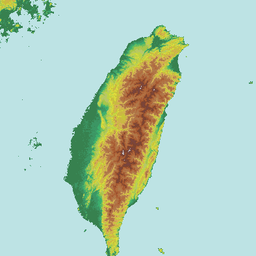
30-Second Overview: In May 1626, a Spanish fleet sailed north from Manila, landing at Keelung Harbor and establishing Fort San Salvador on Sheliao Island (now Heping Island). Over the following sixteen years, they built Fort Santo Domingo in Tamsui, sent expeditions to explore the Taipei Basin, and fought against the Kavalan people, all while relying on subsidies from Manila to maintain a garrison of two to three hundred men. In August 1642, the Dutch captured Keelung, and the Spanish withdrew from Taiwan.
Why Taiwan?
After establishing a colony in Manila in 1571, the Spanish viewed Taiwan as an extension north of Luzon. Documents from the late 16th century show that Spanish officials consistently regarded Taiwan as part of the Philippine archipelago, believing it fell under the jurisdiction of the Spanish Crown. 1
What truly caught Manila's attention was the Dutch. During the Dutch War of Independence, the Netherlands was at odds with the Spanish and Portuguese empires. As the Dutch expanded into East Asia, they directly attacked Chinese merchant ships traveling to Manila and the silver routes from the Americas. The Spanish realized that merely blockading Manila was insufficient; they needed to establish outposts closer to China to reclaim control over trade with the mainland. 1
In 1618, the Governor-General of the Philippines sent the Dominican priest Martín de San Martín to warn the Ming Dynasty to be wary of the Dutch. During his travels, he sought refuge twice in the southwestern plains of Taiwan. In a 1619 memorandum, he wrote: "There is no better way to drive away the Dutch and other various enemies than by sending Manila's silver to the gateway of China (which is the Beautiful Island)." 1
In 1624, the Dutch moved from Penghu to Tayouan. Only then did the Manila authorities become alert, deciding in 1625 to establish an outpost on El Morro Island. Martín and five other Dominican priests joined the military expedition on February 8, 1626. 1
Landing on Heping Island
On May 5, 1626, Vargas led the fleet from Manila. Because the Dutch had already occupied southern Taiwan, the Spanish military sailed north along the eastern coast. They arrived at Sandiaojiao (Cape San Diego) on May 11 and entered Keelung Harbor on May 12, naming the bay Santisima Trinidad (Most Holy Trinity) and landing on a small island within the bay. 1
On May 16, the Spanish held an occupation ceremony on Sheliao Island and established Fort San Salvador as their administrative center; consequently, the island came to be known as San Salvador Island. 1
Shortly after the outpost was established, it fell into crisis. The Spanish military had seized the villages of the Jinbaoli and Dajikelong indigenous communities, but both groups refused to sell food. Furthermore, supply ships from Manila failed to arrive in a timely manner. As a result, many Spaniards fell ill or died of starvation; survivors were forced to eat dogs and rats to stave off hunger. The situation only improved when Chinese merchants arrived in Keelung to sell grain. 1
The opening act of this colonization was a famine.
Tamsui and Yilan
In 1627, suffering from food shortages, Vargas sent 20 soldiers to the Tamsui River to purchase supplies from the Guijou (Keelung) indigenous people. After the unit stayed for one or two months, they were met with a joint resistance from nearby tribes; the captain and seven soldiers were killed, and the survivors fled back to Keelung. 1
In 1628, Vargas sent 100 soldiers to attack. The indigenous people were overwhelmed and fled, allowing the Spanish military to enter the villages and seize grain. The indigenous people ceded land to negotiate peace, and the Spanish built Fort Santo Domingo (now Fort San Domingo) in the area as an outpost, while the Guijou people relocated elsewhere. 1
In July 1629, the Dutch sent troops north to attack the Tamsui fortress but were defeated due to the strength of the Spanish fortifications. By this point, the Spanish controlled the area from western Keelung to Tamsui. 1
To find a more convenient route than following the coastline, Governor Alcarazo sent 80 soldiers into the Taipei Basin in 1632 to scout the area. The troops traveled upstream along the Tamsui River and then proceeded along the Keelung River, finally discovering a route between the two locations. This also allowed the Spanish to come into contact with many tribes in the Tamsui and Keelung River basins. 1
In April of that same year, a Spanish ship drifted to the Lanyang Plain, and the entire crew was killed by the Kavalan people. Using this as a pretext, Alcarazo launched an attack on Yilan, destroying seven Kavalan villages and killing ten to twelve indigenous people. The Kavalan retreated into the mountains to continue their resistance until Governor Romillo sent troops again in 1635 to finally defeat them. 1
A Colony Dependent on Manila
Spanish rule in northern Taiwan remained small in scale.
On average, there were about 250 to 300 soldiers stationed at various outposts each year, many of whom were mercenaries from the Philippines. Because there were few Spanish women, some soldiers married indigenous Taiwanese, leading to the development of small settlements on Keelung Island. 1
Their lives were tied to the supply ships from Manila. These ships brought wages, food, medicine, clothing, as well as orders, rotations, and even tobacco preferred by the soldiers. During the early stages of occupation, they suffered from famine due to delayed supply ships; later, those captured during the Battle of Keelung and sent to Tayouan reportedly envied the abundance of supplies held by the Dutch military. 1
Administratively, the Spanish conceptually divided northern Taiwan into the Tamsui District, the Kavalan District, and the Duduman District. However, these were merely regional concepts rather than formal administrative divisions; the Spanish did not establish official government offices to rule the Kavalan and Duduman areas. 1
The 1642 Withdrawal
The occupation of northern Taiwan did not resolve the Dutch threat. As long as the Dutch could block merchants along the Chinese coast, they could still threaten Manila's economy; furthermore, goods transported from Keelung were not any cheaper than those shipped directly to Manila by Chinese merchants. Maintaining a garrison required massive expenditures, yet it failed to open trade with China or Japan. 1
An even greater problem was silver. Starting in 1630, the production of American silver began to decline annually. Manila fell into an economic recession due to the decreasing influx of silver, and the operations in northern Taiwan relied almost entirely on Philippine subsidies—at a time when the Philippines itself had to contend with wars against Muslim forces. 1
In 1637, to reduce expenditures, Governor Coquila ordered the destruction of Fort Santo Domingo in Tamsui, leaving troops stationed only at Fort San Salvador. This left Keelung's defenses hollow, attracting Dutch interest. In 1641, the Dutch military conducted reconnaissance and concluded that their artillery was insufficient to breach the castle; after a failed attempt to persuade them to surrender, they returned to Tayouan. 1
In August 1642, the Dutch launched a large-scale attack on Keelung, seizing the high ground on Heping Island. The Spanish military no longer had the strength to resist and surrendered to the Dutch in late August, withdrawing from Taiwan. 1
The sixteen years of Spanish rule in northern Taiwan left behind not a regime, but several place names and fragments of castle walls: Fort San Salvador on Heping Island, Fort San Domingo at the mouth of the Tamsui River, and the name "El Morro."
Further Reading:
- Dutch, Spanish, and Ming-Zheng Periods — An overview of four regimes over sixty years
- Keelung City — Location of Heping Island and Fort San Salvador
- New Taipei City — Tamsui Fort San Domingo and Fort Santo Domingo
References
- Spanish Rule in Taiwan (Wikipedia) — Manila's strategy for Taiwan and Martín de San Martín's 1619 memorandum; the 1626-05-05 expedition and 5-12 entry into Keelung Harbor; the 5-16 occupation ceremony and Fort San Salvador; early famine; the 1627–1628 Tamsui Guijou conflict and Fort Santo Domingo; the failed 1629 Dutch attack on Tamsui; the 1632 Taipei Basin exploration and Kavalan conflict; the 250–300 man garrison and supply ships; regional divisions; the 1637 troop reductions and the 1642 Dutch capture of Keelung.↩2345678910111213141516171819