
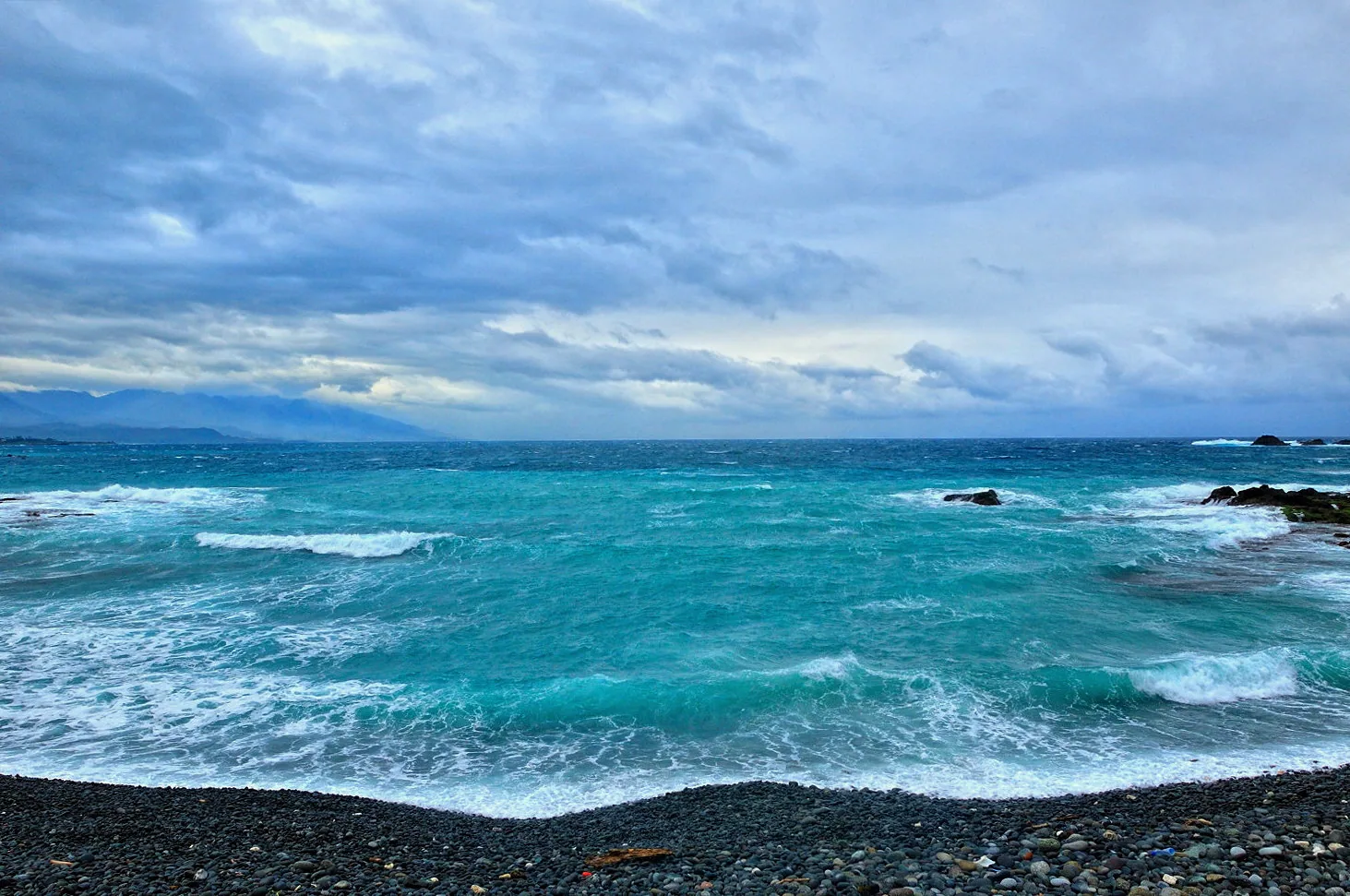
30-second overview: Paul Chiang was born in Taichung in 1942. After graduating from the Department of Fine Arts at National Taiwan Normal University, he went alone to Paris in the winter of 1967, hoping to study under Giacometti, only to learn after arriving that his idol had died the previous year. For the next forty-five years, whenever he painted in Paris, New York, or Taipei, he habitually sealed off all the windows: “I did not want to see the natural light outside. I wanted to find the light within my own heart.”1 His first solo exhibition in New York, at Lamagna Gallery in 1975, did not sell a single painting. In the mid-1990s, after his father fell and was injured, Chiang returned to Taipei and painted the “Centennial Temple” series amid the incense smoke of Longshan Temple and Baoan Temple. In 2007, he and his wife Fan Hsiang-lan drove to Jinzun in Taitung; in 2008, he settled there and opened the windows. He was sixty-five. On March 15, 2025, the Paul Chiang Art Center officially opened in Jinzun. He was eighty-three.
The most important paintings by an artist are often not made when he wants to become a master. They are made after he has given up trying to become one.
Paul Chiang lived outside Taiwan for forty-five years. For thirty of those years, whenever he arrived at a studio in a new city, the first thing he did was seal the windows. An attic in Paris’s Latin Quarter, a rented space in New York’s SoHo, a leaking empty apartment on Jinzhou Street in Taipei[^2]: he sealed them until not a thread of outside light could enter. Then, in that completely dark room, he searched for the light inside himself.
He returned to Taiwan to settle at the age of sixty-five. Seventeen years later, at eighty-three, the art center beside the coastline of Jinzun in Taitung, designed by Chiang together with architect Lin Yohan and built over twelve years through fundraising led by Stanley Yen, chair of the Alliance Cultural Foundation, officially opened on March 15, 20252.
What opened was not only a window.
In the winter of 1967, the day he arrived in Paris, Giacometti had already been dead for a year
Paul Chiang was born in Taichung on February 1, 19423. His mother died when he was young, and his father spent years doing business overseas. For a sensitive child, the companion most often at his side was the classical music playing on the radio4. He especially loved Mahler, the composer who wrote death and solitude into music.
At the Affiliated Senior High School of National Taiwan Normal University, he studied painting with Li Shih-chiao. In 1960, he entered the Department of Fine Arts at Taiwan Provincial Normal University, now the Department of Fine Arts at National Taiwan Normal University5. At university he studied under Liao Chi-chun and Chen Hui-kun. During one drawing class, Chen looked at his plaster-cast drawing and said, “You do not need to draw plaster casts anymore!” In an oil painting class, Liao examined his work and gave this assessment: “This is the work of a genius.”6
In January 1965, when Chiang was a senior, he and classmates Yao Ching-chang and Ku Chung-kuang held the first exhibition of the Era Painting Association at the Taiwan Provincial Museum, now the National Taiwan Museum. It was a small starting point near the end of Taiwan’s 1960s abstract painting movement7. He graduated in June that year, and in September his work was selected for the São Paulo Biennial in Brazil7.
It was the best beginning an art student in Taiwan could imagine.
But Chiang carried a larger obsession. He wanted to go to Paris to find Giacometti, the Swiss sculptor whose thin human figures expressed human solitude, anxiety, and despair, and whom Chiang regarded as his idol8.
In the winter of 1967, he flew alone to Paris. His wife Fan Hsiang-lan later flew there to join him9.
Not long after arriving in Paris, he learned the news: Giacometti had died the previous year, in 19668.
“My heart felt hollowed out.”10
He stayed in Paris. But with his idol gone, what was he to learn? How was he to learn it? From May to June 1968, student movements broke out in Paris, followed by a nationwide general strike; even survival became a problem11. Chiang and Fan left Paris and moved on to New York.
He was twenty-six that year. He did not imagine that this departure from Taiwan would last forty-five years.
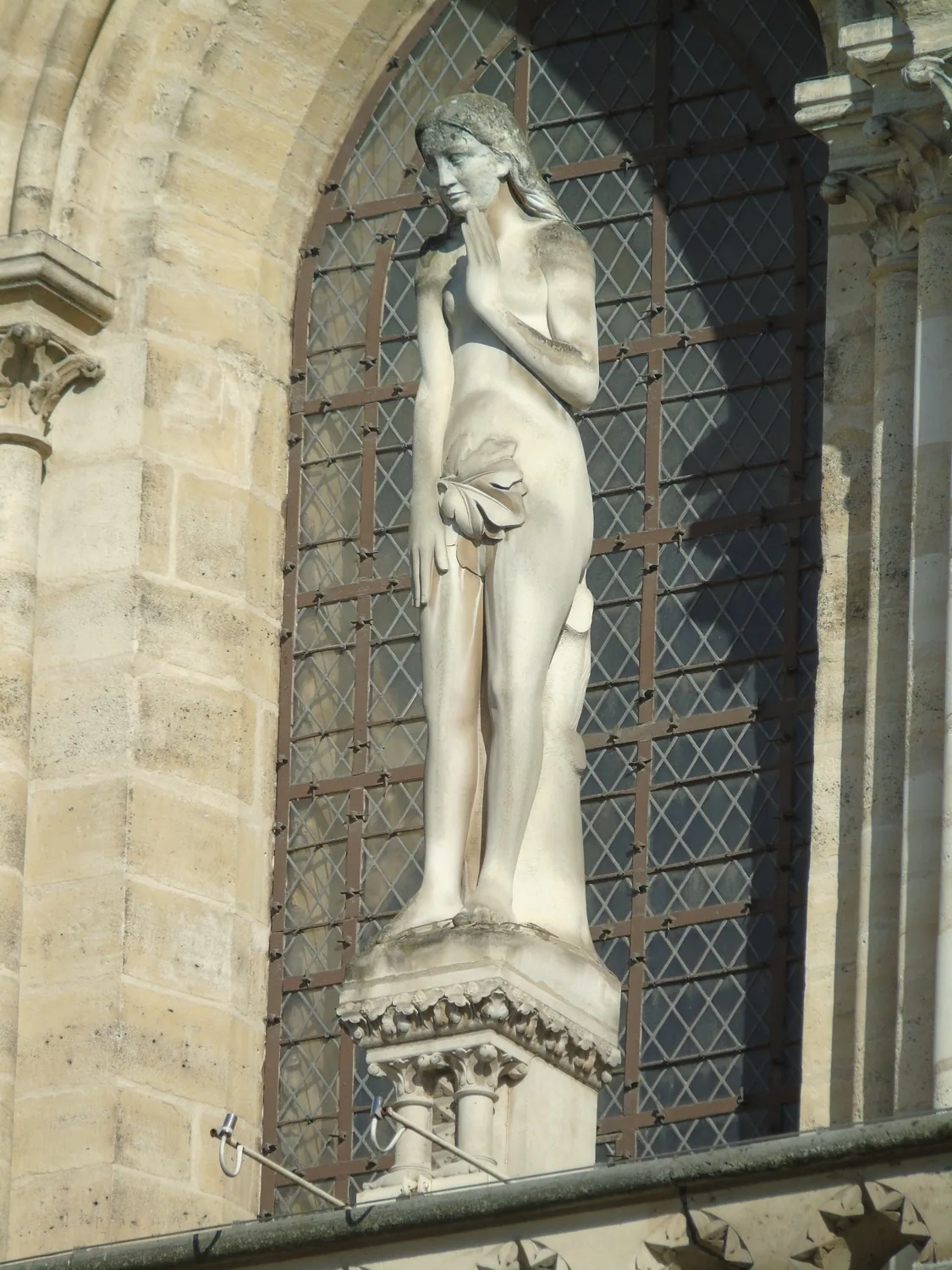
Detail of the west facade of Notre-Dame de Paris, 2017. In the summer of 1982, Paul Chiang returned from New York to Paris and painted in a window-sealed attic studio above a cinema in the Latin Quarter, creating the “Notre-Dame de Paris” series that became a turning point in his career. Photo: Fernando Losada Rodríguez, CC BY-SA 4.0 via Wikimedia Commons.
Sealing the windows to search for the light within
In the 1970s, New York’s SoHo was an artists’ paradise before luxury boutiques moved in: warehouses, factories, cheap loft rents, and streets filled with abstract expressionist painters of the same generation. Andy Warhol ran the Factory in a nearby district, and Pop Art was ascendant. Chiang moved there, but what he did was the complete opposite of New York’s artistic currents at the time.
He sealed the windows.
Cardboard, curtains, newspapers: he used whatever he could find. The room had to be sealed until not the slightest natural light entered. Then he painted in that pitch-black room.
Forty years later, he explained the habit himself: “For more than thirty years in Paris, New York, and even Taipei, no matter how large the windows were, I sealed them all the same. The reason was simple: I did not want to see the natural light outside. I wanted to find the light within my own heart.”1
Works from that period came to be called his “sealed-window works”12. Somber, minimal, dominated by gray and black, the images sometimes contain only one white beam of light emerging from the darkness. Several themes recur: “emptiness, solitude, hopelessness, death, a funeral in the distance.”12
📝 Curator’s Note
The conventional account says that Chiang’s thirty years in New York were a “period of deep cultivation,” “training,” or “waiting for the right moment.” This is narratively convenient, but it reverses the matter. He truly believed that art should not look outward, and that is why he was willing to spend thirty years in retreat. While other painters were depicting the world, he spent three full decades telling himself that the light outside the world did not matter. What mattered was the beam within.
New York, 1975: not a single painting sold
In 1975, Chiang was thirty-three and had been in New York for seven years. Ivan Karp, Andy Warhol’s dealer and the founder of O.K. Harris Gallery, noticed him and recommended him to SoHo’s Lamagna Gallery for a solo exhibition13.
It was his first solo exhibition in New York.
By the end of the entire exhibition, not a single painting had sold13.
For the next nineteen years, he did not hold another solo exhibition in New York. It was not until December 1994 that Ivan Karp brought him back for a second solo exhibition at O.K. Harris Gallery, the gallery Karp had founded14. During those nineteen years, how did Chiang survive? How did he keep a studio? How did he buy canvas and oil paint? Such details are rarely mentioned in his own interviews. He has said only this: “There are far, far too many people who want to paint, and too few who can become professional painters. One needs patience, persistence, and also many, many sacrifices before it can be achieved.”15
In the summer of 1982, at the age of forty, he briefly returned from New York to Paris and rented an attic above a cinema in the Latin Quarter16. He sealed the windows of that attic too, and painted a series: “Notre-Dame de Paris.”
The images are deep black, with several white lines outlining arches and columns, and heavy strokes marking out a pure white light16. What Chiang wanted to express through paint was “an air of spiritual devotion”: the part that remains after a famous tourist site has been stripped of its noisy reality.
Much later, looking back at this series, he said: “It was only after I painted the ‘Notre-Dame de Paris’ series that I felt I had achieved something, that I felt art was a path I could take, and that in this life I was qualified to be a painter.”17
At forty, he finally felt qualified to be a painter. Before that, he had already painted in Paris and New York for fifteen years.
The incense of Longshan Temple, the temple columns of Baoan Temple: the year his father fell
One day in the mid-1990s, Chiang received a phone call from home while in New York: his father had fallen in Taipei and been injured, and could no longer take long-haul flights to New York to see him18.
That was the distance that had always existed between father and son. His father was a businessman, long based overseas, and the two had little interaction and a thin connection. Chiang himself had also chosen a path that placed home on the other side of the planet. But his father had grown old, had fallen, and could no longer fly.
Chiang began traveling back and forth between Taipei and New York.
In Taipei, he found a dilapidated empty apartment on Jinzhou Street. It leaked when it rained, had mosquitoes in summer, and no hot water in winter19. Living there, what he did was go to temples.
Longshan Temple, Baoan Temple, Mazu temples: he visited them all20. He was not there to worship anything. He was there to look at temples.
Those temple columns, plaques, incense smoke, and black characters on red paper written over the course of a century: things he had not seen in thirty years in Paris and New York now entered his eyes.
The “Centennial Temple” series grew out of that leaking empty apartment on Jinzhou Street20.
Like “Notre-Dame de Paris,” the images are set against a somber black ground, but within the black there is something more. Several rays of bronze-gold light emerge from the depths of the canvas. They are the colors that slowly grow on temple columns touched by countless hands, smoked by incense for hundreds of years, and lit by sunlight slanting in from a courtyard skylight20.
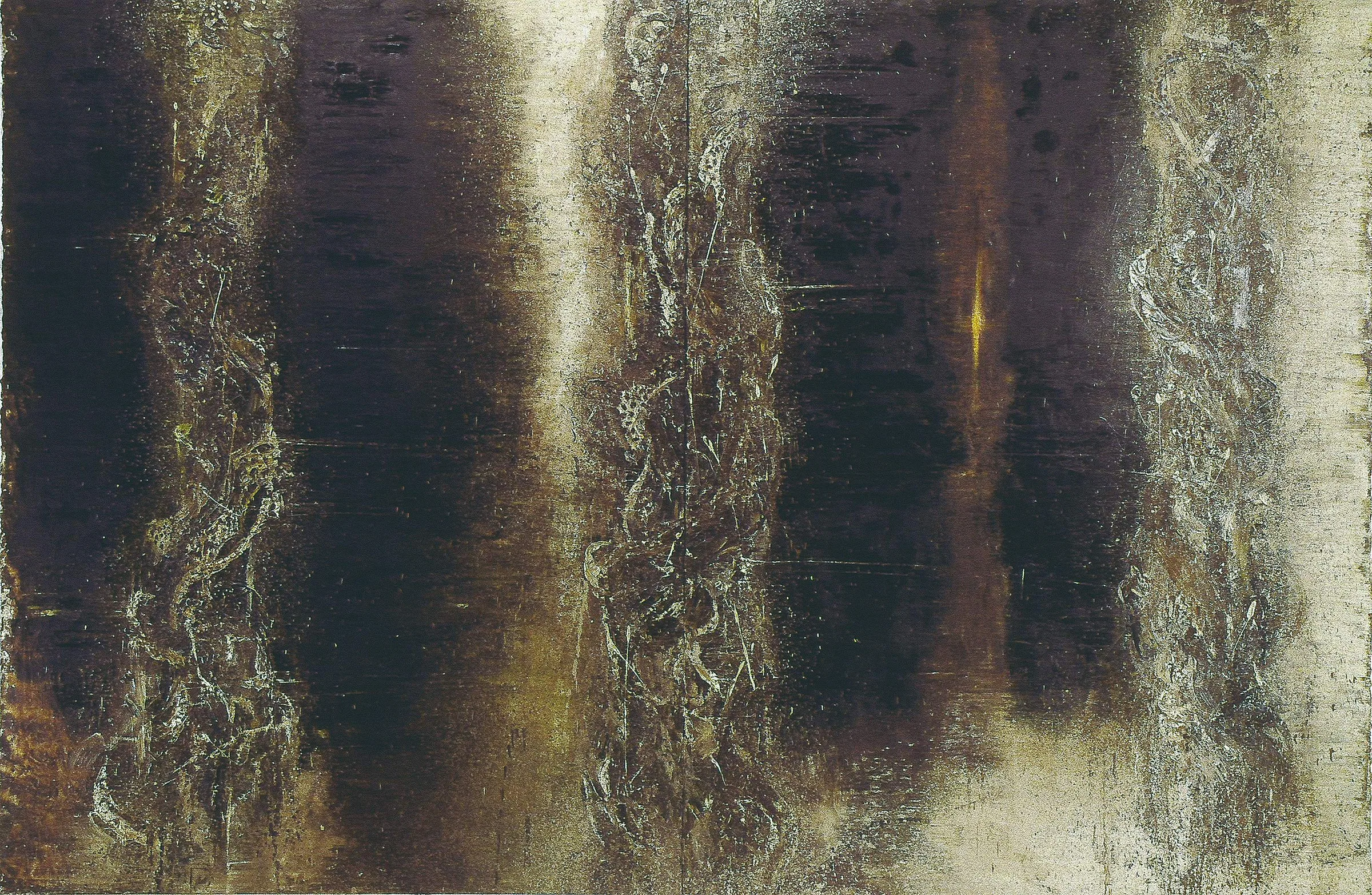
One work from Paul Chiang’s “Centennial Temple” series, 1998. Source: Paul Chiang official artist website Paris Notre-Dame / Centennial Temple period portfolio. Fair use editorial commentary.
In March 1997, Chiang held a solo exhibition at Eslite Gallery in Taipei. The exhibition subtitle read: “His first solo exhibition in Taiwan after thirty years away.”21
He had left Taiwan at twenty-five and held his first exhibition back at fifty-five. During those thirty years, his classmates in Taiwan had lost contact with him, Taiwan’s art circles did not know him, and Taiwanese audiences had never seen his paintings.
In November 1998, he held his second solo exhibition at Eslite, formally presenting the “Centennial Temple” series21.
It was the first time Taiwanese audiences saw paintings he had made in Taiwan.
📝 Curator’s Note
When an artist has spent thirty years abroad and returns to Taiwan for an exhibition, how does Taiwanese criticism regard him? Probably not with the interest reserved for a young artist just making a debut, nor with the reverence given to a master already famous internationally for twenty years. When Chiang exhibited after returning to Taiwan, he was in an awkward middle position: neither a newcomer nor an international superstar, but simply a middle-aged man who had spent thirty years in New York without becoming famous there and had come back to Taipei without being recognized. When the “Centennial Temple” series was first shown in 1998, it did not explode into applause. Its true recognition by Taiwan’s art circles came at the 2020 retrospective at the Taipei Fine Arts Museum, when he was already seventy-eight.
One afternoon in 2007, they drove up to Jinzun
In 2007, Chiang and his wife Fan Hsiang-lan drove along Taitung’s East Coast. Provincial Highway 11 winds between mountains and sea; after Changbin and Sanxiantai, the car reached a small village in Donghe Township called Jinzun, an old Amis place name.
They stopped the car and walked up a small hillside. Ahead was the Pacific Ocean; behind them were the trailing ridges of the Coastal Mountain Range. In good weather, one could see as far as Green Island22.
“But we felt: this is the place.” That is how Chiang remembered that afternoon23.
He was sixty-five.
That year, in Jinzun, Donghe Township, Taitung County, he cleared land and built his own mountain-and-sea-facing residence and studio24. The following year, 2008, the studio was completed, and he and Fan moved down from Taipei and settled there officially24.
From Paris, New York, and Taipei to Jinzun in Taitung, this was his fourth studio.
It was also the first studio in which he did not seal the windows.
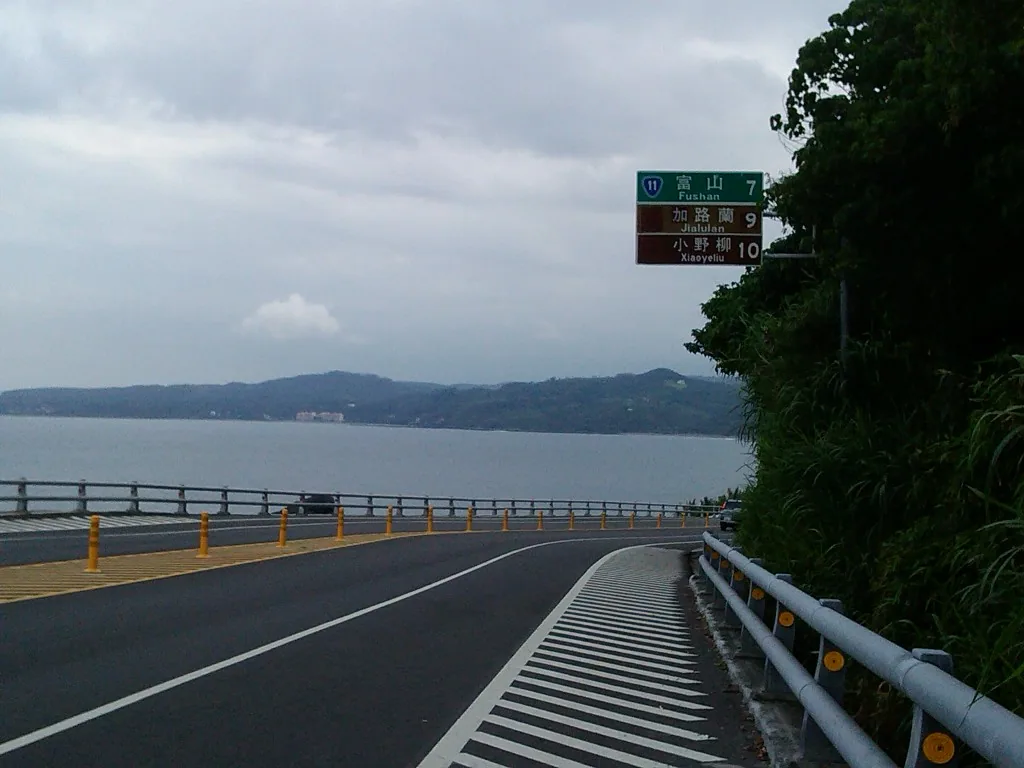
A view of the Pacific Ocean from Provincial Highway 11 in Donghe Township, Taitung County, 2018. In 2007, Paul Chiang and his wife found the Jinzun hillside beside this road; in 2008, they settled there and have lived there since. Photo: Aa7778273, CC BY-SA 4.0 via Wikimedia Commons.
💡 Did you know?
The stretch of coast beside the Jinzun studio is called “Pisirian” in the Amis language, meaning “the place for grazing sheep”: pi is the verb “to graze,” sili means “sheep,” and an means “place”25. Chiang’s first series from the Taitung period was called “Pisirian Dreams.” A New York painter who had spent thirty years painting black suddenly saw color erupt across his canvases after arriving at “the place for grazing sheep.”
Gould’s “Goldberg,” and the opened window
“These are colors I had never used before. In this lifetime I had never imagined I could paint works like these.” After moving to Taitung, Chiang described the change in his painting this way26.
After 2008, series such as “Pisirian Dreams,” “On Wings of Song,” “Jinzun,” and “Silver Lake” emerged one after another27. Blue, yellow, orange, and pink began appearing in the images. The paintings began to contain sea, song, and dream27. “The colors I use, the scale of the works, and the degree of freedom all came only after I moved to Taitung.”28
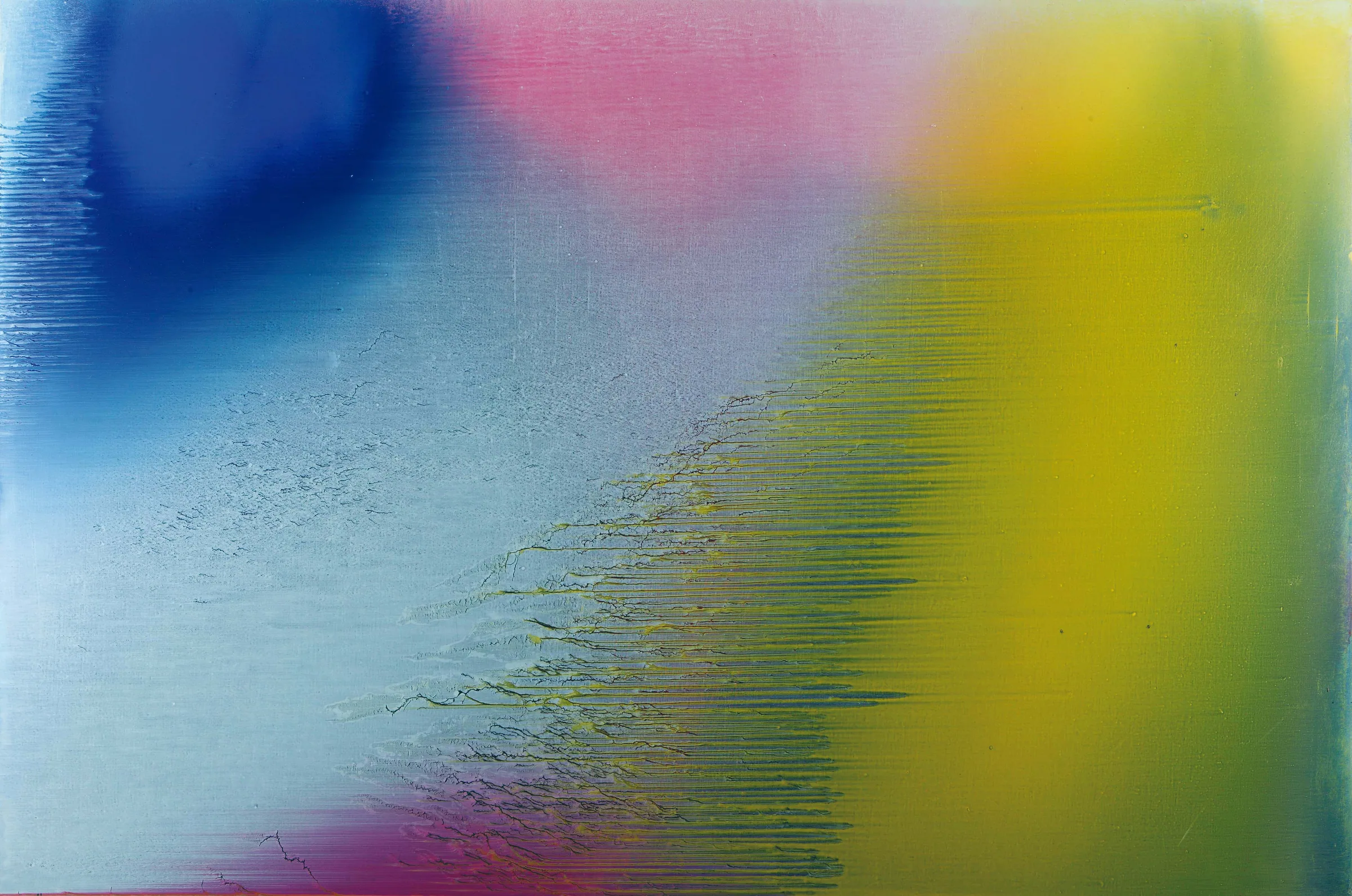
One work from Paul Chiang’s “Pisirian Dreams” series, 2010. Pisirian is the old Amis name for the coast beside the Jinzun studio. Source: Paul Chiang official artist website Pisirian Dreams period portfolio. Fair use editorial commentary.
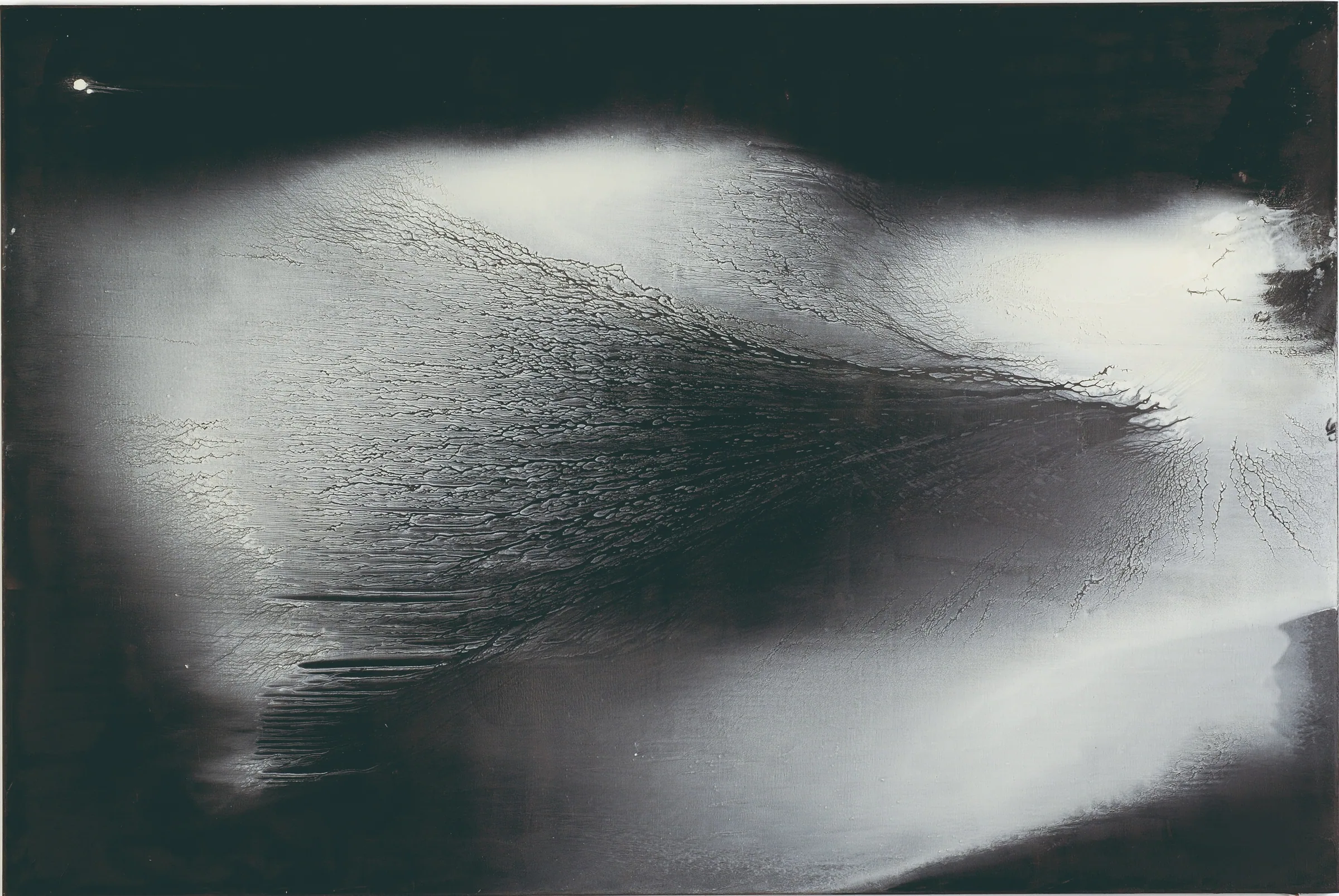
One work from Paul Chiang’s “Silver Lake” series, 2008. Source: Paul Chiang official artist website Silver Lake period portfolio. Fair use editorial commentary.
His daily life became this:
He wakes between four and five in the morning, makes a cup of coffee, plays Bach’s “Goldberg Variations” performed by Glenn Gould, and waits as the sun slowly climbs from behind Green Island, illuminating the Jinzun hillside and the Pacific Ocean.
“Coffee is essential, and then I must listen to Bach. I always play Gould’s performance of the ‘Goldberg Variations.’ From here I can see Green Island. The light slowly brightens, and beside me is Bach’s piano music. That state is truly hard to describe.”29
“After finishing the day’s work, I sit down and drink a cup of coffee, watching the sun on the horizon use its final warmth to turn the sea orange-red and golden.”30
From Bach in the morning to the afternoon sun, this has been every day after he turned eighty.
The window opened in his studio faces the Pacific.
In a 2025 interview with “Global Views Monthly: People,” he said something weighty: “Taitung gave me a second artistic life.”31
Second. Which means there was a first.
📝 Curator’s Note
The first artistic life was the forty-two years from 1965 to 2007: Paris, New York, Taipei. Thirty years of sealed windows. Thirty years searching for the light within. Thirty years without fame. The second artistic life is Taitung, from 2008 to the present. In these seventeen years, in his seventies and eighties, he has painted works better than the “best paintings” of his twenties, thirties, forties, and fifties combined. The fact itself is counterintuitive: artists usually reach their peak in their fifties or sixties, but Chiang’s peak arrived so late that even he was surprised. What is striking is that he knows why it was late. He used the word “gave”: “Taitung gave me.” For a painter to acknowledge that he was nourished into being by a piece of land is extremely rare in the traditional self-mythology of artists.
From one studio to an art center: Lin Yohan, Stanley Yen, and twelve years
In the spring of 2020, seventy-eight-year-old Chiang held his first retrospective at the Taipei Fine Arts Museum.
Guest curated by art critic and scholar Wang Chia-chi, “Paul Chiang: A Retrospective” presented nearly two hundred works, from the 1960s to the new “Jinzun” series of 202032. The exhibition ran from March 28 to June 28, during the COVID-19 pandemic, when many galleries and museums had suspended exhibitions and TFAM was also limiting visitor numbers. Even so, the exhibition drew around 125,000 visitors, setting a record for an artist’s solo exhibition during the pandemic32.
It was the first time Taiwan’s art world saw him whole.
Wang Chia-chi’s curatorial approach used reverse chronology: the exhibition moved from the colors of Jinzun back to the black of New York, and then further back to the newly graduated young man at Normal University in 196533. What viewers saw after walking that route was not “how a painter became stronger,” but “how a painter came home.”
After the retrospective, Stanley Yen, chair of the Alliance Cultural Foundation, approached him34.
Yen had already spent more than a decade in Taitung and had done several things: founded the Alliance Cultural Foundation, established Junyi School of Innovation, promoted education in Hualien and Taitung, and advanced Taiwan Connection chamber music. He believed art could change rural and remote places. He believed Hualien and Taitung should not merely be rest stops for tourists, but international cultural landmarks. Chiang had already lived in Jinzun for twelve years. He believed art could purify the human spirit, and that a painter should not only be a painter; he could become part of an art center35.
Together, the two men were more than one hundred years old.
They began doing one thing: building an art center in Jinzun to exhibit Chiang’s paintings, invite young artists for residencies, and give children in Taitung a place where they could grow up seeing contemporary art.
Chiang himself donated his original studio and the surrounding land for the art center36. The architect they chose was Lin Yohan, who had lived in Germany37. He was less famous, but he and Chiang shared a strong understanding on one point: architecture and nature should not oppress each other.
Lin and Chiang designed the art center together. They did not want a massive structure to dominate the hilltop, but divided the spaces into five smaller buildings scattered through the landscape like gravel[^37]:
- Gong Yuan Reception Center: the visitor entrance
- Zhu Hong Pavilion: short-term lodging for resident artists
- Cheng Han Gallery: the main exhibition hall
- Xin Yi Gallery: the second exhibition hall
- Qin Cheng Gallery: converted from Chiang’s former studio
In his design, Lin placed “light” first. In the galleries showing Chiang’s Paris and New York period works, the light is guided in a nearly sacred way; in the galleries showing his Taitung period works, the light is relaxed and expansive, carrying vivid colors and the rhythms of nature37. The light of sealed windows and the light of opened windows coexist in the same art center.
The art center did not apply for government subsidies; all funding came from Chiang himself and from entrepreneurs who support art38. At the opening, Stanley Yen said: “We did not want to compete for social resources, but hoped to use our own strength to fulfill a dream.”39
From conversation to opening, the process took twelve years40.
On March 15, 2025, the Paul Chiang Art Center officially opened to the public41. The inaugural exhibition was titled “Light, Beauty and Purification”41.
That day, Chiang was eighty-three.
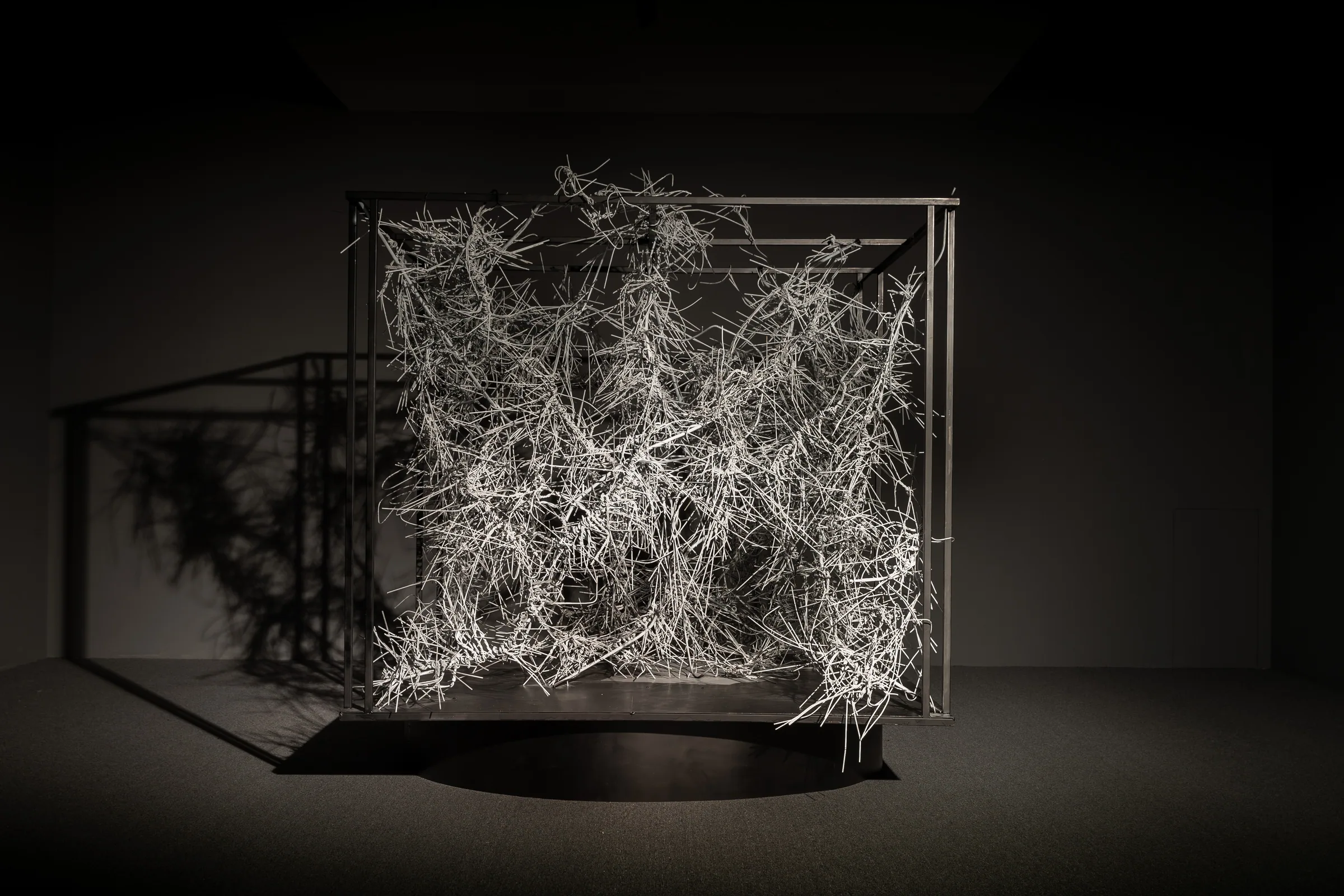
Paul Chiang’s “Purification Night” installation work. Source: Paul Chiang official artist website Jinzun / Purification Night portfolio. Fair use editorial commentary.
At eighty-three, what he opened was not only a window
Return to that winter day in 1967: Chiang was twenty-five, two years out of Normal University, flying to Paris with reverence for Giacometti, only to discover that his idol had died the previous year.
That day, his “heart felt hollowed out.”
From that day to the opening of the Jinzun art center on March 15, 2025: fifty-eight years.
What happened in between:
He lived in Paris, New York, and Taipei for forty-five years, and for thirty of those years he sealed all the windows to search for the light within. His first New York solo exhibition in 1975 did not sell a single painting. In 1982, he painted the “Notre-Dame de Paris” series in a Paris attic, the first time he felt qualified to be a painter. In 1994, he held his second solo exhibition in New York. In the mid-1990s, after his father fell, he returned to Taipei, lived in a leaking empty apartment on Jinzhou Street, went to Longshan Temple to look at temple columns, and painted the “Centennial Temple” series. In 1997, he held his first exhibition in Taiwan after thirty years away, but no one in Taiwan recognized him. In 2008, at sixty-five, he moved to Jinzun in Taitung and opened the windows for the first time. In 2020, at seventy-eight, he held a retrospective at the Taipei Fine Arts Museum, and Taiwan saw him for the first time.
In 2025, at eighty-three, the Jinzun art center he designed with Lin Yohan and that Stanley Yen helped him build opened.
It took him fifty-eight years to paint the best paintings of his life. It took the same fifty-eight years to make himself into a person willing to open a window.
In his later years, he has often been asked: What else do you want to do?
“I do not know how much longer I can paint, but what I most want to do now, and what I feel is most important, is to leave all the experience of my life to the next generation.”42
“I am willing to devote my whole life to creation until the very end. I believe that art can purify the human spirit.”35
Art can purify the human spirit.
None of the words in that sentence are difficult. What is difficult is that the person who says them must have lived through fifty-eight years, sealed windows for thirty years, gone home once, opened a window, watched a Pacific Ocean turn from black to blue to orange, and listened to Bach’s “Goldberg” a thousand times.
✦ “Taitung gave me a second artistic life.”
Four-thirty in the morning, Jinzun. Chiang makes a cup of coffee and lowers the needle. The opening low G of Gould’s performance of the “Goldberg Variations” sounds. The Pacific is still black; Green Island’s outline remains in the mist. The smell of coffee and Bach’s piano move together beside an unsealed window.
At eighty-three, he watches the sea slowly turn from black to blue.
It will be another hour before the sun climbs from behind Green Island.
Where this story traveled
Further Reading:
- The Development of Contemporary Sculpture in Taiwan — From Huang Tu-shui to Yuyu Yang to contemporary installation, a century-long path of three-dimensional creation in Taiwan
- Art Education and the Development of Academies in Taiwan — The training systems of the Department of Fine Arts at NTNU, National Taiwan Academy of Arts, and Tunghai University’s Department of Fine Arts, and Chiang’s academic background
- Taiwanese Curators and the Construction of Art and Culture — From Wang Chia-chi to contemporary curatorial practice, how retrospectives reshape an artist’s public image
- Contemporary Art — The broader context of Taiwan’s post-1960s abstract painting movement, the Fifth Moon Group, and the Eastern Painting Group
Image Sources
This article uses 7 licensed images, all cached in public/article-images/art/ to avoid hotlinking from source servers:
Environment / background photos (3 images, CC licensed):
- “Clouds over beautiful blue sea at Sanxiantai on 4 February 2014” (hero) — Photo: lwtt93 (Flickr), CC BY 2.0, source: Wikimedia Commons
- “Cathédrale Notre-Dame exterior, Paris” — Photo: Fernando Losada Rodríguez, CC BY-SA 4.0, source: Wikimedia Commons
- “Looking out over Beautiful Bay from the Dulan section of Provincial Highway 11” — Photo: Aa7778273, CC BY-SA 4.0, source: Wikimedia Commons
Paul Chiang’s works (4 images, artist’s official website, fair use editorial commentary):
- jiang-chien-baiNianMiao-1998.jpg (§The incense of Longshan Temple) — one work from the “Centennial Temple” series, 1998, from Paul Chiang official artist website — Fair use editorial commentary on Paul Chiang’s Centennial Temple series
- jiang-chien-bisirian-2010.jpg (§Gould’s “Goldberg”) — one work from the “Pisirian Dreams” series, 2010, from Paul Chiang official artist website — Fair use editorial commentary on the Pisirian Dreams series
- jiang-chien-silver-lake-2008.jpg (§Gould’s “Goldberg”) — one work from the “Silver Lake” series, 2008, from Paul Chiang official artist website — Fair use editorial commentary on the Silver Lake series
- jiang-chien-jinzun-purification-night.jpg (§From one studio to an art center) — “Purification Night” installation work, from Paul Chiang official artist website — Fair use editorial commentary on the inaugural exhibition “Light, Beauty and Purification” at the Paul Chiang Art Center 2025 opening
For more high-resolution works please visit Paul Chiang’s official artist website, the Paul Chiang Art Center, and the Taipei Fine Arts Museum 2020 retrospective page.
References
- Global Views Monthly: People / Paul Chiang: Sketching the Sudden Openness Within Solitude, Painting Until the Final Moment of Life — A 2022 profile interview in United Daily News’s “500 Times,” in which Chiang explains the motivation behind “painting with sealed windows” and records in full the evolution of his creative outlook from Paris and New York to Taitung.↩2
- Paul Chiang Art Center Official Website — The official information page of the Paul Chiang Art Center, recording the March 15, 2025 opening date, Lin Yohan’s co-design role, and the five-building structure.↩
- Paul Chiang Artist Website: Chronology — The complete chronology on Chiang’s official website, listing key dates including his birth in Taichung on February 1, 1942, entry into NTNU in 1960, graduation in 1965, and Paris in 1967.↩
- Interview with Contemporary Artist Paul Chiang: A Half-Century Search Through Life; Being Human Comes Before Art — An in-depth interview by The News Lens, recording Chiang’s family background: the loss of his mother in childhood, his father’s overseas business, and his childhood solace in classical music.↩
- Paul Chiang Artist Website: About — Chiang’s official artist biography, including his 1960 admission to the Department of Fine Arts at NTNU, his training, and creative turning points.↩
- 25th Distinguished Alumnus: Paul Chiang — A 2024 National Taiwan Normal University News page introducing its 25th Distinguished Alumnus, quoting Liao Chi-chun’s “This is the work of a genius” and Chen Hui-kun’s “You do not need to draw plaster casts anymore!” as assessments of Chiang during his student years.↩
- Paul Chiang, Wikipedia — The Wikipedia entry on Chiang, recording the January 1965 formation of the Era Painting Association with Yao Ching-chang and Ku Chung-kuang, and the September selection of his work for the São Paulo Biennial in Brazil.↩2
- Going to the Dreamland of Paris for Giacometti, Then Turning Toward Unknown New York After the Master’s Death — A 2020 in-depth review by Kaiak Asia Travel of the TFAM retrospective, recounting the turning point when Chiang arrived in Paris in 1967 and found that Giacometti (Alberto Giacometti, 1901-1966) had died the previous year.↩2
- Paul Chiang Artist Introduction — Taiwan Art Togo’s official artist biography, recording that Chiang and his wife Fan Hsiang-lan went to Paris in succession and moved together to New York after the 1968 Paris student movement.↩
- Paul Chiang Artist Website: About (same as ^6) — Chiang’s own account of feeling that his “heart felt hollowed out” when he arrived in Paris and discovered Giacometti had died.↩
- Paul Chiang Artist Website: Chronology (same as ^4) — The 1968 entry: “From May to June, student movements broke out at the University of Paris, followed by a nationwide general strike; moved on to New York.”↩
- Paul Chiang, Art Emperor — Art Emperor’s artist encyclopedia page, describing the style of Chiang’s early “sealed-window works” and themes such as “emptiness, solitude, hopelessness, death, a funeral in the distance.”↩2
- Paul Chiang Artist Website: Chronology (same as ^4) — The 1975 entry records Ivan Karp recommending Chiang for his first New York solo exhibition at Lamagna Gallery.↩2
- Paul Chiang, Art Emperor (same as ^13) — Records Chiang’s second New York solo exhibition in 1994 at O.K. Harris Gallery, founded by Ivan Karp (1969-2014), nineteen years after the first.↩
- Global Views Monthly: People / Paul Chiang (same as ^1) — Chiang’s advice to young artists.↩
- Taipei Fine Arts Museum “Paul Chiang: A Retrospective” Exhibition Description — The official TFAM exhibition page for the 2020 retrospective, recording details of Chiang’s creation of the “Notre-Dame de Paris” series in 1982 in an attic studio above a cinema in Paris’s Latin Quarter.↩2
- TFAM’s “Paul Chiang: A Retrospective” (same as ^2) — Chiang’s statement: “It was only after I painted the ‘Notre-Dame de Paris’ series that I felt I had achieved something, that I felt art was a path I could take, and that in this life I was qualified to be a painter.”↩
- Going to the Dreamland of Paris for Giacometti (same as ^9) — Kaiak Asia Travel’s interview records the mid-1990s turning point when Chiang began traveling back to Taipei because his father had fallen and been injured.↩
- TFAM’s “Paul Chiang: A Retrospective”: From a Window-Sealed Rental to a Bright Coastline — A 2020 in-depth report by Art Emperor on the TFAM retrospective, describing Chiang’s life in the leaking empty apartment on Jinzhou Street in Taipei and the birth of the “Centennial Temple” series.↩
- Classical Music and Temples as Inspiration: TFAM’s “Paul Chiang: A Retrospective” Opens — A 2020 ShoppingDesign report on the TFAM retrospective, recording how after returning to Taiwan in 1998 Chiang drew inspiration from Longshan Temple, Baoan Temple, Mazu temples, and other temples to create the “Centennial Temple” series.↩23
- Paul Chiang Artist Website: Chronology (same as ^4) — The 1997 entry records “March, solo exhibition at Eslite Gallery in Taipei; also the first solo exhibition after returning to Taiwan following thirty years away,” and the 1998 entry records “November, second solo exhibition at Eslite Gallery in Taipei.”↩2
- The Four Seasons of Jinzun, Taitung: Paul Chiang’s Art from Black and White to a Symphony of Colors — A 2020 in-depth report by the Alliance Cultural Foundation describing the scene in which Chiang and his wife drove along the East Coast in 2007 in search of Jinzun, and the site’s environment facing the Pacific Ocean with views toward Green Island.↩
- Global Views Monthly: People / Paul Chiang (same as ^1) — Chiang’s own account of the decisive intuition behind choosing Jinzun: “But we felt: this is the place.”↩
- Paul Chiang Artist Website: Chronology (same as ^4) — The 2007 entry: “In Jinzun, Donghe Township, Taitung County, cleared land and built a mountain-and-sea-facing residence and studio”; the 2008 entry: “The residence and studio in Jinzun, Taitung were completed; officially moved and settled there long-term.”↩2
- Pisirian Village, Taiwan Cultural Memory Bank — The official Taiwan Cultural Memory Bank page explaining that the Amis word Pisirian means “place for grazing sheep” (pi as the verb to graze, sili as sheep, an as place), located 700 meters northwest of Sanxiantai.↩
- Paul Chiang Artist Website: About (same as ^6) — Chiang’s description of the transformation in his use of color after moving to Taitung: “These are colors I had never used before. In this lifetime I had never imagined I could paint works like these.”↩
- Taitung Period Works — The Taitung-period portfolio on Chiang’s official artist website, including post-2008 series such as “Pisirian Dreams,” “On Wings of Song,” “Jinzun,” and “Silver Lake.”↩2
- The Four Seasons of Jinzun, Taitung (same as ^22) — An in-depth report by the Alliance Cultural Foundation in which Chiang describes the increase in creative freedom after moving to Taitung.↩
- The Passion of an 80-Year-Old 1: He Would Rather Work as a Laborer Than Compromise, and Hopes His Works Will Not Be Auctioned at Sotheby’s — A 2022 Mirror Media feature on passionate figures at eighty, in which Chiang describes his early-morning routine of drinking coffee and listening to Gould’s Bach “Goldberg Variations” in his Jinzun studio in Taitung.↩
- Paul Chiang Artist Website: About (same as ^6) — Chiang’s description of watching the sunset reflect on the sea at dusk in Jinzun.↩
- Paul Chiang Artist Website: About (same as ^6) — Chiang’s statement: “Taitung gave me a second artistic life.”↩
- 2020 Taipei Fine Arts Museum: Paul Chiang: A Retrospective — The Alliance Cultural Foundation’s record of the 2020 TFAM retrospective, which ran from March 28 to June 28 and drew approximately 125,000 visitors.↩2
- Classical Music and Temples as Inspiration (same as ^20) — Details on guest curator Wang Chia-chi’s reverse-chronological exhibition design.↩
- “Paul Chiang Art Center” Completed in Jinzun, Taitung, Officially Opening March 15 — A 2025 ARTouch report on the art center opening, recounting Chiang’s collaboration with Stanley Yen after the 2020 TFAM retrospective.↩
- 2020 Taipei Fine Arts Museum: Paul Chiang: A Retrospective (same as ^32) — Chiang’s statement: “I am willing to devote my whole life to creation until the very end. I believe that art can purify the human spirit.”↩2
- Taiwan’s Most Beautiful! Paul Chiang Art Center Opens for a Limited Time — A 2022 Business Today report from the warm-up period of the Paul Chiang Art Center, recording Chiang’s donation of his old studio and land.↩
- Architectural and Exhibition Highlights of the Paul Chiang Art Center in Taitung — A 2025 La Vie opening report detailing Lin Yohan and Chiang’s co-design, the design concept of five buildings that do not occupy the hilltop but scatter through the landscape like gravel, and the role of “light” as the narrative protagonist.↩2
- Taitung Also Has an International-Level Cultural Landmark! Paul Chiang and Stanley Yen Spend 12 Years Building an Art Center — A 2025 in-depth report by CommonWealth Magazine, noting that the Paul Chiang Art Center did not apply for government subsidies and was funded by Chiang and entrepreneurs who support art.↩
- Paul Chiang Art Center, “Taiwan’s Most Beautiful”! Stanley Yen Says Taitung Has Gained Something Precious — A March 2025 Business Today interview in which Yen says: “We did not want to compete for social resources, but hoped to use our own strength to fulfill a dream.”↩
- Taitung Also Has an International-Level Cultural Landmark (same as ^38) — A timeline record of the twelve years from Chiang and Yen’s first conversations to the completion of the art center.↩
- Light, Beauty and Purification: Inaugural Exhibition of the Paul Chiang Art Center — A 2025 Alliance Cultural Foundation report on the art center’s inaugural exhibition, running from March 15 to September 28, with admission by reservation.↩2
- Global Views Monthly: People / Paul Chiang (same as ^1) — Chiang’s late-life statement on his vision for passing art on to the next generation.↩