
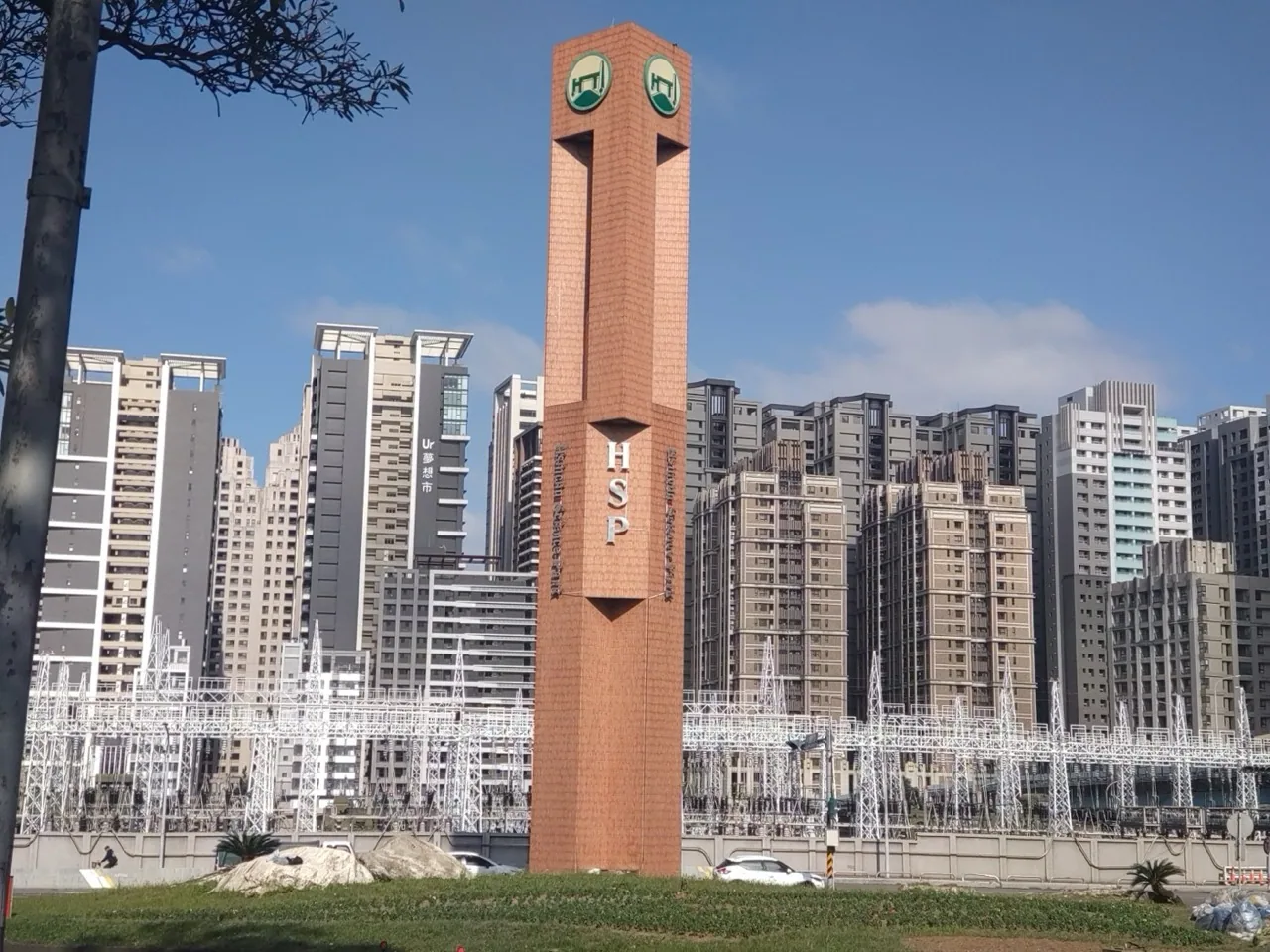
30-second overview: Released on June 13, 2025, A Chip Odyssey uses five years, more than 80 interviewees, and a production budget in the tens of millions of NT dollars to tell the story of Taiwan's semiconductor industry, from the 1974 breakfast meeting at Xiao Xinxin Soy Milk Shop to C. C. Wei walking into the White House in 20251. But its original title was Silicon Shield -- later changed on the advice that Taiwanese semiconductor companies with factories in China did not want to be imagined by the other side as a shield2. This epic, which declares the irreplaceability of Taiwan's semiconductor industry, had to sand down even the sharpest word in its title first; "silicon shield" therefore retreated into a single line of narration, and the title became A Chip Odyssey.
The Masked Man in the Last Row of a Xinyi District Cinema
On the evening of June 26, 2025, at a cinema in Taipei's Xinyi District, an elderly couple wearing masks bought their own tickets, entered the theater, and chose seats in the last row. No one noticed them until the lights came up at the end of the film3.
Ninety-four-year-old Morris Chang slowly walked down the aisle, raising both masked hands high to wave at the audience4. Scattered applause began, then became applause from the whole theater; he stood in front of the first row and acknowledged everyone4. Hsiao Chu-chen was there. She later described herself as "nervous and excited, and of course a little disappointed too"5. The disappointment came from two things: the founder of TSMC did not have a single head-on interview shot in the film; he chose to come before this epic about the company he had founded as an audience member, not as an interview subject.
Curator's Note
The most moving moments of a text often happen outside the text. There is no Morris Chang interview on the screen in A Chip Odyssey -- but the film's real climax is the founder himself standing up from the last row of the cinema when the end lights come on. The text overflows the screen; the absent protagonist stitches himself back in as an "audience member."
Hsiao Chu-chen once wrote on Facebook about why there was no Morris Chang interview: "after a year or two of effort, he was busy writing his book," and "TSMC's restrictions on filming were, of course, layers of protection"6. "Busy writing his book" refers to the second volume of the autobiography he spent seven years writing: covering 1964 to 2018, nearly 200,000 Chinese characters, published by CommonWealth Publishing on November 29, 20247, exactly 26 years after the first volume in 1998. The second volume had already been published by the end of 2024, but A Chip Odyssey was not released until the following June. In other words, he really was writing throughout the filming period; but by the time he was finally free to watch the film, it had already been edited, and the multi-camera pickup profile shots had already been placed in it. Hsiao used the technique of "multi-camera pickup shooting" to work around the absence of a head-on interview: at public events, she repeatedly set up cameras to capture Chang from the side, cutting footage of his appearances into the film so that he exists in it as someone "caught on camera" rather than "interviewed"4.
The Word That Was Removed
"Silicon Shield" was originally the film's title.
Hsiao Chu-chen first submitted the sponsorship proposal under the title Silicon Shield. After receiving the plan, the TSMC Education and Culture Foundation advised avoiding the term8 -- the reason being that no Taiwanese semiconductor company with factories in China would want to be imagined by the other side as a "shield"2. Hsiao accepted. The title became A Chip Odyssey in English and Mountain Makers in Chinese; "silicon shield" retreated into a line of narration and a background frame within the film.
Contested View
There was more than one voice within the same foundation opposing "silicon shield." Board member Chen Chien-pang put it more sharply in public: "I suggest that Taiwanese people stop using the term silicon shield," and "if people think economic stability can guarantee national security, just look at Ukraine and you will know that this statement does not hold"9. Chen was speaking about whether Taiwanese people should continue using the term at all; it had nothing to do with the film title. He used the metaphor of "branching incense from a temple" to describe TSMC building fabs in the United States. The name change therefore cannot be read so simply as "being silenced"; closer to the truth is that TSMC's side actively leaned toward removing the implication of a "shield." The act of weighing the term is itself where the contradiction lies.
The common reading treats this as self-censorship, but that reading comes too easily. So easily that it reverses cause and effect: censorship is usually "you are not allowed to say it," while this case was "think clearly first about what will happen if you say it." The former is suppression; the latter is political judgment -- when a country boasts of its strongest strategic card, it first weighs how the other side will hear it. The term "silicon shield" did not disappear from the film: it remains in narration and positioning within the film, and FPRI's Philadelphia screening and TECO circulars still introduced the film with "Silicon Shield"10. Only the title layer changed -- that is, the first thing viewers see on ticketing websites, posters, and subtitles.
The three Chinese characters for "mountain makers" therefore took on a new function: they shifted the focus from "who are we defending against" to "what are we doing." It was a different way of saying the same thing, with lower political costs. The act of weighing words is itself a miniature of Taiwan's condition: you do not need to be banned; you learn on your own to think once before every act of speech.
CNEX's official Chinese trailer for A Chip Odyssey. The Chinese title "Mountain Makers" lands in the trailer's final second; one second earlier, the narration is still speaking the sanded-off term "silicon shield."
Pulling the Camera Away From TSMC
If removing "silicon shield" was subtraction, "mountain makers" was addition.
Hsiao Chu-chen interviewed more than 80 industry elders over five years11, deliberately pulling the camera away from TSMC. The film's "first male lead" on screen is former ITRI president Shih Chin-tay -- one of the RCA seed team, later director of ITRI's demonstration fab, which produced Taiwan's first commercial IC chip, CIC000112. Hsiao described this structural choice herself: "You created history; I will preserve history"13.
- "The film's core narrative unfolds by following the steps of former ITRI president Shih Chin-tay. As a key member of the RCA project and later a leader at ITRI, his own experience is a microcosm of Taiwan's semiconductor industry."14
Alongside him are MediaTek's Tsai Ming-kai, UMC's Robert Tsao, TSMC's F. C. Tseng, Macronix's Miin Wu, Lin Ben-chien, Chiang Shang-yi, Simon Sze, RCA's Yang Ting-yuan -- a long chain of names across different companies, generations, and segments of the industry15. There are also unnamed first-generation women operators: "I was terrified of dropping and breaking a wafer, because even several months' salary might not be enough to pay for it," and "I bought my first car by selling eight shares of UMC stock"16. They are seen before the camera, but they are not given names.
Shih Chin-tay himself says in the film, "I was very moved. I kept thinking, don't cry"17. At the Hsinchu premiere in May, F. C. Tseng said something different: "In the past, as long as you worked hard, you would definitely succeed. What worries me is how we can continue progressing in the future while balancing a stable environment"18. The tone of the two lines is not quite the same: one looks back; the other warns. Hsiao places herself between the two -- "I did not want to make a film about 'success.' Instead, I hoped everyone would see adversity, and see the courage born of adversity, the courage to face hardship"19.
"Mountain makers" is therefore deliberately treated as plural. It is a whole layer of decentralized tribute.
But the media spotlight is unruly. Hsiao Bi-khim spoke after seeing the film in June; Tsai Ing-wen entered the cinema in August after the box office passed NT$25 million20; Morris Chang himself paid for a ticket on June 263 -- these images quickly contracted the focus back to Morris Chang alone. The title tells you there are many mountains and many mountain makers, yet the gravity of hero worship outside the frame keeps pulling the mountains in the same direction. The film itself is aware of this pull.
Not Taking One Person's Ten Million
CNEX co-founder Ben Tsiang and Chen Tien-shun, son of Yungtay Engineering founder and executive director of MOXA -- these are the film's two producers21. Chen set a financial discipline for the film: "One person's NT$10 million is not as good as ten people's NT$1 million; the latter brings greater influence and resonance"22.
The film cost tens of millions of NT dollars to shoot, and licensing archival footage -- including clips from the Hollywood film Fatal Attraction -- was expensive23. But Hsiao Chu-chen, Chen Tien-shun, and Ben Tsiang reached a consensus: to preserve creative autonomy, production funding would come from multiple donations and sponsorships rather than from a single corporation23. The editor was Chen Po-wen, working with the director for the fourth time; the score was by Lim Giong, the musician who left a sonic coordinate for Taiwanese cinema through the electronic scores of Millennium Mambo and Goodbye, Dragon Inn24.
Did You Know
The film did not originate from any official commission. In 2019, Ben Tsiang and Hsiao Chu-chen attended the memorial service for Hu Ding-hua, the overall director of the 1976 RCA technology transfer project, and confirmed the subject on the way back25. Hu did not live to see the film begin production; when it was released five years later, one of the top-five box-office records in Taiwan documentary history bore the mark of the decision planted at that memorial service.
But the discipline of independent creation has its own boundaries. In a June speech, Foreign Minister Lin Chia-lung publicly pledged that he was "willing to assist in producing multilingual versions so that overseas offices can promote it"26. The overseas tour has largely followed the axis of Taiwan's overseas offices (TECO) and TSMC fab sites: the FPRI screening in Philadelphia was sponsored by TECO NY and offered an English-dubbed version10; the UCLA screening was co-organized by TECO LA, and the event description directly said it would provide "a deeper understanding of the stories and spirit behind Taiwan's silicon shield and sacred mountain protecting the nation"27; at the May 21 screening at the Atlanta-Fulton Public Library, TECO director-general Lin Chu-en, Fulton County Chairman Robert Pitts, and Georgia State Representative Karen Lupton appeared together for the post-screening discussion28.
Independent funding, diplomatic channels for the tour -- no one has directly named this tension as criticism, but the tension is there. A documentary that deliberately refused funding from a single corporation ultimately found screening channels through the network of overseas offices; a funding structure dispersed for creative autonomy ultimately still caught the hand naturally extended by the state apparatus. These two facts do not contradict each other, but both are true at once. Hsiao responded this way to another kind of pressure: some people questioned whether she had taken money to make a propaganda film; others labeled the film as soon as political figures appeared in it29. Her answer was: "But I can only return to history and take responsibility for my own viewpoint. As long as there are people who gave and contributed in history, we will not cover them up or keep them from appearing for any reason"29.
From Nanyang Street to Arizona
The film's chronology begins in February 1974.
At No. 40 Nanyang Street in Taipei, a seven-person breakfast meeting took place at Xiao Xinxin Soy Milk Shop30 -- Vice Premier Fei Hua, Minister of Economic Affairs Sun Yun-suan, Minister of Transportation and Communications Kao Yu-shu, ITRI president Wang Chao-chen, Telecommunications Research Institute director Fang Hsien-chi and deputy director Kang Pao-huang, and RCA research director Pan Wen-yuan31. Hsiao Chu-chen spent more than seven months looking for this location: "Honestly, once I saw people, I was not afraid anymore"; "(I searched for) more than seven months, and it was condensed into these six or seven minutes in the film"; "Of course I felt stubborn and angry. I thought Taiwan was ridiculous. It has only been 50 years -- we were not even looking for a 200-year-old ruin!"32
Pan Wen-yuan then secluded himself for two weeks in Room 508 of the Grand Hotel and wrote the "ten-thousand-character memorandum" that promoted the semiconductor industry33. Hsiao rented the same room to film that two-week "historical site"33. By using the words "historical site," she was speaking of an archaeological attitude toward time -- for her, this country's contemporary history is like a trace that has been stepped thin, and one must squat down and look closely while the people are still here.
- Fifty years of industrial history is short, and Hsiao Chu-chen's steps in visiting those who lived it are shorter than history. But she knows that the seven months behind those few minutes of footage are both the film's thinnest place and its thickest place.
In 1976, ITRI and RCA of the United States signed an integrated-circuit technology-transfer licensing agreement34. The first 19 people sent to RCA for training were led by Yang Ting-yuan, who served both as overall team leader and New Jersey regional leader; six months later, the ITRI demonstration fab they operated reached a yield rate of 70 percent, far higher than the 50 percent at RCA, the parent plant for the technology transfer34. UMC was established in 1980; Morris Chang returned to Taiwan in 1985 to serve as ITRI president and proposed the VLSI project; in 1987, TSMC was founded with joint investment from the Executive Yuan Development Fund, Philips of the Netherlands, and private investors, pioneering the pure-play foundry model35. In the 1990s, Lin Ben-chien advanced immersion lithography. On March 3, 2025, C. C. Wei walked into the White House and announced at least another US$100 billion in investment in the United States to build five fabs1.
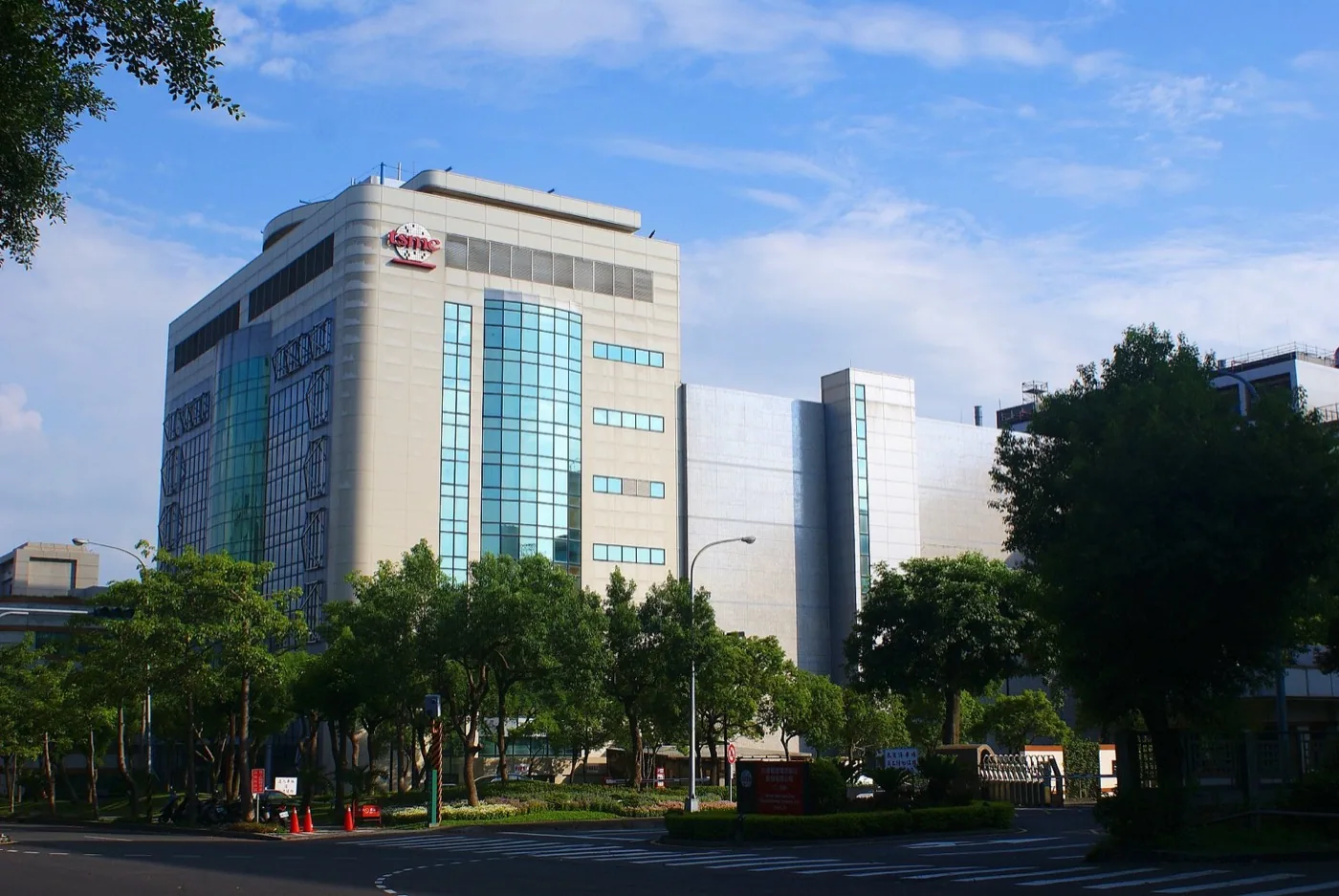
TSMC Fab 5 at Hsinchu Science Park, 2010. The film's timeline grows from the 1974 Xiao Xinxin Soy Milk Shop all the way to the cluster of fabs beside Guangfu Road that A Chip Odyssey repeatedly visits on screen. Photo: Peellden. CC BY-SA 3.0 via Wikimedia Commons.
This 50-year timeline is not narrated as PowerPoint bullet points. Hsiao lets it pass through concrete scenes: the breakfast meeting at Xiao Xinxin Soy Milk Shop, the ten-thousand-character memorandum in Room 508 at the Grand Hotel, the RCA seed team at the New Jersey plant, Hsinchu Science Park, and aerial shots of the Fab 21 construction site in Arizona. Every stop has a physical location one can see and step into.
Epic, Hymn, and Born of Adversity
An English review used a very precise adjective: unapologetically lionizes36.
In its November 2025 review, Cinema Escapist positioned A Chip Odyssey as a visual companion to Chris Miller's Chip War; it used the phrases unapologetically lionizes and all of the individuals featured...are framed as self-sacrificing to describe the film's heroizing treatment of Taiwan's semiconductor pioneers and its framing of self-sacrifice36. The review also suggested that non-Taiwanese viewers should read Chip War or listen to Acquired Podcast before watching the film, as that order might make more sense36.
The critique is sharp, but there is one piece it does not see.
"Unapologetically lionizes" captures the hymn-like rhythm on the film's surface, but it passes over another axis that Hsiao Chu-chen herself set in advance: "I did not want to make a film about 'success'"19. F. C. Tseng's line -- "In the past, as long as you worked hard, you would definitely succeed. What worries me is how we can continue progressing in the future while balancing a stable environment"18 -- the veterans in the film chased for 50 years by Sun Yun-suan's phrase "only success is permitted, failure is not," and the retired women operators afraid that a broken wafer would cost them their salaries[^16]: these are the underside of the hymn, the footprints beneath it. Hsiao describes the film as "not covering things up"29, meaning that good and bad both remain in the frame: the political pressure she encountered, the fact that the semiconductor plan back then did not undergo deliberation by public opinion, and the film's retention of concerns about Dutch disease37.
Academia has another, sharper track of critique. A 2025 paper, "Taiwan's 'Silicon Shield': Techno-authoritarian territories," uses techno-authoritarianism to describe this system -- law, transparency and democracy are compromised for national interest -- and organizes the costs under the silicon shield into three main axes: environmental degradation, food insecurity, and toxic industrial risks38. The paper does not mention A Chip Odyssey; it puts the silicon shield itself on the operating table. Reading this paper alongside the film makes clear the negative space that the screen does not address: labor costs, water use, electricity use, land, and Indigenous peoples.
From Hsinchu to Dresden
The international tour rolled on through 2026.
On March 17, 2026, there was a free screening at the Taiwan Cultural Center in Tokyo39. On April 9, at the First Members' Office Building of Japan's House of Representatives, Keiji Furuya, chair of the Japan-ROC Diet Members' Consultative Council; Tsai Ming-yaw, deputy representative of Taiwan's office in Japan; legislators Ho Hsin-chun and Kuo Kuo-wen; and more than 50 Japanese legislators and representatives sat in a parliamentary conference hall and watched the film40. Hsiao Chu-chen said in her remarks: "Taiwan-Japan relations are friendly, and Japan is also a very important partner. To be able to screen the film in such an important venue as Japan's parliament and introduce Taiwan's technological development journey through a documentary is highly meaningful"; "this was her first time walking into Japan's parliament, and she felt both happy and excited"; and the work had been screened in "about 15 countries"40.
Did You Know
National borders are also one of the film's silent contexts. In the same year it was screened at the First Members' Office Building of Japan's House of Representatives, A Chip Odyssey also entered a municipal library attended by a Georgia state legislator, TU Dresden with remarks by Taiwan's representative to Germany Shieh Jhy-wey, and George Washington University with Taiwan's ambassador to the United States Alexander Yui in attendance -- these venues happen to be the reverse image of Taiwan's map of diplomatic recognition. In the gaps of formal diplomatic relations, the densest tour has grown instead.
On May 20, the Foreign Policy Research Institute (FPRI) in Philadelphia held a screening sponsored by TECO NY, with an English-dubbed version and Shihoko Goto as moderator10. On May 21, the film screened at the central branch of the Atlanta-Fulton Public Library for about 300 people28. On May 23, it screened at George Washington University in Washington, D.C., with Taiwan's ambassador to the United States Alexander Yui in attendance and more than 150 participants41. On May 31, at the Northwest Film Forum at the University of Washington, producer Ben Tsiang took part in a Q&A, hosted by UW Taiwan Studies42.
CNEX's official English trailer, A Chip Odyssey Official Trailer. This is the version used for the international tour; from FPRI in Philadelphia and George Washington University to the ESMC screening in Dresden, this trailer is shown first.
June 6, Dresden, Germany.
This screening had a different meaning. Dresden is the site of ESMC, TSMC's European joint-venture fab with Bosch, Infineon, and NXP. The fab had just topped out in January 2026 and is expected to begin mass production at the end of 202743. In the venue sat 230 leaders from industry, government, and academia, along with young students, including TU Dresden president Ursula Staudinger, ESMC president Christian Koitzsch, Taiwan's representative to Germany Shieh Jhy-wey, and Silicon Saxony managing director Frank Boesenberg44. Koitzsch said during the post-screening discussion: "Taiwanese society demonstrates a high degree of inclusion and pragmatism, and after establishing a direction, it can swiftly put it into action." "This kind of capacity for action is precisely what Germany, currently constrained by bureaucracy, most needs to learn"44.
Curator's Note
A film whose title had to sand away the words "silicon shield" being screened at the site of the ESMC fab -- this is almost a visual metaphor for this country's geopolitical contradiction. Taiwan branches its semiconductor ecosystem into Saxony; the deity sent outward must return to the original temple to join the festival. And the original temple has to be careful even when saying it is a temple.
By then, Hsiao Chu-chen had already taken the film through 15 countries. She had not preset how far this tour would go -- "It screened in Tokyo on March 17, and in May it continued to Dresden," she said. She also offered a more intimate description: "After finishing this film, I also feel that I am a mountain maker. Even if I am a small grain of sand, I am still part of the mountain-making movement"45.
Two Documentaries, Two Channels
On June 13, 2025, Taiwanese cinemas released two documentaries at the same time. One was A Chip Odyssey, about semiconductors. The other was Invisible Nation, about democracy -- made over seven years by American director Vanessa Hope46.
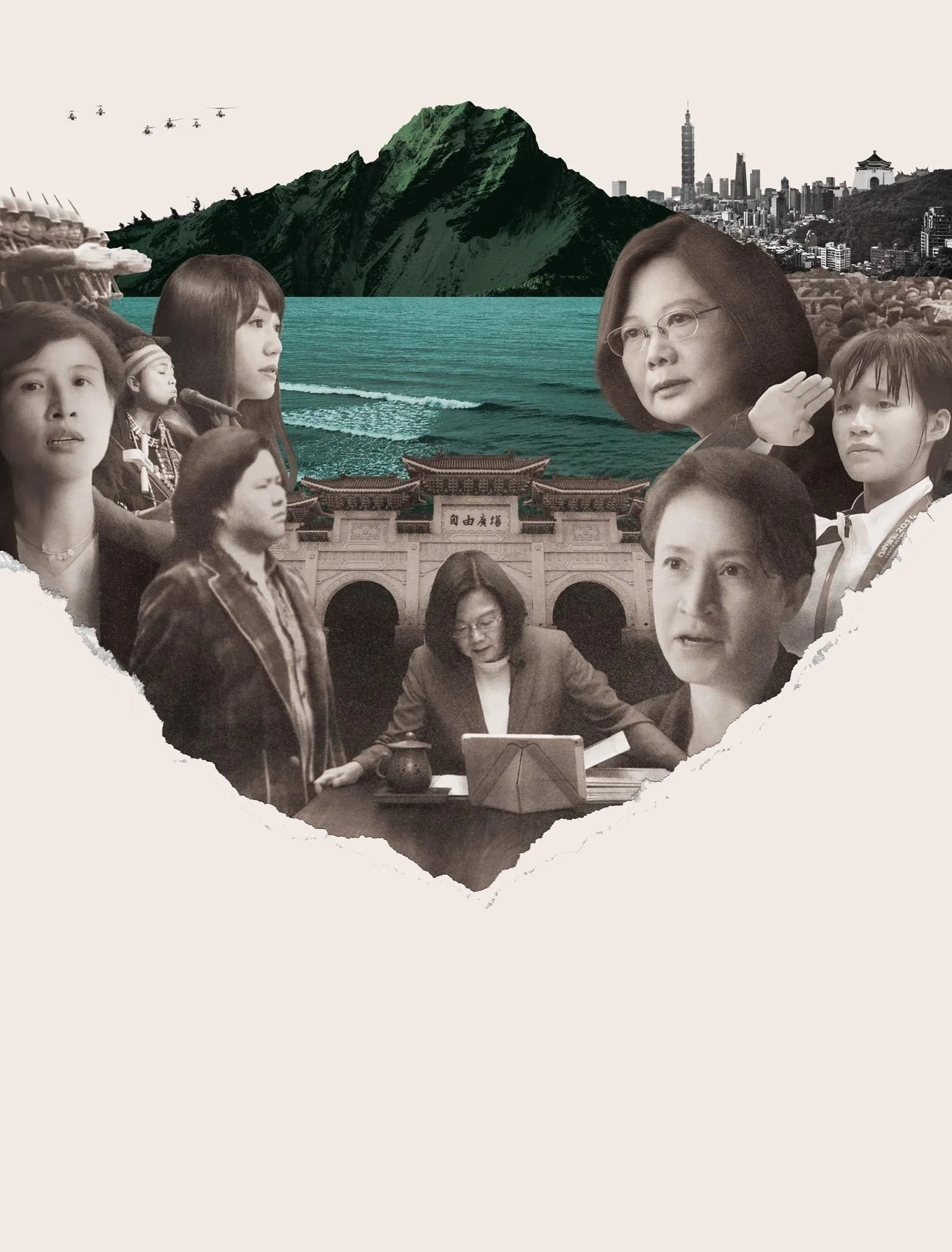
The Taiwan poster for Invisible Nation, released on the same day as A Chip Odyssey. One film uses semiconductors to explain why Taiwan is irreplaceable; the other uses democracy to explain why Taiwan deserves to be seen -- the same country, two narrative axes walking side by side into the cinema. Fair use editorial commentary on Invisible Nation (2023). Source: Swallow Wings Films / invisiblenation.net.
Both ultimately landed around NT$37 million at the box office: Invisible Nation at about NT$37.7 million and A Chip Odyssey at about NT$36 million, both entering the top five in Taiwan documentary box-office history47. Media called them the "two documentary heroes"46, but in fact they are two audio channels for the same condition: one explains, through technology, "why Taiwan is irreplaceable"; the other explains, through democracy, "why Taiwan deserves to be seen."
But both must speak through some form of mediation. A Chip Odyssey was made by a Taiwanese director and had to sand one word off its title; Invisible Nation was made by an American director and had to use an outsider's lens to reach the international stage46. The same country has to change its tone when boasting of itself and borrow an outsider's mouth when introducing itself.
After watching the film in June, Hsiao Bi-khim said: "More importantly, this film expounds a kind of belief, a force that supports us in enduring through adversity"48. "Taiwan's survival likewise allows only success, not failure. I believe that in the future, as long as everyone in their own professional field upholds the spirit of mountain making, does not fear difficulty, and continues forward, Taiwan will surely be able to ride the winds and waves of a rapidly changing international situation and stand firm"48. In August, when the box office passed NT$25 million, Tsai Ing-wen brought former vice president Chen Chien-jen and his wife to the theater: "I am very grateful for the making of this film. The director and producers helped us present the things that have happened over these years and the challenges we have faced in a clearly structured way. I want to say thank you to you!"49
Both speeches are dignified, and both fold the film into a national narrative frame. But the position the film itself chooses is actually much humbler than the speeches -- Hsiao Chu-chen once said: "After finishing this film, I also feel that I am a mountain maker. Even if I am a small grain of sand, I am still part of the mountain-making movement"45.
The Mountain Maker Is Not Really Present
The story returns to the evening of June 26, 2025, in a cinema in Xinyi District.
Ninety-four-year-old Morris Chang and his wife sat in the last row and watched the entire film. When the end lights came on, he slowly walked down the aisle wearing a mask, raised both hands high, waved to the audience, and acknowledged everyone4. Hsiao Chu-chen sat in the theater -- across five years, she had never managed to conduct a head-on interview with this core figure among the "mountain makers"; in the end, this core figure came before the film himself as an "audience member."
- What the epic did not capture, reality supplied.
The film's tension therefore circles back to its starting point: the person who was not interviewed, the word removed from the title, and the money deliberately dispersed -- these are the film's real spine. For a Taiwanese semiconductor epic, it is easy to say, "we built a mountain." What it truly says, the harder thing to put into words, is that while everyone is looking at this mountain, this country's mountain makers have learned how to leave history for themselves somewhere between what can be said and what cannot.
The box-office numbers that burned for a year, the overseas screenings one after another, the speeches by the vice president and former president, the praise from ESMC's president -- all of these will dissipate. But the figure who stood up from the last row that evening will remain. He did not walk onto the screen; he walked out from the audience.
From the moment this country learned, when boasting of itself, to first weigh how the other side would hear it, every mountain maker had already become an audience member -- watching how the mountain they built is spoken of by others, heard by others, and entered by others with a ticket in hand.
Further Reading:
- Semiconductor Industry -- The complete context of Taiwan's wafer foundry industry, from the 1974 breakfast meeting at Xiao Xinxin Soy Milk Shop to C. C. Wei walking into the White House in 2025; the timeline of A Chip Odyssey is grafted onto this axis.
- Morris Chang -- The protagonist who did not sit before the camera; the second volume he wrote himself was published only six months before the film's release.
- Invisible Nation -- The sister documentary released on the same day, in which American director Vanessa Hope cuts into another audio channel of "Taiwanese value" through the democratic path.
- Science Park Development -- Hsinchu Science Park as the physical stage for many of A Chip Odyssey's scenes, growing from a small city's gamble into a hub of the global supply chain.
- Tsai Ing-wen -- In August 2025, when the box office passed NT$25 million, the former president entered the theater after leaving office with former vice president Chen Chien-jen and his wife, writing a political backdrop for the film.
Image Sources
This article uses three public-domain / CC-licensed / fair use editorial commentary images, all cached under public/article-images/ to avoid hotlinking source servers:
- Main gate on Guangfu Road, Hsinchu Science Park -- Photo: T Gordon Cheng, 2025, CC BY-SA 4.0 via Wikimedia Commons
- TSMC Fab 5, Hsinchu -- Photo: Peellden, 2010, CC BY-SA 3.0 via Wikimedia Commons
- Taiwan poster for _Invisible Nation_ -- © Swallow Wings Films / Invisible Nation (2023), fair use editorial commentary for sister-documentary counterpoint narrative
References
- Central News Agency: TSMC to invest another US$100 billion in the United States, C. C. Wei announces at the White House -- Official first-hand report from March 3, 2025, on TSMC chairman C. C. Wei and U.S. President Trump jointly announcing at the White House in Washington that TSMC would invest at least another US$100 billion in Arizona and build five fabs.↩2
- Mirror Media: Decoding the sacred mountain protecting the nation, the context for renaming Mountain Makers -- The first article in Mirror Media's "Decoding the Sacred Mountain Protecting the Nation" series records that Hsiao Chu-chen first submitted the sponsorship proposal under the documentary title Silicon Shield, then changed the title to Mountain Makers on the advice of the TSMC Education and Culture Foundation to avoid having Taiwanese semiconductor companies with factories in China be treated as a shield against the other side.↩2
- Mirror News: Morris Chang appears at Xinyi District cinema to watch A Chip Odyssey -- June 27, 2025 report on Morris Chang and his wife buying their own tickets on June 26, wearing masks, and appearing without advance notice at a Taipei Xinyi District cinema to watch A Chip Odyssey, including descriptions of applause in the theater and interactions as they left.↩2
- Mirror News, same as above -- The same report describes in detail the 94-year-old Morris Chang "wearing a mask and raising both hands high, appearing without advance notice in the cinema," that "after he walked down, audience members began applauding, and then he acknowledged everyone," and that he "left the theater amid applause from the whole audience."↩234
- Global Views Monthly: Hsiao Chu-chen interview, "You created history; I will preserve history" -- A 2025 long-form interview with Hsiao Chu-chen in Global Views Monthly, recording her verbatim description of feeling "nervous and excited, and of course a little disappointed too" when Morris Chang watched the film.↩
- United Daily News: Hsiao Chu-chen explains on Facebook why Morris Chang was not interviewed -- Report on Hsiao Chu-chen personally responding on Facebook to why Morris Chang did not give a head-on interview, including the original wording "after a year or two of effort, he was busy writing his book" and "TSMC's restrictions on filming were, of course, layers of protection."↩
- Economic Daily News: Second volume of Morris Chang's autobiography, a 200,000-character work, published November 29 -- 2024 report on official information about the second volume of Morris Chang's autobiography, published by CommonWealth Publishing, including the 1964-2018 time span, nearly 200,000 Chinese characters, and the 26-year gap since the first volume in 1998.↩
- Mirror Media: Decoding the sacred mountain protecting the nation, context for changing the title from Silicon Shield -- Mirror Media's "Decoding the Sacred Mountain Protecting the Nation" series confirms that after the TSMC Education and Culture Foundation received the Silicon Shield sponsorship proposal, it recommended avoiding the term because Taiwanese semiconductor companies with factories in China did not want to be imagined by the other side as a shield.↩
- Economic Daily News: TSMC Education and Culture Foundation board member Chen Chien-pang says Taiwanese people should forget the term silicon shield -- Report on Chen Chien-pang publicly calling on Taiwanese people to stop using the term "silicon shield," including the original wording "if people think economic stability can guarantee national security, just look at Ukraine and you will know that this statement does not hold" and the "branching incense from a temple" metaphor for building fabs in the United States.↩
- FPRI: A Chip Odyssey Panel Discussion and Film Screening -- Foreign Policy Research Institute event page for the May 20, 2026 Philadelphia screening, sponsored by TECO NY, offering an English-dubbed version and moderated by Shihoko Goto; the event copy introduces the film with "Silicon Shield."↩23
- Business Next: A Chip Odyssey -- a documentary about Taiwan's semiconductor industry -- Business Next interview confirming the film's production specifications: five years of preparation, more than 80 industry elders interviewed, 106-minute runtime, and CNEX co-founder Ben Tsiang and MOXA executive director Chen Tien-shun serving as producers.↩
- Global Views Monthly, same as above -- Global Views interview confirming Shih Chin-tay as the on-screen "first male lead" of A Chip Odyssey, one of the RCA seed team, former director of the ITRI demonstration fab, and producer of Taiwan's first commercial IC chip, CIC0001.↩
- Global Views Monthly, same as above -- Hsiao Chu-chen's verbatim words to Shih Chin-tay in the interview: "You created history; I will preserve history."↩
- Business Next, same as above -- Business Next reporter's verbatim description of the film's structure, recording how the core narrative follows Shih Chin-tay's steps.↩
- CNEX official site: A Chip Odyssey work introduction -- CNEX official work page, first-hand official information listing the main interviewees and production team, including chief consultant Shih Chin-tay, composer Lim Giong, and producers Ben Tsiang and Chen Tien-shun.↩
- Mirror Media: Decoding the sacred mountain protecting the nation, the A Chip Odyssey that does not cover things up -- The sixth article in Mirror Media's "Decoding the Sacred Mountain Protecting the Nation" series reports that the film includes interview segments with first-generation retired women operators; "I was terrified of dropping and breaking a wafer, because even several months' salary might not be enough to pay for it" and "I bought my first car by selling eight shares of UMC stock" are specific statements from the film.↩
- Global Views Monthly, same as above -- Shih Chin-tay's verbatim words while watching or being interviewed: "I was very moved. I kept thinking, don't cry."↩
- Central News Agency: At A Chip Odyssey Hsinchu premiere, F. C. Tseng worries about how to keep progressing in the future -- May 11, 2025 report on the Hsinchu premiere of A Chip Odyssey, including former TSMC vice chairman F. C. Tseng's verbatim remarks: "In the past, as long as you worked hard, you would definitely succeed. What worries me is how we can continue progressing in the future while balancing a stable environment."↩2
- Global Views Monthly, same as above -- Hsiao Chu-chen's verbatim positioning of the documentary in the interview: "I did not want to make a film about 'success.' Instead, I hoped everyone would see adversity, and see the courage born of adversity, the courage to face hardship."↩2
- Mirror Media: Tsai Ing-wen watches the film as Taiwan box office passes NT$25 million -- August 8, 2025 report on former president Tsai Ing-wen entering a cinema for the first time after leaving office to watch A Chip Odyssey, accompanied by former vice president Chen Chien-jen and his wife, and mentioning the timeline of the box office passing NT$25 million after 50 days.↩
- INSIDE: TechOrange Podcast EP354, Ben Tsiang discusses CNEX and the origins of A Chip Odyssey -- INSIDE podcast interview with Ben Tsiang discussing his identity as a CNEX co-founder, his role as producer of Island in Between (Academy Award nominee for Best Documentary Short Film), and the production origins of A Chip Odyssey.↩
- Mirror Media: Decoding the sacred mountain protecting the nation, the funding structure of A Chip Odyssey -- The first article in Mirror Media's "Decoding the Sacred Mountain Protecting the Nation" series, including producer Chen Tien-shun's verbatim words: "One person's NT$10 million is not as good as ten people's NT$1 million; the latter brings greater influence and resonance."↩
- Mirror Media, same as above -- The same report records that the film cost tens of millions of NT dollars to shoot, that archival footage, including clips from Hollywood's Fatal Attraction, was expensive to license, and that multiple donations and sponsorships replaced single-corporation funding to preserve creative autonomy.↩2
- CNEX official site, same as above -- CNEX official work page confirming verbatim that the score was composed by Lim Giong and the editing was by Chen Po-wen, in his fourth collaboration with Hsiao Chu-chen.↩
- INSIDE, same as above -- INSIDE podcast interview with Ben Tsiang recording the origin of the production: in 2019, he and Hsiao Chu-chen attended the memorial service for Hu Ding-hua, the overall director of the 1976 RCA technology transfer project, confirmed the subject, and launched the project.↩
- Economic Daily News: Lin Chia-lung pledges to help A Chip Odyssey with multilingual versions -- Report on Foreign Minister Lin Chia-lung's June 2025 pledge that he was "willing to assist in producing multilingual versions so that overseas offices can promote it," and the context of paving the way for the later international tour.↩
- Taipei Economic and Cultural Office in Los Angeles: UCLA A Chip Odyssey screening -- Official activity page from the Taipei Economic and Cultural Office in Los Angeles, including the verbatim screening purpose of enabling "a deeper understanding of the stories and spirit behind Taiwan's silicon shield and sacred mountain protecting the nation."↩
- The Epoch Times: A Chip Odyssey screening at the Atlanta-Fulton Public Library -- Report on the May 21, 2026 screening at the central branch of the Atlanta-Fulton Public Library, including the attendance of Fulton County Chairman Robert Pitts and Georgia State Representative Karen Lupton, and details of about 300 seats being filled.↩2
- Mirror Media: Decoding the sacred mountain protecting the nation, Hsiao Chu-chen's political pressure and refusal to cover things up -- The sixth article in Mirror Media's "Decoding the Sacred Mountain Protecting the Nation" series, including Hsiao Chu-chen's verbatim statement: "But I can only return to history and take responsibility for my own viewpoint. As long as there are people who gave and contributed in history, we will not cover them up or keep them from appearing for any reason," along with the background of the political labeling pressure she encountered.↩23
- Mirror Media: Decoding the sacred mountain protecting the nation, confirming the address of Xiao Xinxin Soy Milk Shop -- The fourth article in Mirror Media's "Decoding the Sacred Mountain Protecting the Nation" series, confirming verbatim that Xiao Xinxin Soy Milk Shop was located at No. 40 Nanyang Street in Taipei, the seven-person breakfast meeting in 1974, and the historical-site research on Pan Wen-yuan secluding himself in Room 508 at the Grand Hotel to write the ten-thousand-character memorandum.↩
- Mirror Media, same as above -- The fourth article in Mirror Media's "Decoding the Sacred Mountain Protecting the Nation" series confirms verbatim the attendees at the February 1974 breakfast meeting at Xiao Xinxin Soy Milk Shop: Vice Premier Fei Hua, Minister of Economic Affairs Sun Yun-suan, Minister of Transportation and Communications Kao Yu-shu, ITRI president Wang Chao-chen, Telecommunications Research Institute director Fang Hsien-chi and deputy director Kang Pao-huang, and RCA research director Pan Wen-yuan.↩
- Global Views Monthly, same as above -- Hsiao Chu-chen's verbatim description in the interview of spending "more than seven months, and it was condensed into these six or seven minutes in the film" to find the historical site of Xiao Xinxin Soy Milk Shop.↩
- Mirror Media, same as above -- The same report records verbatim: "The team also found from Pan Wen-yuan's diary that the place where he secluded himself for two weeks to write the 'ten-thousand-character memorandum' promoting the semiconductor industry was Room 508 of the Grand Hotel. Hsiao Chu-chen also rented the room to film the 'historical site.'"↩2
- ITRI 50th Anniversary: Semiconductor history, 1976 RCA technology transfer -- First-hand official material from ITRI's 50th anniversary site, including verbatim information that "in 1976, ITRI and RCA of the United States signed an integrated-circuit technology-transfer licensing agreement," that "the first group sent to RCA for training totaled 19 people, with Yang Ting-yuan as overall team leader and New Jersey regional leader," and that "in the sixth month of operation, the yield reached 70 percent, far higher than the 50 percent at the technology-transfer parent plant, RCA."↩2
- ITRI 50th Anniversary, same as above -- First-hand official material from ITRI's 50th anniversary site recording the timeline in which Morris Chang returned to Taiwan in 1985 to serve as ITRI president and promote the VLSI project, and in which TSMC was founded in 1987 with joint investment from the Executive Yuan Development Fund, Philips of the Netherlands, and private investors.↩
- Cinema Escapist: Review of A Chip Odyssey -- November 2025 English-language review whose headline says the film "unapologetically lionizes" Taiwan's semiconductor pioneers, comments that "all of the individuals featured in A Chip Odyssey are framed as self-sacrificing," and positions the film as a visual companion to Chris Miller's Chip War.↩23
- CommonWealth Magazine: A Chip Odyssey reveals two sides of semiconductors -- Report on how the film, beyond its heroic narrative, preserves the two-sided revelation of the "silicon shield," including discussion of "Dutch disease" from Taiwan's excessive industrial concentration in semiconductors.↩
- Sage Journals: Taiwan's "Silicon Shield": Techno-authoritarian territories -- A 2025 academic paper by Wen-I Lin, Jung-Ying Chang, and Ayona Datta that uses a "techno-authoritarianism" framework to critique the "exceptional territories" under the silicon shield, discussing law, transparency, democracy, environmental degradation, food insecurity, and toxic industrial risks. Note: this paper does not directly discuss the film A Chip Odyssey.↩
- Peatix: Tokyo Taiwan Cultural Center A Chip Odyssey screening -- Event page for the free March 17, 2026 screening at the Taiwan Cultural Center in Tokyo, official event information hosted by the Taiwan Cultural Center of the Taiwan Economic and Cultural Representative Office in Japan.↩
- Central News Agency: A Chip Odyssey screens at Japan's House of Representatives, Keiji Furuya attends -- April 9, 2026 report on the screening of A Chip Odyssey at the First Members' Office Building of Japan's House of Representatives, including Hsiao Chu-chen's verbatim remarks that "Taiwan-Japan relations are friendly, and Japan is also a very important partner," "this was her first time walking into Japan's parliament, and she felt both happy and excited," and the film had screened in "about 15 countries."↩2
- Central News Agency: A Chip Odyssey screens at George Washington University, Alexander Yui attends -- Official first-hand report on the May 23, 2026 screening of A Chip Odyssey at George Washington University in Washington, D.C., co-hosted by organizations including the Taiwanese Chambers of Commerce of North America, attended by Taiwan's ambassador to the United States Alexander Yui, and joined by more than 150 participants from overseas Taiwanese, technology, and academic communities.↩
- UW Henry M. Jackson School: A Chip Odyssey Screening -- Event page for the May 31, 2026 Northwest Film Forum screening hosted by University of Washington Taiwan Studies, including a post-screening Q&A with producer Ben Tsiang.↩
- Radio Taiwan International, same as below -- Radio Taiwan International report confirming the progress of TSMC's European joint-venture fab ESMC in Dresden, with Bosch, Infineon, and NXP: topping out in January 2026 and expected mass production at the end of 2027.↩
- Radio Taiwan International: A Chip Odyssey Dresden screening, ESMC president's remarks -- Report on the June 6, 2026 Dresden screening of A Chip Odyssey, including ESMC president Christian Koitzsch's verbatim remarks that "Taiwanese society demonstrates a high degree of inclusion and pragmatism, and after establishing a direction, it can swiftly put it into action" and "This kind of capacity for action is precisely what Germany, currently constrained by bureaucracy, most needs to learn," along with the list of more than 230 leaders from industry, government, and academia, Taiwan's representative to Germany Shieh Jhy-wey, and TU Dresden president Ursula Staudinger.↩2
- Global Views Monthly, same as above -- Hsiao Chu-chen's verbatim statement in the interview: "After finishing this film, I also feel that I am a mountain maker. Even if I am a small grain of sand, I am still part of the mountain-making movement."↩2
- Wikipedia: Invisible Nation -- Documentary directed by American filmmaker Vanessa Hope, released in Taiwan on June 13, 2025, made over seven years, with a final box office of NT$37.71 million, ranking third in Taiwan documentary box-office history.↩23
- Wikipedia: List of Taiwan documentary box-office results -- Wikipedia's list of Taiwan documentary box-office results records Invisible Nation with a final box office of about NT$37.7 million in third place and A Chip Odyssey with a final box office of about NT$36.31 million in fifth place. Precise final figures are subject to announcements by the Taiwan Film and Audiovisual Institute's boxofficetw.tfai.org.tw.↩
- Central News Agency: Hsiao Bi-khim watches A Chip Odyssey, expounds a kind of belief -- June 23, 2025 report on Vice President Hsiao Bi-khim's verbatim remarks after watching A Chip Odyssey, including "More importantly, this film expounds a kind of belief, a force that supports us in enduring through adversity" and "Taiwan's survival likewise allows only success, not failure."↩2
- Mirror Media, same as above -- The same report records former president Tsai Ing-wen's verbatim remarks after watching the film on August 8, 2025: "I am very grateful for the making of this film. The director and producers helped us present the things that have happened over these years and the challenges we have faced in a clearly structured way. I want to say thank you to you!"↩