
30-Second Overview: Energy poverty is not simply "using too much electricity" or "not knowing how to conserve," but rather households lacking sufficient resources to obtain safe, affordable, and efficient energy services. For families living in old apartments, rooftop additions, poorly ventilated rooms, or using second-hand energy-intensive air conditioners, turning on the AC may cause bill pressure, while not turning it on may increase heat injury risk. Taiwan currently lacks a nationally consistent definition of energy poverty, but civil society surveys have found that assisted vulnerable households' energy expenditure as a share of disposable income is notably high.1 When high temperatures are treated by the government as a cross-sectoral risk, energy poverty can no longer be just conservation advocacy, but must become a public issue jointly addressed by housing, social welfare, public health, and climate adaptation.2
Energy Poverty Is Not "Not Conserving Enough"
Energy poverty is most easily misunderstood as households lacking conservation habits: use less AC, less hot water, turn off lights, and bills will drop. But this argument ignores the range of choices households actually have. A household living in a well-insulated home with shaded windows and high-efficiency AC, versus one living in a west-facing, leaky, poorly ventilated home with old appliances — even with identical indoor-outdoor temperatures — will not have the same energy needs.
Therefore, energy poverty contains at least three levels. The first is affordability: energy bills account for an excessive share of income, forcing households to choose among food, healthcare, transportation, and electricity. The second is energy service quality: a household may afford the bill but still live in overheated, overcooled, damp, or poorly ventilated spaces. The third is access capacity: renters, older adults living alone, persons with disabilities, or households without upfront capital may be unable to replace AC units, improve windows, or apply for complex subsidies.
The Taiwan Youth Climate Coalition, in compiling past research, noted that Taiwan has yet to form an accepted definition of energy poverty, and cited an ITRI–Child Welfare League Foundation cooperative survey indicating that assisted vulnerable households' energy expenditure averaged possibly 18% of disposable income. This figure should not be directly extrapolated to the national population, but it reminds us: if we judge whether a household is conserving energy only by total electricity consumption, we may misclassify households "forced into high expenditure because housing and equipment are too poor" as wasters.1 National Taiwan University research also places energy burden back into the interaction of housing conditions and vulnerable families, rather than attributing the problem solely to individual consumption choices.3
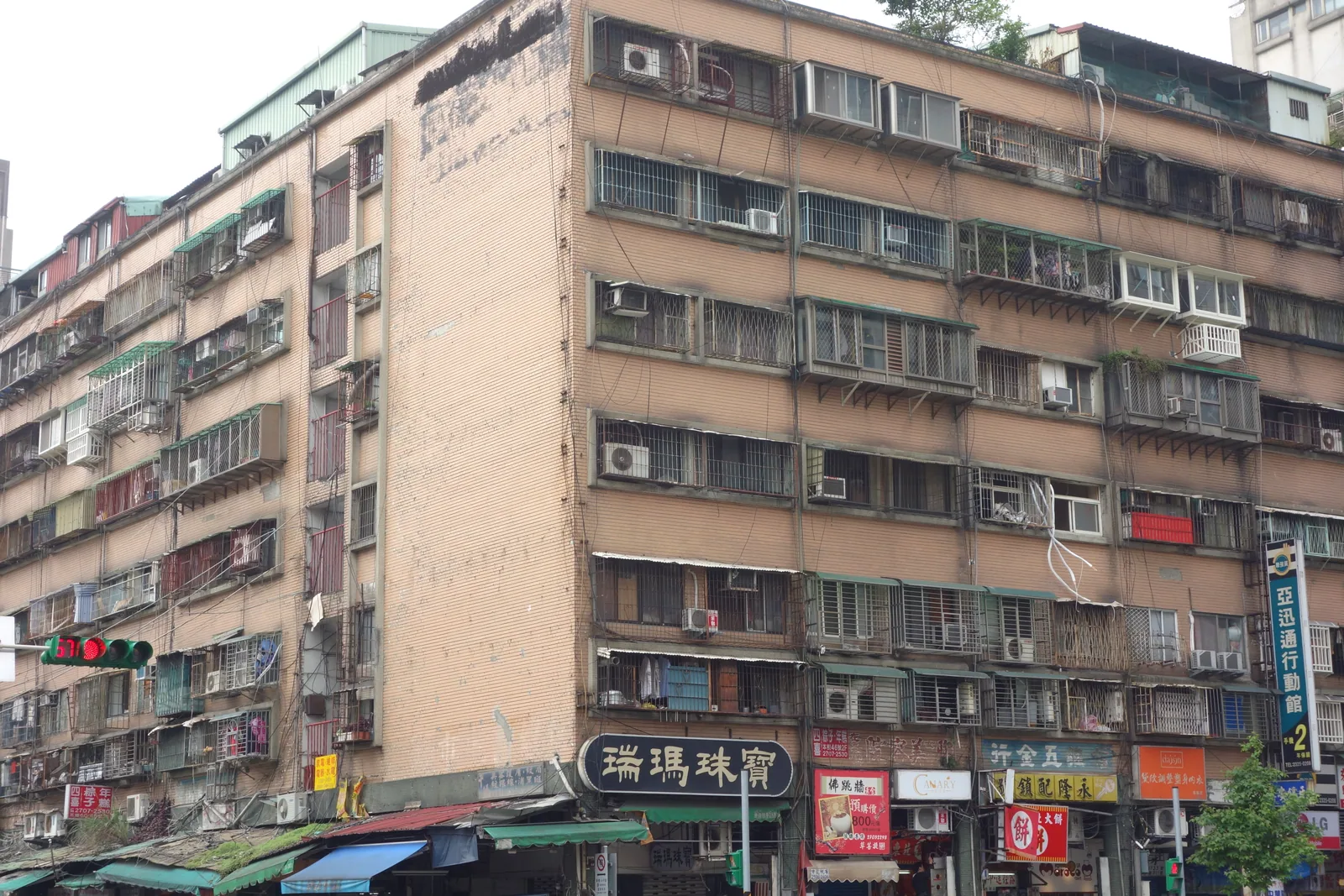
Figure 1: Old apartment in Da'an District, Taipei. Photo by Daderot, from Wikimedia Commons file page, CC0 1.0 public domain license. Image for residential environment illustration only, does not represent the economic status of the photographed residents.
Why Summer Energy Poverty Is Especially Dangerous
In the past, energy poverty policy and research often took winter heating as the primary imaginary. Taiwan faces a different seasonal risk: summer high temperatures. Vulnerable households may not "lack energy demand," but have demand yet dare not use it. When indoor temperatures rise, households may choose to shorten AC runtime, set AC temperatures too high, or only let children and older adults enter the air-conditioned room. These are adaptive behaviors under bill pressure, not mere consumption preferences.
The Health Promotion Administration explicitly reminds that when indoor air does not circulate and heat cannot dissipate, heat injury can also occur indoors. Older adults and children have weaker thermoregulation and should pay special attention to indoor high temperatures. Official recommendations include regular hydration, maintaining ventilation, and setting AC temperature at 26–27°C when in use.4 These recommendations are easier for households with AC, normal ventilation, and ability to pay electricity bills; for households living on top floors, in metal-sheet additions, or with windows that cannot open, building and equipment investment is needed to truly implement them.
High temperature risk is also cumulative. Buildings absorb heat during the day; if it cannot dissipate at night, older adults may be continuously exposed to high temperatures during sleep. Clogged AC filters and poor outdoor unit heat dissipation cause the same cooling effect to require more electricity. This means "heat safety" cannot be measured by temperature at a single moment, but must look at how a home absorbs, stores, and releases heat over a full day.
How an Old House Turns High Temperatures into High Bills
The energy predicament of old housing is usually not caused by a single piece of equipment. Insufficient wall and roof insulation increases AC load. Windows without shading let west-sun heat directly enter. Old AC units have lower efficiency and may not stably cool even after startup. Long-uncleaned filters and outdoor units increase equipment power consumption and failure risk. If a household lacks upfront capital, it may only be able to keep paying high operating costs without the capacity to improve the root causes of those costs.
Energy poverty thus connects to housing rights, rental rights, and building governance. Homeowners can decide whether to replace windows, add shading, or improve exterior walls. Renters may worry that retrofit costs cannot be recovered, or may lack permission to construct. If subsidies only go to equipment purchasers, they may exclude the households most in need of improvement but without housing decision-making power.
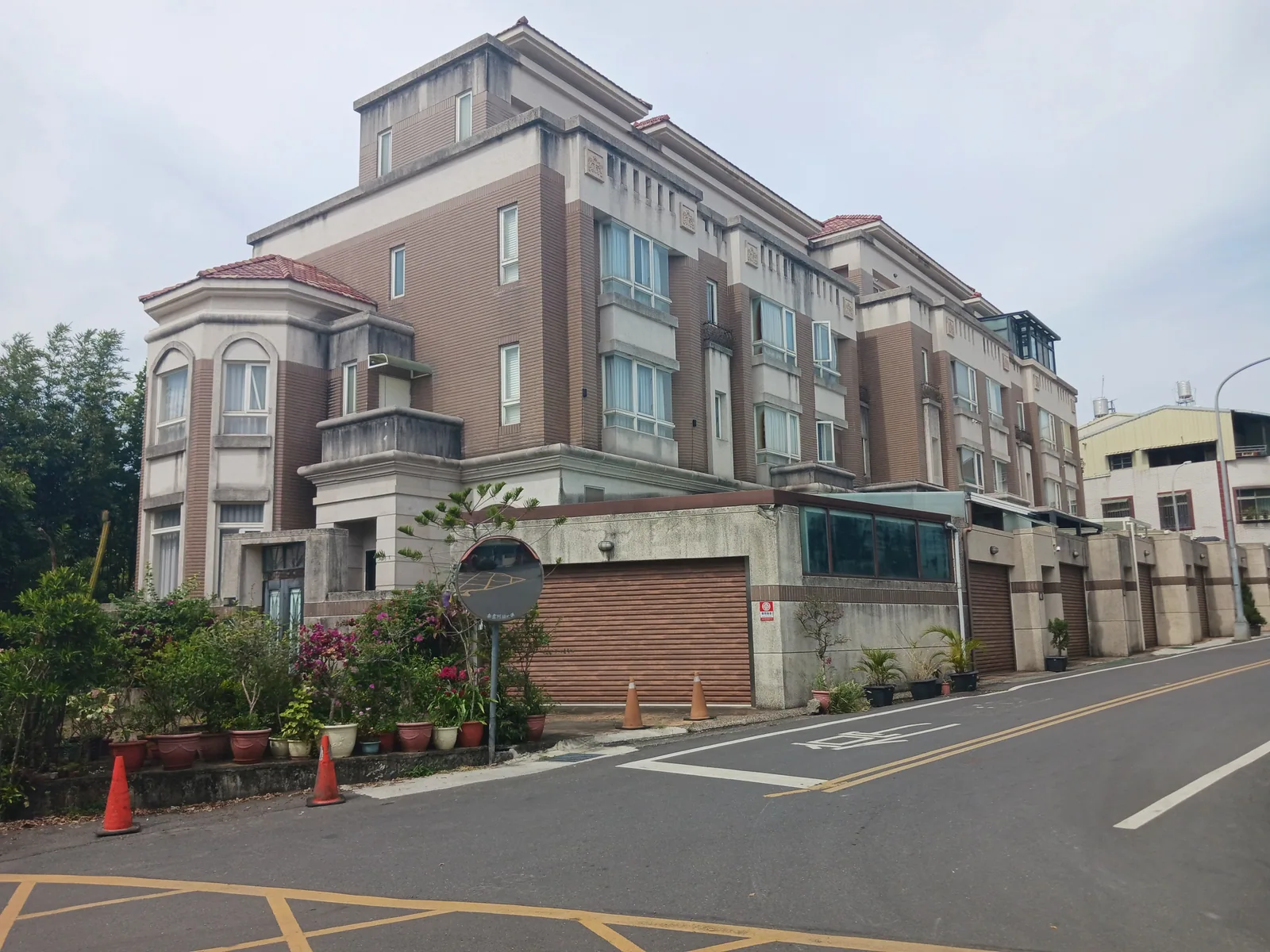
Figure 2: Community housing in Puli, Nantou. Photo by Saimmx, from Wikimedia Commons file page, CC0 1.0 public domain license. Image for community residential context illustration only, does not represent the economic status of the photographed residents.
Yilan County once promoted a residential energy-saving home insulation retrofit subsidy, bringing shading, insulating glass, roof and exterior wall insulation into the subsidy scope, reflecting that local governments have begun to view the housing envelope as part of energy saving and cooling. This scheme was a past-year plan and cannot be directly regarded as current nationwide policy, but it provides an important direction: improving thermal comfort does not necessarily start with buying a larger AC, but can start with reducing the building's heat absorption.5
Why Subsidies Do Not Necessarily Equal Accessibility
Central and local governments in recent years have had appliance replacement, residential energy-saving, and insulation subsidies. Policy design usually hopes to exchange limited budgets for electricity saving, carbon reduction, and household expenditure reduction, but a gap remains between "meeting qualifications" and "being able to complete the application."
Take the Bureau of Energy, Ministry of Economic Affairs' residential appliance subsidy application page as an example: applicants need to prepare identity documents, bank passbook, electricity bill or proof of electricity use, invoice, warranty card, and waste-4-in-1 recycling form. Subsidies are also subject to annual budget and review conditions.6 For those with stable bank accounts, able to pay for new appliances upfront and keep complete documents, this is a manageable process; for those without upfront funds, whose appliances belong to the landlord, or who rely on social workers and relatives for daily living, it may form a substantive threshold.
Taipei City's 2026 Residential Community Energy Generation, Storage, and Conservation Subsidy provides a more complete local case: besides community energy generation, storage, and glass insulation film, it also subsidizes Grade-1 efficiency refrigerators and AC replacement for registered low-income households. The announcement sets subsidy caps for refrigerators and ACs, showing local governments beginning to include vulnerable household equipment efficiency in net-zero and just transition.7 But such schemes still need to address three issues: whether subsidies cover renters, whether they can cover installation and removal costs, and when the next support will appear after the plan quota is filled or the deadline passes.
Taoyuan City's High-Temperature Sensitive Group Cooling and Energy-Saving Subsidy includes children aged 0–6 and adults 65+ as targets, subsidizing AC cleaning, glass insulation film, and old AC replacement. The significance of such policy is that it does not only identify need by low-income qualification, but also tries to use age and heat sensitivity to find households that may have been overlooked.8 However, to avoid welfare fragmentation, age, income, housing conditions, and health risk should still be able to reasonably connect across social welfare and health systems, rather than requiring households to repeatedly prove they deserve help.
From Conservation Advocacy to Residential Heat Safety
The core message of traditional conservation advocacy is "use a little less"; energy poverty policy must add another question: "How to get sufficient safety and comfort with less energy?" The two are not contradictory, but the policy tools differ.
| Policy Level | Traditional Conservation Approach | Residential Heat Safety Approach |
|---|---|---|
| Equipment | Encourage turning off lights, raising AC temperature | Replace high-energy AC, clean filters, improve outdoor unit heat dissipation |
| Building | Advocate shading and ventilation | Subsidize window shading, insulation film, roof and exterior wall insulation |
| Social Welfare | Distribute subsidies by low-income qualification | Social workers, health centers, and communities proactively identify high-temperature risk households |
| Information | Provide conservation knowledge | Provide simplified application, on-site energy diagnosis, and electricity improvement advice |
| Evaluation | Calculate kWh saved | Simultaneously measure heat injury, indoor temperature, bill burden, and quality of life |
The first shift is from ex-post subsidy to front-end diagnosis. Social workers, borough offices, home care workers, or health center personnel can record during visits whether a home is on the top floor, west-facing, unable to ventilate, has faulty AC, or old appliances. These data need not be used for labeling, but to arrange energy diagnosis and improvement sequence.
The second shift is from single-household equipment to housing and community scale. One high-efficiency AC can reduce electricity use, but cannot solve the whole building's roof heat absorption, stuffy common areas, or insufficient power capacity. If a community can jointly improve shading, roofs, elevators, and common-area electricity, it may be more efficient than requiring each household to invest individually.
The third shift is incorporating high temperatures into disaster prevention and health governance. The Ministry of Environment in 2025 first piloted a heat-resilience adaptation drill, using a scenario of Taipei–New Taipei exceeding 38°C for three consecutive days with a red alert, letting central agencies and local governments jointly handle priority-group care, livelihood energy, and community adaptation.2 This drill also pointed out that high temperatures are not yet fully incorporated into the Disaster Prevention and Protection Act as a natural disaster category, meaning institutions still need clarification: when to activate, who contacts older adults living alone, which locations become cooling centers, and how to maintain these services during power outages.
Energy Transition Cannot Shift Costs to the Most Vulnerable
Energy transition is often measured by carbon reduction, power supply stability, and industrial competitiveness, but if low-income households cannot maintain basic heat safety due to electricity prices, equipment, and housing conditions, transition may generate new inequality. This is not opposition to conservation or improving energy efficiency, but a demand that policy simultaneously answer "who gets improved first" and "who bears transition costs."
The Taiwan Youth Climate Coalition's energy poverty discussion has reminded that policy should combine objective and subjective indicators, not only look at electricity bill share or total consumption. Building conditions, equipment efficiency, population structure, thermal comfort, and well-being must also be included.1 Public Television Service's special report places energy burden into the actual life context of vulnerable families, explaining that energy transition lacking distributional design may let those already bearing higher housing and equipment costs bear new burdens.9 This approach is especially important for Taiwan, because a household may use more electricity due to fear of heat, or use abnormally little because it cannot afford the bill; neither can be judged by the bill alone.
Local governments' high-temperature drills and energy-saving subsidies provide policy experimentation space. The central government needs to establish common minimum standards, including vulnerable household heat safety indicators, barrier-free subsidy application design, responsibility allocation between renters and landlords, and privacy protection for energy diagnosis data. If each county and city rolls out its own short-term schemes, households may receive completely different protection due to different household registration, application timing, and information capacity.
An Actionable Taiwan Solution
Taiwan does not need to start by building a complex single energy poverty score, but can begin with an actionable service process. The central government has previously supported local energy-saving governance through the County-City Joint Residential-Commercial Power-Saving Plan, providing an institutional entry point to connect energy diagnosis, social welfare referral, and housing improvement on existing administrative networks.10 The first step is for local governments to establish a "Residential Heat Safety Referral": when social workers, health centers, fire departments, home care, or community organizations discover a household has high-temperature risk, they can refer for energy diagnosis, rather than only providing one-time electricity bill subsidies.
The second step is to divide improvement measures into three cost tiers. Low-cost includes AC cleaning, shading adjustment, ventilation improvement, and providing thermometers. Medium-cost includes insulation film, curtains, outdoor unit heat dissipation, and energy-saving appliances. High-cost includes roof, exterior wall, window, and community public space retrofits. This avoids requiring all households to buy expensive equipment, and lets limited budgets address the most dangerous housing first.
The third step is to expand effectiveness from "how much electricity saved" to "whether risk reduced." The government can track indoor high-temperature hours, heat injury medical visits, household energy expenditure burden, equipment failure rate, and resident subjective thermal comfort, rather than deciding project success solely by total electricity saved. Electricity saving down but heat injury up cannot be called success; household electricity slightly up but gaining safe cooling through high-efficiency equipment should not be simplified as failure.
This system also needs a minimum dataset usable by frontline local workers. Households need not be forced to disclose all consumption details, but at minimum should be able to record, with consent: housing floor, roof type, main heat sources, AC and refrigerator age, indoor ventilation, whether high-temperature-sensitive persons among residents, and whether recent quarter energy expenditure caused lifestyle trade-offs. Data should serve service improvement, be stored in tiers separate from social welfare case data, and let households know which data will be used by whom. If data are only used to judge "deserving or not deserving of subsidy," stigma increases; if data can arrange cleaning, repair, insulation, and referral, energy policy may become preventive public service.
Local governments can also establish a "Heat Safety Service Package": before a heat wave alert, community sites, home care, and health centers contact high-risk households. During the alert, provide walkable cooling locations, drinking water, charging, and emergency contact. After the alert, check whether AC, fans, windows, and electricity burden have new problems. Such service should not activate only after disaster or ER visits, but become routine summer community care work. For remote areas and outlying islands, the package should also include repair personnel, parts delivery, and power-outage backup, otherwise even the best subsidy may lose function when equipment fails.
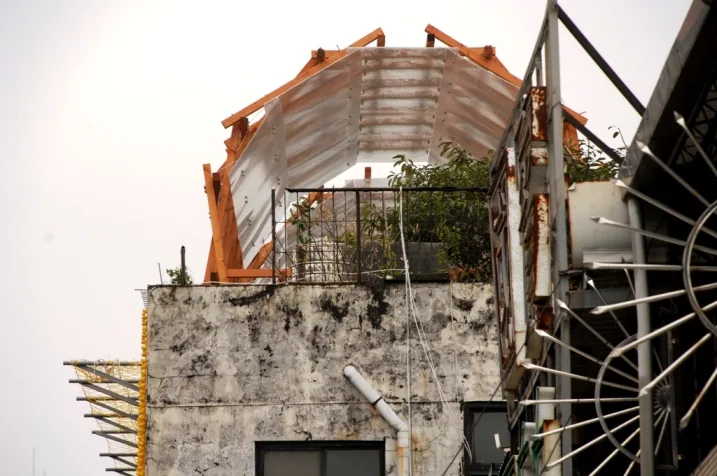
Figure 3: Illegal-addition housing envelope in Taipei. Photo by Movez, from Wikimedia Commons file page, CC0 1.0 public domain license. Image for built environment and governance issue illustration only, does not represent the energy use status of the photographed residents.
Conclusion: Making Safe Cooling a Basic Life Capability
The core of energy poverty is not demanding vulnerable households have more willpower, but acknowledging that inequality exists in housing conditions and energy services themselves. When old houses absorb heat, high-energy appliances, upfront purchase costs, subsidy application thresholds, and extreme heat overlap, one electricity bill simultaneously presents income, housing, health, and climate risk.
Taiwan has begun accumulating policy tools of local insulation subsidies, appliance replacement, high-temperature drills, and community energy saving. The next step is not adding another "please conserve electricity," but stringing these tools into a human-centered residential heat safety system: proactively finding at-risk households, first improving the most energy-intensive housing conditions, letting subsidies be usable by renters and those unable to prepay, and testing whether energy transition is fair with health and quality of life.
When a household can safely run the AC in high heat without choosing between health and bill, energy policy truly moves from "supply management" to public welfare.
Policy evaluation should also retain residents' voices. Local governments can ask before and after service: whether indoor cooling is easier, whether AC runtime shortened due to electricity bills decreased, whether equipment is more reliable, and whether residents know where to seek help during the next high-temperature alert. These feedbacks should not replace energy expenditure and health data, but stand alongside quantitative indicators, letting government know whether the project actually improved lives or only completed procurement and reimbursement. If subsidies give households equipment but do not solve rental restrictions, repair responsibility, and subsequent electricity bills, policy needs redesign, not blaming residents for not cooperating, with continuous public review and revision.
Further Reading
Further reading for this article can be pursued in three directions: the Health Promotion Administration's high-temperature heat injury prevention information, the Ministry of Environment's climate adaptation and energy policy materials, and local governments' published residential energy-saving and appliance replacement plans. When reading, distinguish among "policy announcements," "research findings," and "this article's recommendations" — three different evidence levels — to avoid misreading a single-year subsidy or case survey as a long-term national trend.
- Who Counts as Low-Wage — Another Ruler of Poverty: Minimum Wage Guarded Base Pay, Low Wage Moved into Year-End Bonus Column and Industries Without Bonuses
References
- Money to Have Choices? Energy Poverty in Taiwan — Taiwan Youth Climate Coalition compiles Taiwan's energy poverty definition, vulnerable household energy expenditure and energy-saving equipment differences, and discusses summer vulnerability and policy indicators.↩23
- Ministry of Environment First Pilots "Heat-Resilience Adaptation Countermeasure Drill" Strengthens Central-Local Preparedness Actions to Jointly Respond to Extreme Heat New Normal — Ministry of Environment explains 2025 cross-ministerial high-temperature drill, red-alert scenario, priority-group care, and community adaptation governance.↩2
- Taiwan Energy Poverty and Vulnerable Families' Energy-Saving Predicament — National Taiwan University Risk Society and Policy Research Center research page, discussing energy poverty, vulnerable household energy burden, and interaction with housing conditions.↩
- Watch Out for Older Adults and Children: Heat Injury Can Occur Indoors Too — Health Promotion Administration Teaches 3 Ways to Prevent Heat Injury — Health Promotion Administration explains indoor high-temperature causes, older adult and child risks, ventilation and AC use recommendations, and heat injury treatment methods.↩
- Yilan County 2020–2021 Residential Energy-Saving Home Insulation Retrofit Subsidy — Yilan County Environmental Protection Bureau announces past residential insulation subsidy, listing shading, insulating glass, roof and exterior wall improvement methods and subsidy conditions.↩
- Residential Appliance Replacement Energy-Saving Subsidy Online Application — Bureau of Energy, Ministry of Economic Affairs application page specifies identity, electricity bill, invoice, warranty card, and waste-4-in-1 recycling document requirements, as well as budget and non-duplicate subsidy restrictions.↩
- 2026 Taipei City Residential Community Energy Generation, Storage, and Conservation Subsidy Plan — Taipei City Government announces 2026 residential and community subsidy, covering insulation film, energy generation, storage, and low-income household Grade-1 efficiency refrigerator and AC replacement.↩
- Taoyuan City Government Subsidizes High-Temperature Sensitive Groups Cooling and Energy-Saving Measures — Taoyuan City Government explains local cooling and energy-saving subsidy targeting households with young children and older adults, including AC cleaning, insulation film, and old AC replacement.↩
- Energy Poverty: When Energy Transition Meets Social Justice — Public Television Service "Our Island" special report, using Taiwan cases to report on energy burden, vulnerable families, and social justice issues between energy-saving policies.↩
- County-City Joint Residential-Commercial Power-Saving Plan — Bureau of Energy, Ministry of Economic Affairs policy page, explaining central-local cooperation to promote residential-commercial power saving and local energy-saving governance institutional background.↩