
30-Second Overview: On August 15, 2017, a natural gas supply interruption caused rolling blackouts affecting 6.68 million users across 17 counties in Taiwan; on March 3, 2022, operational errors at the Xingda power plant affected over 5.49 million households. Neither incident was simply an issue of "insufficient generation," but rather how a single equipment failure, single procedure, or single hub fault could escalate into a national event. Taipower subsequently proposed a ten-year grid resilience plan involving NT$564.5 billion to shift from a centralized grid toward one that is decentralized, robust, and defensive. However, the real question remains: when a power outage occurs, who—the hospital, the community, the remote area, or the city—can restore life first?
Taiwan's Power Problem Is Not Just About Generation Capacity
A power outage is most easily understood as a supply-demand issue: whether there is enough electricity, how high the reserve capacity is, and which energy source should be increased. But when a light goes out, what disappears is not just illumination. Elevators stop, trapping people in high-rise buildings between floors; base stations and network equipment require backup power, or families cannot communicate; hospitals must rely on generators to maintain surgeries, ventilators, and refrigerated medicines; cold chains, water pumping, traffic signals, and continuous factory processes all have to decide how to sustain themselves in a short time.
Therefore, grid resilience is not about "never having an incident," but about the system's ability to limit the scope of failure, maintain critical services, quickly locate problems, and restore power after an accident. Taipower’s definition of resilience also includes the capability to respond to accidents and stabilize operations in a short period.1
This definition shifts the problem from "is there enough electricity?" to four more difficult questions: Is power concentrated in a few large nodes? Can failures be isolated? Does the local area have its own backup? Who decides the order of repair? If only generation capacity is increased without addressing transmission lines, substations, protective relays, operating procedures, and local distribution, the city may still lose widespread power from what appears to be a localized incident.
August 15: How One Valve Caused Half of Taiwan to Blackout
The August 15, 2017 (815) major power outage was a turning point where Taiwanese society widely recognized grid resilience issues. The Executive Yuan investigation pointed out that the sudden interruption of natural gas supply to the Datang power plant occurred because temporary jumper cables were used by an external vendor from CPC (China Petroleum Corporation) while replacing the power supply unit for a gas metering station, leading to a disconnection of controller power and communication. When the controller restarted and automatically shut down the electric valve, the gas supply was completely cut off.2
The core of the accident cannot be explained simply by "one person pressing the wrong button." The investigation also indicated that shared controllers for critical electric valves, insufficient dispersion of gas supply at Datang power plant, inadequate management changes, and risk assessment meant that a localized maintenance action had consequences far exceeding the site's scale. After the natural gas supply was cut off, the units shut down, system power capacity dropped sharply, ultimately causing rolling blackouts affecting 6.68 million users across 17 counties in Taiwan.3
The Center for Environmental Information noted that the impact of the 815 incident was not just the blackout itself; it reignited public debate regarding energy transition, gas dependency, grid stability, and backup capacity.3 This debate is often simplified into supporting or opposing a certain type of energy, but another lesson provided by 815 is: regardless of whether power comes from gas, coal, nuclear, or renewable energy, if key supply, control, and transmission/distribution systems lack multiple layers of protection, a single error can still be amplified.
The Executive Yuan investigation therefore proposed directions such as multi-layered protection, increasing fuel supply margins, strengthening the disaster resilience of gas supply and power systems, and improving independent power for public transportation and life support systems.2 These suggestions brought "energy security" out from inside the power plant fence to the entire city: critical services cannot just wait for the main grid to recover; they must also have their own safety boundaries.
March 3: More Than Just an Operational Error
The March 3, 2022 (303) power outage incident made "procedures" and "organizational culture" central topics in grid discussions. The Control Yuan investigation pointed out that during major maintenance of Unit 2 at the Xingda power plant, testing was conducted before the circuit breaker insulation gas had fully recharged, violating isolation switch and auxiliary procedures. This caused a flashover grounding fault on the 345kV busbar, subsequently leading to system splitting and widespread blackouts. The incident occurred that morning, with full power restored at 9:31 PM, affecting over 5.49 million households.4
A review report released by the Ministry of Economic Affairs also indicated that a single operational error could cause a major blackout due to insufficient multi-layered protection and the risk associated with the concentration of the southern grid at the Longxi ultra-high voltage substation. Improvement directions included establishing dedicated risk units, promoting decentralized grids, reviewing protective relays and switchgear systems, and strengthening professional training and external expert diagnosis.5
Here is a systemic issue that is easily overlooked: if every unit is only responsible for its local task, and no one can see "how one operational error crosses multiple defense lines," the system builds safety on the assumption that no one will ever make a mistake. True resilience, conversely, assumes that people will make mistakes, equipment will fail, and weather conditions will worsen; therefore, errors must have an opportunity to be discovered and isolated, not allowed to penetrate the entire system directly.
After 303, Taiwanese society's expectations of power outages became more precise. The public not only asked "why did it go out?" but also "why does one power plant's incident affect so many people," "why wasn't the same error stopped at a previous layer," and "why was the restoration order and information release unclear?" These questions are essentially demanding that the grid be a comprehensible, governable public system.
From Centralized Efficiency to Decentralized Resilience
Taiwan's past grid structure has its historical reasons. Taiwan is densely populated with limited space for power plants, and electricity demand is concentrated in urban and industrial areas; thus, the grid gradually formed a centralized structure connecting large power plants, north-south transmission lines, and a few hub substations.1
Centralization can bring efficiency and allow different regions to support each other; the problem is that when hubs become bottlenecks, efficiency can turn into a shared vulnerability. Both the Executive Yuan and Taipower's solutions after the 303 incident listed "reducing centralized risk" as core. The grid resilience construction plan announced in 2022 plans NT$564.5 billion over ten years, with three main axes aiming for decentralization, continuous robustness, and enhanced defense.1
Decentralization is not just about building more power plants. The plan includes direct supply from power plants to science parks and industrial parks, distributed green energy supply, increasing delivery nodes, grouping hub substations, expanding energy storage, internalizing substation functions, and real-time dynamic defense.1 Its logic is to bring power closer to the consumption center, making fault points easier to isolate, so that an incident at one main line or one substation does not force the entire region to wait.
Taipower stated that the grid resilience plan will build 28 substations and promote some internalizing of substation functions; simultaneously, through green energy storage, distributed energy is not just a source of generation but also a tool for regional supply stability.6 This direction is intertwined with energy transition: while renewables have decentralized potential, wind and sunlight are variable. Without storage, dispatching, and distribution capabilities, decentralized power does not automatically equal decentralized resilience.
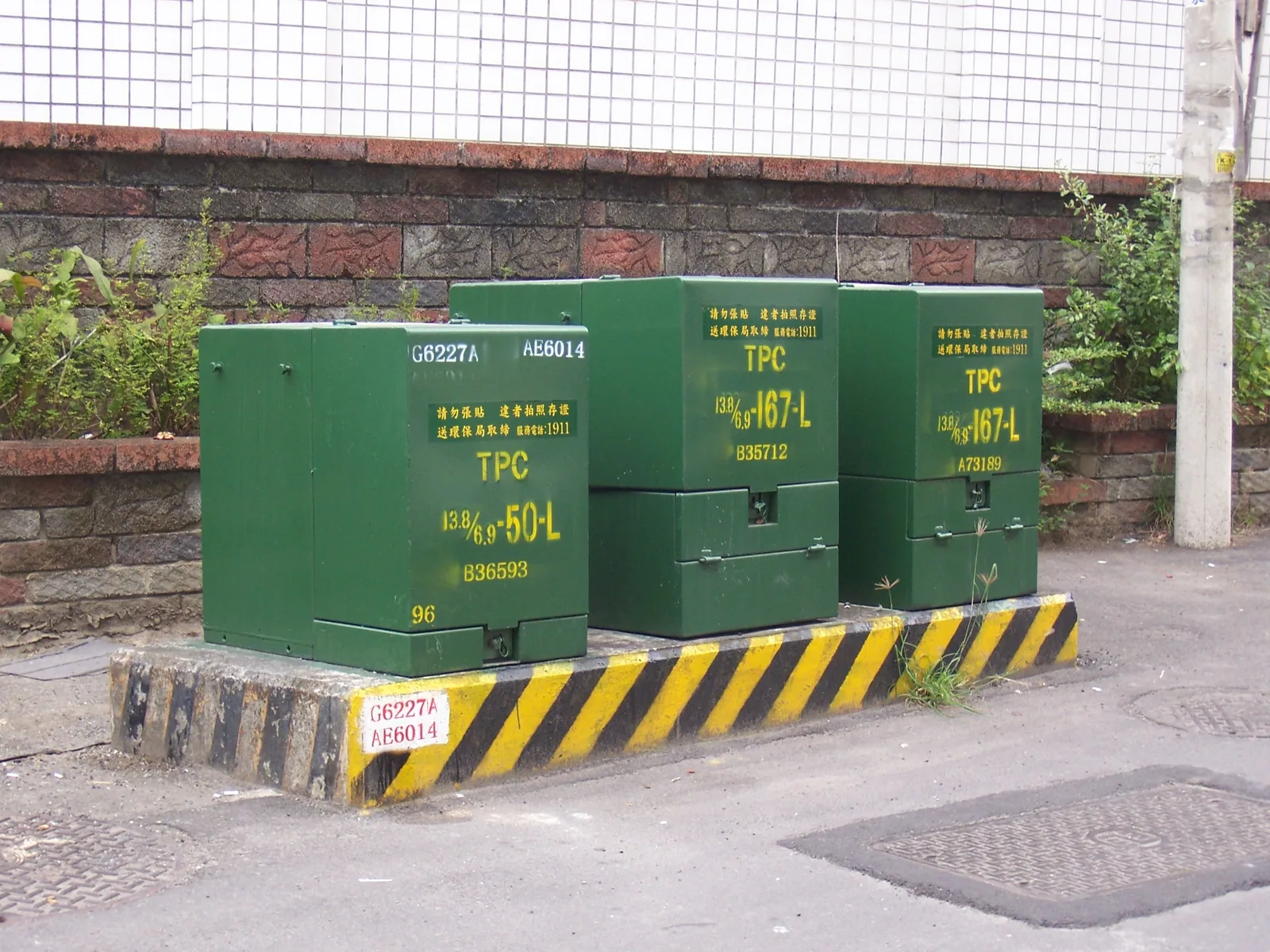
Figure 1: Distribution resilience occurs not only at large power plants and ultra-high voltage substations but also at transformers and feeders within neighborhoods. Photo by Yoxem, from Wikimedia Commons file page, licensed under Creative Commons Attribution-ShareAlike.
The Distribution Grid: Where Power Outages Most Frequently Occur
While national blackouts are the most noticeable, they are not the only form of power outage residents encounter daily. Data compiled by the Office of Economic Advisors at the Executive Yuan shows that distribution accidents caused 6,115 outages in 2023, down from 21,019 times in 2012—a seventy percent decrease over ten years.7
These figures indicate that grid resilience also happens on streets, utility poles, transformers, and feeders. There are over ten thousand feeders, about 410,000 kilometers of lines, 1.55 million switches, 1.48 million transformers, and 3.2 million utility poles across Taiwan; over half of the accidents involve external forces and environmental factors such as animals, trees, lightning strikes, salt damage, construction, vehicles, or user equipment.7
Therefore, resilience is not just an ultra-high voltage substation engineering matter. Feeder automation can detect and isolate fault sections during an accident to restore normal lines first; undergrounding disaster-resistant lines can reduce outages caused by contact with trees, strong winds, and foreign objects.7 But engineering also involves choices: what level of priority should be given to densely populated or medically/transportation-critical areas? Do remote area lines, which are long and far from repair points, require a different evaluation method? Undergrounding all lines may not be the only answer; the key is to allocate limited resources where they can best reduce public risk.
Microgrids: Bringing "Recovery" Back to the Local Level
The main grid remains the primary foundation of life in Taiwan, but during a disaster, whether the local area can temporarily operate independently from the main grid may determine if shelters, communication, and basic lighting can be maintained first. A Taipower monthly report mentioned that disaster-resilient microgrids capable of island operation, integrating solar power, energy storage, and energy management systems, have been established in areas like Wulai, Fushan, Alishan (Chiayi), mountainous regions of Pingtung, and outlying islands.8
The "island operation" of a microgrid is not about making an entire township permanently self-sufficient; it is about disconnecting the local power system when the external grid is damaged to prioritize maintaining shelters, communication, lighting, and necessary equipment. This capability is particularly important for remote areas, mountainous regions, and outlying islands because repair personnel and equipment take longer to reach if main lines or roads are damaged.
Taipower has also collaborated with universities to promote microgrids, bringing technology into education, demonstration, and community support fields.8 However, a microgrid is not completed just by installing solar panels and batteries. It requires someone to be responsible for startup, defining which equipment is prioritized, how long fuel and batteries can last, how to operate when communication is lost, and how to safely reconnect with the main grid after the disaster.
These issues make the microgrid both an engineering and a governance matter. If there is only equipment but no local maintainer, it may fail to start during an accident; if only a few organizations know how to operate it, the community cannot treat it as a shared emergency infrastructure. True local resilience must integrate technology, training, responsibility, and drills.
Resilience Must Be Measurable, Not Just Declared
Grid investment is often presented in engineering quantities, such as how many substations are added, how many lines are undergrounded, or how much energy storage equipment is installed; but engineering quantity does not equal resident safety during an accident. A more complete assessment should place "the probability of failure," "the scope of failure propagation," "the duration critical services can be sustained," and "whether information can be understood" into the same set of indicators.17
| Resilience Aspect | Observable Indicators | Governance Questions That Must Be Answered |
|---|---|---|
| Prevention | Equipment failure rate, outages from tree/lightning strikes, backup level of critical nodes | Which risks deserve priority investment, and who is responsible for regularly updating the risk list? |
| Isolation | Fault localization time, feeder automation coverage, zonal supply capability | Can a local fault be limited to the smallest area, or will it affect the entire region? |
| Sustaining | Backup hours for hospitals, water supply, communication, and shelters | Which services must operate before the main grid recovers, and what is the minimum standard? |
| Recovery | Average restoration time, disparity in recovery between remote areas and islands, information update frequency | Is the restoration order transparent, and are vulnerable residents receiving substantive assistance? |
| Learning | Public disclosure of accident reports, drill frequency, completion rate of improvements | Has the lesson from one outage truly changed the procedures and budget for the next one? |
Such indicators also prevent "averages from masking differences." A decrease in national average power outage time does not mean every community is equally safe; a large hospital having a generator does not mean surrounding long-term care facilities, elevator buildings, or small businesses can last as long. The goal of resilience governance should be to fill the gaps that are most likely to cause life danger and public service interruption, rather than just pursuing a beautiful overall average.
Moving from Equipment Resilience to Systemic Resilience
Hardware upgrades in the grid must occur alongside systemic observability. Strengthening substations, undergrounding lines, and building energy storage can reduce the probability of failure, but they cannot alone answer three governance questions after an accident: Who has the authority to decide restoration priority? Who must disclose accident information? Who is responsible for turning experience into procedures and rules for the next time?
The common lesson from 815 and 303 is that accidents often cross multiple organizational boundaries. Gas suppliers, power plant operators, transmission dispatchers, local governments, and public service organizations may each complete their local tasks, but no single unit can see the cross-system risk in advance. Therefore, resilience requires cross-agency situational awareness, clear escalation protocols, traceable change management, and an investigation method that checks not only for individual responsibility after an accident but also for systemic defenses.
For the public, transparency is not complete with releasing a technical report. Public information during a power outage should at least state the affected area, the degree of certainty regarding the current cause, the time of the next update, locations where water and charging can be obtained, and assistance available to the elderly, people with disabilities, medical dependents, and residents in remote areas. If information is only circulated using professional jargon, even if power is restored quickly, society may still lose trust due to uncertainty.
Grid Resilience Also Becomes a Social Distribution Issue
The impact of a power outage is never equal. The way those living in buildings with elevators experience an outage differs from those in old apartments without elevators; people who work from home, those needing refrigerated medicine, those relying on electric medical equipment, and small shops running cold chains do not all have the same backup capacity. Large corporations may have generators and uninterruptible power supplies, but small businesses and low-income families can only wait for restoration.
Therefore, grid resilience plans cannot be measured solely by "average outage time" or "national restoration ratio." They must also ask: Which critical public services have independent power? Which communities have accessible shelters? Which remote areas and islands have microgrids or backup systems? Is the power outage information released in a way that everyone can understand? Is the restoration order transparent?
The Executive Yuan's investigation into the 815 incident has listed the independent power for public transportation and life support systems as an area for improvement.2 This indicates that the grid is not merely the service quality of a single industry, but a common condition for healthcare, water supply, communication, transportation, and public safety. When a power outage occurs during extreme heat, typhoons, or disasters, the lack of electricity can quickly turn into health risks and social inequality.
An Island's Energy Transition Must Be a Backup Transition
Taiwan's energy transition often debates between generation types: gas, coal, nuclear, and renewables each have their own costs, risks, and political controversies. But grid resilience demands another perspective: energy choices must be planned together with the transmission/distribution structure, energy storage, demand management, fuel supply, and local backup.
When renewables are combined with storage and microgrids, they become not just a source of generation but also a localized safety boundary during a disaster. This transition requires new maintenance capabilities: locals must know which equipment is usable during an outage, managers must be able to initiate island operation, power companies must be able to reconnect safely, and the government must incorporate these capabilities into disaster drills, rather than waiting for an accident to confirm if the equipment truly works.
Analysis from the Global Taiwan Institute points out that the 2017, 2021, and 2022 power outages exposed Taiwan's economic structure's high reliance on electricity, and also indicated that the core of the NT$564.5 billion plan proposed in 2022 is to reduce vulnerable bottlenecks by lowering the possibility of widespread blackouts caused by a single node through decentralization and microgrids.9
The Center for Environmental Information, when reviewing 815, also reminded that the power outage incident involves gas dependency, grid stability, reserve capacity, and social trust in energy transition.3 If energy transition only adds new generation sources without simultaneously explaining how electricity is transported, stored, or how critical services are maintained during an accident, the public may still feel like they have "chosen an energy source but not solved the power outage."
A more mature energy governance should plan both "how much power" and "where it can be restored first." Renewables, storage, demand response, direct plant supply, regional microgrids, and distribution automation are not mutually exclusive single answers, but a combination of tools to reduce different risks.
Energy transition also requires new public communication methods. The government should not only announce installed capacity and construction costs but also explain how the new equipment operates during cloudy days, typhoons, fuel supply interruptions, or communication failures; local residents need to know the safety distance of facilities, maintenance responsibilities, land use impacts, and contact points in case of an accident. When technical information can be translated into a comprehensible life scenario, energy policy has a chance to move from abstract supply-demand debate to risk management that can be jointly supervised.
What Does the City Need to Restore After a Power Outage?
The last question of grid resilience is not technical; it is about sequencing. After an accident, not all areas can recover at the same time. The restoration order for hospitals, water supply, communication, transportation, shelters, food cold chains, and residences must be discussed in advance, not decided arbitrarily in the dark. The 815 investigation also required reviewing warning notifications for zoned rolling blackouts, monitoring affected feeders and user numbers, and gradually enabling public transportation, security, and life support systems to establish independent power circuits.2 These requirements remind us that restoration is not just a question of "how fast," but also an issue of information justice—whether the government can let people know "who recovers first and who is still waiting."
If the restoration order for critical services is not publicly disclosed in advance, during a power outage, support is easily given to places with the most resources, the loudest voices, or those closest to the decision-making center. Conversely, if local governments and power companies regularly inventory medical, water supply, communication, shelter, and elderly care facilities, and incorporate backup capacity and restoration priority into drills, resilience will not just remain a list of equipment but become a public commitment that can be scrutinized by society.
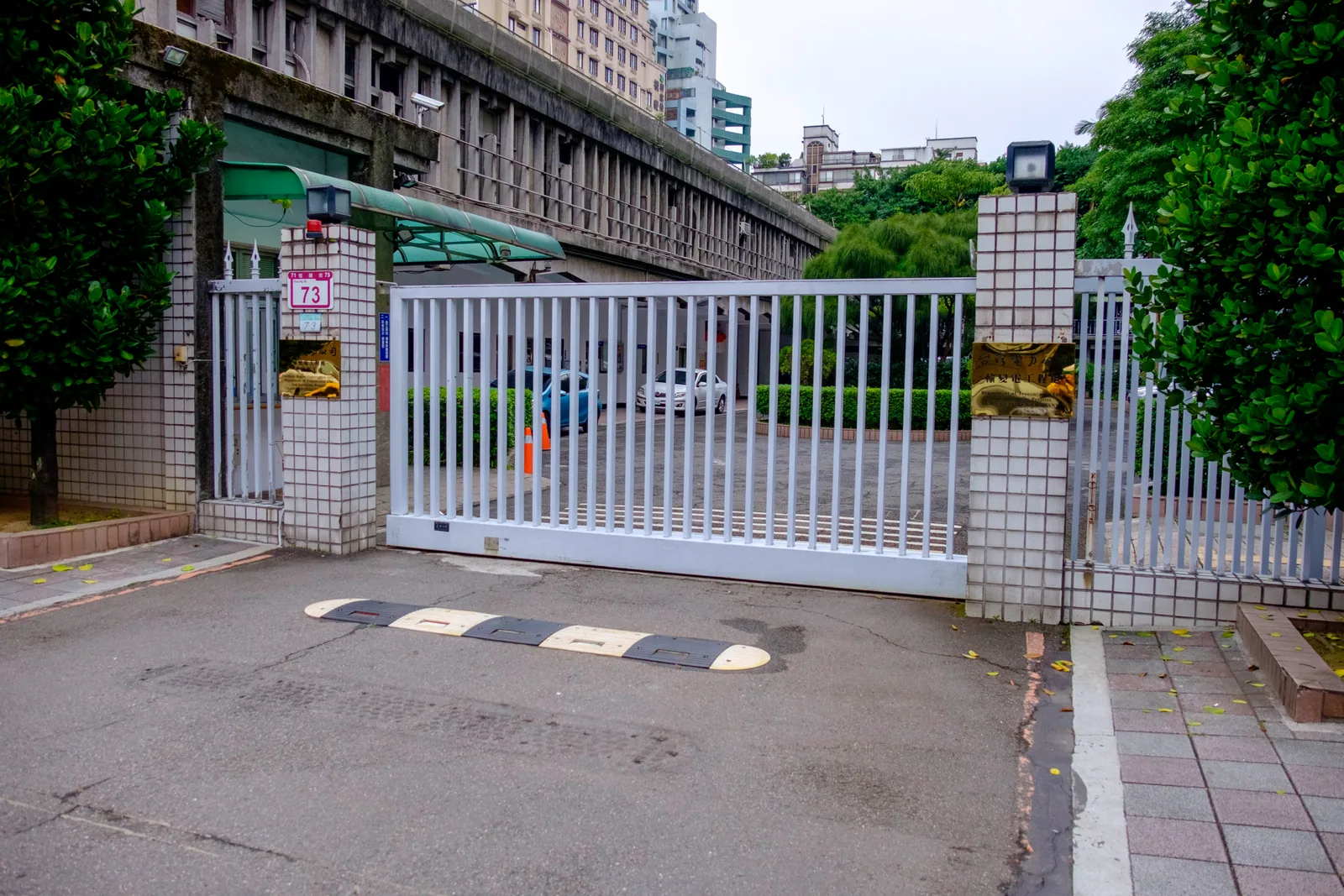
Figure 2: Grid resilience is not only in the equipment itself but also in the organizations responsible for planning, maintenance, dispatching, and accident learning. Photo by Hsien-Shi-Sheng, from Wikimedia Commons file page, licensed under CC0 1.0 Public Domain Dedication.
This also requires the government, Taipower, local governments, medical institutions, communities, and industries to establish a joint recovery plan. During a large-scale blackout, what residents need is not just a "repairing" message, but also knowing how long it might last, where they can get water and charge, which roads and transportation facilities are still usable, and who can receive priority assistance.
Taipower's shift from a centralized structure to one that is decentralized, robust, and defensive in recent years, along with the downward trend in distribution accidents, shows that long-term engineering efforts can indeed improve power quality.17 However, the lessons left by 815 and 303 are not outdated: any system lacking alternative paths, error isolation, and public review can turn a local problem into a crisis for an entire city.
True grid resilience is not guaranteeing that there will never be a power outage; it is ensuring that a power outage does not mean life comes to a complete stop. It should ensure hospitals have power, remote areas have basic support, communities know how to care for the vulnerable, and the government can clearly explain who recovers first, why they recover first, and how to prevent the same mistake next time.
When Taiwan invests NT$564.5 billion over ten years to redesign its grid, the most important outcome should not just be a new line or a new substation, but the ability of more places to retain some light, some communication, and some order after an accident until the entire city is reconnected to power.
Further Reading:
- Taiwan Oil Price Mechanism and CPC — In the same NT$60 billion supplementary budget, there are two amounts from CPC next to Taipower's 71.1 billion: one state-owned company called up to stand at the front, bearing the money first, which is ultimately paid by whom?
References
Images and Licensing
Both photos used in this article are from Wikimedia Commons, retaining the original file page, author, and licensing information. The first photo was taken by Yoxem under CC BY-SA multi-version license; if cropped, modified, or republished, the requirements of ShareAlike and attribution must be followed. The second photo was taken by Hsien-Shi-Sheng under CC0 1.0 Public Domain Dedication, which allows free copying, modification, and reuse.
- Ten Years of NT$564.5 Billion Investment: Taipower Announces Grid Resilience Construction Plan — Ministry of Economic Affairs and Taipower explain the ten-year grid resilience investment, decentralized supply, robust equipment, and defense strategies.↩23456
- Executive Yuan Releases Summary Report from 815 Power Outage Investigation Task Force — The Executive Yuan fully explains the accident process, systemic causes, responsibility review, and public service improvement directions.↩234
- The Difficult Path of Energy Transition: The 815 Major Power Outage — Center for Environmental Information compiles the connection between the 815 power outage, gas dependency, reserve capacity, and energy transition trust.↩23
- 303 Power Outage Incident Affects Over 5.49 Million Households; Control Yuan Confirms Human Error — The Control Yuan investigation explains the operational procedures, system failure, affected households, and power restoration time of the 303 incident.↩
- Ministry of Economic Affairs Releases "303 Power Outage Review Report" — The Ministry of Economic Affairs reviews the multi-layered protection, grid concentration risk, training, and protective relay improvements from the 303 incident.↩
- What is the Grid Resilience Construction Plan? — Taipower uses text and images to explain the three main axes—decentralization, robustness, and defense—and related engineering and equipment content.↩
- Seventy Percent Drop in Power Outages Over Ten Years! Taipower Continues to Strengthen Grid Resilience — Executive Yuan data compiles distribution accident reduction statistics, equipment scale, common causes, and resilience engineering effectiveness.↩2345
- Strengthening Regional Self-Sufficiency: Building Resilient Microgrids — A Taipower monthly introduces cases of energy storage, energy management, and island operation for remote areas, mountainous regions, and outlying islands.↩2
- Taiwan’s Electrical Grid and the Need for Greater System Resilience — Global Taiwan Institute analyzes Taiwan's grid concentration vulnerability, power outage cases, and microgrid resilience needs.↩