
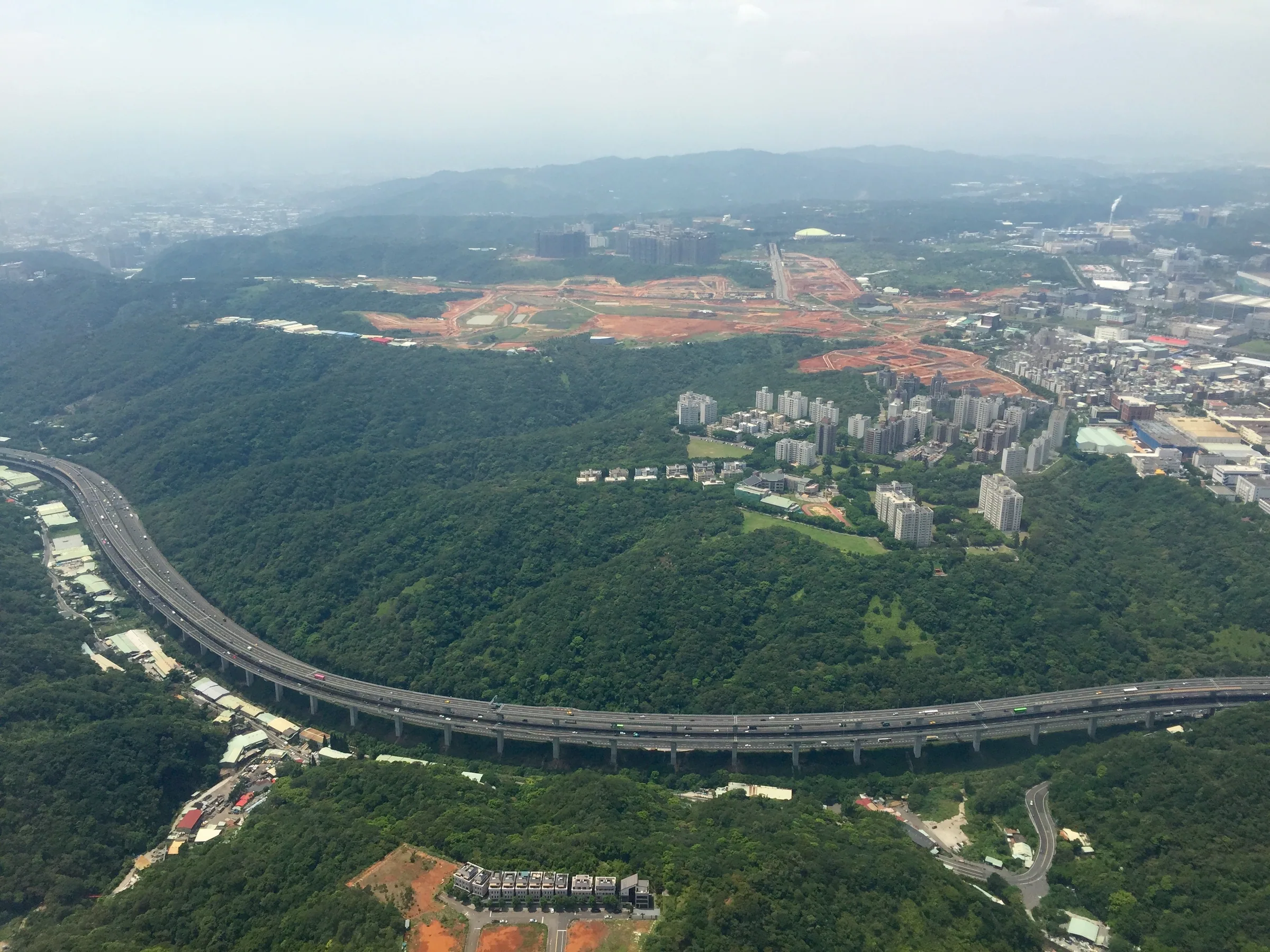
30-second overview: A reader said on Threads that he was tired of blue-green bickering at the dinner table and wanted only to remember the things that had truly helped Taiwan and endured. This article finds eleven such policies from the past seventy years, from land reform that coercively expropriated farmland under authoritarian rule to the Forward-looking Infrastructure Development Program still being fought over in 2026. We deliberately do not measure them by blue or green standards, but by four measures: livelihood (did everyday life improve?), democracy (was the power to decide who governs returned to the people?), civil rights (were minority rights protected?), and sovereignty (can Taiwan stand before the world?). These four measures do not ask “who did it”; they ask only “what did it leave for the people who live on this island?” The conclusion is a little counterintuitive: policies that truly outlive their own politics are often the ones that were most fiercely contested on the day they were born.
The television is on during dinner, tuned to a political talk show. One guest pounds the table and says the other party is selling out Taiwan. Another guest sneers and says, no, you are the corrupt gang. Change the channel: another show, the same scene, just different people in the chairs. A reader, who left a comment under a Taiwan.md post and goes by lov3ngine online, said he was sick of it. What he wanted to remember was not which party won which shouting match. In his own words, he wanted to remember, “after circumstances have changed and we look back, which things truly benefited Taiwan’s livelihood, democracy, and civil rights.” He gave a few examples: the lifting of martial law, the Ten Major Construction Projects, the “No Haste, Be Patient” policy, and the Forward-looking Infrastructure Development Program. Some blue, some green.
This article is an answer to him. But two things have to be made clear first, or the argument will not stand.
First, this article measures policy with four yardsticks: livelihood, democracy, civil rights, and sovereignty. These four measures are not neutral standards that fell from the sky. They come from lov3ngine. His original wording was “livelihood, democracy, and civil rights,” and the whole comment was about whether Taiwan can stand before the world. I have organized that into four measures. They certainly carry one reader’s values and do not pretend to be objective. But the four measures share one point, which happens to be exactly what lov3ngine wanted: all of them ask whether there was a long-term good for the people who live here; none asks “who did it.” In other words, measuring policy with these four yardsticks first removes the variable of “blue or green” from the equation. Stating this choice openly is much more honest than pretending that these four measures are constants of physics.
Second, this whole article is written with hindsight, and that is precisely its method. There is no need to be embarrassed about it. lov3ngine himself said this was about “looking back after circumstances have changed.” No one held these four measures at the time. In the year land reform was implemented, the countryside had only “support the government” and “dare not speak.” On the eve of the lifting of martial law, society had only “tangwai” and “the party.” The four measures are a luxury available only to those who came later. So what this article does is deliberately look back with a different unit of measurement: in the moment, we measure policy with blue-green yardsticks; time uses four others. Whether a policy can outlive its partisan origin has nothing to do with who made it or how loudly people fought over it at birth. What matters is what it left, decades later, for Taiwan’s everyday life, freedom, rights, and ability to stand in the world.
First, look at the skeleton of these seventy years. The eleven events on the timeline below span from the authoritarian era to the present. The people who made them include Chiang Kai-shek, Chiang Ching-kuo, Lee Teng-hui, Lien Chan, Chen Shui-bian, Ma Ying-jeou, and Tsai Ing-wen. In other words, blue, green, and the Kuomintang of the authoritarian era are all on it.
Next, divide them into four groups. Each group will honestly state the controversy on the day it was born. Writing about controversy is not meant to discount them. Quite the opposite: those controversies are exactly what these policies later had to “outlive.”
The Authoritarian Hand That Grew Livelihood’s Fruit
This is the hardest group to discuss. Every one of these policies came from the authoritarian era and was pushed by the ruling Kuomintang through methods that look deeply problematic today: forced land expropriation, tax increases, debt financing, and one-man decisions. Yet measured by livelihood, these policies did indeed improve life for many people. Whitewashing their methods would be a lie. Pretending they left nothing good behind would also be a lie. Neither is acceptable.
Start with a plot of land. Beginning in 1949, Taiwan transformed rural land in three stages: first the 37.5% rent reduction, which forced the rent paid by tenant farmers down from more than half the harvest to 37.5%; then the sale of public land to farmers in 1951; and finally the 1953 Land-to-the-Tiller program, under which the government forcibly expropriated landlords’ excess rented land and sold it to tenant farmers.1 This was a policy led by Chen Cheng. For the expropriated land, the government compensated landlords with 70% in commodity land bonds, amortized over ten years with 4% annual interest, and 30% in shares of four major companies: Taiwan Cement, Taiwan Paper, Taiwan Industrial and Mining, and Taiwan Agriculture and Forestry.2
For tenant farmers, this was a turning point. In one round, Land-to-the-Tiller created 194,823 owner-farmer households and expropriated and redistributed 139,249 hectares of land.1 The share of tenant-cultivated land among all farmland fell from more than 40% before implementation to about 16%. A person whose family had farmed someone else’s land for generations owned the ground beneath his feet for the first time.
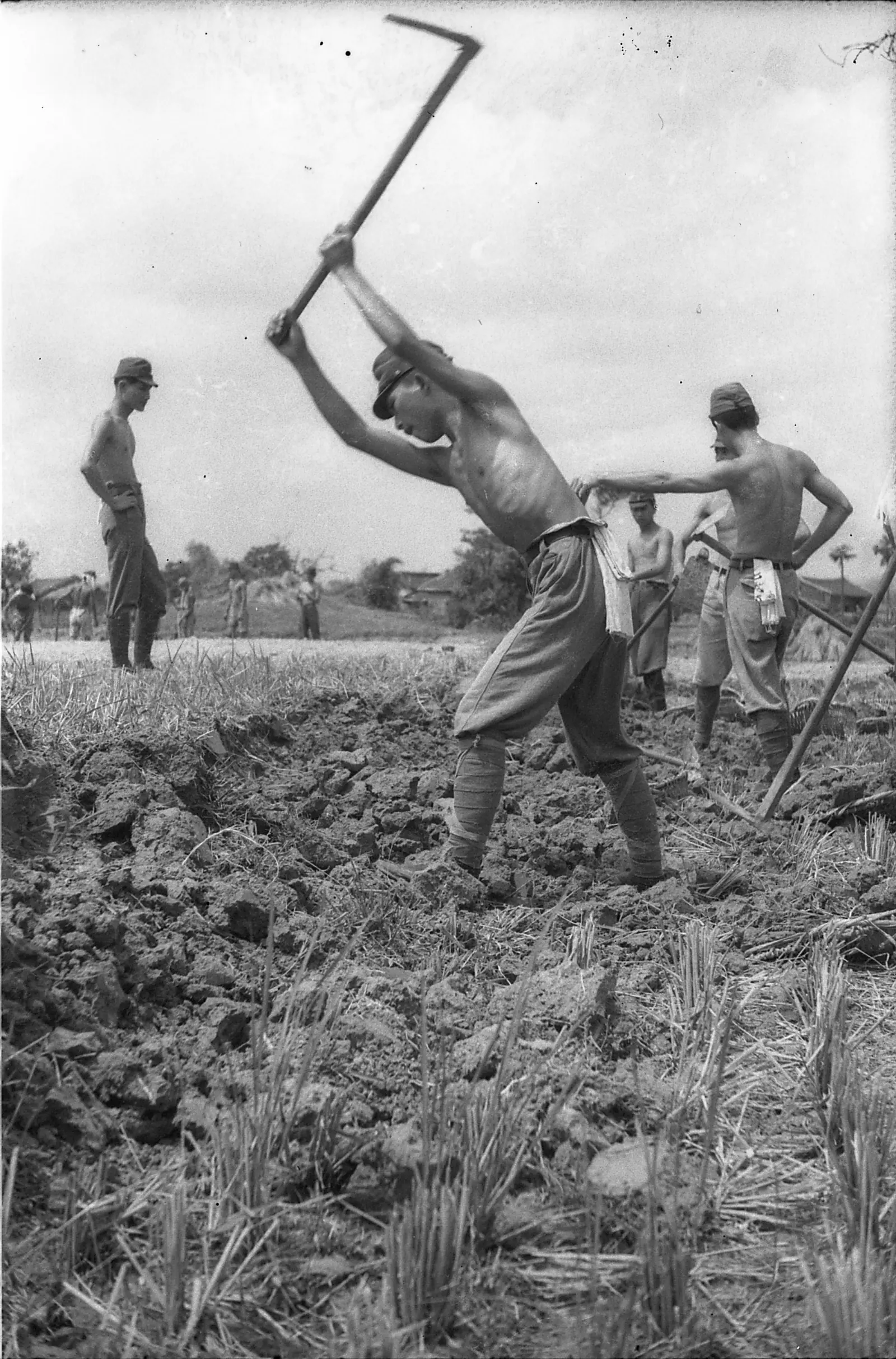
Land was the first thing this group of policies touched. Tenant farmers who had cultivated other people’s fields for generations did not truly own the land beneath their feet until the land reform of the 1950s. (Deng Nan-guang photo / Images of Taiwan, Wikimedia Commons, Public Domain)
But the same plot of land meant something else to landlords. The expropriation price was calculated at two and a half times the land’s annual yield and was generally low. The shares in the four major companies that landlords received were also low in market value at the time, and many small and medium landlords distrusted this “paper” and simply sold it at bargain prices. Liu Jui-hua, a professor in National Tsing Hua University’s Department of Economics, has openly criticized the 37.5% rent reduction as “an unreasonable policy” that forced landlords to bear unreasonable losses for decades.3 Academia Sinica research has also calculated that 81.8% of jointly owned rented land was expropriated, compared with only 28.2% of individually owned land. In other words, small landlords with jointly owned land, who had the least ability to resist, were cut the deepest.4 A small number of landlords took another path: Koo Chen-fu of the Lukang Koo family was the third-largest landlord at the time, exchanged land for shares under the land reform, gained control of Taiwan Cement, and later built the Koos Group.5 Some fell from land; others climbed up through the share exchange. So did this land reform “drive Taiwan’s economic miracle”? That is the most widely circulated claim, but it does not hold up.
📝 Curator’s Note
The common narrative says that “land reform created 80% owner-farmers and drove the later economic takeoff.” The sentence is easy to say, but both numbers are shaky. No primary source for “80% owner-farmers” can be found. A 2024 causal study by Berkeley economist Oliver Kim and coauthors found that the sale of public land can explain at most one-sixth of rice output growth in the 1950s, while Land-to-the-Tiller did not increase agricultural productivity and instead pushed rural female labor into manufacturing.6 So the more honest formulation is this: land reform was an achievement of distributive justice. It gave nearly 200,000 households land and cut rents by half. Whether the industrialization miracle of the 1960s can be directly credited to it remains disputed in scholarship. Only by separating “fairness” from “growth” can this land reform be measured accurately.
The second case is education. In December 1967, Chiang Kai-shek decided through the National Security Council to extend compulsory national education from six years to nine. It was formally implemented in September 1968.7 The effect is straightforward in the numbers: the share of elementary school graduates who continued on to junior high rose from 59.04% in 1966 to 80.85% in 1971; 254 new junior high schools were established in those years, an 80% increase.8 For a family that could not afford cram school for the junior high entrance exam, the gate to further education no longer had to be knocked on with money.
The cost was money. The total budget over three years was about NT$3.6 billion, and the government raised taxes to fund it and balance the budget.7 The oft-remembered claim that “nine-year national education laid the human-capital foundation for the economic takeoff” is actually a retrospective inference, unsupported by direct causal research. A more cautious formulation is that “scholars believe it contributed,” not that “it therefore created a miracle.” The pressure of entrance exams did not disappear either. It simply moved from elementary-to-junior-high to junior-high-to-senior-high. That exam threshold did not loosen until twelve-year national basic education was fully implemented in 2014.9
From a plot of land to a classroom, this authoritarian hand’s actions still count as relatively mild. The third case is much more controversial. On December 16, 1973, Premier Chiang Ching-kuo announced the Ten Major Construction Projects; even Finance Minister K. T. Li knew nothing about it beforehand.10 Taoyuan Airport, Taichung Harbor, railway electrification, the North-Link Railway, Su’ao Harbor, China Shipbuilding, China Steel, petrochemicals, nuclear power, and the Sun Yat-sen Freeway that stitched northern and southern Taiwan together. The freeway alone cost about NT$42.9 billion, including NT$8.1 billion in international loans; railway electrification cost about NT$23.08 billion.11 Much of this money was borrowed.
Where was the controversy? The freeway was denounced at the time as “construction for the rich”: in that era, the vast majority of people did not own cars, so why should public money pay for a road used by a minority?12 Even K. T. Li himself, reflecting on the period in a 1993 oral history, used terms such as “grandiose ambition,” “exaggeration,” and “a lucky accident.”13 The timing was also terrible. In 1974, during the first oil crisis, Taiwan’s GDP grew by only 1.16%, industrial production fell by 4.5%, and inflation soared to 47.5%.14 Borrowing heavily for construction at such a moment looked like flooring the accelerator toward a cliff.
By 1976, the numbers had flipped: GDP grew 13.86%, industrial output rose 24.4%, and inflation fell back to 2.48%.14 It is tempting to credit this handsome recovery to the Ten Major Construction Projects, but the chronology does not work. Most of the projects were not completed until 1977 to 1979, so they were not yet producing effects in 1976. The more accurate account is that during the hardest days of the oil crisis, these public investments moved ahead against the current and prevented a deeper downturn. The strong 1976 recovery came from the combined effect of Taiwan’s export capacity meeting a rebound in global demand. The real contribution of the Ten Major Construction Projects was to lay the transportation, energy, and heavy-industry foundation for later industrialization.
All three policies in this group bear the imprint of authoritarian rule: forced expropriation, tax increases, one-man decisions. But looking back seventy years later with livelihood as the measure, farmers gained land, children from poor families could continue their studies, and the whole island acquired a modern infrastructure skeleton. This group answers the question of whether a policy can outlive its politics: yes, but only if you honestly separate its hand from its fruit.
The Steps That Handed Over “Who Gets to Govern”
If the first group was authoritarian rule doing things for the people, the second group was authoritarian rule beginning to return power to the people. More precisely, it transferred the power to decide “who gets to govern Taiwan” step by step from the barrel of a gun to the ballot. This group is measured by democracy and civil rights.
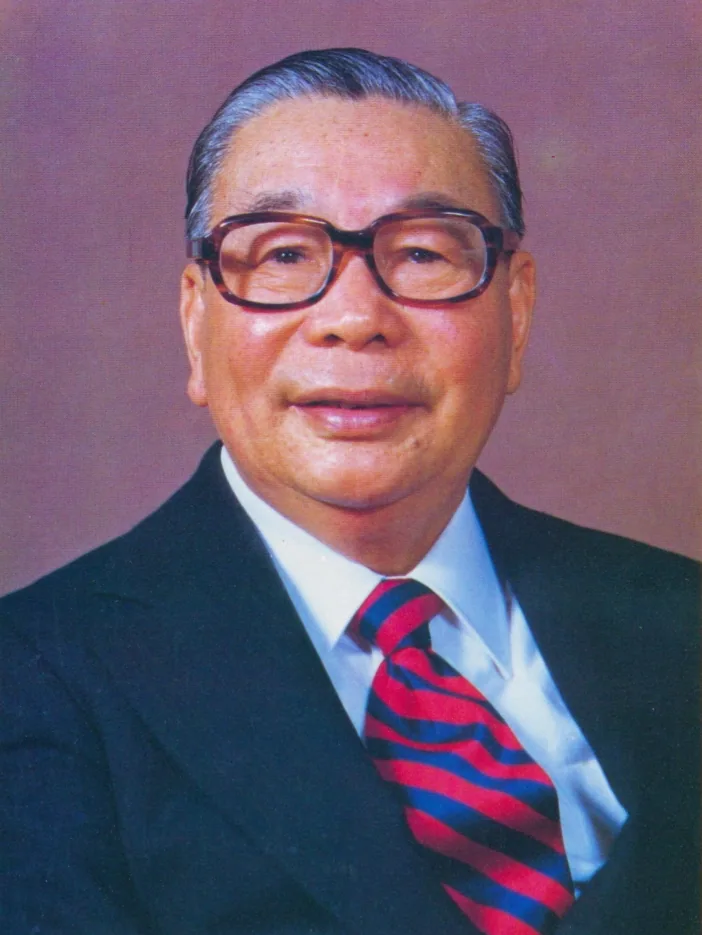
Chiang Ching-kuo, who made the decision to lift martial law. Whether he voluntarily loosened his grip or was pushed by internal and external circumstances remains one of the longest-running debates in Taiwan’s history. (Secretariat of the National Assembly / Wikimedia Commons, Government Open Data)
The first step was the lifting of martial law. The Taiwan Province Martial Law Order lasted from May 20, 1949 to July 15, 1987, a full 38 years and 56 days, one of the longest periods of martial law in the world.15 On July 15, 1987, Chiang Ching-kuo lifted it. Before that, during the White Terror, there were 29,407 military trials of people who were not active-duty military personnel, and the Judicial Yuan estimated that more than 200,000 people were victimized.16 Lifting martial law meant loosening the rope that had been around society’s neck for nearly forty years.
But did Chiang Ching-kuo voluntarily let go, or was he forced by circumstances? This is one of the longest-running disputes in Taiwan’s history. This article does not take sides. It places two weighty explanations side by side.
Hsiao-ting Lin reconstructs this period through Chiang Ching-kuo’s diaries and declassified archives from several countries, arguing that Chiang reformed with the tide under dual structural pressure: on one side, U.S. urging, including a 1985 U.S. Senate resolution, a 1986 U.S. House resolution, and Senator Richard Lugar’s visit to Taiwan; on the other, competition with Deng Xiaoping’s political reforms in the PRC in 1986.17 Wu Nai-teh’s view is the opposite, and it represents the academic mainstream: without the 1979 Kaohsiung Incident, Taiwan would not have today’s democracy, and Chiang Ching-kuo’s response after Kaohsiung was root-and-branch repression, making it difficult to describe him as a democratic promoter.18 Another frequently cited detail is that news of Chiang Ching-kuo’s lifting of martial law was reportedly first released through The Washington Post.17 As for the widely circulated line, “the times are changing, the environment is changing, and the tide is also changing,” no primary verbatim transcript can be found. It can only be treated as a quote relayed by multiple media reports; this article does not present it as a verified quotation.
Another common misunderstanding should also be clarified: lifting martial law did not mean lifting the bans on parties and newspapers at the same time. Martial law was lifted in July 1987, the newspaper ban was not opened until January 1988, and the party ban was not formally lifted until 1989. The Democratic Progressive Party had already announced its founding at the Grand Hotel on September 28, 1986, before martial law was lifted.19
In 2025, the number of days since martial law was lifted in Taiwan officially exceeded the thirty-eight years of martial law. The moment meant this: the time this island has lived in freedom has finally become longer than the time it lived under martial law. (PTS Taigi Channel News)
After the rope was loosened, the next question was: who should elect the president? In 1994, the National Assembly passed the third constitutional amendment, providing for the direct election of the president by the people.20 On March 23, 1996, Taiwan elected its own president by one person, one vote for the first time. That vote was cast under extraordinary tension: two weeks before election day, beginning on March 8, 1996, the PRC began test-firing missiles into waters 20 nautical miles off Keelung and 29 nautical miles off Kaohsiung; the United States sent two aircraft carrier battle groups, the Independence and the Nimitz, and the Nimitz also passed through the Taiwan Strait.21 Under the shadow of missiles, turnout reached 76.04%, with 14.31 million registered voters.22 Lee Teng-hui and Lien Chan won with 54.00%, more than 5.81 million votes.22
One thing requires restraint: it is easy to say that “the missiles instead stirred Taiwan’s will to vote.” That causal relationship lacks evidence. This article states only the coexisting facts: under missile threats, 76% of people voted. It does not draw a causal arrow between them. What is worth recording is the debate at the time over “delegated direct election” versus “citizen direct election.” Some once advocated that the president be elected indirectly by National Assembly delegates. Only after the 1990 Wild Lily student movement and the 1993 split that created the New Party did the path toward direct election by the people become certain. According to Su Chi’s retelling of what he told Wang Daohan in Hong Kong in 1992, Lee Teng-hui had to promote direct election, otherwise “direct election would become the DPP’s sole political capital.”23 Handing the power to elect the president to the people involved both ideals and calculation.
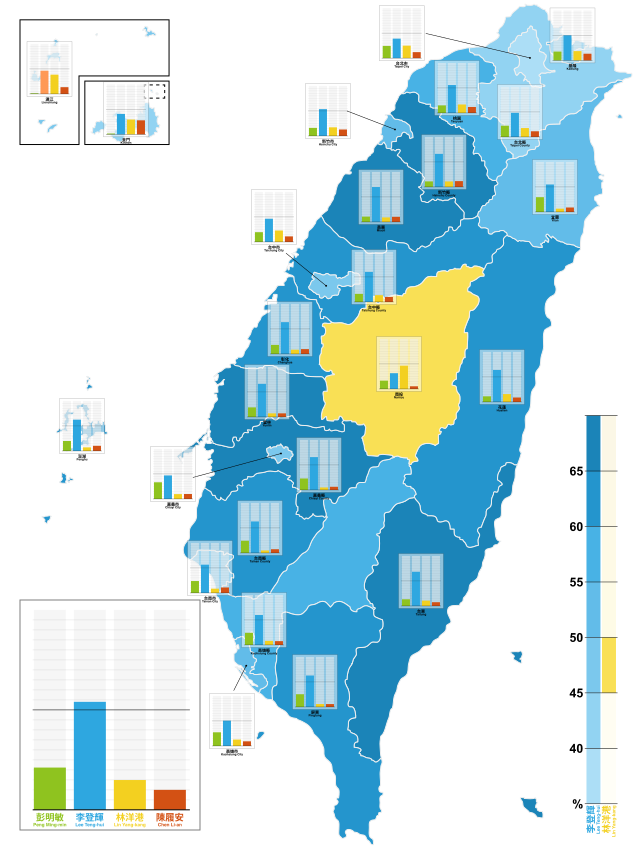
County-level vote distribution in the first direct presidential election in 1996. Under the shadow of PRC missiles, Taiwan elected its head of state by one person, one vote for the first time. (沁水湾 / Wikimedia Commons, CC BY-SA 4.0)
The people could elect the president. But one final step remained: after the elected side lost, would it hand over the office?
On March 18, 2000, the answer arrived. Chen Shui-bian and Annette Lu won with 39.30%, more than 4.97 million votes; James Soong followed closely with 36.84%; Lien Chan and Vincent Siew had 23.10%.24 Turnout was 82.69%, the highest in Taiwan’s electoral history and still unsurpassed.24 This vote ended 55 years of Kuomintang rule in Taiwan. Lee Teng-hui peacefully handed over power; Annette Lu became Taiwan’s first female vice president.24 That period was not without tension: Chief of the General Staff Tang Yao-ming had recorded a video before the election declaring that the military belonged to the state and was loyal to the Constitution, in order to steady the armed forces. But in the end there was no coup, and power quietly changed hands.25
📝 Curator’s Note
In taxis, one often hears a line: “A different person took office, and life did not get better. How is that a good policy?” Taiwan’s GDP did indeed record its first negative growth since 1949 in 2001, but the main cause was the global dot-com bubble bursting that year, not the transfer of power itself.26 Hidden here is a crucial distinction between measures: the success of the first transfer of power was not about how well any one president governed. It was the success of “democracy” as a measure in itself: a huge party that had ruled for 55 years lost an election and handed over the entire state without relying on the military and without bloodshed. As for how fierce later gridlock between a minority government and an opposition legislature became, that was democracy functioning normally, not democracy failing. Only by separating “the performance of a particular administration” from “whether power can be transferred peacefully” can we understand the weight of this vote.
Authoritarian rule doing things for the people is a grant. Authoritarian rule returning “who gets to govern” to the people is an exit. From Chiang Ching-kuo loosening the rope of martial law, to Lee Teng-hui completing the first direct election under missiles, to the Kuomintang quietly handing over power in 2000, these three steps, measured by democracy and civil rights, are among Taiwan’s most precious. Their value lies not in how beautifully they were done, but in the fact that a force that had once held everything in its hands learned to let go.
A Card, An Apology
The third group has only two cases, but they address two different debts. One concerns how the living can live with dignity. The other concerns how the dead are remembered. The former is a card; the latter is an apology.
Start with the card. On March 1, 1995, National Health Insurance was launched. The NHI card that people in Taiwan take for granted today almost failed to be born. Yeh Ching-chuan, who was responsible for building the system, later recalled in an interview that Premier Lien Chan ordered on February 25 that the launch proceed on March 1 as scheduled, and at that point “the preparation time was actually only three days,” “even the health insurance cards had not yet been printed,” and “there was no information system in place either.”27 At the beginning, people used their ID cards and household registration documents to see doctors; paper cards were printed only a month later. Lien Chan’s decision carried political pressure: some Kuomintang legislators, worried about the legislative election at the end of the year, had suggested postponement. Why, then, did the launch still proceed on March 1? Caution is needed here. We cannot directly assert that “it was rushed because of the election,” because there is no primary document proving Lien Chan’s actual decision-making motive. Only two things are certain: the preparation time really was only three days, as Yeh Ching-chuan confirmed, and some legislators were indeed worried about the year-end election. Leaving motive blank is more honest than inventing one.
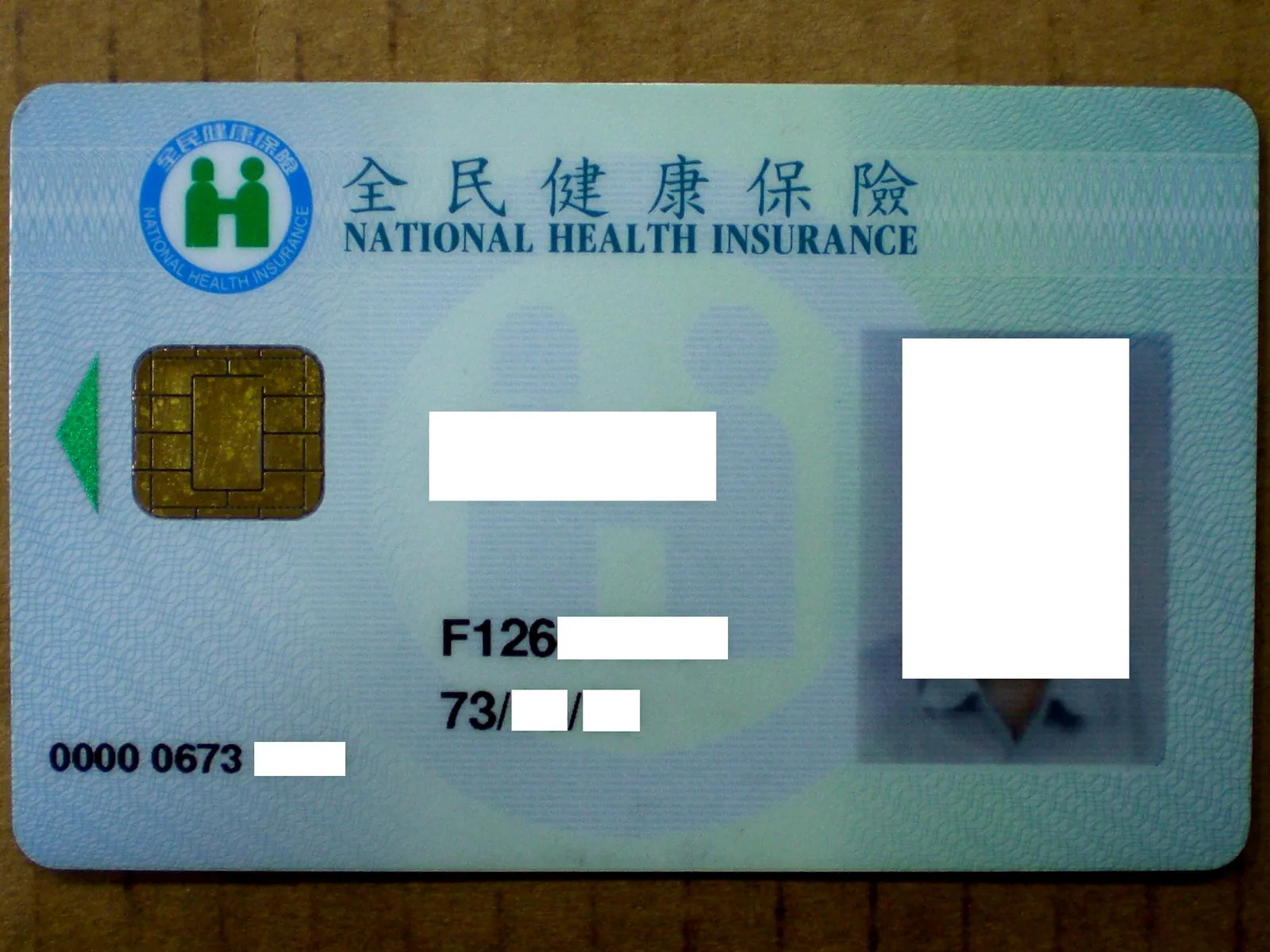
This card in people’s wallets in Taiwan today almost failed to be born in 1995. At launch, only three days of preparation were available, and the cards had not even been printed. Something rushed out in three days later became one of Taiwan’s most cherished institutions. (Solomon203 / Wikimedia Commons, Public Domain)
Something rushed out in three days later became one of Taiwan’s most cherished institutions. Before launch, about 60% of the population had insurance; now coverage exceeds 98%, and satisfaction in 2023 was 91.2%.28 Academic research has also found that between 1996 and 1999, preventable mortality fell by 5.83%, with the greatest benefits going to the most disadvantaged groups in society. NHI narrowed health inequalities among different groups.29
| Before 1995 launch | 2023 | |
|---|---|---|
| Coverage rate | 60 | 98 |
Source: PMC academic research; Ministry of Health and Welfare
Of course, it also has problems of its own. The medical community once pushed back; the Nantou County Medical Association, for instance, boycotted it. The global budget payment system trapped medical institutions in a prisoner’s dilemma of increasing service volume, and the drug price gap was about NT$70 billion.30 By 2025, the NHI global budget exceeded NT$900 billion. The target point value was set at 0.95, but the actual value often falls short, meaning that for every NT$1 of services provided, medical institutions may recover only NT$0.90 or even less.31 Taiwan entered a super-aged society in 2025, and the fiscal pressure caused by aging is the deepest concern after this card turned thirty. One honest supplement is also needed: compulsory NHI enrollment covers migrant workers, but there may be coverage gaps when they change employers, and benefit items can differ. The livelihood measure asks about “the people who live here,” but implementation is often citizen-centered, and migrant workers remain more marginal.
✦ “The preparation time was actually only three days... At that time, even the health insurance cards had not yet been printed.” — Yeh Ching-chuan recalling the 1995 launch of NHI
A common exaggeration should also be clarified in passing. You may have heard that “Taiwan’s NHI is number one in the world.” That ranking comes from Numbeo, a website where internet users fill out surveys themselves, not from the WHO or an academic institution. The more accurate formulation is that it has ranked first for user experience on Numbeo for years, with the crowdsourced nature of the survey clearly stated, rather than claiming “the world’s best healthcare.” An institution rushed out in three days has already had a dramatic enough journey. It does not need inflation.
If NHI addressed a debt owed to the living, transitional justice addressed a debt owed to the dead. This was harder than NHI, because it crossed three presidents from different parties, and with every step forward, someone felt offended.
The timeline begins in 1992, when the Executive Yuan released the Report on the February 28 Incident. On February 28, 1995, the February 28 Peace Memorial was completed, and Lee Teng-hui, as head of state, accepted responsibility on behalf of the government for the wrongs committed by the government and extended deep apologies to the victims’ families and all citizens. In March of the same year, the Statute for Handling and Compensation of the February 28 Incident was passed, with maximum compensation of NT$6 million.32 In 1997, February 28 was designated a national holiday, Taiwan’s first statutory holiday established for victims of the authoritarian era.33 A 2006 responsibility report explicitly stated that Chiang Kai-shek bore the greatest responsibility. On May 31, 2018, the Transitional Justice Commission was established; it was dissolved on May 30, 2022, leaving behind a 1.7-million-word final report.34 As of 2015, 2,288 people had received about NT$7.2 billion in compensation; the Transitional Justice Commission also overturned 13,401 criminal cases.34
This path crossed the presidencies of Lee Teng-hui, Chen Shui-bian, and Tsai Ing-wen, putting both blue and green on it. But that does not mean everyone agreed. Scholar Wu Chun-ying has noted that Lee Teng-hui was proactive on the February 28 Incident but relatively passive on the White Terror.35 Even wording was contested: in 1995, when the Kuomintang led the process, the term used was “compensation” as a benefit; in 2007, the Chen administration changed it back to “compensation” in the sense of damages. The difference of one word carried a difference in position: was the government granting a favor, or repaying a debt?
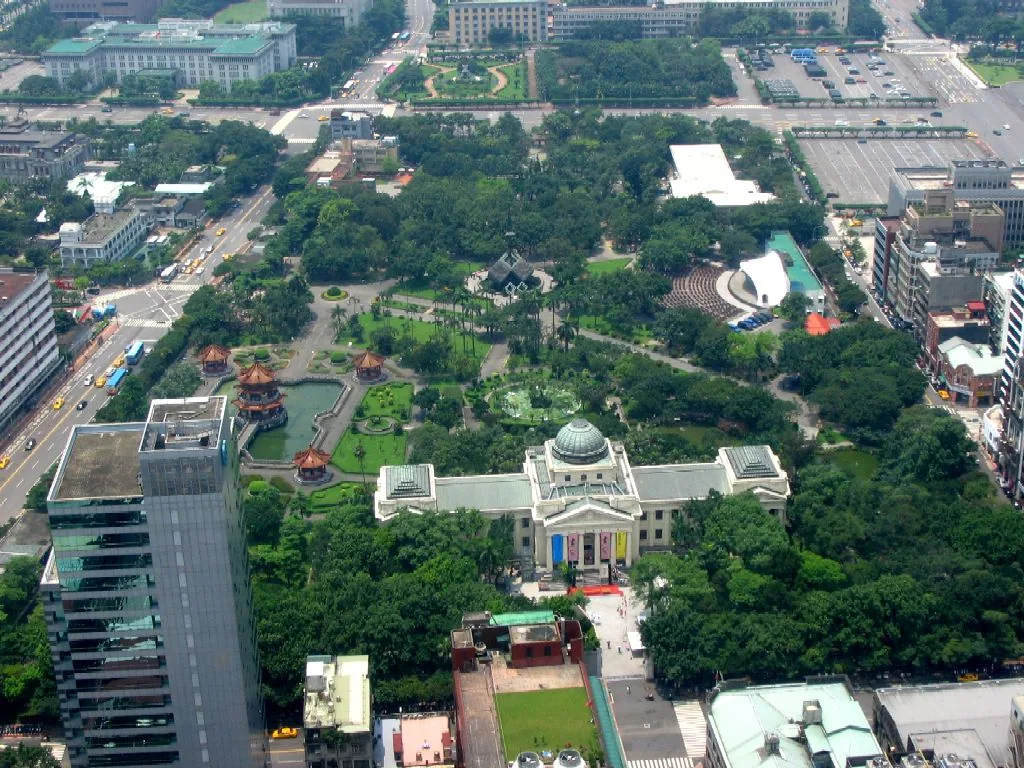
Taipei 228 Peace Memorial Park, with the February 28 Memorial completed in 1995 at the center. That year, a head of state apologized for this wound for the first time in the name of the government. (Allen Timothy Chang / Wikimedia Commons, CC BY-SA 3.0)
What keeps this issue burning today is what happened after 2018. After its establishment, the Transitional Justice Commission focused on parties such as the Kuomintang and brought political archives under state ownership. Some people, especially some post-1945 mainlander communities, saw this as political liquidation rather than historical reconciliation. In 2019, Ma Ying-jeou criticized it as “tantamount to authoritarian restoration,” cited the term “Eastern Depot” used by Transitional Justice Commission deputy chair Chang Tien-chin in a leaked 2018 recording, and criticized the Ill-gotten Party Assets Settlement Committee for “overstepping the separation of powers.”36 These opposing voices are real, as are the voices of victims’ families demanding truth. This article records both.
At a February 28 memorial event, blue-camp politicians attend, and victims’ families angrily rebuke them on the spot. This image is what transitional justice most truly looks like: apologies have been made and institutions built, but the road to “reconciliation” has still not been completed. (CNA video news)
📝 Curator’s Note
A line often circulates online claiming that Tsai Ing-wen once said, “transitional justice is not aimed at any particular party.” Verification shows that this exact line cannot be found from Tsai herself. It was a formulation by Transitional Justice Commission chair Huang Huang-hsiung and should not be attributed to Tsai Ing-wen. What Tsai did say, with a source, was this line at the 2018 establishment ceremony of the commission: “This is the moment for us to make a break with the authoritarian era. Only by taking this step can Taiwan’s democracy be truly consolidated.”37 Why be so exacting in a curator’s note? Because the harm most likely to appear in transitional justice is using a line that sounds conciliatory but was never actually said to smooth over a wound that was already split open. Honestly acknowledging “this sentence was never said” is closer to the spirit of transitional justice itself than quoting a warm falsehood: find out what happened, even if the result makes people uncomfortable.
A card caught the bodies of the living; an apology tried to catch the names of the dead. Measured by livelihood, NHI receives high marks from almost everyone. Measured by civil rights and democracy, transitional justice points in the right direction, but it has stumbled because it must face two things that are very difficult to achieve at the same time: doing justice to the dead and not making the living feel they are being politically purged. For these two policies, to outlive their own politics means this: one has already become as taken-for-granted as air, while the other is still fought over as either reconciliation or struggle.
Still Being Measured by the Four Yardsticks
For the first three groups, time has already given an answer, or at least most of one. The final group is different: they are still being measured, and the lid has not been closed. The “No Haste, Be Patient” policy and the Forward-looking Infrastructure Development Program, both examples lov3ngine gave, belong here. Including them is exactly because they have not yet been settled, and because they demonstrate one thing: sometimes the four measures fight with one another.
First, “No Haste, Be Patient.” On September 14, 1996, Lee Teng-hui proposed at the National Management Conference that investment in China should observe “No Haste, Be Patient,” restricting three categories: high technology, investments above US$50 million, and infrastructure.38 The policy was later modified twice by Chen Shui-bian: in 2000 to “active opening, effective management,” and in 2006 to “active management, effective opening.”38 Its most famous scene involved Formosa Plastics’ Haicang project, an investment in China of more than US$7 billion, which was forced to be abandoned under three government ultimatums: suspension of stock trading, freezing of funds, and restrictions on senior executives leaving the country.39
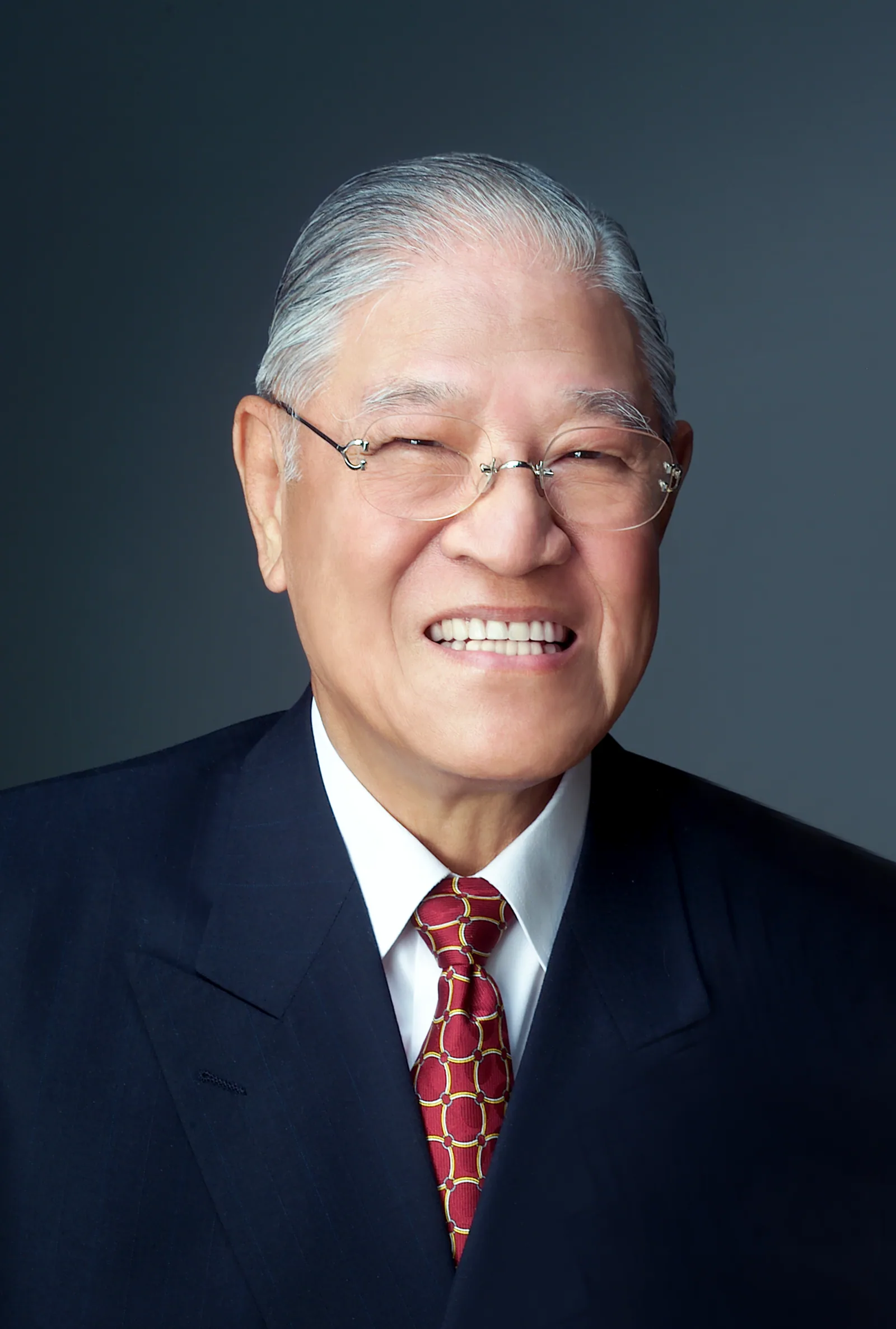
Lee Teng-hui, who proposed “No Haste, Be Patient.” Whether this policy protected Taiwan or slowed Taiwan down remains unsettled. It is the hardest exam to grade when the “sovereignty” and “economy” measures collide. (Lee Teng-hui Foundation / Wikimedia Commons, CC BY 4.0)
The measures clash here.
Supporters say “No Haste, Be Patient” forced high-tech industries to keep their roots at home, allowing TSMC to grow into today’s “sacred mountain protecting the nation,” and also left Taiwan less exposed in the later U.S.-China trade war.40 Opponents were fierce too: TSMC founder Morris Chang criticized the government in 2001 for improperly interfering in corporate decision-making and harming national economic development; Formosa Plastics founder Wang Yung-ching said the policy “made no sense”; Jaw Shaw-kong said it left Taiwan’s economy stuck in place and declining.41 In reality, the policy also leaked heavily: Taiwan businesses often used third jurisdictions such as the Cayman Islands and the British Virgin Islands to enter China indirectly. The policy had the form of control, but enforcement was full of holes.42
So did “No Haste, Be Patient” protect Taiwan or harm Taiwan? This article’s answer is: assessments remain polarized, and the final judgment cannot yet be made. The reason is that two measures collide here: the “sovereignty” measure wants to prevent the economy from becoming overly dependent on a hostile regime; the “livelihood/economy” measure wants to avoid missing immediate growth opportunities. Both measures are right, but they point in opposite directions. “No Haste, Be Patient” is a living lesson: when sovereignty and the economy fight, no answer can give both measures full marks at the same time.
Second, same-sex marriage. This case demonstrates another collision: democracy versus civil rights.
On May 24, 2017, the justices issued Constitutional Interpretation No. 748, declaring the Civil Code unconstitutional for failing to protect same-sex unions and requiring legal amendment within two years.43 But in the 2018 referendum, a majority voted against same-sex marriage: Proposal 10, stating that marriage should be limited to one man and one woman, passed with 72.48%; Proposal 12, requiring same-sex unions to be protected in a form other than the Civil Code, passed with 61.12%.44 Public opinion plainly opposed it, yet the Constitution required protection. This is democracy and civil rights colliding head-on. The final solution was that on May 17, 2019, the Legislative Yuan passed the Act for Implementation of Judicial Yuan Interpretation No. 748 on third reading, with 66 votes in favor and 27 against. It took effect on May 24, making Taiwan the first place in Asia to legalize same-sex marriage.45 That day, about 30,000 people gathered outside the Legislative Yuan.46
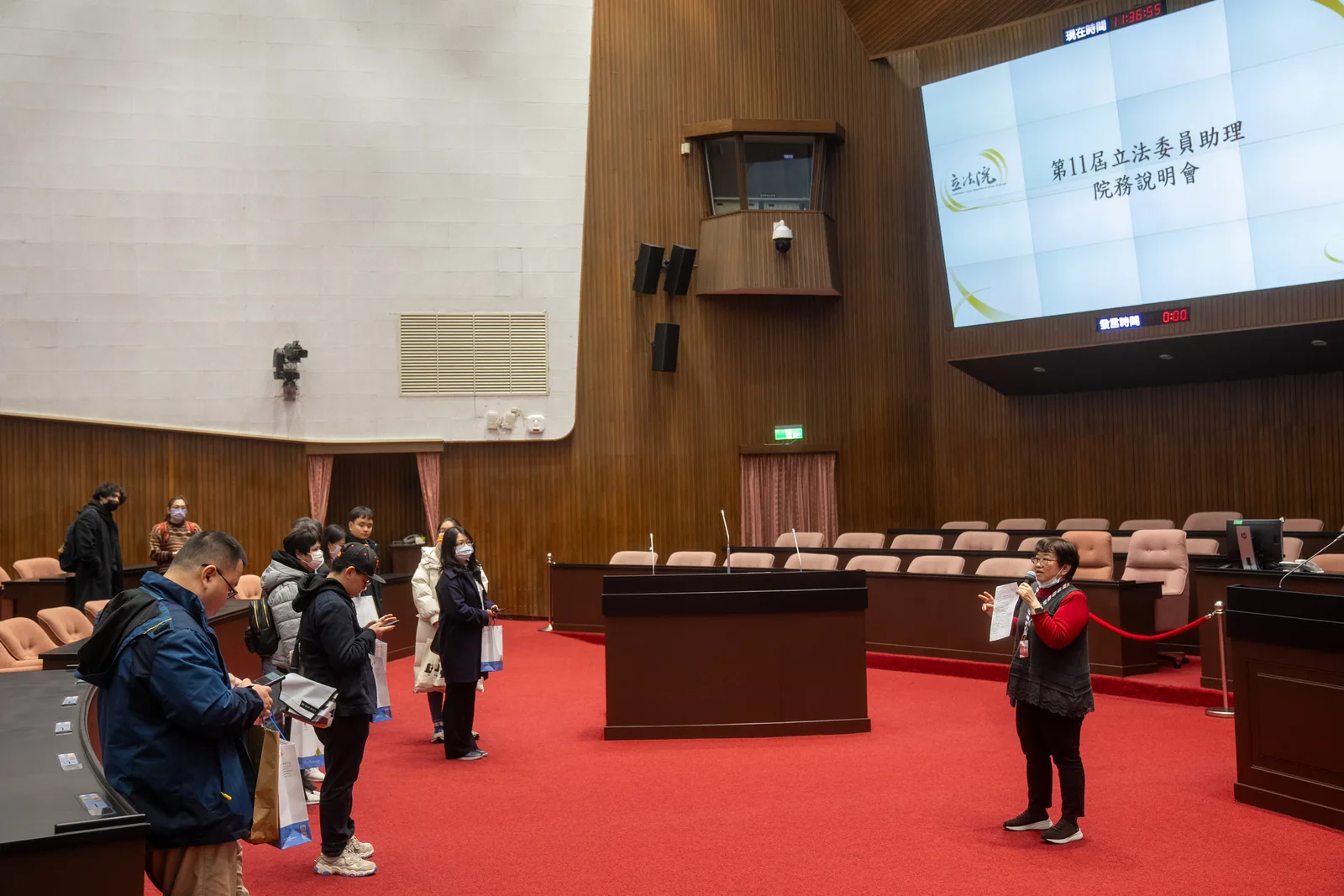
The Legislative Yuan chamber. On May 17, 2019, the special same-sex marriage act passed its third reading here by 66 votes to 27. A constitutional interpretation plus a special act bypassed the referendum majority’s opposition. (pichu / Legislative Yuan, Wikimedia Commons, Government Open Data)
A common misunderstanding needs to be unpacked here: does same-sex marriage count as “cross-party”? The answer must be qualified. Same-sex marriage was not the traditional kind of cross-party consensus where “everyone nodded along.” It relied on constitutional interpretation plus a special act to bypass the referendum majority’s opposition. Seven blue-camp legislators, Jason Hsu, Lin Yi-hua, Ko Chih-en, Arthur Chen, Hsu Shu-hua, Chiang Wan-an, and Lee Yen-hsiu, broke ranks and voted in favor, but that was the exception. The Kuomintang caucus position was opposition, and the side that led the 2018 “pro-family referendums” opposed same-sex marriage. Meanwhile, someone in the green camp, Lin Tai-hua, also voted against it. It is inaccurate to say same-sex marriage was “supported by both parties.” What it truly demonstrates is something else.
Supporters of the constitutional interpretation argue that constitutional review by the justices was designed precisely to prevent the majority from using votes to violate minority rights, and that constitutional interpretation has higher force than a referendum.47 Advocates of majoritarian democracy note that Justice Wu Chen-huan’s dissenting opinion argued that the issue should be amended through legislation or referendum; Yu Hsin-yi, convener of the Coalition for the Happiness of Our Next Generation, even called the day of passage “Taiwan democracy’s darkest moment.”48 The DPP’s role in this issue was also two-sided. To say it was proactive is true in part: Tsai Ing-wen did nominate seven justices inclined to support it. To say it dragged its feet is also true in part: it held a legislative majority but did not proactively amend the Civil Code, and the Awakening Foundation criticized it for that. Both accounts contain part of the truth.
But the most moving arc of same-sex marriage lies in a seven-year shift in numbers.
| 2019 legalization | 2026 | |
|---|---|---|
| Support | 42 | 54 |
Source: Focus Taiwan (trend poll)
In the 2018 referendum, a majority voted against same-sex marriage. By the time same-sex marriage was legalized in 2019, public support was about 42.3%. Seven years later, in May 2026, support had risen to 54.3%, a 12-point increase.49 This arc from majority opposition to majority support is the strongest part of the same-sex marriage case. It does not say “everyone agreed from the beginning.” It says something deeper: when democracy, meaning the will of the majority, clashes with civil rights, meaning the rights of a minority, Taiwan chose first to use the Constitution to hold up minority rights, then let time persuade the majority. The Constitution did not wait for the majority to be ready, but the majority eventually caught up. Democracy was late, but it caught up with civil rights.
On May 24, 2019, the first day same-sex marriage took effect, couples went to household registration offices to register their marriages, and Chi Chia-wei was there to witness them. He had worked for more than thirty years for this day. (CTS News)
Third, the Forward-looking Infrastructure Development Program, another example lov3ngine himself raised, is the one in these four groups whose lid sits loosest.
In 2017, the Tsai Ing-wen administration promoted the Forward-looking Infrastructure Development Program. It was originally planned as an eight-year NT$882.49 billion special budget, including rail at NT$424.1 billion, water environments at NT$250.7 billion, urban-rural development at NT$137.2 billion, digital infrastructure at NT$46 billion, and green energy at NT$24.3 billion. It was later adjusted into phased implementation and funded 100% by debt, exempting it from restrictions under the Public Debt Act and the Budget Act.50 Its birth process was ugly: on July 5, 2017, the day of the third reading, physical conflict broke out in the Legislative Yuan. Kuomintang caucus whip Sufin Siluko lifted tables and splashed water, while Chiu Yi-ying announced committee approval amid the chaos.51
The controversy has not stopped. Criticism over fiscal discipline was the sharpest: publisher Rex How launched a petition questioning whether the normalization of special budgets would damage fiscal discipline.52 Rail projects accounted for nearly half the plan, raising doubts about whether Taiwan really needed that many rail lines; 124 parking lots received subsidies at once, drawing accusations of pork-barrel politics.53 A TVBS poll showed 46% opposed, 28% supported, and 75% believed the plan needed to be reexamined.54 Supporters said former Premier Lin Chuan believed the special budget would allow delayed construction to be realized earlier, while Tsai Ing-wen said it aimed to “reverse the overemphasis on the north and neglect of the south.” A Taiwan NextGen Foundation poll showed 61.5% approval.55
On the Forward-looking Program, three things must be honestly marked and cannot be frozen into either side’s story.
First, “pork-barrel politics” is a political judgment with signs but no conclusion. Ironically, Eric Chu, who criticized it most fiercely at the time, also applied for NT$450 billion in Forward-looking subsidies. Opponents were also competing for the money.53 Second, on constitutionality, 38 legislators filed three constitutional petitions, but all were rejected on procedural grounds. This does not mean the justices confirmed the program’s constitutionality; the clause exempting it from the Public Debt Act was never substantively reviewed by the justices.56 Third, the execution results remain unsettled. A parking lot in Pingzhen, Taoyuan subsidized under the Forward-looking Program collapsed during construction in 2020, killing one person and injuring two; a later investigation found its load-bearing capacity reached only 14.7% of the standard. But there are also completed projects: Taichung MRT Green Line carried 17.22 million passengers in 2025, the opening of the Taoyuan Green Line in 2026 still has variables, and preliminary construction for Keelung MRT began in December 2025.57 Some rail lines are still being dug; polls contradict one another and must be clearly labeled by institution and time. This policy has not yet reached the point where a final judgment can be made.
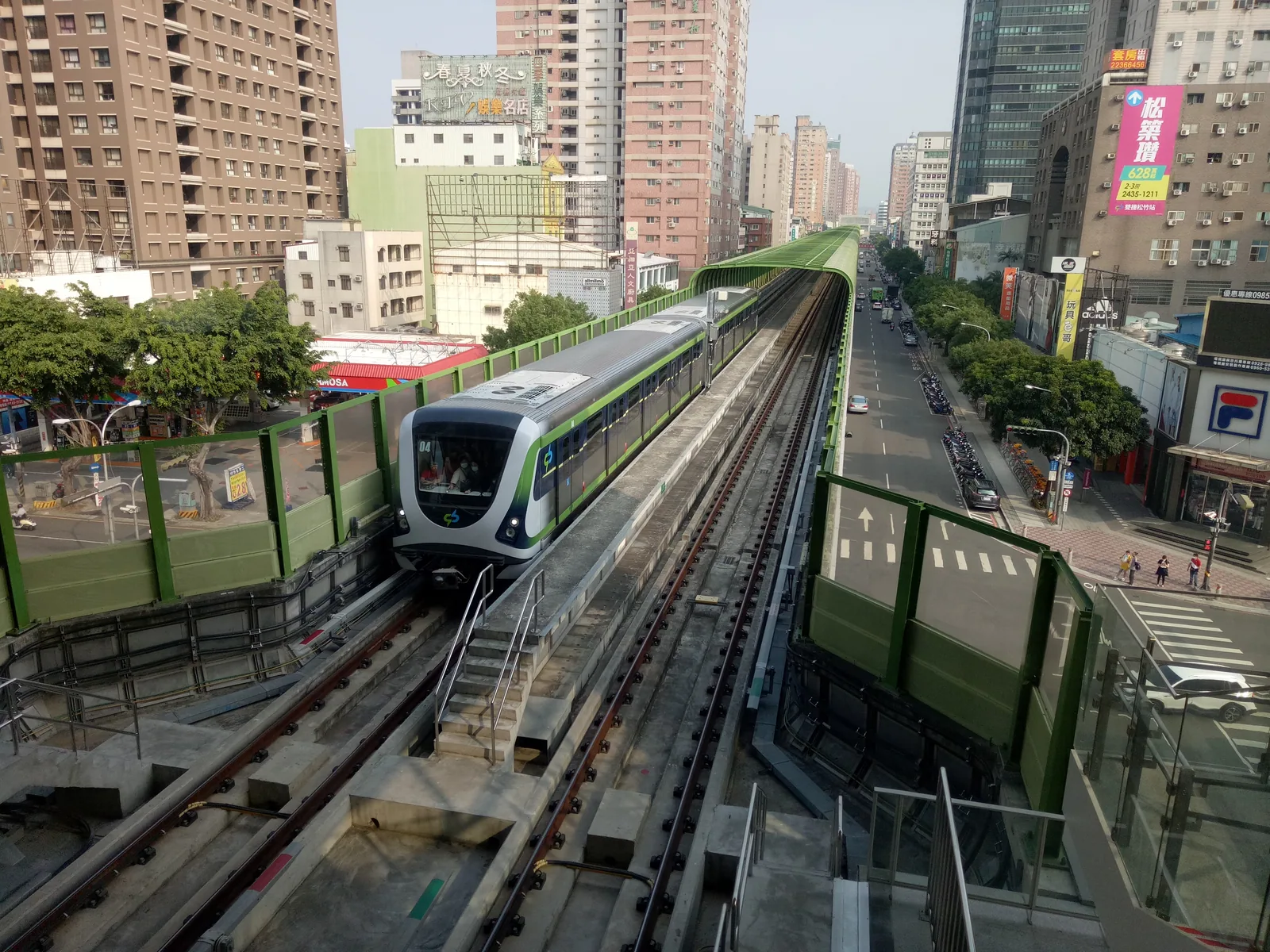
Taichung MRT Green Line, one of the rail projects under the Forward-looking Infrastructure Development Program. Some rail lines have opened and are carrying passengers; others are still being dug. The results of this policy are still being measured by the four yardsticks. (Foxy1219 / Wikimedia Commons, CC BY-SA 4.0)
📝 Curator’s Note
Placing “No Haste, Be Patient,” same-sex marriage, and the Forward-looking Program in the final group is this article’s most honest response to lov3ngine’s phrase “looking back after circumstances have changed.” For these three cases, the events have not fully passed, and the circumstances have not fully changed. They remind us of a fact easily overlooked: today, we can calmly say “land reform used rough methods but left distributive justice” and “the lifting of martial law had debatable motives but loosened the rope” because we stand seventy or forty years later. “No Haste, Be Patient,” same-sex marriage, and the Forward-looking Program are now what land reform and the lifting of martial law were then: bitterly contested, with the final legacy still unclear. The four measures cannot yet grade them accurately. The problem is not the measures; the time has not yet arrived.
Authoritarian rule did things for the people, returned governing power to the people, and addressed debts owed to the living and the dead. For the first three groups, time has closed most of the lid. The fourth group’s lid remains open. Their greatest value is that they let us see with our own eyes that the four measures can sometimes conflict, and that policies that outlive their own politics are often the ones torn most violently by those conflicts at birth.
Putting the Yardsticks in Your Hands
Return to the dinner table where blue and green were yelling at each other.
What lov3ngine wanted to remember was never a list of policies. So what this article finally gives him, and gives everyone tired of blue-green shouting, is not eleven answers but four yardsticks: livelihood, democracy, civil rights, and sovereignty. Next time, when you hear someone on television, at the dinner table, or in some policy dispute that has exploded into argument slam the table and say, “This is a rotten policy made by such-and-such party,” do not rush to pick a side. Try putting down the blue-green yardstick and picking up these four instead. Ask four questions: did it make life better for the people who live on this island? Did it place the question of “who gets to govern” more firmly back in the people’s hands? Did it catch those whose numbers were too few and whose voices were not loud enough? Did it make Taiwan better able to stand before the world?
After asking these four questions, you will find a somewhat uncomfortable fact: almost none of the policies later proven to be truly good for Taiwan was universally praised at birth. Land reform that forcibly expropriated farmland, the debt-financed Ten Major Construction Projects, the lifting of martial law and transitional justice that were denounced as selling out Taiwan or as political struggle, and same-sex marriage that bypassed the referendum majority were all being criticized at the time. Policies that outlive their own politics are often the ones most fiercely contested on the day they are born. A policy that makes everyone happy the moment it appears probably has not truly touched anyone’s vested interests. Policies that endure and change an island are almost always those that, at birth, step hard on someone’s pain.
So return to what lov3ngine was really asking: are there policies happening now that will also be affirmed by these four measures twenty years later?
Honestly, no one knows. That is the cruelest and fairest thing about hindsight as a yardstick: it measures accurately only after events have passed. “No Haste, Be Patient” still cannot be finally judged. The arc of same-sex marriage is still climbing. The Forward-looking Program’s rail lines are still being dug. The policy being denounced most harshly today may become, twenty years from now, the card, the road, or the vote that grandchildren take for granted while long forgetting how fiercely it was fought over at birth. Or it may simply be a mistake. The four yardsticks are still silent.
But one thing is certain: if we use only the blue-green yardstick, we will forever remember only who won that shouting match, and forget what this island truly kept. Time has never used blue and green as its measure. May you remember, before your next argument, that you still hold four others in your hand.
Further Reading
- Taiwan’s Democratic Transition — From the February 28 Incident to the Sunflower Movement, how authoritarianism personally cultivated the force that would bury it
- Taiwan’s Transitional Justice — The gap between annulling nearly six thousand guilty verdicts and almost no perpetrators being held accountable
- Taiwan Strait Crises and the Development of Cross-Strait Relations — The full context of the 1996 missile crisis
Image Sources
- Koika / Wikimedia Commons — CC BY-SA 3.0 (hero, Sun Yat-sen Freeway)
- Deng Nan-guang / Images of Taiwan, Wikimedia Commons — Public Domain (rural village)
- 沁水湾 / Wikimedia Commons — CC BY-SA 4.0 (1996 election map)
- Allen Timothy Chang / Wikimedia Commons — CC BY-SA 3.0 (February 28 Peace Memorial Park)
- Foxy1219 / Wikimedia Commons — CC BY-SA 4.0 (Taichung MRT Green Line)
- Secretariat of the National Assembly / Wikimedia Commons — Government Website Open Data Declaration (portrait of Chiang Ching-kuo)
- Solomon203 / Wikimedia Commons — Public Domain (National Health Insurance card)
- pichu / Legislative Yuan, Wikimedia Commons — Government Website Open Data Declaration (Legislative Yuan chamber)
- Lee Teng-hui Foundation / Wikimedia Commons — CC BY 4.0 (portrait of Lee Teng-hui)
Video Sources
- PTS Taigi Channel News — Commemorating the Lifting of Martial Law in Taiwan: Days of Democracy Exceed Days of Martial Law (martial law section)
- CNA Video News — Ma Ying-jeou and Chiang Wan-an Attend February 28 Memorial Event; Victims’ Families Rebuke Them (transitional justice section)
- CTS News — Same-sex Couples Register Marriages and Invite Chi Chia-wei to Witness (2019-05-24) (same-sex marriage section)
References
- Council of Agriculture, Executive Yuan — Land-to-the-Tiller Policy — Official statistics on the three-stage land reform, creation of 194,823 owner-farmer households, and expropriation and redistribution of 139,249 hectares.↩2
- Wikipedia — Land-to-the-Tiller — Mechanism for landlord compensation: 70% commodity land bonds plus 30% shares in four major companies.↩
- Linking Publishing, What Did We Learn from Land Reform — Liu Jui-hua’s signed criticism — The National Tsing Hua University economics professor argues that the 37.5% rent reduction was an unreasonable policy and that landlords bore losses for decades.↩
- Academia Sinica — Those Harmed Were More Than Just Small Joint Landowners — 81.8% of jointly owned rented land was expropriated, compared with 28.2% of individually owned land.↩
- CNA — Koo Chen-fu and Taiwan Cement — Case of the Lukang Koo family, the third-largest landlord, exchanging land for shares under land reform, acquiring Taiwan Cement, and developing the Koos Group.↩
- Oliver Kim & Wang 2024 causal study on land reform (SSRN) — Sale of public land explains at most one-sixth of 1950s rice output growth; Land-to-the-Tiller did not increase agricultural productivity.↩
- Wikipedia — Nine-Year National Education — Chiang Kai-shek decided in December 1967, implementation began in September 1968, total three-year budget was about NT$3.6 billion, funded through tax increases.↩2
- Causal study on nine-year national education and infant health (PMC) — Junior high enrollment rate rose from 59.04% to 80.85%; 254 new junior high schools were established, an 80% increase.↩
- Ministry of Education — Twelve-Year National Basic Education — Fully implemented in August 2014 under the Ma Ying-jeou administration.↩
- Wikipedia — Ten Major Construction Projects — Announced by Chiang Ching-kuo on December 16, 1973; Finance Minister K. T. Li knew nothing beforehand.↩
- Wikipedia — Ten Major Construction Projects Costs — Sun Yat-sen Freeway cost about NT$42.9 billion, including NT$8.1 billion in international loans; railway electrification cost about NT$23.08 billion.↩
- Controversy over the Ten Major Construction Projects — Freeway as “construction for the rich” — Written record that most people did not own cars at the time.↩
- Kang Lu-tao, K. T. Li Oral History: Talking About the Taiwan Experience (1993) — K. T. Li later described the projects in oral history as “grandiose ambition,” “exaggeration,” and “a lucky accident” (marked as 1993 retrospective oral history, not a real-time assessment at the time).↩
- Directorate-General of Budget, Accounting and Statistics, Executive Yuan — 1974/1976 economic data — 1974 GDP 1.16%, industry -4.5%, inflation 47.5%; 1976 GDP 13.86%, industry 24.4%, inflation 2.48%.↩2
- Taiwan Memory Expedition — Martial law for 38 years and 56 days — From May 20, 1949 to July 15, 1987; one of the world’s longest periods of martial law, later surpassed by Syria’s 1963-2011 period and now the second-longest.↩
- National Human Rights Museum — White Terror statistics — 29,407 military trials of non-active-duty military personnel; Judicial Yuan estimate of more than 200,000 victims.↩
- Hsiao-ting Lin, Chiang Ching-kuo’s Taiwan Era: The Republic of China and Taiwan Under the Cold War (Walkers Cultural Enterprise, 2021) — Uses Chiang Ching-kuo’s diaries and declassified Taiwan, U.S., Japanese, and British archives to reconstruct dual structural pressure from U.S. urging and competition with the PRC’s political reform.↩2
- Fount Media — Wu Nai-teh, “Without Kaohsiung there would be no democracy” — Forced-reform argument by an Academia Sinica scholar, representing the academic mainstream.↩
- TaroNews — Founding of the Democratic Progressive Party — Founded at the Grand Hotel on September 28, 1986, before the lifting of martial law; lifting martial law did not mean simultaneous lifting of party and newspaper bans.↩
- Presidential Office — Third Additional Articles of the Constitution (primary source) — The National Assembly’s third constitutional amendment in 1994 provided for direct presidential election by citizens.↩
- Third Taiwan Strait Crisis (English, missile timeline cross-check) — Test-firing began March 8, 1996; the United States sent the Independence and Nimitz aircraft carrier battle groups.↩
- 1996 Republic of China presidential election (Wikipedia, citing Central Election Commission) — Lee-Lien 54.00% (5,813,699 votes), turnout 76.04%, registered voters 14,313,288.↩2
- China Times — Su Chi’s account of what he told Wang Daohan in Hong Kong (single source, cross-verified with multiple sources) — Lee Teng-hui had to promote direct election, otherwise it would “become the DPP’s sole political capital.”↩
- CTS News March 18, 2000 live election report (primary same-day report) — Chen-Lu 39.30% (4,977,697 votes), Soong 36.84%, Lien-Siew 23.10%, turnout 82.69%.↩23
- Wikipedia — 2000 Republic of China presidential election — Chief of the General Staff Tang Yao-ming recorded a video on the “nationalization of the military”; no coup occurred.↩
- Wilson Center — KMT split handed Chen the presidential victory — Pan-blue split, with James Soong leaving the party, was the main reason for Chen’s victory; the first negative growth in 2001 was mainly caused by the global dot-com bubble, not the transfer of power itself.↩
- United Daily News — Yeh Ching-chuan interview, “only three days of preparation” (primary participant) — Lien Chan ordered launch on schedule on February 25, 1995; NHI cards had not yet been printed and the information system was not in place.↩
- AmCham — 30 Years of National Health Insurance — About 60% insured before launch; now more than 98% covered; 2023 satisfaction 91.2%.↩
- Health outcomes of Taiwan NHI (PMC, English academic source) — Preventable mortality fell by 5.83% in 1996-99; disadvantaged groups benefited most; health inequalities narrowed.↩
- Prisoner’s dilemma under global budget payments (PMC, English academic source) — Medical community backlash, prisoner’s dilemma of increasing service volume, and drug price gap of about NT$70 billion.↩
- The Reporter — NHI point value reform — 2025 global budget exceeded NT$900 billion; target point value 0.95; actual value often falls short.↩
- Laws & Regulations Database, Statute for Handling and Compensation of the February 28 Incident (primary source) — Lee Teng-hui’s 1995 apology; maximum compensation NT$6 million.↩
- CNA — Lee Teng-hui’s 1995 February 28 apology — February 28 designated a national holiday in 1997, the first statutory holiday established for victims of authoritarian rule.↩
- Plain Law — Transitional Justice Commission — Established May 31, 2018; dissolved May 30, 2022, leaving a 1.7-million-word report; as of 2015, 2,288 people had received about NT$7.2 billion in compensation; 13,401 criminal cases overturned.↩2
- Watchout — Wu Chun-ying on Lee Teng-hui — Lee Teng-hui was proactive on the February 28 Incident and passive on the White Terror; dispute over terminology between benefit-style “compensation” and damages-style “compensation.”↩
- ETtoday — Ma Ying-jeou criticizes transitional justice as “authoritarian restoration/Eastern Depot” — Criticized it as tantamount to authoritarian restoration, cited Chang Tien-chin’s “Eastern Depot” remark, and accused the Ill-gotten Party Assets Settlement Committee of overstepping the separation of powers.↩
- Business Today — Tsai Ing-wen’s original remarks at the Transitional Justice Commission ceremony — “Make a break with the authoritarian era... Taiwan’s democracy can be truly consolidated” (“not aimed at any particular party” was said by Huang Huang-hsiung; no original Tsai quotation found).↩
- Wikipedia — No Haste, Be Patient — Proposed on September 14, 1996 with restrictions in three categories; changed in 2000 to “active opening, effective management” and in 2006 to “active management, effective opening.”↩2
- Wikipedia — Formosa Plastics Haicang project — Investment of more than US$7 billion forced to be abandoned after three ultimatums.↩
- Liberty Times Business — If there had been no “No Haste, Be Patient” (pro argument) — Forced high tech to keep its roots at home; TSMC versus UMC comparison; smaller impact from the U.S.-China trade war.↩
- China Times — TSMC and UMC take different paths (Morris Chang criticism) — Morris Chang criticized improper interference in 2001; Wang Yung-ching said it made no sense; Jaw Shaw-kong criticized it for stagnation.↩
- CM Media — 68.1% poll on “No Haste, Be Patient” — 2020 poll approval; Taiwan businesses’ indirect entry through third jurisdictions created policy leakage.↩
- Judicial Yuan Interpretation No. 748 (primary source) — On May 24, 2017, declared the Civil Code unconstitutional for failing to protect same-sex unions and required amendment within two years.↩
- Central Election Commission — 2018 national referendum results — Proposal 10 passed with 72.48%; Proposal 12 passed with 61.12%.↩
- CNA — Same-sex marriage special act passed on third reading (primary same-day report) — Passed third reading on May 17, 2019 (66 in favor, 27 against), took effect May 24, Asia’s first.↩
- The Reporter — Scene at same-sex marriage legalization — About 30,000 people outside the Legislative Yuan; seven blue-camp legislators broke ranks and voted in favor.↩
- Storm Media — Same-sex marriage: democracy versus civil rights (Lu Ching-wei) — Constitutional review exists to prevent majorities from violating minorities; constitutional interpretation has higher effect than referendum.↩
- Taiwan Street Corner — The political process of marriage equality (academic) — Justice Wu Chen-huan’s dissent, Coalition for the Happiness of Our Next Generation’s “darkest day,” and two accounts of the DPP as proactive versus delaying.↩
- Focus Taiwan — 2026 same-sex marriage poll — Support at 54.3% in May 2026, up 12 percentage points from 42.3% in 2019.↩
- Executive Yuan — Forward-looking Infrastructure Development Program (primary source) — Original eight-year NT$882.49 billion special budget, eight categories, 100% debt financing.↩
- Environmental Information Center — Legislative Yuan conflict over the Forward-looking Program — Third reading on July 5, 2017; Sufin Siluko lifted tables and splashed water; Chiu Yi-ying announced preliminary committee approval amid chaos.↩
- The Reporter — In-depth report on the Forward-looking special budget (most complete opposing account) — Rex How petition; normalization of special budgets damages fiscal discipline.↩
- Wikipedia — Forward-looking Infrastructure Development Program — Rail accounts for half; controversy over 124 parking lots and pork-barrel politics; Eric Chu also applied for NT$450 billion.↩2
- TVBS Poll Center — Forward-looking Program poll — 46% opposed, 28% supported, 75% believed it needed reexamination.↩
- Taiwan NextGen Foundation — Forward-looking Program poll — 61.5% approval; Lin Chuan said a special budget would bring delayed construction forward, and Tsai Ing-wen said it would “reverse the overemphasis on the north and neglect of the south.”↩
- CNA — Constitutional petitions by 38 legislators rejected — All three petitions were rejected on procedural grounds; the clause excluding the Public Debt Act was not substantively reviewed.↩
- United Daily News — Collapse of Forward-looking Program parking lot — Pingzhen parking lot construction collapsed in 2020, killing one and injuring two; load-bearing capacity only reached 14.7%; Taichung MRT Green Line carried 17.22 million passengers in 2025.↩