
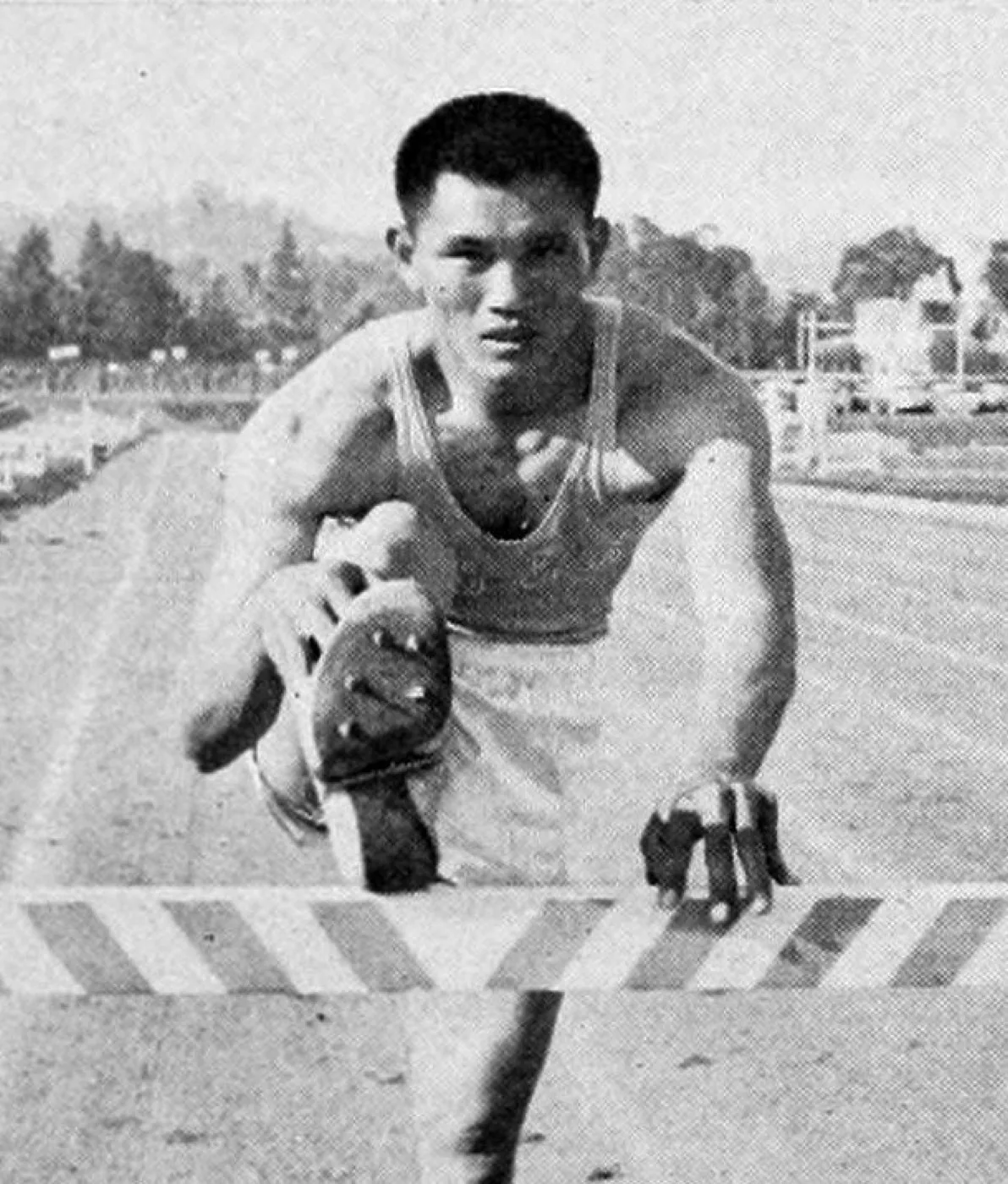
30-second overview: From Montreal in 1976, when Canada demanded a name change to “Taiwan” and Chiang Ching-kuo treated it as a national humiliation and withdrew the team, to Paris in 2024, when the Lee-Yang pair became the first men’s doubles team in Olympic history to defend their title, this small country competed for forty years under a code name without a country’s name. The same cap called “Chinese Taipei” has carried different weight for each generation of athletes: the 1981 Lausanne Agreement stipulated that the flag, anthem, and emblem all had to be different. The 12 medals at Tokyo 2020 and 7 at Paris 2024 were the best and second-best results in team history; institutionally, the National Sports Training Center was formally established in Zuoying in 1976, the year of the withdrawal, the Sports Administration was downgraded from the Sports Affairs Council in 2013, and Project Gold received NT$1.2 billion over three years in 2018. Gold medals do not grow out of thin air. The framework has not changed, but NHK began saying “台湾です” and France 2 said, “It is Taiwan as we know it.”
The “Taiwan” That Could Not Enter: The Closed Door at Montreal in 1976
On July 16, 1976, the eve of the Montreal Olympics opening ceremony, the 67-member Republic of China delegation was stranded at the site. The government of Canadian prime minister Pierre Trudeau had established diplomatic relations with the People’s Republic of China the previous year1. It then instructed the IOC that the delegation could participate in the Olympics, but not under the name “Republic of China”; the flag, anthem, or country name had to be compromised. IOC president Killanin shuttled between parties to mediate. The final proposal was for the team to enter as “Taiwan” — the first and only time in the Olympic arena that the name “Taiwan” was put on the table2.
Premier Chiang Ching-kuo made the final decision to reject it. Treating it as a national humiliation, he announced the team’s withdrawal. The delegation flew directly back to Taipei from Montreal airport3.
Four months after the door closed on the “Taiwan” that could not enter, the Zuoying Training Center was formally established in November 1976. The site had originally been prepared as an athletes’ training base for the 1976 Olympics, with planning underway since 1975; the people it received were the athletes who never made it to the Games4. The starting point of the National Sports Training Center was built on this ironic hinge in time: a venue constructed for competition began operating from the edition it never reached.
📝 Curator’s note: A common claim online is that “the IOC forced the Republic of China to change its name.” The narrative is convenient but inaccurate. The naming demand in 1976 came from the Canadian host government; the IOC was instead playing the role of mediator. Pointing the blame only at the IOC misses a sharper fact: this was the first and last time the name “Taiwan” had a chance to enter the Olympic arena, and the decision to refuse it was made in Taipei, not Geneva.
The withdrawal was not an isolated event. The Republic of China left the United Nations in 1971; Japan severed diplomatic ties in 1972, and the United States did so in 1979. One international door after another was closing. The Olympics were only one of them. On October 25, 1979, the IOC adopted a resolution by postal vote in Nagoya, with 62 votes in favor, 17 against, and 2 abstentions[^5]: Beijing would join under the name “People’s Republic of China” and use the PRC flag and anthem; Taipei would remain, but its flag, anthem, and emblem all had to differ from the existing ROC versions.
The word “different” planted the micro-politics of the next forty years.
The Cost of Rewriting the Lyrics to One Song: The Lausanne Agreement of 1981
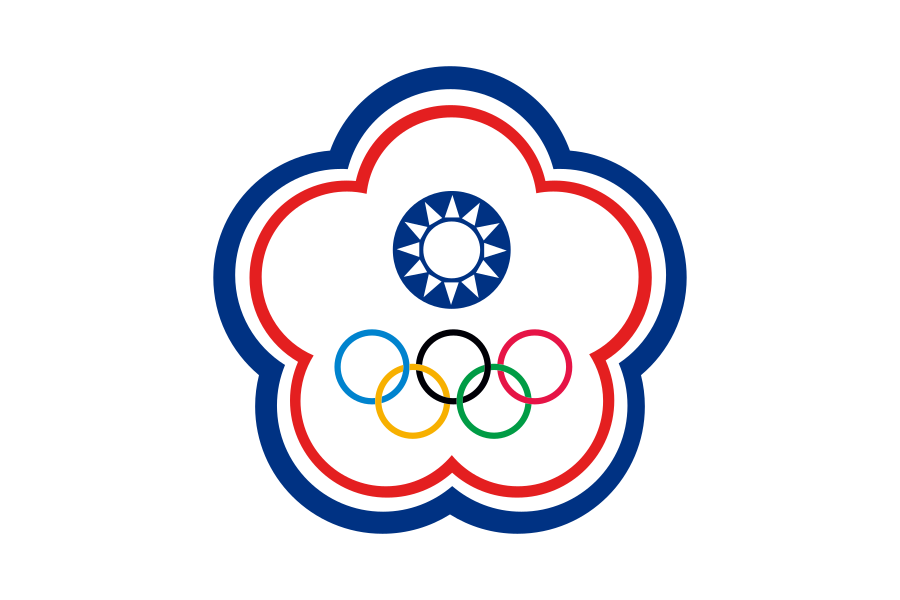
Chinese Taipei Olympic flag, designed by Weng Ming-yi in 1980, selected by Chiang Ching-kuo, and adopted after the 1981 Lausanne Agreement — Public domain Wikimedia Commons
March 23, 1981, Lausanne, Switzerland. Chinese Taipei Olympic Committee president Shen Chia-ming and IOC president Juan Antonio Samaranch, newly elected at the Moscow session in July 1980, signed the agreement5. It set “Chinese Taipei” as the official name, and three objects came with it: the Olympic flag, anthem, and emblem.
The flag’s designer was Weng Ming-yi6. A former modern pentathlon athlete then working at the Chinese Taipei Olympic Committee, he submitted three designs in 1980. Chiang Ching-kuo selected one: a white field, a plum blossom in the center with the Blue Sky with a White Sun motif, and the five Olympic rings below. It later became commonly known as the “plum blossom flag”7. It is not the national flag of the Republic of China, but it preserves the outline of the Blue Sky with a White Sun. It is a single-purpose flag for international sporting events and is not seen domestically.
The anthem was even more complicated. In June 1983, the Chinese Taipei Olympic Committee approved retaining the melody composed by Huang Tzu in 1937 for the National Flag Anthem and asked vice president Chang Pi-te to write new lyrics8. The original National Flag Anthem lyrics, written by Tai Chuan-hsien in 1937, began: “Magnificent mountains and rivers, abundant resources, descendants of Yan and Huang, heroes of East Asia... Blue Sky, White Sun, and a wholly red earth.” That version obviously could not be touched. Chang Pi-te’s new lyrics read: “Olympic, Olympic, without distinction of religion, regardless of race; to promote friendship, for world peace, youth of the five continents gather at the Olympics...”9
Same melody, different words. The same musical passage sang two different times and spaces. At the Sarajevo Winter Olympics in February 1984 and the Los Angeles Summer Olympics in July of the same year, Taiwan entered for the first time under the name “Chinese Taipei”10. On the day Tsai Wen-yee won bronze in the men’s 60 kg weightlifting event in Los Angeles, with a 125 kg snatch, 147.5 kg clean and jerk, and 272.5 kg total11, the plum blossom flag flew over the podium and the melody of the National Flag Anthem was played, but the words had already been changed.
This gap of “same melody, different words” has been pulled taut for forty years. On August 4, 2024, in Paris, when the Lee-Yang pair defended their men’s doubles title and stepped onto the podium, the plum blossom Olympic flag was raised and the Olympic anthem melody was played. Taiwanese spectators across the arena sang along — but they sang the National Flag Anthem lyrics, not the Olympic anthem lyrics12. After the match, Wang Chi-lin laughed and said: “At the last Tokyo Olympics there were no spectators; only the two of us sang by ourselves. This time the whole arena sang along.”13 Most people cannot even remember what the Olympic anthem lyrics look like. That is both the gap left by the 1983 rewriting and the way the public has stitched it together in everyday practice.
On November 24, 2018, the “Tokyo Olympics name-change referendum” was put to a vote. The proposal sought to apply for participation in the 2020 Tokyo Olympics under the name “Taiwan.” The referendum did not pass14. Before the vote, the IOC sent three warning letters stating that if the measure passed, the Chinese Taipei Olympic Committee’s membership could be suspended — meaning athletes might not even be able to wear the cap called “Chinese Taipei.” From the memory of the 1976 withdrawal to the 2018 referendum, Taiwanese society learned one thing: this cap lets athletes enter the arena; remove it, and the door may close.
The referendum debate that year can be read as an unresolved tension on this country: on one side was the memory of the door closed in 1976 — since the name “Taiwan” had once been pushed away by Taiwan’s own government, trying for it again now was reasonable; on the other side was the reality of competition — athletes could not lose their chance to compete because of decisions made by adults. Kuo Hsing-chun, Lin Yun-ju, and Tai Tzu-ying all publicly expressed concern before the referendum, worried about losing eligibility. Both positions live inside this cap, and the referendum result was a temporary balance between those two weights that year.
A Sixteen-Year Long Night and Two Golds in Fifteen Minutes: 1968-2004
Yang Chuan-kwang, decathlon silver medalist at the 1960 Rome Olympics; in 2025, the medal was designated by the Ministry of Culture as the first sports-related national treasure — Public domain Wikimedia Commons
September 6-7, 1960, Olympic Stadium in Rome. Yang Chuan-kwang (1933-2007), an Amis athlete from the Malan community in Taitung, wore a Republic of China flag uniform15 and spent two days competing in the decathlon against his UCLA teammate and roommate Rafer Johnson. Yang finished with 8,334 points, 58 points behind Johnson, and won silver16.
That competition established his nickname, the “Iron Man of Asia.” It was also the first individual Olympic medal in Taiwan’s Republic of China era. On April 29, 2025, the Ministry of Culture announced that the silver medal would be designated an “important antiquity,” the first sports-related national treasure17.
But after that 1960 medal, the wait was long. At Mexico City in 1968, Chi Cheng won bronze in the women’s 80-meter hurdles with a time of 10.51 seconds18 — Taiwan’s first Olympic medal by a female athlete, and the beginning of the nickname “Flying Antelope.” Then came a sixteen-year vacuum. Munich 1972, Montreal 1976 with the withdrawal, and Moscow 1980 with the U.S.-led boycott: three consecutive blank Games.
In Los Angeles in 1984, Tsai Wen-yee won bronze in men’s 60 kg weightlifting, the first medal under the name “Chinese Taipei” and the end of the sixteen-year gap19. The era’s phrase “Free China” also reached its end after this bronze medal: the next Olympic medal would not come until Athens twenty years later.
📝 Curator’s note: The four-stage history of Olympic medals is not a linear story of progress. Yang Chuan-kwang in 1960, Chi Cheng in 1968, and Tsai Wen-yee in 1984 were each solitary peaks supported by individual talent, while the institutional side was almost empty. The real turn had to wait until after the 2000s, when the National Sports Training Center was upgraded, the Sports Administration was established, and Project Gold began, before the shape of “systematic production” could be seen. Compressing those four decades into a single timeline misses the sixteen-year long night within it: a sports field that could only rely on genius descending from above.
In the early hours of August 27, 2004, Athens time, which was the evening of August 26 in Athens. Chen Shih-hsin took the stage against Cuba’s Diaz in the women’s 49 kg taekwondo gold medal match and won 6:420. Fifteen minutes later, Chu Mu-yen took the stage against Mexico’s Salazar in the men’s 58 kg gold medal match and won 6:121. Within fifteen minutes, Taiwan won two Olympic gold medals — its first and second.
They ended a 72-year wait without gold. The zero-gold count does not begin with Yang Chuan-kwang in 1960, but with Liu Changchun in Los Angeles in 1932. At the time, Liu competed alone for the Republic of China in order to prevent Japan from entering him under the name “Manchukuo”22. The 72-year long night ended in a relay by two athletes within fifteen minutes.
Taekwondo became an official Olympic sport only at Sydney in 2000; Athens 2004 was just its second official edition. In other words, Taiwan’s first gold came from an event that had opened its door only four years earlier. Behind that was the structural fact that individual events are relatively friendly to small delegations like “Chinese Taipei.” Team ball sports struggle to reach the Olympic stage, with baseball entering and leaving the program and basketball unable even to obtain a ticket. Individual combat sports instead offered a gold-medal route with relatively lower institutional costs.
It Was Not the National Flag That Rose, and Not the National Anthem That Was Sung, But We Were the Ones Crying: The Gold-Medal Project After 2013
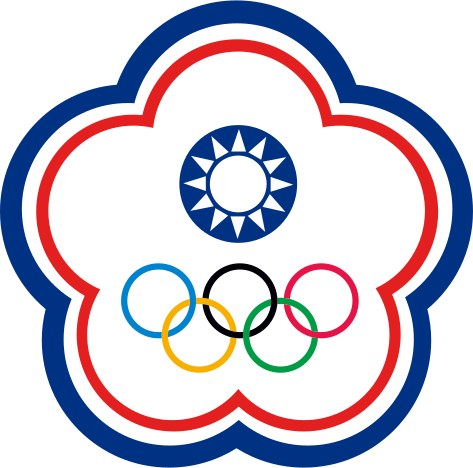
Chinese Taipei Olympic emblem — Public domain Wikimedia Commons
On January 1, 2013, the Sports Affairs Council was downgraded into the Sports Administration under the Ministry of Education23. This is a crucial and often miswritten date. It is commonly described as an “upgrade,” but in fact the ministerial-level Sports Affairs Council was demoted into an agency under the Ministry of Education, lowering its administrative rank. The downgrading was the result of government restructuring; the judgment behind it was to govern sports within the education system.
On January 1, 2015, the National Sports Training Center was upgraded into an administrative corporation, leaving direct Ministry of Education control and adopting corporatized operations24. The line that began with preparations in Zuoying in 1975, formal establishment in 1976, and renaming in 2001 as the National Sports Training Center under direct Sports Affairs Council control took forty years to gain autonomous governance.
In 2018, the Sports Administration launched Project Gold: NT$1.2 billion over three years, targeting key athletes with customized training, sports science support, overseas training camps, and coaching arrangements25. The first phase had a clear goal: help athletes qualify for the Tokyo 2020 Olympics. All 38 athletes in the program ultimately qualified, 18 entered the top eight, and they finally won 2 golds, 4 silvers, and 1 bronze26. Lin Yun-ju’s training support came close to NT$8 million in one year, a commonly cited funding range in case discussions27.
📝 Curator’s note: Gold medals are the product of state governance projects, not slogans about “national strength.” Look at the 12 medals at Tokyo 2020 and the 7 at Paris 2024: behind them is the line from preparations for the National Sports Training Center in 1975, corporatization in 2015, and Project Gold in 2018. During the same period, basic physical education classes were squeezed by academic pressure, CPBL attendance swung between highs and lows, and women’s professional leagues never developed a stable outline. The cost of concentrating resources at the top is the gap at the bottom. This article is about Olympic gold medals; what it does not write about is how much time children on the same country still have to move at school.
The Tokyo 2020 Olympics were postponed because of the pandemic and held in July-August 2021. The Chinese Taipei delegation won 2 golds, 4 silvers, and 6 bronzes, for 12 medals in total28 — the best result in team history. Kuo Hsing-chun won gold in women’s 59 kg weightlifting with three Olympic records: 103 kg in the snatch, 133 kg in the clean and jerk, and 236 kg total29. Lee Yang and Wang Chi-lin, the “Lee-Yang” pair, won Taiwan’s first Olympic badminton gold30. During the opening ceremony broadcast, NHK anchor Mayuko Wakuda said, “台湾です”31. The Japanese side deliberately placed the delegation in the “ta” group rather than the “chi” group, an alphabetical-order maneuver within IOC rules that put Taiwan before China for the first time.
In Paris in 2024, the team won 2 golds and 5 bronzes, 7 medals in total, the second-best result in team history32. On August 4, the Lee-Yang pair defended their title in the men’s doubles final — the first time in Olympic history that the same men’s doubles pairing had won back-to-back titles33. On August 9, Lin Yu-ting won gold in women’s 57 kg boxing after being entangled in the IBA gender controversy, with the IOC firmly supporting her participation34. Kuo Hsing-chun won bronze in women’s 59 kg weightlifting with a 235 kg total, becoming Taiwan’s first athlete to medal in three consecutive Olympics35. Other bronze medals included Lee Meng-yuan in men’s trap shooting, Taiwan’s first Olympic medal in shooting history36; Wu Shih-yi in women’s 60 kg boxing; Chen Nien-chin in women’s 66 kg boxing; and Tang Chia-hung in the men’s horizontal bar in artistic gymnastics37.
After Yang Yung-wei’s silver in men’s 60 kg judo at Tokyo 2020, he stopped in the quarterfinals at Paris 2024 and did not medal38.
When France 2 reported the Chinese Taipei delegation’s entrance in Paris, the narration said: “Chinese Taipei is Taiwan as we know it.”39 The same melody, different words, a different flag — but outside the playing field, discursive power quietly turned the label over.
A Story Not Written Beneath the Five Rings: Baseball and the Gap in “Chinese Taipei”
On August 21, 1931, at Koshien Stadium in Hyogo Prefecture, Japan, Kagi Norin School, or KANO, reached the final of Japan’s National Middle School Baseball Championship, known as Summer Koshien. It was the first time a school from Taiwan had reached that stage40. The team lost the final 0:4 to Chukyo Commercial School and finished runner-up41. Pitcher Go Meisho, also known as Wu Ming-chieh (1911-1983), a Hakka from Miaoli with the nicknames “Kirin Child” and “Strange Arm,” pitched all six games by himself42.
Among KANO’s 14 starters were Japanese, Han, and Indigenous players. The phrase “harmony among three peoples” was later repeatedly invoked43. Coach Kondo Hyotaro, from Ehime’s Matsuyama Commercial School, was a professional baseball instructor who transplanted Japan’s baseball training system to Chiayi44. After the team returned to Taipei in 1931, it paraded through the streets, a scene preserved by the Ministry of Culture’s National Cultural Memory Bank45. The 2014 film KANO brought this history back into public view.
Baseball has been Taiwan’s most popular sport since the Japanese colonial period, and after the war it continued as the “three-level baseball” system of youth, junior, and senior baseball. In 1969, the Golden Dragons Little League team defeated the Briarwood team from North County, Santa Clara, California, 5:0 in the Williamsport final, winning Taiwan’s first Little League World Series title46. For generations born in the 1950s and 1960s, staying up before dawn in front of the television to wait for broadcasts became a collective memory.
But this collective memory has a hidden dark side. In 1968, the Hongye Little League team defeated the visiting Japanese “Kansai Little League All-Star Team” 7:0. It is often misremembered as the “Wakayama world champion team,” but it was in fact a regionally selected all-star team. A subsequent judicial investigation exposed an impersonation scandal: among the 13 players, 5 had falsified their ages and were overage, and 9 competed using other students’ school enrollment records, with only 4 being genuine students; deputy team leader Hu Hsueh-li and others received suspended sentences for forging official documents in 196947. The media later called it “the scam of the century.” The starting point of three-level baseball was half genuine talent and half a patch sewn by the system.
On October 23, 1989, the Chinese Professional Baseball League, or CPBL, was formally established — Asia’s third professional baseball league after Japan and South Korea. On March 17, 1990, at Taipei Municipal Baseball Stadium, the inaugural season opener was Brother Elephants vs. Uni-President Lions. The final score was Brother 3:4 Uni-President48 — Brother lost. Chang Yung-chang became the first losing pitcher in league history, and Tu Fu-ming the first winning pitcher49. The first year began with four teams, Brother, Uni-President, Wei Chuan, and Mercuries, and professional baseball gained its first foothold in Taiwan. The CPBL passed through multiple game-fixing scandals, including the 1997 Black Eagles incident, the 2005 Black Bears incident, and the 2008 Black Elephants incident. At its lowest point, fan numbers fell severely, but by 2024 total attendance had returned to more than 2.9 million50, marking a new revival period.
Here is the question: why is Taiwan’s most popular sport so scarce on the Olympic stage?
The history of baseball moving in and out of the Olympics is this: the 2008 Beijing Olympics were the last Games in which baseball was an official sport, with Taiwan competing under the name “Chinese Taipei” and finishing fifth51; London 2012 and Rio 2016 had no baseball; baseball returned at Tokyo 2020, but Chinese Taipei withdrew from the qualifiers because of pandemic risks and because multiple CPBL players were unwilling to travel abroad during the competition period52; Paris 2024 had no baseball; baseball will return at Los Angeles 2028 with a six-team field53.
Baseball’s coming and going in the Olympics is tied to the IOC’s tug-of-war with Major League Baseball over whether MLB will release players, and to whether the host country needs baseball to fill seats. This is internal Olympic politics, not a problem with baseball itself. For Taiwan, it means one structural thing: the hottest anchor of national identity, baseball, happens not to be completed under the five rings. Taiwan’s gold-medal narrative is in taekwondo, badminton, weightlifting, and boxing, but the collective ritual of “the whole country watching a game together” is in the CPBL, the Asian Baseball Championship, and the World Baseball Classic. The overlap between these two systems is disproportionately small.
On November 19, 2023, in the WBC qualifiers, Taiwan went on in the 2024 WBSC Premier12 to defeat Japan and the United States and win its first Premier12 title. That night, 26,000 people sang together at the Taipei Dome and Taipei 101 displayed the word “Champion.” The impact of that victory far exceeded any Olympic medal in the same year54. The same country runs on two sports narratives: one is the Olympic “Chinese Taipei” framework, once every four years, scattered across events, with women leading the gold-medal tally; the other is baseball’s “Team Taiwan,” with yearly competition, men in the lead, and a deep social base.
Closing: That Cap, and a World Beginning to Say Taiwan
Wang Chi-lin said: “At the last Tokyo Olympics there were no spectators; only the two of us sang by ourselves. This time the whole arena sang along.” He was talking about that men’s doubles title defense in Paris on August 4, 2024 — the plum blossom Olympic flag was raised, the Olympic anthem melody was played, and the crowd sang the National Flag Anthem lyrics. The framework was “Chinese Taipei,” but the people on site had already rewritten the content.
NHK said “台湾です,” France 2 said “It is Taiwan as we know it,” and IOC documents still write Chinese Taipei, but the Japanese side deliberately placed the delegation in the “ta” group, and reporters around the world called this team Taiwan. The flag, anthem, and emblem fixed by the 1981 Lausanne Agreement remain in their original positions. This cap has not been taken off, but its mobility — the same cap worn with different weight by different people — has been stretched open layer by layer by forty years of gold medals, withdrawals, referendums, and defended titles.
From the closed “Taiwan” door at Montreal in 1976 to the world calling this team Taiwan in Paris in 2024, what happened in between was that a small country used a 36,000-square-kilometer training ground, the iteration of four competent authorities, a NT$1.2 billion project, 52 representative athletes, and a song with rewritten lyrics to slowly stitch its own name onto the seat card of the international arena. At the next Games in Los Angeles in 2028, baseball will return, the gold-medal list will be updated, and that cap may still be on the athletes’ heads. But after reading through forty years of schedules, the thing most worth remembering may be this: when the flag, anthem, and emblem are all constrained, only the content can still be changed — and that is what the people of this country have never stopped doing.
Further Reading
- Tai Tzu-ying: From a girl in Zuoying, Kaohsiung, to three-time world No. 1
- Kuo Hsing-chun: The weightlifting path of an athlete who medaled in three consecutive Olympics
- Lee Yang: The Lee-Yang pair and the first men’s doubles title defense in Olympic history
- Yang Yung-wei: The training system behind a Tokyo 2020 judo silver medal
- Chuang Chih-yuan: Table tennis’s solitary king with four straight Asian titles
- Taiwanese Baseball Culture: A century of baseball history from KANO to the CPBL
Image Sources
Awaiting image supplementation by the main session.
References
- Canada-People’s Republic of China diplomatic relations established on 1970/10/13; the Republic of China severed ties. Wikipedia, “Canada-China relations.”↩
- Chinese Taipei Olympic Committee official website, “1976 Montreal Olympics” (tpenoc.net/game/montreal-1976); Central News Agency, 2024/7/10, “Review of political interference incidents at the Olympics” (202407103006).↩
- Taiwan People News, “The missed 1976 opportunity to use the name ‘Taiwan’” (peoplenews.tw).↩
- National Sports Training Center official website, “Center Introduction” (nstc.org.tw); Office of the President, “News on the unveiling ceremony of the National Sports Training Center” (president.gov.tw/NEWS/19168).↩
- UPI report, 1981/3/23 (upi.com/Archives/1981/03/23); Chinese Taipei Olympic Committee, official page on the Lausanne Agreement (tpenoc.net/lausanne).↩
- Chinese Taipei Olympic Committee, “Explanation of flag, anthem, and emblem” (tpenoc.net/emblem-flag-and-song); Wikipedia, “Plum blossom flag.”↩
- Same as above; StoryStudio, “The Olympic model: why it is called ‘Chinese Taipei’” (storystudio.tw).↩
- China Times, 2018/11/15, “History of the Chinese Taipei Olympic anthem” (chinatimes.com); Sports Vision, “Chinese Taipei Olympic anthem lyrics differ from the National Flag Anthem” (sportsv.net/articles/55004).↩
- Chinese Taipei Olympic Committee, official page on anthem lyrics; same as [^9].↩
- Chinese Taipei Olympic Committee, official page on the 1984 Los Angeles Olympics (tpenoc.net/game/los-angeles-1984).↩
- Wikipedia, “Tsai Wen-yee”; Chinese Taipei Olympic Committee official page on Los Angeles 1984.↩
- United Daily News, 2024, “The Lee-Yang gold-medal scene sang the wrong lyrics” (udn.com/news/story/122355/8140389).↩
- Wang Chi-lin post-match interview in Paris, 2024/8/4; same as [^13].↩
- Wikipedia, “2018 Tokyo Olympics name-change referendum”; Chinese Taipei Olympic Committee open letter to the IOC, 2018/11.↩
- Wikipedia, “Yang Chuan-kwang”; English Wikipedia, “Yang Chuan-kwang.”↩
- English Wikipedia, “Athletics at the 1960 Summer Olympics – Men’s decathlon”; Chinese Taipei Olympic Committee official page on the 1960 Rome Olympics (tpenoc.net/game/rome-1960).↩
- Central News Agency, 2025/4/29, “Yang Chuan-kwang’s silver medal listed as a national treasure” (202504290215); Ministry of Culture announcement.↩
- Wikipedia, “Chi Cheng”; Chinese Taipei Olympic Committee page on the 1968 Mexico City Olympics.↩
- Chinese Taipei Olympic Committee official page on Los Angeles 1984; Wikipedia, “Tsai Wen-yee.”↩
- United Daily News VIP, “Chen Shih-hsin’s first gold at Athens 2004” (vip.udn.com/vip/story/121160/5701995); Central News Agency, 2024/7/10, “Athens 2004 breaks the zero-gold barrier” (202407103013).↩
- Wikipedia, “Chu Mu-yen”; same Central News Agency report as above.↩
- Wikipedia, “Republic of China at the 1932 Summer Olympics”; United Daily News Opinion, “Chang Hsing-hsien” (opinion.udn.com/opinion/story/11655/5154778).↩
- Wikipedia, “Sports Administration, Ministry of Education”; Executive Yuan organizational restructuring took effect on 2013/1/1.↩
- National Sports Training Center official website; administrative corporatization on 2015/1/1.↩
- Ministry of Education Sports Administration, “Project Gold and sports science support” (edu.tw/News_Content.aspx?n=9E7AC85F); Radio Taiwan International, “Sports Administration’s 30 key athletes” (rti.org.tw).↩
- Mirror Media, “Results of Project Gold”; ETtoday 2021 report, “Project Gold NT$1.2 billion” (sports.ettoday.net/news/2043720).↩
- SETN, “Lin Yun-ju receives NT$8 million in annual training support.”↩
- Central News Agency, 2024/7/10, “Tokyo 2020’s 12 medals set team-history best” (202407103017); Public Television Service, “Seven key numbers from Tokyo” (news.pts.org.tw/article/538970).↩
- Wikipedia, “Kuo Hsing-chun”; three Olympic records in women’s 59 kg weightlifting at Tokyo 2020.↩
- Chinese Taipei Olympic Committee official medal statistics; Lee-Yang pair men’s doubles gold on 2020/7/31.↩
- NHK Tokyo Olympics opening ceremony broadcast, 2021/7/23; anchor Mayuko Wakuda.↩
- Sports Vision, “Paris 2024: 2 golds and 5 bronzes, second-best in history” (sportsv.net/articles/113390); Executive Yuan Paris 2024 results page (ey.gov.tw).↩
- Same as above; Lee-Yang pair’s men’s doubles title defense on 2024/8/4 — the first same-pair men’s doubles title defense in Olympic history.↩
- Central News Agency, 2024/8/5, “Report on Team Taiwan in Paris” (202408050025); IBA-IOC gender controversy, 2023-2024.↩
- Wikipedia, “Kuo Hsing-chun”; Executive Yuan Paris 2024 results page.↩
- Same as [^33]; Lee Meng-yuan’s bronze in men’s trap — Taiwan’s first Olympic medal in shooting.↩
- Executive Yuan Paris 2024 results page; Sports Vision.↩
- Wikipedia, “Yang Yung-wei”; stopped in the quarterfinals of men’s 60 kg judo at Paris 2024.↩
- France 2 Paris Olympics opening ceremony broadcast, 2024/7/26.↩
- Wikipedia, “Kagi Norin School” (Japanese Wikipedia); Taipei Physical Education College Baseball Wiki, “KANO baseball team” (twbsball.dils.tku.edu.tw).↩
- Same as above; runner-up in the 1931 Summer Koshien final, 0:4 against Chukyo Commercial School.↩
- Chiayi City Government, “KANO baseball team” (chiayi.gov.tw).↩
- Ministry of Culture National Cultural Memory Bank, “KANO street parade” (tcmb.culture.tw); Japanese Wikipedia, “KANO 1931 Umi no Mukō no Kōshien.”↩
- Ministry of Culture National Cultural Memory Bank, “KANO street parade” (tcmb.culture.tw); coach Kondo Hyotaro took over the KANO baseball team in 1928.↩
- Ministry of Culture National Cultural Memory Bank; script materials for the 2014 film KANO.↩
- Taipei Physical Education College Baseball Wiki, “1969 23rd Little League World Series”; Wikipedia, “Golden Dragons Little League team.”↩
- BuzzOrange, 2016/8/25, “The truth about Hongye Little League” (buzzorange.com); Mingrentang, “52 years of Hongye” (opinion.udn.com); Wikipedia, “Hongye Little League team.”↩
- Taipei Physical Education College Baseball Wiki, “Chinese Professional Baseball League opening game”; CPBL official website, “League Introduction” (cpbl.com.tw/about).↩
- Taipei Physical Education College Baseball Wiki, “Chinese Professional Baseball League opening game” (twbsball.dils.tku.edu.tw); first losing pitcher in league history Chang Yung-chang, first winning pitcher Tu Fu-ming.↩
- CPBL official 2024 attendance statistics.↩
- Wikipedia, “Baseball at the Summer Olympics” (zh.wiki).↩
- Same as above; Tokyo 2020 qualifiers.↩
- ETtoday 2024 report, “Baseball returns to the 2028 Los Angeles Olympics with six teams” (sports.ettoday.net/news/2941808); Yahoo Sports report on baseball and softball returning in 2028.↩
- 2024 WBSC Premier12 — Taiwan’s first championship in an international top-tier tournament; Taipei City Government event materials.↩