
Taiwan's Power and Semiconductors: The Electricity Bill of the "Protelem of the Nation"
30-Second Overview: Semiconductors are not achieved solely through engineers, fabs, and advanced equipment, but also rely on a stable power grid. As AI chips become more powerful, wafer manufacturing, advanced packaging, server testing, and data centers require even more electricity. Consequently, Taiwan has gained leverage in the global supply chain, but this also places electricity prices, fuel imports, renewable energy, carbon emissions, and blackout risks onto the same single bill.
25.55 billion kWh.
This is the 2024 electricity consumption of TSMC reported by the tech media Tom's Hardware. The report originally discussed how TSMC is reducing the peak power consumption of EUV lithography machines, mentioning that energy-saving EUV tools are expected to save 190 million kWh by 2030. However, the same article also placed TSMC's annual consumption of 25.55 billion kWh alongside it. 1
When these two numbers are placed together, the picture changes. When people speak of the "Protector of the Nation" (hùguó shénshān), they usually think of TSMC, advanced processes, stock prices, exports, and diplomatic leverage. The 25.55 billion kWh figure pulls that same "mountain" back to earth—back to the grid, fuel, power plants, renewable energy contracts, and every single utility bill.
An advanced wafer fab cannot afford a blackout. EUV lithography machines, cleanroom HVAC, chemical supplies, waste gas treatment, ultrapure water systems, metrology equipment, data centers, and backup systems all require stable operation. Whether chips can be mass-produced ultimately depends on whether the power supply remains stable.
This is why semiconductor electricity use should not merely be written as "TSMC uses a lot of power."
A more accurate question is: As Taiwan takes on the global demand for AI chips and advanced manufacturing, who provides that stable power? Who bears the burden of fuel imports and carbon emissions pressure? Who pays the cost when electricity prices are adjusted? Who bears the risk during blackouts or grid instability?
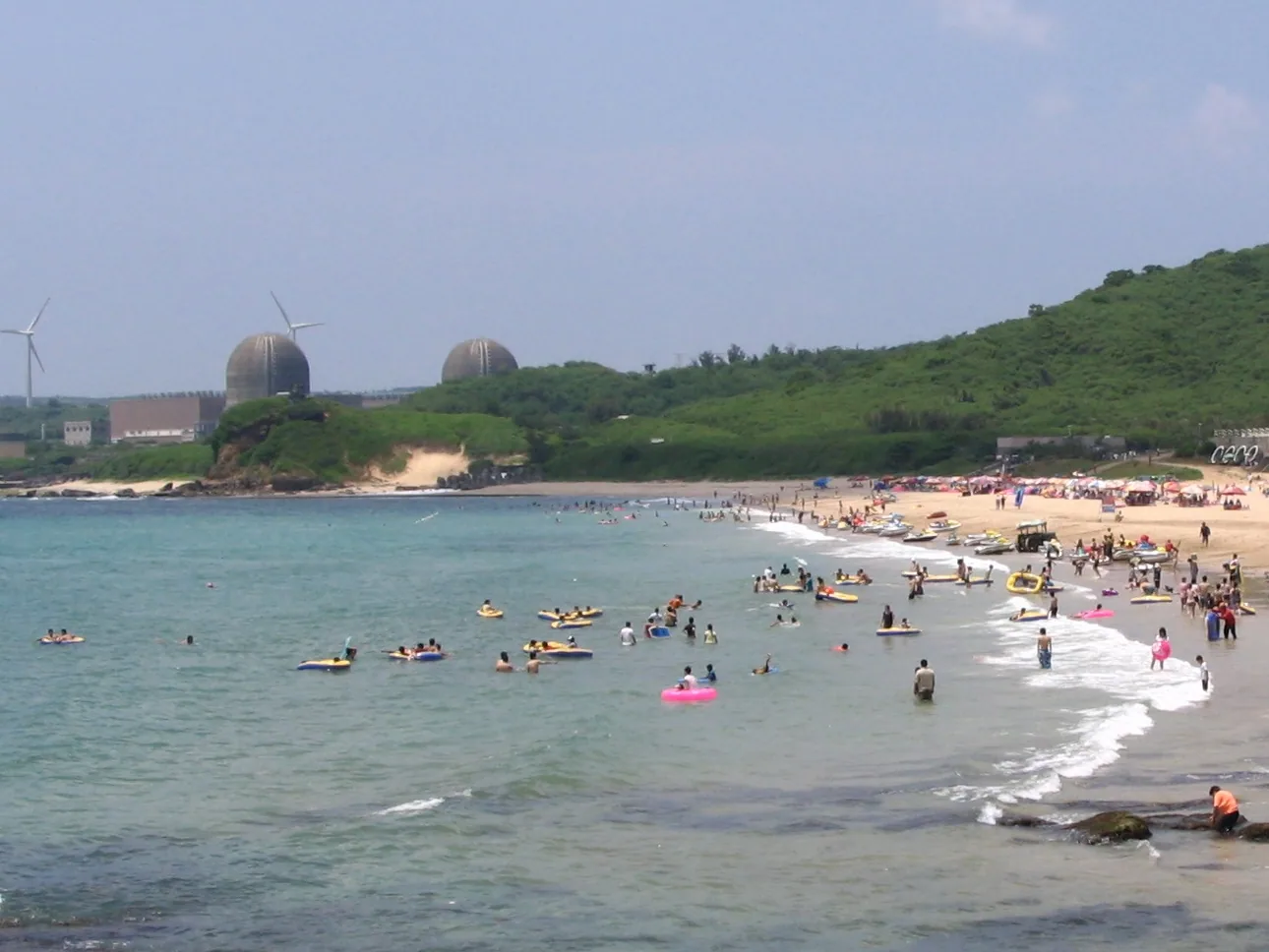
The Maanshan Nuclear Power Plant (Maanshan Nuclear Power Plant) in Hengchun, Pingtient. The demand for AI and semiconductor electricity has brought discussions regarding nuclear power, natural gas, renewable energy, and grid resilience back into the public sphere. Photo: M. Weitzel. CC BY-SA 3.0 via Wikimedia Commons.
AI Demand Eventually Returns to the Electricity Meter
Generative AI looks like a cloud service, but in reality, it is machines performing computations.
From design to deployment, an AI chip passes through wafer manufacturing, advanced packaging, testing, motherboards, power supplies, thermal management, server racks, and data centers. Every stage requires electricity. The upstream manufacturing requires power because processing equipment and clean environments cannot be interrupted. The downstream packaging requires power because the integration of chips and memory is becoming increasingly complex. AI servers require power because GPUs and accelerators convert massive amounts of electricity into computation—and also into heat.
Therefore, the AI supply chain is not just about the abstract term "computing power." Computing power involves electricity bills, the power grid, gas-fired units, renewable energy procurement, and carbon emissions.
The significance of that 25.55 billion kWh at the start is not to shock, but to remind readers: The advantage of advanced processes is built upon massive and continuous energy inputs. EUV tools can save energy, cleanrooms can be optimized, and facility systems can be fine-tuned. But as long as AI demand continues to push capacity upward, the pressure on total volume will not automatically disappear just because a single piece of equipment becomes more efficient.
This is also where the AI era differs from the past electronics industry. In the past, talking about "Made in Taiwan" often involved factory efficiency, supplier density, engineering culture, and lead times. Now, we must add another question: Can Taiwan reliably connect global computing demand to its own power grid?
If the answer is yes, electricity becomes part of Taiwan's supply chain credibility. If the answer begins to waver, foreign customers will include manufacturing locations, renewable energy availability, blackout risks, and geopolitics in their spreadsheets.
Stability is More Critical Than Cheapness
When people talk about electricity, they often think of price first. But for a wafer fab, stability may be more important than simple electricity rates.
Many steps in wafer manufacturing must be performed continuously in highly controlled environments. Voltage fluctuations, momentary outages, or unstable power quality can lead to equipment downtime, product scrapping, or production schedule disruptions. For an average household, a few minutes of blackout is an inconvenience; for an advanced wafer fab, a few minutes could mean a batch of wafers lost, a drop in yield, or even the loss of customer trust.
This is also the point most easily overlooked in supply chain games. Foreign customers need Taiwan because Taiwan can deliver chips long-term, stably, and on time. Stable power supply thus becomes part of Taiwan's credibility.
Conversely, when international customers and governments evaluate whether to move parts of manufacturing to the US, Japan, or Europe, electricity will also be a consideration. It is not just geopolitical risk that drives overseas expansion; energy supply, electricity price structures, renewable energy availability, and grid resilience will all enter the calculation.
There is a subtle nuance here: Part of Taiwan's past competitiveness came from stable and relatively affordable electricity. But as energy transition, fuel prices, Taipower's (Taiwan Power Company) finances, industrial electricity rates, and decarbonization pressures all rise simultaneously, this foundation can no longer be taken for granted.
The semiconductor industry wants electricity that is "cheap, stable, low-carbon, and scalable." The problem is that these four conditions are difficult to satisfy at once. Cheap power might lower corporate costs but force Taipower or the public to bear more; stable power may require reserve capacity, gas-fired units, or energy storage; low-carbon power requires renewable energy, nuclear, or other low-carbon solutions; and scalability involves land, the grid, ports, receiving terminals, and local acceptance.
Thus, the electricity issue for semiconductors involves engineering, finance, and politics all at once.
Green Power is Gradually Becoming a Contract Condition
There is another layer of pressure on semiconductor electricity use: customers' decarbonization commitments.
Apple, NVIDIA, cloud giants, and global brands all face supply chain carbon emission pressures. They look not only at whether TSMC can make chips but also at the energy source used in the chip production process. When customers commit to Net Zero or RE100, a supplier's electricity use is no longer just an internal cost, but part of the customer's product carbon footprint.
This places Taiwan's semiconductor industry facing dual requirements: on one hand, expanding capacity; on the other, securing more low-carbon power. Expansion increases electricity usage, while decarbonization requires a transformation of the energy structure. When both happen simultaneously, the difficulty cannot be solved by corporate energy efficiency alone.
Reporting from Tom's Hardware, citing DigiTimes, noted that the Taiwan Semiconductor Industry Association once warned the government about the urgency of power stability and renewable energy supply; the report also mentioned that in 2024, the proportion of renewable energy in Taiwan's wafer fab electricity use remained below RE100 pathway requirements. 2 Such reports should not be read as mere complaints against the government, but should be placed back into the supply chain context: if customers want low-carbon chips, Taiwan must have sufficient low-carbon power.
This is why "green power" in semiconductors is not just a pretty slogan. It is slowly becoming a condition for orders, a financial condition, and a diplomatic condition.
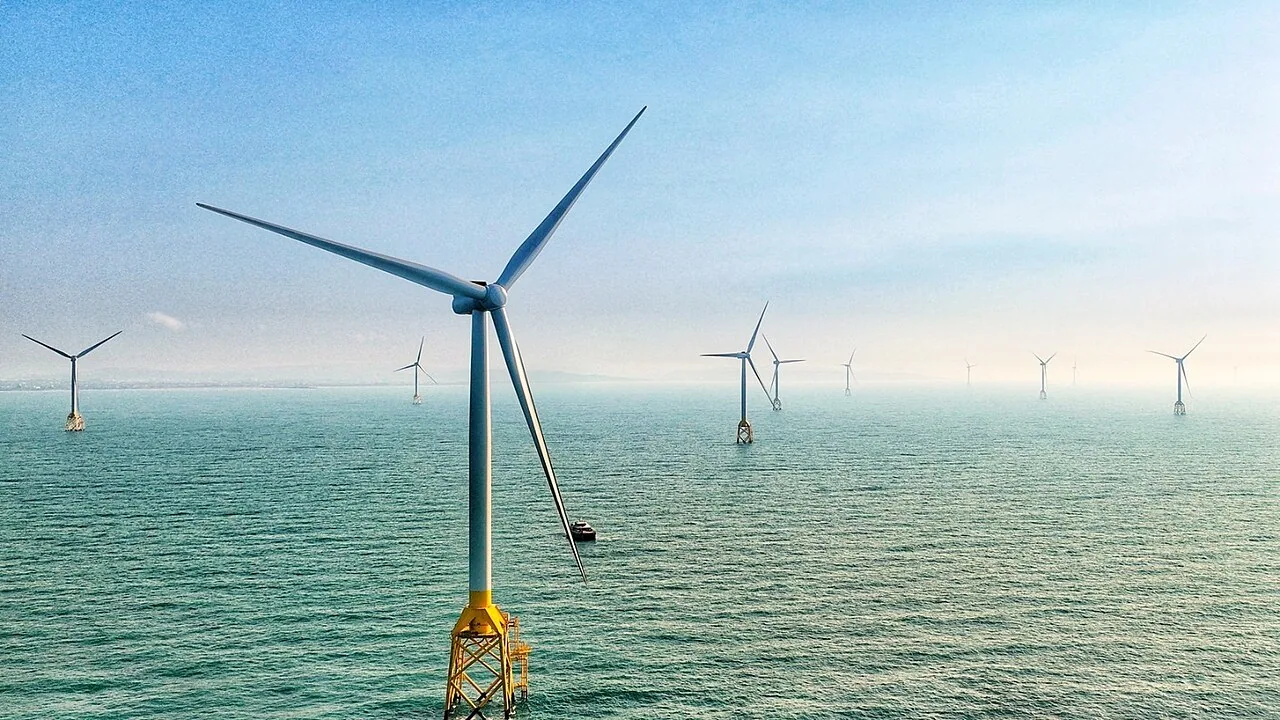
Offshore wind farm off the coast of Miaoli. As semiconductor customers demand low-carbon supply chains, the requirement extends from wafer fabs to wind farms, grid integration, energy storage, and local community engagement. Photo: Ministry of Economic Affairs, ROC, CC BY-SA 4.0 via Wikimedia Commons.
If Taiwan can provide a low-carbon, stable manufacturing environment, its indispensability will strengthen. If Taiwan can only provide high-density manufacturing but cannot keep up with customers' carbon requirements, some orders may be pushed to other regions, or companies may be required to set up factories overseas to access local low-carbon power.
Efficiency Gains Will Not Automatically Offset Total Growth
Corporations will, of course, implement energy-saving measures. EUV lithography machines, cleanroom HVAC, facility systems, process equipment, and data centers all have room for efficiency improvements.
However, efficiency gains and total volume pressure are two different things.
If every piece of equipment becomes more energy-efficient, but the number of machines, wafer capacity, advanced packaging capacity, AI server testing, and data center demand increase even faster, total electricity consumption will still rise. This is the dilemma of the AI supply chain: technological progress often increases efficiency on one hand while creating even greater demand on the other.
Research by Roussilhe et al., using 16 Taiwanese electronic component manufacturers as a sample, pointed out that between 2015 and 2020, the greenhouse gas emissions, final energy and electricity use, and water usage of the sampled companies increased alongside production growth, raising the risk of "carbon lock-in." 3 This reminder is vital: industrial upgrading does not automatically lead to a decrease in environmental burden.
In other words, Taiwan cannot just ask, "Is each wafer more energy-efficient?" It must also ask: "After the entire industry scale expands, how will we handle total electricity use, total carbon emissions, total fuel imports, and the load on the power grid?"
This question will not disappear simply because Taiwan is important. Precisely because Taiwan is important, it needs to be addressed proactively.
Whose Electricity Bill Is It?
Semiconductors bring exports, wages, tax revenue, stock markets, and international visibility. These benefits are real.
But the electricity bill is also real.
Part of the bill is paid by corporations, reflected in electricity costs, equipment investment, renewable energy procurement, and energy management. Another part is shared by society, reflected in grid construction, electricity pricing policies, fuel imports, air pollution and carbon emissions, power plant siting, transmission lines, and local acceptance of energy facilities.
There are no simple answers here. If electricity prices are too low, industry costs may be shifted to the public or Taipendo's finances; if prices rise too quickly, it may affect industrial competitiveness and the burden on livelihoods. If renewable energy expansion is too slow, corporate decarbonization pressure will rise; if it expands too fast, it may encounter conflicts regarding land, fisheries, landscapes, and local politics.
The "electricity bill of the Protector of the Nation" is therefore a public issue: What energy mix should Taiwan use to sustain its position in the global supply chain?
The government sees energy security and industrial competitiveness. Corporations see costs, lead times, customer requirements, and overseas expansion options. The public sees electricity prices, air pollution, blackouts, local infrastructure, and quality of life. Foreign customers see: Can Taiwan continue to provide a stable supply over the next decade while meeting low-carbon supply chain requirements?
The same kilowatt-hour means different things to different people. To a factory, it is capacity; to a household, it is a bill; to the government, it is energy policy; to a foreign customer, it is supply chain risk.
Corporations Buy Green Power, but Society Must Build the System
Large semiconductor companies can sign power purchase agreements (PPAs), buy renewable energy certificates (RECs), invest in energy-saving equipment, and require suppliers to decarbonize together. These practices are necessary because international customers track carbon emissions all the way up the supply chain.
But corporations buying green power does not mean the societal problem is automatically solved.
First, green power must actually be generated. Offshore wind, solar, geothermal, biomass, or other low-carbon sources all require land, sea areas, grid integration, energy storage, maintenance, and local coordination. Corporations can sign contracts to purchase it, but the generation facilities and the grid must still be undertaken by society as a whole.
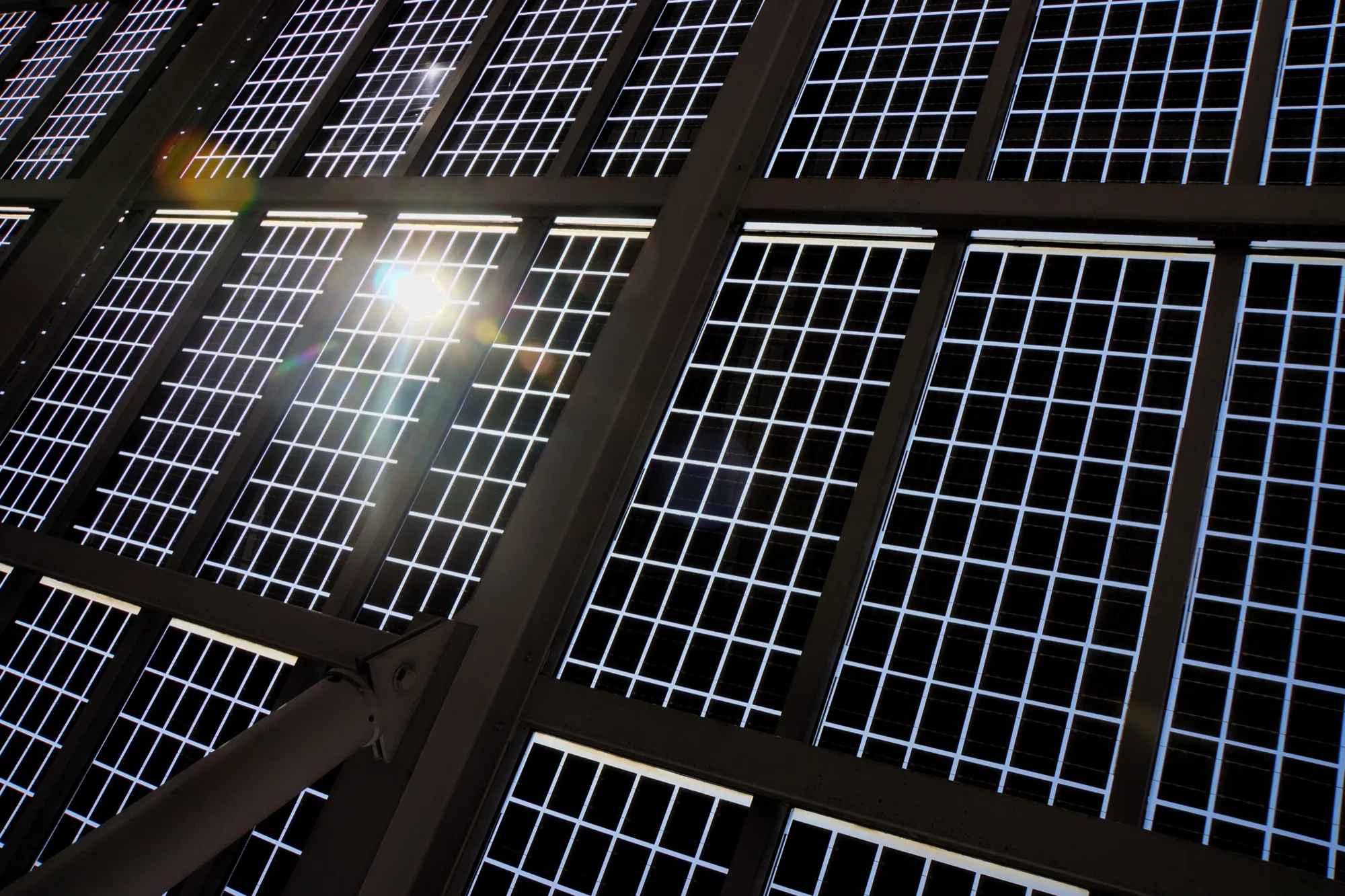
Solar panels on the roof of the Xuju Service Area, National Highway. Before corporations can buy green power, society must first build the generation, land, grid integration, and maintenance systems. Photo: lienyuan lee. CC BY 3.0 via Wikimedia Commons.
Second, green power has a temporal issue. Solar energy is abundant during the day, but wafer fabs must still operate at night; wind power is high when it is windy, but other sources or storage must fill the gap when there is no wind. What semiconductors need is electricity that is stable every moment, not just enough green power purchased in terms of annual totals.
Third, green power also has a distribution issue. If the wealthiest companies with the most bargaining power are the first to secure low-carbon power, what happens to other industries, SMEs, and households? If high-tech exports can shift costs to global customers while local residents bear the burden of grids, substations, wind farms, solar farms, and electricity price adjustments, social trust will become fragile.
Therefore, the green power issue for Taiwan's semiconductors cannot be solved by corporate sustainability departments alone. It requires energy policy, electricity markets, local governance, and industrial transformation to keep pace. Corporate purchasing power can drive the market, but behind that market, public infrastructure is still required.
The Nuclear Controversy Is Also Brought Back by AI
Discussions about Taiwan's power supply can hardly avoid nuclear power.
In 2025, after Taiwan's last operating nuclear unit shuts down, whether to extend the life of nuclear plants was brought back into public debate via referendum. Associated Press reported that although the 2025 Maanshan extension referendum had significantly more "yes" votes than "no" votes, it failed to meet the required threshold; proponents of nuclear power argued that it helps lower electricity prices and supports the electricity growth brought by AI applications. 4
The nuclear controversy does not need to be simplified into a stance here. What is truly noteworthy is: AI and semiconductors are making energy issues once again a matter of national capability.
Proponents of nuclear power will say Taiwan needs stable, low-carbon power and cannot rely solely on imported gas and growing renewables. Opponents will say that nuclear waste, earthquake risks, decommissioning costs, and local safety cannot be overshadowed by the AI boom. Behind the arguments on both sides, they are actually answering the same question: Which type of risk is Taiwan willing to accept in exchange for its position in the global supply chain?
This question cannot be left for TSMC or Taipower to answer alone. It is a choice for the whole of society.
Supply Chain Leverage Requires Infrastructure
Taiwan's value in the semiconductor supply chain comes not only from TSMC but also from an entire engineering society: science parks, suppliers, engineers, packaging and testing, chemicals, logistics, water/electricity, and government coordination.
Electricity is the most fundamental infrastructure of this engineering society.
When the world says "Taiwan is irreplaceable," it is actually relying on Taiwan's power grid. When foreign governments push TSMC to set up factories in the US, Japan, or Germany, they are also trying to move part of the electricity bill onto their own territory. This, in turn, shows that Taiwan's value is so high that various countries do not want to place all the risk on a single island.
What Taiwan truly faces next is a more difficult institutional question: If semiconductors are Taiwan's international leverage, what kind of energy system is Taiwan willing to use to maintain it?
A good answer will not just be "build more power plants" or "buy more green power." It also includes grid resilience, energy storage, demand response, industrial electricity pricing, energy import security, local communication, renewable energy grid integration, and how energy-intensive industries can explain their costs and contributions to society.
Semiconductors make Taiwan needed by the world. Electricity reminds Taiwan: being needed is not free.
Further Reading
- AI Hardware Supply Chain — How Taiwan turns cloud demand into shippable machines.
- Semiconductor Water Use and Taiwan's Water Resources — How wafer manufacturing enters reservoirs, droughts, and reclaimed water management.
- Overseas Expansion of AI Supply Chains — How overseas expansion ties supply chains, electricity, and local infrastructure together.
- Taiwanese Companies: TSMC — How the pure-play foundry model has become a global bottleneck for advanced chips.
Image Sources
- Maanshan Nuclear Power Plant Exterior (Pingtung Hengchun, hero / inline): Maanshan Nuclear Power Plant, Nan Wan — Photo: M. Weitzel, Wikimedia Commons, CC BY-SA 3.0. This article uses a version cached at
public/article-images/nature/maanshan-nuclear-plant-nan-wan-2014.webp. - Offshore Wind Farm off Miaoli: Hai Long offshore wind farm — Wikimedia Commons, CC BY-SA 4.0. This article uses a version cached at
public/article-images/nature/hai-neng-offshore-wind-farm-2024.webp. - Xihu Service Area Solar Panels: Xihu Service Area solar panels — Photo: lienyuan lee, Wikimedia Commons, CC BY 3.0. This article uses a version cached at
public/article-images/nature/xihu-service-area-solar-2014.webp.
References
- Tom's Hardware: TSMC reduces peak power consumption of EUV tools by 44% — Reports on TSMC's EUV energy-saving plan, total electricity scale, and the proportion of tool energy savings, used to illustrate the coexistence of efficiency gains and total volume pressure.↩
- Tom's Hardware: TSMC-led semiconductor association warns of power supply pressure — Reports on the Taiwan Semiconductor Industry Association's warning regarding power stability and renewable energy supply, summarizing RE100, wafer fab green power demand, and overseas relocation risks.↩
- Roussilhe et al.: From Silicon Shield to Carbon Lock-in? — A study of 16 Taiwanese electronic component manufacturers' environmental footprints from 2015-2020, proposing the risk of increasing energy, water, and carbon emissions alongside production growth, as well as "carbon lock-in."↩
- AP: Taiwan lawmakers survive recall vote; nuclear power referendum fails — Associated Press report on the 2025 Taiwan nuclear extension referendum results, explaining how nuclear proponents incorporate electricity prices and AI power demand into their discourse.↩