
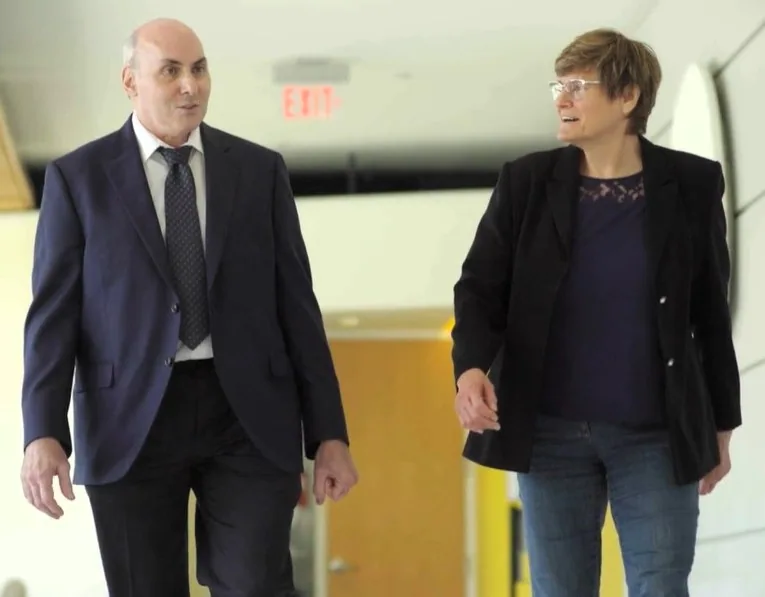
Katalin Karikó and Drew Weissman received the Life Science Medal on June 16, 2022. In October the following year, they jointly received the Nobel Prize in Physiology or Medicine. Photo: Thorne Media. CC BY 3.0 via Wikimedia Commons.
Prologue: 930,000 Doses at Daybreak, and a Woman Who Had Been Fired Five Times
At 7 a.m. on September 2, 2021, a cargo plane carrying 930,000 doses of BNT vaccine landed at Taoyuan International Airport1. After four consecutive months of local outbreaks in Taiwan, Level 3 alerts in Taipei and New Taipei, and more than five hundred deaths, the first privately procured batch of mRNA vaccines finally arrived that morning2.
Taiwanese social media was jubilant that day, but few people knew that the tube of liquid about to be injected into their arms rested on thirty years of stubbornness by a Hungarian immigrant woman scientist3. Katalin Karikó had been demoted at the University of Pennsylvania, had her laboratory cleared out, repeatedly had grant applications rejected, and was called by colleagues “that crazy mRNA woman.” She received the Nobel Prize in October 2023. By then, 26 years had passed since her first conversation with Weissman in front of a photocopier in 1997.
On roughly the same timeline, another group of people in Taiwan were working on another kind of life-saving medicine. In a cleanroom in a corner of a science park, they suited up completely, stepped across the threshold of an airlock, and held pipettes to replace cell culture medium. On June 4, 2024, when the Legislative Yuan’s gavel fell to pass the Regenerative Medicine Act and the Regenerative Medicine Preparations Act4, the cells in their hands were rewritten in meaning: no longer merely a “special-permission attempt” between physician and patient, but a “precision product” formally brought under state regulation.
Two kinds of life-saving medicine, cells and molecules. The former requires factories to move toward PIC/S GMP; the latter relies on a base modification that one scientist saw dismissed by the whole world for a full 30 years5. How does the state regulate frontier science? This is a dual-track narrative.
30-second overview: The 2023 Nobel Prize in Physiology or Medicine was awarded to the two core researchers behind mRNA vaccines, Katalin Karikó and Drew Weissman. Karikó immigrated to the United States in 1985, was demoted by the University of Pennsylvania in 1995, and had her laboratory cleared out in 2013; only when COVID-19 mRNA vaccines became a global solution in 2020 did the world begin to recognize her work3. On the same timeline, Taiwan’s local outbreak erupted in May 2021. Civil society and corporations jointly procured BNT, and the first batch of 930,000 doses arrived in Taiwan on September 21. That same year, Taiwan’s domestically made Medigen vaccine obtained EUA through “immunobridging”; its technology was a protein subunit vaccine, not mRNA6. On June 4, 2024, the Legislative Yuan passed the Regenerative Medicine Act and Regenerative Medicine Preparations Act, together known as the dual laws, on third reading, moving Taiwan’s cell therapies from special-permission attempts into the national legal system4. This article places “cells vs. molecules” side by side to examine how two kinds of life-saving medicine are regulated by the state.
Those Five Minutes by the Photocopier
In 1997, two people stood at an impasse over who would use a photocopier on the second floor of the University of Pennsylvania School of Medicine.
“The tall, outgoing heroine extended an olive branch and waited for an answer, but the male lead replied coldly: ‘If you succeed, I will try it.’” This is how PanSci retells the scene of their first encounter3. The heroine was Karikó. She had just been demoted by the university; her husband had been stuck in Hungary for months because of visa problems; she had been diagnosed with a tumor and needed surgery. The male lead was Weissman. He had just moved from Anthony Fauci’s laboratory at the U.S. National Institutes of Health and was studying HIV vaccines. He needed a tool that could carry antigen designs, and mRNA happened to be such a tool.
📝 Curator’s note: That 1997 meeting had none of the cinematic flash of “two geniuses recognizing each other.” It was an accidental encounter between two socially marginal people in front of shared equipment. Weissman later said, “I had always wanted to try mRNA”; at the photocopier, someone happened to tell him she knew how to make mRNA7. A socially awkward woman scientist plus a reserved immunologist: two “lone birds on branches” officially began collaborating in 1998.
By then Karikó had already been at the University of Pennsylvania for eight years. When she joined in 1989, she was a Research Assistant Professor, collaborating with cardiologist Elliot Barnathan8. In 1995 she received an ultimatum: leave, or accept demotion. She chose the latter. Her title became Senior Research Investigator. “Why had no one held that title before? Because no one who had been dismissed from their current position was still willing to remain at the University of Pennsylvania. She was the first”3.
What did demotion buy her? Her daughter could use the tuition discount for dependents of University of Pennsylvania faculty and staff. The price was the nickname: “Here comes that crazy mRNA woman?”
Why the Mice Kept Dying
Their first collaborative direction was an HIV vaccine. When Weissman injected synthetic mRNA into mice, he found something inexplicable: the mice kept getting sick, even dying. The immune response was so strong that it destroyed the body itself3.
If mRNA injection itself triggered a lethal immune storm, the entire technological route was basically hopeless. But they did not give up. Instead, they thought in a strange direction: cells themselves make mRNA every day, so why does that not trigger an immune response?
The key observation was tRNA, or transfer RNA. Mice injected with tRNA did not die. The greatest difference between tRNA and other RNA molecules was that tRNA contains many nucleoside base modifications. Could the immune system actually distinguish self from enemy based on whether RNA was modified?
Karikó had excellent techniques for synthesizing modified RNA. The two eventually found that changing uridine, “U,” in an RNA molecule into pseudouridine, “ψ,” allowed it to evade immune responses while still enabling cells to translate proteins properly39. In 2005, they successfully applied this method in monkeys9 and published a breakthrough paper in Immunity: Suppression of RNA recognition by Toll-like receptors: The impact of nucleoside modification and the evolutionary origin of RNA9.
💡 Did you know: Viral RNA is usually unmodified, so when the immune system sees “unmodified RNA,” it treats it as a foreign invader and attacks. mRNA sufficiently modified with pseudouridine can “trick” cells, turning them into factories for a specified protein. This mechanism transformed mRNA from “a poison that kills mice” into “an instruction that can direct cells to make proteins.” It later became the core principle of COVID-19 mRNA vaccines.
After the paper was published, they thought the world was about to change. It did not. Most scientists remained skeptical about mRNA applications: too unstable, hard to mass-produce, degraded too quickly in the body. “Their major discovery seemed to have been forgotten by the entire world”3.
2013: The Day the Laboratory Was Cleared Out
In early 2013, Karikó returned from a conference in Japan and found that even her own laboratory had been cleared out and given to another researcher3.
That same year, she traveled to Mainz, Germany, to meet BioNTech founder Uğur Şahin. After inviting her to give a lecture, Şahin directly recruited her. Karikó accepted. Her position was Senior Vice President, while she retained an adjunct faculty role at the University of Pennsylvania10.
“That year was 2013. BNT was still a small biotech company without even a website, and Karikó’s decision was therefore mocked by university administrators”3.
📝 Curator’s note: The year Karikó joined BioNTech, mainstream academic opinion still held that mRNA had no clinical future. An associate professor at a top American medical school running off to a small German company without even a website looked like career suicide. Seven years later, that “company without even a website” partnered with Pfizer to produce the world’s first mRNA vaccine to receive FDA EUA. The timing of her bet turned out to be right at almost the same afternoon when university administrators were laughing at her.
Before that, in 2010, Stanford University’s Derrick Rossi and Luigi Warren had quietly used Karikó and Weissman’s modified mRNA technology to turn skin cells into pluripotent stem cells11. That same year, Rossi founded a company that later became known as Moderna Therapeutics.
Two clues buried for 13 years: one left in a cleared-out Penn laboratory, the other hidden in the offices of BNT when it did not yet even have a website. No one knew they would connect during the COVID-19 pandemic that began in December 2019.
Sixty-Six Days from Genome Sequence to First Injection
On December 1, 2019, the first case of pneumonia of unknown cause appeared in Wuhan, China. On January 5, 2020, the full genome sequence of the novel coronavirus, SARS-CoV-2, was released to the world12.
The timeline that followed compressed at an almost unbelievable speed:
- January 25: Moderna CEO Stéphane Bancel spoke by phone with Anthony Fauci
- Late February: Moderna completed animal testing for the mRNA-1273 vaccine candidate
- March 16: The first human subject received mRNA-1273, only 66 days after the virus was sequenced3
- December 11: The FDA issued Emergency Use Authorization (EUA) for Pfizer-BioNTech’s BNT162b2, the first mRNA vaccine in history to receive EUA in the United States13
- December 18: The FDA issued EUA for Moderna’s mRNA-1273
From those five minutes by the photocopier in 1997 to the first mRNA vaccine injected into a human arm in 2020, 23 years passed. From that afternoon in 2013 when Karikó was mocked to BioNTech and Pfizer producing the world’s first mRNA vaccine in 2020, seven years passed. A technology dismissed by academia for thirty years was pushed by a global pandemic into the center of human medical history.
⚠️ Contested view: At the time of EUA, Moderna and BioNTech both entered mass vaccination before completing traditional Phase III clinical trials, triggering a global debate over vaccine safety in 2020-2021. Critics argued that emergency authorization sacrificed long-term safety data; supporters argued that the mRNA platform had accumulated nearly 15 years of basic research since the 2005 paper, and that Phase III follow-up was continuing in parallel. Taiwan’s 2021 controversies over BNT procurement and Medigen’s EUA were the localized Taiwanese branch of this global debate.
From Model of Pandemic Control to an Island Waiting in Line for Vaccines
On May 11, 2021, Taiwan’s effective reproduction number, or Rt, for local COVID-19 cases began to surge. On May 15, there were 180 new local cases in a single day, and Taipei and New Taipei were raised to Level 3 alert. On May 19, the nationwide alert was raised to Level 3, and schools at all levels suspended in-person classes14.
For the entire previous year, Taiwan had been the “model student of pandemic control” in international media. Across all of 2020, local and imported cases combined had caused seven deaths. Then, within fourteen days, that model student became an island waiting in line for vaccines.
On May 23, Hon Hai founder Terry Gou publicly submitted a proposal to relevant authorities to donate BNT vaccines15. On June 1, Hon Hai and the YongLin Foundation submitted documents to the Taiwan Food and Drug Administration. On June 18, the Executive Yuan finally announced authorization: “The government will issue letters authorizing and agreeing that TSMC and Hon Hai/YongLin Foundation may directly negotiate with the original manufacturer or its agent to purchase 5 million doses each of BNT vaccines manufactured by the original German manufacturer, and have them shipped directly from the original manufacturer to Taiwan for donation to the government”16.
📝 Curator’s note: Direct private procurement of vaccines was an unusual political event that year. Taiwan’s vaccine procurement had originally been led by the CDC. In 2021, because international procurement was obstructed, the Executive Yuan opened a space for a joint donation by TSMC, Hon Hai/YongLin Foundation, and Tzu Chi, originally planned at 15 million doses. “Within the bounds permitted by law, the government welcomes vaccine donations by private organizations and is glad to assist; there absolutely will not be any obstruction,” Executive Yuan spokesperson Lo Ping-cheng said. Reading that sentence now, one can still feel the tension of that timeline16.
On June 26, TSMC and Hon Hai completed the signing of legal documents17. On July 12, Hon Hai/YongLin completed the procurement contract. Hon Hai bore US$105 million and the YongLin Foundation paid US$70 million, totaling about US$175 million, equivalent to about NT$4.99 billion. In early August, the TFDA issued EUA for the BNT vaccine. At 7 a.m. on September 2, the first 930,000 doses landed at Taoyuan Airport1.
From the May 23 proposal to the September 2 arrival, exactly 102 days passed.
During those 102 days, Taiwan’s own mRNA platform had still not taken shape.
The Medigen Shot, and a Choice Not Made
On July 19, 2021, Taiwan’s Central Epidemic Command Center announced that Medigen’s MVC COVID-19 Vaccine had passed TFDA EUA review18. Medigen was a protein subunit vaccine, a technology route entirely different from mRNA. It did not inject mRNA into cells and ask cells to make protein; it directly synthesized fragments of the virus’s spike protein, added an adjuvant, and injected them.
On August 23, President Tsai Ing-wen went to the National Taiwan University College of Medicine gymnasium to receive her first dose of Medigen vaccine, with the Presidential Office livestreamed by Public Television Service. “I feel energetic now and will continue the day’s work,” and “It doesn’t hurt,” she wrote afterward on Facebook19.
Medigen obtained EUA through immunobridging: it skipped Phase III clinical trials and relied on two indicators showing that neutralizing antibody data were non-inferior to those of Taiwanese people vaccinated with AZ vaccine6. This caused two levels of controversy at the time: first, the TFDA was accused of replacing review committee members during the review period; second, why did Taiwan’s domestically made vaccine use a protein subunit route rather than mRNA?
⚠️ Contested view: Medigen’s choice was essentially an engineering reality. Taiwan did not have a mass-production-grade mRNA platform in 2020. The National Health Research Institutes’ mRNA vaccine and drug development platform was not announced as a joint project with Polaris Pharmaceuticals until the 2021 Bio Asia-Taiwan Exhibition20. Its goal at the time was contract manufacturing and technology transfer, not autonomous R&D. In other words, Taiwan chose protein subunit technology not out of value preference, but because it was the only tool in hand capable of producing an EUA candidate within six months. As of 2026, after Medigen’s COVID-19 EUA expired, the vaccine was discontinued because Phase III trials had not been completed, and the company shifted toward enterovirus vaccines and other product lines. Taiwan’s autonomous mRNA capacity, at least before the next pandemic arrives, remains in catch-up mode.
Seeing the Legalization of a Miracle from Inside a Cleanroom
Now the timeline returns to Taiwan’s other track.
When mRNA vaccines entered Taiwanese arms through global supply chains in 2021, another group of people were doing work that seemed to have nothing to do with “molecules.” They were culturing living cells: a patient’s own immune cells, donor stem cells, or CAR-T cells expanded in a laboratory for three weeks.
In a corner of a science park, a group of people were fully suited up. They put on one-piece cleanroom suits, double gloves, and goggles, then finally stepped across the threshold of the airlock. This was a highly clean cell preparation facility. The air was exchanged hundreds of times per hour, and filters removed 99.97% of particles. Here, time seemed to move slowly. Only the low-frequency roar of the HEPA filters reminded us that we were in a purified realm cut off from the world.
On June 4, 2024, when the Legislative Yuan’s gavel fell to pass the Regenerative Medicine Act and Regenerative Medicine Preparations Act, collectively known as the “regenerative medicine dual laws”4, we were still in the cleanroom, holding pipettes and precisely replacing culture medium. But at that moment, the tube of cells in our hands had been completely rewritten in meaning: from a “special-permission attempt” between physician and patient into a “precision product” formally incorporated into state legal regulation and possessing the potential for industrialization.
This was a long march about “trust.”

The molecular structure of mRNA, or messenger RNA. The core finding of Karikó and Weissman’s 2005 paper: modifying uridine “U” on RNA into pseudouridine “ψ” allows it to evade immune recognition while still enabling cells to translate it normally into protein. Image: Daylite. Public Domain via Wikimedia Commons.
The “Prehistoric Era” of Gray Zones
Before the dual laws were passed, regenerative medicine in Taiwan went through a long “prehistoric era.”
In the early years, many patients seeking a last hope had to travel overseas to Japan or Ukraine and pay millions of New Taiwan dollars for unknown cell reinfusions. Domestically, many clinics operated along the edges of regulation, manipulating cells in environments lacking standardized monitoring. It was an era in which “saving a life” and “gambling” were separated by only a thin line.
In 2018, the Ministry of Health and Welfare issued the Regulations Governing the Application or Use of Specific Medical Techniques or Examinations, Medical Devices, commonly known as the Special Regulation, opening the door to cell therapy for the first time21. It allowed hospitals, under specific conditions, to apply to perform cell therapy techniques for cancer or tissue repair. But under the framework of the Special Regulation, cells were treated as a “technique” rather than a “product,” meaning that each physician’s prescription was an individual case and difficult to scale. For preparation personnel, they were like precise “artisans,” guarding each patient’s specimen but unable to transform successful experience into routine medicine that could benefit the public.
Explaining the Dual Laws: Dual Tracks for “Techniques” and “Preparations”
The core strategy of the “dual laws” passed in 2024 lies in a dual-track system. This was a major turn in the history of Taiwan’s medical regulation.
The Regenerative Medicine Act mainly regulates medical institutions, giving physicians a legal basis to perform regenerative medicine techniques when facing patients in critical condition. More importantly, it defines the legal status of “cell preparation facilities.” In the past, a laboratory might belong to a hospital or be outsourced to a biotech company, leaving authority and responsibility ambiguous. Now, the law clearly requires facilities to be approved and to appoint a dedicated physician responsible for supervision.
The Regenerative Medicine Preparations Act is the key step in treating cells as “drugs.” When a therapy is proven effective and is to be promoted globally, it must become a “preparation.” This act draws on PIC/S GMP and other top international pharmacopeial standards, giving cell preparations produced in Taiwan a “passport” for international export22.
📝 Curator’s note: The dual laws’ separation of these tracks resolves the contradiction between “life-saving care must be fast” and “drugs must be strict.” One side allows flexibility in clinical settings, such as emergency treatment for special patients; the other establishes standards for international drug approval. This can be compared with the path taken by the global mRNA platform: mRNA vaccines moved from 2020 EUA toward formal drug approvals, then extended into cancer and rare-disease therapies. It is the same regulatory philosophy of “grant a pass first, verify while in use.” When states regulate frontier science, nowhere has the luxury of “finish all clinical trials before giving it to people.”
The Process Is the Product: Two Versions, Cells and mRNA
As a cell preparation practitioner, my daily work is not filled with glittering potions like in the movies. What truly occupies most of the time is endless SOPs, or standard operating procedures, and validation.
Many people ask: “Why is compliance so important? Isn’t it enough if the cells grow well?”
In regenerative medicine, “the process is the product.” Unlike chemically synthesized drugs, cells are alive. Every batch and every donor’s cells respond differently. Without strict GTP, or Good Tissue Practice, or GMP controls, you cannot guarantee that the dose of cells produced today has the same anticancer activity as the dose produced tomorrow.
The same principle applies to mRNA platforms, only in a different form. Each dose of BNT162b2 or mRNA-1273 requires the precise consistency of the mRNA molecular sequence, the particle-size distribution of lipid nanoparticles, or LNPs, and an uninterrupted cold chain from factory to arm. The 930,000 doses of BNT vaccine produced in Mainz, Germany, and delivered to Taoyuan Airport1 required a −70°C cold chain not to break at any transfer point. Cells require sterility not to break at any culture-dish transfer point. Two versions of “the process is the product”; two kinds of cleanrooms.
The Disappearing “Gray Space”
Under the framework of the dual laws, we must perform extremely tedious environmental sampling. Settle-plate testing, particle monitoring, carbon dioxide concentration calibration, temperature monitoring, product quality control, and microbial contamination monitoring. If any indicator deviates from specification, the entire batch of cell product may have to be discarded.
For patients, this is cruel. They may have waited three weeks for cells to finish expanding. But for preparation personnel, this is the weight of compliance. The dual laws give us the power to say “no.” When the environment fails to meet standards or tests fail, the law prohibits us from shipping. This protective umbrella ultimately protects the safety of what is injected into the patient’s body.
The Core Battle: The Tug-of-War over Conditional Approval
During the legislative process, the fiercest controversy centered on conditional approval23.
This system allows therapies for critically ill patients who have no available domestic treatment to receive temporary approval for market launch after completing Phase II clinical trials and proving safety and preliminary efficacy, on the condition that Phase III clinical trials must be completed within a specified period.
- Supporters argue: For terminal cancer patients, time is life. Patients should not be left to die while waiting for a complete Phase III report.
- Skeptics worry: Will this become a back door for companies to evade clinical trials? If efficacy falls short of expectations, patients may spend large sums of money and also delay conventional treatment.
The final version of the dual laws established strict “firewalls”:
- Limited scope: Restricted to life-threatening conditions or severe disability.
- Professional review: Must undergo strict case-by-case review by an expert committee of the Ministry of Health and Welfare.
- Remedy mechanism: If adverse reactions occur, companies must bear corresponding responsibility.
This mechanism actually shares the same regulatory philosophy as mRNA vaccine EUA: when disease cannot wait, the state must design an intermediate state that “grants conditional access first, verifies while in use.” The controversy over Medigen’s 2021 EUA through immunobridging6 and the debate over conditional approval are essentially the same question: how to find a balance between “life-saving care must be fast” and “data must be complete.”
From He Jiankui to Explicit Provisions in the Dual Laws
The dual laws draw clear ethical red lines: prohibiting gene editing in embryonic cells, prohibiting the creation of human-animal hybrid embryos, and prohibiting the commercial buying and selling of cell sources.
These provisions did not appear out of nowhere. In 2018, Chinese scientist He Jiankui used CRISPR-Cas9 gene-editing technology to modify the CCR5 genes of twin embryos in an attempt to make the babies immune to some HIV infections. The twin girls, Nana and Lulu, were born in November 2018. The incident triggered strong condemnation from the global scientific community. He Jiankui was sentenced to three years in prison and fined RMB 3 million. He was released in April 202224.
After the He Jiankui incident, regenerative medicine legislation around the world began moving “human embryonic gene editing” from a “gray area” into “explicit prohibition.” Taiwan’s dual laws are a concrete version of Asia’s third wave of responses, after Japan in 2014 and Singapore in 2022, writing prohibitions into statutory provisions so that violators face criminal liability, penalties, and named responsibility.
✦ Scientific progress does not pave the road for ethics. State legislation merely places warning tape along cliffs while science climbs uphill. The ethical red lines of the dual laws, and the future extension of mRNA platforms into cancer therapies, gene therapies, and rare-disease therapies, will continue to be tested in the 2030s.
An Asian Cell Bank, and an mRNA Platform Not Yet in Place
As the dual laws take effect, Taiwan’s biotech landscape is undergoing a tectonic shift:
- The rise of CDMO, or contract development and manufacturing services: Taiwan has strong contract-manufacturing DNA. Once standards are established, international pharmaceutical companies will be more willing to entrust cell preparation to compliant Taiwanese factories.
- Integration with insurance systems: Only after the law is established will private commercial insurers dare to design policies for cell therapy, thereby reducing patients’ burden.
- Integration with precision medicine: Combined with Taiwan’s much-praised National Health Insurance big data, it becomes possible to predict more precisely which cells are most effective for patients with which genetic characteristics.
But in another corner of the same landscape, progress on the mRNA platform has not kept pace with the dual laws. The mRNA pilot plant launched by Academia Sinica in early 2024 remains “a base for a few hundred clinical-trial vaccine doses.” Academia Sinica’s president described it directly: “The mRNA pilot plant is very small in scale, a base for about a few hundred vaccine doses for clinical trials, and is not a ‘factory’ in the ordinary sense”25. That same year, the “Moderna Taiwan mRNA Forward-Looking Innovation Awards” announced five winning technical directions: cancer immunotherapy, NK cells combined with nanomedicine, automated packaging of mRNA protein nanoparticles, dengue vaccines, and circular RNA technology26. But as of 2026, Taiwan still has no autonomous mRNA vaccine that has completed Phase III clinical trials and obtained formal drug approval.
📝 Curator’s note: Taiwan’s strengths in cell therapy, including precision contract manufacturing, National Health Insurance big data, and a manufacturing culture built around cleanrooms, do not automatically replicate on the mRNA platform. The entry barriers for cell therapy are GMP facilities plus preparation teams, and Taiwan has accumulated enough across 30 years of biotech contract manufacturing. The entry barriers for mRNA platforms are LNP, or lipid nanoparticle, formulas; raw-material plasmid DNA templates; sequence-design algorithms; and mass production through mRNA in vitro transcription. Taiwan is still learning all four. The dual laws have been enacted, but the next law will not automatically grow an mRNA platform for Taiwan.
Conclusion: The Price of Miracles Is Ordinary Persistence
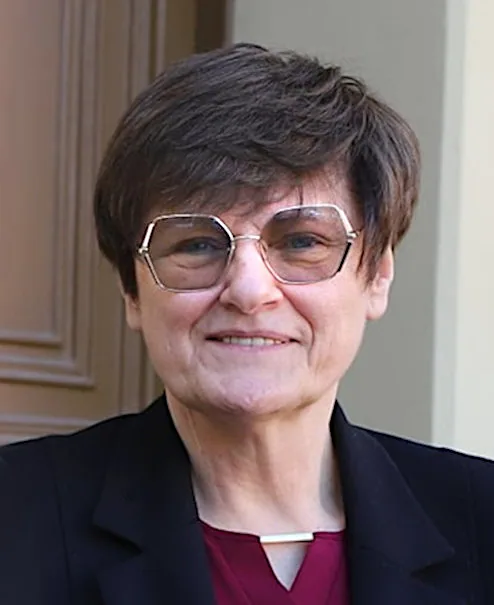
Katalin Karikó at an event at the University of Szeged in Hungary in May 2021. She earned her PhD in biochemistry from this university and left Hungary in 1985 with US$1,200 sewn into her daughter’s teddy bear. Photo: University of Szeged. CC BY-SA 4.0 via Wikimedia Commons.
On October 2, 2023, the Nobel Committee’s phone rang.
Karikó told Swedish Radio that her mother used to listen every year to the Nobel Committee announce the winners. “I just smiled bitterly, because I had never received a grant and never had a team. I was not even a professor, because I had been demoted, so I did not take it to heart. I replied: ‘Impossible’”3.
Regrettably, Karikó’s mother had passed away five years earlier and did not see her actually receive the Nobel Prize3.
Two months later, on December 7, 2023, Karikó delivered her Nobel Prize lecture at the Aula Medica of the Karolinska Institutet in Stockholm, titled ‘Developing mRNA for therapy.’ Thirty years of stubbornness, delivered all at once.
Nobel Prize official channel: Katalin Karikó’s Nobel Prize lecture “Developing mRNA for therapy” on December 7, 2023. From leaving Hungary in 1985, to being demoted at the University of Pennsylvania in 1995, to publishing the unmodified-nucleoside breakthrough paper in 2005, to BNT/Pfizer putting that technology into the arms of billions in 2020 — 38 years condensed into 30 minutes. She spoke without notes.
Whenever I walk out of the cleanroom, take off the heavy protective suit, and look at the sunset outside the window, I always think of the numbers entrusted to our hands. Behind those numbers are broken families and unwilling hopes. On a production line somewhere in Mainz, Germany, perhaps the 500 billionth dose of BNT mRNA vaccine is leaving the factory. In an ISO 5 cleanroom somewhere in Taoyuan Science Park, that same afternoon, a cell preparation technician is still quietly changing culture medium. Two kinds of life-saving medicine, two manufacturing methods: both are part of the process in which people wait for law to catch up with science.
The passage of the regenerative medicine dual laws will not make miracles cheap overnight. R&D remains difficult, costs remain high, and the boundaries of science still exist. But at least from now on, when a Taiwanese physician tells a patient, “We still have cell therapy as an option,” that is a real hope based on the protection of national law, the support of scientific data, and the standards guarded by countless preparation personnel in cleanrooms.
Every October, an elderly Hungarian woman once turned on the radio and quietly listened to the Nobel Committee announce its winners. Her daughter once told her: “Impossible.” On October 2, 2023, she did not get to hear it; she had died five years earlier. But when those 930,000 doses of BNT landed at Taoyuan Airport at 7 a.m. on September 2, 2021, the arms of every Taiwanese person who received BNT were the answer she had waited 38 years for.
Further Reading:
- Taiwan’s Public Health and Pandemic-Prevention System — The full context of Taiwan’s pandemic-prevention system during COVID-19; the 2021 BNT procurement in this article is one part of that story
- Medical Care Act — The regenerative medicine dual laws are special laws separated from the Medical Care Act; the Medical Care Act is the root law for institutional medical regulation in Taiwan
- Development of Taiwan’s Biotechnology Industry — The broader biotech context from academic research to industrialization; cell therapy and mRNA platforms are both branches within it
- Taiwan Healthcare and National Health Insurance — Whether cell therapy can be included in National Health Insurance reimbursement is key to the vision of an “Asian cell bank”; the NHI global budget structure also determines the commercialization pathway for regenerative medicine
- Taiwan’s Medical Industry — The industrial side of new drug manufacturing and CDMO, complementing this article’s compliance perspective
Image Sources
This article uses three CC-licensed images, all cached under public/article-images/society/ to avoid hotlinking source servers:
- Photo of Drew Weissman and Katalin Karikó with the 2022 Life Science Medal — Photo: Thorne Media, 2022-06-16, CC BY 3.0, Commons File:Drew_Weissman_and_Katalin_Karikó_Life_Science_Medalists.jpg
- Schematic diagram of mRNA molecular structure — Image: Daylite, 2008-02-11, Public Domain, Commons File:MRNA_structure.svg
- Katalin Karikó at the University of Szeged in 2021 — Photo: Szegedi Tudományegyetem (University of Szeged), 2021-05-21, CC BY-SA 4.0, Commons File:Karikó_Katalin_Szegeden.jpg
References
- 930,000 doses of BNT vaccine arrived at Taoyuan International Airport at 7 a.m. on September 2 — Official press release by the Centers for Disease Control, Ministry of Health and Welfare, 2021-09-02, recording the arrival time of the first 930,000 BNT doses in Taiwan, the donors (TSMC / Hon Hai / YongLin / Tzu Chi), the batch expiration date of January 15, 2022, and priority groups (adolescents aged 12-17 and unvaccinated people aged 18-22). This is the primary government source for the endpoint of this article’s 2021 BNT procurement timeline.↩
- “Taiwan’s 2021 COVID-19 Level 3 alert: Rt surged on May 11, Taipei and New Taipei entered Level 3 on May 15, and a nationwide Level 3 alert was declared on May 19” — Synthesized from Central Epidemic Command Center press conference releases in May 2021, recording the two-week timeline from Taiwan’s local outbreak to the Level 3 alert. This forms the chronological basis for this article’s section on “the two weeks of May 2021.”↩
- “2023 Nobel Prize in Physiology or Medicine: The bitter toil behind mRNA vaccines, and why was mRNA research unwelcome?” — Long-form article on the PanSci website, by the PanSci editorial team, published 2023-11-05. It records the complete personal timeline of Katalin Karikó, including her immigration from Hungary, demotion at the University of Pennsylvania, 1997 photocopier encounter with Weissman, 2005 Immunity paper, 2013 laboratory clearance, and response to the 2023 Nobel Prize. This is the main narrative line for this article’s “30 years of mRNA.” Content Curation Partner per MOU 2026-05-05.↩
- Presidential Office Gazette, Republic of China: Full text of the Regenerative Medicine Act — Full statutory text of the Regenerative Medicine Act promulgated by presidential order on June 19, 2024; primary legal source for one of this article’s core statutes.↩
- Suppression of RNA recognition by Toll-like receptors: The impact of nucleoside modification and the evolutionary origin of RNA — Karikó K., Buckstein M., Ni H., Weissman D., Immunity, Vol. 23, No. 2, pp. 165-175, August 2005. The breakthrough paper in which Karikó and Weissman found that pseudouridine modification can evade TLR immune recognition. It later became a core technological basis for COVID-19 mRNA vaccines and a central citation for the 2023 Nobel Prize in Physiology or Medicine.↩
- “Medigen vaccine EUA approval and the immunobridging technology route” — Synthesized from the Taiwan Food and Drug Administration’s 2021-07-19 press release and review records for the EUA of Medigen’s MVC COVID-19 Vaccine. It records the review basis by which Medigen obtained EUA through immunobridging, using neutralizing antibodies non-inferior to AZ vaccine. This is the basis for the technology-route comparison in this article’s “The Medigen Shot” section.↩
- “Drew Weissman ‘I had always wanted to try mRNA’ photocopier encounter record” — Synthesized from NBC New York’s 2023-10-02 interview on the day of the Nobel Prize and 2023 Penn Medicine News reporting, recording Weissman’s recollection of the 1997 photocopier encounter, including the original sentence “I had always wanted to try mRNA” and “here was somebody at the Xerox machine telling him that’s what she does.”↩
- “Katalin Karikó joined the University of Pennsylvania in 1989 as Research Assistant Professor, collaborating with Elliot Barnathan” — Synthesized from the English Wikipedia entry on Katalin Karikó (https://en.wikipedia.org/wiki/Katalin_Karik%C3%B3) and University of Pennsylvania Perelman School of Medicine historical materials, recording Karikó’s 1989 move to Penn and her work with cardiologist Barnathan on mRNA therapy for cardiovascular disease.↩
- The 2023 Nobel Prize in Physiology or Medicine: Scientific Background — Official background explanation by the Nobel Prize Committee, 2023-10-02, recording the full research path and citation list from Karikó and Weissman’s 2005 Immunity paper to the 2020 COVID-19 vaccines. This is the official primary source for this article’s section on the mRNA research breakthrough.↩
- “Katalin Karikó joined BioNTech as Senior Vice President in 2013” — Synthesized from BioNTech’s 2013 personnel announcement and the English Wikipedia entry on Katalin Karikó (https://en.wikipedia.org/wiki/Katalin_Karik%C3%B3), recording Karikó’s early 2013 move to BioNTech RNA Pharmaceuticals as vice president while retaining adjunct faculty status at Penn.↩
- “Derrick Rossi and the founding of Moderna Therapeutics in 2010” — Synthesized from Derrick Rossi’s 2010 paper in Cell Stem Cell (https://doi.org/10.1016/j.stem.2010.08.012), Moderna’s 2010 founding announcement, and a 2018 retrospective report by MIT Technology Review, recording Rossi and Luigi Warren’s stem-cell research at Stanford University and the 2010 founding history of Moderna Therapeutics.↩
- “The SARS-CoV-2 genome sequence was released globally on January 5, 2020” — Synthesized from the January 5, 2020 release of the full SARS-CoV-2 genome sequence by Zhang Yongzhen’s team at Fudan University on Virological.org (https://virological.org/) and early 2020 World Health Organization press releases.↩
- “FDA issued Emergency Use Authorization for BNT162b2 on December 11, 2020” — Official U.S. Food and Drug Administration press release dated 2020-12-11 (https://www.fda.gov/news-events/press-announcements/fda-takes-key-action-fight-against-covid-19-issuing-emergency-use-authorization-first-covid-19), recording the authorization of BNT162b2, the world’s first mRNA vaccine to receive FDA EUA.↩
- “Taiwan’s local COVID-19 Level 3 alert in May 2021” — Central Epidemic Command Center press conference releases from May 11, 15, and 19, 2021, recording the Rt surge, Level 3 alerts in Taipei and New Taipei, nationwide Level 3 alert, suspension of in-person classes at all school levels, and daily confirmed case figures.↩
- “Terry Gou proposed a BNT vaccine donation plan to relevant authorities on May 23, 2021” — Synthesized from Hon Hai Group’s official statement dated 2021-05-23, Terry Gou’s public Facebook letter, and a series of Liberty Times reports from May-July 2021.↩
- Executive Yuan press release of June 18, 2021, authorizing TSMC and Hon Hai/YongLin Foundation to negotiate procurement of BNT vaccines — Executive Yuan post-cabinet meeting press release dated 2021-06-18, recording spokesperson Lo Ping-cheng’s announcement that the government would issue letters authorizing private procurement of 5 million BNT vaccine doses each. This is the primary government source for the government authorization point in the 2021 BNT timeline.↩
- TSMC and Hon Hai completed signing legal documents for BNT vaccine procurement on June 26, 2021 — Liberty Times breaking news, 2021-06-26, quoting the Executive Yuan statement that “the government and the two donating units have successfully completed the signing of legal documents necessary to initiate project procurement.” This is a media primary account for the middle stage of the 2021 BNT procurement timeline.↩
- “Medigen vaccine passed EUA review on July 19, 2021, and President Tsai Ing-wen received her first dose on August 23” — Synthesized from the Ministry of Health and Welfare Taiwan Food and Drug Administration’s 2021-07-19 EUA announcement for Medigen’s MVC COVID-19 Vaccine and the Presidential Office’s 2021-08-23 press release on President Tsai’s Medigen vaccination.↩
- “President Tsai Ing-wen received her first dose of Medigen vaccine on 2021-08-23” — Presidential Office press release dated 2021-08-23 and President Tsai Ing-wen’s personal Facebook post dated 2021-08-23, recording the original lines “I feel energetic now and will continue the day’s work” and “It doesn’t hurt.”↩
- “National Health Research Institutes and Polaris Pharmaceuticals jointly established an mRNA vaccine and drug development platform in 2021” — Heho Health report, July 2021, recording that the National Health Research Institutes and Polaris Pharmaceuticals announced at Bio Asia-Taiwan 2021 the joint establishment of an mRNA vaccine and drug development platform, mainly targeting COVID-19 vaccine contract manufacturing and technology transfer as the starting point for Taiwan’s autonomous mRNA R&D.↩
- “Regulations Governing the Application or Use of Specific Medical Techniques or Examinations, Medical Devices” — Laws & Regulations Database of the Republic of China, full text of the “Special Regulation” issued by the Ministry of Health and Welfare in 2018. This is the legal source for this article’s “prehistoric era” section.↩
- TFDA: GMP guidelines for regenerative medicine preparation manufacturing factories — Official TFDA technical specifications for cell preparation GMP, serving as the implementation standard for the compliance requirements discussed in this article.↩
- “Interpreting the regenerative medicine dual laws: The battle over conditional approval” — In-depth report by The Reporter, organizing the debates over the dual laws, the conditional approval controversy, industry expectations, and patient perspectives. This is the main reference for this article’s “tug-of-war over conditional approval” section.↩
- “He Jiankui CRISPR gene-edited twins incident, 2018” — Synthesized from Nature’s 2018-11-26 report (https://doi.org/10.1038/d41586-018-07545-0) and Xinhua’s 2019-12-30 press release on He Jiankui’s three-year prison sentence, recording the world’s first clinical incident involving human embryonic gene editing and subsequent legal disposition.↩
- “Academia Sinica mRNA pilot plant launched in early 2024: scale of a few hundred doses, not a factory in the ordinary sense” — Series of reports by The News Lens in 2023-2024, recording the scale positioning of Academia Sinica’s mRNA pilot plant (300-1,000 doses of reagents), its use as a clinical-trial base, and its technological positioning in next-generation medicine, including cancer vaccines.↩
- “Five technical directions awarded in the 2024 Moderna Taiwan mRNA Forward-Looking Innovation Awards” — Official Moderna Taiwan press release for the 2024 Taiwan mRNA Innovation Awards, recording five awarded Taiwanese mRNA research directions: cancer immunotherapy, NK cells combined with nanomedicine, automated packaging of mRNA protein nanoparticles, dengue vaccines, and circular RNA technology.↩