
30-Second Overview: Guaji, whose real name is Qiu Weijie (邱威傑), originally intended in 2017 to film the "electing neighborhood chiefs" project as a reality show, but later advanced the plan into the 2018 Taipei City Councilor election, where he ran as an independent in the Third Electoral District of Taipei City and won 11,786 votes1. Public Television (PTV) describes him as Taiwan’s first YouTuber to enter politics2. His political participation did not make the internet and politics the same thing; rather, it exposed the gap between the two to the audience: videos can create rhythm through editing, but parliament and the market demand long-term accountability. In 2025, Don't Watch While Working ceased updates and disbanded, forcing this experiment, which began as a "democratic unboxing," to finally face team attrition, the traffic impact of political stances, and an operational deficit of millions of New Taiwan dollars3.
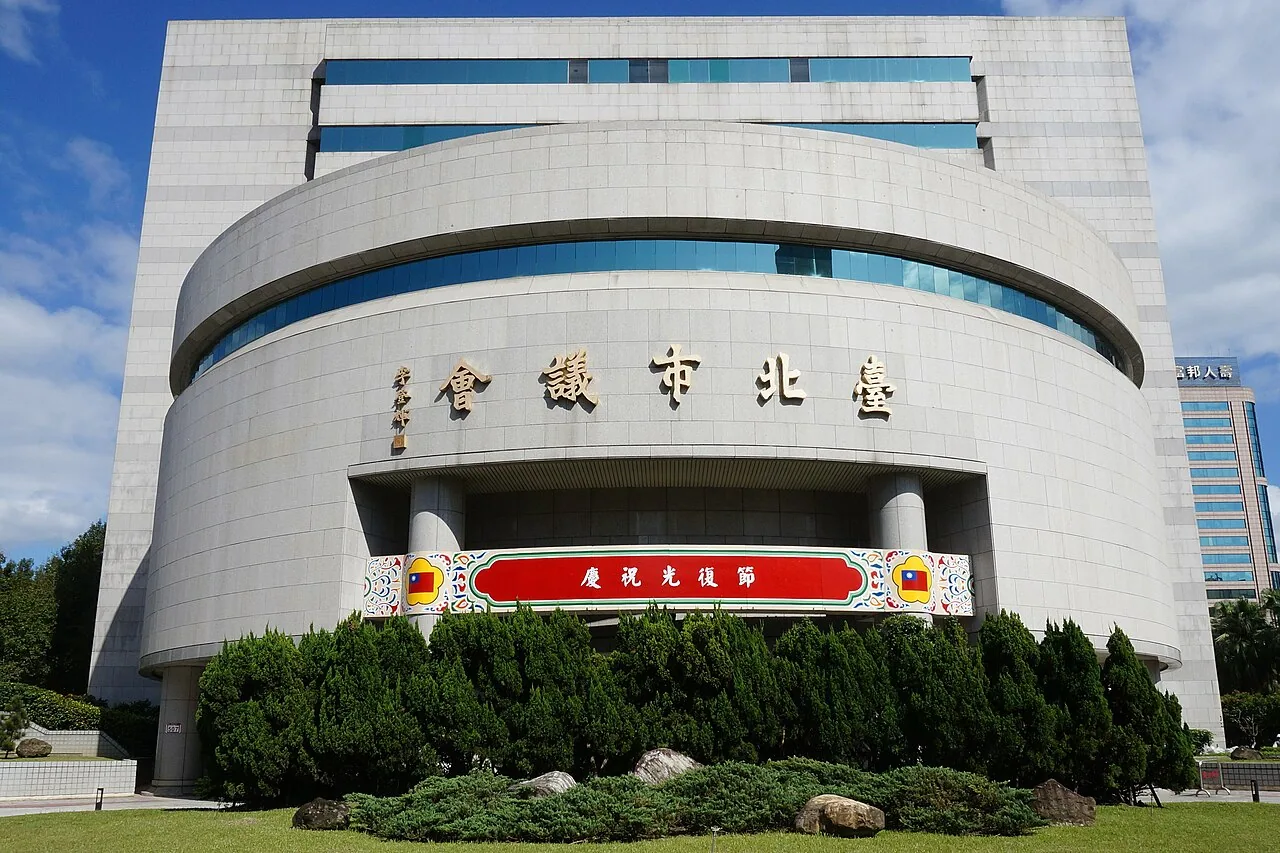
_Image: Taken by Solomon203 on October 31, 2020, from Wikimedia Commons, CC BY-SA 4.0._
A Thought Originally Meant Only as a Program
In June 2017, Qiu Weijie was chatting with young colleagues at his company when one suggested filming the election of neighborhood chiefs as a reality show. This idea initially lacked the solemnity of "I want to enter politics." They imagined following garbage trucks for campaign visits, interacting with neighbors, and turning local elections into a potentially funny program. Qiu Weijie later recalled that the judgment at the time was that neighborhood chiefs probably wouldn't get elected, making it more suitable as a low-cost project4.
The real turning point occurred while they were filming promotional videos for the World University Games. City hall staff told him that while neighborhood chiefs might not get elected, city councilors had a chance. Qiu Weijie went home and recalculated the electoral prospects of the Songshan and Xinyi districts where he had lived for years, finding that the threshold was not completely out of reach. An election-day interview with The Wind recorded this process, noting that Don't Watch While Working had already accumulated over 380,000 subscribers; the project plan thus shifted from a parody topic to a genuine electoral campaign4.
Here is a detail easily covered by later narratives of victory. Qiu Weijie did not have a political career first and then use the internet as a promotional tool; instead, he first treated politics as content material, and was ultimately forced by his own plan to answer a realistic question: If viewers are willing to watch someone pretend to run for office, is he willing to truly bear the consequences of losing, being attacked, and having to serve voters?
"Democratic Unboxing" Is Not Making Politics Simple
In a first-person article from 2018, Qiu Weijie referred to this election as a "democratic unboxing." He had no internal polls and was unsure if his channel's audience would convert their liking of videos into votes. What he could do was write policy proposals, visit markets, and give street speeches, bringing those who watched on screens into specific electoral districts and kinship networks5.
This method seems to fit the intuition of the internet age. Creators have an audience they can reach directly, and the audience then persuades parents or friends. But elections are not the extension line of subscriber counts. When an internet viewer walks into a market in the Songxin District, he is no longer just someone who hits "like"; he may also be a citizen who greets, questions, or demands assistance. Qiu Weijie wrote in his article that starting two weeks before the election, citizens held children to tell him they supported him, and others shouted encouragement from car windows. This transformation is not a conversion rate that algorithms can directly measure, but a relationship of trust that must appear repeatedly in local space5.
Data from the Central Election Commission pulls this story back to a verifiable scale. In the 2018 Taipei City Third Electoral District, there were multiple candidates competing. Qiu Weijie ran as an independent, number 12, receiving 11,786 votes, a vote share of 5.27%, and was listed in the elected candidates list1. This number proves he was elected, but it cannot alone prove that "internet traffic converts to votes." These are two different propositions; the former has election data, while the latter still requires more complete voter research to hold.
TechOrange, reprinting a CNA report, noted that Qiu Weijie once estimated his online influence could convert to at most about 3,000 votes, emphasizing that without actual investment in the election, fan numbers would not automatically become over 10,000 votes. He spent approximately 1.2 million New Taiwan dollars on his campaign, refused many traditional media interviews, and did not appear on political talk shows, setting "democratic unboxing" as the core of his campaign6. This self-estimation is important because it pulls influencer politics back from a myth of success to a testable proposition: traffic may provide a starting point, but it cannot replace local contact and voter persuasion.
From Channel Boss to the Internet Figure in Parliament
PTV News Lab reviewed that Qiu Weijie was elected in 2018 with approximately 1.48 million New Taiwan dollars in election funds, and subsequently handled over 3,000 cases of constituent services with the "Magic Mirror Car" (魔鏡號). PTV also noted that after he left office as a Taipei City Councilor, his farewell video received 1.16 million views2. These data, put together, present not a simple story of "influencer becomes councilor," but of a content creator who must relearn organizational work: responding to individual cases, handling administrative procedures, and facing problems that do not disappear just because they are edited out of a video.
He also tried to bring his live-streaming syntax into public institutions. The Judicial Weekly of the Judicial Yuan recorded that the Taiwan High Court once collaborated with Qiu Weijie to broadcast "Cursing Comes with a Price! Real Court Simulation" on the "Guaji Live" channel, using drama and judge explanations to cover the crime of public insult, defamation, people's jurors, and court procedures7. The importance of this collaboration lies not in turning justice into entertainment, but in acknowledging that public institutions need new interpretive interfaces. Guaji's role thus shifted from content producer to translator between the institution and internet viewers.
Translation does not mean neutrality. What content creators bring into the institution, besides the audience, also includes his惯用的 tone, rhythm, and skepticism toward authority. This makes it easier for him to explain rigid issues to non-professional audiences, but also means he must bear the backlash when politics is made to look too much like a show. For Guaji, the difficulty of public communication is not "how to make everyone laugh," but "how to make everyone understand and still be willing to keep asking questions."
Viewers Are Not Voters, Voters Are Not Traffic
The most valuable aspect of Guaji's candidacy is not proving that anyone with subscribers can enter parliament, but making the friction between these two identities visible. Channel viewers are familiar with how Qiu Weijie speaks, but local voters need to confirm whether he can continue to appear, handle details, and still respond to questions when there is no applause.
PTV's report places the "Magic Mirror Car" handling over 3,000 cases of constituent services into this experience, perfectly illustrating the second act of political participation. The first act is gathering viewers together; the second is bringing every specific case into administrative procedures. Both require communication, but the former pursues attention, while the latter must leave records and subsequent responsibilities2.
An earlier 2019 report showed that the "Election Service Magic Mirror Car" was not just a slogan for display. The website would first handle personal privacy, then make cases public, allowing citizens to see what problems the councilor's team received, which cases were not accepted, and which matters were being processed. In the early stages of launch, there were approximately 20,000 unique visitors, receiving 140 cases; after excluding cases that could not be executed or did not meet acceptance principles, approximately 80 cases were taken on8.
Qiu Weijie also stated that the code for this system could be made open for other legislators to use. This detail adds an engineering significance to "democratic unboxing": it is not just about live-streaming councilor work to viewers, but trying to organize constituent services into a trackable, public, and even replicable tool. For a councilor who started in content production, the true innovation may not necessarily be a more interesting tone, but leaving a structure for service processes that originally relied on personal trust.
This is why "democratic unboxing" cannot be understood only as filming parliament for everyone to see. What it truly opened was the creator's own working methods: what matters can be made public, which cases need protection, and which issues cannot be wrapped up with a funny remark. When internet politics enters local service, transparency is not just the presence of a camera, but whether viewers can understand how long a matter will take, where it gets stuck, and who must be responsible.
Qiu Weijie openly admitted in his first-person article that he might make wrong judgments, or might not be truly recognized by his supporters. This self-deconstructing tone, opposite to the reliable image that internet brands usually maintain, is actually closer to the actual state of democratic systems. Councilors are not people who are automatically correct after being subscribed to; creators are not people who can forever represent viewers after getting votes5.
The Joyful No-Party and the Negative Emotions of Politics
In 2019, Qiu Weijie and internet creators Zhixi Qiqi (志祺七七) and Retina (視網膜) applied to form the Joyful No-Party (歡樂無法黨). The English Taipei Times reported that this party took increasing the happiness of Taiwanese people as its core appeal, listing generational justice, marriage equality, and housing justice as issues of concern. Qiu Weijie said at the time that politics should not be left to only hatred and negative emotions; politics can also be work that brings happiness back9.
This attempt is easily seen as an influencer-style joke, but it also reflects his feelings after entering politics. Entering politics from entertainment content did not give him a clearer public role; instead, it exposed him to more hostility and malice. An English report from Taiwan News recorded that he stated he felt hatred, malice, and negative emotions after participating in politics, and was worried that some articles he wanted to share would be taken down for political reasons10.
The Joyful No-Party ultimately did not become a long-term party, but it provides an important clue for understanding Guaji. This was not him trying to escape politics with jokes, but him attempting to argue that "emotion" itself is political content. Feelings of happiness, fatigue, world-weariness, and being attacked cannot be treated merely as private reactions outside of policy. Just bringing emotions into politics also makes political frustrations return more directly to the creator himself.
The Channel Is Like an Ancestral Home, But Also a Company That Needs to Settle Bills
Don't Watch While Working was established in late 2015. In March 2025, Qiu Weijie announced the channel would cease updates and the company would dissolve. Digital Times reported that the channel had accumulated over 900,000 subscribers and over 400 million total views. The report organized three interlinked reasons: core members gradually left, political stances affected viewership numbers, and the company still had a funding gap of approximately 4 million New Taiwan dollars at the end of the year; the WatchBell Awards also caused a loss of approximately 2 to 3 million New Taiwan dollars3.
The Wind report supplemented his emotional description. Qiu Weijie compared Don't Watch While Working to an "ancestral home" (祖厝); even as members left one by one, he still hoped everyone would return one day. He also admitted that as a boss, he should have ensured financial stability earlier, but missed the timing for stopping losses in long hesitation, saying "the failure is on me"11.
This forms the most concrete contradiction in Guaji's story. Internet creation gave him the ability to quickly gather audiences, launch elections, produce judicial live streams, and even create a party imagination named after happiness. But when the channel became a team that needed to pay salaries, year-end bonuses, severance pay, and event costs, the most effective personal charisma did not automatically become stable organizational governance. Creators can start a project by intuition, but they cannot maintain a ten-year company by intuition alone.
After the Lights Went Out, the WatchBell Awards Did Not Disappear Together
The dissolution of Don't Watch While Working does not mean the creator network it established disappeared simultaneously. Mirror Weekly reported that the 7th WatchBell Awards in 2025 were supervised by a new executive committee for submissions; the Huang brothers, Dcard, and Baolingguo (百靈果) members continued to serve, and Guaji still served as an executive committee member; the ceremony theme was set as "Rebirth" (轉生)12. This is an interesting organizational change: an award originally initiated by a single team began to need to find a structure that could bear long-term responsibility better than the original founding team.
Therefore, Guaji's creative legacy is not only about which videos he filmed or how many votes he once received. More importantly, he demonstrated how internet creators can enter public life, and made people see that this entry is not a one-time successful crossover, but a series of conversions that must pay a price. From reality show projects to councilor services, from judicial live streams to the Joyful No-Party, and finally to channel dissolution, every step turned "viewers" back into "members," "voters," "stakeholders," or "co-bearers."
Qiu Weijie wrote in his election article, "Do not trust me, and do not trust any politician," reminding supporters to give him direct criticism5. This sentence, placed after the channel's shutdown in 2025, reads less like self-deprecation and more like a reminder for all influencer politics. When a person is expected to become a superhero, his most honest work is not maintaining the myth, but letting supporters see that judgments can fail, teams can leave, accounts must be settled, and finally, even the channel that looks most like a home may close.
What Guaji left is not a template of "influencer politics is always successful." A statement closer to the facts is that he carried a political experiment born for filming to the end, until reality demanded it hand over votes, administrative records, organizational costs, and the responsibility for failure. This is also the most valuable part of Taiwan's internet politics to preserve: not how new it looks, but how it must still live in the same city after being watched.
The questions he left are more durable than the answers. When creators enter institutions, whether viewers should also enter depends on every specific event, not on a pretty identity label.
This uncertainty is not a flaw in the story, but a condition of democratic life itself.
Further Reading:
- Taiwan YouTuber Industry and Culture — From Cai A-Ga (蔡阿嘎) and the WatchBell Awards to VTubers, supplementing the long-term background of Taiwan's internet video industry.
- Zeng Bo-en — Another Taiwanese creator path from internet content entering public issues and live performance.
- WatchBell Awards Official Website — Tracking the subsequent organizational development of Taiwan's creator awards.
References
- Central Election Commission: 107th Direct-City Councilor Election Taipei City Candidate Details — Official election data page, listing Qiu Weijie's candidate identity, vote count, vote share, and election result in the Taipei City Third Electoral District.↩2
- PTV News Lab: Influencer Qiu Weijie Steps Down as Taipei City Councilor, These 4 Years — PTV review of Qiu Weijie's transition from neighborhood chief election plan to city councilor, election funds, constituent services, and the traffic of his farewell video.↩23
- Digital Times: Don't Watch While Working Dissolution Report — Item-by-item organization of the channel's founding background, subscriber and view scale, member attrition, impact of political stances, and company financial gap.↩2
- The Wind: Interview with Influencer Guaji "I Want to Conduct a Social Experiment!" — 2018 pre-election profile interview, recording the idea of the neighborhood chief reality show, the catalyst for switching to city councilor election, and the channel scale at the time.↩2
- United Daily News Mingren Hall: Qiu Weijie / I Imagine Being Like a Superhero, But You'd Better Not Trust Superheroes — Qiu Weijie's own 2019 article, providing first-hand narrative on election motivation, democratic unboxing, street speeches, Xindong Market, and political trust.↩234
- TechOrange: Influencer Guaji Is Going to Supervise the Mayor! Only Spent 1.2 Million on Campaign, Called the Strongest Councilor in Internet Marketing — Post-election article reprinted with CNA authorization, recording campaign costs, online influence, self-estimation of vote conversion, and the "democratic unboxing" campaign theme.↩
- Judicial Yuan Judicial Weekly: Taiwan High Court Pioneers Collaboration with YouTube Channel for Live Court Simulation — Judicial Yuan official article, explaining the date, program content, and judicial education purpose of Qiu Weijie's collaboration with the Taiwan High Court for live court simulation.↩
- The Wind: Moving Hospital Beds, Penalty Notices All Exposed? Pushing the Democratic Unboxing Influencer Councilor to "Election Service Magic Mirror Car" — 2019 constituent service report, specifically explaining public cases, privacy handling, initial case volume, and institutional design such as open code.↩
- Taipei Times: New party formed by three YouTubers to focus on boosting Taiwanese happiness — English news article, reporting the background of the Joyful No-Party's formation, policy concerns, and Qiu Weijie's statements on happiness politics.↩
- Taiwan News: Taiwan Youtubers form new political party — English article page, supplementing Qiu Weijie's self-account of hatred, negative emotions, and political stances after participating in politics, and the timeline of the channel and political participation.↩
- The Wind: Nearly Million-Subscriber YouTube Channel Announces Shutdown! Operating for 9 Years, Reveals 3 Main Reasons for Wrapping Up — 2025 dissolution report, cross-presenting Don't Watch While Working's team attrition, impact of political stances, losses, and Qiu Weijie's statements on responsibility.↩
- Mirror Weekly: After Don't Watch While Working Dissolves, WatchBell Awards Supervised by New Executive Committee — 2025 WatchBell Awards article, explaining the executive committee after the channel's dissolution, Guaji's continued role, and the "Rebirth" theme.↩