
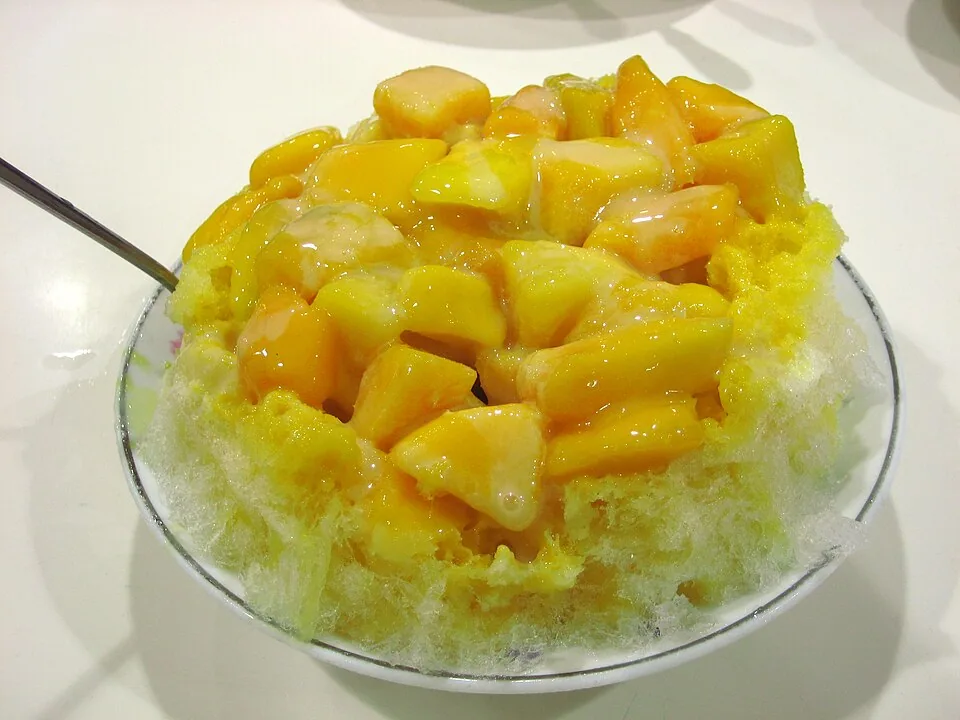
The passion of Taiwanese people for frozen desserts is unparalleled globally; even when the temperature is only 10 degrees Celsius in winter, ice shops are bustling with customers. The history of Taiwanese dessert culture is an evolutionary narrative traceable through specific time points: from the introduction of icing technology during the Japanese colonial period, to the popularization of shaved ice after WWII, the appearance of snowflake ice in the 1980s, and the international expansion of brands like ICE MONSTER in the 2010s.
The Japanese Colonial Period: The Origin of Dessert Culture
The roots of Taiwanese dessert culture can be traced back to the Japanese colonial period (1895–1945). Icing technology was introduced to Taiwan by the Japanese, and the earliest form of shaved ice was qingbing (clear ice).1
By the late colonial period, ice stalls had moved onto the streets. In 1938, Chen Xi adapted the popular Japanese four-fruit ice (siguo bing) by adding over ten types of ingredients beyond beans, candied fruits, and glutinous rice balls, naming it midou bing (honey bean ice). He sold it on a handcart around Taichung Railway Station. In 1943, he set up a stall in the First Market, which became Xingfa Ting2. The icing industry also supported the fisheries during the colonial era: from the mid-to-late 1920s, Taiwan's fishing industry grew rapidly, and researchers listed the icing and refrigeration industries as related sectors driving this growth.3
Yujing Mango: A Sweet Legend from Origin to Global Stage
The Yujing area in Tainan is famous for its Aiwen mangoes. Every summer mango season, large numbers of "mango pilgrims" flock to Yujing just to taste the freshest mango ice.
The specialty of Yujing mango ice lies in its "genuine ingredients." The entire Aiwen mango is peeled and cut into chunks, drizzled with fresh mango juice, and paired with traditional shaved ice—simple yet exquisite. This pure flavor has made Yujing mango ice a representative summer dessert of Taiwan.
The shop that branded this fresh mango ice was located on Yongkang Street in Taipei. Luo Junhua (羅駿樺) and his ex-wife Chang Jimei (張介梅) opened "ICE MONSTER Ice Shop" on Yongkang Street in 1997, and the media hailed him as the originator of Taiwan's first mango ice. The shop was once listed by The New York Times as a must-visit destination in Taipei, alongside the National Palace Museum and Taipei 101, and was featured among the top ten desserts globally by CNN.4 Afterward, mango ice spread throughout Taiwan, with each region developing its own signature version: some added pudding or jelly for texture, others used different mango varieties to create layers, and some combined local specialties to form unique flavors.
The shop closed unexpectedly due to marital issues in 2010. In 2012, Luo Junhua relaunched under the name ICE MONSTER on Zhongxiao East Road, adding handmade cheese to the mango ice. Seven years later, with 19 stores both locally and internationally, it expanded to China, Japan, and the United States, introducing Taiwanese mango ice to more foreign visitors.4
The Snowflake Ice Revolution: A Major Breakthrough in Texture
In the 1980s, a finer snowflake ice emerged in Taiwan's dessert scene compared to traditional shaved ice. Traditional shaved ice was made from pure ice blocks, resulting in a coarser texture that melted easily. Snowflake ice uses pre-made ice bricks that are shaved into fine "ice flowers," giving it a snow-like, dense texture. Xingfa Ting (辛發亭) in Shilin Night Market developed snowflake slices—which resembled pencil shavings and were less prone to melting—by the second generation in the 80s, becoming the first dedicated snowflake ice shop in Northern Taiwan. The ice bricks required sterilization through both high and low temperatures for seven hours.5
This technological innovation changed the landscape of Taiwanese desserts. Snowflake ice not only had a better texture but was also easier to color and flavor, allowing for various visual effects. Matcha snowflake ice, chocolate snowflake ice, and strawberry snowflake ice each possess their own unique flavors and colors.
The success of snowflake ice also drove the upgrading of the entire industry. Ice shops gradually evolved from traditional roadside stalls into sophisticated dessert parlors. The decor became more meticulous, service more professional, and products more diverse; desserts elevated from simple summer snacks to fashionable treats.
Korean Seolbing (설빙) is often compared to Taiwanese snowflake ice, but it originated in Korea: the founder learned baking while studying in Japan, opened a rice cake coffee shop in Busan in 2010, and launched Injeolmi Seolbing (soybean powder rice cake snow ice), which features finely shaved milk ice sprinkled with soybean powder and rice cakes, in April 2013, establishing the snowflake ice brand.6
The Common Memory of Traditional Shaved Ice
Although snowflake ice was gaining popularity, traditional shaved ice still holds an important place in the hearts of Taiwanese people. The coarse texture of the ice blocks and the variety of toppings are fixed images from many people's childhood summers.
Traditional shaved ice stalls usually offer over a dozen topping choices: red beans, mung beans, job's tears, grass jelly, ayran, glutinous rice balls, taro balls, etc. Customers can freely combine them to create their own unique flavors. This concept of "customization" appeared decades before modern personalized services.
Shaved ice stalls in night markets are also important symbols of Taiwanese culture. On a hot summer night, a bowl of refreshing shaved ice can instantly relieve the fatigue of the day. The vendor's skillful actions—shaving the ice, adding toppings, and drizzling syrup—are like an exciting performance.
In recent years, some traditional shaved ice shops have embraced a retro trend, emphasizing traditional craftsmanship and nostalgic sentiment. This "retro shaved ice" not only attracts old customers with memories but also allows young people to experience the charm of traditional desserts.
The Phenomenon of Eating Ice in Winter
The habit of Taiwanese people eating ice in winter often confuses foreigners. Even when the temperature is only around 10 degrees Celsius, ice shops remain prosperous. There are cultural and psychological factors behind this phenomenon.
First is the need for "emotional regulation." The sweet taste of desserts brings a sense of pleasure, especially in modern life with high stress. Regardless of the season, people need this small joy.
"Social needs" are also a core element. Eating ice with friends has become one of Taiwan's social activities. This social pattern continues regardless of the weather.
Furthermore, Taiwan's winter climate is relatively mild, unlike in northern regions. Under these climatic conditions, eating ice in winter is not an extreme act.
Signature Ice Shops: From Old Establishments to New Brands
Taiwan has iconic ice shops across different generations. Xingfa Ting (幸發亭) in Taichung started selling midou bing in 1938; as reported in 2018, the second-generation daughter-in-law, Cai Fengyun (蔡豐筠), had passed the shop down to three daughters, each running a separate branch.2 NINAO (蜷尾家) in Tainan represents the new generation's path of strolling desserts and Italian ice cream, founded by Li Yu (李豫).7
There is also an old shop in Taichung whose name incorporates eating ice in winter. In 1946, Chen Dewang (陳德旺), who had switched from making wooden bathtubs, started selling black tea with a scoop of ice cream on a cart. This eventually became fixed as a bowl of plum juice ice, one ladle of honey beans, and two scoops of milk ice cream. The third generation, Chen Liwei (陳倧偉), said that people came to eat it in winter, leading them to be mocked as "crazy sellers" and "crazy eaters," so it was named Fengren Bing (瘋人冰). The shop is near Taichung First Middle School, where his grandfather changed the name via a pun to Yizhong Fengren Ice.8
Diversified Development of Local Specialties
Different parts of Taiwan have developed unique dessert cultures. Just in one city like Taichung, there are two recipes: midou bing and Fengren Bing. These local specialties often combine regional ingredients and cultural elements.
This independent development gives the Taiwanese dessert map distinct regional colors and increases its appeal for tourism.
Health Consciousness and Innovation Trends
As health consciousness rises, Taiwanese desserts are also moving toward healthier directions. Low-sugar desserts, sugar-free desserts, and those using natural sweeteners have begun to gain attention.
Fruit-based desserts are particularly popular. The natural sweetness and rich nutrients of fresh fruits meet the needs of modern people. Passion fruit ice, kiwi ice, and avocado ice are all hot choices.
The use of organic ingredients is also a trend. Organic milk, organic fruits, and natural colorings make the desserts both delicious and safer.
The concept of functional desserts has also emerged. Desserts fortified with nutritional components like collagen, vitamins, and probiotics combine enjoyment with health.
Internationalization and Brand Export
Taiwanese dessert brands are accelerating their internationalization efforts. Besides ICE MONSTER, many other brands are entering overseas markets. These brands export not only products but also Taiwanese dessert culture.
In overseas Taiwanese dessert shops, they often become gathering places for local Chinese communities and a window for foreigners to experience Taiwanese culture. Through culinary diplomacy, Taiwanese desserts are sowing cultural seeds worldwide.
Technology export is another important development direction. There are business opportunities in exporting snowflake ice machines, icing technology, and ingredient formulas. Taiwan is transitioning from a country that consumes desserts to one that exports dessert technology and culture.
The underlying logic of Taiwanese dessert culture is this: in every era, someone has transformed the most readily available ingredients into a "dessert language"—the icing machine of the Japanese colonial period, the shaved ice cart after the war, the snowflake ice bricks of the 1980s, or the premium dairy products of the 2010s. The form changes, but the obsession with eating ice remains unchanged.
Image Sources
- Hero: Taipei Mango Ice, Photo by SuperMidget (English Wikivoyage), Wikimedia Commons, Public domain.
References
Further Reading
- [Bapupu Ice] /en/food/ba-pu-ice-cream — Traditional ice cream on a cart; another line in Taiwan's dessert transformation alongside the era.
- [Yongkang Street] /en/geography/yongkang-street — The district where the ice shop and mango ice are located, undergoing three transformations from Showa Town to tourist street.
- Wikipedia: Shaved Ice https://zh.wikipedia.org/wiki/%E5%89%89%E5%86%B0 — The Taiwanese shaved ice article mentions that icing technology was introduced from Japan during the colonial period, starting with qingbing (clear ice), and lists types of ice such as snowflake ice, miandian bing, and bubble ice, along with common toppings.↩
- Mirror Weekly: [Taiwanese Old Shops] The Woman's Heart in Midou Bing Xingfa Ting https://www.mirrormedia.mg/story/20180817bus001 — A 2018 report stating that Xingfa Ting was originally named Xingfa Ting; Chen Xi launched midou bing in 1938, inspired by Japanese four-fruit ice, selling on a handcart near Taichung Railway Station, and setting up a stall in the First Market in 1943. It has since been passed down by the second-generation daughter-in-law Cai Fengyun to three daughters, each running one shop.↩2
- Wang Junchang, "Development of Related Industries in Taiwan During the Japanese Colonial Period: A Case Study of Icing and Refrigeration," Journal of Ocean Culture, Vol. 21 (2016) https://scholars.ntou.edu.tw/handle/123456789/10693 — The abstract points out that Taiwan's water industry grew significantly in the mid-to-late 1920s, with icing and refrigeration industries having an impact as related sectors, and estimates this relationship using regression analysis.↩
- Mirror Weekly: ICE MONSTER Luo Junhua’s Founding and Relaunch https://www.mirrormedia.mg/story/20190529bus002 — A 2019 report stating that in 1997, Luo Junhua opened the ICE MONSTER Ice Shop on Yongkang Street with his ex-wife Chang Jimei. It closed unexpectedly in 2010, and he relaunched under ICE MONSTER on Zhongxiao East Road in 2012, leading to 19 stores locally and internationally seven years later; the article referred to him as the originator of Taiwan's first mango ice.↩2
- Mirror Weekly: [Taiwanese Old Shops] The True Skill of Ice Bricks—The Second Generation Daughter-in-Law Emerges https://www.mirrormedia.mg/story/20170612bus002 — A 2017 report about Xingfa Ting in Shilin Night Market, noting that snowflake ice appeared thirty years prior, and the second generation developed snowflake slices in the 80s, becoming the first dedicated snowflake ice shop in Northern Taiwan. The production of the ice bricks took up to seven hours.↩
- Newsis: Origin Story of Long-lasting Brand Korean Dessert Seolbing https://www.newsis.com/view/NISX20220107_0001716438 — A 2022 Korean report stating that the predecessor of Seolbing was a rice cake coffee shop in Nanpa-dong, Busan, in 2010. The founder had studied baking while studying in Japan and launched Injeolmi Seolbing in April 2013.↩
- Marie Claire: Taiwanese Bakery "NINAO" Opens https://www.marieclaire.com.tw/lifestyle/taste/71756 — A 2023 report introducing the NINAO brand (NINAO Gelato, a strolling dessert) from Tainan and its founder Li Yu.↩
- Mirror Weekly: [Taiwanese Old Shops] Yizhong Fengren Ice: The Human Touch of Crazy People's Ice https://www.mirrormedia.mg/story/20170308bus001 — A 2017 report stating that Chen Dewang started selling ice on a cart in 1946, with one bowl of plum juice ice, one ladle of honey beans, and two scoops of milk ice cream. The third generation, Chen Liwei, explained the origin of the names "Crazy People's Ice" and Yizhong Fengren Ice.↩