
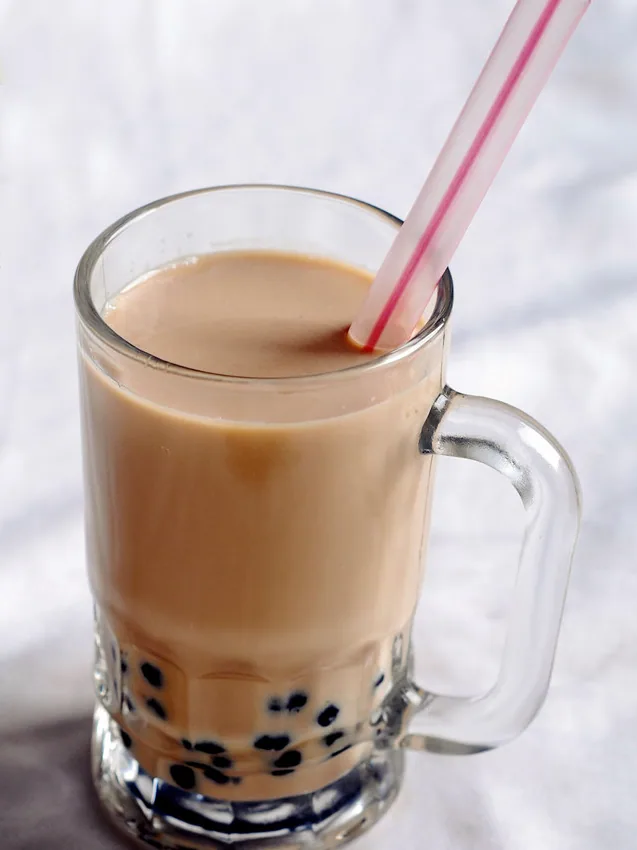
When you stroll down any street in Taiwan, one sight you can't miss is the colorful signage of hand-shaken beverage shops. From the street corner's 50 Lan to the upscale Gong Cha in commercial districts, from traditional Chun Shui Tang to trendy Machi, Taiwan's hand-shaken beverage culture has become one of the most representative lifestyle symbols on this island.
Taiwan's hand-shaken beverage culture began with the birth of bubble milk tea in the 1980s, using creative tea drinks to expand into global markets. Hand-shaken beverages record the Taiwanese pursuit of quality of life, passion for innovation, and shared memories of good things.
Origins and Development of Hand-Shaken Beverages
The Birth of Bubble Milk Tea
The origin of Taiwan's hand-shaken beverage culture can be traced back to Taichung. Chun Shui Tang's predecessor, Yang Hsien Tea House, was established in Taichung in 1983. Founder Liu Han-chieh brought back ice cream cups from Japan, mixing tea with ice cubes to create cold drinks, and the frothy tea drink became popular from here1.
Bubble milk tea followed the frothy tea drink. According to Chun Shui Tang, Liu Han-chieh and Lin Hsiu-hui from the R&D team added tapioca pearls to milk tea in 1986, and officially launched it in 19871. Tainan's Hanlin Tea House claims they added market-bought tapioca pearls to milk tea when they opened in 1986. The two engaged in about ten years of lawsuits, and the court ultimately determined that bubble milk tea was a new type of beverage, not a patented product, so anyone could make it2.
Cold drinks, tea soup shaken into foam, plus chewy toppings—these two steps stacked together became the basic formula for later hand-shaken beverages. The frothy tea drink spread from Taichung across all of Taiwan, with cold drink tea shops opening one after another1.
Industrial Development Timeline
1990s: Germination Period
- Bubble milk tea spread from Taichung to all of Taiwan
- 50 Lan started from a roadside stall on Tainan's Dexing Road in 1994, opening its first standard store three years later3
- Flavor choices became increasingly diverse
2000s: Growth Period
- Brands like Ching Shin Fu Tsuan4 founded in 1987, and 50 Lan starting in 1994, expanded across Taiwan; 50 Lan established regional headquarters in Kaohsiung, Taichung, and Taipei starting in 20003
- Franchise model became widespread
- Standardized operating procedures were established
2010s: Explosion Period
- Premium tea beverage concepts emerged
- Seasonal limited editions and collaborations became trends
- Social media amplified popularity, making visual presentation more important
2020s: Refinement Period
- Health-oriented products increased
- Technology-based services became common
- Sustainable operations became an important issue
Taiwan Hand-Shaken Beverage Industry Chain
Upstream: Tea Leaves and Raw Material Supply
The quality foundation of Taiwan's hand-shaken beverages is built on high-quality raw material supply chains:
Tea-growing Areas:
According to the Ministry of Agriculture, the four cities/counties with the largest tea plantation areas are Nantou County (high mountain oolong tea, Sun Moon Lake black tea), Chiayi County (Alishan high mountain tea), New Taipei City (Wenshan pouchong tea), and Taoyuan City. Nantou County's area exceeds the total of the other three combined5. Taitung County's Luye is known for red oolong.
Imported Tea:
A large portion of the black tea and green tea used in large quantities by hand-shaken beverages are imported teas. In 2024, 76.5% of Taiwan's imported green tea and 42.6% of red tea came from Vietnam, making Vietnam the largest supplier; red teas from India, Indonesia, and Sri Lanka have been decreasing year by year6. In addition to Pu-erh tea, Chinese mainland tea is still under import control7.
Other Raw Material Supply:
- Dairy products: Fresh milk, non-dairy creamer, condensed milk
- Sugars: Brown sugar, fructose, sugar substitutes
- Toppings: Tapioca pearls, coconut flesh, pudding, konjac
Midstream: Brand Operations and Franchising
Large Chain Brands:
Each large chain brand has its positioning: 50 Lan is known for steady operations and quality consistency; Ching Shin Fu Tsuan is affordable and widely popular; CoCo has the highest degree of internationalization; Gong Cha stands out with premium positioning and fashionable store design.
Regional Brands:
Regarding regional brands, Machi started in Tainan, featuring its own Green Light Dairy Farm fresh milk without added creamer8; Magoo Tea House attracts young people with creative flavors; Tian Jen Ming Tea represents traditional tea merchants transforming; Old Tiger Hall specializes in brown sugar tapioca pearls with clear differentiation.
Franchise Model Features:
- Headquarters provide raw material delivery
- Unified brand image and store design
- Standard operating procedure training
- Regional protection mechanisms
Downstream: Retail Channels and Services
Physical Stores:
Street-side stores have lower rent and flexible locations; commercial district stores have dense foot traffic but fierce competition; department store brands have good image but highest costs; campus stores mainly target student groups.
Digital Services:
- Delivery Platforms: foodpanda, Uber Eats integration
- Brand Apps: Membership systems, pre-order services
- Mobile Payments: Improved checkout efficiency
Brand Internationalization Strategy
Overseas Expansion Models
Around 2007, CoCo and Gong Cha and other brands began expanding overseas, with subsequent expansion accelerating and adopting diversified strategies:
Direct Operation Expansion:
- Headquarters directly invest in establishing overseas subsidiaries
- Ensure quality and brand image consistency
- Suitable for mature markets and key cities
Franchise Licensing:
- Cooperate with local operators
- Rapidly expand market coverage
- Reduce operational risks and costs
Technology Export:
- Provide raw materials, equipment, and technology
- Train local operational teams
- Charge technology licensing fees
Key Expansion Markets
Asian Markets:
- Mainland China: Largest overseas market, most competitive
- Southeast Asia: Malaysia, Singapore, Thailand, Philippines
- Japan: Premium positioning, focusing on quality and service
- South Korea: Combined with Korean wave culture, visual presentation important
European and American Markets:
- United States: Mainly in Chinatown areas
- Canada: Vancouver, Toronto and other cities
- United Kingdom: High acceptance among London's young people
- Australia: Sydney, Melbourne with dense Asian cultural presence
Successful Case Analysis:
CoCo started from Tamsui in 1997, opening its first mainland China store in Suzhou in April 2007, then expanding to the United States, Europe, Southeast Asia, and Oceania9. With localized product development combined with unified brand identity, it is a representative case of Taiwan brands going global. Gong Cha opened its first store in Kaohsiung in 2006, expanding to South Korea, the United States, Canada and other places the following year; it is now a multinational brand owned by foreign capital with headquarters in London10. It adopts a premium positioning, using fashionable store design to attract young consumers, and adjusting marketing language to fit local culture.
Localization Challenges and Responses
Taste Adjustment:
- Sweetness Preferences: Southeast Asian markets generally prefer sweeter tastes
- Temperature Needs: European and American markets accept hot drinks to a higher degree
- Topping Choices: Consider local eating habits
Regulatory Adaptation:
- Food Safety: Comply with various countries' food safety standards
- Nutritional Labeling: Provide detailed ingredient information
- Environmental Requirements: Use biodegradable straws and utensils
Cultural Integration:
- Festival Limited Editions: Launch featured products according to local festivals
- Brand Collaborations: Cooperate with local famous brands or celebrities
- Marketing Language: Use local language and cultural elements
Innovation Trends and Market Changes
Health Trend
The rise in modern consumers' health awareness has driven the transformation of hand-shaken beverages. Under the trend of reducing sugar content, various brands generally offer sugar-free and low-sugar options, replacing artificial sweeteners with natural ones, and beginning to label caloric information. On the raw material side, they also turn to fresh fruits and organic tea leaves, with the appeal of no added preservatives. Functional additives have also become a trend, with beauty ingredients such as vitamins, probiotics, and collagen being incorporated into drink formulas.
Premiumization Development
The premiumization route centers on single-origin tea leaves, ensuring quality through small farmer contracts, and introducing new technologies such as cold brew and nitrogen injection. Customized services have become more refined, with increased options for sugar and ice content adjustment, and personalized topping combinations have become standard. Store design introduces open-style preparation counters, with professional bartender training enhancing overall service quality.
Technological Application
In terms of smart equipment, automatic sugar and ice adjustment machines and standardized brewing equipment have become mainstream, with quality inspection systems gradually being introduced. In digital services, AI recommendations, member data analysis, and reservation queuing functions have improved customer experience. Sustainable technology includes eco-friendly packaging, energy-efficient equipment, and waste recycling and reuse, to respond to increasingly strict environmental requirements.
Cultural Influence and Social Significance
Carrier of Lifestyle Culture
Hand-shaken beverages have been deeply integrated into the daily lives of Taiwanese people. "Drinking tea and chatting" has become a common social pattern, and hand-shaken beverage shops are common places for dating and gatherings. Sharing new flavors has also become a topic of discussion on social media. Specific brands or flavors also carry personal memories, such as bubble milk tea before exams or large cups of green tea during overtime work, which are all reflections of Taiwanese emotional life. The density of hand-shaken beverage shops has also become an informal indicator of urbanization, and night markets and commercial districts without hand-shaken beverage stalls seem incomplete.
Economic Contribution
According to the Ministry of Economic Affairs, the beverage industry's annual revenue exceeded NT$130 billion in 2024. As of September 30, 2025, out of 28,788 beverage shops nationwide, hand-shaken beverage shops numbered 16,113, accounting for 56%11. This figure also includes coffee shops and tea houses, but hand-shaken beverages are the largest portion, and they have driven upstream industries such as tea leaves, dairy products, and toppings. Brand licensing fees, raw material and equipment exports, and technology service exports have also brought foreign exchange earnings to Taiwan.
Cultural Soft Power
Overseas hand-shaken beverage stores, while establishing recognition of Taiwan's food and beverage culture brands, have also enhanced Taiwan's international visibility. Bubble milk tea, as a modern interpretation of Taiwan's tea culture, has become a successful case of East and West food and beverage habits blending, and is a rare concrete achievement of Taiwan's cultural exports.
Challenges and Future Outlook
Facing Challenges
Market Saturation:
The density of hand-shaken beverage shops in Taiwan is extremely high, with fierce market competition, requiring operators to maintain competitiveness through product differentiation.
Rising Costs:
The increase in raw material prices, rent, and labor costs has compressed profit margins.
Health Concerns:
High-sugar beverages face health concerns, requiring adjustments to product formulas to meet health trends.
Environmental Pressure:
Single-use plastic cups and utensils cause environmental burden, requiring operators to find environmentally friendly alternatives.
International Competition:
Overseas markets face competition from local brands, requiring the establishment of differentiated advantages.
Development Opportunities
The emerging markets of the Middle East, Africa, and Latin America have great potential, and with the increase in overseas Chinese immigrants, market demand is also expanding. Product opportunities lie in functional beverages, new topping types, and seasonal limited edition products. In terms of channels, cooperation with convenience stores, placement of vending machines, and sales on e-commerce platforms can reduce the pressure of store rent. Technological upgrades focus on smart production, cold chain logistics, and food safety traceability.
Sustainable Development Strategy
In terms of environmental transformation, promoting reusable cups, biodegradable packaging materials, and complete recycling mechanisms is a necessary path to respond to regulatory pressure. In terms of social responsibility, supporting local tea farmers, providing employee training, and participating in community public welfare activities help enhance brand image. In terms of quality management, establishing raw material traceability systems and quality control systems is a long-term investment to maintain consumer trust.
Taiwan's hand-shaken beverage culture has developed from the innovation of bubble milk tea into a cultural phenomenon with global influence. The beverage industry now has an annual revenue exceeding NT$130 billion, and hand-shaken beverage brands have also taken Taiwan's tea drinks to all corners of the world through direct operation and franchising. Currently, Taiwan's hand-shaken beverage brands face challenges such as market saturation, rising costs, and environmental pressure. How to find a balance between innovation and sustainability will determine the direction of this industry's next decade.
Image Sources
- Hero: Close-up of classic bubble milk tea, photographed by Oqmilteashop, Wikimedia Commons, CC BY-SA 3.0.
References
- Chun Shui Tang — Inventing Bubble Milk Tea | The Flaming Torch of the Hand-Shaken Tea Revolution — Yang Hsien Tea House established in Taichung in 1983, Liu Han-chieh brought back ice cream cups from Japan to make frothy tea; Chun Shui Tang's account says bubble milk tea was invented in 1986, launched in 1987, with Lin Hsiu-hui as R&D team partner↩23
- ETtoday — Who Invented Bubble Milk Tea? Chun Shui Tang vs. Hanlin Tea House Lawsuit for 10 Years, Court Verdict Arrives (2019-07-31) — Hanlin Tea House's account, ten years of litigation between the two, court determined bubble milk tea is a new type of beverage rather than a patented product↩
- 50 Lan — Our Story — Started from a roadside stall on Tainan's Dexing Road in 1994, three years later opened the first standard store Xinsiao; starting in 2000, successively established Kaohsiung, Taichung, Taipei regional headquarters↩2
- United Daily News — "Ching Shin Fu Tsuan" Brand Reimagined, 38 Years of Hand-Shaken Beverages "Youth-oriented" (2024-03-15) — Ching Shin Fu Tsuan founded by Chao Fu-chuan in 1987↩
- Ministry of Agriculture Knowledge Network — Tea Theme Pavilion 2011 Annual Report — Tea plantation areas by city/county: Nantou County 6,551.52, Chiayi County 1,782.88, New Taipei City 754.37, Taoyuan City 543.44 hectares, Taitung County 193.42 hectares↩
- Liberty Times — Taiwanese People Are Good at Drinking! Vietnam Black Tea and Green Tea Are Big Buyers — In 2024, 76.5% of Taiwan's imported green tea and 42.6% of red tea came from Vietnam; red teas from Sri Lanka, India, Indonesia decreased↩
- Ministry of Agriculture — Continue Controlling Chinese Mainland Tea Imports, Strengthen Pu-erh Tea Identification Work (2011-11-02) — Pu-erh tea was allowed to be imported from Chinese mainland in 2004, other mainland teas remain under control↩
- Machi — Brand Story — Established first store in Tainan featuring Green Light Dairy Farm themed drinks, "hand-shaken beverage shop without creamer"↩
- Caixin — CoCo Tea Founder Hong Chao-shui — Started from Tamsui in 1997; opened first mainland China store in Suzhou in April 2007; by 2019, global stores exceeded 4,000, covering China, United States, Europe, Southeast Asia, Japan, Australia, New Zealand and other regions↩
- Wikipedia — Gong Cha (Chain Store) — First store opened in Kaohsiung in 2006, expanded to South Korea, United States, Canada and other places in 2007; currently owned by TA Associates, global headquarters in London, UK↩
- Economic Daily News — Taiwanese People Love Drinks! Beverage Industry Annual Revenue Hits NT$130 Billion (2025-12-05) — Ministry of Economic Affairs statistics: beverage industry 2024 annual revenue exceeded NT$130 billion; as of end of September 2025, 28,788 beverage shops nationwide, hand-shaken beverage shops 16,113 accounting for 56%↩