
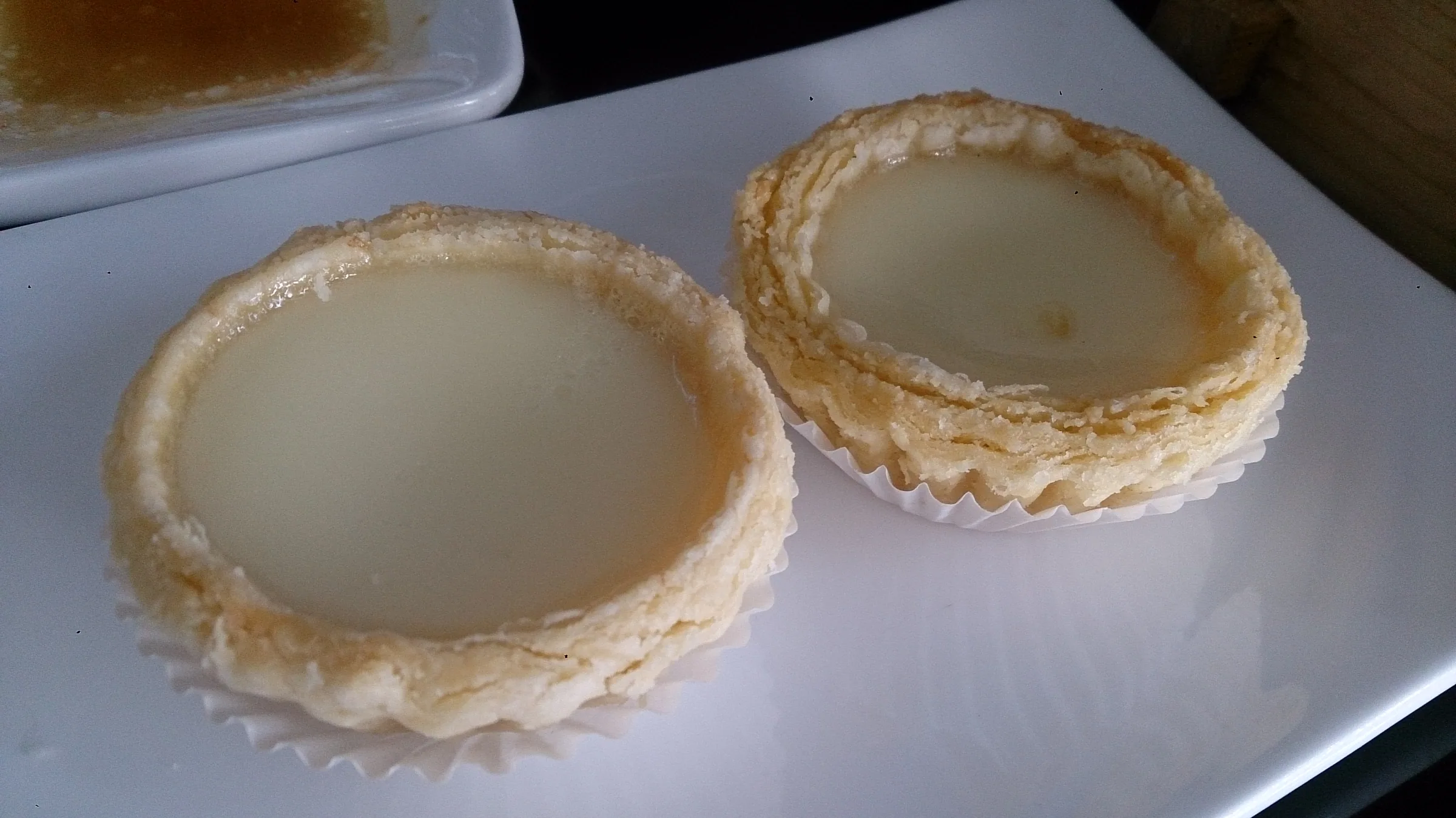
30-Second Overview:
In Taiwan, the egg tart is not just a dessert; it is the namesake of the economic phenomenon known as the "Egg Tart Effect." From the queuing frenzy sparked by Portuguese egg tarts in 1998 to the tragedy of hundreds of shops closing within months, this caramelized pastry has recorded the collective anxiety and passion of island consumers. Today, the egg tart has evolved from a fleeting trend icon into a core competency of fast-food brands and an experimental field for the new generation of "thousand-layer" techniques.
1998: The Island's Collective Anxiety That Year
In Taipei's Dalian Road in 1998, the air was thick with the scent of lard and eggs. This was not just a general baking smell; it was the smell of "money." At the time, all of Taiwan was caught up in a frenzy later dubbed the "Egg Tart Incident." People were willing to queue for two hours under the scorching sun just to buy a box of freshly baked Portuguese egg tarts with charred spots.
Media reports from that era described egg tart shops appearing like spring sprouts in every street and alley; even telecommunication companies and pharmacies started selling egg tarts. However, this craze cooled rapidly within less than a year, leading to the successive bankruptcy of hundreds of establishments, leaving behind only empty signs and a term widely cited afterward: "Egg Tart Effect" 1.
📝 Curator's Note: The Taiwanese obsession with egg tarts was not born from a pursuit of sweets, but rather as a social experiment concerning "scarcity" and "collective anxiety."
From Lisbon Monasteries to Macau Road
The origin of Portuguese egg tarts (Pastéis de Nata) can be traced back to 19th-century Lisbon, Portugal. In the Jerónimos Monastery (Mosteiro dos Jerónimos) in the Belém district, nuns used large amounts of egg whites for starching their habits, and the leftover egg yolks were made into desserts 2.
This dessert later crossed the ocean to Macau. In 1989, a Briton named Andrew Stow opened "Lord Stow's Bakery" on Taipa Street in Macau. He modified the traditional Portuguese recipe, abandoning ground ginger (jishi fen), using cream and eggs instead, and reducing sugar content—this is what evolved into the "Macau-style egg tart" familiar to Taiwanese people today 3. After Andrew divorced his wife Margaret Wong in 1997, Margaret opened another branch of the same egg tarts on the Macau Peninsula. She later licensed the recipe to KFC, launching a legend of Portuguese egg tarts within the Asian chain system 4.
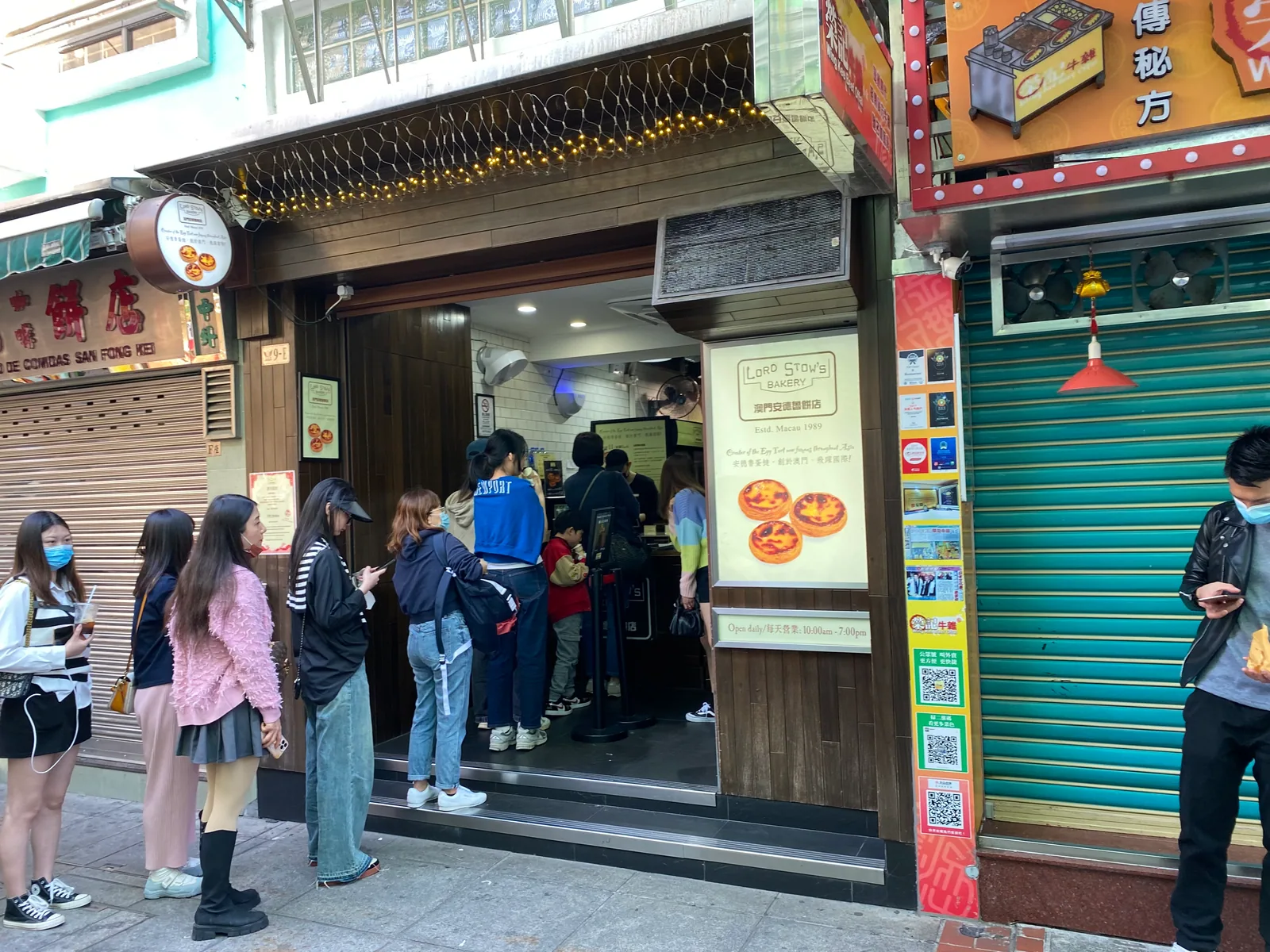
Lord Stow's Bakery facade in Coloane, Macau (February 2023). Andrew Stow established this shop in Coloane in 1989, modifying the Portuguese recipe, which became the source of the 1998 egg tart craze in Taiwan. Photo: LN9267. CC BY-SA 4.0 via Wikimedia Commons.
The Egg Tart Shop Overshadowed by Fried Chicken
Before 1998, KFC menus in Taiwan did not feature egg tarts 5. At the time, KFC introduced Margaret's recipe to meet the demand from the Portuguese egg tart craze. Ironically, when specialized shops across Taiwan began to fail, KFC unexpectedly absorbed all the remaining market demand due to standardized production and stable quality.
Around 2022, KFC initiated a marketing campaign implying that it would discontinue egg tarts, causing widespread lament among consumers across Taiwan who feared the classic product was being phased out. This ultimately proved to be just a promotional stunt for launching new flavored egg tarts, but it also reconfirmed the irreplaceable status of the egg tart in the hearts of Taiwanese people—it had transformed from a "trend" into a "tradition" 6.
📝 Curator's Note: When a brand is jokingly called an "overshadowed shop," it usually means its success in side ventures has become a cultural symbol.
The Debate Over Types: From Cookie Base to "Small Flower" Thousand-Layer Evolution
The Taiwanese egg tart market is not limited to the Portuguese style. Before the arrival of Portuguese egg tarts, what was common in Taiwan was the "traditional egg tower," which had a harder crust, influenced by American aid flour from the 1950s; this dessert had existed in Taiwan for half a century 7.
Portuguese Egg Tarts: Caramel Tiger Stripes and Layered Puff Pastry
The most striking feature of the Portuguese egg tart (Pastel de Nata) is its caramel black spots on the surface. This is not over-baking, but rather the Maillard reaction occurring between the sugar in the filling and the butter at high temperatures, which gives the egg tart its unique bittersweet complexity 8.
In terms of technique, Portuguese egg tarts use a "layered puff pastry" process. During production, dough wrapped with butter is repeatedly folded and chilled, then rolled into cylinders and sliced before being hand-pressed into molds. This method results in a spiral texture at the bottom of the tart, giving it a substantial feel and distinct layers, producing a clear "crunch" when bitten 9.
Taiwanese and Hong Kong Egg Tarts: Pressed Pastry and Chinese Puff Pastry
Before the popularity of Portuguese egg tarts, the mainstream in Taiwan and Hong Kong featured smooth-crusted egg tarts. These types are mainly divided into two camps:
- Pressed Pastry (Cookie Crust): This is the most traditional "egg tower" method in Taiwan. The crust is made from mixing lard/butter, flour, and eggs without folding, resulting in a texture between a tart shell and a cookie. The filling usually has a perfectly smooth mirror glaze, offering a solid texture and rich milky aroma 10.
- Chinese Puff Pastry: Common in traditional tea houses. Unlike the Western puff pastry of Portuguese egg tarts, Chinese puff pastry typically uses lard or vegetable oil, employing the traditional "oil dough wrapping oil crust" folding method. Its layers are extremely flaky and crumble at a touch, emphasizing a delicate oil fragrance rather than an intense buttery aroma 11.
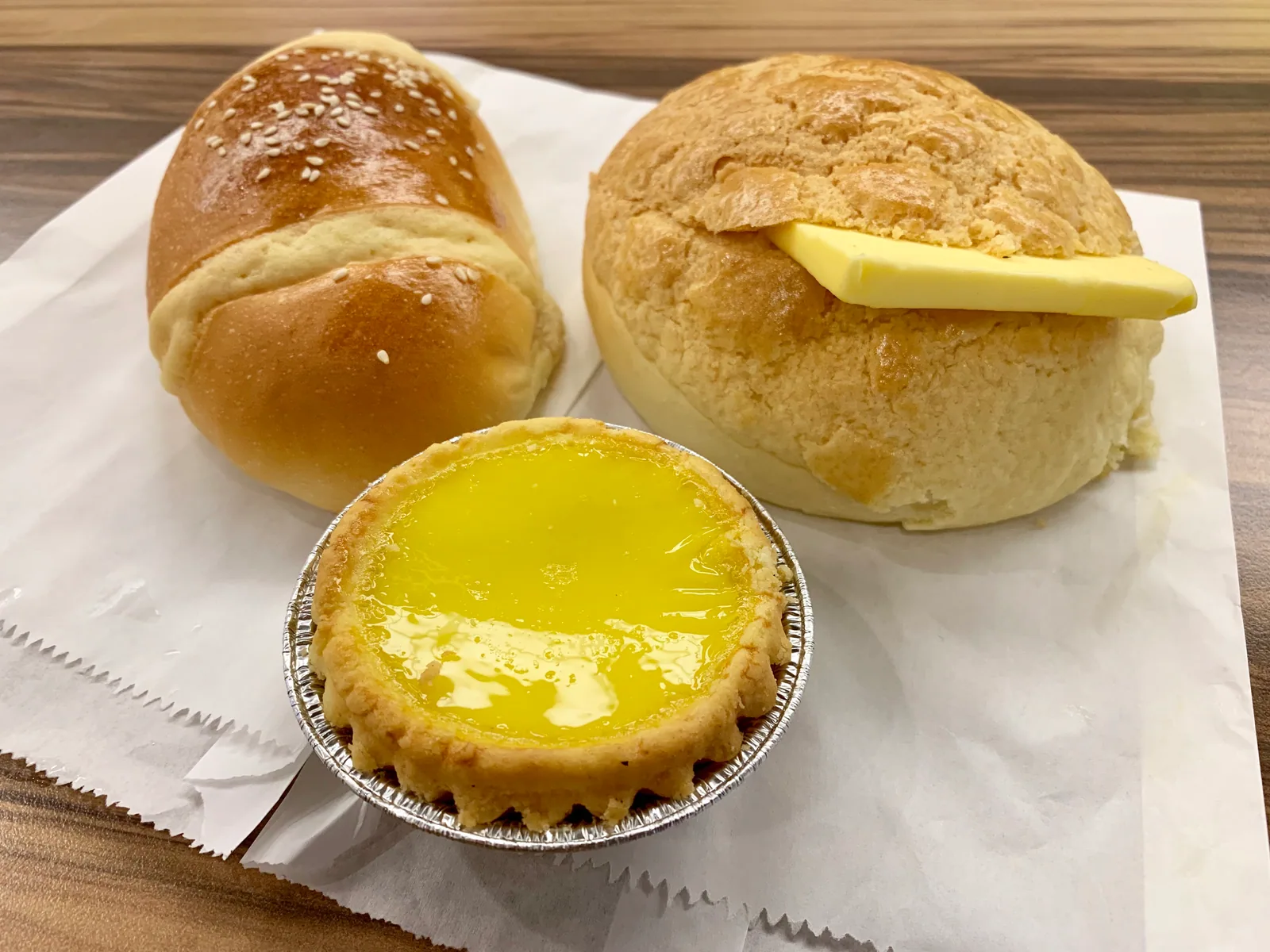
Signature egg tart from Taichang Bakery in Banqiao, Taiwan (right) and Hong Kong-style pastries, photographed in 2019. Taichang is an old Hong Kong brand with a presence in Taiwan, representing the context of Hong Kong-style egg tarts on Taiwanese streets. Photo: bryan… (Flickr 91049143@N00). CC BY-SA 2.0 via Wikimedia Commons.
Thousand-Layer Egg Towers: The Revival of Extreme Techniques in 2024
In 2024, Taiwan experienced another wave of the "thousand-layer egg tower" craze. Visually, this egg tart presents a fascinating radial pattern known as "small flowers," and the biggest technical difference from traditional Portuguese egg tarts lies in pressing and molding.
Thousand-layer egg towers typically use high-quality French butter (such as Montaigu butter) and Japanese flour, aiming for extreme crispness. Instead of rolling and slicing puff pastry, the layered pastry is directly pressed into a special small flower mold, allowing it to bloom like petals during baking 12. The filling often uses high-fat cream (like Zhongze cream), creating a semi-custard texture 13.
📝 Curator's Note: From the "cookie base" of traditional egg towers to the "petal puff pastry" of thousand-layer egg towers, the evolution of the egg tart is a military competition in Taiwanese pursuit of "crispness" and "milky aroma."
Contemporary Implications of the Egg Tart Effect
The "Egg Tart Effect" continues to reoccur in contemporary Taiwan. From Qingyu's green lemon to Pang Laodie's fried chicken, and more recently to pickled fish, the Taiwanese market has consistently exhibited a pattern of "boom and bust" 14. As the progenitor of this phenomenon, the egg tart's meaning has long transcended food itself. It reminds us that behind collective frenzy often lies an extreme craving for novelty and a fear of missing out on popular trends.
Image Sources
This article uses 3 public domain / CC licensed images, all cached in public/article-images/food/ to avoid hotlinking source servers:
- Portuguese Egg Tart — Photo: ProjectManhattan, CC0 1.0 Public Domain
- Macau Lord Stow's Bakery Facade — Photo: LN9267, 2023, CC BY-SA 4.0
- Taichang Bakery Hong Kong Style Egg Tart in Banqiao, Taiwan — Photo: bryan… (Flickr), 2019, CC BY-SA 2.0
References
- Egg Tart Effect — Wikipedia: Egg Tart Effect article, explaining that this term originates from the queuing frenzy and rapid cooling phenomenon caused by Portuguese egg tarts entering the Taiwanese market in 1998.↩
- Baking Stories | Spring, Let's Have a Sweet Egg Tart — Sanneng Group: See original link content for supplementary details.↩
- Portuguese Egg Tarts — Wikipedia: Records the history of Andrew Stow opening Lord Stow's Bakery on Taipa Street in Macau in 1989, modifying the recipe by abandoning ground ginger and using cream and reduced sugar.↩
- Portuguese Egg Tarts — Wikipedia: Records the history of Margaret divorcing Andrew in 1997, opening another branch on the Macau Peninsula, and subsequently having her recipe enter the KFC chain system (see en.wikipedia.org Egg tart article: "In 1999, Wong sold the recipe to KFC").↩
- Egg Tart — English Wikipedia: Consistent with the claim that KFC introduced egg tarts to markets like Taiwan and Asia after acquiring the recipe from Margaret in 1999, and before KFC did not sell them in Taiwan prior to 1998 (FB fan page "Tainan Style" also has similar descriptions, but these are unofficial UGC).↩
- Did You Know? Before 1998, KFC in Taiwan Did Not Sell Egg Tarts — Tainan Style (FB Fan Page): Describes the historical context of KFC egg tarts in Taiwan; the 2022 marketing operation by KFC implying discontinuation was a widely circulated online topic at the time, but original official statements or links are defunct. This serves as evidence for consumer reactions based on related posts from that time.↩
- Egg Tart Technology After American Aid Flour Importation in Taiwan's 1950s - Threads↩
- Maillard Reaction — Wikipedia: Explains that the Maillard reaction is a chemical reaction between amino acids and reducing sugars at high temperatures, which is the main mechanism for producing golden to dark brown colors and complex flavors in baked goods.↩
- Portuguese Egg Tarts — Wikipedia: Describes the puff pastry making process of Portuguese egg tarts, including the technique of repeatedly folding butter; the complete method of layered puff pastry can also be found in the same site's "Thousand-Layer Puff Pastry" article.↩
- Hong Kong Classic Egg Tart: Chinese Puff Pastry VS Cookie Crust - O'lala Baking Studio↩
- Traditional Puff Pastry Egg Tarts | Are Portuguese and Others Made with Lard?! - YouTube↩
- What is the Difference Between Thousand-Layer Egg Towers and Puff Pastry Egg Tarts?! - Liz Foodie↩
- Puff Pastry Thousand-Layer Egg Tart On Sale Starting Today - Balei Bakery Instagram↩
- Egg Tart Effect — Wikipedia: Lists multiple Taiwanese "Egg Tart Effect" cases such as Qingyu Green Lemon, Yifei Thick Milk Tea, and Pickled Fish.↩