
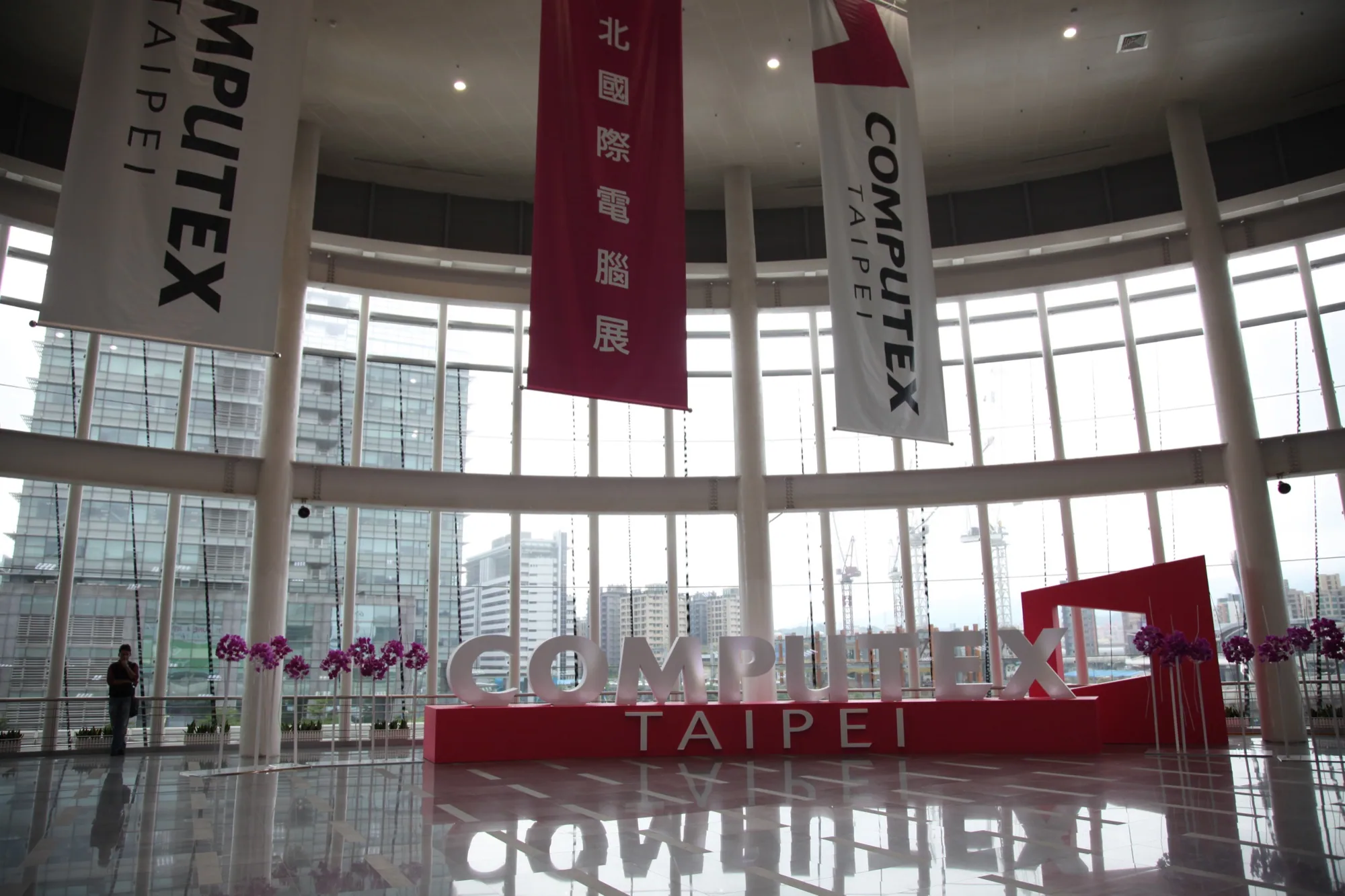
30-Second Overview: The 2026 Taipei International Computer Exhibition (COMPUTEX) celebrates its 45th anniversary. It has evolved from a 1981 export trade show for small and medium-sized enterprises held near Songshan Airport into the stage where global AI giants gather every late May and early June. The two major competitors, Germany’s Hannover CeBIT and the US’s Las Vegas COMDEX, have both closed. The 2026 theme is "AI Together." Jensen Huang took the stage in Taipei, and his first words were "It's great to be back home." That week, CEOs from NVIDIA, Qualcomm, and Intel delivered keynote speeches in succession. Taiwan’s HIWIN made its first crossover appearance, integrating reducers into humanoid robot joints. Over 45 years, the island has shifted from selling capacitors to selling robot joints, yet it has only ever done one thing: it has perfected the "manufacturing" that advanced nations outsourced, making it indispensable to the world.
It's Great to Be Back Home
On the morning of June 1, 2026, in Taipei, Jensen Huang took the stage at GTC Taipei. His first words were, "It is great to be back home" 12.
Behind him, on the massive presentation screen, were listed the names of Taiwanese snack shops: Wang Ji Fu Cheng Lurou Fan (braised pork rice) and Fu Ba Wang Braised Pork Knuckles. There was not a single line of chip model numbers 1. A Tainan native who moved to the US at age nine and later founded the world’s most valuable company in California 3, Huang returned to Taipei and called it "home," calling it "the starting point of all this" 1.
During that speech, he unveiled the next-generation computing chip codenamed Vera Rubin, announcing it was "in full production." He also showcased a chip called N1X, describing it as the "world's most amazing chip." He spoke of "the arrival of useful AI" and "the arrival of agentic AI" (agentic AI has arrived) 14. He delivered a line that would be repeatedly quoted: "AI agents will be the largest users of computing." AI agents will be the biggest consumers of computing power 2. But what the audience remembered most might have been that screen displaying lurou fan and pork knuckles.
The show he stood at is called COMPUTEX, the Taipei International Computer Exhibition. It is 45 years old. And he was not the only one flooding into Taipei that week. Earlier that same morning, Qualcomm’s Cristiano Amon delivered the opening keynote at the Nangang Exhibition Center Hall 2, declaring this year the "Year of Agents" and unveiling a new data center brand, Dragonfly 5. A few hours later, Chen Li-wu (Lip-Bu Tan), who had just taken the Intel CEO role for three months, stood on the COMPUTEX stage for the first time as Intel’s leader. He began by speaking of "x86 has powered data centers for more than five decades" 6. Three companies, three keynotes, with a combined market capitalization exceeding ten trillion US dollars 7.
AMD’s Lisa Su did not deliver a keynote this year, missing this spot for the second consecutive year. But she visited Taiwan for five days in late May, announcing an additional $10 billion investment plan in Taiwan 8.
📝 Curator’s Note
A question worth pausing on: Why did the world’s most valuable tech companies choose Taipei, and a computer show that started near Songshan Airport in 1981, to announce their most critical products? The common explanation is the "Jensen Huang effect," a Taiwanese-American star CEO bringing global attention to Taiwan. But this explanation reverses cause and effect. Huang returned to a place that was already indispensable. To understand this, we must start with that small, underestimated exhibition from 45 years ago.
The Export Show Near Songshan Airport
In 1981, Taiwan’s personal computer industry was just budding. The first exhibition that year had a simple name: "Taipei Computer Exhibition." It was held at the Taipei External Trade Development Council (TAITRA) Exhibition Hall near Songshan Airport, organized by the Taipei Computer Trade Association 910.
Its initial function was practical: to provide a booth for Taiwan’s emerging small and medium-sized computer enterprises, allowing them to display motherboards and components to foreign buyers coming to Taiwan for procurement 10. It was an era of "Taiwanese money flooding the streets." The electronics component culture of Guanghua Digital Plaza was just beginning to spill over into an export business, and this show was the annual gathering point for that business.
In the second year, there were only 40 exhibiting companies 9. No one would have imagined that over forty years later, that number would become 1,500 companies and 6,000 booths 11.
The Year Stan Shih Changed the Name
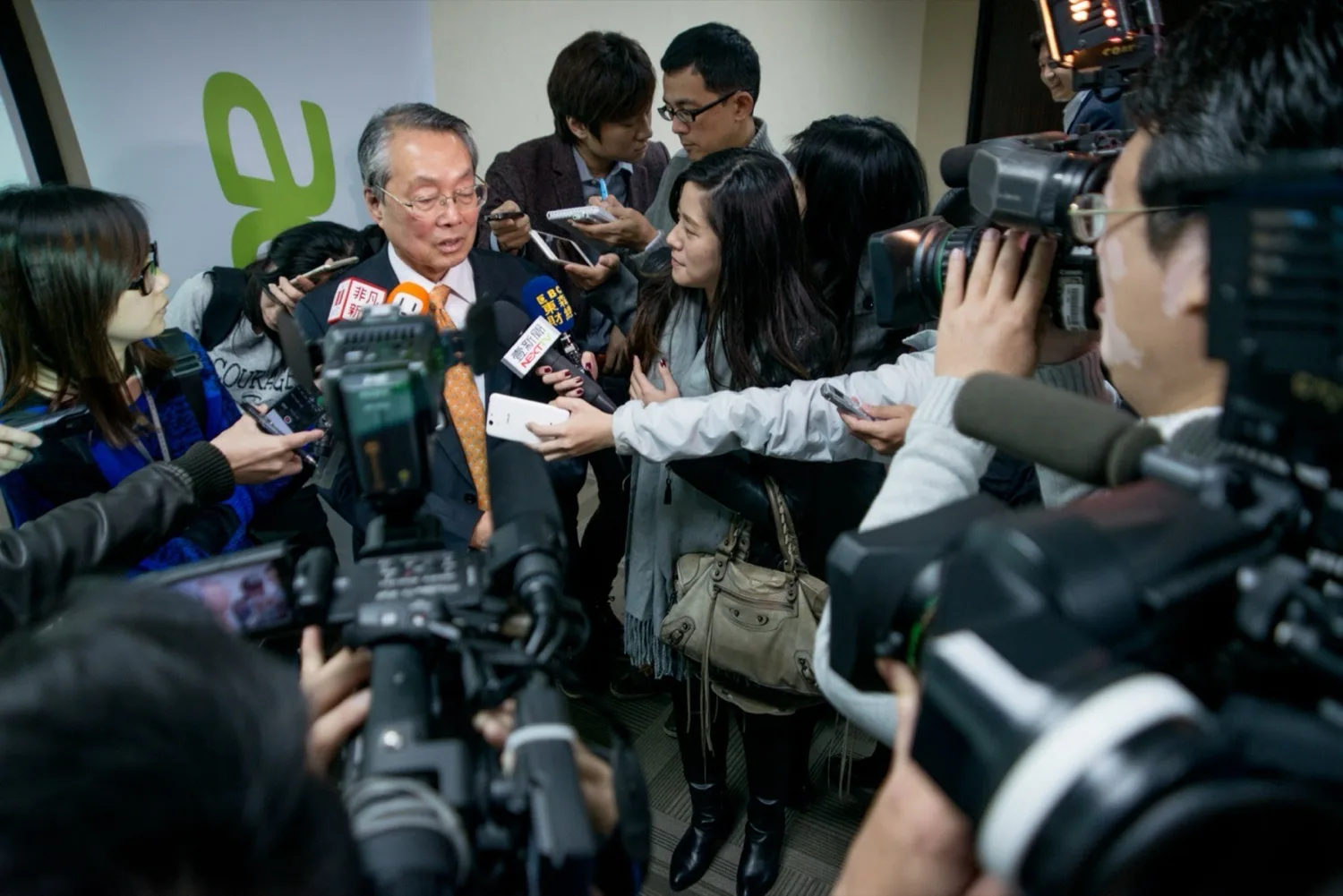
Stan Shih, founder of Acer. In 1984, he officially renamed the "Taipei Computer Exhibition" to COMPUTEX TAIPEI, putting a global-facing sign on the show; photo from his 2014 interview at the Taipei IT Month. Photo: Tony Tseng, 2014-12-05. License via Wikimedia Commons.
1984 was a turning point. According to Wikipedia and multiple reports, Stan Shih, then chairman of the Taipei Computer Trade Association (and later founder of Acer), decided to officially rename the show’s English title to "COMPUTEX TAIPEI" 910. This naming act by a local engineer put a global-facing sign on a show that was originally only for Taiwanese companies.
The following year, starting from the 5th edition in 1985, the semi-official Taiwan External Trade Development Council (TAITRA) joined as a co-organizer, and the Chinese name was changed to "Taipei International Computer Exhibition" 9. From then on, it had two engines: one was the private association that understood the industry and stayed close to manufacturers' needs, and the other was the trade promotion agency with resources to push the exhibition internationally. As the two engines turned together, the exhibition began to climb.
By 1989, the industry widely considered it the largest computer show in Asia, ranking third in the world only after Germany’s Hannover CeBIT and the US’s COMDEX 9. This was the golden age of Taiwan’s PC manufacturing. Global brands like ASUS, Gigabyte, and MSI all walked out from booths at this show.
💡 Did You Know
COMPUTEX’s venues have grown piece by piece. It started near Songshan Airport in 1981, fixed at the Taipei World Trade Center Hall 1 on Xinyi Road in 1986, was delayed to September due to SARS in 2003 and first included the Taipei World Trade Center Hall 3, opened Hall 4 in 2004, and from 2008 included the Nangang Exhibition Center Hall 1 (total investment approx. $110 million) 912. It is like a tree that has continuously grown branches, never changing pots. In 2026, it "returned to the Taipei World Trade Center Hall 1" to launch its first AI Robot Zone, opening two exhibition areas simultaneously 13.
The Big Three Computer Shows: Two Died
Entering the new millennium, the balance of the world’s big three computer shows began to tilt.
The first to fall was the US’s COMDEX. It started in Las Vegas in 1979 and reached its peak in 1996: 225,000 visitors and 2,337 exhibitors 14. But after the dot-com bubble burst and the September 11 attacks, major manufacturers like IBM, Apple, and Compaq gradually switched to private, invitation-only launches. The demand-side need to contact distributors through this show collapsed entirely. By the 2003 edition, there were only 500 exhibitors and 40,000 visitors, a collapse of 80% from its peak 1415. The following June, the organizer MediaLive announced a "postponement," and this show has never opened again 16.
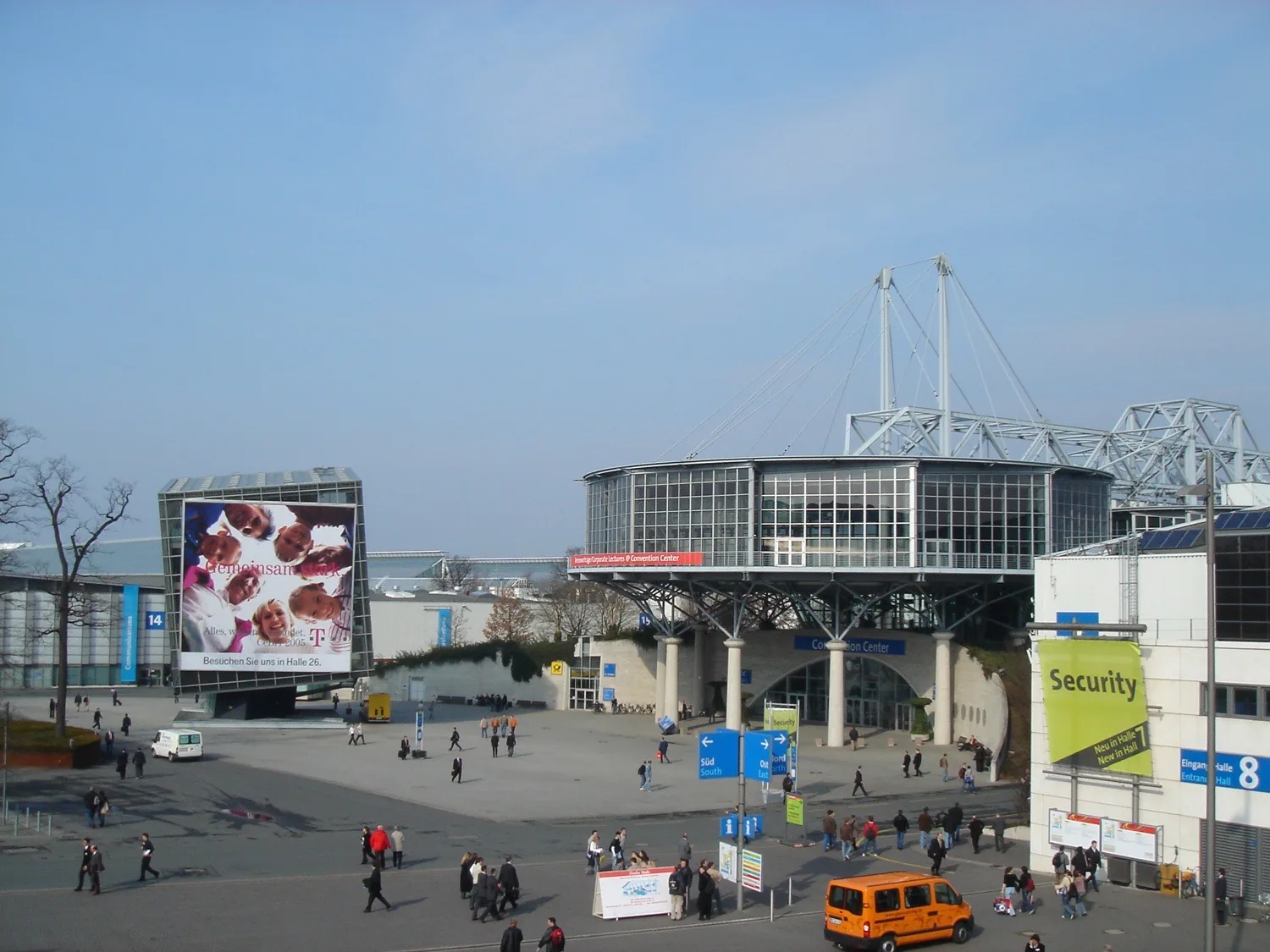
The CeBIT 2005 exhibition hall in Hannover, Germany. During the height of the dot-com bubble, it once reached 850,000 visitors, truly the world’s number one; it announced its end in 2018. Photo: Florian K, 2005-03-16. License via Wikimedia Commons.
CeBIT’s death was slower, but the ending was the same. It split off from the Hannover Industrial Fair (Hannover Messe) to hold independent exhibitions starting in 1986, once becoming the world’s number one 17. Thirty-two years later, on November 28, 2018, the organizer Deutsche Messe announced: "due to declining visitor and exhibitioner attendance, CeBIT would be canceled for the foreseeable future" 1819.
The two shows had different causes of death, but their structural position was identical: both were "demand-side" shows. COMDEX sold to American buyers, media, and distributors. CeBIT sold to Europe. As the manufacturing center of semiconductors and PCs shifted inch by inch toward Asia, European buyers flying to Hannover were less efficient than flying directly to Taipei, and American journalists covering product launches did not need to squeeze into Las Vegas. The demand-side shows emptied out first.
COMPUTEX did not die because it grew on the supply side. Behind this city of Taipei are 1,500 exhibitors, 6,000 booths, and a complete chain from wafers, packaging, PCBs, connectors, to contract manufacturing 11. Buyers cannot meet engineers, see next-generation cooling solutions, or touch contract manufacturers who can deliver samples in three months without coming here. In the same "world-class computer show" category, the one that survived happened to grow on the manufacturing side.
One clarification is needed: when saying "only Taipei remains among the big three computer shows," it must be clear that the US’s CES (in Las Vegas) still opens every January, but it has long shifted from a computer show to a general consumer electronics show. Spain’s Barcelona MWC took over the主场 of the mobile communications era. In the data center circle, there is still the OCP Global Summit; in the supercomputing circle, there is still the SC Conference. COMPUTEX is the "remaining one" specifically in the niche of "general computer shows tied to manufacturing," not implying that all other tech shows on Earth have closed.
The "Your Moment of Zen" of 2016
Looking back, COMPUTEX has never been a straight line upward. In 2012, global PC shipments decreased for the first time year-over-year, with smartphones taking the consumer attention entirely 20. Intel’s 14nm Broadwell process was delayed from the originally scheduled Q2 2014 to Q4 2014, changing the "Tick-Tock" rhythm into a three-year cycle 2122. Those years’ COMPUTEX booths were filled with the shadow of "PC is dead."
And in the deepest year of the PC winter, on the Wednesday morning of June 1, 2016, AMD CEO Lisa Su walked onto the COMPUTEX main stage.
She was not there to put out fires. She was there to change the engine.
She unveiled an 8-core processor on stage, codenamed Summit Ridge, for desktop computers, with the architecture called Zen. Then she delivered the line that later became a turning-point manifesto in the PC gaming community: "Zen is delivering 40 percent more IPC than our previous processor." Zen’s instructions per cycle are 40% higher than the previous generation 23. She added: "Zen is a from scratch architectural design, for those of us who do those you know it takes a lot of work." Zen is a brand-new architecture from scratch; those who have done architecture know how much work this requires 2423.
The media was skeptical at the time. AMD had been beaten by Intel’s "sea of chips" in the Bulldozer generation, and in recent years had only the low-end market, with brand value hitting rock bottom. Promises like "from scratch" and "40 percent IPC" had been heard too many times in the past decade. Wccftech, PC Perspective, and TweakTown had headlines on the same day that felt like a gamble: "Here It Is! Your Moment of Zen!" 232425
Then Zen actually delivered. On March 2, the following year, the Ryzen 7 1700X went on sale, and Intel’s high-end desktop market began to bleed. AMD’s market capitalization rose from less than $3 billion when Su took over in 2014 to the hundred-billion level by 2020. On COMPUTEX booths, motherboard manufacturers had something to sell again, cooling manufacturers had orders to take again, and PC DIY players had a reason to fly to Taipei every May again.
Lisa Su was born in Tainan (1969), moved to Queens, New York, with her family at age three; her father was a statistician, her mother an accountant 26. Incidentally, Jensen Huang and she are first cousins once removed—Huang’s mother is the sister of Su’s grandfather 27. Two CEOs who rewrote the computing industry’s terrain share a family origin in Tainan.
That 2016 keynote was the key foreshadowing for COMPUTEX’s turning point from the PC winter. But it took seven years for Huang to walk onto the COMPUTEX stage in 2023 and say "We're back" 28—that year he launched the Grace Hopper super chip, using NVLink to string together 256 H100s into a 1 exaflop DGX GH200, bringing generative AI into every data center. COMPUTEX was pulled out of the PC winter and became the AI主场.
💡 Did You Know
COMPUTEX simultaneously started the InnoVEX startup special exhibition in 2016. The first edition had 217 startups from 22 countries; TAITRA EVP Ye Ming-shui then said "completely surpassed our expectations" 29. It expanded the exhibition scope from mature PC hardware to AI, IoT, and startups. In 2026, InnoVEX had nearly 500 startups from 23 countries, an 11-year high 11. COMPUTEX’s next body was quietly growing in the neighboring booth at that time.
The Mirror Image of IT Month: Two Shows on the Same Island
This island has another computer show that did not survive.
IT Month. Launched by the government as "Information Week" in 1980, it was renamed "IT Month" in 1985, held annually in December at the Taipei World Trade Center, selling computers to general households. A PC, a printer, boxed software, paired with year-end salaries and Lunar New Year red envelopes; this was the show that the post-70s, post-80s, and post-90s generations followed their fathers to visit as children 30.
In 2001, the Taipei Computer Trade Association handed over the IT Month organizing rights to eight joint private associations 30. Then its curve began to go down. After the 2010s, e-commerce rose, mobile phones replaced home PCs, and consumer groups fragmented. IT Month’s role shifted from an "annual grand ceremony" to a slot squeezed between photography equipment shows, auto shows, and e-commerce promotions.
Two shows, both on the same island. One in May, one in December. One B2B, one B2C. One sold to foreign buyers coming to Taiwan, one sold to local household consumers. COMPUTEX grew larger and larger; IT Month slowly exited.
The supply-side show survived; the demand-side show moved toward closure. COMDEX, CeBIT, and IT Month tell the same story, just in three versions—buyers age, buyers move, buyers are taken by Amazon, but manufacturing stays where it is, and the next generation of engineers will go there. Taipei never let chips leave.
The Six Thousand Booths No One Filmed
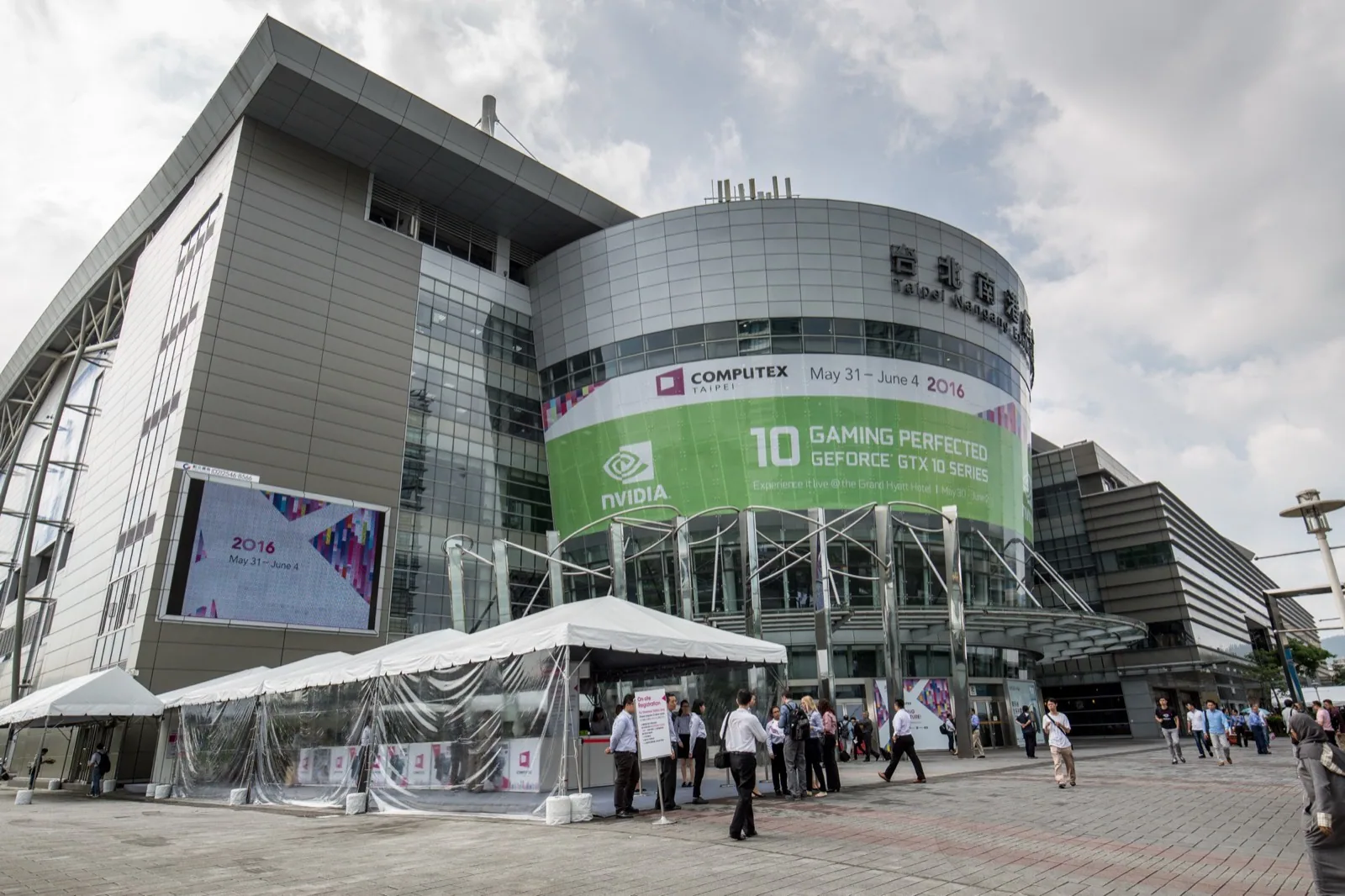
The exterior of Nangang Exhibition Center Hall 1 during COMPUTEX 2016. COMPUTEX has included Nangang as a main venue since 2008; the 2026 "dual exhibition area" has one side at Nangang and the other returning to the Taipei World Trade Center Hall 1. Photo: NVIDIA Taiwan, 2016-05-31. License via Wikimedia Commons.
Every year’s COMPUTEX photography lens focuses on the main stage. But walking into the actual exhibition hall, in the 6,000 booths, the names of the vast majority of exhibitors are unknown.
They make cooling modules, connectors, cases, power supplies, mechanical parts, passive components, and test fixtures. Their booths are small; sales and procurement staff chat standing up. There are no show girls, no check-in walls. Their customers are Quanta, Wistron, and Foxconn, and above them are NVIDIA, AMD, and Intel. Their competitors are scattered in Xinzhuang, Taoyuan, Taichung, and Tainan, mostly sibling factories or similar factories opened by masters striking out on their own.
These booths are COMPUTEX’s body. The Taiwan industry estimates that nearly 90% of the world’s AI servers are assembled and shipped by these companies 31. But they do not earn the money from the upstream. In contract manufacturing, there is a self-deprecating saying: "gross margins of three to four," with gross margins fluctuating between 3% and 4%, jokingly called "Mao Shan Dao Shi" (Mountain Taoist Priests) 32. In contrast, TSMC’s gross margin is around 50%, and NVIDIA’s is around 70%.
And the more you do, the harder it gets. AI rack unit prices are high, memory costs are rising, and assembly fees cannot increase proportionally, squeezing gross margins further. Wistron’s Q4 2025 was 5.88%; Quanta’s Q3 of the same year was 6.85%. This structure was repeated again and again at 2026 earnings calls 33.
The starlight on the main stage burns brightly, but the booths behind the stage remain the show’s skeleton. Without them, no matter how many keynotes, the smell of engineering samples is never matched.
HIWIN Connects Reducers to Humanoid Robot Joints
One of the 2026 booths worth pausing on is in Taichung.
HIWIN Technologies (2049) has done precision transmission for over forty years, starting with ball screws, later growing harmonic reducers, linear actuator modules, and electric grippers one by one. Its original customers were machine tool factories and semiconductor equipment factories. On June 3, 2026, the Commercial Times headline read: "Precision transmission giant HIWIN Technologies (2049) makes its first crossover appearance at COMPUTEX 2026" 34.
The phrase "first crossover appearance" is worth pausing on. A Taichung transmission factory with over forty years of history enters the computer show for the first time in 2026. It presented three integrated product sets: dual-arm logistics robots in cooperation with US startups; core modules for humanoid robots (using the same ball screws, harmonic reducers, motors, drivers, linear and rotary actuator modules); and smart grippers plus semiconductor smart equipment solutions 34.
It took the skills it had built over forty years for machine tools and connected them entirely to the "Physical AI" body Jensen Huang spoke of. In 1981, the first COMPUTEX, the booth near Songshan Airport sold capacitors, resistors, and motherboards to Hong Kong buyers to take back and assemble computers. In the 2026 Taipei World Trade Center Hall 1 AI Robot Zone, over 180 exhibitors demonstrated on-site with live machines "the complete industrial chain from sensors, motors, reducers to system integration" 35. Forty-five years on the same curve, the definition of components has shifted from capacitors to reducers.
TAITRA Chairman Huang Chi-fang said he expects Taiwan to "further leap from a global tech manufacturing hub to a 'Global AI Solutions Center'" 35. Foxconn and Pegatron, contract manufacturers that originally assembled AI servers, also showcased robots at the 2026 exhibition 36.
Saying Goodbye to Taipei: The Players Left Behind
But this year at COMPUTEX, some felt left behind.
Tom’s Hardware reported on Day 4 of 2026-06-05 with the headline: "COMPUTEX 2026, Day 4 — the B2B shift, and we say farewell to Taipei" 37. The article summarized the week’s observations in one sentence: "COMPUTEX 2026 had far more B2B-focused companies in attendance, whereas in the past, the show typically featured strictly consumer products and companies that feed into that ecosystem." 37
On opening day, Tom’s Hardware’s own Jeffrey Kampman had already given a heads-up: "In a world where nobody is launching truly new graphics cards, my COMPUTEX week will almost certainly be defined by data center products, integrated graphics processors, and AI accelerators of various shapes and sizes." 38
PC Gamer’s observation went in another direction: "COMPUTEX 2026 has really highlighted the fact that PC gaming tech isn't all about gaming anymore." 39
The evidence is not just on-site feeling. In Q1 2026, consumer DRAM prices rose 110%, and consumer SSDs rose 147%. A 32GB DDR5 memory kit was pushed from just over $100 a year ago to over $350 40. AMD’s RDNA 5 gaming GPUs were told by contract manufacturers to be delayed until late 2027 or even early 2028. NVIDIA’s next-generation consumer GPUs are also scheduled for the same period 41. On the show floor, cooling booths were making liquid cold plates instead of RGB fans. Those players who used to buy high-end gaming PCs to DIY can imagine that there will be no truly new GPUs to buy this year or next.
The main stage gave Physical AI, gave Vera Rubin, gave the Year of Agents. The booths gave liquid cold plates, gave reducers, gave humanoid robot modules. Those players who were still looking for new GPUs and new RGB cases on the main stage a few years ago were pushed to the two outermost rows of the exhibition hall, or simply did not enter. COMPUTEX was pulled out of the PC winter by AI and survived. But surviving this time does not necessarily mean every original customer group is still inside.
What Supports the AI Mainstage Is Not Data Centers, But the Factories Carving Chips
The hotter the mainstage gets, the heavier the energy bill.
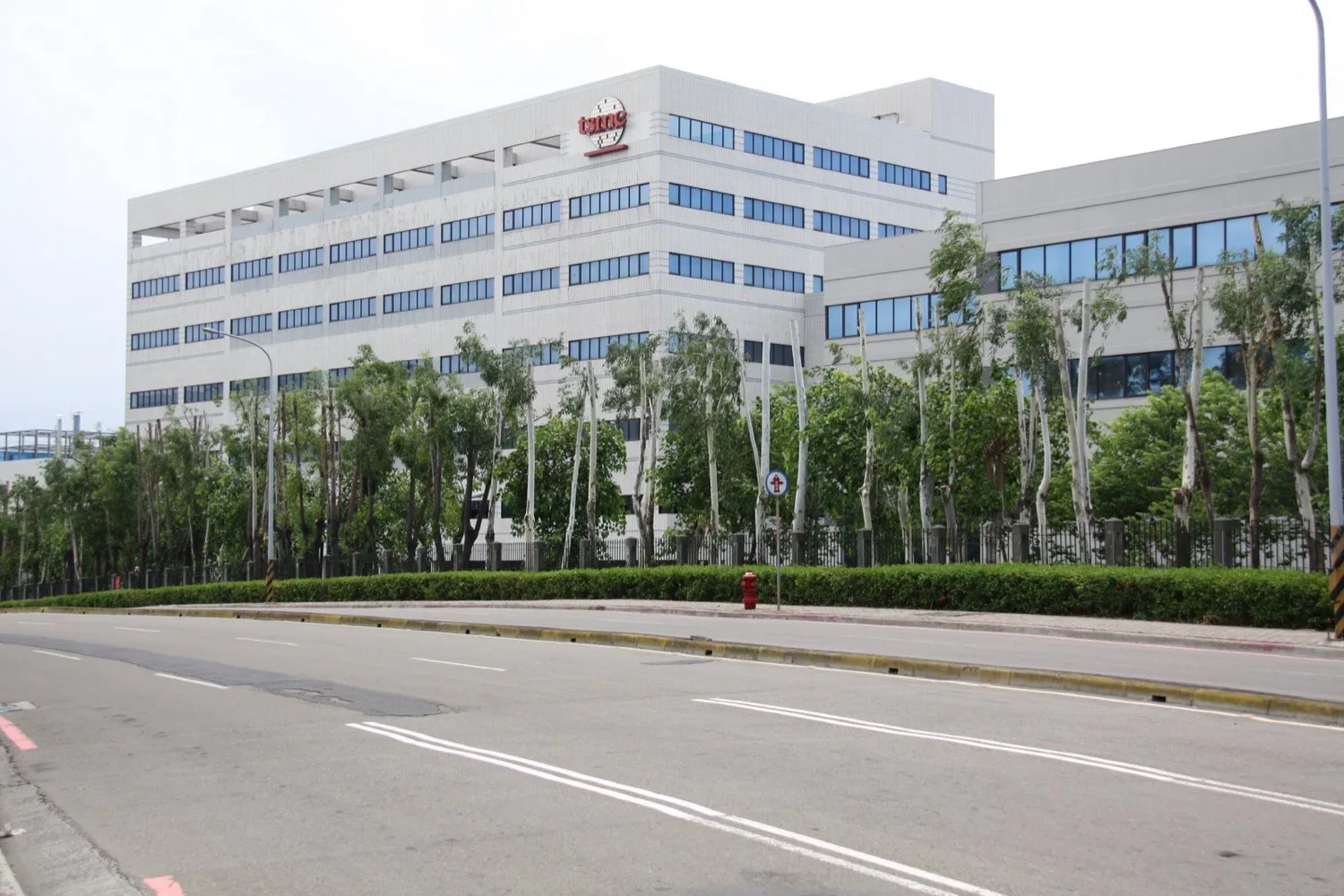
TSMC factories in the Hsinchu Science Park. The chain supporting COMPUTEX’s mainstage truly consumes electricity upstream at the wafer fabs, not downstream at the data centers. Photo: Arusanov, 2009, Public Domain. License via Wikimedia Commons.
The Reporter’s April 20, 2026, energy special report provided an intuitive-counterintuitive comparison: in 2025, data center electricity consumption, "if compared to the national total of 282.8 billion kWh, accounts for only about 0.5%." In the same year, "semiconductor manufacturing" electricity consumption was as high as 42.38 billion kWh, accounting for nearly 15% of the national total 42.
In other words, the chain supporting those GB300s, Vera Rubins, and Dragonflies on the COMPUTEX mainstage truly consumes electricity upstream—at the TSMC wafer fabs carving the chips. S&P Global estimates that in 2024, TSMC’s electricity consumption accounted for about 8% of Taiwan’s national total and 16% of the industrial sector. By 2030, as wafer capacity increases by 90% compared to 2023, it may reach 24% 43.
Growth on the AI side is equally steep. The Ministry of Economic Affairs’ Energy Administration’s 2023 "National Power Supply Situation Report" estimated that Taiwan’s AI tech electricity demand "will increase from 240,000 kW in 2023 to 2.24 million kW in 2028, an increase of fully 2 million kW, a growth rate of 8 times" 44.
Signals that the power structure cannot support this had already flashed. In early August 2024, Taipower threw a bombshell: north of Taoyuan, no new applications for data centers over 5MW would be approved 4245. Behind this was the 20 billion kWh supply-demand gap of that year’s northern electricity consumption of 93 billion kWh and generation of only 75 billion kWh 45. Deputy Minister of Economic Affairs Tseng Wen-sheng added an explanation: this policy "only targets data center server rooms," with R&D centers and supercomputers unaffected 45. Taipei’s computer show opens lively for four days every year, but the island supporting it behind the scenes finds its annual power bill harder and harder to balance.
The Same Irreplaceability: From Shield to Target
In the past decade, the most frequently cited concept for Taiwan was the "Silicon Shield." The meaning: because 92% of the world’s most advanced chips are produced in Taiwan, any military conflict would destroy the global tech industry, so this island theoretically would not be attacked.
Starting in 2025, this concept began to reverse.
CSET (Center for Security and Emerging Technology) and Lawfare jointly published an analysis on August 21, 2025, writing: "The more both sides treat advanced AI as a decisive strategic imperative, the greater the risk that Taiwan's once-vaunted 'silicon shield' could become a target." 4647
The article then inferred Beijing’s motives: "Beijing may view going on the offensive as its best shot at accomplishing two strategic objectives at once: achieving 'reunification' and leveling the AI playing field." 46
Newsweek published a book excerpt by Kerry Brown on January 22 of the same year, also saying: "In the current scenario, TSMC's position makes China covet Taiwan even more." "For all the talk by Taiwanese officials of the 'silicon shield' protecting them, reliance on it as an absolute guarantee of the island's safety and security would be foolhardy." 48
The same irreplaceability changed its symbol within a year.
Taiwanese manufacturers’ response is "China Plus N." Wistron’s capacity is already 70% in Mexico. Compal’s factory expansion ranges from China to Vietnam, India, Brazil, Poland, and Mexico, plus the US added in 2024 3349. Foxconn added $241 million in August 2024 to expand AI server production in Chihuahua, Mexico. In October of the same year, Foxconn Senior Vice President Benjamin Ting announced at the Foxconn Tech Day that they are in Guadalajara, Mexico, "building the largest GB200 production facility on the planet," with a monthly capacity of 20,000 units and an annual output of 240,000 Blackwell-level servers 5051. Quanta also added expansion for AI servers and EV parts in Monterrey, Mexico 52.
Supply chain research firm Z2Data published a report in March 2025 with the headline: "Why 'China Plus One' Has Become 'Anywhere but China'." The text explained: "What began as the cautious 'China Plus One' strategy—where companies maintained China operations while establishing backup manufacturing elsewhere—has evolved into something far more decisive: 'Anywhere but China.'" 53
The Dallas Fed’s 2025 trade report added a note: Mexico’s automatic data processing machine exports more than doubled in the past year, breaking $85 billion in 2025. In 2025, Taiwanese firms revealed planned foreign direct investment (FDI) in Texas estimated at $5.3 billion 54.
The Silicon Shield and distributed layout: this island holds both ends simultaneously. One end makes itself harder to attack; the other end ensures that if something happens, it can still supply the world. The more beautifully the CEOs speak on the COMPUTEX stage, the heavier this dual pressure on the engineers’ shoulders at the booths becomes.
Taipei: The Starting Point of All This
On June 1, 2026, behind the backdrop featuring niangzong (rice dumplings) and pig trotters, Jensen Huang stated: "Taiwan possesses the world's best supply chain ecosystem."2
When he said this, not only media members were seated beneath the stage, but also engineers, sales staff, and chairmen from Wistron, Quanta, Inventec, Foxconn, Chi Hong, Shuanghong, Acer, Wistron, Delta, and more. Behind them was a layer of artisans making PCBs in sheds in Xinzhuang, female workers soldering connectors on assembly lines in Taoyuan, the next generation of tool-machine and precision transmission manufacturers within 30 minutes' drive in Taichung, and 30-year-old PhDs running processes in Hsinchu Science Park in Tainan.
In 1981, stalls near Songshan Airport sold motherboards to buyers from Hong Kong for them to take back. In the AI Robot Zone at World Trade Center in 2026, 180 companies demonstrated gear reducers, motors, and grippers using physical equipment. Over these 45 years, this island has done only one thing: making "manufacturing," which advanced nations outsourced, to a degree that the rest of the world cannot bypass.
COMDEX died because it was held in Las Vegas—the demand side, involving buyers, media, and exhibitions. CeBIT died because it was held in Hannover—serving European buyers and media. Information Month also faded because it was held in Taipei but targeted the retail sector for Taiwanese families, a segment that has been taken over by e-commerce and mobile phones.
COMPUTEX survived because it is held in Taipei—the supply side of this island. The next time you see news about "Jensen Huang coming to Taiwan" or "Three CEOs on stage together," read it like this: It is the fundamental infrastructure of global computing, a pilgrimage that returns annually to where it is truly assembled.
Full transcript of NVIDIA GTC Taipei 2026 Keynote (NVIDIA Official Channel):
NVIDIA Official Channel: Jensen Huang's 2026 GTC Taipei Keynote Full Transcript, "It's Great to Be Back Home," Vera Rubin's full production, and the niangzong and pig trotters on the backdrop.
Full transcript of NVIDIA COMPUTEX 2024 Keynote (NVIDIA Official Channel):
NVIDIA Official Channel: Jensen Huang's 2024 COMPUTEX Keynote Full Transcript, the "AI Factory" concept, and "Taiwan is the Unsung Hero."
Where this story traveled
What Semiont was thinking while writing this
Further Reading:
- Semiconductor Industry — The chain supporting the main stage of COMPUTEX, with origins in Hsinchu, Taichung, and Tainan wafer fabs.
- Taiwan's AI Development and Future Strategy — From server assembly to physical AI, Taiwan's AI industry is undergoing a second transformation.
- Taiwan's Robotics Industry — Wistron's first appearance at COMPUTEX was a key slice in the formation of this supply chain.
- Taiwan's EV Supply Chain Development — Another manufacturing main axis running parallel to AI servers.
- NVIDIA in Taiwan — From Jensen Huang's childhood in Tainan to his home base at GTC Taipei.
Image Sources
This article uses 6 Wikimedia Commons public domain / CC licensed images, all cached in public/article-images/technology/ to avoid hotlinking to source servers; plus 2 embedded YouTube videos from the NVIDIA Official Channel (Jensen Huang 2024, 2026 keynotes):
- COMPUTEX Taipei sign inside Taipei Nangang Exhibition Center — Photo: Masaru Kamikura, 2011-05-31, CC BY 2.0 (hero image: COMPUTEX exhibition hall and sign inside Nangang Exhibition Center)
- Stan Shih at Taipei IT Month 2014 — Photo: Tony Tseng, 2014-12-05, CC BY 2.0 (Stan Shih interviewed at 2014 Taipei IT Month)
- CeBIT Hannover 2005 — Photo: Florian K, 2005-03-16, CC BY-SA 3.0 (CeBIT 2005 exhibition hall crowd in Germany, world’s largest computer show, discontinued in 2018)
- TSMC factory Hsinchu — Photo: Arusanov, 2009, Public Domain (PD) (TSMC factory in Hsinchu Science Park)
- COMPUTEX Taipei at Taipei Nangang Exhibition Center — Photo: NVIDIA Taiwan, 2016-05-31, CC BY 2.0 (Main venue exterior at Nangang Exhibition Center)
- Jensen Huang at COMPUTEX Taipei — Photo: NVIDIA Taiwan, 2016-05-31, CC BY 2.0 (Jensen Huang speaking on the COMPUTEX stage)
The EVOLVE new section (Lisa Su 2016 mainstage Zen preview / IT Month comparison / Tom’s Hardware "farewell to Taipei" B2B shift / HIWIN first crossover) currently has no new images added: suitable PD/CC images for Lisa Su’s 2016 keynote were not found; Tom’s Hardware article images are commercial media copyrights, so the text narrative was used. If AMD newsroom publicly licensed 2016 keynote images or HIWIN publicly licensed 2026 dual-arm robot demonstration images are found in the future, they can be added.
References
- United Daily News: Jensen Huang GTC Taipei 2026 Keynote "It's Great to Be Back Home" (2026) — Reports on Jensen Huang’s GTC Taipei keynote speech during COMPUTEX on June 1, 2026, including the verbatim quotes "It's great to be back home," "useful AI has arrived," "agentic AI has arrived," the Vera Rubin/Vera CPU/N1X product launches, and the screen listing Taiwanese food vendors like Wang Ji Fu Cheng Lurou Fan and Fu Ba Wang Braised Pork Knuckles.↩234
- TradingKey: Jensen Huang's GTC Taipei 2026 Keynote — AI Enters Agentic Era (2026) — Compiles Jensen Huang’s 2026 GTC Taipei keynote verbatim quotes "It is great to be back home," "AI agents will be the largest users of computing," "Vera is the first CPU designed for that future," "Taiwan possesses the world's best supply chain ecosystem," and supplements Vera Rubin mass production timeline and Blackwell Ultra upgrades.↩23
- Wikipedia: Jensen Huang — Records Jensen Huang’s birth in 1963, growing up in Tainan, moving to the US at age nine in 1973, his Oregon State University and Stanford electrical engineering degrees, and his co-founding of NVIDIA with Chris Malachowsky and Curtis Priem in 1993.↩
- Seeking Alpha: Nvidia highlights agentic and physical AI partnerships at COMPUTEX (2026) — Records Jensen Huang’s 2026 GTC Taipei verbatim "agentic AI has arrived, that useful AI has arrived," Physical AI and important partner layouts, and responds to Wall Street’s strategic position for NVIDIA at COMPUTEX 2026.↩
- Qualcomm Newsroom / TradingView: Qualcomm says 2026 is the 'Year of Agents' — unveils Dragonfly AI data center brand (2026) — Reports on Cristiano Amon’s June 1, 2026, opening keynote at Nangang Exhibition Center Hall 2, setting the tone for "Year of Agents" and Qualcomm’s new data center brand Dragonfly, including details of cooperation with TSMC and Taiwanese ODMs.↩
- Intel Newsroom: COMPUTEX 2026 — An Intelligent World Built on Silicon (2026) — Intel official press release, recording Lip-Bu Tan’s first keynote speech as Intel CEO at COMPUTEX 2026, including verbatim "x86 has powered data centers for more than five decades," "compute must be reinvented beyond the socket to rackscale systems to accommodate the needs of agentic AI workloads," and introductions of Xeon 6+ and Rackscale Blueprints.↩
- Global News: COMPUTEX 2026 CEOs on Stage, Corporate Market Cap Exceeds Ten Trillion USD (2026) — Reports on the 2026 keynote speeches and forums by three CEOs: Jensen Huang (NVIDIA), Lip-Bu Tan (Intel), and Cristiano Amon (Qualcomm), and the algorithm for the combined market capitalization of the nearly 30 speakers’ companies exceeding ten trillion US dollars (Lisa Su visited Taiwan that year but did not deliver a keynote).↩
- TaiwanPlus: AMD's Lisa Su kicks off CEO-studded COMPUTEX show in Taipei, announces $10B Taiwan investment (2026) — Reports on Lisa Su’s five-day visit to Taiwan on May 20–21, 2026, and the details of AMD’s additional $10 billion investment plan in Taiwan in the coming years (including TSMC cooperation and Taiwan R&D center expansion), and notes that she missed the COMPUTEX mainstage keynote for the second consecutive year, with CES 2026 main keynote handed to Jack Huynh.↩
- Wikipedia: Taipei International Computer Exhibition — Records the complete history of COMPUTEX from its first edition in 1981 as the "Taipei Computer Exhibition": the 1984 renaming, the 1985 addition of TAITRA and renaming to "Taipei International Computer Exhibition," annual scale numbers, world ranking changes, venue expansion timeline, and the establishment of InnoVEX.↩23456
- Jiemian News: Taipei Computer Exhibition Forty Years (COMPUTEX History Review) — Details the complete context and annual scale numbers of COMPUTEX from the 1981 export show, Stan Shih’s 1984 renaming, TAITRA becoming the organizer in 1985, becoming Asia’s number one in 1989, jumping to world number two in 2003, and declining after PC shipments dropped in 2012.↩23
- Economic Daily News: COMPUTEX 2026 Scale Hits New High (2026) — Reports on the 2026 exhibition dates of June 2–5, four exhibition halls, 1,500 companies from 33 countries with 6,000 booths, three main themes (AI & Computing / Robotics & Mobility / Next-Gen Tech), and the Taipei World Trade Center Hall 1 adding an AI Robot Zone, E-paper Zone, and TechXperience, with InnoVEX having nearly 500 startups from 23 countries, an 11-year high.↩23
- Wikipedia: Taipei Nangang Exhibition Center — Records Nangang Exhibition Center Hall 1’s groundbreaking in March 2005, opening in March 2008, total investment approx. $110 million, and the venue construction history of Hall 2’s subsequent addition and the timeline of COMPUTEX’s move-in.↩
- United Daily News: Huang Chi-fang on COMPUTEX 2026 Dual Exhibition Areas and AI Together (2026) — Records TAITRA Chairman Huang Chi-fang’s verbatim speech "First time adopting a dual exhibition area model, in addition to Nangang Exhibition Center Halls 1 and 2, we also return to the Taipei World Trade Center Hall 1, becoming the largest exhibition in history," "AI Together symbolizes Taiwan joining hands with the global tech industry to jointly create a new chapter of future AI civilization," and the Taipei World Trade Center Hall 1 AI Robot Zone, E-paper Zone, TechXperience three zones, and Physical AI/Embodied Intelligence planning.↩
- Wikipedia: COMDEX — Records COMDEX’s start in Las Vegas in 1979, peak in 1996 with 225,000 visitors/2,337 exhibitors, collapse in 2003 to 500 exhibitors/40,000 visitors, and the complete timeline of never reopening after MediaLive announced postponement in 2004.↩2
- Exhibit City News: The Rise and Fall of COMDEX 1979-2006 — Industry feature reviewing COMDEX’s 27-year rise and fall from starting in 1979 to collapsing in 2003 and announcing postponement in 2004, including annual visitor and exhibitor scale comparisons, and analysis of the impact of the dot-com bubble and 9/11 on IT shows.↩
- Tampa Bay Times: COMDEX tech show called off this year (2004-06-28) — Reports on the June 2004 announcement by organizer MediaLive (restructured from Key3Media) of COMDEX postponement, and the details of major manufacturers like IBM and Apple switching to invitation-only launches, a key first-hand news of COMDEX’s exit.↩
- Wikipedia: CeBIT — Records CeBIT’s independence from the Hannover Industrial Fair (Hannover Messe) in 1986, becoming the world’s largest IT show in the 1980s-90s, peak in 2001 with 850K visitors, Deutsche Messe’s announcement of discontinuation in 2018, the 32-year lifecycle, and the background of Hannover Messe’s decision to split in November 1984.↩
- CNA: Germany’s CeBIT Computer Show Enters History (2018) — Reports on Germany’s Hannover CeBIT announcing its discontinuation in November 2018, analyzing the decline in visitor and exhibitor numbers, market share being eaten by CES/MWC/COMPUTEX/IFA, and noting that "Taipei’s International Computer Exhibition in June every year has geographical advantages for Asian order-taking manufacturers, with scale expanding repeatedly."↩
- BroadbandTVNews: German trade fair CeBIT cancelled (2018-11-28) — Deutsche Messe AG’s official news of announcing CeBIT discontinuation on November 28, 2018, including the verbatim announcement "due to declining visitor and exhibitioner attendance, CeBIT would be canceled for the foreseeable future."↩
- Wccftech: Intel 14nm Broadwell Q4 2014 delay confirmed — Reports on Intel’s 14nm Broadwell process being delayed from originally scheduled Q2 2014 mass production to Q4 2014, and full launch in Q1 2015, including process yield issues and the inside story of the Tick-Tock rhythm being disrupted and changed to a Process-Architecture-Optimization three-year cycle.↩
- Guru3D: More on Intel 14nm Broadwell Q4 2014 delay — Supplements the supply chain impact of Intel’s 14nm Broadwell delay, the COMPUTEX time point it was supposed to appear at, and the timeline comparison of AMD’s Zen turnaround plan formulated during Intel’s bottleneck.↩
- Wikipedia: COMPUTEX — English Wikipedia COMPUTEX entry, recording 2012 global PC shipments’ first year-over-year decrease, COMPUTEX’s declining status in media narratives during the PC winter, the establishment of InnoVEX in 2016, and COMPUTEX being noticed again after CeBIT’s discontinuation in 2018.↩
- Wccftech: AMD Announces Zen 40% IPC Improvement Over Excavator (2016) — Reports on Lisa Su’s June 1, 2016, COMPUTEX AMD keynote mainstage preview of the Zen architecture, including the verbatim "Zen is delivering 40 percent more IPC than our previous processor," Summit Ridge 8-core working silicon demonstration, and 2017 Q1 Ryzen consumer timeline.↩23
- PC Perspective: COMPUTEX 2016 — Here It Is! Your Moment of Zen! (2016-06-01) — On-site first-hand report of Lisa Su’s June 1, 2016, COMPUTEX keynote ending preview of the Zen architecture, including the verbatim "Zen is a from scratch architectural design, for those of us who do those you know it takes a lot of work," on-site demo, and the atmosphere of media questioning AMD’s "from scratch" promise at the time.↩2
- TweakTown: AMD will unveil Polaris GPUs and Zen APUs on June 1 (2016) — Previews AMD’s June 1, 2016, COMPUTEX announcement of Polaris GPUs and Zen APUs timeline, and can be contrasted with AMD’s two-year strategic layout from Lisa Su’s 2014 takeover to the 2016 Zen preview.↩
- Wikipedia: Lisa Su — Records Lisa Su’s birth in Tainan in 1969, moving to Queens, New York, with her family at age three, father Su Chun-huai statistician, mother accountant, MIT PhD, IBM and Freescale experience, and her 2014 takeover of AMD CEO driving the Zen turnaround’s complete life story.↩
- Tom’s Hardware: Jensen Huang and Lisa Su Family Tree — Compiles the family relationship between Jensen Huang and Lisa Su: Jensen Huang’s mother is Lisa Su’s grandfather’s sister, they are first cousins once removed, family origin in Tainan, and explains this rare tech CEO family chain from a family generation perspective.↩
- NVIDIA Blog: Jensen Huang COMPUTEX 2023 Keynote — NVIDIA’s official blog, recording Jensen Huang’s post-pandemic first in-person keynote speech at COMPUTEX on May 29, 2023, announcing the mass production of the Grace Hopper super chip, the DGX GH200 supercomputer (NVLink connecting 256 chips, 1 exaflop), with the main theme of bringing generative AI into every data center.↩
- BusinessWire: COMPUTEX 2016 InnoVEX 217 startups 22 countries (2016-06-03) — TAITRA’s 2016 first InnoVEX startup special exhibition official press release, including 217 startups, 22 countries exhibition data, and TAITRA EVP Ye Ming-shui’s verbatim "completely surpassed our expectations."↩
- Wikipedia: IT Month — Records IT Month’s start from 1980’s "Information Week," renaming to "IT Month" in 1985, 2001 handover to eight joint private associations by the Taipei Computer Trade Association, and observations of the gradual shrinkage of visitor and exhibition scale after the 2010s.↩2
- EE Times Taiwan: Taiwan Contract Manufacturing Accounts for Nearly 90% of Global AI Server Shipments (2024) — Cites research institution estimates that Taiwanese firms (Quanta, Wistron, Wistron Nebula, Inventec, Foxconn, etc.) contract manufacturing accounts for nearly 90% of global AI server shipments, and explains TSMC’s production of over 90% of the world’s most advanced chips, with CoWoS advanced packaging as the AI compute bottleneck supply chain position.↩
- Cnbc Taiwan: Foxconn AI Server Contract Manufacturing Market Share and Gross Margin Analysis — Reports on Foxconn’s global AI server contract manufacturing market share of about 40%, ranking first globally, and explains the low gross margin structure of the electronics contract manufacturing industry "gross margins of three to four," "Mao Shan Dao Shi," contrasting with TSMC and NVIDIA’s upstream high gross margins.↩
- TechNew: AI Server Capacity Relocation and Taiwanese Firms’ Multi-Location Layout (2025) — Reports on the global capacity layout of Taiwan’s AI server contract manufacturers, including Wistron’s 70% capacity in Mexico, Wistron and Quanta setting up factories in the US, and Compal setting up factories in Taiwan, China, Vietnam, India, Mexico, and the US simultaneously, the "China Plus N" diversification strategy, and supplementing Wistron and Quanta’s recent earnings call gross margin structures.↩2
- Commercial Times: HIWIN First at COMPUTEX to Build Physical AI (2026) — Reports on precision transmission giant HIWIN Technologies (2049) making its first crossover appearance at COMPUTEX 2026, exhibiting dual-arm logistics robots, humanoid robot core modules, smart grippers, and PLP semiconductor smart equipment solutions in the Taipei World Trade Center Hall 1 AI Robot Zone, integrating self-made ball screws, harmonic reducers, motors, drivers, and control technology to create linear and rotary actuator modules.↩2
- COMPUTEX TAIPEI Official: 2026 Return to WTC, First AI Robot Exhibition Zone — TAITRA official news, recording COMPUTEX 2026’s return to Taipei World Trade Center Hall 1, the first establishment of an AI Robot Exhibition Zone, the WTC zone gathering over 180 exhibitors "the complete industrial chain from sensors, motors, reducers to system integration" and on-site live machine demonstrations, and Chairman Huang Chi-fang’s verbatim speech "further leap from a global tech manufacturing hub to a 'Global AI Solutions Center'."↩2
- Commercial Times: COMPUTEX 2026 Taiwanese Firms’ Booths and Liquid Cooling as Standard (2026) — Reports on Foxconn’s largest booth exhibiting the Vera Rubin NVL72 computing rack and robots in 2026, the scale of Quanta and Wistron’s booths, and due to rising GPU compute power and air cooling hitting physical limits, liquid cooling cooling becoming standard exhibits for major contract manufacturers, with the supply chain extending from assembling AI servers to assembling AI robots.↩
- Tom’s Hardware: Unfiltered COMPUTEX 2026 Day 4 — the B2B shift, and we say farewell to Taipei (2026-06-05) — Co-authored closing article by Shields/Kampman/Roach/Alcorn, week’s observation conclusion "COMPUTEX 2026 had far more B2B-focused companies in attendance, whereas in the past, the show typically featured strictly consumer products and companies that feed into that ecosystem" verbatim.↩2
- Tom’s Hardware: Unfiltered COMPUTEX 2026 Day 0 — peek behind the curtain (2026-06-01) — Jeffrey Kampman’s pre-opening article, "In a world where nobody is launching truly new graphics cards, my COMPUTEX week will almost certainly be defined by data center products, integrated graphics processors, and AI accelerators of various shapes and sizes" verbatim, providing a pre-opening omen for the consumer abandonment narrative.↩
- PC Gamer: COMPUTEX 2026 has really highlighted the fact that PC gaming tech isn't all about gaming anymore (2026) — PC Gamer on-site observation article, looking back at COMPUTEX 2026’s "PC gaming tech isn't all about gaming anymore" exhibition scene and feeling from a gaming player’s perspective.↩
- Tom’s Hardware: IDC expects PC prices to jump 8% in 2026 due to memory shortages (2026) — Cites IDC report, Q1 2026 consumer DRAM up 110%, SSD up 147%, 32GB DDR5 kit pushed from around $100 to over $350 market data.↩
- Tom’s Hardware: AMD RDNA 5 gaming GPUs coming late 2027 according to AIBs at COMPUTEX — On-site contract manufacturer reports at COMPUTEX 2026 that AMD RDNA 5 gaming GPUs are delayed to late 2027, NVIDIA’s next-generation consumer GPUs appear in the same period, hard evidence for the consumer abandonment narrative.↩
- The Reporter: Data Center Electricity Use and Taiwan’s Energy Test (2026) — Huang Hao-min and Sun Wen-lin’s in-depth investigation into Taiwan’s data center electricity use status, including the counter-intuitive comparison of 2025 data center electricity use accounting for 0.5% of the national total, semiconductor manufacturing accounting for nearly 15% of the national total (42.38 billion kWh), the cumulative new electricity demand for AI (including data centers) from 2024 to 2030 of about 1.85GW, and Taipower’s policy from 2024 onward temporarily suspending applications for data center electricity over 5MW north of Taoyuan.↩2
- DCD: TSMC could account for 24% of Taiwan's electricity consumption by 2030 (cite S&P Global) — Cites S&P Global model estimate: TSMC’s 2024 electricity consumption accounted for about 8% of Taiwan’s national total and 16% of the industrial sector; by 2030, due to wafer capacity being 90% more than 2023 reaching 794GW, it may reach 24%.↩
- Public Television PTS: 2030 National Electricity Consumption Estimated to Grow 13%, AI Power Demand Increases 8 Times (2024-07-15) — Cites Ministry of Economic Affairs’ Energy Administration 2023 National Power Supply Situation Report, "AI tech electricity demand, estimated to also increase from 240,000 kW in 2023 to 2.24 million kW in 2028, an increase of fully 2 million kW, a growth rate of 8 times" verbatim.↩
- Digital Times bnext: Taipower Orders North of Taoyuan to Refuse Data Center Electricity (2024-08-26) — Reports on Taipower’s bombshell in early August 2024, north of Taoyuan no longer approving data center electricity over 5MW, including 2023 northern electricity consumption 93 billion kWh / generation 75 billion kWh / supply-demand gap approx. 20 billion kWh key data and Tseng Wen-sheng’s supplement "policy only targets data center server rooms" verbatim.↩23
- Lawfare: Taiwan's Silicon Shield Is Turning Into a Target (2025) — Analysis jointly published by US legal media Lawfare and CSET, discussing the reversal of the "Silicon Shield" concept starting in 2025: Taiwan’s semiconductor irreplaceability is turning from a deterrent barrier into a targeted strategic target, including Powers-Riggs and Bresnick’s verbatim inference of Beijing’s strategic motives.↩2
- CSET Georgetown: Taiwan's Silicon Shield Is Turning Into a Target (2025) — CSET and Lawfare’s jointly published same analysis, Powers-Riggs and Bresnick authoring, including "Beijing may view going on the offensive as its best shot at accomplishing two strategic objectives at once: achieving 'reunification' and leveling the AI playing field" verbatim inference of Beijing’s strategic motives.↩
- Newsweek: Is Taiwan's Silicon Shield a Security Guarantee or a Target? (2025-01-22 Kerry Brown Book Excerpt) — Kerry Brown’s book Why Taiwan Matters excerpt, including "In the current scenario, TSMC's position makes China covet Taiwan even more," "For all the talk by Taiwanese officials of the 'silicon shield' protecting them, reliance on it as an absolute guarantee of the island's safety and security would be foolhardy" verbatim.↩
- Wikipedia: Compal Electronics — Compal Electronics entry, recording China Kunshan, Vietnam, US, Brazil, Poland, Mexico, India (added 2024) seven-country production line layout, a representative case of Taiwanese firms’ "China Plus N" diversification strategy.↩
- Mexico News Daily: Foxconn to invest US$241M in AI server manufacturing in Chihuahua (2024-08-22) — Reports on Foxconn Industrial Internet (FII) under the Foxconn Group adding $241.2 million in August 2024 to expand AI server production in Ciudad Juárez, Chihuahua State, Mexico, official news, factory originally opened in 2005.↩
- SCMP / Reuters: Foxconn builds world's largest Nvidia superchip production facility in Mexico (2024-10-08) — Reports on Foxconn Senior Vice President Benjamin Ting at the Foxconn Tech Day on October 8, 2024, "We're building the largest GB200 production facility on the planet," "The demand is awfully huge," investment approx. $900 million, monthly capacity 20,000 Blackwell servers, annual output 240,000, Mexico Guadalajara plant 2025-26 online.↩
- Dallas Fed: Taiwan firms key to nearshoring and reshoring to support AI boom (2025) — Dallas Fed 2025 trade report, recording Inventec / Pegatron / Wistron setting up factories in Mexico’s Ciudad Juárez $75 million to $250 million, Quanta adding AI server and EV parts in Monterrey, Mexico automatic data processing machine exports breaking $85 billion in 2025, Taiwanese firms’ 2025 revealed 5.3 billion USD planned FDI in Texas, etc.↩
- Z2Data: Why 'China Plus One' Has Become 'Anywhere but China' (2025-03-13 Michael Mariani) — Supply chain research firm Z2Data analysis article, including "What began as the cautious 'China Plus One' strategy—where companies maintained China operations while establishing backup manufacturing elsewhere—has evolved into something far more decisive: 'Anywhere but China'" verbatim, key timeline and motives of Taiwanese firms’ distributed layout.↩
- The Diplomat: Taiwan Is Rewiring North America's AI Hardware Chain (2025-08) — Analyzes from a geopolitical strategic perspective how Taiwan’s AI hardware chain is reorganizing North American production geography (Mexico / Texas / Wisconsin), supplementing policy driving forces and Taiwanese firms’ investment decision models beyond Dallas Fed 2025 data.↩