
已深度查證 · 這篇走過 Taiwan.md 的深度研究與逐項事實查證流程
Benzo(a)pyrene Food Safety Crisis: 19 Days Before Reporting, 1,322 Businesses Finally Counted
30-second overview: In July 2026, a chemical name most people couldn't pronounce became a nationwide concern: flipping through last month's receipts, checking the list for the breakfast shop on the corner, asking which barrel of oil the school lunch program used. A batch of soybean salad oil from Chung Lien Oil tested positive for benzo(a)pyrene at 8.1 micrograms—more than four times the legal limit—and 1,322 downstream businesses were ordered to remove it from shelves. This article tracks something harder to fix than accountability: food safety law requires businesses to report when they discover a hazard, but doesn't specify who determines "discovery." Chung Lien knew on June 11 and reported on June 30; those 19 days in between are legally difficult to call a violation.
A Chemical Term That Made All of Taiwan Check Their Receipts
In mid-July, many Taiwanese did something they normally wouldn't: they pulled out last month's receipts and applied for refunds from 7-Eleven and FamilyMart — with the refund deadline extended all the way to September 13.12

A ball-and-stick model of benzo(a)pyrene: five hexagonal rings fused together, dark spheres are carbon, white spheres are hydrogen. This term that most people can't pronounce became the reason Taiwan went through receipts in July. Photo: Ben Mills. Public domain via Wikimedia Commons.
That unpronounceable term is benzo(a)pyrene (BaP for short), classified as a Group 1 carcinogen by the International Agency for Research on Cancer. It's not uncommon in daily life — Hsu Mei-ling, director of the Taiwan Society of Toxicology, said at a Food and Drug Administration press conference on July 6 that the amount people ingest from a single barbecue could be far higher than what was found in the contaminated oil. National Taiwan University agricultural chemistry professor Su Nan-wei explained how it forms: "Benzo(a)pyrene doesn't appear out of nowhere; it forms in abnormally high temperatures of around 300 degrees or above."34
Yen Tsung-hai, director of clinical toxicology at Chang Gung Memorial Hospital Linkou, explained at another press conference that this compound doesn't directly cause cancer by itself. It only becomes active after entering the body's metabolism and binding with cell DNA, which could potentially cause mutations — so eating it once doesn't mean you'll get cancer.5
The batch of soybean salad oil produced by Chung Lien Oil in April tested at 8.1 micrograms per kilogram of benzo(a)pyrene, with the legal limit at 2.0 — exceeding the standard by about four times. That 2.0 line wasn't set low by Taiwan alone; the European Union and South Korea have the same limit of 2.0 micrograms per kilogram for edible oils.67
Then came the lists. On July 5, the FDA released its first list of downstream businesses: 257 companies. The next day it grew to 360, by July 15 it broke 1,000, and by July 16 it reached 1,322. The list included breakfast shops, bento restaurants, small eateries, bakeries, and catering companies, as well as fresh food supply chains for chain restaurants and the seven major convenience store chains. Some of those bento boxes were being delivered to doorsteps by delivery workers, and the delivery services law regulating them launched that same month. Schools received another notice: 42 schools in Taipei, 50 in New Taipei, 39 in Taichung, and 13 schools and kindergartens in Kaohsiung had all used oil from the contaminated batch.891011
Source: FDA press releases, Central News Agency, ETtoday poll
Anxiety spilled over to vendors not named on the lists. In a poll from late July, 89.1% of respondents worried the contaminated oil was still circulating, and 86.3% worried they or their family members had already eaten it. Some consumers simply bought pork lard to render at home, causing pork vendors' lard sales to double. Meatball shops experienced the opposite — customers feared they too might have used the contaminated oil, and business dropped.1213
Also that week, many people seriously thought for the first time about what the phrase "inspection-approved" actually guaranteed. In January 2015, at an event at National Taiwan University's Risk Society and Policy Research Center, I-Mei Foods general manager Kao Chih-ming told his lab's testing staff: "Test results are just for reference." Testing can only answer the question about that one ladle of oil sent in; it can't answer for the entire supply chain. And consumers don't even have that one ladle — all we can get is what others are willing to tell us and when they're willing to tell it.14
19 Days: Who Knew But Nobody Demanded Immediate Disclosure
Let's first look at how this oil went bad. Health Minister Stone Chuh-liang explained that Chung Lien had relaxed its own acceptance standards for soybean raw materials last year, "raising the heat-damaged grain rate from the previous 0.5% to 5%." FDA Commissioner Chiang Chih-kang translated this into plain language: heat-damaged grains are soybeans scorched and degraded by high temperatures; previously, at most 5 out of every 1,000 soybeans could be heat-damaged, but after the relaxation, 50 could be. Stone Chuh-liang was also careful to note that the causal relationship between this and the finished product exceeding standards still requires expert confirmation.15
Su Nan-wei's technical assessment pointed to the raw materials. He said that a complete refining process (degumming, deacidification, decolorization, deodorization) could theoretically reduce the relatively high benzo(a)pyrene concentration in crude oil. The more likely contamination point is in the drying stage: "After harvest at the origin, how the soybeans are dried and whether high temperatures ever produced benzo(a)pyrene is difficult for us to control domestically; we can only rely on import inspection procedures as a checkpoint." Fukushou Chairman Hong Yao-kun, who was also Chung Lien's former chairman, put it more bluntly: "We've been producing this way for twenty or thirty years; it definitely isn't a domestic manufacturing error!" Both statements share a common conclusion: the checkpoint behind that door has its threshold set by the industry itself.416
What happened behind that door was first discovered by a downstream customer. On May 13, Nanjiao Oil & Fat detected benzo(a)pyrene exceeding standards in raw oil produced by Chung Lien during its own inspection. On June 4, external testing confirmed it; on June 10, they notified upstream Fukushou; Fukushou informed Chung Lien the next day; and Fumaur learned of it on June 15 at a routine quality assurance meeting. Each step Chung Lien took afterward looked individually responsible: June 16, they sent a sample to Aiweiwei for testing; June 25, the report confirmed it exceeded standards, and the same day they sent it to SGS for retest; June 29, they received a result of 8.1 micrograms. On June 30, Chung Lien reported to the regulatory authority.1718
Source: PTS News timeline compilation, Taichung City Government press release, Executive Yuan announcement
The figure of 19 days repeatedly used in Taichung City Government press releases and court rulings starts from June 11, when Chung Lien itself became aware. If counted from May 13, when Nanjiao first detected the anomaly, this information took 48 days to reach the government through the supply chain.19
Article 7, Section 5 of the Food Safety Act is very clear: "When a food business discovers that a product poses a risk to public health and safety, it shall immediately cease manufacturing, processing, sales, and conduct a recall, and notify the municipal or county (city) competent authority." The text contains the words "shall immediately," but does not define "discovery." Does one independent inspection count as discovery? Does notification from a downstream customer count? Must both retests confirm it? This determination authority rests with the business, so on the same timeline, "careful retesting" and "delayed reporting" look identical.20
Sections 1 through 3 of Article 7 require businesses to implement self-management and submit products for testing; those above a certain scale must also establish their own laboratories. The responsibility to test is handed to the business, and so is the timing of disclosure. The food safety act amendment draft passed by the Executive Yuan on July 23 targets exactly this gap: amending 17 articles and adding 1 sub-regulation, requiring businesses of certain categories and scales to report within 24 hours of discovering an anomaly, with penalties of NT$30,000 to NT$30 million for non-reporting or false reporting, and adding legal basis for a central food safety command center and preventive removal from shelves. This is the largest amendment to the Food Safety Act since 2019. The July 23 passage by the Executive Yuan occurred; the date of formal submission to the Legislative Yuan was not found in reports, while the KMT caucus's own version was submitted to the Legislative Yuan's Social Welfare and Health and Environmental Committee on July 24; both versions have not yet entered substantive review.212223
📝 Curator's Note
This was framed in July as "concealment," a moral term. But when you lay out the timeline, what Chung Lien did in those 19 days—holding quality assurance meetings, sending samples for third-party retesting, sending to a second testing lab—each step fits into any quality management textbook. The real gap is that the law allowed the completely reasonable motivation to "get the facts straight" to keep pushing back the moment that statement needed to be made, with no time limit. The amendment puts 24 hours into the law; what it truly changes is extracting the verb "discover" from the business's judgment and placing it on the clock.
Investigation Report One Month Later: All Four Deficiencies Point Back to the Business Operator
At 3 p.m. on July 27, the FDA released the third-party independent investigation results in the Chung Lien case. The press conference was chaired by Executive Yuan Spokesperson Chen Shih-chung, with a briefing by Wei Jen-ting, director of the FDA's Southern Regional Management Center, and attended by Health and Welfare Minister Shih Chung-liang and FDA Commissioner Chiang Chih-kang. Twenty-seven days had passed since Chung Lien's notification on June 30. The official press release framed the entire matter in its first paragraph: "This case was not caused by a single factor, but resulted from the interaction of multiple management deficiencies including high-risk raw material management, process control, and inspection monitoring."24
The press release categorized the deficiencies into three major types—raw material management, process control, and inspection monitoring—while the attached briefing broke them down into four specific findings, with the two documents operating at different levels of detail. Under process control, the investigation team began by describing what it did not find: "Currently, no evidence has been discovered of process equipment directly causing the generation of benzo(a)pyrene." The 11-page briefing attached to the press release provided further detail. Chung Lien's plant-wide process control plan specified only one control point: filtration, with control limits set at a filter cloth pore size not exceeding 10 micrometers and no damage, and a pressure differential across the filter not exceeding 1 kilogram per square centimeter. These were all physical thresholds, while benzo(a)pyrene is a chemical hazard—this checkpoint was never required to intercept it from the start.2425
On the heat-damaged grain line, the figures in the briefing were far more complete than the early July account. The relaxation occurred on June 4, 2025, and applied only to Brazilian soybeans, with the acceptance control standard raised from 0.5% or below to 5% or below. In the first half of 2026, the company received six shipments of soybean raw material: the two U.S. soybean batches averaged 0.01% and 0.04% heat-damaged grain respectively, while the four Brazilian soybean batches averaged between 0.16% and 0.31%, all below the previous 0.5% standard, with one batch's highest single measurement reaching 0.53%.
The government's phrasing on this matter was: "Relaxing quality control standards for high-risk raw materials without increasing the inspection frequency for raw materials and products, thereby increasing the risk of benzo(a)pyrene exceeding standards." In early July, Shih Chung-liang said the causal relationship still needed expert confirmation. One month later, this briefing provided an answer: four deficiencies interacting, with no single cause identified.2425
The briefing also recorded two other process data points. From April 2026 onward, the phospholipid content in degummed oil and the white clay additive used in Brazilian soybean bleaching repeatedly failed to meet the company's own control standards, and quality assurance issued nonconformance and corrective action reports. The briefing's next sentence stated: "As of June, this phenomenon continued to occur." Viewing the four investigation findings together, they address the same set of questions: whether to include benzo(a)pyrene in the hazard management system, how wide to set raw material thresholds, how frequently to test, and how soon to address parameter deviations. On all four matters, the law does not decide for the business operator.25
These four findings and the preceding 19 days fall within two layers of the same legislative design. The 19 days asked the question of timing: when does "discovery" occur, and when does the clock start? These four findings ask the question of prevention: what to manage, how wide to set thresholds, how frequently to test, and how soon to address deviations. The investigation team itself, on the final page of its briefing, wrote this policy recommendation: "It is recommended that in the future, regarding the business operator's self-management, consideration should be given to strengthening certain provisions of the Food Safety and Sanitation Management Act." That sentence refers to the prevention layer. Placing prevention and timing within the same framework is this article's synthesis; the investigation report never addressed the authority to determine notification timing, nor did it endorse this synthesis.25
On the same day the report was released, there was another interpretation in the Legislative Yuan. Democratic Progressive Party legislator Chen Ching-lung said: "The investigation team recommends that business operators strengthen raw material risk management, process monitoring, and inspection monitoring—so what about the Health and Welfare Ministry and FDA, which are responsible for overseeing business operators? Only reviewing the business operator and not reviewing itself—is this investigation report meant to shirk responsibility?" Legislator Chen Chao-tzu of the same party said: "The toxic oil was already swallowed by the people, and what's even more ridiculous is that it only tells the 'business operator' to improve. So then, what is the government for?" No public response from the government or ruling party to these two critiques could be found. This report answers what the business operator did; it does not answer whether the regulator itself was derelict in duty, and the latter is precisely the gap these two legislators point to—a different problem from the seam this article has been tracing.26
A Hundred-Million-Dollar System, Propped Up by Sixty People
The system last underwent major revision in 2014. The 2011 plasticizer scandal, the 2013 Tung Hing fake oil case, and the 2014 Chiang Kuang swill oil case formed a chain that became Taiwan's turning point in recognizing "there's an invisible supply chain behind what we eat." This timeline is also documented in Taiwan Food Overview. The institutional response at the time was structural: in February 2014, the Food Safety Act was amended to establish a three-tier quality management system—tier one for industry self-management, tier two for third-party verification, and tier three for government inspection and sampling.27 The following year, the government invested over a hundred million yuan to build the "Food Cloud" and "Traceability System" (Fei Zhui Bu Ke).28
Twelve years later, when tracing the flow of this batch of contaminated oil, that system failed to connect. According to United Daily News reporting, the actual investigation required approximately 60 people making phone calls one by one to determine the supply relationships of over 300 businesses, while the Traceability System website had not been updated for years.2829
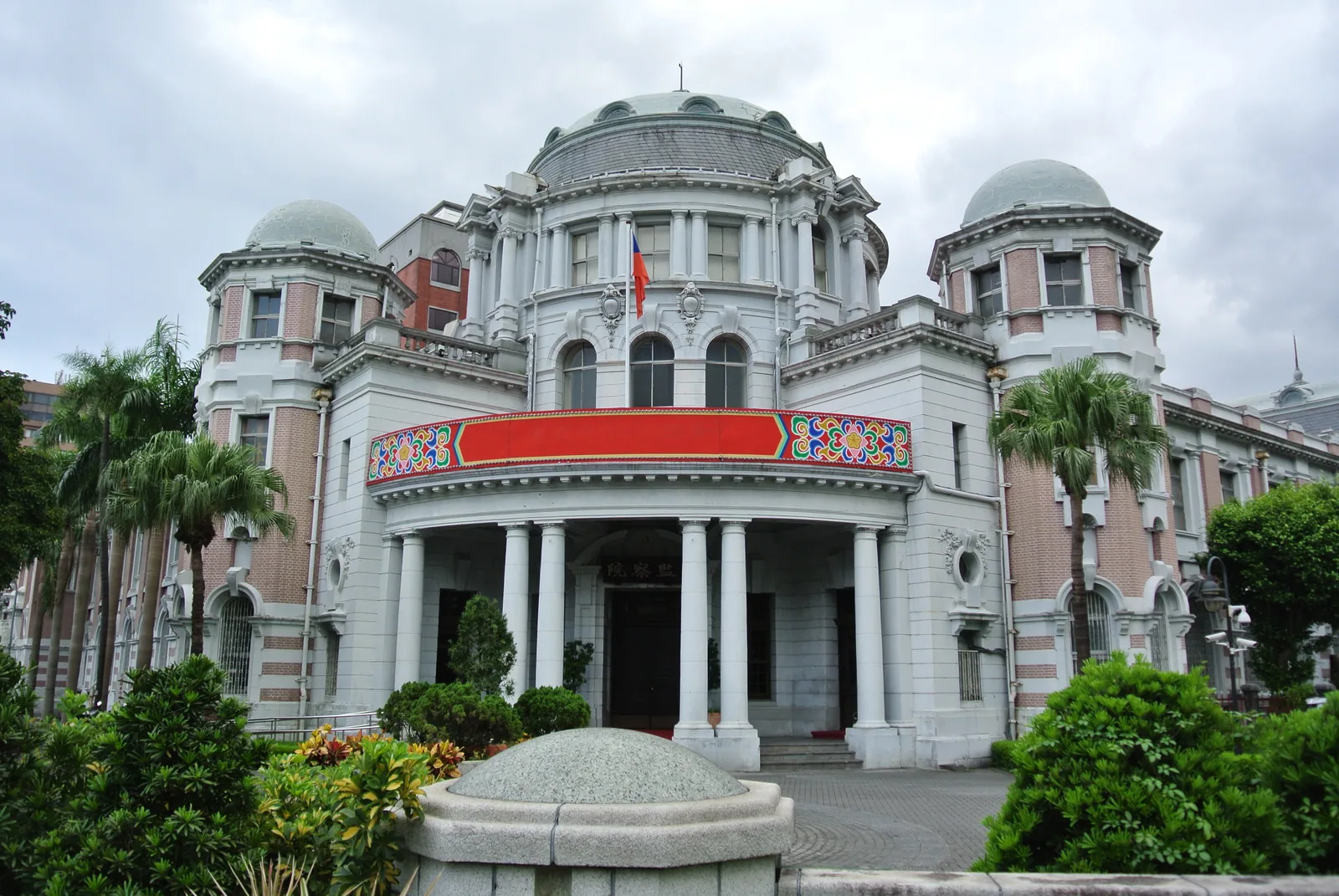
The Control Yuan, photographed in 2014. The phrase "unable to fulfill cross-checking and early warning functions"—unusually direct language for an official document—comes from this agency's investigation report released July 29, 2020. Photo: Suicasmo. CC BY-SA 4.0 via Wikimedia Commons.
This gap was not first identified this year. The Control Yuan's investigation report released July 29, 2020 used unusually direct language for an official document.30
Although the 'Food Cloud—Oil Product Traceability System' has been established… an effective food safety risk prediction pathway model has still not been completed, resulting in the inability to fulfill cross-checking and early warning functions
A Control Yuan follow-up report from January 2025 shows that the e-invoice adoption rate among food businesses has risen from 75.42% in 2020 to 98.3% as of November 2024.31 That is progress on the data input end, which is separate from early warning capability: the breach in this incident lay in the failure to implement mandatory industry self-reporting, not insufficient invoice coverage.31
Former FDA Director Kang Chao-chou wrote an opinion piece on July 22 noting that the Food Safety Act's institutional design is already adequate; what is lacking is execution. This observation becomes particularly concrete when applied to the ten-year gap in the Food Cloud: the system promised long ago to make information available to everyone, but the infrastructure behind that promise has never truly been operational. Under this system, who bears the cost of not knowing?32
Central Approval, Taichung Ban — Four Agencies, Four Measures
The same batch of oil was measured by several different rulers in July. The central government measured batch-by-batch inspection results; local authorities measured unanswered questions; city councilors and the municipal government measured inspection visits; the court measured which positions should be detained. Four rulers each produced an answer that made sense on its own, yet none aligned with the others.
On July 21, the FDA convened its Food Risk Assessment Advisory Committee. Fourteen experts, applying three principles — "source separation and item-by-item verification, batch-by-batch confirmation, upstream-downstream cross-checking" — reviewed 30 batches of soybean salad oil produced by Chung Lien between April and June. The result: 19 batches passed both upstream crude oil and downstream finished product testing and completed cross-verification, eligible for restocking. Seven batches failed; one batch had no retained sample — all prohibited from shelves and flagged for destruction. Three additional batches of untested crude oil remained under control. The restocking list announced on July 23 comprised 501 downstream products.3334
The same resolution became a different answer in Taichung. The Taichung City Department of Education announced that all public and private schools and kindergartens under its jurisdiction would suspend use of all oil products from Fukushou, Fukushou (Fushuo), Taisun, and Chung Lien; Mayor Lu Hsiu-ying declared the municipal food supply system would ban them. The central government released products following scientific procedure; the local government tightened standards based on risk preference. Both positions held water. Caught in the middle were kitchens deciding which barrel to use tomorrow.35
The inspection-density controversy has the same shape. Democratic Progressive Party Taichung City Councilor Chiang Chao-kuo pointed out that between 2022 and 2025, Taichung City inspected Chung Lien six times, with actual oil sampling only once. Taichung City responded that mandatory testing of Chung Lien over the past five years reached 18 times. Taiwan FactCheck Center broke down those 18: 17 were self-submitted by Chung Lien as required by law; only one was a municipal inspection sample — and that one (April 2024) was the very one the councilor cited. The two sides counted different things: one counted government visits; the other credited itself with oversight for submissions the business made. The number of restocked batches, inspection visits, fine amounts, and bail prices — all determined in July by different agencies using different calculations. Pursuing accountability for this action itself has no shared ruler.3637
The business side was not monolithic either. Nanjiao, where the problem was first detected, notified its upstream supplier before reporting directly to the regulator, and was fined NT$3 million by Taipei City Health Department under Food Safety Act Article 47. Chung Lien General Manager Yu Ling-chung initially received NT$20 million bail on July 10; after the prosecution appealed successfully, Taichung District Court on July 17 ordered detention without visitation, citing evidence of intentional message concealment or editing, and risk of witness tampering and evidence destruction.3839
Chung Lien Plant Manager Chen Ming-xiong was released on NT$1 million bail after the second search on July 22. Taisun's former General Manager Shen Yi-chun and current General Manager Tsai Kuo-liang were ordered detained without visitation on July 25; the court found both knowingly allowed defective oil to be processed and sold, with evidence of deleted communications and mutual blame during job handover. Of 11 defendants in the case, as of July 26 all remained in investigation; none had been indicted.4041
Fines were distributed across four agencies — the FDA, Taichung City, Changhua County, and Taipei City each imposed penalties under the Food Safety Act on different targets, coexisting without conflict. The FDA issued two fines against Chung Lien: after the NT$165.2 million penalty on July 7, it imposed another NT$3 million on July 16 for a batch produced April 1 not included in the notification list and false declaration information.4243444546
| Fining Agency | Target | Amount | Date |
|---|---|---|---|
| FDA (Central) | Chung Lien | NT$165.2 million | 7/7 |
| FDA (Central) | Chung Lien | NT$3 million | 7/16 |
| Taichung City | Chung Lien | NT$3 million | 7/7 |
| Taichung City | Fukushou | NT$3 million | 7/7 |
| Taichung City | Fushuo | NT$3 million + NT$6 million, cumulative NT$9 million | 7/7, 7/12 |
| Changhua County | Taisun | NT$6 million | 7/7 |
| Taipei City | Nanjiao | NT$3 million | 7/7 |
📝 Curator's Note
The defendant list in the Consumer Foundation's class action includes four companies. Three of them are shareholders of the fourth. Chung Lien Oil was established in 1995 by Taisun Enterprise, Fushuo Industrial, and Fukushou Oil as joint investors, each holding approximately one-third of shares (Fushuo's own material disclosure lists 33.33% in the title and 32.33% in the text — inconsistent figures). Large-scale pressing and refining equipment requires massive capital investment; joint investment in an upstream facility with separate brand competition downstream is entirely logical from an industry perspective — the cost being that problems with the same raw material appear simultaneously on three brand shelves. "Supply chain risk concentration" here refers to a shared platform built by downstream brands themselves.
Looking further upstream in equity, Longbang International holds 38.34% of Taisun Enterprise. Longbang's major shareholder Chu Kuo-jung jumped bail and fled in September 2023, now under warrant; the High Court ordered confiscation of NT$400 million in bail. These are verifiable facts.4748
As for causal claims like "this was the root cause of the tainted oil case," these appear only in Taipei Times columnist Michael Turton's July 23 column, where he argues that speculators and "red capital" continuously investing in and operating Taiwan's food companies constitute the structural problem, with tightened testing merely subsidizing continued business. That is his opinion, not a verified causal relationship. Taiwan's local corporate governance academia has not yet produced independent analysis on the general proposition of whether joint upstream platform shareholding affects food safety quality control.49
1,322 Shops, Whose Account Gets Settled Last
The microphone allocation in July was highly uneven. The companies being held accountable had names, corporate structures, and court rulings—each one was read aloud publicly. The other end of the list, 1,322 shops, mostly appeared in the news as a single number, and each time that number grew, some people knew first before it was their turn to find out.
The list itself was a series of decisions about "when should everyone know." On July 3, the second-tier downstream businesses self-reported by the three oil refineries totaled 291 shops. FDA Commissioner Chiang Chih-kang said at a press conference: "I have the list of all 291 second-tier downstream businesses here, but it shouldn't be disclosed." The reason was that after processing, the concentration had dropped to approximately 0.8 micrograms, so the risk wasn't as high. Two days later, the FDA's official public list was 257 shops—fewer than the previously known figure—because the two tallies used different statistical bases. Eleven days later, the number grew to 1,322.5051
| Publication date | Number of shops |
|---|---|
| 7/5 | 257 |
| 7/6 | 360 |
| 7/15 | 1006 |
| 7/16 | 1322 |
Source: FDA press releases (7/5, 7/6), Health Foresight and Central News Agency (7/15, 7/16)
What's missing from this string of numbers are the accounts of those shops. In Taichung alone, 239 end-stage businesses—breakfast shops, small eateries, and the like—at the third tier and below had purchased or used the related oils, with a citywide total of 447,159 kilograms removed from shelves and recalled. Chen Ming-hsin, director of the Republic of China Boxed Lunch Industry Association, spoke to the challenges on the catering side: "School lunch oil volumes were never high to begin with, since school meals already emphasize low oil and low salt in their cooking, but these three major brands have such a high market share that it's actually very difficult to say you won't use them." A sixty-year-old oil-fried dough shop in Fengyuan, Taichung swapped out all its oil the day after the TV broadcast aired. A roasted meat bento shop in Xitun District that stays open until 3 a.m. conducted an inventory check and didn't miss even the sesame oil used for garnish.525354
On July 21, the Consumer Foundation and Taiwan Consumer Protection Association divided responsibility for class-action litigation, handling general consumers and school staff and students separately. Under Article 51 of the Consumer Protection Act, they can claim punitive damages of 1 to 5 times the harm, with a maximum of 300,000 yuan per person for those unable to prove concrete damages. On July 22, the Ministry of Economic Affairs announced that the Credit Guarantee Fund would increase the maximum credit line per business to 30 million yuan and cut guarantee fees in half; execution results have not yet been tallied.5556
There are two things this article could not find and does not intend to add. One is first-person accounts from the end-stage breakfast shop and small eatery owners themselves; searching Chinese media throughout July turned up only reporter paraphrasing, with the most complete downstream voice stopping at the association director level. The other is the situation of employees working in these shops—wage guarantees during closures or reduced hours—on which the Ministry of Labor and unions have made no public statement, and no report has addressed. The reason these cannot be found is probably that public discussion itself never reached this point: those whose accounts get settled on this chain are always companies with names.
The two ends of the microphone weren't even speaking the same language. At the FDA press conference on July 6, Li Ching-hao, professor of physiology at Taipei Medical University, provided the margin of exposure calculation: "The BaP detection level in this oil, combined with the average daily oil intake of the population, yields an assessment showing this incident's MOE value 'greater than 10,000,'" within a controllable range. This estimate used the national average daily oil consumption and was not a specialized assessment for children, pregnant women, or the elderly.57
The Consumer Foundation's language was entirely different. It argued that the damage consumers suffered included "infringement of health rights and bodily safety" and "destruction of food safety trust interests," and demanded the establishment of a mandatory reporting system by third-party inspection agencies, shifting oversight from after-the-fact handling to advance warning. Neither side was wrong—one was calculating probability, the other demanding consent.58
Source: NOWnews (2026-07-06 FDA press conference), Consumer Foundation 2026-07-21 class-action statement
Who Should Step Down on Ketagalan Boulevard, and Who Should Be Protected in the Amendment
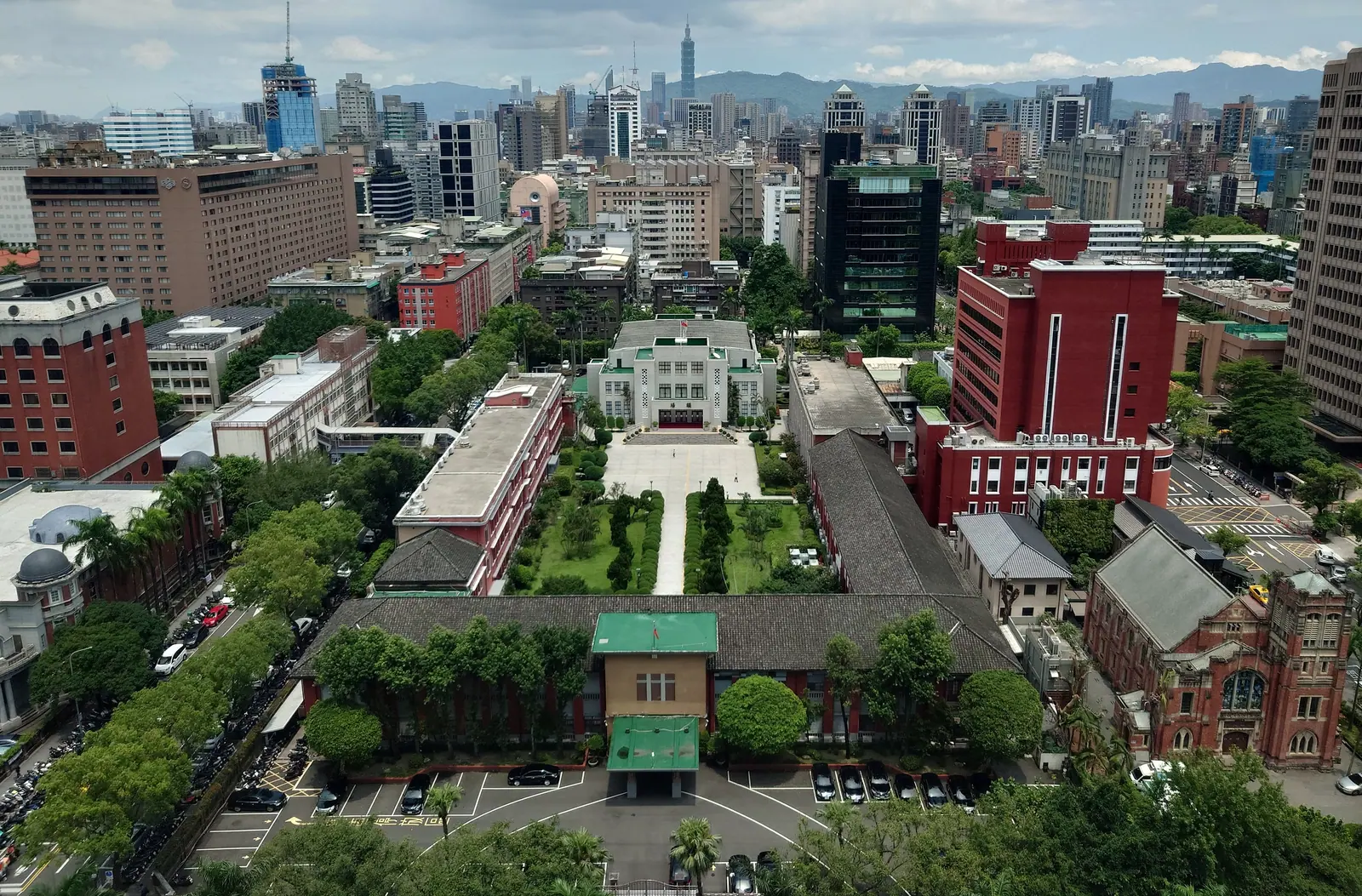
Legislative Yuan complex, photographed in 2024. The food safety law amendment draft passed by the Executive Yuan on July 23 is awaiting review here; the next day, three city mayors also held a press conference here. Photo: Yu tptw. CC BY-SA 4.0 via Wikimedia Commons.
After the restocking decision was announced, the debate moved from the laboratory to the press conference. Taichung Mayor Lu Hsiu-yen, Taipei Mayor Chiang Wan-an, and Keelung Mayor Hsieh Kuo-liang jointly held a press conference at the Legislative Yuan on July 24. Chiang's position was that rushing to put products back on shelves before the contamination source was clarified was the real food safety breach. For the same batch of oil, the central government's standard was sequential batch testing results, while the local governments' standard was unanswered questions.5960
The next day, July 25, the KMT and Taiwan People's Party launched a "I Am Human, I Oppose Poison Taiwan" march on Ketagalan Boulevard, calling for President Lai Ching-te to apologize and Premier Cho Jung-tai to step down. There were five different counts of attendance. The organizers announced over 200,000 people in the evening. Internet personality Four-Tailed Cat estimated based on aerial photos and crowd density: "Definitely not 50,000, I estimate around 40,000 or fewer." Political commentator Huang Yi-chung's on-site observation was approximately 30,000. Ming Chuan University Department of Broadcasting Chair Tu Sheng-tsung used the Jacobs Crowd Formula to estimate a peak of 65,000 to 75,000 people and cumulative participation of 90,000 to 110,000 person-times. Others reverse-calculated from 425 tour buses mobilized to estimate around 45,000. Police authorities only released police deployment figures and did not provide a headcount estimate—there was no single recognized measure for "how many people cared."616263
Source: Mirror Media, Yam News, Yahoo News
Presidential Office Spokesperson Kuo Ya-hui responded that evening: "We respect the right to express opinions" and hoped that participating county and city mayors and public officials would return to their posts as soon as the activity ended to "work hand in hand with the central government to jointly protect food safety for the public." KMT legislator Liao Wei-hsiang criticized the government for "not solving problems, but solving the people who raise problems."64
Before Ketagalan Boulevard, another action had already been underway for six days. Taipei City Councilor Yang Chih-tou and council candidates Lai Yi-jen, Ho Yuan-kai, and Chang Chia-hsin began a sit-in and hunger strike starting at 10 a.m. on July 19 in front of the Chieh-shou Police Station across from the Zhongzheng First Police Precinct. On the evening of July 25, the medical team conducted Ho Yuan-kai's fourth routine blood sugar test, with readings dropping to 53—the physician determined it had reached a dangerous state and immediately sent him to the hospital. The other three lasted 153 to 154 hours before being hospitalized at the evening event.6566
The term "relay hunger strike" itself drew criticism from two different directions. Political commentator Chang Yi-shan approached it from the perspective of social movement norms: "A hunger strike has no set time limit, and there is no such thing as a relay hunger strike," calling this approach a "election campaign weight-loss camp." Democratic Progressive Party legislator Lin Chu-yin's angle was political manipulation: "Everyone taking turns to hunger strike is like everyone taking turns to have dinner—it has no meaning at all." Though their logic differed, both pointed to the same result: the tactic itself became news before what it was protesting.6768
Beneath these voices, there was a genuine policy disagreement that went almost unheard. The Executive Yuan's food safety law amendment draft did not include whistleblower protection, while the KMT caucus version advocated for its inclusion, with provisions including prohibiting employer retaliation and establishing damage compensation and state compensation mechanisms. The KMT caucus version also proposed raising the maximum administrative fine for major food safety incidents from the current 200 million yuan to 1 billion yuan, and put forward a "green advance notification system" allowing businesses that report first and voluntarily halt sales to receive reduced penalties. This 1 billion yuan is the overall fine ceiling, distinct from the Executive Yuan version's "failure to report as required: 30,000 to 30 million yuan" penalty category—the two figures should not be directly compared.6970
📝 Curator's Note
The "whistleblowing" that actually worked this time was one company discovering another company's problem: Nanjiao's laboratory detected Chung Lien's oil. But the amendment's whistleblower protection debate is about protecting individuals from employer retaliation. The two types of whistleblowing face different risks—corporate mutual exposure fears commercial relationships and reputation damage, while individuals fear losing their jobs. If the new law only addresses the latter, Nanjiao's situation of "detecting the problem but first notifying the upstream supplier" will repeat identically next time.
The Same Month, a Different Company Made a Different Choice
On the evening of July 21, another company did something entirely different from all the preceding events. Lien Ching Green Technology discovered during routine quality self-monitoring that benzo(a)pyrene levels in a designated batch of "Lien Ching Camellia Oil" were abnormal. That same day, the company voluntarily reported to the New Taipei City Health Department and announced the affected batch numbers on its official website, offering full refunds or replacement with no conditions upon presentation of a receipt, with costs borne by the company.71
By the numbers, this batch of camellia oil tested at 2.9 micrograms per kilogram, exceeding the 2.0 limit, but not in the same league as Chung Lien's 8.1. This time the sequence was reversed: no external unit tested it first, no downstream customer notified the company, and no regulatory agency came knocking. Of the 5,024 bottles in the batch, 939 had already shipped; the company said it recovered over 700 bottles, with most intercepted at the factory and warehouse logistics end.72 When the FDA inspected the facility on July 22, those 939 bottles were still sitting on shelves at Cotton Field and Uni-President Life Science outlets—shipping to retailers and selling to consumers are two different things. Speaking up first: this company did it. How thoroughly the recall was executed is a separate axis; the two don't cancel each other out.73
Source: Taichung City Government press release, PTS News, Lien Ching company website statement (as reported by SET News)
Lien Ching uses a cold-pressed, low-temperature process, which in theory should be less likely to generate benzo(a)pyrene than high-temperature refining, yet the same contamination was detected. Experts consequently called for inspection scope to be expanded to all edible oils. In early July, the Tainan City Health Department had already included 25 items—oils containing soybean salad oil, blended oils, sesame oil, and roasted crispy oil—in its sampling plan, saying results would be released two weeks later; as of this article's completion, no announcement has been seen.74
So did the system actually change behavior? The answer is not in the text of the legislative amendment draft, nor in the number of digits in the fine. It lies in the evening of July 21, when a company no one was watching decided on its own to speak first.
Next Time, Who Speaks First
This article stops on July 28, 2026. On this day, the 11 defendants in the Chung Lien case remain in the investigation stage, with no one yet indicted. Administrative penalties from four agencies reached July 16; whether that is the final tally remains unknown. The Food Safety Act amendment draft has not yet entered substantive committee review; the 24-hour reporting requirement and whistleblower protections remain unsettled. The Consumer Foundation and Taiwan Consumer Protection Association have begun accepting class-action lawsuit registrations, but no compensation claims have been completed. The Ministry of Economic Affairs' announced increase to the credit guarantee fund has not yet released application and approval statistics. Test results for sesame oil and black sesame oil from Tainan have not yet been published. Six threads, and not one has been tied off. The only thing that moved in these past two days was the matter of causation: on July 27, the investigation team delivered its conclusion, with the verb used in the briefing being "assessed."
FamilyMart's refund deadline extends to September 13, when receipts will be reviewed once more. Reviewing receipts means: the person who bought that bento box in April will have to wait until July for their turn to confirm what they ate.
This time, that sentence traveled from a test report on May 13 to a notification on June 30, passing through several laboratories, several quality assurance meetings, and several reasonable waiting periods in between. Next time, if someone in their own laboratory detects another number exceeding the standard, how long will pass between that moment and when we learn of it? On the evening of July 21, Lien Jing's answer was that same day. That is currently the only answer that already exists.
Further reading:
- Food Delivery Platform Regulation — The specialized law that took effect on July 21, regulating precisely the people who deliver these bento boxes to your door.
- Taiwan Cuisine Overview — Plasticizers, Taisun, swill oil: how this food safety timeline became a shared memory of Taiwanese dining.
- Taiwan's Public Health and Epidemic Prevention System — How the public health system in which the FDA and health bureaus operate functions in ordinary times.
- Taiwan's Judicial Reform and Preventive Detention System — Several high-ranking officials in this case were placed in preventive detention with visitation prohibited; this article discusses the boundaries and controversies of this coercive measure.
Image Sources
This article uses 4 images, all cached in public/article-images/society/ to avoid hotlinking to source servers:
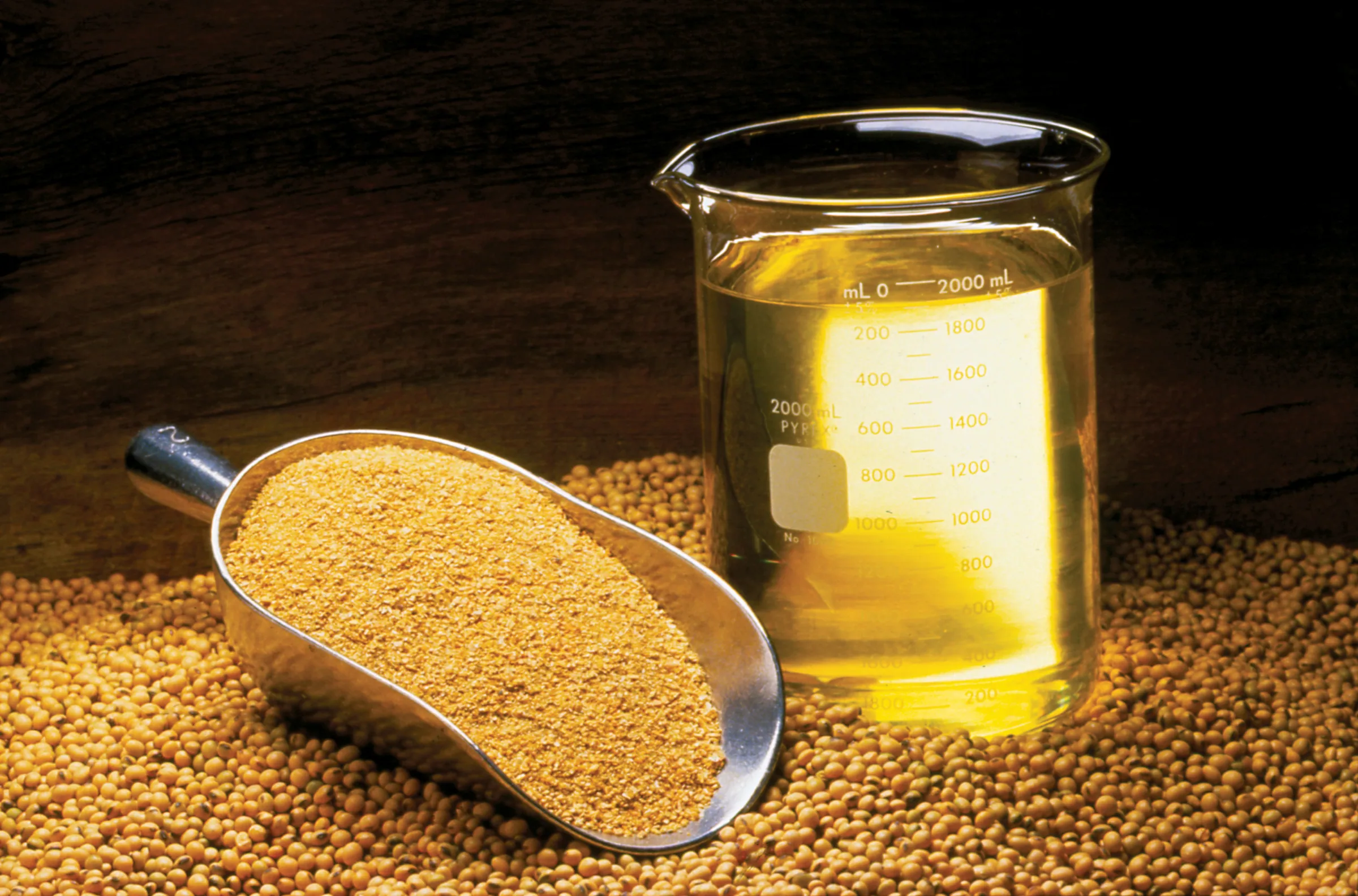
- Soybean Oil, Meal and Beans — United Soybean Board, soybean oil, soybean meal and soybean raw materials (hero), CC BY 2.0
- Ben Mills / Wikimedia Commons — Benzo(a)pyrene molecular ball-and-stick model, Public domain
- Suicasmo / Wikimedia Commons — Control Yuan building front facade, CC BY-SA 4.0
- Yu tptw / Wikimedia Commons — Legislative Yuan complex aerial view, CC BY-SA 4.0
References
- 7-11 Carcinogenic Oil Refund Complete Guide: How to Open OPENPOINT Coin Wallet — Techbang July 2026 report documenting refund eligibility for consumers who purchased suspected batch products between April 13-23, 2026, refunds starting July 14, member refunds going to OPENPOINT App coin wallet, non-members need to bring receipts and purchase proof to stores. This section represents the operation procedure consistently reported by multiple media outlets, not verbatim official announcements from 7-Eleven.↩
- FamilyMart Opens Refunds for 8 Products with Deadline of September 13 — SET News 2026-07-13 itemizes refundable products and procedures (receipts, transaction records, member purchase history, or credit card records all acceptable); Liberty Times Net independently cross-verified refund deadline and subsequently added items, with product count increasing throughout the incident period, so the main text states "gradually increased from 5 to 9 items" with timestamps.↩
- Food and Drug Administration Expert Press Conference: MOE Greater Than 10,000 Within Controllable Range — NOWnews 2026-07-06 verbatim press conference report documenting Taipei Medical University Physiology Professor Lee Ching-hao's MOE estimate and Taiwan Toxicology Society Director Hsu Mei-ling's analogy that "if people consume one barbecue, the BaP intake could far exceed the exposure from this contaminated oil." FDA Director Chiang Chih-kang also attended the same press conference.↩
- Salad Oil Benzo(a)pyrene Rarely Exceeds Standard; Expert: Possibly Related to Imported Soybeans — Central News Agency 2026-07-03, verbatim interview with National Taiwan University Department of Agricultural Chemistry Professor Su Nan-wei covering his explanation of benzo[a]pyrene formation conditions (abnormally high temperatures above 300 degrees), and his complete assessment that refining procedures theoretically reduce crude oil concentration, with contamination more likely occurring at the drying stage in the country of origin.↩2
- Yen Tsung-hai: Benzo(a)pyrene is a Class 1 Carcinogen, But Eating It Once Doesn't Cause Cancer — SET News report of Chang Gung Memorial Hospital Clinical Toxicology Director Yen Tsung-hai's remarks at the "Reassuring the Nation, Doctors Bearing Witness" press conference, covering benzo[a]pyrene metabolism and risk communication; this was a different occasion and different speaker from the July 6 FDA press conference. This article uses reported speech without quotation marks.↩
- Chung Lien Oil Soybean Salad Oil Benzo(a)pyrene Exceeds Standard; Taichung City Government Initiates Investigation — Taichung City Government 2026-07-01 official press release (primary source), verbatim documenting "benzo[a]pyrene content detected at 8.1μg/kg (exceeding limit of 2.0μg/kg), shipped to Formosa Oil, Fushou Industrial, and Taishan Enterprise totaling approximately 1,300 metric tons."↩
- Regulation (EU) 2023/915 — Current EU food contaminant regulation (primary source), effective May 24, 2023, substantially replacing Regulation (EC) No 835/2011, with BaP limit for oils remaining 2.0 μg/kg unchanged; South Korea Food Safety Department Food Standards has applied the same value of 2.0 μg/kg to all edible oils since 2007.↩
- FDA Announces 257 Downstream Business List and Three Measures — FDA 2026-07-05 official press release (primary source), documenting timeline requirements: Chung Lien ceased operations July 1, first-tier products must be removed by July 3 noon, second-tier products must complete preventive removal by July 6 24:00.↩
- FDA Updates to 360 Businesses and Establishes "Chung Lien Oil Case Special Zone" — FDA 2026-07-06 official press release (primary source), verbatim documenting "affected oil-using businesses updated to 360," releasing 18 affected products and 30 batch numbers, official website special zone updated daily at 14:00. The July 15 figure of 1,006 businesses appears in ETtoday report.↩
- Contaminated Oil Downstream Businesses Increase by 316, Cumulative Total 1,322 — Health Foresight 2026-07-16, verbatim documenting "316 additional businesses, total now reaching 1,322"; CTS News citing Central News Agency independently cross-verified the same figure. FDA website lacks independent press release page for 1,322 figure, supported by media reports.↩
- Contaminated Oil Enters Schools; Multiple Counties and Cities Inventory Affected Schools — PTS News 2026 July report tallying 42 schools in Taipei, 50 in New Taipei, 39 in Taichung, 13 schools and kindergartens in Kaohsiung that used contaminated batch oils, noting contaminated oil entered second and third-tier processing chains (sauces, frozen prepared meals, baking fillings); United Daily News has concurrent cross-reporting.↩
- ETtoday Poll: 89.1% Worried Contaminated Oil Still in Market — ETtoday 2026-07-24 poll results showing 86.3% concerned they or family members consumed it, 59.3% dissatisfied with central government handling. Original report provides cross-analysis by political party support, region, and education level, but no age group stratification data.↩
- Consumers Buy Pork Lard for Home Rendering; Meatball Shop Business Affected — China Times 2026-07-10, reporting concrete examples of food safety concerns spilling over to unaffected businesses: pork stall pork lard sales doubled, meatball shops temporarily affected by consumer concerns.↩
- Kao Chih-ming: Test Results Just for Reference — CommonWealth Magazine 2015-01-11, documenting remarks by I-Mei General Manager Kao Chih-ming to his laboratory testing staff at National Taiwan University Risk Society and Policy Research Center's "Taiwan's Future Society: Brown to Where, Green to Where?" event, advocating "solving food safety problems requires more than testing; the most important thing is clean water and air." This article uses only this quote verified against a primary source, not other unverifiable versions.↩
- Reasons for Zhonglian Carcinogenic Oil Exceeding Standards: Unauthorized Relaxation of Heat-Damaged Grain Rate Standard — United News Network July 2026, documenting Health Minister Shih Chung-liang's statement that "Zhonglian relaxed its own acceptance standard for soybean raw materials last year, raising the heat-damaged grain rate from the previous 0.5% to 5%" and FDA Director Chiang Chih-kang's plain-language explanation (from a maximum of 5 heat-damaged grains per 1,000 soybeans relaxed to 50 grains), with Shih noting that "experts still need to confirm the causal relationship between this matter and the production of non-compliant products."↩
- Unpacking the Symbiotic Secrets of Taishan, Fukushou, and Fumaur Oil: Two Major Food Safety Management Loopholes — United News Network July 2026 special report, including named statement from Fukushou Chairman and former Zhonglian Chairman Hong Yao-kun: "We've been producing this way for twenty or thirty years, so it definitely isn't a domestic manufacturing error!" The interviewee is a stakeholder with interests in defending domestic processes, and their identity is clearly marked in the article.↩
- Zhonglian Oil Benzo(a)pyrene Incident Timeline — PTV News (PNN), verbatim reconstruction of the complete timeline: May 13 Nankuai self-inspection discovery, June 4 external verification confirmation, June 10 notification to Fukushou, June 11 Fukushou notifies Zhonglian, June 15 Zhonglian convenes quality assurance meeting, June 16 shipment to Aiweiwei, June 25 confirmation of excess same day sent to SGS, June 29 learning of 8.1ppb, June 30 reporting to regulatory authorities.↩
- Taichung City Government Fines Zhonglian, Fumaur, and Fukushou NT$3 Million Each — Taichung City Government official press release dated 2026-07-07 (primary source), verbatim recording: "After Nankuai's self-inspection discovered 'benzo[a]pyrene' exceeding standards on June 10 and notified upstream Fukushou, Fukushou notified Zhonglian on June 11, and Fumaur learned of the situation during a regular quality assurance meeting on June 15; however, after Zhonglian completed two self-verification tests, it did not report to regulatory authorities until June 30."↩
- Taiwan reports timeline of tainted cooking oil case — Focus Taiwan (CNA English line) 2026-07-07, independently documenting the same timeline in English (May 13 initial detection, June 10 notification, June 11 forwarding, June 16 and 25 re-testing, June 29 confirmation, June 30 reporting), serving as a second-language cross-verification source outside Chinese-language reporting.↩
- Food Safety and Sanitation Management Act Article 7 — National Laws and Regulations Database (primary source), verbatim text of Section 5: "When a food business operator discovers that a product poses a risk to public health and safety, it shall immediately cease manufacturing, processing, and sales, conduct product recall, and report to the competent authority of the special municipality or county (city)." Sections 1-3 of the same article further stipulate operators' self-management, testing, and laboratory establishment obligations for businesses of certain scale.↩
- Executive Yuan Passes Food Safety Act Amendment Draft with Maximum Fine of NT$30 Million for Non-reporting — Central News Agency 2026-07-23, documenting amendments to 17 articles, addition of 1 sub-law, 24-hour reporting obligation, fines of NT$30,000 to NT$30 million, establishment of Central Food Safety Command Center and legal basis for preventive removal; Business Weekly (2026-07-23) verbatim records "this is the largest-scale amendment to the Food Safety Act since its June 2019 revision, in over 7 years"; Newtalk independently reports the same draft content (24-hour reporting deadline, fine levels) on the same day but does not include this statement, so the scale reference is based on Business Weekly.↩
- Cabinet approves food safety act amendments — Taipei Times 2026-07-23, English-language independent reporting of the same draft content, verbatim recording: "Late reports would be punishable with fines of up to NT$30 million," serving as second-language cross-verification of the fine ceiling.↩
- KMT Caucus Food Safety Law Amendment Draft Referred to Committee on July 24 — Liberty Times 2026-07-24 14:29, reporter Lin Hsin-han, verbatim record that the KMT caucus version of the Food Safety Law amendment draft "was successfully referred today" to the Legislative Yuan's Social Welfare and Health Environment Committee; the Executive Yuan version passed the Executive Yuan meeting on July 23 (see [^21]), but no reports document the exact date of its formal submission to the Legislative Yuan; no subsequent timeline for committee review, case consolidation, or cross-party negotiations of the two versions was found.↩
- TFDA Releases Third-Party Independent Investigation Results of Zhonglian Oil Fat Incident — Food and Drug Administration 2026-07-27 official press release (primary source), verbatim recording "this case was not caused by a single factor, but by the interaction of multiple management deficiencies including high-risk raw material management, process control and inspection monitoring," including three deficiency findings: "currently no direct evidence of benzo[a]pyrene generation from process equipment" and "relaxed quality control standards for high-risk raw materials without increasing inspection frequency of raw materials and products, increasing benzo[a]pyrene exceedance risk"; press conference hosting and briefing arrangements (Executive Yuan Political Deputy Minister Chen Shih-chung presiding, TFDA Southern Regional Management Center Director Wei Jen-ting briefing, Shi Chong-liang and Jiang Zhi-gang attending) documented in Business Today; Focus Taiwan independently recorded the same conclusion in English for cross-language verification.↩23
- Zhonglian Company Oil Benzo(a)pyrene Exceedance Incident Investigation Results Briefing — TFDA 2026-07-27 press release attachment (primary source, 11-page PDF), investigation date July 21, 2026, investigation team professional backgrounds in food science (processing, oils), food technician, and law; contains four investigation findings, data table of six shipment batches with average heat-damaged particle values (US soybeans 0.01, 0.04; Brazilian soybeans 0.31, 0.24, 0.16, 0.16, with highest single range in parentheses 0.53), timeline and scope of relaxed standards ("soybean receiving heat-damaged particle control standard was originally 0.5% or below, on June 4, year 114 Brazilian soybean receiving heat-damaged particle control standard adjusted from 0.5% to 5% or below"), sole control point (filtration) physical control boundary, phospholipid and bentonite addition quantities from April 2026 onward multiple batches non-compliant with control standards and "this phenomenon continued through June," investigation conclusion ("investigation team assessed...increasing BaP exceedance risk") and policy recommendations ("recommend future strengthening of business self-management provisions in the Food Safety and Sanitation Management Act"); full verbatim text also stored in
reports/research/2026-07/苯駢芘食安事件-sources/.↩234 - Legislator Criticizes Investigation Report for Only Reviewing Business — United Daily News 2026-07-27, verbatim recording of Taiwan People Party legislator Chen Ching-lung "the investigation team recommends businesses strengthen raw material risk management, process monitoring and inspection monitoring, so what about the Department of Health and Welfare and TFDA responsible for supervising businesses? Only reviewing businesses without reviewing themselves, is this investigation report here to shirk responsibility?" and same-party legislator Chen Chao-tzu "toxic oil was already swallowed by the people, and more laughably they only tell 'businesses' to improve, so may I ask what the government is for?"; no public response from government, ruling party or Department of Health and Welfare to these two criticisms was found.↩
- Explanation of Three-Level Quality Management System for Food Safety and Sanitation Management Act — Ministry of Health and Welfare official webpage explaining the three-level quality management framework added to the Food Safety Act in February 2014 (Level 1 operator self-management, Level 2 third-party verification, Level 3 government inspection and sampling), representing the structural institutional response following the 2013-2014 incidents involving Dachan and Qianguan.↩
- Hundreds of Millions in Food Cloud Investment Unable to Track Tainted Oil Flow; 60 Staff Make Phone Calls for Manual Verification — United News Network July 2026 report, documenting that the FDA invested over NT$100 million to establish the "Food Cloud" system in 2015, deployed approximately 60 staff making phone calls to manually verify over 300 downstream businesses when tracing problem oil distribution, and that the "Must Trace" website information has not been updated for years. This is a single-source report with "according to United News" clearly marked in the article.↩2
- Food Cloud Dysfunction Controversy: Civil Groups Criticize Weak Early Warning Function — Liberty Times July 2026, recording civil groups' criticism of the Food Cloud traceability system's long-standing failure to fulfill early warning functions and government responses, to be read in conjunction with Control Yuan investigation reports.↩
- Control Yuan Investigation: Food Cloud Failed to Fulfill Cross-checking and Early Warning Functions — Control Yuan press release of investigation report dated July 29, 2020 (primary source), verbatim: "Although the FDA has established three monitoring modules—'Food Cloud-Oil Product Traceability,' 'Chemical Cloud-Selected Chemical Substance Flow,' and 'Chemical Cloud-Toxic Chemical Substance Flow'—through interfacing big data from different agencies, it has still not completed an effective food safety risk prediction pathway model, thus failing to fulfill cross-checking and early warning functions." Investigating commissioners: Tien Chiu-ni, Tsai Pei-ts'un, Yang Mei-ling, Tsai Tsung-i.↩
- Control Yuan Follow-up Report: E-Invoice Adoption Rate Increased to 98.3% — Control Yuan press release issued on January 26, 2025 (primary source), documenting verbatim that the e-invoice adoption ratio among food businesses increased from 75.42% (3,649/4,838 businesses) in 2020 to 98.3% by November 2024, representing improvement in data input rather than addressing deficiencies in early warning model construction.↩2
- Kang Chao-chou Opinion Piece: Food Safety Regulations Are Adequate, Execution Is Lacking — China Times Forum, July 22, 2026; former FDA Commissioner Kang Chao-chou argues that three-tier quality control is a design balancing resources, costs, and effectiveness, and that the regulatory system itself is sufficient to ensure food safety, with problems lying in implementation. This article uses indirect quotation rather than verbatim citation.↩
- Food and Drug Administration Advisory Committee Decision: 19 Batches Approved for Restocking — Executive Yuan announcement on July 21, 2026 (primary source), documenting verbatim that "of 30 batches of soybean salad oil, 19 batches of oil and related products have been tested and confirmed to meet food safety standards," with 7 batches non-compliant plus 1 batch without samples prohibited from restocking, 3 batches not yet shipped with crude oil under continued control, and listing three review principles: "source separation and item categorization, batch-by-batch confirmation, and upstream-downstream verification."↩
- FDA Releases List of 501 Products Approved for Restocking — Central News Agency, July 23, 2026, explaining that the 19 batches of oil produced 501 downstream end products (Taisun, Fumaor, Fushuo brands), where "19" and "501" represent different units of batches and items respectively, not contradictory figures.↩
- Taichung City Announces School Lunch Programs Suspend Use of Four Oil Brands — Liberty Times, July 2026, documenting Taichung City Department of Education's announcement to suspend use of all oils from Fumaor, Fushuo, Taisun, and Zhonglian brands in all senior and junior high schools and public/private kindergartens under its jurisdiction, representing a unilateral tightening measure by local government following the central government's restocking decision.↩
- Fact Check: How Taichung City Government Calculated "18 Mandatory Inspections in 4 Years" — Taiwan FactCheck Center article, documenting verbatim how "this statistic includes Zhonglian's 17 'self-initiated inspections' plus 1 city government inspection to arrive at 18," and confirming that the city's independent sampling and testing occurred only once in April 2024, which is the same incident referred to by the councilor as "1 inspection."↩
- Green Camp Councilor: Taichung City Government Inspected Zhonglian 6 Times in 4 Years, Sampling Only Once — Apple Daily News, July 16, 2026, recording the original statement by the Democratic Progressive Party Taichung City Council caucus (Councilor Jiang Zhaoguó) regarding inspection frequency, serving as one original source of this dispute.↩
- Taipei City Health Department Fines Nanjiao 3 Million Yuan — Taipei City Government Health Department official press release (primary source), documenting verbatim that the fine is based on Article 47 of the Food Safety Act, with the reason being that Nanjiao "notified upstream supplier Fushuo Industrial Co., Ltd. of abnormal raw materials on June 10 but failed to proactively report this situation to the health department."↩
- Zhonglian General Manager Yu Lingchong's Bail Revoked, Remanded in Custody with Visitation Prohibited — PTS News, July 17, 2026, documenting that Taichung District Court initially approved 20 million yuan bail on July 10, prosecutors appealed, and Taichung High Branch Court revoked and remanded on July 17 with 2-month custody and visitation/communication prohibited, citing reasons of intentional concealment or editing of relevant messages and suspicion of witness tampering and evidence destruction.↩
- Second Wave of Searches: Zhonglian Plant Manager Chen Mingxiong Released on 1 Million Yuan Bail — Liberty Times, July 22, 2026, documenting that the second wave of searches targeted Zhonglian plant manager Chen Mingxiong, essential oil department assistant manager Jiang Yilong, and product research department deputy manager Chen Jianzlong.↩
- Reasons for Custody of Taisun Former and Current General Managers Revealed: Message Deletion, Evidence Destruction, and Mutual Blame — Liberty Times, July 25, 2026, 21:58, documenting verbatim the Taichung District Court's ruling reasons: "Based on communication software dialogue records and screenshots, employees of both defendants did delete messages and album screenshots constituting evidence destruction" and "the two defendants shifted responsibility regarding job handover, and their pre- and post-incident conversations show suspicion of witness tampering"; https://www.mirrormedia.mg/story/20260725-167inv-170310 simultaneously reported that former Taisun general manager Shen Yijun and current general manager Cai Guoliang were remanded in custody with visitation prohibited; https://newtalk.tw/news/view/2026-07-23/1048848 additionally documented that all 11 defendants and real estate under 4 companies' names were approved for seizure, with the case still in investigation stage as of press time.↩
- FDA Fines Zhonglian 165.2 Million Yuan — United Daily News, July 2026, documenting that the central fine comprises 115.2 million yuan under Article 15 of the Food Safety Act plus 50 million yuan additional penalty under Article 7, Section 5 for failure to report, representing the highest single fine in Food Safety Act history.↩
- Taichung City Imposes Additional 6 Million Yuan Fine on Fushuo, Cumulative Total Reaches 9 Million Yuan — Taichung City Government official press release, July 12, 2026 (primary source), documenting verbatim "penalties of maximum 3 million yuan each for 2 products, totaling 6 million yuan" and "combined with the 3 million yuan fine previously imposed for delayed reporting, Fushuo has accumulated fines totaling 9 million yuan." The two figures "3 million vs. 9 million" for Fushuo represent time-specific snapshots of two separate penalty actions, not version contradictions.↩
- Changhua County Fines Taisun 6 Million Yuan — Liberty Times, July 7, 2026, documenting that Changhua County Government imposed penalties of 3 million yuan each under Article 7, Section 5 of the Food Safety Act for failure to timely report and Article 41 for evasion, obstruction, or refusal of inspection, totaling 6 million yuan.↩
- Food Safety and Sanitation Management Act, Article 47 — National Laws and Regulations Database. The legal basis for fines imposed by local governments on Zhonglian, Fumaor, Fushuo, Taisun, and Nanjiao is Article 47 of the Food Safety Act; the four agencies (Taichung City, Changhua County, Taipei City, and FDA) each imposed fines on different subjects with different natures and legal bases, coexisting without conflict.↩
- Zhonglian Concealed April 1 Batch Number, TFDA Fines 3 Million More — Central News Agency 2026-07-16, verbatim recording "TFDA confirmed on July 15 afternoon that Zhonglian Company's oil product produced on April 1 (batch number 314-1150401) was not reported in the April-June production oil inventory notification...imposing a fine of NT$3 million on Zhonglian Company," with cause being failure to accurately register and file false application materials under Food Safety Act Article 9; this is TFDA's second fine against Zhonglian, separate from the NT$165.2 million fine on July 7 for different reasons.↩
- Fuchow Major Announcement: Zhonglian Oil & Fat Shareholding Ratio Disclosure — MoneyDJ republished Fuchow Industrial's major announcement (July 8, 2026) stating "Zhonglian Oil & Fat holds 33.33% of invested company," but the body text states "our company invests 32.33% of the company," with inconsistent figures. Official shareholding figures from Taishan and Fumaur regarding Zhonglian are not publicly disclosed, so the main text only states "approximately one-third each."↩
- Hsieh Chin-ho Exposes Chu Kuo-jung and Longbang International — Storm Media, July 2026, documents Longbang International's 38.34% stake in Taishan Enterprise and Chu Kuo-jung's absconding and wanted status in September 2023; Liberty Times records Taiwan High Court bail amounts of NT$400 million for Taishou Insurance stock manipulation case and NT$100 million for Songgang stock manipulation case, with wanted notice issued September 28, 2023 (media total of NT$500 million is cumulative across phases and cases). The 38.34% figure is consistent across multiple reports but the original filing page on the Public Information Observatory has not been located.↩
- Taiwan's food scandals are a feature, not a bug — Taipei Times, July 23, 2026, signed opinion column by columnist Michael Turton arguing that speculators and "red capital" continuously investing in Taiwan's food companies represent a structural problem, and tightened inspections merely subsidize operators to continue operations. This is commentary rather than a verification source; the main text clearly labels it as the author's personal viewpoint. No public responses or rebuttals to this column have been found, and Taiwan's corporate governance academia has not produced independent analysis on the same proposition.↩
- Chiang Chih-kang: I Have the List of 291 Companies But Should Not Disclose It — TVBS News, July 3, 2026, verbatim transcript of press conference where FDA Director Chiang Chih-kang explains the reason for not immediately publishing the second-tier downstream business list is that post-processing concentrations have dropped to approximately 0.8 μg/kg, below the 2 μg/kg legal standard. Two days later the FDA shifted to publishing a list of 257 companies, lower than the previously known 291, because the two statistics used different bases (the former being rough estimates self-reported by three oil refineries, the latter being verified and published by the FDA).↩
- FDA Downstream Business List Evolution — FDA "Zhonglian Oil & Fat Case Information Center," updated daily at 2 PM during the incident. List size evolved from 257 companies on July 5, 360 on July 6, 1,006 on July 15, to 1,322 on July 16, with each milestone corroborated by media reports cited in preceding notes.↩
- Taichung: Cumulative 239 Businesses Affected, 440,000 kg Recalled — Liberty Times, July 22, 2026, verbatim record stating "cumulative 239 food businesses including restaurants and processors had previously purchased or used related oil products," "third-tier and below affected business list added 20 companies, including multiple breakfast shops and small eateries," and "problem oil and precautionary delisted products accumulated 447,159 kg recalled." This is Taichung City's third-tier and below business statistics, using a different scope than the FDA's national 1,322 companies.↩
- Zhonglian Problem Oil Benzo(a)pyrene Exceeds Standard; Agriculture Ministry and Catering Operators Respond — United Daily News, July 2026, includes verbatim remarks from Chen Ming-hsin, Chairman of the Republic of China Lunch Box Industry Association, representing the only verifiable first-person voice from the downstream procurement end currently available in this incident.↩
- Zhonglian Oil Crisis Expands; 186 Shops in Taichung Affected — TVBS News, reporting response measures taken by a 60-year-old oil stick shop in Fengyuan, Taichung and a roasted meat bento shop in Xitun District operating until 3 AM (changing oil the next day, comprehensive inspection including sesame oil). Original text is reporter paraphrase rather than verbatim shop owner quotes, presented in narrative form in the main text.↩
- Consumer Foundation and Taiwan Consumer Protection Association Undertake Class Action Litigation — Consumer Foundation official website, July 21, 2026, statement (primary source) listing defendants as Zhonglian (primary), Taishan, Fumaur, and Fuchow (jointly), with compensation claims including "infringement of health rights and bodily safety" and "destruction of food safety trust interests"; Economic Daily supplements that the Executive Yuan Consumer Protection Commission coordinated division of labor between the two organizations, with Consumer Foundation handling general consumers and Taiwan Consumer Protection Association handling students and school staff, litigation costs covered by the Food Safety Fund; United Daily News verbatim records that under Food Safety Act Article 56, Paragraph 3, those unable to prove concrete damages "may request the court to calculate compensation at NT$500 to NT$300,000 per person per incident based on the severity of infringement."↩
- Ministry of Economic Affairs: Credit Guarantee Fund Increases Maximum NT$30 Million Per Company — China Times, July 22, 2026, verbatim remarks from Minister of Economic Affairs Kung Ming-hsin explaining "the credit guarantee fund already has a guarantee mechanism; we now add a maximum NT$30 million per company for loans, and guarantee service fees will be halved," representing an increase to existing credit guarantee mechanisms rather than a new dedicated fund; Central News Agency supplements remarks on assisting collective compensation from the same press conference. Application and approval statistics as of manuscript completion have not been published.↩
- Lee Ching-hao: MOE Value Greater Than 10,000, Currently Within Controllable Range — NOWnews, July 6, 2026, verbatim report of FDA press conference. MOE (Margin of Exposure) is calculated based on average daily oil consumption by the national population, not a specialized assessment for children, pregnant women, elderly, or chronic disease populations. The speaker is Professor Lee Ching-hao of Taipei Medical University's Department of Physiology, not the same person as Yen Tsung-hai who spoke at another occasion.↩
- Consumer Foundation Class Action Litigation Statement — Consumer Foundation, July 21, 2026, official statement (primary source), which beyond compensation claims also calls for establishing "a legal system for mandatory reporting by third-party inspection institutions," advocating that regulatory models shift from "post-incident handling" to "pre-risk early warning."↩
- Chiang Wan-an: No Truth, No Restocking — UDN News, July 2026, reporter's account of Taipei Mayor Chiang Wan-an's position on restocking 19 batches of oil. Original verbatim sequence not fully verified; this article presents his argumentative direction in reported speech form.↩
- Lu Hsiu-yen, Chiang Wan-an, Hsieh Kuo-liang Hold Press Conference at Legislative Yuan — ETtoday, 2026-07-24, records the joint statement of three county/city heads on the central government's restocking decision and food safety handling.↩
- Four-Tailed Cat Aerial Photography Estimates 725 Protest Crowd at 7.25 Million — Mirror News, 2026-07-25, records internet personality Four-Tailed Cat (Liu Yu)'s verbatim estimate based on aerial photos taken around 18:30 and crowd density: 'definitely not fifty thousand, I estimate around forty thousand (or fewer)', and explains his area calculation method.↩
- Huang Yi-chung's Visual Estimate of About 30,000; Du Sheng-tsung's Academic Formula Estimates 65,000 to 75,000 — Yam News, 2026-07-26, records political commentator Huang Yi-chung's on-site visual estimate and Ming Chuan University Broadcasting Department Director Du Sheng-tsung's peak attendance estimate of 65,000 to 75,000 using Jacobs Crowd Formula, with cumulative participation of 90,000 to 110,000 person-times.↩
- Reverse Calculation from 425 Tour Buses Estimates About 45,000 Participants — Yahoo News, July 2026, records a third estimation method based on tour bus mobilization volume plus councilors' mobilization quotas. Police authorities released only police deployment figures (150 Taipei City Police plus 120 backup), without conducting headcount; all five estimates lack official authoritative determination.↩
- Presidential Office Response to July 25 Protest; KMT Legislators Criticize — UDN News, 2026-07-25, includes verbatim response from Presidential Office spokesperson Kuo Ya-hui and criticism from KMT legislator Liao Wei-hsiang; turnnewsapp independently cross-verifies Kuo Ya-hui's same statement, with texts nearly identical. No official full text statements found from Presidential Office, Executive Yuan, or Democratic Progressive Party.↩
- Relay Hunger Strike 153 Hours Ends July 25 — ETtoday, 2026-07-25, documents the sit-in hunger strike start and end times of Yang Zhi-dou, Lai Yi-jen, He Yuan-kai, and Zhang Jia-xin from July 19 at 10 a.m. Various reports show 152 to 154 hours due to different actual hospitalization times for the four participants, not typographical errors of the same number.↩
- He Yuan-kai's Blood Sugar Drops to 53, Hospitalized — UDN News, 2026-07-25, documents the fourth routine blood glucose test reading of 53, with medical team determining dangerous condition and hospitalization; ETtoday records the time point as 18:51 p.m. announcement of physical condition deterioration, with slight minute discrepancies between the two reports (interval between measurement and public announcement may span several minutes), so the main text only states 'evening' without specifying minutes. The article does not adopt any specific blood glucose danger threshold value as neither source provides one. Media coverage concentrates on start and end points; no complete daily health records found for the six intervening days.↩
- Chang Yi-shan: Hunger Strike Should Not Set Time Limits, and There Is No Such Thing as Relay Hunger Strike — Liberty Times, July 2026, includes complete verbatim content of political commentator Chang Yi-shan's Facebook post, with criticism focused on the normativity of 'hunger strike' as a tactic in social movements (no time limits, cannot be relayed).↩
- Lin Chu-yin: Taking Turns Hunger Striking Is Just Taking Turns Eating — Liberty Times, July 2026, includes complete verbatim content of DPP legislator Lin Chu-yin's interview remarks. Her criticism angle addresses political manipulation and focus shifting, representing a different argumentative line from Chang Yi-shan's social movement ethics perspective.↩
- One Article to Understand: Executive Yuan Imposes Heavy Penalties for Delayed Reporting, KMT Calls for 1 Billion Penalty! Blue-Green Food Safety Amendment Comparison — SET News, July 2026, compares point-by-point the Executive Yuan version (five key points focusing on reporting obligations, increased penalties, establishing food safety command center, strengthening local responsibility, asset preservation, does not include whistleblower protection) and KMT version (advocates 'establishing food safety whistleblower protection system', prohibits employer retaliation, establishes damage compensation and national compensation mechanisms); UDN News separately documents KMT version detailed provisions.↩
- KMT Caucus Food Safety Law Version: Maximum Penalty of 1 Billion Yuan — Liberty Times, July 2026, documents the KMT caucus version's ten reform points, including maximum penalty of 1 billion yuan, 'green pre-notification system' (first-time reporting, voluntary removal can reduce penalties), and comprehensive Food Safety Cloud upgrade.↩
- Lian Jing Bitter Tea Oil Voluntarily Reports Benzo(a)pyrene Abnormality — SET News, 2026-07-21, conveys Lian Jing Green Technology Co., Ltd. official website statement: 'During routine quality self-monitoring, abnormal benzo[a]pyrene (BaP) indicators were discovered in designated batches of Lian Jing Bitter Tea Oil product', voluntarily reported to New Taipei City Health Bureau on July 21, and offers full refund or replacement with invoice, costs borne by company.↩
- Lian Jing Bitter Tea Oil: 939 of 5,024 Bottles Already Sold — Business Today, 2026-07-22, cross-verifies batch numbers and sales channels (Cotton Field, Unity Biotech), detected value 2.9 μg/kg (limit 2.0 μg/kg), exceeding standard by different magnitude than Zhonglian's 8.1 μg/kg. Business Today original text uses 'already sold', main text adopts 'already shipped' because [^74] FDA July 22 verification confirmed the batch remained on retail shelves at that time, not yet sold to consumers; main text has noted the two cases should not be viewed in parallel regarding nature and severity.↩
- TFDA On-Site Inspection: Lianjing Camellia Oil Shipment Batch Still on Retail Shelves — United Daily News 2026-07-23 06:20, reporter Lin Tsung-en, documenting TFDA's on-site inspection of Lianjing Green Technology on July 22, verbatim "this suspected camellia oil product had 939 bottles still on shelves at Cotton Field and Unity Biotech 2 retailers," and recording that the batch produced 5,024 bottles total with 939 bottles sold; "939 bottles shipped" and "939 bottles still on shelves during inspection" are two non-conflicting statements: the former indicates shipment to retailers, the latter indicates not yet sold to consumers at time of inspection; actual quantity purchased by consumers has no official statistics, this article does not estimate recovery rate.↩
- Tainan Expands Sampling Inspection of Commercial Oils — ETtoday 2026-07-18, documenting that Tainan City Health Bureau launched sampling inspections on July 8-9, "sampling 25 items total" including "oils with soybean salad oil components, blended oils, sesame oil and roasted crispy oil," testing for benzo[a]pyrene; as of article publication (2026-07-28), no official announcement of results from Tainan City Health Bureau or TFDA was found; a second batch of expanded sampling (18 items of camellia oil and sesame/perilla oil) launched on July 23 in response to the Lianjing camellia oil case (United Daily News), representing a later second phase under the same issue, distinct from the July 8-9 inspection.↩
🧬 What Semiont was thinking while writing this