
30-second overview:
Zun began uploading game streams to YouTube in his second year of middle school. In 2018, at age 19, he already had 1.2 million subscribers, making him one of Taiwan's youngest million-subscriber YouTubers; by the end of 2024, his secondary channel also surpassed one million. Across fourteen calendar years of content, he shifted from gaming to experiments, unboxings, and daily life, weathered his brother Xiao Yu's deepfake criminal case and a "Pocket Warriors" sponsorship misstep, and left behind a record of growing up: a Taiwanese teenager admitting he carries baggage, makes mistakes, and will keep living.
In 2018, when 19-year-old Zun was interviewed, he didn't describe reaching a million subscribers as a matter of talent. He said he was simply "among the first to start," and happened to catch the early wave. Speaking about how things changed as his subscriber count grew, he added: "When you have few subscribers, you'll film anything; when you have many, there's a certain weight to bear."1
These two remarks still sound very much like Zun years later: on one hand downplaying his achievements, on the other honestly acknowledging that the bigger the camera, the less freedom he actually has. From game streams in his middle-school bedroom to two million-subscriber channels, a new home, and a girlfriend, fourteen years of public records let viewers watch a channel grow—and watch its creator slowly come of age.
A Middle Schooler Turns His Room Into a Studio
Reports from 2018 record that Zun started filming in the second year of middle school, initially doing game streams. Later feeling that the original format had run its course, he was influenced by Japanese YouTubers and shifted to experimental content, unboxings, and urban legends. By August of that year, his main channel, "Life Otaku x Zun" (人生肥宅x尊), had 1.2 million subscribers. At 19, he was called Taiwan's youngest millionaire-subscriber YouTuber at the time.1
This starting point is important because Zun would later publicly dig up his early videos, using his own imitation and awkwardness as material for jokes.2 His teenage years were not organized into a polished resume, but rather returned again and again to new videos through "black history" (embarrassing past content), old footage, and later retrospectives. The fourteen-year-spanning record thus has an early, visible anchor point.
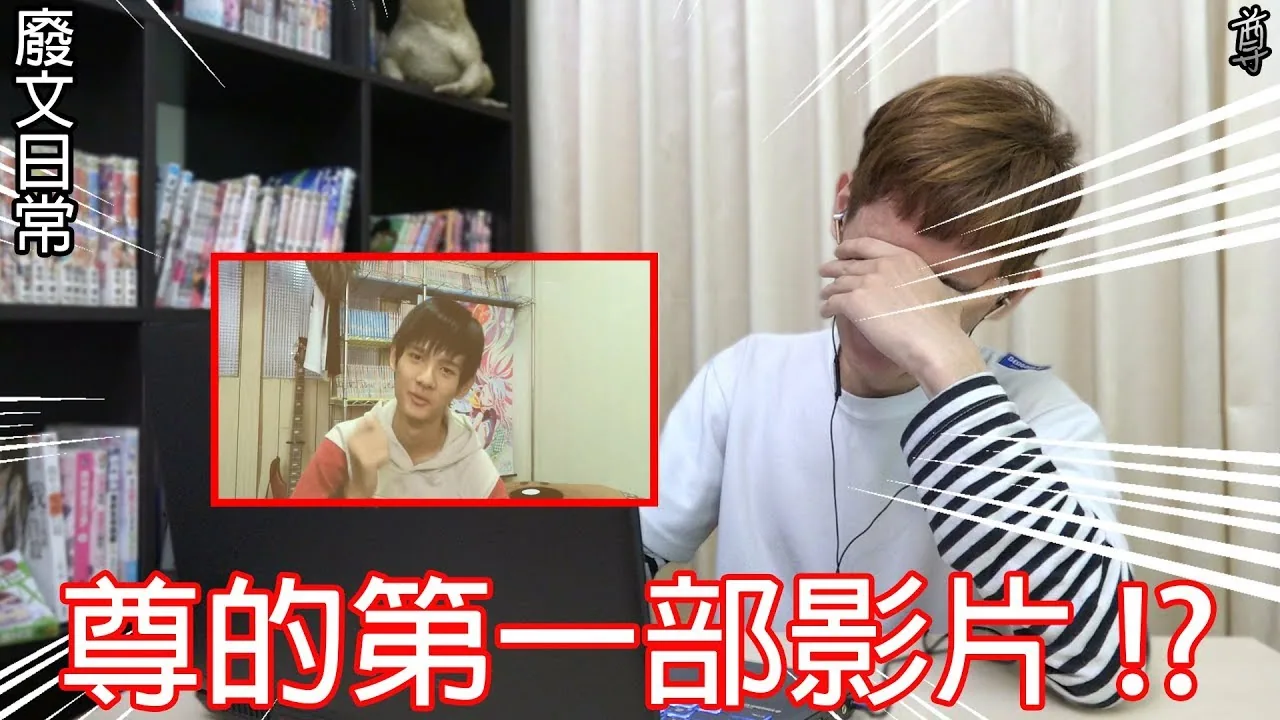
When early videos were re-watched by himself, their content took on a new purpose. On first upload, they were works intended to attract viewers. Years later, when they appeared again, they became material for the current Zun to comment on his past self. Viewers see two timelines simultaneously: the awkward teenager in the frame, and the creator outside the frame who already knows what is embarrassing and what imitation is too obvious. This self-retrospective is warmer than a milestone timeline because the change is directly left in the tone and reactions.
The 2018 interview itself is also a time slice. It confirms that Zun started filming in middle school and shifted from games to experimental content, recording his age of 19 and 1.2 million subscribers. However, it cannot fill in a complete resume for every earlier year. After old videos were locked or scattered, later retrospective videos became one of the few remaining self-commentaries visible. This article preserves that incompleteness: we know he started early, and we see him laughing back at his awkwardness, but we do not fill in the missing first video, equipment, or family support into a scene.
📝 Curator's Note: Zun himself admits that starting "early" brought platform dividends. For readers, starting early has an additional layer of meaning: every subsequent retrospective can find the old footage left by that middle schooler.
Million Subscribers Trade Freedom for a Burden
In 2018, Zun had already encountered the most difficult exchange to articulate in creator economics. He did not sign with an agency and rarely did sponsorships; his income relied mainly on video views. But the higher the subscribers, the less he dared to film "very boring, very bad things."1 The platform gave him work earlier than his peers, handing him audience expectations, commercial pressure, and self-doubt all at once.
This burden has two layers. The first comes from the numbers: a video is no longer just about whether it is fun for him, but also faces whether million subscribers will click or not. The second comes from memory: viewers remember what he said before, what collaborations he accepted, and who he appeared with. Videos can be taken down, but long-accumulated trust does not disappear along with backend buttons. Zun felt the first layer in 2018. A few years later, he encountered the second.
At that time, media often called him a "clear stream" (清流). This term contains both content impression and moral expectation: self-deprecation, challenges, life fun, relying less on controversy to grab attention. But creators still have to handle ads and judgment errors. The title can explain why viewers are particularly disappointed, but it cannot fact-check collaborations, nor fix a person into a role that never makes mistakes.
In November 2023, YouTuber Lai Hung-lin pointed out that the mobile game "Pocket Warriors" (口袋奇兵) hired multiple creators to voice the same ad video, the content of which did not match the actual game. Zun was one of the collaborators. Zun immediately admitted he received five videos provided by the manufacturer, felt the work was easy, and "rashly accepted" it without proper vetting. He stated he had requested the ad be taken down and would scrutinize sponsorship content more strictly in the future.3
According to the response preserved by Newtalk that day, Zun later found the game quality problematic and did not continue with the same ad, even refusing when the manufacturer offered more money. However, he admitted he did not immediately request the removal of the already filmed videos. He said, "I should have had the advertiser take down my video at that time."3 The problem, therefore, was not only in accepting the case initially, but also in whether he proactively handled existing content after discovering it was inappropriate.
A creator providing voiceovers for a manufacturer's footage is not necessarily deception in itself. The true boundary lies in whether the ad makes viewers believe the creator actually played, used, or endorses the content. This incident did not have a fully public brand, agent, and creator contract, so the article cannot assign responsibility across the entire industry chain. What can be confirmed is the part Zun admitted himself: he accepted rashly, vetted insufficiently, and was one step late in requesting removal.
This is not an event that can be swept aside with the four words "clear stream persona collapse." It concretely shows that the boy who said in 2018 that his income relied mainly on views and that he rarely did sponsorships could still make rash commercial judgments after the channel became a long-term job. Zun's response did not make the error disappear, but at least put the responsibility back on himself, rather than just pushing it to the manufacturer.
After His Brother's Crime, Zun Answers His Own Position
A harder test occurred as early as 2021. Zun's brother, Zhu Yu-Chen (朱玉宸), also known as YouTuber Xiao Yu (小玉), was investigated for producing and selling Deepfake face-swap pornography. The case involved 119 victims, with illegal gains exceeding NT$10 million. In 2024, the Supreme Court upheld the second-instance judgment; the part not eligible for fine substitution should be executed as 5 years imprisonment, with another 1 year and 8 months eligible for fine substitution.4
This is not an abstract "influencer scandal." The judgment found that Xiao Yu and his assistant synthesized public figures' facial features into pornographic videos and provided them for paid viewing. The second-instance court pointed out that once online video images are circulated, they are difficult to completely eliminate, and the victims' dignity, reputation, and mental damage are also difficult to restore. Of the 119 people, 83 filed defamation complaints, while 36 did not.4 Placing these numbers first is because no family member can subsequently take the place of the victims.
After the case was exposed, Zun stated on his Instagram Stories that Xiao Yu had never told the family what he was doing. He apologized to the victims and stated he would not cut off his brotherly relationship. The last sentence was: "Too many things happened at once, I am really tired."5
In the same public response, he said that if his brother did wrong, he should bear it himself, with nothing to shield. He would then leave it to the legal judgment.5 This layer of meaning explains his boundaries better than "cutting off" or "not cutting off." Zun has no power to decide his brother's criminal liability, nor can he eliminate kinship with just a statement. What he can do is admit he did not know beforehand, apologize to the victims, and return criminal responsibility to the perpetrator and judicial procedures.
This response was originally placed on Instagram Stories, which usually disappear after 24 hours. The content can still be traced today because news outlets saved screenshots and text on the same day. It also reveals the fragility of "public records": YouTube videos may stay online for a long time, but Stories, comments, and platform numbers disappear or change. Therefore, this article only quotes the words that media definitely saved that day, not reprocessing later circulated summaries into a more beautiful confession.
Criminal responsibility belongs to Xiao Yu; Zun is not the perpetrator of the case. Zun choosing not to deny his brotherly relationship does not equal defending the crime. The reason his words at the time are memorable is precisely because they did not provide a clean, likable answer: a person can condemn what a family member did, while simultaneously admitting that blood ties do not disappear due to a statement.
In the previous section, Zun had to be responsible for his own sponsorship judgment. In this section, he could answer his position as a family member, but could not bear the criminal liability for his brother. The public record here has left the simple space of teenage play. Later, partners and residences reappear; responsibility and ordinary days coexist in the same adult life.
Life Begins to Pass Through Different Channels
The main channel first left behind games and experiments; the secondary channel later accommodated figures, games, and looser daily life. Partner Lauren's channel left behind a public Q&A with the two of them in 2022. By the end of 2024, the secondary channel also crossed the million mark. In 2025, new home videos returned to the main channel. Life thus enters public records step by step along different channels. These distributions are not necessarily a long autobiography pre-designed by Zun. Categorization on platforms is often more direct: which one fits the main channel, which goes to the secondary channel, which time visits the partner's channel. Looking back years later, the scattered upload locations instead leave traces of how life boundaries moved. The main channel retains the facade of planning; the secondary channel allows looseness; the story of the two is filmed by each party respectively. Adult life is not collected into a single series, but slowly pieces together a silhouette between different accounts.
Three upload positions answer different questions. The main channel allows readers to see how Zun arranges planning. The secondary channel preserves looser content and leaves the million Q&A from the end of 2024. Lauren's channel preserves the two's joint narrative of their dating history. These are life fragments they actively made public, with limited boundaries. Arranged by year, the trajectory of increasingly increasing daily topics emerges in public records, making the content each channel bears clearer.
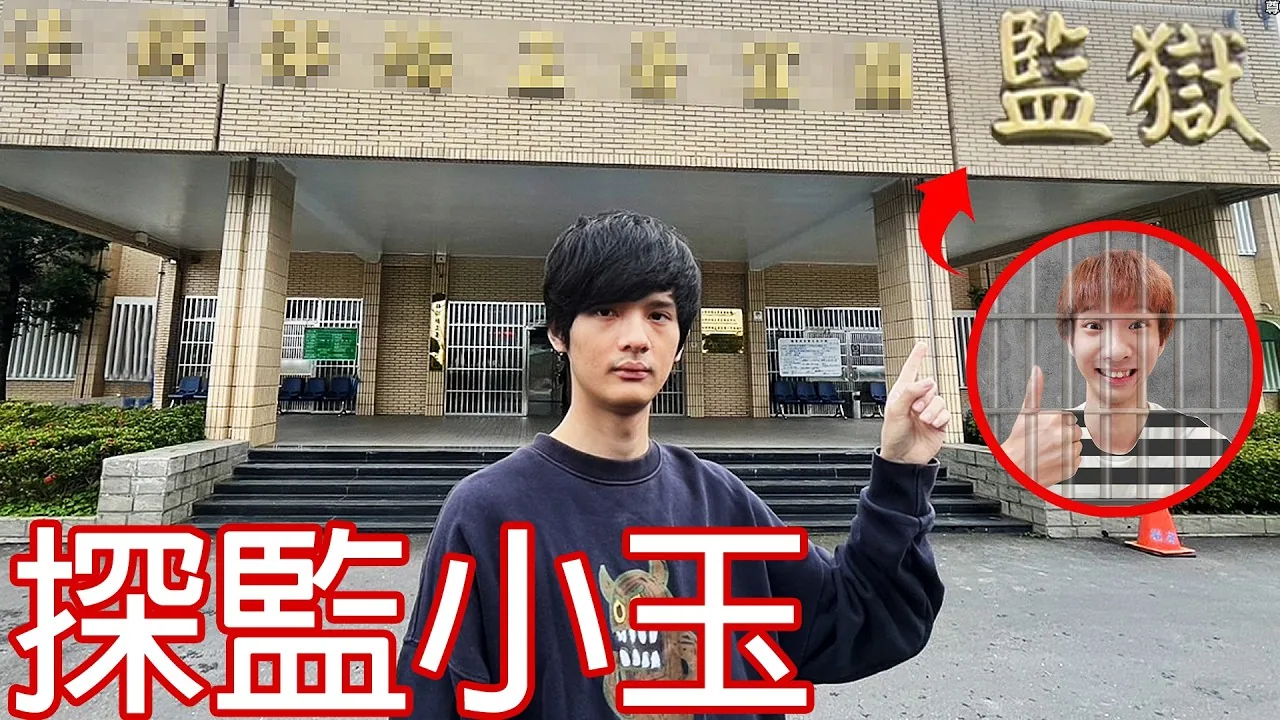
When the secondary channel broke 1 million, Zun uploaded a viewer Q&A video on December 28, 2024, with the title directly including "Million Subscribers" and visiting Xiao Yu in prison.6 This video could easily be used to continue the brother drama, but it has another layer of meaning: the secondary channel, originally accepting figures, games, and casual content, also accumulated enough to independently cross 1 million. The main channel's milestone occurred in 2018; the secondary channel's milestone was six years later. The same "million" is no longer the same life.
This transformation is particularly obvious in Zun and Lauren's public videos. In 2022, the two answered questions together about dating, how they met, and future plans. Lauren said the two met through Xiao Yu, decided to date quickly, and had already been together for several years at the time.7 The video's fun does not rely on large-scale planning, but on the pauses, roasts, and familiarity of the two answering questions.
Media details organized from the video include: the first meeting was set up by Xiao Yu; the two decided to date after three days of相处 (getting along); there was no formal confession. By the time of filming in 2022, they had been dating for four and a half years.8 This Q&A adds time thickness: the lens not only remembers the two dating publicly, but also remembers how they look back to narrate how they met.
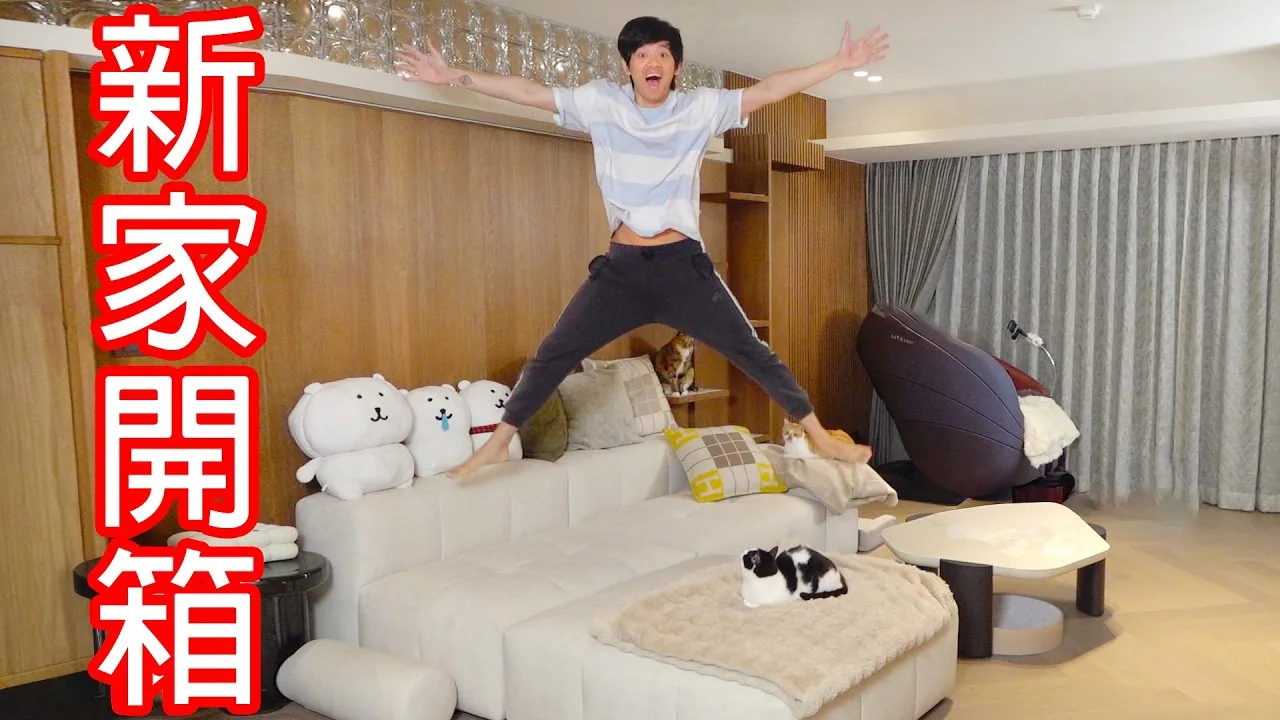
In December 2025, the main channel uploaded "Me! My! New! Home!" (〈我!的!新!家!〉).[7] From recording games in a room in middle school to introducing his residence with a lens as an adult, the visuals completed a natural loop. This is not proof of "shooting family after traffic recedes." Without words spoken by Zun himself, outsiders should not announce a transformation or exit for him. What can be confirmed is only: he is still filming, and the channel already has space for life that does not require challenge questions.
The video title only writes "New Home," so this article also stops at this minimal fact: not inferring home ownership, not estimating house prices, not writing it as the first house. The room loop thus stays within the scope public materials can bear. The room in middle school was the starting point for filming. The new home in 2025 is currently a later life node. The two visuals span fourteen calendar years; this is the scale the article intends to preserve.
📝 Curator's Note: Tracking a YouTuber for years is not quite the same as following a star's works. Rooms, friends, partners, and family enter the frame bit by bit; viewers think they are watching new videos, but are actually using others' time to mark their own youth.
He Does Not Conclude for Adulthood
In 2018, Zun said that if one day he stopped being an influencer, he wanted to draw manga; in the same interview, he also said his success was mainly due to starting early, and others copying that method would not succeed again.1 This self-awareness means his story does not need to be packaged as an entrepreneurship myth. He made some judgments correctly, and some incorrectly; he received platform dividends, and paid the price of public life.
"Adulting Record" does not equal completed growth. Public apologies do not automatically repair trust; the secondary channel's million does not prove work is stable from now on; the new home video has no obligation to provide a conclusion for life. What these materials can explain is that a creator who started working early left answers he was willing to make public in different years. Contradictions between answers exist precisely because people grow up and make new judgments in new situations.
This record is composed of different materials, each with its own boundaries. Videos allow us to see how Zun performs and looks back at himself; person interviews leave his self-description of opportunity, burden, and manga dreams; Stories save the response at the moment of crisis; court judgments confirm the victims, gains, and criminal liability of his brother's crime. The four types of materials cannot replace each other. The new home video cannot prove home ownership; apology text cannot replace judicial facts; media titles cannot prove a person's character. The meaning of putting them together is to keep the appearance of adulthood complex, while not crossing the scope what each piece of evidence can truly say.
Time also adds different limitations to these materials. The 2018 person interview can only represent the answer at age 19; the 2021 Stories only save the family member's reaction at the moment the case was exposed; the 2024 million Q&A and 2025 new home video are life slices he was willing to make public at the time. They can be arranged by date, but cannot be pieced into a straight line of "becoming more successful" or "finally mature." Whether Zun has changed must be judged case by case based on specific words and deeds, not because age increased, we write a conclusion for him first. Every node has a date, and each retains the part of public materials that has not yet been answered. This boundary keeps the uncertainty of each year, and prevents later milestones from retroactively adding inevitability to early decisions. Time order is a verification tool, not a script for a success story.
Therefore, dual-channel millions are just a set of time markers in this article. The main channel's million occurred at age 19, when he talked about opportunity and burden; when the secondary channel crossed 1 million, he had already experienced family cases and his own sponsorship negligence, and public content had added partners and residences. The numbers look similar on the surface, but the people standing behind them are already different. What truly connects the two milestones are the uneven, even ugly, public traces in between.
Public data cannot prove that viewers across fourteen calendar years are always the same group, nor can it invent shared feelings for the audience. What can be confirmed is that early videos are still re-watched by Zun, and the secondary channel also crossed 1 million in 2024; this record does not stop at the moment of teenage viral fame, but extends all the way from the old room to the new room.
Taiwan's early YouTubers had no existing precedents to demonstrate how to film from their teens into adulthood. Zun started early enough that this growth left a public record spanning fourteen calendar years.
Zun in the new home video is still the same person as the game streamer in middle school. The difference is that the public record has spanned fourteen calendar years: a burden brought by one million subscribers, a family response that could not exonerate his brother, a false sponsorship video he should be responsible for, and life becoming increasingly present in different channels. The new home lens does not answer for him what adulthood is; it only leaves the latest room for this record.
Further Reading:
- Ah Shen — Also started from game videos; Ah Shen's eleven years of daily updates and later withdrawal of the fixed posting commitment can be contrasted with another long-term creator's work rhythm.
- HowHow — Also came from Taiwan's early YouTube, putting absurd comedy, sponsorships, and family life into the same creative identity.
- Cai A-Ga — Moved from personal short videos to team and family channels, contrasting with another long-term creator's path to adulthood.
- Gamer — An important entry point for Taiwan's gaming and online communities, and one of the soils where early streaming culture grew.
Image Sources
- Life Otaku x Zun YouTube Channel: "Me! My! New! Home!" — Video thumbnail as fair use editorial commentary for person and work critique.
- Life Otaku x Zun YouTube Channel: Early Video Retrospective — Official video thumbnail as fair use for creative starting point and self-retrospective critique.
- Life Lu Otaku x Zun YouTube Channel: Million Subscriber Q&A — Official video thumbnail as fair use for secondary channel milestone critique.
References
- Housefun News / United Daily News: Life Otaku x Zun Becomes "Taiwan's Tiniest Million YT Subscriber Owner" — August 2018 person interview, recording Zun starting filming in middle school, shifting topics, 1.2 million subscribers, and his direct quotes on opportunity, burden, and manga dreams.↩234
- Taiwan Talent Show: Zun Reveals Rookie Filming Black History — 2018 report organizing Zun's video content of looking back at early game streams and imitation experience, for cross-verification of creative starting points.↩
- Newtalk: Zun Apologizes for "Pocket Warriors" Sponsorship Controversy — November 2023 report quoting Zun's public apology paragraph by paragraph, including rash acceptance, vetting negligence, ad removal, and strengthening scrutiny.↩2
- CNA: Influencer Xiao Yu Makes Millions from Face-Swap Mystery Videos, Sentenced to 5 Years Finalized — May 2024 judicial report, recording 119 victims, illegal gains, and the execution structure after the Supreme Court finalized the judgment.↩2
- TVBS News: Zun Responds to Brother Xiao Yu's Deepfake Case — October 2021 same-day report saving Zun's Stories, including apologizing to victims, not cutting blood ties, requiring brother to bear responsibility, and "I am really tired."↩2
- YouTube: Zun's Second Channel Million Subscriber Q&A — Uploaded December 28, 2024, to the official "Life Lu Otaku x Zun" channel; title and metadata confirm the secondary channel's million milestone and Q&A content.↩
- YouTube: Lauren and Zun Honestly Answer 50 Questions — May 2022 uploaded public Q&A between the two, a primary audio-visual source for the two discussing meeting, dating, and future plans.↩
- Newtalk: Lauren and Zun Discuss Meeting and Dating History — May 2022 report organizing the official Q&A, recording being set up by Xiao Yu, deciding to date in three days, no formal confession, and the number of years dating at the time.↩
🧬 What Semiont was thinking while writing this