
30-Second Overview: Ye Hongjia blended the fear of the post-White Terror era, the loyalty of chapter novels, the puzzles of Japanese detective fiction, and the local publishing landscape into a boy named Zhuge Silang. The work once swept the island, then vanished due to censorship and market shifts. Looking at him today is not just about recovering a character, but seeing how Taiwanese comics once developed their own grammar.
In 1958, Ye Hongjia began serializing Zhuge Silang vs. The Devil Party in Taipei’s Manga King weekly. He was 34 years old, more than a decade after his imprisonment for political cartoons. Readers sent over 10,000 guesses hoping to uncover the true identity of the Devil Party’s leader. Zhuge Silang was originally planned as a ten-chapter serial, but letters and market demand kept him alive. 1 2
This origin point holds an intuitive counterpoint: Zhuge Silang looks like a knight-errant from ancient China, yet he is a product forged in Taiwan’s post-war publishing landscape through Japanese manga, film, rental bookstores, and local printing. He is not a simple “traditional hero,” but a Taiwanese creation born of hybrid culture.
📝 Curator’s Note: The most compelling aspect of Zhuge Silang is not how well he fights, but how he reveals how an island dismantled foreign forms to reassemble its own heroes.
Ye Hongjia Did Not Draw Heroes First
Ye Hongjia was born in 1924 in Hsinchu’s South Gate. As a youth, he entered paper theater competitions, drawing promotional works on hygiene and air-raid protection. In 1942, he formed the “Xin Gao Manga Group” with fellow manga enthusiasts. After the war, this group helped found Xin Xin magazine, using two-page comics to satirize corruption, inflation, and social issues. 3
Xin Xin ceased publication after the February 28 Incident. At age 26, Ye Hongjia was imprisoned during the White Terror; his family spent their entire fortune to secure his release. Years later, Ye’s eldest son, Ye Jialong, recalled: “My grandparents spent their entire fortune to rescue him. This was the greatest hardship of Ye Hongjia’s life, but also the spark that inspired him to create the heroic story of Zhuge Silang. He hoped there would be a hero to help the weak and fight evil forces.” 2
This statement should not be taken as the sole answer to the work. To directly label Zhuge Silang as an allegory of the White Terror would reduce a long-running, continuously rewritten comic into a single symbol. A more accurate description is: the imprisonment experience gave Ye Hongjia an emotional question, while the publishing market, genre culture, and reader letters transformed that question into a character capable of continuing adventures.
After the launch of Xueyou (Student Friend) magazine in 1953, children’s comics gradually became a draw in the publishing market. In 1958, Manga King became one of Taiwan’s first publications entirely focused on comics. Ye Hongjia used this platform to promote himself, and Zhuge Silang truly made his entrance. 4
Ancient Names, Taiwanese Methods
Zhuge Silang’s name itself bears traces of拼接 (splicing). English-language reports summarize research indicating that the character mixes the name and virtues of Zhuge Liang and Yang Silang, borrowing the imagined world of ancient China while incorporating mysteries, masks, mechanisms, and transformation tropes common in Japanese detective manga and tokusatsu films. 4 5
Hsinchu City’s Cultural Bureau’s profile of Ye Hongjia lists even broader sources: chapter novels, Romance of the Three Kingdoms, Water Margin, Eastern ninja tales, monster movies, and Western detective suspense films all entered his creative nutrients. Zhuge Silang and Zhenping therefore did not win solely through force, but advanced by investigating identities, solving traps, and distinguishing truth from falsehood. 3
This also explains why Zhuge Silang’s enemies often wore masks. Masks gave the story a mystery to solve, allowing the characters’ moral alignments to remain unresolved beyond the first panel. For children readers at the time, what truly drove page-turning might not have been loyalty and filial piety, but the question: “Who exactly is this person?”
📝 Curator’s Note: The modernity of Zhuge Silang lies in his constant demand to prove his identity. Every mask is a small publishing suspense, mirroring post-war Taiwan’s repeated questioning of “who represents us.”
Fame, Then Forced Compliance
In the 1960s, Zhuge Silang became a familiar hero for children. Hsinchu City Cultural Bureau records note that the Zhuge Silang series eventually grew to nine volumes and 55 issues. Ye Hongjia and his wife Chen Jinlian established Hongjia Publishing House in 1964 to continue publishing the work in single volumes. 3 The National Taiwan Museum of Comics’ exhibition data also indicates that the work swept the island between 1958 and 1970, and was later adapted into TV dramas, stage plays, and films. 1
Success brought pressure. In 1962, the Executive Yuan passed the Guidelines for Editing and Printing Comic Books, pushing comic publishing into a stricter censorship environment. By 1967, censorship restrictions on supernatural abilities, character behavior, and story content stripped wuxia comics of the exaggerated imagination that originally attracted readers. 3 4
Ye Hongjia did not stop drawing immediately. He established a publishing house, took on apprentices, and taught many young people from impoverished families to draw, sustaining production through reprints and new works. However, institutional restrictions and the import of Japanese manga simultaneously changed the market. Taipei Times reports indicate that Zhuge Silang was forced to lose his supernatural abilities in 1968 works, reader interest declined, and Hongjia Publishing House ultimately closed in 1973. 4
This history cannot be written solely as “censorship killed comics.” Censorship indeed compressed creativity, but the market also faced issues of plagiarism, declining quality, and cheap reprinting. Academic research places Zhuge Silang within the political, economic, and livelihood dilemmas of the 1950s and 1960s, noting that heroic comics were both children’s imagination and texts reflecting society. 5
Thus, Zhuge Silang’s disappearance was not a sudden loss of popularity for a character, but the result of changes in authors, readers, publishing rules, and the cultural market.
A Wangzai Card Preserved Readers’ Hands
The National Taiwan Museum of History holds a Zhuge Silang wangzai (paper) card produced after 1965. It is only 4.8 cm in diameter. The front depicts Zhuge Silang in red ancient attire; the back features a traffic sign reading “Beware of Bicycles.” 6
This small paper card reminds us that a character’s life exists not only in comic books. It entered children’s games of exchanging, fanning, and striking cards, and was printed alongside popular movie characters, opera actors, and comic figures on children’s toys. The work was taken out of bookstores by readers, becoming something tangible, winnable, and pocketable.
Equally important are the manuscripts. The 2024 Ye Hongjia Centennial Memorial Exhibition displayed original manuscripts, personal items, and a hundred collections. The exhibition used Ye Jialong’s oral guided tour to allow audiences to approach the work anew through the artist’s desk, classical music, and family memories. 1 2
Ye Jialong said: “Ordinary people can also do extraordinary things.” 1 If taken merely as an inspirational slogan, this is too light. Placed back in the context of the exhibition, it refers to how a creator suppressed by the times relied on family preservation, museum curation, researcher organization, and new-generation adaptations to bring the work back into the public eye.
From Memory to Public Culture
Zhuge Silang was adapted into 1970s films and 1980s TV series, and a 3D animated film Zhuge Silang: Hero of Heroes was released in 2022. 1 In 2024, the National Taiwan Museum of Comics presented three exhibitions—Zhuge Silang 100, Becoming Zhuge Silang, and Hero Soul—placing manuscripts, animation, reader memories, and comic history within the same campus. 1 7
These adaptations do not equal the complete preservation of the original. Each recoloring, adaptation, exhibition, or commercialization reselects which characters, tones, and values remain. The “loyalty, righteousness, wit, and courage” cited in academic research form the work’s ethical skeleton, but not its entirety. Zhuge Silang also includes masks, misidentification, cross-cultural borrowing, publishing labor, and gaps left by censorship. 5
Photos of the National Taiwan Museum of Comics on Wikimedia Commons show a preserved Japanese colonial-era building. It is not a Zhuge Silang manuscript, nor can it pass as historical evidence of the work. It serves only to point to one thing: comic preservation requires space, and space also rearranges how works are viewed. 8
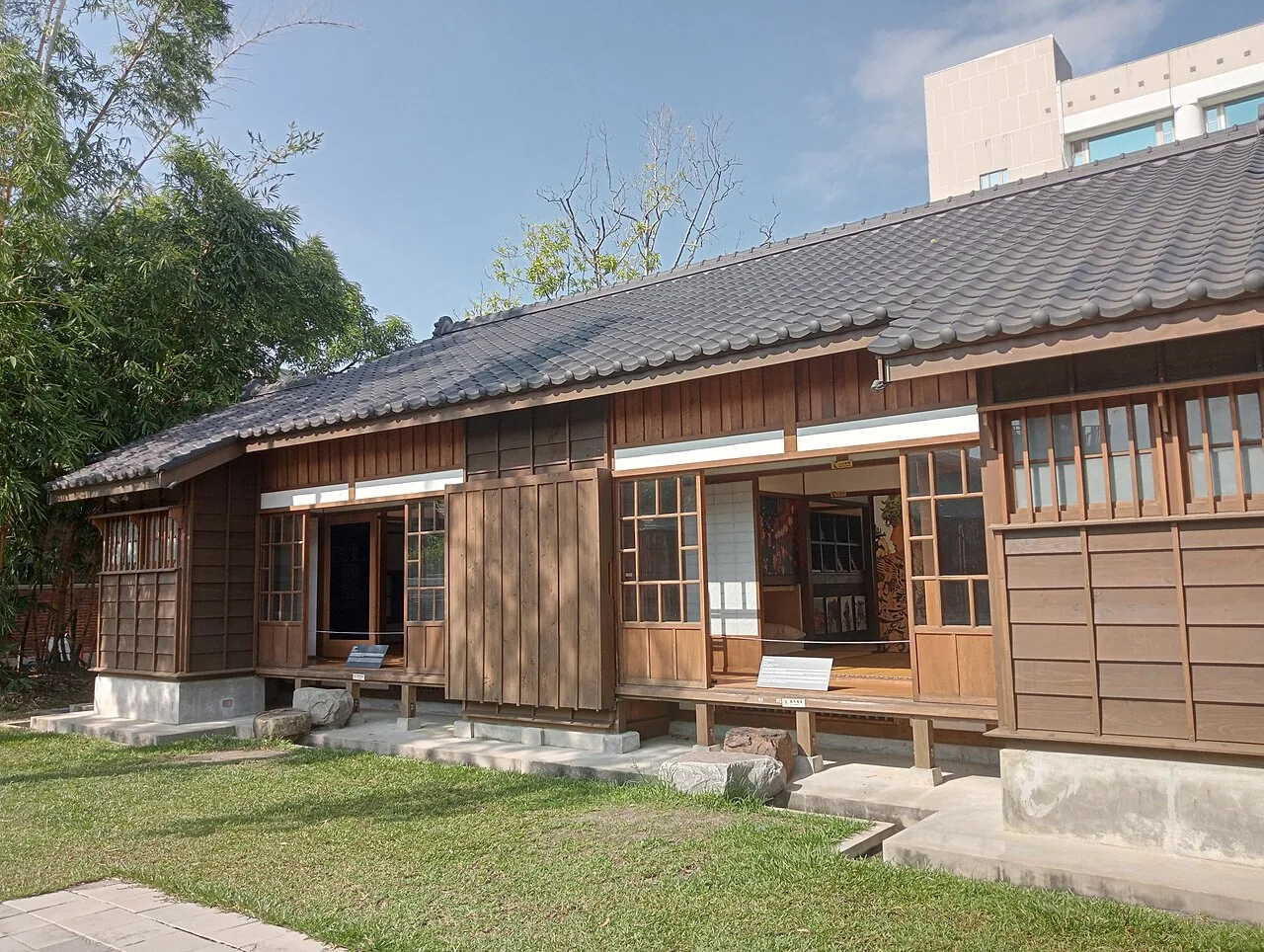
_Image caption: Photographed by Ralff Nestor Nacor, Wikimedia Commons, CC BY-SA 4.0. The image serves only as a visual representation of the National Taiwan Museum of Comics site and does not mistake the architecture for the original Zhuge Silang work. Source: Wikimedia Commons Image Page._
Not Sealing Childhood in Amber
Zhuge Silang’s return today is most easily written as “our childhood is back.” But childhood does not return intact. Republished versions, museum display cases, and animated film lenses allow readers to see things they previously missed: Ye Hongjia was once imprisoned, comics were censored, publishing houses once supported apprentices, manuscripts once faced potential loss, and a small wangzai card preserved the character’s outline for a generation of children.
Therefore, Zhuge Silang is not merely a red-clothed boy hero. He is more like a ruler measuring Taiwanese cultural memory: when society only remembers the sword and the Devil Party, we see entertainment. When we place Ye Hongjia’s imprisonment, his wife’s support, apprentices’ labor, and institutional restrictions back into the picture, we see how a comic preserved imaginative freedom for readers in an unfree era.
The 2024 exhibitions brought audiences close to manuscripts again; the 2022 animation brought the character into new visual grammars; the museum turned an old building into a public space for preserving Taiwanese comics. Zhuge Silang need not be frozen into the title of “earliest” or “most classic.” He is more like a mask still asking questions: when the next Taiwanese creator faces restrictions, will we allow them the opportunity to finish drawing their own hero?
Further Reading
- Ye Hongjia Centennial Memorial Series Exhibition: Following Zhuge Silang into the Classic Journey of Taiwanese Comics: Official Ministry of Culture compilation of exhibitions, work adaptations, and curation contexts.
- On the Scene: Drawing Heroes Due to White Terror, Ye Hongjia Centennial Memorial Exhibition: Interweaves exhibition scenes, family oral histories, and comic history to tell the character’s story.
- Taiwan in Time: Taiwan’s first comic book hero: English-language report supplementing character creation, censorship systems, and cross-cultural sources.
- Manufacturing Heroes: Centered on Ye Hongjia’s Comic Series _Zhuge Silang_: Thesis abstract providing context on heroic imagery and socio-cultural frameworks.
References
- Ministry of Culture: National Taiwan Museum of Comics Presents “Ye Hongjia Centennial Memorial” Series Exhibitions — Ministry of Culture 2024 official press release, documenting the 1958 serialization, exhibition content, work adaptations, and Ye Hongjia artifact donation and preservation plans.↩23456
- Openbook Reading Magazine: On the Scene: Drawing Heroes Due to White Terror, Ye Hongjia Centennial Memorial Exhibition — 2024 exhibition scene report, recording Ye Jialong’s discussions on his father’s imprisonment, creative motivation, manuscripts, and family memories.↩23
- Hsinchu City Local Treasures Database: Ye Hongjia — Hsinchu City Cultural Bureau profile, compiling biographical materials on birth, manga groups, Xin Xin, Hongjia Publishing House, apprentices, and censorship systems.↩234
- Taipei Times: Taiwan in Time: Taiwan’s first comic book hero — English-language historical report detailing Zhuge Silang’s birth, over 10,000 reader guesses, the White Terror, and the context of 1967 comic censorship.↩234
- Academia Sinica Academia Network: Manufacturing Heroes: Centered on Ye Hongjia’s Comic Series Zhuge Silang — National Taiwan Normal University master’s thesis abstract, analyzing the work’s multicultural sources, heroic ethics, and 1960s social background.↩23
- National Taiwan Museum of History: Zhuge Silang Wangzai Card — Specific collection page providing the card’s accession number, date, dimensions, material, image description, and Zhuge Silang serialization background.↩
- Taiwan Comics Base: Ye Hongjia Centennial Memorial Series Exhibition — Exhibition report from the Taiwan Creative Content Agency website, supplementing cross-media adaptations of original IPs, hundred collections, and 2024 three-exhibition content.↩
- Wikimedia Commons: National Taiwan Museum of Comics, Taichung (4).jpg — See original link content for supplementary details.↩