
30-Second Overview: In 1979, a 36-person multidisciplinary team at National Taiwan University Hospital performed a 12-hour separation surgery on Chang Chung-jen and Chang Chung-yi. This was a major breakthrough in Taiwan’s medical history, but not the end of the brothers’ story. The pain, rehabilitation, work, family life, and media gaze following the surgery are what made “becoming two people” a lifelong journey.
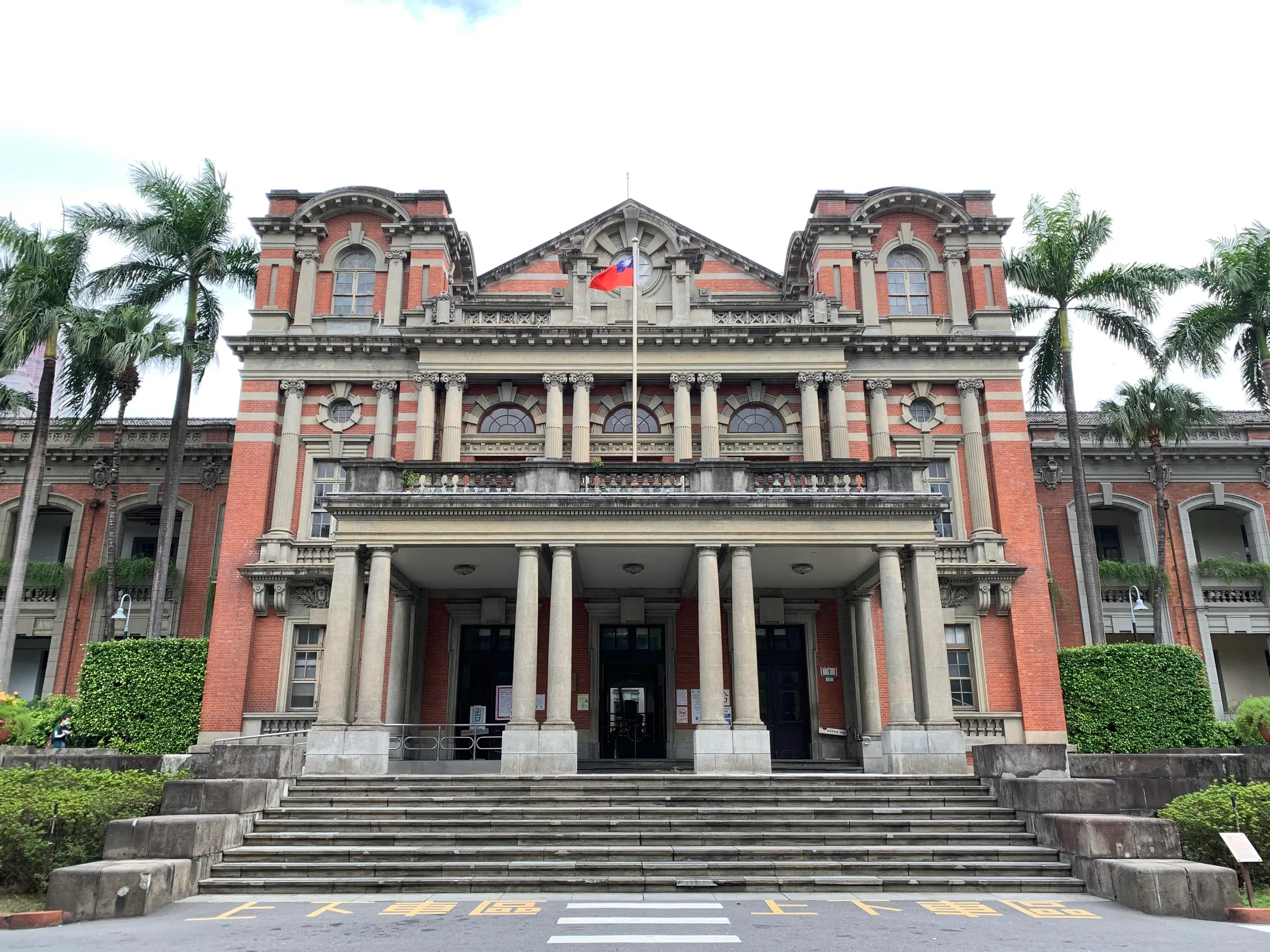
Figure: The Old Building of National Taiwan University Hospital. Photo by Chien-Ping KAO, Wikimedia Commons, CC BY-SA 4.0. This photo depicts the hospital building, not the 1979 surgery scene. The original file page is available on Wikimedia Commons. 1

Figure: Side view of the Old Building of National Taiwan University Hospital. Photo by Chang Ya-lun, Wikimedia Commons, CC BY-SA 4.0. This image and the previous one are architectural photos by different authors with different compositions; neither depicts the 1979 surgery scene. The original file page is available on Wikimedia Commons. 2
On the morning of December 23, 1976, in a delivery room in Qianzhen, Kaohsiung, midwife Wu Yue-hsia first saw the head of one infant, then three legs, and finally the body and head of the other child. Thus were Chang Chung-jen and Chang Chung-yi born. The two shared a pelvis and a third leg, yet each possessed their own consciousness and life. 3
Three years later, on September 10, 1979, National Taiwan University Hospital spent 12 hours gradually separating the two children from the abdomen, intestines, urinary system, pelvis, and common limb. Thirty-six medical staff took turns in the operating room; this was the first successful separation of tripus ischiopagus conjoined twins in Asia. 4 5
But this is not a story that ends with “successful surgery.” After their bodies were separated, pain, prosthetics, rehabilitation, work, family, and the gaze of the media composed the truly long life they had to live. 3
📝 Curator’s Note: The separation surgery granted the two an independent body, but it did not automatically deliver an independent life. This is precisely what makes the story of Chung-jen and Chung-yi worth preserving.
At Birth, Two Names Had No Room of Their Own
Wu Yue-hsia later recalled that Mrs. Chang had a natural birth; Chung-jen’s head emerged first, followed by three legs, and finally Chung-yi’s body and head. The two brothers cried loudly from the moment they were born. This detail, preserved by the birth attendant, gave the “case” the sound of birth rather than reducing it to an anatomical diagram. 3
Their parents were poor and unable to support them long-term. The brothers were first sent to Chung Shan Medical University Hospital for examination and care. Historical data compiled by the United Daily News recorded that the hospital, led by the administration and founder Chou Ju-ch’uan, cared for the brothers until they were three years old, after which National Taiwan University Hospital evaluated them for separation. 5
This experience has often been simplified as “parental abandonment.” However, a 1979 report also preserved a statement from their father, Chang I-sheng: “This is the only chance for the two children.” He knew that separation might allow the children to survive, but also that they must first endure a high-risk surgery. 6
The debate at the time involved not only whether doctors could cut open a shared body, but also who could decide the next steps for children who could not yet speak: maintain the status quo or risk a chance at independent lives. Reports preserved in Formosa magazine presented specific reasons for and against separation. The brothers could not walk or rest independently, and shared organs caused their health to deteriorate. Opponents worried about surgical success rates, post-operative body defects, and long-term upbringing. 6
📝 Curator’s Note: “Whether to separate” is not merely a technical issue. It is a watershed moment where society decides whether to view the two children as a medical condition, family members, or individuals with rights.
From the Old Building to the Operating Room: How a Hospital Became an Address of Memory
The Old Building of National Taiwan University Hospital, recognizable today, serves as a fitting visual entry point for this history. The Wikimedia Commons file page indicates the photo was taken by Chien-Ping KAO under a CC BY-SA 4.0 license. It allows readers to see the hospital as a concrete place, but must not be mistaken for a photo of the 1979 surgery scene. 1
This distinction is crucial. Pre-operative photos of conjoined twins belong to cultural archives; the surgical process is documented by contemporary media and hospital records; and today’s photos of the hospital building represent a later perspective. These three types of imagery all help understand history, but their timing, authors, and licenses must not be conflated. The article uses freely licensed architectural photos to supplement the setting, not to pretend a contemporary photo fills a lost surgical record.
The architecture of National Taiwan University Hospital is thus more than a backdrop. In 1979, the medical team inside the hospital connected models, pneumoperitoneum, anesthesia, organ separation, and reconstruction into a single action. For the two brothers, this was also the address from which they moved from a shared body toward independent lives. Architectural photos do not tell us about every decision made on the operating table, but they remind readers that this medical event occurred in real rooms, corridors, and institutions, not just as the abstract phrase “Taiwan’s medical history.”
📝 Curator’s Note: The value of freely licensed images lies not only in their usability, but in their honest disclosure of what they captured and what they did not. This photo of the Old Building makes the location visible and clearly states that it is not the surgery scene.
How a Multidisciplinary Team Sustained a 12-Hour Surgery
In 1979, National Taiwan University Hospital lacked today’s high-resolution imaging and 3D surgical planning. The surgical team first used models for simulation, then employed pneumoperitoneum to inject air into the abdomen, allowing the skin to gradually stretch in preparation for covering the wounds after separation. The bone from the brothers’ shared third leg was first removed, leaving the skin as material for reconstruction. 4 6
Records in NTU News state that the surgery was convened by Hung Chih-jen, with Chen Wei-chao as the attending physician. Pediatric surgery, orthopedics, plastic surgery, urology, general surgery, and anesthesiology participated jointly. Official data states the surgery lasted 12 hours, with a 36-person multidisciplinary team completing the separation. 4
Contemporary reports preserve a more precise sense of time. At 8:32 AM, Dr. Hung Wen-tsung made the first incision. The surgery first addressed the digestive system, then the urinary system, followed by the separation of the pubic bone, genitals, ischium, and common limb. Finally, two groups of doctors simultaneously reconstructed and sutured. 6
After the first phase opened the abdominal cavity, the team encountered an unexpected issue. Doctors initially believed the livers were separate, but found them still connected in the middle. The connected part was approximately 7 cm long and 2.5 cm thick. The team had to change plans on the spot, stopping the bleeding first, then completing the liver separation. 6
At 5:16 PM, the two brothers were truly separated. Chung-jen opened his eyes at 7:37 PM, and Chung-yi woke at 8:43 PM. A contemporary report in the United Daily News noted that they had been physically connected for 992 days before the surgery. The weight of this number lies not in its apparent precision, but in placing the 12 hours on the operating table back into the context of the two children’s nearly three years of shared life. 5 6
Source: NTU News, United Daily News Times, The Reporter, NTU Alumni Bi-Monthly
This surgery also brought Taiwan’s medical community into the international spotlight in such a collective manner for the first time. The medical history of the Taiwan Medical Association lists it as an important event of 1979, recording that 18 physicians, over 30 medical staff, and 250 blood donors supported the procedure. The “250 people” refers to the number of donors, not the volume of blood transfused. 7
A 1986 paper published in the Journal of Pediatric Surgery placed this case within international medical literature. The authors, from the Departments of Surgery, Urology, and Anesthesiology at National Taiwan University Hospital and Chung Shan Medical University, titled the paper “Successful separation of ischiopagus tripus conjoined twins.” The abstract indicated that the study recorded follow-up conditions for 76 months after separation. 8
📝 Curator’s Note: The protagonists of this surgery were not just hands holding scalpels. Surgery, anesthesia, urology, orthopedics, plastic surgery, and care had to connect into a single timeline for the children to have a chance to step off the operating table.
“Becoming Two People” Is Not “No More Illness from Then On”
The first good news after surgery was that the two brothers survived and began rehabilitation. The NTU Alumni Bi-Monthly noted in 1999, reviewing the 20th anniversary of the separation, that the university still viewed itself as the caregivers of the two brothers, while the brothers’ greatest wish was to reunite with their family. 9
But successful separation did not eliminate the limitations left on their bodies. The Reporter recorded that Chung-jen still required hospitalization or surgery multiple times a year, and Chung-yi needed enemas weekly. Both also encountered work, economic, and legal issues during their growth due to their physical conditions and insufficient family support. 3
In an interview, Chung-jen clearly discussed his separation. He said, “Although our bodies were not very complete, if I had autonomy, I would still choose separation. After separation, true life begins, survival begins; this is the test Heaven gave us.” This is the voice of the subjects themselves, not an inspirational conclusion arranged by bystanders. 3
He and Chung-yi once sold chewing gum or small ornaments at the entrance of National Taiwan University Hospital, markets, night markets, and fairs. Later, Chung-jen worked for the Environmental Protection Bureau, while Chung-yi worked for a private body-shaping and beauty company. The separated bodies did not fit the simple narrative of “returning to normal,” but the two continued to seek their own work and life rhythms. 3
A pre-operative life photo preserved in the National Cultural and Cultural Database shows the two brothers bathing together. The Ministry of Culture’s entry also records the source, archival status, and internet public display/retrieval status of this photo. 10 The value of such imagery lies not in treating the body as a spectacle, but in reminding readers: before surgery, newspapers, and medical terms, they were just two children who needed to bathe, sleep, and grow up.
The Second Half of a Surgery Is Long-Term Care
On the night the separation was completed, the medical team finished the most urgent part of the work. The two children still had to learn how to use their asymmetric lower limbs, how to face excretion and organ issues, and how to understand why their bodies were always seen by others first as they grew. None of these matters could be resolved in one go in the operating room. 3
The NTU Alumni Bi-Monthly noted during the 20th anniversary of the separation that the doctors at the time did not know how long the brothers would live; simply pushing them out of the operating room safely was considered a success. By 1999, Chen Wei-chao was still blessing the two at events, hoping they would one day reunite with their biological father. This reflection is rarely preserved under the title “First in Asia,” yet it shows that medical success has always been bound to care responsibilities. 9
The 10th-anniversary event in 1989, the 20th-anniversary photography party in 1999, and the 40th-anniversary exhibition in 2019 serve as three temporal markers. Each commemoration does not merely replay that one incision, but also asks: How are the two brothers doing now? Is the hospital still there? Is social concern companionship, or does it only return once a year on anniversaries? 3 9
The Reporter recorded that Chung-jen might still undergo surgery or hospitalization multiple times a year, and Chung-yi required weekly enemas. Their lives therefore cannot be concluded with “returning to normal after successful surgery.” Success in medical history becomes, in daily life, a series of follow-up visits, segments of rehabilitation, jobs, and the ability to decide whether to answer strangers’ questions in public. 3
Thus, parents, Chung Shan Medical Hospital, National Taiwan University Hospital, foundations, nannies, friends, and photojournalists all left different traces of care in the brothers’ lives. These roles cannot be compressed into an empty sentence about an “爱心 society.” Some provided medical care, some provided shelter, some provided job opportunities, some preserved images, and some had to step back after the brothers came of age, allowing them to make decisions themselves. 3 6
📝 Curator’s Note: Children’s medical history is most easily remembered by the day of the surgery, but an individual’s autonomy usually grows out only after years of care gradually let go.
Images Let Them Leave Their Names
Photojournalist Yang Yong-chih began documenting the two brothers in 1983, spanning nearly 37 years. He photographed the brothers entering Tianmu Elementary School, Chung-jen receiving spinal correction, the 10th anniversary of separation, hospitalization, work, and Chung-yi’s marriage. In 2019, when The Reporter published this photo-text story, the article not only reviewed the surgery but also allowed readers to see how time fell upon the two bodies. 3
Chung-jen once gave lectures at schools, prisons, and various institutions, accumulating nearly 300 sessions in the last three years. He wanted to share his experiences with others and fulfill his wish to lecture around the world. In February 2019, he passed away from a brainstem hemorrhage, leaving this wish unfulfilled. 3
Chung-yi married nurse Jiang Wen-yen in 2014, and they later had a pair of龙凤胎 (fraternal twins). On the eve of the 40th anniversary of the separation, the brothers originally planned to look back on their shared years through photography and oil painting exhibitions. After his brother’s departure, Chung-yi still took on the responsibility of continuing the story. 3
A 1999 NTU alumni publication noted that the brothers produced a VCD titled Tracing the River of Life, compiling 20 years of growth into images. This action was important. When the media called them “the first in Asia,” they were medical records. When they themselves edited images and spoke of family and the future, they became the authors of their own lives. 9
📝 Curator’s Note: A person should not be remembered only because they were once the “first case.” What Chung-jen and Chung-yi truly left behind is two names slowly growing their own voices outside of medical records.
How a Medical Event Became a Shared Memory
This surgery is repeatedly reviewed because of the era in which it occurred. In September 1979, television was still the most direct medium for shared family viewing. National Taiwan University Hospital set up closed-circuit television in the Seventh Lecture Hall, while CTV recorded the surgery. Newspapers reported it in headlines the next day, and the hospital even held a full-month tea party to celebrate the surgical success. The bodies of the two children thus simultaneously became part of the medical scene, family conversation, and national emotion. 5 6
This “nation watching together” had genuine public value. NTU News recorded that the Sino-US diplomatic break caused social unrest; the surgical success allowed donations, blood drives, and medical resources to concentrate rapidly. The Taiwan Medical Association also listed it in the yearbook of Taiwan’s medical history. From an institutional perspective, this was a display of multidisciplinary cooperation. From the perspective of the two brothers, however, it was also the beginning of their lives being watched by others from an early age. 4 7
Narrative scopes from different sources are not entirely identical. NTU News used the limited phrasing “4th pair in the world, 1st in Asia” and “first global case of post-operative dual success.” The contemporary reports compiled by the United Daily News emphasized “the first pair of tripus ischiopagus conjoined male infants separated in the world.” The apparent discrepancy stems from different statistical scopes: one refers to surgical records of all tripus ischiopagus infants, the other to specific male cases and post-operative survival. The article retains these qualifiers precisely to avoid rewriting medical history into slogans. 4 5
The same caution must be applied to numbers. 18 physicians, over 30 medical staff, a 36-person team, 250 blood donors, 8,270 cc of transfusion volume, and 60,250 cc of pre-operative donation volume appear in sources at different levels. They are not a report card that can be arbitrarily added. The Taiwan Medical Association provides a medical history summary; Formosa preserves a longer narrative of the surgical scene; Times transcribed the contemporary newspapers. Readers must know where each number comes from to know what claim it supports. 5 6 7
This is why the article does not write all physicians as “heroes,” does not write all blood donors as nameless masses, and does not transform the second half of the brothers’ lives into an inspirational textbook. Historical credibility is not built on pretty conclusions, but by placing perspectives from different sources side by side, allowing the technology of surgery, the cost of care, and the choices of the subjects to coexist.
Questions Left by the Surgery Are Still Worth Asking
The 1979 surgery received television broadcast and national attention. NTU News described that society was in an atmosphere of unease following the Sino-US diplomatic break; the success of the separation temporarily became an outlet for collective emotion. 4 The Reporter also recorded that the surgery was closely watched by public opinion, donations, and media. 3
This attention has two sides. One side is blood donations, monetary donations, and medical resources that gave the two children the chance to survive. The other side is that their bodies might be viewed as an event watched by the entire nation. When every bleed in the operating room was transmitted via broadcast to the lecture hall, the children’s privacy and societal expectations entered the same space simultaneously.
The original report in Formosa magazine referred to the separation as “two new lives.” This phrase was inspiring in 1979, but it easily makes people forget that so-called new lives did not begin only on the day of the surgery. They already existed in the delivery room in Kaohsiung, in the wards of Chung Shan Medical Hospital, and in the days when the brothers pulled each other awake. 6
Therefore, the story of Chung-jen and Chung-yi should not be placed only under the title “Taiwan’s Medical Breakthrough.” It is simultaneously medical history, children’s care history, media history, and the story of two people striving for autonomous lives. National Taiwan University Hospital completed the physical separation; society must continue to learn how to maintain distance between care and gaze.
Only After Separation Does It Truly Begin
On September 10, 1979, Chung-jen and Chung-yi were separated into two people. That day can be described by surgical time, number of physicians, number of blood donors, and world ranking, but numbers cannot finish telling their days afterward.
A statement closer to the truth is: The medical team opened a door for them; the two brothers had to walk through it with their lives. Walking, defecating, hospitalization, work, marriage, lectures, losing each other, and even living quietly outside the media are all things that happen after “successful separation.” 3 9
Chung-jen once said that true life begins after separation. This phrase returns the power of decision to the two children. Afterwards, they gradually left the medical terminology of the shared body, and the single line of record in the case file, becoming two people who must endure pain, make choices, and leave memories.
This is the best way for Taiwan to preserve this history: remembering the 12 hours of technology, and also remembering the 40 years of life that followed. The surgery separated the body; time allowed the two people to gradually become themselves. When we discuss this case again, we should first call out the names of Chung-jen and Chung-yi, before discussing what record it represents. Because medical history needs numbers, but human history needs names, choices, and space unrepresented by others.
Further Reading
If you wish to continue tracking this history from different angles, start with the medical team’s review in NTU News, then read the long-term image records in The Reporter. The former answers “how the hospital completed the surgery”; the latter answers “how the two people walked through life after the surgery.” The photo entries in the National Cultural and Cultural Database are suitable for understanding how images were archived at the time, and the differences in licensing between public display and reuse.
Image Sources
This article uses two Wikimedia Commons image URLs, neither of which was downloaded to the project. The first was taken by Chien-Ping KAO; the second by Chang Ya-lun. Both are under CC BY-SA 4.0. When using them, retain the author, license name, license terms, and link to the original file page. The two photos are used only to present the current architectural scene of the Old Building of National Taiwan University Hospital; they do not mislabel contemporary photos as 1979 surgery images.
References
- Wikimedia Commons: "File: Old Building of National Taiwan University Hospital.jpg" — Author Chien-Ping KAO, original file under CC BY-SA 4.0. Image used only to present the historical scene of the Old Building of National Taiwan University Hospital; does not claim to be a 1979 surgery photo.↩2
- Wikimedia Commons: "File: National Taiwan University Hospital Old Building.jpg" — Author Chang Ya-lun, original file under CC BY-SA 4.0. Image used only to present another architectural view of the Old Building of National Taiwan University Hospital; does not claim to be a 1979 surgery photo.↩
- The Reporter: "Deep Brotherhood: The Story of Conjoined Twins Chung-jen and Chung-yi on the 40th Anniversary of Separation" — Yang Yong-chih, 2019-09-17, photo-text record of the brothers’ 37-year growth and the subjects’ voices.↩23456789101112131415
- NTU News: "Chung-jen and Chung-yi Conjoined Twins Separation – Two New Lives, A New Era" — NTU Secretariat, recording surgical date, team, technology, and social background.↩23456
- United Daily News Times: "Asia's First Case! 1979 NTU Hospital Successfully Separates Conjoined Twins" — Wu Hsiu-hua, 2023-07-04, compiling United Daily News historical reports and the brothers’ subsequent lives.↩23456
- Formosa Magazine: "The New Life of Conjoined Twins" — Chi Chih, 1979-10, preserving original report-style records before and after the surgery.↩2345678910
- Taiwan Medical Association: "Taiwan Medical and Association History" 1979 Entry — Recording the medical history positioning and support scale of the 1979 surgery.↩23
- Journal of Pediatric Surgery: "Successful separation of ischiopagus tripus conjoined twins" — Wen-Tsung Hung et al., 1986, pp. 920–923, article abstract and author institutional information.↩
- NTU Alumni Bi-Monthly: "20th Anniversary Celebration for Conjoined Twins Chung-jen and Chung-yi Separation" — NTU Alumni Bi-Monthly Issue 6, 1999, recording the 20th-anniversary event and university review.↩2345
- National Cultural and Cultural Database: "Pre-operative Life Photo of Conjoined Twins Chang Chung-jen and Chang Chung-yi Undergoing Separation Surgery" — Ministry of Culture archival entry, including photo description, source, and licensing information.↩

