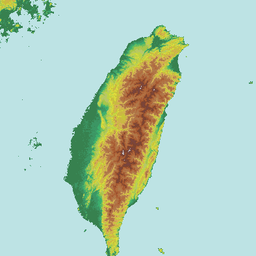
30-Second Overview: Chang Chun is an independent political figure from Guangfu Township, Hualien. He has served as a county councilor since 2009, held the position of Deputy Speaker, and served as Speaker during the 19th and 20th assemblies. A conflict over party nomination during the 2022 Speaker election led to his break with the Kuomintang (KMT), after which his political opposition to Fu Kun-chi's camp has frequently surfaced. His political career has also been scrutinized through judicial cases and past records during the 2026 election cycle. This article, current as of November 20, 2026, organizes only publicly available data and does not predict election results.
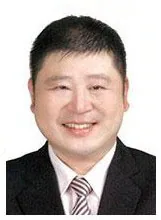
Portrait of Chang Chun, from the official Hualien County Council member profile. Hualien County Council/Wikimedia Commons, Public domain.
An Election That Changed His Party Affiliation
On December 25, 2022, the Hualien County Council held elections for Speaker and Deputy Speaker. The incumbent Speaker, Chang Chun, did not receive a KMT nomination but ran independently, winning with 17 votes against 15 after two rounds of voting. Public Television Service (PTS) reported that three Democratic Progressive Party (DPP) seats became the deciding factor in the second round. Following his victory, Chang announced his departure from the KMT, stating he had faced party bullying. This election served as the public turning point in his separation from his former party. 1
At the time, both sides described the conflict differently. Chang believed he was being targeted by "anti-Black" (anti-local faction) sentiment and internal party suppression, while the KMT Hualien County Branch stated they would request the expulsion of relevant members due to "vote-switching" during the Speaker election. Central News Agency reported both perspectives and noted that with 33 total seats in the Hualien County Council, disciplinary actions could alter the existing seat advantage. 2 This election reflects a political structure where local council seats, party discipline, and the Speakership are deeply intertwined. Central News Agency further recorded that among the 33 seats in the Hualien County Council, the KMT (including declared candidates) held 20 seats; in the first round, nominee Wu Tung-sheng received 16 votes and Chang Chun received 10 votes. After failing to reach a majority, the vote proceeded to a second round. In the second round, some councilors who had originally voted for themselves or supported Chang, combined with three DPP votes, allowed Chang to secure 17 votes. 3 This margin demonstrates that the Speakership cannot be guaranteed solely by party nomination; individual choices and cross-party support during voting can shift leadership within the council.
A Local Public Service Path Starting from Guangfu Township
Publicly available data from the Hualien County Council lists Chang Chun as being born in Hualien, with a Bachelor's degree in Public Administration from National Open University. He has served as a member of the 17th County Council, Deputy Speaker of the 18th, and Speaker for the 19th and 20th assemblies. 4 Central News Agency also reported that he was elected as a county councilor in 2009, served as the Chairperson of the KMT Hualien County Branch, and was later expelled from the party due to his pursuit of the Speakership before subsequently announcing his resignation from the party himself. 5
To understand Chang Chun's political role, one must view his resume within the institutional division of labor of a local council. Councilors oversee county administration through inquiries, motions, and budget reviews, while the Speaker presides over proceedings and plays a vital role in council organization and cross-party negotiations. Chang's progression from councilor to Deputy Speaker and then Speaker provides the institutional context for his political influence. A resume alone does not prove administrative effectiveness or voter support; these must be assessed through individual motions, public records, and election results.
Opposition with Fu Kun-chi: Extending from the Council to County-wide Politics
Chang Chun's conflict with Fu Kun-chi's camp has frequently manifested through public issues. In April 2025, Chang publicly declared his support for the recall of Fu Kun-chi, explaining his stance through local newspaper advertisements and social media posts. He stated: "We oppose a 'grand recall,' but we support the recall of Fu Kun-chi." 6 This is Chang's own expression of his political position. The same Central News Agency report noted that he attributed previous disputes in the Hualien County Council regarding ore tax collection to Fu Kun-chi's political maneuvering. This attribution is Chang's allegation, and this article does not treat it as an independently confirmed causal conclusion.
In October of the same year, a symposium for the reconstruction following the Mataian Stream landslide damming occurred in Guangfu Township. Chang entered the venue after not being invited, knocking on a table to demand why he had not been notified. Fu Kun-chi accused him of violent behavior; both sides engaged in verbal conflict, while victims outside the venue demanded to be heard. Reports also noted that Chang was later permitted to speak, during which he questioned the meeting arrangements and victim participation, and discussed reconstruction budgets. 7 This conflict illustrates how political opposition enters post-disaster public discourse. Regarding the event itself, what can be confirmed are the actions and statements reported; one cannot describe unilateral motives or responsibilities as adjudicated facts.
Two Cases: Legal Outcomes Should Not Be Conflated
An LED procurement case once resulted in Chang Chun being sentenced to 7 years and 8 months in the first instance. According to Central News Agency, the first instance found that he had allegedly accepted NT$400,000 from a contractor in 2012 and used a councilor's motion to assist in securing three engineering procurement projects for the Fengbin Township Office. 8 During the second instance, the court considered that the signatures on the motion forms did not match Chang's handwriting analysis results and determined that his defense—that he had reported instances of unauthorized signatures—was not without merit; consequently, he was found not guilty due to insufficient evidence. In August 2026, the Supreme Court dismissed the prosecution's appeal, finalizing Chang Chun's innocence, while remanding a portion regarding the confiscation of participants' assets for retrial. 8 The final judicial result cannot be replaced by the earlier first-instance sentence.
Another case involving state-owned hillside land led to the Hualien District Prosecutors Office indicting him in 2024 on charges including violations of the Soil and Water Conservation Act. According to Central News Agency's report on the prosecution's claims, the case involves two plots of land in Guangfu Township totaling approximately 108,000 square meters. The prosecution alleges the land has been occupied and leased since 2014, with estimated total rent over nine years amounting to NT$10.8 million. 9 An indictment is a charge brought by the prosecution and does not equal a finding of guilt by a court.
Chang Chun stated that the betel nut plantation was reclaimed by his grandfather in his early years, and that he had personally leased it from the National Property Administration; after the lease was terminated, he removed the betel nut trees and returned the land as required. 9 Verifiable reports on this case are concentrated on the prosecution's allegations and the defendant's response; this article has not obtained data regarding a confirmed final judgment and therefore does not infer the outcome of the case.
2026 Candidacy: Resume, Stances, and Past Cases Under Voter Scrutiny
In March 2026, Chang Chun announced his candidacy for Hualien County Magistrate, publicly stating his desire to make Hualien better. Central News Agency simultaneously summarized his experience as a four-term councilor, former Deputy Speaker, and two-term Speaker. 5 Following the drawing of candidate numbers for the October magistrate election, Chang was assigned number 2. 10 As of November 20, the election has not yet taken place; no campaign propaganda from any side should be used as a substitute for election results.
At the official public policy presentation for Hualien County Magistrate candidates on November 18, Chang Chun was the only candidate not in attendance. He stated that he had already released a white paper centered on "Boosting the Economy, Caring for Families, and Protecting Safety," and chose to visit townships to explain it face-to-face. United Daily News reported that the white paper covers 12 governance dimensions and 120 action plans. This serves as both his method of policy presentation and a public record for voters to evaluate during the campaign. 11
In the final stages of the election, both support and criticism from political parties have emerged. The DPP Hualien County Branch publicly called for support for Chang, while KMT local spokespersons criticized this as changing political principles for electoral gain; both represent clear party stances. 12 On November 18, Wu Chien-chih, the secretary of the KMT Hualien County Council caucus, held a press conference alleging that Chang's past involvement in cases involving assault with knives or clubs and intimidation had resulted in a court order for "protective measures" (probationary training), questioning his suitability to serve as magistrate. Chang's campaign headquarters responded that he is a qualified candidate and that he should not be subject to blind character assassination. 13
The following day, at a press conference, Chang Chun admitted that during his youth, he had engaged in a physical altercation with another person due to an impulse, which left him with a record for injury, and he bowed in apology on the spot. Regarding other allegations, he stated they were fabricated through secret witness depositions. His lawyer, Fang Yen-hui, pointed out that the document mentioned by the caucus was a ruling for protective training (感訓處分), which "is absolutely not equivalent to a guilty verdict." Central News Agency simultaneously recorded the statements of Chang Chun, his lawyer, and those attending the press conference. 14 The two sides are not discussing the same thing: the injury record Chang admitted to is one matter; the protective training ruling cited by the caucus is another; and legally, protective training is a security measure (保安處分), not a criminal conviction. A candidate's past responsibilities merit public scrutiny, but such scrutiny should be based on distinguishing confirmed records, personal statements, and unproven allegations.
The Role of County Speaker vs. County Magistrate Candidate
Chang Chun's political position extends from being a Speaker within the local council to interacting with the county government, legislators, political parties, and disaster victim groups. This visibility brings political influence but also makes his style of conflict, methods of oversight, and personal legal records part of public discussion. For him, the transition from Speaker to magistrate candidate is framed as "Transforming Hualien," but evaluating this claim requires returning to specific policies, funding sources, implementation teams, and oversight mechanisms, rather than concluding based solely on confrontational stances or personal promises.
In local politics, Chang Chun is both a veteran representative holding a leadership position in the council and an actor who has frequently engaged in public conflict with his former party and local political forces. To understand him, one does not need to decide whether to view him as a reformer or a controversial figure: a more useful approach is to examine his institutional authority, public stances, legal outcomes of cases, and the rhetoric used during election campaigns separately. At the time of writing, there are eight days remaining until the 2026 magistrate election; the final evaluation should be left to the voters and subsequent public records.
Image Sources
- Hualien County Council/Wikimedia Commons — Official portrait of a council member, Public domain.
Further Reading
- Hualien County — The territory to be governed in this election: renaming Sacyalaya, Taroko, and Hualien after 0403.
- Councilor System — The difference between county councilors and legislators, and how the Speaker is elected.
- 2026 Nine-in-One Elections — The overall background and institutional pressures of this election.
References
- PTS News: Chang Chun claims KMT bullying, announces departure from party after reelection as Hualien Speaker — Details on the 2022 Speaker election vote counts, two-round voting, background of party nomination, and Chang's statements after leaving the party.↩
- Central News Agency: Hualien Speaker Chang Chun leaves KMT; County Branch reiterates expulsion of 6 "vote-switchers" — Explains the number of vote-switchers, the branch's response, and the council seat background, presenting the party's stance.↩
- Central News Agency: Hualien Speaker Chang Chun announces reelection and departure from KMT; 6 Blue members switched votes — Photos of the inauguration after the 2022 Speaker election and sequential reporting on the election process.↩
- Hualien County Council: Personal Data for Speaker Chang Chun — Official council member data, confirming birthplace, education, party affiliation, and terms from the 17th to 20th assemblies; also the source for the portrait used in this article.↩
- Central News Agency: Hualien Speaker Chang Chun announces candidacy for Magistrate, aims to integrate other forces — Announcement of candidacy, public statements at the time, and his experience as a four-term councilor and in party/speaker roles.↩2
- Central News Agency: Hualien Speaker Chang Chun supports Fu Kun-chi recall: "If we don't cut ties, the KMT will bubble away" — Records Chang's public support for the recall of Fu Kun-chi and his views on the ore tax dispute; this causal attribution is Chang's viewpoint.↩
- Business Weekly reposting Central News Agency: Hualien Speaker Chang Chun "not invited to reconstruction symposium" knocks table angrily at Fu Kun-chi: "Why was I not notified?" — Records the 2025 Guangfu post-disaster symposium conflict, attendance details, and statements from both sides.↩
- Central News Agency: Hualien Speaker Chang Chun involved in LED procurement scandal; Supreme Court finalizes acquittal — Details the procedures and results of the first instance, second instance, and Supreme Court, distinguishing between Chang Chun himself and the confiscation regarding other participants.↩2
- Central News Agency: Hualien Speaker Chang Chun involved in occupying state land for betel nut farming; indicted for violating Soil and Water Conservation Act — Details the prosecution's indictment and Chang's response; note that indictment does not equal conviction.↩2
- Central News Agency: Pingtung, Hualien, Taitung County Magistrate Election Contest: Candidate numbers released — Data on candidate numbers for the Hualien County Magistrate election, confirming Chang Chun drew number 2.↩
- UDN: Chang Chun absent from official public policy presentation for Hualien Magistrate; Wei Chia-hsien proposes urban vision, Yu Shu-chen offers all-age welfare — Records attendance at the November 2026 policy presentation and the main themes/methods of Chang Chun's presented white paper.↩
- Central News Agency: DPP Hualien County Branch calls for support of Chang Chun; KMT: "Political opportunism for electoral gain" — Records the local DPP branch's support and the KMT local spokesperson's rebuttal, serving as sources for both sides' stances without representing the article's position.↩
- Central News Agency: Hualien Blue Camp questions Chang Chun's suitability; Campaign HQ: "Meets eligibility requirements" — Records the KMT local caucus's allegations against Chang and his campaign team's response; the allegations are not described in the report as a court finding regarding this election controversy.↩
- CTS News reposting Central News Agency: Chang Chun calls old "hooliganism" case smear, admits to past physical altercation and bows in apology — Records Chang's admission of an injury record and his apology, presenting his views on other allegations, his lawyer's opinion, and related statements.↩