Taipei City 臺北市
6 candidates- No. 1 郭璽 台灣麻將最大黨 Help write
- No. 2 林志成 Independent Help write
- No. 3 沈伯洋 Democratic Progressive Party Read article
- No. 4 蕭文乾 臺灣SoR無法黨 Help write
- No. 5 蔣萬安 Kuomintang Incumbent Read article
- No. 6 唐新民 三勢團結促進聯盟 Help write
2026 Local Public Officials Election, Republic of China (Taiwan)
On November 28, 2026, Taiwan votes for nine local offices on the same day
Four things to know for voting day, each with an official place to check.
Tap a question to open the answer. Each one cites an official source.
Saturday, November 28, 2026, from 8 a.m. to 4 p.m. National Referendum Case No. 22 is voted on the same day during the same hours.
Official source: CEC election announcement
Citizens aged 20 or older who have lived in the electoral district continuously for at least four months, with both counted up to the day before voting day. Anyone who moved their household registration into the district after the election announcement of August 20 cannot vote in this election.
Official source: Civil Servants Election and Recall Act
Your National ID card. When you collect your ballots you sign, stamp a seal, or press a fingerprint on the voter roll, and any one of the three is enough, so a personal seal is optional. Without your ID card you cannot collect ballots. If your card was lost and the new one has not been issued yet, bring the temporary certificate with your photo from the household registration office.
Official source: Civil Servants Election and Recall Act, CEC rules against duplicate voting and ballot fraud
At the polling station for your household registration address. Taiwan has no general absentee voting, so you need to go back to where your household is registered. Polling stations are announced by each city and county election commission, linked from the CEC polling station notice.
Official source: CEC polling station notice, Civil Servants Election and Recall Act
Your polling station is printed on your voting notice. You can also use the CEC’s polling station search: choose your city or county and district to see polling station locations.
Official source: CEC polling station search, CEC polling station notice
Phones must be switched off before you bring them in, photography is not allowed, and you may not show your marked ballot to anyone; violations can be penalized. With several elections on the same day, cast all your ballots in one visit, because once you leave the polling station you cannot go back in to vote.
Official source: Civil Servants Election and Recall Act
The election gazette must reach every household two days before voting day; under the counting rule in the Election and Recall Act, that means by November 25 at the latest. It is also published on the CEC gazette website. Official platform presentations run November 13 to 27 for special municipality mayors and November 18 to 27 for county and city mayors.
Official source: CEC election and referendum bulletin site, Civil Servants Election and Recall Act, CEC election work schedule
Household registration offices fill in voting notices from the electoral roll, and district offices deliver them to every household two days before voting day, which works out to November 25 at the latest. The notice shows your polling station.
Official source: Enforcement Rules of the Election and Recall Act
As soon as voting closes at 4 p.m., each polling station becomes a counting station on the spot. Ballots are read aloud and counted in public, and the results are posted at the station entrance.
Official source: Civil Servants Election and Recall Act
22 races, 81 candidates. Every candidate is shown in the same format, with no polls and no indication of who is ahead. Races with a published draw are listed by ballot number; Nantou County, Lienchiang County have not published results yet, so those keep registration order.
Sources: CEC approval notice; “Incumbent” labels follow Central News Agency (CNA) reporting
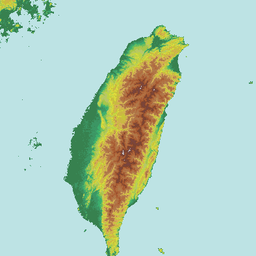
Shade = number of mayoral candidates
Shade shows only how many candidates are running; it says nothing about parties or who is ahead. Select a city or county to jump to its roster. Kinmen and Lienchiang are in the boxes at top left.
Candidates per city and county (roster order)
Jump to
“Nine-in-one” means nine categories of local office are elected on the same day: from special municipality and county mayors down to village chiefs, and from councilors and representatives to Indigenous district offices.
In total 11,051 officials elected
Listed by level of office, not ranked; bar length is the number of seats. Seats for special municipality mayors, county and city mayors, and both types of councilors follow the CEC election announcement of 2026-08-20; the other five categories follow the CEC press release of 2026-09-07. Across all nine categories, 11,051 officials will be elected. Official source: CEC election announcement, CEC press release, CEC press release
Same-day referendum
National Referendum Case No. 22 is voted on the same day and during the same hours as the local elections: November 28, from 8 a.m. to 4 p.m.
「你是否支持政府使用『核電』振興經濟,以廢除『非核家園』的能源政策?」
Unofficial translation by Taiwan.md
Do you support the government using “nuclear power” to revitalize the economy, so as to abolish the “nuclear-free homeland” energy policy?
This card covers the voting procedure only and does not present either side’s arguments. For official materials, see the CEC notice and the referendum bulletin site.
Official sources: CEC referendum notice, Referendum bulletin site
Taiwan.md does not rebuild tools. Grouped by what you want to check, these are the official and civic sites that already do it.
The next five steps only; all 30 are on the schedule page. Status follows the Taipei date.
Dates follow the CEC work schedule and the law; “by” dates are legal deadlines worked out from the law.
Start with these articles to understand why this election is structured the way it is, not just who may win.
Facts on this page checked on . Found an error or something out of date? Report it on GitHub, or use the “Feedback” button at the bottom left.
We do not report campaign news, publish polls, or endorse candidates.
We place this election back inside three decades of democratic infrastructure: how the nine offices work, how political donations become transparent, why Taiwan has 7,780 village and borough chiefs, how the Central Election Commission is structured, and how recalls and referendums operate.
Voting is the last-mile action of democracy. The institutions, civic oversight tools, and information infrastructure underneath it are what keep democracy standing.
This section keeps documenting how that infrastructure grows, who maintains it, and where it can break.
Taiwan.md — not campaign coverage, but a record of democratic infrastructure