
30-Second Overview: In August 2022, seven villages in Wutai, Pingtung, jointly performed the lily headdress (dukipi) wearing ceremony. The families of young girls prepared timber, pork, and millet wine as offerings to traditional leaders, sharing the ritual and the tribe. The lily appears to be a flower, but in reality, it is a system governing hunting, virtue, hierarchy, exchange, and cultural sovereignty. Discussing it today is not about treating it as a pretty pattern, but asking: Who has the authority to confer identity?
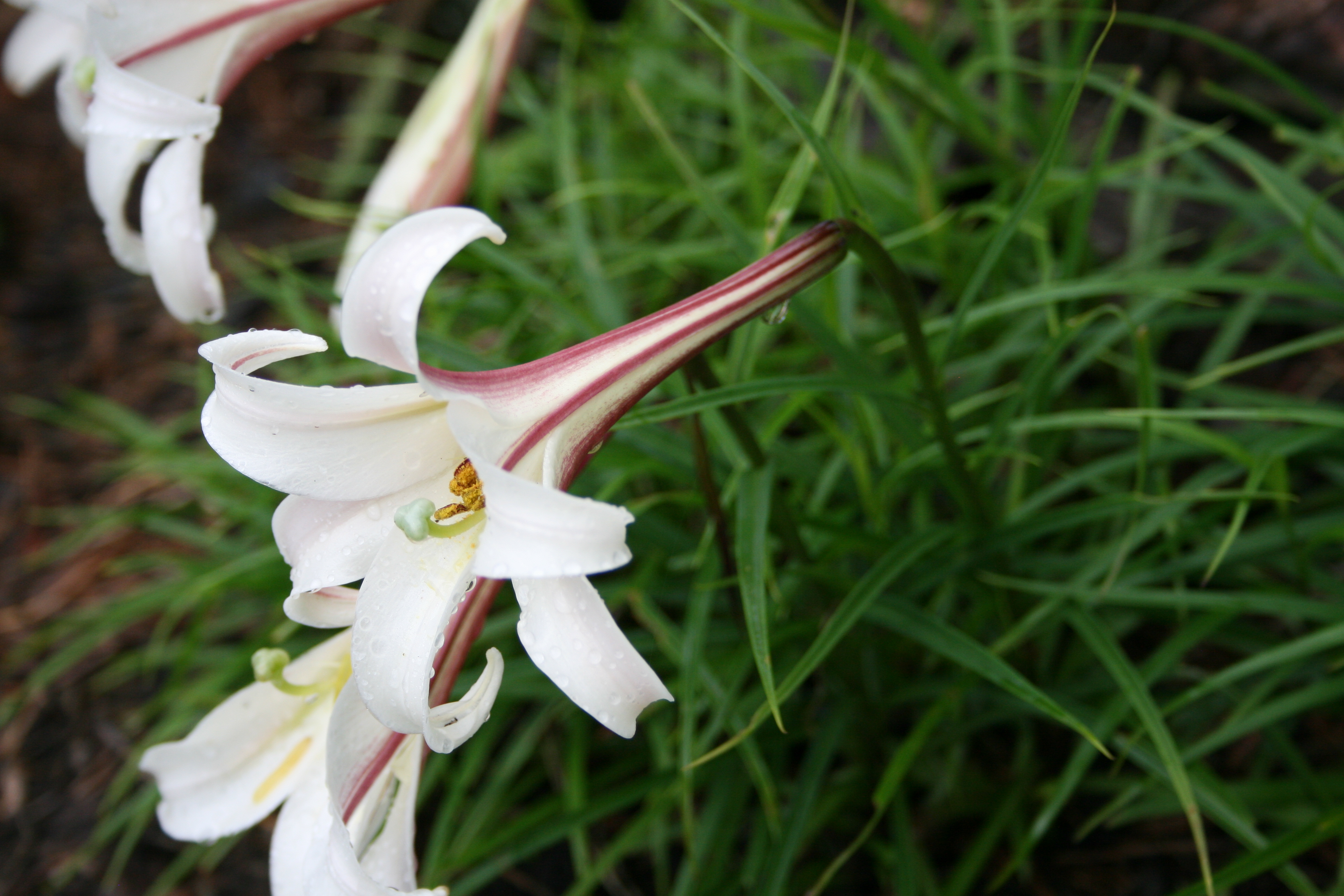
Figure 1: Botanical reference image of the Taiwan Lily (Lilium formosanum). This is not a photo of a Rukai ritual scene, but a freely licensed image to help readers identify the plant discussed in the article; see 1 for author and licensing information.
The Flower First: It Is Not "Rukai Style"
The Rukai people are distributed along the southern section of the Central Mountain Range, including Wutai in Pingtung, Maolin in Kaohsiung, and parts of Taitung. Official data further divides them into three groups—Eastern Rukai, Western Rukai, and Lower Three Villages—based on living environment and cultural identity. The languages, social systems, and cultural symbols among these three groups are not entirely identical. 2
Therefore, describing the lily as a uniform emblem for the entire tribe flattens the story. This article primarily draws on data from Wutai in Pingtung and Western Rukai; one cannot apply the flower-wearing norms of a single village to define all Rukai tribes.
Exhibition data from the National Museum of Natural Science (2006) records that in the Wutai Rukai language, "lrigu" means "glorious lily," corresponding to the plant Taiwan Lily (Lilium formosanum Wallace). In the cultural context of Wutai village, the lily is not a white flower beside a natural landscape, but a glory redefined by social institutions. 3
Curator's Note: The most noteworthy aspect of the lily is not that it is "beautiful," but that it transforms an abstract identity system into something visible to the reader: the white petals on the forehead, the ornament on the head, and a ritual that must be acknowledged by the tribe.
The Male's Six Wild Boars, The Female's White Petals on the Forehead
The Council of Indigenous Peoples' ethnic data describes Rukai society as a finely divided hierarchical system. This system exists not only in clothing but is also interwoven in marriage, politics, religion, sacrifice, and art. The right to wear lily accessories is important precisely because it connects human action with social honor. 2
In official English ethnic data, men traditionally had to capture six (or five in some villages) male wild boars to qualify for holding the lily, followed by a conferral or coronation ceremony. Thus, the lily symbolizes male bravery and hunting ability, rather than being an ornament that can be added arbitrarily. 4
The path for women is different. The lily symbolizes virtue and purity. For a general woman to wear a lily headdress with identity significance, she must undergo the "kialidrau" lily authorization ceremony. Official English data also specifically points out that authentic lily ornaments contain peacock flowers (Caesalpinia pulcherrima), and such complete ornaments were originally linked to noble status. 4
| Wearer | Position and Symbolism of the Lily | Context for Qualification |
|---|---|---|
| Men | Headpiece; symbolizes hunting abundance and warrior honor | Capturing five or six male wild boars, followed by conferral or coronation. Different village norms may vary 2 4 |
| Women | Flattened and attached to the forehead. Symbolizes chastity, virtue, and glory | Obtained through authorization ceremonies, marriage, or other life rituals according to village norms. Cannot generalize the whole tribe based on a single village's norms 5 4 |
This difference reminds us that translating "lily" simply as "tribal flower" is insufficient. The shape of the flower is the same, but its social meaning is jointly determined by the wearer, position, ritual, and authorization relationships.
How a Flower Became an Exchange
The entry "The Rukai Lily" in the National Palace Museum's National Culture and Memory Bank describes this system concretely: In the past, lilies were mainly worn by the noble class. Commoners had to obtain permission from the chief and prepare heavy gifts such as millet, betel nuts, and pork to gain the qualification to wear the flower. The entry places this process within the stages of male and female growth, explaining that it is not buying an ornament, but completing a solemn social ritual. 6
The "buying flowers" here cannot be understood through modern shopping. Millet, betel nuts, and pork are not a commodity list on a receipt; they bring household labor, tribal relationships, and chief authorization into the same occasion. The gifts are offered and shared. The qualification is granted and publicly acknowledged.
Exhibition data from the National Museum of Natural Science also points out that the right to wear glory plant headdresses must conform to village norms and involve tribute to nobles who hold the authority to confer. In other words, the core of the lily is not "whether there is a flower," but "who confers, when it is conferred, and through what relationship." 3
A 1989 academic study, "A Study on the Ritual Relationships of Rukai Flower Ornaments and Rituals," focuses on the ritual relationships and comparisons of lily ornaments in different cultural distributions. The study focuses on traditional social noble classes, flower ornament rights, and ritual exchanges, rather than treating headdresses as isolated crafts. 7
Curator's Note: If we only place the lily in an "Indigenous Totem" exhibition panel, readers will see patterns but not power. The true story lies in: how a family exchanges gifts, labor, and public rituals to obtain the qualification for their child to be recognized by society.
When Commoners Also Wish to Approach the Lily
Institutions have boundaries; life finds ways out. The National Culture and Memory Bank records that Rukai women once cut white cloth pieces into petal shapes and strung them with red silk threads to make headdresses resembling lilies. This was not "counterfeiting" tradition into a cheap version, but maintaining a relationship with the lily while avoiding criticism from tribe members for wearing lilies without authorization. 6
This detail is important because it makes "tradition" no longer like a door that only opens or closes. People acknowledge the order of flower-wearing rights while inventing new materials and practices within that order. White cloth pieces and red silk threads did not eliminate class differences, but allowed the lily imagery to enter the daily lives and emotions of more people.
Here, women are not passive subjects waiting for institutional judgment. Through materials, making, and wearing methods, they rearrange their distance from the lily. The lily still represents virtue and glory, but it is no longer confined to noble headdresses; it also enters women's practices regarding family, growth, and group belonging.
In 2022, Seven Villages Re-performed the Ritual for the Next Generation
On August 12, 2022, Wutai Township held a tribal performance of the lily headdress (dukipi) wearing ceremony by seven villages. Yuan Shi News reported that the families of young girls about to wear lilies prepared timber, slaughtered pork, and millet wine as offerings to traditional leaders, also distributing them to tribal members. 5
This scene has three layers of meaning. First, the ritual still begins with objects prepared by the family. Second, the objects are not given to just one authorizer but enter tribal sharing. Third, the seven villages present their respective customs through performance, indicating that "the Rukai lily" is not a single stage script for the whole tribe.
The report also records that men place lilies on their heads, symbolizing warriors skilled in hunting. Women flatten lilies against their foreheads, symbolizing chastity and glory. These positional differences are not aesthetic choices of costume design, but visualizations of identity, gender, and life rituals. 5
Wutai Township Mayor Du Zhengji stated in the report: "The right to the lily belongs to the Rukai nation. We strive for Rukai intellectual property, so we are not here to perform; we are here to declare." 5
This sentence pushes the ritual back from "cultural performance" to issues of rights. When outsiders print lilies on merchandise, stage costumes, or tourism logos, who decides if it is used correctly? Who can explain what it represents in different villages? Who can reject a version that flattens tribal norms?
From Being Displayed to Self-Explanation

Figure 2: Another botanical reference image of the Taiwan Lily (Lilium formosanum). Both photos are used only to identify the flower shape and cannot be treated as images of Rukai flower-wearing rituals or tribal figures; see 8 for author and licensing information.
These two photos are placed in different positions in the article not to make the text more lively. They are both freely licensed plant photos from Wikimedia Commons, first helping readers identify the morphology of the Taiwan Lily. The content regarding wearing rights, ritual exchange, and cultural interpretation must still return to tribal data, museum records, and reports from tribe members; it cannot be deduced from the plant photos themselves.
Another Yuan Shi News report records that the National Taiwan Museum and the Wutai Rukai Cultural Museum jointly launched the Kialreba Returns to Wutai special exhibition, displaying over a hundred Rukai collections and extending six exhibition areas based on the six-petal imagery of the lily. The Taiwan Museum and the Anthropology Museum of National Taiwan University also entered tribal fieldwork, inviting tribe members to co-create. The report describes this as a curatorial method that returns cultural interpretation rights to the tribe. 9
This shift is more concrete than "exhibitions are more respectful to indigenous peoples": Researchers do not just bring objects back to the museum; the museum must also handle who can explain the objects, who can decide the narrative, and whether indigenous languages can appear in the exhibition space. The lily thus becomes a test question for curatorial methods.
The National Archives of ROC Taiwan Literature's 2026 activity review records that the lily wearing ceremony, despite village relocation, the introduction of religion, and modernization, did not disappear but continued to be reinterpreted and inherited by tribe members. It has also become an important symbol for tribe members to凝聚 identity and discuss cultural subjectivity. 10
This does not mean "leaving the tribe makes one not real," but rather clarifying the transformation. Rights originally acknowledged jointly by chiefs, families, and tribes may, in museums or on stages, become symbols for audience viewing. Only by having tribal members participate in research, naming, and narrative can this symbol return to living cultural relationships.
The Flower Remains, The Rules Must Also Remain
The most easily misunderstood aspect of the Rukai lily is that it looks too suitable for simplification: white, pure, glorious, tribal flower. But these words, without connecting to the wild boars of hunting, the petals on the forehead, the gifts of millet and pork, the chief's authorization, and the different rituals of seven villages, remain only as adjectives in a tourism brochure.
A more accurate statement is: The lily transforms Rukai social relationships into visible forms. Men prove warrior status through hunting; women obtain wearing rights in the context of life rituals and virtue; families complete exchanges with food and objects; the tribe acknowledges identity through public rituals. Contemporary tribe members also re-strive for cultural explanation rights through performance, exhibitions, and intellectual property registration. 2 5 9
Therefore, the Rukai article corresponding to the August 19 establishment date should no longer be written as "The Rukai have beautiful lilies." What is truly worth leaving is another sentence: The Rukai lily does not put identity on the head; it entrusts identity to the tribe for joint acknowledgment.
When readers next see a lily pattern, they can ask one step further: Who made this? Who is explaining it? Does it preserve the original ritual and authorization relationships? The life of a flower is never just on the petals, but also in those who are still willing to prepare millet, pork, wine, and stories for it.
Further Reading
Council of Indigenous Peoples: Rukai
References
- Wikimedia Commons: File:Lilium formosanum 4.jpg — Author Uleli; original file uses CC BY-SA 3.0 Unported. Image hotlink is `https://upload.wikimedia.org/wikipedia/commons/8/87/Lilium_formosanum_4.jpg``, not downloaded, cropped, or modified by this article.↩
- Council of Indigenous Peoples: Rukai — Government official ethnic introduction, describing the distribution of the three Rukai groups, social hierarchy, millet and hunting life, and the cultural significance of lily ornament rights.↩234
- National Museum of Natural Science: "Lrigu" Lily - Rukai Wutai Village Plant Headdress Special Exhibition — Museum exhibition page, recording the Rukai meaning of "Lrigu," the scientific name of the Taiwan Lily, male and female wearing symbolism, and village norms for obtaining headdress rights.↩2
- Council of Indigenous Peoples: Rukai — Official English ethnic data of the Council of Indigenous Peoples, specifically describing male hunting qualifications, female lily authorization ceremonies, noble-exclusive ornaments, and major crops.↩234
- Yuan Shi News Network: Wutai 7 Villages Perform Lily Headdress Wearing, Apply for Intellectual Property Registration — 2022 news report, recording the flower-wearing performance of seven villages, gifts prepared by families, male and female wearing positions, and traditional intellectual property registration actions.↩2345
- National Culture and Memory Bank: The Rukai Lily — Cultural memory entry archived by the National Taitung Museum of Arts, recording descriptions of noble wearing, chief authorization, gift exchange, and cloth lily alternative headdresses.↩2
- Hsu Kung-ming: A Study on the Ritual Relationships of Rukai Flower Ornaments and Rituals - Distribution and Comparison of Lily Ornament Culture — Research article included in the National Museum of Natural Science academic journal, focusing on traditional hierarchy, lily ornament rights, ritual processes, and social interactions caused by ritual exchange.↩
- Wikimedia Commons: File:Lilium formosanum sphl.jpg — Author Sphl; original file uses CC BY-SA 3.0 Unported. Image hotlink is `https://upload.wikimedia.org/wikipedia/commons/6/6b/Lilium_formosanum_sphl.jpg``, not downloaded, cropped, or modified by this article.↩
- Yuan Shi News Network: Entering the Wutai Lily World, Rukai Treasures Exhibited at Taiwan Museum — 2023 exhibition report, describing the joint curation of the National Taiwan Museum, Anthropology Museum of National Taiwan University, and Wutai Rukai Cultural Museum, fieldwork, and tribal co-creation.↩2
- National Archives of ROC Taiwan Literature: Lily Blooming: Changes and Continuity of the Rukai Lily Wearing Ceremony — 2026 activity review, organizing the hierarchy, gender, gift exchange, wearing quantity, and modern inheritance context of the lily wearing ceremony.↩


