
30-second overview: David Wong was born in Hong Kong in 1964, moved to Hawaii at age three, and spoke English as his first language.1 In 1979, after seeing a Judas Priest concert, he went home and taught himself on a guitar given to him by a teacher. He later relied on top lyricists such as Yao Ruo-long and Chen Chia-li to translate “his feelings” into Chinese, building a career from scratch in Mandopop with a raspy voice.2 His 1994 song “You Made Me Drunk,” he said, came “very quickly, like a dream, in two or three hours”3 — yet it became the shadow he spent the rest of his life trying to forget. He habitually called Chang Hsueh-liang “grandfather,” though by lineage he was in fact Chang’s grand-nephew.4 A man who spent his life “searching for new possibilities” died in June 2026, half a year after moving back to Hawaii to begin a new stage.
A man who spent his life moving toward new places took his final step toward a new place, too.
On December 27, 2025, David Wong left Taiwan and flew back to Hawaii, where he had grown up.5 The following May, a lawyer he had retained issued a statement saying he had “moved to Hawaii” to “begin a new stage of life and creation.”6 Across his 61 years, he had changed places many times — Hong Kong, Hawaii, Las Vegas, Japan, Taipei — and each time, it was to find something he had not yet done. Half a year later, in the early morning of June 2, 2026 (June 3 Taipei time), he died suddenly at his sister’s home in Honolulu, aged 61.7 That day, most Taiwan news headlines wrote about two things he had spent his life trying to escape: “‘You Made Me Drunk’ becomes his swan song,” and “Chang Hsueh-liang’s grandson dies suddenly” — the latter even getting his lineage wrong.
A Teacher’s Guitar and a Heavy Metal Concert
One night in 1979, inside an arena in Hawaii, the British heavy metal band Judas Priest roared onstage. In the audience was a 15-year-old boy, stunned by that wall of sound.8 That boy was David Wong. He had moved with his family from Hong Kong to Hawaii at age three, spoke English, and later studied hotel management at the University of Hawaii. By ordinary logic, he should have gone on to manage a hotel, not form a band.
But he began playing guitar. His first guitar was given to him by a teacher at the University of Hawaii, for a charming reason: “My wife won’t let me play guitar at home.”8 Wong never took formal music lessons. Guitar, keyboard, synthesizer — all came by intuition, never by score. In Hawaii he formed a band called KRUSH and went to Las Vegas and Atlantic City to perform; later he formed TRIAD with friends, toured Australia and Japan, and took commercial scoring jobs in Japan.9 For a child born in Hong Kong and raised in Hawaii, music began at a British metal concert.
📝 Curator’s note
Many people remember David Wong as the singer of a “KTV divine hit,” and remember that voice instantly identifiable as his. But his own musical awakening was a heavy metal concert with almost no connection to Mandarin love songs. That starting point matters: it explains why so many of his songs contain rock, R&B, and soul. He forced what an American-raised kid had heard into the framework of Mandopop ballads, rather than writing along the established Mandarin lyrical tradition. What later made him “different” in Mandopop had its roots in that arena in Hawaii.
How Someone Who Barely Spoke Chinese Wrote Mandarin Love Songs
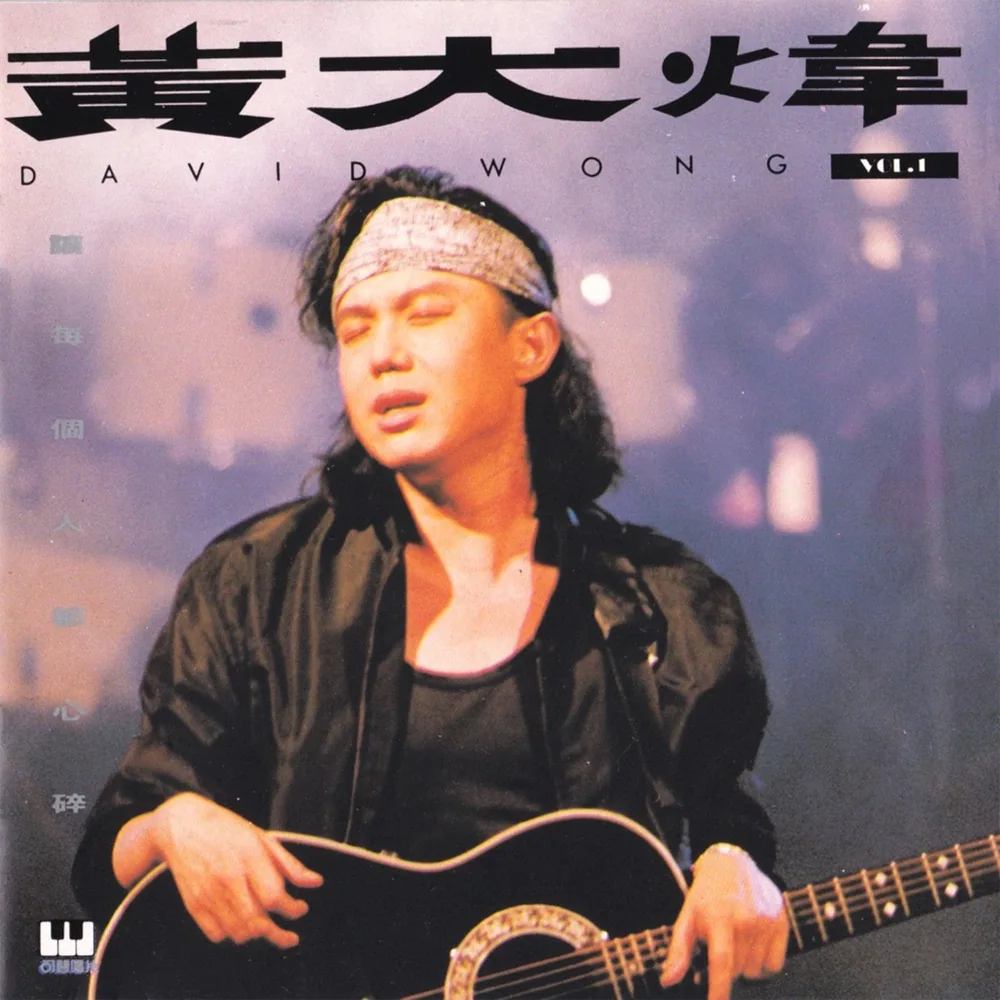
The 1990 album All the Sadness was David Wong’s first Mandarin album. Its title track was the song that first made Taiwan listeners remember his voice. Cover © Coden Records, fair use editorial commentary.
In 1988, David Wong released his first album in Taiwan, David Wong, entirely in English.10 Its styling and music were avant-garde, but it drew little attention. A singer performing English songs, with an unusual name, was too unfamiliar for Taiwan’s market at the time. What truly made Taiwan remember him came two years later, in 1990, with All the Sadness. He composed the title track himself, Chen Chia-li wrote the lyrics, and Ricky Ho arranged it. The electric guitar solo paired with his voice was so moving that listeners remembered it for 30 years; later it was covered by more than a dozen younger singers, including Andy Lau, A-mei, Shin, and Anita Mui.11
Here lies a difficulty outsiders may find hard to imagine: Wong’s first language was English, and he admitted his Chinese was poor.12 How does someone whose Chinese is not good write love songs that pierce Taiwan listeners’ hearts? His method was collaboration. He earnestly sought out top lyricists such as Yao Ruo-long and Chen Chia-li, laid out the feelings and ideas in his heart, discussed them with them, and then had them translated into precise Chinese.12 The melody, emotion, and soul of the songs were his; the precision of the words came from Taiwan lyricists. It was a diasporic mode of creation: he expressed his feelings through music, then borrowed another person’s mother tongue to land those feelings.
Yao Ruo-long, who wrote the lyrics for “You Made Me Drunk,” did something deeply professional. He recalled: “I did a small market analysis for him, judging that his target audience should be urban people who liked having a drink in pubs and listening to Western music.”13 A lyricist first thought clearly about “who would listen to this song” before writing. The lyrics were tailor-made for Wong’s Western-inflected voice, and from the beginning they had a clear audience in mind.
A Song Written in Two or Three Hours, and a Lifetime Spent Trying to Forget It
In the 1994 album Mercy, “You Made Me Drunk” was born. Wong composed, arranged, and sang it; Yao Ruo-long wrote the lyrics. The song later became an evergreen on KTV request charts from the 1990s onward. Almost every Taiwanese person who lived through that era can hum the line “you made me drunk” in the chorus.
The irony is that the song that defined his life was written very quickly. He said: “Very quickly, like a dream, in two or three hours.”3 Something made in two or three hours stayed popular for 30 years. At a 2010 concert, he joked onstage: “This just happens to be my 10,000th time singing this song. When everyone hears it, you get tipsy; I’ve sung it so much I want to throw up, haha.”14
“I’ve sung it so much I want to throw up” was a joke, but underneath it was a truth. Later, he said something very candid: “I’m very happy the song found new friends on its own and accompanied them through life, but every day I want to forget it exists, because I never expected it to become such a classic. I did not stay in that period; every day I am searching for new possibilities.”15
That sentence is the key to understanding David Wong. For most people, writing a national golden song sung for 30 years would be a lifetime achievement. For him, it was a point he wanted to cross beyond every day. What he wanted was not to be defined by one song, but to keep moving forward in search of the next thing he had never done. A creator’s most famous work became the shadow he most wanted to escape. Put plainly, it was a fear of “remaining in place.”
✦ “Every day I want to forget it exists… every day I am searching for new possibilities.”
The Golden Melody Award Honored His Arrangement, Not His Voice
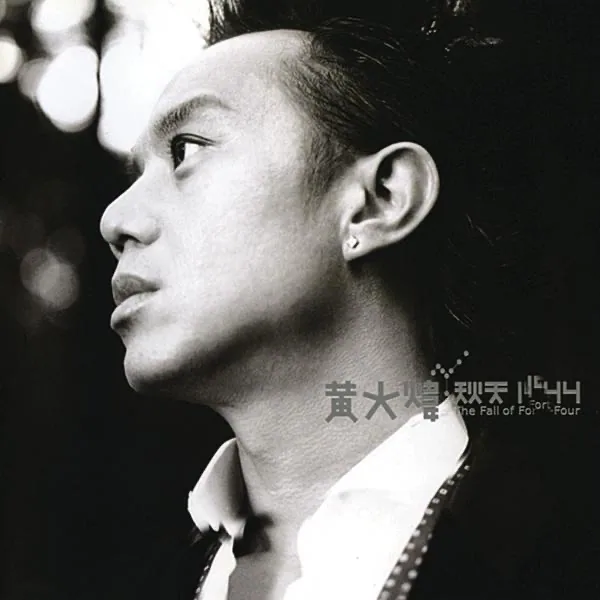
The 2000 album Autumn 1944. Its song “There Are Still Fish Here” won David Wong the only Golden Melody Award of his career — for arrangement. Cover © Soft-World / Sony Music, fair use editorial commentary.
What the public remembered about David Wong was that voice. Media described it as raspy, full-bodied, explosive, soaring yet tearing, blending rock, R&B, and soul into Mandarin love songs.16 Alex To, who knew him for more than 20 years, put it more specifically: “David was the most soulful male singer to debut in the 1980s.”17 To also remembered that when Wong recorded, he was “like a child sharing a new toy,” recording more than 200 tracks for one song, with vocals, instruments, and harmony samples all inside.17
But here is a contrast worth pausing over: Wong, known for his singing, won the only Golden Melody Award of his life for arrangement. At the 11th Golden Melody Awards in 2000, he and Guo Wei won Best Arrangement for “There Are Still Fish Here” from Autumn 1944.18 Across his career, he was never nominated in the Golden Melody vocal performance categories as a singer. A man widely called the “godfather of rock” by the media received the industry’s highest recognition for production ability — precisely showing that he was a complete musician who handled lyrics, composition, arrangement, and singing.
Those more than 200 tracks were his way of making things. Discussing how he approached his role in The Outlaw Doctor, he said: “I may make a million things, but I only need one. But if I had not considered that million, this one thing could not be made.”19 To leave behind one right thing, he was willing to first make a million wrong ones. This stubbornness seems to contradict the two or three hours it took him to write “You Made Me Drunk,” but in fact they are two sides of the same coin. Inspiration came fast; polishing it to perfection could be so slow that others could hardly bear it.
📝 Curator’s note
After the obituaries, “an underrated powerhouse vocalist” became a frequent phrase used to describe David Wong. Emotionally, the phrase makes sense, but its limits should be faced honestly: during his lifetime, it is hard to find critics or peers publicly evaluating him through the frame of “underrated.” The word was densely summoned only after his death. And the evidence for “underrated” is really a set of contrasts: the Golden Melody Awards recognized only his arrangement, the public remembered only one song, English-language media covered him lightly, and there was no public platinum sales certification. From another angle, the huge success of one divine hit may instead have strengthened the label that “he only had one song.” So rather than treating “underrated” as a conclusion, it is more accurate to say this: there was indeed an unfilled gap between his ability and his public image. That gap itself is what this article wants you to see.
Kang Kang, who worked with him on “Swear to Heaven,” knew best how tormenting that stubbornness could be. Kang Kang said: “His songs were written very strangely. In the front he asked me to sing an octave lower, and later he asked me to sing an octave higher. He was bringing out my potential.”20 Wong’s demands for sound were so exacting that, for one recording session, he once spent two weeks repeatedly adjusting microphones and changing equipment until he found exactly the right setup. Yet this meticulous person had no airs in private. Kang Kang concluded: “Although David Wong was more particular about how things were done, privately he was actually quite humorous and had no celebrity airs at all. In our hearts, he was a god.”20
How far did his insistence on musical quality go? At former anchor Cen Yong-kang’s birthday banquet, everyone learned how extreme it was. Wong had a principle he never broke: in public, if he had not brought his own instrument and there was no professional sound system, he never went onstage to sing. But that time, for an old friend, he made an exception, singing only with accompaniment from a keyboard teacher. Cen himself did not realize how rare this was at the time; only afterward was he told: “David had extremely high demands for musical detail. In public settings, if he had not brought his own instrument and there was no professional sound equipment, he had never gone onstage to sing.”21
Coden Records official MV: “All the Sadness.” That electric guitar solo and his signature falsetto shift became a sound people remembered for 30 years.
He Habitually Called Chang Hsueh-liang “Grandfather,” but Wanted to Rely Only on Himself
David Wong’s family background was another thing he did not especially like to mention, but outsiders loved to write about — and often wrote incorrectly. His mother, Chang Lu-heng, was the daughter of Chang Hsueh-sen, the fifth son of warlord Chang Tso-lin; by blood, she was Chang Hsueh-liang’s niece.22 Because Chang Hsueh-liang later accepted Chang Lu-heng as his goddaughter, Wong had habitually called Chang Hsueh-liang “grandfather” since childhood. But if calculated strictly by family generation, he was in fact Chang Hsueh-liang’s grand-nephew, and should have called him “great-uncle” or “grand-uncle.”22 “Grandson” was a repeated media error. A person carrying the historical bloodline of the Fengtian Chang family was not even remembered accurately in relation to that history.
His mother Chang Lu-heng was chair of Hong Kong’s Chang Le International Group and had also served as a member of the 11th Chinese People’s Political Consultative Conference.23 Growing up in such a family, Wong flew back to Taiwan for the first time at age ten and ate at the same table as Chang Hsueh-liang. During the meal, this “Young Marshal” from history textbooks suddenly struck him hard on the back and told him: “Dawei, you must have backbone! You must love the country!”24
Someone qualified to live easily on family background instead chose to teach himself guitar in Hawaii and build a place in Mandopop from scratch with a raspy voice, rarely presenting himself through lineage. In 2015, when the television drama Young Marshal was made about Chang Hsueh-liang, Wong recorded his own version of “At This Moment” in 2016 because of this family connection, paying tribute to his grandfather’s story. The broadcast version of the drama’s theme song was sung separately by Han Lei.25 It was one of the few moments when he allowed bloodline and music to meet. Even so, his name in Mandopop always depended on his voice, not on his surname.
💡 Did you know?
David Wong did not especially like occasions requiring suits and polished shoes. He once said something that represented him well: “I make music because I don’t want to wear a suit, a tie, and leather shoes!”26 For someone from a prominent family, that sentence was almost a declaration of choice. He could have taken a respectable path, but insisted instead on being someone who played electric guitar and sang soul.
Quiet, but Not Gone
David Wong’s career had several quiet periods. From 1996 to 2000, he went four years without releasing a major album; Business Today at the time described him as “excellent, yet somehow vanished from pop music.”27 In 2000 he returned with Autumn 1944 and won that Golden Melody Award for arrangement. Business Today titled its article “The Person and the Songs Have Both Returned.”27 After 2003’s TIME 1894–2003, there was another relatively quiet period — but saying he “faded out” is not accurate.
The more precise word is “low-profile.” In 2008 he held the “Sixth Sense” world tour and in 2010 performed at Taipei Arena; in 2014 he served as a mentor on Guizhou TV’s Singing Sparks of Love, and in 2017 appeared on Sichuan TV’s Fireside Concert; in 2019 he held his “1010” concert at the Taipei International Convention Center, inviting younger-generation artists ØZI and J.Sheon as guests.28 He served as a judge on One Million Star and gave Yoga Lin his first perfect score. Lin later said: “Thank you, Teacher David Wong. He was the first singer I ever sang with in my life.”29 Wong never left the industry. He simply stayed outside the brightest part of the spotlight.
To younger creators, he was the kind of senior figure people looked up to. After his death, G.E.M. wrote: “You were a free soul. Thank you for your music, your encouragement, your approachability, and everything about you.”30 Huang Kuo-lun recalled the night he visited Wong’s studio when he had just entered the industry: “That night, we talked about music all night. When I left, my heart was full of shock and inspiration.”31
Coden Records official MV: “Riding the Wind” (2018). After years away from the mainstream, he continued creating new work and never truly left.
Making a Million Things Just to Leave One Behind
In 2024, at age 60, David Wong did something he had never done in his life: act. In the PTS series The Outlaw Doctor, he played a medical equipment agent named Zuo Jiaqun, who outwardly enthusiastically provided medical resources to undocumented migrant workers but privately was involved in human trafficking and organ sales.32 The role’s dialogue shifted among English, Cantonese, and Mandarin. To speak Cantonese well, he specifically sought help from Chen Hui-hung, Zhou Xun’s agent, for intensive Cantonese tutoring.32
He poured into it the same force of making a million things just to leave one behind. Producer Tang Sheng-rong recalled the first day of filming: “The first shot shocked us. He was very steady, completely unlike someone acting for the first time.”33 This debut performance earned him a nomination for Most Promising Newcomer in a Drama Program at the 60th Golden Bell Awards, setting the record for the “oldest newcomer” in Golden Bell history. Someone who had debuted 37 years earlier received a newcomer nomination for his first acting role. He was also nominated for Original Song for the ending theme “The Way I Feel,” which he personally wrote and sang. He ultimately won neither award; the newcomer award went to Doreen Toh.32
For someone who spent his life “searching for new possibilities,” crossing into acting at 60 to play a villain completely unlike himself was itself an answer. He no longer needed to prove anything, but he still wanted to try something he had never tried before. Later, this debut work became the only drama performance of his life. After his death, Tang Sheng-rong could not help calling into the air: “Brother David, we agreed to work together again on the sequel. You flew away too fast!”33
📝 Curator’s note
The most moving part of David Wong’s life was not that divine hit, but his refusal to stop. He could have lived comfortably on the royalties from “You Made Me Drunk” for the rest of his life, or taken a respectable path through the Chang family name. But every day he wanted to forget that song; at 60 he was still learning Cantonese to play a villain; when he moved to Hawaii, he said he would “begin a new stage of life and creation.” Put “constantly searching for new possibilities” beside his family background and divine hit, and you will find that the two things the world used to remember him were precisely the two things he spent his life trying to surpass.
Toward a New Place
At the end of 2025, his girlfriend and manager Vicky’s stomach cancer recurred.34 On December 27, Wong left Taiwan with his sister and flew back to Hawaii.5 Around New Year, he was still sharing newly recorded songs with friends including Jacky Wu, and they had agreed he would return to Taiwan to promote them.35 He was not going to say goodbye. He was going to begin — a person still recording new songs, still planning the next step.
In the early morning of June 2, 2026, he died suddenly at his sister’s home in Honolulu, aged 61.7 News of his death was kept quiet for about 12 days, until June 14, when a lawyer retained by his sister issued a public statement.36 His family has not yet announced the cause of death; after he died, disputes emerged among relatives and friends over funeral arrangements and authorizations, and related questions remain under clarification.37 A man who controlled his music so closely that he could spend two weeks adjusting a microphone did not even have his final farewell within his grasp.
But this article does not want to stop there. A man who spent his life moving toward new places took his final step toward a new place, too. He had just said he wanted to “begin a new stage of life and creation,” and half a year later he was gone. What the world remembered was still the song he wanted to forget every day, and a family background whose lineage was repeatedly misstated. Yet if you are willing to look a little further into that gap, you will see a more complete person: a child born in Hong Kong, raised in Hawaii, and not very fluent in Chinese, who built a name of his own in Mandopop through a raspy voice and collaboration with top lyricists; a person carrying historical lineage yet insisting on relying on himself; a person willing to make a million wrong things just to leave one right thing behind.
He used 61 years to become someone who refused to be defined by one song or one family background. And only after he left did we finally listen seriously to the other parts beyond that divine hit that he had wanted to be remembered for.
✦ A song written in two or three hours stayed popular for 30 years. He spent the rest of his life trying to forget it — until we finally understood that what he wanted to leave behind was far more than that one song.
Further Reading:
- Jonathan Lee — A Mandopop producer of the same generation, who also spent a lifetime writing the emotions of others; compare Wong’s “poor Chinese, relying on collaboration” with Lee’s plainspoken language of everyday life, two different paths for writing love songs.
- Bobby Chen — Another creator who did not follow the mainstream and insisted on his own musical language; both proved that Mandopop could contain voices that did not try to please.
- Ricky Hsiao — Another highly distinctive Taiwanese voice, showing how different generations used singular vocal timbres to define the sound of an era.
- Pop Music and the Golden Melody Awards — Wong’s only Golden Melody was for arrangement, not vocal performance; that contrast is one entry point for understanding the logic of Golden Melody judging.
- Taiwan KTV Culture — “You Made Me Drunk” is an evergreen on KTV request charts; see how one song became a generation’s collective memory through KTV, Taiwan’s karaoke culture.
Image Sources
This article uses three album covers, all cited under “fair use editorial commentary,” cached on this site to avoid hotlinking, and used only to introduce the musical works:
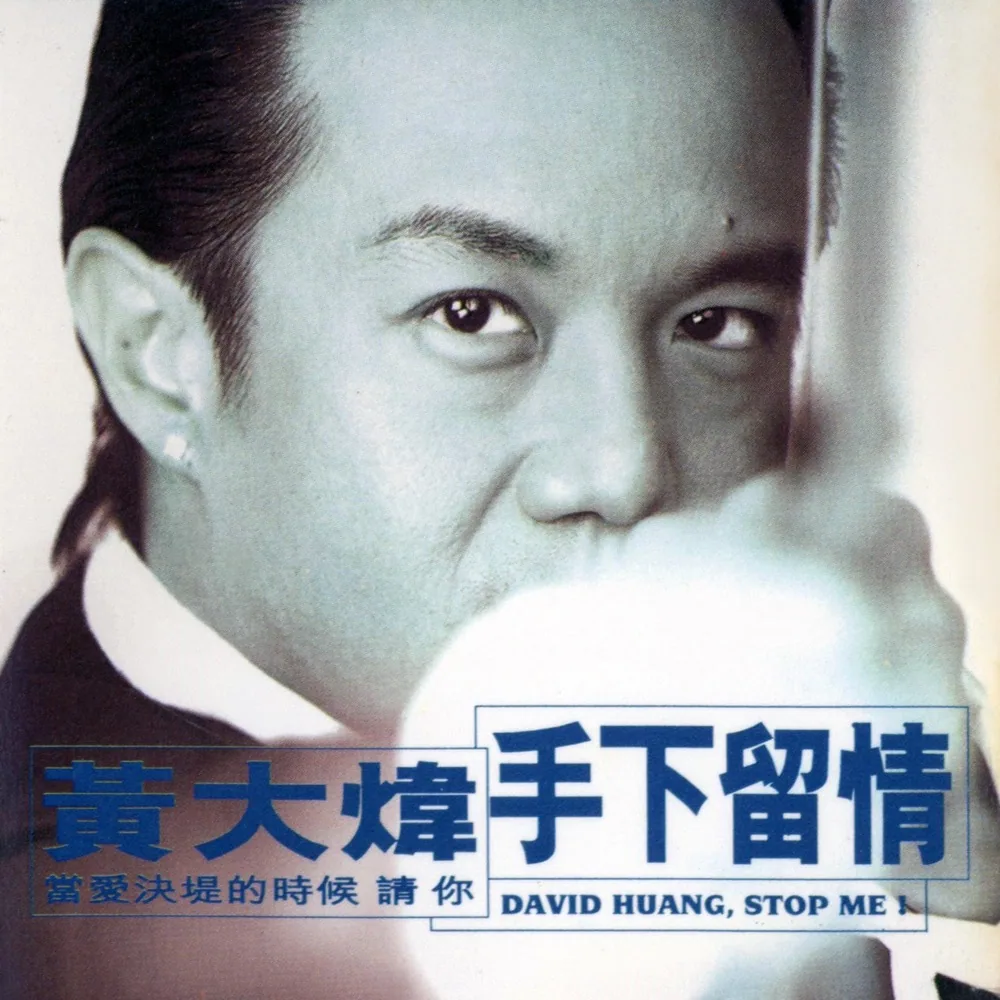
- _Mercy_ (1994) — cover © Doremi Music (hero)
- _All the Sadness_ (1990) — cover © Coden Records
- _Autumn 1944_ (2000) — cover © Soft-World / Sony Music
The embedded YouTube videos “All the Sadness” and “Riding the Wind” are both official MVs from Coden Records.
References
- Wikipedia: David Wong — Records basic biographical information including Wong’s birth in Hong Kong on September 17, 1964, childhood move to Hawaii, and graduation from the University of Hawaii’s hotel management program; English-language media outlet The Star also reports that he moved to Hawaii at age three.↩
- Wikipedia: David Wong — Records the 1979 Judas Priest concert that inspired him, his self-taught guitar and synthesizer work, the bands KRUSH and TRIAD, and his collaborative creative model with Yao Ruo-long and Chen Chia-li.↩
- The News Lens: David Wong interview — Wong discussed the writing speed of “You Made Me Drunk”: “very quickly, like a dream, in two or three hours”; the verbatim quote was cross-checked across sources.↩2
- NOWnews: David Wong’s family background and relationship to Chang Hsueh-liang — Details that Wong’s mother Chang Lu-heng was the eldest daughter of Chang Hsueh-sen and Chang Hsueh-liang’s niece; by generation, Wong was Chang Hsueh-liang’s grand-nephew, and his habitual use of “grandfather” came from Chang Hsueh-liang accepting Chang Lu-heng as his goddaughter, clarifying that “grandson” was a media error.↩
- CTWANT: Timeline of David Wong’s move to Hawaii — Reports that Wong left Taiwan with his sister on December 27, 2025, and returned to Hawaii, against the background of his girlfriend Vicky’s stomach cancer recurrence in December 2025.↩2
- China Times: Lawyer’s statement on David Wong’s move to Hawaii — On May 26, 2026, Wong’s retained lawyer issued a statement saying he had “moved to Hawaii” to “begin a new stage of life and creation.”↩
- NOWnews: News of David Wong’s death — Reports that Wong died on the morning of June 2, 2026, Honolulu time (June 3 Taipei time), at his sister’s home in Honolulu, Hawaii, aged 61; the family did not announce the cause of death.↩2
- Wikipedia: David Wong — Records the 1979 Judas Priest concert in a Hawaii arena, and that his first guitar was given by a University of Hawaii teacher whose reason was: “My wife won’t let me play guitar at home.”↩2
- Wikipedia: David Wong — Records his early band experience: forming KRUSH in Hawaii and performing in Las Vegas and Atlantic City, then forming TRIAD with friends, touring Australia and Japan, and producing commercial music in Japan.↩
- Apple Music: David Wong artist page — Lists digital versions of Wong’s albums, including his 1988 all-English debut David Wong, 1990’s All the Sadness, and 1991’s World Report.↩
- Liberty Entertainment: Report on the circulation of “All the Sadness” — Reports that “All the Sadness” was the title track of Wong’s first Chinese-language album in 1990 and was later covered by more than a dozen artists including Andy Lau, A-mei, and Shin; Wong composed the song, Chen Chia-li wrote the lyrics, and Ricky Ho arranged it, as listed on music platforms such as KKBOX.↩
- Taiwan Awakening News: Hsiao Hsu-tsen on David Wong — States that Wong admitted “my Chinese is not good; my first language is English,” but “very seriously sought out master lyricists such as Yao Ruo-long and Chen Chia-li to discuss his ideas and feelings,” describing his collaborative creative model.↩2
- The News Lens: David Wong and Yao Ruo-long — Yao Ruo-long recalled doing “a small market analysis” for Wong and judging that his target audience “should be urban people who liked having a drink in pubs and listening to Western music.”↩
- Epoch Times: David Wong jokes at concert — A 2010 report says Wong joked at a concert that it was his 10,000th time singing “You Made Me Drunk”: “When everyone hears this song, you get tipsy; I’ve sung this song so much I want to throw up, haha.”↩
- The News Lens: David Wong on “You Made Me Drunk” — Wong’s verbatim reflection on the divine hit: “every day I want to forget it exists, because I never expected it to become such a classic. I did not stay in that period; every day I am searching for new possibilities,” cross-checked across sources.↩
- UDN Woman: Commentary on David Wong’s voice — A 2026 commemorative essay describes Wong’s singing as “raspy, full-bodied, and explosive,” blending rock, R&B, soul, and Mandarin love songs in a highly personal style, and calls it “a soul voice in Mandopop that is difficult to replicate.”↩
- ETtoday Starlight Cloud: Alex To mourns David Wong — Alex To wrote verbatim: “David was the most soulful male singer to debut in the 1980s” and “he was a rare heroic figure in Mandopop,” and recalled that when Wong recorded, he was “like a child sharing a new toy,” recording more than 200 tracks for one song.↩2
- Radio Taiwan International: Golden Melody and Golden Bell report — Wong and Guo Wei won Best Arrangement at the 11th Golden Melody Awards in 2000 for “There Are Still Fish Here” from Autumn 1944, the only Golden Melody Award of Wong’s career; he had no nominations in vocal performance categories, according to Golden Melody historical nomination and winner records.↩
- Dramago PTS+: David Wong Golden Bell interview for The Outlaw Doctor — Wong discussed character preparation: “I may make a million things, but I only need one. But if I had not considered that million, this one thing could not be made.”↩
- China Times: Kang Kang mourns David Wong — In an exclusive interview, Kang Kang recalled working on “Swear to Heaven”: “In the front he asked me to sing an octave lower, and later he asked me to sing an octave higher. He was bringing out my potential,” and said, “Although David Wong was more particular about how things were done, privately he was actually quite humorous and had no celebrity airs at all. In our hearts, he was a god”; the article also reports that Wong once spent two weeks adjusting microphones.↩2
- China Times: David Wong made an exception to sing at Cen Yong-kang’s birthday banquet — Cen Yong-kang’s Facebook post recounted that Wong made an exception for his birthday banquet, singing live with only keyboard accompaniment, and said: “David had extremely high demands for musical detail. In public settings, if he had not brought his own instrument and there was no professional sound equipment, he had never gone onstage to sing.”↩
- NOWnews: David Wong and Chang Hsueh-liang’s generational relationship — Details the bloodline: Chang Lu-heng, eldest daughter of Chang Tso-lin’s fifth son Chang Hsueh-sen, was Chang Hsueh-liang’s niece; Wong was Chang Hsueh-liang’s grand-nephew and by generation should have called him “great-uncle” or “grand-uncle,” while the habitual “grandfather” came from Chang Hsueh-liang accepting Chang Lu-heng as his goddaughter.↩2
- Wikipedia: Chang Lu-heng — Records that Chang Lu-heng was born in 1940, was the eldest daughter of Chang Hsueh-sen, chair of Hong Kong’s Chang Le International Group, and a member of the 11th Chinese People’s Political Consultative Conference.↩
- FTNN News: David Wong recalls Chang Hsueh-liang’s admonition — Wong recalled in a lifetime interview that when he first returned to Taiwan at age ten and ate with Chang Hsueh-liang, Chang heavily patted his back and told him: “Dawei, you must have backbone! You must love the country!”; the verbatim quote is consistent across multiple media reports.↩
- NOWnews: David Wong’s “At This Moment” and Young Marshal — Reports that because of his Fengtian family background, Wong recorded his own personal version of “At This Moment” in 2016 to pay tribute to Chang Hsueh-liang’s story; the broadcast version of the television drama Young Marshal theme song was sung separately by Han Lei.↩
- Dramago PTS+: David Wong Golden Bell interview for The Outlaw Doctor — Wong discussed his original reason for making music: “I make music because I don’t want to wear a suit, a tie, and leather shoes.”↩
- Business Today: “David Wong’s Person and Songs Have Both Returned,” p. 134 — A 2000 feature describing Wong’s return after “four years” with Autumn 1944 (with Jonathan Lee and Sylvia Chang appearing in support), and saying his previous state of being “excellent, yet somehow vanished from pop music” puzzled and saddened many.↩2
- Wikipedia: David Wong — Records his mid-career activities: the 2008 “Sixth Sense” world tour, 2010 Taipei Arena show, 2014 mentorship on Guizhou TV’s Singing Sparks of Love, 2017 Sichuan TV Fireside Concert, and 2019 Taipei TICC “1010” concert.↩
- United Daily News Stars: Yoga Lin and others mourn David Wong — Yoga Lin said through HIM International: “Thank you, Teacher David Wong. He was the first singer I ever sang with in my life,” and recalled that Wong had given him his first perfect judge’s score on One Million Star.↩
- United Daily News Stars: G.E.M. mourns David Wong — G.E.M. mourned him on social media: “You were a free soul. Thank you for your music, your encouragement, your approachability, and everything about you,” a quote cited consistently across multiple media outlets.↩
- Mirror Media: Huang Kuo-lun mourns David Wong — Huang Kuo-lun recalled the night he visited Wong’s studio when he had just entered the industry: “We talked about music all night. When I left, my heart was full of shock and inspiration,” and called him “a warrior of rock, a singer of the soul, and the sound of an era.”↩
- Liberty Entertainment: David Wong’s The Outlaw Doctor Golden Bell nominations — Reports that Wong’s only drama series, The Outlaw Doctor, cast him as medical equipment dealer Zuo Jiaqun, involved in human trafficking and organ sales; his lines were in Chinese, English, and Cantonese, and he sought help from Zhou Xun’s agent Chen Hui-hung for Cantonese study. He was nominated for Most Promising Newcomer in a Drama Program at the 60th Golden Bell Awards and for Original Song for “The Way I Feel,” setting the “oldest newcomer” record; he won neither award.↩23
- United Daily News Stars: Producer Tang Sheng-rong mourns David Wong — Producer Tang Sheng-rong recalled Wong’s first acting performance: “The first shot shocked us. He was very steady, completely unlike someone acting for the first time,” and painfully called out: “Brother David, we agreed to work together again on the sequel. You flew away too fast.”↩2
- TVBS Health: David Wong’s girlfriend Vicky and stomach cancer — Reports that Wong’s girlfriend and manager Vicky was first diagnosed with stomach cancer in 2003, and that the tumor recurred in December 2025; Wong’s move to Hawaii was related to this illness.↩
- Liberty Entertainment: David Wong’s promise with Jacky Wu — Reports that around New Year 2025, Wong shared newly recorded songs with friends including Jacky Wu, and agreed to return to Taiwan to promote them.↩
- NOWnews: Public announcement of David Wong’s death — Reports that news of Wong’s death was made public on June 14, 2026, through a statement issued by a lawyer retained by his sister, about 12 days after his death.↩
- Taipei Times: David Wong’s death and posthumous arrangements — English-language report on Wong’s death, family background, and the disputes among relatives and friends over posthumous arrangements and authorization after his death; the family had not announced the cause of death, and the various claims were still being clarified.↩