
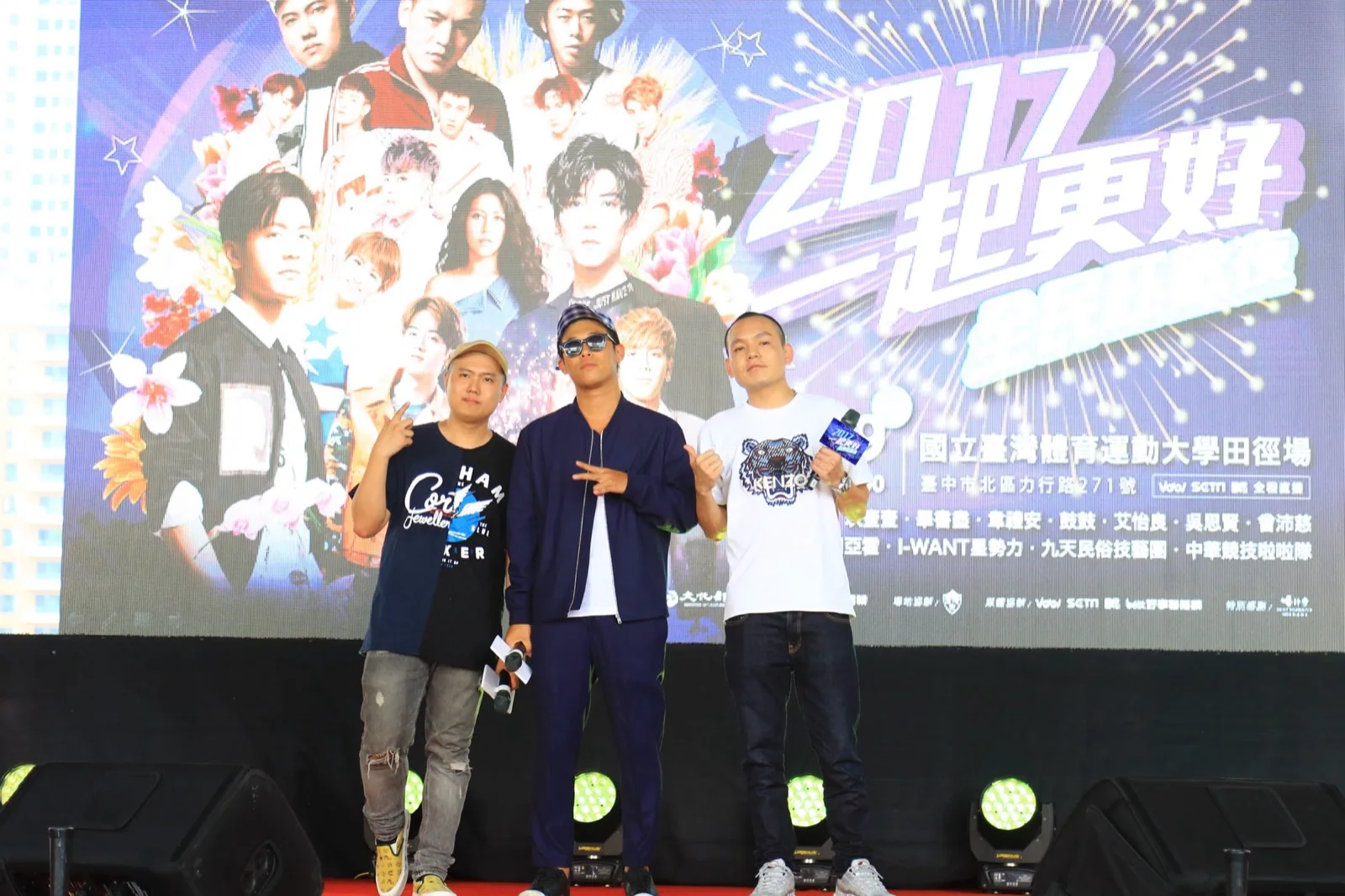
30-Second Overview: Taiwanese rap is often treated as a "Chinese cover of American hip-hop," but the real story is the exact opposite. Chinese is a tonal language, described as "innately unsuitable for rap"; Taiwanese Hoklo has seven tones plus tone sandhi, once considered unfit for the mainstream stage; the main force of Taiwanese rap consists of urban middle-class men with backgrounds in National Taiwan University’s electrical engineering, chemistry, and sociology departments, completely mismatching the American hip-hop narrative of "weapons of the ghetto poor." These three "disadvantages" have been turned into features one by one—mother tongues became the accent of resistance, high academic credentials redefined what "real" means, and the diversity of ideologies, ethnicities, and languages has created a voice distinct from the one across the strait. From the 1989 album Madness Songs to MC HotDog winning the Golden Melody Award for Best Male Artist in 2024, this article tells how Taiwan turned three innate disadvantages into a sovereign voiceprint that only this island can sing.
In May 2004, the 15th Golden Melody Awards (GMA) gave the Best Lyrics award to Life's a Struggle. The person who took the stage to accept the award was not the creator: Song Yueh-ting had passed away two years earlier from multiple myeloma at the age of 23, and his mother and brother accepted it on his behalf1. The same year, the other nominees for Best Lyrics included Jay Chou’s Terrace Farm, Vincent Fang’s Broken East Wind, and Faye Wong’s No Regrets2. An underground rapper who never lived to hear himself win had defeated the hottest names in the Mandarin music scene at that time.
This is a very Taiwanese opening: the first rap work recognized by the establishment had its creator already gone. And the people who truly brought rap into Taiwanese living rooms were not anyone on the Golden Melody Awards stage. To understand Taiwanese hip-hop, you must first discard a convenient prejudice: "Taiwanese rap is just copying the US." This narrative is convenient, but it reverses the causality. What makes Taiwanese rap most unique is precisely the points where it is not like the US: Chinese tones, the Taiwanese dialect accent, and a group of creators who are not the poor. This island turned three innate disadvantages into a voice that only it itself can sing.
Chinese Was Never Meant to Rap
Let’s start with a technical issue. The core of rap is rhythm and rhyme. English is a stress-timed language; where the stress falls and how syllables are broken naturally carries a drumbeat. Chinese is not. Chinese is a tonal language; the rise and fall of each character determines meaning: the same "sh" sound, across four tones, represents four different characters. When you quickly cram characters into a beat, pursuing the English-style flow, the tones are easily flattened, resulting in "hardly knowing what is being sung." From this perspective, Chinese is indeed "innately unsuitable for rap."
How did Taiwanese rappers respond to this dilemma? The answer lies with Song Yueh-ting. DJ KU from the NTU Hip-Hop Culture Research Society described him as the "pioneer of double-rhyme techniques," with phrasing and vocal styles approximating Tupac3. Double rhyme involves rhyming two sets of end-rhymes simultaneously within a single line, allowing Chinese rhythm to rely on rhyme density rather than tones to sustain the beat. This is the first solution to bypass the disadvantage: since tones cannot naturally produce drumbeats like English stress, the rhythmic gap is filled with denser rhyming.
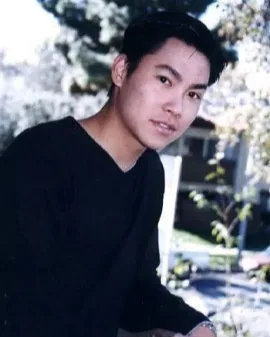
Song Yueh-ting (1978–2002), aged 23. His posthumous work Life's a Struggle pushed Chinese rap forward with double rhymes, winning the 15th Golden Melody Award for Best Lyrics in 2004. Memorial portrait, fair use editorial commentary.
Twenty years later, this path was pushed to a nearly obsessive extreme. Xiong Zai (Bear Zai): Born Xiong Xin-kan, a bachelor’s degree in Electrical Engineering and a master’s in Telecommunications from National Taiwan University, and former president of the NTU Hip-Hop Culture Research Society: He simply treated rhyming as a science that can be modeled. His own explanation is: "Through prosody research and establishing mathematical models, I understood that prosody is a multi-layered structure... placing lyrics in positions that sound pleasing to the ear."4 He is known in the circle as the "President of Infinite Rhymes," relying on this method of deconstructing multi-layered rhyming into mathematical structures. His track 88BARS, featuring dense rhyming across 88 bars (lines) in a single song, won him the 33rd (2022) Golden Melody Award for Best Lyrics5.
📝 Curator’s Note
Popular online science explanations often say "Taiwanese rappers worked hard to overcome the problem that Chinese isn't suitable for rap." But the closer truth is that they did not "overcome" it; they changed the rules. English rap generates rhythm through stress; Taiwanese rappers generate rhythm through rhyme density—it is less like running slower on the same path and more like taking a fork into a different path. Xiong Zai’s mathematical rhyming and Song Yueh-ting’s double rhymes are essentially doing the same thing: rewriting a "Chinese can't do this" problem into a "how Chinese can do this" problem. The moment a disadvantage becomes a feature often happens in this rewrite.
The question of "whether Chinese is suitable for rap" has never had consensus within Taiwan. Xiong Zai’s 88BARS, containing a large amount of English segments, was questioned by some listeners as "isn't it still relying on English." Meanwhile, the existence of Dark Lo’s Taiwanese Hoklo works and the entire genre of Taiwanese rap rap is used by another faction as counter-evidence, arguing that Mandarin-language structures can absolutely rap6. The debate itself is part of Taiwanese hip-hop: a group of people serious enough to argue about "whether language can" proves that this matters here.
The Seven Tones of Taiwanese Hoklo: Bug or Feature?
If Mandarin’s four tones are a rap challenge, the situation for Taiwanese Hoklo is even more subtle. Taiwanese Hoklo has seven tones, plus "tone sandhi" (連讀變調): a character’s tone automatically changes when read alone versus when read following another character. In the standard framework of Mandarin pop songs, this was once considered an "informal accent, unfit for the mainstream stage."
But fishLIN from the group KhoAukKhun turned this completely around. His explanation is direct: "Even just speaking Hoklo has melody."7 Hoklo is Taiwanese Hoklo. Manchuker from the same group used a more vivid metaphor: Taiwanese Hoklo’s seven tones are "circular," while Mandarin’s four tones are "square": meaning the tonal curves of Taiwanese Hoklo are smoother and have more起伏 (ups and downs), actually giving flow extra phonetic variation space7.
In the research of US scholar Meredith Schweig, this practice of treating mother-tongue accents as creative assets is categorized as "resistance vernaculars": post-authoritarian Taiwanese rappers use their mother tongue to turn rap into a "creative political intervention"8. In other words, the "accent" of Taiwanese Hoklo is not a bug to be corrected; it is the feature.
This thread of mother tongues is actually older than hip-hop itself. In November 1989, Blacklist Studio released Madness Songs (抓狂歌), stitching together the Taiwanese "za-liam-á" (a traditional chanting style close to rapping), rap, and reggae, becoming the precursor to the "New Taiwanese Language Movement"9. Taiwan already had its own chanting roots: the "liām-kua" (唸歌) accompanied by the moon lute is a chanting tradition spanning hundreds of years. So when rap arrived in Taiwan, this already-existing local narrative bloodline became the soil for it to take root8.
Dwagie Official MV: 'Taiwan SONG' is one of Dwagie’s representative Taiwanese Hoklo works, treating the Taiwanese accent as the sonic signature of Taiwanese identity.
The one who pushed Taiwanese Hoklo the furthest and most politically is Dwagie (Tseng Kuan-jung, from Tainan). His 2002 album Tongue Blossoming Lotus (舌燦蓮花) was one of the last albums released before Mo Yan Records ceased operations, often called the first full-rap album in the Mandarin-speaking circle10. In his Taiwanese Hoklo representative work Taiwan SONG, he directly treats the Taiwanese accent as Taiwan’s sonic mark.
On this same mother-tongue path, Hakka also has its practitioners. Yappy (Tseng Yi-bin, from Zhuolan, Miaoli) wrote Trap Miaoli in Hakka at age 16, connecting the cold beats of British Drill with the Hakka accent; he stated heavily: "Hakka is the existence closest to my deepest, most core self."11
Listening to these accents together reveals what makes Taiwanese hip-hop most different from a single-language market: on this island, rap has never been limited to one language. Mandarin, Taiwanese Hoklo, Hakka, and the sixteen indigenous languages are all present.
The representative of the indigenous thread is Abao (Aljenljeng Tjaluvie, from Paiming Village, Jinfeng, Taitung). Although her album kinakaian Mother’s Tongue is positioned as indigenous electronic pop rather than pure rap, her winning the 31st (2020) Golden Melody Award for Album of the Year is itself a signal: Taiwan’s mainstream music industry is willing to give an award to a mother-tongue album that many do not understand. Abao’s acceptance speech is worth recording word for word[^13]:
✦ "Thanks to all the listeners who pressed the PLAY button to share, thank you for trying to listen to a language you do not understand."
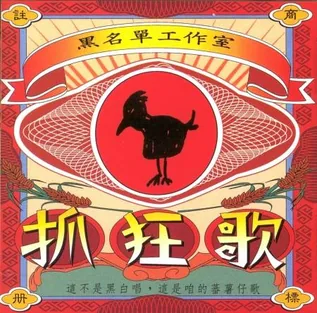
Blacklist Studio’s Madness Songs (1989). Stitching together Taiwanese za-liam-á, rap, and reggae, it was the precursor to the "New Taiwanese Language Movement," making the Taiwanese accent the first time treated as an asset. Album cover, fair use editorial commentary.
A Microphone for a Group of NTU Students
The second disadvantage is hidden deeper and is most counter-intuitive. The prototype narrative of American hip-hop is the weapon of the ghetto poor: growing from the streets of South Bronx, speaking of the anger, survival, and resistance of the underclass. If following this template, Taiwanese rap "should" come from the social bottom. But the reality is exactly the opposite.
The main force of Taiwanese rap consists of middle-class, highly educated, urban Han men. Xiong Zai is from NTU Electrical Engineering. Guo Dan (Yang Kuo-chun) attended Tainan No. 1 High School and NTU Chemistry12. Leo Wang (Wang Zhi-you) studied at NTU Sociology before dropping out. Even the anthropologist Lin Hao-li, who explained this phenomenon most thoroughly, is himself an Associate Professor of Anthropology at National Tsing Hua University and the second president of the NTU Hip-Hop Culture Research Society13. When asked why Taiwanese hip-hop is so different from the US, his answer was nearly self-deprecating: "Because we are just a group of teenagers living relatively well-off."14
This sentence punctures a fact many are unwilling to admit. When your creators are mostly not "the poor," then the core value of hip-hop—"keep it real" (maintain authenticity)—must be redefined. You cannot pretend you come from the ghetto; that is fake. But you also have authenticity to speak of. Leo Wang gave a beautiful answer: Creators being true to their thoughts and feelings, and realistically reflecting their values, is keeping it real15. A thesis from National Taiwan Normal University on "Battles of Orthodoxy" also points out that Taiwanese rappers reconstruct the concept of the "streets" within local social spaces, rather than copying the American street imagination of violence and gangs16. Thus, real has a new meaning: it measures the degree of honesty, unrelated to where you come from.
📝 Curator’s Note
Here lies an unspoken choice. Taiwanese rappers could easily have copied the US, packaging themselves as more "street" and more "dangerous"—this is the safest shortcut, just copy and paste. But most did not. A group of NTU students chose to admit they are NTU students, and then asked "what is real" under this premise. Lin Hao-li’s sentence "we are just a group of teenagers living relatively well-off" is important because of its honesty—and honesty is precisely the real they redefined. The place where Taiwanese hip-hop is least like the US is precisely where it grew its own legitimacy.
This also gave Taiwanese hip-hop a temperament rarely seen elsewhere. Lin Hao-li has a sentence that could serve as a footnote for the entire article: "In other music fields, it is hard to see such complex ideological entanglement; hip-hop music can see the changes and mixtures of the entire country and society."17 A group of highly educated people playing with this brings in not just technique, but a large amount of reading, critical thinking, and self-awareness. The academic nature is both a feature of Taiwanese hip-hop and, as we will see later, an unexpected entry point for some.
Temple Fairs, Dorm Networks, and Riverside Lyrics
For any subculture to grow, material conditions are needed: a place where enthusiasts can find each other. In the underground era of Taiwanese hip-hop, this "place" had several layers.
The earliest layer was online. In 1998, Lin Hao-li, then a high school student, and classmates set up a message board called "Master U," Taiwan’s first hip-hop online community18. Two years later, in 2000, the NTU Hip-Hop Culture Research Society was established: the first semester was an "illegal club" (not officially approved)19. This was an era of sharing pirated CDs via dorm networks, hunting for cassettes in Guanghua Mall, and self-teaching by devouring American original albums one by one. Physical bases were livehouses and music festivals: Riverside Lyrics (He’an Liuyan), Kenting’s Spring Breeze Music Festival, places where underground people had stages to stand on.
However, a common impression must be broken first: the assumption that Taiwan’s "general audience" grew up listening to MC HotDog and Dwagie. The ones who truly brought rap into temple fairs, night markets, betel nut stalls, and taxi sound systems were actually Nine One One.
Nine One One was established in Taichung in September 2009. The three members: Chun Feng (Hung Yu-hung), Yang Cong (Chen Hao-yu), and Jian Zhi (Liao Chien-chih) started from temple fair stages. Their 2012 track _Devoted Man_ (癡情的男子漢) surged to over 80 million views on YouTube, becoming thoroughly popular in the grassroots market20. In 2015, they founded their own label, Mixed Blood Entertainment. Media estimates suggest that eleven years of commercial performances generated approximately 500 million in value21. This is a world completely different from the literary youth of Yanshe (Gen Yue): one side is poetic, allusion-heavy rap; the other is the maximum traffic of temple grassroots. The true map of Taiwanese hip-hop has never had only one look.
Nine One One Official MV: 'Devoted Man' has approximately 80 million views, the true national traffic that brought rap into temple fairs and night markets.
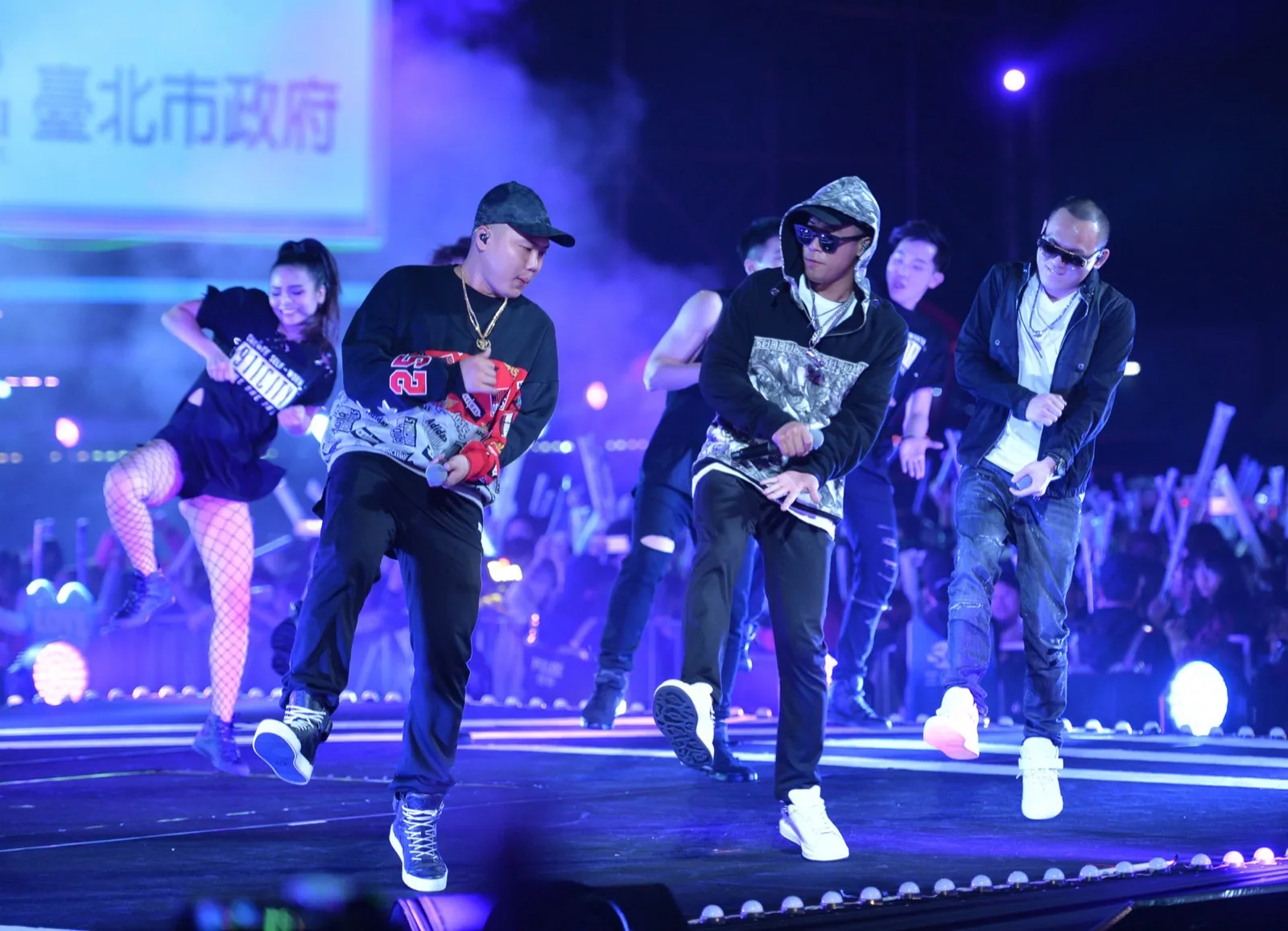
Nine One One performing at the Taipei New Year’s Eve Gala. Starting from temple fairs and night markets, their 'Devoted Man' accumulated approximately 80 million views on YouTube, the true traffic that brought rap into the ears of ordinary Taiwanese. Photo: Taipei City Government Department of Cultural Affairs, CC0 via Wikimedia Commons.
Four Ways of Growing Up
After the underground scene matured, Taiwanese hip-hop grew several labels with completely different temperaments. Each represents an answer to "how to continue doing rap."
The most literary is Yanshe (KAO!INC.). Founded in 2005 in Tamsui by Di La-pang (Chang Yi-sheng), it follows a poetic, jazz, boom bap route22. Yanshe’s most representative artist is Dark Lo (Du Zhen-xi, from Tainan, Department of Visual Communication at Yunlin University of Science and Technology), who stayed with Yanshe for approximately fourteen years. His 2010 Moonlight collaborated with the Japanese jazz band JABBERLOOP, connecting the live feel of Japanese jazz into hip-hop; his 2020 Home Cooking Music won the 32nd (2021) Golden Melody Awards for Best Mandarin Male Artist and Best Mandarin Album23.
On the day Dark Lo accepted the award, he dedicated the award to a name most viewers in front of TVs might not recognize: "Today I want to dedicate this award to my family and relatives, to the brothers of Zhu Bang and Yanshe, to Taiwanese hip-hop, and to Brother Bao in heaven."24
Brother Bao is MV director Huang Hsin-chia, known in the circle as "Da Bao Dao." In the early days of Taiwanese hip-hop, he shot MVs for names not yet seen by the mainstream like Dwagie, Dark Lo, and Can Pi; the visuals for MC HotDog and Tseng Chen-yue’s duet I Love Taiwan Girls were also from his hand; he passed away from colon cancer in 2011 at age 3725. Ten years later, when Dark Lo stood on the GMA stage, the first person he thought of was this person behind the lens who held the scene together.
Yanshe Official MV: Dark Lo and Japanese jazz band JABBERLOOP’s 'Classic!' is the signature sound of Yanshe’s poetic, jazz-oriented style.
The most commercially mainstream is Ben Se Music (Original Color Music), founded in 2004 in Taipei by Tseng Chen-yue and Huang Jing-bo, featuring MC HotDog and顽童 (JWJ) as its招牌 (signboards), following a brotherhood-style commercial route26. JWJ (MJ116: MJ for Muzha, 116 for Wenshan District postal code): Shou Zi E.SO (Chen Yu-jung), Xiao Chun Kenzy (Chou Wen-chieh), and Da Yuan Muta (Lin Mu-yuan) three members: Their 2017 Do Big Things won the 29th (2018) Golden Melody Award for Best Vocal Group, representing the new generation of idol-style rap27.
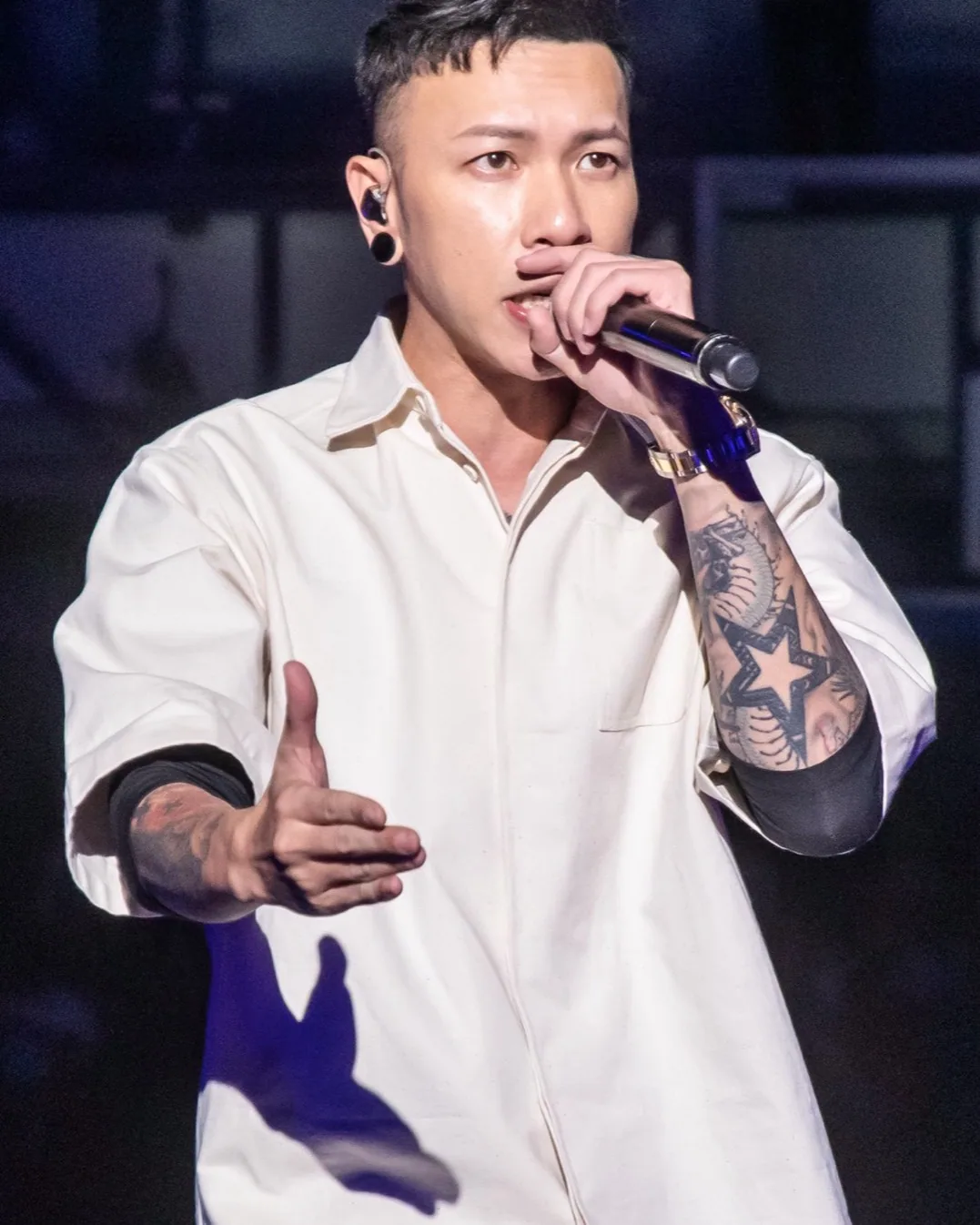
JWJ’s Xiao Chun (Chou Wen-chieh), 2021. Emerging from Muzha 116, JWJ packaged hip-hop as new-generation idols, opening seven consecutive shows at Taipei Little Giant Arena in 2025. Photo: Taoyuan City Government, Attribution License via Wikimedia Commons.
The one with the most social practice color is Ren Ren You Gong Lian (Everyone Has Power Practice), founded in 2003 in Tainan by Dwagie. Due to its strong local consciousness and collectivism, it is described as "Taiwan’s Wu-Tang"28. The most grassroots is the Mixed Blood Entertainment mentioned earlier: Nine One One’s temple empire. Yanshe and Ben Se in the north, Ren Ren You Gong Lian in Tainan, Mixed Blood in Taichung: This label map itself is a geographic slice of Taiwanese hip-hop: poetic, commercial, social practice, grassroots, four ways of growing up each occupying a corner.
📝 Curator’s Note
Looking at these four labels together reveals an easily overlooked fact—Taiwanese hip-hop’s "diversity" has been in its bones from day one, an出厂 (factory-out) setting. Literary youth and temple fairs, Taipei and Tainan, social practice and commercial idols, things that might be cut into different "subgenres" and live in separate hills never interacting in the US, grew up simultaneously, side-by-side, and knowing each other in Taiwan. When Dark Lo accepted the GMA, he thought of Da Bao Dao who shot MVs for the entire scene; when Xiong Zai went to Dwagie’s talent show as a mentor—this circle is so small that all routes know each other. Diversity is not a slogan here; it is the size here.
This circle also once extended its tentacles across the strait. In 2015, Tseng Chen-yue, MC HotDog, and JWJ formed "Brothers Original Color" in Beijing, under Rock Records, but disbanded in 201729. This interlude brings us exactly to the most sensitive part of Taiwanese hip-hop history, and the segment that best illustrates the pillar of "sovereignty."
From Pirated CDs to Golden Melody King
Back to that line from underground to the establishment. Taiwanese hip-hop spent twenty years, from pirated CDs all the way to the Golden Melody King. This is a long campaign about "legitimacy."
The Golden Melody Awards never had an independent hip-hop category; all rap works had to clash with the entire Mandarin music scene in general categories (hip-hop’s independent category was in the Jin Yin Creative Awards established in 2010)30. So every win is a test of "has the mainstream acknowledged you?" Laying out this timeline of recognition, we see a clear trajectory:
Source: Historical GMA, CNA
There are two closed loops on this line. The first is in June 2019: Leo Wang won the 30th Golden Melody Award for Best Mandarin Male Artist with Moaning Without Illness, Lyrical With Affection, becoming the first Rap King in GMA history31. In the same ceremony, ØZI (Chen Yi-fan, born 1997 in Los Angeles, returned to Taiwan at age two) won Best New Artist, two rappers each taking one award in one ceremony32. Comparing to twenty years ago, when MC HotDog and Dwagie were still relying on American original albums imported from record stores, devouring them one by one to self-teach[^8]: This distance is the path Taiwanese hip-hop has walked.
Yanshe Official MV: Leo Wang 'Moaning Without Illness' feat. Dark Lo: This self-titled album made him the first Rap King in GMA history.
The second closed loop is in 2024. MC HotDog (MC HotDog, born Yao Chung-jen, from Fu Jen Catholic University’s Department of Film and Television), with Dirty Artist, won the 35th Golden Melody Award for Best Mandarin Male Artist: his first King award, while also winning Best Lyrics33. From debuting in 1998, to winning Best Mandarin Album with Wake Up in 2007, to finally becoming King in 2024, the Godfather used twenty-six years to complete the last puzzle piece of establishment recognition.
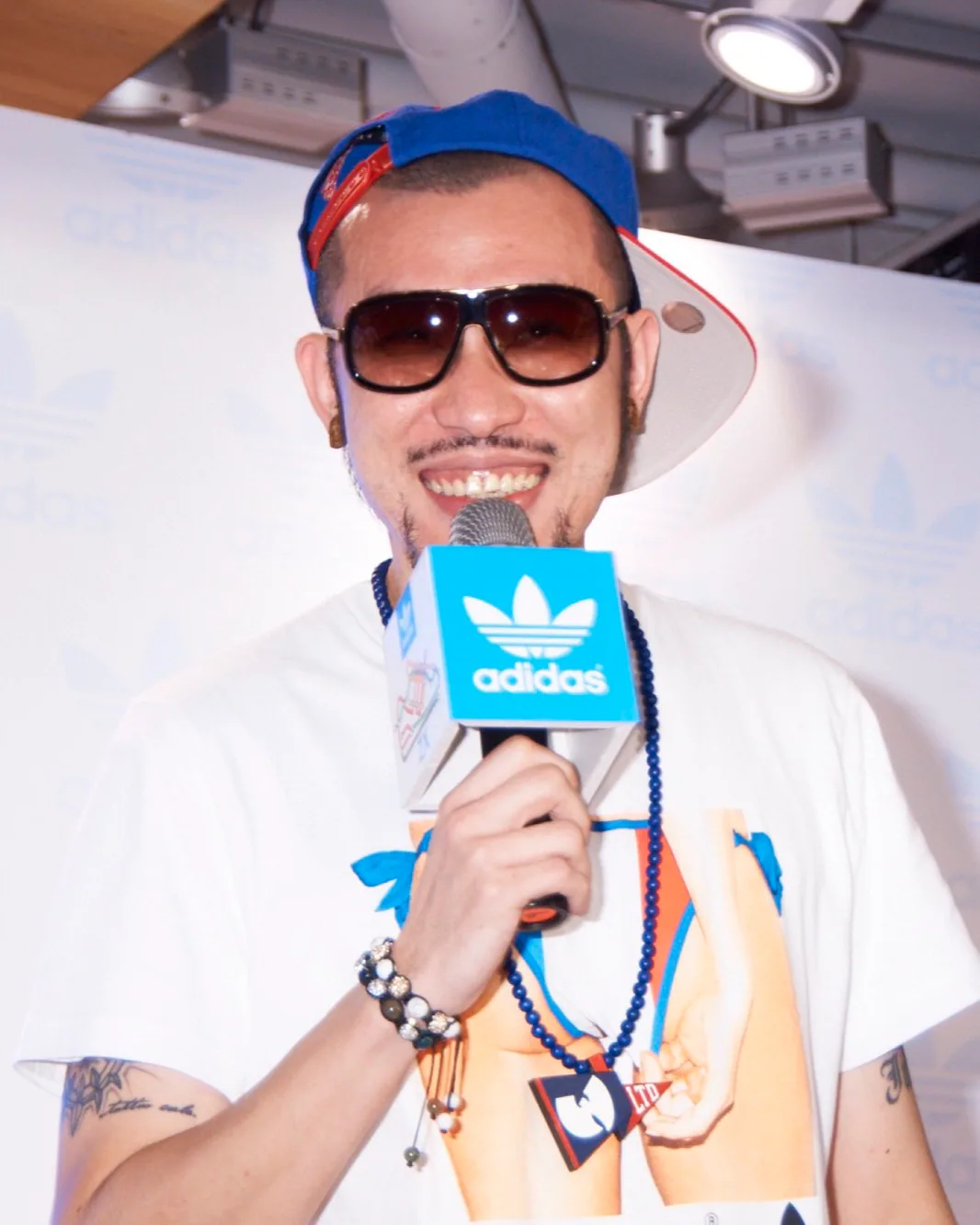
MC HotDog, 2012 Performance. Called the "Hip-Hop Godfather," he went from underground to mainstream, finally winning the Golden Melody King in 2024. Photo: Chiu Yu-feng, CC BY-SA 4.0 via Wikimedia Commons.
But being acknowledged is not entirely a good thing. A comment from an underground perspective wrote clearly: The Golden Melody Awards "gave hip-hop a stage, but also invisibly changed its outline," and "this is not evolution, but a cost"34. When a music growing from underground is co-opted by the mainstream, it exchanges for a larger stage and more resources, but may also grind away its roughest, most untamed parts. This tension has no standard answer: it hangs there, a problem each person from pirated CDs to the GMA stage must face themselves.
Who Is "Taiwan Already Had Hip-Hop" Shouted At?
In 2017, a talent show called The Rap of China exploded on iQiyi, "Do you have freestyle?" became a viral phrase across the web. The most subtle part is the list itself: The four mentors that season, Pan Wei-bo (Wang Sicong? No, Wang Sicong is different. Wait, the text says 潘瑋柏 William Peng, 熱狗 MC HotDog, 張震嶽 Tseng Chen-yue), all from Taiwan, except Wu Yi-fan (Kris Wu), all were Taiwanese faces35. Taiwanese rappers were already top-ranking in the Mandarin hip-hop circle, but a show from the other side of the strait reversed to become the stage defining "Mandarin hip-hop."
The reaction within the Taiwan circle to this event split into two factions, and both had reasons. Di La-pang of Yanshe saw squeezing: "In the entire Mandarin hip-hop circle... originally Taiwanese rap artists... were top-ranking, but after The Rap of China, China cultivated a large number of rap stars, naturally squeezing the space for Taiwanese rap artists."36 Dwagie saw opportunity: Taiwan’s recent hip-hop boom is definitely related to The Rap of China, but he believes this is also a good thing; people will become interested and search for Taiwanese rap artists37. The same phenomenon, one reads as a threat, one as exposure.
📝 Curator’s Note
The phrase "Taiwan already had hip-hop" must be placed in its context to be understood. On the stage of the 29th GMA in 2018, Liu Fu-chu led a group of rappers in a performance of "Taiwan Already Had Hip-Hop"—on the surface it is pride, in the core it is anxiety. When the discourse power of "Mandarin hip-hop" is being redefined by a larger market and a hotter show, Taiwan needs to loudly say once "we already had it, and ours is different." Where is its difference? In all the things mentioned earlier: the multi-accent of Taiwanese Hoklo, Hakka, and indigenous languages, the mixture of ideologies and ethnicities, a group of highly educated people redefining real. Lin Hao-li’s words can be quoted again: "Taiwan’s ideological diversity, Taiwan’s ethnic diversity, Taiwan’s linguistic diversity, make hip-hop, a music that emphasizes multi-directional connections, present a more colorful and complex face in Taiwan." This diversity is the true capital under that pride—it makes Taiwanese hip-hop distinct from the single discourse across the strait, becoming a voiceprint that cannot be co-opted by any single market.
Dwagie pushed this "difference" to the furthest place. In January 2017, he performed Taiwan SONG at the Brooklyn Nets’ "Taiwan Culture Night" on the NBA stage, becoming the first Taiwanese rapper to appear on an NBA stage38. He was also the first Taiwanese rapper to invite the Dalai Lama into an MV (Ren / Person), long discussing human rights, politics, and universal values in his songs39. In 2016, a Chinese blacklist circulated online, listing him; Dwagie’s response was干脆 (crisp): "I often talk about human rights, politics, and universal values, which naturally conflicts with the CCP... I want to say my words, earning less money is fine."40
Must be honest: The authenticity and scope of that blacklist are unverifiable due to conflicting official statements; the relationship between the Taiwan hip-hop circle and the other side, from developing there to being named on a blacklist, has a wide spectrum and diverse stances. Rather than picking sides, here we want to make people see one thing: When a music’s multi-accent itself is political, it is destined to have friction with a market pursuing a single discourse. This friction is the most concrete evidence of the "sovereign voiceprint" concept.
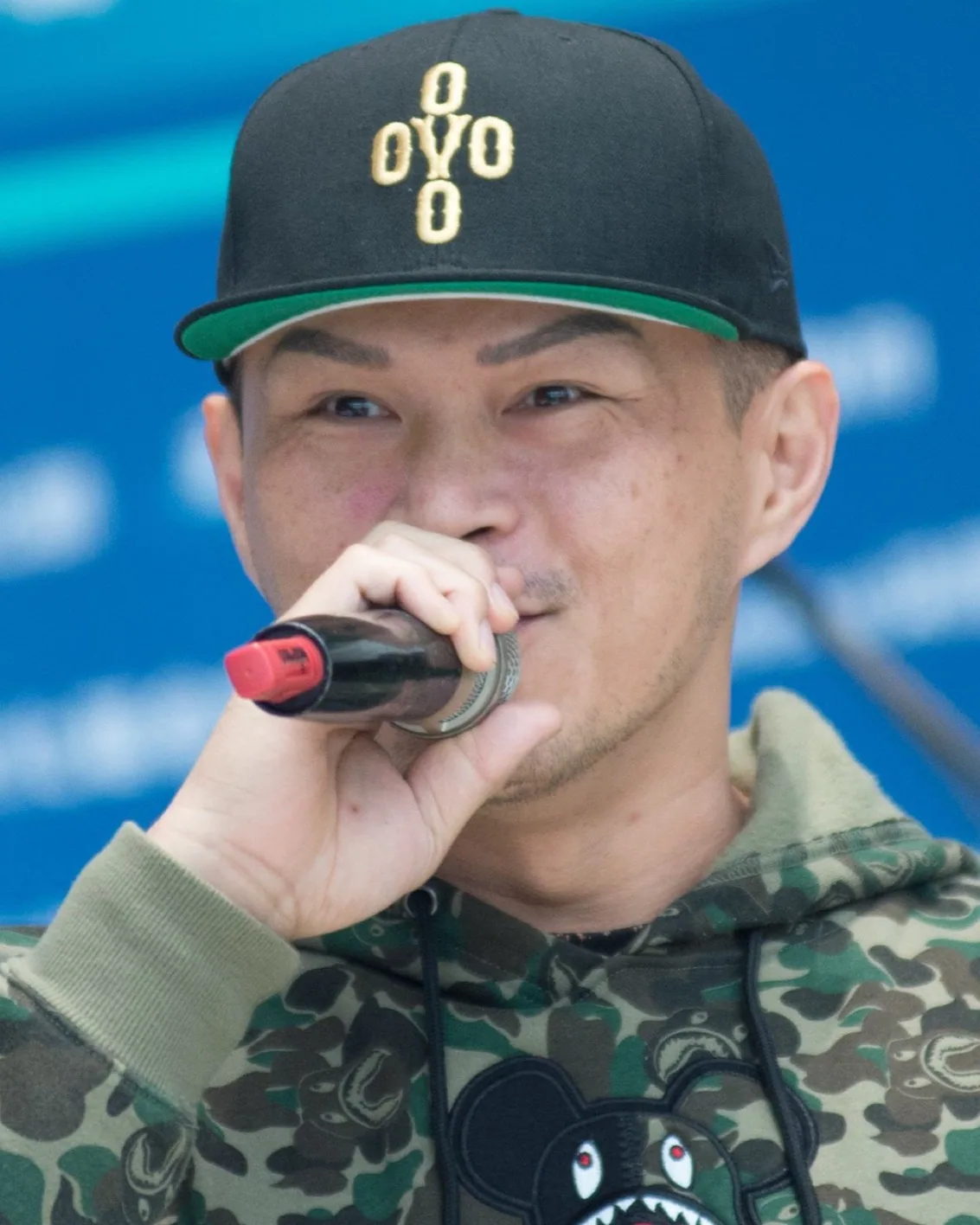
Dwagie. He is the first Taiwanese rapper to appear on an NBA stage and was also reported by Time Magazine, long using Taiwanese Hoklo in songs to discuss human rights and politics. Photo: Chiayi City Government, Attribution License via Wikimedia Commons.
Not Just a Man’s Microphone
The names mentioned above are almost all male. This reflects a real structure of Taiwanese hip-hop: it has long been a man’s microphone. The way female rappers break through in front of this microphone exactly照 (shines/reflects) the two pillars mentioned earlier from another angle.
Look at the entry point first. Male rappers rely on "street certification"—how hardcore you are, whether you can mix in, this threshold naturally keeps women out. But the entry point for Taiwanese female rappers is actually campus clubs. RapShark (Zhang Bo-han) comes from Cheng Kung University’s Black Sound (Black Music Club), Chen Xian-jing’s earliest works also appeared on Cheng Kung University’s Black Sound channel, and the NTU Hip-Hop Culture Research Society nurtured Yang Shu-ya41. A BBC special video explains this line clearly: In Taiwan, university hip-hop clubs "occupy key positions in the industry"—it is the most important entry point for newcomers42.
But this club entry point itself carries contradiction: Female rappers interviewed described that entering club classes often means "the room is full of boys, in that moment you know you are the only girl," boys build默契 (tacit understanding) through "straight male jokes," and girls pretend not to hear to not break the atmosphere42. The academic nature is a general feature of Taiwanese hip-hop; for women, it is simultaneously an entry point and the first wall.
Standing alone in this wall for nearly ten years is Miss Ko (Ko Zhong-shan, born 1985 in Queens, New York). Returning to Taiwan in 2011, in 2012 Yanshe released Knock Out Ge Pi, produced by Dark Lo; the following year she won the 24th (2013) Golden Melody Award for Best New Artist, becoming Taiwan’s first female hip-hop artist to win this award. The judges’ comment left a ruler: "Taiwan’s first hip-hop female artist, authentic and到位 (in place) hip-hop skills, performance stronger than male hip-hop artists, unmatched in the Mandarin music scene."43 This sentence is both a coronation and a ruler: the four words "never seen before" show how lonely she was. After her 2016 _Queen of Queens_ (皇后區的皇后), she remained one of the few female voices in that circle.
✦ "Taiwan’s first hip-hop female artist, authentic and到位 (in place) hip-hop skills, performance stronger than male hip-hop artists, unmatched in the Mandarin music scene." — 24th Golden Melody Awards Judges, commenting on Miss Ko
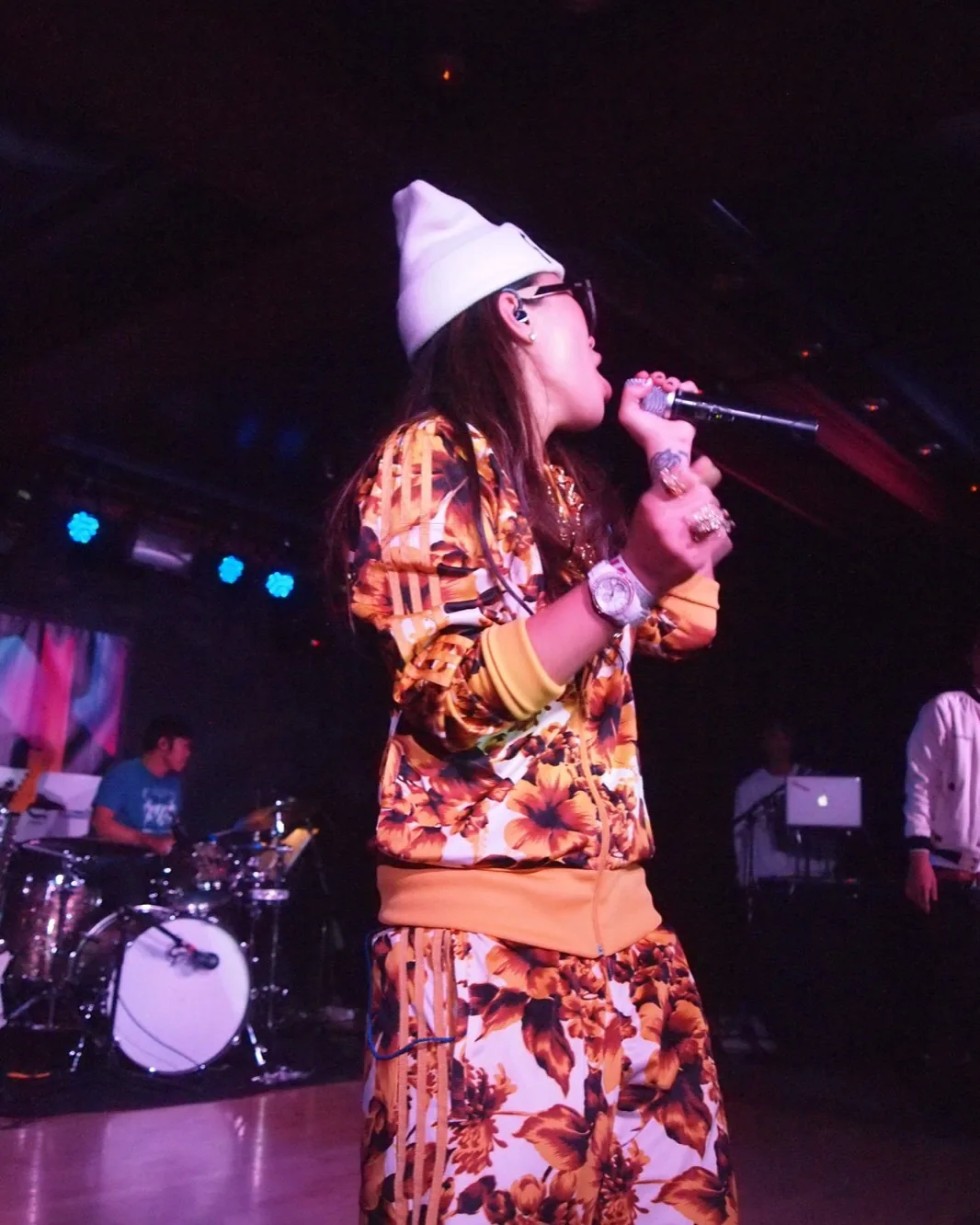
Miss Ko, 2013 at New York CMJ Music Festival. She is Taiwan’s first female hip-hop artist to win GMA Best New Artist; judges said she was "unmatched in the Mandarin music scene," yet she stood alone for nearly ten years after. Photo: May S. Young, CC BY-SA 2.0 via Wikimedia Commons.
The real explosion was in early 2025. The fuse was a song released in November 2024 that went viral on Douyin, criticized as misogynistic, Ai Ni Zhen De Mei Ban Fa (I Really Have No Way to Love You) (Yi Yi). On January 22, 2025, RapShark (Zhang Bo-han, born 2000 in Tainan, from Cheng Kung University’s Black Sound) released _Zai Chao La Ji_ (Another Noise, Trash) diss, becoming the first female rapper to strike head-on44.
Next, jumping out to support her was someone who originally had nothing to do with this circle war: [?te (Lin Chi-yi)]. She does not actually rap; she studied at the National Defense Medical College for nine years and won the 32nd Golden Melody Award for Best New Artist as a lo-fi R&B singer-songwriter. Precisely because of this, her criticism on Threads that those songs were "full of traditional male masculine culture" was particularly刺眼 (eye-catching) in the hip-hop circle’s unspoken rule of "not stepping on each other," and was immediately swarmed by出征 (attackers)45. After being swarmed, she did not retreat, speaking more thoroughly on Threads: "I knew I was doing the right thing, what I am doing is also representing the core values of hip-hop."46
The battlefield exploded on February 12, 2025, with a song. Yang Shu-ya (born 1999, NTU Political Science, from Hip-Hop Club, former Hualien elementary school teacher) released _Rule Nan Freestyle_ (Rule Men Freestyle), with the line "Real is not your misogynistic fig leaf" flipping the table directly47. This song with no label resources surged to the StreetVoice Real-Time Champion in less than 24 hours, YouTube views approaching 100,000, even music critic Ma Shi-fang and writer Huang Li-qun reposted it48. A girl from a campus club background, with no company, pierced through the music circle and literary circle with one song: This itself is the most powerful proof of Taiwanese hip-hop’s "academic entry point."
Yang Shu-ya Official MV: 'Rule Nan Freestyle' line "Real is not your misogynistic fig leaf"空降 (airdrops) to StreetVoice Real-Time Champion in less than 24 hours.
This debate is worth laying out both factions, because it is not black and white. One faction claims creative freedom, believing hip-hop inherently carries roughness and should not be over-examined; such voices exist inside and outside the circle; half a year later, Rule Nan Freestyle was nominated for the Jin Yin Award, even political commentator Zhao Shao-kang joined the war, criticizing it as "extremely vulgar"49.
The other faction believes using discrimination as an excuse for creation is untenable. Yang Shu-ya asked directly: "If you want to express anger in music, why must you step on women’s feet to be angry?"45 Musician Lao Mo’s summary brought this war back to the core of keep it real: The attitude of facing head-on, "is the most real, and the most hip-hop"50. The misogyny war is on the surface a骂战 (scolding war), in the core a debate about "what is real": circling back again to that word repeatedly redefined by Taiwanese rappers.
The most moving turn is that these girls did not stop consuming each other on the diss battlefield, but jointly built their own stage. On June 14, 2026, the Cultural Foundation will host, led by ?te, the _She Vibes Hip-Hop Music Day_ (嬉哈音樂日) at The Wall Live House, eight all-female groups in relay: ?te, Yang Shu-ya, RapShark, 7LING, Majin, etc.51 The event will also combine menstrual equity, with free sanitary products provided by the Little Red Riding Hood Association. ?te’s original intention is simple: "This time finally have the opportunity to hold an activity completely belonging to girls, whether performers or staff, hope it is all girls participating." Majin said, hoping through this activity, "to bring the same hope to little girls who want to make music"52. From battlefield to stage, this group turned "sisterhood" from a slogan into a real afternoon that will happen.
📝 Curator’s Note
Notice a detail: sisterhood here is "deliberately" constructed, not naturally grown. Female rappers interviewed said plainly—"when everyone keeps talking about brothers, why are sisters never mentioned," so she "consciously put 'sisters' into songs"; RapShark said she was riding on ?te’s courage to dare do this42. This forms a sharp contrast with the existing, unexplained "brother" structure of the male hip-hop circle: Men’s brotherhood is the default value; women’s sisterhood must be built from zero. So She Vibes is less a performance and more a structural fill-in—in front of a microphone originally built only for men, forcibly building another one. Must be honest, this road is still long: Female rap artists in Taiwan are still a minority, those achieving commercial success are even more rare53. But the ruler has moved from "never seen before" to "eight groups in relay."
BBC News Chinese Official Video: Following RapShark and Yang Shu-ya, see how these female rappers grow their own sisterhood from the misogyny debate.
Mixed Voiceprint
Back to the initial question: What makes Taiwanese rap special?
Laying out the entire history, we find its most moving place is never how much it resembles the US. Chinese is a tonal language, described as "should not be able to rap"—they used double rhymes, mathematical rhyming, to rewrite the rhythm problem into rhyme density. Taiwanese Hoklo’s seven tones and tone sandhi were once considered accents unfit for the stage: They treated it as a signature "even just speaking has melody," adding Hakka and sixteen indigenous languages, growing into a multi-accent mother-tongue resistance. Creators are mostly highly educated urban middle-class, mismatching "weapons of the ghetto poor": They干脆 (crisply) redefined "real" as honesty, not origin.
These three things, each looked at alone, are "disadvantages." But together, they became something else: A mixed voiceprint that only this island can sing. It mixes language (Mandarin, Taiwanese, Hakka, Indigenous multi-accent), mixes class (NTU students, temple fair kids, idol styles coexist), mixes gender (a microphone originally built only for men is being forcibly built into another one), mixes ideology (from developing across the strait to inviting the Dalai Lama into MVs, the spectrum is wide enough to hold all stances). This "mixing" is precisely where it is distinct from the other side’s single discourse: It cannot be co-opted by any single market or single narrative, because it itself is composed of un-co-opted diversity.
In 2004, Song Yueh-ting’s mother took the stage to accept the award, the song’s name was Life's a Struggle: Life is a struggle. Twenty years later, MC HotDog finally became King, Leo Wang had already written the first page of Rap King, Yang Shu-ya flipped a war with a song without a label, ?te carrying a white coat, leading girls to build their own stage. From pirated CDs to Golden Melody King, the road walked was long; but what this island truly did not change is that it kept answering that oldest question with its own language, its own education, its own diverse identities: What is real.
Chinese’s four tones, Taiwanese Hoklo’s seven tones, sixteen indigenous languages: Taiwan turned the language disadvantage of "should not be able to rap" into a voice that only this island can sing. That is not a voiceprint resembling anyone; that is a mixed sovereign voiceprint that no one can copy.
Further Reading:
- Chen Xian-jing — From Cheng Kung University’s Black Sound, putting Xia Yu’s poem "Answer" into rap, took eight years of making music to win GMA Best New Artist
- Taiwan Pop Music — From Nakasi to Jay Chou, how an island sings its own songs
- Taiwanese Hoklo Song Evolution — From Wang Chun Feng to the New Taiwanese Language Movement, how a language sings back to the mainstream
- Contemporary Indigenous Creative Singers — From GMA stage to indigenous language revitalization, how sixteen languages’ voices are heard
- Taiwan Independent Music — Underground, livehouses, and a long campaign about freedom
- Golden Melody Awards — How an award defined the standards of the Mandarin music scene
Image Sources
This article uses 8 images, all cached in public/article-images/music/ to avoid hotlinking source servers. CC / Public Domain images note license and photographer; historical album covers and portraits of deceased persons follow fair use editorial commentary:
- Nine One One 2016 (hero) — Photo: Taichung City Government News Bureau, Attribution License (Government Website Data Open Declaration), Wikimedia Commons
- Taipei New Year's Eve Gala Nine One One — Photo: Taipei City Government Department of Cultural Affairs, CC0, Wikimedia Commons
- MC HotDog with Adidas microphone 20120504 — Photo: Chiu Yu-feng, CC BY-SA 4.0, Wikimedia Commons
- Chou Wen-chieh (JWJ MJ116 Xiao Chun) 2021 — Photo: Taoyuan City Government, Attribution License (Government Website Data Open Declaration), Wikimedia Commons
- Dwagie (National Dujia New Year's Eve Festival) — Photo: Chiayi City Government, Attribution License (Government Website Data Open Declaration), Wikimedia Commons
- Miss Ko Ge Zhong Shan (CMJ 2013) — Photo: May S. Young, CC BY-SA 2.0, Wikimedia Commons
- Blacklist Studio Madness Songs (1989) Album Cover — Fair use editorial commentary on Blacklist Studio's work (low resolution, for this article's discussion of Taiwanese rap origins only)
- Song Yueh-ting Memorial Portrait — Fair use editorial commentary (deceased person 1978–2002, low resolution, for this article's discussion of his musical contributions only)
References
- Wikipedia: Song Yueh-ting — Records Song Yueh-ting (1978–2002)'s life, death from multiple myeloma, posthumous work Life's a Struggle winning 15th GMA Best Lyrics, accepted by mother and brother.↩
- Wikipedia: 15th Golden Melody Awards — Records 2004 15th GMA complete nominations and winners, Best Lyrics category same-year nominees Jay Chou Terrace Farm, Vincent Fang Broken East Wind, Faye Wong No Regrets.↩
- Roomie: Song Yueh-ting and Double Rhyme Techniques — In-depth report on Song Yueh-ting's creative process, quoting NTU Hip-Hop Club DJ KU's evaluation in COOL magazine on his "double rhyme technique pioneer, vocal phrasing approximating Tupac."↩
- Cheers Magazine: Xiong Zai Interview — Reports on Xiong Zai with NTU Electrical Engineering background, how he understands multi-layered rhyming structures through prosody research and establishing mathematical models, quoting his creative methodology original words.↩
- Wikipedia: Xiong Zai — Records Xiong Xin-kan (Xiong Zai) NTU Electrical Engineering bachelor's, Telecommunications master's, NTU Hip-Hop Club president background, and 88BARS winning 33rd (2022) GMA Best Lyrics.↩
- HK01: Four Reasons Why 'The Rap of China' Is Repulsive — Analyzes Mandarin hip-hop controversies from a music purist perspective, touching on the long-term online debate context of "whether Chinese is suitable for rap."↩
- Taiwan Insight: Hoklo Rap and Taiwanese Resistance Vernaculars — Meredith Schweig's academic article, quoting KhoAukKhun fishLIN original words (English: When you use Hoklo, even if you just speak it, it has melody.), discussing Taiwanese rap rap as resistance vernacular.↩2
- University of Chicago Press: Renegade Rhymes (Meredith Schweig) — University of Chicago Press 2022 academic monograph, discussing post-authoritarian Taiwanese rappers treating rap as creative political intervention, and tracing local chanting roots like Taiwanese Hoklo liām-kua.↩2
- Wikipedia: Madness Songs — Records Blacklist Studio 1989 album Madness Songs combining Taiwanese za-liam-á, rap, and reggae, as precursor to New Taiwanese Language Movement.↩
- Wikipedia: Dwagie — Records Tseng Kuan-jung (Dwagie) life, Tongue Blossoming Lotus (August 2002 released by Mo Yan,末期 work before Mo Yan ceased operations; KKBOX and other channels call it first full rap album in Mandarin circle), Taiwanese Hoklo representative works, and 2003 founding of Ren Ren You Gong Lian.↩
- VERSE: Yappy Interview — Reports on Miaoli Zhuolan Hakka rapper Yappy (Tseng Yi-bin) creative process, quoting his "Hakka is the existence closest to my deepest, most core self" original words.↩
- Wikipedia: Guo Dan — Records Yang Kuo-chun (Guo Dan) Tainan No. 1 High School, NTU Chemistry background, joining Yanshe in 2007, Hip-Hop Kid winning Jin Yin Creative Award Best Hip-Hop Single.↩
- Taiwan Insight: The Academic Rappers of the Taiwanese Hip-hop Scene — English article written by Lin Hao-li, discussing the "academic rapper" phenomenon in Taiwan hip-hop circle, author himself is National Tsing Hua University Anthropology Associate Professor, NTU Hip-Hop Club second president.↩
- Storm.MG: Lin Hao-li GMA Deep Interview — Most critical Chinese in-depth interview, Lin Hao-li discusses Taiwan hip-hop's middle-class high-education background, quoting his "because we are just a group of teenagers living relatively well-off" original words.↩
- VERSE: Leo Wang's Hip-Hop Lyrics—Rapping Freedom and Respect Between Breaths — Article discussing Leo Wang and "keep it real": He believes creators being true to their thoughts and feelings is most important, lyrics must connect with life experience, reflect current state to have persuasiveness.↩
- National Taiwan Normal University Master's Thesis Battle of Orthodoxy: Music Politics of Taiwanese Hip-Hop Rap — Academic thesis, analyzing how Taiwanese rappers reconstruct the "street" concept in local social spaces, rather than copying American street violence imagination.↩
- Storm.MG: Lin Hao-li GMA Deep Interview — Same deep interview, Lin Hao-li discusses relationship between hip-hop and Taiwan social change, quoting "in other music fields, it is hard to see such complex ideological entanglement" original words.↩
- everylittled: Taiwan Hip-Hop Archaeology — Reviews material conditions of Taiwan hip-hop underground era, recording Lin Hao-li 1998 founding "Master U" message board as Taiwan's first hip-hop online community.↩
- Wikipedia: NTU Hip-Hop Culture Research Society — Records NTU Hip-Hop Club 2000 establishment, first semester as "illegal club," Lin Hao-li 2001 succeeding as second president.↩
- Wikipedia: Nine One One — Records Nine One One 2009-09-11 establishment in Taichung, three members' backgrounds, Devoted Man (2012) YouTube approximately 80 million+ views and temple grassroots route.↩
- Mirror Media: Big Rap Era and Taiwan Rap Commercial Map — In-depth report on Taiwan rap's commercial side, estimating Nine One One founding Mixed Blood Entertainment after approximately 11 years commercial performances generated approximately 500 million value (media estimate).↩
- Wikipedia: Yanshe Enterprise — Records Yanshe KAO!INC. 2005 founded by Di La-pang (Chang Yi-sheng) in Tamsui, poetic jazz route and under-artist records.↩
- Wikipedia: Dark Lo — Records Du Zhen-xi (Dark Lo) Yanshe period, Moonlight (2010, with JABBERLOOP), Home Cooking Music (2020) winning 32nd (2021) GMA Best Mandarin Male Artist and Best Mandarin Album.↩
- GMA Official Facebook (2021-08-21): Best Mandarin Male Artist Du Zhen-xi / Home Cooking Music — GMA official award night post, word-for-word recording Dark Lo acceptance speech "Today I want to dedicate this award to my family and relatives, to the brothers of Zhu Bang and Yanshe, to Taiwanese hip-hop, and to Brother Bao in heaven"; KKBOX report notes Bao is "Da Bao Dao."↩
- United Daily News: MV Director 'Da Bao Dao' Dies of Cancer, Artists Mourn Regret (PTT Hip-Hop Board News Archive, 2011-01) — Obituary records Huang Hsin-chia (1974–2011) passing from colon cancer, aged 37, listing his directed MV list: Tseng Chen-yue I Love Taiwan Girls, F.I.R. Lydia, Lu Guang-zhong Good Morning Morning Beauty, and Dark Lo, Dwagie, Can Pi, Zhang Xuan, Fang Da-tong etc. works.↩
- juksy: Taiwan Four Major Hip-Hop Labels — Organizes Yanshe, Ben Se Music, Ren Ren You Gong Lian, Mixed Blood Entertainment four labels' establishment background and route differences, including Ben Se Music 2004 founded by Tseng Chen-yue, Huang Jing-bo.↩
- Wikipedia: JWJ MJ116 — Records JWJ MJ116 (MJ=Muzha, 116=Wenshan District postal code) members, Do Big Things (2017) winning 29th (2018) GMA Best Vocal Group.↩
- Roomie: Mo Yan Signs MC HotDog and Dwagie — Reviews Taiwan hip-hop during Mo Yan Records period, touching on Dwagie 2003 founding Ren Ren You Gong Lian in Tainan, its strong local consciousness described as "Taiwan's Wu-Tang."↩
- Wikipedia: Brothers Original Color — Records 2015 Tseng Chen-yue, MC HotDog, JWJ forming "Brothers Original Color" in Beijing under Rock Records, disbanding 2017.↩
- GMA Official Website: Historical — GMA official database, verifiable fact that GMA has no independent hip-hop category, all rap works compete in general categories.↩
- Wikipedia: Leo Wang — Records Wang Zhi-you (Leo Wang) NTU Sociology dropout, Moaning Without Illness, Lyrical With Affection (2018) winning 30th (2019) GMA Best Mandarin Male Artist, becoming first Rap King.↩
- Wikipedia: 30th Golden Melody Awards — Records 2019 30th GMA complete list, Leo Wang winning Best Mandarin Male Artist, ØZI winning Best New Artist, same-year double hit.↩
- CNA: Trajectory of Hip-Hop at GMA — Reviews hip-hop's recognition history at GMA; MC HotDog (Yao Chung-jen, Fu Jen Film and TV) winning 35th (2024) GMA Best Mandarin Male Artist and Best Lyrics with Dirty Artist, completing second closed loop of establishment recognition.↩
- vocus: From Underground to GMA, What Did Hip-Hop Lose — Commentary article, reflecting on GMA co-optation's impact on underground hip-hop, proposing mainstreaming "gave stage but also changed outline," for underground spirit more like a cost.↩
- Wikipedia: The Rap of China — Records 2017 iQiyi The Rap of China mentor lineup (Kris Wu, William Peng, MC HotDog, Tseng Chen-yue, three of whom are Taiwanese) and "Do you have freestyle?" viral phrase.↩
- Storm.MG: Di La-pang Discusses Mandarin Hip-Hop Market — Deep interview recording Yanshe Di La-pang's "market squeezing theory," quoting The Rap of China after China rap stars squeezing Taiwan space original words.↩
- Storm.MG: Dwagie Discusses Hip-Hop Boom — Same deep interview recording Dwagie's "exposure theory," believing The Rap of China brought attention is also good thing, can make people look back search Taiwan rap artists.↩
- Wikipedia: Dwagie — Chinese Wiki entry, recording Dwagie 2017 invited to NBA Brooklyn Nets home "Taiwan Culture Night" perform Taiwan SONG, first Taiwanese rapper to appear on NBA stage.↩
- Liberty Times Net: Dwagie and Political Voice — Reports Dwagie long discussing human rights and politics in works, including Ren inviting Dalai Lama into MV, Taiwanese stigma reversal, etc. political stances.↩
- Epoch Times: 2016 Blacklist and Dwagie Response — Reports 2016 circulating Chinese blacklist controversy, quoting Dwagie "I often talk about human rights, politics, and universal values, which naturally conflicts with CCP... earning less money is fine" response original words (blacklist authenticity official statements vary).↩
- Blow Street Voice: Taiwan Female Rappers and Misogyny Debate — Organizes Taiwan female rap artists' campus club background (Cheng Kung Black Sound, NTU Hip-Hop Club) and 2025 misogyny debate context, including ?te National Defense Medical College doctor identity.↩
- BBC News Chinese: Taiwan Rap Circle 'Misogyny' Debate, Female Rappers Create Sisterhood — BBC official video special, following RapShark and Yang Shu-ya, discussing university hip-hop clubs as industry key players, stage gender dilemma, and how sisterhood is deliberately constructed.↩23
- Wikipedia: Miss Ko — Records Ko Zhong-shan (Miss Ko, Queens NY) Knock Out Ge Pi (Dark Lo produced), winning 24th (2013) GMA Best New Artist becoming first hip-hop female artist to win this award, and judges "unmatched in Mandarin music scene" comment.↩
- The Reporter: Lao Mo Discusses Most Real Hip-Hop and辱女 (Insulting Women) Scandal — In-depth commentary organizing 2024–25 misogyny debate timeline, including RapShark 2025-01-22 Zai Chao La Ji becoming first female rapper to strike head-on.↩
- The Initium: 2025 Taiwan Hip-Hop Circle Beef — Reports 2025 early Taiwan hip-hop circle gender controversy, including ?te on Threads criticizing "traditional male masculine culture" then being swarmed process.↩2
- ?te ?te Threads Original Post (2025-02-04) — ?te responding to swarm original post, word-for-word including "I knew I was doing the right thing, what I am doing is also representing hip-hop core values"; CNA 2025-02-19 report same sentence.↩
- Blow Street Voice: Yang Shu-ya Rule Nan Freestyle — Records Yang Shu-ya (NTU Political Science, Hip-Hop Club) Rule Nan Freestyle release process and "Real is not your misogynistic fig leaf" lyrics.↩
- ysolife: Taiwan Hip-Hop Misogyny Problem — Organizes misogyny debate various reactions, including Rule Nan Freestyle within 24 hours空降 (airdrop) StreetVoice Real-Time Champion, Ma Shi-fang and Huang Li-qun repost.↩
- NOWnews: Yang Shu-ya Nominated for Jin Yin Award Best Hip-Hop, Zhao Shao-kang Criticizes Lyrics as Extremely Vulgar — 2025 September Rule Nan Freestyle nominated for 16th Jin Yin Award Best Hip-Hop Song, political commentator Zhao Shao-kang criticizes lyrics "extremely vulgar," Yang Shu-ya responds on social media will not be shaken by external criticism.↩
- The Reporter: Lao Mo Discusses Most Real Hip-Hop — Records ?te, Yang Shu-ya's question original words, and musician Lao Mo "facing head-on attitude is most real, and most hip-hop" summary.↩
- Yahoo News: ?te Leads She Vibes Hip-Hop Music Day, 8 Rap Female Voices Relay — Reports Cultural Foundation 2026-06-14 at The Wall host, ?te organize all-female showcase, including eight lineup and menstrual equity cooperation (event is spore session 2026-06-09 WebSearch correction: originally misprinted 2025; CNA 2026-05-10 + iNDIEVOX ticketing confirms 2026-06-14 upcoming).↩
- Yahoo News: She Vibes Hip-Hop Music Day Lineup Public — Same report, quoting ?te "finally have opportunity to hold activity completely belonging to girls" and Majin "bring same hope to little girls who want to make music" original words.↩
- The Reporter: Lao Mo Discusses Female Rap in Taiwan Situation — Records observation on Taiwan female rap artists structural situation, pointing out still minority, achieving commercial success even more rare.↩