
30-second overview: The Golden Melody Awards are where Taiwan honors its own music. The first ceremony was held in 1990; by 2026, it had reached its 37th edition. It began with a letter singer Tsai Chin wrote to the head of the Government Information Office. Its judges vote behind closed doors and deliberately ignore sales figures. It has crowned the biggest names in Mandopop, including Jay Chou, A-Mei, and Jolin Tsai, while also giving top honors to people who sing in Taiwanese, Hakka, and Indigenous languages. Over thirty-five years, it has recorded how this island listens to itself.
On June 29, 2024, at Taipei Arena, No Party for Cao Dong won three major awards in a row: Album of the Year, Best Mandarin Album, and Best Band. It was a rare moment in Golden Melody history: the same band sweeping three major awards in the same year for a second time. Everyone below the stage was waiting for them to come up.
But the person who walked onstage was not a band member. It was their manager. Drummer Tsai Yi-fan, whom everyone called Fan-fan, had died three years earlier at age 26. The manager spoke into the microphone, said what had to be said, and ended with three words: “Thank you, Fan-fan.”
The entire hall went silent for several seconds.
Those few seconds explain what the Golden Melody Awards are. They are not a ranking of “whoever is most popular wins.” They are where Taiwan gives awards to its own music and decides which sounds deserve to be remembered properly. A band’s drummer was gone, but the drums she played remained inside the album The Servile. Three years later, her band stood at the highest level for a second time, and the entire industry was willing to stop for a few seconds of silence for one name. That kind of weight is something accumulated over thirty-five years.
No Party for Cao Dong, “Simon Says.” This song helped them win Song of the Year, Best New Artist, and Best Band at the 28th Golden Melody Awards in 2017; in the first round of voting, they drew overwhelming counts of 18 and 19 votes. Fan-fan’s drums are in it.
This article is meant to introduce the award properly: how it grew out of a letter, what happens inside that closed-door voting room, which kings and queens of pop it has crowned, how it gives four languages their own stages, and how even its critics have stood on its stage. Thirty-five years is, actually, a very long story.
A Letter, and an Official Whose Whole Family Were Her Fans
The Golden Melody Awards began with a letter written in 1982 by a folk singer in her twenties.
Tsai Chin was at the height of her popularity that year, and almost everyone could hum “Just Like Your Tenderness.” She felt that Europe and the United States had large pop music awards ceremonies, such as the Grammys and the American Music Awards, while Taiwan, a center of Mandopop, did not even have a national music award. So she sat down, wrote eight pages, and mailed them to James Soong, then head of the Government Information Office, proposing that Taiwan hold an “awards ceremony specifically for Mandarin-language singers.”
She later recalled that the letter was extremely detailed, even listing award categories one by one. Years later, when she talked about the episode on television, host Ma Shih-fang laughed after hearing it: “You even wrote the whole founding blueprint!”
💡 Did you know? The original copy of Tsai Chin’s letter has never been made public, so no one can verify word for word “which awards she listed in the letter.” What we know is what she later said in person on the PTS program Music All the Way: she had even listed the award categories in advance. A singer in her twenties was serious enough to think through the entire skeleton of the ceremony first. That fact itself feels very Taiwan.
Even better was James Soong’s reaction. According to Tsai, after Soong received the letter and saw the signature, he replied: “Miss Tsai Chin, why did you say in the letter that you’re the Tsai Chin who wears glasses and sings ‘Just Like Your Tenderness’?! You don’t need to introduce yourself. My whole family are your fans!” Two days later, he invited Tsai Chin to the Government Information Office.
Tsai Chin, “The Forgotten Time.” The person who wrote to James Soong suggesting the Golden Melody Awards was the “Tsai Chin who wore glasses and sang.” One singer’s idea later grew into one of the most important music ceremonies in the Mandarin-speaking world.
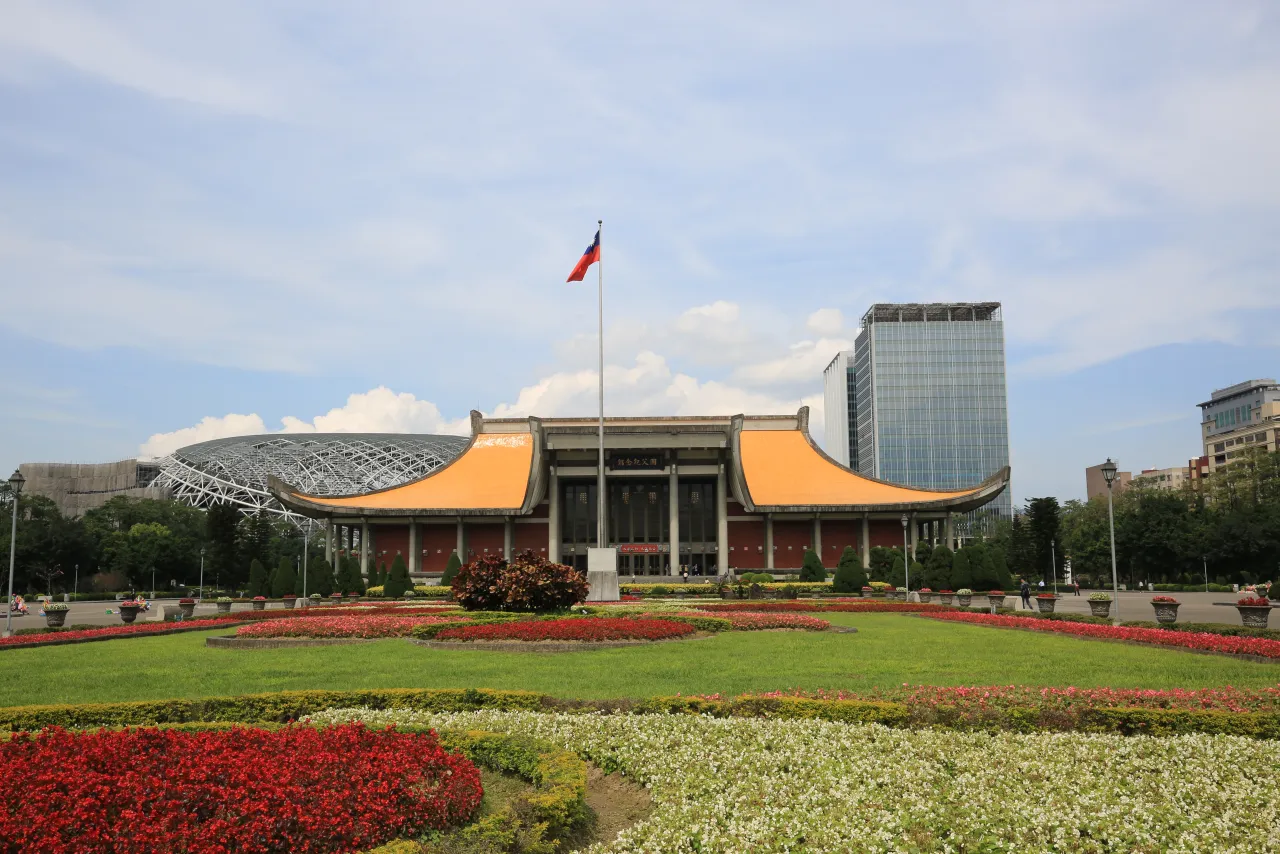
There was still some distance between an idea and a national ceremony. The Government Information Office first held three editions of a warm-up event called “Good Songs for Everyone to Sing” in 1986, then formally began planning the Golden Melody Awards at the end of 1988. Registration opened in August 1989, nominees were announced in September, and the ceremony had originally been scheduled earlier, but because Sun Yat-sen Memorial Hall was closed for renovation, it was postponed all the way to January 6, 1990.
That night, at Taipei’s Sun Yat-sen Memorial Hall, Cui Taijing entered in formal dress to host, accompanied by the CTS Orchestra playing the introduction to her signature song “Love God.” Twenty-five judges, 28 record companies, and 410 submissions ultimately produced 11 awards. Best Male Singer went to Yin Zhengyang, Best Female Singer to Jody Chiang, Best New Artist to Sky Wu, and Song of the Year to Chao Chuan’s “I Am Ugly, But I Am Gentle.”
The first edition was in fact quite plain: no red carpet, none of the large-scale performances that came later, and not even a “Best Vocal Album” award, which would only be added in the second edition. But the skeleton was in place. With one letter, an official whose whole family were fans, and several years of preparation, Taiwan from then on had one night every year devoted to deciding: “This year, which voices deserve to be remembered?”
The Room Where the Door Is Closed
To understand why a Golden Melody Award is taken so seriously, you first have to see how it is decided.
Put simply, the Golden Melody Awards judging system is a group of people shut in a room, listening carefully to every work, and then voting. It sounds simple. The difficult parts are “carefully” and “shut in.”
The process has three rounds. In the preliminary round, judges listen through an online system and score independently. In the second and final rounds, they enter closed-door meetings. The final decision-making round takes place on the morning of the ceremony. Judges vote anonymously by computer to choose the winners who will be announced that evening.
📝 Curator’s note: Many people’s instinctive reaction to “closed-door judging” is “black box” or “small circle.” But the Golden Melody Awards close the room precisely to block another force: the market. When all the judges are isolated, forbidden to look at sales figures, and insulated from lobbying, the only things they can rely on are their own ears and professional judgment. In other words, what that closed door blocks is the inertia of “whoever sells well should win.” Half the credibility of a Golden Melody Award comes from that door.
How far does this secrecy go? Blow, which has reported on the awards, once described the final judging scene: judges enter a small isolation room, “smoking and bathroom trips are accompanied by designated staff the whole way,” they cannot speak to anyone en route, and anonymous computerized voting continues until the result appears. Even phones are collected together and returned only after the final award has been presented.
This is not legend. When 2026, 37th-edition winner Chen Hsien-ching went onstage, she laughed that she had originally prepared a speech, but “unfortunately my phone was taken away,” so she had to improvise. Phones moving in and out between judges and winners are themselves the best annotation to this secrecy mechanism.
So how do the judges actually choose? The official line is that they look for “forward-looking” qualities and affirm works of artistic value, without having to follow the commercial market. Dela, head of KAO!INC. and a three-time Golden Melody judge, once put the standard in more colloquial terms. He said that when a choice was difficult and two albums were both very good, he would ask himself one question:
“Would I want to buy this record?”
There is something compelling about that sentence. It reduces the criterion for an industry award to the most honest impulse of a music fan: would I take out my own money to buy this? Dela also said something for people who think “not winning means losing”: “A nomination is recognition. It really is.”
Of course, the system is not without objections. Some say it lacks explicit written criteria and relies too much on individual judges’ professional ethics. Others say that when the same person is nominated in multiple categories, judges tend to distribute awards. These debates have always been there. But precisely because people care and keep discussing them, what happens in that room is worth taking seriously.
Golden Melodies for Kings and Queens
The Golden Melody Awards are of course also the coronation stage for Mandopop’s biggest stars. The names you grew up hearing have almost all left peak moments on this stage.
Start with the record-holder. Jay Chou has won 15 Golden Melody Awards, the highest tally among male singers. His true night of apotheosis was the 13th edition in 2002. With Fantasy, he personally took home four awards: Best Pop Vocal Album, Best Composer for “Love Before BC,” and Best Album Producer, not counting Best Lyricist for Vincent Fang’s “William Castle” and Best Arranger for Chung Hsing-min’s “Nunchucks.” One album swept through almost all of that year’s technical awards. For a young artist only a few years into his debut, that night effectively announced the beginning of an era.
A-Mei, “Listen to the Sea.” She has been nominated for Best Female Singer 14 times, a Golden Melody record, and has won three times: for Truth in 2002, Amit in 2010, and Faces of Paranoia in 2015.
The women’s side is just as rich. A-Mei holds a record that will be hard to break: 14 nominations for Best Female Singer. A three-time winner, she was especially interesting in 2010, when she competed through “Amit,” an alter ego carrying her Puyuma lineage, and won Best Mandarin Female Singer for Amit. One person had become two voices.
For “knowing how to win,” Tanya Chua is another legend. She has won Best Female Singer four times, for Amphibian, Goodbye & Hello, Sing It Out of Love, and Depart, making her the category’s record-holder. And did you know Tanya Chua is Singaporean? The Golden Melody Awards have never been only for singers with Taiwan passports. They honor people who make the best works in Mandarin, and Tanya Chua’s four Best Female Singer wins are the clearest proof.
Tanya Chua, “Blank Space.” The Singaporean singer has won Golden Melody Best Female Singer four times, the record for the category. The Golden Melody Awards honor the best Mandarin-language work, regardless of passport.
Jolin Tsai holds an achievement even Guinness World Records has recognized: the most wins for Song of the Year. “Marry Me Today,” “The Great Artist,” and “Womxnly” won the ceremony’s top song award three times, earning her Guinness recognition for the most Golden Melody Song of the Year wins. From teenage dance pop to a work like “Womxnly” speaking for gender issues, the Golden Melody Awards have accompanied her growth the whole way.
Jolin Tsai, “Ugly Beauty.” She holds the Guinness-certified record for the most Song of the Year wins: three, for “Marry Me Today,” “The Great Artist,” and “Womxnly.”
Some people chose to turn away at the summit. Jody Chiang is a legend among Taiwanese-language divas. Over her career, she won 13 Golden Melody Awards and took Best Taiwanese Female Singer four years in a row from the 11th to the 14th editions. But after winning again in 2003 for Red Thread, she made a surprising decision: she announced that she would no longer compete for Best Female Singer. Making room on the stage for younger singers was a gesture as moving as going onstage to accept an award.
The stories of the kings and queens could go on: Mayday moving from underground venues to stadiums, Jolin Tsai with each transformation, A-Mei and her nomination record spanning more than two decades. The Golden Melody Awards’ list of winners for Mandopop later became the coordinates of youth for an entire generation.
Four Languages, Four Stages
If you only remember the pop kings and queens, you miss the most distinctive thing about the Golden Melody Awards: they give four languages their own highest honors. Among music awards around the world, this is almost a singular design.
The story begins with a Taiwanese-language rock song. At the 3rd Golden Melody Awards in 1991, Lim Giong’s “Marching Forward” won Best Song of the Year. Before then, Taiwanese-language songs were mostly associated with sorrow and laments. “Marching Forward” used a rock rhythm to sing about a young man from the countryside heading north with a suitcase to make his way, completely overturning the tonal image of Taiwanese-language song. The album sold more than 400,000 copies and is seen as a representative work of the “New Taiwanese Song Movement.” Interestingly, the same year it also won Best Vocal Album Producer, but the recipients were Bobby Chen, Jonathan Lee, and others, not Lim Giong himself.
Lim Giong, “Marching Forward,” Best Song of the Year at the 3rd Golden Melody Awards in 1991. A Taiwanese-language song sung as rock overturned the impression that Taiwanese-language music could only be mournful and sold more than 400,000 copies.
At first, the Golden Melody Awards did not distinguish by language. The first two editions had only “Best Male Vocalist” and “Best Female Vocalist.” Only at the 3rd edition in 1991 were “Mandarin” and “dialect” separated. Then, at the 14th edition in 2003, “dialect” was further divided into separate Taiwanese, Hakka, and Indigenous-language awards. Why subdivide further? Because in the preceding years, every winner of “Best Dialect Vocalist” had been a Taiwanese-language singer, while Hakka and Indigenous-language creators had long been squeezed out. That year’s submissions surged to 128 record companies and more than 4,800 works, including over 100 Hakka or Indigenous albums. The Golden Melody Awards simply opened a separate door for each.
Once those doors opened, some of the most moving moments in Mandopop followed.
At the 11th edition in 2000, a Puyuma police officer from Taitung stood on the highest stage. Purdur Chen won Best Mandarin Male Vocalist for Ocean. Note: Mandarin Male Vocalist, not Indigenous-language vocalist. He defeated fellow nominees Jacky Cheung, Wang Leehom, David Tao, and Harlem Yu, four kings at the height of their powers. A police officer who worked at a station by day, singing songs he wrote about the sea and the mountains, defeated the hottest figures in the entire Mandopop industry. His grandfather was the Puyuma song master Lu Sen-bao; the grandson caught that musical lineage across thirty years.
Purdur Chen, “Ocean.” At the 11th Golden Melody Awards in 2000, this Puyuma police officer from Taitung defeated Jacky Cheung, Wang Leehom, David Tao, and Harlem Yu with Ocean to win Best Mandarin Male Vocalist.
If Purdur Chen proved that an Indigenous creator could beat the pop kings, then ABAO (Aljenljeng) at the 31st edition in 2020 proved that an album sung entirely in an Indigenous language could win the ceremony’s top prize. Her kinakaian: Mother Tongue, an album entirely in Paiwan, took home three awards that night: Best Indigenous Language Album, Song of the Year for “Thank You,” and finally the top Album of the Year award. An album whose lyrics you might not understand at all was chosen by the judges as Taiwan’s best album of the year.
When ABAO accepted Album of the Year, she said something very Golden Melody: “If you don’t know why this album became Album of the Year, please listen to it once. If you don’t like it, please listen a second time!” She also addressed Indigenous children watching on camera: “Do not waste your talents, and do not rely on talent.”
ABAO, “Thank You,” Song of the Year at the 31st Golden Melody Awards in 2020. The fully Paiwan-language kinakaian: Mother Tongue won three major awards that night: Indigenous Language Album, Song of the Year, and Album of the Year.
💡 Did you know? There is almost no other music award in the world that gives separate top honors to four different languages within its own territory. You can make the best album in Taiwanese, Hakka, or an Indigenous language, and be crowned at the same ceremony. For Hakka and Indigenous languages, whose speaker populations are shrinking, the Golden Melody stage offers not only honor, but also a reason for these voices to be heard nationwide and for a new generation to want to learn them.
This is what makes the Golden Melody Awards worth being proud of. They never pretend Taiwan has only one voice. Mandarin, Taiwanese, Hakka, and Indigenous languages: four languages, four stages, lit in turn on the same night.
Even Its Critics Have Stood on Its Stage
An award large enough has to be able to contain the people who criticize it. One of the most fascinating things about the Golden Melody Awards is that several times, they have handed the microphone to their sharpest critics, and those moments have become among the ceremony’s most memorable images.
At the 18th edition in 2007, Lin Sheng-xiang, formerly of Labor Exchange Band, was nominated for and won both Best Hakka Singer and Best Hakka Album for Planting Trees. Then he did something no one had done in the Golden Melody Awards’ 18 years: he refused the awards on the spot.
He spent only 30 seconds onstage, but those 30 seconds had been planned for two years. He said these were the two awards he “least wanted to receive.” His criticism was of the system itself, not of any person: he felt that classifying music by language put the cart before the horse. “Why can Best Producer cross languages, but albums cannot?” He also said, “For such an important Chinese-language music award to classify by language means other countries simply cannot enter.” He declined the two trophies and donated the NT$250,000 prize money, distributing it to a tree-planting team in Meinong, two local publications, and “rice bomber” Yang Ju-men.
Lin Sheng-xiang, “Planting Trees.” At the 18th Golden Melody Awards in 2007, he won two Hakka awards for Planting Trees but refused them onstage, arguing that classifying music by language put the cart before the horse. It was the first refusal in the awards’ 18-year history.
What is worth considering is that the Golden Melody Awards did not change the design simply because they were publicly criticized. They heard it, kept discussing it, and retained language categories. For an awards ceremony to calmly receive the statement “there is something wrong with how you run this award” on its own stage is itself a form of confidence.
How to classify language remains a live debate even today. Scholar Kuo Li-hsin has criticized the division into Mandarin, Taiwanese, Hakka, and Indigenous languages, saying it “appears to protect each language, but in fact consolidates a cultural system in which disadvantaged language communities continue to be marginalized.” In his view, rather than setting up a few “exclusive” Golden Melody categories that push Indigenous and Hakka languages into the margins, what is needed is real educational and promotional investment.
⚠️ Contested view: Language categories also create an awkwardness: works that mix multiple languages often have nowhere to go. At the 33rd Golden Melody Awards in 2022, Collage’s MEmento·MORI was half Taiwanese and half Amis, with a large amount of Japanese mixed in, but it could not enter any language category because it did not satisfy the requirement of being “mainly sung” in a particular language. In the end, it could only compete for language-neutral annual awards. A work singing in several languages of this land instead became an anomaly within the classification system. The Golden Melody Awards are still trying to solve this problem.
Collage, “Millions of Flowers, Mother's Sorrow.” Taiwanese, Amis, and Japanese are mixed together, so it fit into none of the Golden Melody language tracks. MEmento·MORI ultimately won Best New Artist at the 33rd Golden Melody Awards in 2022.
These arguments are not flaws in the Golden Melody Awards. They are evidence that the awards are still alive. A thirty-five-year-old award is still arguing with itself about “how should language be divided?” and “what do we do with multilingual works?” That means it has not hardened. It is still growing together with Taiwan’s music.
The Golden Melody Awards Also Record Taiwan’s Times
Because the Golden Melody Awards are Taiwan’s largest music stage, some winning moments are not only about music. They also carry the social emotions of their time. For this part, it is enough to record what happened.
At the 26th edition in 2015, Fire EX.’s “Island’s Sunrise” won Best Song of the Year. The song was born from the 2014 Sunflower Movement: lead singer Sam Yang was invited by Taipei National University of the Arts students to create it, spent two days writing the melody and one day recording it, and first taught it live at the Legislative Yuan on March 27. When accepting the award, Yang said, “Fifteen years as a band, our first Golden Melody Award! ... Dedicated to our beloved Taiwan.” He also shouted, “God bless Taiwan.” This winning segment was skipped in the Tencent broadcast version in China.
Fire EX., “Island’s Sunrise,” Best Song of the Year at the 26th Golden Melody Awards in 2015. This song, born during the Sunflower Movement, had its award segment skipped in Tencent’s broadcast version in China.
At the 35th edition in 2024, Panai won Best Taiwanese Album for Iā-Pô. She walked onstage draped in a yellow banner reading “No one is an outsider.” In her speech, she said: “The Golden Melody Awards are 35 years old. Do you know? The Tiananmen incident also happens to be 35 years old. We must not forget. Taiwan, keep going.” She also said, “This island of Taiwan is our mother,” and mentioned that she had just ended seven years of protest on Ketagalan Boulevard for Indigenous traditional territories. This speech juxtaposing “35 years of the Golden Melody Awards” with “35 years since Tiananmen” was later deleted on Weibo and Xiaohongshu. Also at this edition, nominated singers from China were collectively absent from the ceremony.
Panai, “Iā-Pô,” Best Taiwanese Album at the 35th Golden Melody Awards in 2024. In her speech, she placed “35 years of the Golden Melody Awards” alongside “35 years since Tiananmen,” and those remarks were later deleted on Weibo and Xiaohongshu.
The Golden Melody Awards were once also a shared stage for Mandarin-language singers on both sides of the Taiwan Strait. Na Ying became the first singer from China to win Best Female Singer at the 12th edition in 2001 with Sad Romance, and also won Best Lyricist that year. Cui Jian became the first China-born Golden Melody Best Male Singer at the 33rd edition in 2022. But across those 21 years, these two were the only China-born Golden Melody Best Male and Best Female Singer winners. The true golden age in which the Golden Melody Awards and the Chinese market overlapped was actually the 2000s, when Taiwan’s music industry dominated Mandarin record sales in China, not a period when singers from China won Golden Melody Awards in large numbers.
These moments can be placed here without much further judgment. The Golden Melody Awards are Taiwan’s stage. What Taiwan has experienced, cared about, moved closer to, and moved away from over these years naturally leaves traces on that stage. By this point, you probably already have the images in your own mind.
The Opening on a Snake’s Back, and Two People Who Waited a Long Time
Thirty-some years may sound like long ago, but the Golden Melody Awards have always been growing in the present tense. Just last month, on June 27, 2026, the 37th Golden Melody Awards concluded at Taipei Arena.
That night, A-Lin hosted for the first time. In the opening, she entered standing on the head of a giant python, paying tribute to Jolin Tsai’s classic stage performance, with tremendous force. She was also a winner herself: the film theme song she sang, “Happiness Is Singing,” won Song of the Year.
The two biggest winners that night were both people who had waited a long time. Jolin Tsai competed for Best Female Singer for the fifth time with her album Pleasure and finally got her wish, winning for the second time after a 19-year gap. She personally took home three awards: Album of the Year, Best Mandarin Female Singer, and Best Vocal Recording Album, from nine nominations. On the Best Male Singer side, it was another kind of waiting: Chang Chen-yue won Best Mandarin Male Singer for the first time 33 years after his debut, while also taking Best Mandarin Album and Best Composer. One waited 19 years; the other, 33. The Golden Melody Awards are never in a hurry to give prizes to the fastest people.
The stages for all four languages were also lit that night. Best Taiwanese Male Singer went to Ricky Hsiao, Best Taiwanese Female Singer to PiA Wu, Best Hakka Singer to Chen Yi-no, and Best Indigenous Language Singer to Suming Rupi. Best Band went to Taipei’s Sunset Rollercoaster, another band that grew out of the independent scene, bypassed the mainstream industry, and reached the highest stage. As for the Best New Artist whose “phone was taken away” and who had to improvise her speech, that was Chen Hsien-ching, whom we met in the judging section.
Opening of the 37th Golden Melody Awards ceremony in 2026. A-Lin hosted for the first time, stepping onto the Taipei Arena stage on a giant python; “Happiness Is Singing,” which she sang that night, also won Song of the Year.
After 37 editions, this ceremony that began with a letter is still grand, still funny, and still capable of making people remember an entire night.
Thirty-Some Years of How This Island Listens to Itself
Return to those few seconds of silence.
At Taipei Arena in 2024, No Party for Cao Dong ascended for a second time, their manager accepted on their behalf, and said, “Thank you, Fan-fan.” Fan-fan is gone, but the drums she played remain in The Servile. Every time someone presses play, that drum part sounds again. A drummer who left was remembered by an entire industry because of the Golden Melody Awards. An album from three years earlier was heard anew by an entire generation because of her.
That is probably what the Golden Melody Awards do. From the plain first edition in 1990 to the 37th edition today, they answer the same question for Taiwan once a year: this year, which voices on this island deserve to be remembered properly?
They remember Jay Chou’s sweeping Fantasy night, A-Mei’s persistence across 14 nominations, and also a sea sung by a Taitung police officer, an album entirely in Paiwan, a Hakka singer who refused a trophy, and a song born in the streets. Mandarin, Taiwanese, Hakka, Indigenous languages; million-selling works and songs whose words many people cannot understand; pop kings at the height of fame and people quietly writing songs. The awards leave all these voices on the same stage.
Across thirty-some years, the Golden Melody Awards have not really been giving prizes. They have been recording, year after year, how this island listens to itself.
Further Reading
- Taiwanese Pop Music — The full rise and fall of the industry from the record business to the streaming era; the Golden Melody Awards are the official markers along this line
- The Evolution of Taiwanese-language Songs in Taiwan — From sorrowful laments to the rock turn of Lim Giong’s “Marching Forward,” how Taiwanese-language songs entered the mainstream
- Taiwanese Indigenous Music Traditions — From tribal songs to Purdur Chen and ABAO, the roots and contemporary forms of Indigenous music
- Contemporary Indigenous Singer-Songwriters — The voices and circumstances of creators in the lineage of Samingad, Panai, and ABAO
- Taiwanese Independent Music — How No Party for Cao Dong and the StreetVoice generation bypassed the record industry and reached the Golden Melody Awards’ highest stage
Image Sources
This article uses two CC-licensed images cached in public/article-images/music/ to avoid hotlinking source servers; all 12 videos are standard YouTube embeds from official channels.
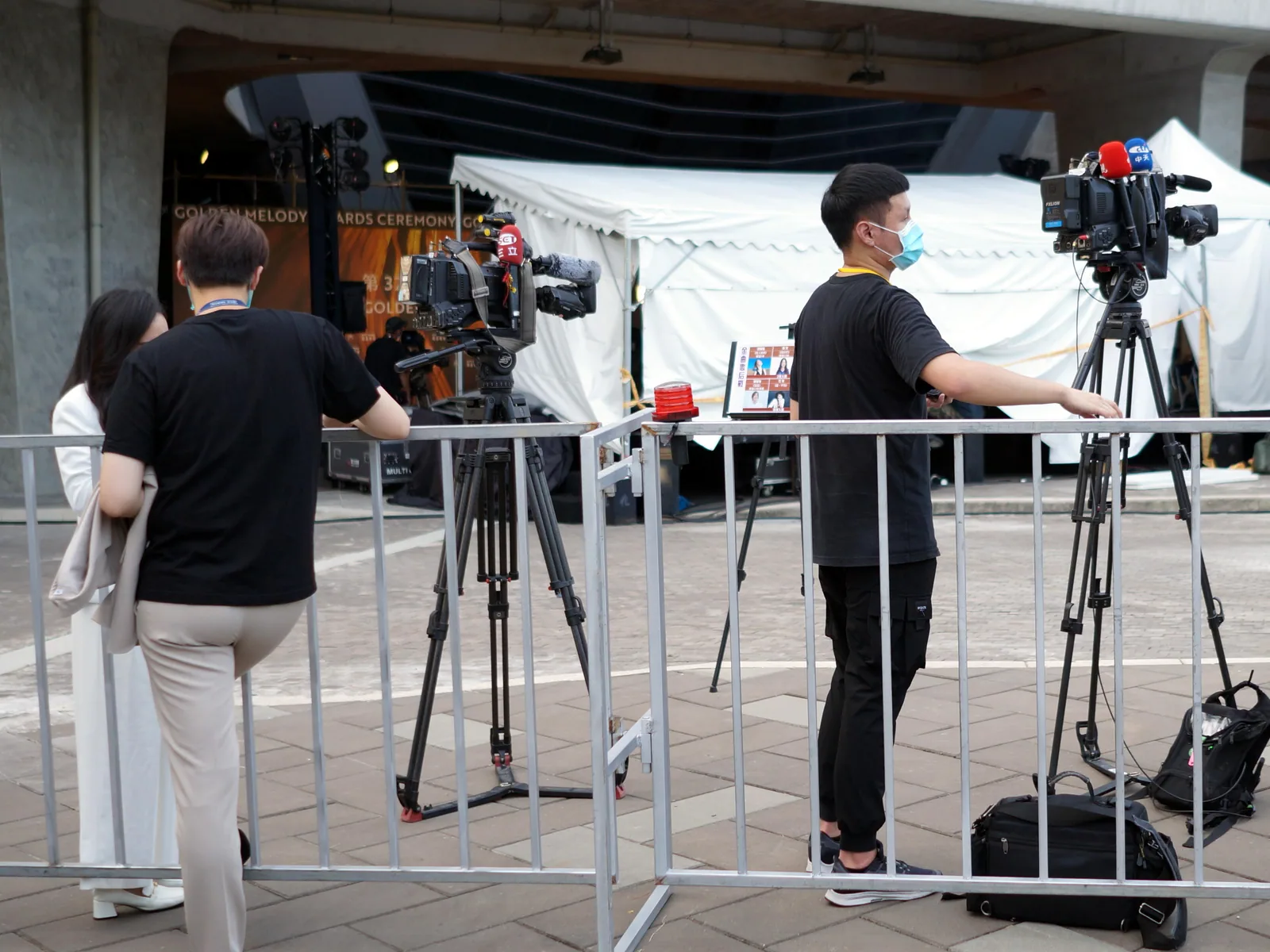
- Broadcast cameras at the 32nd Golden Melody Awards (hero) — Photo: Solomon203, 2021, CC BY-SA 4.0
- Taipei Sun Yat-sen Memorial Hall (first ceremony venue) — Photo: Emcc83, CC BY-SA 4.0
- Videos (official channels): Lim Giong, “Marching Forward” (Rock Records); Fire EX., “Island’s Sunrise” (Fire EX.); ABAO, “Thank You” (ABAO); Panai, “Iā-Pô” (Panai); No Party for Cao Dong, “Simon Says” (No Party for Cao Dong); Purdur Chen, “Ocean” (Taiwan Colors Music); Lin Sheng-xiang, “Planting Trees”; Collage, “Millions of Flowers, Mother's Sorrow” (Collage); Tsai Chin, “The Forgotten Time”; A-Mei, “Listen to the Sea”; Tanya Chua, “Blank Space”; Jolin Tsai, “Ugly Beauty”