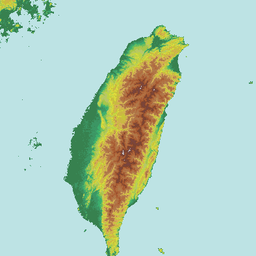
On May 18, 1859, Fathers Guo Degang and Angel Bofurull arrived at Takao Harbor. 12
This was not the Dominican Order's first time in Taiwan. The same order had visited two hundred thirty-three years earlier, traveling north from Manila with the Spanish fleet to settle on Heping Island (和平島) in Keelung.
Two Landings, Separated by 233 Years
Placing these two years side by side reveals almost no continuity between them. The first mission began in 1626 and was interrupted in 1642; the second did not resume until 1859. 1
Both starting points were opened by external forces. In 1626, it was a Spanish expeditionary force; in 1859, it followed the Treaty of Tianjin, which opened treaty ports and lifted the ban on Christianity. 12
The Dominican Order is one of the few groups to participate in both eras, yet the methods of arrival, the locations of settlement, and the political orders they faced were entirely different.
The First: Sixteen Years on Heping Island
In May 1626, missionaries landed with a Spanish expeditionary force sailing from the Philippines, occupying Heping Island in Keelung, establishing the first church, and creating a missionary center for northern Taiwan. Later, churches were also built in Tamsui and Yilan. 1
In August 1642, the Dutch navy captured Keelung, and the missionaries on Heping Island were taken prisoner, bringing the first mission to an end. 1
During these sixteen years, at least 31 friars preached in Taiwan, with the number of baptisms estimated at approximately 4,000. During a smallpox epidemic in 1635, baptisms spiked suddenly; this was not due to more successful preaching, but because the symptoms of smallpox infection were terrifying. 1
Interludes During the Gap
After their departure in 1642, the documents left behind by the missionaries kept later friars hoping for a return to Taiwan. 1
In August 1673, the Dominican Order sent four priests to Taiwan; however, they were not permitted to stay, were viewed as spies, and left the following year. 1
In August 1683, Bishop Francois Pallu and several accompanying priests arrived in Taiwan unexpectedly. They took the opportunity to find fellow believers, with the Bishop personally presiding over confessions and marriage sacraments, but they were soon forced to leave the island. 1
It was not until 1859 that the second group of resident missionaries truly stayed. During the intervening two hundred years, the history of Catholicism in Taiwan was sustained by these sporadic visits and existing networks of believers.
The Second: Landing at Takao
Following the First Battle of the Taku Forts between Anglo-French forces in 1857, China signed the Treaty of Tianjin, opening Taiwan as a treaty port and allowing foreigners to enter for missionary work. 1
In 1858, the Dominican Order in the Philippines sent Fathers Guo Degang and Angel Bofurull to Taiwan to preach. 2
On May 15, 1859, they set sail from Xiamen along with four Chinese missionaries—Yang Du, Cai Xiang, Yan Chao, and Xiu Sheng Ruibin—and the family of a believer, Li Bulei. They arrived at Takao Harbor on May 18. In December of the same year, they purchased land in a coastal area of Qianjin for 62 silver dollars (龍銀) and built a temporary mission using rice straw and thatch. 2
Why Takao instead of the Tainan Prefectural City? At that time, the political and economic center of the south was still the Prefectural City, but conditions for ships entering and leaving Anping Harbor were gradually deteriorating. Takao Harbor offered wide waters and was shielded by two hills at its mouth; consequently, ships from Xiamen increasingly stopped at Takao, and the local markets developed accordingly. 1
From a Thatched Hut to the Rosary Church
In 1860, the mission was rebuilt using earthen bricks and named "Our Lady's Church." 2
In 1862, it was reconstructed again using red bricks, coral stone, and sanhe tu (a traditional three-part mixture of lime, sand, and clay), completing in 1863. After receiving an image of the Virgin Mary from Spain to serve as their patroness, it was renamed "Our Lady of the Rosary Church." 2
The first person baptized by the mission was a fisherman named Dazai (達仔), who helped the missionaries find their initial rental accommodation. 1
Starting in 1863, the Qianjin church began taking in abandoned infants; the establishment of an orphanage became a priority for the Dominican Order. 1
The Imperial Decree Stone
In 1874, Shen Baozhen (沈葆楨), the Minister of Naval Construction, was ordered to Taiwan as an Imperial Commissioner to manage maritime defense. At the request of the priest at the Wanjin main church, he petitioned the Qing court for permission for religious freedom. 2
The Tongzhi Emperor granted the petition and bestowed two sacred stones inscribed with "By Imperial Decree" (奉旨) and "Catholic Church" (天主堂), ordering Shen Baozhen to engrave them personally. In 1875, Shen Baozhen returned to Taiwan and presented the sacred stones to Our Lady of the Rosary Church and Wanjin Catholic Church. 2
The first Wanjin church was built in 1863 but was destroyed by earthquake and arson in 1866; the priest purchased surrounding woodland in 1869 to rebuild, which was completed the following year. The Ministry of Culture's historic site registration records the founding date as 1869, referring to the year of reconstruction. Designated as a county-level historic site in 1985, the church's granite door plaque reading "Catholic Church" is its most prominent Han cultural element. 3
In 1928, Father Lee Ansi (李安斯) prepared for reconstruction, and construction officially began the following year. When the old sanctuary was demolished, the "Imperial Decree" stone was buried in the ground. 2
The new church, completed in 1931, is the Basilica of Our Lady of the Rosary seen today. In 1972, a laywoman named Zhong Yigu (鍾意姑) donated funds to build a Virgin Mary Pavilion; while excavating the foundation, the "Imperial Decree" stone was unearthed. 2
From Mission Points to Dioceses
Starting from Qianjin, the Dominican Order established mission points and administrative stations moving from south to north: Qianjin oversaw Shanjiao (山腳) and Wukuacuo (五塊厝); Wanjin oversaw Gouzaian (溝仔墘) and Laopi (老埤); Tainan oversaw Dawan (大灣) and Xinhua (新化); Luocuo Village (羅厝庄) oversaw Daipasha (大排沙), Erlin (二林), Fanzitian (番仔田), Sanjiachun (三家春), Santiaozhuang (三條莊), Xishuihu (西勢湖), Xiushui (秀水), and Yuanlin (員林); Shalu (沙崙) oversaw Dalin (大林), Dahu (大湖), Kulingjiao (苦苓腳), Meishan (梅山), and Neilin (內林). 1
This network demonstrates that mission work was not composed of isolated churches, but rather a system of administrative stations radiating outward from central hubs.
In 1948, Father Joseph Chen (陳若瑟) of the Dominican Order became the Apostolic Prefect of Taiwan and designated Our Lady of the Rosary Church as the cathedral. 2
In March 1961, the Apostolic Prefecture of Kaohsiung was elevated to a Diocese, with Father Cheng Tian-hsiang (鄭天祥) serving as the first Bishop, also designating the same church as the cathedral. In 1995, under the application of the second Bishop, Dan Guo-xi (單國璽), the Holy See elevated the church to a Minor Basilica. 2
How to Read This History
To write the Dominican history simply as "missionaries bringing civilization" is to miss the fact that neither starting point was actually about the mission itself.
The 1626 landing was the result of the Spanish expeditionary force occupying Heping Island; the 1859 return occurred after the Treaty of Tianjin opened treaty ports and lifted the ban on Christianity. 12
The doors to missionary work were opened both times by fleets and treaties. What missionaries could do and how far they could go within those doors depended on the space provided by the imperial order.
Another easily overlooked comparison is time. The Dominicans landed at Takao in 1859; George Leslie MacKay of the Canadian Presbyterian Church arrived in Tamsui thirteen years later. The northern and southern missionary routes developed independently thereafter, each leaving behind churches, schools, and hospitals.
As for the two-hundred-year gap, it was not entirely empty: the four priests of 1673, Bishop Pallu's accidental arrival in 1683, and the many unnamed believers ensured that this thread was never truly broken. 1
Further Reading:
- Spain's Sixteen Years in Northern Taiwan — Spain's colonial attempt on Heping Island in 1626
- MacKay — The Presbyterian missionary who landed in Tamsui thirteen years later
- Pingtung County — The county where Wanjin Catholic Church is located
References
- Dominican Missionary Work in Taiwan (Wen Zhen-hua, National Taiwan Library "Teaching Mailbox") — Explains the first Dominican mission in northern Taiwan from 1626 to 1642 (at least 31 friars, approx. 4,000 baptisms, increase in baptisms during the 1635 smallpox epidemic), sporadic visits in 1673 and 1683, the arrival of Guo Degang and others in Takao on May 18, 1859, the first believer Dazai, the taking in of abandoned infants from 1863, and the administrative stations including Qianjin, Wanjin, Tainan, Luocuo Village, and Shalu.↩2345678910111213141516
- Church History (Official Website of the Basilica of Our Lady of the Rosary) — Records in order: the Dominican mission arrival with Guo Degang and Angel Bofurull in 1858; departure from Xiamen on May 15, 1859, and arrival at Takao on May 18; land purchase for 62 silver dollars; the earthen brick "Our Lady's Church" in 1860; reconstruction into Our Lady of the Rosary Church between 1862 and 1863; Shen Baozhen's (沈葆楨) petition in 1874 and the Tongzhi Emperor's gift of "Imperial Decree" and "Catholic Church" stones; the delivery of stones in 1875; reconstruction from 1928 to 1931; Father Joseph Chen becoming Apostolic Prefect of Taiwan in 1948 and designating the cathedral; the establishment of the Kaohsiung Diocese in 1961; elevation to Minor Basilica in 1995; and the unearthing of the "Imperial Decree" stone in 1972.↩2345678910111213
- Wanjin Catholic Church (Basilica of Our Lady of the Rosary) (Ministry of Culture Taiwan Religious Culture Map) — States it is a county-level historic site, announced on November 27, 1985, with its founding/origin date in the 8th year of the Tongzhi reign (1869), and notes that the "Catholic Church" granite door plaque is a characteristic feature integrating Han cultural elements.↩